
Founder & Editor · Last reviewed 2026-04-05
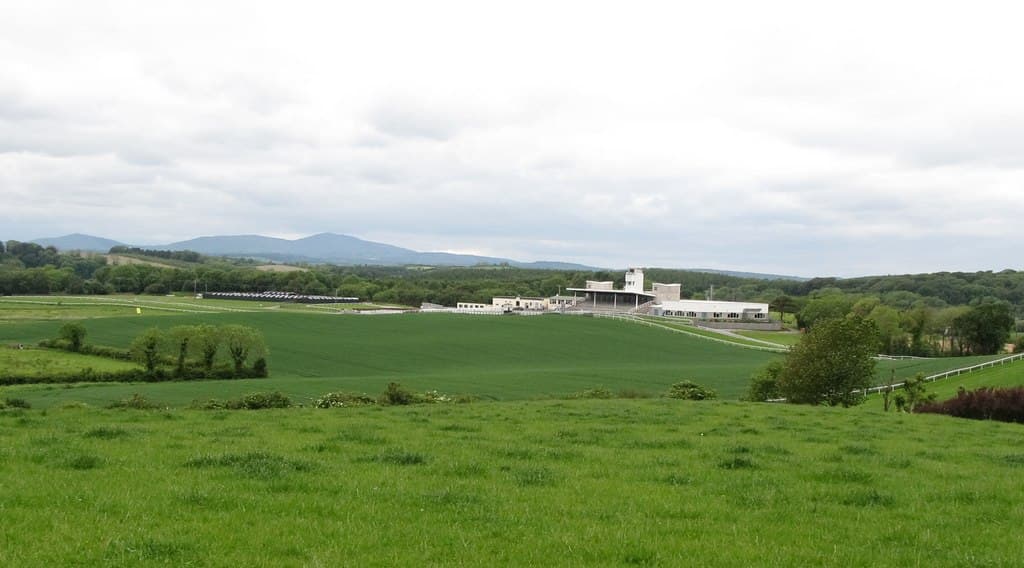
Downpatrick Racecourse is one of only two active racecourses in Northern Ireland, and the only one that stages exclusively National Hunt racing. Situated on the edge of Downpatrick town in County Down — postcoded BT30 6SF, approximately 22 miles south of Belfast — the course has hosted jumps racing under various forms of governance since at least 1685, when the charter era that formalised racing in the Downpatrick area was established. That makes it one of the oldest continuously operating racing venues in Ireland.
Who this guide is for
This guide is written for four types of reader.
First-time visitors will find everything they need to plan a day out: what the enclosures are like, how to get there from Belfast, what to expect from the racing, and which meeting to target first.
Regular racegoers who know Irish NH racing but haven't been to Downpatrick will find detailed course analysis — the undulating circuit, the right-handed layout, the stiff uphill finish — plus fixture and going information.
History-focused readers will find sections covering the course's origins in 1685, its place in the County Down landscape, and connections to some notable racing landmarks, including the fact that both Caughoo (1947 Grand National winner) and Rhyme & Reason (1988 Grand National winner) ran at the track.
Festival and trip planners will find practical information on the Ulster National meeting (the course's signature fixture), the summer festival, accommodation options in Downpatrick town, and how Downpatrick slots into a wider County Down cultural itinerary that includes the Cathedral Church of the Holy and Undivided Trinity — where Saint Patrick is traditionally said to be buried — and Strangford Lough, five miles to the east.
Quick decision guide
- Best single day to visit: the Ulster National meeting — the biggest card of the year, competitive chasing, best atmosphere
- Best for a relaxed first visit: any midweek summer fixture — smaller crowd, easy parking, good views available throughout the stands
- Best vantage point: the main grandstand and the fence rails beside the uphill straight — you see the full climb to the finish line
- Who trains here: John McConnell (Middleton, County Down) is a local trainer with strong course form; Willie Mullins (Bagenalstown, approximately 90 miles south) regularly sends horses to Downpatrick; Gordon Elliott (Longwood, County Meath, approximately 80 miles north) is another regular presence
- Going to check: County Down is wet country — soft to heavy going is common from October through April; the summer festival often catches better ground
- Travel note: most racegoers drive from Belfast (A24 south, approximately 45 minutes); the Downpatrick & County Down Railway serves the town but connections require planning
- Cultural pairing: Downpatrick Cathedral and the Down County Museum are both in the town centre, less than a mile from the course
What makes this track different
Downpatrick's circuit is frequently described by trainers and jockeys as one of the most physically demanding National Hunt tracks in Ireland. The course is right-handed and pear-shaped, running approximately one mile two furlongs around. What sets it apart is the extreme undulation — significant climbs and drops throughout the circuit, with the final straight running uphill to the winning post. Horses that lack stamina are found out here. The fences are positioned to catch out horses that are jumping without confidence, and the hurdles at certain angles reward quick-thinking jockeys.
The course's capacity is around 4,000, which keeps the atmosphere close and the racing visible from almost every point in the ground. Unlike some larger Irish venues where the track feels remote from the stands, at Downpatrick you are close to the action throughout.
Downpatrick also occupies an unusual administrative position: it is physically located in the United Kingdom (County Down, Northern Ireland) but operates under Horse Racing Ireland rather than the British Horseracing Authority. Racing here follows Irish rules, and runners from the Republic mix freely with Ulster-trained horses. This cross-border dimension gives the racing a flavour you won't find at any other Northern Ireland venue except Down Royal.
For full course analysis, see the course layout section. For the fixture calendar, see the fixtures section. If you're coming specifically for a day out, that guide covers enclosures, food, and the full visitor experience. The dedicated betting guide covers course biases, trainer patterns, and going analysis.
Bet on Downpatrick
Place your bets on Downpatrick races with a trusted bookmaker.

Promo code BETFRED50. New customers only. Register, deposit with a Debit Card, and place a first bet of £10+ at Evens (2.0)+ on Sports, to be settled within 7 days, to get £30 in Sports Free Bets and £20 in Bet Builder Free Bets within 24 hours of settlement. 7-day expiry. Eligibility & payment exclusions apply. Full T&Cs apply. Take Time to Think. BeGambleAware.org. 18+. Full T&Cs.

Promo code R30. New UK customers only, 18+. Register, deposit £10 or more, then place a £10 single cash bet at odds of 1/2 (1.5) or greater on any sports market (excluding Virtuals). Once the qualifying bet settles you get £30 in Free Bets (3 x £10) — the qualifying bet can win or lose. Free Bets are valid on any sports market excluding Virtuals, expire in 7 days, are non-withdrawable and must be used in full. Excluded deposit methods apply (including PayPal, Apple Pay, Skrill and NETELLER). Named bets such as Lucky 15 do not qualify. If you cash out the qualifying bet, or it is voided, you are no longer eligible for the offer. Ends 31.12.26. Full T&Cs apply. Please gamble responsibly. BeGambleAware.org. 18+. Full T&Cs.

Promo code BET40GET20. New UK customers, 18+. Register with the code and place a first bet of £40 or more at Evens (2.0) or greater. Receive 2 × £10 free bets: the first credited automatically once the qualifying bet settles, the second 24 hours later. Free bets must be placed at minimum odds of 4/1 (5.0), expire 24 hours after credit, and the free-bet stake is not returned with winnings. Debit card deposits only. Take Time to Think. BeGambleAware.org. 18+. T&Cs apply. Full T&Cs.

50% of your first-day net losses refunded as a free bet, capped at £25. New UK customers aged 18+ only. To qualify, deposit and place a first bet of £10 or more on any sport at minimum odds of evens (2.00), then place at least two further bets on different events, each worth at least 50% of your largest bet, all at evens (2.00) or greater. Losses are counted from your first settled bet until 23:59 the same day. Place a qualifying £10+ bet and you are guaranteed at least a £5 free bet. Bets placed at SP, void bets, cashed-out bets and bets struck with free bets do not count towards the offer. The free bet is credited the day after your qualifying bets settle and must be used within 7 days, after which it expires. It can be used at odds from 1/4 (1.25) up to 250/1 on singles and straight accumulators, but not on Trixie, Patent or Yankee style multiples. Free-bet stake is not returned with winnings. One offer per person, household, address, IP address and device. E-wallet deposits may not qualify, so check the cashier before depositing. Customers registered with GAMSTOP cannot claim. KYC identity verification must be completed before the free bet is credited. Take Time to Think. BeGambleAware.org. 18+. T&Cs apply. Full T&Cs.

New customers, 18+. Choose the sports bonus at sign-up, make a first deposit and receive a 100% bonus up to £50 in your Sports Bonus balance. To convert the bonus to cash, wager it 10x within 30 days. Single bets below Evens (2.00) do not qualify; accumulators do not qualify if any selection is below 1/2 (1.50). Virtual Sports, voided, cancelled, drawn, cashed-out and free-bet wagers do not count towards wagering. Only the first settled bet per event counts. Withdrawing before the wagering requirement is met forfeits the bonus balance including bonus winnings. Real-money funds are used before bonus funds. Deposits via Skrill or Neteller are not eligible. Not valid in conjunction with other promotions. Odds, bet and payment limits apply. 10bet general and promotion T&Cs apply. BeGambleAware.org. 18+. Full T&Cs.

New customers in Great Britain and Republic of Ireland, 18+. Place a £10 fixed-odds qualifying bet at minimum odds of 1/2 (1.50) — single or each-way (only the win part counts), pre-event or in-play, not cashed out early, within 28 days of opening the account. Receive up to £60 in bonuses credited over three days: 3 × £10 fixed-odds free bets (the first on settlement, then 24 and 48 hours later) plus 3 × £5 Total Goals FOOTBALL spread bets and 3 × £5 racing Winning Favourites spread bets, with a £1 racing Race Index spread bet as an extra on top. The spread bets need a full spread-betting account, opened within 28 days of the fixed-odds account and subject to Spreadex's eligibility and appropriateness checks. Free-bet stakes not returned with winnings; free bets valid 28 days from issue. IMPORTANT: the £5 credits are SPREAD bets — sports spread betting carries the risk that losses can exceed your stake. Sports spread-betting customers do not have Financial Ombudsman or FSCS recourse. Take Time to Think. BeGambleAware.org. 18+. T&Cs apply. Full T&Cs.

Promo code WELCOME15, entered under My Bonuses after registering. New UK customers, 18+. Place a first qualifying bet of at least £10 from your cash balance at odds of evens (2.0) or greater within 7 days of opening the account. Once the qualifying bet fully settles you receive £15 in free bets, credited as 3 x £5 tokens with set uses: one £5 accumulator free bet (minimum 4 legs, each leg at 2/5 or bigger), one £5 sports free bet (any market at evens or bigger) and one £5 Sub Cover free bet (selected football player markets at evens or bigger). Free-bet stakes are not returned with winnings. Free bets expire 7 days after they are credited. Void, cashed-out and partially cashed-out bets do not qualify. One offer per customer. Confirm the current terms on BetGoodwin's own welcome-offer page before claiming. Take Time to Think. BeGambleAware.org. 18+. T&Cs apply. Full T&Cs.

New UK customers, 18+. Minimum deposit £10. Place a £10 qualifying single on sports (excluding virtuals) at minimum odds of 1/2 (1.50), settled within 14 days. Deposit-method exclusions apply. Receive £30 in free bets (stake not returned), split £20 for sportsbook use (2 x £10) and £10 for Bet Builder only (2 x £5); Bet Builder does not cover horse racing. Free bets must be accepted within 7 days and expire 7 days after acceptance. No promo code required. Best Odds Guaranteed on UK & Irish racing, subject to having staked over £25 in the previous seven days. Operated by LiveScore Betting and Gaming (Gibraltar) Ltd, UKGC 56859. Confirm the current terms on LiveScore Bet's own promotions page before claiming. Take Time to Think. BeGambleAware.org. 18+. T&Cs apply. Full T&Cs.
18+. BeGambleAware.org
The Course
The Course
Downpatrick's track is one of the most physically demanding National Hunt circuits in Ireland. Trainers who send horses here for the first time frequently report that the undulation surprises them. The right-handed, pear-shaped layout of approximately one mile two furlongs conceals considerable changes in elevation, and the uphill finish is long enough to expose any horse that has been ridden too aggressively through the back straight. Understanding the layout is essential whether you're watching from the stands or studying a race from a betting angle.
Layout and Direction
The circuit runs right-handed throughout. Viewed from above, the shape is broadly pear-shaped: the top of the pear is the far end of the course, where the track loops around before returning down the back straight and swinging into the final turn. The short, straight run-in climbs noticeably from the final bend to the winning post, giving the finish a testing quality that separates horses from ponies in the final furlong.
The bends are reasonably tight by Irish NH standards, which rewards horses that handle turning well and can shift their balance without breaking stride. Horses that sprawl wide at the bends lose ground they cannot afford to give back on a track of this size — the circuits are short enough that every length of ground matters.
Races at Downpatrick run over hurdles and fences. Hurdle distances start at around two miles and extend to two and a half miles. Chase distances run from two miles to three miles plus. The Ulster National, the course's centrepiece event, is contested over roughly three miles and four and a half furlongs, a true test of jumping and stamina on a circuit that makes every yard count.
The Undulation in Detail
Downpatrick's changes in elevation are pronounced enough to be clearly visible from the grandstand. From the start, horses rise slightly through the early part of the circuit before dropping into the back of the course, where the track falls away and horses briefly get downhill momentum before the track rises again approaching the final turn. The final straight is an uphill grind — not as long as Cheltenham's famous finish, but steep enough to punish any horse that has overextended itself in the closing stages of a three-mile chase.
This profile creates a specific type of winner. Horses with a low, economic jumping action do well here because they conserve energy over the undulating ground. Horses that fight for their head or take a strong hold often come back beaten in the final hundred yards — they've burned through reserves that the track demands in the closing stages. Trainers who know Downpatrick well — and local operators like John McConnell from Middleton in County Down have that knowledge — will often target horses with a particular profile at this track.
Going affects the course significantly. When the ground is soft or heavy (as it often is from October through February), the climbs become truly exhausting for horses that lack the depth of breathing to sustain effort up the final hill. On good ground, the track is still testing but the pace holds up through the back end of races in a way that allows more tactical flexibility.
Fences and Hurdles
The fences at Downpatrick are regulation Irish National Hunt fences — open ditches, plain fences, and water jumps positioned across the circuit. What makes them demanding is their placement on a course with so much topographical change. A fence positioned at the bottom of a slope requires a different jumping technique from one placed going uphill. Horses that are mechanically efficient over fences — clean in the air, quick to land and pick up — handle Downpatrick better than those that are bold but untidy, because the consequences of a mistake are amplified when you're losing momentum on an incline.
The hurdles have been noted for their angled positioning at certain points in the circuit. This is a feature rather than a flaw — it places a premium on jockeys who can read the track and present their horses accurately, rather than simply kicking for home and hoping for the best. Apprentices and inexperienced riders can be caught out at Downpatrick in a way that wouldn't happen on a flat, galloping track.
Water jumps are a feature on chase days. Horses that are confident through water tend to gain ground at this obstacle, particularly in soft conditions when rival jockeys are cautious.
Going and Ground
County Down sits in a region of Northern Ireland that receives considerable rainfall from October through April. The ground at Downpatrick is frequently soft or heavy during the winter months, and the drainage on an undulating natural turf track has its limits. The course management works to maintain the track, but racegoers travelling for a specific fixture should check the going report in the 24 to 48 hours before departure.
Summer meetings — particularly the summer festival — often catch better ground. Good to firm going is possible in June and July, and the racing on faster ground at Downpatrick takes on a different quality: faster tempo, more tactical racing, horses that travel well through a race rather than grinding. On fast ground the course still tests, but stamina is slightly less dominant as a factor.
Historically, soft and heavy going at Downpatrick has significantly favoured horses with stamina over those with pure pace. Of the horses that have performed well here on heavy ground, a common thread is a robust build, a settled jumping style, and a record of finishing races off strong gallops. The betting guide sets out how going interacts with trainer and jockey patterns in more detail.
Distances and Race Conditions
Downpatrick's race distances are calibrated to the circuit length. Hurdle races at the course run over two miles, two miles and two furlongs, and two miles and four furlongs. Chase races extend from two miles up to beyond three and a half miles, the longest being the Ulster National. There are no sprint hurdles at Downpatrick — the undulating circuit makes a two-mile hurdle a real test of fitness even on good ground, and the pace through the early stages tends to be honest rather than dawdling.
Condition races and handicaps both appear in the Downpatrick programme. Novice hurdles and novice chases are a staple of the autumn and early winter calendar, when horses stepping up from point-to-point racing or making their first appearance under Rules are assessed on a track that will quickly expose weaknesses. The course's character means it is not a gentle introduction — trainers who bring real novices to Downpatrick are giving them a proper test from the outset.
Runners in Listed and Graded races at Downpatrick are rare given the course's size, but the Ulster National is a handicap steeplechase of real quality and the course's biggest race, drawing competition from stables across Ireland.
Racing from the Stands
The grandstand at Downpatrick gives racegoers a clear view of a significant portion of the circuit. From the main stand, you can see the final two furlongs clearly, including the whole of the uphill straight. The bend from the back of the course into the home straight is partially obscured by the course geography, but this is not unusual for a track of this shape and size — at most smaller NH courses the full circuit is not visible from a single vantage point.
The parade ring is positioned close to the grandstand, so the pre-race ritual of horses circling before a race is easily watched without having to leave the main enclosure. The winner's enclosure is similarly accessible. On a busy Ulster National day, the parade ring fills with racegoers between races, and the atmosphere around the weighing room and connections area is close-knit in a way that feels different from a large stadium venue.
Rail positions are worth exploring on big days. The fence rail at the top of the home straight gives a completely different perspective on how hard horses are working in the closing stages of a race. You will see the difference between a horse coasting to the line and one that is being pushed to its limit in a way that no camera angle fully captures. On a three-mile chase, by the time the field arrives at the uphill run-in, the horses at the back of the field are often visibly exhausted, and the margin between the leaders and the tailenders tells a story about how the race was run through the back of the course.
Takeaway: Downpatrick's undulating right-handed circuit rewards stamina, jumping accuracy, and intelligent riding. Anyone watching or betting needs to account for the course's topography — it is not just a track, it is a test.
Key Fixtures & Calendar
Fixtures and the Racing Calendar
Downpatrick stages approximately 10 to 12 National Hunt fixtures each year, spread across the jumps season from autumn through to early spring, with a summer card that has become one of the venue's most popular meetings. The calendar is compact — this is not a venue with 30-plus fixtures like a dual-purpose track — which means each meeting carries more weight in the local racing community. If you're targeting a specific day out, the choice between meetings matters.
Ulster National Day
The Ulster National is the course's signature race and the highlight of the annual programme. It is a handicap steeplechase over roughly three miles and four and a half furlongs, run from late March into early April, and it draws the largest crowd of the year. The supporting card usually includes four to six additional races across hurdles and chases, giving the day a full programme of quality jumping.
The race attracts entries from trainers across Ireland, including from well outside Ulster, and its character makes it an attractive target for horses that handle undulating, stamina-testing tracks. We are not naming the yards that target it: the names that stood here were attached to a race that does not exist, and one of them placed a County Meath stable to the north of a course it lies well to the south-west of.
Racegoers planning to attend should book ahead for hospitality and arrive early for parking. The course's capacity of around 4,000 means a full crowd creates a real atmosphere, and the venue fills up faster than newcomers expect.
For a detailed guide to the race and its conditions, see the Ulster National guide.
The Summer Festival
The summer festival at Downpatrick has grown in popularity over recent years. Summer jumps racing in Ireland is a different animal from the winter programme — fields tend to be smaller, horses are often lightly raced, and the going is frequently better, shifting from the soft and heavy conditions of winter to good or good to firm ground. For racegoers, the summer festival offers a more sociable experience: longer evenings, easier underfoot conditions, and a relaxed pace to the day.
The format of the summer festival typically involves a headline race — usually a hurdle or chase over two to two and a half miles — and four or five supporting races. The card is usually an afternoon fixture, finishing before early evening. Downpatrick's setting in the County Down countryside is at its best on a summer afternoon, with the rolling drumlin farmland visible beyond the course and the Mourne Mountains on the southern horizon.
See the summer festival guide for full details on the format, key races, and planning.
Midweek Fixtures
Outside the Ulster National and summer festival, Downpatrick stages a series of midweek fixtures during the standard jumps season. These cards tend to attract locally-trained horses, and they provide the core of the course's racing calendar. John McConnell, based in Middleton in County Down, is among the trainers most active at these midweek meetings. His horses are regularly prepared for Downpatrick's specific demands — the undulation, the uphill finish, the testing going — and his yard's results at the track reward attention from punters doing their homework.
Midweek fixtures are the best opportunity to watch racing at Downpatrick in a relaxed setting. Crowds are smaller — well below the 4,000 capacity — parking is easy, and the atmosphere has an informality that bigger race days can't replicate. You can watch from the rail at the uphill straight, move freely around the enclosures, and get a close look at horses in the parade ring without the crush of a peak-attendance meeting.
Planning Around the Calendar
The Downpatrick racing year broadly divides as follows:
- Autumn (October to November): the new jumps season begins; ground can be soft but conditions are variable; smaller fields but good quality
- Winter (December to February): heavier going typical; fields include horses from Irish stables targeting winter prizes; Downpatrick's testing circuit is at its most demanding
- Spring (March to April): ground often improves as the season moves towards its end; spring fixtures can catch transitional going from soft to good
- Summer (June to July): the summer festival; better ground; more social atmosphere; a different cast of horses
For the current fixture list and any date changes, the Downpatrick website carries the full programme. Check this 48 to 72 hours before you plan to travel, as fixtures at smaller venues can be subject to going-related decisions.
If you're combining Downpatrick with Down Royal — the other Northern Ireland racecourse, located approximately 25 miles north — check that the fixture dates don't overlap, as some trainers and jockeys work across both venues on the same day.
Takeaway: Downpatrick's compact calendar means each meeting matters. Ulster National day is the must-see fixture; the summer festival is the most accessible for first-timers; midweek cards offer the best chance to see the track in a relaxed, unrushed setting.
Facilities & Hospitality
Facilities and Hospitality
Downpatrick operates as a community-scale racecourse, which means its facilities reflect the character of a smaller Irish NH venue rather than a large stadium-style operation. With a capacity of around 4,000, the infrastructure is sized to match the attendance — nothing feels overbuilt, and on most days the site is comfortable and well-organised. On Ulster National day, when crowds approach capacity, the same facilities feel busy but not unmanageable.
Enclosures and Viewing Areas
The main enclosure at Downpatrick gives racegoers access to the grandstand, the parade ring, and the winner's enclosure. The grandstand provides elevated views of the finishing straight and the final bend, which is where the critical part of most races unfolds. Given the course's pear-shaped layout, you cannot see the full circuit from a single standing position, but the home straight — including the uphill run to the winning post — is clearly visible, and that is where races at Downpatrick tend to be won and lost.
The parade ring sits close to the main enclosure, making it easy to watch horses being led up before each race without leaving the central area. The winner's enclosure is similarly positioned. This proximity is one of the practical advantages of a smaller course: at Downpatrick you can go from the stands to the parade ring to the rail and back without covering large distances.
Racegoers who want the most direct experience of Downpatrick's racing should head to the rail at the uphill straight. Standing here during the final stages of a three-mile chase gives you a clear sense of what the course demands of its runners — you can see the horses working against the incline in a way that television coverage rarely conveys.
Hospitality Options
Downpatrick offers hospitality packages, particularly for the Ulster National meeting and the summer festival. The venue is popular for group bookings — corporate parties, birthday celebrations, and racing society outings all feature in the Downpatrick hospitality calendar. The scale of the venue means hospitality here is less formal than at a large track: packages tend to include a private viewing area, food and drink, and racecards, delivered in a setting that feels personal rather than corporate.
For specific packages, pricing, and availability, check the Downpatrick website directly. Packages for Ulster National day tend to be in demand and book up ahead of the meeting, so planning early pays off.
Group bookings for smaller parties — 10 to 20 people — are well suited to Downpatrick's scale. The venue can accommodate groups without the pre-planning that a large stadium requires, though advance notice is always sensible for catering and viewing arrangements.
Food and Drink
The course has catering facilities on site. On racedays there are refreshment outlets offering food and hot drinks. The quality and range of catering at Downpatrick is consistent with what you'd find at a comparable small Irish NH venue — it's functional and adequate for a day's racing rather than a destination dining experience.
For racegoers who want a sit-down meal before or after racing, Downpatrick town centre is approximately one mile from the course. The town has restaurants and cafés that operate on race days and are used to welcoming racegoers. If you're making a full day of it — arriving before the first race and leaving after the last — the town's facilities round out the experience. The combination of a race meeting and a visit to Downpatrick Cathedral or the Down County Museum makes for a complete day in County Down.
Parking
On-site parking is available at Downpatrick Racecourse. For most midweek fixtures the car park is well below capacity, and finding a space is straightforward. On Ulster National day and summer festival day, the car park fills up and some racegoers use overflow parking nearby. Arriving at least 45 minutes before the first race on busy days is recommended.
Parking is the practical reason most racegoers choose to drive from Belfast. The A24 south from Belfast takes approximately 45 minutes in normal conditions and brings you directly into Downpatrick town, from which the course is a short drive — the postcode BT30 6SF will navigate you to the site.
Takeaway: Downpatrick's facilities are scaled for a close, accessible raceday experience. The enclosures are compact, the parade ring is nearby, and the standing positions close to the uphill finish give visitors a direct connection to the racing that larger venues rarely offer.
Getting There
Getting There
Downpatrick Racecourse sits on the edge of Downpatrick town in County Down, Northern Ireland. The postcode is BT30 6SF. The town itself is approximately 22 miles south of Belfast, and the course is well signed from the main road approaches into Downpatrick. For most racegoers, driving is the practical choice — public transport options exist but require planning.
By Car from Belfast
The standard route from Belfast is the A24 (the Saintfield Road and then the Ballynahinch road south). From Belfast city centre, the drive typically takes between 40 and 50 minutes in normal traffic conditions, though allow longer if you're travelling on a Saturday or a busy race day when traffic through Saintfield can slow. The A24 is a well-maintained single carriageway for most of its length, and the signage into Downpatrick is clear.
From the M1 motorway interchange near Lisburn, the most direct route is via Ballynahinch and then south on the A24 to Downpatrick. From the north of Belfast, allow extra time to get through the city or take the ring road via the A55.
Parking at the racecourse is on-site and free on most racedays. On Ulster National day and the summer festival meeting, it fills quickly — aim to arrive 45 to 60 minutes before the first race.
By Train and Heritage Railway
The nearest railway station to the racecourse is Downpatrick station, served by the Downpatrick & County Down Railway — a preserved heritage railway rather than a regular commuter service. This line runs from Downpatrick station on certain operating days, and it is worth checking whether it operates on your race day. The timetable for the heritage railway does not align with standard Northern Ireland Railways services.
For those coming from Belfast, the standard rail option is Belfast Great Victoria Street or Belfast Central stations on the Northern Ireland Railways network. There is no direct rail service from Belfast to Downpatrick on the main NI Railways network — the line was closed in 1950. Racegoers arriving by rail would need to travel to Downpatrick by bus connection or arrange a taxi from a nearby station. This makes rail the less practical option for most visitors.
By Bus
Translink (the Northern Ireland public transport operator) runs bus services between Belfast Europa Buscentre and Downpatrick. The journey typically takes between 45 minutes and one hour depending on the service and stops. From Downpatrick bus station in the town centre, the racecourse is approximately one mile — walkable in 20 minutes in reasonable weather, or a short taxi ride.
Bus timetables on race days are worth checking in advance at translink.co.uk, as some race-day peak services may run differently from the standard schedule.
From Dublin
Racegoers travelling up from the Republic of Ireland can take the M1 motorway north from Dublin to Belfast — approximately two hours — and then follow the A24 south from Belfast to Downpatrick as described above. The total journey from Dublin city centre to Downpatrick is typically two hours 45 minutes to three hours, depending on traffic at the Dublin and Belfast ends.
Alternatively, the A1 from Dublin to Newry and then north on the A25 and A7 offers a more direct southern approach to Downpatrick, avoiding Belfast entirely. This route takes a similar time and suits racegoers coming from southern Ulster.
Local Taxis and Car Hire
Taxi companies in Downpatrick town centre serve the racecourse on race days. If arriving by bus, a taxi from the bus station to the course is a straightforward short journey. On major race days, taxis are generally available, but it is sensible to pre-book a return if you're attending an evening fixture or expect to leave at the same time as most of the crowd.
Car hire is available from Belfast International Airport and George Best Belfast City Airport if you're flying in for a racing trip. Both airports are within 45 minutes of Downpatrick by car.
Takeaway: The large majority of racegoers drive to Downpatrick from Belfast or elsewhere in Ulster and the Republic. Build in time on busy race days — parking is straightforward when you're early but the car park fills quickly on Ulster National day.
Frequently Asked Questions
History of Downpatrick Racecourse
History of Downpatrick Racecourse
Downpatrick has been associated with organised horse racing since at least 1685 — the same charter era that underpins Down Royal's claim to historical precedence in Ulster. That places both venues in the same founding generation of formalised Irish racing, and Downpatrick's survival across more than three centuries makes it one of the older active National Hunt venues in Ireland. Understanding how the course developed helps explain why it looks and races the way it does today.
Origins: the 1685 Charter Era
The 1685 date associated with Downpatrick is not an isolated founding moment but part of a broader process of racing formalisation that took place under King James II. During this period, charters and warrants for horse racing were granted across Ireland, and the county of Down — already associated with quality bloodstock breeding given its pasture land — became a natural location for organised racing activity. Down Royal holds a similar founding charter from the same period, which is why both venues share the claim of being among Ireland's oldest racecourses.
Racing in the 17th century looked nothing like it does today. The courses were not permanent installations: they were stretches of ground cleared for the purpose, often across open farmland or common land on the edge of a town. The races themselves were typically match races — two horses, usually with significant prize money wagered between their owners — rather than the field races that became standard in the 18th and 19th centuries. Downpatrick's current circuit occupies a site that has evolved considerably from those early informal arrangements.
Development Through the 18th and 19th Centuries
As the 18th century progressed, racing in Ireland became more structured. The Jockey Club's influence from England reached across the Irish Sea, and the formation of the Turf Club in Ireland in 1790 brought standardised rules to Irish racing. Downpatrick would have operated within this increasingly formal structure as the 19th century arrived.
The transition from flat racing to National Hunt racing at Downpatrick was part of a broader shift in Irish provincial racing during the Victorian era. Many smaller county venues found that jump racing drew more consistent local interest than flat racing — the spectacle of horses negotiating fences and hurdles over longer distances suited the spectator experience at a small course. By the late 19th century, Downpatrick had established itself as a jumps venue, and the character of the course as a demanding, undulating NH circuit was beginning to take shape.
County Down's geography shaped the track in ways that cannot be engineered away. The drumlin landscape — rounded hills formed by glacial deposits — meant that any circuit of significant length in the area would encounter changes in elevation. The Downpatrick circuit's undulation is not a quirk; it is what the land in this part of the Ards Peninsula hinterland naturally produces. The course builders worked with the terrain rather than against it.
The 20th Century and National Hunt Consolidation
The early decades of the 20th century were difficult for many smaller Irish racecourses. Economic disruption, the partition of Ireland in 1921, and the restructuring of racing governance all placed pressure on venues at the lower end of the scale. Downpatrick survived this period in part because of its strong local base in County Down and in part because National Hunt racing in Ulster had a dedicated following that sustained smaller venues through lean times.
The establishment of Horse Racing Ireland as the governing body — and its predecessor organisations — brought Downpatrick into a more stable administrative framework from the mid-20th century onward. Fixture allocations, prize money structures, and safety regulations all improved under centralised governance, and Downpatrick benefited from this alongside other provincial Irish NH venues.
The Ulster National emerged as the course's flagship event, anchoring the annual programme and giving the venue a signature race around which the calendar could be built. Its development into a truly competitive chasing contest reflected the broader strength of Irish National Hunt racing.
Downpatrick and the Town's History
The racecourse cannot be fully understood in isolation from the town it sits beside. Downpatrick is one of the most historically significant towns in Ireland. The Cathedral Church of the Holy and Undivided Trinity — the Church of Ireland cathedral known locally as Down Cathedral — sits on Cathedral Hill in the town centre, and the Patrick Stone in the churchyard marks the traditional burial site of Saint Patrick. The town has drawn pilgrims and visitors for centuries on account of this association, and the combination of religious heritage and sporting activity has shaped Downpatrick's identity as a destination.
The Down County Museum, housed in the former County Down jail on The Mall, charts the history of the county from prehistoric times through to the present. The jail building itself dates from the early 19th century. These two landmarks — the cathedral and the museum — give Downpatrick a cultural density unusual for a town of its size (population approximately 10,500), and the racecourse adds a sporting dimension to a town already visited for its heritage.
The relationship between the racecourse and the town's other attractions is commercially straightforward: racing days bring visitors to Downpatrick who might not otherwise come, and those visitors extend their time in the town by visiting the cathedral, the museum, or heading out to Strangford Lough. The racecourse is part of County Down's tourism offer as much as it is a sporting facility.
Downpatrick in Modern Irish Racing
Downpatrick today operates within an Irish NH calendar dominated by the larger venues — Leopardstown, Punchestown, Cheltenham (for Irish-trained runners), and the Grade 1 tracks. But the role of smaller provincial venues like Downpatrick is recognised within the system: they provide race opportunities for horses that would not be competitive at the highest level, and they maintain racing's presence in communities outside the major urban centres.
The course's location in County Down — within 25 miles of Belfast but set in rural farmland with Strangford Lough five miles east and the Mourne Mountains on the southern horizon — gives it a character that is truly its own. Downpatrick is not a diluted version of a bigger course. It is a track that demands specific qualities from horses and riders, and its three-century presence in the racing calendar reflects the sustained appetite for jump racing in Ulster.
For a full account of the course's history, see the dedicated Downpatrick history guide.
Takeaway: Downpatrick's origins in the 1685 charter era place it among the oldest active racecourses in Ireland. Its development from informal match racing to a modern NH venue tracks the broader history of Irish jump racing across three centuries.
Famous Moments
Famous Moments at Downpatrick
Downpatrick's racing history includes a number of horses and moments that connect the course to the wider narrative of Irish and British jump racing. A small provincial venue rarely produces the volume of landmark events that a major track accumulates over the same period, but Downpatrick has had its share of notable runners and memorable performances — some of which carry significance far beyond County Down.
Caughoo: The 100/1 Grand National Winner
The most historically significant horse to have run at Downpatrick is Caughoo, who won the 1947 Grand National at Aintree at starting odds of 100/1. Trained by Herbert McDowell in County Down, Caughoo was a product of Ulster racing — he was bred, trained, and raced in the north, and Downpatrick was part of his career background. His Aintree victory remains one of the most extraordinary results in Grand National history: a horse from a small Ulster yard, at three-figure odds, winning the world's most watched steeplechase.
Caughoo's victory gave Downpatrick and County Down a claim on Grand National history that larger and more prominent venues might envy. The fact that a horse from this corner of Northern Ireland won the Grand National in the same decade that the country was rebuilding after the Second World War made the achievement resonate well beyond racing circles.
Rhyme & Reason: the 1988 Grand National
Four decades after Caughoo, Downpatrick had another connection to Grand National glory when Rhyme & Reason won the 1988 Aintree renewal trained by David Elsworth. Rhyme & Reason was a more fashionable prospect than Caughoo — Elsworth was a highly regarded trainer with a strong string — and his victory at 10/1 was less of a shock than Caughoo's, but the horse's Downpatrick appearances earlier in his career give the course a second Grand National link that spans more than 40 years of racing history.
Two Grand National winners having run at a course with a capacity of 4,000 is a statistic that says something about the quality of horses that have come through Downpatrick's testing circuit. A track that demands jumping accuracy and stamina is, arguably, exactly the kind of preparation that suits horses heading to Aintree.
The Ulster National: Building a Fixture
The Ulster National draws entries from leading Irish National Hunt stables and is the race that gives Downpatrick its standing in the Irish programme. We hold no verified roll of honour for it, so this section names no winners until we do.
The race's format, a handicap steeplechase over roughly three miles and four and a half furlongs on an undulating, right-handed course that finishes uphill, means it is not won by pure speed. Staying power, jumping accuracy and the ability to handle changing terrain under pressure are what it asks for.
The Summer Festival's Growth
Less dramatic in headline terms but significant in the course's modern story is the growth of the summer festival into a truly popular annual fixture. Racing in Northern Ireland in summer is not a given — the climate is not reliably benign — but Downpatrick's summer card has attracted growing crowds over recent years. The combination of better going, longer evenings, and the scenic County Down setting has made the festival a positive fixture in the Ulster summer calendar in a way that reflects well on the course's management and presentation.
The Setting as Context
No account of Downpatrick's famous moments is complete without acknowledging the backdrop against which they take place. The course sits in a town where Saint Patrick is traditionally said to be buried — the Cathedral Church of the Holy and Undivided Trinity, marked by the Patrick Stone, is less than a mile from the racecourse. Strangford Lough, one of the largest sea inlets in Ireland and an Area of Outstanding Natural Beauty, is five miles east. The Mourne Mountains — visible on a clear day from the course — rise on the southern horizon.
This setting does not affect the racing, but it shapes the experience of being at Downpatrick. Connections between the sporting and the cultural are rarely as compressed as they are in this corner of County Down.
Betting at Downpatrick
Betting at Downpatrick
Downpatrick's undulating circuit creates betting patterns that differ from flat or galloping NH tracks. Horses that win here tend to share certain characteristics, and trainers with strong records at the course often return to it with similar types. This section outlines the key factors — course bias, going impact, trainer patterns, and race-type considerations — that should inform any serious study of a Downpatrick card.
For a more detailed treatment of these themes, see the dedicated Downpatrick betting guide.
Please gamble responsibly. If you feel you may have a problem with gambling, visit BeGambleAware.org or call the National Gambling Helpline on 0808 8020 133.
Course Bias: Stamina Over Speed
The single most consistent factor at Downpatrick is the premium on stamina. The uphill finish, combined with the rises and drops throughout the circuit, means horses that arrive at the final furlong with something left in the tank consistently outperform those that are purely quick over two miles on a flat track. This is not a course where a slick two-mile chaser from a Flat background will naturally translate its form.
In practice, this means looking beyond the headline speed ratings when assessing Downpatrick runners. A horse with a Racing Post Rating of 130 on a flat galloping track may not reproduce that figure at Downpatrick, while a 122-rated horse with a proven record of seeing out three miles on testing ground may be underestimated at the odds. The bias towards stamina is especially pronounced in soft to heavy going, which amplifies the energy cost of the climbs.
Horses drawn towards the centre of the field in big-field hurdle races at Downpatrick tend to avoid the interference that can occur at the tight bends. In smaller fields this matters less, but in a 12-runner hurdle the early positioning off the final bend is worth considering.
Going and Its Effect on Results
County Down's climate means soft or heavy going is the norm from October through February. Trainers who consistently target Downpatrick in winter tend to have horses suited to testing ground — this is not a venue where you'd typically aim a lightly-framed horse more at home on good to firm.
On soft or heavy going, the variance in outcomes increases. Horses that handle mud — physically robust types with strong quarters and a low, economical jumping action — hold an advantage that isn't always reflected in the morning market prices. When a race card has been compiled on the assumption of good ground and the going comes up heavy, the market often doesn't fully adjust in favour of mud-lovers at smaller venues like Downpatrick. That mispricing creates potential value for prepared punters.
In summer, when the going can be good to firm, the course profile is still testing but the pace dynamics change. Horses that travel well and can sustain a rhythm through the undulations become more competitive relative to pure stayers. Going to firm also tends to sharpen up times, and horses with a higher RPR on good ground can perform closer to their best.
Trainer Patterns
Local trainers carry a significant informational advantage at Downpatrick. John McConnell, based in Middleton in County Down, trains horses specifically prepared for this circuit and has a record of placing them to best effect. A McConnell runner at Downpatrick — particularly in a hurdle or mid-range chase — deserves respect even when the market has priced it as an outsider.
Willie Mullins sends horses to Downpatrick selectively. When Mullins targets a Downpatrick race, his runners are typically well-prepared rather than using the course as a school run for unraced youngsters. The same applies to Gordon Elliott: when either of these stables sends a horse 80 to 90 miles for a Downpatrick fixture, the intent is usually to win.
At the lower end of the market, horses from southern Republic stables making a long journey to Downpatrick for a Class 4 hurdle are worth scrutinising carefully. The combination of a long journey and an unfamiliar undulating track can undermine horses that their connections expect to win at shorter odds.
Race-Type Considerations
Novice chases at Downpatrick are a strong area for research. The course's fences on an undulating circuit sort out horses that are technically sound from those that are bold but imprecise. First-time chase horses from established NH yards — particularly those that have shown a clean jumping record over hurdles — tend to perform well here, and they sometimes go off at prices that underestimate their suitability for the track.
Three-mile-plus chases (the Ulster National among them) suit horses with established staying credentials. Pace in these races tends to be real given the uphill finish, and the race is rarely won by a hold-up horse who gets a dream run through. Front-runners and prominent racers who can maintain their jumping technique under fatigue are usually involved at the finish.
Flat-track horses on handicap debuts are worth opposing at Downpatrick. Horses that have shown their form on a flat galloping track — Navan, Naas, Thurles — do not automatically translate that form to this circuit. Downpatrick catches out horses that lack the physical robustness for undulating ground.
Takeaway: Betting at Downpatrick rewards preparation — knowing the going, the trainer patterns, and the specific demands of the circuit gives a significant edge over the casual observer. Stamina and jumping accuracy are the recurring themes in the course's winners.
Atmosphere & Planning Your Visit
Atmosphere and Planning Your Visit
Downpatrick has a specific atmosphere that smaller Irish National Hunt venues produce when the conditions are right: close to the racing, close to the horses, and close to the other racegoers in a way that larger venues simply cannot replicate. With a capacity of 4,000, the course fills in a way that feels complete rather than cavernous, and the proximity of the parade ring and winner's enclosure to the grandstand means you spend less time walking between areas and more time watching racing.
What a Race Day Feels Like
On a winter afternoon at Downpatrick — a November or January fixture with soft ground and five or six races on the card — the experience is direct and unaffected. The parade ring in the pre-race period is busy with connections, handlers, and racegoers who've positioned themselves for a close look at the runners. The commentary is audible across the course. When a chase field swings into the home straight and begins the uphill run to the finish, the sound from the rails is immediate — you're watching horses working hard at close range.
On Ulster National day the atmosphere shifts. The course approaches its capacity, the parade ring is two-deep with racegoers, and the betting market on the Ulster National itself is the subject of real debate across the enclosures. The camaraderie typical of smaller Irish courses — where connections and punters occupy the same space without the separation you get at a large stadium — is more pronounced. It is not unusual to find yourself standing next to a trainer or a horse's owner in the grandstand.
The summer festival has a different quality: the light lasts longer, the going is better, and the atmosphere is more relaxed. Families, groups making a day of it rather than a study of form, and first-time visitors tend to come to the summer card. It is the most accessible Downpatrick meeting for newcomers.
Planning a Full Day
Downpatrick's location makes it straightforward to build a full day's itinerary around a race meeting. The Cathedral Church of the Holy and Undivided Trinity — the Patrick Stone marking Saint Patrick's traditional burial site — is in the town centre, approximately one mile from the course. The Down County Museum, housed in the former county jail on The Mall, is a five-minute walk from the cathedral and open most days. Strangford Lough, five miles east of the town, is one of the most accessible Areas of Outstanding Natural Beauty in Northern Ireland and is worth an hour's visit either before or after racing.
From Belfast, a day-trip to Downpatrick for racing and some time in the town takes approximately 45 minutes each way. If you're making a weekend of it, Downpatrick has accommodation in the town centre, and the combination of racing, heritage, and the County Down countryside makes a two-day trip manageable without extensive planning.
Practical Notes for First-Time Visitors
- Arrive early on busy days: the Ulster National car park fills quickly
- Dress for the weather: County Down in winter is wet; bring waterproofs even if the morning is dry
- The racecards are available at the course on the day; download the Racing Post app for form if you want to work ahead
- The uphill straight is the best place to watch a chase finish from the rail; arrive at that position a few minutes before the race to get a good spot
- Downpatrick town centre has a range of cafés for a meal before racing; the course catering is functional but limited in range
- The heritage railway (Downpatrick & County Down Railway) occasionally operates on race days — check their website separately from the main racecourse site
Takeaway: Downpatrick rewards visitors who arrive with some preparation — knowing which fixture to target, where to watch from, and what the wider County Down setting offers alongside the racing. The course's character is best experienced on a day when conditions are typical: damp, close, and properly Irish.
More guides for this course
Share this article
More about this racecourse
All Downpatrick guides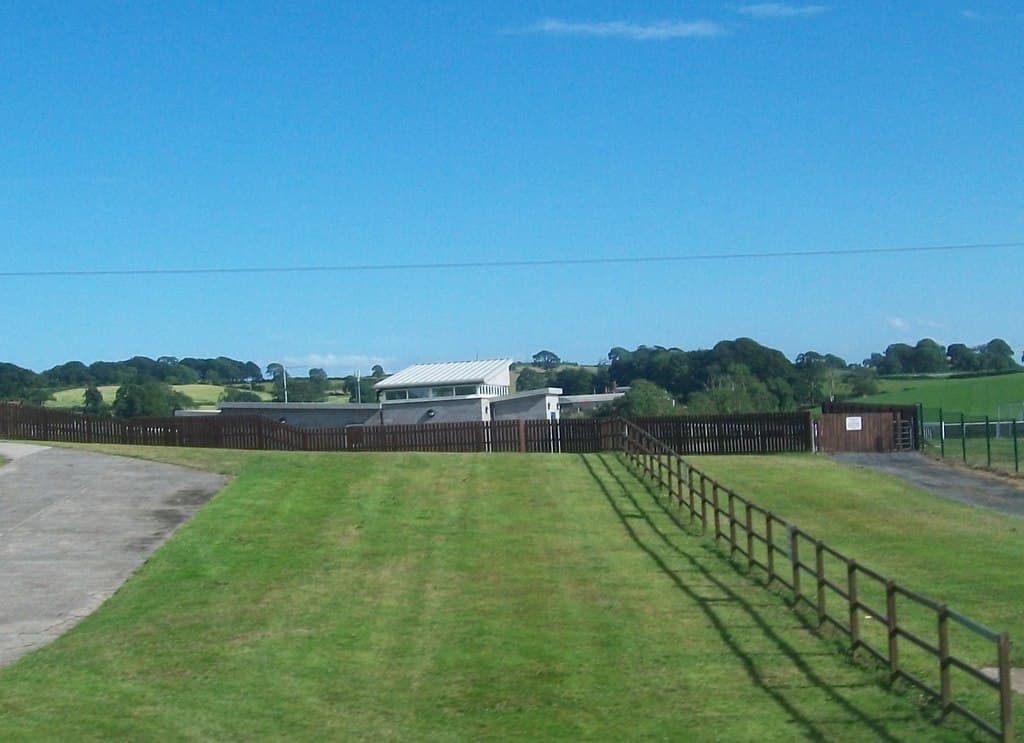
A Day Out at Downpatrick Racecourse
Everything you need for a day at Downpatrick — getting there, what to wear, enclosures, food and drink, and insider tips for County Down's National Hunt venue.
Read more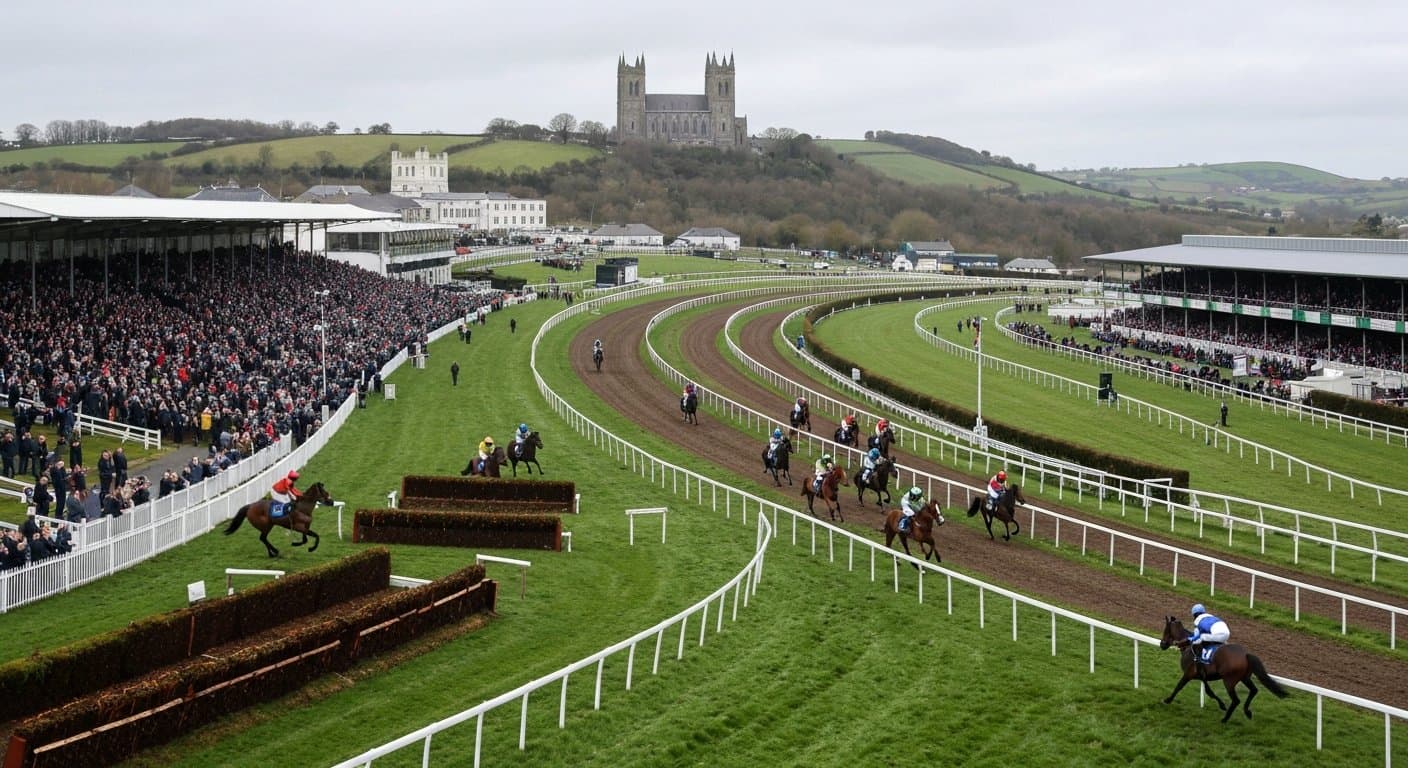
Downpatrick Gold Cup: Complete Guide
Your complete guide to the Downpatrick Gold Cup — County Down's signature chase and a key contest at Downpatrick Racecourse.
Read more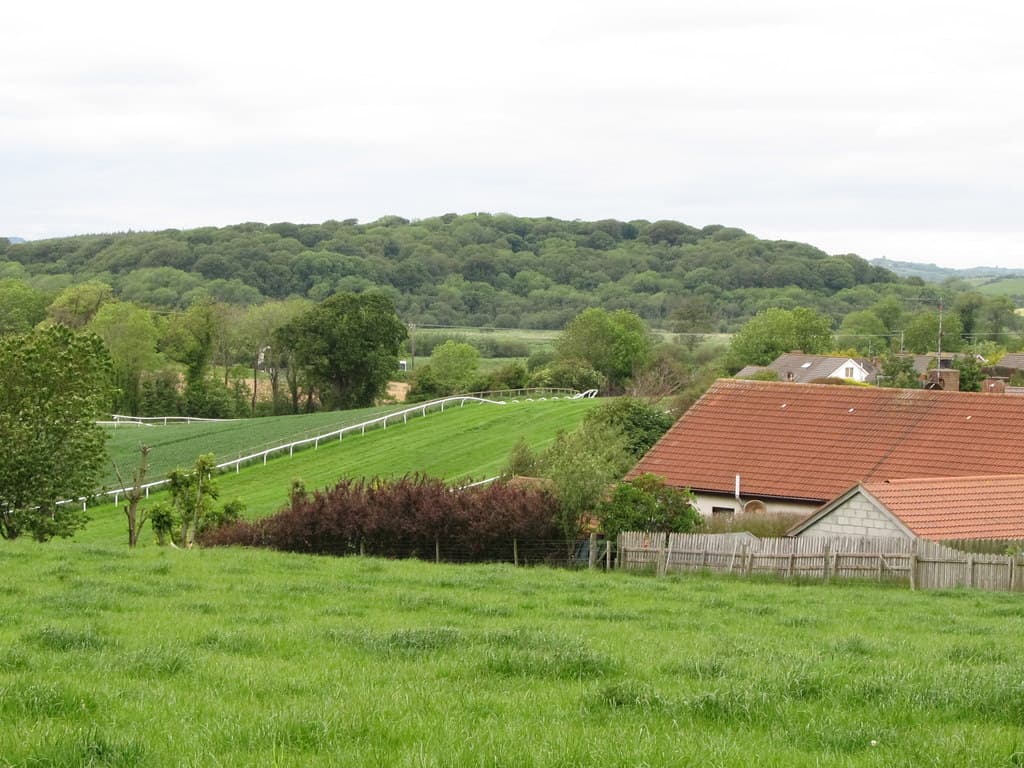
The History of Downpatrick Racecourse
Over 300 years of racing at Downpatrick — from the Royal Charter of 1685 to County Down's National Hunt venue and the Downpatrick Gold Cup.
Read morePhotos on this page are used under Creative Commons licences. Titles, sources and licence links for each one are on our image credits page.
Research the field with the AI Race Predictor
Our model publishes calibrated win-probability estimates for UK races — a second opinion to understand a race, not tips. It's open about its record: it doesn't beat the market, and we show exactly how it does.
Work it out & learn the basics
Gamble Responsibly
Gambling should be entertaining and not seen as a way to make money. Never bet more than you can afford to lose. If you or someone you know has a gambling problem, help and support is available.