
Founder & Editor · Last reviewed 2026-04-04
Derby Day at Epsom Downs is not a one-race card. While the Derby itself draws the world's attention, the supporting programme on the Saturday of Epsom's summer festival includes a race that, on any other course, would be considered its own standalone championship: the Coronation Cup.
Run over the full Derby distance of one mile and four furlongs, the Coronation Cup is a Group One contest for horses aged four and older. Where the Derby admits only the best three-year-olds, the Coronation Cup opens the doors to proven performers — horses who have already demonstrated their quality at the top level and are ready to show it again. The contrast is part of what makes the Derby Day card so absorbing: you see the very best of the Classic generation in the afternoon's headline event, and the very best of their elders in the Coronation Cup earlier in the programme.
The race has been run at Epsom since 1902, making it one of the oldest Group One races in Britain. Its position on Derby Day gives it a backdrop that few races anywhere in the world can match, though it means the Coronation Cup often receives less media attention than it deserves. Serious racing followers know its value: this is a race that regularly attracts the champion older middle-distance horse in Europe, tested over Epsom's demanding and unique course.
The undulations, the famous Tattenham Corner, and the punishing uphill finish make Epsom's Derby course unlike anything else on the flat programme. For older horses who know the game — who have raced at the top level through three, four, or five seasons — the Epsom test is an additional challenge layered onto the straightforward question of class. Horses who have raced at Epsom before, particularly those who ran in the Derby as three-year-olds, carry a form advantage that the betting market consistently factors in.
In recent years the Coronation Cup has regularly attracted horses of the highest calibre — European champions, Classic winners who have trained on, and horses specifically targeted at the race by trainers who appreciate the unique challenge of Epsom. For the full story of Epsom's most famous race, see our Derby guide. For a complete overview of the course, our Epsom complete guide covers everything from the track layout to transport.
Bet on Epsom Downs
Place your bets on Epsom Downs races with a trusted bookmaker.

Promo code BETFRED50. New customers only. Register, deposit with a Debit Card, and place a first bet of £10+ at Evens (2.0)+ on Sports, to be settled within 7 days, to get £30 in Sports Free Bets and £20 in Bet Builder Free Bets within 24 hours of settlement. 7-day expiry. Eligibility & payment exclusions apply. Full T&Cs apply. Take Time to Think. BeGambleAware.org. 18+. Full T&Cs.

Promo code R30. New UK customers only, 18+. Register, deposit £10 or more, then place a £10 single cash bet at odds of 1/2 (1.5) or greater on any sports market (excluding Virtuals). Once the qualifying bet settles you get £30 in Free Bets (3 x £10) — the qualifying bet can win or lose. Free Bets are valid on any sports market excluding Virtuals, expire in 7 days, are non-withdrawable and must be used in full. Excluded deposit methods apply (including PayPal, Apple Pay, Skrill and NETELLER). Named bets such as Lucky 15 do not qualify. If you cash out the qualifying bet, or it is voided, you are no longer eligible for the offer. Ends 31.12.26. Full T&Cs apply. Please gamble responsibly. BeGambleAware.org. 18+. Full T&Cs.

Promo code BET40GET20. New UK customers, 18+. Register with the code and place a first bet of £40 or more at Evens (2.0) or greater. Receive 2 × £10 free bets: the first credited automatically once the qualifying bet settles, the second 24 hours later. Free bets must be placed at minimum odds of 4/1 (5.0), expire 24 hours after credit, and the free-bet stake is not returned with winnings. Debit card deposits only. Take Time to Think. BeGambleAware.org. 18+. T&Cs apply. Full T&Cs.

50% of your first-day net losses refunded as a free bet, capped at £25. New UK customers aged 18+ only. To qualify, deposit and place a first bet of £10 or more on any sport at minimum odds of evens (2.00), then place at least two further bets on different events, each worth at least 50% of your largest bet, all at evens (2.00) or greater. Losses are counted from your first settled bet until 23:59 the same day. Place a qualifying £10+ bet and you are guaranteed at least a £5 free bet. Bets placed at SP, void bets, cashed-out bets and bets struck with free bets do not count towards the offer. The free bet is credited the day after your qualifying bets settle and must be used within 7 days, after which it expires. It can be used at odds from 1/4 (1.25) up to 250/1 on singles and straight accumulators, but not on Trixie, Patent or Yankee style multiples. Free-bet stake is not returned with winnings. One offer per person, household, address, IP address and device. E-wallet deposits may not qualify, so check the cashier before depositing. Customers registered with GAMSTOP cannot claim. KYC identity verification must be completed before the free bet is credited. Take Time to Think. BeGambleAware.org. 18+. T&Cs apply. Full T&Cs.

New customers, 18+. Choose the sports bonus at sign-up, make a first deposit and receive a 100% bonus up to £50 in your Sports Bonus balance. To convert the bonus to cash, wager it 10x within 30 days. Single bets below Evens (2.00) do not qualify; accumulators do not qualify if any selection is below 1/2 (1.50). Virtual Sports, voided, cancelled, drawn, cashed-out and free-bet wagers do not count towards wagering. Only the first settled bet per event counts. Withdrawing before the wagering requirement is met forfeits the bonus balance including bonus winnings. Real-money funds are used before bonus funds. Deposits via Skrill or Neteller are not eligible. Not valid in conjunction with other promotions. Odds, bet and payment limits apply. 10bet general and promotion T&Cs apply. BeGambleAware.org. 18+. Full T&Cs.

New customers in Great Britain and Republic of Ireland, 18+. Place a £10 fixed-odds qualifying bet at minimum odds of 1/2 (1.50) — single or each-way (only the win part counts), pre-event or in-play, not cashed out early, within 28 days of opening the account. Receive up to £60 in bonuses credited over three days: 3 × £10 fixed-odds free bets (the first on settlement, then 24 and 48 hours later) plus 3 × £5 Total Goals FOOTBALL spread bets, 3 × £5 racing Winning Favourites spread bets and a £1 racing Race Index spread bet (the spread bets need a full spread-betting account). Free-bet stakes not returned with winnings; free bets valid 28 days from issue. IMPORTANT: the £5 credits are SPREAD bets — sports spread betting carries the risk that losses can exceed your stake. Sports spread-betting customers do not have Financial Ombudsman or FSCS recourse. Take Time to Think. BeGambleAware.org. 18+. T&Cs apply. Full T&Cs.

Promo code WELCOME15, entered under My Bonuses after registering. New UK customers, 18+. Place a first qualifying bet of at least £10 from your cash balance at odds of evens (2.0) or greater within 7 days of opening the account. Once the qualifying bet fully settles you receive £15 in free bets, credited as 3 x £5 tokens with set uses: one £5 accumulator free bet (minimum 4 legs, each leg at 2/5 or bigger), one £5 sports free bet (any market at evens or bigger) and one £5 Sub Cover free bet (selected football player markets at evens or bigger). Free-bet stakes are not returned with winnings. Free bets expire 7 days after they are credited. Void, cashed-out and partially cashed-out bets do not qualify. One offer per customer. Confirm the current terms on BetGoodwin's own welcome-offer page before claiming. Take Time to Think. BeGambleAware.org. 18+. T&Cs apply. Full T&Cs.

New UK customers, 18+. Minimum deposit £10. Place a £10 qualifying single at minimum odds of 1/2 (1.50), settled within 14 days. Receive £30 in free bets (stake not returned), split £20 for sportsbook use (2 x £10) and £10 for Bet Builder only (2 x £5); Bet Builder does not cover horse racing. Free bets must be accepted within 7 days and expire 7 days after acceptance. No promo code required. Best Odds Guaranteed on UK & Irish racing, subject to having staked over £25 in the previous seven days. Operated by LiveScore Betting and Gaming (Gibraltar) Ltd, UKGC 56859. Confirm the current terms on LiveScore Bet's own promotions page before claiming. Take Time to Think. BeGambleAware.org. 18+. T&Cs apply. Full T&Cs.
18+. BeGambleAware.org
History of the Coronation Cup
Origins at Epsom
The Coronation Cup was established in 1902, conceived as a prestigious weight-for-age contest for older horses that would sit alongside the Derby and Oaks within Epsom's summer programme. The timing — immediately following the two Classic races in the preceding days — was deliberate. It allowed older horses, who were ineligible for the Classics, a chance to prove themselves over the same course and distance. The first running in 1902 attracted a field of proven performers whose Classic days were behind them, and the race quickly established its own identity.
The race's name commemorates the Coronation of King Edward VII, who acceded to the throne in 1901 following the death of Queen Victoria. The Edwardian era was a period of expansion and confidence in British flat racing, and the creation of the Coronation Cup reflected the sport's appetite for prestige events beyond the Classic programme. The King himself was an owner of quality horses, and the naming of a race after his Coronation was both a commercial and a patriotic gesture by the Epsom authorities.
The conditions set in 1902 have remained broadly consistent: older horses, the Derby distance, and the Epsom track. What has changed is the quality of the field. The early Coronation Cups attracted solid but not always exceptional fields — the best middle-distance older horses often had other priorities in a less structured international racing calendar. But as the prestige of the race grew through the 20th century, and particularly after the formalisation of the Pattern race system in 1971 gave it Group One status, the standard of entrant improved significantly.
How It Differs from the Derby
The Coronation Cup and the Derby run over precisely the same course and distance, yet they are profoundly different races. Understanding why illuminates what the Coronation Cup is actually testing.
The Derby runners are three-year-olds competing in only their second or third season of racing. Many have never encountered anything like the Epsom test before — the combination of gradients, the cambered Tattenham Corner, and the uphill finish in the last two furlongs is a revelation for horses accustomed to flat galloping tracks. For some three-year-olds, the Epsom experience is almost entirely new.
Coronation Cup runners are four-year-olds and older. They have been through at least one full season of top-level competition and many of them have raced at Epsom before, including in the Derby itself. The older horse brings race maturity, a settled mind, and an understanding of how to pace itself through a demanding course. The physical frame is fully developed: a four-year-old carries his muscle and weight differently to a three-year-old, and the strength required to climb the final two furlongs is available in a way it may not have been twelve months earlier.
The tactical patterns of the two races also differ. The Derby is often run at a hot gallop from the outset, as connections know that the Classic generation can be hard to settle and that pace is a weapon in a large field. The Coronation Cup, with its smaller field of seasoned horses, tends to produce a more considered early pace with a harder finish — skilled jockeys on experienced horses, measuring each other through Tattenham Corner and building their challenges from the bend home.
Growing Prestige Through the 20th Century
Through the early and mid-20th century, the Coronation Cup attracted a series of distinguished winners who reflected the changing landscape of European flat racing. The race became a natural target for horses that had won a Classic as three-year-olds and were returning to Epsom the following season — the same course and distance providing continuity, and the lighter weight of the older horse programme (compared to the weight-for-age penalties of some other Group One races) giving them a chance to show their sustained quality.
The Coronation Cup was also affected by the two world wars in the same way as the Derby and Oaks: it was relocated to Newmarket for the duration of both conflicts and returned to Epsom each time. The continuity of the race through such disruptions speaks to its importance within the flat racing calendar.
The Pattern race classification system, introduced in 1971 across Britain, Ireland, France, Germany, and Italy, formalised the Coronation Cup's Group One status. This confirmed its place at the top of the European flat racing hierarchy and made it a more attractive target for the best operations on the continent. French-trained horses, in particular, have a good record in the race: their trainers understand that Epsom's undulating track rewards natural balance and a relaxed racing style, qualities that many French middle-distance horses possess.
The Modern Race
In the 21st century, the Coronation Cup has been dominated by the leading operations of the Coolmore and Godolphin groups, alongside the best British yards. Aidan O'Brien's Ballydoyle stable has won the race multiple times across different decades, reflecting the breadth and quality of middle-distance horses produced by the Irish operation. The Gosden yard has produced Coronation Cup winners of the highest calibre, with Enable's back-to-back victories in 2018 and 2020 the most celebrated recent example.
The race is typically run over a field of six to twelve horses, which keeps the racing clean and the result comprehensible. The pace at which it is run bears no necessary relation to the Derby later on the same afternoon — the older horses carry their weight more evenly, and the tactical patterns differ according to the field rather than the generation.
The race's position on the Derby Day card continues to be both a strength and a limitation. It receives far less pre-race media coverage than the Derby, and the ante-post markets open later. But for the racegoer at Epsom on the day, and for the serious form student at home, the Coronation Cup is one of the most absorbing races on the flat calendar: a championship test over the most demanding course in Britain, settled by the best older horses in training.
Prize Money and International Context
The Coronation Cup competes with the Prince of Wales's Stakes at Royal Ascot — run two weeks later — as the leading early-summer target for the best older middle-distance horses in Europe. The prize money for both races is substantial at Group One level, and trainers often have to choose between the two. Some horses run in the Coronation Cup and then travel to Ascot; others are pointed directly at the Royal Ascot race. The existence of this choice has occasionally meant the Coronation Cup does not attract the single best horse in Europe in a given year, but it has never prevented a field of real quality from assembling at Epsom on Derby Day.
The Prix Ganay in France, run in late April, is another early-season marker for the best older middle-distance horses. Horses who run well in the Prix Ganay and then travel to Epsom for the Coronation Cup bring a strong form reference from a similarly competitive environment. The cross-channel form exchange has been a feature of the Coronation Cup's history since at least the 1970s, and French-trained runners deserve close attention in any Coronation Cup market.
Great Winners
Generous (1992)
The 1991 Derby winner returned to Epsom the following June and won the Coronation Cup in authoritative style. Trained by Paul Cole and ridden by Alan Munro, Generous was one of the best middle-distance horses of his era — he also won the King George VI and Queen Elizabeth Stakes at Ascot in 1991 and the Irish Derby in the same year. His Coronation Cup performance showed that Derby form translates comfortably to this race when the horse is an exceptional talent. He returned to Epsom knowing the track, and his physical development as a four-year-old made him a more powerful performer than the three-year-old who had won the Derby twelve months earlier.
Hatoof (1993)
Trained by Criquette Head-Maarek in France and ridden by Walter Swinburn, Hatoof was a filly of the highest class whose Coronation Cup victory in 1993 illustrated the appeal the race holds for top European handlers. She had won the 1,000 Guineas at Newmarket as a three-year-old and was a proven Group One performer at middle distances. Her Epsom victory brought French training expertise to the race and confirmed that the Coronation Cup attracted proper international competition even in that era.
Swain (1997 and 1998)
Godolphin's Swain was the first horse to win the Coronation Cup in consecutive years in the modern era. Trained by Saeed bin Suroor, Swain won at Epsom in 1997 and returned to win again in 1998, demonstrating a combination of consistency and suitability for the course that made him one of the most reliable performers in European Group One racing of the late 1990s. He also won the King George VI and Queen Elizabeth Stakes at Ascot and was a true champion of his division. His back-to-back Coronation Cup victories established a benchmark that would not be equalled until Enable won the race in 2018 and 2020.
Galileo (2002)
The Aidan O'Brien-trained son of Sadler's Wells, winner of the 2001 Derby and Irish Derby, returned as a four-year-old to win the Coronation Cup. By the time Galileo ran at Epsom in June 2002, he had established himself as one of the most impressive middle-distance horses in European racing — and his stud career would prove his qualities ran far deeper than any single race. Winning the Coronation Cup added to a CV already containing two Derbies and confirmed that his affinity with the Epsom course remained intact across two seasons. Galileo's Coronation Cup victory is among the most significant in the race's modern history, if only because of what he became at stud in the years that followed.
Doyen (2004)
Sir Michael Stoute trained Doyen to win the Coronation Cup in 2004 in a performance that showcased the Stoute yard's excellence with staying middle-distance horses. Owned by Godolphin, Doyen was a consistent Group One performer who appreciated the test of the Epsom course. His victory came in the same year that Ouija Board won the Oaks on the Friday, making 2004 one of the most celebrated Epsom Derby meetings in recent memory for quality of racing across the card.
Ouija Board (2006)
Ed Dunlop's extraordinary filly had won the Oaks at Epsom in 2004 and returned as a five-year-old to win the Coronation Cup in 2006. The achievement of an Oaks winner returning to win the Coronation Cup two years later is unusual and speaks to the breadth of Ouija Board's ability. She had in the intervening period won the Prince of Wales's Stakes at Royal Ascot, the Breeders' Cup Filly and Mare Turf, and the Hong Kong Vase — a global Group One record that made her one of the most travelled and successful British-trained racehorses of any era. Her return to Epsom for the Coronation Cup felt like a homecoming.
Harbinger (2010)
The most arresting Coronation Cup of the modern era. Harbinger, trained by Sir Michael Stoute and owned by Lord Weinstock's former associates, won by eleven lengths — a margin that stands as one of the most dominant Group One performances on the flat in living memory. The manner of victory was extraordinary: Harbinger drew clear from Tattenham Corner and simply extended his lead with every stride, leaving his rivals looking moderate by comparison. Three weeks later he won the King George VI and Queen Elizabeth Stakes at Ascot. His career was cut short by injury before the Arc, which denied racing one of the potential great performances of the decade. The 2010 Coronation Cup remains the benchmark Epsom performance from any older horse in the 21st century.
St Nicholas Abbey (2011)
Aidan O'Brien trained St Nicholas Abbey to win the Coronation Cup in 2011, adding to a record at Epsom that made Ballydoyle the dominant force in the race across the decade. St Nicholas Abbey was a consistently high-class performer who won the Coronation Cup and went on to win the Breeders' Cup Turf, confirming himself as a proven international Group One performer. His Epsom victory was conducted with the smooth efficiency that O'Brien's best horses tend to bring to the course — patient early, decisive late.
Workforce (2011)
Ryan Moore rode Workforce — the record-breaking 2010 Derby winner — in the 2011 Coronation Cup as well. The presence of both Workforce and St Nicholas Abbey in the same field illustrated the depth of Group One quality the race attracted in that year. Workforce had set the fastest Derby time on record the previous season and returned to Epsom as a true champion of his division. His Coronation Cup challenge was defeated by St Nicholas Abbey, but the presence of a horse of that quality in the field confirmed the race's standing.
Hurricane Lane (2022)
Charlie Appleby trained Hurricane Lane to win the Coronation Cup in 2022, following a career that had included victory in the Irish Derby, the Grand Prix de Paris, and the St Leger. Hurricane Lane's versatility — he stayed a mile and six furlongs with ease but was also effective over a mile and a quarter — made him a natural fit for the Coronation Cup, and his Epsom victory was a straightforward demonstration of Group One quality. His performance confirmed that the Godolphin operation, which had won the race with Swain a quarter of a century earlier, remained a force in the race.
Enable (2018 and 2020)
John Gosden's brilliant filly, one of the most popular flat horses of her era, won the Coronation Cup twice. In 2018 she was at or near the peak of her powers after winning the Arc de Triomphe in 2017; she came to Epsom fresh and won with authority, demonstrating that her Oaks-winning profile from 2017 had if anything strengthened with age. In 2020 she returned after a difficult 2019 campaign — in which she finished second in the Arc after a long and punishing season — and won again, demonstrating the longevity and resilience that characterised her career. Enable's back-to-back Coronation Cups, separated by two seasons and vastly different campaigns, are a singular achievement in the race's 120-year history.
Serpentier (2023)
Aidan O'Brien trained Serpentier to win the 2023 Coronation Cup, continuing the Ballydoyle operation's record in the race across multiple decades. His victory added to a list of O'Brien Coronation Cup winners that reflects the consistent quality of middle-distance horses produced at Ballydoyle and their suitability for the Epsom test.
The pattern across these great winners is instructive: horses trained by the best operations in Europe, targeting the race as part of a broader campaign, and finding that the Epsom track suits the combination of class, stamina, and experience that Group One older-horse racing requires. Former Derby winners returning to Epsom carry an advantage in course familiarity, but the most consistent factor across the race's great champions is simply the quality of the horse.
The Race on Derby Day
The Race on Derby Day
The Coronation Cup is run on Derby Day — the first Saturday in June, the headline event of the Epsom Downs summer card. This means it shares a raceday with the Derby, possibly the Oaks (depending on the year's scheduling), and several supporting races that draw from the Classic generation as well as older performers. The Coronation Cup typically appears earlier in the programme, usually mid-afternoon before the Derby itself.
The race distance is one mile and four furlongs — the same as the Derby — run on Epsom's left-handed, undulating track. This is a course unlike anything else on the British flat calendar, and the demands it makes on horses and jockeys are worth understanding in detail.
The Epsom Track: What Older Horses Experience
The Derby course at Epsom begins with a run up from the starting stalls that takes the field on a climb to the highest point of the track. From there, the horses head along the top of the Downs before the long, sweeping descent into Tattenham Corner. The descent is where Epsom separates itself from every other flat track in Britain: horses are running downhill at racing speed, and the track falls away significantly over several furlongs. The camber across the bend at Tattenham Corner slopes away from the inside rail, meaning horses on the outer are running on a surface that tilts in their favour, while those on the inner are fighting the slope.
For older horses who have raced at Epsom before — particularly Derby runners returning as four-year-olds — this section of the track holds no surprises. They have learned how to balance themselves on the descent, how to take Tattenham Corner with minimum loss of momentum, and how to begin building their run for home. Horses competing at Epsom for the first time, even seasoned Group One performers, sometimes struggle with the adjustment, particularly on the turn itself.
From the elbow at the bottom of the home straight, the track rises sharply for the final two furlongs. This is where the race is often settled: horses who have conserved energy through the middle portion of the race can produce a sustained final effort; those who have been in a battle since Tattenham Corner tend to find the hill a severe test of their remaining reserves. The Coronation Cup's older horses, with the strength of full physical maturity, tend to fight out the finish with a harder, more grinding quality than the Classic generation.
Field Size and Race Character
Coronation Cup fields are typically small — six to nine runners is the norm, occasionally reaching twelve in well-supported years. This produces a race of considerable tactical interest: with so few runners, every position matters, and jockeys are acutely aware of where their rivals are at every stage.
Small fields also mean the Coronation Cup rarely involves the bunching and interference that can affect large-field races. The race tends to flow more cleanly than the Derby, with clear separations between horses from an early stage and a decisive outcome in the home straight. This clarity makes it an excellent race for detailed study: what you see in the final two furlongs — which horse accelerated first, which stayed on, which got tired — gives you direct information about the quality and suitability of each runner.
The Older Horse Advantage
One of the most interesting aspects of the Coronation Cup is the question of whether older horses are better suited to Epsom than the three-year-olds who run the Derby. The answer is nuanced.
An older horse is physically stronger, better balanced, and more experienced in race tactics. A four-year-old who ran the Derby as a three-year-old returns to Epsom with a year's additional development and a specific knowledge of the course. These are real advantages.
On the other hand, the Derby course can be demanding on any horse regardless of age, and the Coronation Cup's slower, more considered early pace can sometimes flatter horses that are Group One class on a conventional galloping track but find the sustained tempo of a truly-run Epsom test harder to handle.
The historical record suggests that the combination which wins the Coronation Cup most consistently is not simply course experience, but course experience plus exceptional class. Harbinger, Enable, Galileo, Generous — all were horses of the highest order who also handled Epsom well. In years where the field contains one truly outstanding horse, it tends to win, whatever its Epsom experience. In more open years, course form becomes a serious differentiator.
Derby Day Card Context
The Coronation Cup is run on a card that also includes the Derby — one of the most famous races in the world. The media focus, the crowd attention, and the betting volumes are all dominated by the Derby, which creates a curious situation for Coronation Cup punters: a Group One race with a small, high-quality field, receiving relatively little attention from the casual betting public, in which the form is accessible to anyone who spends an hour with the results from the spring trials.
This is the Coronation Cup's defining context on the day. The crowd at Epsom on Derby Day — between 60,000 and 100,000 people depending on the year — is primarily there for the Derby. The Coronation Cup, run earlier in the afternoon, often attracts committed racing enthusiasts who appreciate the quality of the older horses and the tactical sophistication of the race. For these racegoers, the Coronation Cup is the ideal warm-up for the main event: a Group One of real quality, run at a pace that showcases the course's demands, and resolved in a home straight that gives the full field time to be seen.
Viewing the Race
The best viewing for the Coronation Cup, as with the Derby, is from the grandstands where the full sweep of Tattenham Corner and the home straight are visible. The Queen's Stand and the grandstand areas give the clearest view from the finish line perspective. The Hill area provides a position at Tattenham Corner that is particularly rewarding for the Coronation Cup — because the field is small, you can track individual horses clearly through the bend, which gives you a real sense of how the race is developing.
Derby Day crowds mean all areas are busy, but the Coronation Cup draws slightly less of a rush to the rails than the Derby itself, and finding a good viewing position during the earlier race of the afternoon is generally easier than securing a spot for the Derby.
Timing on the Day
The Coronation Cup is typically run in the first half of the afternoon card, often the second or third race of the day. Racing at Epsom on Derby Day begins at approximately 1:00pm to 2:00pm, with the Derby itself running at around 4:30pm. The Coronation Cup therefore gives racegoers who arrive early an immediate taste of top-class racing before the main event. Checking the official racecard in advance will confirm the exact time, which varies slightly from year to year.
Betting Angles
Betting Angles for the Coronation Cup
The Coronation Cup is one of the more tractable Group One races on the flat calendar for serious punters. The field is small, the horses are experienced, the form trail is established, and the betting market reflects real information rather than the speculation and hype that can distort Classic markets. The following angles are the most consistently useful.
Start with the Field Size
Coronation Cup fields rarely exceed twelve runners and are often smaller — six to nine horses is the norm. Before doing anything else, note the field size for the year in question. It determines the each-way structure: with five to seven runners, three places are paid; with eight or more, the standard each-way terms extend to four places. Small fields also mean the difference between a winning bet and a placed return can be significant.
In years when the field contracts to five or six horses, each-way betting becomes less attractive because the premium on the place part shrinks considerably. In these cases, a win-only position on the best-value candidate is often more efficient than spreading your stake across both parts of an each-way bet.
Ballydoyle's Record
Aidan O'Brien's operation has won the Coronation Cup multiple times and enters the market as a serious factor whenever it sends a runner. O'Brien's horses are well-suited to the Epsom track — the yard has a long history of success here across the Derby and related races — and Ryan Moore's partnership with the stable means Ballydoyle runners are consistently competitive. The trainer's record in the race is the first thing to check when assessing any Coronation Cup market.
When Ballydoyle sends a clear first-string, supported by Moore in the saddle and confirmed by a prominent ante-post price, it should be the starting point of your analysis. In years where the yard runs two horses, identifying which is the primary target and which is the pacemaker or secondary entry is important — the stable's tactics often clarify in the day's market moves.
Course Form and Prior Epsom Experience
Epsom's undulating track rewards horses that have handled it before. A horse running at Epsom for the first time, even at Group One level, carries an element of uncertainty that course-experienced rivals do not. The most valuable form is a previous Epsom run at Group One level — a Derby run, a previous Coronation Cup, or occasionally an earlier seasonal start at Epsom.
When assessing a horse's previous Epsom run, look beyond the bare result. A Derby runner who finished sixth but was noted as having handled the course professionally — settling well, taking Tattenham Corner smoothly, running on into the straight — may be much better placed in the Coronation Cup as a four-year-old than his Derby position suggests. Conversely, a horse who had a troubled Derby run involving traffic problems or an unfamiliarly fast pace may have been underrated as an Epsom performer.
Horses running at Epsom for the first time as older horses — perhaps French-trained horses whose European campaigns have not previously brought them to Surrey — deserve particular attention to their track record on undulating or turning courses. A horse who has won on such tracks in France has demonstrated the physical balance that Epsom requires.
Proven Staying Record at Twelve Furlongs or Beyond
The Coronation Cup is one mile and four furlongs on a course where the rising finish places additional demands on the finishing reserves of every runner. Horses that have won at this distance on flat tracks are not automatically effective here, where the undulations add physical stress that a table-top track does not. The best guide is Group One form at twelve furlongs or beyond on mixed terrain, or at minimum, a track record of staying the trip strongly when the race develops at a true gallop.
Be cautious about horses whose best form has been at ten furlongs on fast, flat tracks. They may have the speed to compete early in the Coronation Cup but find themselves running out of energy in the final furlongs once the hill takes hold.
The Former Derby Winner Angle
The list of Coronation Cup winners includes a disproportionate number of former Derby winners returning to Epsom the following season. Generous (1991 Derby, 1992 Coronation Cup), Galileo (2001 Derby, 2002 Coronation Cup), Workforce (ran in the 2011 Coronation Cup), and others reflect this pattern. The advantages are straightforward: course familiarity, proven ability over the distance, and the physical development of a year's additional racing.
When a former Derby winner runs in the Coronation Cup as a four-year-old and has maintained its level through the intervening season, treat it as a serious candidate regardless of the betting market. The combination of course knowledge and proven Classic-generation class is a strong platform, and the market often underestimates how significant the familiarity advantage is on a track as individual as Epsom.
Fillies in the Race
When a top-class filly from an operation like Gosden's or O'Brien's is entered, she tends to attract significant market attention — and the historical record justifies it. Enable's two Coronation Cup victories (2018 and 2020) are the most obvious recent example, and Ouija Board's 2006 win, two years after her Oaks victory, showed that filly form at Epsom translates across the two big races on the card.
Fillies and mares competing against older colts receive a weight allowance from the official conditions of the race. This allowance, when combined with proven Group One class, can make a high-quality filly at a competitive price an attractive proposition — particularly if her Epsom form or form on undulating tracks is demonstrably strong.
Pace Dynamics in Small Fields
In a field of six to eight horses, the pace scenario is often more predictable than in a large handicap or Classic. Identify which horse, if any, is likely to make the running. Coronation Cup pace patterns tend to fall into one of two types: a steadily run affair where the decisive move comes two furlongs out, or a truly hard-pressed race from Tattenham Corner where the leader is harried into the straight and the result comes from horses who have tracked the pace but not led.
A horse that likes to race handily — in second or third — is often well placed in the Coronation Cup regardless of the pace scenario. The field is small enough that a horse in the first three is always on the inside of the race and rarely gets into trouble.
Each-Way Options
With small fields, each-way returns are limited. A horse at 10/1 or longer in a nine-runner race might offer each-way value if it has sound Group One form and legitimate claims for a place. But in years where the field contracts to six or fewer, each-way betting pays only two places and the premium shrinks significantly. Assess the field size before committing to each-way positions, and note that in a field of five or fewer, each-way terms may not be offered at all.
The most common situation in which each-way value emerges in the Coronation Cup is when a French-trained or unexposed older horse arrives with strong European form but limited Epsom exposure and is priced accordingly. If the horse's profile — staying record, adaptability on turning tracks, trainer's record — suggests it is truly competitive, it may offer better value at its longer odds than the market leader.
Market Timing
The Coronation Cup ante-post market opens later than the Derby and attracts less overall betting volume. This means the initial prices set by bookmakers are based on relatively thin information and can move significantly when new runners are confirmed or when trial form updates the picture. Watching the ante-post market movement from declaration time to the morning of the race can be informative: sudden shortening of a longer-priced runner often reflects stable confidence or informed money rather than public sentiment.
Please gamble responsibly. If you feel you may have a problem with gambling, visit BeGambleAware.org or call the National Gambling Helpline on 0808 8020 133.
Frequently Asked Questions
Share this article
More about this racecourse
All Epsom Downs guides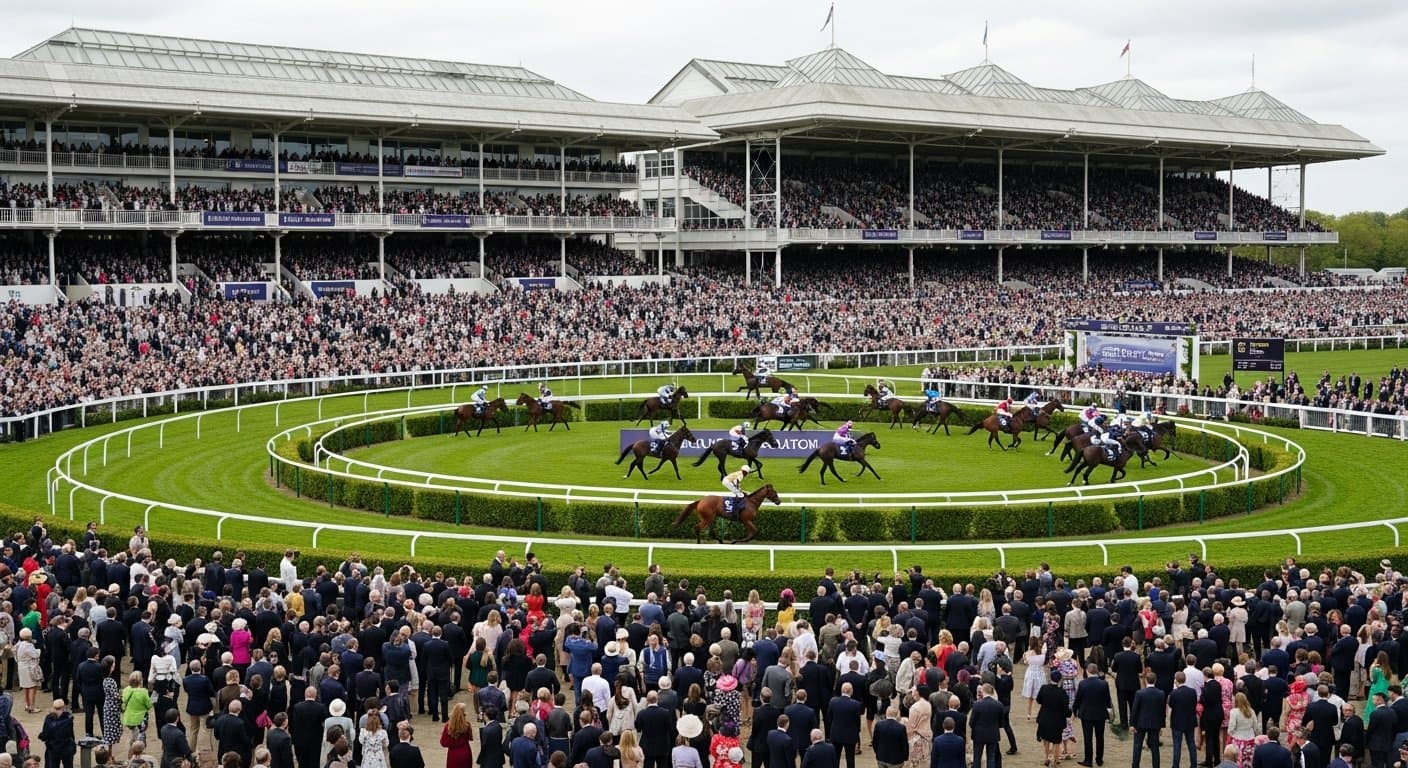
The Derby Winners: The Full Roll of Honour (1970-2026)
Every Derby winner since 1970 - horse, age, starting price, jockey and trainer - with the trends that emerge across the full roll of honour. Source-verified.
Read more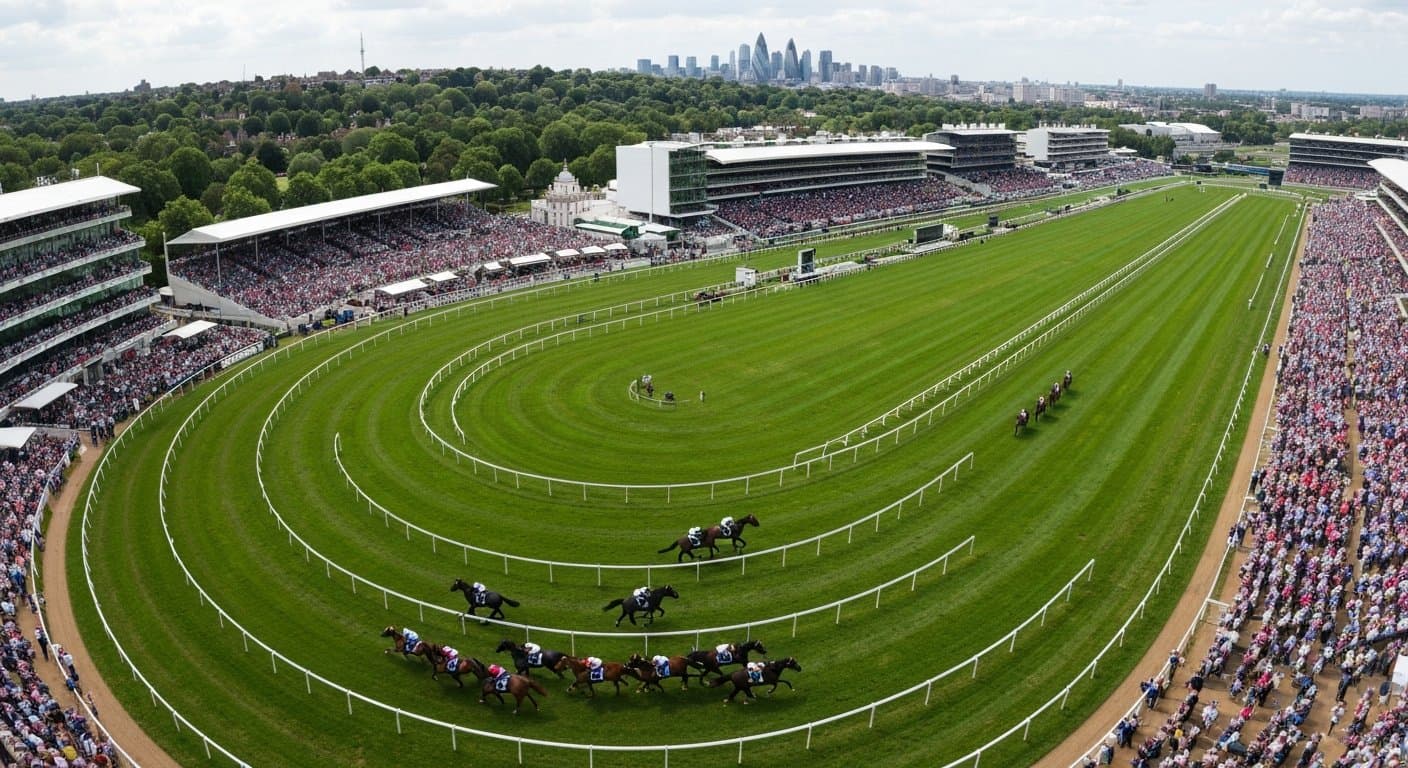
The Epsom Derby: Complete Guide
Your complete guide to the Epsom Derby — the greatest flat race in the world, its history, legendary winners, the course and how to bet on it.
Read more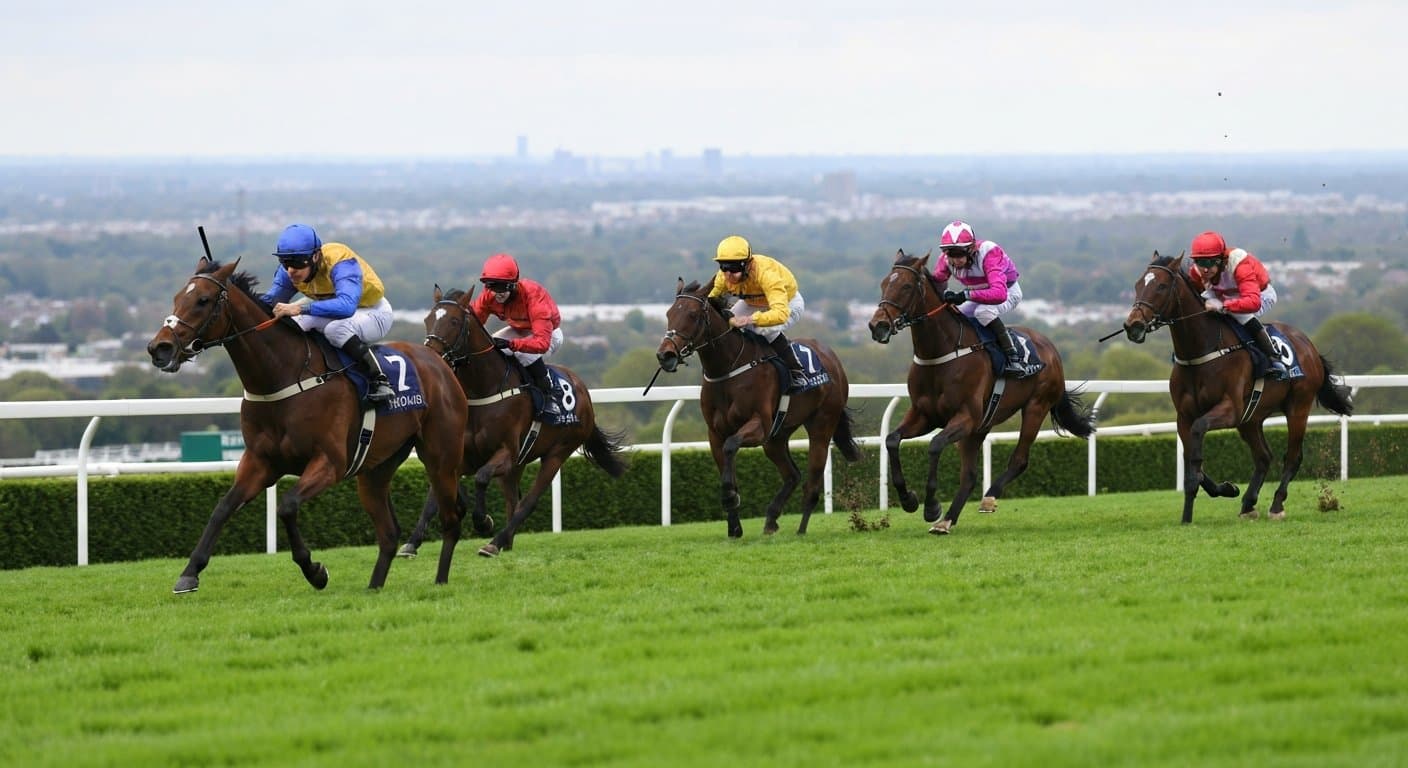
Betting at Epsom Downs Racecourse
How to bet smarter at Epsom: the unique horseshoe track, Tattenham Corner, draw bias, going preferences and winning strategies.
Read moreResearch the field with the AI Race Predictor
Our model publishes calibrated win-probability estimates for UK races — a second opinion to understand a race, not tips. It's open about its record: it doesn't beat the market, and we show exactly how it does.
Betting offers for Epsom Downs
Work it out & learn the basics
Gamble Responsibly
Gambling should be entertaining and not seen as a way to make money. Never bet more than you can afford to lose. If you or someone you know has a gambling problem, help and support is available.