
Founder & Editor · Last reviewed 2026-04-05
Betting at Epsom Downs is different from betting at almost any other racecourse in Britain. The track is different, the challenges are different, and the knowledge required to bet here profitably is different from what works at a conventional flat course like Newmarket or Doncaster. That difference is both the difficulty and the opportunity, because punters who understand what Epsom demands from horses can find real edges that others miss entirely.
The Epsom Downs course is shaped like a horseshoe running left-handed over approximately a mile and a half, though races at the course span from five furlongs on the straight sprint track to the full Derby distance of one mile four furlongs. The elevation changes across the course are dramatic by the standards of British flat racing. From the highest point, approximately 140 feet above the finishing post, the course descends sharply through Tattenham Corner and into the home straight. No other Group 1 circuit in Britain places such specific physical and psychological demands on a horse.
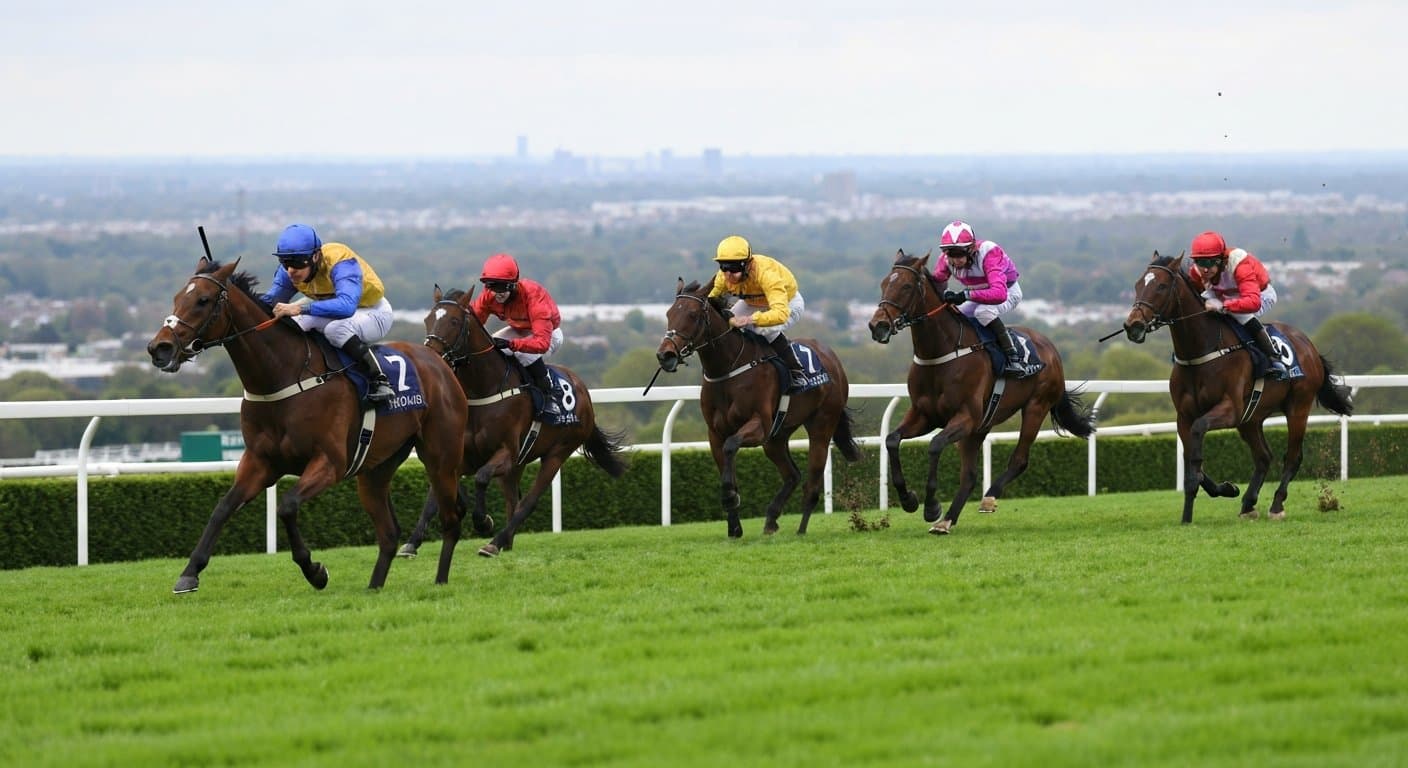
Tattenham Corner is the defining feature of the track. It is a left-handed sweeping bend taken at close to full racing speed, on a pronounced camber that tilts towards the inside. Horses that cannot handle the camber (those that lose balance, drift wide, or fight the bend) give away ground at exactly the moment when maintaining position is most valuable. Horses that glide around it in balance, holding their line against the inside rail, often win races in those three seconds without their jockeys doing anything dramatic.
The home straight that follows Tattenham Corner runs for approximately three and a half furlongs to the winning post, with a subtle camber that falls away from the stands rail. This combination of downhill approach, tight corner, and cambered straight creates a test that is truly unique among the world's great flat tracks. It explains why the Derby, run on this course since 1780, is regarded as the most complete test of a Classic thoroughbred, not just for speed and stamina, but for balance, temperament, and the ability to handle extreme terrain at full pace.
From a betting perspective, Epsom's uniqueness creates consistent opportunities for those who take the time to understand it. Form from flat, galloping tracks (Newmarket, York, the Curragh) does not translate directly to Epsom. Horses that look impeccable on paper after winning impressively at Newmarket can fail completely at Epsom because the physical demands are different. Equally, horses with moderate form at conventional tracks can outperform their ratings at Epsom because the course suits their particular way of moving. That gap between perceived form and Epsom-specific suitability is where the betting value lies.
The Derby is the most prestigious flat race in Britain and one of the hardest to bet. The Oaks, run on the same course for fillies, presents similar challenges. The Coronation Cup, a Group 1 for older horses over the Classic distance, is run on Derby Day and is often a better betting race because its runners have established, clear form profiles. The regular race days (the midweek fixtures and evening meetings through summer) offer the most consistent value for systematic punters who have mastered the course.
This guide covers every factor that matters at Epsom: the track's physical demands in full detail, the draw and positional biases broken down by race type, the Derby and Oaks betting angles with specific trial form analysis, the trainers and jockeys who excel on the Downs, and a complete FAQ section. Whether you are betting on a summer evening handicap or deciding on your Derby selection in March, the principles here apply.
Epsom is a course where knowledge is worth more than almost anywhere else. The bettor who approaches it with an understanding of Tattenham Corner, pedigree requirements, trial form, and the specific physical profile of horses that handle the Downs. That bettor has an edge that never fully disappears from the market.
Bet on Epsom Downs
Place your bets on Epsom Downs races with a trusted bookmaker.

Promo code BETFRED50. New customers only. Register, deposit with a Debit Card, and place a first bet of £10+ at Evens (2.0)+ on Sports, to be settled within 7 days, to get £30 in Sports Free Bets and £20 in Bet Builder Free Bets within 24 hours of settlement. 7-day expiry. Eligibility & payment exclusions apply. Full T&Cs apply. Take Time to Think. BeGambleAware.org. 18+. Full T&Cs.

Promo code R30. New UK customers only, 18+. Register, deposit £10 or more, then place a £10 single cash bet at odds of 1/2 (1.5) or greater on any sports market (excluding Virtuals). Once the qualifying bet settles you get £30 in Free Bets (3 x £10) — the qualifying bet can win or lose. Free Bets are valid on any sports market excluding Virtuals, expire in 7 days, are non-withdrawable and must be used in full. Excluded deposit methods apply (including PayPal, Apple Pay, Skrill and NETELLER). Named bets such as Lucky 15 do not qualify. If you cash out the qualifying bet, or it is voided, you are no longer eligible for the offer. Ends 31.12.26. Full T&Cs apply. Please gamble responsibly. BeGambleAware.org. 18+. Full T&Cs.

Promo code BET40GET20. New UK customers, 18+. Register with the code and place a first bet of £40 or more at Evens (2.0) or greater. Receive 2 × £10 free bets: the first credited automatically once the qualifying bet settles, the second 24 hours later. Free bets must be placed at minimum odds of 4/1 (5.0), expire 24 hours after credit, and the free-bet stake is not returned with winnings. Debit card deposits only. Take Time to Think. BeGambleAware.org. 18+. T&Cs apply. Full T&Cs.

50% of your first-day net losses refunded as a free bet, capped at £25. New UK customers aged 18+ only. To qualify, deposit and place a first bet of £10 or more on any sport at minimum odds of evens (2.00), then place at least two further bets on different events, each worth at least 50% of your largest bet, all at evens (2.00) or greater. Losses are counted from your first settled bet until 23:59 the same day. Place a qualifying £10+ bet and you are guaranteed at least a £5 free bet. Bets placed at SP, void bets, cashed-out bets and bets struck with free bets do not count towards the offer. The free bet is credited the day after your qualifying bets settle and must be used within 7 days, after which it expires. It can be used at odds from 1/4 (1.25) up to 250/1 on singles and straight accumulators, but not on Trixie, Patent or Yankee style multiples. Free-bet stake is not returned with winnings. One offer per person, household, address, IP address and device. E-wallet deposits may not qualify, so check the cashier before depositing. Customers registered with GAMSTOP cannot claim. KYC identity verification must be completed before the free bet is credited. Take Time to Think. BeGambleAware.org. 18+. T&Cs apply. Full T&Cs.

New customers, 18+. Choose the sports bonus at sign-up, make a first deposit and receive a 100% bonus up to £50 in your Sports Bonus balance. To convert the bonus to cash, wager it 10x within 30 days. Single bets below Evens (2.00) do not qualify; accumulators do not qualify if any selection is below 1/2 (1.50). Virtual Sports, voided, cancelled, drawn, cashed-out and free-bet wagers do not count towards wagering. Only the first settled bet per event counts. Withdrawing before the wagering requirement is met forfeits the bonus balance including bonus winnings. Real-money funds are used before bonus funds. Deposits via Skrill or Neteller are not eligible. Not valid in conjunction with other promotions. Odds, bet and payment limits apply. 10bet general and promotion T&Cs apply. BeGambleAware.org. 18+. Full T&Cs.

New customers in Great Britain and Republic of Ireland, 18+. Place a £10 fixed-odds qualifying bet at minimum odds of 1/2 (1.50) — single or each-way (only the win part counts), pre-event or in-play, not cashed out early, within 28 days of opening the account. Receive up to £60 in bonuses credited over three days: 3 × £10 fixed-odds free bets (the first on settlement, then 24 and 48 hours later) plus 3 × £5 Total Goals FOOTBALL spread bets and 3 × £5 racing Winning Favourites spread bets, with a £1 racing Race Index spread bet as an extra on top. The spread bets need a full spread-betting account, opened within 28 days of the fixed-odds account and subject to Spreadex's eligibility and appropriateness checks. Free-bet stakes not returned with winnings; free bets valid 28 days from issue. IMPORTANT: the £5 credits are SPREAD bets — sports spread betting carries the risk that losses can exceed your stake. Sports spread-betting customers do not have Financial Ombudsman or FSCS recourse. Take Time to Think. BeGambleAware.org. 18+. T&Cs apply. Full T&Cs.

Promo code WELCOME15, entered under My Bonuses after registering. New UK customers, 18+. Place a first qualifying bet of at least £10 from your cash balance at odds of evens (2.0) or greater within 7 days of opening the account. Once the qualifying bet fully settles you receive £15 in free bets, credited as 3 x £5 tokens with set uses: one £5 accumulator free bet (minimum 4 legs, each leg at 2/5 or bigger), one £5 sports free bet (any market at evens or bigger) and one £5 Sub Cover free bet (selected football player markets at evens or bigger). Free-bet stakes are not returned with winnings. Free bets expire 7 days after they are credited. Void, cashed-out and partially cashed-out bets do not qualify. One offer per customer. Confirm the current terms on BetGoodwin's own welcome-offer page before claiming. Take Time to Think. BeGambleAware.org. 18+. T&Cs apply. Full T&Cs.

New UK customers, 18+. Minimum deposit £10. Place a £10 qualifying single on sports (excluding virtuals) at minimum odds of 1/2 (1.50), settled within 14 days. Deposit-method exclusions apply. Receive £30 in free bets (stake not returned), split £20 for sportsbook use (2 x £10) and £10 for Bet Builder only (2 x £5); Bet Builder does not cover horse racing. Free bets must be accepted within 7 days and expire 7 days after acceptance. No promo code required. Best Odds Guaranteed on UK & Irish racing, subject to having staked over £25 in the previous seven days. Operated by LiveScore Betting and Gaming (Gibraltar) Ltd, UKGC 56859. Confirm the current terms on LiveScore Bet's own promotions page before claiming. Take Time to Think. BeGambleAware.org. 18+. T&Cs apply. Full T&Cs.
18+. BeGambleAware.org
Track Characteristics
The Horseshoe Layout
Epsom's course is shaped like a horseshoe, running left-handed over approximately a mile and a half. Races over the Derby distance start on the far side of the course, climb steadily uphill for approximately the first half-mile, round the top of the hill, then descend sharply through Tattenham Corner before levelling for the final three and a half furlongs to the winning post. The total elevation change from the start of a Derby to the finish is roughly 140 feet, encompassing both the initial climb and the long descent.
That description tells you immediately that this is not a track that suits every horse. The uphill start demands effort from the first strides when horses are at their freshest and most excited. The descent from around four furlongs out tests a horse's ability to stay balanced while maintaining full racing pace on a gradient. And Tattenham Corner itself (a sweeping left-hand bend on a pronounced camber) is where the race is often decided before the home straight even begins.
The Uphill Start: Energy Spent Early
The initial climb from the Derby start to the highest point of the course runs for approximately half a mile. This section is critical for jockeys to manage carefully. A horse that races too freely up the hill, fighting for its head against the gradient, burns energy it will need desperately in the final quarter-mile. The ideal position through this section is relaxed and well within the field, travelling without undue effort.
Front-runners at Epsom often pay for their early exertion. The uphill gradient taxes even a fresh, well-conditioned horse, and horses that have set a strong early gallop going uphill frequently find their tanks running lower than expected when the descent begins. This is one reason why Epsom has historically rewarded hold-up horses and patient jockeys over the Classic distance, though the patience has a strict limit at Tattenham Corner, where forward position suddenly becomes essential.
Tattenham Corner: Where Races Are Decided
This is the most important single feature of the course for a bettor to understand. As the field rounds Tattenham Corner at close to full racing speed, they are simultaneously going downhill and navigating a left-handed bend on a camber that tilts towards the inside. The combination of these three forces (speed, gradient, and camber) creates a test of balance and athleticism that is unlike any other in European racing.
Horses that handle it well stay low, hold their line against the inside, and emerge from the corner in the same position they entered it. Horses that cannot handle it drift wide under the camber, losing ground and momentum at exactly the worst moment. In a race decided by a length or two over a mile and a half, losing half a length of ground through Tattenham Corner can be the difference between winning and running second.
The physical type that handles Tattenham Corner best is compact and well-balanced, medium-sized rather than very tall, with a lower centre of gravity and a stride pattern that can accommodate the camber without requiring the horse to make significant adjustments. Big, long-striding horses (the type bred primarily for straight, flat tracks like the Curragh or Newmarket) sometimes struggle through the corner because their natural action does not easily accommodate the combination of slope and turning.
This is one of the key physical explanations for why Derby winners are not always the tallest, most imposing-looking horses in the field. Camelot (2012), who won for Aidan O'Brien, was a compact, well-balanced colt. Golden Horn (2015), trained by John Gosden, was a model of athletic balance rather than raw physical size. A big, upstanding colt with a very long stride may win the Derby, but it needs to be exceptionally talented to overcome a track that does not naturally suit its physical type.
The Camber at Tattenham Corner: A Specific Disadvantage for Wide Runners
The camber through Tattenham Corner runs from the inside rail down to the outside of the track, meaning the track surface tilts downward from left to right. A horse running on the outside of the bend is therefore running on ground that is tilting away from its natural line through the corner. This is aerodynamically and physically disadvantageous: the horse must push up against the camber to maintain its racing line, expending extra muscular effort and risking losing its balance.
Horses that naturally run on their left leg (those that are slightly left-handed in their action) often handle Tattenham Corner better than those that are right-handed. The camber encourages them to lean left, which is their natural preference. This is not a factor that shows up in the form book, but an experienced observer watching a horse at exercise or in earlier races may notice which leg a horse prefers, and that information is worth having.
The camber also helps to explain why wide draws at Epsom (particularly for the Derby over the full mile and a half) are historically associated with poorer outcomes in large fields. A horse drawn wide at the start is more likely to find itself on the outer part of the field through Tattenham Corner, fighting the camber rather than being assisted by it.
The Home Straight: Three and a Half Furlongs of Uphill Drag
The home straight at Epsom from Tattenham Corner to the winning post is three and a half furlongs long, which is shorter than many people expect given the course's reputation for producing dramatic finishes. There is also a slight uphill gradient in the final furlong to the winning post, after the relatively flat middle section of the straight.
This uphill finish rewards stamina. A horse that has conserved its energy through the uphill start and managed Tattenham Corner efficiently will have more left for this final section. A horse that has been ridden prominently from the start and gone too hard up the hill in the early stages may find the final uphill furlong too much. The finish tests both stamina and resolution, the ability of the horse and jockey to keep finding more in the closing stages.
The overall arc of an ideal Epsom Derby run is therefore: relaxed through the uphill start, well-positioned into the descent, balanced through Tattenham Corner, and strong in the home straight. Very few horses perform all four elements perfectly. The ones that do tend to win.
Sprint Races on the Straight Course
Not all racing at Epsom is over the Classic distance. The course also stages sprint races over five and six furlongs on a separate straight course that descends throughout its entire length. These races are a completely different puzzle from the round course events.
On the sprint straight, the entire race is run downhill, which favours quick starters and confirmed front-runners who can use the gradient to build early speed. Hold-up horses struggle to produce late runs against gravity in the closing stages. The downhill nature of the track has already done the work of accelerating the early pacemakers, and the closing runners must work against that advantage. On the sprint straight, check the running styles carefully: front-runners and prominent racers have a structural advantage that does not apply on most British courses.
Ground and Its Effect on Epsom's Track
Epsom sits on chalk downland, which means it drains faster and more efficiently than clay-based courses. The going on Derby day in a normal June is typically good or good-to-firm. Firm ground amplifies all of Epsom's characteristics. The descent into the straight gets more testing, the camber at Tattenham Corner is more pronounced, and horses need to be truly athletic rather than just fit and strong.
When the ground turns soft (which can happen if June weather is poor) the course changes character. Soft ground slows the early pace and makes the descent less dangerous, but it also demands much greater stamina and makes the final uphill section considerably harder. Pedigree for soft ground becomes more important in wet conditions, and horses with jumping blood or extreme staying pedigrees move up significantly in the betting hierarchy.
The Key Takeaway for Bettors
Epsom rewards horses with specific physical qualities that are not always obvious from the form book. Balance, a naturally left-handed action, an ability to handle the gradient, and a relaxed early racing style are all qualities that produce Epsom winners but are not always reflected in ratings or recent form from other tracks. Understanding the course's demands means you can identify horses whose Epsom potential exceeds what their wider reputation suggests, and those are the horses that provide the best betting value.
Going & Draw Bias
Going at Epsom: A Track That Changes Character Completely
Epsom sits on chalk downland that drains well, meaning the going on a normal Derby Day in early June is typically good or good-to-firm. That is the default state around which the course's betting angles have been built. When the going deviates materially from those conditions (in either direction) the whole complexion of the racing changes.
On good-to-firm or firm ground, the course is at its fastest and most testing. The descent through Tattenham Corner is at its steepest in terms of effect on horses at speed, and the camber demands maximum athletic competence. Horses need to be balanced and agile. Speed figures from comparable ground at other tracks carry reasonable weight. The best horses (those with the physical tools to handle the track) usually prevail.
When ground turns soft, the picture shifts fundamentally. The gradient becomes more taxing because horses have to work harder through the going rather than running off a firm surface. Stamina becomes a significantly larger factor even in what are nominally middle-distance races. Derby form on soft ground has historically been dominated by horses with staying pedigree, and the conversion rate of Guineas horses to Derby winners on soft ground is lower than on fast ground. A horse that won the 2,000 Guineas impressively on good-to-firm at Newmarket cannot simply be assumed to handle the Epsom test on soft ground. The demands are too different.
On soft ground, look closely at previous runs on testing ground from every runner. A horse with a single run on heavy ground that produced a strong performance is worth significantly more at Epsom in soft conditions than a horse with five wins on good-to-firm. The market sometimes adjusts for this, but not always fully.
Draw Bias on the Round Course: Position Matters More Than Stall Number
The draw at Epsom over the Derby distance of one mile four furlongs is one of the most misunderstood aspects of the course. Many bettors assume Epsom has a draw bias similar to Chester, where the lowest stall numbers carry a mechanical advantage. At Epsom over the Classic distance, the picture is more nuanced.
The initial section of the Derby course runs uphill for approximately half a mile before the field rounds the top of the course. By this point, horses drawn in different stalls have had enough time and distance to find their positions through jockey riding and pace judgement. The draw itself (the starting stall number) has less mechanical importance over 1m4f at Epsom than it does at Chester over 5f, because the race is long enough for position to correct itself.
What matters at Epsom over Classic distances is not primarily where you start but where you are when you reach Tattenham Corner. A horse that has settled in a good position on the inner entering the corner (regardless of whether it started from stall three or stall twelve) is in a better structural position than one that is wide on the outside of the field. The jockey's ability to navigate from wherever the draw places the horse to a good corner position is more important than the raw draw number.
That said, wide draws in large Derby fields do carry a disadvantage. With 14 to 16 runners, a horse drawn in stall 14 starts on the outside of a wide spread of horses. The jockey must either push the horse forward to take an inside position early (burning energy on the uphill section) or accept sitting wide through the first half-mile and hoping to find a better position by the time the descent begins. In both scenarios, the high-drawn horse faces a challenge that a low-drawn horse does not. Over multiple renewals of the Derby, winners from the highest quarter of the draw are statistically underrepresented relative to their share of the field.
A practical approach: in Derby-distance races at Epsom, treat draws in the bottom half of the field as neutral (no inherent advantage or disadvantage), draws in stalls ten to fourteen as carrying a modest disadvantage, and draws above fifteen as carrying a significant disadvantage in fields of 16 or more. This is a guide rather than an absolute rule (talented horses with excellent jockeys overcome high draws regularly) but the statistical pattern is consistent over many years of race data.
Draw on Shorter Round Course Distances
Over seven furlongs and a mile on the round course at Epsom, the draw takes on more significance than it does over the Classic distance. The race starts closer to the key bends, which means high draws have less time to find a good position before they must navigate the first left-hand turn. Low draws are structurally preferred over these distances, though the bias is not as extreme as Chester's sprint draw because Epsom's bends are wider and the camber through them is less sharply punishing.
In races over seven furlongs and a mile at Epsom, apply a moderate low-draw preference. Stalls one to six have a statistically significant advantage over stalls twelve and above in fields of ten or more runners. The effect is real but not decisive: a well-drawn horse does not automatically win, and a poorly-drawn horse of real quality can and does overcome the disadvantage.
Draw on the Straight Sprint Course
Five- and six-furlong sprints at Epsom are run on the separate straight course, and the draw pattern here is distinct from the round course. On the straight sprint course, the track descends throughout its length and has a slight drift from the stands rail towards the far side.
Over many renewals of sprint races at Epsom, high draws (stands side) have historically held a marginal advantage, particularly on fast ground in large fields. The theory is that the camber on the straight course carries horses slightly towards the stands rail during the race, meaning horses on the stands side are running with the natural drift rather than against it. In practice, the bias on the sprint straight is inconsistent and can flip from meeting to meeting depending on the going and where the going is best on the day.
The practical advice for Epsom sprint races: observe where the first two or three finishers come from in early-season sprints at the course, and use that as your guide for subsequent meetings. If the stands-side runners are dominating, the pattern is real that day. If the far-side runners are finishing first, the bias has flipped or is absent. Tracking rail patterns within the same meeting is more reliable than applying a fixed rule.
Practical Application: Going Report and Draw Together
For every Epsom race, the process runs in the following order. First, read the going report carefully, not just the official description but any notes about where the going is best on the course. Second, assess each runner's record on comparable going. Third, for round course races, note the draw and apply the appropriate level of adjustment based on distance and field size. Fourth, for sprint races, note which side of the track conditions favour and weight accordingly.
The going report matters more at Epsom than at many other courses because the chalk-based drainage means conditions can change rapidly after overnight rain. A track described as good on Friday evening can be good-to-soft or soft by Saturday morning if there has been substantial rain. Check the going on the morning of racing whenever possible, not just the previous day's forecast.
Punters who complete this process consistently (going, runner profiles, draw, field size) are working with materially more information than those who simply follow the market or rely on national ratings. At Epsom, that extra information translates into an edge that shows up over a season of racing.
Key Trainers & Jockeys
Derby Betting Angles: One of the Hardest Races to Price
The Derby is the most prestigious flat race in Britain and one of the hardest to bet correctly. The market forms over the winter, with ante-post prices on leading Classic generation horses available from November onwards. By the time the stalls open at Epsom in early June, the public's knowledge has been filtered through a small number of trial runs, but the trial form itself must be read carefully because not all trials are equally informative for Epsom.
The Market Forms Over Winter
The winter ante-post Derby market is driven primarily by reputation and pedigree rather than race form, because few three-year-olds have raced by November. The Ballydoyle operation, run by Aidan O'Brien, regularly has multiple horses in the top of the market through winter based on breeding and early speed as two-year-olds. O'Brien has won the Derby multiple times in the current era, including with High Chaparral (2002), Camelot (2012), and Auguste Rodin (2023). His record means Ballydoyle horses command a pricing premium that is broadly justified by results.
Early ante-post investment in the Derby can be profitable if you identify a horse in November or December that Then runs well in the spring trials and whose price shortens dramatically. Taking 25/1 on a horse in December that starts the Derby at 4/1 is a sound approach, but it requires confidence in the horse's physical profile for Epsom and its pedigree for the trip, not just its early speed.
Trial Form: Which Trials Are Most Informative
Not all Derby trials are equally predictive. Understanding which trials tell you something specifically useful about the Epsom test is the key to using this stage of the betting process effectively.
The Chester Vase (Group 3, 1m4f at Chester) is among the most informative. Chester's tight left-handed circuit tests balance and an ability to handle bends at pace, qualities that also distinguish Derby winners. A horse that wins the Chester Vase is specifically demonstrating aptitude for turning tracks, which transfers directly to Epsom. Chester Vase form read into Derby ante-post prices is often undervalued because Chester's specialist reputation makes the race seem less prestigious than its Derby-pointing value justifies.
The Dante Stakes (Group 2, 1m2f at York) is historically the most powerful Derby trial in terms of direct form conversion. Multiple Dante winners have gone on to Derby success: Authorized (2007), who won the Dante and then the Derby under Frankie Dettori; Sea The Stars (2009), whose Derby win followed a Guineas victory rather than the Dante, but who was bred and prepared along the lines that York form suggests; and North Light (2004), among others. The Dante's importance as a trial is that it selects horses fit enough to run hard in late May and good enough to win a Group 2, both necessary qualities for a Derby contender. However, York is a flat, galloping course, and the Dante does not test the balance and turning ability that Epsom demands. A horse that powers away from the field at York in a straight-track style is not automatically suited to Epsom's bends.
The Lingfield Derby Trial (Group 3, 1m3f112yds at Lingfield Park) is underrated as an Epsom pointer. Lingfield's left-handed, undulating Polytrack surface mimics some of Epsom's characteristics, particularly the left-handed bends and the undulating nature of the ground. A horse that handles Lingfield's turns well has demonstrated something useful about its ability to cope with the Epsom challenge. Lingfield Trial winners have a reasonable record in the Derby itself, though the smaller fields and Polytrack surface limit the direct comparison.
Aidan O'Brien's Record
O'Brien's Derby record deserves specific examination because it affects how his horses should be priced in the ante-post market. Since 2000, O'Brien has won the Derby more times than any other trainer, with victories spanning multiple decades. His horses regularly arrive at Epsom with experience of Chester, Lingfield, or the Curragh, undulating or turning courses that help to prepare them for the Epsom test.
O'Brien's approach to Derby preparation typically involves running his main contenders at Chester or Lingfield in the spring, giving them specific experience of a turning track before the Epsom challenge. This deliberate preparation is worth noting when assessing which Ballydoyle horses have been specifically targeted at the Derby versus those that are supplemented or running without specific preparation.
When an O'Brien horse that ran in the Chester Vase or Lingfield Trial heads to Epsom at a double-figure price, the combination of trainer record and trial suitability warrants serious attention. Equally, an O'Brien horse with no trial experience at a turning track should be treated with more caution despite the yard's overall Derby record.
The Guineas-to-Derby Link
The 2,000 Guineas at Newmarket is run over one mile on the straight Rowley Mile course, four weeks before the Derby. A minority of horses do the Guineas-Derby double in the same season, Sea The Stars (2009) being the outstanding modern example, having won the 2,000 Guineas unbeaten and then produced a dominant Derby performance. But the double is rare for a reason.
The Rowley Mile at Newmarket is a flat, straight, fast track that rewards pure speed and an efficient racing action in a straight line. These are not the primary qualities that Epsom demands. Many top Guineas horses lack the stamina for a mile and a half on a turning, undulating track. The ones that do the double tend to be exceptional individuals with both speed and stamina, the profile of a once-in-a-generation performer.
In the ante-post Derby market, a Guineas winner is often overbet by punters assuming the best Guineas horse will also be the best Derby horse. If the Guineas winner is predominantly speed-bred and won by kicking clear in the final furlong on a flat track, approach its Derby price cautiously. If the Guineas winner won in a style suggesting it was holding itself back (staying on powerfully without being fully extended) the Derby price may be justified.
Trainers to Follow at Epsom
Aidan O'Brien: As covered above, O'Brien's Derby record is unmatched in the modern era. His strike rate across the full Derby meeting card is also high. Take any O'Brien runner that has had a prep race on a turning track seriously.
John and Thady Gosden: Clarehaven Stables has produced multiple Epsom winners in recent seasons, including Golden Horn (Derby, 2015) and Enable (Oaks, multiple times). The Gosden operation understands what the Epsom test demands and prepares their horses specifically for it. Their runners at the Derby meeting warrant close attention in both the Classics and the supporting Pattern races.
Roger Varian: Varian has built a strong record in Pattern races across the flat season, with horses at Epsom forming part of his summer programme. His runners in the Coronation Cup and Oaks trials are worth noting.
Local and regional handlers: For the supporting handicap races and minor meetings, trainers based in Surrey and Sussex with a track record at Epsom provide value. Their familiarity with the course and the going conditions is an edge that national form analysts may not account for.
Jockeys Who Excel at Epsom
Ryan Moore is the outstanding Epsom jockey of his generation. His record in the Derby and across the wider card reflects an exceptional tactical awareness, particularly the ability to position horses through the descent and Tattenham Corner without panic. Moore does not force issues; he rides with a patience that suits Epsom's early demands and a strength in the straight that suits its finish.
William Buick has demonstrated a strong Epsom affinity over multiple seasons. His patient, timing-based approach suits a course that punishes those who spend energy early. Buick's performances in both the Derby and the Oaks have confirmed him as a consistently reliable Epsom jockey.
Oisin Murphy and James Doyle have also delivered significant Epsom performances in recent seasons for the Gosden-connected operations. Their experience of riding the course regularly gives them a feel for how to navigate the descent and corner that infrequent visitors cannot match.
The broader principle for Epsom jockey assessment is: weight course record over national ranking. A jockey who rides Epsom thirty times a season knows how its track rides in a way that a visitor riding there five times a year does not. For handicap races and evening meetings, the regular Epsom jockeys who may not be in the top five of the national championship often provide value against their prices.
Betting Strategies
Oaks Betting: The Fillies' Classic at Epsom
The Oaks is run over the same mile and four furlong course as the Derby, a day earlier on the Friday of Derby weekend, and exclusively for three-year-old fillies. It is one of the five British Classics and typically attracts some of the best staying fillies in training from Britain and Ireland. The betting dynamics are different from the Derby in several important ways that create specific opportunities for informed punters.
The Oaks field is typically smaller than the Derby, usually 10 to 14 runners compared to the Derby's 14 to 16. With fewer runners, the draw advantage is slightly less pronounced than in the Derby, though wide draws in double figures still carry a disadvantage in fields of 12 or more.
The fillies' form book in May and early June is often thinner than for the colts. Many Oaks candidates have run only two or three times before the race, and the market is pricing on a combination of trial form, pedigree, and stable reputation rather than a deep form book. This creates opportunities to back horses where the pedigree and trial form are strong but the price has not fully tightened because of limited race form.
Staying Pedigree is Non-Negotiable
The Oaks distance of one mile four furlongs demands confirmed stamina. A filly that has won over a mile at Newmarket may not get the Oaks trip at Epsom on a track that tests stamina through its gradients. Look for pedigree that confirms staying ability: Galileo and his descendants have been the dominant sire line for Oaks winners in recent years, with Enable (2017), Snowfall (2021), and others confirming the pattern. Frankel, as a sire, has produced Oaks-class middle-distance fillies. Danehill descendants via sons like Fastnet Rock and Dansili have also produced Oaks winners.
A filly that won her trial running on strongly to the line (not just leading before weakening) is demonstrating the stamina profile an Oaks punter needs to see. One that won easily but was barely extended in a moderate trial at Kempton or Windsor is not telling you much about her Oaks credentials.
Irish Challengers
The Irish Classic programme produces strong Oaks challengers because the Curragh, where the Irish Guineas and Irish Oaks are run, is a flat galloping track, different from Epsom, but the pattern of Irish fillies winning at Epsom is consistent. Aidan O'Brien regularly targets the Oaks from Ballydoyle with fillies that have run in the Irish 1,000 Guineas or showed Classic promise in the spring. These challengers often arrive with stronger form profiles than their English-trained rivals, and the O'Brien yard's specific Epsom preparation (which typically includes experience at Lingfield or Chester before the race) means they are not arriving blind at the track.
When an O'Brien Oaks challenger has run at Lingfield Park over a left-handed, undulating track and handled it well, that combination of trainer, preparation, and Epsom-style trial form is one of the best single indicators of an Oaks winner.
The Oaks Trial Programme
The Cheshire Oaks (Listed, 1m2f at Chester), run at the May Festival, is the most important Oaks trial because it is run on a tight, turning track over a distance close to the Oaks. Cheshire Oaks winners who then run in the Oaks have a strong record. The trial specifically selects for balance, turning ability, and stamina, exactly the qualities Epsom demands.
The Musidora Stakes (Group 3, 1m2½f at York) is also a significant Oaks trial, though York's flat, galloping character means it tests different qualities. Musidora winners that handle Epsom well tend to be truly versatile fillies rather than track specialists.
Regular Race Day Angles
For Epsom's non-Classic race days (the summer fixtures, evening meetings, and Derby day supporting handicaps) the following principles deliver consistent value.
Course Specialists in Handicaps
The single most reliable betting angle at Epsom in handicap racing is backing horses with previous winning form at the course. A horse that has won at Epsom before has demonstrated the balance, the willingness to handle the gradients, and the correct physical type for the track. In handicaps, course winners returning off the same or a slightly lower mark than their last Epsom win are statistically among the best bets available. The market does not always fully account for course form at Epsom because the course's quirks are unusual enough that casual bettors may not weight them correctly.
Ignoring Flat-Track Form in Favour of Undulating Track Form
Form from flat, straight courses (Newmarket, Doncaster, Windsor) translates less reliably to Epsom than form from undulating or turning tracks. Goodwood, Brighton, Sandown, and Chester all produce form that is more directly comparable to Epsom's demands. When a horse has strong form from one of these tracks but is priced as though its Epsom credentials are unproven, there is a potential value case.
Brighton, only nine miles from Epsom, is particularly relevant. The two courses share a chalk downland setting, undulating gradients, and a left-handed character. A horse that has won multiple times at Brighton carries Epsom credentials that should be reflected in the price but often are not because Brighton's modest prize-money profile makes its form seem less significant.
Pedigree Pointers for the Classics and Beyond
Galileo's descendants dominate the Epsom Classic form to an extent that makes pedigree analysis truly productive. Galileo won the Derby himself in 2001 and Then became the dominant Classic sire of his generation. His sons and grandsons (Frankel, Australia, Camelot, Galileo Gold) have produced multiple Classic winners at Epsom. When assessing an Oaks or Derby contender, checking whether the sire line goes back to Galileo is a quick first filter.
Beyond Galileo, look for pedigrees that combine speed over a mile with stamina beyond it. The ideal Derby or Oaks pedigree is a horse that could probably win over a mile but clearly stays further, not a confirmed miler that is being stretched in trip for the first time.
Coronation Cup: The Older Horses' Group 1
The Coronation Cup, run on Derby Day itself over the Classic distance of one mile four furlongs, is a Group 1 for horses aged four and above. This makes it a very different betting race from the Classic races. The runners have established form profiles, multiple runs at Group level, and a clear record of how they handle the Epsom test or equivalent tracks.
Be cautious of horses running in the Coronation Cup for the first time on Derby Day without prior experience of Epsom or an Epsom-style track. The race has gone to horses at short prices who are the clear form pick (the best older middle-distance performer in the field) but it has also thrown up surprises when the form horse fails to handle the track. Horses that have run at Epsom, Goodwood, or Sandown before are structurally better placed than those whose form is entirely from flat, galloping venues.
The Coronation Cup winner is often a horse that has been campaigned at the top of the middle-distance programme without necessarily winning a Derby or Oaks in its Classic season. Older horses that have proven their ability to handle the Epsom test over a prior season or at a similar venue are the safest foundation for a Coronation Cup selection.
Pace Analysis
Epsom races at all distances reward pace analysis. The uphill start over the Classic distances creates a natural brake on the speed of the early pace. A horse that forces the issue up the hill is burning energy the others are conserving. When a race has confirmed front-runners who are likely to fight for the lead up the hill, the horse behind them in a prominent position has an advantage. When the pace looks likely to be modest (a single, easy front-runner against a field of hold-up horses) a well-placed horse that can lead into the straight without having overexerted itself is in a strong position.
For Epsom, always think through the likely pace scenario before placing a bet. The course's physical demands make pace a more decisive variable here than at most British flat tracks.
To compare place terms and each-way promotions across the major bookmakers, see our best bookmakers for horse racing guide.
Key Races to Bet On
The Derby (Group 1, 1m4f)
The centrepiece of the Epsom calendar and the most prestigious flat race in Britain. The Derby has been run at Epsom since 1780 and attracts the best three-year-old colts from across Europe, with fields typically in the range of 12 to 16 runners. The race is run over one mile four furlongs on the round course, starting on the far side of the track, climbing to the summit of the course, descending through Tattenham Corner, and finishing up the three-and-a-half furlong home straight.
For betting purposes, the Derby demands the most rigorous research of any race in the calendar. The market forms from November, ante-post prices shift substantially through the spring trials, and by Derby Day itself the market is usually efficient at the head of the field. The edges lie in identifying horses whose trial form specifically suits Epsom (Chester Vase winners, Lingfield Trial winners, and horses with the physical profile to handle the bends) at prices that still carry value. For a full breakdown of Derby betting angles, trial form, and historical trends, see our complete Derby guide.
The Oaks (Group 1, 1m4f)
Run on the Friday before the Derby, The Oaks is the fillies' equivalent and one of the five British Classics. The race has been staged since 1779, making it the oldest fillies' Classic in the world. The quality of the Oaks field regularly matches the Derby, and from a betting perspective it often presents more interesting puzzles because three-year-old fillies' form in late spring can be thinner than the colts'.
The Oaks rewards the same physical and pedigree profile as the Derby: staying pedigree, balance, an ability to handle undulations, and a racing style that conserves energy early. Galileo's descendants have been the dominant force in recent Oaks renewals, including Enable (2017), Snowfall (2021), and several others. Irish challengers from Aidan O'Brien's Ballydoyle yard have a strong record in the race. The Oaks Day guide covers the full picture.
The Coronation Cup (Group 1, 1m4f)
Run on Derby Day itself, the Coronation Cup is a Group 1 for older horses (aged four and above) over the Classic distance. It regularly attracts high-class middle-distance performers and often features last year's Classic generation taking on seasoned campaigners. For betting purposes, the Coronation Cup is one of the best races on the card to research systematically: the runners have established form profiles, their handling of Epsom-style tracks is usually knowable from previous runs, and the race does not carry the uncertainty of three-year-olds running over a new trip for the first time.
Be attentive to Coronation Cup horses running at Epsom for the first time without prior experience of undulating or turning tracks. The form horse that has won everything on flat, galloping courses but has never navigated Tattenham Corner is carrying a specific unknown that the market may not fully price. Horses that have won at Epsom before, or at Goodwood or Sandown, are better-placed structurally.
The Coronation Cup winner in any given year often sets the agenda for the summer Group 1 middle-distance programme, the Prince of Wales's Stakes at Royal Ascot, the Eclipse at Sandown, and the Juddmonte International at York. Tracking the form from Epsom into those subsequent races is a productive exercise.
The Princess Elizabeth Stakes (Group 3, 1m1f)
Run on Oaks Day, the Princess Elizabeth Stakes is a Group 3 for fillies and mares over one mile and one furlong. It is a productive race from a betting standpoint: the field tends to be competitive without being impenetrable, and the Epsom test of balance and turning ability applies here just as it does in the Classics. Course form from previous Epsom meetings is particularly relevant for this race.
The Diomed Stakes (Listed, 1m1f)
Named after the winner of the first Derby in 1780, the Diomed Stakes is a Listed race over one mile and one furlong on Derby Day. It is often a good pointer for future Group-race success and provides an opportunity to assess horses in competitive but below-Group conditions. Progressive horses making their way up the ratings and suited by the Epsom test can provide strong value here.
Derby Day Handicaps
Do not overlook the supporting handicaps on the Derby card. They attract decent fields of competitive horses, and with the crowd's attention focused on the big races, the each-way value in these races can be outstanding. The draw analysis, going preferences, and course form advantages are just as applicable in the Derby Day handicaps as in any Epsom race, arguably more so because the casual money in the market is disproportionately focused on the Classic races.
Particularly in large-field handicaps of 12 or more runners over the round course, the structural positional advantages discussed in the draw and going section translate into actionable betting value. Course winners returning at a similar mark to their last win at Epsom are the foundation of any Derby Day handicap shortlist.
Evening Meeting Handicaps and Minor Fixtures
Epsom's summer evening fixtures and smaller meetings outside the Derby weekend are a punter's playground. The fields are competitive without being impossibly deep, the market tends to be less efficient than on Derby Day, and the course knowledge edge is most exploitable when the public's attention is not trained on the meeting. Local form specialists who have done the work on Epsom's specific demands (going interactions, positional advantages, course-fit profiles) consistently find value at these meetings that the national betting market fails to fully account for.
If you enjoy systematic form study and working out the specific puzzle that each course presents, Epsom's regular fixtures away from the big meetings are some of the most rewarding in the flat calendar.
Frequently Asked Questions
Share this article
More about this racecourse
All Epsom Downs guides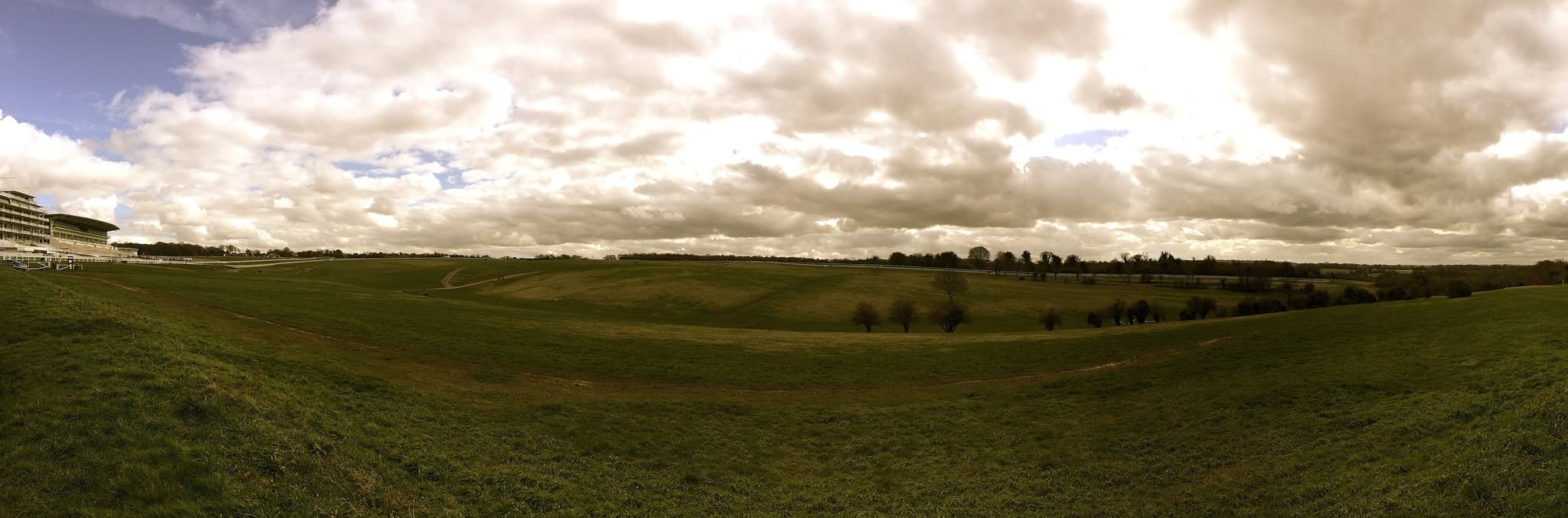
Epsom Downs Racecourse: Complete Guide
Epsom Downs — home of The Derby, one of the world's most iconic flat races. Course layout, facilities, transport and betting angles.
Read more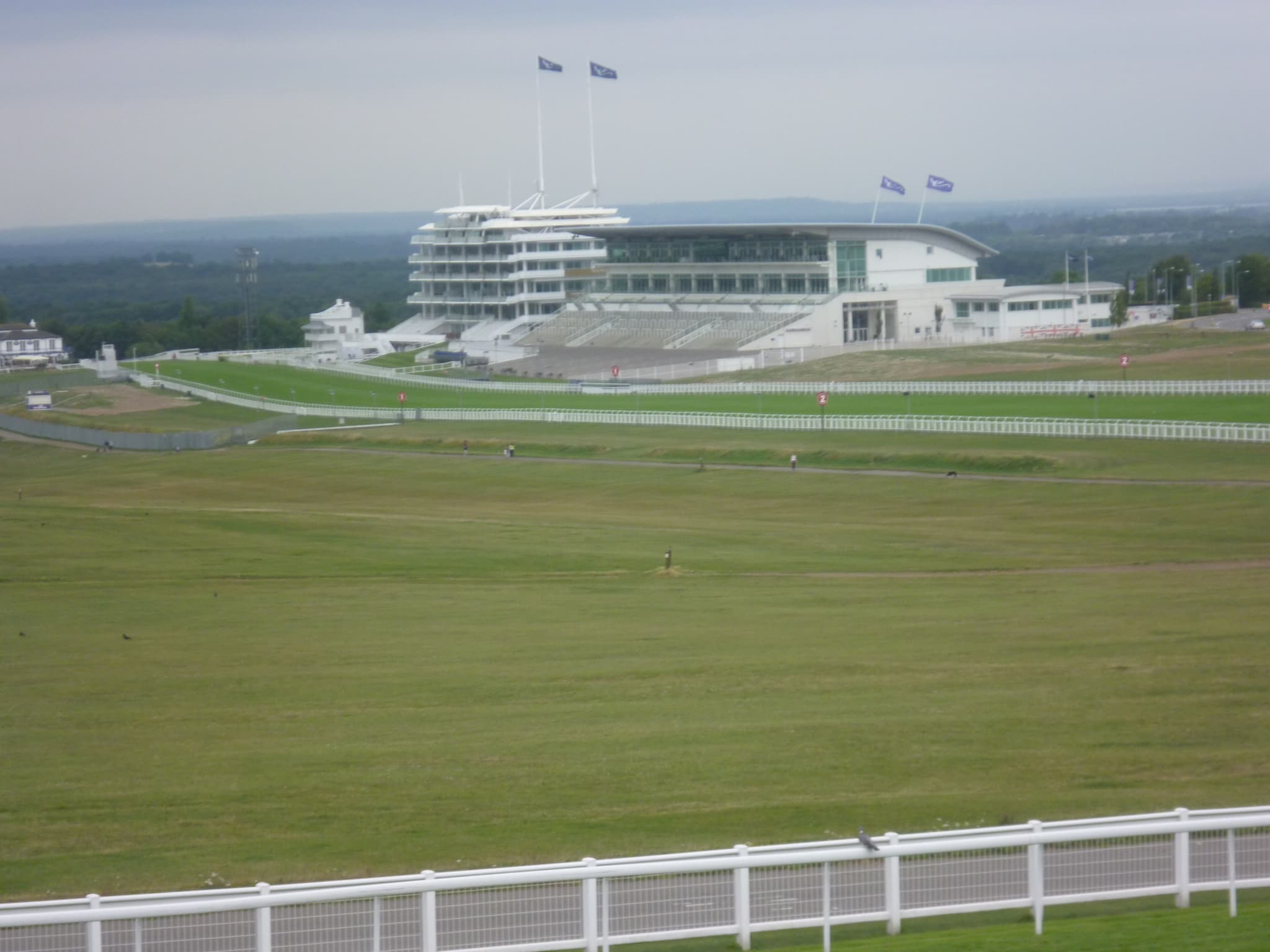
A Day Out at Epsom Downs Racecourse
Everything you need for a day at Epsom Downs: getting there, what to wear, enclosures, food and drink, and insider tips for Derby day and beyond.
Read more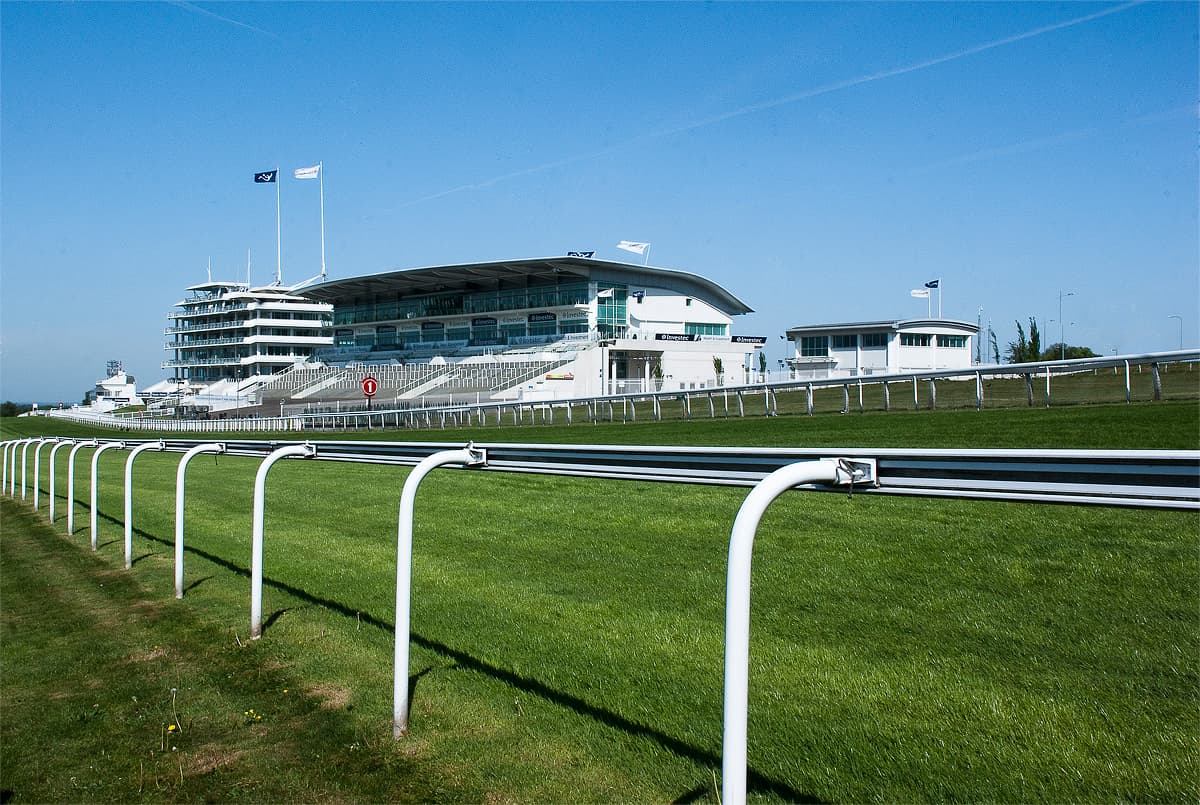
The Epsom Derby Festival: Your Complete Guide
Two days of Classic racing at Epsom Downs: the Oaks and the Derby. Everything you need to know about one of Britain's oldest sporting occasions.
Read morePhotos on this page are used under Creative Commons licences. Titles, sources and licence links for each one are on our image credits page.
Research the field with the AI Race Predictor
Our model publishes calibrated win-probability estimates for UK races — a second opinion to understand a race, not tips. It's open about its record: it doesn't beat the market, and we show exactly how it does.
Betting offers for Epsom Downs
Work it out & learn the basics
Gamble Responsibly
Gambling should be entertaining and not seen as a way to make money. Never bet more than you can afford to lose. If you or someone you know has a gambling problem, help and support is available.