
Founder & Editor · Last reviewed 2026-03-02
If the Derby is the headline act, Oaks Day is the Friday that sets the whole weekend alight. Run the day before the Derby over the same mile-and-a-half trip at Epsom Downs, The Oaks is the oldest Classic for fillies in the world and a race that routinely produces some of the most exciting flat racing of the season. For the purist, it is arguably the better day of the two — top-class action, a slightly less frenetic atmosphere, and a supporting card packed with quality.
The Oaks predates the Derby by a year, having been first run in 1779. It was the race that inspired the creation of the Derby itself, and it has remained one of the five pillars of the British Classic programme ever since. The roll call of Oaks winners reads like a who's who of great fillies — from Petite Etoile and Sun Chariot through to Enable, Love, and the modern heroines who have proved themselves on the unique Epsom test.
What makes Oaks Day particularly appealing for racegoers is the balance of atmosphere and accessibility. The crowds are large but manageable — significantly smaller than Derby Day, which means shorter queues, easier parking, and a better chance of finding a good viewing spot. The quality of the racing is outstanding, with the Oaks itself supported by a card that typically includes Group-race action and competitive handicaps.
The day also carries its own social identity. Long billed as Ladies' Day at Epsom — a tradition that predates the modern fashion calendar by centuries — the Friday of the Derby meeting brings a different energy to the Downs. The millinery is ambitious, the atmosphere is celebratory, and the stands fill with racegoers who are as interested in the colour of the occasion as in the form book. But the racing itself is serious: this is a Group One Classic, one of only five in the British Flat calendar, and the fillies who line up at Epsom on that Friday afternoon are the best of their generation.
Whether you are a seasoned punter looking for betting angles or someone planning their first visit to Epsom, Oaks Day is a brilliant introduction to what this extraordinary racecourse has to offer. This guide covers the history of the race, its greatest winners, what to expect from the full day's racing, and how to approach the betting.
Bet on Epsom Downs
Place your bets on Epsom Downs races with a trusted bookmaker.

Promo code BETFRED50. New customers only. Register, deposit with a Debit Card, and place a first bet of £10+ at Evens (2.0)+ on Sports, to be settled within 7 days, to get £30 in Sports Free Bets and £20 in Bet Builder Free Bets within 24 hours of settlement. 7-day expiry. Eligibility & payment exclusions apply. Full T&Cs apply. Take Time to Think. BeGambleAware.org. 18+. Full T&Cs.

Promo code R30. New UK customers only, 18+. Register, deposit £10 or more, then place a £10 single cash bet at odds of 1/2 (1.5) or greater on any sports market (excluding Virtuals). Once the qualifying bet settles you get £30 in Free Bets (3 x £10) — the qualifying bet can win or lose. Free Bets are valid on any sports market excluding Virtuals, expire in 7 days, are non-withdrawable and must be used in full. Excluded deposit methods apply (including PayPal, Apple Pay, Skrill and NETELLER). Named bets such as Lucky 15 do not qualify. If you cash out the qualifying bet, or it is voided, you are no longer eligible for the offer. Ends 31.12.26. Full T&Cs apply. Please gamble responsibly. BeGambleAware.org. 18+. Full T&Cs.

Promo code BET40GET20. New UK customers, 18+. Register with the code and place a first bet of £40 or more at Evens (2.0) or greater. Receive 2 × £10 free bets: the first credited automatically once the qualifying bet settles, the second 24 hours later. Free bets must be placed at minimum odds of 4/1 (5.0), expire 24 hours after credit, and the free-bet stake is not returned with winnings. Debit card deposits only. Take Time to Think. BeGambleAware.org. 18+. T&Cs apply. Full T&Cs.

50% of your first-day net losses refunded as a free bet, capped at £25. New UK customers aged 18+ only. To qualify, deposit and place a first bet of £10 or more on any sport at minimum odds of evens (2.00), then place at least two further bets on different events, each worth at least 50% of your largest bet, all at evens (2.00) or greater. Losses are counted from your first settled bet until 23:59 the same day. Place a qualifying £10+ bet and you are guaranteed at least a £5 free bet. Bets placed at SP, void bets, cashed-out bets and bets struck with free bets do not count towards the offer. The free bet is credited the day after your qualifying bets settle and must be used within 7 days, after which it expires. It can be used at odds from 1/4 (1.25) up to 250/1 on singles and straight accumulators, but not on Trixie, Patent or Yankee style multiples. Free-bet stake is not returned with winnings. One offer per person, household, address, IP address and device. E-wallet deposits may not qualify, so check the cashier before depositing. Customers registered with GAMSTOP cannot claim. KYC identity verification must be completed before the free bet is credited. Take Time to Think. BeGambleAware.org. 18+. T&Cs apply. Full T&Cs.

New customers, 18+. Choose the sports bonus at sign-up, make a first deposit and receive a 100% bonus up to £50 in your Sports Bonus balance. To convert the bonus to cash, wager it 10x within 30 days. Single bets below Evens (2.00) do not qualify; accumulators do not qualify if any selection is below 1/2 (1.50). Virtual Sports, voided, cancelled, drawn, cashed-out and free-bet wagers do not count towards wagering. Only the first settled bet per event counts. Withdrawing before the wagering requirement is met forfeits the bonus balance including bonus winnings. Real-money funds are used before bonus funds. Deposits via Skrill or Neteller are not eligible. Not valid in conjunction with other promotions. Odds, bet and payment limits apply. 10bet general and promotion T&Cs apply. BeGambleAware.org. 18+. Full T&Cs.

New customers in Great Britain and Republic of Ireland, 18+. Place a £10 fixed-odds qualifying bet at minimum odds of 1/2 (1.50) — single or each-way (only the win part counts), pre-event or in-play, not cashed out early, within 28 days of opening the account. Receive up to £60 in bonuses credited over three days: 3 × £10 fixed-odds free bets (the first on settlement, then 24 and 48 hours later) plus 3 × £5 Total Goals FOOTBALL spread bets and 3 × £5 racing Winning Favourites spread bets, with a £1 racing Race Index spread bet as an extra on top. The spread bets need a full spread-betting account, opened within 28 days of the fixed-odds account and subject to Spreadex's eligibility and appropriateness checks. Free-bet stakes not returned with winnings; free bets valid 28 days from issue. IMPORTANT: the £5 credits are SPREAD bets — sports spread betting carries the risk that losses can exceed your stake. Sports spread-betting customers do not have Financial Ombudsman or FSCS recourse. Take Time to Think. BeGambleAware.org. 18+. T&Cs apply. Full T&Cs.

Promo code WELCOME15, entered under My Bonuses after registering. New UK customers, 18+. Place a first qualifying bet of at least £10 from your cash balance at odds of evens (2.0) or greater within 7 days of opening the account. Once the qualifying bet fully settles you receive £15 in free bets, credited as 3 x £5 tokens with set uses: one £5 accumulator free bet (minimum 4 legs, each leg at 2/5 or bigger), one £5 sports free bet (any market at evens or bigger) and one £5 Sub Cover free bet (selected football player markets at evens or bigger). Free-bet stakes are not returned with winnings. Free bets expire 7 days after they are credited. Void, cashed-out and partially cashed-out bets do not qualify. One offer per customer. Confirm the current terms on BetGoodwin's own welcome-offer page before claiming. Take Time to Think. BeGambleAware.org. 18+. T&Cs apply. Full T&Cs.

New UK customers, 18+. Minimum deposit £10. Place a £10 qualifying single on sports (excluding virtuals) at minimum odds of 1/2 (1.50), settled within 14 days. Deposit-method exclusions apply. Receive £30 in free bets (stake not returned), split £20 for sportsbook use (2 x £10) and £10 for Bet Builder only (2 x £5); Bet Builder does not cover horse racing. Free bets must be accepted within 7 days and expire 7 days after acceptance. No promo code required. Best Odds Guaranteed on UK & Irish racing, subject to having staked over £25 in the previous seven days. Operated by LiveScore Betting and Gaming (Gibraltar) Ltd, UKGC 56859. Confirm the current terms on LiveScore Bet's own promotions page before claiming. Take Time to Think. BeGambleAware.org. 18+. T&Cs apply. Full T&Cs.
18+. BeGambleAware.org
History of The Oaks
The Very First Classic
The Oaks holds a distinction that is often overlooked: it was the first of Britain's five Classic races to be established. When the 12th Earl of Derby and Sir Charles Bunbury proposed a race for three-year-old fillies over one and a half miles at Epsom in 1779, they were creating something entirely new, a standardised test of a generation's best young horses. The race was named after Lord Derby's nearby estate, The Oaks, and the first running was won by a filly called Bridget, owned by the Earl himself.
The success of The Oaks directly inspired the creation of the Derby the following year. Without The Oaks, there would be no Derby, no 2,000 Guineas, no 1,000 Guineas, and no St Leger, at least not in the form we know them. The entire Classic programme stems from that 1779 dinner party at the Earl's estate and the race it produced.
The original conditions were straightforward: three-year-old fillies, owned by members of the Jockey Club, competing over a mile and a half on the Epsom Downs turf. The distance was chosen to test stamina as well as speed. The founders understood that the best broodmare candidates would need to prove they could travel and finish strongly over a real test of stamina. Those priorities remain exactly the same today.
Early Decades and the Epsom Test
Through the late 18th and early 19th centuries, The Oaks established itself as the definitive test of the best three-year-old filly in training. The race attracted strong fields from the major owners and breeders of the day, and winners were prized both for their racing ability and their value as future broodmares. This dual importance (racetrack excellence and breeding potential) has been central to The Oaks throughout its history.
The early Oaks were run in an era when racing was less regulated than today, and the course itself was rougher and more natural than the manicured track modern racegoers know. But the essential challenge was the same: could a three-year-old filly handle the demanding gradients, the sweep of Tattenham Corner, and the stamina test of the final furlongs? The best could, and their victories established bloodlines that influence the breed to this day.
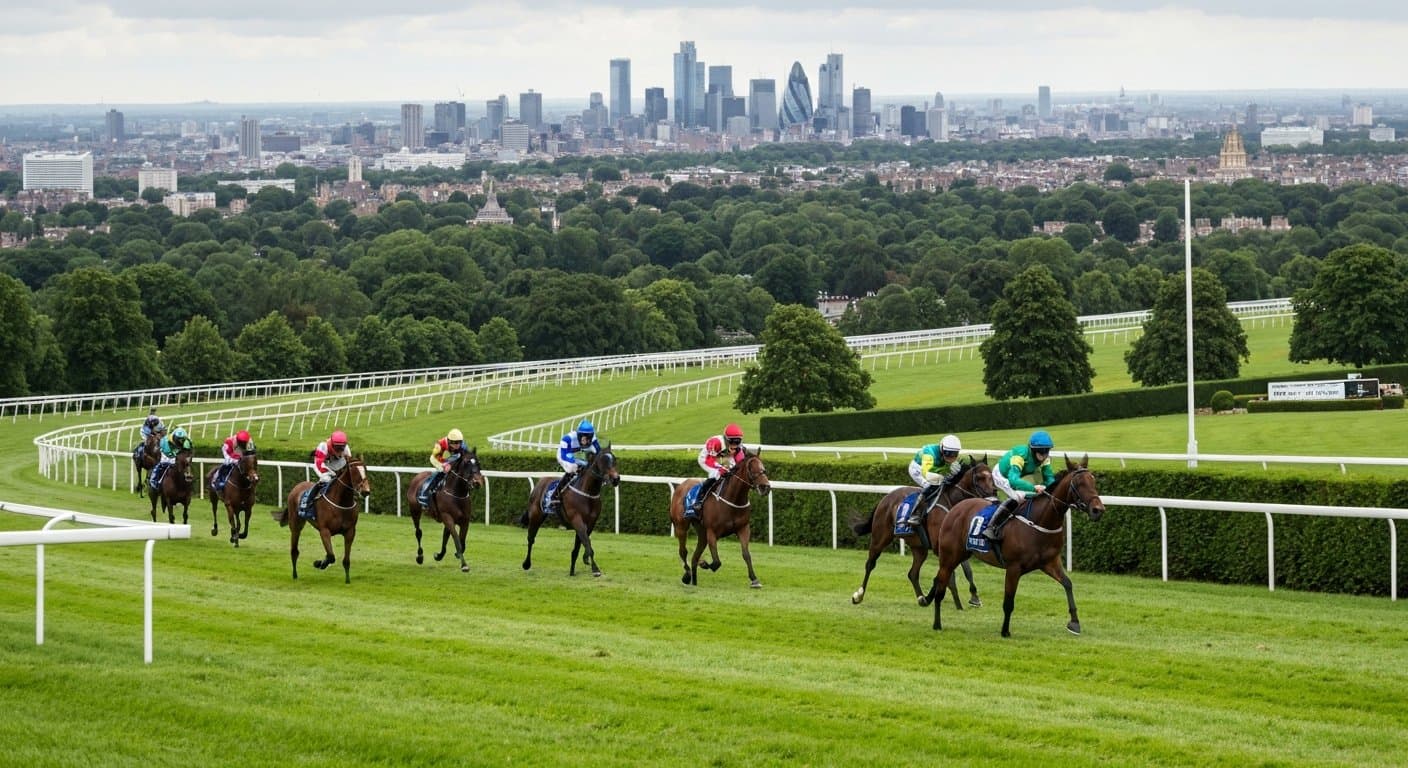
The Epsom test is unlike anything else on the British flat calendar. From the starting stalls on the far side of the course, runners face an immediate uphill climb before the track levels briefly and then begins a long, sweeping descent into Tattenham Corner. The corner itself is left-handed, cambered away from the rail, and taken at racing pace. Fillies with natural balance and the temperament to relax into the downhill gradient carry a significant advantage over those who fight it. The final two furlongs rise sharply from the elbow to the winning post, demanding a final effort from horses already extended by the distance and the terrain. A filly that wins the Oaks has earned every yard of it.
The Victorian and Edwardian Eras
As racing became more organised through the 19th century, The Oaks grew in prestige alongside the Derby. The great owner-breeders of the Victorian era (the Dukes of Westminster, the Aga Khans, the Rothschilds) all coveted an Oaks winner as a future foundation mare for their studs. The race became a keystone of the breeding industry, with winners commanding enormous value at stud.
The Edwardian era produced some of the most extraordinary Oaks performances in the race's history. Sceptre's 1902 victory was part of an astounding season in which she won four of the five Classics, a feat never equalled. As discussed below, Sceptre's achievements placed The Oaks at the centre of British racing's most celebrated individual campaign. Pretty Polly won the Oaks in 1904 as part of a career that included 22 victories from 24 starts, making her one of the greatest racehorses of any sex or era.
The Edwardian period also saw the race grow in crowd size and public attention. The railways had connected London to Epsom efficiently by the mid-Victorian era, and the Derby meeting became a true national event. Oaks Day, the Friday before the Derby Saturday, attracted its own substantial crowd, marking the beginning of the dual-day tradition that defines the Epsom meeting today.
Wartime and Post-War
Like the Derby, The Oaks was relocated to Newmarket during both world wars. The race returned to Epsom each time without missing a year, and the wartime runnings retained their Classic status throughout. Sun Chariot's 1942 victory at Newmarket for King George VI was notable for the royal connection and the quality of the performance. She won four races that season including the 1,000 Guineas and the St Leger. The wartime Oaks winners belong fully to the race's history even if they never ran at Epsom.
The post-war period produced some memorable winners at Epsom itself. Meld in 1955 added the Oaks to a Classic haul that also included the 1,000 Guineas and St Leger, making her one of the great fillies of the 1950s. Petite Etoile's 1959 victory, discussed in the great winners section, delivered one of the most celebrated Oaks performances of the 20th century.
Oh So Sharp and the 1985 Triple Crown
1985 produced an Oaks winner of the most extraordinary quality. Oh So Sharp, trained by Henry Cecil and owned by Sheikh Mohammed, won the 1,000 Guineas, the Oaks, and the St Leger to become the last filly to win the Triple Crown, a sequence of three Classic victories in one season. Her Oaks performance was authoritative: she settled well through Tattenham Corner, moved powerfully into the straight, and drew clear with the decisive acceleration that characterised her entire campaign.
The achievement of winning the Triple Crown had last been managed by a filly in 1902 (Sceptre, who also won the 2,000 Guineas that year). Oh So Sharp's success was a reminder that the Oaks regularly produces fillies of extraordinary breadth, horses whose ability extends far beyond a single Classic.
Diminuendo and the Late 1980s
Diminuendo's 1988 victory is less often cited than Enable or Love, but it deserves attention. The Steve Cauthen-ridden filly, trained by Henry Cecil, won the Oaks emphatically before going on to win the Yorkshire Oaks. Her campaign in 1988 was a model of how the Oaks winner can set the agenda for the entire fillies' programme through the summer.
Ouija Board and the Modern Era
Ed Dunlop's brilliant Ouija Board, who won the Oaks in 2004, marked the beginning of the modern era's most internationally focused Oaks winners. As described in the great winners section, Ouija Board went on to compete across three continents and win Group One races in multiple countries. Her Oaks victory in 2004 announced the new standard: an Oaks winner was now expected to be a true international performer.
The 21st century has seen The Oaks maintain its status as one of the supreme tests in flat racing. The internationalisation of the sport has brought high-class challengers from Ireland and France, while the Coolmore and Godolphin operations have invested heavily in producing Oaks contenders. Minding's 2016 victory for Aidan O'Brien and Ryan Moore illustrated the depth of Ballydoyle's commitment to the fillies' Classic, while Love's nine-length demolition of the field in 2020, one of the widest margins in the race's history, confirmed that the standard of Oaks winner has never been higher.
The Modern Classic
The race has evolved, but its essential character (a demanding mile-and-a-half test on the most individual course in Britain) remains exactly what Lord Derby and Sir Charles Bunbury envisaged nearly 250 years ago. The Oaks is older than the Derby. It produced the template for every Classic that followed. And on the Friday of the Epsom Derby festival each June, it continues to identify the best three-year-old filly in training, just as it has done since Bridget won the inaugural running in 1779.
Great Oaks Winners
Sceptre (1902)
Sceptre's Oaks victory was just one chapter in one of the most extraordinary racing careers in history. Owned by Bob Sievier, a colourful character even by Edwardian standards, Sceptre won four of the five Classics in 1902: the 2,000 Guineas, the 1,000 Guineas, the Oaks, and the St Leger. Only the Derby eluded her (she finished fourth). No horse before or since has matched that feat, and her Oaks success at Epsom was the performance that confirmed her as a truly exceptional filly. She was trained for most of her career by Sievier himself after he sacked several professionals, which makes her Classic haul even more astonishing.
Pretty Polly (1904)
Two years after Sceptre, Pretty Polly added the Oaks to a career record that would eventually reach 22 wins from 24 starts. Trained by Peter Gilpin, she won the 1,000 Guineas and St Leger in the same year, and her Oaks performance was wholly dominant. Pretty Polly raced on until she was five, remaining unbeaten until her final season, and she is widely considered the best filly of the Edwardian era. As a broodmare, she founded a dynasty that shaped 20th-century breeding. Her name survives today in the Pretty Polly Stakes at the Curragh.
Sun Chariot (1942)
Wartime racing brought Sun Chariot's Oaks to Newmarket, but the performance itself was anything but diminished. The grey filly, trained by Fred Darling and owned by King George VI, won the 1,000 Guineas, the Oaks, and the St Leger in 1942, a three-Classic sequence that would have been called the fillies' Triple Crown had the concept been formalised at the time. Sun Chariot was notoriously difficult to handle at home, prone to refusing to work and testing the patience of every stable hand at Beckhampton. On the racecourse, though, she was ruthlessly professional.
Meld (1955)
Meld's achievements have been somewhat overshadowed by later champions, but she deserves recognition as one of the great post-war Oaks winners. Trained by Charles Semblat and owned by Lady Zia Wernher, Meld won the 1,000 Guineas, the Oaks, and the St Leger in 1955, the last filly before Oh So Sharp in 1985 to win the fillies' Triple Crown. Her Oaks performance at Epsom was assured and professional, with jockey Willie Snaith producing her at exactly the right moment in the home straight.
Petite Etoile (1959)
Lester Piggott's name is most closely associated with the Derby, but his partnership with Petite Etoile produced one of the great Oaks performances. The grey filly, trained by Noel Murless, won with consummate ease and went on to an outstanding career that included victory in the Champion Stakes and the Coronation Cup. She was lightly raced as a three-year-old but utterly dominant when aimed at a target. The Oaks was the perfect showcase for her combination of speed, stamina, and the natural balance that the Epsom test requires. Piggott's mastery of the course was never more evident than on this brilliantly balanced, impossibly talented filly.
Juliette Marny (1975)
Lester Piggott claimed another Oaks, because you cannot write about Classic racing at Epsom without him. Juliette Marny won the 1975 Oaks by a comfortable margin, adding to Piggott's extraordinary tally at the course. Her victory demonstrated the quality that had become the hallmark of Oaks winners: the ability to travel smoothly through the undulations and produce a decisive turn of foot in the home straight. Trained by John Winter and owned by James Morrison, she was a model of the well-bred stayer whose talent was perfectly matched to the Epsom mile and a half.
Oh So Sharp (1985)
Henry Cecil trained arguably the most complete filly in the race's 20th-century history when Oh So Sharp won the Triple Crown in 1985. After winning the 1,000 Guineas at Newmarket, she arrived at Epsom for the Oaks as the clear favourite and won in convincing style, never looking in trouble through Tattenham Corner and stretching clear in the home straight under Steve Cauthen. Her St Leger victory at Doncaster completed the sequence, making her the first Triple Crown winner since Nijinsky in 1970 and the last filly to achieve the feat to date. The quality of Oh So Sharp's season has rarely been matched.
Diminuendo (1988)
Steve Cauthen and Henry Cecil combined again three years later with Diminuendo, whose Oaks victory was emphatic enough to signal that another outstanding filly had emerged from the Cecil academy at Warren Place. Diminuendo went on to win the Yorkshire Oaks later that summer and was arguably the best three-year-old filly in Europe that season. Cecil's ability to produce Oaks winners of the highest order (he won the race seven times in his career) remains one of the most impressive training records in the Classic's history.
User Friendly (1992)
Geoff Wragg trained User Friendly to win the Oaks in dominant style before she went on to claim the Irish Oaks and the St Leger, becoming the most successful three-year-old filly in Europe that season. Ridden throughout by George Duffield, User Friendly's 1992 campaign was one of the finest by any Classic filly since Oh So Sharp. Her Oaks performance was characterised by a strong, relentless gallop through the latter stages that simply wore down the opposition, a style that suited the undulating Epsom track.
Ouija Board (2004)
Ed Dunlop's brilliant filly won the Oaks in 2004 and went on to become one of the most popular racehorses of her generation. She raced across the world, winning Group One races in Britain, Ireland, America, and Japan, proving that the qualities tested by the Oaks (balance, stamina, class) translate to any racecourse. Her Epsom victory launched a career that captured the public imagination like few fillies have managed. She was twice voted the Cartier Horse of the Year, and her owner Lord Derby, a direct descendant of the 12th Earl who established the race, described her as the best horse he had ever been associated with.
Minding (2016)
Aidan O'Brien sent Minding to Epsom having already won the 1,000 Guineas, and the filly confirmed her superiority in the Oaks with a performance of controlled authority. Ridden by Ryan Moore, she settled beautifully through the early stages, rounded Tattenham Corner on the bridle, and drew clear in the home straight with the minimum of fuss. She went on to win the Nassau Stakes and the Pretty Polly Stakes that season, confirming herself as the best older filly in Europe. Her Oaks was a masterclass in how the Ballydoyle operation prepares for Epsom.
Enable (2017)
Enable's Oaks victory was the opening statement of one of the greatest careers in modern flat racing. Trained by John Gosden and ridden by Frankie Dettori, Enable swept through the field to win with devastating authority. She went on to win eleven Group One races, including three King Georges and two Prix de l'Arc de Triomphes. But it started here, at Epsom, when a three-year-old filly with an electric turn of foot announced herself to the world. Gosden's preparation of Enable for the Oaks, bringing her into the race fresh with just two prior starts, became a template that other trainers studied closely.
Love (2020)
Aidan O'Brien and Ryan Moore combined to win the 2020 Oaks with Love, a race run behind closed doors during the pandemic and moved from its traditional June slot to July. The empty grandstands robbed the occasion of its usual atmosphere, but they could not diminish the quality of the performance. Love won by nine lengths, the widest margin since 1942, and went on to add the Yorkshire Oaks and the 1,000 Guineas to her Classic haul. The nine-length margin of victory placed her performance in the top tier of Oaks performances of any era.
Tuesday (2022)
Another O'Brien-Moore collaboration, Tuesday's Oaks victory continued Ballydoyle's outstanding record in the fillies' Classic. Named after the day she was born, Tuesday handled the Epsom test with aplomb, confirming the course knowledge and preparation that have become hallmarks of O'Brien's approach to the meeting. Her victory was the tenth Oaks win for O'Brien in the 21st century, a dominance that has no parallel in the race's history since the great Victorian owner-breeders.
Oaks Day: The Full Card
The Supporting Card
Oaks Day is not just about the Classic — the supporting card typically features some excellent races that offer plenty of betting opportunities and high-quality action. While the exact programme varies from year to year, the Friday card generally includes a mix of Group races, Listed contests, and competitive handicaps.
The Coronation Cup (Group 1, 1m4f) has moved between Oaks Day and Derby Day in different years, and when it appears on the Friday card it adds another layer of top-class racing to proceedings. Open to horses aged four and older, it is a fascinating contrast to the Classic itself — experienced campaigners versus the untested potential of the three-year-old fillies. For a detailed guide to that race, see our dedicated Coronation Cup guide.
The Dash (5f) is a feature sprint handicap that has become one of the most popular betting races on the Oaks card. Run over the straight five-furlong course, it is fast, competitive, and often draws a large field — exactly the kind of race where shrewd form study can yield real value. The track characteristics for the sprint course are quite different from the round course: there are no bends to negotiate, but the camber across the width of the straight affects which part of the track produces the best ground, and the position of a horse's draw can be significant. Treat it as a separate puzzle from the Classic.
Other races on the card typically include a Group Three or Listed race for older horses, a fillies' maiden or conditions race for unexposed horses, and one or two handicaps that attract competitive fields from the Classic-generation horses. The mixture of race types means there is something for every punting approach, from those focused purely on the Group One race to those who prefer the value hunting available in a well-handicapped field.
Ladies' Day and the Dress Culture
Oaks Day at Epsom carries a long-established identity as the glamour day of the Derby meeting. Historically referred to as Ladies' Day — a tradition that dates back well into the 19th century — the Friday draws racegoers who invest seriously in their appearance, with the result that the enclosures present a more colourful and fashion-conscious spectacle than the Saturday. This is not merely a modern marketing creation; the association between the fillies' Classic and the prominence of female racegoers has deep roots in the social history of the meeting.
The millinery at Oaks Day has its own informal competition. The Queen's Stand and Lonsdale Enclosure fill with elaborate hats and fascinators that attract as much commentary as the horses themselves, and the atmosphere in the build-up to the feature race has a festive quality that combines real racing passion with a social occasion that draws people from well beyond the form-book community.
For those attending primarily for the racing, the Ladies' Day atmosphere is a backdrop rather than a distraction. The crowds are knowledgeable, the mood is good, and the combination of a serious Classic with an occasion that encourages celebration makes for an excellent day out.
Atmosphere and Crowd Size
The atmosphere on Oaks Day sits in a sweet spot between the carnival scale of Derby Day and the quieter regular fixtures. The crowds are substantial — typically in the range of 20,000 to 30,000 — but not overwhelming. You can move around the course comfortably, find good viewing positions without too much difficulty, and actually reach the bar without losing half a race to the queue.
This relative comfort is worth emphasising for anyone deciding between the two days. Derby Day draws crowds of 60,000 to 100,000 or more, and the Hill fills with tens of thousands of general admission racegoers whose primary interest may be the social occasion rather than the racing. Oaks Day is considerably more manageable: the queues are shorter, the car parks are less congested, and the viewing areas in the grandstands give you a proper look at the race rather than a glimpse between other people's heads.
The dress code mirrors Derby Day in the premium enclosures (suits and ties in the Queen's Stand, smart dress in the Lonsdale Enclosure), and the Hill is open for those who prefer the relaxed, free-entry atmosphere. The overall feeling is celebratory but focused: people are here because they love the racing, and the quality of the card justifies the attention.
The Unique Epsom Challenge for Fillies
The Oaks tests fillies in ways that no other Classic does. The mile and a half at Newmarket — the St Leger apart — is a relatively flat, galloping circuit that rewards the most straightforward combination of speed and stamina. Epsom is something else. The track rises from the gates, drops sharply down the back straight, bends left-handed around the cambered Tattenham Corner, and then climbs steeply in the final two furlongs.
For three-year-old fillies, the challenge is primarily temperamental as well as physical. A filly who is nervous or excitable can expend enormous energy fighting her jockey on the downhill section before Tattenham Corner, arriving at the bend already under pressure and unable to accelerate in the home straight. The fillies who win the Oaks tend to be those who relax into the pace, travel fluidly through the bends, and have enough class to produce an acceleration on the climb to the post.
This is why experienced Epsom observers pay close attention to a filly's demeanour in the paddock and during the early stages of the race. Sweating up before the off, or pulling hard through the first quarter-mile, are warning signs. The great Oaks winners — Enable, Love, Oh So Sharp, Petite Etoile — all shared the ability to look after themselves through the demanding middle portion of the race and deliver their best running when it mattered most.
Timing and Race Schedule
The Oaks is typically the feature race in the middle of the afternoon, going off at around 4:30pm. Racing usually begins at around 2:00pm, giving you a full afternoon of action — typically five or six races including the Classic. Most people arrive for the first race and stay for the card.
If you are combining your visit with Derby Day on the Saturday, Oaks Day makes for an excellent opener. You get the lie of the land, work out where the best viewing spots are, and figure out the logistics — all before the larger Saturday crowd arrives. Plenty of dedicated racegoers make the Epsom meeting a two-day event, and it is easy to see why.
Practical Planning
All the practical advice from our day out guide applies to Oaks Day. Transport is the same (trains to Epsom Downs station, car parking on the Downs), though everything is slightly less hectic than the Saturday. You will still want to arrive in good time — particularly if you are driving — but the pressure is noticeably reduced compared to Derby Day.
The racecourse's enclosures cover several distinct areas. The Queen's Stand offers the best facilities and the closest view of the finish. The Lonsdale Enclosure provides a strong combination of value and quality. The Hill, accessed for free, gives you a position at Tattenham Corner that captures the drama of the race at its most intense — but you will need to move to see the finish, and on Oaks Day the crowds are small enough to allow you to try different vantage points throughout the afternoon.
Food and drink options vary by enclosure. The Queen's Stand has formal dining and a range of bars. The Lonsdale Enclosure has a good selection of food outlets. On Oaks Day, with smaller crowds than the Saturday, waiting times are reasonable and you are unlikely to miss a race standing in a food queue.
Betting Angles
The Unique Challenge for Bettors
Betting on the Oaks presents a slightly different puzzle to the Derby, for one key reason: the form book for three-year-old fillies in early June is often thinner than for the colts. Many Oaks contenders arrive at Epsom with just two or three career starts, and the gaps in their form profiles create both uncertainty and opportunity for punters willing to do the detective work.
The field sizes are typically larger than the Coronation Cup but smaller than many handicaps — usually eight to fourteen runners — and the market takes time to settle. Ante-post activity for the Oaks is heavy in the spring, with significant money placed on the basis of trial form and home reputation alone. Understanding the trials is therefore the single most important starting point for any serious Oaks bettor.
Trial Form: What Each Race Tells You
The Musidora Stakes at York (Group 3, 1m2½f) is run in mid-May and is the most prestigious of the recognised Oaks trials. The winner has a strong record of going on to contest the Oaks, and the form is generally reliable. However, York is a flat, galloping track quite unlike Epsom, so the manner of victory matters more than the bare margin. A filly who wins the Musidora by pulling clear on a relentless gallop may well suit a stamina test; one who wins on speed in a falsely run race may find the Epsom mile and a half less straightforward.
The Cheshire Oaks at Chester (Listed, 1m4½f) is the longest of the recognised trials and the one that most directly tests stamina. Chester's tight, turning track with its pronounced camber is in some respects a small-scale Epsom — not in terms of the gradients, but in terms of the requirement to handle a bending track at racing pace. Fillies who win the Cheshire Oaks with authority have demonstrated both the required stamina and the ability to race professionally on a track that demands concentration.
The Pretty Polly Stakes at Newmarket (Listed, 1m2f) and similar trials at Goodwood, Ascot, and Sandown all feed into the Oaks picture. None of them replicates Epsom, but each adds information about a filly's class, attitude, and versatility. A filly who has won on multiple surfaces or at multiple trips in the spring is demonstrating adaptability that is valuable for an Epsom test.
The Lingfield Oaks Trial (conditions race, 1m3½f) is worth specific attention because the Lingfield Park track is undulating and left-handed. It does not fully replicate Epsom, but the combination of turning track and gradients means a filly that handles Lingfield well has demonstrated some of the physical qualities that Epsom rewards. The trial has produced several Oaks winners and placed horses.
The 1,000 Guineas Connection
Many Oaks contenders have already run in the 1,000 Guineas at Newmarket over a mile. Fillies stepping up from the Guineas bring proven Group One class but face the question of whether they stay a mile and a half. Look at their running style in the Guineas — did they finish strongly, suggesting more distance would suit? Or were they all speed, suggesting the extra half-mile at Epsom might find them out?
Historically, fillies that were beaten in the Guineas but ran on strongly through the line have an excellent record in the Oaks. The step up in trip transforms their prospects, and the market often underestimates this angle. Enable in 2017 bypassed the Guineas entirely and won the Oaks on her third career start — showing that Guineas form is not a prerequisite for Oaks contention, but that a trainer's assessment of what trip a filly wants is often the most telling signal.
Fillies who win both the Guineas and the Oaks — Minding in 2016, Oh So Sharp in 1985, Pretty Polly in 1904 — are exceptionally rare and exceptional horses. When a filly is widely expected to complete the double, the market reflects that with short Oaks odds; the value lies in identifying whether any specific race conditions or course factors might complicate the task.
Trainer Patterns
Aidan O'Brien's dominance of the Oaks in the 21st century has been extraordinary, with winners including Minding, Love, Tuesday, and several other Classic-class fillies. When Ballydoyle targets the Oaks with a strongly fancied runner — typically ridden by Ryan Moore — the market usually makes it favourite, and for good reason. O'Brien targets the Epsom test with precision, and his strike rate warrants serious respect. Note that O'Brien often runs multiple fillies in the Oaks, which can complicate both the betting and the race tactics; understanding which filly represents the primary target is important.
John and Thady Gosden have produced Oaks winners of the very highest quality, with Enable's 2017 victory the standout. Their approach tends to involve fewer runners but carefully targeted ones: a Gosden-trained Oaks runner should always receive careful consideration, particularly when she arrives at Epsom with excellent form at a mile and a half on flat tracks and some evidence of adaptability on different terrain.
Henry Cecil's seven Oaks wins are a record that speaks for itself, and while Cecil is no longer training, his protégés and the tradition of Warren Place preparation for the fillies' Classic continue in various forms across the Newmarket yards.
Going and Draw Considerations
The same going and draw factors that influence the Derby apply equally to the Oaks. On softer ground, stamina becomes even more important, and fillies with proven soft-ground form gain a real edge. The Epsom track drains reasonably well but can turn truly soft in poor early-summer weather; a filly that has only ever raced on fast ground brings an element of uncertainty if the going changes significantly.
The draw is less important for the Oaks than for many races, because the mile-and-a-half trip gives horses more time to find their positions before the critical sections of the track. Nevertheless, a very low draw can be slightly awkward for horses that need to settle — they may get crowded on the inner in the early stages. Very high draws occasionally result in horses having to be pushed forward to avoid being isolated on the outside as the field bunches through the opening uphill section.
Pace and Race Dynamics
The Oaks is often set up by one or two pacemakers — sometimes from the O'Brien yard in years when they have multiple runners. Understanding the likely pace scenario is important. A truly strong gallop from the outset suits horses with the proven stamina to run to their best over the full trip; a slowly run Oaks can degenerate into a sprint finish where natural foot speed becomes more important than the mile-and-a-half form profile.
Horses drawn to close from behind, with strong finishing kicks, do well when the pace is honest. Horses that like to race handily — in the first three or four — tend to be more consistent regardless of the pace, because they can dictate or control position rather than being dependent on the race being truly run.
Value Assessment
The Oaks market is one of the most heavily traded fillies' races of the year, and the bookmakers are experienced at setting accurate prices for the principal contenders. Value is most often found in one of two places: a filly returning from a short absence whose form is less visible to the casual punter, or a horse whose trial performance was misread by the market — perhaps finishing second in a Guineas behind a brilliant winner, then drifting in the Oaks market as a result.
Each-way betting on the Oaks is worth considering in years with larger fields. With fields of ten or more runners, the standard each-way terms offer four places, which means a well-credentialled runner at double-figure odds can represent sound value even if the win chance is modest. In very competitive years, identifying a each-way candidate at 10/1 or 12/1 with solid trial form and an Epsom-suitable profile is one of the most reliable approaches to the race.
Please gamble responsibly. If you feel you may have a problem with gambling, visit BeGambleAware.org or call the National Gambling Helpline on 0808 8020 133.
Frequently Asked Questions
Share this article
More about this racecourse
All Epsom Downs guides
The Coronation Cup at Epsom: Complete Guide
The Coronation Cup is one of Epsom's oldest and most prestigious races — a Group One for older horses run on Derby day. Here's everything you need to know.
Read moreThe Derby Winners: The Full Roll of Honour (1970-2026)
Every Derby winner since 1970 - horse, age, starting price, jockey and trainer - with the trends that emerge across the full roll of honour. Source-verified.
Read more
The Epsom Derby: Complete Guide
Your complete guide to the Epsom Derby — the greatest flat race in the world, its history, legendary winners, the course and how to bet on it.
Read moreResearch the field with the AI Race Predictor
Our model publishes calibrated win-probability estimates for UK races — a second opinion to understand a race, not tips. It's open about its record: it doesn't beat the market, and we show exactly how it does.
Betting offers for Epsom Downs
Work it out & learn the basics
Gamble Responsibly
Gambling should be entertaining and not seen as a way to make money. Never bet more than you can afford to lose. If you or someone you know has a gambling problem, help and support is available.