
Founder & Editor · Last reviewed 2026-04-05
Picture Derby Day morning at Tattenham Corner station. The 09:47 from London Bridge pulls in and several hundred people spill onto the platform, morning suits alongside trainers and football shirts, a woman balancing a wide-brimmed hat against the breeze, a family with a cool box and a folding table. They turn the corner past the car park and the Downs open up in front of them: a wide sweep of green hillside already dotted with picnic groups, the city of London spread across the horizon, and on a clear day the unmistakable outline of Canary Wharf some 20 miles away. There is no other race day in Britain quite like this one.
Epsom Downs Racecourse sits at the top of the Surrey Hills, roughly 15 miles south-west of central London. The course has been operating since 1661, making it one of the oldest in the country, and the Derby has been run here since 1780. That first Derby was won by Diomed, owned by Sir Charles Bunbury, the man who lost the toss to the 12th Earl of Derby over which of them would name the new race. The Earl won, and the name stuck. Since then, some of the most famous horses in the sport's history have come around Tattenham Corner in the lead: Secretariat's American counterpart Mill Reef, the legendary Nijinsky, Lammtarra, Galileo. The track itself is demanding enough to sort out horses that merely look good from those that truly are.
The numbers behind Epsom are extraordinary by any measure. The total site capacity is 120,000, by some distance the largest of any British racecourse. On Derby Day, the ticketed areas across all enclosures hold approximately 55,000 people, but the open downland known as The Hill can accommodate tens of thousands more who watch for free. The total attendance on the first Saturday in June regularly exceeds 100,000. For context, that is more than fill Wembley Stadium. Oaks Day on the preceding Friday is a different proposition: quieter, more racecourse-focused, with world-class Group 1 racing and space to breathe.
What makes the whole experience work is the setting. Racing on a flat circuit would be one thing. Racing on a hillside with panoramic views across one of the world's great cities is something else entirely. The course runs left-handed around a rough horseshoe, dropping sharply downhill into Tattenham Corner before levelling out into a gruelling uphill finish. Horses that handle the track well tend to be athletic, balanced, and tough. Those that cannot handle the undulations find themselves in trouble before they reach the straight.
Who This Guide Is For
This guide is for anyone planning a visit to Epsom Downs, whether you are organising a Derby Day corporate party or booking a last-minute ticket to a summer evening meeting. It covers every enclosure, both train routes, the free Hill entry, dress codes by area, food and drink options, and a full FAQ section with answers to the questions most visitors ask before their first trip.
If you have been before, the enclosures and FAQ sections will still be worth reading. The Queen's Stand in particular has changed in recent years, and the Hill policies around food and drink are worth double-checking before you pack a picnic.
Quick Decision Block
Not sure where to start? Here is a fast-reference summary for first-time visitors:
Getting there: Take the train. Tattenham Corner station (Southern Railway from London Bridge or Clapham Junction) puts you a 10-minute walk from the course. Epsom Downs station (Southern Railway from Victoria via Sutton) is a 5-minute walk. Both have extra services on Derby Weekend. Journey time from London Bridge is around 40 minutes.
Arrive by: 10am on Derby Day if you want a good spot on The Hill. Gates for the ticketed enclosures open at around 10:30am. The racing programme starts at approximately 1pm.
Choosing an enclosure: Queen's Stand: morning suits, hats, Parade Ring access, best finishing-line view, from around £80 on Derby Day. Grandstand/Lonsdale Enclosure, smart casual, solid facilities, good atmosphere, typically £40–60 on Derby Day. The Hill, free entry, no dress code, picnics welcome, funfair, bookmakers' pitches, and a view of Tattenham Corner from the top of the hill.
For families: The Hill on Derby Day is one of the most welcoming family environments in British sport. Children under 18 enter free when accompanied by an adult across all ticketed enclosures too, so do not rule out the Grandstand if you want a closer view of the racing.
For the racing: The Derby is the sixth race on the card, usually at around 4:30pm. The Oaks the day before is typically at around 3:45pm. Both are run over 1 mile 4 furlongs, the full horseshoe trip from the top of the hill, down through Tattenham Corner, and up the punishing straight to the line.
For a deeper look at the course's history and what to expect on each race day, the complete guide to Epsom Downs covers everything from the track's quirks to its biggest-name winners. The sections below deal with the practicalities of your visit, starting with getting there.
Getting to Epsom Downs
By Train: The Recommended Option
The train is the best way to reach Epsom Downs for the vast majority of visitors, and on Derby Weekend it is almost certainly the only option that will not involve sitting in stationary traffic on the A240. There are two separate train stations serving the racecourse, and they operate on different lines, so the one you use depends on where you are coming from.
Tattenham Corner station is on the Southern Railway Tattenham Corner branch, running from London Bridge and Clapham Junction via Purley and Tadworth. The station sits at the end of the line, literally at the base of the Downs, and the walk from the platform to the Hill entrance is around 10 minutes uphill. On Derby Day and Oaks Day, Southern Railway runs a significantly enhanced timetable with extra services from London Bridge. Journey time from London Bridge is approximately 40 minutes. Clapham Junction adds about 10 minutes in each direction. If you are coming from south London, north London (via London Bridge), or the south-east via a connecting service to London Bridge, Tattenham Corner is almost certainly your station.
Epsom Downs station is on a different branch: Southern Railway services run from London Victoria via Sutton and Cheam. This station is slightly closer to the main enclosure entrances, around a 5-minute walk to the Grandstand area, and marginally further from The Hill. Journey time from London Victoria is around 30–35 minutes on a standard service. If you are coming from west London, Gatwick, or anywhere that connects easily into Victoria, this is your preferred option.
Both stations have direct step-free access from platform to street, though the walk from Tattenham Corner station up to The Hill involves a steady gradient. On Derby Weekend, both stations see very high footfall, trains fill up quickly from about 9am onwards, and there are queues at barriers on arrival. Tapping through with an Oyster card or contactless works at both stations, though be aware that Epsom is outside the Oyster boundary, so most people buy a standard rail ticket. You can use a railcard at both, which brings the return fare down substantially.
On the return journey, both stations experience significant queues after the last race on Derby Day. The advice from regulars is to leave the course before the final race if you need to beat the crush, or to wait at least 45 minutes after the final race for the platform queues to clear. Buying a drink and watching the horses be unsaddled is as good a reason as any to stay a little longer.
By Car
Epsom Downs is reachable by car from the M25 (Junction 8 for the A217, Junction 9 for the A24) and from central London via the A24 or A3. The course is well signposted on race days using standard brown tourist signs from the main approach roads.
Under normal traffic conditions, the drive from central London takes 45–60 minutes. On Derby Day, add a substantial margin, the roads around the Downs experience significant congestion from around 9am, and post-race traffic can be heavy for two to three hours after the last race. If you are driving on Derby Day, the target arrival time is before 10am.
There are several car park options:
The Downs Parking Area: a large section of the public downland alongside The Hill is used as informal overflow parking on Derby Day, and this area is free. Spaces are not guaranteed, and the earlier you arrive the better. This area suits people heading to The Hill rather than the ticketed enclosures.
Official Pre-Booked Car Parks: there are a series of managed car parks closer to the grandstands, ranging from general car parks to premium options immediately adjacent to the Queen's Stand entrance. These must be booked in advance through the Jockey Club website. On Derby Day, all premium and mid-range spaces sell out weeks in advance. On standard fixtures, on-site parking is usually available without pre-booking and is often free or low-cost (£5–10).
Blue Badge Parking: dedicated spaces are available close to the accessible entrances and must be booked through the racecourse in advance for Derby Weekend.
If you are driving on Derby Day and not in a pre-booked car park, plan for the possibility of parking some distance from the course entrance and walking. Arriving after 11am without a booking on Derby Day is likely to mean a significant walk, or no parking at all.
After the last race, the roads directly around the Downs are at a standstill for 30–60 minutes. Experienced regulars typically stay on site until about an hour after racing ends and then leave. The route out via Tattenham Corner Road or Epsom Lane North clears faster than the main A240 approach.
By Bus
The 166 bus runs between Epsom town centre and the course on race days, and on Derby Weekend there are enhanced services. If you arrive by train at Epsom mainline station (South Western Railway from London Waterloo, note, this is a different station from Epsom Downs), the 166 connects the town centre with the racecourse and avoids the uphill walk of about 1.5 miles.
National Express also occasionally runs coach services directly to Epsom for the Derby from London Victoria Coach Station, worth checking if you prefer a door-to-door option.
Cycling
The Downs are accessible by bike, and there is cycle parking available on site. The approach from Epsom town or Banstead is straightforward on quiet residential roads. This option is obviously less practical if you are coming from central London, but for people within 5–10 miles of the course, arriving by bike on a non-Derby day is a perfectly good choice.
Getting There on Derby Day: A Summary
Derby Day logistics are different enough to warrant a dedicated summary. Arrive by train if at all possible: Tattenham Corner from London Bridge (about 40 minutes) or Epsom Downs from Victoria (about 33 minutes). Target arrival time is before 10:30am for The Hill, before 11am for the ticketed enclosures. If driving, arrive before 10am, have a pre-booked parking space, and plan the return journey around waiting for traffic to subside. The racing card starts at approximately 1pm, with the Derby itself at around 4:30pm, so there is plenty of time to settle in, explore, and place a few bets on the earlier races before the centrepiece of the afternoon.
What to Wear
The Rule That Covers Most Situations
At most racecourses, the dress code question has one answer with a few enclosure-specific variations. At Epsom, the answer is actually three quite different things depending on where you are going and on which day. Get this right and you walk straight through the gate; arrive in the wrong outfit for the wrong enclosure and you will be standing outside having an awkward conversation with a steward.
The simplest way to frame it: the Queen's Stand on Derby Day has the strictest code, The Hill has no code at all, and everything else sits somewhere in the middle.
Queen's Stand: Derby and Oaks Days
The Queen's Stand is Epsom's top-tier enclosure, and the dress code on Derby Weekend reflects that status. For men, a suit and tie is required, a full suit, not just a jacket with jeans. Morning dress (top hat and tails or a lounge suit) is traditional and widely worn, though a dark business suit and tie is entirely acceptable. The key point is that jeans, trainers, shorts, and casual shirts are all refused entry regardless of the rest of the outfit.
For women, the Queen's Stand requires smart dress. A hat or fascinator is strongly encouraged on Derby Day and Oaks Day, and the overwhelming majority of women in this enclosure do wear one. There is no formal requirement listed in the dress code policy, but in practice a hatless woman in the Queen's Stand on Derby Day will be in a small minority. The standard is approximately equivalent to Royal Ascot's Queen Anne Enclosure, smart and polished, with headwear as the conventional expectation rather than a strict rule.
What not to wear: jeans of any colour, trainers, sportswear, shorts, visible logos on casualwear, and fancy dress. The Queen's Stand stewards will turn away anyone who does not meet the code.
Lonsdale Enclosure and Grandstand: Derby and Oaks Days
The Lonsdale Enclosure and the main Grandstand areas have a smart casual code on Derby Weekend. For men, a collared shirt and trousers is the minimum. A jacket is not required but is widely worn, and a tie is optional. For women, smart casual covers a wide range of options: a summer dress, tailored trousers with a blouse, or a smart jumpsuit all work well. A fascinator or hat is perfectly appropriate and quite common, but unlike the Queen's Stand it is truly optional.
The code in these enclosures rules out: jeans, trainers, sportswear, shorts, and football shirts. If you would wear it to a decent restaurant, it will probably pass. If you would wear it to the gym or a Saturday afternoon watching football, it will not.
The Hill: No Dress Code
The Hill is truly different from any other enclosure at any major British racecourse. The open downland is free to access and carries no dress code whatsoever. On Derby Day, the Hill fills with somewhere between 40,000 and 60,000 people across the afternoon, and you will see morning suits worn by people who wandered over from the Grandstand, football shirts, fancy dress costumes of every description, swimwear (occasionally), and everything in between. The lack of a code is not an oversight, it reflects the Hill's centuries-old role as the public face of Derby Day, where the event belongs to everyone.
If you are heading exclusively to The Hill, wear whatever is comfortable and practical for a day outside.
Regular Fixtures: All Enclosures
Outside of Derby Weekend, Epsom's dress code relaxes considerably across the board. For standard flat meetings through the summer season, smart casual covers the main enclosures. Chinos and a collared shirt work for men; a summer dress, tailored jeans (smart ones, not distressed denim), or equivalent for women. You do not need a tie, a hat, or a jacket unless you want to wear one.
Evening meetings are the most relaxed of all. Many people arrive straight from work, and the dress code reflects that, clean and presentable is the main requirement. Heels are perfectly appropriate but not in the least necessary.
Practical Considerations for Any Visit
Regardless of enclosure or day, a few practical points about clothing are worth making.
Epsom sits at the top of a hill in Surrey, and the course is entirely outdoors. In June the weather can be wonderful, but the Downs are exposed, a temperature of 22°C on the hill with a 15mph breeze feels considerably cooler than a sheltered London garden at the same reading. Even on sunny Derby Days, a light layer you can remove and carry is worth bringing.
Footwear deserves specific thought. The Hill and the Tattenham Corner area involve walking on grass that can be uneven, and if there has been any rain in the days before your visit, some patches will be soft. Stiletto heels on grass are a miserable experience; low heels, wedges, or flat shoes make for a far better day. In the Queen's Stand and the main grandstand areas, the surfaces are paved or covered, so high heels are manageable. Still, you will walk more than you might expect, between the station, the course entrance, the Parade Ring, the viewing areas, and the betting facilities, a Derby Day involves a fair amount of ground.
A small bag or backpack is useful for carrying sunscreen, a light jacket, a racecard, and any snacks if you are heading to The Hill. Most of the enclosure entrances have security checks, and large bags may be searched.
Enclosures & Viewing
Overview of the Layout
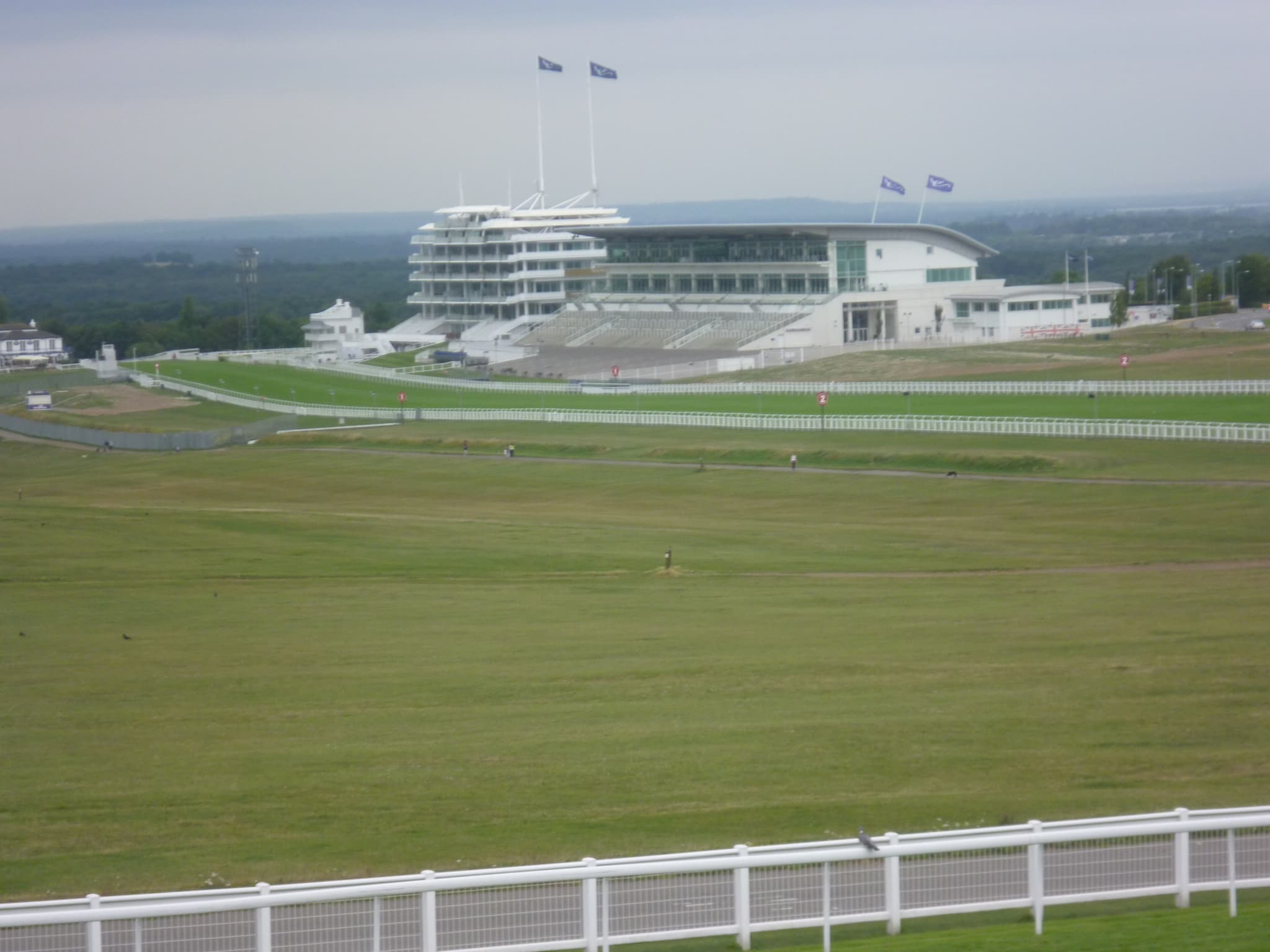
Epsom's enclosure system is more spatially spread out than most British racecourses, which reflects the nature of the site. The grandstand complex sits on the inside of the horseshoe, looking out over the finishing straight. The Hill occupies the open downland above Tattenham Corner on the outside of the track. Between them, the course runs over one mile and four furlongs, dropping steeply from the starting point near the 10-furlong gate, sweeping left and downhill into Tattenham Corner, then climbing hard through the final four furlongs to the finish.
Understanding the geography matters for planning where you want to be. The grandstand area gives you the best view of the finish but you are looking across to Tattenham Corner from a distance. The Hill puts you at Tattenham Corner itself but you will need the big screens to follow the finish. There is no single spot on the course where you can comfortably see both the famous bend and the winning post, which is part of what makes Epsom worth exploring on foot during your visit.
Queen's Stand
The Queen's Stand is Epsom's flagship enclosure, positioned directly on the winning post. It is the highest vantage point within the grandstand complex, with tiered viewing decks that look straight up the finishing straight and, from the upper levels, provide a full view of the course right around to Tattenham Corner. If you want to watch the Derby and see every stride of the race from the moment the horses hit the straight until the winner passes the post, this is where to be.
Tickets for the Queen's Stand on Derby Day are priced from around £80 for standard admission up to considerably more for hospitality packages and private boxes. The facilities inside are the most extensive on the course: multiple bars, two or three sit-down restaurant options, a champagne terrace, and access to the Parade Ring, where you can watch the horses before each race. The Parade Ring is worth making time for, seeing a Derby runner being led around 20 minutes before the off gives you information that television broadcasts do not fully convey about a horse's condition and temperament on the day.
Private boxes in the Queen's Stand can be hired for groups, typically from around eight to twelve people upwards. These book out for Derby Weekend months in advance. For Oaks Day, availability is somewhat better and prices are slightly lower.
The dress code (suits and ties for men, smart dress with hat or fascinator for women on Derby Weekend) is enforced at the entrance. See the What to Wear section for the full breakdown.
Grandstand (Lonsdale Enclosure)
The Lonsdale Enclosure (sometimes referred to more broadly as the Grandstand area) is the main middle-tier option and where the majority of ticketed racegoers end up. It runs alongside the Queen's Stand and offers a view down the finishing straight, access to the Parade Ring viewing area, and a lively, sociable atmosphere. Prices on Derby Day are typically in the £45–65 range depending on when you book; Oaks Day tickets are slightly cheaper.
The viewing from the Lonsdale Enclosure is good rather than exceptional. You are set back slightly from the winning post compared to the Queen's Stand, and the upper tiers of the stands offer a better sightline than the lower levels. The general rule is to get up and get a spot on the upper terrace before the big race rather than trying to watch from the concourse or lower level, where sightlines are obstructed.
Facilities in the Lonsdale Enclosure include a wide range of bars and food outlets, a Tote betting hall, and on-course bookmakers' boards visible from the terrace. The crowd on Derby Day is a broad mix: racing enthusiasts who have bought here for the view and the access to the Parade Ring, groups celebrating special occasions, and plenty of first-time racegoers. It is the most sociable enclosure on the course for a group day out where the racing matters but the occasion matters just as much.
The Hill
The Hill is what sets Epsom apart from every other major racecourse in Britain. This area of open chalk downland above and behind Tattenham Corner is public land (it has been common land for centuries) and on Derby Day it is free to access for anyone who wants to be there. No ticket required. No dress code. No bag search. You simply walk up the hill and join the party.
The scale of The Hill on Derby Day has to be seen to be fully appreciated. The crowd typically reaches between 40,000 and 60,000 people by the time the Derby is run in the mid-afternoon. There are funfair rides and stalls running along the lower section, rows of on-course bookmakers taking cash bets on the rails, temporary food vendors selling everything from burgers to Caribbean jerk chicken, and a patchwork of picnic groups stretching up the hillside. Some groups have been coming to the same spot for twenty or thirty years and treat the occasion as a serious social event, proper hampers, folding tables, wine in proper glasses. Others are there with a bag of cans and a disposable barbecue. Both approaches are entirely at home on The Hill.
What can you actually see from The Hill? The answer is: a lot, but not everything. The Hill sits on the outside of Tattenham Corner, which means you are looking directly at one of the most dramatic moments in any Derby, the field sweeping around the left-hand bend at speed, horses fanning wide, jockeys pushing into position for the straight. You are close to the action here. What you cannot see is the finish, which is around the other side of the circuit. Large screens are positioned on The Hill to show the full race broadcast, so you follow the finish on the screen rather than watching it live. For most people on The Hill, this is entirely fine. The atmosphere and the spectacle of Tattenham Corner are the draw, not a precise finishing-line view.
Children are very welcome on The Hill and it is in many ways the most family-friendly part of the whole Derby Day operation. The funfair, the open space to run around, the relaxed atmosphere, and the free entry make it an easy choice for families with young children who might not sit still through a formal enclosure afternoon.
One practical note: The Hill is on a slope, and the best spots (flat enough for a comfortable picnic, with a good view of the screens and of Tattenham Corner) fill up from around 9am on Derby Day. If you want a proper pitch, get there early. By noon the prime areas are very busy.
Tattenham Corner Viewing Area
On some fixtures, a dedicated viewing area directly at Tattenham Corner allows racegoers to watch the field turn from a standing position on the rail. This is one of the most dramatic vantage points in British racing, the camber of the corner, the pace at which horses take it, and the way the field compresses and fans out simultaneously are things that photographs and television do not adequately convey. Even if you have a grandstand seat, walking to Tattenham Corner for at least one race during the afternoon is worth doing.
On Derby Day specifically, the Tattenham Corner area is within The Hill zone and accessible to everyone. Position yourself on the rail with a clear view of the bend before the big race and you will see something that sticks with you.
Non-Derby Fixtures
On standard flat meetings through the summer, the enclosure structure is simpler and considerably cheaper. A single general admission ticket typically covers access to most areas of the course, and prices are usually in the £10–25 range. Crowds on quiet weekday evenings can be as few as a few thousand, which means you can watch from the rail, wander freely between enclosures, and find a good spot on the finishing-line terrace without any difficulty.
These quieter meetings are underrated. The Surrey countryside is at its best in June, July, and August; the evening light on the Downs in high summer is truly beautiful; and watching four or five races from different points around the course with a relaxed crowd is one of the more pleasant ways to spend a summer weekday evening. Tickets for evening fixtures are sometimes as low as £10–15 on the gate.
Food & Drink
Queen's Stand: Fine Dining and Hospitality Packages
The Queen's Stand operates at the upper end of racecourse catering. Pre-booked hospitality packages include sit-down three-course meals with table service, typically featuring dishes built around seasonal British ingredients, so expect something like smoked salmon to start, a beef fillet or sea bass main, and a dessert with cream in some form. These packages are sold as part of combined ticket and hospitality bundles and need to be arranged well before Derby Day; prices start from around £200 per person for the full hospitality experience.
For those in the Queen's Stand without a hospitality package, there are a la carte restaurant options available on Derby Day, though reservations fill quickly. The champagne terrace is the default social hub in the enclosure. A glass of Pol Roger or equivalent is the drink of the moment, and on Derby Day afternoon the terrace fills with people in morning dress holding their glasses against the skyline. It is a very specific kind of pleasurable occasion.
The bars in the Queen's Stand serve a full range of drinks including lagers, ales, wines, spirits, and the traditional Pimm's. Prices reflect the premium enclosure: expect to pay around £7–9 for a pint of lager and upwards of £12 for a glass of champagne. It is racecourse pricing, and it is what it is.
Lonsdale Enclosure and Grandstand: Varied and Solid
The Lonsdale Enclosure and Grandstand area offer a broader, more varied spread of food and drink at more accessible prices. There are multiple bars distributed around the concourse and terraces, meaning queues on Derby Day are spread across the site rather than concentrated at one or two points. The standard advice from experienced regulars is to buy drinks between races rather than in the ten minutes before a big race. The crush at the bar in the 15 minutes before the Derby is real.
Food outlets in the Grandstand area have improved substantially over the past decade. The old racecourse staple of a lukewarm burger in a polystyrene box has largely given way to better options: pulled pork rolls, fish and chips cooked to order, hog roast with apple sauce and stuffing, a decent curry counter, and a selection of street-food-style vendors that vary from meeting to meeting. On Derby Day, additional food trucks are brought in to handle the volume, and the range typically extends to wood-fired pizza, smash burgers, and Asian street food options.
A full lunch in the Grandstand area (main, pudding, a couple of drinks) will cost two people somewhere between £40 and £60 depending on choices. Racecourse food pricing is not supermarket pricing, but it is not extortionate by the standards of major sporting events.
The Hill: Picnics, Food Vendors, and Bars
The Hill has its own food and drink ecosystem, and the most important thing to know is that bringing your own food is not just permitted. It is tradition. Thousands of people arrive at The Hill on Derby Day with cool boxes, picnic hampers, folding tables, and in some cases extraordinary levels of catering ambition. On a walk through The Hill in the hour before the Derby, you will pass groups eating homemade antipasti, proper Scotch eggs from Borough Market, supermarket party food spread across a tablecloth, and everything in between.
The policy on alcohol is that you can bring your own to The Hill, though the racecourse reserves the right to restrict glass bottles and to check quantities. The current guidance (always worth confirming on the Jockey Club website before Derby Day) is that glass bottles may be refused entry and that large quantities suggesting commercial-scale supply will be turned away. A couple of bottles of wine or a case of beers for a group is fine; arriving with a trolley stacked with cases is likely to cause a conversation with security.
Soft drinks have no restrictions on The Hill.
For those who prefer to buy on site, there are temporary food vendor units along the lower edge of The Hill selling hot food, and several temporary bar structures. Prices are broadly comparable to what you would pay at a music festival: around £5–7 for a hot food item, £6–8 for a pint of beer, and similar for soft drinks. The range is reasonable (typically burgers, hot dogs, chips, and one or two slightly more interesting options) and quality is generally fine for what it is.
Bring Your Own: The Non-Hill Policy
Away from The Hill, the bring-your-own policy is considerably more restrictive. The Queen's Stand and Lonsdale Enclosure do not allow outside food or drink to be brought in. This is fairly standard across premium racecourse enclosures and is not unique to Epsom. Some hospitality packages include their own hamper or picnic box, but for general admission in those areas, food and drink comes from the on-site outlets.
If you are in the Grandstand area for a non-Derby fixture, the policy is slightly more relaxed, check the specific fixture guidance on the Jockey Club website, as rules can vary between meetings.
Evening Meetings
The summer evening fixtures have a different feel to big-day catering. The grandstand facilities are open but the hospitality restaurants typically are not operating. Instead, a selection of food trucks and pop-up bars cater to a more casual crowd. Prices at evening meetings are generally a notch below Derby Day rates, and the atmosphere is more relaxed, think a pleasant outdoor food market with racing as the backdrop rather than a formal dining experience. Evening meetings are a truly good choice for a midweek social, and the food offering fits that mood.
Practical Tips
Buy drinks before the big races. This is the single most practical piece of food-and-drink advice for Derby Day, and it applies across every enclosure. The bars are not slow. They are just overwhelmed between 4:15pm and 4:30pm when thousands of people simultaneously decide they want a drink before the main event. Head to the bar 30 minutes before the Derby and you will have a drink in your hand; head there 10 minutes before and you will be watching the race from the queue.
Carry cash as well as cards. Most permanent outlets across the grandstand complex accept cards, but some temporary food vendors at The Hill and Tattenham Corner area operate on a cash-only basis. On Derby Day, the ATM on site will have a queue of its own by early afternoon. Withdraw what you need before arriving.
Tips & FAQ
Insider Tips
Arrive early on Derby Day. This is the most consistently given piece of advice from anyone who has been to Epsom more than once. The Hill's best spots (flat, with a clear view of the big screen and a sightline towards Tattenham Corner) fill up from 9am. The car parks nearest the course fill from 10am. The trains from London Bridge fill noticeably from 9:30am. If you are aiming for a comfortable, settled start to the day rather than a scramble, treat 10am arrival as your latest target on the first Saturday of June.
Walk to Tattenham Corner for at least one race. Even if you have a seat in the Queen's Stand or a spot in the Lonsdale Enclosure, make the effort to walk to Tattenham Corner during the afternoon. Watching thoroughbreds sweep around that left-handed bend at full gallop (the way the field bunches and fans out, the camber pulling horses wide, jockeys already hard at work with a quarter of a mile still to run) is something that needs to be experienced from the rail rather than a television screen. The corner is accessible from The Hill area and the walk takes about 15 minutes from the grandstand.
Check the going before you bet. Epsom's undulating track means going conditions affect results more here than at any similarly prominent flat track in Britain. The downhill run into Tattenham Corner and the steep climb through the final four furlongs suit horses differently depending on ground conditions. Firm ground rewards horses with quick action; heavy or soft going benefits horses that stay strongly and can handle deep ground. The Epsom betting guide covers track bias in detail, but a quick going check on the morning of your visit is a sensible first step before opening your account with a bet.
Bring binoculars. The course is spread across a hill, which means even from good positions in the grandstand, the horses are sometimes a long way away. A compact pair of 8x32 or 10x42 binoculars transforms the experience. You can follow the race from start to finish and pick up detail in the Parade Ring that casual viewing misses. They fit easily in a jacket pocket or a small bag.
Layer your clothing. The Downs are exposed and the weather changes quickly. A sunny, calm start to Derby Day can become a brisk and overcast afternoon by 3pm. Bring something you can put on and take off rather than relying on the weather holding all day. A light packable jacket adds almost nothing to your bag and is worth it on the wrong kind of June day.
Carry cash as well as cards. Most permanent outlets at Epsom accept contactless payment, but on The Hill and around Tattenham Corner on Derby Day there are cash-only vendors among the temporary stalls. The on-site cash machine queues get long by midday. Withdraw what you need before you travel.
Book parking weeks in advance for Derby Weekend. This is not optional advice. If you are driving to Derby Day or Oaks Day without a pre-booked parking space in one of the managed car parks, your options on arrival will be limited. The free Downs area fills early; the managed car parks sell out. Visit the Jockey Club website when your tickets are confirmed and book parking at the same time.
Frequently Asked Questions
What is the difference between Derby Day and Oaks Day?
The Derby is run on the first Saturday in June and is the most famous flat race in Britain, open to three-year-old colts and fillies over 1 mile 4 furlongs. It routinely attracts around 100,000 people to the course. The Oaks is run on the Friday before, is restricted to three-year-old fillies over the same trip, and draws a smaller but still large crowd, typically in the range of 40,000–50,000. Oaks Day is the better day for the serious racing enthusiast: the quality of racing is comparable, the atmosphere is excellent, tickets are easier to obtain and less expensive, and you can move around the course far more freely. Derby Day is the bigger occasion and the bigger spectacle; Oaks Day is the superior day if what you want is to watch flat racing in a comfortable environment.
Which train route should I take, Tattenham Corner or Epsom Downs?
It depends where you are coming from. Tattenham Corner station (Southern Railway from London Bridge and Clapham Junction, journey approximately 40 minutes from London Bridge) puts you a 10-minute walk from The Hill entrance. The better option if The Hill is your destination. Epsom Downs station (Southern Railway from London Victoria via Sutton, journey approximately 33 minutes from Victoria) is a 5-minute walk from the Grandstand entrances. The better option if you are heading into the ticketed enclosures. If you are travelling from central London and either station is equally convenient, choose based on your enclosure: Grandstand or Queen's Stand, use Epsom Downs from Victoria; The Hill, use Tattenham Corner from London Bridge.
Is The Hill actually free on Derby Day?
Yes. The open downland above Tattenham Corner is public land (it has been for centuries) and access is free on Derby Day and Oaks Day. You do not need to book, present a ticket, or pay anything to spend the day on The Hill. Under-18s are equally welcome at no cost. The free entry includes access to the bookmakers' pitches on The Hill, the big screens showing the race broadcast, and the funfair and food vendor area. What it does not include is access to the grandstand complex, the Parade Ring, or the Queen's Stand.
What is the dress code in each enclosure?
Queen's Stand on Derby Weekend: suit and tie for men (morning dress is traditional but a dark business suit and tie is accepted), smart dress with hat or fascinator strongly expected for women. No jeans, trainers, shorts, or sportswear. Lonsdale Enclosure and Grandstand on Derby Weekend: smart casual, collared shirt and trousers for men, equivalent standard for women; no jeans, trainers, or sportswear. The Hill: no dress code at all. Regular fixtures at all enclosures: smart casual is the expectation; the main exclusions are sportswear, shorts, and heavily distressed denim.
Can I bring children? Is Epsom family-friendly?
Epsom is one of the most family-friendly major racecourses in Britain, particularly on Derby Day. Under-18s enter free when accompanied by an adult in all ticketed enclosures. The Hill is the most natural choice for families with young children: there is a funfair with rides, open space to run around, no dress code pressure, and the free entry removes any financial barrier. Families in the Lonsdale Enclosure and Grandstand area are also very welcome. There is often a dedicated family area or children's activities on the bigger racedays. The one consideration for families is that The Hill terrain is grassy and uneven, so pushchair use requires some care in the busier sections.
Where can I park on Derby Day, and when do I need to arrive?
Pre-book a managed car park through the Jockey Club website: they range from general car parks a 10-minute walk from the course to premium spaces immediately adjacent to the grandstand entrances. All managed car parks for Derby Weekend sell out in advance; do not rely on booking on the day. If you have not pre-booked, the open Downs area (free, first-come) is your option, but it fills up from around 9am and once it is full, on-site parking is not available. For Derby Day driving, aim to arrive before 10am. Roads around the Downs are congested from about 9am until an hour after the last race.
What time do the gates open? When does racing start?
Gates for the ticketed enclosures typically open at around 10:30am on Derby Day and Oaks Day. The Hill is accessible from the public road at all times as it is public land, though the bookmakers and vendors set up from around 9am. The racing programme on Derby Day usually begins at approximately 1pm with the Derby itself running at around 4:30pm. The precise times are published on the Jockey Club website several weeks before the meeting. On standard fixtures, gates usually open around 90 minutes before the first race.
How do I get a racecard?
Racecards (the official programme listing all runners, jockeys, trainers, and form information) are sold on the gate at all enclosures, typically for £2–4 depending on the meeting. The Jockey Club also produces a digital racecard viewable on the Racing Post app, which most regular racegoers use as it updates with late changes and can be cross-referenced with form data. On Derby Day, a physical racecard is a nice thing to have as a souvenir regardless.
Is Epsom accessible for disabled visitors?
Yes, with some caveats. The grandstand complex has wheelchair-accessible viewing areas on multiple levels, accessible toilet facilities, and blue badge parking spaces close to the accessible entrances. These must be reserved in advance through the racecourse for Derby Weekend. The Hill itself is public land on a slope with uneven grass terrain, access is possible but depends on mobility requirements and conditions underfoot. Contact the racecourse directly at least two to three weeks before Derby Weekend to arrange specific requirements; the team is helpful and will advise on the best route and facilities for your needs.
Can I bring a picnic and alcohol to The Hill?
Food can be brought to The Hill without restriction. Alcohol can also be brought, subject to the racecourse's current policy. The guidance is that glass bottles may be refused entry and that quantities should be appropriate for personal use by a group. A few bottles of wine or a case of beers is fine; arriving with commercial quantities is not. Soft drinks have no restrictions. Always check the up-to-date policy on the Jockey Club website before Derby Day, as this can be updated each year. In the ticketed enclosures (Lonsdale, Grandstand, Queen's Stand), outside food and drink cannot be brought in.
Do I need binoculars? Where are the best viewing angles for Tattenham Corner?
Binoculars are worth bringing to Epsom more than at almost any other British racecourse, because of the scale of the site. A compact 8x32 or 10x42 pair is ideal. For viewing Tattenham Corner specifically, the best position is on The Hill, on the outer side of the bend. You are above and to the outside of the corner, looking down as the field sweeps around it. The sensation is of being close enough to hear the horses as they hit the bend at full speed. For the finish line view, the Queen's Stand upper tiers and the Lonsdale terrace are the best positions. You cannot see both from one spot, which is why experienced Epsom visitors move around during the afternoon rather than staying in one place.
Derby Day versus a quieter fixture, which should I choose for a first visit?
They are truly different experiences and the right answer depends on what you are after. Derby Day is the biggest spectacle in British flat racing, the sheer scale of The Hill crowd, the drama of the race, the atmosphere in the grandstands, and the sense of a national occasion are unique. It is also expensive, crowded, and logistically demanding. A summer evening meeting at Epsom offers relaxed access, ticket prices often below £20, a small and knowledgeable crowd, and still the extraordinary hilltop setting and the Tattenham Corner view. If you want to experience what Epsom is actually like as a racing venue day to day, go to a quiet evening meeting first. If you want one of the great days out in British sport, go to the Derby.
Share this article
More about this racecourse
All Epsom Downs guides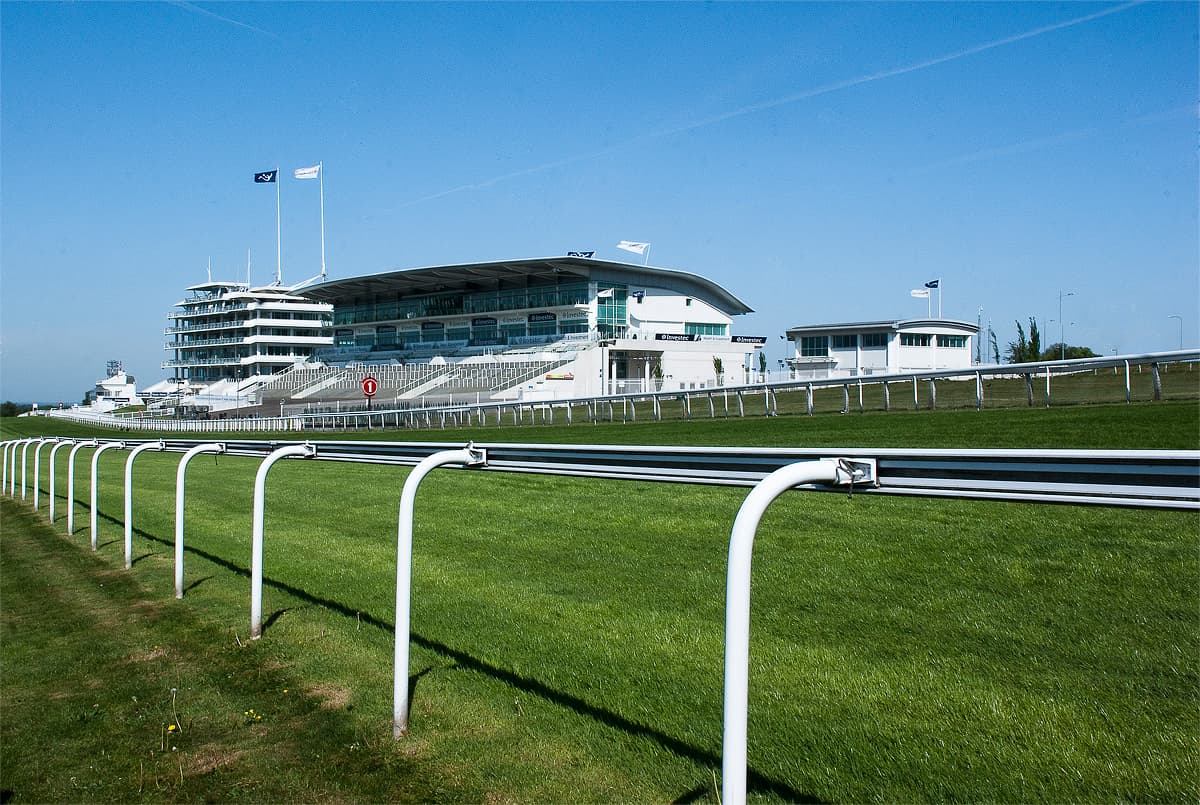
The Epsom Derby Festival: Your Complete Guide
Two days of Classic racing at Epsom Downs: the Oaks and the Derby. Everything you need to know about one of Britain's oldest sporting occasions.
Read more
The History of Epsom Downs Racecourse
From 17th-century race meetings on the Downs to home of the world's most famous flat race — the remarkable story of Epsom.
Read more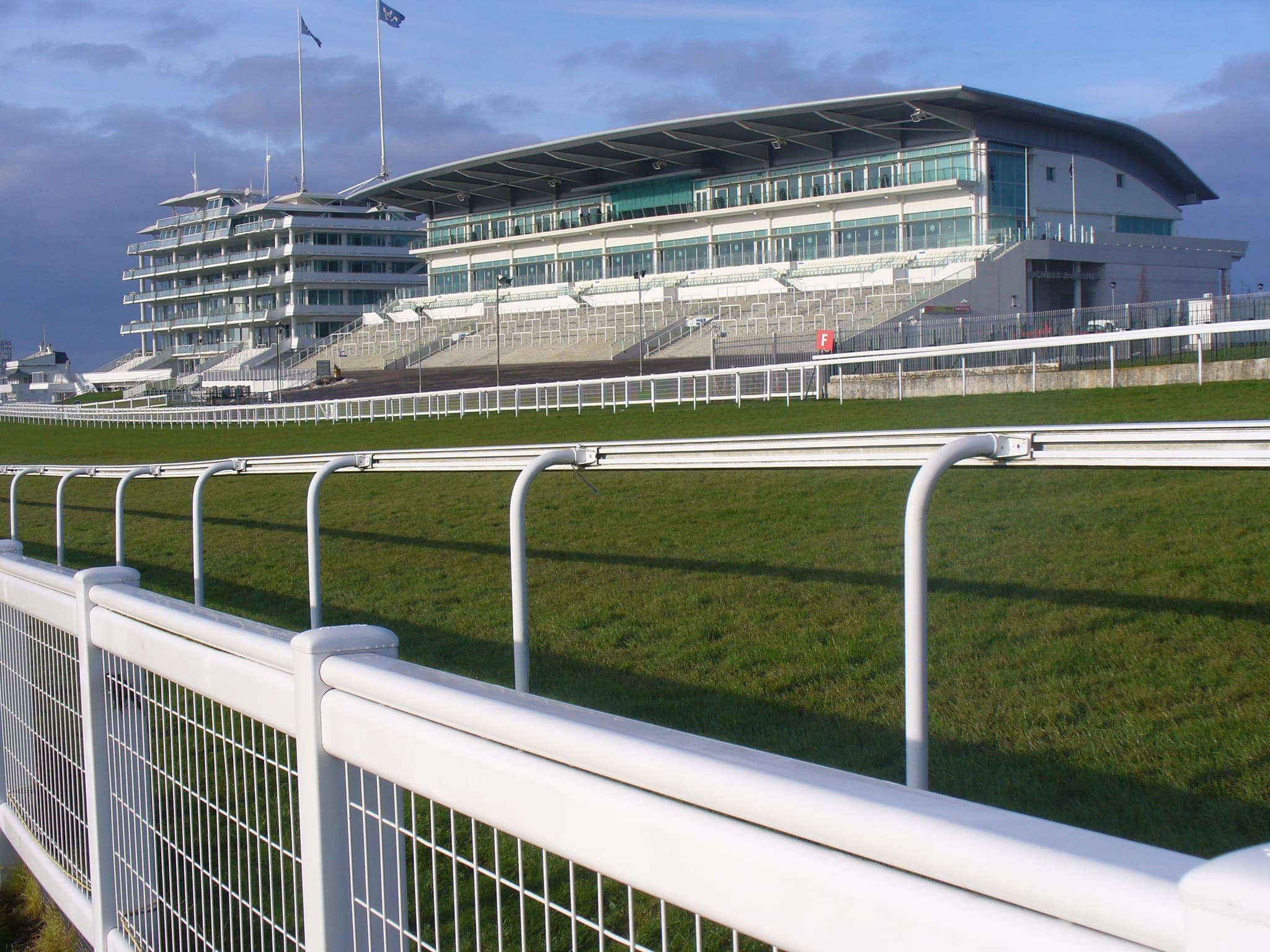
Nijinsky at Epsom: The Last Triple Crown
Nijinsky's 1970 Derby victory at Epsom was the centrepiece of the last Triple Crown in British racing history. Here's the full story of the greatest Flat horse of his era.
Read morePhotos on this page are used under Creative Commons licences. Titles, sources and licence links for each one are on our image credits page.
Betting offers for Epsom Downs
Gamble Responsibly
Gambling should be entertaining and not seen as a way to make money. Never bet more than you can afford to lose. If you or someone you know has a gambling problem, help and support is available.