
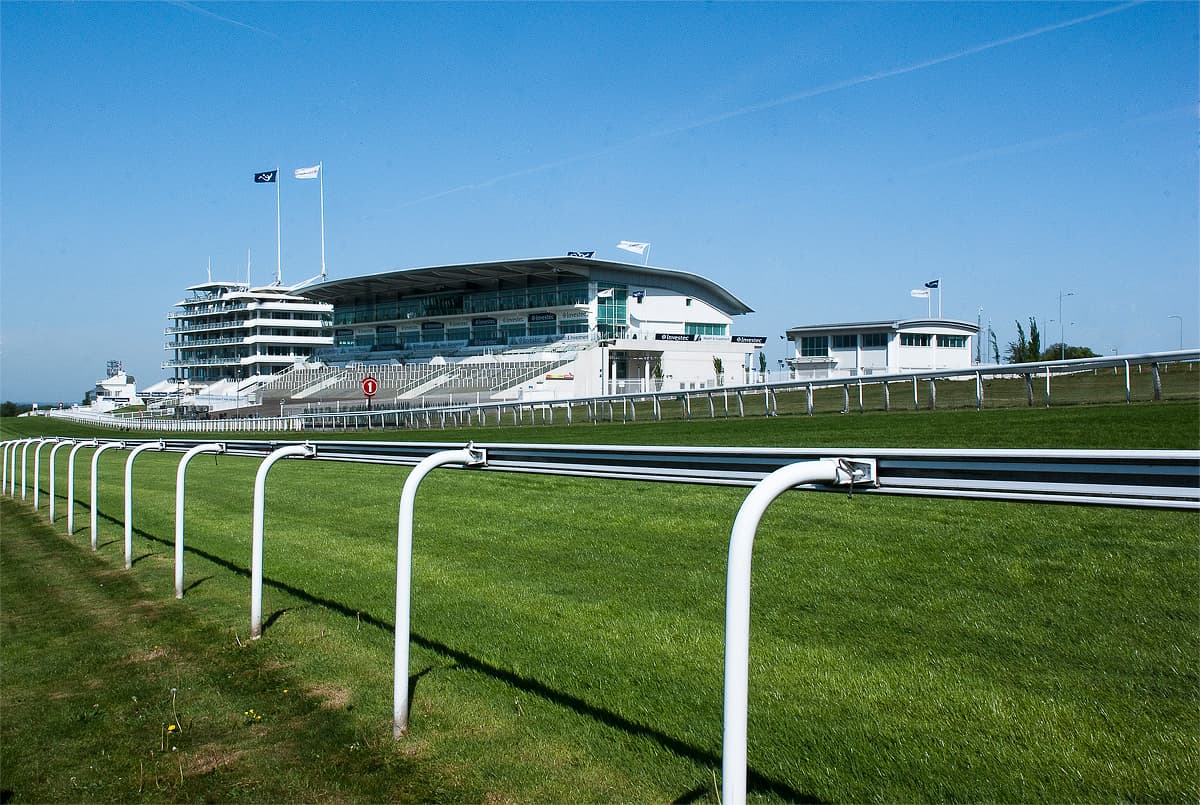
Founder & Editor · Last reviewed 2026-04-06
The Epsom Derby Festival is the oldest and most prestigious two-day Classic meeting in British racing. The Oaks on Friday and the Derby on Saturday have been run on this Surrey hilltop since 1779 and 1780 respectively, older than most of the sport's institutions, older than the Grand National, older than the modern Jockey Club. When a horse wins the Derby at Epsom, it joins a lineage stretching back two and a half centuries.
What makes Epsom unique as a racecourse is the course itself. The Derby is run over one and a half miles of undulating, sharply camber-changing track that begins with an uphill right-handed bend, crests at Tattenham Corner and then descends steeply to a left-handed bend before a punishing uphill straight. No other Classic is run on a track like this. Horses that are brilliant on flat, fair tracks can be wrong-footed by Epsom's demands; horses that appear to be third-tier performers elsewhere can suddenly look world-class when the course suits their action.
The festival's social character is distinctive, more democratic than Royal Ascot, more colourful than Newmarket and considerably louder than either. The Downs, the free public area on the inside of the course, draws enormous crowds on Derby Day. Families, groups and occasional racegoers who come once a year mix with professionals who have studied the Derby market for months. The mixture produces an atmosphere that is genuinely unique in British sport.
The Friday Oaks card is the more relaxed of the two days, a proper racing afternoon that rewards attention to the form without the Derby-day spectacle. Saturday is the main event, and everything builds toward a race that the entire flat season has pointed at since the two-year-old trials of the previous autumn.
Bet on Epsom Downs
Place your bets on Epsom Downs races with a trusted bookmaker.

Promo code BETFRED50. New customers only. Register, deposit with a Debit Card, and place a first bet of £10+ at Evens (2.0)+ on Sports, to be settled within 7 days, to get £30 in Sports Free Bets and £20 in Bet Builder Free Bets within 24 hours of settlement. 7-day expiry. Eligibility & payment exclusions apply. Full T&Cs apply. Take Time to Think. BeGambleAware.org. 18+. Full T&Cs.

Promo code R30. New UK customers only, 18+. Register, deposit £10 or more, then place a £10 single cash bet at odds of 1/2 (1.5) or greater on any sports market (excluding Virtuals). Once the qualifying bet settles you get £30 in Free Bets (3 x £10) — the qualifying bet can win or lose. Free Bets are valid on any sports market excluding Virtuals, expire in 7 days, are non-withdrawable and must be used in full. Excluded deposit methods apply (including PayPal, Apple Pay, Skrill and NETELLER). Named bets such as Lucky 15 do not qualify. If you cash out the qualifying bet, or it is voided, you are no longer eligible for the offer. Ends 31.12.26. Full T&Cs apply. Please gamble responsibly. BeGambleAware.org. 18+. Full T&Cs.

Promo code BET40GET20. New UK customers, 18+. Register with the code and place a first bet of £40 or more at Evens (2.0) or greater. Receive 2 × £10 free bets: the first credited automatically once the qualifying bet settles, the second 24 hours later. Free bets must be placed at minimum odds of 4/1 (5.0), expire 24 hours after credit, and the free-bet stake is not returned with winnings. Debit card deposits only. Take Time to Think. BeGambleAware.org. 18+. T&Cs apply. Full T&Cs.

50% of your first-day net losses refunded as a free bet, capped at £25. New UK customers aged 18+ only. To qualify, deposit and place a first bet of £10 or more on any sport at minimum odds of evens (2.00), then place at least two further bets on different events, each worth at least 50% of your largest bet, all at evens (2.00) or greater. Losses are counted from your first settled bet until 23:59 the same day. Place a qualifying £10+ bet and you are guaranteed at least a £5 free bet. Bets placed at SP, void bets, cashed-out bets and bets struck with free bets do not count towards the offer. The free bet is credited the day after your qualifying bets settle and must be used within 7 days, after which it expires. It can be used at odds from 1/4 (1.25) up to 250/1 on singles and straight accumulators, but not on Trixie, Patent or Yankee style multiples. Free-bet stake is not returned with winnings. One offer per person, household, address, IP address and device. E-wallet deposits may not qualify, so check the cashier before depositing. Customers registered with GAMSTOP cannot claim. KYC identity verification must be completed before the free bet is credited. Take Time to Think. BeGambleAware.org. 18+. T&Cs apply. Full T&Cs.

New customers, 18+. Choose the sports bonus at sign-up, make a first deposit and receive a 100% bonus up to £50 in your Sports Bonus balance. To convert the bonus to cash, wager it 10x within 30 days. Single bets below Evens (2.00) do not qualify; accumulators do not qualify if any selection is below 1/2 (1.50). Virtual Sports, voided, cancelled, drawn, cashed-out and free-bet wagers do not count towards wagering. Only the first settled bet per event counts. Withdrawing before the wagering requirement is met forfeits the bonus balance including bonus winnings. Real-money funds are used before bonus funds. Deposits via Skrill or Neteller are not eligible. Not valid in conjunction with other promotions. Odds, bet and payment limits apply. 10bet general and promotion T&Cs apply. BeGambleAware.org. 18+. Full T&Cs.

New customers in Great Britain and Republic of Ireland, 18+. Place a £10 fixed-odds qualifying bet at minimum odds of 1/2 (1.50) — single or each-way (only the win part counts), pre-event or in-play, not cashed out early, within 28 days of opening the account. Receive up to £60 in bonuses credited over three days: 3 × £10 fixed-odds free bets (the first on settlement, then 24 and 48 hours later) plus 3 × £5 Total Goals FOOTBALL spread bets, 3 × £5 racing Winning Favourites spread bets and a £1 racing Race Index spread bet (the spread bets need a full spread-betting account). Free-bet stakes not returned with winnings; free bets valid 28 days from issue. IMPORTANT: the £5 credits are SPREAD bets — sports spread betting carries the risk that losses can exceed your stake. Sports spread-betting customers do not have Financial Ombudsman or FSCS recourse. Take Time to Think. BeGambleAware.org. 18+. T&Cs apply. Full T&Cs.

Promo code WELCOME15, entered under My Bonuses after registering. New UK customers, 18+. Place a first qualifying bet of at least £10 from your cash balance at odds of evens (2.0) or greater within 7 days of opening the account. Once the qualifying bet fully settles you receive £15 in free bets, credited as 3 x £5 tokens with set uses: one £5 accumulator free bet (minimum 4 legs, each leg at 2/5 or bigger), one £5 sports free bet (any market at evens or bigger) and one £5 Sub Cover free bet (selected football player markets at evens or bigger). Free-bet stakes are not returned with winnings. Free bets expire 7 days after they are credited. Void, cashed-out and partially cashed-out bets do not qualify. One offer per customer. Confirm the current terms on BetGoodwin's own welcome-offer page before claiming. Take Time to Think. BeGambleAware.org. 18+. T&Cs apply. Full T&Cs.

New UK customers, 18+. Minimum deposit £10. Place a £10 qualifying single at minimum odds of 1/2 (1.50), settled within 14 days. Receive £30 in free bets (stake not returned), split £20 for sportsbook use (2 x £10) and £10 for Bet Builder only (2 x £5); Bet Builder does not cover horse racing. Free bets must be accepted within 7 days and expire 7 days after acceptance. No promo code required. Best Odds Guaranteed on UK & Irish racing, subject to having staked over £25 in the previous seven days. Operated by LiveScore Betting and Gaming (Gibraltar) Ltd, UKGC 56859. Confirm the current terms on LiveScore Bet's own promotions page before claiming. Take Time to Think. BeGambleAware.org. 18+. T&Cs apply. Full T&Cs.
18+. BeGambleAware.org
Day-by-Day Guide
Friday: Oaks Day
The first day of the Derby Festival centres on the Investec Oaks, the Fillies' Classic over one and a half miles, and the Coronation Cup (Group One, 1m4f), which attracts the best older middle-distance horses in Europe. Between them, these two Group Ones make Oaks Day one of the strongest racing cards of the flat season.
The Oaks (Group One, 1m4f) was first run in 1779, a year before the Derby, and shares the same unique track. Fillies can find Epsom's cambers and gradients particularly testing, some of the spring's most impressive 1,000 Guineas fillies have failed to get the trip or the track at Epsom. The Oaks rewards fillies that combine stamina with athletic, adaptable jumping action. Connections who know their filly handles Epsom terrain are in a strong position.
The Coronation Cup (Group One, 1m4f) is a championship race for older horses and has attracted some of the finest middle-distance horses of recent decades, Enable, Fantastic Light, Doyen, Conduit. It provides a contrast to the Classic context: these are proven horses, not unexposed colts and fillies, and the form patterns are better established.
Oaks Day also features the Diomed Stakes (Group Three, 1m2f) (a useful middle-distance race that sometimes attracts Derby-week entries looking for a quieter route into the meeting) and the Princess Elizabeth Stakes (Group Three, 1m), a competitive mares' race over a shorter trip.
The crowd on Friday is smaller and more engaged with the racing than Derby Day. It's a proper racing occasion, arrive early, study the form and position yourself near the Parade Ring for the pre-race shows.
Saturday: Derby Day
Derby Day at Epsom is one of British sport's great set-piece occasions. The course opens early, the Downs fill from late morning, and the race itself (scheduled for approximately 4:30pm) is the culmination of months of anticipation in the flat racing world.
The morning card features several supporting races that are genuinely interesting from a form perspective. The Princess Diana Stakes (Group Two, 1m4f) for fillies and mares provides a useful steppingstone for horses aimed at Ascot and the Arc. The Epsom Handicap (Heritage Handicap, 1m2f) is the meeting's competitive cavalry charge, a big field, tight weights and an Epsom track that often produces an unexpected result.
The Derby (Group One, 1m4f) is scheduled in mid-afternoon and the build-up from approximately 3pm is part of the occasion. The field (usually between 12 and 20 runners) assembles in the paddock for what is genuinely one of horse racing's great visual spectacles: big, athletic three-year-old colts on the cusp of their careers, accompanied by tense trainers, jockeys in silks and an appreciative crowd that knows what it is seeing.
The race starts with a right-hand turn, crests at approximately 800 metres before descending steeply to Tattenham Corner, then runs uphill to the finish. The first two furlongs are crucial, horses that jump well from the stalls and find position on the first bend have a significant advantage. The Tattenham Corner camber catches horses that cannot balance themselves, and the uphill finish filters out those who lack stamina. The winner is usually the classiest horse in the field, but the track can mask class and reveal it in unexpected ways.
After the Derby, the Downs parties. It is the most social post-race environment in British racing.
Key Races to Watch
The Derby (Saturday, Group One, 1m4f)
The greatest horse race in the world, at least, that is how it is described, and the argument is hard to dismiss. First run in 1780, the Derby has been contested by Secretariat, Nijinsky, Dancing Brave, Galileo, Frankel (who chose not to run but was the standard by which others were measured) and Sea The Stars. The roll of honour reads like a who's who of the modern thoroughbred.
The race's unique difficulty lies in the track. Epsom's cambers, gradients and tight turns are unlike anything seen in other Classic races. Horses that are brilliant on conventional tracks (Newmarket, the Curragh, Longchamp) can find Epsom's specific demands impossible to replicate. The ability to handle the track is separate from raw ability, and the best betting exercise in the Derby involves assessing which horses' pedigrees and action suggest they will cope.
Pedigrees to target: Stamina-influenced sires (Galileo, New Approach, Camelot) tend to produce Derby horses. Pure speed sires (Exceed And Excel, Kodiac) rarely succeed at Epsom. Horses that have shown a clear stamina influence in their two-year-old racing are worth preferring over pure speed types.
Course trials: The Dante at York and the Derrinstown at Leopardstown are the primary Derby trials. Dante winners go to Epsom with confidence, the York mile and a quarter tests stamina without entirely replicating Epsom's challenge. The Chester Vase, run on Chester's tight flat circuit, is less informative about Epsom-handling ability but a strong trial for raw ability.
The Oaks (Friday, Group One, 1m4f)
The mares' Classic shares the Derby's unique track character. Oaks form is often undervalued because fillies' form is less well-known than colts', and the Oaks field frequently contains unraced or lightly raced horses. This creates genuine betting opportunities. A filly who has shown clear stamina in one or two runs can be significantly underestimated.
Fillies that stayed on powerfully over a mile and a quarter at their most recent run are the primary targets. The ability to handle Epsom's camber is partly a pedigree question and partly unknowable until the race is run, which is why Oaks markets often produce significant upsets.
Coronation Cup (Friday, Group One, 1m4f)
A championship race for older horses over the Derby course and distance. The field typically numbers five to eight runners, making it very manageable from a form perspective. The race attracts horses who excelled at a mile and a quarter or a mile and a half the previous season and are being targeted at the summer's middle-distance programme (Ascot's Prince of Wales's, Royal Ascot, Goodwood).
Horses that have already won at Epsom are worth upgrading significantly. Course form here transfers more than at almost any other track.
Diomed Stakes (Friday, Group Three, 1m2f)
An informative race on Derby Eve, some Derby-targeted horses run here for experience, and others use it as a main objective. The Diomed form has a decent record of translating forward in the second half of the season.
Betting Preview
The Derby Market: How to Approach It
The Derby ante-post market is one of the most complex and most rewarding betting exercises in flat racing. The race's unique demands mean that raw ability alone does not determine the result, track suitability, stable confidence and pedigree all play significant roles. Here is how to structure your approach.
Step 1: Remove Epsom-unsuitable pedigrees. Horses sired by pure speed influences (Kodiac, Exceed And Excel, Dark Angel) are extremely unlikely to win the Derby. The track's climbing, descending and cambered nature demands horses with athleticism and stamina. Filter your shortlist to horses with stamina-influencing sires before anything else.
Step 2: Assess the Guineas form. The 2,000 Guineas at Newmarket is the natural trial, but Newmarket's straight flat mile tells you about speed rather than about Epsom suitability. Horses that won the Guineas in a time suggesting brilliant acceleration but lost their form at a mile and a quarter (the Chester Vase, Dante) are risky Derby propositions. Those who were beaten at the Guineas but stayed on strongly are often worth upgrading.
Step 3: Check the Dante and Derrinstown. These two trials produce Derby winners regularly. A horse that wins the Dante well and has a Galileo or Camelot in its pedigree is a solid Derby proposition. Irish-trained Derrinstown winners, particularly those from Ballydoyle, deserve serious attention.
Step 4: Take the early price if confident. The Derby market shortens dramatically in the final week. A horse available at 8/1 ante-post will often trade at 4/1 on Derby Day if the stable's confidence leaks into the market.
Oaks Betting
The Oaks is a more open race than its Classic companion. The key angle: fillies that finished second or third in the 1,000 Guineas but stayed on powerfully into the finish often have the stamina profile to win the Oaks. They're available at a longer price than the Guineas winner and may be better suited to Epsom's distance and terrain.
Coronation Cup
Small fields mean the market is tight and efficient. The best approach is to identify horses whose previous season form at Epsom or in Group One middle-distance races is being undervalued by their current odds. Course form is crucial, check specifically for horses that have won or run close at Epsom before.
Visitor Information
Tickets and Enclosures
The Derby Festival offers a range of enclosures from formal grandstand options to the entirely free Downs area.
Queen's Stand: The premium enclosure with the best grandstand views of the finish, covered seating and full hospitality options. Strict smart dress code, morning dress or lounge suit for gentlemen, occasion wear for ladies. Book well in advance.
Duchess's Stand: The main public grandstand with excellent finishing straight views. Smart casual dress code. Good facilities and a lively atmosphere.
Lonsdale Enclosure: A mid-range option with grandstand access and decent views. Smart casual dress applies.
The Downs: The free public area on the inside of the track. No admission charge, open to all, and on Derby Day it draws tens of thousands of people who come for the occasion rather than the racing in any formal sense. Great atmosphere, basic facilities, bring your own refreshments and accept that watching the race itself will be from a distance. It is part of what makes Derby Day uniquely British.
Getting There
By train: Epsom station is approximately a 20-minute walk from the racecourse. Regular services from London Waterloo (approximately 35-40 minutes) and London Victoria (approximately 40 minutes). Epsom Downs station (closed for most of the year) reopens for Derby Festival days and is a five-minute walk from the course.
By car: Epsom is accessible from the M25 (junctions 8 or 9) via the A24 and A240. Pre-booked parking is available on-site and strongly recommended. Traffic approaching the Downs on Derby Day is severe, allow two hours' buffer from inner London.
Essential Tips
- Book early. Derby Day grandstand tickets sell out months in advance.
- The Downs are free but basic. Take food, drink and waterproofs if using the public area.
- Epsom Downs station only opens for the Festival. If using it, check the specific race-day timetable published by Southern Rail.
- The camber makes the course unique. Stand near Tattenham Corner if you can: watching the field negotiate the descent and bend is one of racing's great sights.
- Derby Day atmosphere starts early. The Downs fill from mid-morning. Arrive before noon for grandstand enclosures; before 11am if you want a good spot on the Downs.
Share this article
More about this racecourse
All Epsom Downs guides
The History of Epsom Downs Racecourse
From 17th-century race meetings on the Downs to home of the world's most famous flat race — the remarkable story of Epsom.
Read more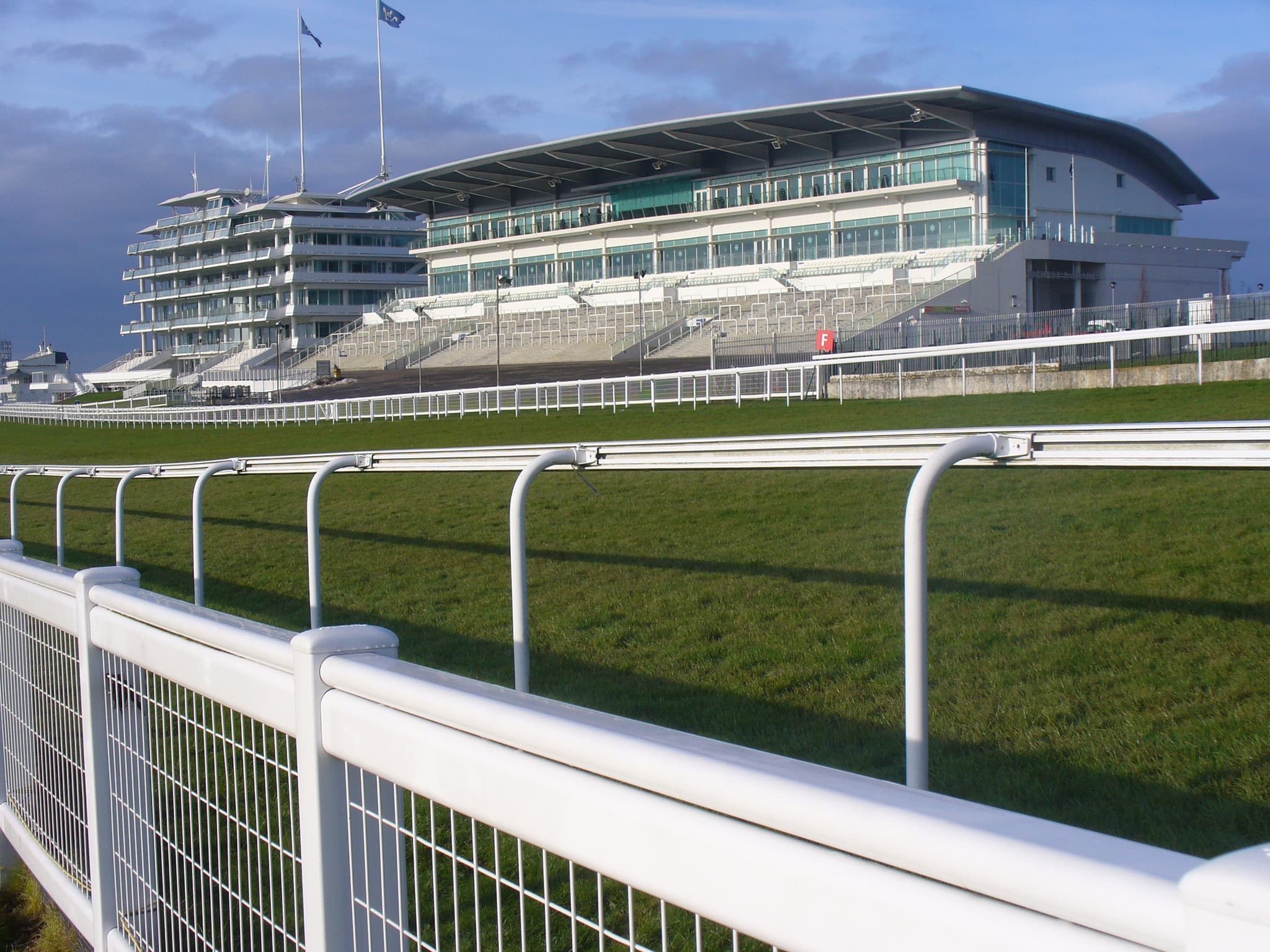
Nijinsky at Epsom: The Last Triple Crown
Nijinsky's 1970 Derby victory at Epsom was the centrepiece of the last Triple Crown in British racing history. Here's the full story of the greatest Flat horse of his era.
Read more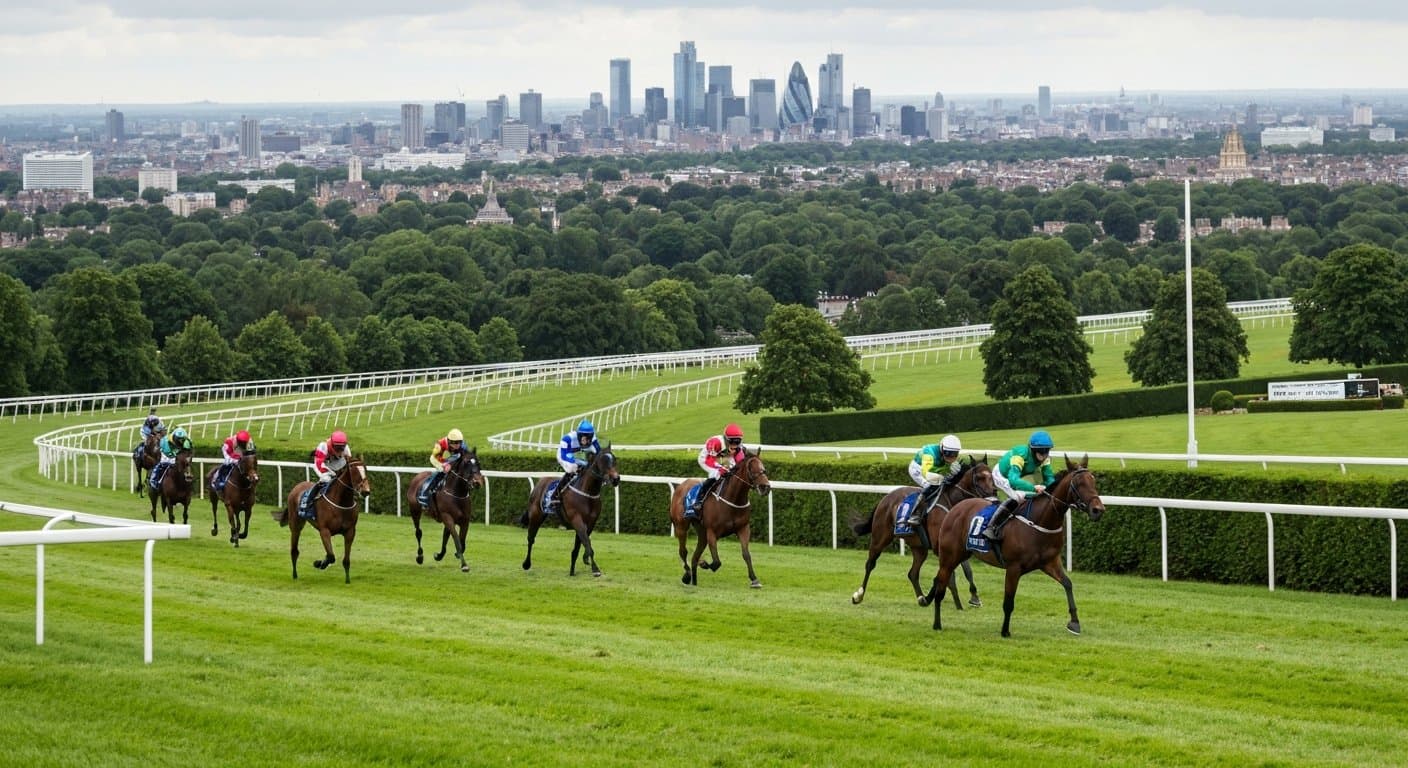
Oaks Day at Epsom Downs
Your guide to Oaks Day at Epsom — the fillies' Classic, its history, great winners, the supporting card, and tips for the day.
Read morePhotos on this page are used under Creative Commons licences. Titles, sources and licence links for each one are on our image credits page.
Research the field with the AI Race Predictor
Our model publishes calibrated win-probability estimates for UK races — a second opinion to understand a race, not tips. It's open about its record: it doesn't beat the market, and we show exactly how it does.
Betting offers for Epsom Downs
Work it out & learn the basics
Gamble Responsibly
Gambling should be entertaining and not seen as a way to make money. Never bet more than you can afford to lose. If you or someone you know has a gambling problem, help and support is available.