
Founder & Editor · Last reviewed 2026-04-05
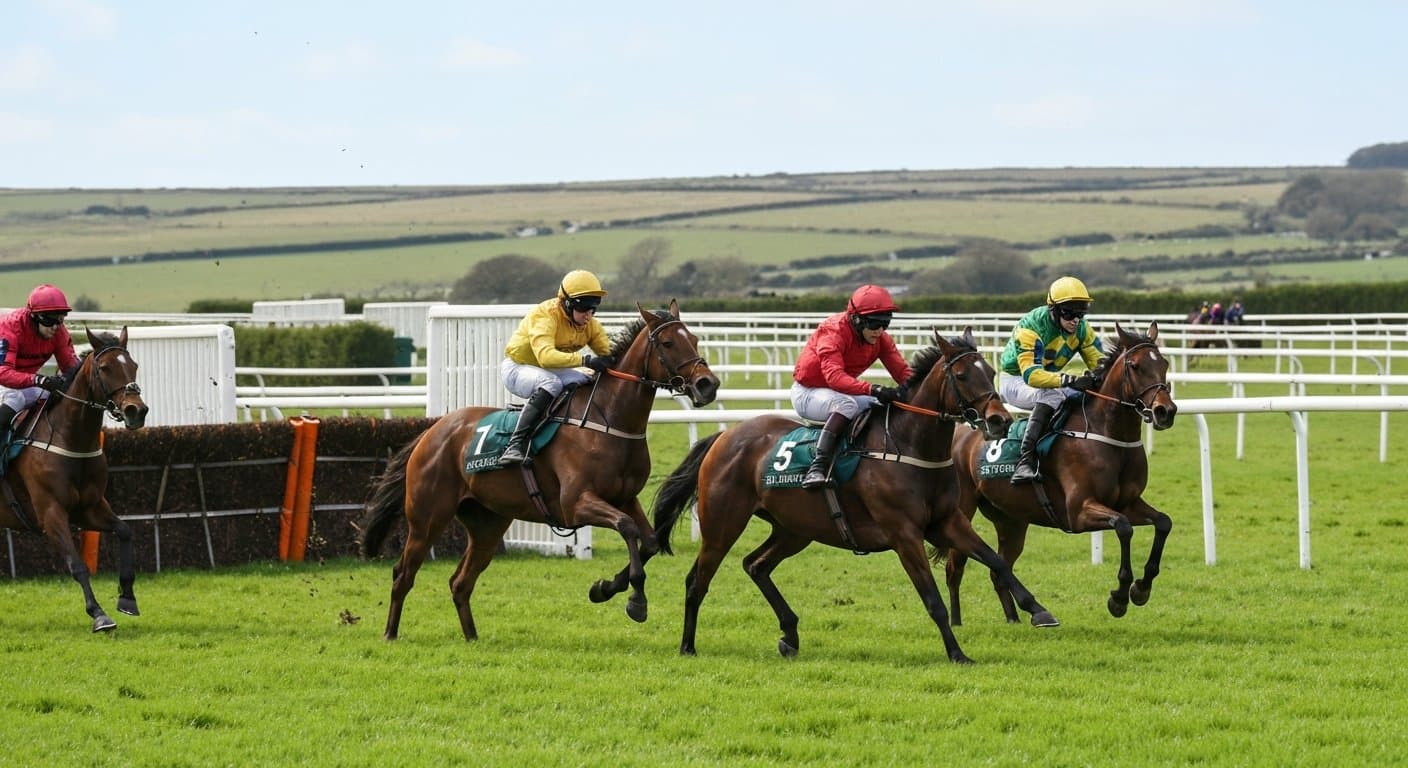
Exeter sits at 850 feet on the Haldon Hills, making it the highest National Hunt track in Britain. That elevation shapes everything: the going dries faster than at sea-level Devon venues, but when the rain sets in during November and December, the plateau can become as testing as anywhere in the country. Paired with a stiff uphill finish and a right-handed, undulating circuit, the course produces a very specific type of winner — and once you understand that type, the betting becomes sharper.
The trainer angle here is unusually strong. Paul Nicholls, based at Ditcheat in Somerset roughly 35 miles to the north-east, has won the Haldon Gold Cup eight times. His record in the Grade 2 feature is not a coincidence. Nicholls knows how his horses handle the climb to the line, and he targets the race deliberately each season. Master Minded won it in 2008, Twist Magic in 2007 and 2009, Politologue in 2016. The pattern repeats. Backing a fancied Nicholls runner in that race is one of the most reliable single-race angles in National Hunt betting.
The Devon National in February is the other anchor. A marathon at 3 miles 7 furlongs, it draws stayers capable of grinding through heavy Devon winter ground. Philip Hobbs has targeted it from his Minehead yard with notable success. The two races define the season: the Haldon in late October or early November opens proceedings, the Devon National marks the depth of winter, and the Exeter Chase in March closes the campaign.
This guide covers the full betting picture for Exeter. Use the sections below in any order, or work through them start to finish if you are coming to the track fresh.
What you need to know before you bet at Exeter:
- The uphill finish is roughly one furlong long. Horses that lack stamina for their trip fade badly in the closing stages. This is not a speed track.
- Course form transfers. Horses that have won at Exeter on similar going often win again. Cross-reference going conditions before using form from other venues.
- Paul Nicholls dominates the Haldon Gold Cup. Eight wins. If he sends a fancied runner, the market is usually right to shorten it.
- The altitude means the ground can dry significantly between meetings. A horse that won on soft in November might face a very different surface in April.
- Philip Hobbs is the trainer to follow in staying chases, particularly the Devon National. His Somerset-based yard produces horses that handle the going and the trip.
- In competitive handicap chases with fields of 18 or more, each-way bets at 10/1 or bigger can offer value. The track's character produces a reasonable number of pace-influenced results where the front two or three are bunched at the line.
Bet on Exeter
Place your bets on Exeter races with a trusted bookmaker.

Promo code BETFRED50. New customers only. Register, deposit with a Debit Card, and place a first bet of £10+ at Evens (2.0)+ on Sports, to be settled within 7 days, to get £30 in Sports Free Bets and £20 in Bet Builder Free Bets within 24 hours of settlement. 7-day expiry. Eligibility & payment exclusions apply. Full T&Cs apply. Take Time to Think. BeGambleAware.org. 18+. Full T&Cs.

Promo code R30. New UK customers only, 18+. Register, deposit £10 or more, then place a £10 single cash bet at odds of 1/2 (1.5) or greater on any sports market (excluding Virtuals). Once the qualifying bet settles you get £30 in Free Bets (3 x £10) — the qualifying bet can win or lose. Free Bets are valid on any sports market excluding Virtuals, expire in 7 days, are non-withdrawable and must be used in full. Excluded deposit methods apply (including PayPal, Apple Pay, Skrill and NETELLER). Named bets such as Lucky 15 do not qualify. If you cash out the qualifying bet, or it is voided, you are no longer eligible for the offer. Ends 31.12.26. Full T&Cs apply. Please gamble responsibly. BeGambleAware.org. 18+. Full T&Cs.

Promo code BET40GET20. New UK customers, 18+. Register with the code and place a first bet of £40 or more at Evens (2.0) or greater. Receive 2 × £10 free bets: the first credited automatically once the qualifying bet settles, the second 24 hours later. Free bets must be placed at minimum odds of 4/1 (5.0), expire 24 hours after credit, and the free-bet stake is not returned with winnings. Debit card deposits only. Take Time to Think. BeGambleAware.org. 18+. T&Cs apply. Full T&Cs.

50% of your first-day net losses refunded as a free bet, capped at £25. New UK customers aged 18+ only. To qualify, deposit and place a first bet of £10 or more on any sport at minimum odds of evens (2.00), then place at least two further bets on different events, each worth at least 50% of your largest bet, all at evens (2.00) or greater. Losses are counted from your first settled bet until 23:59 the same day. Place a qualifying £10+ bet and you are guaranteed at least a £5 free bet. Bets placed at SP, void bets, cashed-out bets and bets struck with free bets do not count towards the offer. The free bet is credited the day after your qualifying bets settle and must be used within 7 days, after which it expires. It can be used at odds from 1/4 (1.25) up to 250/1 on singles and straight accumulators, but not on Trixie, Patent or Yankee style multiples. Free-bet stake is not returned with winnings. One offer per person, household, address, IP address and device. E-wallet deposits may not qualify, so check the cashier before depositing. Customers registered with GAMSTOP cannot claim. KYC identity verification must be completed before the free bet is credited. Take Time to Think. BeGambleAware.org. 18+. T&Cs apply. Full T&Cs.

New customers, 18+. Choose the sports bonus at sign-up, make a first deposit and receive a 100% bonus up to £50 in your Sports Bonus balance. To convert the bonus to cash, wager it 10x within 30 days. Single bets below Evens (2.00) do not qualify; accumulators do not qualify if any selection is below 1/2 (1.50). Virtual Sports, voided, cancelled, drawn, cashed-out and free-bet wagers do not count towards wagering. Only the first settled bet per event counts. Withdrawing before the wagering requirement is met forfeits the bonus balance including bonus winnings. Real-money funds are used before bonus funds. Deposits via Skrill or Neteller are not eligible. Not valid in conjunction with other promotions. Odds, bet and payment limits apply. 10bet general and promotion T&Cs apply. BeGambleAware.org. 18+. Full T&Cs.

New customers in Great Britain and Republic of Ireland, 18+. Place a £10 fixed-odds qualifying bet at minimum odds of 1/2 (1.50) — single or each-way (only the win part counts), pre-event or in-play, not cashed out early, within 28 days of opening the account. Receive up to £60 in bonuses credited over three days: 3 × £10 fixed-odds free bets (the first on settlement, then 24 and 48 hours later) plus 3 × £5 Total Goals FOOTBALL spread bets and 3 × £5 racing Winning Favourites spread bets, with a £1 racing Race Index spread bet as an extra on top. The spread bets need a full spread-betting account, opened within 28 days of the fixed-odds account and subject to Spreadex's eligibility and appropriateness checks. Free-bet stakes not returned with winnings; free bets valid 28 days from issue. IMPORTANT: the £5 credits are SPREAD bets — sports spread betting carries the risk that losses can exceed your stake. Sports spread-betting customers do not have Financial Ombudsman or FSCS recourse. Take Time to Think. BeGambleAware.org. 18+. T&Cs apply. Full T&Cs.

Promo code WELCOME15, entered under My Bonuses after registering. New UK customers, 18+. Place a first qualifying bet of at least £10 from your cash balance at odds of evens (2.0) or greater within 7 days of opening the account. Once the qualifying bet fully settles you receive £15 in free bets, credited as 3 x £5 tokens with set uses: one £5 accumulator free bet (minimum 4 legs, each leg at 2/5 or bigger), one £5 sports free bet (any market at evens or bigger) and one £5 Sub Cover free bet (selected football player markets at evens or bigger). Free-bet stakes are not returned with winnings. Free bets expire 7 days after they are credited. Void, cashed-out and partially cashed-out bets do not qualify. One offer per customer. Confirm the current terms on BetGoodwin's own welcome-offer page before claiming. Take Time to Think. BeGambleAware.org. 18+. T&Cs apply. Full T&Cs.

New UK customers, 18+. Minimum deposit £10. Place a £10 qualifying single on sports (excluding virtuals) at minimum odds of 1/2 (1.50), settled within 14 days. Deposit-method exclusions apply. Receive £30 in free bets (stake not returned), split £20 for sportsbook use (2 x £10) and £10 for Bet Builder only (2 x £5); Bet Builder does not cover horse racing. Free bets must be accepted within 7 days and expire 7 days after acceptance. No promo code required. Best Odds Guaranteed on UK & Irish racing, subject to having staked over £25 in the previous seven days. Operated by LiveScore Betting and Gaming (Gibraltar) Ltd, UKGC 56859. Confirm the current terms on LiveScore Bet's own promotions page before claiming. Take Time to Think. BeGambleAware.org. 18+. T&Cs apply. Full T&Cs.
18+. BeGambleAware.org
Track Characteristics
The Exeter circuit measures approximately 2 miles round, right-handed, on the Haldon Hills outside the city. The key word is undulating. There are no sharp bends to negotiate, but the terrain rolls continuously through the back straight, and horses that are not travelling smoothly through that section pay for it when the real work begins in the straight. The layout is essentially an oval, with no quirky dog-legs or unusual configurations, but the gradient changes are constant enough to make it a physically demanding circuit.
The Uphill Finish
The run-in at Exeter climbs steadily for roughly one furlong before the winning post. That might sound modest on paper, but in the context of a chase or hurdle race, it is enough to expose any horse that has not conserved energy through the earlier part of the race. On soft or heavy ground, the finishing climb becomes considerably more severe. Horses arrive at the foot of it already tired, and only those with real stamina reserves grind to the line.
This has a direct bearing on distance selection. A horse might appear to have enough speed to win a two-mile hurdle, but if it has a history of fading in the final furlong at flat tracks, Exeter will punish it. Conversely, horses proven over a longer trip that are dropped in distance sometimes find the extra stamina suits them perfectly — they arrive at the hill with something left to give. When a horse is slightly unexposed over the distance, the trainer's notes on its jumping style and staying ability matter.
The Back Straight and Undulations
The undulating back straight at Exeter is where races are often shaped. Horses that idle or lose their rhythm through the middle part of the race — whether from jumping errors, going concerns, or fitness issues — tend to get outpaced at the top of the back straight and never recover. Jockeys who know the track will push for a rhythm early in the back straight rather than waiting for the home turn. Watch for horses that travel fluidly through this section in races; it is usually a sign they are going well within themselves.
The undulations also affect jumping technique. Horses arriving at fences on a downhill approach need to be well-schooled enough to adjust their stride. Sloppy or bold jumpers that take off too early on the downhill approach at other tracks may misjudge their take-off at Exeter. The fences are well-maintained, but the terrain around them makes accuracy non-negotiable, particularly at the four fences in the back straight.
Comparing Exeter to Newton Abbot and Taunton
Newton Abbot is tight and flat — a sharp track where jumping speed and handiness at bends matter. A horse that thrives at Newton Abbot is not automatically suited to Exeter's demands. The tests are quite different. Taunton is a closer comparison — right-handed, with some undulation — but it lacks Exeter's pronounced uphill finish and sits at roughly 50 feet above sea level compared to Exeter's 850 feet. Taunton form is more transferable to Exeter than Newton Abbot form, but horses still need to pass the altitude and gradient test on their first visit.
Distance Ranges and What They Mean
Exeter stages races from 2 miles to 3 miles 7 furlongs. The majority of the programme falls between 2 miles and 3 miles 1 furlong. At two miles, pace matters through the first circuit, but the uphill finish still catches out poor stayers. At three miles and beyond, the race becomes a proper test from the start — particularly on soft or heavy ground, where the Haldon plateau can produce conditions as demanding as any in the South West. The Devon National at 3 miles 7 furlongs is the extreme end, and it demands horses that have proven themselves in similar marathons.
Two-mile chasers that have run well at Sandown's flat, galloping circuit sometimes find Exeter's terrain a different challenge. Sandown rewards raw galloping ability; Exeter rewards balance, jumping accuracy, and stamina. A horse suited to the finish at Sandown's railway fences is not automatically built for the Exeter finish.
Going & Draw Bias
Devon is a wet county. Exeter sits in the Exe valley catchment area, and the Haldon Hills receive substantial rainfall from Atlantic weather systems that track in from the south-west between October and March. The upland position — 850 feet above sea level — means the ground is exposed to wind as well as rain, which can accelerate drying in dry spells. That duality is what makes the going at Exeter worth understanding in detail: the same course that rides soft to heavy in January can produce good to firm ground in late April.
Going Through the Season
October: The season opens here and the ground is usually soft. Summer drainage helps early in the month, but the Devon rain sets in quickly. Expect soft or good to soft for the Haldon Gold Cup meeting in late October or early November. Ground firmer than good to soft at this time of year is unusual.
November and December: The wettest months at Exeter. Soft and heavy ground dominate. The back straight drains reasonably well, but the run-in can hold water after sustained rainfall. Races at this time are stamina tests from the flag — the combination of heavy ground and the uphill finish means only proper stayers win at the longer trips.
January and February: Heavy ground is the baseline. The Devon National in February is almost always run on heavy or soft-heavy. Runners need proven form on winter ground; horses that excel at summer festivals on good going are usually out of place. Going descriptions of "heavy in places" at the runway end of the back straight are common in January.
March and April: The weather lightens and the going begins to recover. Good to soft or soft is the norm through March. April can produce the fastest ground of the season — the altitude effect kicks in here, and a dry April fortnight can quickly firm the ground at Exeter while lowland tracks in the South West still ride soft. Good or good to firm is possible for the final meetings in late April and May.
The Altitude Effect
The 850-foot elevation has two practical consequences. First, the plateau is exposed — wind dries the surface more quickly than at sheltered lowland venues. A southerly wind after a dry week can take Exeter from soft to good to soft faster than the forecast suggests. Second, the altitude means overnight frosts are more likely and more severe in February and March, and frost can harden the surface temporarily. Check the going the morning of a card, not just the day before.
For bettors, this matters in spring. A horse that ran on soft ground at Chepstow in March might face ground that is two or three classifications firmer at the Exeter April meeting. Form needs to be adjusted accordingly.
Going Angles and Key Patterns
Horses with previous Exeter form on matching going are a significant advantage. The undulations, the uphill finish, and the variable surface all combine to produce a specific test. A horse that won at Exeter on heavy in January has proved it can handle every element of that puzzle simultaneously. When the same conditions return, the form is directly relevant in a way that form from flat, well-drained tracks is not.
In soft or heavy ground, the stamina premium is substantial. Backing horses with proven form over slightly longer trips — and ignoring horses that rely on good ground speed — is the sensible approach. Front-runners struggle in deep going at Exeter because the uphill finish is unforgiving to horses that have led from the front and used their energy early. Hold-up horses and prominent racers that settle behind the pace tend to finish better.
South West trainers generally have a stronger record on soft and heavy ground at Exeter than handlers from further afield. Nicholls at Ditcheat, Hobbs at Minehead, Fry at Seaborough: these yards prepare horses specifically for the conditions Devon produces. Trainers who are accustomed to better ground in the spring and summer occasionally misjudge the going at Exeter meetings in winter.
Draw Bias
Exeter is a jumps-only track, so stall draws do not apply. The equivalent variable for National Hunt racing — starting position in a large field — matters more at venues with sharp turns than at Exeter's open oval. The main positional consideration is whether a horse can settle in a comfortable position early without using excessive energy. In big-field staying chases, early pace and position can be influential, but the format is shaped more by jumping and going than by where in the line a horse breaks.
Key Trainers & Jockeys
Paul Nicholls
No trainer has a stronger relationship with Exeter than Paul Nicholls. His Ditcheat base in Somerset sits roughly 35 miles to the north-east, and Exeter is a natural target for his two-mile chasers at the start of each season. His eight wins in the Haldon Gold Cup represent a strike rate that no other trainer comes close to matching. Master Minded won the race in 2008, Twist Magic in 2007 and 2009, Politologue in 2016 — the pattern of top-class horses being routed through Exeter as a seasonal opener repeats consistently.
The practical betting implication is straightforward. In the Haldon Gold Cup, a Nicholls runner with a short price deserves full market respect. His runners at the meeting are often carefully prepared for the conditions and the specific demands of the Exeter finish. Outside the Haldon Gold Cup, Nicholls is also worth following in novice chases and handicap hurdles at the course. His yard knows how to prepare horses for the ground and the uphill finish, and that knowledge translates across race types.
When Nicholls backs a runner at Exeter with a prominent jockey booking and the horse has been freshened up or lightly campaigned, the market move in the 24 hours before the race is often worth monitoring.
Philip Hobbs
Philip Hobbs trains from Minehead in Somerset, approximately 40 miles north of Exeter. His record in staying chases at the course is strong, and his Devon National record in particular stands out. Hobbs produces horses that handle soft and heavy Devon winter ground, and his stayers are often better value than their odds suggest. The Minehead yard is not as dominant as Nicholls, but in marathon trips on testing ground, Hobbs runners deserve serious consideration.
For the Devon National and other long-distance handicap chases in winter, Hobbs is the trainer to track first.
Nicky Henderson
Henderson sends horses to Exeter primarily in the novice hurdle programme, particularly in October and November when the season opens. His runners are often well-schooled horses making their debuts or early appearances over jumps, and a Henderson novice at short odds at Exeter in the autumn is generally a reliable pointer to quality. His strike rate with well-backed runners at the course is strong.
Henderson's runners are worth following in novice chases too, particularly where the horse has already shown it handles testing ground. The distance from his Seven Barrows base in Lambourn (approximately 110 miles) means he targets meetings selectively, and when he does send a runner, it is usually fit and ready.
Harry Fry and Other South West Trainers
Harry Fry operates from Seaborough in Dorset, roughly 30 miles from Exeter, and has increasingly targeted the course as his yard has grown. Fry's horses tend to be well-prepared for South West conditions, and he produces winners at competitive odds. His novice programme and middle-distance handicap chases are the areas to focus on.
Evan Williams, based in South Wales, sends runners regularly and has a good record with handicappers in the 2m4f to 3m range. Jeremy Scott trains from Tiverton in Devon — almost in Exeter's backyard — and targets smaller fields where his horses are fit and suited. Scott's runners in bumpers and novice hurdles early in the season deserve a look when the form suggests the horse is ready.
Key Jockeys
Harry Cobden is Nicholls' first jockey and the most important rider to track at Exeter. When Cobden rides a Nicholls horse that is well-supported in the market, the combination is usually worth backing at reasonable prices. His record at the course reflects the dominance of the Nicholls yard.
Nico de Boinville is Henderson's main rider and handles the yard's novice programme at Exeter during the autumn and early winter. De Boinville on a first-time-out Henderson novice at odds-on is a situation that warrants respect rather than opposition.
Tom O'Brien has ridden regularly for Hobbs and knows the course well. His record in staying chases at Exeter is solid. In conditional jockey races, value can appear from less well-known names riding for smaller yards — the South West conditional ranks include several capable young riders whose course knowledge is underpriced by the market.
Betting Strategies
The Course Specialist Angle
Exeter produces a higher proportion of repeat winners than most National Hunt venues. The combination of the altitude, the undulating terrain, the uphill finish, and the variable going creates a test that some horses handle and others do not. A horse with a previous win at Exeter on matching going is providing direct evidence that it can solve every element of the puzzle at once.
The practical approach: before each Exeter meeting, identify any runner with a previous win at the course on the same or similar going. Prioritise those with two or more previous Exeter wins — they are demonstrably course specialists, and the market sometimes undervalues them because its attention is drawn to more recent form at other venues. Cross-reference the going classification carefully. A horse that won on good to soft is not automatically suited to heavy, and vice versa.
Form from Newton Abbot is the least transferable to Exeter — the flat, tight circuit produces a different type of winner. Form from Taunton is more relevant. Chepstow form on soft or heavy ground translates well to Exeter in winter.
The Nicholls Haldon Play
Paul Nicholls has won the Haldon Gold Cup eight times. That is not a fluke — it reflects a deliberate targeting strategy that repeats year after year. The race suits the type of two-mile chaser he produces, and the early-season timing suits a yard that peaks in autumn and spring.
The strategy is simple: when Nicholls sends a runner to the Haldon Gold Cup at single-figure odds, back it. The long-term record justifies the approach. In years when Nicholls has two or three entered, the form of the horse he puts in with a top jockey — usually Cobden — is the one to follow. Watch the ante-post market in the 48 hours before the race. A significant move toward a Nicholls runner in that window often confirms the yard's confidence.
Market Watching
Exeter's markets are generally efficient for the feature races — the Haldon Gold Cup and the Devon National attract bookmaker attention. However, the midweek and mid-season fixtures are less heavily traded, and value can appear in the morning prices before bookmakers tighten spreads.
The most useful market signal at Exeter is a late drift on a short-priced favourite. If a horse opens at 4/5 and drifts to 6/4 in the 30 minutes before the race, it is worth investigating. Drifters in tight-field chases at Exeter often fail because the going is not quite what the trainer expected, or the horse has shown signs of being below its best in the pre-race preparation. Oppose drifters at short prices in conditions races on testing ground.
Avoid backing horses that are shortening in the market purely on the strength of flat form or good-ground form from summer months. Exeter in winter is a fundamentally different test.
Each-Way Value in Big-Field Handicap Chases
In competitive handicap chases at Exeter with fields of 18 or more runners, the each-way market offers value at 10/1 and above. The undulating track and variable going produce a reasonable number of competitive finishes where several horses are covered by a small margin. Look for horses:
- With previous placed form at Exeter on similar going
- Rated 5 to 10 pounds below the top weight
- Trained by South West yards familiar with the conditions
Avoid top-weight horses in big-field stayers. Exeter's terrain and the multiple circuits in long races tend to flatten pace advantages from high-rated horses, and the dead weight tells late on the uphill finish.
Bets to Avoid
Maiden hurdles on fast ground at Exeter rarely produce reliable form. When the going is good to firm in April, first-time-out hurdlers face an unusual surface for the course, and the form can be misleading for subsequent races on more typical going.
Favourites in bumpers at Exeter are worth treating cautiously unless they come from Nicholls, Henderson, or a comparably strong yard. Bumpers at smaller South West venues can produce horses that look impressive but are not tested to the same standard as bumpers at Newbury or Sandown. The form crossover is unreliable.
Class drops that look dramatic on paper — a horse rated 140 dropping into a 0–130 handicap — sometimes attract short prices that do not account for whether the horse handles the Exeter test. Ability alone is not enough here.
To compare place terms and each-way promotions across the major bookmakers, see our best bookmakers for horse racing guide.
Key Races to Bet On
Haldon Gold Cup (Grade 2, 2m1½f, late October/November)
The Haldon Gold Cup is Exeter's signature race and one of the most consistently informative Grade 2 chases in the National Hunt calendar. Run over 2 miles 1½ furlongs in late October or early November, it draws top two-mile chasers at the start of their campaigns. The race has served as a reliable early-season pointer to the Queen Mother Champion Chase at Cheltenham.
The betting strategy here centres on Paul Nicholls. His eight wins in the race represent a striking advantage over every other trainer in the field. When his entry is backed in the ante-post market and holds a prominent jockey booking, he is the first selection to assess. In years where his runner drifts, that is information worth noting.
Beyond the Nicholls angle, look for horses with Grade 1 or Grade 2 form from the previous season that are returning from a summer break. The Haldon Gold Cup attracts horses that are fit rather than peak-fit — trainers use it as a prep race — and horses with more mileage in their legs sometimes edge past fresher rivals who need the outing. Horses that ran at the Cheltenham October meeting or Carlisle's early-season programme often arrive at Exeter with the race fitness to win.
Monitor the market move in the 48 hours before the race. The Haldon Gold Cup attracts significant each-way money and the bookmaker prices are set before the true market has formed.
Devon National (3m7f, February)
The Devon National is a marathon. At 3 miles 7 furlongs on what is typically heavy or soft-heavy ground in February, it filters out horses without proven staying ability on true winter going. It is almost always run on the slowest ground of the Exeter season, and the combination of multiple circuits and the uphill finish repeated on the final lap makes it one of the most physically demanding races outside the Grand National.
Philip Hobbs has a strong record in the race from his Minehead yard. His stayers are conditioned for South West winter conditions, and his Devon National runners should be assessed with full respect. Form from Haydock, Chepstow, and Warwick in January and February is more relevant than form from autumn festivals. Horses proven over 3m-plus on heavy or soft ground at those venues carry their credentials directly into the Devon National.
Avoid horses stepping up in trip from 2m4f or 2m6f unless they have a strong staying pedigree and have previously suggested they want a longer trip. The additional ground at 3m7f separates proven stayers from horses that merely get the standard chase trips.
Exeter Chase (Grade 2, March)
The Exeter Chase in March operates as a natural bookend to the Haldon Gold Cup. Horses that ran well in the Haldon in November frequently return for the March race, and the form between the two is directly relevant. A horse that finished second or third in the Haldon Gold Cup and has improved through the winter is worth upgrading for the March race.
The going in March is typically soft to good to soft — firmer than winter but still testing enough to favour horses with Exeter course form. Horses peaking for the Cheltenham Festival sometimes use the Exeter Chase as a final prep, and the race has a habit of producing a smart performance from a horse that goes on to run well at the Festival.
The Bumper Programme
Exeter's bumpers, run throughout the season, are regularly contested by horses from Nicholls, Henderson, and Hobbs. The early-season bumpers in October and November are particularly informative. A well-bred first-time-out runner from a top yard at short odds is generally doing something real — these yards do not send horses to Exeter in October to learn the ropes. Prices of 4/6 to 5/4 from the leading yards in bumpers are often worth taking rather than opposing on value grounds.
Share this article
More about this racecourse
All Exeter guides
Exeter Racecourse: Complete Guide
Everything you need to know about Exeter Racecourse — Britain's highest National Hunt track, the Haldon Gold Cup, and racing on the Haldon Hills.
Read more
Exeter Racecourse Day Out: Dress Code, Tickets & Tips
Plan your perfect day at Britain's highest National Hunt track. Essential guide to Exeter's enclosures, dress code, and insider tips.
Read more
Devon National: Complete Guide
Your complete guide to the Devon National — Exeter's staying handicap chase and February highlight for chasers.
Read morePhotos on this page are used under Creative Commons licences. Titles, sources and licence links for each one are on our image credits page.
Research the field with the AI Race Predictor
Our model publishes calibrated win-probability estimates for UK races — a second opinion to understand a race, not tips. It's open about its record: it doesn't beat the market, and we show exactly how it does.
Work it out & learn the basics
Gamble Responsibly
Gambling should be entertaining and not seen as a way to make money. Never bet more than you can afford to lose. If you or someone you know has a gambling problem, help and support is available.