
Founder & Editor · Last reviewed 2026-04-07
Introduction to Ffos Las Racecourse
Ffos Las is the newest racecourse in Britain — opened in 2009 on a reclaimed opencast coal mine in Carmarthenshire, and one of the most remarkable sporting regeneration stories in Wales or anywhere in the United Kingdom. The land that now hosts competitive racing once gave up coal to the industrial demands of the nineteenth and twentieth centuries; what was left behind was a worked-out landscape of spoil heaps and extraction scarring that needed a new purpose. Racing provided it, and the transformation from industrial wasteland to functioning, well-regarded racecourse in the space of a few years remains genuinely impressive.
The course sits above the Gwendraeth valley, south of Trimsaran in Carmarthenshire, and the views it commands are part of its character. On clear days the Gower Peninsula is visible to the south, and the undulating Carmarthenshire countryside surrounds the site on all sides — a reminder that however recently this venue was constructed, it occupies a landscape with deep roots. The bilingual signage throughout the course is not an afterthought or a political gesture; Ffos Las is a genuinely Welsh venue in a way that Chepstow, for all its importance to Welsh racing, cannot quite claim. The Welsh-language welcome, the local sponsorship, the crowd drawn from Llanelli, Swansea, Carmarthen and the surrounding valleys — these things give the course a cultural identity that newer racecourses in England have rarely managed to establish so quickly.
The dual flat and jump programme covers much of the year. Flat racing from May through October uses the left-handed oval — straightforward in profile, well-draining in summer, and broadly fair to horses coming from similar track shapes. Jump racing from October through May completes the year, with the Easter Bank Holiday jump card standing as one of the biggest attendance days in the Welsh racing calendar. Ffos Las does not have the prize money of Chepstow or the historical prestige of Cheltenham; what it has instead is community, accessibility from a large south-west Welsh population centre, and the simple virtue of a well-run modern facility.
The fact that the course is modern is both its greatest advantage and its most significant limitation. Modern facilities mean good sightlines, adequate car parking, decent food and bar facilities, and a track that was built rather than evolved — meaning the going management, the fence positioning and the drainage have all been designed rather than inherited. The limitation is historical data: a course opened in 2009 has a relatively shallow statistical record compared to tracks that have been racing since the Victorian era. For form students, this matters. The course specialists are harder to identify because the record is shorter, and training patterns that have become ingrained at older courses are still developing here.
For Welsh racing as a whole, however, Ffos Las has filled a gap that existed for decades. South-west and west Wales — Swansea, Neath, Port Talbot, Carmarthen, Pembroke — had no local track. The nearest alternatives were Chepstow in the south-east or Hereford and Bangor-on-Dee for anyone willing to travel north. Ffos Las has given the rugby and football country of south-west Wales its own racing venue, and the warmth with which the course has been adopted by that community suggests the investment was well placed.
Bet on Ffos Las
Place your bets on Ffos Las races with a trusted bookmaker.

Promo code BETFRED50. New customers only. Register, deposit with a Debit Card, and place a first bet of £10+ at Evens (2.0)+ on Sports, to be settled within 7 days, to get £30 in Sports Free Bets and £20 in Bet Builder Free Bets within 24 hours of settlement. 7-day expiry. Eligibility & payment exclusions apply. Full T&Cs apply. Take Time to Think. BeGambleAware.org. 18+. Full T&Cs.

Promo code R30. New UK customers only, 18+. Register, deposit £10 or more, then place a £10 single cash bet at odds of 1/2 (1.5) or greater on any sports market (excluding Virtuals). Once the qualifying bet settles you get £30 in Free Bets (3 x £10) — the qualifying bet can win or lose. Free Bets are valid on any sports market excluding Virtuals, expire in 7 days, are non-withdrawable and must be used in full. Excluded deposit methods apply (including PayPal, Apple Pay, Skrill and NETELLER). Named bets such as Lucky 15 do not qualify. If you cash out the qualifying bet, or it is voided, you are no longer eligible for the offer. Ends 31.12.26. Full T&Cs apply. Please gamble responsibly. BeGambleAware.org. 18+. Full T&Cs.

Promo code BET40GET20. New UK customers, 18+. Register with the code and place a first bet of £40 or more at Evens (2.0) or greater. Receive 2 × £10 free bets: the first credited automatically once the qualifying bet settles, the second 24 hours later. Free bets must be placed at minimum odds of 4/1 (5.0), expire 24 hours after credit, and the free-bet stake is not returned with winnings. Debit card deposits only. Take Time to Think. BeGambleAware.org. 18+. T&Cs apply. Full T&Cs.

50% of your first-day net losses refunded as a free bet, capped at £25. New UK customers aged 18+ only. To qualify, deposit and place a first bet of £10 or more on any sport at minimum odds of evens (2.00), then place at least two further bets on different events, each worth at least 50% of your largest bet, all at evens (2.00) or greater. Losses are counted from your first settled bet until 23:59 the same day. Place a qualifying £10+ bet and you are guaranteed at least a £5 free bet. Bets placed at SP, void bets, cashed-out bets and bets struck with free bets do not count towards the offer. The free bet is credited the day after your qualifying bets settle and must be used within 7 days, after which it expires. It can be used at odds from 1/4 (1.25) up to 250/1 on singles and straight accumulators, but not on Trixie, Patent or Yankee style multiples. Free-bet stake is not returned with winnings. One offer per person, household, address, IP address and device. E-wallet deposits may not qualify, so check the cashier before depositing. Customers registered with GAMSTOP cannot claim. KYC identity verification must be completed before the free bet is credited. Take Time to Think. BeGambleAware.org. 18+. T&Cs apply. Full T&Cs.

New customers, 18+. Choose the sports bonus at sign-up, make a first deposit and receive a 100% bonus up to £50 in your Sports Bonus balance. To convert the bonus to cash, wager it 10x within 30 days. Single bets below Evens (2.00) do not qualify; accumulators do not qualify if any selection is below 1/2 (1.50). Virtual Sports, voided, cancelled, drawn, cashed-out and free-bet wagers do not count towards wagering. Only the first settled bet per event counts. Withdrawing before the wagering requirement is met forfeits the bonus balance including bonus winnings. Real-money funds are used before bonus funds. Deposits via Skrill or Neteller are not eligible. Not valid in conjunction with other promotions. Odds, bet and payment limits apply. 10bet general and promotion T&Cs apply. BeGambleAware.org. 18+. Full T&Cs.

New customers in Great Britain and Republic of Ireland, 18+. Place a £10 fixed-odds qualifying bet at minimum odds of 1/2 (1.50) — single or each-way (only the win part counts), pre-event or in-play, not cashed out early, within 28 days of opening the account. Receive up to £60 in bonuses credited over three days: 3 × £10 fixed-odds free bets (the first on settlement, then 24 and 48 hours later) plus 3 × £5 Total Goals FOOTBALL spread bets, 3 × £5 racing Winning Favourites spread bets and a £1 racing Race Index spread bet (the spread bets need a full spread-betting account). Free-bet stakes not returned with winnings; free bets valid 28 days from issue. IMPORTANT: the £5 credits are SPREAD bets — sports spread betting carries the risk that losses can exceed your stake. Sports spread-betting customers do not have Financial Ombudsman or FSCS recourse. Take Time to Think. BeGambleAware.org. 18+. T&Cs apply. Full T&Cs.

Promo code WELCOME15, entered under My Bonuses after registering. New UK customers, 18+. Place a first qualifying bet of at least £10 from your cash balance at odds of evens (2.0) or greater within 7 days of opening the account. Once the qualifying bet fully settles you receive £15 in free bets, credited as 3 x £5 tokens with set uses: one £5 accumulator free bet (minimum 4 legs, each leg at 2/5 or bigger), one £5 sports free bet (any market at evens or bigger) and one £5 Sub Cover free bet (selected football player markets at evens or bigger). Free-bet stakes are not returned with winnings. Free bets expire 7 days after they are credited. Void, cashed-out and partially cashed-out bets do not qualify. One offer per customer. Confirm the current terms on BetGoodwin's own welcome-offer page before claiming. Take Time to Think. BeGambleAware.org. 18+. T&Cs apply. Full T&Cs.

New UK customers, 18+. Minimum deposit £10. Place a £10 qualifying single at minimum odds of 1/2 (1.50), settled within 14 days. Receive £30 in free bets (stake not returned), split £20 for sportsbook use (2 x £10) and £10 for Bet Builder only (2 x £5); Bet Builder does not cover horse racing. Free bets must be accepted within 7 days and expire 7 days after acceptance. No promo code required. Best Odds Guaranteed on UK & Irish racing, subject to having staked over £25 in the previous seven days. Operated by LiveScore Betting and Gaming (Gibraltar) Ltd, UKGC 56859. Confirm the current terms on LiveScore Bet's own promotions page before claiming. Take Time to Think. BeGambleAware.org. 18+. T&Cs apply. Full T&Cs.
18+. BeGambleAware.org
Day-by-Day Guide
Ffos Las Festival Calendar: Day by Day
Ffos Las stages both flat and jump racing across most of the calendar year, with its programme dividing into five distinct phases that collectively serve the south-west Welsh racing community through all seasons. The course's unique identity — a regenerated industrial site with a genuinely Welsh cultural character — shapes the atmosphere at each of these fixtures differently.
Easter Jump Festival: The Bank Holiday Showpiece
The Easter Bank Holiday jump card has become one of Ffos Las's most important fixtures since the course opened in 2009, and it represents the growing confidence with which the course now approaches its programme-building. Easter falls in March or April depending on the year, and the Bank Holiday card draws the largest attendance of the winter and spring jump season.
There is an optimism to an Easter race day that the dark winter cards cannot match. The Carmarthenshire countryside is at its spring best, the valley views are clear, and the longer daylight hours give the day a quality quite unlike a January card. The crowd for the Easter meeting includes families using the Bank Holiday weekend for leisure, racegoers from Swansea and the wider south-west Welsh community for whom this is one of the two or three biggest race days of the year, and form students who have been following the winter jump programme and want to see the season's best performers one more time before the summer flat takes over.
The Easter programme is competitive — good-quality handicap chases and hurdles, often including at least one conditions or Listed race that attracts runners from beyond the local circuit. Evan Williams and Peter Bowen both target the Easter meeting with horses in form, and the prize money justifies the attention. This is the meeting to which Ffos Las commits its strongest spring programme.
Summer Flat Programme: May Through October
The flat season at Ffos Las runs from May through October, using the left-handed oval in its most straightforward guise. The summer flat programme draws from the Welsh and south-west English flat communities, with the Cardiff and Swansea catchment providing a substantial portion of the crowd for evening meetings in June and July.
The flat programme at Ffos Las is competitive at handicap and conditions level. This is not a course that hosts Group races or attracts the major Classic-generation horses, but the prize money at summer flat meetings is adequate to attract professional yards from across Wales and the south-west, and the quality of racing is consistently reasonable. The Welsh Summer Cup is the flat programme's centrepiece — a competitive handicap that draws several named entries from yards as far afield as Newmarket for horses on summer campaigns.
Summer flat racing at Ffos Las has a different character from the jump programme. The crowd is more casual, the racing faster, and the atmosphere has the lighter quality of summer flat racing in general. Evening meetings in June and July — when the sun sets late over the Gwendraeth valley — are particularly pleasant, and the course has invested in catering and facilities that make them genuinely enjoyable social events.
Welsh Language Day: Culture and Racing Combined
Ffos Las hosts a specific Welsh Language Day within its racing programme — a fixture that celebrates the Welsh cultural identity the course has worked hard to establish since opening. This is not tokenistic; Ffos Las is genuinely bilingual throughout its operations, and the Welsh Language Day formalises and celebrates that identity with specific cultural programming alongside the racing.
The Welsh Language Day draws a crowd that includes families, schools and community groups alongside regular racegoers, and the atmosphere is distinctive — warmer and more communal than a standard race card. Racing remains competitive on the day, but the occasion has an extra dimension that makes it one of the more unusual fixtures on the Welsh calendar.
Autumn Jump Launch: October and November
October marks the beginning of the Ffos Las jump season, with novice hurdle and chase cards that introduce the new season's young horses to competitive jumping. This is the equivalent of the October Opening at Kelso — the first serious look at the horses that will campaign through the winter, and a moment when intelligent form observation can provide significant advantages through the months that follow.
The Autumn Launch cards attract novices from Evan Williams, Peter Bowen and Christian Williams — the dominant Welsh jump yards — alongside runners from the larger English yards who have targeted Ffos Las as a starting point for horses aimed at the Cheltenham and Aintree spring festivals. The going by October in Atlantic-facing Carmarthenshire is typically soft, and the season has a genuine winter character from the outset.
Christmas Programme: Festive Community Racing
The Christmas period at Ffos Las has developed its own community character over the course's fifteen years of operation. The December and January cards draw from the south-west Welsh community for whom a trip to the races at Christmas is becoming an annual tradition — a warm, social occasion set against the backdrop of the valley and the hills.
Christmas programme racing tends to be competitive at handicap level, with horses in mid-season form providing good-quality fields. The festive atmosphere is real and the course makes a considerable effort with hospitality and catering for the Christmas cards. For jump fans who want a Christmas race day that avoids the massive crowds of Kempton or Cheltenham, Ffos Las in December is an attractive alternative.
Key Races to Watch
Key Races at Ffos Las
Ffos Las's race programme has developed rapidly since the course opened in 2009, building from a standing start to a programme that includes Listed-level jump races, competitive flat handicaps and a novice series that has established the course as a genuine nursery for Cheltenham contenders. These are the races that now define Ffos Las's competitive identity.
Ffos Las Chase (Listed, Winter)
The Ffos Las Chase is the course's most prestigious race — run at Listed level in the winter jump programme, it represents the highest grade of competition that Ffos Las hosts and the race around which the course's national reputation is most clearly built. A course still in its second decade of operation hosting a Listed chase is a genuine achievement, and the race now attracts runners from beyond the local Welsh and south-west English circuit.
Run over two to two and a half miles on typically soft winter ground, the Listed Chase draws horses from the Evan Williams, Peter Bowen and Christian Williams yards at the core of the field, but it has also attracted runners from the major English jump training centres — Nicky Henderson, Paul Nicholls and other Lambourn or Somerset handlers who identify Ffos Las as a suitable stepping stone for horses not yet ready for the biggest Grade One stages.
The flat Ffos Las circuit means the Listed Chase is a test of jumping technique and class more than stamina. Unlike the undulating tracks where topography adds a physical dimension to the challenge, the demands at Ffos Las are purer: jump well, stay the distance, and demonstrate enough quality to win at Listed level. Horses that win here convincingly are usually capable of competing at Grade Two level, and the race's form record is strong enough to support that interpretation.
Welsh Summer Cup (Flat, Summer, Handicap)
The Welsh Summer Cup is the centrepiece of the Ffos Las flat programme — a competitive handicap flat race run in summer on good to firm ground that draws entries from across Wales and the south-west English flat training community. As a flagship flat prize at a primarily jump-focused course, the Summer Cup carries symbolic as well as sporting weight: it represents Ffos Las's commitment to giving flat racing a genuine home in west Wales.
The left-handed flat oval is straightforward and fair — horses with genuine flat ability are not disadvantaged by track idiosyncrasies. Trainers with horses running well through the summer on similar left-handed tracks (Chepstow, Chester) find the form transfers cleanly, and the prize money is strong enough to attract professional flat yards from as far as Newmarket for horses on structured summer campaigns.
Novice Chase Series (Autumn/Winter)
The Ffos Las novice chase programme, running from October through February, has established the course as a serious nursery for horses aimed at the Cheltenham Festival novice chase programme in March. Several Ffos Las novice chase graduates have gone on to compete at Grade One level, and the series — run through a programme of conditions and novice handicap chases — attracts the best young chasers from the Welsh and south-west British yards.
The flat circuit at Ffos Las means that novice chasers are not overly challenged by topography — they can learn to jump in a more forgiving environment than they would encounter at Chepstow or Haydock. This is a considered advantage: trainers who want to build confidence in young chasers before exposing them to more demanding courses frequently use Ffos Las as an early stepping stone. The form from this programme, while it needs projecting forward with appropriate caution, has historically been reliable.
The Gwendraeth Hurdle (Handicap Hurdle)
Named for the valley in which the course sits, the Gwendraeth Hurdle is one of the course's most popular races — a competitive handicap hurdle run through the jump season that draws competitive fields and carries genuine prize money by regional standards. The race has become one of the markers by which the form of Welsh and south-west jump horses is assessed at handicap hurdle level.
The building of a competitive race programme from scratch requires exactly this kind of anchor: a race with a name, a history (however short) and a local identity that makes it meaningful beyond its prize money. The Gwendraeth Hurdle has developed that identity more rapidly than might be expected at a young course, and the form it produces through the winter provides reliable comparisons within the south-west jump community.
Local sponsorship has been central to Ffos Las's prize money development. Welsh businesses and agricultural companies have backed the course's programme with a consistency that reflects genuine community investment, and this financial backing is one of the reasons the Listed Chase, the Summer Cup and the Gwendraeth Hurdle carry the prize money they do.
Betting Preview
Betting at Ffos Las: A Strategic Guide
Betting at Ffos Las requires a specific acknowledgement: this is a young course with a relatively shallow statistical record. The patterns that a form student can identify and rely upon at courses with decades of data behind them are still developing here. That does not mean Ffos Las is an opaque betting proposition — quite the contrary, its relative youth creates some predictable advantages — but it does mean the approach must be calibrated differently.
Current-Season Form Over Historical Pattern
At an established course like Cheltenham or Sandown, a horse's historical record on the course carries significant weight — you can look back through years of data to identify specialists, going preferences and trainer patterns. At Ffos Las, historical course form data is limited to races run since 2009. A horse that won at Ffos Las two years ago has less comparable evidence in its favour than a horse winning at Haydock (which has been racing for over a century) would carry.
The consequence for betting is that current-season form carries more weight at Ffos Las than at older venues. A horse that has been running consistently well in the past six weeks — finishing second or third at competitive venues, demonstrating good jumping, travelling sweetly — carries more relevant form into a Ffos Las race than one relying on a course win from two years ago. Fitness and current form are the primary analytical tools; historical course specialists deserve less weighting than elsewhere.
This also means that the first time you see a form pattern establishing itself at Ffos Las — a trainer with consistent results, a going preference that keeps showing up — you should take note and start building that pattern into your analysis. You are, in some cases, early to a pattern that will eventually become well-established.
Welsh Trainer Advantage: Evan Williams and Peter Bowen
Evan Williams, training near Cowbridge in the Vale of Glamorgan, is the dominant trainer at Ffos Las. His yard's proximity to the course, his deep familiarity with the track and the local going conditions, and the specific way in which he campaigns his horses through the Welsh jump circuit all contribute to a Ffos Las strike rate that is meaningfully above the national average for trainers of his profile.
The key statistical insight about Williams at Ffos Las is not just that he wins there frequently, but that his win-to-run ratio at the course is genuinely high — he does not send horses to Ffos Las as afterthoughts or as tests. When Williams enters a horse at Ffos Las, it is because that horse is fancied and prepared. Any Williams runner with two or more competitive runs behind it and a reasonable current price should be treated as the form pick before the race is properly assessed.
Peter Bowen, despite training in Pembrokeshire, runs regularly at Ffos Las and has a strong course record. His record parallels Williams's in many respects — local knowledge, appropriate preparation, and a specific campaign focus on the south-west Welsh circuit. Together, Williams and Bowen account for a disproportionate percentage of Ffos Las winners, and their collective record is the primary form guide at the course.
Flat Form: Direct Transfer from Similar Left-Handed Courses
For the flat programme, Ffos Las's left-handed flat oval produces form that transfers cleanly from comparable tracks. Chepstow's flat course, Chester (left-handed, flat), and Goodwood (left-handed on the straight) all provide directly usable flat form references. A horse that has been competitive at Chepstow on firm summer ground — finishing placed or showing good form — has directly applicable form for a Ffos Las summer flat race on similar conditions.
The straightforward nature of the flat circuit means that class and current form dominate. Track idiosyncrasy is minimal; the demands are what the race itself demands, not what the course layout imposes. This means that a horse from a quality flat yard — Richard Hannon, Andrew Balding, or a Newmarket trainer targeting a specific Welsh summer prize — with good current form should be treated as a genuine candidate even without previous Ffos Las form.
Jump Programme: Class Horses Win First-Time Out
Because the Ffos Las jump circuit is relatively undemanding topographically, class horses from the major yards can and do win on their first visit without prior course experience. This is in contrast to courses like Kelso, where the undulating nature punishes strangers, or Cheltenham, where the track's demands are so specific that previous course experience is nearly prerequisite for big-race success.
What this means for betting is that the typical course-specialist premium you would apply at more demanding courses should be discounted at Ffos Las. A well-regarded novice chaser from a quality English yard, entered at Ffos Las for its first run of the season, deserves to be assessed primarily on its form and class rather than discounted for lack of course form. The flat circuit is genuinely fair, and quality tends to come through.
Atlantic Weather and Going Management
Wales's Atlantic-facing position means that Ffos Las receives significant rainfall through autumn, winter and spring. The going is frequently soft or heavy from November through April, and the race programme reflects this — the jump programme is built around horses that handle cut ground. In summer, the flat course can be genuinely good to firm, but this is not guaranteed; Atlantic weather events in June and July can soften the ground rapidly.
The practical implication: do not assume summer good-to-firm conditions at Ffos Las without checking the current going. The drying pattern here is less predictable than at east-coast or south-coast courses where summer dryness is more consistent. Check the going board carefully, particularly for races in May and June when the transition from winter soft to summer firm is still in progress.
Visitor Information
Visiting Ffos Las Racecourse: Practical Guide
Getting There
Ffos Las is a rural Carmarthenshire venue — the most practical way for the majority of racegoers to reach it is by car, though rail and taxi options make it accessible for those travelling from Swansea or Llanelli.
By rail: Kidwelly station is approximately three miles from the course — the closest rail option, served by the Heart of Wales Line and the South Wales Main Line services from Swansea and Cardiff. From Swansea, trains to Kidwelly take around 30-35 minutes; from Cardiff, approximately 75-80 minutes. From Kidwelly station, a short taxi ride (5-10 minutes) reaches the course. Llanelli station, approximately 8 miles from Ffos Las, is a larger interchange on the main line from Swansea and provides more frequent train services, with taxis available for the onward journey.
By car: The M4 is the primary access route for most visitors. Junction 48 of the M4 (Hendy/Cross Hands) leads onto the A484, which runs towards Trimsaran and the course. The course is well-signposted from the A484 on race days. From Swansea: approximately 20 miles via the M4 and A484. From Carmarthen: approximately 12 miles south on the A484. On-site parking is available and plentiful — the site's origins as a reclaimed mining area mean there is ample flat land for parking. For most visitors, driving remains the most practical option.
The Course
Ffos Las is a modern racecourse built on reclaimed opencast mining land — and the modernity shows in the facilities. The main grandstand provides excellent views across the left-handed oval, and the general facilities (food, bars, betting shops) are to a contemporary standard that older courses often struggle to match. The design has been thoughtful: sightlines from the main stand cover most of the circuit, the paddock is well-positioned for close observation, and the overall sense is of a course that was planned rather than evolved.
The views from the grandstand and the surrounding areas are one of Ffos Las's most distinctive features. The Gwendraeth valley stretches below, with the Carmarthenshire countryside visible in all directions; on clear days the Gower Peninsula coast can be seen to the south. The bilingual Welsh and English signage throughout the course is not decoration — it reflects the genuine Welsh identity of the venue, and for visitors from outside Wales, it provides a cultural context that makes Ffos Las feel like a genuinely different experience from an English racecourse.
What to Wear
Smart casual throughout the year, with practical adjustments for season and Welsh Atlantic weather. For the summer flat programme (May-October): lighter attire is appropriate for warm days, but bring a layer — Carmarthenshire receives Atlantic weather systems that can bring rain or wind even in summer without much warning. For the jump programme (October-May): warm, waterproof and windproof. The Atlantic exposure means winter meetings here can be genuinely challenging for those underdressed; treat any visit from November through March with the same preparation you would apply to an exposed coastal winter event.
The Welsh Language Day and Easter Bank Holiday meetings often attract a wider community audience beyond the regular racing crowd; dress codes are relaxed, and the atmosphere is more festive than a standard race day.
Llanelli and Swansea: Before and After
Llanelli (approximately 8 miles north-east) is the nearest town, with a range of pubs, cafés and restaurants. The town's Parc y Scarlets stadium is nearby, and the town has good facilities for a pre or post-racing visit.
Swansea (approximately 20 miles east) offers the widest range of dining and entertainment options in the area — the city centre and Marina area have restaurants across a range of cuisines and price points, and the post-racing option of dinner in Swansea is a practical and enjoyable one for those travelling from the west. The Mumbles area of Swansea, on the bay, is particularly recommended for seafood and coastal restaurants.
Carmarthen (approximately 12 miles north-west) is a pleasant market town with good independent cafés and restaurants; it is a natural choice for racegoers approaching from the north and west.
Accommodation
Llanelli has hotel and B&B options at mid-range price points. Swansea provides the widest range of accommodation choices, from city-centre hotels to Gower Peninsula options that combine racing with a coastal holiday. For major meetings like the Easter Bank Holiday and the Ffos Las Chase day, book accommodation in advance — Swansea hotels fill quickly for popular events in the region.
The warm Welsh welcome at Ffos Las is real and consistent. The course's staff and the local community who support it take genuine pride in what the venue has become since 2009, and visitors who engage with that story — the remarkable transformation from opencast coal mine to functioning racecourse — tend to leave with an appreciation of the place that goes beyond the racing itself.
Share this article
More about this racecourse
All Ffos Las guides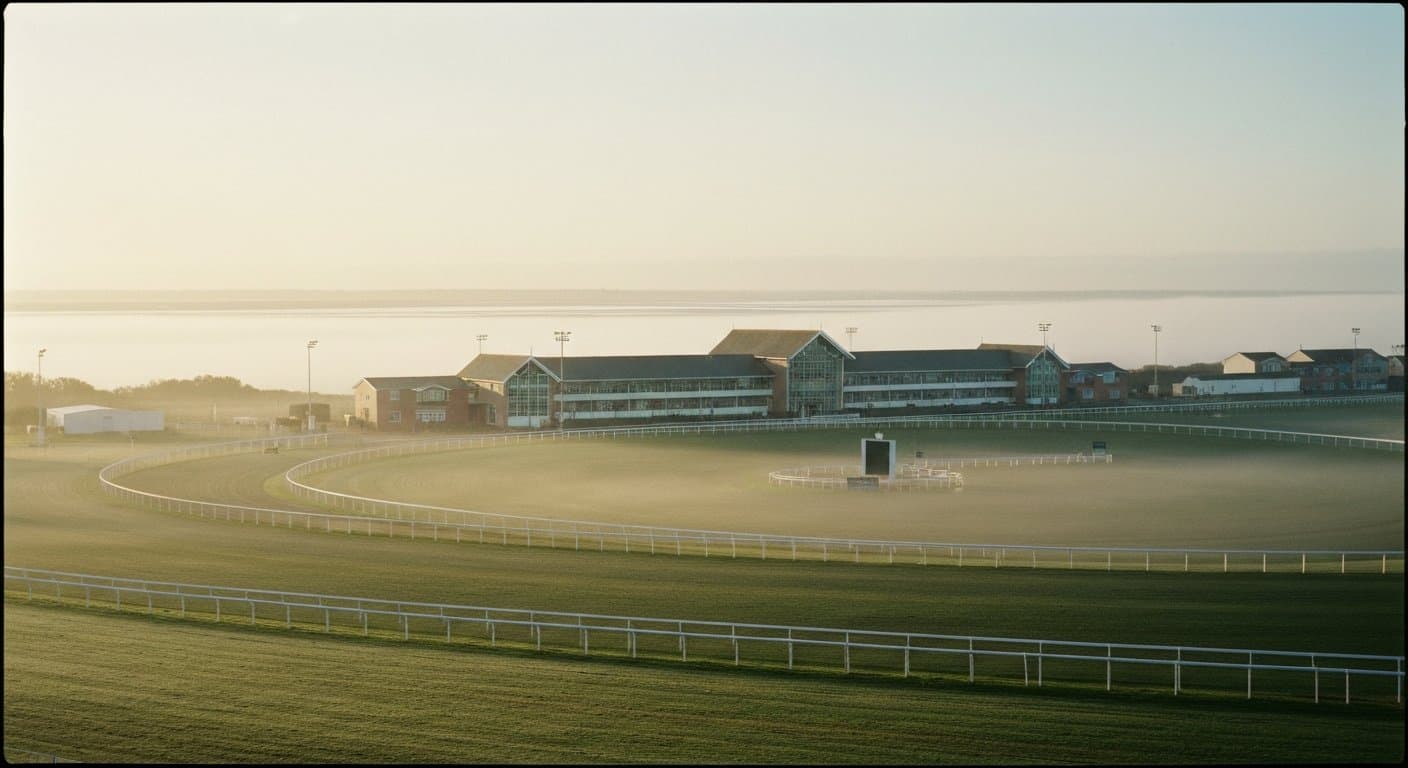
The History of Ffos Las Racecourse
The story of Ffos Las: from Europe's largest opencast mine to Wales's first new racecourse in 80 years, and the Welsh Champion Hurdle years, 2010 to 2024.
Read more
Ffos Las: From Opencast Mine to Racecourse
The extraordinary story of how Europe's largest opencast coal mine became Ffos Las Racecourse — Wales's first new racecourse in 80 years.
Read more
Sprinter Sacre at Ffos Las: The Complete Story
How Sprinter Sacre's ten-length win at Ffos Las in 2011 was the first glimpse of a horse destined to become one of jump racing's all-time greats.
Read moreResearch the field with the AI Race Predictor
Our model publishes calibrated win-probability estimates for UK races — a second opinion to understand a race, not tips. It's open about its record: it doesn't beat the market, and we show exactly how it does.
Work it out & learn the basics
Gamble Responsibly
Gambling should be entertaining and not seen as a way to make money. Never bet more than you can afford to lose. If you or someone you know has a gambling problem, help and support is available.