
Founder & Editor · Last reviewed 2026-03-02
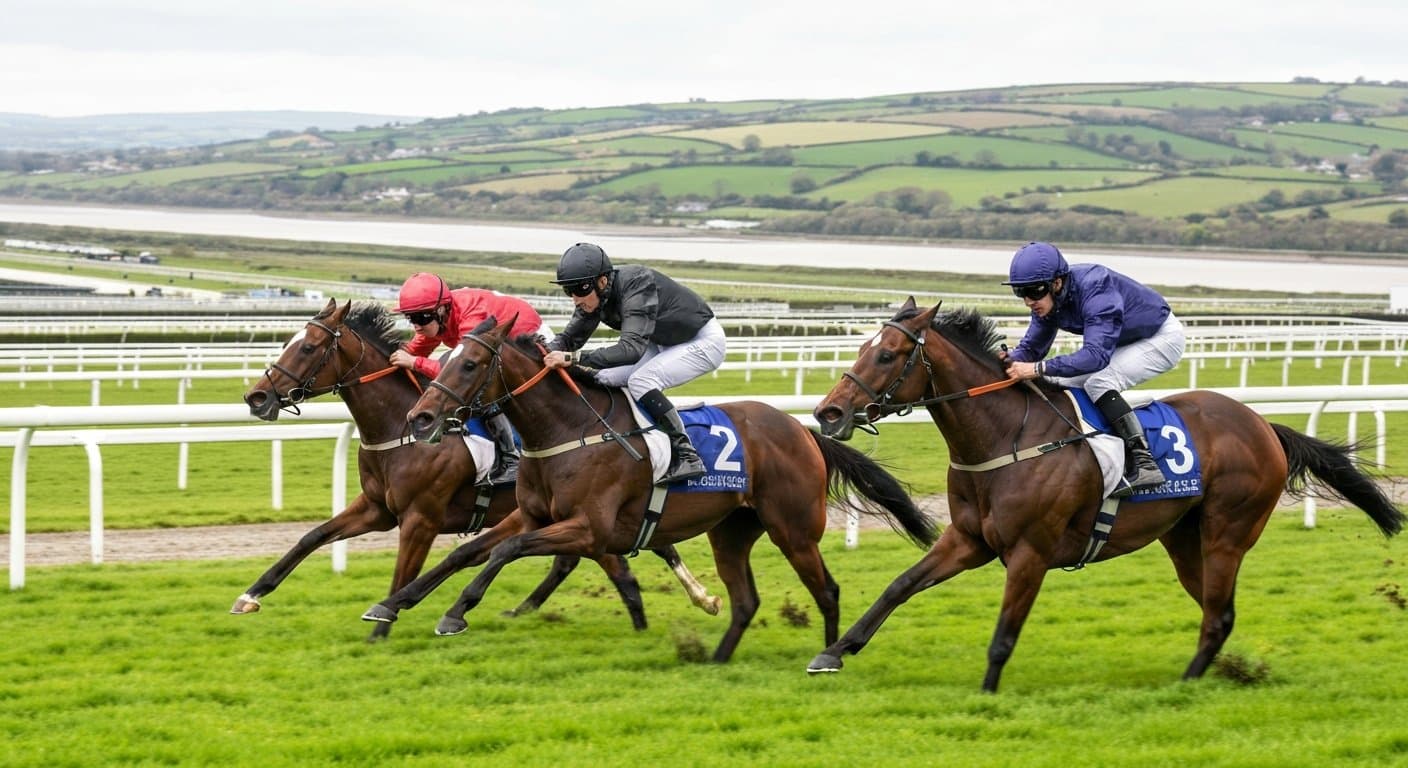
Ffos Las opened in 2009 on reclaimed opencast mining land at Trimsaran in Carmarthenshire, making it Britain's newest racecourse and the only purpose-built jumps and flat venue of the modern era. The name translates from Welsh as "blue ditch" — a reference to the landscape before construction. The course sits in west Wales, forty miles west of Cardiff and roughly equidistant from Swansea and Llanelli, drawing crowds from across the Welsh population belt and regularly attracting 6,000 to 8,000 on major racedays.
For betting purposes, Ffos Las presents a specific and learnable environment. The course is fair — flat, wide, and free of quirks — which means form translates reliably and races tend to be won by the most straightforward combination of horse quality, going suitability, and trainer intent. There are no hidden biases requiring local knowledge to decode, no unusual obstacle placements, and no dramatic gradient changes. What makes Ffos Las interesting as a betting venue is not a trick in the circuit but the trainer and going patterns that shape every card.
Quick Betting Reference
- Course type: Left-handed galloping oval; dual-purpose flat and NH
- Distance range: 5f to 1m6f (flat); 2m to 3m6f (jumps)
- Going: Good to Soft most often; Soft in winter; rarely Heavy due to engineered drainage
- Notable race: the West Wales National, a staying handicap chase. The Welsh Champion Hurdle (Limited Handicap, ~2m) was staged here from 2010 to 2024 and moved to Chepstow in October 2025.
- Primary advantage: Going filter — engineered drainage creates a predictable going profile unique in British racing
- Form transfer: Haydock, Newbury, Kempton (flat); Cheltenham, Newbury, Kempton (jumps) transfer well
- Trainer to watch: Evan Williams (Llancarfan, 45mi) for NH; leading Newmarket yards for flat
What Distinguishes Ffos Las
Being purpose-built gives Ffos Las a structural consistency that older courses lack. The drainage system — engineered from the ground up with layered rock, sand, and topsoil — means the going responds to rain in a predictable, measured way. Where clay-based courses can shift from Good to Soft to Heavy within forty-eight hours of sustained rain, Ffos Las moves more slowly. Meetings that would be abandoned or run on testing ground elsewhere often proceed at Ffos Las on Good to Soft. This predictability is itself a betting tool: when the forecast shows two days of pre-race rain, Ffos Las going is likely to be one grade firmer than what a clay course would produce.
The flat circuit and sweeping bends create a test that rewards horses with an economical galloping action, good stamina reserves, and the ability to settle in behind a pace before making their run. There are no sharp bends demanding nimble footwork, no tight final turns that penalise horses wide of the rail, and no undulations creating sectional variation. Horses that run consistently at courses with similar characteristics — wide, galloping, left-handed — carry their form directly.
For flat racing, Ffos Las functions as the Welsh equivalent of Haydock or Newbury: a fair test where good horses win. For NH racing, it sits closer to Cheltenham or Newbury in character than to compact circuits like Fakenham or Cartmel. The absence of quirks makes trainer intent the dominant variable. When a leading Welsh or West Country yard sends a horse to Ffos Las with course form and appropriate going, there is no structural reason for the horse to underperform its form — and that reliability is a foundation for consistent betting decisions.
The Annual Calendar
Ffos Las stages approximately twenty-five to thirty fixtures each year, split roughly evenly between flat and NH. The flat season runs from April to October. NH fixtures run from October through April. The Welsh Champion Hurdle meeting was the busiest betting fixture here until 2024. The race moved to Chepstow in October 2025, so that card is no longer part of the Ffos Las calendar.
Winter NH cards from November to February are the bread-and-butter betting opportunity. These feature Class 3, 4, and 5 handicaps across hurdles and chases, with field sizes of eight to fourteen runners from Welsh, West Country, and Midlands stables. Going during this period is typically Soft or Good to Soft — the engineered drainage keeps the ground manageable even in sustained wet weather. Spring meetings in March and April often produce the firmest ground of the NH season, when the drainage performs at its best in drying conditions.
Bet on Ffos Las
Place your bets on Ffos Las races with a trusted bookmaker.

Promo code BETFRED50. New customers only. Register, deposit with a Debit Card, and place a first bet of £10+ at Evens (2.0)+ on Sports, to be settled within 7 days, to get £30 in Sports Free Bets and £20 in Bet Builder Free Bets within 24 hours of settlement. 7-day expiry. Eligibility & payment exclusions apply. Full T&Cs apply. Take Time to Think. BeGambleAware.org. 18+. Full T&Cs.

Promo code R30. New UK customers only, 18+. Register, deposit £10 or more, then place a £10 single cash bet at odds of 1/2 (1.5) or greater on any sports market (excluding Virtuals). Once the qualifying bet settles you get £30 in Free Bets (3 x £10) — the qualifying bet can win or lose. Free Bets are valid on any sports market excluding Virtuals, expire in 7 days, are non-withdrawable and must be used in full. Excluded deposit methods apply (including PayPal, Apple Pay, Skrill and NETELLER). Named bets such as Lucky 15 do not qualify. If you cash out the qualifying bet, or it is voided, you are no longer eligible for the offer. Ends 31.12.26. Full T&Cs apply. Please gamble responsibly. BeGambleAware.org. 18+. Full T&Cs.

Promo code BET40GET20. New UK customers, 18+. Register with the code and place a first bet of £40 or more at Evens (2.0) or greater. Receive 2 × £10 free bets: the first credited automatically once the qualifying bet settles, the second 24 hours later. Free bets must be placed at minimum odds of 4/1 (5.0), expire 24 hours after credit, and the free-bet stake is not returned with winnings. Debit card deposits only. Take Time to Think. BeGambleAware.org. 18+. T&Cs apply. Full T&Cs.

50% of your first-day net losses refunded as a free bet, capped at £25. New UK customers aged 18+ only. To qualify, deposit and place a first bet of £10 or more on any sport at minimum odds of evens (2.00), then place at least two further bets on different events, each worth at least 50% of your largest bet, all at evens (2.00) or greater. Losses are counted from your first settled bet until 23:59 the same day. Place a qualifying £10+ bet and you are guaranteed at least a £5 free bet. Bets placed at SP, void bets, cashed-out bets and bets struck with free bets do not count towards the offer. The free bet is credited the day after your qualifying bets settle and must be used within 7 days, after which it expires. It can be used at odds from 1/4 (1.25) up to 250/1 on singles and straight accumulators, but not on Trixie, Patent or Yankee style multiples. Free-bet stake is not returned with winnings. One offer per person, household, address, IP address and device. E-wallet deposits may not qualify, so check the cashier before depositing. Customers registered with GAMSTOP cannot claim. KYC identity verification must be completed before the free bet is credited. Take Time to Think. BeGambleAware.org. 18+. T&Cs apply. Full T&Cs.

New customers, 18+. Choose the sports bonus at sign-up, make a first deposit and receive a 100% bonus up to £50 in your Sports Bonus balance. To convert the bonus to cash, wager it 10x within 30 days. Single bets below Evens (2.00) do not qualify; accumulators do not qualify if any selection is below 1/2 (1.50). Virtual Sports, voided, cancelled, drawn, cashed-out and free-bet wagers do not count towards wagering. Only the first settled bet per event counts. Withdrawing before the wagering requirement is met forfeits the bonus balance including bonus winnings. Real-money funds are used before bonus funds. Deposits via Skrill or Neteller are not eligible. Not valid in conjunction with other promotions. Odds, bet and payment limits apply. 10bet general and promotion T&Cs apply. BeGambleAware.org. 18+. Full T&Cs.

New customers in Great Britain and Republic of Ireland, 18+. Place a £10 fixed-odds qualifying bet at minimum odds of 1/2 (1.50) — single or each-way (only the win part counts), pre-event or in-play, not cashed out early, within 28 days of opening the account. Receive up to £60 in bonuses credited over three days: 3 × £10 fixed-odds free bets (the first on settlement, then 24 and 48 hours later) plus 3 × £5 Total Goals FOOTBALL spread bets and 3 × £5 racing Winning Favourites spread bets, with a £1 racing Race Index spread bet as an extra on top. The spread bets need a full spread-betting account, opened within 28 days of the fixed-odds account and subject to Spreadex's eligibility and appropriateness checks. Free-bet stakes not returned with winnings; free bets valid 28 days from issue. IMPORTANT: the £5 credits are SPREAD bets — sports spread betting carries the risk that losses can exceed your stake. Sports spread-betting customers do not have Financial Ombudsman or FSCS recourse. Take Time to Think. BeGambleAware.org. 18+. T&Cs apply. Full T&Cs.

Promo code WELCOME15, entered under My Bonuses after registering. New UK customers, 18+. Place a first qualifying bet of at least £10 from your cash balance at odds of evens (2.0) or greater within 7 days of opening the account. Once the qualifying bet fully settles you receive £15 in free bets, credited as 3 x £5 tokens with set uses: one £5 accumulator free bet (minimum 4 legs, each leg at 2/5 or bigger), one £5 sports free bet (any market at evens or bigger) and one £5 Sub Cover free bet (selected football player markets at evens or bigger). Free-bet stakes are not returned with winnings. Free bets expire 7 days after they are credited. Void, cashed-out and partially cashed-out bets do not qualify. One offer per customer. Confirm the current terms on BetGoodwin's own welcome-offer page before claiming. Take Time to Think. BeGambleAware.org. 18+. T&Cs apply. Full T&Cs.

New UK customers, 18+. Minimum deposit £10. Place a £10 qualifying single on sports (excluding virtuals) at minimum odds of 1/2 (1.50), settled within 14 days. Deposit-method exclusions apply. Receive £30 in free bets (stake not returned), split £20 for sportsbook use (2 x £10) and £10 for Bet Builder only (2 x £5); Bet Builder does not cover horse racing. Free bets must be accepted within 7 days and expire 7 days after acceptance. No promo code required. Best Odds Guaranteed on UK & Irish racing, subject to having staked over £25 in the previous seven days. Operated by LiveScore Betting and Gaming (Gibraltar) Ltd, UKGC 56859. Confirm the current terms on LiveScore Bet's own promotions page before claiming. Take Time to Think. BeGambleAware.org. 18+. T&Cs apply. Full T&Cs.
18+. BeGambleAware.org
Track Characteristics
Ffos Las was designed and built rather than evolved over decades, and the circuit reflects that deliberate engineering. The track is a left-handed oval measuring approximately one mile and four furlongs around the outside chase circuit. Three parallel circuits — chase, hurdle, and flat — run concentrically within the same infield, each separated by roughly twenty metres. This separation allows all three types of racing to use the same geographical space without sharing track surface, which contributes to the consistent ground conditions each discipline produces.
The Galloping Layout
The hallmark of Ffos Las as a racing surface is its width and the long, sweeping nature of its bends. There are no sharp corners requiring horses to check their stride, no tight hairpin turns rewarding nimble compact types over powerful galloping ones. The bends at Ffos Las are wide arcs — a horse can run the outer line through a bend and lose perhaps two lengths over the full circuit, compared to five or six lengths lost at compact courses like Fakenham or Cartmel.
The home straight runs for approximately two furlongs, providing a proper finishing run without favouring hold-up horses in the way that an extended Cheltenham or Haydock run-in would. Horses that race in the first three or four during the race are best positioned to win — the straight is long enough to allow a sustained push, but not so long that a horse dropped in fifth or sixth can make up significant ground in the final stages.
The course's flatness is its other defining characteristic. There are no significant undulations. A horse that gallops at an even pace throughout faces no gradient-imposed energy cost — no climb in the back straight, no downhill section rewarding forward momentum. What the horse produces in the early stages is what it has available in the final two furlongs.
The Chase Circuit
The chase course runs on the outer loop of approximately one mile and four furlongs. Fences at Ffos Las are built to standard specifications and well maintained, but the circuit's width and sweeping design means horses approach each fence with good rhythm and momentum. There are no awkwardly angled obstacles or fences positioned after tight bends where horses arrive with disrupted stride patterns.
The penultimate and final fences on each circuit are positioned in the home straight, where horses are tiring. These fences are not especially technical — they are standard fences met at a gallop — but they arrive at the point in the race when jumping errors are most costly. Fluent jumpers that maintain their rhythm through the back straight and into the home straight hold a consistent advantage over horses that need to be committed hard at their fences to generate a safe jump. The course suits chasers with an economical, fluid jumping style rather than those relying on athleticism to compensate for imprecision.
The Hurdle Circuit
The hurdle course runs inside the chase track on a slightly smaller loop. It is also left-handed and galloping in character. Hurdle flights at Ffos Las are not unusual in placement or angle, and the surface between flights gives horses space to find their rhythm. The test is essentially the same as at any fair, galloping NH venue: stamina, jumping fluency, and the ability to quicken from off the pace in the home straight.
Form from Cheltenham, Newbury, Kempton, and Haydock transfers well to the hurdle circuit. Horses that have won at compact courses on firmer ground, where nimble acceleration through tight bends is the key attribute, carry their form less directly.
The Flat Circuit
The flat course occupies the innermost circuit at Ffos Las and is used for the April-to-October flat programme. The racing surface is grass, maintained to the same standard as the NH circuits. Sprint races from five furlongs to seven furlongs are run on a straight spur separate from the oval. This straight does not have the camber variation of the Epsom or York straight and does not impose a significant draw effect.
Middle-distance and staying flat races from one mile to one mile six furlongs use the oval. Left-handedness gives low-drawn horses a marginal positional advantage through the first bend, but the wide turns reduce the magnitude of this advantage compared to tighter courses. For practical betting purposes, draw is not a primary filter at Ffos Las except in sprints with fields above twelve runners.
Form Transfer
The most directly comparable courses to Ffos Las are Haydock Park (left-handed, galloping, flat) and Newbury (left-handed, galloping, flat) for both flat and NH races. Kempton Park (Flat/AW) and Cheltenham (NH) are secondary comparators. Form from compact, tight-bending courses — Cartmel, Fakenham, Plumpton — requires discounting because the athletic demands are substantially different.
Going & Conditions
Ffos Las has the best engineered drainage system of any British racecourse. When the track was built in 2007–2009, the subsoil preparation involved multiple layers — crushed rock at the base, then coarse sand, then a finer sand-soil blend on the surface. This layered construction allows rainwater to percolate downward and drain away rather than sitting on the surface and softening the top. The practical result: Ffos Las regularly races on ground one to two grades firmer than what nearby Welsh courses would produce after the same rainfall.
What the Drainage Means for Betting
The going at Ffos Las is a betting advantage in itself. When Carmarthenshire has seen two or three days of autumn rain and the forecast for a Saturday card shows moderate going, bettors who know the course understand that the official going will likely be Good to Soft — not Soft or Soft to Heavy as might be expected at Chepstow or Ludlow in the same conditions. This firmer base has two practical consequences.
First, horses that carry form from Soft ground meetings at other Welsh venues are not necessarily facing their ideal conditions at Ffos Las, even in winter. A horse that thrives on Heavy at Chepstow may find Ffos Las's Good to Soft slightly too quick. Second, horses from flat, galloping courses on Good to Soft ground — Haydock, Newbury, Kempton — are facing conditions directly equivalent to their form. The going comparison is simpler and more reliable at Ffos Las than at most Welsh venues.
Seasonal Going Profile
April to June (flat season opening): Going is typically Good or Good to Firm as the drainage performs well in spring drying conditions. Rainfall is moderate in west Wales at this time of year, and the track's permeability means it dries quickly between showers. Horses with Good to Firm form from southern flat courses carry their ratings directly.
July to September (flat season peak): Summer ground is usually Good or Good to Soft. The Welsh Champion Hurdle was run here in the autumn until 2024, on going that was typically Good to Soft, but it is now staged at Chepstow.
October to November (NH season opening): Autumn rain pushes the going toward Good to Soft or Soft. The engineered drainage slows the deterioration, but sustained westerly wet spells from the Atlantic will eventually overcome even the best drainage system. Soft is the going description for perhaps a third of November fixtures. Heavy is rare at Ffos Las — it requires truly exceptional rainfall sustained over multiple days before the drainage capacity is exceeded.
December to February (mid-winter NH): The coldest and wettest period. Going ranges from Soft to Good to Soft depending on the preceding weather. At this time of year, frost becomes a more significant risk than waterlogging — Ffos Las can be frozen off when other drainage-impaired courses have survived with a worse going description. The drainage system protects against soft-ground abandonment; cold weather is the primary cancellation risk.
March to April (NH season close): Spring going at Ffos Las is often the firmest NH ground of the winter season. As the drainage recovers and spring drying begins, the going can return to Good to Soft or even Good at a point in the calendar when other courses are still running on Soft or Soft to Heavy.
Going and Race Type Interaction
Over hurdles, the going at Ffos Las affects race character in the same way as at any galloping course: Soft ground slows the pace and favours stayers with clean jumping technique; Good to Soft allows a broader range of horse types to compete at their best. Over the flat, summer Good to Firm produces fast finishes and can narrow the edge of hold-up horses who rely on late acceleration — the firmer the ground, the more a handy prominent racer benefits from front-running.
The key going filter for Ffos Las NH races: horses with form specifically on Good to Soft carry that evidence directly. Horses whose NH form is exclusively on Soft or Heavy face conditions one to two grades quicker than their best form. In competitive winter handicaps, this mismatch between a horse's going requirements and Ffos Las's typically firmer-than-expected surface is the most common source of market error.
Checking Conditions
The official going report from Ffos Las racecourse is updated daily in the seventy-two hours before a meeting. West Wales weather is influenced by Atlantic systems that can move through quickly. A going description issued on Thursday morning can change by Saturday if a front arrives overnight. Check the going on raceday morning rather than relying on the Wednesday declaration, particularly in autumn and winter when weather fronts are most variable.
Key Trainers & Jockeys
Ffos Las sits at the heart of Welsh racing, and the trainer landscape reflects that geography. Welsh and West Country stables provide the majority of runners at regular fixtures, while major Irish yards, among them Willie Mullins, Gordon Elliott and Henry de Bromhead, made targeted appearances at the Welsh Champion Hurdle meeting before it moved to Chepstow in 2025. Understanding which trainers treat Ffos Las as a deliberate target rather than a filler option is the starting point for finding value in the market.
Evan Williams
Evan Williams trains at Llancarfan in the Vale of Glamorgan, approximately forty-five miles east of Ffos Las. He is the dominant force in Welsh NH racing and has built one of the strongest regional records at the course of any trainer in the country. Williams's operation produces a steady supply of horses suited to Ffos Las conditions — adaptable, tough NH horses that handle Good to Soft ground, gallop at a consistent pace, and jump fluently on a wide, fair circuit.
Williams targets the course strategically. His horses at Ffos Las in Class 3 and Class 4 handicap chases and hurdles hold a win rate that reflects both the quality of his yard and its deliberate familiarity with the track. When Williams sends a horse to Ffos Las with previous course form at a price of 4/1 or above, the combination of local knowledge and course suitability creates a value angle that national market-makers do not always reflect fully. His second and third strings at the course are also worth noting — unlike some big yards that send their best horse with full support, Williams's runners across the card often represent real intent.
Rebecca Curtis (formerly)
Rebecca Curtis trained at Pembroke in west Wales until stepping back from training in 2021. During her active years, she developed a strong Ffos Las record through the same local knowledge that Williams applies. Her former horses and the yards that took on her strings remain worth tracking — trainers who inherit horses with Ffos Las experience from a locally connected stable often retain the going and course form edge even after a change of yard.
Paul Nicholls
Paul Nicholls at Ditcheat in Somerset, approximately 100 miles from Ffos Las, is the leading non-Welsh trainer at the course. Nicholls targets specific races — primarily conditions events and competitive handicaps at Class 2 and Class 3 level — when he has a horse that fits the course profile. A Nicholls runner at Ffos Las in a competitive handicap with previous course experience is not making up the numbers: these horses are sent with a specific race in mind.
Mullins, Elliott, and de Bromhead (Welsh Champion Hurdle)
The Welsh Champion Hurdle drew Irish talent every autumn while Ffos Las staged it. Willie Mullins, Gordon Elliott, and Henry de Bromhead each sent runners to the race when they had a hurdler peaking at this point in their campaign. Irish runners at the Welsh Champion Hurdle arrived with form from Cheltenham, Punchestown, and Leopardstown — comparable galloping tracks with similar going profiles. These horses were typically at short prices and reflect their form accurately.
For betting purposes, the Irish-trained runners at the Welsh Champion Hurdle were the market leaders and can be assessed on straightforward form grounds. Value in the race, when it exists, is more often found among English-trained runners from yards with specific course knowledge at prices of 5/1 or above, where the market slightly underweights track suitability relative to the raw rating.
Jockeys
Adam Wedge is the most prominent NH jockey based in Wales and rides regularly at Ffos Las for Evan Williams and other Welsh yards. Wedge's understanding of the circuit — the entry points for the sweeping bends, the pace judgement required on a fair galloping track — translates into consistent performance at the course. A Wedge booking on a Williams horse at Ffos Las is a signal that the trainer considers the race winnable.
For flat racing, the picture is different. Ffos Las does not have a resident flat jockey community in the same way as tracks in the north or south-east. Many flat runners arrive with jockeys booked from Newmarket or south Wales, and the weight of the advantage falls on trainer knowledge rather than jockey course familiarity. Experienced jockeys from the southern flat circuit — those who ride at Haydock, Newbury, and similar galloping venues — adapt to Ffos Las without difficulty.
Yard Intent Signals
A reliable intent indicator at Ffos Las is the combination of trainer course record, horse course form, and jockey booking. When all three align — a Williams horse, previous Ffos Las form, Adam Wedge up — the case is established regardless of price. When only one or two factors are present, the horse should be assessed on going suitability and straightforward form grounds rather than any structural edge.
Betting Strategies
Ffos Las betting strategy begins with the course's defining characteristic: it is a fair track where form holds up. This is the foundation for every strategy below. At quirky courses — compact circuits with unusual obstacles, severe gradients, or extreme draw biases — the bettor's edge comes from knowing the structural oddity better than the market. At Ffos Las, the edge comes from two things: knowing which trainers treat the course as a deliberate target, and applying the going filter correctly.
Strategy One: Use the Going Filter as a Competitive Edge
Ffos Las's engineered drainage makes its going systematically firmer than most Welsh venues in the same weather conditions. This creates a specific, repeatable error in the market: horses that have run exclusively on Soft or Heavy at other Welsh courses are sometimes priced as if they will face identical conditions at Ffos Las, when in reality the going will be one or two grades quicker.
Apply this filter in every winter NH card. Before assessing any horse's form, establish what going it needs versus what Ffos Las will realistically provide. A horse with three wins on Heavy at Chepstow, running at Ffos Las when the forecast shows moderate rain, is facing Going to Soft rather than the Heavy it prefers. This mismatch is not reflected in handicap ratings or market prices. Fade these horses in winter handicaps when alternatives are available that truly prefer Good to Soft.
The reverse also applies: horses from Good to Soft form at Haydock, Kempton, or Newbury often carry their form directly to Ffos Las in winter. These horses, at prices above 4/1 in competitive Class 3 or 4 handicaps, are worth supporting when trainer intent signals are also present.
Strategy Two: Evan Williams at Value Prices
The combination of local knowledge, course familiarity, and high yard quality makes Evan Williams the most reliable value source at Ffos Las. When Williams runs a horse in a competitive NH handicap at 4/1 or above — particularly in Class 3 or Class 4 events — with course form in the last eighteen months, the case for support is established. Williams's runners at these prices often carry more information than the market reflects, because national market-makers apply a standard rating-based assessment rather than factoring in the local knowledge premium.
This strategy is specifically for prices of 4/1 and above. Williams horses at 2/1 or shorter are already fully priced by the market and offer no structural edge. It is at the wider end of the price range — 4/1 to 10/1 — that the trainer-course combination generates value.
Strategy Three: Course Form as Primary Filter (NH Races)
At a fair, galloping course like Ffos Las, course form carries a different weight than at quirky courses. It is not a structural edge in the same way as at Fakenham or Cartmel, where the physical demands are truly unusual. At Ffos Las, course form is a going and trainer-targeting proxy: a horse that has won or placed at Ffos Las before has demonstrated that it handles the specific combination of left-handed galloping, Good to Soft going, and the pace profile of Welsh NH racing. This evidence is worth more than equivalent form from a compact, tight-bending course.
In any field that contains at least one horse with a win or place at Ffos Las in the last two seasons, weight that evidence in selection. If the horse also shows appropriate going form and an Evan Williams or Paul Nicholls booking, it becomes the benchmark against which all opposition must be positively justified.
Strategy Four: Support Galloping-Track Form Against Local Specialists in Flat Races
In flat races at Ffos Las, particularly summer Class 3 and Class 4 handicaps, horses that arrive with form from comparable galloping tracks — Haydock, Newbury, Windsor — carry their ratings directly. The course is fair enough that a horse rated 90 running at 88 faces straightforward demands. By contrast, horses whose form has been produced at tighter venues — Beverley, Epsom, Ascot — sometimes underperform their ratings at Ffos Las because the specific attributes those courses reward (quick acceleration around a tight turn, handling of a camber) are not tested at Ffos Las in the same way.
When a flat horse from a straight or galloping venue arrives at Ffos Las at 5/1 or above with a recent handicap mark earned on similar ground, the straightforward form transfer case is established.
Strategy Five: Oppose Short-Priced Soft-Ground Specialists in Autumn
In October and November, when the going at Ffos Las is Good to Soft or occasionally Soft, some punters assume that horses with Heavy or Soft records are ideal. The drainage system means Ffos Las is not the Soft ground test those horses need. A horse at 6/4 or 7/4 on the basis of its form on heavy Welsh ground, facing Good to Soft at Ffos Las, is being backed at a price that does not reflect the going mismatch.
The simplest application of this strategy is to note when a short-priced favourite's best form is on going softer than Good to Soft, then assess whether Ffos Las's drainage system will provide conditions soft enough to suit. If the going is Good to Soft, those horses are worth opposing in favour of rivals with Good to Soft form at comparable galloping tracks.
To compare place terms and each-way promotions across the major bookmakers, see our best bookmakers for horse racing guide.
Key Races to Bet On
Ffos Las stages approximately twenty-five to thirty fixtures per year, split between flat and NH. The calendar peaks twice: at the Welsh Champion Hurdle meeting, staged here until 2024, and across the winter NH programme from November to February when competitive handicaps under both codes produce the highest betting volumes of the jumping season.
The Welsh Champion Hurdle
The Welsh Champion Hurdle was the course's biggest race from 2010 to 2024. It is a Limited Handicap over about two miles, and it moved to Chepstow in October 2025 as part of the new Welsh Racing Festival. Ffos Las still stages the West Wales National, a staying handicap chase.
The race is run at a point in the season — late summer — when leading hurdlers are returning from a summer break or finishing a summer campaign. Irish runners from Mullins, Elliott, and de Bromhead are regular participants, having targeted the race as a warm-up before the autumn NH season proper. English-trained runners from Nicholls, Henderson, and other major yards also appear when they have a hurdler in peak form at this time of year.
For betting purposes, the Welsh Champion Hurdle was best approached as a form race. The going at Ffos Las is typically Good to Soft, and the field was small enough (usually six to ten runners) that each runner's form can be assessed carefully. Each-way betting at 5/1 or above on well-credentialled English-trained runners with Ffos Las or comparable galloping-course form offers the best value angle; the Irish market leaders at short prices are generally accurately priced.
Winter NH Handicap Programme
From November to February, Ffos Las stages a steady programme of Class 3, 4, and 5 NH handicaps. These races — typically over two miles, two and a half miles, and three miles — attract fields of eight to fourteen runners from Welsh, West Country, and Midlands stables. This is the bread-and-butter betting opportunity at the course.
The November and December cards are the most competitive within the winter programme. Trainers targeting specific handicap marks early in the season send horses to Ffos Las because the fair track produces accurate form, the going is manageable even in wet autumn conditions, and the prize money is reasonable for the class level. In these races, Evan Williams typically accounts for two to four runners per card, and his representatives with course form are the primary selection starting point.
Summer Flat Programme
The flat season at Ffos Las runs from April to October and produces approximately twelve to fifteen fixtures. The cards are Class 3 to Class 6, drawing horses from yards across Wales, the West Country, and occasionally Newmarket when trainers identify a suitable opportunity. The summer programme lacks a marquee handicap of the standing the Welsh Champion Hurdle had, but the competitive Class 3 handicaps in July and August — run on Good or Good to Soft ground at the height of the flat season — produce consistent betting opportunities.
The most reliable value in the flat programme is found in Class 3 handicaps over one mile to one mile four furlongs, where horses from galloping flat tracks — Haydock, Newbury, Windsor — carry their ratings directly onto the fair Ffos Las surface. Favourites in these races that have recent form at directly comparable tracks are worth taking at face value; market opposition from horses with form only at tighter tracks requires positive reasons before support.
Festival and Feature Days
The Welsh Champion Hurdle card was the closest Ffos Las came to a festival format, up to its final running here in 2024. The supporting programme — typically six to seven races across both flat and NH — includes at least one or two competitive open handicaps that draw strong fields. These supporting races represent the best each-way value on the card, because the market's attention is concentrated on the Champion Hurdle and the supporting handicaps are priced with less precision.
On the Welsh Champion Hurdle card, while it was staged here, the race itself was the headline interest and the supporting competitive handicaps the primary each-way opportunities. A horse at 8/1 or above in a supporting Class 3 handicap with course form and Evan Williams training was the most productive angle for that card.
Share this article
More about this racecourse
All Ffos Las guides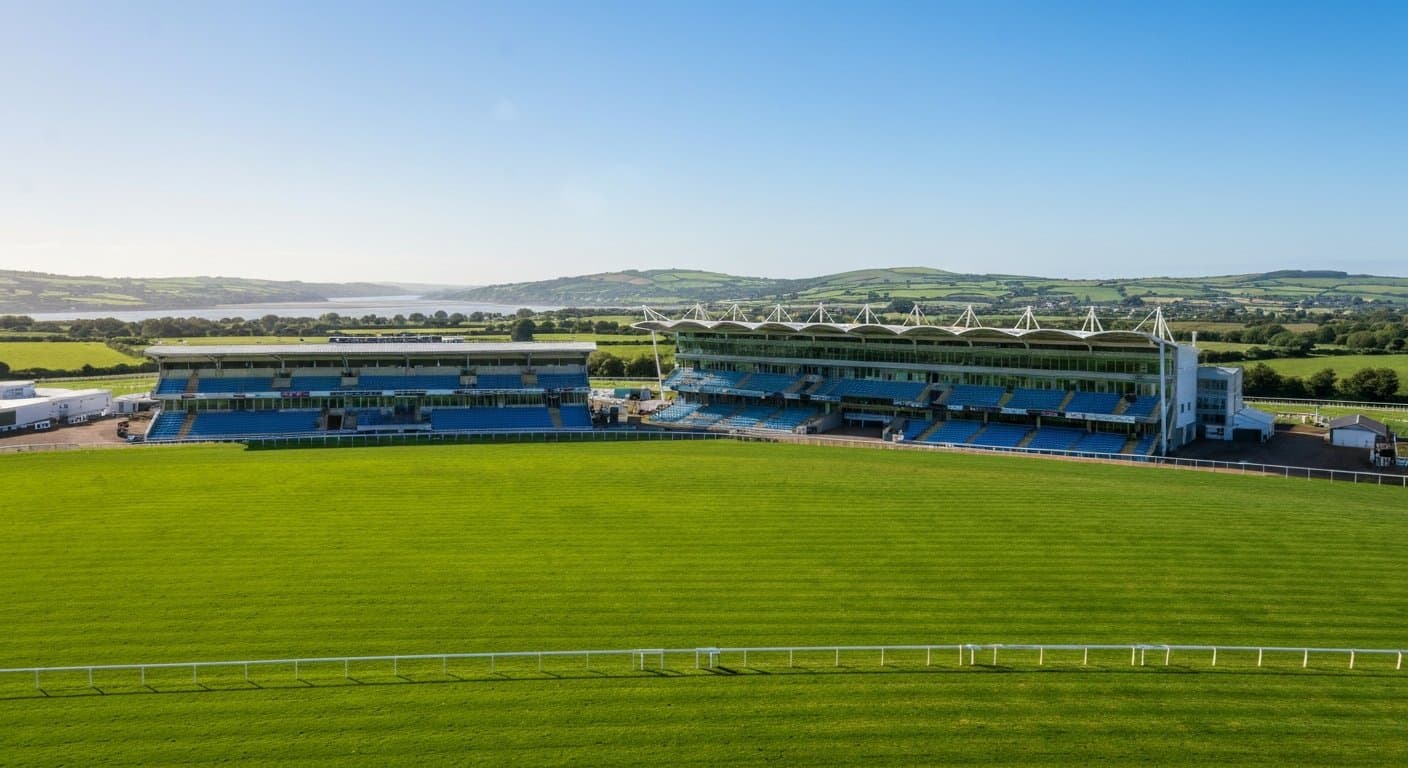
Ffos Las Racecourse: Complete Guide
Everything you need to know about Ffos Las: Wales's first new racecourse in 80 years, the West Wales National, and a track built from an opencast mine.
Read more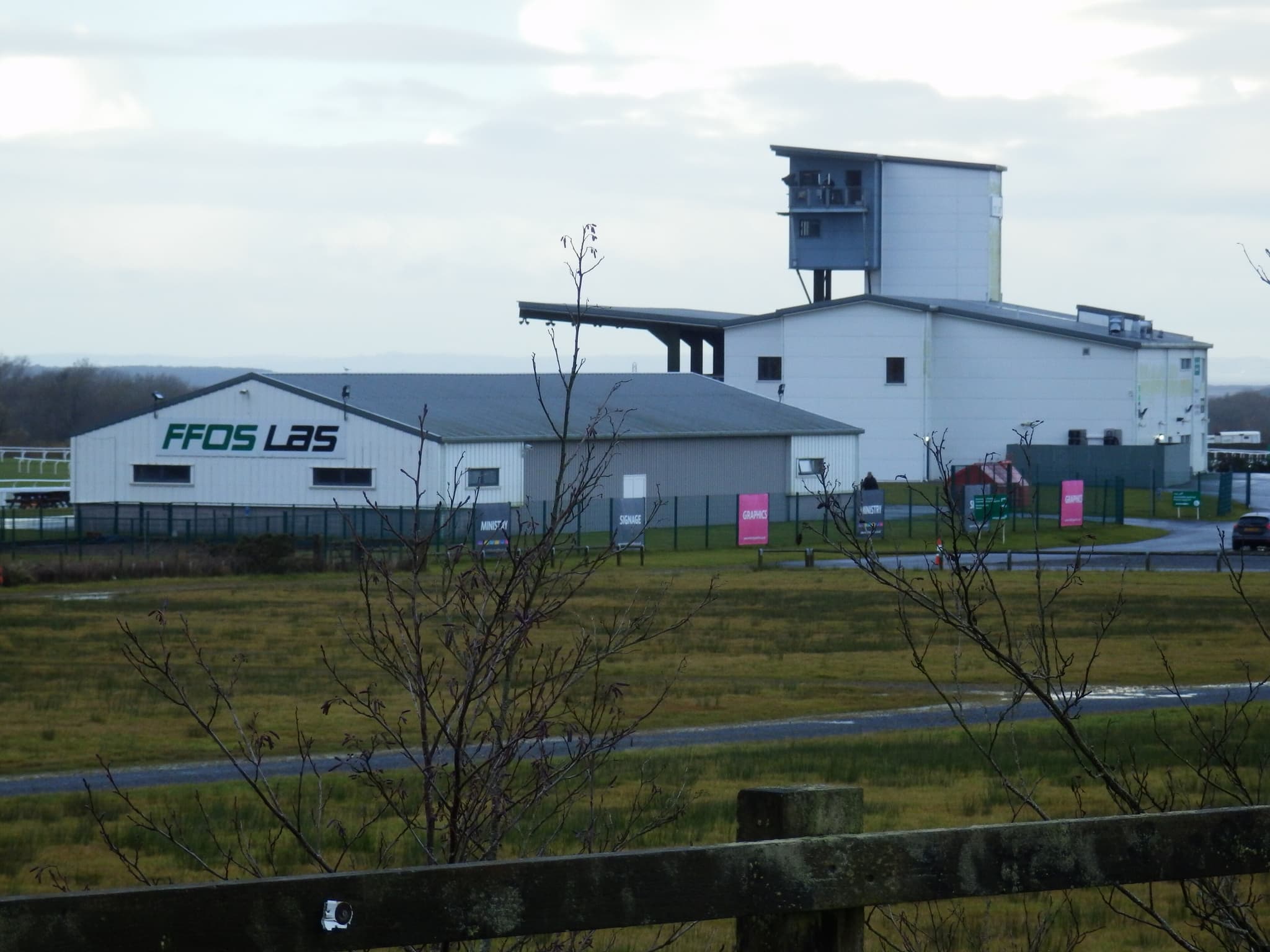
A Day Out at Ffos Las Racecourse
Everything you need for a day at Ffos Las — getting there, what to wear, enclosures, food and drink, and insider tips for Wales's newest racecourse.
Read moreFfos Las Festival Guide
Your complete guide to Ffos Las Racecourse — Wales's newest racecourse, the summer festivals and what makes this Carmarthenshire track the centre of Welsh racing.
Read morePhotos on this page are used under Creative Commons licences. Titles, sources and licence links for each one are on our image credits page.
Research the field with the AI Race Predictor
Our model publishes calibrated win-probability estimates for UK races — a second opinion to understand a race, not tips. It's open about its record: it doesn't beat the market, and we show exactly how it does.
Work it out & learn the basics
Gamble Responsibly
Gambling should be entertaining and not seen as a way to make money. Never bet more than you can afford to lose. If you or someone you know has a gambling problem, help and support is available.