
Founder & Editor · Last reviewed 2026-04-05
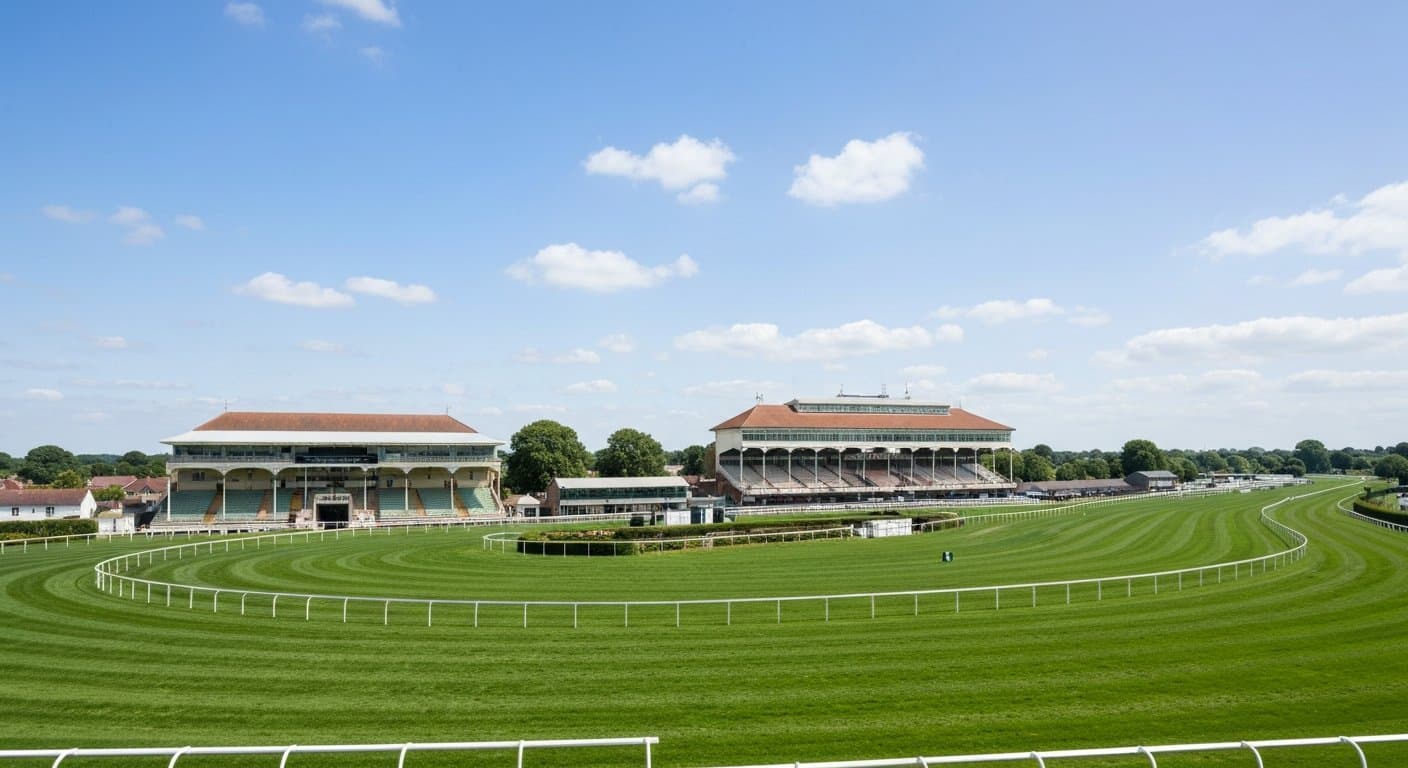
Fontwell Park is British jump racing's most distinctive venue. Opened in 1924, it is the only racecourse in Britain operating a figure-of-eight steeplechase course, a layout that creates a test unlike anything else on the National Hunt circuit. The hurdles track is a conventional left-handed oval of approximately one mile; the chase course is two crossing loops that require horses and jockeys to negotiate a central crossing point twice every circuit, once going each way. That crossing is the defining feature of Fontwell, and watching a field of chasers bank and re-balance through it is unlike anything you will see at Cheltenham, Sandown, or Kempton.
The course was founded by Alfred Day, a local horse trainer who brought jump racing to this patch of West Sussex countryside between the South Downs and the sea. The first fixture took place on 21 May 1924. Day's figure-of-eight design was a practical response to the shape of the available land, but the solution he found has outlasted every trend in British racing. Owned today by Arena Racing Company, Fontwell Park stages around 25 fixtures each season on a winter-only programme that runs from October through to spring.
The signature race is the National Spirit Hurdle, a Grade 2 run in late February or early March over about two miles and three furlongs, which the course calls the most valuable and prestigious race in its calendar and which acts as a trial for the Cheltenham Festival. The biggest chase is the Southern National, a Class 3 handicap over about three miles and three and a half furlongs in November. With a capacity of around 5,000 and a compact site that puts spectators close to the action, the atmosphere is far more intimate than at the larger southern tracks.
Fontwell Park sits on Arundel Road in the village of Fontwell, approximately six miles west of Arundel and five miles east of Chichester, in the flat coastal plain between the South Downs and the English Channel. Arundel Castle, the medieval seat of the Duke of Norfolk, is visible to the east on a clear afternoon. Barnham station, two miles from the course, provides direct rail access from London Victoria in 75 minutes. The West Sussex setting is part of the course's identity: the going is soft or heavy through most of the winter, the countryside is flat and open, and the racing calendar fits naturally into the rhythm of the south coast's National Hunt season. Gary Moore, whose yard at Horsham is 15 miles to the north-east, is the dominant local trainer and brings consistent winners to Fontwell each season across a broad range of distances and race types.
Who this guide is for
This guide is written for four types of reader:
- First-time visitors wanting to know what to expect, how to get there, where to stand, and what makes Fontwell worth the trip.
- Regular racegoers who want deeper detail on the figure-of-eight chase course, the race calendar, and the trainers who dominate at this track.
- History-focused readers who want to understand how Fontwell Park came to be and what its century of racing looks like.
- Trip planners and bettors looking for practical information on fixtures, facilities, betting angles, and how to combine a Fontwell visit with the wider West Sussex area.
Quick decisions
- Go on a weekend for the biggest cards; go midweek for a quieter experience with equally competitive racing.
- Stand near the central crossing point to see the figure-of-eight in action: it is the most instructive view on the course.
- Arrive at least 45 minutes before the first race on Southern National day; the car park fills quickly.
- Barnham station is the access point by train: 75 minutes from London Victoria, five minutes by taxi from the course.
- Gary Moore, training from Horsham, is the dominant trainer at Fontwell; his runners here are worth noting in the form book.
- The chase course favours quick, agile types; long-striding horses that prefer a conventional flat circuit often find the constant turns difficult.
- Arundel Castle is five miles east and worth an afternoon if you are staying in the area overnight.
The sections below cover everything: the course layout, the race calendar, facilities on the day, travel options, the course history, famous races and moments, and a betting guide. A full FAQ section answers the questions most commonly asked about Fontwell.
Bet on Fontwell Park
Place your bets on Fontwell Park races with a trusted bookmaker.

Promo code BETFRED50. New customers only. Register, deposit with a Debit Card, and place a first bet of £10+ at Evens (2.0)+ on Sports, to be settled within 7 days, to get £30 in Sports Free Bets and £20 in Bet Builder Free Bets within 24 hours of settlement. 7-day expiry. Eligibility & payment exclusions apply. Full T&Cs apply. Take Time to Think. BeGambleAware.org. 18+. Full T&Cs.

Promo code R30. New UK customers only, 18+. Register, deposit £10 or more, then place a £10 single cash bet at odds of 1/2 (1.5) or greater on any sports market (excluding Virtuals). Once the qualifying bet settles you get £30 in Free Bets (3 x £10) — the qualifying bet can win or lose. Free Bets are valid on any sports market excluding Virtuals, expire in 7 days, are non-withdrawable and must be used in full. Excluded deposit methods apply (including PayPal, Apple Pay, Skrill and NETELLER). Named bets such as Lucky 15 do not qualify. If you cash out the qualifying bet, or it is voided, you are no longer eligible for the offer. Ends 31.12.26. Full T&Cs apply. Please gamble responsibly. BeGambleAware.org. 18+. Full T&Cs.

Promo code BET40GET20. New UK customers, 18+. Register with the code and place a first bet of £40 or more at Evens (2.0) or greater. Receive 2 × £10 free bets: the first credited automatically once the qualifying bet settles, the second 24 hours later. Free bets must be placed at minimum odds of 4/1 (5.0), expire 24 hours after credit, and the free-bet stake is not returned with winnings. Debit card deposits only. Take Time to Think. BeGambleAware.org. 18+. T&Cs apply. Full T&Cs.

50% of your first-day net losses refunded as a free bet, capped at £25. New UK customers aged 18+ only. To qualify, deposit and place a first bet of £10 or more on any sport at minimum odds of evens (2.00), then place at least two further bets on different events, each worth at least 50% of your largest bet, all at evens (2.00) or greater. Losses are counted from your first settled bet until 23:59 the same day. Place a qualifying £10+ bet and you are guaranteed at least a £5 free bet. Bets placed at SP, void bets, cashed-out bets and bets struck with free bets do not count towards the offer. The free bet is credited the day after your qualifying bets settle and must be used within 7 days, after which it expires. It can be used at odds from 1/4 (1.25) up to 250/1 on singles and straight accumulators, but not on Trixie, Patent or Yankee style multiples. Free-bet stake is not returned with winnings. One offer per person, household, address, IP address and device. E-wallet deposits may not qualify, so check the cashier before depositing. Customers registered with GAMSTOP cannot claim. KYC identity verification must be completed before the free bet is credited. Take Time to Think. BeGambleAware.org. 18+. T&Cs apply. Full T&Cs.

New customers, 18+. Choose the sports bonus at sign-up, make a first deposit and receive a 100% bonus up to £50 in your Sports Bonus balance. To convert the bonus to cash, wager it 10x within 30 days. Single bets below Evens (2.00) do not qualify; accumulators do not qualify if any selection is below 1/2 (1.50). Virtual Sports, voided, cancelled, drawn, cashed-out and free-bet wagers do not count towards wagering. Only the first settled bet per event counts. Withdrawing before the wagering requirement is met forfeits the bonus balance including bonus winnings. Real-money funds are used before bonus funds. Deposits via Skrill or Neteller are not eligible. Not valid in conjunction with other promotions. Odds, bet and payment limits apply. 10bet general and promotion T&Cs apply. BeGambleAware.org. 18+. Full T&Cs.

New customers in Great Britain and Republic of Ireland, 18+. Place a £10 fixed-odds qualifying bet at minimum odds of 1/2 (1.50) — single or each-way (only the win part counts), pre-event or in-play, not cashed out early, within 28 days of opening the account. Receive up to £60 in bonuses credited over three days: 3 × £10 fixed-odds free bets (the first on settlement, then 24 and 48 hours later) plus 3 × £5 Total Goals FOOTBALL spread bets and 3 × £5 racing Winning Favourites spread bets, with a £1 racing Race Index spread bet as an extra on top. The spread bets need a full spread-betting account, opened within 28 days of the fixed-odds account and subject to Spreadex's eligibility and appropriateness checks. Free-bet stakes not returned with winnings; free bets valid 28 days from issue. IMPORTANT: the £5 credits are SPREAD bets — sports spread betting carries the risk that losses can exceed your stake. Sports spread-betting customers do not have Financial Ombudsman or FSCS recourse. Take Time to Think. BeGambleAware.org. 18+. T&Cs apply. Full T&Cs.

Promo code WELCOME15, entered under My Bonuses after registering. New UK customers, 18+. Place a first qualifying bet of at least £10 from your cash balance at odds of evens (2.0) or greater within 7 days of opening the account. Once the qualifying bet fully settles you receive £15 in free bets, credited as 3 x £5 tokens with set uses: one £5 accumulator free bet (minimum 4 legs, each leg at 2/5 or bigger), one £5 sports free bet (any market at evens or bigger) and one £5 Sub Cover free bet (selected football player markets at evens or bigger). Free-bet stakes are not returned with winnings. Free bets expire 7 days after they are credited. Void, cashed-out and partially cashed-out bets do not qualify. One offer per customer. Confirm the current terms on BetGoodwin's own welcome-offer page before claiming. Take Time to Think. BeGambleAware.org. 18+. T&Cs apply. Full T&Cs.

New UK customers, 18+. Minimum deposit £10. Place a £10 qualifying single on sports (excluding virtuals) at minimum odds of 1/2 (1.50), settled within 14 days. Deposit-method exclusions apply. Receive £30 in free bets (stake not returned), split £20 for sportsbook use (2 x £10) and £10 for Bet Builder only (2 x £5); Bet Builder does not cover horse racing. Free bets must be accepted within 7 days and expire 7 days after acceptance. No promo code required. Best Odds Guaranteed on UK & Irish racing, subject to having staked over £25 in the previous seven days. Operated by LiveScore Betting and Gaming (Gibraltar) Ltd, UKGC 56859. Confirm the current terms on LiveScore Bet's own promotions page before claiming. Take Time to Think. BeGambleAware.org. 18+. T&Cs apply. Full T&Cs.
18+. BeGambleAware.org
The Course
The Course
Fontwell Park operates two entirely separate circuits: the figure-of-eight chase course and the conventional hurdles oval. Each demands a different type of horse, rewards different riding tactics, and produces different patterns of result. Understanding both courses is the foundation for interpreting form at Fontwell.
The Figure-of-Eight Chase Course
The chase course at Fontwell is the most structurally unusual steeplechase circuit in Britain. It is laid out in the shape of a figure-of-eight: two interlocking loops with a central crossing point where the track crosses itself. Horses complete two circuits per race, which means they pass through the crossing point twice, approaching it from opposite directions on each occasion. There is no equivalent to this layout on the National Hunt circuit; when Windsor operated a figure-of-eight chase course in the twentieth century, Fontwell shared the distinction, but Windsor's chase course no longer operates in that format, making Fontwell unique.
The course measures approximately one mile and three furlongs for a single circuit, so a typical two-and-a-half-mile chase at Fontwell involves roughly two full loops of the figure-of-eight. There are seven fences on the circuit. The fences are not especially tall by national standards, but they come quickly in relation to the turns. Horses that jump cleanly and reset their balance fast have a significant advantage. A fence jumped at an angle or with a scramble tends to cost three or four lengths in the following turn, and those lengths are hard to recover across two tight loops.
The central crossing point is the defining feature. As horses approach it, they are turning one way; they cross the track, and the direction of travel reverses. A horse with a strong habit of running to the left rail, or one that locks onto the pace and pulls hard, will find this transition deeply confusing. Young chasers and those that lack experience at the course frequently make errors at or just after the crossing, either drifting wide and losing ground or taking a wrong line and requiring correction from the jockey. Experienced Fontwell chasers tend to handle the crossing with minimal interference, having learned to trust the jockey's instruction when the line of travel changes.
The ground in the figure-of-eight loops varies with the season. The West Sussex coastal plain receives consistent rainfall through the winter months, and Fontwell can reach heavy going by December and January. The inside of each loop gets considerable traffic and can deteriorate across a day's racing; by the final chases of an afternoon card, the going near the rail is often softer than the going description suggests. Horses with proven form on soft going tend to hold an advantage in the second half of winter meetings.
The Hurdles Course
The hurdles track at Fontwell is a straightforward left-handed oval of approximately one mile. The course rises slightly from the back straight to the top bend, then descends toward the home straight. The hurdles are conventional timber frames, and the course is flat enough that finishing speed matters in races up to two miles. Over two miles and four furlongs, the distance run in the National Spirit Hurdle, the course asks questions of stamina as well as jumping.
The hurdles course does not involve the figure-of-eight layout. Races on this circuit are therefore more straightforward to interpret in terms of track bias: prominent racers hold a slight advantage in shorter hurdle races because the track is compact and the straight is not long enough for late runners to wind up a long sustained challenge. In races over two miles and beyond, the pace often steadies early and finishers can close from off the pace.
Drainage on the hurdles course is generally better than on parts of the chase circuit. The oval layout spreads the foot traffic more evenly and the ground holds up better across a day's racing. Going descriptions on hurdle days at Fontwell are usually more accurate as a reflection of the actual surface throughout the race.
Fence Characteristics
The seven fences on the figure-of-eight chase circuit include two open ditches. The fences are built to standard specifications: plain fences stand four feet six inches, open ditches are five feet with a six-foot ditch on the take-off side. The distances between fences are compressed relative to many chase courses because the figure-of-eight layout concentrates the circuit. Horses that idle between fences and need a long run-up to produce their best jump sometimes find Fontwell's rhythm awkward; those that produce consistent jumping at a quick pace are better suited.
The fence at the home end of the course, positioned just before the final turn into the home straight, is one of the most influential. A mistake there leaves a horse off balance at exactly the point where jockeys want to be travelling well. Horses that jump the last cleanly and have reserves of energy for the run-in tend to win from the front or at least hold off challenges from behind; the run-in from the final fence is long enough that a horse who leads jumping the last is not guaranteed to hold on, particularly if the going is soft.
Course Configuration at Different Distances
Chase races at Fontwell are run over a range of distances: two miles, two miles and four furlongs, two miles and six furlongs, and three miles are the most common. The shorter distances (two miles) complete the figure-of-eight once and part of a second circuit; longer distances require more complete circuits. In two-mile chases, the early pace is often brisk because the course is short and horses competing at this distance tend to be speedier types. In three-mile and three-mile-plus races, the field generally settles early and the pace quickens from two out. Stayers with good jumping tend to dominate at the longer trips.
Hurdle races at Fontwell run over two miles and two miles and four furlongs on the standard card, with Grade 2 and listed races also appearing at two miles and six furlongs on the bigger days. The National Spirit Hurdle is run at two miles and four furlongs and forms part of the recognised programme of trials for the Cheltenham Festival's staying hurdle division.
Trainer and Jockey Knowledge of the Course
Fontwell's figure-of-eight is not simply a course that suits certain types of horse. It also strongly rewards trainer and jockey familiarity. Gary Moore, whose yard at Horsham is approximately 15 miles north-east of Fontwell, is the course's dominant trainer over a consistent period. His runners at Fontwell carry the weight of course knowledge that accrues from running dozens of horses a year at this track. Horses from his stable that have won at Fontwell before are worth significant attention when they return, because the figure-of-eight demands a kind of acquired fluency that transfers from one visit to the next.
Jockeys who ride regularly at Fontwell and who have specific experience of the crossing point and the fences that precede it are better placed to get the most out of horses than those who visit rarely. The apprentice or conditional who rides their first chase around the figure-of-eight often looks slightly caught out at the crossing, even if the horse itself is experienced. Punters who pay attention to rider experience at this specific course will find this factor useful.
Section takeaway: The figure-of-eight chase course rewards jumping precision, balance through tight turns, and course familiarity above all else. The hurdles oval is more conventional, but the figure-of-eight circuit is the reason Fontwell exists as a distinctive entry in the National Hunt programme.
Key Fixtures & Calendar
Key Fixtures and Calendar
Fontwell Park is a National Hunt-only venue, which means its season runs from autumn through to spring. The course stages approximately 25 fixtures per season under Arena Racing Company's management. The programme is a mix of weekend cards and weekday fixtures, ranging from competitive handicap chases on a quiet Tuesday to the high-profile meetings that anchor the calendar in autumn and winter.
Southern National Day
The Southern National is Fontwell's biggest chase, and the course builds a raceday around it. It is a Class 3 handicap chase run over the figure-of-eight circuit in November at about three miles and three and a half furlongs, which makes it the course's staying test of the season.
The supporting card on Southern National day is typically one of the strongest single cards in Fontwell's season, with listed or graded hurdles accompanying the feature chase. The crowd is noticeably larger than on a standard midweek fixture, and the atmosphere in the parade ring before the feature race is correspondingly more urgent. Exact dates vary by season; check fontwellpark.co.uk once the fixture list is published each summer.
National Spirit Hurdle
The National Spirit Hurdle, run in February, is a Grade 2 contest over two miles and four furlongs on the hurdles oval. It is a recognised trial on the road to the Cheltenham Festival and tends to attract horses who are either en route to the Festival's staying hurdle division or using Fontwell as a sharpener ahead of the spring. The race has produced several horses who went on to compete at a higher level. Because it falls in February, it catches the market at an active point. Racegoers watching the race are often doing so with one eye on what the result means for Festival prices.
The National Spirit Hurdle runs on the conventional oval hurdles course, so the figure-of-eight plays no part in the result. The race is about stamina and jumping technique over a full test of distance at a time of year when the ground is often soft or heavy.
Autumn Opening Fixtures
Fontwell's autumn fixtures typically run from October onwards, which places them early in the National Hunt season when many horses are still finding their feet. For trainers with horses that need a run before the main winter targets, Fontwell's early-season cards are useful. The going is often good to soft or soft in October and November, which suits horses fresh from a summer break. The fields tend to be larger at this time of year as trainers place novice chasers and hurdlers for their first runs under rules.
These early-season meetings are worth tracking for two reasons. First, the form at Fontwell in October and November can throw up improvers who are placed to advantage over the figure-of-eight before other trainers have fully clocked their suitability for the track. Second, Gary Moore's operation at Horsham is typically in full swing by October, and his runners at Fontwell in the first half of the season have a strong historical record.
Christmas and New Year Fixtures
The Christmas and New Year period brings several Fontwell fixtures that take advantage of racegoers' availability over the holiday season. These cards are often well-attended for weekday meetings and the going tends to be soft or heavy after the autumn rain. Staying chasers and proven mudlarks dominate the form book in late December and January. For visitors combining racing with the Christmas period, Fontwell in December has a particular character: the course feels compact and sheltered despite the season, and the short afternoon programme fits naturally into a post-Christmas outing.
Spring Fixtures and Season Close
The Fontwell season typically closes in late March or April as the going dries out and National Hunt attention shifts to the Grand National meeting at Aintree and the Scottish National at Ayr. The spring fixtures often feature younger horses whose seasons began in autumn and who are now ready for a graduation to stiffer company. Novice chases in March at Fontwell can produce winners who make a step up in class at the following season's graded meetings.
Planning Your Visit
Weekend fixtures at Fontwell attract the largest crowds and the most competitive cards, but weekday meetings offer an experience that the bigger southern tracks rarely provide: close-quarters, well-contested National Hunt racing in an intimate setting without the queue for the bar or the difficulty of finding a good vantage point. For first-time visitors, a weekday meeting in November or December, when the going is soft, the racing is competitive, and the figure-of-eight chase course is running at its best, is often the best introduction to Fontwell.
The day out guide covers practical planning in more detail, and the betting guide covers which fixture types offer the most consistent angle.
Section takeaway: The Southern National in November and the National Spirit Hurdle at the turn of February into March are the headline dates. The broader calendar provides regular, competitive National Hunt racing from October through to April.
Facilities & Hospitality
Facilities and Hospitality
Fontwell Park has a capacity of around 5,000, and the facilities reflect a course that knows its character. This is not a venue trying to replicate the corporate scale of Ascot or the grand Victorian architecture of Epsom. It is a well-maintained, accessible, and welcoming National Hunt course where the focus is on the racing and the atmosphere is informal without being chaotic.
Enclosures and Viewing
Fontwell operates a simple enclosure structure: the main Members' and Grandstand area covers the home straight and finishing line, with views across the hurdles oval and the lower section of the chase circuit. The grandstand is a practical structure that offers covered seating and standing areas. Given the figure-of-eight layout, no single position on the course provides a complete view of every fence, and this is part of what makes Fontwell interesting from a spectating standpoint.
The most instructive place to stand is at or near the central crossing point of the figure-of-eight chase course. From here, you can watch horses approach the crossing going one way, negotiate it, and then pass back through going the other direction in the following circuit. For racegoers who want to understand how the course works, and for those assessing individual horses for betting purposes, this vantage point is worth seeking out. There is no grandstand at the crossing, but the site is compact enough that the walk is short.
The paddock and parade ring sit close to the grandstand area, and the compact site means spectators can move between the ring, the stands, and the rail quickly without missing races. At smaller meetings, it is straightforward to watch the horses in the parade ring, walk to the rail as they go out, and then move to the grandstand for the race itself. On Southern National day, the crowd is denser and this movement takes longer. Arriving early on those days makes the paddock viewing more comfortable.
Food, Drink, and Catering
Fontwell's catering operation is run under Arena Racing Company's standards. There are bars in the main enclosure, a general catering area offering hot food, and a range of lighter options such as sandwiches and snacks available at outdoor stalls across the course. The quality is broadly consistent: standard racecourse catering rather than destination dining, but reliably warm and adequate for a winter afternoon's racing.
For hospitality, Fontwell offers private boxes and package options on selected fixtures. These suit groups looking for a structured day with pre-race dining, race cards, and a dedicated viewing area. Packages vary by race meeting and by season. Southern National day and the National Spirit Hurdle meeting are the fixtures most likely to have hospitality packages available. Enquiries are handled through the course's group bookings team at fontwellpark.co.uk. For larger groups, booking well in advance is advisable, as Fontwell's hospitality capacity is not large and the popular fixtures sell out.
Tote and Bookmakers
On-course bookmakers take pitches in the betting ring, which is positioned in the main enclosure. The ring is small by the standards of Sandown or Kempton but active enough that competitive odds are available across the board. The Tote operates a window in the main enclosure and handles each-way betting and Jackpot wagers. Mobile and app-based betting is possible with standard mobile signal coverage. The West Sussex location means signal is generally adequate but not urban-grade.
Accessibility
Fontwell is one of the more accessible smaller National Hunt courses in the south. The site is relatively flat aside from the natural undulations around the track, and the compact layout means distances are short. Designated parking for blue badge holders is available close to the main entrance; arriving early secures the closest spots. The course provides accessible viewing areas near the grandstand with sightlines to the home straight. Accessible toilet facilities are in the main enclosure.
For visitors with specific accessibility requirements, contacting the course directly ahead of any visit is the reliable approach. Fontwell's team are experienced with the practical requirements of mobility-impaired racegoers and the course layout is more manageable in practice than many National Hunt venues with steeper or more uneven terrain.
Children and Family Visits
Fontwell is a practical family venue. Children under a specified age (confirmed each season on the course website) are admitted free to general enclosures when accompanied by an adult. The compact site means children are not walking long distances, and the key facilities, including food, toilets, and the parade ring, are all within easy reach of each other. The figure-of-eight chase course is a natural talking point for children watching their first jump racing, because the horses going through the central crossing in different directions is visually arresting and immediately asks questions that make the sport legible.
Section takeaway: Fontwell's facilities are practical and well-run within an intimate scale. The enclosures, hospitality options, and accessibility provision are appropriate for the course's size, and the compact site keeps the facilities accessible from anywhere on the course across the day.
Getting There
Getting There
Fontwell Park Racecourse is on Arundel Road, Fontwell, West Sussex, BN18 0SX, approximately six miles west of Arundel and five miles east of Chichester in the West Sussex coastal plain. It sits in the flat land between the South Downs and the coast, an area that is well served by both the A27 and the southern rail network.
By Train
Barnham station is the nearest rail access point, approximately two miles from the course. Barnham sits on the Brighton to Portsmouth line, with services also running to and from London Victoria. Journey times from London Victoria are around 75 minutes on a direct service; from Brighton the journey takes approximately 20 minutes; from Chichester it is five minutes. Southern and Thameslink both operate services through Barnham, and the frequency is adequate on race days, though it is always worth checking the timetable in advance for any planned engineering works.
From Barnham station to the course, taxis take approximately five minutes. A small number of taxis operate locally, but on busy race days the queue at Barnham can be longer than the journey. Pre-booking a taxi for both the outward and return journeys is strongly advisable, particularly for evening meetings when services become less frequent. The course website publishes transport information ahead of major fixtures, including any shuttle arrangements.
By Car
Fontwell Park is served by the A27, the dual-carriageway that runs between Brighton and Chichester. From the A27, there is a signed exit for Fontwell and the racecourse. From London, the typical route is the A3 south to the A27 at Chichester, then east along the A27 to the Fontwell junction, a journey of around 75 to 80 miles depending on the starting point. From Brighton, the A27 westbound reaches Fontwell in around 20 to 25 minutes.
Parking is available on the course itself. On standard midweek fixtures, space is rarely a problem and parking close to the entrance is straightforward. On Southern National day and the National Spirit Hurdle meeting, the car park fills faster; arriving 45 minutes before the first race is recommended. Parking charges are confirmed each season on the course website. There is no significant parking issue on weekday fixtures in November and December, but the summer road works that periodically affect the A27 between Chichester and Arundel can slow arrival times in the early autumn.
By Taxi from Local Towns
For visitors based in Chichester, the journey by taxi to Fontwell takes around 10 to 12 minutes. From Arundel town, the journey is approximately 12 to 15 minutes by road. Both towns have local taxi services; Chichester has a larger pool. Booking in advance for race days is sensible. For return journeys after racing, the same principle applies: taxis from the course directly back to Chichester or Arundel are easy to arrange, while Barnham taxis can be harder to find at the end of a large meeting.
Combining with Other Visits
Fontwell's location in the West Sussex coastal plain puts it within easy range of several points of interest. Arundel, five miles east, has Arundel Castle (the seat of the Duke of Norfolk, originally Norman and substantially rebuilt in the Victorian period) and Arundel Cathedral, a Gothic Revival Catholic cathedral dating from the 1870s. Both are worth an afternoon if visitors are making a day of the broader area rather than racing alone.
Goodwood Racecourse, the flat circuit eight miles north-west of Fontwell near Chichester, operates through the summer months. Visitors planning a Sussex racing stay can pair a winter Fontwell fixture with a summer Goodwood meeting. The South Downs, accessible from both Arundel and Chichester, provide walking country for the day before or after racing. Fontwell's position between the Downs and the coast means that late autumn afternoons after a midweek meeting can be extended into the town for dinner in Arundel or Chichester without significant journey time.
Section takeaway: Barnham station makes Fontwell accessible by train from London and Brighton with minimal complexity. By car, the A27 connection is direct and journey times from the main population centres of Sussex are short.
Frequently Asked Questions
History of Fontwell Park Racecourse
History of Fontwell Park Racecourse
Fontwell Park opened on 21 May 1924. The course was founded by Alfred Day, a local horse trainer who identified the flat land of the West Sussex coastal plain, between the South Downs escarpment to the north and the English Channel to the south, as suitable for National Hunt racing. The area around Fontwell had no previous established racing tradition by name, though the Sussex region had a long history of field sports and informal horse racing on common land. Day chose the Fontwell name deliberately, drawing on the local landscape rather than the nearest town.
Alfred Day and the Design Decision
Alfred Day's figure-of-eight layout for the chase course was not an aesthetic choice. It was a practical response to the shape and extent of the land he had available. Fitting a conventional oval steeplechase circuit into the site would have required either a very short circuit or the acquisition of additional land. Day's solution was to run two loops crossing in the middle, which maximised the usable distance within the available footprint. The design worked. The figure-of-eight became the defining characteristic of Fontwell Park, and it has remained unchanged in concept for more than a century.
The first meeting in May 1924 drew a field of local and regional horse trainers, and the racing was modest by the standards of the established southern jump courses such as Sandown Park and Plumpton. But Fontwell filled a gap in the south-eastern National Hunt programme, providing a venue between Chichester and Arundel at a time when the jump racing calendar was expanding through the interwar period.
The Interwar and Postwar Period
Fontwell Park ran through the 1920s and 1930s as a small, locally supported racecourse. The going in West Sussex through winter and early spring suited the National Hunt horses of the period. Heavy ground was the norm rather than the exception, and the figure-of-eight circuit attracted horses from Sussex and Hampshire yards. The course was closed during the Second World War, as most British racecourses were, with the site requisitioned for other purposes from 1939 to 1945.
Racing resumed after 1945, and Fontwell settled back into the southern jump calendar with the same character it had established before the war: intimate, locally supported, and distinguished by the unique chase course. Through the 1950s and 1960s the course was run as an independent enterprise, drawing training support primarily from Sussex and Surrey yards. The postwar period also saw Fontwell consolidate its race programme: the mix of hurdles on the oval and chases on the figure-of-eight became the settled format, and trainers in the south-east came to understand which types of horse suited which course.
Through the 1970s and 1980s the racing at Fontwell improved incrementally as the quality of southern National Hunt training improved. The M25 motorway, completed in 1986, made Fontwell more accessible to trainers in the Thames Valley and the Home Counties, broadening the geographical range of stables that could send horses to the West Sussex course without excessive travelling time. The Lambourn trainers, who had previously focused primarily on the northern jump venues and on Cheltenham, began appearing at Fontwell more regularly on the fixture list.
The Jockey Club and Arena Racing Company Eras
In the later decades of the twentieth century, British racing's commercial structure consolidated. Fontwell Park passed through various ownership arrangements before coming under the control of Arena Racing Company, the group that now manages sixteen racecourses across Britain including Brighton, Chepstow, and Worcester. Under ARC ownership, Fontwell has been maintained to a consistent standard. Investment in the course infrastructure has been practical and incremental, preserving the character of a smaller jump venue rather than scaling it into something it was not designed to be.
The National Spirit Hurdle, now run as a Grade 2 in February, was established as a quality hurdle trial to give Fontwell a race with lasting programme significance. Its Grade 2 status brought better-quality hurdlers to the course and gave Fontwell a fixture that resonated beyond the local audience.
A Century at the Same Address
By the time Fontwell Park's centenary arrived in 2024, the course had operated at the same West Sussex address for 100 consecutive years, broken only by the wartime closure. The figure-of-eight chase course that Alfred Day designed in 1924 remains the feature of the site. No other British racecourse opened at the same moment in the interwar boom of National Hunt racing has retained its founding physical characteristic so completely.
The centenary season in 2024 was marked on course with events recognising the history of the venue. For a course of Fontwell's scale, 100 years of continuous racing from a fixed location is a significant fact of British racing geography. The course sits among the handful of small National Hunt venues, alongside Plumpton, Sedgefield, and Cartmel, that have maintained their original purpose and character through a century of change in the sport's commercial landscape.
Fontwell's Place in the Southern National Hunt Circuit
Within the south-east of England, Fontwell Park occupies a specific niche. Plumpton in East Sussex provides the other significant National Hunt venue in the region; Lingfield Park runs a mixed programme; and Sandown Park in Surrey hosts the most high-profile southern jump meetings. Fontwell's role in this geography is as the course that provides regular, accessible jump racing for West Sussex, Hampshire, and the western end of the south coast catchment area. It does not compete with Sandown for prestige, but it serves a consistent local audience that would otherwise travel considerably further for jump racing through the winter.
For a full account of the course's most significant races and the horses that have defined it, see the history article and the famous moments section of this guide.
Section takeaway: Fontwell Park's 1924 founding and Alfred Day's figure-of-eight design are the facts that define everything about the course's subsequent century. The layout was a practical solution that became a permanent identity.
Famous Moments
Famous Moments at Fontwell Park
Fontwell Park's small scale and National Hunt-only programme means its famous moments tend to be different in character from those at Cheltenham or Sandown. The moments that stand out at Fontwell are often about a horse finding its perfect course, a trainer repeatedly targeting the figure-of-eight with specific animals, or a result on a February afternoon that redirected a hurdler's Festival preparation. These are moments of racing precision rather than spectacle on the grandest scale.
The National Spirit Hurdle and Festival Trials
The National Spirit Hurdle's Grade 2 status has produced several significant results since the race was elevated to that level. Because the race falls in February and serves as a recognised trial for Cheltenham, its winning performances attract immediate market attention. Horses who win the National Spirit convincingly and then proceed to run at Cheltenham the following month have created some of Fontwell's most consequential afternoons for punters and trainers alike. The race has not always produced Cheltenham winners, but it has regularly produced Cheltenham runners, and the correlation between National Spirit form and Festival performance is watched closely by those who follow the staying hurdle division.
Gary Moore's Course Record
No single moment defines the Gary Moore story at Fontwell. What defines it is accumulation. Season after season, Moore's Horsham yard has produced winners at the figure-of-eight with a consistency that goes beyond coincidence or the natural advantage of proximity. Moore knows the crossing point, the fences, and the rhythm of the circuit in a way that shapes how he prepares horses specifically for Fontwell. Horses he has placed at the track and won with, then returned and won again, illustrate the principle that course knowledge compounds over time. His record at Fontwell is widely recognised within the southern jump racing community as one of the most consistent trainer-course combinations in Britain.
The Southern National's Staying Chasers
The Southern National is the course's staying handicap chase, and a horse that wins it carrying top weight over the figure-of-eight, where the constant turns and changes of direction add a physical demand on top of the jumping, is showing something real about its class and constitution. We hold no verified roll of honour for the race, so this section names no winners until we do.
Novice Chasers Finding the Track
One of Fontwell's recurring motifs in its race results is the young novice chaser, placed by a shrewd trainer, who completes the figure-of-eight circuit for the first time and wins convincingly before going on to better things. The course experience gained in that debut chase often shows up in subsequent visits. Paul Nicholls, operating from Ditcheat 75 miles south-west, has placed several horses at Fontwell as novice chasers who then progressed through the chase ranks. The figure-of-eight acts as a kind of litmus test: horses that adapt well to it and win tend to have the balance and jumping technique that hold up at higher levels.
The Atmosphere on a Winter Afternoon
The most frequently recalled experience at Fontwell for regular racegoers is not a specific race but a type of afternoon. A Tuesday or Wednesday in November or December, soft going, five or six competitive races, a crowd of a few hundred rather than thousands, and the figure-of-eight chase course running at its most distinctive — horses banking left through the crossing, rebalancing, and accelerating to the next fence. The rail is accessible; you can watch from the inside of a bend and hear the impact of hooves on the turf. At a 5,000-capacity course in midwinter, the spectating experience has a directness that is harder to access at larger venues. This is not nostalgia for a smaller era of racing; it is a specific quality that Fontwell delivers consistently because of what it is and where it is.
Connections Between Fontwell and the Festival
Because the National Spirit Hurdle sits on the calendar six to eight weeks before the Cheltenham Festival, Fontwell has been a stop on the Festival preparation route for trainers who need to give a hurdler a run between Christmas and March. Horses trained by Nicky Henderson and by Irish-based yards have occasionally appeared at Fontwell in February specifically because the track provides a quality test at a manageable distance from their base. The results on these days, sometimes low-key on the day but significant in context, have contributed to Fontwell's standing as a course with clear programme relevance beyond the south-east.
Section takeaway: Fontwell's famous moments are defined by course specialists, trainer dominance, and the figure-of-eight's role as a testing ground for horses on the way to better things. The scale is small; the quality of the individual moments is not.
Betting Guide
Betting Guide for Fontwell Park
Fontwell Park produces betting angles that do not apply anywhere else on the British National Hunt circuit. The figure-of-eight chase course creates a set of form factors, specifically course experience, trainer familiarity, and jumping technique, that the general betting market does not always price in accurately. The following is a practical framework for approaching Fontwell form.
Please gamble responsibly. Visit BeGambleAware.org or call the National Gambling Helpline on 0808 8020 133.
Course Experience and Its Value
At most oval chase courses, previous course form is a mild positive indicator. At Fontwell, it is one of the most significant factors in the form book. The figure-of-eight crossing point is a unique challenge that catches horses on their first visit and rarely catches them the same way on subsequent visits. A horse that has won at Fontwell before — particularly in a chase over a similar distance and going — is demonstrating a specific competence that its rivals without Fontwell experience cannot be assumed to possess.
When reading Fontwell form, identify: has the horse won here before? Has it raced here before, even without winning? A horse with two or three Fontwell runs, including a win, returning at a similar distance and on similar going is the most straightforward backing angle the course offers. The market often fails to fully price in this experience differential, particularly in competitive handicaps where the general form looks balanced on paper.
For novice chasers, Fontwell experience works both ways. A novice that has run at Fontwell once and shown competence through the crossing is substantially better placed for the return than a rival whose single run was on a conventional oval. Look at how horses jumped through the turn at the crossing on their previous visit — the race replay will show whether they made a mistake or negotiated it cleanly.
Gary Moore's Strike Rate
Gary Moore's training record at Fontwell is the single most consistent betting angle the course offers. His yard at Horsham, 15 miles north-east, is close enough that his horses travel without stress and arrive well. His knowledge of the figure-of-eight means he places horses at Fontwell when they are suited to the track's demands, not simply because the distance is convenient.
Moore's strike rate at Fontwell over multiple seasons is the highest of any active trainer at the course by a considerable margin. His horses at Fontwell are not systematically over-bet — on the standard weekday fixture cards, his runners at 3/1 to 7/1 are often justifiable selections rather than value-eroded certainties. The approach is straightforward: when Moore runs a horse at Fontwell that has previous winning form at the track, treat that combination with serious attention regardless of the price.
Dan Skelton, operating from Alcester in Warwickshire (100 miles north), specifically targets southern National Hunt fixtures and has a purposeful record at Fontwell. Skelton does not send horses to Fontwell without believing they are suited; when he targets the figure-of-eight, the preparation tends to show in the result.
Going Preferences and the Winter Calendar
Fontwell's going through the winter — typically soft by December and heavy in January and February — means that horses with a proven preference for soft ground hold a structural advantage on the winter cards. The inside of the figure-of-eight loops deteriorates more rapidly than the outer track, so a horse running on soft-to-heavy ground at Fontwell later in the day may face more demanding conditions than the official going description suggests.
When the going reaches heavy, the race often becomes a test of stamina over jumping technique. In these conditions, horses with a staying pedigree and previous wins on heavy going at other courses are the most reliable type to back. The going change across a day's racing at Fontwell in winter is worth considering when assessing the final two or three races on a card: the effective going by the third chase of the afternoon is frequently softer than the description at the start of racing.
Distance Angles
In two-mile chases at Fontwell, the early pace is typically quick — these are speedier chasers on a short circuit, and the field does not settle as it would over three miles. Horses that can hold a prominent position through the first crossing point and jump cleanly tend to hold an advantage. Front-runners and prominent racers have a better record than hold-up horses in two-mile chases at Fontwell, because the run-in is not long enough for a sustained late challenge to fully develop.
In three-mile chases, the pattern reverses somewhat. The pace settles in the first mile, and horses with stamina reserves can be covered up until the final circuit. Hold-up horses with a proven staying performance at similar trips have a reasonable record at Fontwell over three miles, particularly when the going is heavy and the early pace tests the leaders before the final circuit.
The Hurdles Oval: Fewer Angles, Simpler Form
The hurdles course at Fontwell does not generate the same volume of course-specific angles as the figure-of-eight chase circuit. It is a conventional oval, and previous form at the course is a moderate rather than strong indicator. In hurdle races at Fontwell, trainer form, horse form at similar trips, and going suitability carry roughly equal weight as they would at most other courses.
The exception is the National Spirit Hurdle itself: because it attracts specific horses preparing for Cheltenham, the field is often unrepresentative of standard Fontwell form. Treat the National Spirit as a graded race with its own form logic rather than a standard Fontwell hurdle.
Betting Practical Matters
On-course bookmakers at Fontwell are active and competitive in the betting ring. Tote windows handle each-way betting across the card. For races with fields of eight or more runners, the Tote each-way terms (typically a quarter odds for four places) are competitive and sometimes better than bookmaker terms in bigger handicaps. For the National Spirit Hurdle and Southern National day, where fields can be large, checking each-way terms across the Tote and the major bookmakers before the race is worth the two minutes it takes.
For a more detailed breakdown of form angles and race-by-race analysis, see the Fontwell Park betting guide.
Section takeaway: Course experience, Gary Moore's yard record, and going suitability on winter cards are the three most productive starting points for Fontwell form study. The figure-of-eight generates real edge because it is unlike anywhere else on the National Hunt circuit.
Atmosphere & Planning Your Visit
Atmosphere and Planning Your Visit
Fontwell Park on a November Wednesday afternoon holds roughly 400 to 800 people, depending on the card. The grandstand is not full. The betting ring has room to move. You can walk from the parade ring to the rail in under two minutes and be back at the grandstand before the race starts. For racegoers who attend large meetings at Sandown or Cheltenham, Fontwell in midwinter feels like a different kind of day out — quieter, more accessible, and in some respects more directly connected to the racing.
What the Atmosphere Is Like
The atmosphere at Fontwell is informal without being absent. On standard weekday fixtures, the crowd is a mix of local racing supporters, form students who have made the journey specifically for the cards, and occasional groups who are trying jump racing for the first time. The figure-of-eight chase course means there is always something to explain to a companion who has not seen it before, and this gives the day a conversational quality that larger meetings sometimes don't — you are not simply watching, you are interpreting an unusual thing.
On Southern National day, the character changes. The crowd approaches capacity, the parade ring before the feature race has the energy of a well-contested handicap, and the betting ring is active. The atmosphere on the biggest Fontwell days is closer to a medium-sized Sandown meeting than to the routine midweek experience. If you want the quieter Fontwell, pick a November or December weekday. If you want the animated version, Southern National day delivers it.
Practical Planning Checklist
- Check the going the morning of the race. West Sussex winters are wet and the going at Fontwell moves quickly from soft to heavy.
- Arrive early on big days. The car park at Fontwell is modest in size; arriving 45 minutes before the first race on Southern National day makes the difference between parking close and parking far.
- Pre-book taxis from Barnham. The local taxi pool near Barnham station is small; booking the return journey before you travel removes the end-of-racing-day stress.
- Dress for the season. The West Sussex coastal plain is exposed in December and January; the site is compact but not sheltered. Waterproof boots and a warm layer are practical choices for winter fixtures.
- Plan around the figure-of-eight. First-time visitors: walk the site briefly before the first race to locate the central crossing point. Watching the first chase from there will explain more about the course than any amount of reading.
Combining Fontwell with the Area
Arundel, five miles east, is the obvious extension for a Fontwell visit. The town's high street has independent restaurants and pubs that are welcoming on a winter evening after racing. Arundel Castle — open seasonally — and Arundel Cathedral on the hill are visible from approaching roads and worth half a day in their own right if the visit includes an overnight stay. Chichester, five miles west, has a wider range of restaurants and the Festival Theatre for evening programming.
For visitors combining racing across a weekend, a Fontwell Saturday followed by a Plumpton Monday covers both West and East Sussex jump racing within two days, using Lewes or Brighton as a base. Goodwood operates through the summer months eight miles north-west; visitors planning a full Sussex racing break can pair a winter Fontwell fixture with a summer Goodwood card.
The day out guide has more detail on the local area and how to build a full day around a Fontwell fixture.
Section takeaway: Fontwell rewards visitors who know what they are coming for: compact, accessible jump racing on the most unusual chase course in Britain, within easy reach of Arundel, Chichester, and the South Downs.
More guides for this course
Share this article
More about this racecourse
All Fontwell Park guides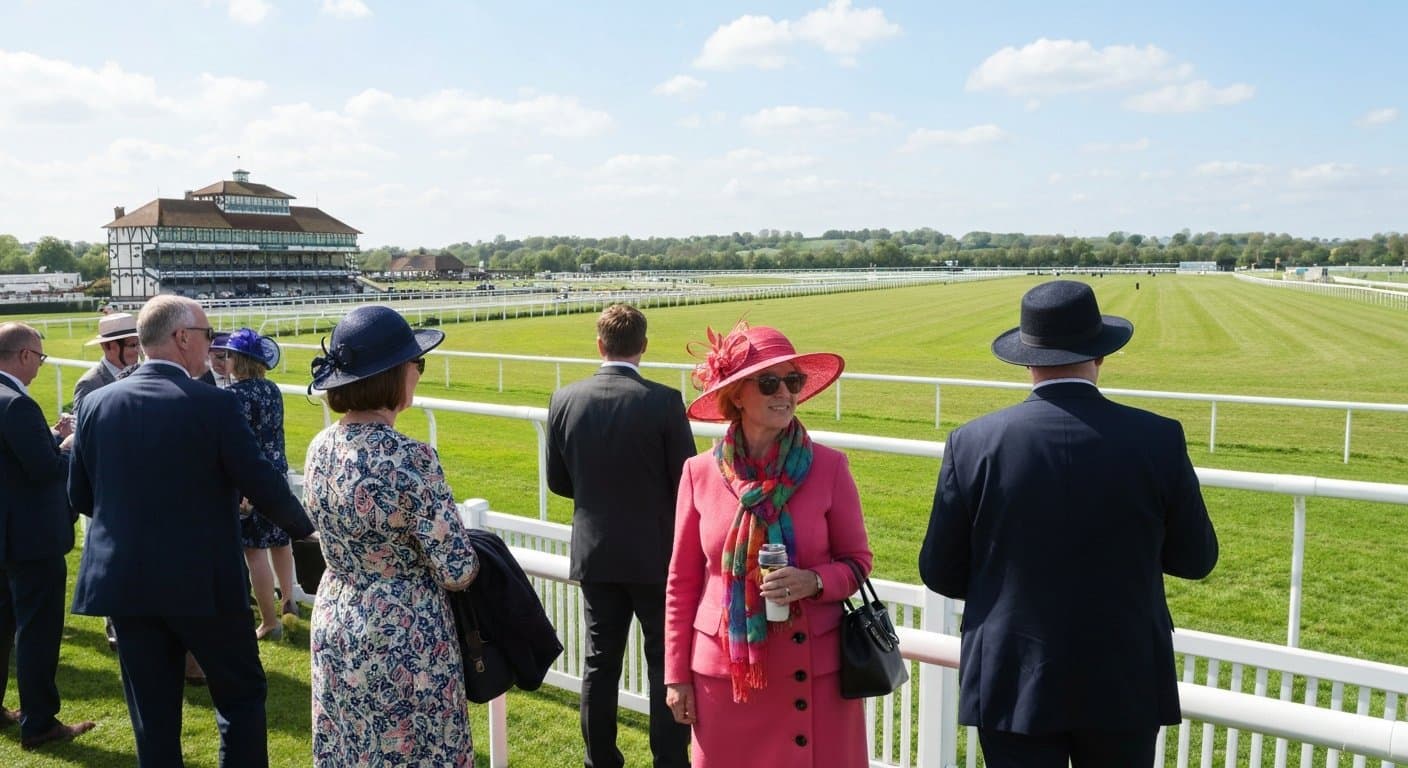
A Day Out at Fontwell Park Racecourse
A day at Fontwell Park — getting there, what to wear, enclosures, food and drink, and insider tips for Britain's only figure-of-eight chase course.
Read more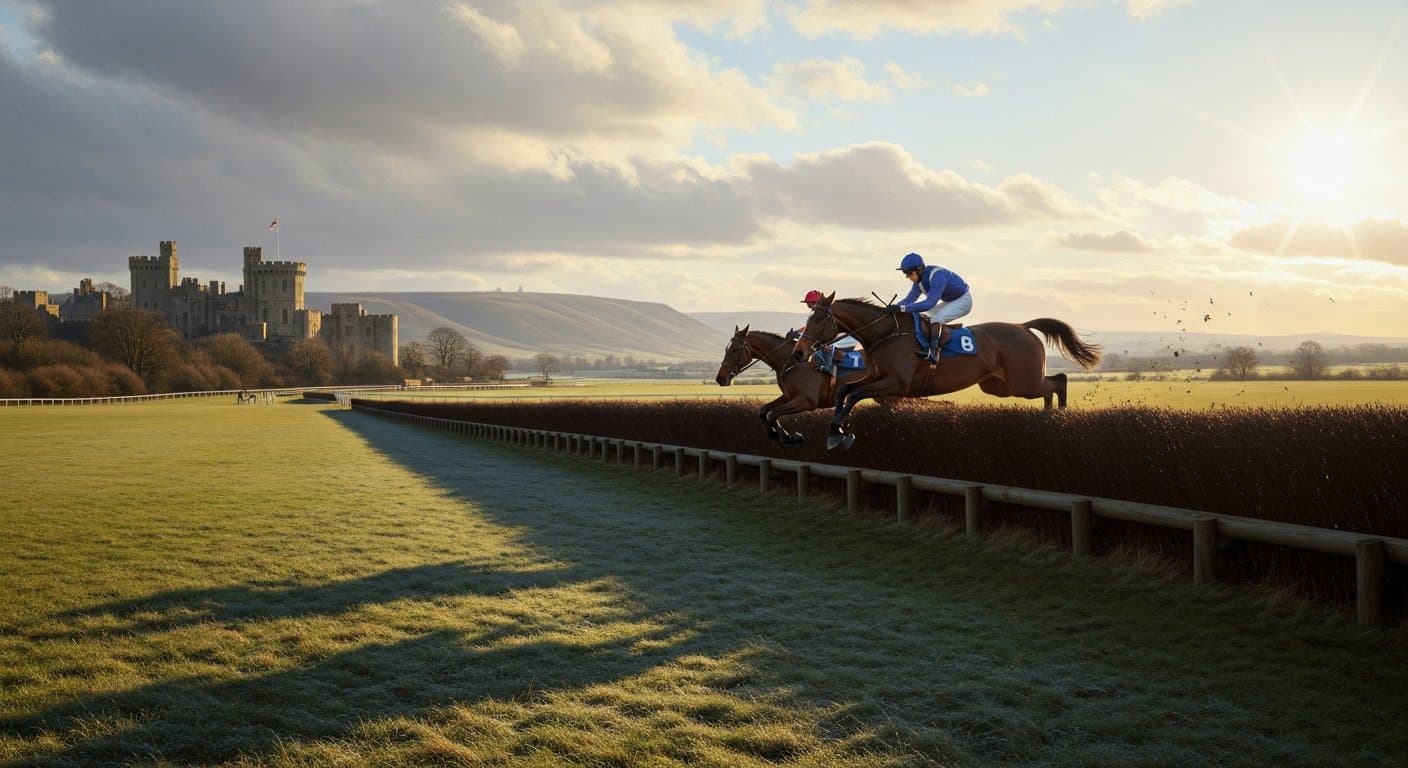
Fontwell Park Jump Festival: Your Complete Guide
Fontwell Park's unique figure-of-eight jump course stages some of the most competitive south-east racing of the season. Here's your complete festival guide.
Read more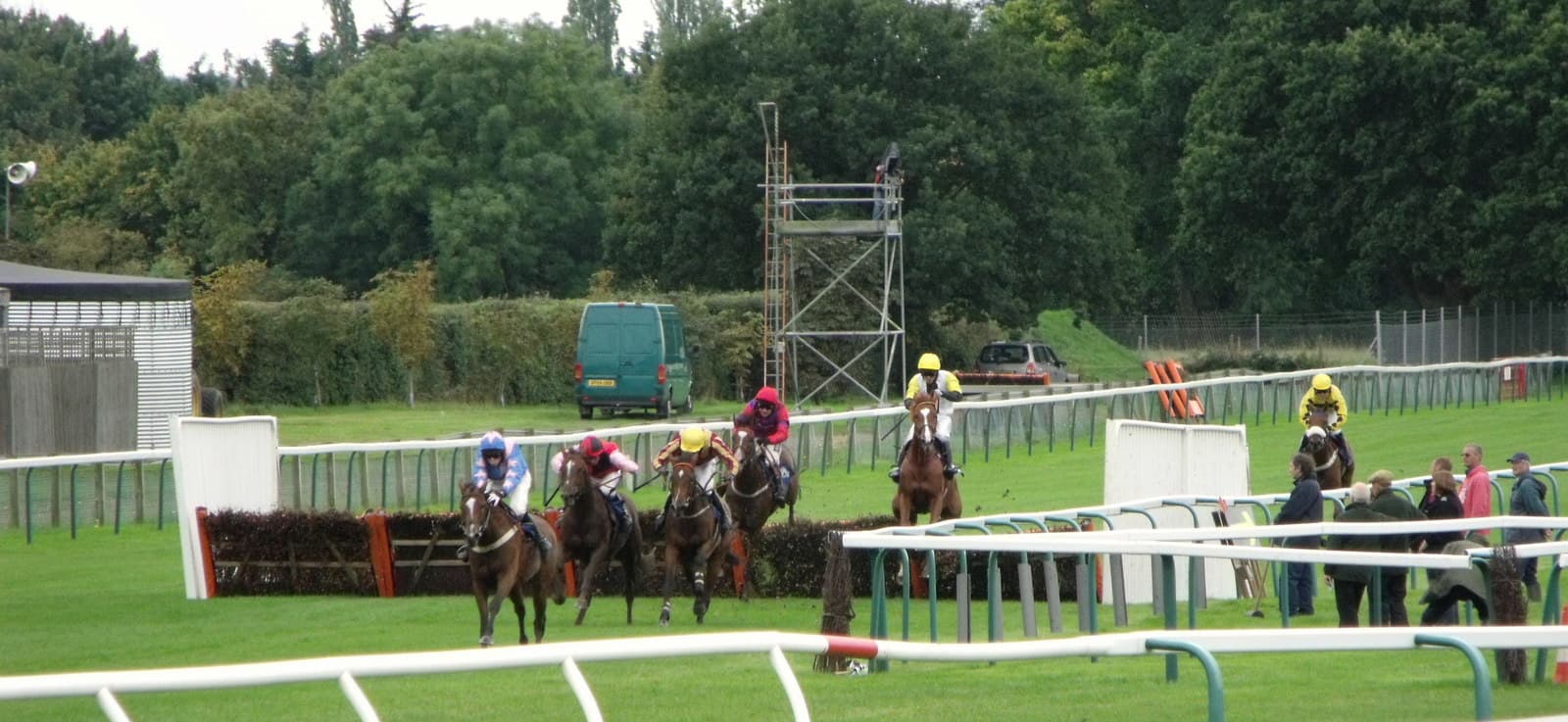
The History of Fontwell Park Racecourse
A century of racing at Fontwell Park — from Alfred Day's figure-of-eight design in 1924 to Britain's only figure-of-eight chase course.
Read morePhotos on this page are used under Creative Commons licences. Titles, sources and licence links for each one are on our image credits page.
Research the field with the AI Race Predictor
Our model publishes calibrated win-probability estimates for UK races — a second opinion to understand a race, not tips. It's open about its record: it doesn't beat the market, and we show exactly how it does.
Work it out & learn the basics
Gamble Responsibly
Gambling should be entertaining and not seen as a way to make money. Never bet more than you can afford to lose. If you or someone you know has a gambling problem, help and support is available.