
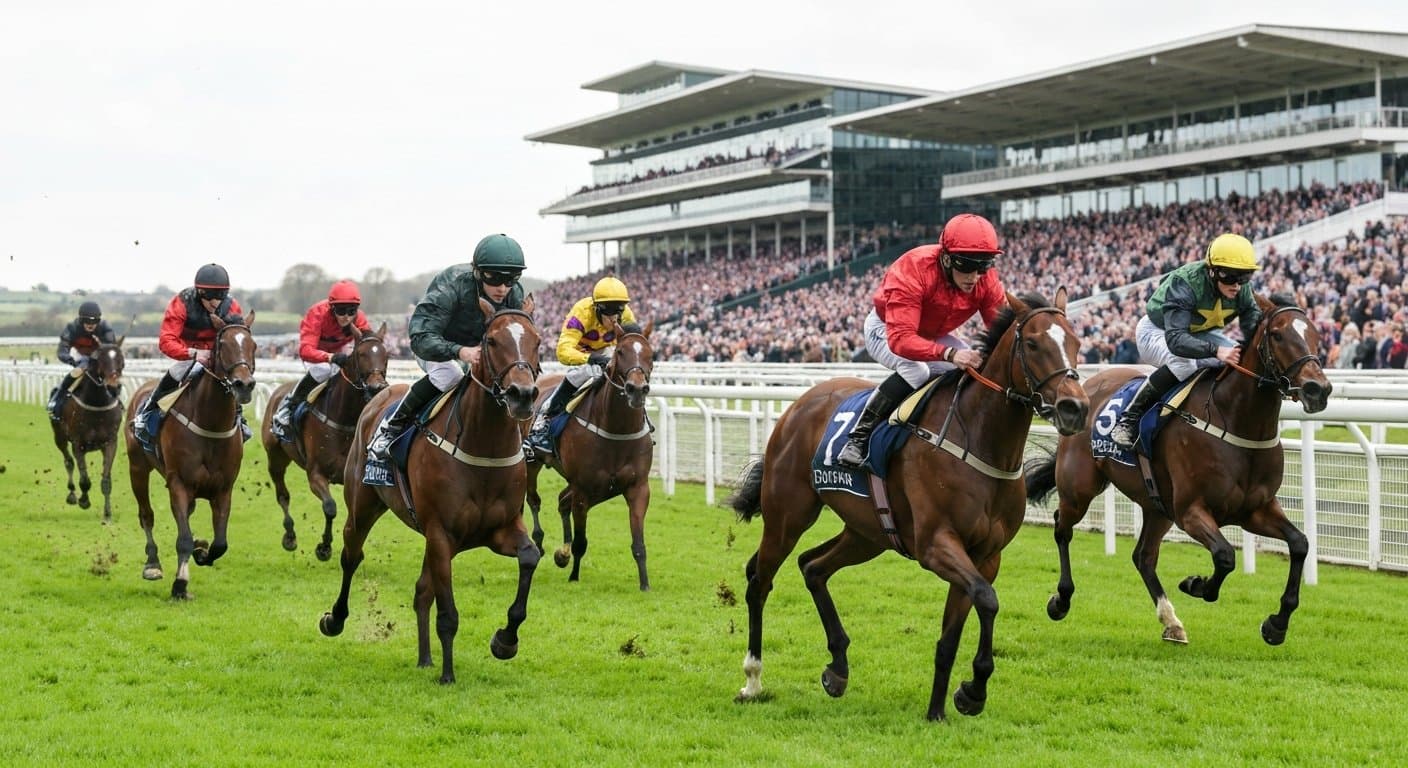
Founder & Editor · Last reviewed 2026-04-05
Haydock Park is one of the most rewarding courses in Britain for the studious punter. It is a track where knowledge pays — where understanding the ground, the draw, the track characteristics, and the trainers who target specific meetings can give you a consistent edge over the bettor who is just picking names from the card.
As a dual-purpose course in Newton-le-Willows, Merseyside, Haydock offers betting opportunities across both flat and National Hunt racing throughout the year. The flat season brings competitive handicaps and the Sprint Cup in September, a Group 1 over six furlongs that regularly identifies the best sprinter in Europe. The jumps programme, anchored by the Betfair Chase in November, provides some of the most formful and analysable Grade 1 racing of the entire winter.
What makes Haydock particularly interesting from a betting perspective is how heavily the conditions dictate the results. The heavy clay subsoil retains moisture at a rate that few British tracks match, meaning the going can vary enormously between meetings — and even between the morning inspection and the afternoon start on the same day. Horses that handle these conditions consistently tend to return to form at the course, which makes previous Haydock form one of the most reliable angles available. This is not a track where you guess about ground preferences. Evidence from previous visits tells you what you need to know.
The track itself is fair and truly galloping. At most courses, tactical speed, positional nous, or a favourable draw plays some part in the result. At Haydock, particularly over longer distances, stamina and class tell. That fairness is your friend as a bettor: form study is reliable because the track does not routinely produce results that confound the form book on a random basis.
This guide covers the track characteristics that shape every race at Haydock, the draw analysis that clarifies when stall position matters and when it does not, a detailed breakdown of the two flagship betting races — the Betfair Chase and the Sprint Cup — the handicap angles that recur across the fixture list, a month-by-month guide to going conditions and when to bet, and an FAQ that answers the questions punters ask most often about this course.
Haydock rewards preparation. The sections below give you the framework to prepare properly.
Bet on Haydock Park
Place your bets on Haydock Park races with a trusted bookmaker.

Promo code BETFRED50. New customers only. Register, deposit with a Debit Card, and place a first bet of £10+ at Evens (2.0)+ on Sports, to be settled within 7 days, to get £30 in Sports Free Bets and £20 in Bet Builder Free Bets within 24 hours of settlement. 7-day expiry. Eligibility & payment exclusions apply. Full T&Cs apply. Take Time to Think. BeGambleAware.org. 18+. Full T&Cs.

Promo code R30. New UK customers only, 18+. Register, deposit £10 or more, then place a £10 single cash bet at odds of 1/2 (1.5) or greater on any sports market (excluding Virtuals). Once the qualifying bet settles you get £30 in Free Bets (3 x £10) — the qualifying bet can win or lose. Free Bets are valid on any sports market excluding Virtuals, expire in 7 days, are non-withdrawable and must be used in full. Excluded deposit methods apply (including PayPal, Apple Pay, Skrill and NETELLER). Named bets such as Lucky 15 do not qualify. If you cash out the qualifying bet, or it is voided, you are no longer eligible for the offer. Ends 31.12.26. Full T&Cs apply. Please gamble responsibly. BeGambleAware.org. 18+. Full T&Cs.

Promo code BET40GET20. New UK customers, 18+. Register with the code and place a first bet of £40 or more at Evens (2.0) or greater. Receive 2 × £10 free bets: the first credited automatically once the qualifying bet settles, the second 24 hours later. Free bets must be placed at minimum odds of 4/1 (5.0), expire 24 hours after credit, and the free-bet stake is not returned with winnings. Debit card deposits only. Take Time to Think. BeGambleAware.org. 18+. T&Cs apply. Full T&Cs.

50% of your first-day net losses refunded as a free bet, capped at £25. New UK customers aged 18+ only. To qualify, deposit and place a first bet of £10 or more on any sport at minimum odds of evens (2.00), then place at least two further bets on different events, each worth at least 50% of your largest bet, all at evens (2.00) or greater. Losses are counted from your first settled bet until 23:59 the same day. Place a qualifying £10+ bet and you are guaranteed at least a £5 free bet. Bets placed at SP, void bets, cashed-out bets and bets struck with free bets do not count towards the offer. The free bet is credited the day after your qualifying bets settle and must be used within 7 days, after which it expires. It can be used at odds from 1/4 (1.25) up to 250/1 on singles and straight accumulators, but not on Trixie, Patent or Yankee style multiples. Free-bet stake is not returned with winnings. One offer per person, household, address, IP address and device. E-wallet deposits may not qualify, so check the cashier before depositing. Customers registered with GAMSTOP cannot claim. KYC identity verification must be completed before the free bet is credited. Take Time to Think. BeGambleAware.org. 18+. T&Cs apply. Full T&Cs.

New customers, 18+. Choose the sports bonus at sign-up, make a first deposit and receive a 100% bonus up to £50 in your Sports Bonus balance. To convert the bonus to cash, wager it 10x within 30 days. Single bets below Evens (2.00) do not qualify; accumulators do not qualify if any selection is below 1/2 (1.50). Virtual Sports, voided, cancelled, drawn, cashed-out and free-bet wagers do not count towards wagering. Only the first settled bet per event counts. Withdrawing before the wagering requirement is met forfeits the bonus balance including bonus winnings. Real-money funds are used before bonus funds. Deposits via Skrill or Neteller are not eligible. Not valid in conjunction with other promotions. Odds, bet and payment limits apply. 10bet general and promotion T&Cs apply. BeGambleAware.org. 18+. Full T&Cs.

New customers in Great Britain and Republic of Ireland, 18+. Place a £10 fixed-odds qualifying bet at minimum odds of 1/2 (1.50) — single or each-way (only the win part counts), pre-event or in-play, not cashed out early, within 28 days of opening the account. Receive up to £60 in bonuses credited over three days: 3 × £10 fixed-odds free bets (the first on settlement, then 24 and 48 hours later) plus 3 × £5 Total Goals FOOTBALL spread bets and 3 × £5 racing Winning Favourites spread bets, with a £1 racing Race Index spread bet as an extra on top. The spread bets need a full spread-betting account, opened within 28 days of the fixed-odds account and subject to Spreadex's eligibility and appropriateness checks. Free-bet stakes not returned with winnings; free bets valid 28 days from issue. IMPORTANT: the £5 credits are SPREAD bets — sports spread betting carries the risk that losses can exceed your stake. Sports spread-betting customers do not have Financial Ombudsman or FSCS recourse. Take Time to Think. BeGambleAware.org. 18+. T&Cs apply. Full T&Cs.

Promo code WELCOME15, entered under My Bonuses after registering. New UK customers, 18+. Place a first qualifying bet of at least £10 from your cash balance at odds of evens (2.0) or greater within 7 days of opening the account. Once the qualifying bet fully settles you receive £15 in free bets, credited as 3 x £5 tokens with set uses: one £5 accumulator free bet (minimum 4 legs, each leg at 2/5 or bigger), one £5 sports free bet (any market at evens or bigger) and one £5 Sub Cover free bet (selected football player markets at evens or bigger). Free-bet stakes are not returned with winnings. Free bets expire 7 days after they are credited. Void, cashed-out and partially cashed-out bets do not qualify. One offer per customer. Confirm the current terms on BetGoodwin's own welcome-offer page before claiming. Take Time to Think. BeGambleAware.org. 18+. T&Cs apply. Full T&Cs.

New UK customers, 18+. Minimum deposit £10. Place a £10 qualifying single on sports (excluding virtuals) at minimum odds of 1/2 (1.50), settled within 14 days. Deposit-method exclusions apply. Receive £30 in free bets (stake not returned), split £20 for sportsbook use (2 x £10) and £10 for Bet Builder only (2 x £5); Bet Builder does not cover horse racing. Free bets must be accepted within 7 days and expire 7 days after acceptance. No promo code required. Best Odds Guaranteed on UK & Irish racing, subject to having staked over £25 in the previous seven days. Operated by LiveScore Betting and Gaming (Gibraltar) Ltd, UKGC 56859. Confirm the current terms on LiveScore Bet's own promotions page before claiming. Take Time to Think. BeGambleAware.org. 18+. T&Cs apply. Full T&Cs.
18+. BeGambleAware.org
The Course and What It Rewards
The Layout
Haydock Park is a left-handed, broadly oval circuit of approximately one mile and five furlongs. It is flat throughout — no significant undulations, no cambers, no tricky bends that punish horses who do not handle the track shape. Sweeping turns and a long home straight of roughly four furlongs define the character of the course. Those two features combine to produce racing that rewards real stamina and a sustained gallop rather than sudden acceleration from a tight turn or a sprint out of a dip.
The flat course and the jumps course share much of the same turf, though the National Hunt track takes a slightly wider line around the circuit. On the flat, races are run over distances from five furlongs to two miles. The sprint course is a straight five furlongs running into the home stretch; six-furlong races join the round course near the final bend. Races over a mile and beyond use the full oval, with runners joining the home straight after completing the circuit.
What the Track Rewards
The galloping, flat nature of the course places the emphasis on two qualities: fitness and stamina. A horse that lacks the cardiovascular base to maintain a strong gallop for the full duration of a mile-and-a-quarter or a two-and-a-half-mile chase will be found out here in a way that a tight, undulating track — where momentum and balance play a greater role — might not expose.
Front-runners who set honest fractions are consistently hard to peg back at Haydock. If a horse gets into a rhythm on the lead and kicks for home at the top of the straight, the length of that final run gives it enough distance to sustain the effort without being swallowed up on the line. This pattern holds on the flat over middle distances and in chases over two miles and further. It is not that front-runners always win — the long straight also gives closers room to mount a challenge — but it means that a horse with good pace and proven stamina who takes up the running has real positional advantages that the form book tends to confirm.
That same long straight does allow hold-up horses with a powerful, sustained finish to get involved, provided the pace is real and the field does not slow to a crawl two furlongs out. The key variable is whether the race is truly run. In honestly-paced contests, horses coming from off the pace can time their run. In steadily-run races — which do occur, especially in small-field chases — the front-runners dominate because there is simply not enough pace in the race to set it up for those making late ground.
Haydock is also a wide track. The oval is spacious enough that jockeys have room to manoeuvre, and horses rarely get hemmed in or suffer the kind of positional interference that routinely distorts results at tighter, smaller circuits. This is one reason course form here is so reliable: the same race conditions tend to produce similar results because external factors — traffic, rail position, pace bias — are minimised.
The Jumps Course
The chase course features well-built, fairly positioned fences that are demanding without being punishing. There are typically eight fences per circuit, and the positioning of the second-last and last fences means that any errors late in a race are directly penalised. A horse that jumps the second-last badly faces a longer fight to the winning post than it would at a course with fences sited further back. Sound jumping holds a real edge at Haydock — particularly in the longer staying chases where fatigue increases the likelihood of a mistake.
The hurdles course is straightforward, with flights positioned to test jumping rhythm rather than agility. The emphasis is on fluency and stamina, which means that hurdlers who gallop through their hurdles in a smooth rhythm — rather than those who steady, pop, and re-accelerate at each flight — run their true form here. A horse that loses momentum at every hurdle will be beaten further at Haydock than at a smaller track where the shorter gaps between turns allow it to compensate.
The Ground Factor
The single most consequential physical characteristic of Haydock Park is its ground. The heavy clay subsoil retains water at a rate that transforms the track after sustained rainfall. On good summer ground the course rides much like any other well-maintained flat track. On soft or heavy winter ground it becomes a completely different proposition: an endurance test that eliminates horses without the specific constitution and going preference to handle conditions.
This going volatility is more pronounced at Haydock than at courses built on chalk, limestone, or sand, where water drains away more quickly and the surface stabilises faster after rain. At Haydock, a course described as good-to-soft after 24 hours of rain may be riding soft by the time the first race goes to post. A November meeting after a wet October can produce going that is legitimately heavy — the kind that turns a three-mile chase into a test of raw endurance.
For bettors, this is not a complication — it is an opportunity. The market frequently underestimates how dramatically going preferences dictate results in winter. Horses with specific evidence of winning on heavy Haydock ground are not just slightly advantaged: they have a structural edge that is often worth more than a stone of form at face value.
Draw Bias Analysis and Going Guide
Draw Bias: A Fair Track That Does Not Punish Random Stall Numbers
Haydock's wide, galloping oval produces something that is rarer than you might expect in British racing: a course where draw bias is largely absent over most distances. That absence is a positive feature, not a neutral one. It means the form book is more reliable here than at tracks where horses drawn in certain stalls are systematically disadvantaged before the race has even started.
Over middle distances and staying races on the flat — seven furlongs and beyond — the draw at Haydock carries no significant weight. The oval layout gives horses drawn wide time to find their natural position before the home turn, and the long run-in means any early energy spent tracking across the track is not a decisive cost by the finish. Do not waste time looking for a draw angle in a mile-and-a-quarter or mile-and-a-half handicap at Haydock. The form, the going preference, and the trainer's intentions are all more useful filters.
Over sprint distances, some nuance applies. In five and six-furlong races, and particularly when the ground is soft or heavy, horses drawn on the stands' side — high stall numbers — have historically held a slight edge. The prevailing theory is that the ground near the far rail can ride marginally slower when wet, giving those on the quicker stands' rail a practical advantage. The effect is not extreme and does not override class, but in a competitive sprint handicap on soft ground where several horses are closely matched, favouring stands'-side drawn runners is a reasonable secondary filter.
Over six furlongs on good to firm ground, the draw bias weakens further because the surface rides more uniformly across the width of the course. When Haydock is fast and fair in July or August, treat the draw as essentially irrelevant even in sprints.
Why This Fairness Matters for Betting
The absence of strong draw bias at Haydock is not just a technicality — it is a reason to trust the form book more than you would at tracks like Chester or Beverley, where stall position can override everything else. At those courses, a horse drawn in stall one on the round course at Chester carries a geometric advantage that has nothing to do with ability. At Haydock, the result of a race over a mile or more reflects ability, fitness, and going preference far more directly.
This is the track working in the punter's favour. When you back a horse at Haydock that has strong course-and-distance form, you are not exposed to a scenario where a random stall number undermines the selection. The race will be run fairly, and the best-prepared horse on the day will win most of the time.
Going Preferences: The Most Important Filter at Haydock
Understanding the going is more important at Haydock than at almost any other British track. The clay subsoil means conditions shift more dramatically than at well-drained venues, and the difference in what it takes to win on good ground versus heavy ground at Haydock is more pronounced than the same comparison at a chalk-based course.
During the flat season from April to September, the going is typically good or good to firm. On summer ground, Haydock rides fairly and results are largely determined by class. But in the shoulder months — late October, November, March, and April — rain can turn the surface testing within hours. Always check the going report on race morning and pay attention to the language. A going description of "good to soft (soft in places)" at Haydock often rides closer to soft throughout by mid-afternoon as horses churn the ground.
For the jumps season, the going is the first filter before any other piece of analysis. Before looking at form, before assessing trainers, before reading market moves — check the ground conditions and cross-reference every runner's going record. A horse that has never raced on ground softer than good to soft faces a completely different race than the one its form suggests when Haydock rides heavy in November.
Monthly Going Guide
April to May: Ground typically good to good to soft. Springs at Haydock can be wet, so monitor the forecast. First flat meetings may catch residual winter moisture.
June to August: Good to firm is common during summer flat fixtures. July and August often produce the fastest ground of the year. Some years a dry summer will lead to firm or even good to firm, fast conditions. Sprint Cup prep races in August usually run on quick ground.
September (Sprint Cup month): Good to good to firm is the norm, though a wet August can leave the course softer than ideal. The Sprint Cup has generally been run on good ground — check the record for the specific year when handicapping the field.
October: Ground begins to soften. This is a transitional month where morning inspections become more consequential. Heavy autumn rain can arrive quickly.
November (Betfair Chase month): Historically the wettest month of the jump season at Haydock. Soft or heavy going is the statistical norm, not the exception. Plan your approach to November cards on the assumption the ground will be testing.
December to February: Consistent testing ground when meetings take place. January's Peter Marsh Chase regularly runs on soft to heavy. Waterlogging and frost can cause abandonments.
March: Ground beginning to improve but still often good to soft or soft in early March. Later spring meetings offer more predictable conditions.
Practical Going Rules
- Heavy-ground jumps: Back proven course-and-distance winners with evidence of handling Haydock heavy. That form is the most reliable predictor available.
- Good-ground flat: Use standard form analysis. The track rides fairly and class tells.
- Soft-ground sprints: Marginally favour stands'-side-drawn runners. Back horses with proven soft-ground sprint form over untried types.
- Changing conditions: If going has shifted significantly from the morning inspection, be ready to adjust selections. A horse you identified as a value bet on good ground can become a risk on soft if it has no evidence of handling the change.
The Betfair Chase and Sprint Cup
The Betfair Chase (Grade 1, November) — The Most Analysable Race of the Jump Season
The Betfair Chase, run over three miles and one furlong and two furlongs at Haydock in November, is the first Grade 1 staying chase of the season and one of the most strategically important races on the entire jumps calendar. Trainers use it either as a seasonal reappearance for their top chasers or as a deliberate trial ahead of the King George VI Chase at Kempton in December and ultimately the Cheltenham Gold Cup in March.
For bettors, it is among the most analysable Grade 1 races run anywhere in Britain. The reasons are structural: a small field, often between four and eight runners; a course that imposes very specific going demands; and a form database that rewards those who apply course-and-distance analysis rigorously.
Bristol de Mai and What the Record Proves
The defining study in Betfair Chase betting history is Bristol de Mai, trained by Nigel Twiston-Davies and ridden throughout his peak years by Daryl Jacob. Bristol de Mai won the Betfair Chase in 2017, 2018, and 2020 — three wins across four seasons at the same course. All three victories came on heavy going. The 2017 win came at odds of 11-1 after a season where the horse had run moderate form elsewhere. The 2018 win confirmed that 2017 was not a fluke. The 2020 win, on officially heavy going after significant autumn rain, came at 7-2.
What Bristol de Mai demonstrated is not simply that one good horse won a big race three times. It is that Haydock in November, on heavy ground, is a specific test that rewards horses built for those conditions to a degree the betting market consistently failed to price properly. In multiple years, Bristol de Mai was available at odds that reflected his form on good ground elsewhere rather than his record in these exact conditions. Punters who understood the course-specific angle were rewarded significantly.
Historical Form Guide and Gold Cup Links
The Betfair Chase has repeatedly served as a Gold Cup form reference. Kauto Star won the race three times — 2006, 2007, and 2011 — and ran his career peak at Cheltenham in the intervening years. Denman ran a dominant Betfair Chase in 2008 before winning the Gold Cup the following March. Cue Card used the race in 2015 and 2016 as a seasonal opener and ran in several subsequent Gold Cups.
This Gold Cup link is worth taking seriously when handicapping the race in the context of the wider season. A horse that wins or runs a strong second in the Betfair Chase on Haydock heavy has almost certainly demonstrated the combination of jumping accuracy, stamina, and heavy-ground constitution that Cheltenham will demand in March. It is not a perfect predictor — Cheltenham's gradients and style are different from Haydock's flat galloping oval — but the crossover is real.
Pace Dynamics in Small Fields
With fields often numbering five or six runners, the Betfair Chase presents specific pace-reading challenges. In small staying chases, pace can collapse: the entire field crawls for the first mile and a half, then accelerates sharply from the second-last fence. This setup benefits horses with a quick turn of foot and accurate jumping at the business end of the race. Front-runners who attempt to control a small field often find that their rivals simply sit behind them waiting to pounce.
When assessing the race, identify whether any runner is a confirmed front-runner and whether the rest of the field will allow them to set a searching pace or sit on their heels. Horses who won previous runnings when the pace was real may not replicate that form in a year when the tempo is slow. Conversely, a hold-up horse with a strong finish is a better bet when the race is likely to develop into a sprint from the second-last.
Going Is Not an Optional Variable
On heavy ground, the Betfair Chase becomes a stamina test so demanding that horses without proven form on such conditions are materially disadvantaged regardless of their rating. The market in multiple years has priced horses based on their best form on good or good-to-soft ground rather than adjusting for what heavy Haydock ground actually asks. When you see a fancied runner with no heavy-ground form heading a market at short odds for a November Haydock Betfair Chase, that is a candidate to oppose. Find the horse in the race with the clearest evidence of winning on testing ground at this course, and the price will often be better than it deserves.
The Sprint Cup (Group 1, September) — Europe's Most Important Six-Furlong Race
The Haydock Sprint Cup is run over six furlongs in early September and is the definitive late-season test for European sprinters. It attracts runners from Britain, Ireland, France, and occasionally further afield, including Australian raiders who have targeted the race as part of a northern-hemisphere campaign. The race ranks among the most significant Group 1 sprints of the entire flat season, sitting alongside Royal Ascot's Diamond Jubilee and July Cup as the calendar's sprint pinnacles.
Course-and-Distance Form as the Primary Predictor
Among all the Sprint Cup betting angles, course-and-distance form at Haydock over six furlongs is the most consistently predictive. The wide, galloping track over this distance favours a specific type of sprinter: one with a strong cruising speed who can maintain it for the full six furlongs rather than a short, sharp accelerator who produces a two-furlong burst from a standing start. Some of the fastest sprinters in Europe struggle at Haydock because their running style — a brilliant short sprint — does not suit the longer sustained effort the track requires.
Horses returning for a second or third Sprint Cup attempt perform disproportionately well. The 1990 winner Dayjur went on to be ranked among the best sprinters of his generation, and the record of returning course winners is strong throughout the race's history. More recently, Muhaarar won the 2015 Sprint Cup en route to being crowned European champion sprinter, with his style — a strong, rolling gallop from off the pace — perfectly suited to what Haydock demands.
Three-Year-Olds and the Weight Allowance
The Sprint Cup is a race where improving three-year-olds carrying a weight allowance against older horses can represent significant value. September falls at a point in the season where some three-year-olds are still improving through the summer, and the weight concession — typically 3lb against four-year-olds and older — is worth 1.5-2 lengths depending on the pace of the race. In years where the older horses in the field are not at their absolute peak, a progressive three-year-old running off a light weight has beaten them before and will do so again.
Check the three-year-old's form carefully for evidence of staying six furlongs strongly and handling going conditions that match the forecast for race day. A three-year-old who has won over five furlongs by accelerating late may not sustain that acceleration for the extra furlong at Haydock; one who has stayed six furlongs strongly on a galloping track is a much better fit.
Trainer Records and Seasonal Targeting
The Sprint Cup has attracted multiple top-class sprinters from different eras, and several trainers return to it year after year as a deliberate seasonal target. John Gosden, Richard Hannon, and the Irish yards of Aidan O'Brien have all had significant runners. When a trainer sends a high-quality sprinter to Haydock specifically — rather than as part of a broad campaign of Group races — Note. The journey to Haydock and the specific nature of the track mean that most yards only enter horses they believe will handle the course's demands.
Foreign raiders, particularly those from Australia who arrive for a northern-hemisphere autumn campaign, have targeted the Sprint Cup. These horses occasionally offer value because British markets are slower to assess Australian form accurately. Their form from tracks like Flemington or Randwick on fast ground does not always translate to a British galloping track in September, but when it does, the odds often reflect that uncertainty rather than the horse's real ability.
The Peter Marsh Chase (January)
A listed handicap chase over three miles that serves as a traditional Grand National trial. January ground at Haydock makes this a thorough stamina examination, and horses who perform well here frequently go on to run well at Aintree in April. The form it produces is worth following through the spring.
The Old Newton Cup (July)
A competitive summer handicap over a mile and a half that attracts large fields. It rewards meticulous form analysis and offers each-way opportunities for punters willing to dig into the going records and trainer intentions. Unexposed middle-distance improvers from the northern yards are a consistent source of value.
The Lancashire Oaks (Group 2, July)
A quality middle-distance fillies' race that often features runners with Classic form. The Lancashire Oaks occasionally delivers value when a lightly-raced filly steps up in trip and finds the galloping track suits her better than the shorter, tighter circuits she has run on previously.
The Tommy Whittle Handicap Chase (December)
A staying chase on winter ground that recurs annually as a useful pointer to the spring festivals. Proven Haydock performers tend to outrun their odds here, and the race often produces a result that makes more sense to punters who have studied the course form than to those who have simply followed the national market.
Handicap Angles and Regular Meetings
Course Form Across the Fixture List
Haydock's fixture list runs across both codes and most months of the year. The track holds flat meetings from April through October and jump meetings from October through March, with some overlap during the transitional months. That breadth means there are betting opportunities at Haydock at almost any point in the season, and the principles that apply to the flagship races — trust course form, weight the going heavily, back horses that fit the track's specific demands — apply equally to the regular handicap cards.
The principle of course form holding significant predictive value at Haydock is stronger here than at many British tracks. The clay-based surface creates a going profile that is significantly different from most other British venues, and horses that handle it well tend to return to it performing well. A horse that won a mile-and-a-half handicap at Haydock last June on good to firm ground is not an automatic selection when it returns — ground, mark, and form must all be assessed — but its previous success at the track is a real positive rather than a marginal one.
Heavy-Clay Going Types in Autumn and Winter
The jump season's regular programme at Haydock consistently rewards one type of horse above all: the real stayer who handles testing ground. This is not simply a matter of the headline Grade 1 races. Across the card at October and November jump meetings, horses with proven heavy-ground form at Haydock outperform those who have only raced on good going elsewhere, and the effect is visible in the data.
Northern-based jumping yards — Donald McCain in Cheshire, Sue Smith in Yorkshire, and the smaller trainers who target Haydock regularly — know this. They run horses here specifically because the conditions suit what they have in their yards. McCain in particular is adept at targeting the right Haydock meetings with horses that have the right profile: staying types, sound jumpers, horses with proven wet-ground form. When McCain sends a runner to Haydock that fits those criteria and has positive course form, the trainer's judgment deserves significant weight in your assessment.
The Rose of Lancaster Stakes (Group 3, August)
Haydock's August flat programme includes the Rose of Lancaster Stakes over a mile and two furlongs, a Group 3 that consistently produces horses who go on to Pattern-race victories in the second half of the season. The race is a useful form reference for the autumn programme — winners and placed horses from the Rose of Lancaster regularly resurface at Group level in September and October at Haydock, Newmarket, and Ascot. Tracking the form from this race into the autumn can unearth each-way value in subsequent Pattern races.
Autumn Flat Programme
October and November flat meetings at Haydock are a specific opportunity for handicap bettors. As the season winds down, horses on declining handicap marks that have been running on faster summer ground sometimes find the softer Haydock autumn ground to their advantage. These are horses who were slightly over-rated at their seasonal peak on fast ground but whose natural style — a long, sustained gallop — suits the heavier autumn conditions. Richard Fahey, Tim Easterby, and Karl Burke all have strong autumn flat records at Haydock and are skilled at identifying which of their horses will benefit from the later-season conditions.
Staying Types Over All Distances
The galloping nature of the track across all distances — flat and jumps — means that horses who stay their trip strongly and maintain a level gallop are consistently well served by Haydock's layout. In handicap chases, the betting market often prices improving three-mile types at odds that reflect their recent runs rather than their likely improvement on testing Haydock ground. In flat staying handicaps at a mile and a half or two miles, horses that lack a sprint finish but stay the trip powerfully are not penalised in the way they would be at a tighter track. The long home straight rewards relentless galloping rather than acceleration.
When identifying handicap selections at Haydock, rank the field by how well each horse's running style suits a wide, flat, galloping track. A horse that stays powerfully, jumps accurately, and has prior evidence of handling the going conditions is — all else being equal — a stronger bet here than at a track that rewards different characteristics.
Each-Way Value in Larger Fields
Haydock's bigger handicap fields regularly produce strong each-way value. The wide track minimises traffic interference, meaning well-handicapped horses generally get a clear run and can produce their best form without being blocked or forced wide at a critical moment. If you identify a horse with the right credentials — course form, appropriate going preference, a fair handicap mark, and a trainer with a positive Haydock record — the each-way market is often priced more generously than the horse's profile warrants.
The three-place each-way terms that apply to larger fields amplify this. In a 15-runner handicap at Haydock where the top three places are paid, a horse running off a competitive mark with proven course form represents a different risk profile than the same horse in a tight, traffic-prone race at a smaller track.
Key Trainers and Jockeys
Trainers to Follow Over Jumps
Haydock Park is a track where specific yards have built outstanding records, and identifying which trainers target the course with intention is a shortcut to finding winners.
Northern-based trainers hold a natural geographic advantage. They know the course, they know when conditions will suit their horses, and they can send runners to Haydock without the logistical and physical cost of a long southward journey. Donald McCain, based in Cheshire, is the most consistently relevant trainer for Haydock jump meetings. His yard is close enough that horses arrive without travel stress, and he is skilled at placing chasers and hurdlers at the right Haydock meetings. McCain's understanding of how the course rides in different going conditions — built through years of sending runners here — is an underrated part of his record.
Nigel Twiston-Davies made Haydock his operational base for staying chase targets through Bristol de Mai's extraordinary run, but his connection to the course extends well beyond one horse. His yard at Naunton in Gloucestershire regularly sends staying chasers north when November and December conditions suit, and those horses are typically bred and trained to relish testing ground. A Twiston-Davies entry at a Haydock winter chase meeting is worth investigating in the context of the going forecast.
From the south, Paul Nicholls and Nicky Henderson invariably target the Betfair Chase with their top staying chasers when they believe a horse has the profile for Haydock's demands. Both trainers are selective about which horses they send north for big days, and a first-string runner from Ditcheat or Seven Barrows at Haydock in November is typically a horse the yard believes is suited by the conditions. Track form and going preference will still need to be assessed, but trainer confidence expressed through a deliberate long-distance entry carries real weight.
Trainers to Follow on the Flat
On the flat, the Newmarket and Yorkshire yards dominate the feature races. William Haggas, Charlie Appleby, and John Gosden have all won regularly at Haydock's Group and Listed fixtures with horses at the top of their class. When these stables send a runner to Haydock for a Group race, the horse has usually been chosen for the course specifically — it is not a default entry but a deliberate targeting.
For the handicaps, the northern flat trainers are the key group to follow. Richard Fahey, Tim Easterby, and Karl Burke all have strong Haydock records and are consistently adept at placing well-handicapped horses at the course. These trainers attend Haydock meetings regularly, understand the track's specific demands, and will often have identified a going-related angle — a horse ready to step up on its form when the ground eases — that the market has not priced. A Fahey runner at Haydock in a summer handicap, off a mark that reflects good-ground form rather than its best soft-ground performance, is worth a careful look.
Jockeys
On the jumps side, Brian Hughes — Britain's champion jump jockey in multiple recent seasons and northern racing's most prominent rider — is the key figure. Hughes rides at Haydock regularly and has deep familiarity with how the course rides in different conditions. His ability to judge the pace of a staying chase on heavy Haydock ground, and to commit at the right moment on the long run to the line, is a consistent advantage. The market tends to respect Hughes-partnered fancied runners at Haydock, but when he is on a slightly longer-priced horse with course form and appropriate going preference, the combination is worth noting.
On the flat, the big-name jockeys ride at Haydock only for feature days. Ryan Moore, William Buick, and Frankie Dettori appear on the Group race cards in summer. On the regular flat cards, the northern-based riders — Tom Eaves, Jason Hart, Clifford Lee — provide the consistent course knowledge that matters in competitive handicaps. Their understanding of how to ride the wide galloping track, when to commit a hold-up horse, and how the home straight rides in different conditions is an edge that does not always show up in the statistics but repeatedly shows up in results.
Betting Strategies
Course Form Is the Overriding Strategy
If there is one principle that applies to every race at Haydock across both codes and all seasons, it is this: course form is the single most reliable predictor of future performance. Horses that have won or placed well at Haydock before are more likely to perform well again, and the effect is stronger here than at most British tracks because the clay-based ground creates conditions that do not transfer to other venues. What works at Haydock does not always work elsewhere, and what works elsewhere does not always work at Haydock.
When you are assessing any race at the course, the first column to populate in your analysis is each horse's Haydock record. A horse returning to a course where it has won before, on similar going conditions, is a positive even when its recent form elsewhere has been moderate. The track's surface means that form at Haydock in testing ground is a quality of its own — separate from the horse's general ability rating.
The Going Matters More Than Anything Else in Winter
During the jumps season, the going is your first filter before any other analysis. The sequence matters. Check the going, cross-reference every runner's going record, then move to form, ratings, and trainer intentions. A horse with a perfect record on heavy ground at Haydock is a completely different proposition from one that has never been asked to race on anything softer than good to soft. No amount of class compensates for a mismatch between a horse's going requirements and what Haydock delivers in November and January.
The market systematically underweights this distinction. Short-priced favourites at winter Haydock meetings regularly fail because their ratings were earned on better ground at other courses, and the heavy clay test eliminates them regardless of their ability on a sound surface. When you identify this pattern — a market leader with limited or negative heavy-ground form in a race where the ground is Soft or Heavy — you have a potential lay or a reason to look elsewhere in the market.
Each-Way Handicaps
Haydock's larger handicap fields produce strong each-way value repeatedly. The wide, fair track means well-handicapped horses get clear runs without traffic interference, which means form study is more reliable than at tighter, more congested tracks. The criteria for identifying strong each-way candidates are specific: course form at the relevant distance and going, a handicap mark that reflects a level the horse has operated above, a trainer with a positive Haydock record, and a race where the pace profile suits the horse's running style.
The Old Newton Cup in July and the Peter Marsh Chase in January are two fixtures where these factors align consistently enough to reward thorough preparation. In the Old Newton Cup over a mile and a half, improvers from northern yards running off marks that underestimate their current level are a recurring source of value. In the Peter Marsh Chase, horses with stamina-heavy profiles who have won over three miles on winter ground outperform their odds in a race the market often rates on class alone.
Sprint Cup Betting Framework
Haydock sprint races are analysable to a degree that few races at any course match. Three variables drive Sprint Cup results above all others: course-and-distance form (has this horse won or placed strongly over six furlongs at Haydock before?), going preference (does the forecast ground match what the horse has handled successfully?), and pace dynamics (will the race be truly run, setting it up for hold-up horses, or slowly, favouring front-runners?).
When all three factors align for a selection — course form confirmed, going matched, pace likely to suit — the horse is a strong betting proposition regardless of where it sits in the market. When only one or two of the three align, reduce confidence accordingly. The Sprint Cup in particular rewards patience: some years the right combination of factors does not exist, and the correct decision is to watch the race rather than force a bet.
Don't Chase Losses on Heavy-Ground Cards
Heavy-ground racing at Haydock produces results that deviate from expectations more than any other type of racing at the course. Short-priced favourites fail regularly because their form was earned under different conditions, and the race can go to horses at long odds who have specific course-and-ground credentials that the casual market ignored. If your pre-race selections do not fire on a heavy winter card, resist the instinct to chase by backing increasingly speculative horses in later races. The volatility in conditions-dependent racing is real and sustained throughout the day. Accept the variance, stick to pre-race analysis, and do not increase stakes to recover losses on a card where the results are inherently less predictable than flat summer racing.
Track the Betfair Chase Form Through the Season
Once the Betfair Chase has been run, treat the result as a form reference for the Gold Cup and the rest of the jump season. The race does not guarantee what will happen at Cheltenham — the course differences are real — but a horse that wins or finishes a close second in the Betfair Chase on Haydock heavy has demonstrated stamina, jumping accuracy, and going-specific credentials that translate to Grade 1 competition at the spring festivals. Following the placed horses from the Betfair Chase into subsequent entries, and tracking whether their next targets align with what the course record suggests they need, is a strategy that pays dividends across the season rather than in a single bet.
FAQ
Share this article
More about this racecourse
All Haydock Park guides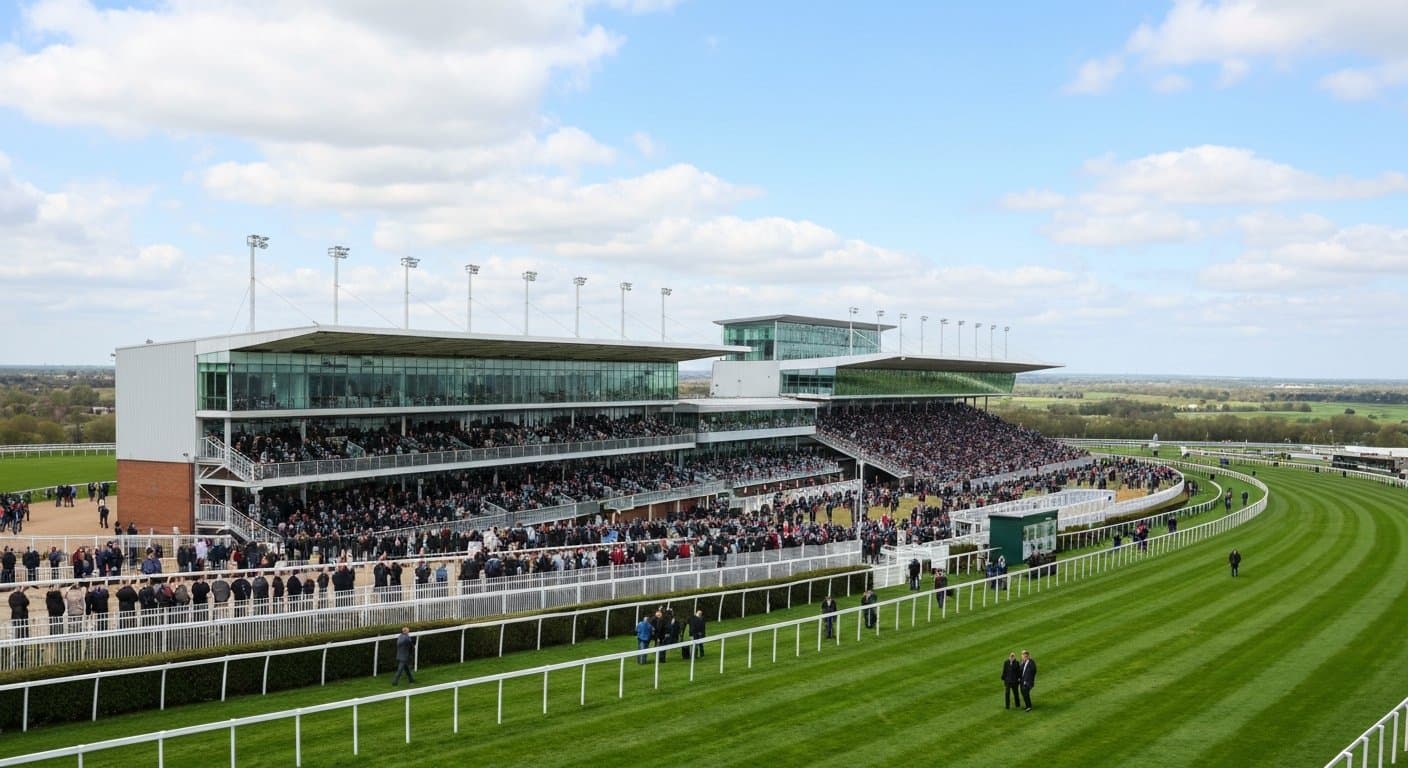
Haydock Park Racecourse: Complete Guide
Haydock Park — home of the Betfair Chase and Sprint Cup. Facilities, course layout, transport, key fixtures and betting angles.
Read more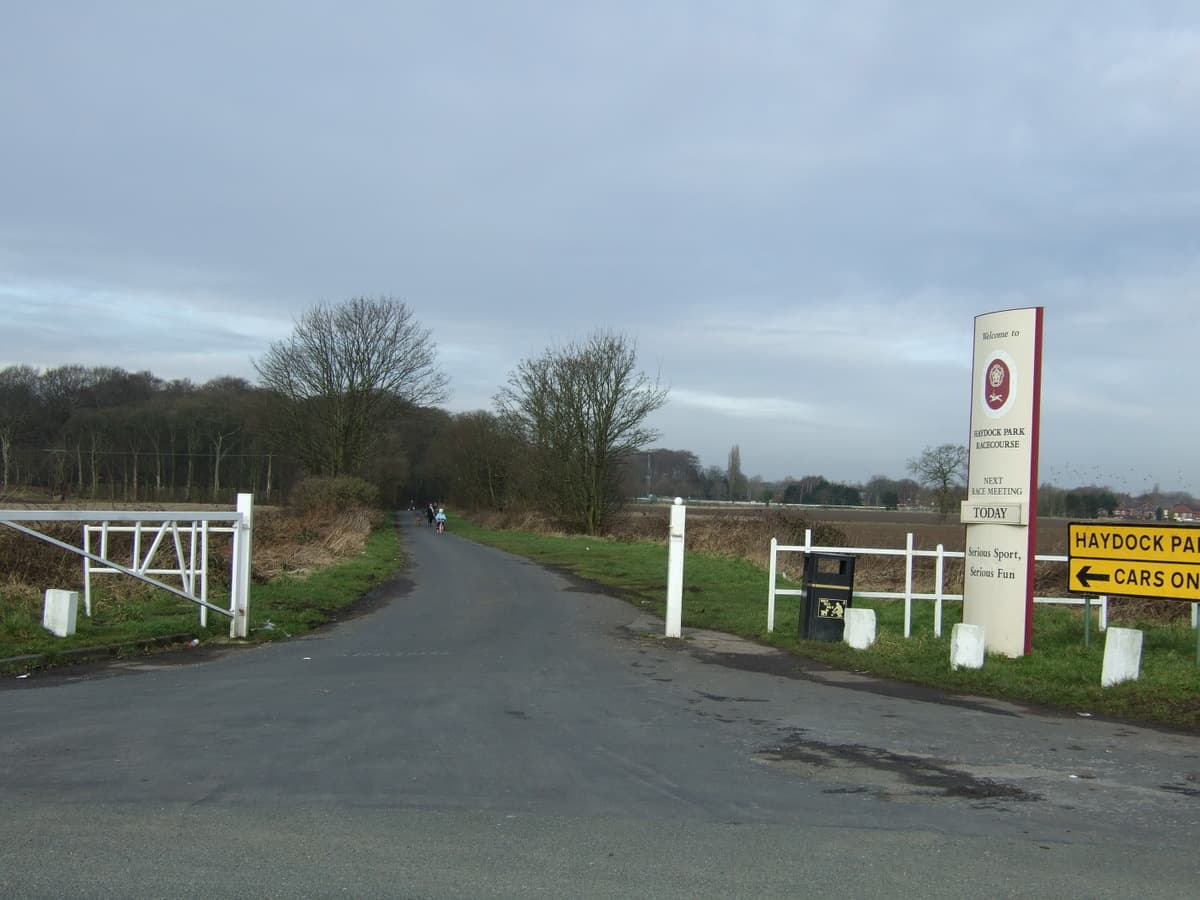
A Day Out at Haydock Park Racecourse
Everything you need for a day at Haydock Park: getting there, what to wear, enclosures, food and drink, and insider tips for your visit.
Read more
Haydock Park's Autumn Festivals: Sprint Cup and Betfair Chase Guide
Haydock stages two of the north's premier racing festivals — the Sprint Cup in September and the Betfair Chase in November. Here's your complete guide.
Read morePhotos on this page are used under Creative Commons licences. Titles, sources and licence links for each one are on our image credits page.
Research the field with the AI Race Predictor
Our model publishes calibrated win-probability estimates for UK races — a second opinion to understand a race, not tips. It's open about its record: it doesn't beat the market, and we show exactly how it does.
Work it out & learn the basics
Gamble Responsibly
Gambling should be entertaining and not seen as a way to make money. Never bet more than you can afford to lose. If you or someone you know has a gambling problem, help and support is available.