
Founder & Editor · Last reviewed 2026-04-05
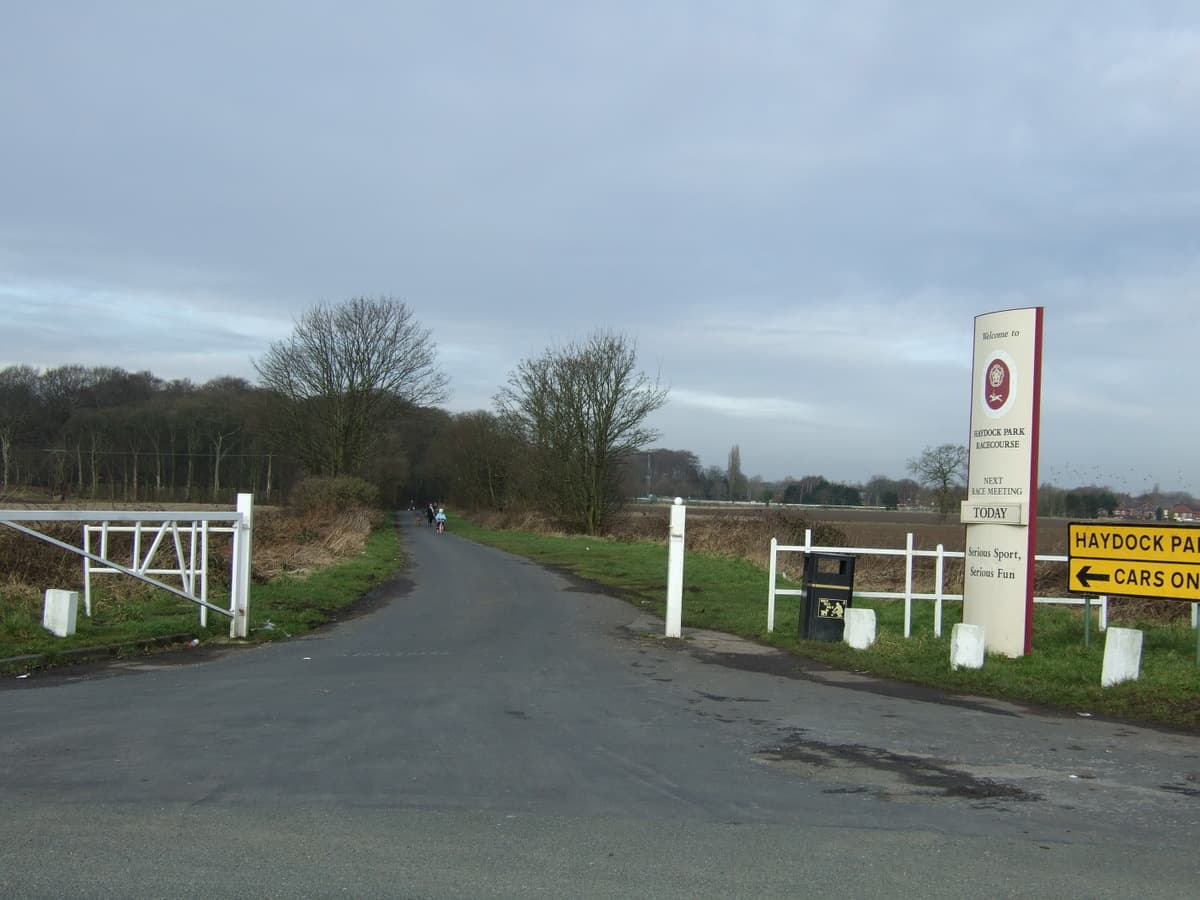
Picture a cold Saturday morning in late November. You park up at Newton-le-Willows, pull on a second layer before you've even locked the car, and join the stream of people heading towards the gates. The Betfair Chase is the first Grade 1 of the British jumps season (the one that launches the winter properly) and by half past ten the car parks are already filling up and the smell of coffee and bacon rolls drifts from the food outlets near the entrance. This is Haydock Park on its biggest day, and there is no other British racecourse quite like it in November.
Haydock Park has been staging racing since 1899. Situated at Newton-le-Willows in Merseyside (not, as is commonly assumed, in Haydock town itself, which sits a mile or two to the north) it occupies a position almost exactly between Liverpool and Manchester, right beside Junction 23 of the M6. That location matters. It means Haydock draws from two major cities, gives it excellent transport links, and helps it pull decent crowds even on ordinary fixtures. On the big days, those crowds swell towards the course's 18,000 capacity.
The course is dual-purpose, which means it runs both flat racing through the spring and summer and jumps racing through the autumn and winter. That split personality is part of what makes Haydock interesting to visit across the year. A sunny July Saturday card with a decent sprint handicap on the seven-furlong straight feels nothing like the Betfair Chase weekend in November, the atmosphere, the clothing, the going, the weather, all of it is different. Both are worth experiencing.
The two signature days are the Sprint Cup in early September, which is the highlight of the flat season here and draws the best sprinters in training, and the Betfair Chase in late November, a three-and-a-quarter-mile Grade 1 chase that regularly features Gold Cup horses at the start of their campaign. Both days generate real excitement and fill the course in a way that regular fixtures do not.
For most regular meetings, Haydock is a pleasantly manageable experience. The layout is relatively straightforward. The main grandstand sits beside the home straight, the parade ring is well-positioned, and the distances between enclosures and facilities are walkable without feeling like a hike. On a quiet Wednesday afternoon you can move around freely, find a spot on the rail for each race, and spend the intervals watching the horses in the paddock without fighting through a crowd. That ease of access is one of the reasons Haydock attracts a loyal local following.
Who This Guide Is For
This guide is for anyone planning a visit to Haydock Park for the first time, or for regular visitors who want to get more out of their day. It covers practical logistics, getting there, what to wear, the enclosures, food and drink, as well as the things that make a real difference on the day: knowing which enclosure to book, understanding what to expect in November versus July, and having answers to the questions that most guides leave out.
For anyone attending the Betfair Chase specifically, several sections in this guide carry Betfair Chase-specific advice, because that day operates differently to a standard fixture. Crowd sizes, parking, cold-weather preparation, and bar queues all require a different approach. The tips and FAQ section covers the Betfair Chase in particular detail.
Quick Decision Block
Before you read on, here are the four things that make the biggest practical difference to your day at Haydock Park:
Arrive 75-90 minutes before the first race on Betfair Chase day. The car parks at Junction 23 start filling from 90 minutes before racing. If you arrive an hour early you have a buffer; if you arrive 30 minutes before the off, you may still be parking when the first race starts.
Bring proper warm layers in November. Haydock in late November is cold, often wet, and the wind off the open course can be brutal. A coat that works outdoors for several hours, waterproof boots, and a hat are not optional extras. They are the difference between a good day and a miserable one.
Consider the Premier Enclosure on cold days. The covered areas and seated bars in the Premier Enclosure make a significant difference when the temperature drops. On a sunny July afternoon the County Enclosure is perfectly comfortable; on a grey November day the upgrade is worth the extra cost.
The train to Newton-le-Willows removes the parking problem entirely. The station is on the Liverpool Lime Street to Manchester Victoria line and takes around 20 minutes from either city. On Betfair Chase day, shuttle buses run from the station to the course. If you're coming from Manchester or Liverpool, the train is by far the easiest option.
Getting to Haydock Park
By Car
Haydock Park's biggest logistical advantage is its position directly alongside the M6 motorway. Come off at Junction 23 and follow the brown tourist signs. The racecourse entrance is literally two minutes from the slip road, which makes it one of the most straightforward major tracks in the country to reach by car. There is no winding country lane, no industrial estate shortcut, no local knowledge required. You come off the motorway and you are there.
From Manchester city centre, the drive takes around 30 minutes on a clear run. From Liverpool, it is much the same, 25 to 35 minutes depending on which part of the city you're coming from. From further afield, Haydock's position on the M6 makes it accessible from a wide radius: Birmingham is about 90 minutes, Leeds approximately 75 minutes, and even London is manageable as a long day trip at around 3 hours under normal conditions.
The sat-nav postcode is WA12 0HQ, which will bring you directly to the main entrance approach.
Parking on standard racedays. Haydock has large on-site car parks that handle the majority of raceday traffic without significant problems on ordinary fixtures. Standard car parking is included with your admission ticket at most meetings. On quieter midweek cards, you can often pull in shortly before the first race and find a space without difficulty. On weekend fixtures during the summer flat season, arriving an hour before racing is a sensible margin.
Parking on Betfair Chase day. This is where the situation changes. The Betfair Chase in late November regularly draws crowds close to 18,000, and the car parks begin filling from around 90 minutes before the first race, sometimes earlier. Arriving at 11:30am for a first race at 1:00pm is cutting it fine. Arriving at 11:00am or earlier gives you a buffer. A premium parking option closer to the main entrance is available at an additional cost on big racedays and is worth considering if you want to minimise walking distance on a cold, wet November afternoon. Check the Jockey Club website when booking tickets to add parking, on Betfair Chase day, pre-booking your parking pass is strongly advised rather than turning up and hoping.
The M6 approach. The motorway around Junction 23 can slow significantly in the hour before a major fixture as traffic converges from both directions. Checking live traffic conditions before you leave and adding 20 minutes to your expected journey time on big days is good practice. The course runs occasional updates on its social media channels when there are known traffic issues on race morning.
Driving back after racing. The post-racing exit can take 20-30 minutes on busy days as the car parks empty. Waiting 15 minutes before heading to your car (rather than joining the immediate exodus) often makes the exit noticeably quicker.
By Train
Newton-le-Willows station is the nearest railway stop to Haydock Park, sitting approximately two miles from the course entrance. The station is on the Liverpool Lime Street to Manchester Victoria line, with trains running frequently in both directions. The journey time is around 20 minutes from Liverpool Lime Street and a similar 20 minutes from Manchester Victoria. Both cities offer good connections from further afield, direct services from London Euston reach Liverpool in around 2 hours 10 minutes, and the route from Birmingham New Street to Liverpool runs regularly.
On the bigger fixture days, including the Betfair Chase and Sprint Cup, the Jockey Club typically operates a shuttle bus service between Newton-le-Willows station and the racecourse. The shuttle service is usually free or included with admission and runs from well before the first race until after the last. Timings are confirmed on the Jockey Club website and on tickets for major meetings.
On quieter racedays (standard midweek cards, lower-tier Saturday fixtures) the shuttle bus may not operate. In those cases, a taxi from the station to the course takes around five minutes and costs in the region of £6-8. Pre-booking a taxi for the return journey is worth doing, particularly for evening meetings or later racedays when the local taxi supply thins out. There is usually a taxi rank operating at the station, but demand spikes when the races finish.
Earlestown station, one stop along the same line from Newton-le-Willows heading east, is an alternative depending on your travel direction. Some visitors from the east find connections through Earlestown more straightforward.
From London. The most efficient option from London is a direct Avanti West Coast service from Euston to Liverpool Lime Street (approximately 2 hours 10 minutes), then a local train to Newton-le-Willows. Alternatively, Avanti services to Warrington Bank Quay put you a short taxi ride from the course. Warrington Bank Quay is on the same M6 corridor and the taxi from there takes about 15 minutes.
By Bus and Coach
Local Arriva bus services connect Newton-le-Willows town centre to the surrounding area, though the timetables are not specifically designed around raceday timings and may require some planning to align with your arrival and departure. On major racedays, coach operators including National Express and various regional operators run dedicated services from Liverpool and Manchester city centres directly to the course. These sell out on the biggest days, so booking early is advisable. A coach ticket from Manchester or Liverpool typically costs £8-15 return and removes the need to think about driving, parking, or train connections entirely.
Planning Your Journey
Whatever your method of travel, a few basic checks before you leave will save time on the day. Gates typically open approximately 90 minutes before the first race, exact times are listed on your ticket confirmation and on the Jockey Club website. For big meetings, allow extra time at the entrance as bag checks slow the flow. If you're attending the Betfair Chase and want to see the horses in the parade ring before the first race, arriving a full 90 minutes early is the right target.
For a deeper understanding of the course layout once you arrive, the complete Haydock Park guide covers the physical set-up of the course and the position of the key viewing areas.
What to Wear
The General Rule
Haydock Park is not a course where the dress code will cause you anxiety. For the large majority of fixtures (standard midweek cards, regular Saturday meetings, and jumps fixtures through the winter) smart casual is perfectly acceptable in the main enclosure. Decent jeans or chinos, a collared shirt, a smart jumper, clean shoes. Nobody will stop you at the gate for not wearing a tie or a jacket. The atmosphere at Haydock is welcoming rather than formal, and that extends to how people dress.
Where it gets more specific is in the Premier Enclosure on feature days, and in the practical demands of the jumps season. The dress expectations vary quite a bit between a July Saturday afternoon in the Grandstand Enclosure and a late-November Betfair Chase day when the wind is coming in off the flat Merseyside plain. Both occasions have the right answer, and they are not the same answer.
Flat Season: Spring and Summer
Summer racedays at Haydock are the most relaxed dress-wise. On a sunny Saturday in June or July, the Grandstand Enclosure has the easy, social feel of a day at the races in warm weather, sundresses, smart tops, tailored shorts for men, linen shirts. Comfort matters more than formality. The Sprint Cup in early September marks the end of the summer flat season and tends to produce sharper dressing as the weather cools and the occasion carries more social weight, but even then the standard is smart rather than black tie.
In the Premier Enclosure on feature flat days, the expectation steps up. Gentlemen are encouraged to wear a jacket, and while enforcement is not always strict, the overall standard of dress is noticeably smarter, a jacket, shirt, and trousers rather than smart jeans. Ladies on Sprint Cup Saturday tend to dress towards the glamorous end, treating it as a social occasion as much as a sporting one. If you are in doubt about the Premier Enclosure, lean towards smart rather than casual on any headline day.
For Ladies' Day fixtures, which Haydock schedules on selected dates through the summer flat season, the course publishes specific guidelines on the Jockey Club website. The spirit is stylish and celebratory rather than the strict formality of Royal Ascot or York's Ebor Festival. Specific outfit competitions often run on those days, so it is worth checking the details when you book your tickets.
Jumps Season: Autumn and Winter
This is where practical clothing stops being optional. Haydock in November and December is cold. The course sits on flat, open ground with little natural shelter, and the wind can cut across it with considerable force. Rain is a near-certainty on any given November raceday. The Betfair Chase in late November is particularly exposed, temperatures regularly sit between 4°C and 9°C on race day, and wet going underfoot means the walking surfaces around the course can become muddy by mid-afternoon.
Layers are the correct approach. A base layer, a mid-layer fleece or warm jumper, and a proper waterproof outer coat. Thermal socks. Waterproof ankle boots or wellies. The latter are entirely appropriate at Haydock on a wet November day and nobody will look twice if you're wearing them. A hat and gloves are not excessive; on some Betfair Chase days they are essential. The Premier Enclosure offers covered viewing and heated indoor areas, which makes the upgrade truly worthwhile in winter conditions in a way that it is not on a warm summer afternoon.
A specific note on footwear: the paths between the main grandstand, the parade ring, and the far-side viewing areas can deteriorate through the afternoon on wet jumps days. Smart shoes that looked fine in the morning can be a problem by the third or fourth race. If you are determined to wear smart footwear for the Premier Enclosure, heels are not recommended on any winter fixture. The ground simply does not support them.
Betfair Chase Day Specifically
The Betfair Chase generates some of the biggest crowds Haydock sees all year, and the occasion has enough of a special-day feel that people tend to dress with a bit more care than a standard jumps fixture. But the cold and wet conditions temper any inclination towards style-over-substance. The practical advice: dress well but dress warmly. A smart winter coat, good boots, a scarf. In the Premier Enclosure, a jacket and trousers or a smart dress with thermal layers underneath is entirely appropriate and sensible. Trying to look sharp in the County Enclosure on Betfair Chase day while freezing solid by the second race is a trade-off most people regret.
A Quick Summary
| Occasion | County Enclosure | Premier Enclosure |
|---|---|---|
| Summer flat meeting | Smart casual | Jacket recommended |
| Sprint Cup (September) | Smart casual | Jacket for men, smart dress/outfit |
| Ladies' Day | Check Jockey Club guidelines | Glamorous, check specific guidelines |
| Standard jumps meeting | Smart casual + warm layers | Smart + warm layers |
| Betfair Chase (November) | Smart + waterproofs + warm boots | Smart winter coat, boots, layers |
Enclosures & Viewing
Grandstand Enclosure
The Grandstand Enclosure is the standard admission level at Haydock and, on most racedays, it is perfectly good. You get access to the main grandstand building, the betting ring, all the principal food and drink outlets, and views of the track from an elevated position along the home straight. The grandstand itself sits on slightly raised ground, so even the lower tiers give you a clear sightline over the running rail and down the finishing straight.
Prices vary significantly by fixture. A standard midweek card can cost as little as £10-15 per person, particularly mid-season when there are no special events attached. Weekend fixtures with decent prize money sit more in the £20-25 range. Bigger days such as the Sprint Cup or Betfair Chase push admission higher, check the Jockey Club website for exact pricing, as it changes each season. Buying in advance online is almost always cheaper than paying on the gate, sometimes by £5-8 per person, and the early-bird discounts that the Jockey Club runs in the weeks before feature fixtures can cut costs further.
For a first visit, a regular Saturday afternoon, or a casual midweek trip, the Grandstand Enclosure is the sensible choice. You are not missing a important experience by staying in the standard enclosure. The racing is the same, the betting ring is right there, and the parade ring is accessible for most visitors. On quieter days it feels spacious and unhurried.
The one limitation. On Betfair Chase day at capacity, the Grandstand Enclosure gets busy. Bar queues build between races, the best rail positions near the winning post fill up well before the feature, and the covered areas in the grandstand become crowded. If you are attending the Betfair Chase specifically and comfort on a cold day matters to you, the Premier Enclosure upgrade is worth considering.
Premier Enclosure
The Premier Enclosure sits adjacent to the main grandstand and offers a noticeably different experience. The primary differences are: better viewing positions closer to the winning post and the paddock, access to the parade ring and the winners' enclosure directly after each race, and access to a separate tier of bars and restaurants that tend to be quieter and more comfortable than those in the standard enclosure.
On the bigger flat days (the Sprint Cup in September is the clearest example) the Premier Enclosure is where the real atmosphere concentrates. It is the closest Haydock gets to a proper big-race-day buzz without the overwhelming scale of Ascot or Cheltenham. The paddock access is the headline benefit: you are standing at the parade ring rail watching horses being walked round and jockeys being legged up, not watching from 30 metres away through a crowd. That proximity changes how the raceday feels.
The cost uplift from Grandstand to Premier varies. On standard fixtures it is typically an extra £10-15 per person. On feature days such as Sprint Cup or Betfair Chase, the gap widens, check the specific fixture pricing before you book. The broad view is that on a major raceday, the upgrade pays for itself in comfort, proximity to the action, and reduced bar-queue time alone. On a quiet midweek card, the Grandstand Enclosure has everything you need.
On Betfair Chase day specifically, the Premier Enclosure provides covered seating and indoor heated areas that matter substantially more than they do in July. When the temperature is around 5°C and it has been raining since noon, the ability to retreat into a warm bar between races and watch proceedings through glass, then step out for each race, is a real advantage.
Hospitality and Private Boxes
Haydock's hospitality offering has developed considerably over the past decade. At the higher end, fully catered packages include reserved seating, a three-course meal, and a dedicated view of the course. The Tommy Whittle Restaurant is the premium sit-down dining option on major fixtures, offering a race-day hospitality package with table service, a set menu, and a good viewing position. Booking for this is essential on feature days, tables fill several months ahead of the Betfair Chase in particular.
Private boxes are available for groups and work well for corporate entertainment or large group celebrations. Boxes vary in size, configuration, and price point, and include catering, dedicated bar facilities, and separate viewing access. Prices for boxes are quoted individually by the racecourse depending on the fixture and group size.
For the Betfair Chase, Haydock operates a Betfair-branded premium area with its own dedicated facilities. This is a step up even from the standard Premier Enclosure offering and is priced accordingly. On the biggest racing day of Haydock's year, demand for the premium areas is high, hospitality for the Betfair Chase can sell out six to eight months in advance. If a hospitality experience on that day is what you want, booking in January or February is not too early.
Hospitality packages generally start from around £100 per person for more modest packages and go significantly higher for the premium table options. The Jockey Club website has a hospitality enquiry section, and the course can advise on which packages suit different group sizes and budgets.
Where to Watch
Haydock's layout is relatively flat and open, which means the viewing is generally solid from most positions. The main grandstand gives an elevated view down the home straight that works for both flat and jumps racing. For flat racing, positioning yourself near the final furlong marker gives you the best finish-line sightlines. For jumps races, the stands overlooking the second-last and the final fences are the most atmospheric positions. You are close enough to hear the horses jumping and to see the jockeys' body language.
The area near the parade ring is one of the most underused viewing spots at Haydock. Between races, standing at the parade ring rail costs nothing extra and gives you direct access to the horses for the ten to fifteen minutes before each race. You can watch the horses being led round, see how they are moving, note which ones look settled and which are sweating or pulling. This kind of pre-race observation is useful for anyone with a betting interest, but it is also simply an excellent part of the raceday experience for any visitor.
The open rail along the track is another option, particularly on flat fixtures in good weather. Haydock allows racegoers to stand along sections of the running rail near the home straight, giving a ground-level view of the horses as they come past at full speed. This is one of those experiences that photographs cannot capture properly, the sound and proximity of ten horses in a sprint finish from three metres away is worth experiencing at least once.
Food & Drink
What's on Offer
The food and drink at Haydock Park has improved considerably over the past ten years, and the course now offers a range of options that holds up well compared to other Jockey Club tracks. The days of a lukewarm burger from a single kiosk being your main choice are long gone. Across both the Grandstand and Premier enclosures, you will find a decent spread covering everything from a quick hot snack between races to a proper sit-down meal.
In the Grandstand Enclosure, the core outlets run standard raceday food: burgers, fish and chips, pies, hot dogs, and similar grab-and-go options. The quality is reliable rather than exciting. These are well-run concessions catering to a large, hungry crowd, and they do that job well. On the bigger racedays, additional street-food-style stalls appear alongside the permanent outlets, typically offering things like hog roast rolls, loaded fries, and similar substantial food that suits standing outside in November considerably better than a limp sandwich would.
The Premier Enclosure has a wider selection of sit-down dining options and a separate bar offering. The Centenary Restaurant operates on the bigger fixtures and provides table-service dining with a proper menu. This is the option for anyone who wants a full meal as part of their raceday rather than eating on the move. On major feature days like the Sprint Cup and Betfair Chase, the Centenary Restaurant fills up, so booking in advance is essential. Walk-in diners on those days will often find no tables available by midday.
Hot Food on Cold Days
For Betfair Chase visitors specifically, the hot food outlets are worth seeking out early in the afternoon. On a November day with temperatures in single figures, a bowl of soup, a meat pie, or a portion of chips does more for your enjoyment of the day than almost any other decision you will make. The main hot food outlets in the Grandstand Enclosure are near the back of the stand and slightly away from the track-side crowds, which means they are often less busy than the bars. The queues build between races; going for food during a race (when most people are at the rail) keeps waiting times shorter.
Drink Options
Haydock has a decent spread of bars across the course. Pints of lager, cider, and Guinness are standard, along with a wine list and spirits. Pricing is racecourse pricing: a pint runs at around £6-7 at current rates. The outdoor bars and kiosks take the bulk of the between-race rush, so timing your drink runs to during a race rather than immediately after one saves a significant amount of time on busy days.
The champagne bar in the Premier Enclosure is a popular option on big flat days, Sprint Cup Saturday in September in particular draws a crowd for that. On jumps days, the hot drinks offering matters more: Haydock provides hot chocolate, mulled wine, and proper coffee at multiple points around the course, which are considerably more popular on a 4°C November afternoon than a glass of Prosecco.
The Premier Enclosure bars are generally quieter than those in the Grandstand area on busy days. If you are in the Premier Enclosure and want a drink without a significant wait, the indoor bar areas are the better option, particularly during the main feature races when most people in the standard enclosure are queueing at the outdoor kiosks.
Dietary Requirements
Vegetarian and vegan options have improved at Haydock in line with the broader change across the racecourse industry. Most of the main food outlets now carry at least one meat-free option (typically a veggie burger or a vegetable-based hot option) and the sit-down restaurants in the Premier Enclosure can accommodate vegetarian and vegan diets with advance notice. If you have a specific allergy or dietary need, calling the racecourse before your visit is recommended. The Jockey Club customer service team can confirm what is available on specific fixture days and flag any potential issues.
Gluten-free options are available but limited at the standard concession level. The sit-down restaurant is the most reliable setting for managing specific dietary requirements.
Outside Food and Drink
Haydock does not permit outside food or drink to be brought through the entrance gates. This is standard Jockey Club policy and bags are checked on entry. Sealed bottles of water are sometimes an exception but check the current policy when booking. If you are tailgating in the car park before gates open (which plenty of people do on big days) that is a different matter and nobody will object to a flask of coffee and sandwiches in the car park.
Booking Ahead
For anyone attending a feature fixture and wanting a sit-down meal, booking the restaurant at the same time as your race tickets is the right approach. The Centenary Restaurant and similar hospitality dining options for the Betfair Chase and Sprint Cup fill up well in advance. Leaving it to the week before the event and hoping for availability is a gamble that often does not pay off. The Jockey Club website handles both ticket and hospitality booking in the same place, which makes the process straightforward.
Tips & FAQ
Insider Tips
Arrive early, especially for the Betfair Chase. The single most consistent piece of advice for any Haydock raceday is also the most frequently ignored. On a standard Saturday, arriving 60 minutes before the first race is comfortable. On Betfair Chase day, arriving 90 minutes before the first race is the right target. The car parks start filling from that point and the queue at the entrance gates builds quickly once the shuttle buses from Newton-le-Willows begin discharging their passengers.
Buy tickets online well before the day. Advance tickets through the Jockey Club website are almost always cheaper than paying at the gate, sometimes by £5-10 per person. The Jockey Club runs early-bird promotions on feature fixtures (typically available from several months before the event) and signing up for their email list gets you notified when these go live. For the Betfair Chase, the cheapest Premier Enclosure tickets can sell out 4-6 weeks before the day.
Bring cash for the betting ring. Card payments are accepted by the Tote and by some on-course bookmakers, but the majority of the independent rails bookmakers still operate on a cash-only basis. Having notes in your pocket means you can compare prices across multiple bookmakers before placing your bet, rather than being tied to whichever ones accept cards. The ATM on site can have queues on busy days, so drawing cash out beforehand is cleaner.
Check the going before you travel. This applies particularly to jumps meetings. Haydock's ground can be brutally testing in winter. Heavy or Soft conditions are common after November rain, and those conditions strongly influence which horses perform and which do not. Knowing the going before you arrive helps with your betting decisions and your footwear choices simultaneously.
Use the parade ring before each race. Even if you are not primarily interested in betting, standing at the parade ring rail for ten minutes before a race is one of the best free experiences a racecourse offers. You are close to the horses, you can watch how they behave under race-day pressure, and you will learn to spot things (a horse sweating up, a horse walking calmly and cooly, a horse that looks dull in its coat) that add another layer to watching the race itself.
Time your bar visits. The queues at Haydock's bars build sharply in the three to four minutes immediately after a race finishes, as everyone heads for a drink at once. Going to the bar during a race (when most people are at the rail watching) means you are back with your pint before the next race is due off. On a six-race card this approach saves you 15-20 minutes of queuing across the afternoon.
For November visits: dress in layers, not one big coat. The covered areas inside the grandstand and the Premier bars can be quite warm when they fill up, while the track-side is cold and exposed. A system of layers that you can add or remove as you move between inside and outside is more practical than a single heavy coat.
Frequently Asked Questions
What time do the gates open? Gates typically open approximately 90 minutes before the first race. The exact time is listed on your ticket confirmation and on the fixture page on the Jockey Club website. For the Betfair Chase, which typically has a first race around 12:30-1:00pm, gates usually open by 11:00am. For evening summer meetings, check your ticket as the schedule is more variable.
How much does a day at Haydock Park cost? Standard Grandstand admission starts from around £10-15 for midweek cards and rises to £20-30 for weekend and feature fixtures. Premier Enclosure adds roughly £10-15 on top of that on standard days, more on headline days like Sprint Cup or Betfair Chase. A racecard costs around £3-4 on the day. Add food, a few drinks, and betting money, and a comfortable day in the Grandstand Enclosure realistically costs £50-70 per person; Premier Enclosure around £70-100 per person.
Are children admitted free? Under-18s are admitted free when accompanied by a paying adult at most Haydock fixtures. This is standard Jockey Club policy across their racecourses. The course also runs a dedicated family area on selected racedays with activities for younger children. Worth noting: the Betfair Chase in late November is a long, cold afternoon that can be difficult for small children. It is a better fit for older children who have real interest in the racing.
Is there disabled parking? Yes. Haydock provides dedicated disabled parking close to the main entrance. A Blue Badge is required. Booking through the Jockey Club website when purchasing tickets is recommended, as the disabled bays are limited in number and can fill up on major fixture days. The course also has accessible viewing areas, accessible toilets in multiple locations around the course, and a companion/carer admission policy that provides free entry for registered carers.
How big is the Betfair Chase crowd? The Betfair Chase regularly draws between 12,000 and 18,000 racegoers, near Haydock's maximum capacity of 18,000 in a good year. It is by some distance the busiest day in the Haydock calendar, busier than most Sprint Cup days and far busier than any regular fixture. The combination of it being the first Grade 1 of the British jumps season, the involvement of high-profile horses, and the general enthusiasm for jumps racing at the start of winter makes it a significant day in the racing calendar. If your normal frame of reference for Haydock is a quiet summer midweek card, the Betfair Chase will feel like a different venue entirely.
What are the best viewing spots? For flat racing, the upper tier of the main grandstand gives the widest view of the home straight and an excellent vantage point for following the whole field. Ground-level positions near the winning post work for finish-line drama. For jumps racing, the sections of the grandstand overlooking the second-last and final fences are the most involving. You can see the horses take off and land up close, hear the sound of hooves and jumping, and judge how much each horse has left as they approach the last. The parade ring rail between races is underused and excellent.
Where can I get a racecard? Racecards are sold at dedicated stalls near the main entrance and at several points inside the course. They cost around £3-4 and contain the day's race programme, jockey-trainer-owner information, form figures, and course maps. On busy days the entrance stalls run out of racecards before the first race, buying one when you enter rather than after settling in is recommended. A digital racecard is also available through the Racing Post app and via the Jockey Club website if you prefer not to carry paper.
Are dogs allowed? Well-behaved dogs on leads are permitted at most Haydock fixtures. The Jockey Club has a dog-friendly policy at their courses, though specific racedays may have restrictions. Check the fixture details on the Jockey Club website before you bring a dog, as some events or enclosure areas may not permit them. On very busy days like the Betfair Chase, a dog in a large crowd is something to consider carefully from the dog's perspective rather than just the rules.
Are card payments accepted? Card and contactless payments are accepted at the food outlets, the Tote windows, and the Jockey Club-run bars. A number of the independent bookmakers in the betting ring operate cash only. There is at least one ATM on-site within the course, though it can attract a queue on busy days. Bringing some cash specifically for the betting ring is advisable.
Can I buy hospitality packages on the day? Occasionally, but not reliably. The on-the-day hospitality situation at Haydock depends entirely on whether anything remains unsold, which on a feature fixture is rare. For the Betfair Chase, the better hospitality packages sell out months in advance, sometimes by July or August for a November event. The Tommy Whittle Restaurant and private boxes for the Betfair Chase should be booked through the Jockey Club website as soon as the fixture is confirmed in the annual calendar. If you have a particular group event or celebration in mind, the Jockey Club hospitality team can advise on availability and pricing.
Is there parking on Betfair Chase day and how much does it cost? Yes, there is substantial on-site parking at Haydock. Standard parking is typically included with your admission ticket at most fixtures. On the Betfair Chase, a pre-booked parking pass is strongly recommended because the main car parks fill up in the 60-90 minutes before the first race. A premium parking option closer to the entrance is available at an additional charge (typically £10-15 on top of standard parking) and is worth considering for the shorter walk on a cold day. Check the Jockey Club website when booking your tickets to add parking to your order.
What nearby racecourses pair well with a Haydock trip? Haydock's location between Liverpool and Manchester puts it within easy reach of several other excellent courses. Aintree is 20 miles to the west and offers one of the most famous venues in world racing; Chester is 30 miles south and runs beautiful flat racing on a unique circular track. For anyone building a racing weekend around the Betfair Chase, the wider Haydock Park guide covers how to get the most from the area.
Share this article
More about this racecourse
All Haydock Park guides
Haydock Park's Autumn Festivals: Sprint Cup and Betfair Chase Guide
Haydock stages two of the north's premier racing festivals — the Sprint Cup in September and the Betfair Chase in November. Here's your complete guide.
Read more
The History of Haydock Park Racecourse
From a modest course in 1899 to one of the North West's premier dual-purpose venues: the story of Haydock Park, the Sprint Cup, and the Betfair Chase.
Read more
Kauto Star at Haydock Park: The Complete Story
Kauto Star's legendary performances at Haydock Park, including his memorable Betfair Chase victories that defined a generation of steeplechasing excellence.
Read moreGamble Responsibly
Gambling should be entertaining and not seen as a way to make money. Never bet more than you can afford to lose. If you or someone you know has a gambling problem, help and support is available.