
Founder & Editor · Last reviewed 2026-04-06
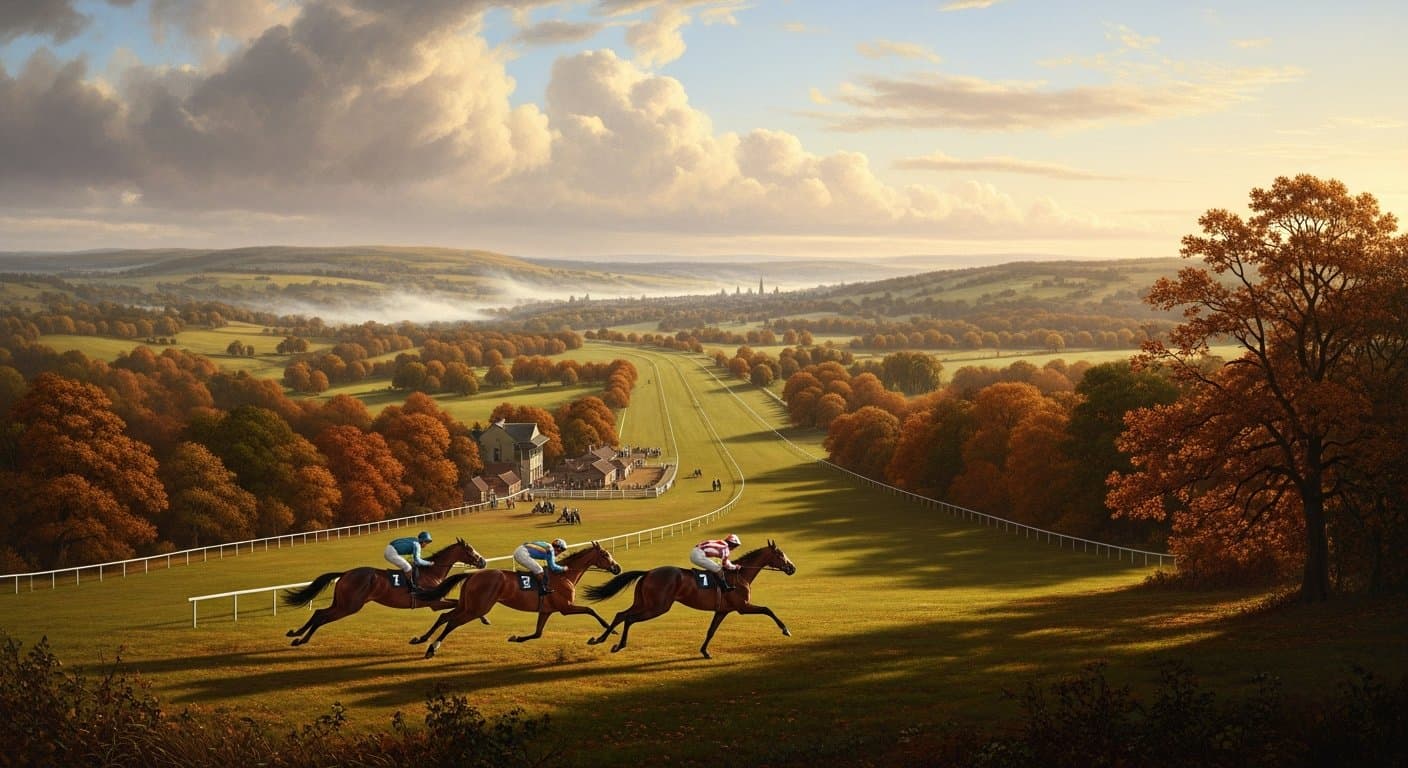
Haydock Park stages two of the north's most important racing festivals — and they could not be more different in character. In early September, the Haydock Sprint Cup weekend brings together the best sprinters in Europe for a Group One showdown over six furlongs of flat turf. Two months later, in mid-November, the Betfair Chase launches the jumps season proper with the first Grade One staying chase of the winter and a result that reshapes the King George and Gold Cup markets overnight.
The fact that a single racecourse can host both flagship flat and jump festivals is unusual in British racing — and it reflects Haydock's genuine quality as a track. The flat course, a mile and a half left-handed circuit with a straight six-furlong section, is honest and fair: a good horse wins here on ability rather than fortune. The jumps track, using a separate right-handed circuit, is an exacting galloping test that particularly suits horses with jumping fluency and class.
Haydock sits between Liverpool and Manchester, which gives it a catchment area that few northern courses can match. The crowds for both festivals draw from two major cities, and the atmosphere — particularly for the Betfair Chase — is knowledgeable and genuinely passionate. This is racing country; people have form-studied opinions and they make them known.
For the visitor, Haydock offers the rare pleasure of a genuinely high-quality racing occasion without the extreme prices or dress-code complications of the southern establishment meetings. Both festivals are accessible, reasonably priced and provide excellent racing from beginning to end.
Bet on Haydock Park
Place your bets on Haydock Park races with a trusted bookmaker.

Promo code BETFRED50. New customers only. Register, deposit with a Debit Card, and place a first bet of £10+ at Evens (2.0)+ on Sports, to be settled within 7 days, to get £30 in Sports Free Bets and £20 in Bet Builder Free Bets within 24 hours of settlement. 7-day expiry. Eligibility & payment exclusions apply. Full T&Cs apply. Take Time to Think. BeGambleAware.org. 18+. Full T&Cs.

Promo code R30. New UK customers only, 18+. Register, deposit £10 or more, then place a £10 single cash bet at odds of 1/2 (1.5) or greater on any sports market (excluding Virtuals). Once the qualifying bet settles you get £30 in Free Bets (3 x £10) — the qualifying bet can win or lose. Free Bets are valid on any sports market excluding Virtuals, expire in 7 days, are non-withdrawable and must be used in full. Excluded deposit methods apply (including PayPal, Apple Pay, Skrill and NETELLER). Named bets such as Lucky 15 do not qualify. If you cash out the qualifying bet, or it is voided, you are no longer eligible for the offer. Ends 31.12.26. Full T&Cs apply. Please gamble responsibly. BeGambleAware.org. 18+. Full T&Cs.

Promo code BET40GET20. New UK customers, 18+. Register with the code and place a first bet of £40 or more at Evens (2.0) or greater. Receive 2 × £10 free bets: the first credited automatically once the qualifying bet settles, the second 24 hours later. Free bets must be placed at minimum odds of 4/1 (5.0), expire 24 hours after credit, and the free-bet stake is not returned with winnings. Debit card deposits only. Take Time to Think. BeGambleAware.org. 18+. T&Cs apply. Full T&Cs.

50% of your first-day net losses refunded as a free bet, capped at £25. New UK customers aged 18+ only. To qualify, deposit and place a first bet of £10 or more on any sport at minimum odds of evens (2.00), then place at least two further bets on different events, each worth at least 50% of your largest bet, all at evens (2.00) or greater. Losses are counted from your first settled bet until 23:59 the same day. Place a qualifying £10+ bet and you are guaranteed at least a £5 free bet. Bets placed at SP, void bets, cashed-out bets and bets struck with free bets do not count towards the offer. The free bet is credited the day after your qualifying bets settle and must be used within 7 days, after which it expires. It can be used at odds from 1/4 (1.25) up to 250/1 on singles and straight accumulators, but not on Trixie, Patent or Yankee style multiples. Free-bet stake is not returned with winnings. One offer per person, household, address, IP address and device. E-wallet deposits may not qualify, so check the cashier before depositing. Customers registered with GAMSTOP cannot claim. KYC identity verification must be completed before the free bet is credited. Take Time to Think. BeGambleAware.org. 18+. T&Cs apply. Full T&Cs.

New customers, 18+. Choose the sports bonus at sign-up, make a first deposit and receive a 100% bonus up to £50 in your Sports Bonus balance. To convert the bonus to cash, wager it 10x within 30 days. Single bets below Evens (2.00) do not qualify; accumulators do not qualify if any selection is below 1/2 (1.50). Virtual Sports, voided, cancelled, drawn, cashed-out and free-bet wagers do not count towards wagering. Only the first settled bet per event counts. Withdrawing before the wagering requirement is met forfeits the bonus balance including bonus winnings. Real-money funds are used before bonus funds. Deposits via Skrill or Neteller are not eligible. Not valid in conjunction with other promotions. Odds, bet and payment limits apply. 10bet general and promotion T&Cs apply. BeGambleAware.org. 18+. Full T&Cs.

New customers in Great Britain and Republic of Ireland, 18+. Place a £10 fixed-odds qualifying bet at minimum odds of 1/2 (1.50) — single or each-way (only the win part counts), pre-event or in-play, not cashed out early, within 28 days of opening the account. Receive up to £60 in bonuses credited over three days: 3 × £10 fixed-odds free bets (the first on settlement, then 24 and 48 hours later) plus 3 × £5 Total Goals FOOTBALL spread bets, 3 × £5 racing Winning Favourites spread bets and a £1 racing Race Index spread bet (the spread bets need a full spread-betting account). Free-bet stakes not returned with winnings; free bets valid 28 days from issue. IMPORTANT: the £5 credits are SPREAD bets — sports spread betting carries the risk that losses can exceed your stake. Sports spread-betting customers do not have Financial Ombudsman or FSCS recourse. Take Time to Think. BeGambleAware.org. 18+. T&Cs apply. Full T&Cs.

Promo code WELCOME15, entered under My Bonuses after registering. New UK customers, 18+. Place a first qualifying bet of at least £10 from your cash balance at odds of evens (2.0) or greater within 7 days of opening the account. Once the qualifying bet fully settles you receive £15 in free bets, credited as 3 x £5 tokens with set uses: one £5 accumulator free bet (minimum 4 legs, each leg at 2/5 or bigger), one £5 sports free bet (any market at evens or bigger) and one £5 Sub Cover free bet (selected football player markets at evens or bigger). Free-bet stakes are not returned with winnings. Free bets expire 7 days after they are credited. Void, cashed-out and partially cashed-out bets do not qualify. One offer per customer. Confirm the current terms on BetGoodwin's own welcome-offer page before claiming. Take Time to Think. BeGambleAware.org. 18+. T&Cs apply. Full T&Cs.

New UK customers, 18+. Minimum deposit £10. Place a £10 qualifying single at minimum odds of 1/2 (1.50), settled within 14 days. Receive £30 in free bets (stake not returned), split £20 for sportsbook use (2 x £10) and £10 for Bet Builder only (2 x £5); Bet Builder does not cover horse racing. Free bets must be accepted within 7 days and expire 7 days after acceptance. No promo code required. Best Odds Guaranteed on UK & Irish racing, subject to having staked over £25 in the previous seven days. Operated by LiveScore Betting and Gaming (Gibraltar) Ltd, UKGC 56859. Confirm the current terms on LiveScore Bet's own promotions page before claiming. Take Time to Think. BeGambleAware.org. 18+. T&Cs apply. Full T&Cs.
18+. BeGambleAware.org
Day-by-Day Guide
September: Sprint Cup Festival
The Haydock Sprint Cup festival in early September is the north's great late-summer flat racing occasion. Run over two days — Friday and Saturday — the meeting centres on the Sprint Cup (Group One, 6f) on Saturday and a strong supporting card that includes the Rose of Lancaster Stakes (Group Three) and several handicaps that attract competitive fields from the summer's campaigns.
Friday is the quieter of the two days, with a card of Group Three and Listed races that provides a preview of Saturday's quality. The Rose of Lancaster Stakes (Group Three, 1m2f) is the highlight — a late-summer staying test for older horses that often surfaces progressive handicappers stepping up in class. The atmosphere is relaxed, facilities uncrowded and the racing genuinely competitive.
Saturday — Sprint Cup Day is the main event. The Sprint Cup itself runs at approximately 3:30pm, and the build-up features a strong card of sprinting contests that establishes the sprint pecking order for the end of the season. The crowd is significantly larger and more animated than Friday, with a north-west racing audience that knows its sprint form and backs accordingly.
After the Sprint Cup, the late afternoon card provides a useful view of horses that may be aimed at Ascot's Champions Day in October or York's closing meetings.
November: Betfair Chase Festival
The Betfair Chase weekend in mid-November is the more important of Haydock's two festivals from a jump racing perspective. It is the first Grade One staying chase of the winter season and provides the opening salvo in what becomes the four-way argument between Haydock, Kempton (King George), Cheltenham (Gold Cup) and Aintree (Grand National).
Saturday — Betfair Chase Day starts with competitive novice and handicap hurdles before building toward the main event at approximately 3pm. The Betfair Chase field is typically small — four to eight runners — but the quality is very high. Trainers who target this race specifically (notably Paul Nicholls, Nicky Henderson and the Irish yards) prepare horses carefully; this is not a race where horses run half-fit.
The atmosphere on Betfair Chase day is outstanding — a knowledgeable Saturday crowd, the first truly significant Grade One of the winter, and a result that is analysed in depth before it has even been settled. The post-race betting ring conversation is as much about what the result means for Christmas and March as about what happened in the race itself.
Key Races to Watch
Betfair Chase (November, Grade One, 3m1f)
The first major staying chase of the winter season and the most informative form guide for the King George VI Chase at Christmas. Three miles and one furlong around Haydock's right-handed flat circuit — the race's character is straightforward: stay three miles on a galloping track and jump consistently. There are no cambers, no hills and no sharp turns to mask or exaggerate ability.
The Betfair Chase has an outstanding record of identifying Gold Cup horses. Denman, Kauto Star, Long Run, Silviniaco Conti and Bristol de Mai (who won it an extraordinary three times) are among its winners. The race does not produce flukes.
Key angles: Horses with a strong previous season record in Graded chases, particularly on right-handed or flat tracks. Horses returning from injury often run their best race of the season here when fresh — the November timing suits horses that have had a summer break rather than those with autumn outings. Willie Mullins' yard has dramatically strengthened its British representation in recent seasons, and Irish-trained runners in the Betfair Chase deserve full market respect.
Sprint Cup (September, Group One, 6f)
The premier British Group One sprint of late summer, attracting the best sprinters from Britain, Ireland, France and occasionally further afield. Six furlongs on Haydock's straight, fair track is an ideal test of Group One sprint ability — no quirks of course, no awkward draws (though high numbers have had a slight advantage historically).
The Sprint Cup regularly attracts the reigning Champion sprinter looking to cement their reputation before the season ends. It is also a race where progressive five-year-olds who have improved through the summer can upset more established performers. The October Champions Day at Ascot is the next target for most Sprint Cup horses, so the market is strongly influenced by what trainers tell us about end-of-season plans.
Rose of Lancaster Stakes (September, Group Three, 1m2f)
A late-summer middle-distance race with a field that often contains horses who have dropped back to Group Three level from higher company and will move forward again. An informative form guide for Ascot's Champions Day middle-distance races.
Novice Hurdle (November supporting programme)
Haydock's November novice hurdles are among the most competitive early-season novice contests in the north. Trainers who want a run before Christmas but don't want to expose their best novices too early often aim here. The galloping track is a fair test and horses that win here impressively tend to have the physical scope to progress.
Betting Preview
Betting the Betfair Chase
The Betfair Chase is the easiest of the major winter Grade Ones to approach from an ante-post perspective. The race's demanding, straightforward track means that the best horse usually wins — there are fewer variables to navigate than at Cheltenham or Kempton.
Ante-post approach: Look for horses with a strong previous-season profile in Graded chases over two and a half miles or more. The Betfair Chase distance (3m1f) is long enough that horses with genuine stamina are preferred. Paul Nicholls' string is worth following carefully in the weeks before entries close — he has targeted this race consistently and his Betfair Chase runners tend to be well-prepared.
Market intelligence: The Betfair Chase market typically opens in September with several lightly-priced favourites based on previous season form. The best value window is October, before the November declarations sharpen the field and the market compresses. If you identify a horse with a good profile in August and take a price in October, you will often be ahead of the market by race day.
Irish challengers: Willie Mullins and Gordon Elliott have increased their presence in the Betfair Chase significantly. Irish-trained horses at this race deserve full respect — they are not coming north for a day out and will have been specifically prepared.
Sprint Cup Betting
The Sprint Cup market is strongly influenced by how sprinters have performed through the summer's Group One sprint programme. Horses that ran well in the Diamond Jubilee at Royal Ascot and the July Cup at Newmarket are the natural market leaders, and their prices are usually efficient reflections of ability.
Where value exists is in horses that have improved significantly through the summer without facing top-level competition. A horse that won two or three handicaps or Listed races convincingly but hasn't been in a Group One since the summer can be underpriced when facing Group One regulars. These horses are improving; the regulars may be tiring after a long campaign.
Both Festivals: Practical Betting
Haydock's bookmakers are competitive and the betting ring is accessible. For the major races, taking prices the day before through betting exchanges gives better value than on-course prices on race day. Tote returns can be generous in the smaller handicap fields.
Visitor Information
Getting There
By train: Newton-le-Willows station is approximately a 10-minute walk from the racecourse. Services run from Manchester Piccadilly (approximately 25 minutes), Liverpool Lime Street (approximately 20 minutes) and London Euston (change at Warrington Bank Quay or Newton-le-Willows, total journey approximately two hours). Race-day shuttle buses sometimes run from Newton-le-Willows station directly to the course gates.
By car: Haydock Park sits adjacent to the M6 (junction 23) and M62 (junction 7), making it one of the most accessible racecourses in Britain by road. Pre-booked parking is available on-site. The M6 southbound from junction 23 can be slow after racing on busy days.
By coach: National Express services stop at Newton-le-Willows on some routes. Local operators run buses from Manchester and Liverpool on major race days.
Enclosures
Grandstand Enclosure: The main public area with covered grandstand seating and full bar and restaurant facilities. Good views of the finish. Smart casual dress code.
Premier Enclosure: Premium seating with restaurant access and the best parade ring views. Smart attire required. Book in advance for the major festival days.
Course Enclosure: More informal rail viewing along the home straight. Access to basic bars and food. Smart casual applies.
Essential Tips
- Sprint Cup Saturday and Betfair Chase Saturday both sell well in advance. Book through the Haydock website from at least six weeks out for both festivals.
- November weather at Haydock is typically cold and wet. The north-west does not do mild autumns. Waterproof outer layers and sturdy footwear are essential for the Betfair Chase weekend.
- The Sprint Cup September meeting is generally warm and well-attended. Summer dress can work on Friday; bring a layer for Saturday evening if staying for the final races.
- The M6 is predictably slow after the Betfair Chase. Leave immediately after the last race or plan for a 30-minute wait before traffic clears. Alternatively, trains from Newton-le-Willows move quickly after racing.
- Pre-booking food and hospitality packages is recommended for the headline days of both festivals. The grandstand restaurants book up several weeks ahead.
Share this article
More about this racecourse
All Haydock Park guides
The History of Haydock Park Racecourse
From a modest course in 1899 to one of the North West's premier dual-purpose venues: the story of Haydock Park, the Sprint Cup, and the Betfair Chase.
Read more
Kauto Star at Haydock Park: The Complete Story
Kauto Star's legendary performances at Haydock Park, including his memorable Betfair Chase victories that defined a generation of steeplechasing excellence.
Read more
Sprint Cup Day at Haydock Park
Your guide to Sprint Cup Day at Haydock — history of the Betfair Sprint Cup, the supporting card, betting angles and tips for the day.
Read moreResearch the field with the AI Race Predictor
Our model publishes calibrated win-probability estimates for UK races — a second opinion to understand a race, not tips. It's open about its record: it doesn't beat the market, and we show exactly how it does.
Work it out & learn the basics
Gamble Responsibly
Gambling should be entertaining and not seen as a way to make money. Never bet more than you can afford to lose. If you or someone you know has a gambling problem, help and support is available.