

Founder & Editor · Last reviewed 2026-08-20
Hereford Racecourse carries the emotional weight of a venue that was nearly lost for good. When the course closed in 2012 after financial difficulties, it felt like another blow to the network of smaller jump tracks that give British racing its regional depth. When it reopened in 2016 after a dedicated local campaign, the reception from the border country's racing community was extraordinary — and rightly so. Hereford is one of the oldest racecourses in Britain, with a history stretching back to 1771, and its loss would have been irreversible.
The course sits just outside the city of Hereford, right-handed with a circuit of about one mile and four furlongs, and the right-handed layout rewards economical jumping and horses that handle themselves well on a tight, flat circuit. It is not a glamorous track, but it is an honest one — and the competition here is genuine.
The Hereford Gold Cup meeting in October or November is the flagship fixture. As a Grade Three or Listed chase, it attracts horses from the Welsh and border country yards who know the track well, alongside occasional raiders from larger operations seeking a winnable prize early in the season. The atmosphere is warm and the racing competitive in a way that reflects the course's roots in a tight-knit regional community.
Spring chase meetings round out the Hereford season and draw horses from the Shropshire, Gloucestershire and Welsh Marches yards who make up the course's natural constituency. For anyone interested in the grassroots of British jump racing, Hereford is an essential visit.
Bet on Hereford
Place your bets on Hereford races with a trusted bookmaker.

Promo code BETFRED50. New customers only. Register, deposit with a Debit Card, and place a first bet of £10+ at Evens (2.0)+ on Sports, to be settled within 7 days, to get £30 in Sports Free Bets and £20 in Bet Builder Free Bets within 24 hours of settlement. 7-day expiry. Eligibility & payment exclusions apply. Full T&Cs apply. Take Time to Think. BeGambleAware.org. 18+. Full T&Cs.

Promo code R30. New UK customers only, 18+. Register, deposit £10 or more, then place a £10 single cash bet at odds of 1/2 (1.5) or greater on any sports market (excluding Virtuals). Once the qualifying bet settles you get £30 in Free Bets (3 x £10) — the qualifying bet can win or lose. Free Bets are valid on any sports market excluding Virtuals, expire in 7 days, are non-withdrawable and must be used in full. Excluded deposit methods apply (including PayPal, Apple Pay, Skrill and NETELLER). Named bets such as Lucky 15 do not qualify. Ends 31.12.26. Full T&Cs apply. Please gamble responsibly. BeGambleAware.org. 18+. Full T&Cs.

Promo code BET40GET20. New UK customers, 18+. Register with the code and place a first bet of £40 or more at Evens (2.0) or greater. Receive 2 × £10 free bets: the first credited automatically once the qualifying bet settles, the second 24 hours later. Free bets must be placed at minimum odds of 4/1 (5.0), expire 24 hours after credit, and the free-bet stake is not returned with winnings. Debit card deposits only. Take Time to Think. BeGambleAware.org. 18+. T&Cs apply. Full T&Cs.

50% of your first-day net losses refunded as a free bet, capped at £25. New UK customers aged 18+ only. To qualify, deposit and place a first bet of £10 or more on any sport at minimum odds of evens (2.00), then place at least two further bets on different events, each worth at least 50% of your largest bet, all at evens (2.00) or greater. Losses are counted from your first settled bet until 23:59 the same day. Place a qualifying £10+ bet and you are guaranteed at least a £5 free bet. Bets placed at SP, void bets, cashed-out bets and bets struck with free bets do not count towards the offer. The free bet is credited the day after your qualifying bets settle and must be used within 7 days, after which it expires. It can be used at odds from 1/4 (1.25) up to 250/1 on singles and straight accumulators, but not on Trixie, Patent or Yankee style multiples. Free-bet stake is not returned with winnings. One offer per person, household, address, IP address and device. E-wallet deposits may not qualify, so check the cashier before depositing. Customers registered with GAMSTOP cannot claim. KYC identity verification must be completed before the free bet is credited. Take Time to Think. BeGambleAware.org. 18+. T&Cs apply. Full T&Cs.

New customers, 18+. Choose the sports bonus at sign-up, make a first deposit and receive a 100% bonus up to £50 in your Sports Bonus balance. To convert the bonus to cash, wager it 10x within 30 days. Single bets below Evens (2.00) do not qualify; accumulators do not qualify if any selection is below 1/2 (1.50). Virtual Sports, voided, cancelled, drawn, cashed-out and free-bet wagers do not count towards wagering. Only the first settled bet per event counts. Withdrawing before the wagering requirement is met forfeits the bonus balance including bonus winnings. Real-money funds are used before bonus funds. Deposits via Skrill or Neteller are not eligible. Not valid in conjunction with other promotions. Odds, bet and payment limits apply. 10bet general and promotion T&Cs apply. BeGambleAware.org. 18+. Full T&Cs.

New customers in Great Britain and Republic of Ireland, 18+. Place a £10 fixed-odds qualifying bet at minimum odds of 1/2 (1.50) — single or each-way (only the win part counts), pre-event or in-play, not cashed out. Receive £60 in bonuses credited over three consecutive days: 3 × £10 fixed-odds free bets, 3 × £5 Total Goals FOOTBALL spread bets, 3 × £5 racing Winning Favourites spread bets, plus a £1 racing Race Index spread bet on day one. Free-bet stakes not returned with winnings; free bets valid 28 days from issue. IMPORTANT: the £5 and £1 credits are SPREAD bets — sports spread betting carries the risk that losses can exceed your stake. Sports spread-betting customers do not have Financial Ombudsman or FSCS recourse. Take Time to Think. BeGambleAware.org. 18+. T&Cs apply. Full T&Cs.

Promo code WELCOME15, entered under My Bonuses after registering. New UK customers, 18+. Place a first qualifying bet of at least £10 from your cash balance at odds of evens (2.0) or greater within 7 days of opening the account. Once the qualifying bet fully settles you receive £15 in free bets, credited as 3 x £5 tokens with set uses: one £5 accumulator free bet (minimum 4 legs, each leg at 2/5 or bigger), one £5 sports free bet (any market at evens or bigger) and one £5 Sub Cover free bet (selected football player markets at evens or bigger). Free-bet stakes are not returned with winnings. Free bets expire 7 days after they are credited. Void, cashed-out and partially cashed-out bets do not qualify. One offer per customer. Confirm the current terms on BetGoodwin's own welcome-offer page before claiming. Take Time to Think. BeGambleAware.org. 18+. T&Cs apply. Full T&Cs.

New UK customers, 18+. Minimum deposit £10. Place a £10 qualifying single at minimum odds of 1/2 (1.50), settled within 14 days. Receive £30 in free bets (stake not returned), split £20 for sportsbook use (2 x £10) and £10 for Bet Builder only (2 x £5); Bet Builder does not cover horse racing. Free bets must be accepted within 7 days and expire 7 days after acceptance. No promo code required. Best Odds Guaranteed on UK & Irish racing, subject to having staked over £25 in the previous seven days. Operated by LiveScore Betting and Gaming (Gibraltar) Ltd, UKGC 56859. Confirm the current terms on LiveScore Bet's own promotions page before claiming. Take Time to Think. BeGambleAware.org. 18+. T&Cs apply. Full T&Cs.
18+. BeGambleAware.org
Day-by-Day Guide
The Hereford Calendar
Since reopening in 2016, Hereford has built a programme of around eight to ten meetings per season, concentrated in the autumn through spring period that suits National Hunt racing. The Gold Cup meeting in October or November is the headline fixture, with spring chase meetings providing a secondary peak and a series of midwinter fixtures filling out the schedule.
Hereford Gold Cup Weekend (October–November)
The Gold Cup meeting is Hereford's biggest occasion of the year and the one that draws horses from beyond the immediate border country. The Grade Three or Listed chase at the heart of the card brings genuine quality to the course — horses that have been through the summer and are freshly launched for the new jump season by yards that know the right-handed Hereford circuit suits them.
Saturday Gold Cup day has the feel of a proper racing occasion rather than a casual day out. The border country's racegoing community turns out in numbers, the betting ring is active, and the parade ring before the feature race offers a genuine chance to study horses who will go on to compete at a higher level through the winter.
The support card is well constructed around the Gold Cup. A novice hurdle, a handicap chase and typically a bumper round out the afternoon with competitive fields that reflect well on a track that might not, on paper, be expected to fill its races so thoroughly.
Autumn Series (October–November)
Beyond the Gold Cup weekend, Hereford's autumn fixtures serve as a launching pad for border country horses making their seasonal appearances. Dan Skelton, based at Lodge Hill in Alcester, targets Hereford regularly with horses suited to the right-handed circuit. Kim Bailey, who operates from the nearby Andoversford area, is another trainer with a specific Hereford interest.
Horses from these yards appearing at Hereford in October and November are worth monitoring for subsequent runs elsewhere. A quiet winning performance at Hereford — achieved without excessive effort — can be worth more in form terms than the racereader's remarks suggest.
Midwinter Fixtures (December–January)
The heart of the winter at Hereford is characterised by smaller weekday fields and a stripped-back atmosphere. This is the part of the season where the course's local character is most apparent. Regular Hereford racegoers who follow specific horses through the season attend these midweek meetings, and the betting ring operates on modest volumes.
The midwinter meetings are the best time to watch a horse's jumping technique in a competitive but not frantic environment. Fields of eight to ten runners over two and a half miles on a right-handed circuit with honest fences give you a clear view of whether a horse is travelling and jumping as well as its form suggests it should.
The ground in midwinter at Hereford can be very testing — the Wye Valley's damp climate means soft and heavy ground is the norm through December and January. Always check going conditions before travelling and before placing bets.
Spring Chase Meetings (March–April)
Hereford's spring programme draws horses with a season's experience behind them and connections looking for one more win before the summer break. The spring meetings have a buoyant, end-of-term quality. Horses that have been competitive all winter at Cheltenham, Ascot or Sandown sometimes drop back to Hereford's more modest level and deliver a comfortable victory before summer rest.
The novice programme in spring features horses that have been progressively educated through the winter and are now ready to win. A bumper winner that graduates to novice hurdling and then to novice chasing at Hereford in spring is following a tried and trusted pathway. When these horses win easily at Hereford, they are often on a trajectory toward much better things.
Key Races to Watch
Hereford Gold Cup (Grade Three or Listed Chase, 2m3f–3m, October–November)
The Gold Cup is Hereford's signature race and the one that puts the course briefly on the national racing map each autumn. Run at Grade Three or Listed level, it attracts a field of genuine quality — horses that have winning form at Graded level or Listed races, entered here because the right-handed, flat Hereford circuit is seen as favourable by their connections.
The race regularly attracts two types of competitor. First, the progressive horse from a major yard making an early-season appearance — perhaps a Grade One novice from the previous season coming back as a more rounded chaser. Second, the course-form specialist who has won at Hereford before and whose connections know the track rewards their horse specifically.
Key trainer angle: Dan Skelton and Kim Bailey have strong records in the Gold Cup and in Hereford chase races generally. Their right-handed course specialists understand the track's demands, and when either yard sends a well-prepared horse, it deserves close attention at whatever price the market sets. Welsh yards, particularly Evan Williams and Peter Bowen, also have meaningful Hereford records.
Watch for: Horses switching from left-handed tracks where they have shown ability but not won. The right-handed circuit at Hereford can unlock horses that have been consistently close but not quite winning — particularly if previous form has been at Cheltenham (left-handed) and the horse is a natural right-hander.
Novice Hurdle Programme
Hereford's novice hurdle series through the winter features horses from the border country and Midlands yards at an early stage of their development. These races are instructive for future planning: a horse that wins novice hurdles impressively at Hereford on testing winter ground has demonstrated it can handle physical and mental demands beyond the majority of the novice division.
Spring Chase Series
The March and April chase cards at Hereford attract horses consolidating their season's form before the summer. These are often reliable races for the student of trainer patterns — yards that know how to target Hereford's spring meetings produce winners at healthy prices from horses that look moderate on paper but are perfectly suited to the conditions.
Betting Preview
Border Country Yards and Why They Matter
The most consistent betting edge at Hereford is understanding which trainers specifically target the course. Dan Skelton, Kim Bailey, Evan Williams and Peter Bowen all have records at Hereford that significantly exceed their national averages. This is not accidental — these trainers know the right-handed circuit, know the type of horse that excels here, and specifically plan runners for Hereford meetings.
When assessing any Hereford race, start with the trainer list. If Skelton or Bailey have entered a well-handicapped horse with course form, that horse's actual price should be lower than a national assessment of its form would suggest. The market often anchors on general form ratings rather than course-specific trainer advantage.
The Right-Handed Circuit
Hereford's right-handed layout is worth taking seriously as a betting factor. Some horses are natural right-handers — they track more smoothly on right-handed bends, maintain momentum more comfortably through right turns — and a left-handed record that understates their ability is common among them.
When assessing a field, look at the previous form and note which tracks it has been acquired on. A horse with two close seconds at left-handed Cheltenham and a win at right-handed Wincanton is giving you a strong directional signal. If that horse arrives at Hereford with good fitness indicators, it is worth prioritising over horses whose form is exclusively from left-handed tracks.
Going and Ground Conditions
Hereford's position in the Wye Valley means winter ground can be very testing. Soft and heavy conditions are common from November to February, and they transform the race dynamics significantly. Stamina-heavy horses that are effective on testing ground outperform their ratings at Hereford in a way that horses suited to good-to-firm ground cannot replicate.
Check going reports carefully on race day and be prepared to revise your assessments if the ground is significantly softer than forecast.
Practical Notes
The Hereford betting ring is modest but well-manned on Gold Cup day. Prices on the headline race are competitive with online bookmakers. For the smaller midwinter meetings, online is reliably better than the ring for getting reasonable odds on well-fancied horses.
Visitor Information
Getting There
By train: Hereford station is served by Transport for Wales from Cardiff Central (approximately 1 hour 30 minutes), Newport and Abergavenny, and by Great Western Railway from London Paddington via Newport (approximately 2 hours 45 minutes). The station is approximately 1 mile from the racecourse — a walkable distance in good weather, or a short taxi ride. The train is a genuinely convenient option for Hereford compared with many rural jump venues.
By car: The A49 is the main north-south approach into Hereford from Shrewsbury and Leominster in the north, and Ross-on-Wye in the south. The A438 provides approach from the west, towards the Welsh border country. On-site parking is available and the course is clearly signposted from the city's road network.
Enclosures and Facilities
Hereford is a modest, welcoming venue where the facilities are functional rather than grand, and the atmosphere is genuinely warm.
The Members' Enclosure covers the parade ring and grandstand area, with access to the main bars and a viewing terrace along the finishing straight. Smart casual dress is appropriate for Gold Cup day.
The Tattersalls Enclosure is the most popular option for regular racegoers, offering good views of the course and access to the betting ring. Most of the course's regular attendance frequents Tattersalls, and the atmosphere here on a busy day is convivial and unhurried.
Essential Tips
- The walk from the station is straightforward. In reasonable weather, the 15-minute walk from Hereford station to the racecourse is pleasant and well-marked. Save the taxi fare and enjoy the city approach.
- Hereford city is worth exploring. The cathedral, the Mappa Mundi and the Old House are all within easy reach of the station and can make the day out into a proper cultural trip alongside the racing.
- Dress for the border country winter. November and December at Hereford can be cold and wet. Waterproof boots and a proper winter coat are the sensible choice.
- Gold Cup day benefits from advance booking. Though Hereford is not yet oversold, the Gold Cup Saturday is the busiest day of the year and popular enclosures can fill. Check the racecourse website for ticketing.
- Small course, close-up atmosphere. Hereford's compact layout means you are never far from the action. The parade ring is accessible and the viewing from Tattersalls along the straight is excellent. It is one of the friendliest and most approachable venues in British jump racing.
Share this article
More about this racecourse
All Hereford guides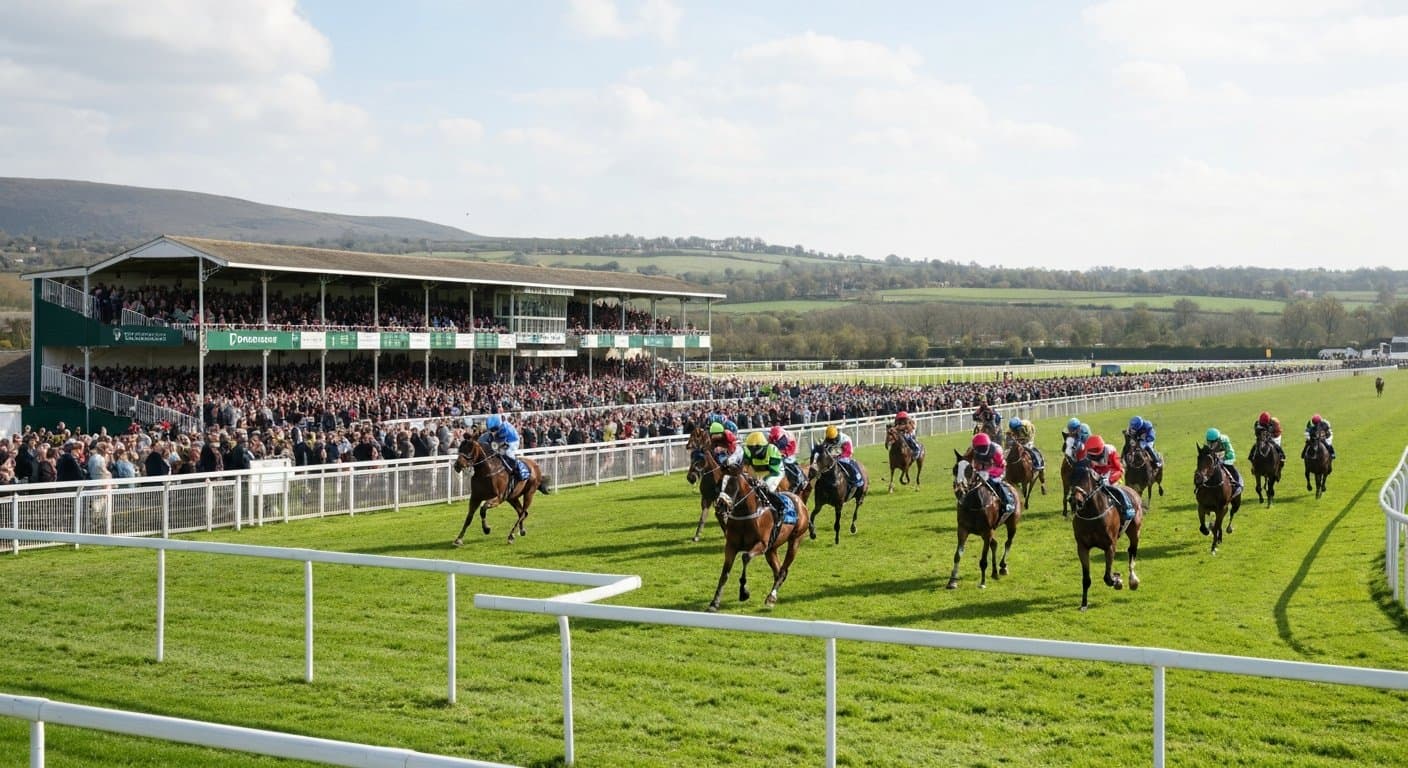
Hereford Gold Cup: Complete Guide
Your complete guide to the Hereford Gold Cup — the signature chase at Hereford Racecourse, run each winter on the banks of the River Wye.
Read more
The History of Hereford Racecourse
Over 250 years of racing at Hereford — from 1771 to the closure, reopening, and the course's place on the Welsh border.
Read more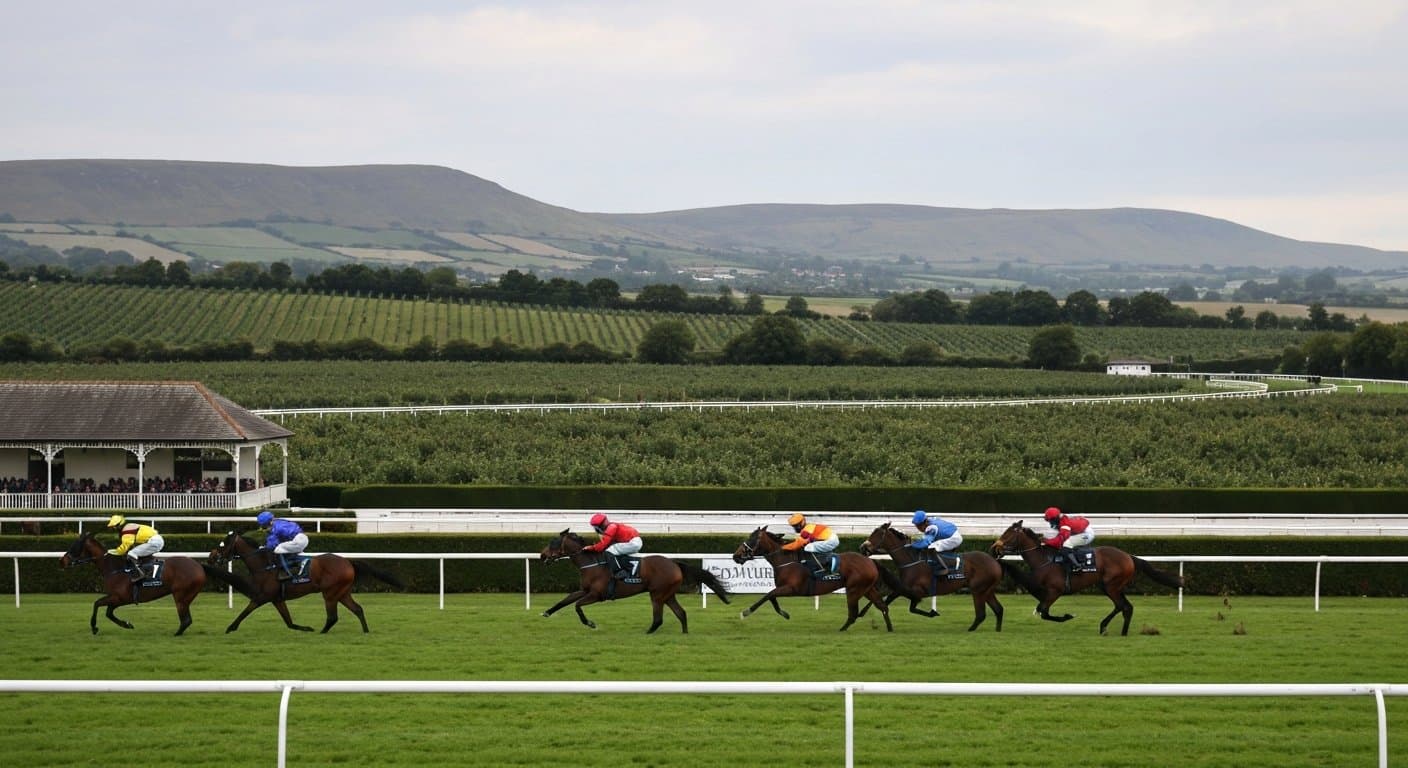
The Hereford Racecourse Reopening Story
How Hereford Racecourse came back from a four-year closure in 2016 — the campaign, the reopening day, and what it means for jump racing on the Welsh border.
Read moreResearch the field with the AI Race Predictor
Our model publishes calibrated win-probability estimates for UK races — a second opinion to understand a race, not tips. It's open about its record: it doesn't beat the market, and we show exactly how it does.
Work it out & learn the basics
Gamble Responsibly
Gambling should be entertaining and not seen as a way to make money. Never bet more than you can afford to lose. If you or someone you know has a gambling problem, help and support is available.