
Founder & Editor · Last reviewed 2026-04-05
Introduction
Hereford Racecourse stands on the flood plain of the River Wye, roughly one mile west of Hereford city centre, with Hereford Cathedral visible across the water on a clear day. Racing has taken place on this ground since 1771, making it one of the oldest National Hunt venues in England. The backdrop of the Norman cathedral tower, the Wye's wide bend, and the Herefordshire hills beyond gives the course a setting that is among the most distinctive in British jumping.
The course is flat, right-handed, and approximately one mile two furlongs round — a square circuit that suits galloping, staying types rather than the quick-footed specialists you find at tighter tracks. National Hunt only, season running October through May, with both hurdles and chases across a programme of around 15 fixtures a year.
What sets Hereford apart from larger venues in the region is scale. Capacity is around 4,000. On most days the atmosphere is relaxed and unhurried: you can watch the parade ring without pushing through three rows of people, get to the rail for the finish without planning it 20 minutes in advance, and hold a conversation without shouting. The course sits 16 miles east of the Welsh border, and the crowd reflects that geography — a mix of Herefordshire and Welsh Borders racegoers who know their horses and their trainers.
Hereford stages no Graded, Listed or named feature race; its programme is a winter mix of novice and handicap hurdles and chases, with hunter chases in the spring. Venetia Williams, based at Aramstone 12 miles south, is the dominant local handler and targets the course regularly throughout the season. Nigel Twiston-Davies (Naunton, 35 miles east) and Kim Bailey (Andoversford, 40 miles east) are the other significant names in the entries here. Between them, these three trainers account for a disproportionate share of winners at Hereford, and knowing when they are sending a strong team to the course is one of the most reliable starting points for betting analysis.
The city of Hereford itself adds to the appeal. The county town sits at the heart of a landscape defined by cider orchards, Hereford cattle farms, and the Welsh Marches. Bulmers Cider was founded in the city in 1887. The Hereford breed of cattle, one of the most famous beef breeds in the world, was developed in the county through the late 18th century. The racecourse's food and drink offer leans into this identity, and the combination of a day's racing and a meal in the city makes for a visit that works on several levels.
Who This Guide Is For
First-time visitors will find everything they need here: the course layout, how to get there, what facilities to expect, and what to do in the city beforehand.
Regular racegoers coming from outside the region will get the betting angles on the track characteristics, the going patterns on the Wye flood plain, and the trainers and jockeys who dominate at this venue.
History-focused readers can go straight to the history section — racing here from 1771, closure in 2012, and the four-year campaign that brought it back in 2016 make for one of the more interesting stories in recent British racing.
Trip planners will find the Herefordshire context useful: the cathedral, the Mappa Mundi, Bulmers Cider Museum, and the Wye Valley are all within easy reach, and the city itself is a comfortable day's base.
Quick Decisions
- Best value months: November and February — competitive fields, typically good going reports
- Best spot to stand: The rail at the final fence on the chase course, close to the finish
- Biggest race day: no single headline fixture; the racecourse's busiest days are its themed racedays
- Nearest station: Hereford — direct trains from Cardiff (1h 15m), Birmingham (1h 40m), and Newport (1h)
- Driving: A49 to Hereford, then follow racecourse signs; on-course parking available
- Flood risk: The Wye can rise in wet winters; always check the course website before travelling
- Dominant trainer: Venetia Williams wins at a high strike rate at Hereford — note her runners when she declares here
The sections below cover the course in full: layout and going, the fixtures calendar, facilities, getting there, the course history, famous moments, betting angles, and practical planning. Each section is designed to stand alone, so you can jump to what you need.
Hereford is not a glamour venue. It does not stage Festival trials or Group races. What it offers is sharp, competitive National Hunt racing in a setting that many racegoers rate among the best in England — a cathedral, a river, and a course that has been putting horses over fences since the reign of George III.
Bet on Hereford
Place your bets on Hereford races with a trusted bookmaker.

Promo code BETFRED50. New customers only. Register, deposit with a Debit Card, and place a first bet of £10+ at Evens (2.0)+ on Sports, to be settled within 7 days, to get £30 in Sports Free Bets and £20 in Bet Builder Free Bets within 24 hours of settlement. 7-day expiry. Eligibility & payment exclusions apply. Full T&Cs apply. Take Time to Think. BeGambleAware.org. 18+. Full T&Cs.

Promo code R30. New UK customers only, 18+. Register, deposit £10 or more, then place a £10 single cash bet at odds of 1/2 (1.5) or greater on any sports market (excluding Virtuals). Once the qualifying bet settles you get £30 in Free Bets (3 x £10) — the qualifying bet can win or lose. Free Bets are valid on any sports market excluding Virtuals, expire in 7 days, are non-withdrawable and must be used in full. Excluded deposit methods apply (including PayPal, Apple Pay, Skrill and NETELLER). Named bets such as Lucky 15 do not qualify. If you cash out the qualifying bet, or it is voided, you are no longer eligible for the offer. Ends 31.12.26. Full T&Cs apply. Please gamble responsibly. BeGambleAware.org. 18+. Full T&Cs.

Promo code BET40GET20. New UK customers, 18+. Register with the code and place a first bet of £40 or more at Evens (2.0) or greater. Receive 2 × £10 free bets: the first credited automatically once the qualifying bet settles, the second 24 hours later. Free bets must be placed at minimum odds of 4/1 (5.0), expire 24 hours after credit, and the free-bet stake is not returned with winnings. Debit card deposits only. Take Time to Think. BeGambleAware.org. 18+. T&Cs apply. Full T&Cs.

50% of your first-day net losses refunded as a free bet, capped at £25. New UK customers aged 18+ only. To qualify, deposit and place a first bet of £10 or more on any sport at minimum odds of evens (2.00), then place at least two further bets on different events, each worth at least 50% of your largest bet, all at evens (2.00) or greater. Losses are counted from your first settled bet until 23:59 the same day. Place a qualifying £10+ bet and you are guaranteed at least a £5 free bet. Bets placed at SP, void bets, cashed-out bets and bets struck with free bets do not count towards the offer. The free bet is credited the day after your qualifying bets settle and must be used within 7 days, after which it expires. It can be used at odds from 1/4 (1.25) up to 250/1 on singles and straight accumulators, but not on Trixie, Patent or Yankee style multiples. Free-bet stake is not returned with winnings. One offer per person, household, address, IP address and device. E-wallet deposits may not qualify, so check the cashier before depositing. Customers registered with GAMSTOP cannot claim. KYC identity verification must be completed before the free bet is credited. Take Time to Think. BeGambleAware.org. 18+. T&Cs apply. Full T&Cs.

New customers, 18+. Choose the sports bonus at sign-up, make a first deposit and receive a 100% bonus up to £50 in your Sports Bonus balance. To convert the bonus to cash, wager it 10x within 30 days. Single bets below Evens (2.00) do not qualify; accumulators do not qualify if any selection is below 1/2 (1.50). Virtual Sports, voided, cancelled, drawn, cashed-out and free-bet wagers do not count towards wagering. Only the first settled bet per event counts. Withdrawing before the wagering requirement is met forfeits the bonus balance including bonus winnings. Real-money funds are used before bonus funds. Deposits via Skrill or Neteller are not eligible. Not valid in conjunction with other promotions. Odds, bet and payment limits apply. 10bet general and promotion T&Cs apply. BeGambleAware.org. 18+. Full T&Cs.

New customers in Great Britain and Republic of Ireland, 18+. Place a £10 fixed-odds qualifying bet at minimum odds of 1/2 (1.50) — single or each-way (only the win part counts), pre-event or in-play, not cashed out early, within 28 days of opening the account. Receive up to £60 in bonuses credited over three days: 3 × £10 fixed-odds free bets (the first on settlement, then 24 and 48 hours later) plus 3 × £5 Total Goals FOOTBALL spread bets and 3 × £5 racing Winning Favourites spread bets, with a £1 racing Race Index spread bet as an extra on top. The spread bets need a full spread-betting account, opened within 28 days of the fixed-odds account and subject to Spreadex's eligibility and appropriateness checks. Free-bet stakes not returned with winnings; free bets valid 28 days from issue. IMPORTANT: the £5 credits are SPREAD bets — sports spread betting carries the risk that losses can exceed your stake. Sports spread-betting customers do not have Financial Ombudsman or FSCS recourse. Take Time to Think. BeGambleAware.org. 18+. T&Cs apply. Full T&Cs.

Promo code WELCOME15, entered under My Bonuses after registering. New UK customers, 18+. Place a first qualifying bet of at least £10 from your cash balance at odds of evens (2.0) or greater within 7 days of opening the account. Once the qualifying bet fully settles you receive £15 in free bets, credited as 3 x £5 tokens with set uses: one £5 accumulator free bet (minimum 4 legs, each leg at 2/5 or bigger), one £5 sports free bet (any market at evens or bigger) and one £5 Sub Cover free bet (selected football player markets at evens or bigger). Free-bet stakes are not returned with winnings. Free bets expire 7 days after they are credited. Void, cashed-out and partially cashed-out bets do not qualify. One offer per customer. Confirm the current terms on BetGoodwin's own welcome-offer page before claiming. Take Time to Think. BeGambleAware.org. 18+. T&Cs apply. Full T&Cs.

New UK customers, 18+. Minimum deposit £10. Place a £10 qualifying single on sports (excluding virtuals) at minimum odds of 1/2 (1.50), settled within 14 days. Deposit-method exclusions apply. Receive £30 in free bets (stake not returned), split £20 for sportsbook use (2 x £10) and £10 for Bet Builder only (2 x £5); Bet Builder does not cover horse racing. Free bets must be accepted within 7 days and expire 7 days after acceptance. No promo code required. Best Odds Guaranteed on UK & Irish racing, subject to having staked over £25 in the previous seven days. Operated by LiveScore Betting and Gaming (Gibraltar) Ltd, UKGC 56859. Confirm the current terms on LiveScore Bet's own promotions page before claiming. Take Time to Think. BeGambleAware.org. 18+. T&Cs apply. Full T&Cs.
18+. BeGambleAware.org
The Course
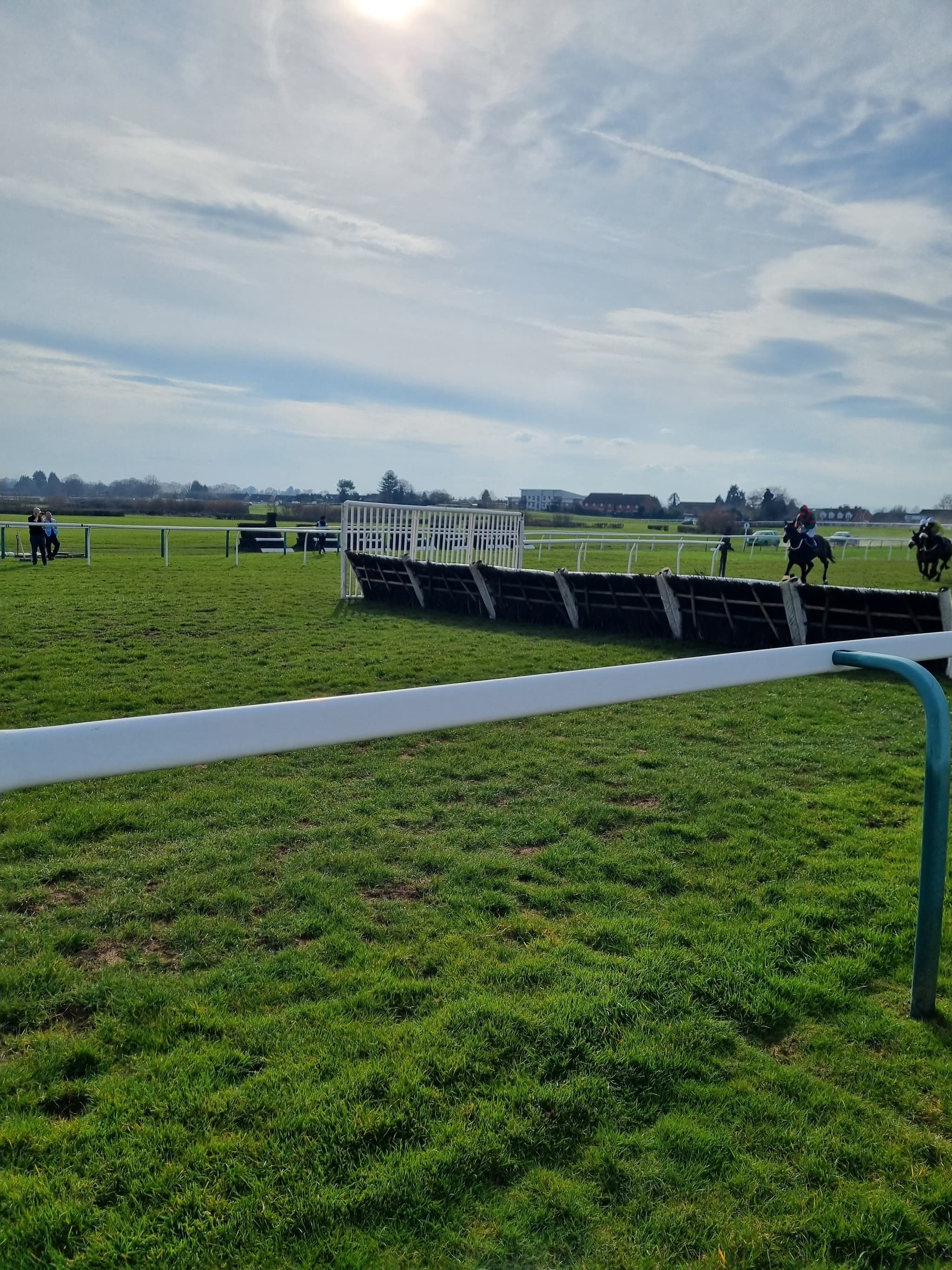
Hereford's track is a flat, right-handed square of approximately one mile two furlongs, set on the flood plain of the River Wye. That setting defines the course in two ways: it gives the track its character as an essentially level galloping circuit, and it introduces the flooding risk that has been part of Hereford's identity for as long as racing has taken place here. Worcester faces the same challenge on the Severn flood plain, and both courses have learnt to live with it.
The circuit is closer to a square than an oval, with four real bends rather than the gradual sweeping curves of an oval track. The bends are well-cambered and not excessively sharp, which means horses can take them at racing pace without losing significant momentum. The layout contrasts sharply with a course like Ludlow, which has a more traditional oval shape, or Cheltenham, where the climb out of the back straight changes the race completely.
Shape, Direction and Configuration
The right-handed direction is shared by courses such as Sandown, Kempton, and Exeter, though Hereford's flat profile is quite different from Exeter's testing climbs. Horses run clockwise, making four right-hand turns to complete the circuit. The start and finish are adjacent, on the flat stretch in front of the grandstand, giving spectators a clean view of both the opening strides and the finish.
The run-in from the final fence to the winning post is around 200 yards — long enough that a horse with stamina can make up significant ground on a tired front-runner, but not so long that it consistently upsets races. Trainers running horses fresh at Hereford sometimes target that run-in, backing horses with proven finishing speed to pick up ground late. The lack of a pronounced hill or camber on the run-in means the race is rarely won on jockeyship alone in the closing stages; fitness and jumping ability are the dominant factors.
The track is wide enough that there is rarely crowding or interference issues on the bends, which suits novice chasers and hurdlers that are still developing their jumping confidence. Trainers schooling younger horses often use Hereford as an early-season target for exactly this reason — the flat, square layout is forgiving of minor jumping errors in a way that tighter, turning tracks are not.
The Going: Flood Plain Conditions
The Wye flood plain is predominantly silt and clay, a soil profile that retains moisture. In wet winters — and Herefordshire has plenty of those — the going can deteriorate from good to soft within 48 hours after sustained rainfall. Heavy ground is a realistic possibility from November onwards. The racecourse has invested in drainage infrastructure since the 2016 reopening, but the underlying geology limits how much can be done.
In practical terms, horses bred and trained to handle soft ground have a clear advantage at Hereford from November through to February. Trainers who run gallopers on good ground may deliberately avoid the course in midwinter. Venetia Williams, based 12 miles south at Aramstone, understands the Hereford going precisely because she sees the same weather patterns. Her runners at the course carry a strong record on soft and heavy going, and she rarely runs a horse here that hasn't demonstrated an ability to handle cut in the ground.
Firm conditions at Hereford are rare. The course sits low, surrounded by the Wye and its flood channels, and the water table remains high through the jumping season. In late April and May, when the season winds down, you occasionally see good to firm reported — but this is the exception. The going is reliably soft from December through February, and this shapes the type of horse that succeeds here year after year.
Checking the going report before travelling to Hereford is not optional — it is essential. The course can and does close if the Wye rises sufficiently to make parts of the circuit unsafe. Abandonment due to flooding is not a theoretical risk; it has happened multiple times since the 2016 reopening. The course website and Racing UK's going reports are the most reliable sources.
Obstacles: Fences and Hurdles
The fences at Hereford are built to standard National Hunt specifications. The plain fences and open ditches are well-constructed and present a fair test of jumping ability. There are no particularly trick fences or deceptive obstacles. The open ditch comes early in the back straight and catches out horses that have not been schooled adequately at home. The water jump, positioned in the home straight, is a reliable spectator favourite.
The hurdle course uses the inner strip of the track, with the hurdles positioned at standard intervals. With the flat profile, horses can run freely between hurdles without the interruption of gradients, and this puts a premium on jumping cleanly. A clean-jumping novice can beat a more experienced but sloppier performer here simply by saving lengths at the obstacles.
The general quality of the fences has been praised by trainers since the 2016 reopening. The groundstaff maintain the obstacles to a consistent standard, which matters more at a mid-ranking course like Hereford than at a Festival venue where every fence is scrutinised. Well-built fences that horses meet fairly contribute to fewer jumping errors, which keeps the racing clean and the results more predictable.
Chase Course vs. Hurdles Course
The chase course uses the full outer circuit of approximately one mile two furlongs. There are nine fences per circuit, with a plain fence, an open ditch, and a water jump in the home straight providing the main spectacle for racegoers positioned by the stands. Two-mile chases run approximately nine fences, while longer trips add a second circuit and more obstacles.
The hurdles course runs on the inside of the chase course and is a slightly shorter circuit. The positioning of hurdles gives a slightly different flow to hurdle races compared to chases, and the course tends to draw stronger hurdle fields in the autumn when the going is typically better. As the winter progresses and the ground softens, chase entries become more reliable since trainers and owners prefer to keep novice hurdlers off particularly heavy ground.
Trainers entering horses for the first time at Hereford often note the flat, galloping nature as a significant positive. For horses that have struggled at turning courses or those that have pulled hard in smaller fields, the square shape and long straights provide more room to settle. Several horses have had their first wins at Hereford after being tried at more demanding tracks earlier in their careers.
Why the Course Shape Matters for Punters
The flat, right-handed square layout produces results that reward horses with stamina and clean jumping over those with pure speed. A horse rated 140 at Newbury, where the track and variety of going can mask weaknesses, may be only 133-rated by the time it lines up at Hereford on heavy going — not because the ratings system has moved, but because the conditions expose horses that rely on good ground to travel well.
The long straight sections also mean pace judgement matters less than on tight tracks. Jockeys who ride tactically can sit in behind and get a clear sight of their fences, then build up momentum down the home straight. Horses that have shown they stay the trip, jump fluently, and handle soft going should be the backbone of any serious betting approach at Hereford in the winter months.
Takeaway: Hereford's flat, square, right-handed layout on the Wye flood plain is its defining characteristic. Understanding the going patterns, the flood risk, and the preference the track shows for gallopers and stayers is the starting point for everything else — race planning, betting analysis, and visit timing.
Key Fixtures & Calendar
Hereford's National Hunt season runs from October through to May, with the course staging approximately 15 fixtures a year. The programme is built around the winter chase and hurdle calendar.
Autumn Opener: October and November
The season opening fixtures in October and November set the tone for the winter. Ground at this stage of the year tends to be good to soft, occasionally soft, and the fields are often larger than they will be later in the winter as trainers target their first wins of the season with horses that have summered well.
Novice hurdles dominate the autumn programme. Many of these are horses that ran on the flat during the summer and are now beginning their jumping careers. The flat, forgiving nature of Hereford's hurdles course makes it a popular choice for trainers introducing horses to jumping for the first time. Several horses who have gone on to win at Cheltenham had their first hurdle races at Hereford in October.
Punters who follow novice form closely find the autumn programme useful. The Hereford track tells you quickly whether a horse handles the jumping with any comfort — a horse that wins here jumping well on its first try is worth noting for future assignments.
Midwinter: December, January, and February
The heart of the Hereford season is midwinter. Fixtures in December, January and February carry the bulk of the chase programme, and the going by this point is usually soft or heavy. These are the cards with the most competitive handicap chases of the year.
Chase fields in midwinter are often more experienced than the autumn novice hurdle fields, and the betting is sharper. Trainers who target Hereford specifically in midwinter — Venetia Williams, Nigel Twiston-Davies, Kim Bailey from Andoversford — tend to bring horses that are fit, well-schooled, and suited to the conditions. When a trainer of that calibre sends a horse to Hereford in January on soft going, it is worth taking seriously.
The flood risk is highest in December and January. If the Wye rises above a certain level, the course may be unusable for days at a time. Racegoers planning midwinter visits should monitor the course website in the week before a fixture, and particularly in the 48 hours before travel.
Spring Finale: March, April, and May
Spring fixtures at Hereford often feature improving horses looking to end the season on a win before going out to summer grass. Ground conditions vary: March can still be soft, but April and May occasionally produce good to soft or good ground — the best footing of the Hereford year. Trainers who have been waiting for better going through the winter often target spring fixtures.
The spring programme includes hunter chases in April and May, which bring a different type of raceday crowd — point-to-point followers, amateur jockeys, and rural regulars who follow the hunter chase circuit through the spring. These fixtures have their own atmosphere, with fields that include horses switching from point-to-point racing to the regulated course.
Championship season at Cheltenham in March does not strip Hereford's fields significantly, unlike some courses closer to the Festival. Because Hereford's entries tend to come from handicappers and novices rather than Festival contenders, the spring programme maintains reasonable field sizes. The last fixtures of the season in May attract horses aiming for one final win before their summer break, and can produce competitive racing at good odds.
Midweek vs. Weekend Fixtures
About a third of Hereford's annual fixtures fall on weekdays. Midweek racing typically draws smaller crowds — attendance on a Tuesday in January might be a fraction of the Gold Cup Friday crowd — but the racing quality is often similar. For punters who can attend midweek meetings, the betting market can be softer and the course atmosphere more relaxed.
Weekend fixtures draw families, hospitality groups, and larger general crowds. The course handles the larger footfall well given its capacity and layout. Sunday fixtures in particular have become popular since the course reopened in 2016, and the Sunday crowd tends to be younger and more mixed than the midweek regulars.
Takeaway: There is no single fixture to prioritise, but the autumn novice programme and the spring hunter chases offer distinct experiences worth planning around. For the freshest fixture list and going reports, the Hereford Racecourse website carries all current dates.
Facilities & Hospitality
Hereford Racecourse reopened in 2016 with a refreshed set of facilities after four years of closure. The venue is compact — capacity sits at around 4,000 — and the layout is designed for ease of movement rather than the grand scale of a Festival track. What you lose in grandeur you gain in access: the parade ring, winners' enclosure, and main grandstand are close together, and on most racedays you can move between them without significant walking.
The Grandstand and Viewing Areas
The main grandstand runs along the home straight and provides the primary viewing position for the finish. Covered seating is available in the upper sections, with open standing on the lower levels. The sightlines from the grandstand are good — the flat circuit and square layout mean that most of the course is visible from the stands, unlike venues with back straights tucked behind a hill or a bend that takes horses temporarily out of view.
The flat profile of the track means there is no premium viewing position in the same way as, say, the top of the stands at Cheltenham, where height gives you an advantage. At Hereford, the rail along the home straight is arguably the best spot for the final moments of a race: you can be right at the fence for the last obstacle and then turn to watch the finish 200 yards away. This is a straightforward, standing-room position that most racegoers find comfortable.
The parade ring is one of Hereford's strengths. It is positioned centrally and is accessible from the main enclosures without passing through restricted areas. On weekday meetings you can stand at the rail of the parade ring with a clear view of horses, trainers, and jockeys. On Gold Cup day you may need to position yourself early, but it rarely becomes unmanageable.
Hospitality and Private Facilities
Hereford offers a tiered hospitality programme that scales from individual hospitality tickets to full corporate packages for groups. The top tier typically includes a three-course meal, a reserved table in a private dining area with course views, a race card, and access to the parade ring and winners' enclosure. These packages are popular with local businesses and shooting parties combining a day's racing with entertaining clients.
On the busier themed racedays, hospitality packages sell out well in advance, so early booking is advisable. Mid-season weekday packages are more available and often represent good value for smaller groups.
A premium viewing area separate from the main grandstand provides a quieter space for hospitality guests. The course has made an effort since the 2016 reopening to make its hospitality offer feel personal rather than generic, and the Herefordshire food and drink identity feeds directly into this — local produce, Herefordshire cider alongside wines and spirits, and Hereford beef on the menus where possible.
Food and Drink
The catering at Hereford covers two levels. At the basic end, there are fast-food and snack concessions around the main enclosures — burgers, chips, hot drinks — positioned near the main areas of foot traffic. The main bar in the grandstand serves a full range of beers, wines, and spirits, and the selection leans into the local identity with Herefordshire cider available alongside national brands.
The sit-down restaurant is the course's flagship catering operation. Available on most race days (reservation advisable on the busier racedays), it provides a two- or three-course meal in a relaxed setting. The menu changes by season, and the emphasis on local provenance — Hereford beef, local cheeses, regional vegetables — reflects the county's identity as one of England's strongest food-producing areas. Bulmers Cider, founded in Hereford in 1887 and one of Britain's largest cider producers, is an obvious local reference on the drinks list.
For a straightforward day at the races with a pie and a pint, the course works well without booking anything in advance. For a meal and a proper experience, booking the restaurant or a hospitality package is the better route.
Accessibility
Hereford is generally accessible. The flat circuit means there are few gradient challenges on the public walkways. Dedicated facilities for racegoers with mobility requirements include accessible parking adjacent to the main entrance, wheelchair viewing positions along the rail, and accessible toilet facilities. The course website carries specific accessibility information, and the team can advise on arrangements for specific requirements ahead of a visit.
Assistance dogs are welcome throughout the public enclosures. For racegoers who need additional support, contacting the course office ahead of the day is the most reliable way to ensure the right arrangements are in place.
Takeaway: Hereford's facilities are well-suited to a day out at an intimate National Hunt venue. The food and drink programme leans into the Herefordshire identity, and the hospitality options scale from a straightforward race card and a bar to full corporate packages. The Gold Cup fixture needs advance planning; most other racedays work well as a spontaneous visit.
Getting There
Hereford Racecourse is at Roman Road, Hereford, HR4 9QU — approximately one mile west of the city centre, on the south bank of the River Wye. The location is easy to reach by train from Cardiff, Birmingham, and Newport, and by car from the M5 and M50 corridors. The city itself is small enough that orientation is straightforward once you arrive.
By Train
Hereford station sits on the Cardiff Central to Birmingham New Street line, operated primarily by Transport for Wales and Avanti West Coast connections. Direct trains run from Cardiff Central (approximately 1 hour 15 minutes), Newport (approximately 1 hour), and Birmingham New Street (approximately 1 hour 40 minutes). Services from London Paddington require a change at Newport or Hereford, adding time; the most practical London route is via Newport with a change, giving a total journey of around 2 hours 45 minutes to 3 hours depending on connections.
From Hereford station to the racecourse is approximately one mile — a 20-minute walk along a straightforward route through the city centre and across the river. Taxis from the rank outside the station take roughly five to eight minutes. On Gold Cup and weekend fixture days, taxi demand at the station rises sharply after the last race; if you plan to take a taxi back, pre-booking with a local firm before travelling is advisable. Several Hereford taxi companies offer race-day packages, and the course website lists recommended operators.
By Car
From the north and Midlands, the most direct route is the M5 south to Junction 8 (Strensham), then the M50 west to Ross-on-Wye, then the A49 north into Hereford. From the south and Wales, approach via the A40 and A49 through Ross-on-Wye, or the A465 from Abergavenny if coming from the south-west. From the east, the A438 from Ledbury or the A44 from Worcester are both straightforward routes.
Follow racecourse signs on the approach to the city. The course has on-site car parking for several hundred vehicles. Parking is included in the entry price on some fixture types and charged separately on others — the course website confirms the arrangement for each specific meeting. On Gold Cup day, the car park fills quickly; arriving 45 minutes before the first race is advisable. Overflow parking is available at nearby sites with a short walk to the entrance.
The drive from Birmingham city centre takes approximately 1 hour 15 minutes via the M5/M50 in normal traffic. From Cardiff it is around 50 minutes via the A465. From Bristol it is approximately 1 hour via the M48/A40. Hereford has limited road congestion by the standards of English cities, and the approach to the course from most directions avoids the town centre.
Combining with Hereford City and Herefordshire
The racecourse visit works well as part of a wider day in Hereford. The city centre is 15 minutes on foot from the course, and the attractions within it are truly worth the detour. Hereford Cathedral, which dates from 1079, holds the Mappa Mundi — a medieval world map dated to around 1300, one of the largest and most important surviving examples in the world. Entry to the cathedral is free, though a donation is requested to see the Mappa Mundi itself.
The Bulmers Cider Museum on Ryelands Street, close to the city centre, tells the story of H.P. Bulmer Ltd, founded in Hereford in 1887 by Percy Bulmer and now one of the world's largest cider producers. The museum is a practical complement to a racecourse visit for anyone interested in the county's food and drink identity.
Hereford is also a natural base for exploring the Wye Valley — the river south of the city runs through one of England's most scenic river valleys as far as Chepstow, and the walking and cycling routes along the Wye are among the best in the Welsh Borders. The Brecon Beacons are approximately 45 minutes south by car.
Takeaway: Rail is the most relaxed way to arrive, with good direct connections from Cardiff and Birmingham. By car, the M5/M50/A49 corridor is the main route from the north and east. Arrive early on the Gold Cup fixture — parking and taxis are the two areas where late planning creates problems.
Frequently Asked Questions
History of Hereford Racecourse
Racing at Hereford dates to 1771, placing it among the earliest organised jumping venues in England. The site on the River Wye flood plain west of the city was chosen for the same reason it has always worked: flat, accessible ground close to a market town that drew buyers, sellers, and gamblers together on race days. Through the 18th and 19th centuries, Hereford's race meetings were fixtures of the regional agricultural and sporting calendar, held around the same season as the county's cattle fairs and cider harvest.
The 18th and 19th Centuries: Establishment and Growth
The early years of racing at Hereford followed the pattern common to provincial venues of the period. Meetings were loose affairs by modern standards — a mix of matched races, plate contests, and informal competitions attached to town fairs. The shift to organised jumping, as distinct from flat racing, came gradually through the 19th century as steeplechasing grew into a regulated sport across Britain. The Grand National at Aintree, first run in 1839, crystallised public appetite for the jumping sport, and courses across England formalised their programmes in the decades that followed. Hereford was among them, transitioning from occasional race meetings to a regular annual programme through the Victorian era.
Hereford's terrain suited jumping from the beginning. The flat flood plain gave horses room to travel at pace, and the fences were placed on open agricultural land that Herefordshire had in abundance. By the mid-19th century the course had developed a recognisable structure — a defined circuit, an annual programme of fixtures, and a grandstand of some description to accommodate paying spectators.
The Hereford cattle breed, one of the most famous beef breeds in the world, was developed in the county through the late 18th and early 19th centuries, and the agricultural prosperity that the Hereford breed brought to the county fed directly into the racing culture. Farmers, landowners, and cattle dealers who gathered in Hereford for the annual fairs were natural racing patrons, and the course benefited from this concentration of rural wealth and competition.
The 20th Century: Continuity and Change
Hereford continued through the 20th century as a solid mid-ranking National Hunt venue. The course adopted its current configuration — the right-handed square of approximately one mile two furlongs — during the early part of the century, and the basic circuit has changed little since. The grandstand and facilities evolved gradually, with improvements in the post-war period reflecting the broader investment in British racecourses that followed the 1968 Levy Board Act, which directed betting levy funds towards course improvements.
Through the 1970s and 1980s Hereford built a reputation as a reliable, honest jumping track. Venetia Williams, who would later become the dominant trainer at the course from her base at Aramstone, began her career in the late 1980s and was winning at Hereford by the early 1990s.
The course hosted amateur racing, hunter chases, and point-to-point qualifying races alongside its core programme, maintaining a connection with the grassroots of National Hunt racing in the Marches. This breadth of programme gave it a character somewhat different from courses that focused exclusively on the graded end of the sport.
The 2012 Closure
In October 2012 Arena Racing Company, which owned Hereford at that point, announced the closure of the course. The stated reason was financial — ARC concluded the economics of running Hereford were unsustainable given the level of prize money, media rights, and course revenue available to a small mid-ranking venue. Racing's last day took place on 19 December 2012, a muted occasion given the cloud hanging over the course.
The closure generated significant local opposition. For Herefordshire — a county without another racecourse — the loss was total rather than partial. Local racing clubs, punters, and the broader equestrian community had no nearby alternative. The campaign to reopen began within weeks of the closure announcement. Local businesspeople, supported by the British Horseracing Authority and motivated by the cultural and economic argument for rural racing, pushed consistently for a solution over the next four years.
The full story of the campaign — the financing, the political lobbying, the BHA involvement, and the eventual ownership resolution — is covered in the Hereford reopening story.
The 2016 Reopening and the Modern Era
Racing returned to Hereford on 18 October 2016. The reopening fixture drew a crowd that filled the course close to its 4,000 capacity, and the occasion was marked by the kind of local pride that reflects what four years without a racecourse had meant to the community. The course had undergone refurbishment during the closure period, with updated facilities, improved drainage, and a refreshed hospitality offer.
Since the reopening, Hereford has operated continuously except for fixture abandonments caused by weather. The programme has re-established its pre-closure character: a mix of novice racing, handicaps, and the Gold Cup as the season highlight. Venetia Williams quickly returned to targeting the course from Aramstone, and her dominance since the reopening has reinforced the course's identity as a Welsh Borders jumping track with a strong trainer ecosystem.
The course today is independently operated, which gives it flexibility to develop its identity without the constraints of a national chain. The Herefordshire food and drink identity, the cathedral backdrop, and the rural setting are marketed with more confidence than they were in the ARC era. Hereford is once again a settled part of the West Midlands jumping calendar, with a place in the sport that its 1771 founding date suggests it was always meant to have.
Takeaway: Hereford's history from 1771 to the 2016 reopening is a story of agricultural culture, regional identity, and resilience. The 2012 closure was a real rupture, and the reopening matters — it was not just an administrative event but a restoration of something the county had lost. That context shapes how Hereford presents itself today.
Famous Moments
Hereford's status as a mid-ranking National Hunt venue means its most famous moments are rarely the stuff of Racing Post front pages. They are, instead, the kind of race results that matter deeply to the people who were there: a local trainer landing a winner in front of a home crowd, a novice chaser producing a performance that hinted at something better, a day's racing that the Wye flood nearly cancelled but didn't. Hereford's famous moments are best understood in that register.
The 2016 Reopening Fixture
The most widely noted moment in the course's modern history took place on 18 October 2016 — the first race day after four years of closure. The course's return was covered by Racing TV and the specialist press, and the crowd on that Tuesday afternoon was one of the largest the course had seen for a mid-season weekday fixture. The occasion had something of the character of a homecoming: owners, trainers, and jockeys who had driven past a shuttered course for four years were back at work.
The symbolism of the reopening was understood at the time. Hereford was one of the few major British racecourse closures of the modern era that was reversed, and the 2016 fixture carried the weight of everything the reopening campaign had fought for. Racing returned to the Wye flood plain with a full card and a crowd that showed, emphatically, that the local demand had never gone away.
Flooding and Abandonment: The Wye at Full Height
Some of Hereford's most memorable non-race events involve the Wye. The river has risen sufficiently to force meeting abandonments on multiple occasions since the 2016 reopening, and each one is a reminder that the course's setting on the flood plain is both its most distinctive feature and its most persistent challenge. Worcester, on the Severn flood plain, faces the same problem, and racing at both courses has become attuned to the rhythm of river levels and weather forecasts in a way that inland venues do not need to consider.
A raceday at Hereford in January when the Wye is running high but has not yet breached the course threshold has its own charged atmosphere. The possibility of the last-minute call carries through the morning's preparations, and when the course announces it is racing ahead, there is a particular relief among connections who have travelled early. The river is always part of the story at Hereford.
The Cathedral Backdrop
Hereford Cathedral, visible from the racecourse across the River Wye, is part of the course's visual identity in a way that few racecourse settings can match. The Norman nave, built between 1079 and 1148, and the tower above it are visible from the stands on clear days, giving the course a backdrop that is truly unusual in British racing. Worcester has its own cathedral — also visible from the racecourse — and the two courses share this quality of having a medieval church as part of the sporting landscape.
The 14th-century cathedral tower at Hereford rises to approximately 140 feet, and on race days the combination of the grandstand, the Wye, and the tower creates a setting that racegoers consistently describe as among the best in British jumping. It is one of the specific images that the course uses to distinguish itself, and with good reason.
Takeaway: Hereford's famous moments are defined more by persistence and identity than by Grade 1 performances. The 2016 reopening, Venetia Williams's sustained dominance, and the cathedral backdrop are the three things that visitors remember — and all three are worth understanding before you arrive.
Betting Guide
Betting at Hereford rewards preparation over instinct. The course is a mid-ranking National Hunt track where market efficiency is lower than at Festival venues, which means there are real edges for punters who understand the specific conditions. Three factors dominate: the going, the trainer, and the course configuration. Get these right and Hereford is one of the more readable tracks on the British jumping calendar.
Please gamble responsibly. If you feel you may have a problem with gambling, visit BeGambleAware.org or call the National Gambling Helpline on 0808 8020 133.
Going: The Single Biggest Factor
Hereford's flood plain going profile is the starting point for any serious analysis. The track rides soft or heavy for the majority of its midwinter programme, and horses that have not proven they stay those conditions should be treated with significant caution regardless of their ratings on better ground.
When looking at a Hereford winter card, filter the field for horses with going-specific form figures on soft or heavy. A horse with a form string of 2-1-1-F on soft ground is a more reliable contender at Hereford in January than a horse rated 10 lb higher with all its form on good to firm. This is not a nuanced point — it is the single most reliable filter available at this course.
The market does not always price this in. Shorter-priced horses at Hereford in midwinter sometimes carry prices that reflect their flat or fair-ground form rather than their soft-going record. When the market shortens a horse on going it hasn't handled, there is an opportunity to take a longer price about a proven soft-ground performer lower down the market.
Venetia Williams: Strike Rate and Value
Venetia Williams's proximity to Hereford (Aramstone is 12 miles south) gives her an advantage that no other trainer in the country has at this course. She watches the same weather, sees the same Wye levels, and has prepared horses for Hereford's specific conditions for over 30 years. Her strike rate at the course across her career is among the highest of any trainer at any venue in Britain.
The betting implication is straightforward but requires discipline. Williams runners at Hereford are typically short in the market — the form public has learned to follow her at this venue, and the bookmakers adjust accordingly. The value, when it exists, tends to come in races where she enters multiple horses or where a runner is making its course debut but fits the going and trip profile she targets here. In those cases, her second or third string may offer a price that does not fully reflect her record.
Nigel Twiston-Davies, from Naunton approximately 35 miles east, is the second name to note. Twiston-Davies targets Hereford selectively, and his runners here carry a higher success rate than his overall national average. Kim Bailey, based at Andoversford about 40 miles east, also has a solid record at the course. In any Hereford race where Williams is not represented, Twiston-Davies and Bailey runners deserve emphasis.
Course Configuration and Running Style
The flat, right-handed square suits horses with a galloping, staying style. Horses that prefer sharper, turning tracks often underperform here. A horse whose best form has come at Chester (flat but very sharp and left-handed), for example, may not reproduce that form at Hereford's more spacious, right-handed layout.
The square configuration with four real bends and long straights rewards clean jumping over tactical brilliance. Horses that make jumping errors — either through inexperience or fatigue — tend to get caught out on the long run to the final fence. When assessing novice chasers, look for horses that have jumped cleanly over at least two starts: a pattern of 1-2-F suggests the jumping is not reliable enough for Hereford's open fences.
In hurdle races, the flat profile puts a premium on fitness. There is no climb to take the edge off a keen, front-running horse, and races can develop into tests of conditioning rather than tactics. Horses that pull hard early and tire in the closing stages are likely to be vulnerable at Hereford in a way they might not be on a track with a testing hill.
Race Types and Betting Patterns
Handicap chases: Handicap chases across the season at Hereford are generally competitive. Fields of eight to 14 runners are common. The going filter is essential. Horses carrying a weight in the 11-7 to 12-0 range tend to outperform lighter-weighted runners when the going is heavy — this is a statistical pattern across soft-ground courses generally, and Hereford fits it.
Novice hurdles: These are the most analysable race type at Hereford in autumn. Horses with bumper form on similar going and a trainer record suggesting they are ready to win first time out in novice hurdles are the most reliable betting propositions. In particular, look for bumper winners trained by Williams, Twiston-Davies, or Bailey who are entered at Hereford on ground they handled in the bumper — these combinations win a higher proportion of their starts than the market fully prices in.
Conditional jockeys' races: These require more caution. The jockey variable introduces uncertainty that compounds the already uncertain form of horses in these races. Unless you have specific knowledge of a conditional's record at the course and in the conditions, these races are better watched than bet.
Timing Your Bets
Early prices on Hereford races are typically available the morning before racing. The market shortens significantly in the final hours as professional money enters. For races where the going is the key variable and the public is underweighting it, the morning price often represents better value than the Starting Price. For races where the field is small and the Williams runner is obvious, the SP and morning price are often close — in which case there is less edge to find.
Ante-post betting is rarely worthwhile at Hereford: the programme carries no feature race that opens an early market.
Takeaway: Hereford is a track where soft-ground form, trainer knowledge, and course-configuration fit are the dominant analytical tools. The market is less efficient here than at Grade 1 venues, which creates real opportunity for punters who do the work before raceday.
Atmosphere & Planning Your Visit
A winter afternoon at Hereford has a specific character. The course is quiet enough that you can hear the commentary without straining, close enough to the action that you can read the numbers on the jockeys' silks, and set against a backdrop — the cathedral tower across the Wye, the Herefordshire hills beyond the back straight — that reminds you this is not a suburban arena. It is a proper country racecourse, and the atmosphere reflects that.
What the Day Feels Like
Crowds on most Hereford fixtures sit well below the 4,000 capacity. A weekday November meeting might draw 500 to 800 people. A Saturday in February for the Gold Cup pushes closer to 3,000. Neither feels crowded in the way that a Cheltenham or Sandown day does. The effect is that the course feels accessible throughout: the parade ring at ten minutes before the race, the bar between races, the rail for the finish.
The crowd at Hereford skews towards people who know their horses. This is not primarily a social occasion for most of the people attending — there are racegoers who have followed the entries since Tuesday, who know which Williams horses are fit, and who are there to watch the racing as much as the spectacle. That atmosphere tends to keep the quality of racing conversation high and the general noise level moderate.
The cathedral backdrop across the Wye is most visible in the autumn and early winter before the trees along the riverbank fill with leaf. On a clear February afternoon, the light on the Norman tower is one of the real visual pleasures of British racing. The combination of medieval skyline, river plain, and horses jumping in the foreground is the image that people take away from Hereford more than any other.
Planning Your Visit
For the busier themed racedays: Book early. Hospitality packages, particularly restaurant tables, sell out two to three months in advance. Car parking fills quickly — arrive by 1:00pm for a 1:45pm first race. Rail is the most relaxed option: the Cardiff or Birmingham train drops you at Hereford station, from which it is a 20-minute walk or a five-minute taxi to the course entrance.
For a midweek winter meeting: No advance booking required for general admission. Arrive when you like, park without difficulty, and expect a compact, focused crowd. Midweek Hereford racing in January or February is among the more relaxed raceday experiences in British jumping.
For the spring hunter chases: The April and May programme attracts point-to-point followers and a slightly different crowd than the winter. Ground tends to be better, the atmosphere is lighter, and the programme has a grassroots quality that the midwinter handicap chase programme doesn't.
What Else to Do in Hereford
The city centre is 20 minutes on foot from the course. The key stops are Hereford Cathedral (the Mappa Mundi collection alone justifies the detour, and entry to the cathedral is free), the Old Bridge over the Wye, and the city's food and drink scene, which reflects Herefordshire's identity as cider country. Bulmers, founded in the city in 1887, is the obvious brand reference, but there are smaller producers in the county whose ciders are available in city-centre bars and restaurants.
Hereford beef — the breed originated in the county in the late 18th century and is now one of the most recognised cattle breeds in the world — is on the menu at most serious restaurants in the city. Combining a pre-race lunch in the city with an afternoon at the course is a straightforward and enjoyable way to structure a visit.
For an overnight stay, Hereford has a reasonable hotel selection, and the Wye Valley to the south offers country house hotels and self-catering options for groups who want to combine the racing with a wider Herefordshire trip.
Takeaway: Hereford is at its best when you engage with the full setting: the city, the river, the cathedral, and then the racing. Plan early for the Gold Cup; turn up on a whim for any other meeting. The atmosphere rewards people who take the course on its own terms.
More guides for this course
Share this article
More about this racecourse
All Hereford guides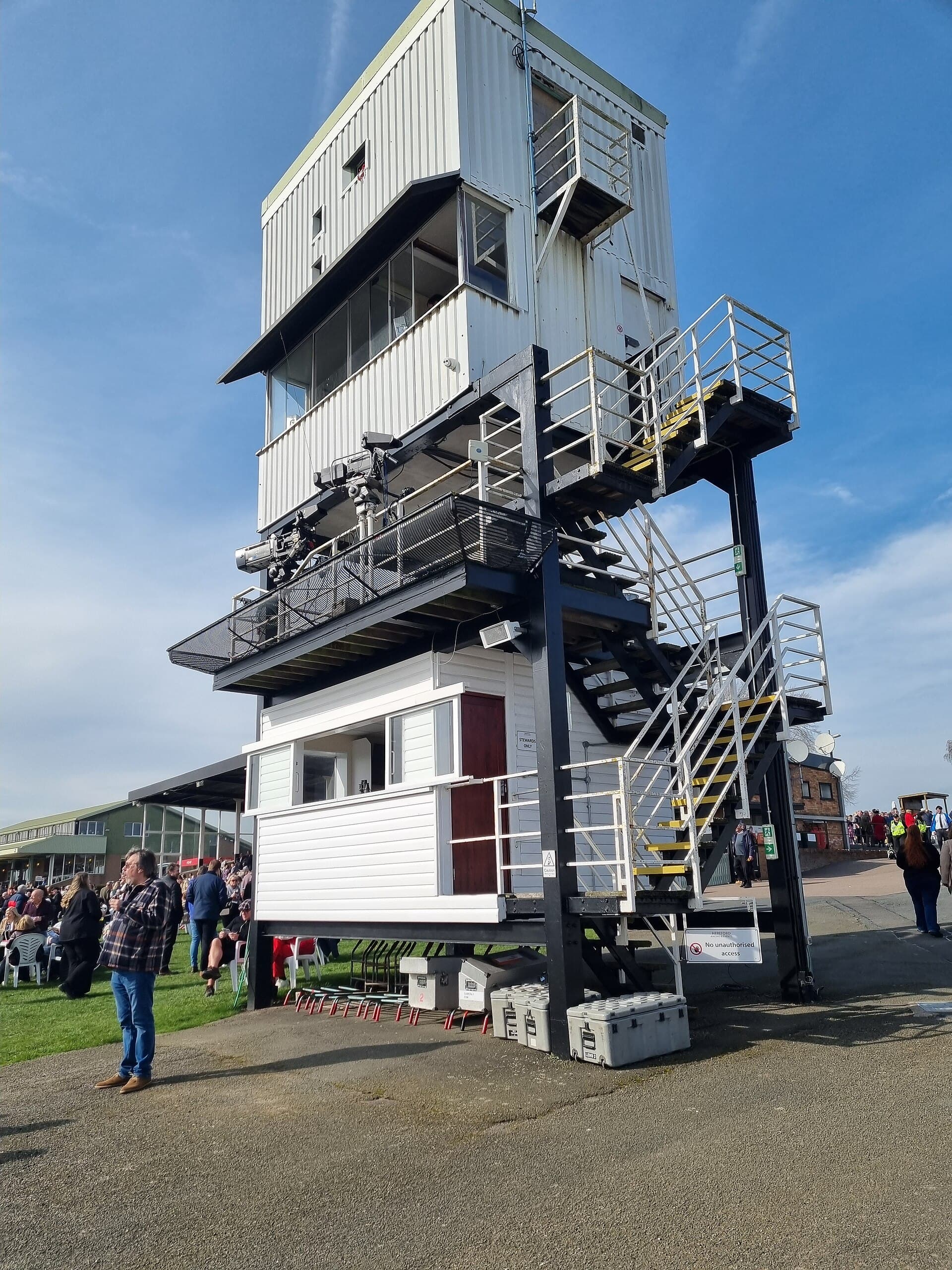
A Day Out at Hereford Racecourse
Everything you need for a day at Hereford — getting there, what to wear, enclosures, food and drink, and insider tips for rural jump racing on the Welsh border.
Read more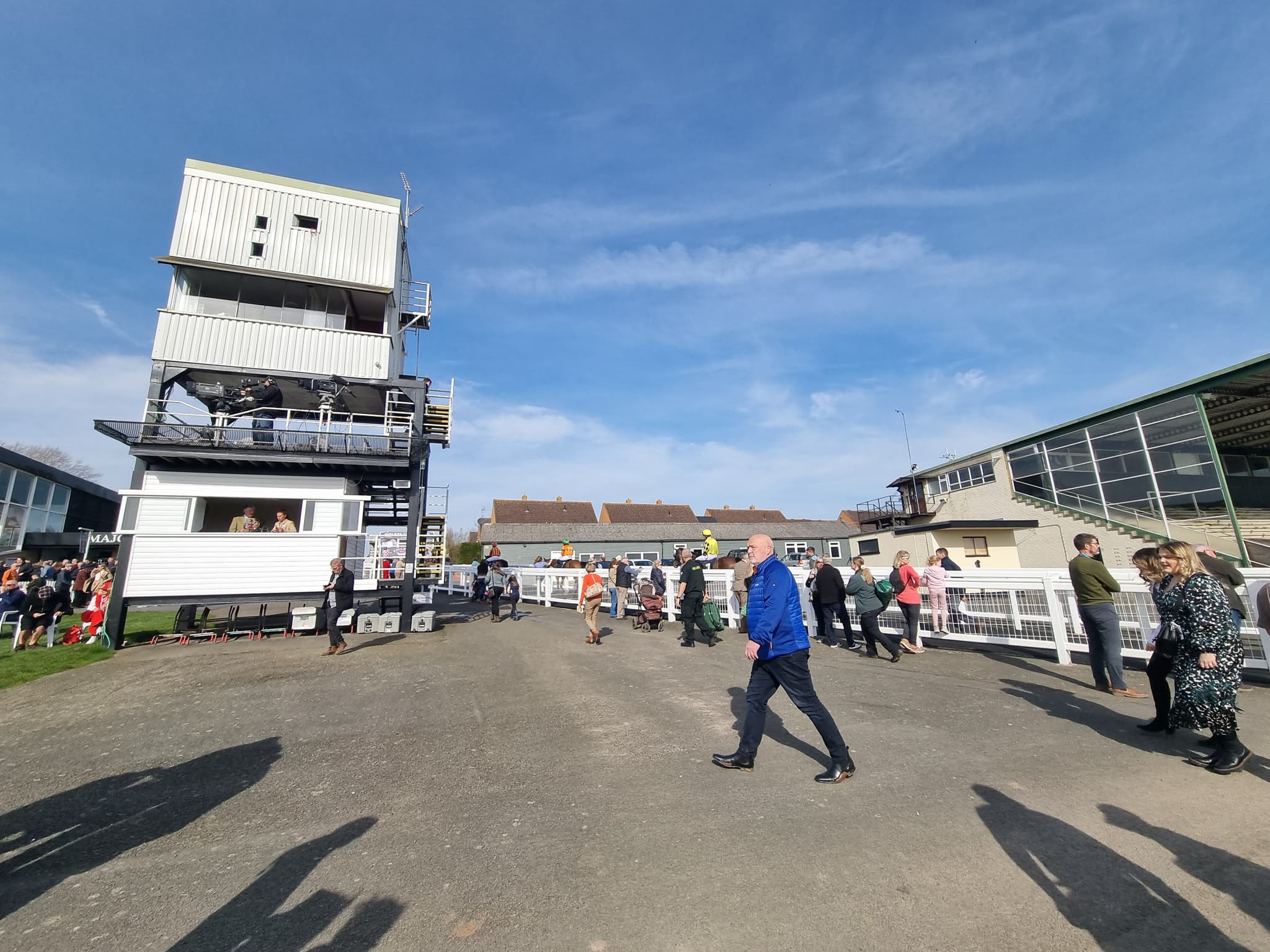
The History of Hereford Racecourse
Over 250 years of racing at Hereford — from 1771 to the closure, reopening, and the course's place on the Welsh border.
Read more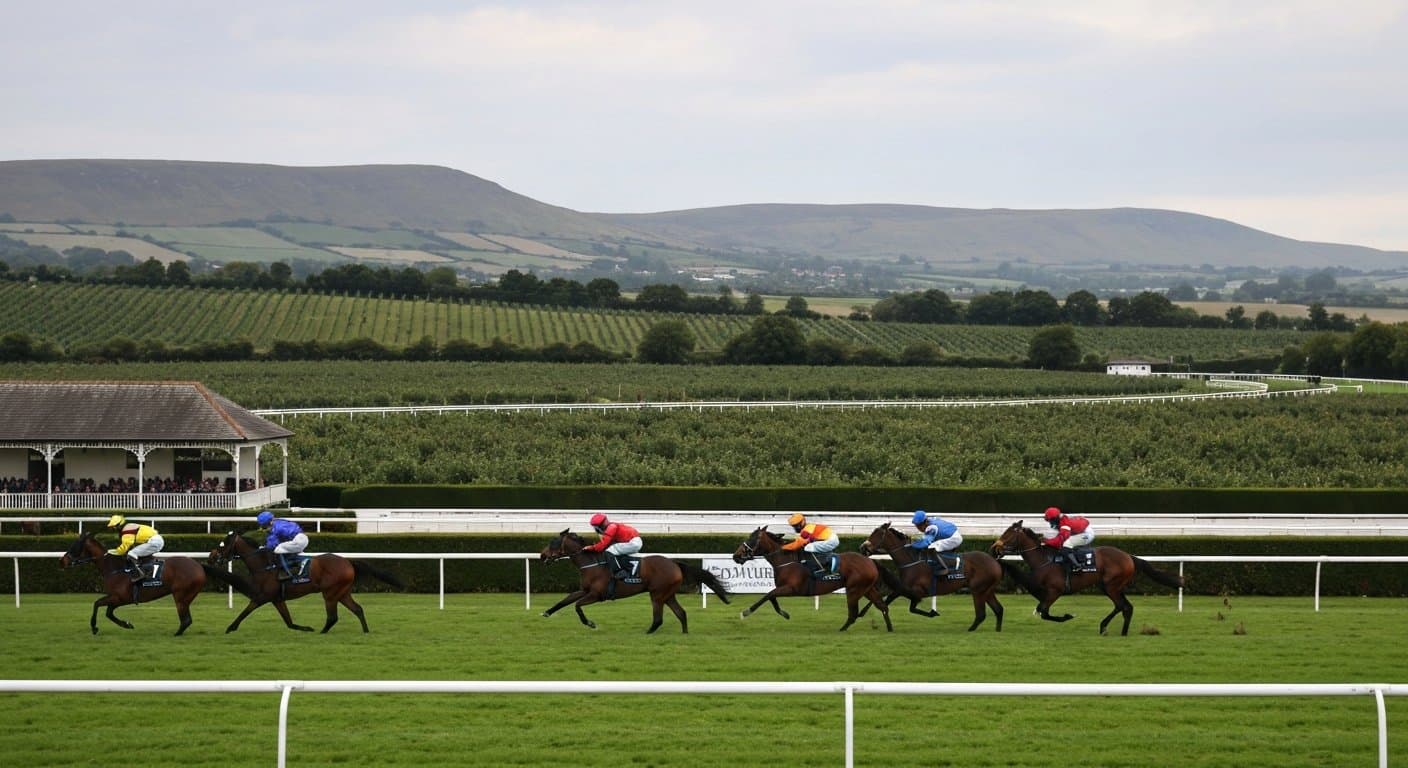
The Hereford Racecourse Reopening Story
How Hereford Racecourse came back from a four-year closure in 2016 — the campaign, the reopening day, and what it means for jump racing on the Welsh border.
Read morePhotos on this page are used under Creative Commons licences. Titles, sources and licence links for each one are on our image credits page.
Research the field with the AI Race Predictor
Our model publishes calibrated win-probability estimates for UK races — a second opinion to understand a race, not tips. It's open about its record: it doesn't beat the market, and we show exactly how it does.
Work it out & learn the basics
Gamble Responsibly
Gambling should be entertaining and not seen as a way to make money. Never bet more than you can afford to lose. If you or someone you know has a gambling problem, help and support is available.