
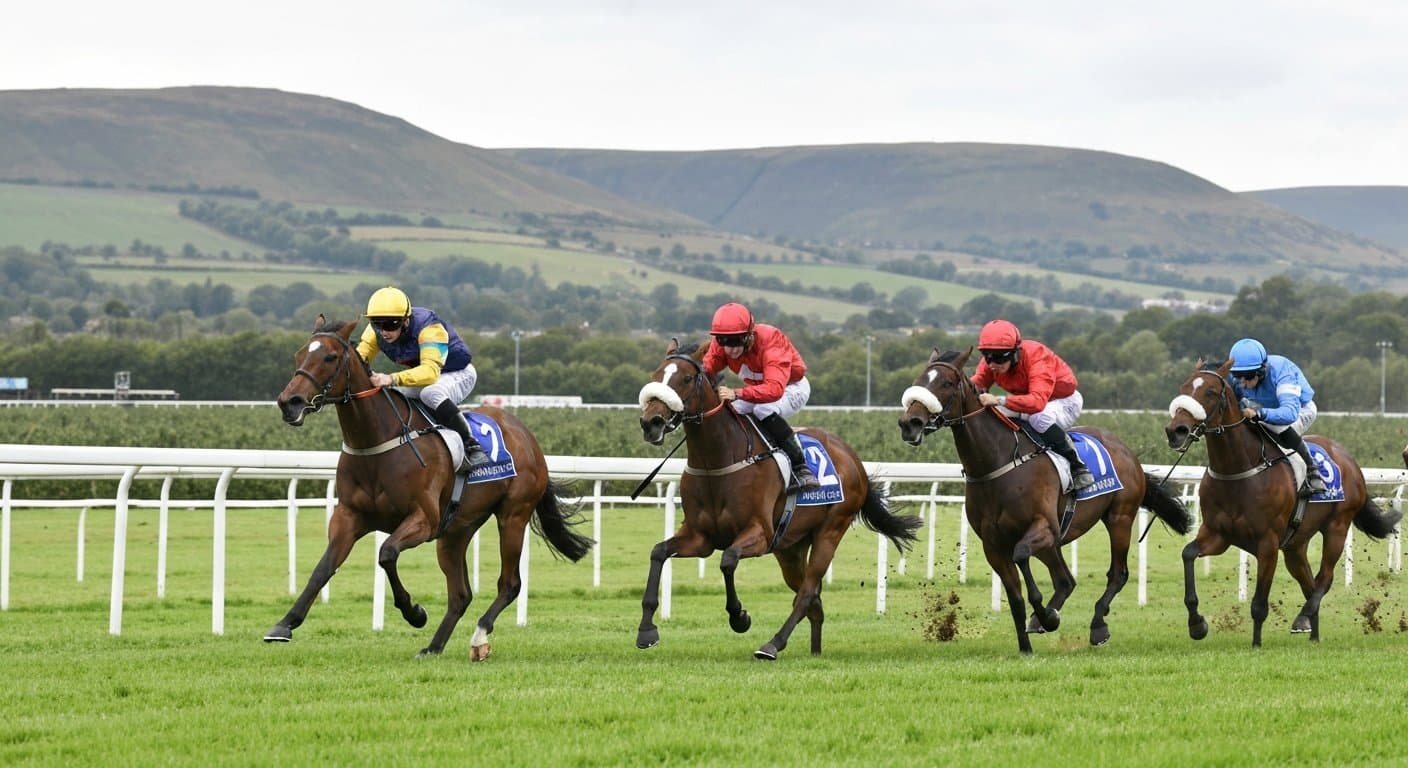
Founder & Editor · Last reviewed 2026-03-02
Introduction
Hereford Racecourse stands on the western edge of Hereford city, beside the River Wye in the Welsh Marches. It is a National Hunt only course staging approximately twelve to fourteen meetings between October and May. The course closed in 2012, was sold to new owners, and reopened in October 2016 with a completely resurfaced track and upgraded facilities. The resurfacing means that pre-2012 course form has limited relevance for modern assessment — the current Hereford surface behaves differently from its predecessor.
For betting purposes, Hereford is a fair, uncomplicated track that produces straightforward form. The right-handed square layout is relatively flat, the fences and hurdles are standard in placement, and there are no extreme gradients or sharp bends that create unusual demands. This fairness is itself the betting framework: form from similar right-handed NH circuits transfers directly, the going filter is the primary seasonal variable, and the trainer landscape is dominated by West Midlands and Welsh Border operations with consistent local knowledge.
Quick Betting Reference
- Course type: Right-handed square ~1m4f; NH only; flat profile
- Distance range: 2m to 3m4f
- Going: Good to Soft most common; Soft in winter; clay-loam soil retains moisture
- Flagship race: none. Hereford stages no Graded, Listed or named feature race.
- Primary advantage: Going filter — clay soil and riverside location create predictable going patterns
- Form transfer: Ludlow, Worcester, Stratford transfer most directly; Cheltenham requires discounting
- Trainer to watch: Nigel Twiston-Davies (Naunton, 35mi); local Welsh Border and West Midlands yards
What Makes Hereford Specific
Hereford's square layout — approximately one mile and four furlongs around — means that the four bends arrive at regular intervals and horses cannot recover fully from a mistake before the next obstacle. This places a premium on consistent, accurate jumping rather than the burst of athleticism that allows a horse to correct an error on a galloping course with a long run between fences. The flat terrain means there are no downhill sections rewarding momentum or uphill climbs testing stamina in isolation — the course asks the same question throughout.
The river proximity is the most important environmental factor at Hereford. The Wye's floodplain creates a high water table, and the course's clay-rich soil absorbs and retains moisture more persistently than the sandy or gravel-based courses to the east. After winter rain, Hereford's going deteriorates toward Soft more readily than Ludlow or Worcester, and the course can take several dry days to recover to Good to Soft. This moisture retention is the main going characteristic to apply when assessing form.
The Reopening and Current Form Standards
Hereford's 2016 reopening with a new track surface means that form from before the closure is unreliable. For current betting purposes, the relevant form evidence begins in October 2016. Horses with multiple Hereford wins since 2016 represent the strongest course form signal; horses with pre-2012 form at the course should be treated as first-time visitors to the current surface.
Bet on Hereford
Place your bets on Hereford races with a trusted bookmaker.

Promo code BETFRED50. New customers only. Register, deposit with a Debit Card, and place a first bet of £10+ at Evens (2.0)+ on Sports, to be settled within 7 days, to get £30 in Sports Free Bets and £20 in Bet Builder Free Bets within 24 hours of settlement. 7-day expiry. Eligibility & payment exclusions apply. Full T&Cs apply. Take Time to Think. BeGambleAware.org. 18+. Full T&Cs.

Promo code R30. New UK customers only, 18+. Register, deposit £10 or more, then place a £10 single cash bet at odds of 1/2 (1.5) or greater on any sports market (excluding Virtuals). Once the qualifying bet settles you get £30 in Free Bets (3 x £10) — the qualifying bet can win or lose. Free Bets are valid on any sports market excluding Virtuals, expire in 7 days, are non-withdrawable and must be used in full. Excluded deposit methods apply (including PayPal, Apple Pay, Skrill and NETELLER). Named bets such as Lucky 15 do not qualify. If you cash out the qualifying bet, or it is voided, you are no longer eligible for the offer. Ends 31.12.26. Full T&Cs apply. Please gamble responsibly. BeGambleAware.org. 18+. Full T&Cs.

Promo code BET40GET20. New UK customers, 18+. Register with the code and place a first bet of £40 or more at Evens (2.0) or greater. Receive 2 × £10 free bets: the first credited automatically once the qualifying bet settles, the second 24 hours later. Free bets must be placed at minimum odds of 4/1 (5.0), expire 24 hours after credit, and the free-bet stake is not returned with winnings. Debit card deposits only. Take Time to Think. BeGambleAware.org. 18+. T&Cs apply. Full T&Cs.

50% of your first-day net losses refunded as a free bet, capped at £25. New UK customers aged 18+ only. To qualify, deposit and place a first bet of £10 or more on any sport at minimum odds of evens (2.00), then place at least two further bets on different events, each worth at least 50% of your largest bet, all at evens (2.00) or greater. Losses are counted from your first settled bet until 23:59 the same day. Place a qualifying £10+ bet and you are guaranteed at least a £5 free bet. Bets placed at SP, void bets, cashed-out bets and bets struck with free bets do not count towards the offer. The free bet is credited the day after your qualifying bets settle and must be used within 7 days, after which it expires. It can be used at odds from 1/4 (1.25) up to 250/1 on singles and straight accumulators, but not on Trixie, Patent or Yankee style multiples. Free-bet stake is not returned with winnings. One offer per person, household, address, IP address and device. E-wallet deposits may not qualify, so check the cashier before depositing. Customers registered with GAMSTOP cannot claim. KYC identity verification must be completed before the free bet is credited. Take Time to Think. BeGambleAware.org. 18+. T&Cs apply. Full T&Cs.

New customers, 18+. Choose the sports bonus at sign-up, make a first deposit and receive a 100% bonus up to £50 in your Sports Bonus balance. To convert the bonus to cash, wager it 10x within 30 days. Single bets below Evens (2.00) do not qualify; accumulators do not qualify if any selection is below 1/2 (1.50). Virtual Sports, voided, cancelled, drawn, cashed-out and free-bet wagers do not count towards wagering. Only the first settled bet per event counts. Withdrawing before the wagering requirement is met forfeits the bonus balance including bonus winnings. Real-money funds are used before bonus funds. Deposits via Skrill or Neteller are not eligible. Not valid in conjunction with other promotions. Odds, bet and payment limits apply. 10bet general and promotion T&Cs apply. BeGambleAware.org. 18+. Full T&Cs.

New customers in Great Britain and Republic of Ireland, 18+. Place a £10 fixed-odds qualifying bet at minimum odds of 1/2 (1.50) — single or each-way (only the win part counts), pre-event or in-play, not cashed out early, within 28 days of opening the account. Receive up to £60 in bonuses credited over three days: 3 × £10 fixed-odds free bets (the first on settlement, then 24 and 48 hours later) plus 3 × £5 Total Goals FOOTBALL spread bets and 3 × £5 racing Winning Favourites spread bets, with a £1 racing Race Index spread bet as an extra on top. The spread bets need a full spread-betting account, opened within 28 days of the fixed-odds account and subject to Spreadex's eligibility and appropriateness checks. Free-bet stakes not returned with winnings; free bets valid 28 days from issue. IMPORTANT: the £5 credits are SPREAD bets — sports spread betting carries the risk that losses can exceed your stake. Sports spread-betting customers do not have Financial Ombudsman or FSCS recourse. Take Time to Think. BeGambleAware.org. 18+. T&Cs apply. Full T&Cs.

Promo code WELCOME15, entered under My Bonuses after registering. New UK customers, 18+. Place a first qualifying bet of at least £10 from your cash balance at odds of evens (2.0) or greater within 7 days of opening the account. Once the qualifying bet fully settles you receive £15 in free bets, credited as 3 x £5 tokens with set uses: one £5 accumulator free bet (minimum 4 legs, each leg at 2/5 or bigger), one £5 sports free bet (any market at evens or bigger) and one £5 Sub Cover free bet (selected football player markets at evens or bigger). Free-bet stakes are not returned with winnings. Free bets expire 7 days after they are credited. Void, cashed-out and partially cashed-out bets do not qualify. One offer per customer. Confirm the current terms on BetGoodwin's own welcome-offer page before claiming. Take Time to Think. BeGambleAware.org. 18+. T&Cs apply. Full T&Cs.

New UK customers, 18+. Minimum deposit £10. Place a £10 qualifying single on sports (excluding virtuals) at minimum odds of 1/2 (1.50), settled within 14 days. Deposit-method exclusions apply. Receive £30 in free bets (stake not returned), split £20 for sportsbook use (2 x £10) and £10 for Bet Builder only (2 x £5); Bet Builder does not cover horse racing. Free bets must be accepted within 7 days and expire 7 days after acceptance. No promo code required. Best Odds Guaranteed on UK & Irish racing, subject to having staked over £25 in the previous seven days. Operated by LiveScore Betting and Gaming (Gibraltar) Ltd, UKGC 56859. Confirm the current terms on LiveScore Bet's own promotions page before claiming. Take Time to Think. BeGambleAware.org. 18+. T&Cs apply. Full T&Cs.
18+. BeGambleAware.org
Track Characteristics
Hereford's track forms a right-handed square of approximately one mile and four furlongs. The layout is more nearly square than the typical oval of most British NH courses — this means the bends are more frequent relative to the length of the straights, creating a course where turning ability and fence positioning are tested more regularly than at courses with longer straight sections. The terrain is essentially flat, with only very gentle undulations that do not materially alter the race.
The Chase Circuit
The steeplechase course at Hereford contains nine fences per circuit — six plain fences, two open ditches, and a water jump. This density is comparable to other one-and-a-half-mile circuits but differs from more compact courses where the fences are spaced very tightly. The fences are built to standard specifications on the resurfaced course and are generally considered fair — well-maintained with standard height and spread. There are no fences positioned immediately after a bend where horses arrive with disrupted strides, and no unusually severe angles on any obstacle.
The open ditches are positioned on the back and far straight, where horses meet them with good rhythm after a period of straight galloping. This positioning rewards consistent jumping rather than creating a particular crisis point. A horse that jumps accurately throughout will not find a single Hereford fence disproportionately difficult; a horse that makes errors through carelessness or fatigue will find the regular fence pattern exposes those errors progressively.
The water jump is positioned in front of the stands on the home straight. Water jumps are met at a reasonable pace at Hereford — the horses are not tiring at this point on the first circuit — and it is not a significant technical challenge. On later circuits of longer staying chases, the water jump arrives when horses are more tired, making clean execution more important in the race's decisive stages.
The Hurdle Circuit
The hurdle circuit runs inside the chase course and follows a similar square route. The hurdle flights are positioned to give horses adequate space between obstacles. Over hurdles, the square layout creates the same requirement for consistent positioning through the bends — horses that drift wide on the four turns run meaningfully further than those that track the inner rail.
The flat profile means that the hurdle circuit does not produce the natural pace variations that gradient courses create. Races at Hereford over hurdles run at an even tempo rather than accelerating on downhills and decelerating on climbs. This even pace rewards horses with a consistent galloping action and penalises horses whose form has been produced at tracks where gradient variations allow them to recover between hurdles.
Form Transfer
Ludlow is the most directly comparable course for form purposes — also right-handed, similar circuit length, West Midlands geography, and predominantly Good to Soft going in winter. Worcester (left-handed, river-adjacent, similar soil) is the secondary comparator. Stratford-on-Avon (left-handed, relatively flat, similar class of horse) provides useful form transfer in hurdles.
Form from galloping courses — Cheltenham (undulating, testing gradient), Newbury (flat but wide and galloping), Kempton (triangular, sharp) — requires discounting at Hereford because the physical demands are different in kind. A horse from Cheltenham form that has thrived on the gradients may find Hereford's flat, square circuit a different test. A horse from Kempton that handles the tight right-handed triangular layout carries that sharp-circuit experience more directly.
Distance Range
Hereford stages races from two miles to three miles and four furlongs. Novice hurdles and handicap hurdles dominate the shorter distances; staying handicap chases form the best of the programme at two and a half to three miles. At all distances, the flat profile and consistent going make the race an honest test of ability — horses of truly superior quality within the field win at a higher rate at Hereford than at courses where quirks can produce surprise results.
Going & Conditions
Hereford's going is primarily determined by its riverside location and the clay-rich soil of the Wye floodplain. Clay retains moisture more persistently than sandy or gravel subsoils, and the proximity to the Wye means the water table rises after sustained rain, keeping the ground wetter than the surface appearance suggests. The practical result: Hereford's going softens more quickly after rain and recovers more slowly than courses on lighter subsoil at the same time of year. Good to Soft is the most common going description in autumn and spring; Soft is the winter norm; Heavy appears after sustained January and February rain. Good is achievable only in dry periods at the end of the season.
Seasonal Going Profile
October to November: The NH season opens at Hereford on going that is typically Good to Soft or Soft as autumn rain arrives. October meetings on the new post-2016 surface can sometimes produce Good going if the preceding autumn has been dry, but Soft or Good to Soft is the realistic expectation for the majority of autumn fixtures.
December to February: The wettest period. Going is most commonly Soft or Heavy across midwinter meetings. The clay soil retains December and January rain for weeks, and the high water table from the adjacent Wye means that sustained wet winters can produce the course's worst going. Heavy is the most common description for the midwinter meetings, and those cards regularly run on ground that severely tests stamina.
March to April: Spring drying begins, but Hereford recovers slowly from winter saturation. Good to Soft is the typical spring description, with Soft still possible after late winter rain. The course's going is one to two grades firmer than in January but remains softer than courses on lighter soil in the same period.
May (season close): The final meetings of the Hereford season in April or May can produce the firmest ground of the year as the drainage finally catches up with the drying conditions. Good to Soft or Good is achievable at this time, rewarding horses with form on reasonable ground rather than confirmed winter mudlarks.
Going and Race Type Interaction
Going as the primary filter: Hereford's going variability — from Good to Soft in dry autumns to Heavy in midwinter — creates the largest going variance of any West Midlands NH course. The going filter at Hereford is therefore more decisive than at courses with consistent drainage. Horses whose best form is on Soft or Heavy at courses with similar soil (Chepstow, Ludlow, Worcester) carry that evidence directly. Horses from Good to Soft form at courses with better drainage (Cheltenham, Newbury) face conditions one to two grades more testing than their form implies when Hereford is running on Soft or Heavy.
Heavy going and stamina: When the going is Heavy at Hereford, stamina becomes the overriding attribute. The flat layout does not provide gradient relief, so horses must sustain their energy expenditure without the recovery that a downhill section would provide. On Heavy ground, horses that have won at three miles or beyond on similar testing going hold a specific advantage over horses that have won on Heavy over shorter trips.
Draw
Hereford is a NH course, so stalls draw is not applicable. Tactical position matters — horses that secure the inner rail through the square's bends run measurably less distance than those tracking the outer line. In small fields of six to eight runners, the inner rail is easily secured by a prominent horse from the outset. In larger fields of twelve or more, the inner line becomes contested through the first bend, and jockeys who are assertive in taking the inside position early often give their horse a significant positional advantage for the remainder of the race.
Key Trainers & Jockeys
Hereford sits at the junction of the Welsh Border, West Midlands, and West Country NH circuits. The trainers who dominate the course are a mixture of Gloucestershire-based operations from the Naunton-Cheltenham corridor, Welsh Border yards from Shropshire and Herefordshire itself, and occasional West Country visitors from the Taunton-Exeter circuit when a specific race suits a horse. Since the 2016 reopening, the winner profile has been established by these regional operations rather than by major national yards, which tend to use Hereford as a stepping stone for improving horses rather than as a primary target.
Nigel Twiston-Davies
Nigel Twiston-Davies trains at Naunton in Gloucestershire, approximately thirty-five miles south-east of Hereford. He is consistently the most productive trainer at the course in terms of winners per season. Twiston-Davies's yard produces a steady supply of West Midlands and Welsh Border NH horses — adaptable, honest types that handle the clay going, compete effectively on a flat circuit, and run regularly at Hereford, Ludlow, and Worcester as part of a regional programme.
His Hereford runners in Class 3 and Class 4 handicap chases and hurdles are worth taking seriously at prices of 4/1 or above. Twiston-Davies does not telegraph his horses' chances through market moves in the way some high-profile yards do, and his horses at mid-range prices with course form often represent value because national punters under-rate the regional circuit advantage.
David Bridgwater
David Bridgwater trains at Stow-on-the-Wold in Gloucestershire, forty miles south-east of Hereford. He has maintained a consistent Hereford record since the 2016 reopening through the same regional-circuit targeting that Twiston-Davies applies. Bridgwater's horses tend to be durable, experienced NH types competing across the West Midlands circuit. His runners at Hereford in Class 4 and Class 5 events at prices of 5/1 or above, with previous Hereford form from the post-2016 surface, are a secondary value angle.
Welsh Border Yards
Several smaller operations based in Herefordshire, Shropshire, and the Welsh Marches target Hereford as their home course. These yards — running horses in Class 4 and Class 5 races across the season — bring local knowledge of the going, the surface, and the race conditions that national yards do not possess. When a local Herefordshire or Shropshire yard sends a horse with two or three previous Hereford wins, the combination of course familiarity and horse experience at the track is worth following at prices of 6/1 or above.
Philip Hobbs (and Rob Collett)
Philip Hobbs trains at Sandhill in Somerset, approximately sixty miles south-west of Hereford. He uses the course selectively — primarily for novice hurdles and novice chases where he has a horse that fits the distance and going profile. Hobbs horses at Hereford in novice events with limited competition from established course specialists are worth taking seriously, particularly when the going is Good to Soft rather than Heavy — Hobbs's better horses tend to prefer manageable rather than extreme conditions.
Jockeys
The leading jockeys at Hereford are those on the West Midlands NH circuit: Tom Scudamore (associated with Twiston-Davies), Richard Patrick, and the conditional and amateur jockeys who ride regularly for smaller regional yards. Scudamore's understanding of Hereford — built through regular rides for the Twiston-Davies yard — is the most relevant jockey knowledge at the course. When Twiston-Davies puts Scudamore up on a horse for a Hereford chase, the combination of trainer and jockey course knowledge is a strong positive signal.
For novice events and lesser handicaps, conditional jockeys from the West Midlands circuit who ride at Hereford, Ludlow, and Worcester regularly develop useful course familiarity at an early stage of their careers. A young conditional on a yard's regular Hereford runner is not necessarily a signal of low intent — it may be that the horse is trusted to handle the track and needs the experience miles more than the jockey upgrade.
Betting Strategies
Hereford betting strategy rests on two foundations: the going filter, which is the largest source of market error at the course, and the course-form filter, which applies most specifically to horses with post-2016 form on the current resurfaced track. Apply both systematically before assessing any Hereford card.
Strategy One: Apply a Hard Going Filter
Hereford's clay soil and riverside location mean the going deteriorates more quickly and recovers more slowly than at comparable West Midlands NH venues. When the going is Soft or Heavy at Hereford, horses from Good to Soft or Good form at better-draining courses are facing conditions one to two grades more testing than their best form. The market often fails to apply this discount adequately — a horse rated on Good to Soft form from Cheltenham or Newbury is priced on its rating rather than its going suitability.
Apply the going filter as a hard boundary: for any Hereford race run on Soft or Heavy, filter the field to horses with proven form on going at least as testing. This means Soft-and-below form at Ludlow, Worcester, Chepstow, or comparable clay-soil courses. Horses without that evidence — regardless of their ratings on better going — face conditions that make their form unreliable, and they should not be supported at short prices.
The reverse filter is equally useful: when Hereford is running on Good to Soft in a dry autumn or spring, horses from Soft-and-below specialists are facing conditions faster than their form. These horses are sometimes short prices on the basis of their Heavy-ground wins, but their going requirement is not met.
Strategy Two: Post-2016 Course Form Only
Hereford's 2016 track resurfacing creates a form discontinuity. Any horse whose Hereford form predates October 2016 should be treated as having no relevant course form at the current surface. Post-2016 course wins or places are the only evidence worth counting.
Within post-2016 form, grade the evidence: a horse that has won a handicap at Hereford in the same season, on comparable going, is the strongest course form signal. A horse that placed but did not win at Hereford in the last twelve months is the second tier. A horse that ran at Hereford eighteen to twenty-four months ago without placing is background noise rather than a significant form signal.
Strategy Three: Nigel Twiston-Davies at Value Prices
Twiston-Davies's consistent record at Hereford since 2016 is built on deliberate regional targeting rather than incidental use. His runners in Class 3 and Class 4 handicap chases at prices of 4/1 or above, with post-2016 Hereford form, represent the best value angle at the course. The combination of trainer familiarity with the surface, jockey course knowledge (Scudamore), and horse experience at the course creates an edge that the market does not consistently reflect in Twiston-Davies's price.
This strategy is explicitly for prices of 4/1 and above. Twiston-Davies horses at 2/1 or shorter are fully priced by the market and offer no structural edge — the advantage only exists at mid-range prices where the regional knowledge premium is not being bid down by informed backing.
Strategy Four: Oppose Short-Priced Galloping-Track Form in Heavy
The most consistent individual betting opportunity at Hereford arises when a horse from a galloping-track background (Cheltenham, Newbury, Kempton) is a short-priced favourite for a winter Hereford race on Heavy or Soft ground. These horses — rated on Good to Soft or Good form at courses where the going dries quickly — face conditions that their form does not reflect. Oppose them in favour of alternatives from clay-soil courses (Ludlow, Worcester, Chepstow) with proven Heavy-ground form at prices of 4/1 or above.
Strategy Five: Novice Chase Watch Angle
Hereford's novice chase programme offers a specific opportunity. First-time chasers at Hereford face a square right-handed circuit with nine fences at a distance they may not have tested over jumps. Novice chasers from major yards (Twiston-Davies, Hobbs) that have previously run at Hereford over hurdles — giving them one experience of the square layout — hold a significant advantage over complete track debutants. When a major yard's first-time chaser has a previous Hereford hurdle run in its record, at prices of 4/1 or above, the layout familiarity is a positive signal.
To compare place terms and each-way promotions across the major bookmakers, see our best bookmakers for horse racing guide.
Key Races to Bet On
Hereford's NH calendar runs from October to May with approximately twelve to fourteen meetings. There is no headline race: the course stages no Graded or Listed contest and no named feature, and its bigger days are marketed as themed racedays rather than built around a single prize. That shapes how to bet it. The steady opportunity is the winter programme of Class 3 and Class 4 handicap chases and hurdles, while the spring finale in April or May offers the firmest ground of the season and a different going profile from the midwinter norm.
Reading the card without a feature race
The absence of a marquee contest is worth understanding rather than lamenting. At courses built around a headline handicap, the feature draws entries from outside the region and the market prices accordingly. At Hereford the fields are drawn from the same West Midlands and Welsh Border pool week after week, which makes course form unusually informative: you are often looking at horses that have met each other before, on this track, in these conditions.
The going filter is the primary tool. The clay soil holds December and January rain for weeks, and with the Wye alongside, the water table keeps midwinter ground testing. A horse without evidence of winning or placing on Soft or Heavy at a comparable clay-soil course deserves caution regardless of its rating. Form earned on better ground does not transfer well to Hereford in midwinter.
Winter Handicap Chase Programme
From October through February, Hereford stages Class 3, 4, and 5 handicap chases over distances from two miles to three miles and two furlongs. These races — typically eight to fourteen runners — are the bread-and-butter betting opportunity at the course. The going during this period is most commonly Soft or Heavy, making the going filter the primary selection tool.
The most consistent betting opportunity within the winter programme is the Class 3 handicap chase run in November or December, when field quality is at its early-season peak and trainers are beginning to target specific handicap opportunities. Twiston-Davies runners with course form and Soft-ground evidence are the selection starting points; Welsh Border yard runners at 6/1 or above with multiple Hereford wins are the each-way value angle.
Novice Programme
Hereford's novice programme — hurdles and chases throughout the season — attracts horses from the West Midlands and West Country circuits making their early career steps. These races produce form that transfers reliably to Ludlow, Worcester, and Stratford later in the season. Major yard novice chasers at Hereford, particularly from Twiston-Davies and Hobbs, often represent fair prices in competitive novice fields and can be backed at 3/1 to 5/1 when their profile clearly suits the square circuit.
Spring Finale Meetings
The final Hereford meetings in April and occasionally May are run on the firmest ground of the season — typically Good to Soft or occasionally Good as the clay soil finally recovers from winter saturation. These meetings attract horses returning from spring campaigns or pointing toward May targets, and the change in going can produce different results from the winter pattern. Speed-orientated horses from better-draining courses carry their form more directly to Hereford in spring than in midwinter.
For spring meetings: apply the going filter in reverse from the winter approach. Horses with exclusively Heavy-ground form face going conditions two to three grades quicker than their best. Spring Hereford is a different betting environment from the same course in December.
Share this article
More about this racecourse
All Hereford guides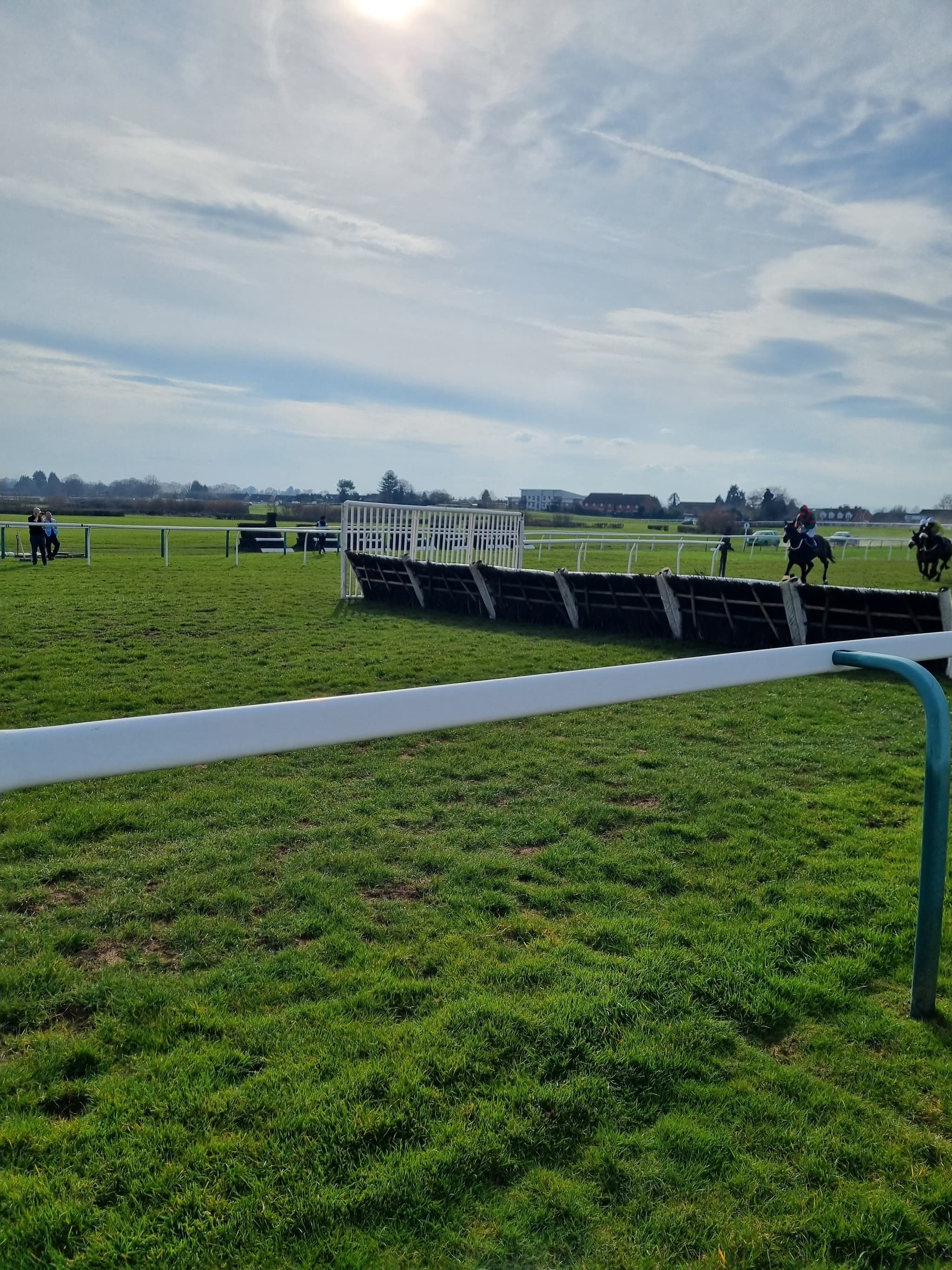
Hereford Racecourse: Complete Guide
Everything you need to know about Hereford Racecourse: rural jump racing on the Welsh border and the course's comeback story.
Read more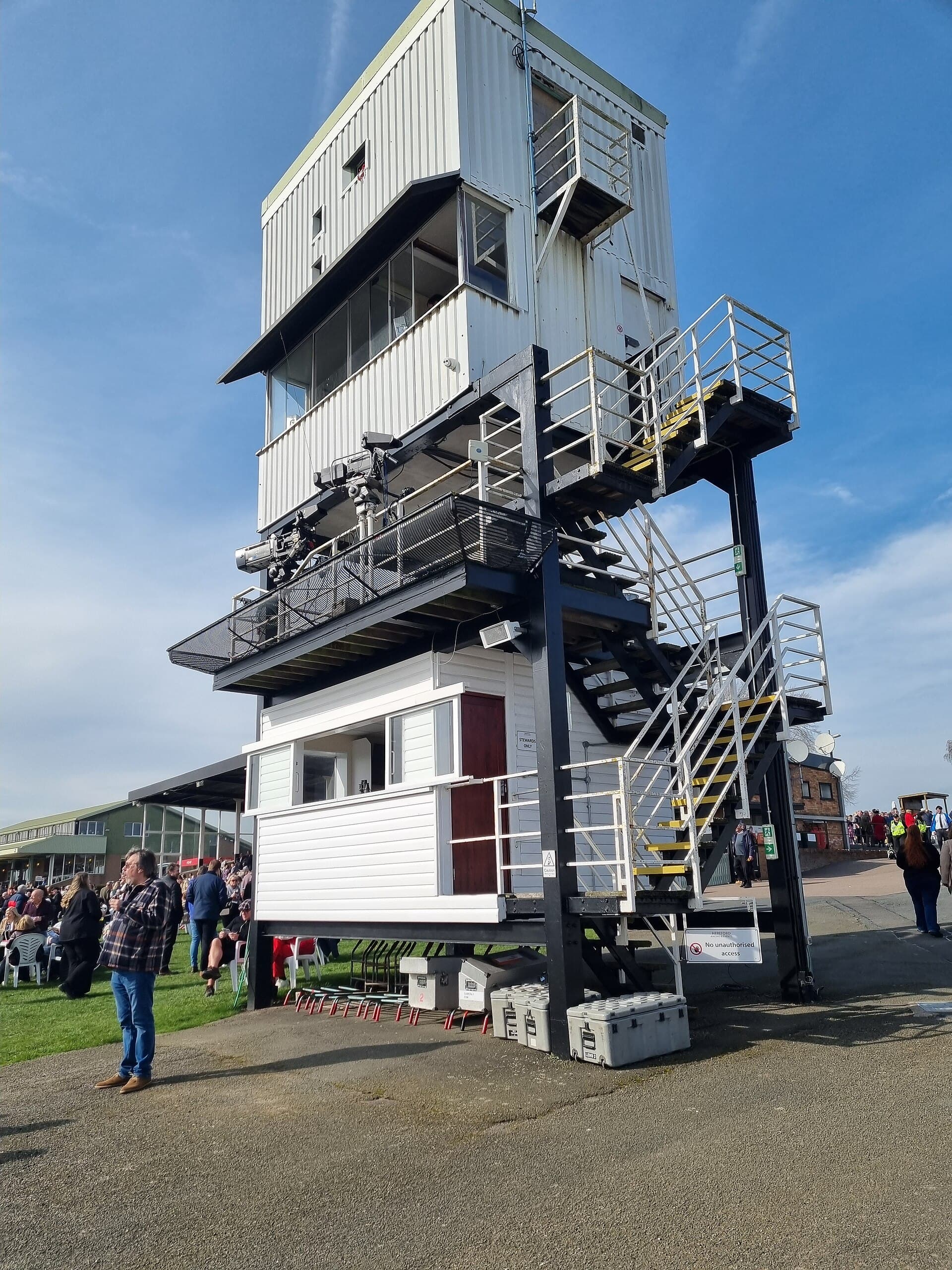
A Day Out at Hereford Racecourse
Everything you need for a day at Hereford — getting there, what to wear, enclosures, food and drink, and insider tips for rural jump racing on the Welsh border.
Read more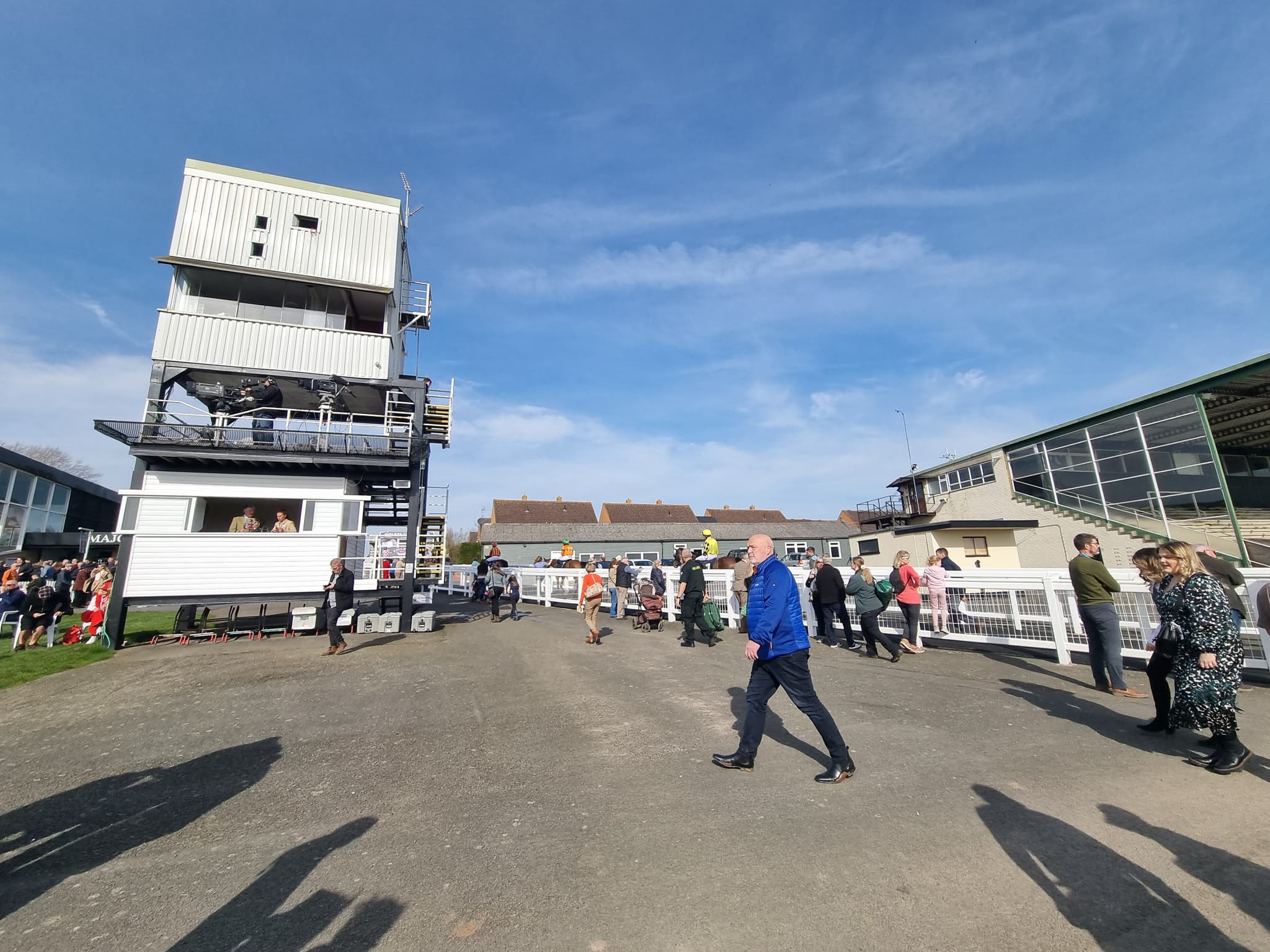
The History of Hereford Racecourse
Over 250 years of racing at Hereford — from 1771 to the closure, reopening, and the course's place on the Welsh border.
Read morePhotos on this page are used under Creative Commons licences. Titles, sources and licence links for each one are on our image credits page.
Research the field with the AI Race Predictor
Our model publishes calibrated win-probability estimates for UK races — a second opinion to understand a race, not tips. It's open about its record: it doesn't beat the market, and we show exactly how it does.
Work it out & learn the basics
Gamble Responsibly
Gambling should be entertaining and not seen as a way to make money. Never bet more than you can afford to lose. If you or someone you know has a gambling problem, help and support is available.