
Founder & Editor · Last reviewed 2026-04-05
Introduction
Huntingdon is East Anglia's only National Hunt racecourse and the primary jumping venue for a region that stretches from Cambridgeshire to the Norfolk coast. It sits in the Ouse Valley on the edge of Huntingdon town, 66 miles north of London and roughly 20 miles north-west of Cambridge — close enough to the capital to draw a midweek crowd, yet with a character that belongs entirely to the Fens.
The course's signature event is the Peterborough Chase, a Grade 2 staying chase run over 2 miles 4 furlongs in early December. As one of the first Pattern chases of any substance in the winter calendar, the Peterborough Chase regularly attracts horses that are being aimed at the Cheltenham Gold Cup or the Ryanair Chase in March. It is a real trial, not simply a prep race for also-rans, and winners of the race since the mid-1990s include horses that Then reached the top of the staying chase division.
Beyond the Peterborough Chase, Huntingdon functions as a well-run, mid-tier jumping venue that stages 15–18 fixtures per season between October and May. Its completely flat circuit — one of the flattest National Hunt tracks in Britain — sets it apart from the undulating courses that dominate the NH landscape. There are no climbs, no false straights, and no cambers of note: horses travel at a level gallop throughout, which rewards accurate jumping and a sustained pace rather than athleticism over varying gradients.
Who This Guide Is For
This guide is written for first-time visitors who want a clear account of what Huntingdon offers, for regular racegoers researching the Peterborough Chase fixture, and for bettors who want to understand how the flat circuit shapes race outcomes. It also covers the surrounding area — Huntingdon town has a history that few English market towns can match, and Ely Cathedral and Cambridge are within 20 miles.
Quick Facts
| Location | Huntingdon, Cambridgeshire, PE29 6NR |
| Racing type | National Hunt only |
| Opened | 1886 |
| Circuit | Right-handed flat oval, approximately 1 mile 4 furlongs |
| Signature race | Peterborough Chase (Grade 2, December, 2m4f) |
| Capacity | Around 5,000 |
| Nearest station | Huntingdon — approximately 1 mile from the course |
| From London | 66 miles; 50 minutes from King's Cross by LNER train |
| From Cambridge | 20 miles; 20 minutes by train |
| Website | thejockeyclub.co.uk/huntingdon |
The train from London King's Cross is fast, direct, and reliable — a real advantage for a National Hunt course. Many provincial NH tracks require a car journey from the nearest station; Huntingdon station is about a mile from the course and the service runs every 30 minutes throughout the day. For anyone without a car who wants to attend quality winter jumping, Huntingdon is one of the best-connected options in England.
What to Expect
The atmosphere at Huntingdon is relaxed without being quiet. On Peterborough Chase day the 4,000–6,000 crowd fills the site with a real energy that a Grade 2 race with horses of Gold Cup potential naturally produces. On a standard November or January fixture with 2,000–2,500 racegoers, the atmosphere is closer to a community event than a sporting spectacle, and that is part of the attraction: short queues, good sightlines, and a betting ring where you can hear yourself think.
Huntingdon is operated by The Jockey Club, which runs 15 courses across Britain including Cheltenham, Newmarket, and Aintree. The Jockey Club ownership brings a consistent standard of facilities maintenance and race programme quality that smaller independent venues sometimes struggle to match. The Cromwell Suite — named for Oliver Cromwell, born in Huntingdon in 1599 — is the principal hospitality space and a comfortable venue for a winter racing lunch.
The surrounding area adds practical value to a visit. Ely Cathedral, 15 miles east, is one of England's finest medieval buildings with the unique Octagon crossing tower. Cambridge, 20 miles south-east, offers colleges, museums, and restaurants. Combining a morning in Ely or Cambridge with afternoon racing at Huntingdon and the 50-minute train back to London produces a full and varied day without significant logistical effort.
Bet on Huntingdon
Place your bets on Huntingdon races with a trusted bookmaker.

Promo code BETFRED50. New customers only. Register, deposit with a Debit Card, and place a first bet of £10+ at Evens (2.0)+ on Sports, to be settled within 7 days, to get £30 in Sports Free Bets and £20 in Bet Builder Free Bets within 24 hours of settlement. 7-day expiry. Eligibility & payment exclusions apply. Full T&Cs apply. Take Time to Think. BeGambleAware.org. 18+. Full T&Cs.

Promo code R30. New UK customers only, 18+. Register, deposit £10 or more, then place a £10 single cash bet at odds of 1/2 (1.5) or greater on any sports market (excluding Virtuals). Once the qualifying bet settles you get £30 in Free Bets (3 x £10) — the qualifying bet can win or lose. Free Bets are valid on any sports market excluding Virtuals, expire in 7 days, are non-withdrawable and must be used in full. Excluded deposit methods apply (including PayPal, Apple Pay, Skrill and NETELLER). Named bets such as Lucky 15 do not qualify. If you cash out the qualifying bet, or it is voided, you are no longer eligible for the offer. Ends 31.12.26. Full T&Cs apply. Please gamble responsibly. BeGambleAware.org. 18+. Full T&Cs.

Promo code BET40GET20. New UK customers, 18+. Register with the code and place a first bet of £40 or more at Evens (2.0) or greater. Receive 2 × £10 free bets: the first credited automatically once the qualifying bet settles, the second 24 hours later. Free bets must be placed at minimum odds of 4/1 (5.0), expire 24 hours after credit, and the free-bet stake is not returned with winnings. Debit card deposits only. Take Time to Think. BeGambleAware.org. 18+. T&Cs apply. Full T&Cs.

50% of your first-day net losses refunded as a free bet, capped at £25. New UK customers aged 18+ only. To qualify, deposit and place a first bet of £10 or more on any sport at minimum odds of evens (2.00), then place at least two further bets on different events, each worth at least 50% of your largest bet, all at evens (2.00) or greater. Losses are counted from your first settled bet until 23:59 the same day. Place a qualifying £10+ bet and you are guaranteed at least a £5 free bet. Bets placed at SP, void bets, cashed-out bets and bets struck with free bets do not count towards the offer. The free bet is credited the day after your qualifying bets settle and must be used within 7 days, after which it expires. It can be used at odds from 1/4 (1.25) up to 250/1 on singles and straight accumulators, but not on Trixie, Patent or Yankee style multiples. Free-bet stake is not returned with winnings. One offer per person, household, address, IP address and device. E-wallet deposits may not qualify, so check the cashier before depositing. Customers registered with GAMSTOP cannot claim. KYC identity verification must be completed before the free bet is credited. Take Time to Think. BeGambleAware.org. 18+. T&Cs apply. Full T&Cs.

New customers, 18+. Choose the sports bonus at sign-up, make a first deposit and receive a 100% bonus up to £50 in your Sports Bonus balance. To convert the bonus to cash, wager it 10x within 30 days. Single bets below Evens (2.00) do not qualify; accumulators do not qualify if any selection is below 1/2 (1.50). Virtual Sports, voided, cancelled, drawn, cashed-out and free-bet wagers do not count towards wagering. Only the first settled bet per event counts. Withdrawing before the wagering requirement is met forfeits the bonus balance including bonus winnings. Real-money funds are used before bonus funds. Deposits via Skrill or Neteller are not eligible. Not valid in conjunction with other promotions. Odds, bet and payment limits apply. 10bet general and promotion T&Cs apply. BeGambleAware.org. 18+. Full T&Cs.

New customers in Great Britain and Republic of Ireland, 18+. Place a £10 fixed-odds qualifying bet at minimum odds of 1/2 (1.50) — single or each-way (only the win part counts), pre-event or in-play, not cashed out early, within 28 days of opening the account. Receive up to £60 in bonuses credited over three days: 3 × £10 fixed-odds free bets (the first on settlement, then 24 and 48 hours later) plus 3 × £5 Total Goals FOOTBALL spread bets and 3 × £5 racing Winning Favourites spread bets, with a £1 racing Race Index spread bet as an extra on top. The spread bets need a full spread-betting account, opened within 28 days of the fixed-odds account and subject to Spreadex's eligibility and appropriateness checks. Free-bet stakes not returned with winnings; free bets valid 28 days from issue. IMPORTANT: the £5 credits are SPREAD bets — sports spread betting carries the risk that losses can exceed your stake. Sports spread-betting customers do not have Financial Ombudsman or FSCS recourse. Take Time to Think. BeGambleAware.org. 18+. T&Cs apply. Full T&Cs.

Promo code WELCOME15, entered under My Bonuses after registering. New UK customers, 18+. Place a first qualifying bet of at least £10 from your cash balance at odds of evens (2.0) or greater within 7 days of opening the account. Once the qualifying bet fully settles you receive £15 in free bets, credited as 3 x £5 tokens with set uses: one £5 accumulator free bet (minimum 4 legs, each leg at 2/5 or bigger), one £5 sports free bet (any market at evens or bigger) and one £5 Sub Cover free bet (selected football player markets at evens or bigger). Free-bet stakes are not returned with winnings. Free bets expire 7 days after they are credited. Void, cashed-out and partially cashed-out bets do not qualify. One offer per customer. Confirm the current terms on BetGoodwin's own welcome-offer page before claiming. Take Time to Think. BeGambleAware.org. 18+. T&Cs apply. Full T&Cs.

New UK customers, 18+. Minimum deposit £10. Place a £10 qualifying single on sports (excluding virtuals) at minimum odds of 1/2 (1.50), settled within 14 days. Deposit-method exclusions apply. Receive £30 in free bets (stake not returned), split £20 for sportsbook use (2 x £10) and £10 for Bet Builder only (2 x £5); Bet Builder does not cover horse racing. Free bets must be accepted within 7 days and expire 7 days after acceptance. No promo code required. Best Odds Guaranteed on UK & Irish racing, subject to having staked over £25 in the previous seven days. Operated by LiveScore Betting and Gaming (Gibraltar) Ltd, UKGC 56859. Confirm the current terms on LiveScore Bet's own promotions page before claiming. Take Time to Think. BeGambleAware.org. 18+. T&Cs apply. Full T&Cs.
18+. BeGambleAware.org
The Course
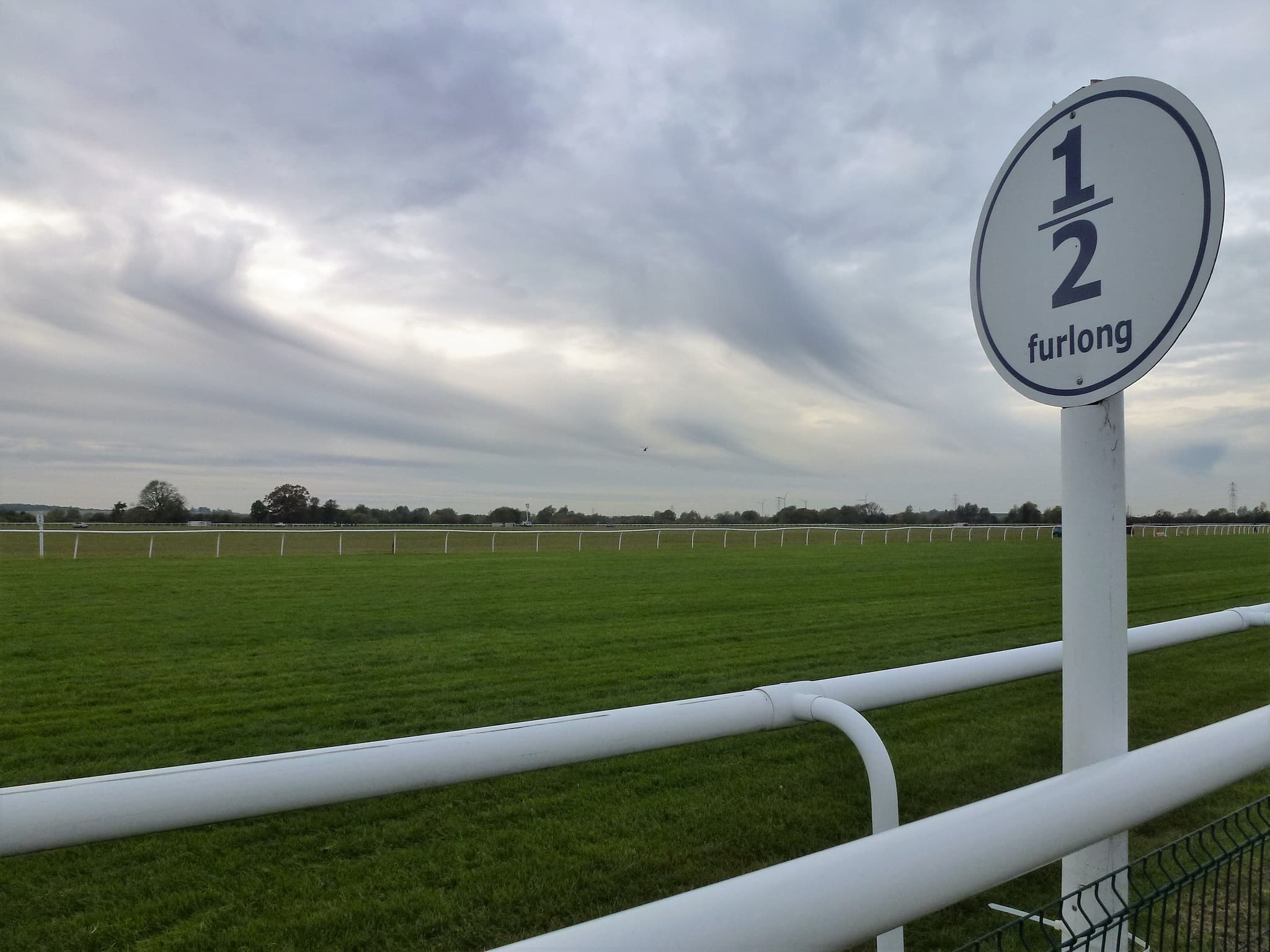
Huntingdon is a right-handed flat oval measuring approximately 1 mile 4 furlongs round. It sits on the floodplain of the River Great Ouse, which runs along the eastern edge of the racecourse site, and this geography explains two things simultaneously: why the track is so flat, and why the ground can deteriorate quickly in autumn when the Ouse Valley fills with water after heavy rainfall.
Shape and Direction
The course bends right-handed throughout, with sweeping turns rather than tight bends. The back straight runs for approximately 5 furlongs, and the home straight — from the final turn into the winning post — is around 3 furlongs. That home straight is long enough to allow real racing from the last fence to the line, but not so long that it consistently rewards horses that are held up and produce a late run; front-runners with enough petrol in the tank frequently hold on, because there is no climb in the final furlong to stop them.
The flat profile is the defining characteristic. Unlike Cheltenham, which rises steeply up the hill to the fourth last, or Exeter, which has a pronounced climb to the finish, Huntingdon offers horses an uninterrupted level gallop from start to finish. This affects race tactics significantly: there is no hill to sit on while rivals tire, and no downhill section where a bold jumper can gain ten lengths on a careful one. The race is run at whatever pace the field collectively sets from the moment the tape goes up.
Fences and Hurdles
There are 12 fences on the full chase circuit. The fences at Huntingdon are well built and well maintained, but they are not particularly demanding by the standards of courses such as Aintree or Haydock. The flat track changes the equation: because horses approach each fence at full gallop without having just climbed a gradient, they arrive at each obstacle with maximum momentum. A fence that might seem straightforward when a horse is slightly winded from a rise becomes much more consequential when the horse arrives at it flat out and can ill-afford a mistake. Accuracy of jumping matters more than boldness at Huntingdon. A horse that clears each fence with a clean, economical jump will outperform one that puts in extravagant leaps at the expense of rhythm.
The open ditches are positioned on the far side of the course — away from the grandstand — which means the crowd tends to focus on the hurdles and fences in the home straight. The home-straight fences are the ones that determine outcomes: a mistake at the second-last or last on a flat, fast-run track very rarely allows time for recovery.
Hurdle races at Huntingdon are run on a separate hurdles track inside the chase course. The hurdles are well placed and the track suits a similar profile of horse to the chase course: fluent jumpers who can maintain a gallop around the flat oval will almost always outrun those who are slow at their hurdles.
Race Distances
Huntingdon caters for distances from 2 miles to 3 miles 2 furlongs. The principal distances are:
- 2 miles — used for the shorter chases and hurdle races; the flat circuit makes this a real test of speed, and the fastest types tend to dominate
- 2 miles 4 furlongs — the distance of the Peterborough Chase; long enough to test stamina without becoming a slog, this is the course's most-used Grade racing distance
- 3 miles — a solid stamina test at Huntingdon, where the flat track keeps the pace honest throughout; horses cannot idle on the way round as there is nothing in the terrain to slow the field naturally
- 3 miles 2 furlongs — the longest distance staged, used for the staying handicap chases; field quality drops here but the races are often run at a strong pace
Going Tendencies
Huntingdon's location in the Ouse Valley means the course is subject to the water table rising in autumn and winter. From October, when the National Hunt season opens, the ground can change rapidly after prolonged rain. The flat Fenland soil drains moderately well when conditions are not extreme, and the course will often be Good to Soft when other venues in the Midlands or the North are racing on Heavy.
However, in a wet autumn or after a period of sustained low pressure, Huntingdon can become testing. Soft ground at Huntingdon is not the same animal as soft ground at a hilly course: on a flat track, horses sink into the ground without the uphill sections that normally break up a galloping race. A testing surface combined with a flat circuit and 12 fences produces a race where stamina becomes the dominant factor — a very different proposition from the same track in October on Good ground.
The course's going history shows that December meetings — which include the Peterborough Chase — can run anywhere from Good to Soft through to Soft or even Heavy in a bad year. Trainers targeting the Peterborough Chase spend considerable time monitoring the Huntingdon going reports in the fortnight before the race. Always check the going before betting.
The Water Jump
Huntingdon includes a water jump on the chase course, positioned on the far side of the track away from the grandstand. Water jumps are removed from many courses during the modern era but Huntingdon retains the obstacle as part of the standard chase layout. A water jump requires a different technique from a plain fence — the horse must jump out and across as well as up and over — and horses that are less experienced at water jumps occasionally show hesitation. First-season chasers making their debut at Huntingdon should be checked for any water jump experience noted in their previous form.
How Fields Run
Because there are no gradient changes to break up a race at Huntingdon, fields tend to string out earlier than at hilly tracks. The pace is set immediately from the start, and horses that cannot match the early tempo are placed under pressure before they reach the end of the back straight. This produces a specific race pattern: a small group of two or three horses travels together at the front, a second group a few lengths back, and the remainder strung out behind by halfway.
In handicaps, this stringing-out effect means the back markers are often racing for the minor positions by halfway, and the race resolves itself among the leading group from the second-last fence. This is different from a hilly NH course, where horses conserve energy on rises and the field can regroup naturally, allowing a held-up horse to make its move from much farther back on a descent. At Huntingdon, if a horse is more than eight lengths off the pace at halfway in a 2m4f chase, the probability of winning is low.
For hurdle races, the same pattern applies. Huntingdon is one of the faster NH hurdle tracks in Britain — horses carry their pace throughout, and hurdle races here regularly produce times faster than their equivalents at undulating courses over the same distance.
Horses That Succeed at Huntingdon
The flat, right-handed oval rewards a specific type of horse more consistently than most courses:
Front-runners and prominent racers. The flat circuit offers no natural hiding places — no downhill section where a held-up horse can coast and make up ground. Horses that race prominently, keep a sustained gallop, and jump accurately at speed have a structural advantage at Huntingdon that they would not enjoy at a course with more varied terrain.
Flat-course specialists. Horses with form at other truly flat NH courses — Kempton Park on its pre-2015 chase track and Taunton are the closest comparisons — tend to translate their best form to Huntingdon more readily than horses that have run consistently well at hilly tracks.
Accurate jumpers. As noted above, the combination of full-gallop approach and flat terrain means any horse that is less than fluent at fences will lose more time here than at a course where momentum is naturally interrupted by a gradient. Horses with a clean jumping record at their previous starts should be preferred over those whose jumping is described as bold or exuberant — the latter often carry more risk at Huntingdon than their ability suggests.
Horses who handle ease in the ground. Given the going tendencies described above, the ability to act on Good to Soft or Soft ground is a practical requirement at any Huntingdon meeting from November onwards.
Key Fixtures & Calendar
Huntingdon stages National Hunt racing from October through to May, with the peak of the programme falling between November and February. The course typically runs 15–18 fixtures per season, concentrated in the winter months when the flat, reasonably well-drained Ouse Valley surface holds up well enough to stage racing that nearby courses sometimes struggle to deliver.
The October Opener
The season at Huntingdon usually begins in mid-to-late October, once the Flat season at nearby Newmarket is winding down and National Hunt trainers have their horses forward enough to race competitively. The October fixtures are typically maiden hurdle and novice chase cards — useful and competitive, but light on Pattern racing. For trainers based at Newmarket who occasionally dabble in NH racing, or for Lambourn yards looking for a straightforward track to give a novice chaser its first start, the October card serves an important purpose. Crowds at these early fixtures run to around 2,000–2,500.
The Peterborough Chase — Early December
The Peterborough Chase card in early December is the most significant fixture of the Huntingdon season and one of the more important Grade 2 chases of the early NH winter. Run over 2 miles 4 furlongs, the Peterborough Chase sits in the calendar approximately two weeks after Haydock Park's Betfair Chase (3 miles 2 furlongs, Grade 1) and occupies a different niche: where the Betfair Chase tests Gold Cup-route stayers over extreme distances, the Peterborough Chase attracts horses aimed at the Ryanair Chase at the Cheltenham Festival in March, as well as Gold Cup aspirants that prefer a shorter prep and a faster-run race.
The race typically attracts fields of four to seven runners — small by handicap standards, but consistent with Pattern-race practice at this distance and time of year. Trainers including Paul Nicholls and Nicky Henderson have targeted the race regularly with horses in the top bracket of the two-and-a-half mile division. When a top-class horse takes part, the Peterborough Chase can draw a crowd of 5,000–6,000, pushing the venue close to its stated capacity of 5,000. Hospitality demand on Peterborough Chase day is strong — tables in the Cromwell Suite and similar hospitality areas book out weeks in advance.
The Peterborough Chase has been won by Desert Orchid (1985), Edredon Bleu (four times: 1999, 2000, 2001, 2002), Best Mate (2002, shared that vintage year with Edredon Bleu's final win), and One Man. That roll call reflects the race's consistent ability to attract the best horses in the two-and-a-half-mile division.
Christmas and New Year Meetings
Huntingdon typically stages one fixture in the run-up to Christmas — often in the third or fourth week of December — and one around the New Year period. These cards attract strong fields because trainers are looking for opportunities to keep horses busy or to blood novices before the main January and February trials. Crowds range from 2,500 to 3,500 depending on the quality of the card and the weather.
The going in late December and January at Huntingdon can be anywhere from Good to Soft to Heavy, depending on the winter. Meetings are occasionally lost to waterlogging or frost, though the flat Fenland terrain drains more quickly than clay-based courses once rain stops. The course has a history of getting meetings away when other venues abandon them.
Spring Fixtures — February to May
The spring programme at Huntingdon runs from February through to May and focuses increasingly on novice and handicap racing as trainers prepare their better horses for the spring festivals. The Cheltenham Festival in March draws the best horses away from the programme, and the April and May fixtures at Huntingdon tend to be competitive handicap cards rather than Grade racing.
Point-to-point graduates and horses stepping up from bumpers make their hurdling debuts at the spring fixtures, and the flat circuit gives a clear guide to the jumping ability of a first-season horse — one that struggles at Huntingdon's pace-up approach to fences is unlikely to improve at a more demanding course. The spring fixtures attract crowds of 2,000–3,000.
Fixtures Calendar at a Glance
| Period | Typical fixtures | Character |
|---|---|---|
| October | 1–2 | Season openers, novice hurdles and chases |
| November | 2–3 | Building quality, some conditions races |
| Early December | 1 (flagship) | Peterborough Chase day — Grade 2 |
| Late December / New Year | 1–2 | Competitive cards, handicaps |
| January – February | 3–4 | Winter core, good-quality NH programme |
| March – May | 3–4 | Spring programme, novices and handicaps |
Full fixture lists are published on the Jockey Club website and updated throughout the season.
Racing Under Floodlights
Huntingdon has floodlighting installed on the home straight and parts of the back straight, which allows it to stage evening and late-afternoon fixtures in the winter months when natural light fails before racing concludes. December fixtures regularly finish under floodlights — with last races in short December days often going off at 15:30 or later, the floodlights allow the final one or two races to be run in safe conditions. The effect on atmosphere is positive: the track glows against the Fenland darkness, and the last few races on a December card take on a particular intensity.
Sunday Racing
Huntingdon stages Sunday fixtures on several dates across the season. Sunday NH racing is well attended by families who combine racing with a day out in the Cambridgeshire countryside. The Sunday programme tends to include a higher proportion of novice and bumper races than the midweek cards, as trainers use Sunday fixtures to introduce horses at the start of their careers. For students of form, Sunday bumpers at Huntingdon are worth watching: the flat oval gives a clear read on how a young horse handles pace, and the performance translates predictably to its first hurdle run later in the season.
Facilities & Hospitality
Huntingdon is operated by The Jockey Club and holds a consistent record in regional racecourse surveys as one of the better small venues in the South Midlands and East Anglia. With a capacity of around 5,000, it is compact enough that facilities are never far away and queues rarely become a serious problem even on the busiest days.
The Main Grandstand
The main grandstand at Huntingdon is a modest, functional structure that provides covered seating with a clear view of the home straight and the final two fences. The flat oval means that horses come into view relatively early on the far side of the course, and most of the critical action — final fence, sprint to the line — happens directly in front of the main stand. Standing areas in front of the grandstand give an unobstructed ground-level view. There are no upper-tier complications of the sort that can make viewing tricky at larger venues: you pick your spot and the racing comes to you.
The paddock is positioned adjacent to the grandstand, which allows racegoers to watch the pre-race parade, return to their spot in the stand, and see the horses canter down to the start — a compact, logical layout that works well for a venue of this size.
The Cromwell Suite
The Cromwell Suite is the course's principal hospitality and function space, named for Oliver Cromwell, who was born in Huntingdon in 1599 and is the town's most famous historical figure. The suite provides a private dining room environment for race day hospitality packages, with large windows giving views of the course. On Peterborough Chase day, the Cromwell Suite operates at or near capacity and tables are typically sold out several weeks before the fixture. For regular season fixtures, bookings can often be made closer to the race date.
Hospitality packages at Huntingdon typically include a three-course lunch, race card, drinks package, and paddock viewing. The prices are set at a mid-range level that reflects the course's position as a quality provincial venue — not at the premium charged by Cheltenham or Ascot, but above the basic entry-and-burger pricing of smaller NH tracks.
Food and Drink
Away from the hospitality suite, the general admission food offering covers the basics reliably. Cambridgeshire sits at the edge of some of England's most productive arable farmland, and the course's catering contractors have in recent years made an effort to reflect that — expect locally sourced pies and hot food alongside the standard racecourse options. The quality benchmark at Huntingdon on a regular fixture is consistently above average for a venue of this size.
Bars are positioned at ground level beneath the grandstand and at a separate unit on the far side of the paddock. Local ales from Cambridgeshire breweries — including beers from Elgood's in Wisbech (about 30 miles north) and occasionally from Cambridge Brewery or City of Cambridge Brewery — appear alongside national draught brands. Spirits and wine are available at all bars.
Food queues on Peterborough Chase day can build between the first and second race, so arriving early for lunch before racing begins is worthwhile.
Betting Ring and Tote
The on-course betting ring at Huntingdon has a healthy complement of bookmakers for a course of this size. On feature days, 15–20 rails bookmakers take their positions along the ring, and competition between them is reasonable enough to deliver prices close to the market price available on the exchanges. On smaller fixtures, the ring thins out to eight or ten firms, and the best prices may be available online rather than on course.
The Tote has a presence at Huntingdon, with windows in the main grandstand concourse. Tote pools are relatively small at a venue of this size compared with the big Festivals, which is worth keeping in mind if you intend to use the Tote for large-stake bets — impact on the pool price can be significant.
Disabled Facilities
Huntingdon has accessible viewing areas at ground level and accessible toilet facilities across the venue. Accessible parking is available close to the main entrance — arrive early on feature days to secure a space. The flat terrain of the course itself makes movement around the site reasonably straightforward for wheelchair users. Contact the course directly at thejockeyclub.co.uk/huntingdon for detailed accessibility information before travelling.
Children and Families
Under-18s are admitted free or at reduced rates at most Huntingdon fixtures (confirm current pricing on the course website). The smaller scale of the venue makes it practical for families with young children: the paddock, the betting ring, and the food outlets are all within easy walking distance of each other, and the compact track means children can follow the racing without much effort.
Getting There
Huntingdon Racecourse is located at Brampton, just west of Huntingdon town centre, postcode PE29 6NR. By the standards of provincial National Hunt venues, it is unusually accessible by public transport — the train from London King's Cross takes around 50 minutes and runs several times per hour throughout the day.
By Train
Huntingdon station is served by LNER and other operators on the East Coast Main Line. Direct services from London King's Cross run approximately every 30 minutes, with typical journey times of 48–55 minutes depending on whether the service is fast or stops at intermediate stations. From Cambridge, trains to Huntingdon take around 20 minutes and depart regularly throughout the day.
From the station, the racecourse at Brampton is approximately 1 mile west. On race days, taxis queue outside the station exit and the journey takes about 5 minutes. Pre-booking a return taxi for after racing is strongly advisable on Peterborough Chase day — demand at the station can outstrip the available cabs in the 20 minutes immediately after the last race. Contacting a local firm such as those listed on the course website in advance is the reliable option.
There is no direct bus service between Huntingdon station and the course. Walking the mile is possible in good conditions but not recommended in wet weather or for those carrying bags.
By Car
From London (66 miles, approximately 1 hour): Take the M11 northbound from the North Circular or junction 4 of the M25. Join the A14 westbound at Cambridge (junction 14 of the M11). Follow the A14 west to the Brampton/Huntingdon junction. The course is clearly signposted from the A14.
From Cambridge (20 miles, approximately 25 minutes): Take the A14 westbound towards Huntingdon. Exit at the Brampton junction. Follow the brown racecourse signs.
From the north (via A1): Exit the A1(M) at the A141 Huntingdon junction and follow signs west through Huntingdon town.
From the Midlands: The A14 connects with the M6/M1 corridor at its western end, making Huntingdon accessible from Leicester, Northampton, and Birmingham without touching the M25.
On-course parking is available and included in most ticket packages. The car park opens approximately 2 hours before the first race. On Peterborough Chase day, the car park can fill significantly in the hour before racing begins — arriving at the car park 60–75 minutes before the first race is the safe approach.
By Coach
Organised racing coach trips from London and the East Midlands occasionally serve Huntingdon for the Peterborough Chase. Companies such as Racegoers Club coaches and independent operators run services on the major fixture days. Check with the course or the Racing Calendar for any official coach arrangements.
Practical Notes
- The station taxi rank covers the 1-mile journey without booking for most mid-week and lower-profile Saturday fixtures
- December can bring heavy traffic on the A14 near the Brampton junction during the afternoon rush — allow extra time if leaving shortly after the last race
- Parking at the station itself is limited and fills early on race days; the on-course car park is significantly more practical
Staying Overnight
Huntingdon has a reasonable selection of hotels and B&Bs within or near the town centre. The George Hotel on the High Street, a former coaching inn with rooms dating in character to the 17th century, is the most atmospheric option and sits within easy walking distance of the Cromwell Museum and the market square. Premier Inn and Travelodge properties are located on the A14 approach to Huntingdon for those who prefer a predictable budget option.
Cambridge, 20 miles south-east, has a wider accommodation range — including boutique hotels in the city centre and a full selection of chain hotels near the train station. Staying in Cambridge and travelling to Huntingdon by train (20 minutes) on race day is a practical option if you want the better dining and cultural offering of a university city alongside the racing. Peterborough, 12 miles north and under 15 minutes by train, is another base option with good station links.
For the Peterborough Chase in December, accommodation in both Huntingdon and Cambridge books up ahead of the weekend — confirm bookings at least two to three weeks in advance for the December flagship meeting.
Frequently Asked Questions
History of Huntingdon Racecourse
Racing at Huntingdon has taken place since 1886, when the course was established on flat land at Brampton, west of the town, using the natural advantages of the Ouse Valley flood plain: open, level ground with no significant obstacles to the laying of a circular track. The site was practical rather than spectacular, and that pragmatism has defined Huntingdon's character ever since.
Huntingdon's Town Context
The racecourse sits in a town with a depth of English history that is unusual even by the standards of market towns in the East Midlands. Oliver Cromwell was born in Huntingdon on 25 April 1599 — his birthplace was a house in the market square area, now largely rebuilt, but the town's connection to him is sustained through the Cromwell Museum, housed in the former grammar school where Cromwell himself was educated under Thomas Beard. Samuel Pepys, the naval administrator and diarist of the 1660s, also attended the same grammar school a generation later. The town was the site of a Roman settlement before the Norman period, and the 12th-century priory ruins near the Ouse riverbank predate the grammar school by three centuries.
None of this directly shaped the racecourse, but the weight of the town's history gives a visit to Huntingdon a different quality from attending racing at a purpose-built leisure venue on a retail park. The Cromwell Suite inside the grandstand is the most explicit acknowledgement of the connection; the town's George Hotel, a coaching inn on the High Street that dates in part to the 17th century, was a staging post on the old Great North Road and would have been known to Cromwell himself.
The Early Years: 1886 to the Mid-20th Century
Huntingdon's foundation in 1886 placed it in the second tier of National Hunt venues from the outset — a course serving the East Anglian and East Midlands jumping population at a time when the sport was spread across dozens of small venues, many of which have since closed. The late Victorian and Edwardian periods saw NH racing consolidate around the better-run tracks, and Huntingdon survived where others did not, partly because its flat course was truly useful for trainers wanting a straightforward prep track without the demands of hilly terrain.
Through the first half of the 20th century, Huntingdon built a modest but stable programme of fixtures. The flat circuit attracted trainers from the Cambridge area and from the developing jumping yards in Lambourn and Newmarket who needed a local or semi-local track for early-season prep races and novice introductions. The course was not prestigious in the way that Cheltenham or Aintree were prestigious, but it was reliable and well-maintained.
The Peterborough Chase — Origins and Growth
The Peterborough Chase was established in its current form as a conditions and eventually a Pattern race in the post-war period, though races over the Peterborough Chase distance had been run at Huntingdon for several decades beforehand. The race takes its name from the city of Peterborough, 12 miles north of Huntingdon and the regional centre for north Cambridgeshire — the race's name honours the wider region rather than the course's home town.
By the 1980s the Peterborough Chase had acquired Pattern status and began attracting horses of real top-level quality. Its position in the early December calendar gave it a useful role as the first significant 2m4f chase of the winter for horses aimed at Cheltenham in March. The 1985 renewal was won by Desert Orchid — then a young chaser on his way to becoming the most popular jumper in post-war British racing — and this signalled the race's arrival among the important winter chases.
The Nicky Henderson Connection
Nicky Henderson's Seven Barrows yard at Lambourn is approximately 50 miles south-west of Huntingdon by road. Henderson has used Huntingdon consistently over his training career as a prep track for horses aimed at the Cheltenham and Aintree Festivals. The flat circuit's similarity to the Kempton chase track (pre-redevelopment) and the relatively straightforward demands of the fences made it an ideal venue for giving a horse a run in competitive conditions without exposing it to the stiffer jumping challenges of Cheltenham or Aintree too early.
Henderson's Huntingdon record across the past three decades is one of the strongest trainer statistics at any provincial NH course in England. He has sent horses to the Peterborough Chase multiple times with animals that Then ran in the Gold Cup, Ryanair Chase, or Champion Hurdle.
Paul Nicholls and the Somerset Presence
Paul Nicholls at Ditcheat in Somerset is farther from Huntingdon than Henderson's Lambourn base — approximately 140 miles by road — but Nicholls has targeted the Peterborough Chase on multiple occasions with horses at the top of the staying chase division. The Grade 2 status and December timing make it attractive for a trainer who prefers to give his better chasers one run before Christmas rather than waiting until January. Nicholls's runners at Huntingdon tend to be fit and fully prepared rather than needing the run.
Huntingdon in the 21st Century
The course passed into The Jockey Club's portfolio of venues, which brought investment in facilities and a more structured approach to race programme development. The Cromwell Suite was refurbished in the early 2000s, and the grandstand viewing facilities were improved. The course consistently receives strong feedback in annual racecourse surveys for the quality of facilities relative to its size.
The 21st century also brought the consolidation of the Peterborough Chase's status in the early NH Pattern calendar. With Haydock's Betfair Chase (Grade 1) typically running on the third Saturday in November and the King George VI Chase at Kempton (Grade 1) on Boxing Day, the Peterborough Chase in early December fits neatly into the staying chase timetable as a bridge between those two Grade 1s — a race for horses that were not quite ready for Haydock in November but do not want to wait until Boxing Day for their next start.
Famous Moments
Huntingdon's most celebrated moments are concentrated in the Peterborough Chase, a race whose early December slot and Grade 2 status has brought a succession of high-class horses to the flat Cambridgeshire oval over the past four decades.
Desert Orchid — 1985
The 1985 Peterborough Chase was won by Desert Orchid, trained by David Elsworth and ridden by Colin Brown. At the time, Desert Orchid was still establishing himself in the staying chase division — the horse that would win four King George VI Chases at Kempton and the 1989 Cheltenham Gold Cup was in his fourth season. The Huntingdon win was part of a sequence that demonstrated he was capable of competing at the top level at 2m4f as well as over the shorter trips he had favoured as a younger horse.
Desert Orchid's career is well documented, but the Peterborough Chase appearance at Huntingdon is one of the earlier milestones in a career that transformed the public profile of National Hunt racing in Britain during the late 1980s.
Edredon Bleu — Four Consecutive Wins, 1999–2002
The most celebrated chapter in the Peterborough Chase's history belongs to Edredon Bleu, the French-bred chaser trained by Henrietta Knight and ridden by Jim Culloty, who won the race four consecutive times between 1999 and 2002. No horse has repeated this feat.
Edredon Bleu was a precise, quick-jumping chaser ideally suited to the flat Huntingdon circuit. His jumping style — clean and economical rather than bold — suited the pace-up approach to Huntingdon's fences perfectly. He was at his best on a sound surface and produced his most consistent form around flat or nearly flat tracks: his two Queen Mother Champion Chase victories at Cheltenham (2000 and, after a demotion, his original win in 1999 was confirmed on appeal) demonstrated that the flat NH circuit was his natural environment.
His four consecutive Peterborough Chase wins ran from 1999 to 2002, during which time the race acquired a specific identity as the race Edredon Bleu won. The 2002 edition produced a notable coincidence: Best Mate also ran that day, finishing in a position that underlined the depth of the 2m4f staying chase division at that moment in NH history.
Best Mate — Early-Career Appearances
Best Mate, trained by Henrietta Knight and ridden throughout his career by Jim Culloty, ran at Huntingdon during the early stages of his career before establishing himself as the dominant staying chaser of the early 2000s. He won three consecutive Cheltenham Gold Cups from 2002 to 2004, and his career trajectory through the grade — from novice to Gold Cup winner — included Huntingdon appearances that are now part of the course's historical record.
The connection to Henrietta Knight's operation at West Lockinge Farm in Oxfordshire, approximately 60 miles south-west of Huntingdon, meant the course appeared in the preparation schedules of several of her better horses during this period.
One Man — Late-Career Visit
One Man, trained by Gordon Richards and one of the most talented chasers of the mid-1990s, competed at Huntingdon as part of a career that included two King George VI Chase victories at Kempton (1994, 1995) and a Cheltenham Gold Cup start. His appearance in the Peterborough Chase placed him among the series of top-level horses who used the race as a prep for the King George and Cheltenham.
The Flat Circuit and Front-Runner Moments
Beyond the Peterborough Chase, Huntingdon's flat oval has produced a specific category of memorable race: the pace-dependent contest where an early leader sustains a strong gallop throughout and holds on from a closing rival in the final half-furlong. The flat circuit, the long home straight, and the absence of any gradient that would naturally slow a leading horse all contribute to a pattern where prominent racers hold on more often than at undulating tracks.
These races — the ones where an unfancied front-runner makes all and wins going away — occur regularly enough at Huntingdon that they are a defining feature of the course's character rather than an occasional exception. Bettors who understand the circuit will recognise the type; race watchers who are unfamiliar with Huntingdon occasionally describe these performances as upsets when they are in fact the predictable outcome of a pace-shaped race on a flat track.
Oliver Cromwell and the Historical Layer
The racecourse's position in a town associated with one of England's most consequential historical figures gives Huntingdon a context that is unusual for a National Hunt venue. Cromwell dissolved the Rump Parliament in 1653, ruled England as Lord Protector until his death in 1658, and was born 59 years before the English Civil War in the market town that now hosts winter jumping on the Ouse flood plain. The Cromwell Museum in the Market Square holds his death mask, his hat, and personal correspondence — a 20-minute walk from the racecourse.
The connection is not merely nominal: the Cromwell Suite inside the grandstand is a functional, well-used hospitality room, and the town's association with Cromwell gives Huntingdon a historical gravity that is part of the experience for visitors who choose to explore the town before or after racing.
Betting Guide
Huntingdon's flat, right-handed oval produces consistent betting patterns that are more predictable than at most NH courses. The circuit rewards specific types of horses — front-runners, flat-track jumpers, accurate fencers — and those tendencies hold across the season and across most distance categories. For the bettor who understands the track, the course offers real edge; for those who apply form from hilly courses without adjustment, it will regularly confound expectations.
The Flat Circuit — Primary Betting Tool
The most important single factor at Huntingdon is the completely flat terrain. On hilly courses, tactics are dictated partly by the terrain: horses conserve energy on climbs, quicken on descents, and the gradient in the final furlong filters out the horses that have run flat out too early. None of this applies at Huntingdon. The pace is set by the riders from the start and maintained throughout; any horse that is at its limit in the middle portion of the race will be found out before the second-last fence, with no downhill section to assist recovery.
The practical implication: form from flat NH courses translates to Huntingdon more reliably than form from undulating tracks. The flat NH courses most comparable to Huntingdon are Kempton Park (on the old pre-redevelopment chase configuration) and Taunton. Horses that have performed well at Taunton in particular — a track with minimal gradients and a similar emphasis on sustained jumping at pace — tend to reproduce their best at Huntingdon. Conversely, horses with impressive records at Cheltenham, Exeter, or Ludlow (all significantly hilly) will often fail to reproduce that form, because the physical demands of the race are fundamentally different.
Front-Runners and Prominent Racers
Huntingdon's flat oval with a 3-furlong home straight creates a structural advantage for horses that race prominently. Check the Racing Post pace report before betting: at Huntingdon, if the leader at the second-last fence is still going with any fluency, the probability of the leader holding on is materially higher than at courses with a final climb.
Horses described in their comment-in-running as "always prominent," "led after 2f," or "made all" in recent starts at flat tracks should be given additional weight at Huntingdon. The odds in these cases often do not fully reflect the advantage — bookmakers and the wider market tend to treat front-running style as a neutral factor when it is actually a significant positive at this course.
Accurate Jumping as a Filter
Because horses approach Huntingdon's 12 chase fences at full gallop without the natural momentum interruption of a gradient, errors are more costly here than at courses where the approach is partially uphill. A mistake that loses two lengths at Cheltenham may lose three or four lengths at Huntingdon, because recovery time on the flat track is shorter.
Use the jumping comment in a horse's recent form: avoid horses where the jumping has been described as "jumping to the right," "not fluent," or "put in a short one at [fence number]" in their last two starts. Prefer horses whose jumping comments read "jumped fluently throughout," "travelled well and jumped accurately," or "bold jumper who got from fence to fence without incident." At Huntingdon, this filter is more discriminating than at courses where the terrain does some of the corrective work.
The Peterborough Chase — Small-Field Grade 2 Approach
The Peterborough Chase typically attracts four to seven runners. At this field size, the normal handicapping principles do not apply — there is no draw advantage to consider, no pace analysis advantage from a large field, and the form of each runner is usually clearly documented at Grade 2 level. The two most useful filters for the Peterborough Chase are:
-
Recent good-ground (or good-to-soft) form. December Huntingdon going is variable. If the going description is Good to Soft, horses with their best form on that surface should be preferred over heavy-ground specialists. The flat circuit on Good to Soft is a fast test; on Heavy it becomes a stamina grind where the surface type dominates form.
-
The fitness and preparation angle. The Peterborough Chase is typically the first run of the winter for several of its runners. Horses having their first start of the season face a significant fitness question in a fast-run Grade 2; horses that have already had a preparatory run — even a Flat-season spin or an October hurdle — are likely to have more condition. This distinction narrows in the analysis once you look at which trainers have confirmed a run before the Peterborough Chase and which have not.
Nicky Henderson's Huntingdon Record
Henderson's Seven Barrows yard at Lambourn, 50 miles south-west, has a strong record at Huntingdon that is statistically significant. His runners at the course are typically well-prepared — Henderson uses Huntingdon deliberately rather than as a fallback option — and arrive fit. When Henderson declares a horse for a conditions or novice race at Huntingdon, the odds frequently underestimate the combination of the trainer's Huntingdon knowledge and the suitability of the flat circuit to his horses' style. Check Henderson's recent Huntingdon win rate (consistently above 20% in most seasons) against the available price before dismissing a short-priced runner.
Trainer and Jockey Combinations to Watch
Beyond Henderson, trainers with operations east of Newmarket or in the Lambourn Valley consistently run at Huntingdon when targeting easy ground or a straightforward track for a novice. Trainers based at Newmarket occasionally send NH horses to Huntingdon as their nearest jumping course — when a flat trainer's NH string appears at Huntingdon, watch for horses that are physical types suited to the flat oval rather than bold, athletic types that need a hill.
In terms of jockeys, the regular East Anglian contingent includes riders who know the Huntingdon fences from repeated rides and who understand when the flat circuit allows them to push for home from the third-last fence rather than sitting and waiting.
Staking Approach
For the Peterborough Chase, treat it as a small-field Grade race: single-runner stakes, no multiples, maximum two selections. The race resolves quickly at this level — the winner rarely comes from the back of a seven-runner field with a late rattle, because the flat circuit rewards those who travel well throughout, not those who are cajoled into form in the final furlong.
For regular Huntingdon fixtures, the front-runner bias and the flat-track specialist edge are most exploitable in novice chases (4–8 runners) where the jumping is more variable and the going-adjusted pace analysis separates the horses clearly. Standard win betting, reviewed against the morning price, is the appropriate vehicle here.
Atmosphere & Day Planning
Huntingdon Racecourse sits in a town and a region that reward exploration before or after racing. The flat Fenland landscape around the Ouse Valley lacks the scenic drama of the Cotswolds or the Yorkshire Dales, but it has a quietly distinctive character — wide skies, medieval market towns, and two of England's most impressive ecclesiastical buildings within 20 miles.
Huntingdon Town
The town centre is about a mile east of the racecourse and walkable in 15–20 minutes on a dry day. The market square is the focal point, with the Cromwell Museum housed in the building that was the Huntingdon Grammar School until the 17th century. The museum is free to enter and takes around 30–45 minutes. It holds Oliver Cromwell's death mask, his hat, armour, correspondence, and family portraits. Samuel Pepys attended the same school as Cromwell, and the museum acknowledges this connection with exhibits covering both men. The George Hotel on the High Street is a 17th-century coaching inn that operated on the old Great North Road — the road north from London before the A1 was formalised — and is worth a drink or a meal if you are spending time in the town.
Ely Cathedral — 15 Miles East
Ely Cathedral is one of England's finest medieval buildings. The cathedral was begun in 1083, replacing a Saxon church that had stood since the 7th century, and the nave — 537 feet in length, longer than many European cathedrals — retains its Norman structure largely intact. The feature that distinguishes Ely from all other medieval cathedrals in Britain is the Octagon: an eight-sided Gothic crossing tower built after the original Norman tower collapsed in 1322. The Octagon is the only Gothic octagonal crossing tower in England. The timber lantern at its apex, designed by Alan of Walsingham, is considered an engineering achievement of the first order — 400 tons of oak suspended above the cathedral floor with no internal supports. Allow two hours minimum.
Ely is 15 miles east of Huntingdon by the B1040 or via the A14/A10, approximately 25 minutes by car. The town itself — a small city, technically, given its cathedral — has good coffee shops and a food market on some Saturdays. The drive from Ely to Huntingdon Racecourse through the flat Fen landscape is truly atmospheric in December: big sky, low light, and the occasional reed bed alongside the Ouse.
Cambridge — 20 Miles South-East
Cambridge is 20 miles south-east of Huntingdon by the A14, approximately 25 minutes by car or 20 minutes by train. The university colleges are the principal attraction: King's College Chapel (construction began 1446, completed 1544) with its fan vault ceiling, the Backs along the River Cam, and the Fitzwilliam Museum on Trumpington Street (one of the best public art collections in England, free, strong on Italian and Dutch Old Masters). The Botanic Garden off Brookside is an underrated option in all seasons except the worst winter days.
Cambridge's restaurants and cafes are concentrated in the centre — the Fitzroy Street area and the market square both have good independent options. Parking in Cambridge during the day is expensive and congested; arriving by train from Huntingdon (20 minutes, every 30 minutes) and using the station taxi rank for a day in Cambridge works well.
Planning the Day: December Peterborough Chase
A practical plan for Peterborough Chase day from London:
- 09:15 — LNER from King's Cross (approx 50 minutes to Huntingdon)
- 10:30 — Arrive Huntingdon station. Walk or taxi to town centre; Cromwell Museum opens at 10:00
- 11:30 — Walk to the racecourse (15 minutes) or take taxi. Grandstand and bars open approximately 10:30
- 12:00 — First race typically around 12:30–13:00
- 15:30–16:00 — Peterborough Chase (the feature race is usually the third or fourth on the card)
- 16:30 — Last race, depart to Huntingdon station
- 17:30–18:00 — LNER back to King's Cross (50 minutes). Arrive around 18:30–19:00
If combining with Ely Cathedral, drive or get a taxi: Ely to Huntingdon Racecourse is 25 minutes. An early morning start — Ely by 09:30, two hours at the cathedral, leave for Huntingdon by 11:30 — works well and leaves the afternoon free for racing without rushing.
Best Time to Visit
December for the Peterborough Chase is the obvious recommendation: the Grade 2 race is the best racing of the season, the Christmas atmosphere in the town adds context, and the short December daylight (sunset around 15:45) means the late races under the floodlights — Huntingdon has floodlit facilities — give the afternoon a particular quality. November is the second-best option: the going is usually more predictable than December and the fields are competitive. Spring racing in April and May is pleasant if you simply want a relaxed day at the races without the pressure of a feature meeting.
More guides for this course
Share this article
More about this racecourse
All Huntingdon guides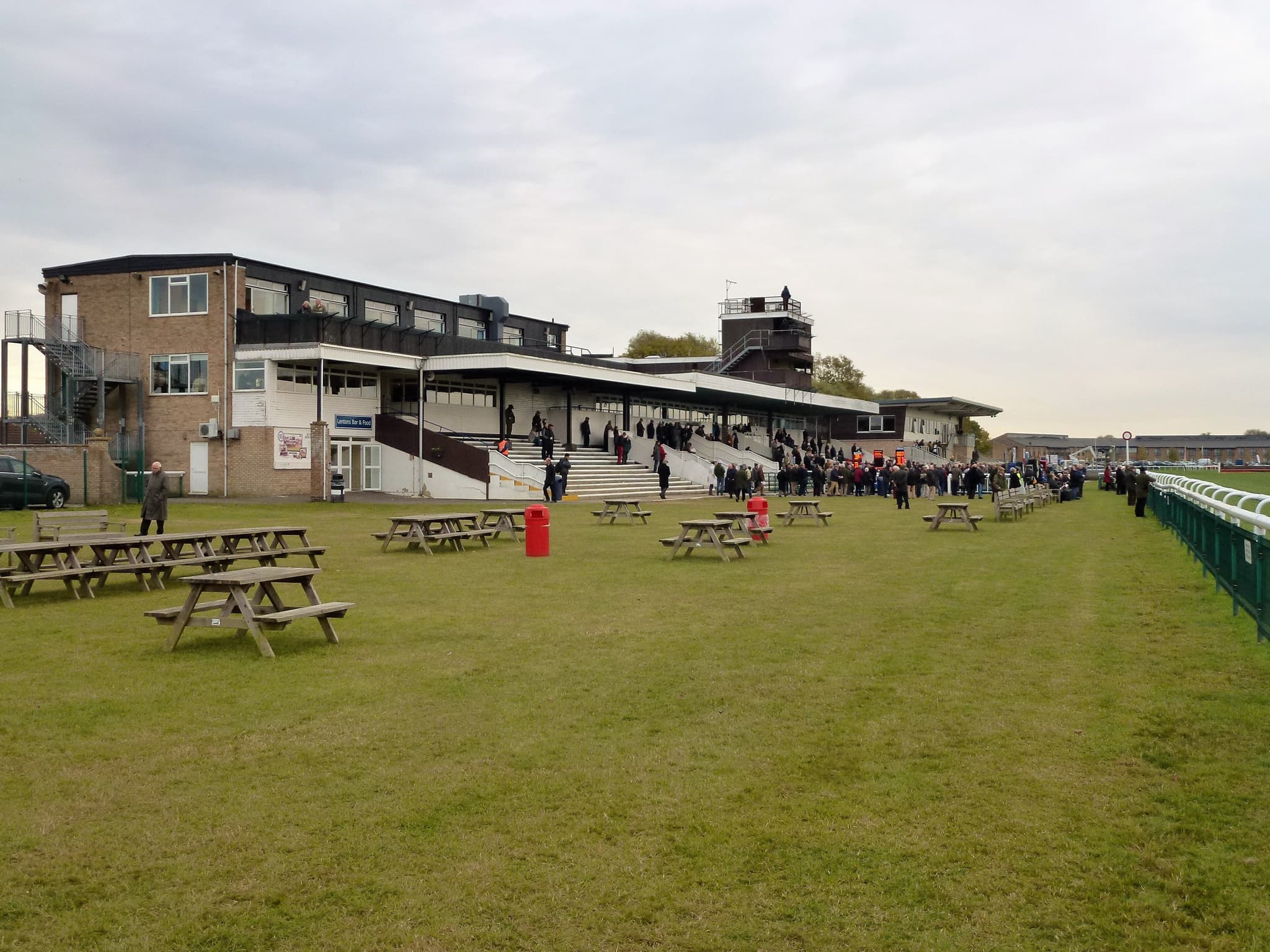
A Day Out at Huntingdon Racecourse
Everything you need for a day at Huntingdon — getting there, what to wear, enclosures, food and drink, and insider tips for jump racing in Cambridgeshire.
Read more
Huntingdon Racing Festival: Your Complete Guide
Huntingdon's Peterborough Chase weekend is one of the jump season's great pre-Christmas occasions. Here's your guide to Cambridgeshire's National Hunt course.
Read more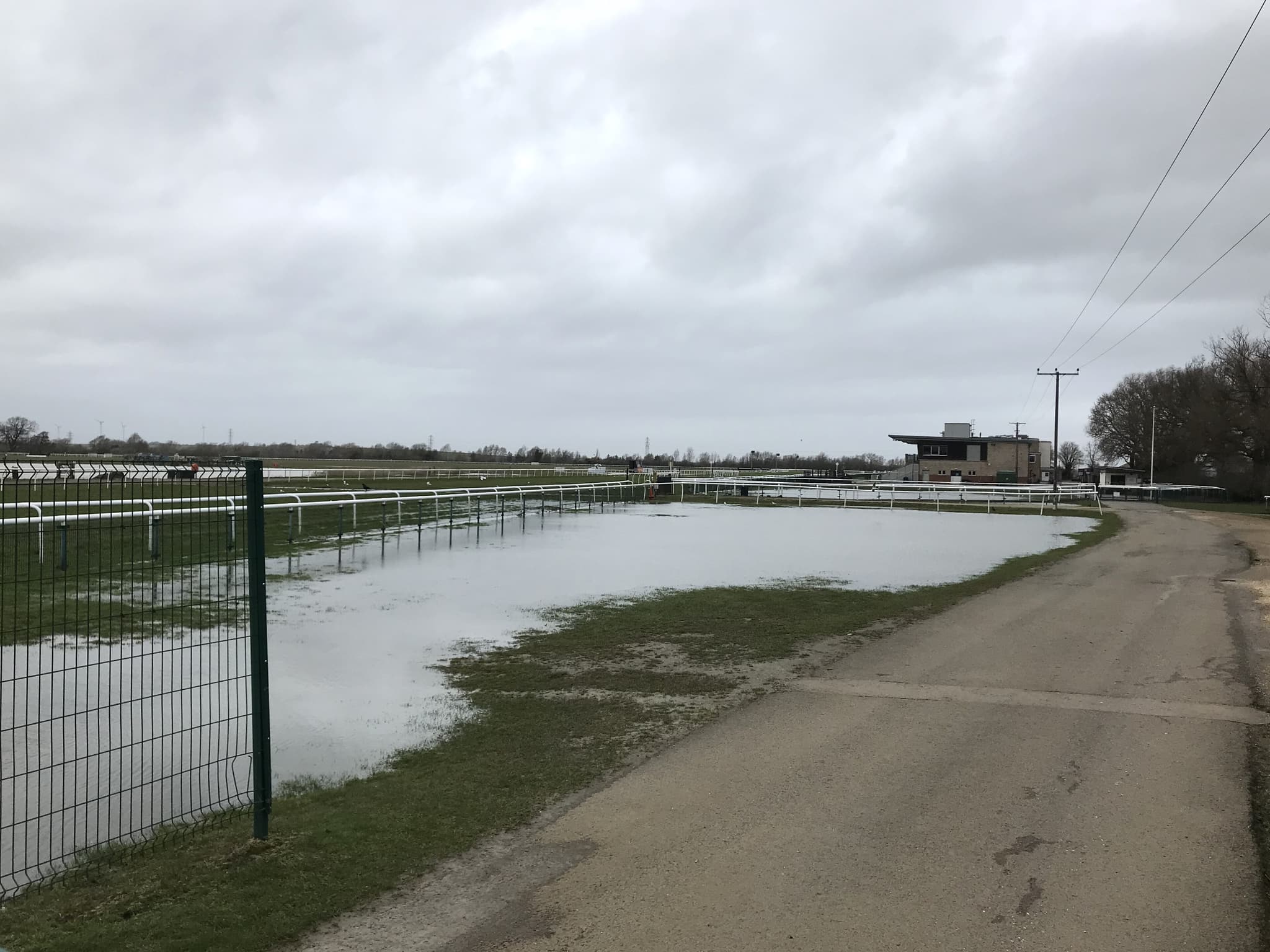
The History of Huntingdon Racecourse
Over 130 years of racing at Huntingdon — from the first meeting in 1886 to the Peterborough Chase and quality jump racing in Cambridgeshire.
Read morePhotos on this page are used under Creative Commons licences. Titles, sources and licence links for each one are on our image credits page.
Research the field with the AI Race Predictor
Our model publishes calibrated win-probability estimates for UK races — a second opinion to understand a race, not tips. It's open about its record: it doesn't beat the market, and we show exactly how it does.
Work it out & learn the basics
Gamble Responsibly
Gambling should be entertaining and not seen as a way to make money. Never bet more than you can afford to lose. If you or someone you know has a gambling problem, help and support is available.