

Founder & Editor · Last reviewed 2026-04-05
Introduction
Huntingdon sits in the flat fenland of Cambridgeshire, about a mile east of the town centre, and it is one of the more underrated betting venues in the National Hunt calendar. The track is right-handed, essentially oval, and about 1m2f around. There are no hills, no camber, no elevation changes to catch horses out — just a flat, sharp circuit that suits speed and jumping accuracy above all else.
The course runs from October to May under Jockey Club ownership. It sits at a level below the headline venues in terms of prize money and prestige, but one race lifts it into Grade 2 territory: the Peterborough Chase in late November or early December. That race has attracted Desert Orchid, Edredon Bleu (four consecutive wins from 1998), Best Mate, and One Man. It is the key fixture on the calendar and the moment when the biggest southern yards send their best chasers to Cambridgeshire.
For the rest of the season, Huntingdon is a productive novice venue. The autumn novice programme from October into December gives big Lambourn and Oxfordshire yards an accessible, well-run course to introduce young horses. The track's flat profile means jumping mistakes are quickly punished, so horses that make it round cleanly here often have futures at better tracks.
The short run-in — approximately 1½ furlongs from the last fence to the line — is one of the most important structural features for betting purposes. At Cheltenham the run from the last is closer to 3½f; even at Kempton there is more room to close. At Huntingdon, a horse trailing by three or four lengths at the final obstacle will nearly always fail to get there. Positioning in the closing stages matters more here than at most comparable NH venues, and that characteristic shapes the entire betting approach.
Key things to know before betting at Huntingdon:
- The track is right-handed, flat, and sharp — jumping fluency and a handy position matter more than staying power
- The run-in is approximately 1½ furlongs, which is short; horses that are last at the final fence rarely win
- Nicky Henderson has the best record of any trainer at the Peterborough Chase and targets the meeting seriously from his Seven Barrows base in Lambourn, roughly 60 miles south
- The going in Cambridgeshire is typically good to soft in October, drifts to soft through November and December, and can remain soft or heavy through to February; it rarely gets extremely testing
- Distance range runs from 2m to 3m½f; the majority of the card falls between 2m and 2m7f
- East Anglian-based NH trainers — those near Newmarket and Cambridge — use Huntingdon as their local course and return with horses that know the track well
This guide works through the track layout, ground conditions, trainer and jockey patterns, practical betting strategies, and the key races in detail. For context on the course more broadly, the complete Huntingdon guide covers history and visitor information.
Bet on Huntingdon
Place your bets on Huntingdon races with a trusted bookmaker.

Promo code BETFRED50. New customers only. Register, deposit with a Debit Card, and place a first bet of £10+ at Evens (2.0)+ on Sports, to be settled within 7 days, to get £30 in Sports Free Bets and £20 in Bet Builder Free Bets within 24 hours of settlement. 7-day expiry. Eligibility & payment exclusions apply. Full T&Cs apply. Take Time to Think. BeGambleAware.org. 18+. Full T&Cs.

Promo code R30. New UK customers only, 18+. Register, deposit £10 or more, then place a £10 single cash bet at odds of 1/2 (1.5) or greater on any sports market (excluding Virtuals). Once the qualifying bet settles you get £30 in Free Bets (3 x £10) — the qualifying bet can win or lose. Free Bets are valid on any sports market excluding Virtuals, expire in 7 days, are non-withdrawable and must be used in full. Excluded deposit methods apply (including PayPal, Apple Pay, Skrill and NETELLER). Named bets such as Lucky 15 do not qualify. If you cash out the qualifying bet, or it is voided, you are no longer eligible for the offer. Ends 31.12.26. Full T&Cs apply. Please gamble responsibly. BeGambleAware.org. 18+. Full T&Cs.

Promo code BET40GET20. New UK customers, 18+. Register with the code and place a first bet of £40 or more at Evens (2.0) or greater. Receive 2 × £10 free bets: the first credited automatically once the qualifying bet settles, the second 24 hours later. Free bets must be placed at minimum odds of 4/1 (5.0), expire 24 hours after credit, and the free-bet stake is not returned with winnings. Debit card deposits only. Take Time to Think. BeGambleAware.org. 18+. T&Cs apply. Full T&Cs.

50% of your first-day net losses refunded as a free bet, capped at £25. New UK customers aged 18+ only. To qualify, deposit and place a first bet of £10 or more on any sport at minimum odds of evens (2.00), then place at least two further bets on different events, each worth at least 50% of your largest bet, all at evens (2.00) or greater. Losses are counted from your first settled bet until 23:59 the same day. Place a qualifying £10+ bet and you are guaranteed at least a £5 free bet. Bets placed at SP, void bets, cashed-out bets and bets struck with free bets do not count towards the offer. The free bet is credited the day after your qualifying bets settle and must be used within 7 days, after which it expires. It can be used at odds from 1/4 (1.25) up to 250/1 on singles and straight accumulators, but not on Trixie, Patent or Yankee style multiples. Free-bet stake is not returned with winnings. One offer per person, household, address, IP address and device. E-wallet deposits may not qualify, so check the cashier before depositing. Customers registered with GAMSTOP cannot claim. KYC identity verification must be completed before the free bet is credited. Take Time to Think. BeGambleAware.org. 18+. T&Cs apply. Full T&Cs.

New customers, 18+. Choose the sports bonus at sign-up, make a first deposit and receive a 100% bonus up to £50 in your Sports Bonus balance. To convert the bonus to cash, wager it 10x within 30 days. Single bets below Evens (2.00) do not qualify; accumulators do not qualify if any selection is below 1/2 (1.50). Virtual Sports, voided, cancelled, drawn, cashed-out and free-bet wagers do not count towards wagering. Only the first settled bet per event counts. Withdrawing before the wagering requirement is met forfeits the bonus balance including bonus winnings. Real-money funds are used before bonus funds. Deposits via Skrill or Neteller are not eligible. Not valid in conjunction with other promotions. Odds, bet and payment limits apply. 10bet general and promotion T&Cs apply. BeGambleAware.org. 18+. Full T&Cs.

New customers in Great Britain and Republic of Ireland, 18+. Place a £10 fixed-odds qualifying bet at minimum odds of 1/2 (1.50) — single or each-way (only the win part counts), pre-event or in-play, not cashed out early, within 28 days of opening the account. Receive up to £60 in bonuses credited over three days: 3 × £10 fixed-odds free bets (the first on settlement, then 24 and 48 hours later) plus 3 × £5 Total Goals FOOTBALL spread bets and 3 × £5 racing Winning Favourites spread bets, with a £1 racing Race Index spread bet as an extra on top. The spread bets need a full spread-betting account, opened within 28 days of the fixed-odds account and subject to Spreadex's eligibility and appropriateness checks. Free-bet stakes not returned with winnings; free bets valid 28 days from issue. IMPORTANT: the £5 credits are SPREAD bets — sports spread betting carries the risk that losses can exceed your stake. Sports spread-betting customers do not have Financial Ombudsman or FSCS recourse. Take Time to Think. BeGambleAware.org. 18+. T&Cs apply. Full T&Cs.

Promo code WELCOME15, entered under My Bonuses after registering. New UK customers, 18+. Place a first qualifying bet of at least £10 from your cash balance at odds of evens (2.0) or greater within 7 days of opening the account. Once the qualifying bet fully settles you receive £15 in free bets, credited as 3 x £5 tokens with set uses: one £5 accumulator free bet (minimum 4 legs, each leg at 2/5 or bigger), one £5 sports free bet (any market at evens or bigger) and one £5 Sub Cover free bet (selected football player markets at evens or bigger). Free-bet stakes are not returned with winnings. Free bets expire 7 days after they are credited. Void, cashed-out and partially cashed-out bets do not qualify. One offer per customer. Confirm the current terms on BetGoodwin's own welcome-offer page before claiming. Take Time to Think. BeGambleAware.org. 18+. T&Cs apply. Full T&Cs.

New UK customers, 18+. Minimum deposit £10. Place a £10 qualifying single on sports (excluding virtuals) at minimum odds of 1/2 (1.50), settled within 14 days. Deposit-method exclusions apply. Receive £30 in free bets (stake not returned), split £20 for sportsbook use (2 x £10) and £10 for Bet Builder only (2 x £5); Bet Builder does not cover horse racing. Free bets must be accepted within 7 days and expire 7 days after acceptance. No promo code required. Best Odds Guaranteed on UK & Irish racing, subject to having staked over £25 in the previous seven days. Operated by LiveScore Betting and Gaming (Gibraltar) Ltd, UKGC 56859. Confirm the current terms on LiveScore Bet's own promotions page before claiming. Take Time to Think. BeGambleAware.org. 18+. T&Cs apply. Full T&Cs.
18+. BeGambleAware.org
Track Characteristics
Huntingdon is a flat, right-handed circuit measuring approximately 1m2f around. There is no hill, no valley, and no significant undulation — the course runs on the same plane from start to finish. That flatness has a direct effect on what types of horse succeed here and how races are run.
Circuit shape and fence layout
The track is broadly oval with two long straights connected by two relatively tight bends. The back straight is longer than the home straight. Runners turn right out of the back straight into the home bend, and from there it is a run of approximately 1½ furlongs to the line. That run-in is short by National Hunt standards — at Cheltenham the run-in from the last is closer to 3½f; even at Kempton the run is longer. The practical implication is that a horse needs to be in the first two or three at the final fence to have a realistic chance of winning. Hold-up horses that leave themselves five or six lengths to make up at the last will usually find the distance insufficient.
The fences are regarded as fair and well-built, not abnormally stiff. This suits the overall character of the course: it is designed to test jumping technique and pace rather than raw courage at big, imposing obstacles.
Horse types that succeed
Three qualities tend to define the Huntingdon winner profile. First, jumping accuracy. The flat track means races are often run at a strong gallop from an early stage, and horses that make even a small jumping error at pace lose momentum they rarely recover. Second, a handy racing style. The short run-in rewards horses that are positioned prominently entering the home turn. A rider who commits early, takes the inner line around the bend, and hits the front approaching the last fence will nearly always be better placed than one who is making ground from the back of the field. Third, enough speed to quicken when asked on flat ground. Huntingdon is not a staying test — it does not suit the type of horse that needs to grind down the opposition over three miles of undulating ground. Most races here are decided in the final two furlongs, and a horse that accelerates well under pressure has a natural advantage.
The dour, heavy-framed staying type that excels at Haydock or on the Cheltenham Old Course can find Huntingdon against them. Conversely, a horse that won on quick ground over 2m at Musselburgh or Kelso on a flat circuit is the sort to take seriously when stepping into a Huntingdon novice chase.
Comparison with similar flat NH circuits
Huntingdon is often compared to Kempton in terms of its flat, speed-favouring profile. Both tracks run at a strong pace, both reward jumping fluency, and form between the two often translates. Wincanton is another track with broadly similar characteristics — undramatic topography, tight circuit, handy horses at an advantage.
Musselburgh is a comparable example in the north of England and Scotland: right-handed, flat, sharp, with a short run-in. Horses that have won at Musselburgh often handle Huntingdon well because the track demands identical qualities.
Where Huntingdon differs from many comparable venues is in the quality brought by the Peterborough Chase. Most flat, sharp NH tracks sit firmly in the lower tier of the National Hunt programme. Huntingdon carries a Grade 2 race in December and regularly attracts horses that are real Festival candidates. That matters for betting purposes: the November and December cards at Huntingdon include a different calibre of horse to what you will find at the average East Midlands NH fixture.
Chase versus hurdle profile
The same principles apply across both codes, but they are somewhat more pronounced in chasing. A horse making errors at fences at a strong pace on a flat track loses far more ground than a hurdler who clips the top of a hurdle. For that reason, first-time chasers at Huntingdon are higher-risk propositions unless they come from yards with a strong schooling record and a known preference for sharp, flat tracks.
Over hurdles the margin for error is larger, and the flat track tends to suit smaller, nimble horses that use the bends well. Bigger, long-striding horses bred for a flatter, sharper circuit tend to do less well at courses that demand a galloping style. At Huntingdon, size is less of an advantage than balance and the ability to quicken off a bend.
Going & Course Conditions
Huntingdon sits in the flat fenland of Cambridgeshire at very low elevation. The land surrounding the course is essentially a drained flood plain — the sort of terrain that has been managed for drainage since the seventeenth century. That geography shapes how the going behaves through the National Hunt season.
Typical going through the season
At the season's opening in October the going is usually good to soft. Rainfall in Cambridgeshire in early autumn is moderate, and the flat terrain allows surface water to drain reasonably quickly. By November the ground is nearly always soft, and it frequently remains soft or heavy through December, January, and February. The fenland setting means the soil can hold moisture even after a dry spell mid-winter, because the water table is high and there is little natural fall to carry water away from the course.
That said, Huntingdon does not regularly produce the extreme going conditions that some wetter, more elevated courses see. Cheltenham's New Course can be truly heavy in January; Haydock can be deeply testing in November. Huntingdon tends to land in the soft range rather than at the extreme. The official going description is typically "soft" or "good to soft" for the bulk of the winter programme; "heavy" is possible but not the default.
From March onwards the ground begins to improve. Spring meetings in April and May often run on good to soft or good ground, and the final fixtures of the season can be held on going that is firm enough to inconvenience the softest-ground specialists.
How going affects race type
The distinction between a 2m hurdle and a 3m chase matters considerably when assessing ground conditions.
Over 2m hurdles on soft ground, the premium is on horses that are both nimble and have the stamina to maintain their speed when the ground gets holding. A horse that is flat and economical over hurdles — not wasting energy with exaggerated jumping efforts — handles soft ground at Huntingdon well. Horses that lack scope and bash through hurdles rather than jumping cleanly tend to tire in the closing stages as the soft ground bites.
Over 3m and beyond in a chase, the soft going shifts the race further towards stamina. The Peterborough Chase in December is run on ground that is almost always soft, and the historical winners reflect this: horses that combine clean jumping with real stamina in the second half of a 3m chase. An animal that handles Cheltenham on soft ground will nearly always handle the Peterborough Chase conditions without difficulty.
For 2m4f to 2m7f races — the bread-and-butter distance band at Huntingdon — the ground effect is somewhere between the two extremes. A horse that handles good to soft comfortably, jumps accurately, and can quicken off the home bend is the ideal. Horses that require top-of-the-ground conditions, or those that have only run on truly good or better in their career, are worth treating with caution in November through February.
Draw and positional bias
Draw has no relevance at Huntingdon. All racing is over jumps, and the stall draw used on the flat has no equivalent on a National Hunt circuit. Barrier draws exist only in the broad sense that the starting positions for larger field races can influence how quickly horses get settled, but this is a minor factor.
Positional bias is a different matter. As discussed in the track characteristics section, the short run-in strongly favours horses that are in the first three or four at the last obstacle. In fields of eight or more, horses drawn on the outside at the start of a big bend occasionally lose a length or two on the turn, which can matter in tight finishes. However, this is not a systematic bias that can be reliably exploited race by race — it is more a factor to keep in mind when evaluating how a race was run after the event.
Ground specialists and horses to note
At any given course, some horses develop a track preference that goes beyond the standard going preference. At Huntingdon, the combination of flat ground, right-handed bends, and soft winter going produces horses that return reliably.
A horse that has won twice at Huntingdon on soft ground, jumping efficiently and positioned handily throughout, should be treated as a course specialist regardless of its form elsewhere. The flat, right-handed track is specific enough that experience truly helps — particularly over fences, where a horse that knows where the bends fall can be positioned better than a newcomer.
When assessing a horse's form at Huntingdon, look for:
- At least one previous run at the course with a placing or smooth jumping round, even if unplaced
- A going preference that fits the time of year (soft or good to soft for October to April)
- A right-handed track history — horses that perform noticeably worse right-handed than left-handed rarely thrive here
- A short-run-in profile: horses that finish fastest late may not have time to express that quality at Huntingdon
Key Trainers & Jockeys
Huntingdon is accessible from a wide catchment. Lambourn is approximately 60 miles to the south, Oxfordshire trainers are in roughly the same range, and the handful of National Hunt handlers based in East Anglia — around Newmarket and Cambridge — treat it as their local course. Understanding which yards dominate which types of race helps considerably when building a betting approach.
Nicky Henderson
Henderson's Seven Barrows stable in Lambourn is the single most important yard to track at Huntingdon. His record in the Peterborough Chase is the best of any current trainer — he has trained multiple winners of the race and returns with well-prepared horses most years when he has a suitable candidate. When Henderson declares a runner in the Peterborough Chase at a single-figure price, the market tends to shorten further on the morning of the race, reflecting how strongly the betting public respects his preparation for this particular meeting.
Beyond the Peterborough Chase, Henderson regularly targets the early-season novice programme. He will often introduce a promising novice chaser or hurdler at Huntingdon in October or November as a first run of the season or a first run over the larger obstacles. These runners are typically well-backed on debut and often justify the market confidence. Nico de Boinville is Henderson's principal jockey and rides the majority of his Huntingdon runners; when de Boinville takes the ride on a stable newcomer over fences here, it is usually a signal that the horse has schooled well.
Alan King
King's Barbury Castle yard in Wiltshire is roughly 70 miles south-west of Huntingdon and he is another trainer with a consistent presence at the November and December fixtures. King targets the Peterborough Chase from time to time with his better staying chasers, and he runs regularly in the novice hurdle programme in autumn. His horses tend to be well-prepared on their seasonal reappearances and he has a solid record with first-time-out runners at this course.
Tom Cannon rides frequently for King and is a useful jockey to note at Huntingdon more broadly. Cannon is based in the southern region, has a good tactical brain for a flat, sharp circuit, and is effective at getting horses into the right positions on a course where the run-in leaves little room to correct mistakes.
Harry Whittington
Whittington trains from Sparsholt in Oxfordshire, approximately 60 miles south of Huntingdon, and has built a reputation for producing quality novice chasers. His horses tend to be well-schooled and fluent jumpers — precisely the profile that suits a flat, sharp track. If Whittington sends a well-bred novice chaser to Huntingdon in October or November for its first run over fences, it is worth serious attention. His runners tend to be sent out fit and ready to perform on debut.
East Anglian and local handlers
A small number of National Hunt trainers operate in the East Anglia area — around Newmarket, Newbury, and Cambridge. These stables are smaller in scale than the Lambourn or Oxfordshire operations but they know the course intimately. When a local handler sends a horse that has previously run well at Huntingdon, the combination of local knowledge and track familiarity can produce consistent performances at prices that the market undervalues. These are not trainers to follow blindly, but a horse from a smaller East Anglian yard returning to its home course on going it has handled before is a reasonable each-way proposition.
Jockey patterns
Nico de Boinville is the jockey most associated with the top rides at Huntingdon through his association with Henderson. When he takes a booking outside the Henderson yard at this course, it is often a pointer to a well-regarded horse from another stable.
Tom Cannon is effective across the range of meetings here and worth noting on both big-yard and smaller-stable rides. His understanding of the track's geometry — taking the inner on bends, committing early with front-runners — suits Huntingdon's demands.
Conditional riders feature regularly at Huntingdon across the lower-grade meetings. The course's relatively forgiving layout (no extreme hill, fair fences) makes it a venue where a good conditional can ride their weight claim without the course punishing inexperience too heavily. If a Henderson or King conditional is claimed at 3lb or 5lb on a well-regarded novice, it is rarely a reason to oppose the horse.
Betting Strategies
Huntingdon's betting patterns are driven by a small number of recurring situations that recur through the season. The track's character — flat, sharp, short run-in, dominated by two or three powerful southern yards — makes several of these situations identifiable well in advance.
The Peterborough Chase play
The Grade 2 Peterborough Chase in late November or early December is the most predictable opportunity at Huntingdon. Nicky Henderson's record in this race is the best of any current trainer, and when he declares a runner at a single-figure price, the implied probability tends to be below the true probability based on historical results. The key variables to check:
- Has Henderson declared the horse as a leading entry rather than a token participation? A horse running in the Peterborough Chase as its second run back from a summer break, with Nico de Boinville booked, is being sent to win.
- Does the horse hold Cheltenham form from the previous spring? The Peterborough Chase winners commonly hold placings or wins from Festival-level races the preceding season.
- Is the ground soft? The race is almost always run on soft or good to soft ground, and Henderson's Peterborough entries are typically horses that handle those conditions well.
When these three conditions are met — Henderson runner, strong form, de Boinville up — following the market move rather than fighting it is usually the right approach.
Novice chaser from a big yard on debut
The second reliable angle involves first-time chasers from Henderson, King, or Whittington appearing at Huntingdon in October or November. These yards do not make long journeys to introduce horses they are uncertain about. A novice chaser making its chasing debut at this course, from one of these three stables, with a short-priced market position, is typically a horse that has schooled well and is expected to handle the track's demands.
The risk with this approach is obvious: first-time chasers can make jumping errors however well-schooled they are. The Huntingdon fences are fair, but the pace of a competitive novice chase will test a horse that has not encountered the larger obstacles in a race. The play works best when:
- The horse has a flat-track or sharp-track profile from its hurdles form
- The market has it at 4/1 or shorter on the morning of the race
- The trainer and jockey combination is a known quantity (Henderson/de Boinville, King/Cannon, Whittington with an experienced jockey)
Do not extend this approach to smaller yards or to horses with no discernible track or going form. The novice chaser angle only has edge when the preparation is transparent.
The course repeater angle
Huntingdon's sharp, right-handed layout creates specialists who return reliably when conditions match their previous form here. A horse that has won or placed at Huntingdon on soft ground, jumping fluently and positioned handily throughout, should be listed as a course specialist for future reference.
When that horse reappears at Huntingdon later in the season — or in the following year's campaign — in a race where the going matches its previous win, the starting price often underestimates the course familiarity factor. The market applies general form weights; it is slower to price in the specific combination of right-handed circuit, flat profile, and tight bends that rewards experienced Huntingdon horses.
This is a longer-term angle that requires a notebook rather than an immediate bet. Record horses after each meeting; return to your list when the entries are published.
Each-way value in competitive handicap chases
The Peterborough Chase card typically includes a competitive handicap chase in the 2m4f to 2m7f range. These races attract fields of eight to twelve runners, often from several different yards, and the variety of form profiles makes the market less efficient than in a graded race. Each-way terms of one-fifth the odds, three places, are available in most of these fields.
The each-way approach works here when you can identify a horse that fits the track profile — right-handed, flat, short run-in — and has been running consistently close-up at the weights. Horses at 8/1 to 14/1 in these fields often have strong Huntingdon form that is underweighted by the handicapper and the market.
When to stand aside
Big-field maiden hurdles on ground that is softer than expected — the sudden arrival of frost followed by rain in November can push the going heavier than the morning forecast — produce unpredictable results from a field of unexposed horses. When the going is listed as soft, heavy, or "heavy in places" for a maiden or novice hurdle of twelve or more runners, the probability of the favourite winning drops sharply and the form guide gives limited guidance. This is a race type and condition combination where standing aside is the most rational response.
Similarly, avoid backing hold-up horses in small fields of four or five runners at Huntingdon. The short run-in means there is simply not enough distance after the last fence for a horse tracking the pace to overhaul front-runners who have been allowed to build a clear advantage.
To compare place terms and each-way promotions across the major bookmakers, see our best bookmakers for horse racing guide.
Key Races to Bet On
Huntingdon's National Hunt programme runs from October to May. Most of it is mid-tier club racing — novice events, handicaps, and maiden hurdles that serve as early-career stepping stones for horses from the southern yards. One race lifts the entire meeting to Grade 2 level, and a handful of autumn fixtures carry enough quality to reward careful analysis.
Peterborough Chase (Grade 2, 3m, November/December)
This is Huntingdon's most important race by a considerable distance. The Peterborough Chase has been a Grade 2 since its elevation and typically takes place in late November or in the first week of December. The race distance of approximately 3m over 18 fences on flat, soft ground sets the character: it rewards staying chasers with clean jumping technique and the ability to maintain a strong gallop for the full distance.
Past winners include Edredon Bleu, who won four consecutive renewals from 1998 to 2001, One Man, Best Mate, and Desert Orchid — a roll of honour that reflects how seriously the leading yards have taken the race over the decades. More recently it has served as a November prep race for horses targeting the Ryanair Chase or Gold Cup at the Cheltenham Festival in March.
The betting approach: Henderson's record is the primary filter, as covered in the strategies section. Beyond that, Cheltenham form from the previous spring is the most reliable form guide — horses that have run well at Grade 1 level in March or April and are returning fit in November have a strong record. The race is nearly always run on soft ground; horses that need good or better ground can be opposed with confidence regardless of their general form.
The supporting card on Peterborough Chase day typically includes one or two competitive handicap chases. These are worth targeting for each-way purposes using the course-repeater and track-profile angles described in the strategies section.
Autumn novice hurdle and chase programme (October–December)
The October and November fixtures at Huntingdon carry a regular programme of Class 4 and Class 3 novice hurdles and chases. These races attract early-season runners from Henderson, King, and Whittington, who use the track as a relatively low-pressure introduction for horses they expect to progress through the season.
What to look for in these races:
- Debut novice chasers from big yards at short prices. A horse from Seven Barrows or Barbury Castle running in a Class 3 novice chase here for the first time, priced at 4/1 or shorter, is usually expected to win and to jump safely. The short price reflects real confidence rather than field weakness.
- Promising bumper or hurdle form from the previous season. Horses that finished second or third behind subsequent winners in bumpers or novice hurdles the year before are often pitching into novice chases here with exactly the profile the flat track requires: speed, balance, and jumping accuracy.
- Horses returning from a summer break with one previous course run. A horse that finished third on its previous visit to Huntingdon, ran on soft ground, and is now prepared by a yard that targets the course regularly is a strong candidate for the course repeater angle.
Hunter chases and bumpers in spring
The spring fixtures in April and May include hunter chases and National Hunt flat races (bumpers) that offer a different kind of betting challenge. Hunter chases feature amateur riders and horses that typically have a point-to-point or hunter chase background. Form from the hunter chase circuit is harder to assess than conventional chase form, and the riding standards vary significantly. These races are best approached with caution unless you have a specific knowledge of the horses or their point-to-point handlers.
Bumpers in April and May at Huntingdon attract horses from the big southern yards that are being introduced ahead of a novice hurdle campaign the following season. A bumper at Huntingdon in April from a Henderson or King-trained newcomer that has been quietly fancied in the market is often a horse that will be campaigned seriously through the winter. Noting these early performances and carrying the information into the following October and November can give a useful head start when those horses reappear in novice hurdles.
Share this article
More about this racecourse
All Huntingdon guides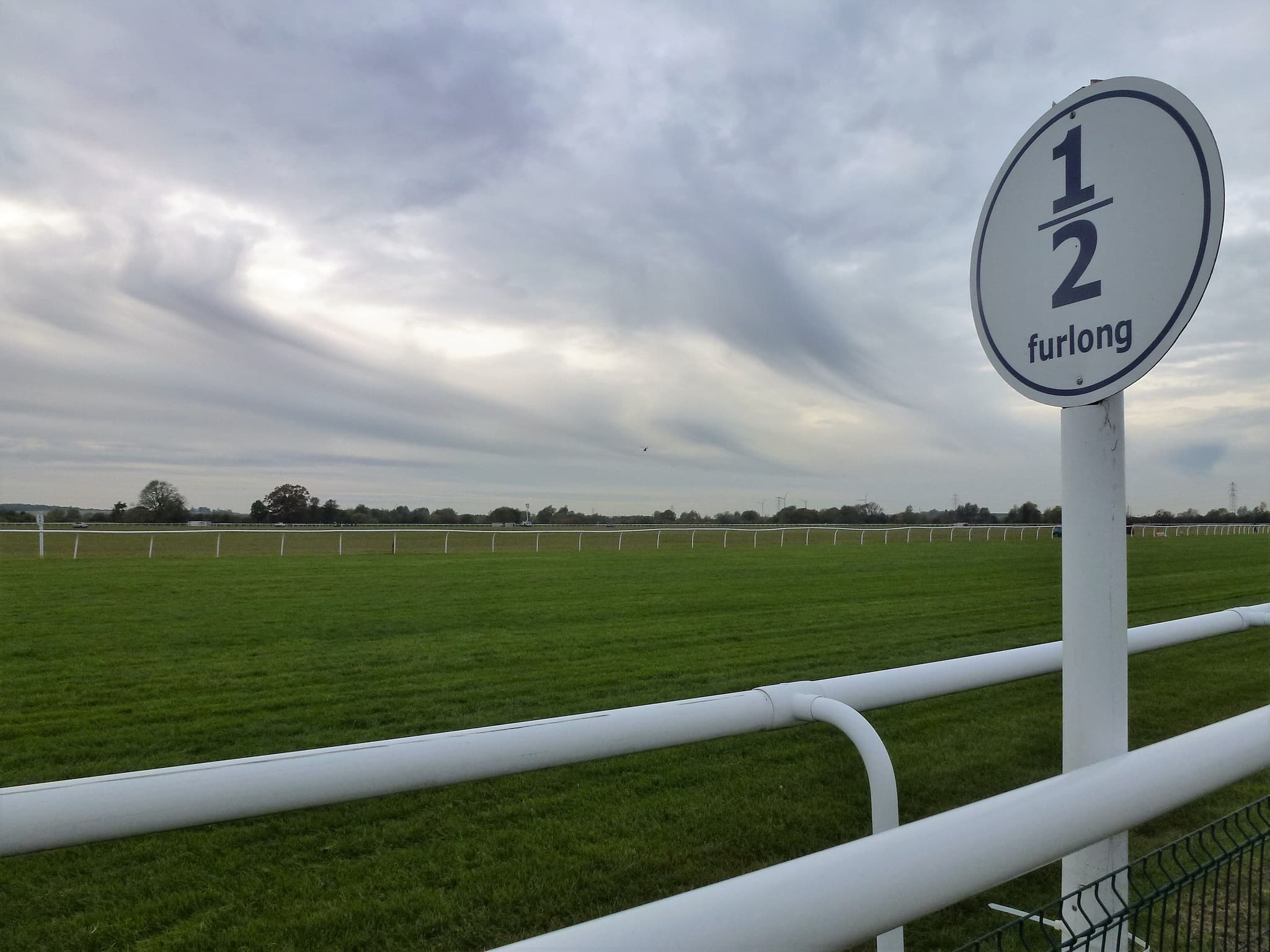
Huntingdon Racecourse: Complete Guide
Everything you need to know about Huntingdon Racecourse — quality jump racing in Cambridgeshire, the Peterborough Chase, and facilities.
Read more
A Day Out at Huntingdon Racecourse
Everything you need for a day at Huntingdon — getting there, what to wear, enclosures, food and drink, and insider tips for jump racing in Cambridgeshire.
Read more
Huntingdon Racing Festival: Your Complete Guide
Huntingdon's Peterborough Chase weekend is one of the jump season's great pre-Christmas occasions. Here's your guide to Cambridgeshire's National Hunt course.
Read morePhotos on this page are used under Creative Commons licences. Titles, sources and licence links for each one are on our image credits page.
Research the field with the AI Race Predictor
Our model publishes calibrated win-probability estimates for UK races — a second opinion to understand a race, not tips. It's open about its record: it doesn't beat the market, and we show exactly how it does.
Work it out & learn the basics
Gamble Responsibly
Gambling should be entertaining and not seen as a way to make money. Never bet more than you can afford to lose. If you or someone you know has a gambling problem, help and support is available.