
Founder & Editor · Last reviewed 2026-04-05
Introduction
On a sharp November afternoon in Cambridgeshire, with the low sun cutting across the fenland plain and frost still sitting in the ground, the Peterborough Chase draws a quality field of chasers to Huntingdon Racecourse. The race is run over three miles, the fences come quickly on this tight circuit, and the horses that handle it best are not necessarily the most powerful — they are the most fluent. Speed and precision over the obstacles matter more here than raw jumping ability or stamina reserves. That character, established over more than 130 years of racing, defines Huntingdon as clearly as any course in the National Hunt calendar.
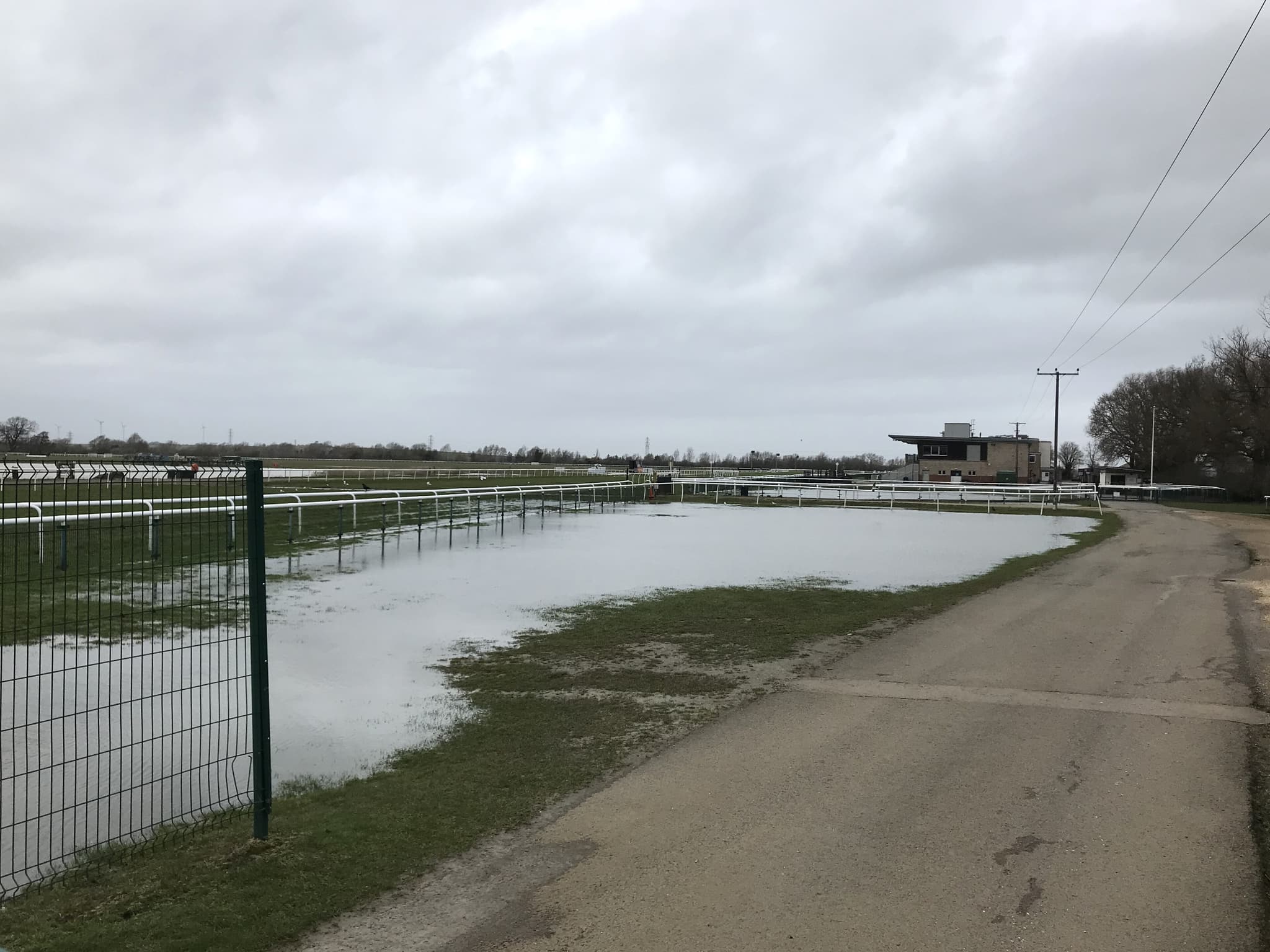
Huntingdon sits in the heart of Cambridgeshire, a county more commonly associated with flat racing at Newmarket than with winter jumping. The setting is pure fenland: flat, open, and unshielded from the east wind. The course itself traces a right-handed oval of approximately one mile and two furlongs, and the gradient barely registers on most track descriptions because there isn't one to speak of. This flatness is not a drawback. It shapes the kind of racing that Huntingdon produces — speed-oriented, technically demanding, fair.
The Peterborough Chase anchors the calendar. First run in 1969, elevated to Grade 2 status in subsequent decades, the race typically takes place in late November or early December and has served as a serious indicator of form ahead of the King George VI Chase at Kempton and the Cheltenham Festival. Past winners include Desert Orchid, Best Mate, and Edredon Bleu — names that belong to the very top rank of British jump racing. That Huntingdon can make that claim for a race run on its right-handed flat oval in a Cambridgeshire market town says something about what the course has built.
The Jockey Club operates Huntingdon as part of its fifteen-venue portfolio, and the course runs approximately seventeen to eighteen fixtures per year, from October through to May. The crowd capacity sits around 5,000 — modest by the standards of Cheltenham or Aintree, but close enough to the action that the racing feels immediate. There are no bad viewing spots on a small course, and that intimacy is part of the appeal for regular racegoers in the East Anglian region.
Huntingdon's role in British jump racing is not to headline the sport's biggest occasions. It is to deliver consistent, well-run National Hunt racing across a full season, to serve as a development track for young horses moving through the novice ranks, and to stage one high-class event each year in the form of the Peterborough Chase. That combination — grassroots depth plus a flagship Grade 2 — keeps Huntingdon relevant to trainers, punters, and racegoers across East Anglia and beyond. The course's history stretches back to 1886, and its character has remained essentially consistent across that span: right-handed, flat, sharp, and rewarding to those who understand it. This history traces how that position was reached, and why it has held across more than a century of National Hunt racing.
Origins
Racing in Huntingdonshire Before 1886
Racing came to Huntingdonshire long before the current course was established. In the eighteenth and early nineteenth centuries, organised horse racing in England was rarely tied to permanent, purpose-built venues. Matches and public races were run on common land, heath, and parkland across the counties, and Huntingdonshire was no exception. The county had a tradition of equestrian culture that ran alongside its agricultural identity — it was farming country, and the horse was central to farming life.
The town of Huntingdon carries a particular historical weight. Oliver Cromwell was born here in 1599, and Samuel Pepys followed in 1633, baptised at St John the Baptist church in the town centre. Both men are claimed by the town with some civic pride, and both lived in a Huntingdon that was already one of the principal market towns of the East Midlands. By the time formal racing was being established on the current site in the 1880s, the town had centuries of character behind it.
Recorded race meetings in and around Huntingdon appear sporadically through the eighteenth century. The flat land east of the town, near the River Great Ouse, lent itself to the kind of galloping ground that early racing required. Similar improvised racing took place across Cambridgeshire — at Cambridge itself, on Midsummer Common and on the edges of the city, and at various Fen-edge locations where the terrain was open and the ground firm enough to carry horses at speed. None of these early venues developed into permanent fixtures; they were essentially rural entertainments that came and went with the support of local landowners and market-town populations.
The Great Northern Railway and What It Changed
The arrival of the Great Northern Railway at Huntingdon in 1850 changed the town's economic geography. The line ran through on its way between London and the North, and Huntingdon station gave the town direct connections to both London and the Midlands. Racecourses that could not be reached by rail were increasingly unviable in the second half of the nineteenth century. The railway brought the crowd; without it, a racecourse was limited to whatever local population it could draw from within a horse-and-cart radius.
By the 1880s, the pattern of jumps racing in England was shifting. The flat-racing establishment was concentrated at Newmarket and the southern tracks, and National Hunt racing was expanding rapidly to fill a different role in the sporting calendar — a winter and spring alternative that drew a different audience and different horses. The formation of the National Hunt Committee in 1866 had given the sport a governing structure, and new courses were being opened across England in response to the demand from racegoers and bookmakers alike.
Huntingdon Racecourse held its first formal meeting on the current site in 1886. The location was at Brampton, on the western edge of the town, accessible from the station by road. The flat, well-drained ground was selected for practical reasons — fenland soil, properly managed, provided consistent going for horses, and the lack of any significant gradient meant the track could be laid out without the undulations that complicated course construction elsewhere. The circuit was established as right-handed from the outset, approximately one mile and two furlongs in circumference, with relatively tight turns at each end. That configuration has not changed in any material way since.
Early Race Meetings and the Agricultural Connection
The first meetings at Huntingdon were modest affairs by the standards of the sport's major centres. The card typically featured hurdle races rather than chases — hurdles were cheaper to construct and maintain, and they attracted a wider range of horses because the jumps made fewer physical demands on young or inexperienced animals. The crowds were drawn from the local farming community, the market town population, and the kind of sporting gentleman who followed jump racing through the winter months. Huntingdon in the 1880s was not wealthy in the way that Newmarket or the south-coast racing towns were wealthy; it was a working agricultural and commercial centre, and the racecourse reflected that.
The relationship between Huntingdon Racecourse and Cambridgeshire agriculture was real and functional. Farmers from across the fenland region attended the races, and there was an overlap between the horse breeders who supplied the farms — heavy horses for haulage and ploughing — and the lighter thoroughbred stock that was beginning to find its way into the jumping game. Huntingdonshire did not have the concentration of racing stables that Newmarket did, but it sat close enough to the training headquarters of flat racing that horses and expertise were available within a short distance.
A Functional Start
Through the 1890s and into the early 1900s, Huntingdon established itself as a reliable regional fixture. It was not a fashionable course and made no claim to be one. The programme was built around hurdle races and the emerging steeplechase events that were growing in popularity as the National Hunt calendar developed. The fences used at Huntingdon were standard brush constructions, and the flat track produced fast times that suited horses trained to jump quickly and economically rather than those built for the heavier ground and bigger obstacles of Cheltenham or Aintree.
The course's early decades produced no defining moments that attached themselves to the wider history of the sport. But this was not the point. Huntingdon was doing what regional racecourses existed to do: providing a stage for jump racing in a part of England that had no other dedicated venue, generating income for the sport's structure, and giving horses an outlet for competition at every level of the jumping game. That foundation, laid quietly in the late Victorian and Edwardian eras, proved more durable than the brief flourishes of more glamorous venues that opened and closed in the same period.
The Cambridgeshire countryside that surrounded the course in 1886 has changed significantly. The fens were already extensively drained and cultivated by the time the racecourse opened, and the agricultural landscape of the twenty-first century bears only a passing resemblance to what the first racegoers would have seen. But the track itself, and its essential character, connects directly back to that original foundation: right-handed, flat, sharp, and suited to the kind of jumping that rewards precision over power.
The Peterborough Chase Era
The Interwar Years
The interwar period from 1919 to 1939 was not an era of particular transformation at Huntingdon, but it was one of consolidation. Jump racing across Britain was recovering from the disruptions of the First World War and finding a new footing in the 1920s. Cheltenham's Gold Cup was first run in 1924. The Champion Hurdle followed in 1927. The National Hunt calendar was acquiring the structured shape that it retains today, and smaller courses like Huntingdon were settling into their role within that structure.
Race meetings at Huntingdon through the 1920s and 1930s continued to attract a mix of local and regional horses. The fixture list was limited compared to major venues, and prize money was not substantial enough to draw the most ambitious trainers from distant parts of England. But the proximity of Newmarket — approximately twenty-five miles to the south-east — was beginning to have an effect. Newmarket-based yards that trained primarily for the flat would sometimes send horses qualified to jump to Huntingdon, particularly horses that had been bought cheaply off the flat and were being tested over obstacles. The short journey made the logistics manageable, and the flat track at Huntingdon suited horses that had been schooled in flat-racing environments.
Racing was suspended during the Second World War, as it was at all but a handful of permitted courses. The Huntingdon programme did not resume until the late 1940s, when the sport returned to something like its pre-war shape. The post-war years brought a period of rebuilding across British racing, and National Hunt saw particular growth as interest in winter sport expanded with greater leisure time and the spread of broadcasting.
Building the Programme
Through the 1950s and 1960s, Huntingdon's fixture list grew in regularity and the racing improved in quality. The course was developing a reputation as a fair test that suited slick jumpers, and trainers were beginning to identify it as a useful track for certain types of horses. The right-handed layout with its tight turns placed a premium on agility and jumping economy rather than raw jumping power. Horses that were fast to the floor after each fence and quick around the bends moved up markedly at Huntingdon compared to their form at more demanding courses.
The proximity to Newmarket continued to matter. Several Newmarket-based operations were running horses over jumps in addition to their flat programmes, and Huntingdon was the natural home venue for those horses. The training infrastructure around Newmarket — the gallops, the veterinary expertise, the transport networks — was available to jumpers as well as flat horses, and trainers who understood pace and tempo from the flat game often transferred those skills to handling jumpers at a quick-turning track like Huntingdon.
By the early 1960s, the course was holding twelve to fifteen meetings per season and had begun to develop the novice chase and hurdle programme that would later become one of its defining characteristics. Young horses entering the jumping game were being targeted at Huntingdon by trainers who knew the flat, accessible track was a sensible starting point. The course was functioning as a nursery — not yet for horses of the highest class, but for horses at the beginning of their jumping careers.
The Peterborough Chase: Origins and Elevation
The Peterborough Chase was first run in 1969 under the title of the Peterborough Handicap Chase. The decision to stage a higher-quality chase race at Huntingdon reflected the course's growing confidence in its own position within the National Hunt calendar. The race was named after the city of Peterborough, fifteen miles to the north-west of the racecourse, and its creation gave Huntingdon for the first time a race that could be spoken of in the same breath as the established Grade events at Cheltenham, Kempton, and Sandown.
The race received its current name in 1979 and was run over approximately two miles four furlongs for most of its early history before its distance was settled at three miles. Elevation to Grade 2 status placed the Peterborough Chase in the upper tier of British jump racing below the Grade 1 events. For a course of Huntingdon's size and regional character, this was a significant achievement. The Grade 2 rating attracted the attention of the sport's leading trainers and owners, and the November-December timing slotted the race into a period when quality chasers were looking for a run before the King George VI Chase at Kempton on Boxing Day or the big Cheltenham meetings in January and February.
The timing also positioned the Peterborough Chase within a cluster of important early-season chases. The Paddy Power Gold Cup at Cheltenham, the Betfair Chase at Haydock, and the Tingle Creek at Sandown are the highest-profile events in the late autumn period, and the Peterborough Chase sits alongside them as a quality indicator for horses at the two-and-a-half to three-mile trip. Trainers aiming at the King George or the Gold Cup would find Huntingdon a useful stepping stone because the flat track, the Grade 2 quality of the field, and the timing made it a sound prep without being an excessive test.
The 1980s and the Scudamore Connection
Peter Scudamore was champion jockey eight times between 1982 and 1992, and he rode winners across every jumps track in Britain during his career. Huntingdon featured regularly in his programme — the course's position in the East Midlands and East Anglian circuit made it part of the circuit that Scudamore and the yards he worked with covered each season. His association with trainer Martin Pipe, which began in the mid-1980s and transformed the statistical landscape of National Hunt racing, produced winners at courses across the country, and Huntingdon was among them.
Scudamore's career record, which stood at 1,678 winners when he retired in 1993, was built partly on exactly the kind of racing that Huntingdon offered: moderate-value handicaps and novice events where a sharp, well-prepared horse could pick up prize money consistently. The combination of a flat track, manageable fields, and straightforward logistics suited Pipe's operation, which sent horses to race more frequently than any other yard of the era.
By the late 1980s and into the early 1990s, Huntingdon had acquired the character it would carry into the twenty-first century: a well-run regional jumps course with a real Grade 2 flagship race, a solid novice programme, and strong connections to the Newmarket training community. The Peterborough Chase had begun to attract the quality horses that would define its reputation. The course's golden era, measured in terms of sporting identity, was firmly established.
Famous Moments
Desert Orchid at Huntingdon, 1986
Desert Orchid won the Peterborough Chase in December 1986, the same season in which he was becoming one of the most recognisable horses in British racing. Trained by David Elsworth and ridden that day by Colin Brown, the grey had already made a name for himself as a horse that attacked fences with an eagerness bordering on recklessness, though his Huntingdon win came in a period when Elsworth was refining the horse's style and sharpening him for the bigger targets ahead. The Peterborough Chase that year was not the most competitive edition of the race, but Desert Orchid's presence at Huntingdon drew attention and put the course's flagship event before a wider audience than it had previously commanded.
Desert Orchid's victory in 1986 came three years before his King George VI Chase win at Kempton in 1989, which many regard as the greatest jumps race performance in British racing history. In 1986 he was still establishing his credentials at the top level. Huntingdon was part of that process — the kind of quality two-and-a-half to three-mile test that allowed Elsworth to assess the horse's form and fitness before targeting the Grade 1 prizes. The Peterborough Chase served exactly the function it was designed to serve.
Edredon Bleu: Four Consecutive Wins, 1998–2001
No horse has dominated the Peterborough Chase the way Edredon Bleu did. Trained by Henrietta Knight at West Lockinge Farm in Oxfordshire, ridden in each of his Huntingdon wins by Jim Culloty, Edredon Bleu won the race in 1998, 1999, 2000, and 2001 — four consecutive victories that remain the outstanding individual achievement in the race's history. The record has stood unchallenged for over two decades.
Edredon Bleu was a French-bred chaser who arrived in Knight's yard already showing exceptional jumping technique. His style over fences was low and economic — exactly what the flat track at Huntingdon rewarded. He would meet the top of each fence cleanly and gain ground while other horses lost fractions, and on a course where the turns came quickly after the fences, that efficiency translated directly into race-winning margins.
In 2000, between his second and third Peterborough Chase wins, Edredon Bleu won the Queen Mother Champion Chase at Cheltenham — the Grade 1 two-mile championship that represents the pinnacle for horses of his type. His Huntingdon record and his Cheltenham win reinforced each other as evidence that the Peterborough Chase was a race of real quality, contested by horses operating at or near the top of the sport.
Best Mate, 2002
Best Mate's career is defined by three consecutive Cheltenham Gold Cups in 2002, 2003, and 2004, and it is easy to forget that he competed at smaller venues as well as the sport's biggest stages. In December 2002 — the same season as his second Gold Cup — he won the Peterborough Chase at Huntingdon under Jim Culloty. Trained by Henrietta Knight, Best Mate was sent to Huntingdon as a preparatory run ahead of the Cheltenham Festival, and he won readily enough to confirm his fitness without being asked for anything like his best.
The fact that Knight, who had already won multiple Peterborough Chases with Edredon Bleu, trusted Huntingdon as a prep track for the world's best steeplechaser at that moment was a statement about the course's standing. A Grade 2 race at a flat, fair course was the right type of test for a horse being aimed at the Gold Cup. Knight's confidence in the Peterborough Chase as a reliable form reference was shared by other top trainers.
One Man and Remittance Man
One Man, the grey chaser who won the 1998 Champion Chase at Cheltenham after several attempts, had Huntingdon form earlier in his career. Similarly, Remittance Man — trained by Nicky Henderson and considered one of the best two-mile chasers of the early 1990s — won the Peterborough Chase in 1992. Henderson's involvement with the race reflects the Lambourn-based operation's comfort with the course. The journey from Lambourn to Huntingdon is manageable — roughly ninety miles — and the flat track suited Henderson's horses, many of which were schooled to jump cleanly and quickly.
Henderson has trained more Peterborough Chase winners than any other trainer, and his yard's repeated engagement with the race illustrates a broader truth about Huntingdon's position in the National Hunt world. Top trainers do not send quality horses to courses they consider beneath them. The fact that Henderson, Henrietta Knight, David Elsworth, and their successors have returned to Huntingdon across decades reflects a settled judgement that the Peterborough Chase is worth winning and that the track itself is a reliable test.
Tony McCoy and the Later Career Visits
Tony McCoy rode more winners than any jockey in National Hunt history — 4,358 in total when he retired in April 2015 — and he accumulated many of them at exactly the sort of venues where sharp, efficient riding made the difference. Huntingdon's tight circuit was the kind of track where McCoy's relentless drive and tactical awareness at the turns paid dividends. He rode at the course across his career, particularly in the handicap and novice events that filled the card alongside the Grade 2 showpiece.
Richard Dunwoody, who preceded McCoy as champion jockey and retired in 1999 with 1,699 winners, also rode regularly at Huntingdon. Dunwoody's association with Desert Orchid in the grey's later career meant he was present at the course during the period when the Peterborough Chase was attracting its first wave of top-class participants.
The Hunter Chase and Amateur Programme
Not all of Huntingdon's memorable occasions have featured professional jockeys and Grade 2 chasers. The course runs a hunter chase programme that draws from the point-to-point community across Cambridgeshire, Huntingdonshire, and the surrounding counties. Hunter chases are run under Rules but contested by horses that have qualified through the point-to-point field, and they represent an important connection between National Hunt racing and the broader equestrian community. Huntingdon's flat track suits horses from the point-to-point world — the absence of significant gradients means the fitness requirements are consistent with what point-to-point horses experience.
Amateur races and the hunter chase programme have produced their own notable moments across the decades, most of which exist only in the memories of those who witnessed them. The grassroots character of that racing is part of what makes Huntingdon more than a one-race course. The Peterborough Chase is the headline, but the full card on a Huntingdon fixture day covers everything from novice hurdles run by horses on their second or third career starts to hunter chases involving horses that have competed on farms and in fields for years before reaching a racecourse.
The Modern Era
The Jockey Club and Structural Change
The Jockey Club's consolidation of British racecourses into a managed portfolio brought Huntingdon within a national operational structure that it had not previously been part of. The Jockey Club Racecourses division, which operates fifteen courses across Britain including Cheltenham, Aintree, Newmarket, and Sandown, took on Huntingdon as part of a model that spread the financial risks of racecourse operation across a portfolio while allowing individual courses to retain their distinct characters. For Huntingdon, the Jockey Club connection brought investment in facilities and track maintenance at a scale that would have been difficult to sustain independently.
The physical improvements visible to racegoers from the early 2000s onwards included upgraded viewing areas, improved catering and hospitality facilities, and better presentation of the course itself. The racecourse infrastructure that a modern racegoer experiences at Huntingdon — the parade ring, the weighing room, the betting facilities, the spectator stands — reflects investment decisions taken under Jockey Club oversight. Prize money was also improved, though Huntingdon remains in the middle tier of British National Hunt courses: above the smallest rural venues but well below the prize levels available at Cheltenham, Aintree, or Sandown.
The Current Fixtures Programme
Huntingdon runs approximately seventeen to eighteen race days per year. The season opens in October and runs through to May, covering the full National Hunt winter and spring campaign. The Peterborough Chase day in late November or early December is the centrepiece, but the fixture list around it covers a broad range of racing from low-grade handicap hurdles to quality novice events.
The autumn fixtures in October and November serve a developmental function. Novice hurdles and novice chases at this point in the season attract horses on their first or second starts over obstacles, and Huntingdon's flat, straightforward track is specifically suitable for horses at this stage. A horse that makes an error at a fence on a flat course with wide, open bends is less likely to be seriously punished than one that makes the same error at a tighter, more demanding course. Trainers use Huntingdon for this reason, and the novice programme generates competitive fields across the early part of the season.
The spring fixtures, running into April and May, include hunter chases and bumpers that connect the course to the point-to-point community. National Hunt flat races (bumpers) are a staple of the end-of-season programme, and Huntingdon's position in East Anglia means it draws bumper runners from a broad catchment that includes trainers working out of Newmarket and the surrounding counties.
Prize Money and the NH Hierarchy
Huntingdon's prize money structure places it firmly in the second tier of National Hunt racecourses. The Peterborough Chase, as a Grade 2 event, carries prize money in the range that attracts horses trained at the sport's leading yards. The remaining races on a standard Huntingdon fixture card carry prize money comparable to other mid-tier NH tracks — enough to make winning worthwhile for owners of moderate horses, but not enough to draw the top handicappers away from the more valuable prizes on offer elsewhere.
The BHA handicapper pays close attention to the form produced at Grade 2 level, and the Peterborough Chase's results feed directly into winter ratings for the top two-to-three mile chasers. A horse that wins the Peterborough Chase in good style will typically be reassessed upwards before the King George at Kempton. The race functions as a form reference point, and the handicapper's treatment of its results is part of how it maintains its relevance through the season.
East Anglian Trainers and the Local Connection
The East Anglian training community is thinner on the jumps side than the South West or the Midlands, but it is not absent. Several Newmarket-based operations have historically run horses over hurdles and fences, particularly with flat-bred horses that showed enough scope to jump. The connection between Newmarket's training infrastructure and Huntingdon's jumps programme has been consistent across decades, even if it has never generated a formal East Anglian jumps training centre of the kind that exists in Lambourn or around Cheltenham.
Trainers working out of yards in Norfolk, Suffolk, and Cambridgeshire use Huntingdon as their local track in the same way that Somerset trainers use Taunton or Devon trainers use Exeter. The logistics are manageable, the course is well understood, and the modest prize money at non-Grade levels is competitive with what those horses could expect elsewhere. For an East Anglian stable with five or six jumpers in the yard, Huntingdon is where the season is largely spent.
Racing TV and the Betting Market
Racing TV broadcasts Huntingdon's fixtures, and the course's races attract standard betting-market interest from the major bookmakers and exchanges. The Peterborough Chase draws a concentrated market ahead of and on race day, with the Grade 2 status ensuring that prices are keenly assessed by professional and recreational punters. Standard Huntingdon fixtures sit in the middle range of betting-market depth — more heavily traded than the very smallest venues but without the volume that attaches to Cheltenham or Sandown.
The relationship between East Anglian jump racing and the betting market has been consistent. Racing in this part of England does not generate the headlines of the big southern and northern venues, but it supplies a steady stream of form data that matters to anyone trying to understand the handicap picture in the middle ranks of National Hunt racing. Huntingdon's flat track produces reliable form — the going is consistent, the course is fair, and the results tend to reflect the relative ability of the horses in a straightforward way that makes the data useful.
Huntingdon's Legacy
What Huntingdon Has Built
A racecourse that has been operating continuously since 1886 on the same flat stretch of Cambridgeshire fenland has accumulated something that cannot be designed or purchased: a settled identity. Huntingdon is not trying to be Cheltenham, and it is not pretending to compete with Sandown or Kempton for the best Grade 1 horses in the country. It occupies a specific space in the National Hunt calendar — a right-handed, flat, sharp circuit that rewards fluent jumping, serves the East Anglian region, and stages one Grade 2 race each season that carries real weight in the form book.
The Peterborough Chase is the clearest expression of what the course has built. A race that began as a handicap in 1969, elevated to Grade 2 status over subsequent decades, and now sits in the late November or early December slot as a quality indicator for the sport's best two-and-a-half to three-mile chasers — that is a significant achievement for a course of Huntingdon's size and character. The roll call of Peterborough Chase winners includes Desert Orchid, Edredon Bleu, Remittance Man, One Man, and Best Mate. These are not horses that turned up by accident or through a lack of better options; their trainers chose Huntingdon because the race served a purpose.
The fenland setting that might seem like a drawback — the flatness, the absence of any dramatic topography, the exposure to the east wind — is in practice part of what makes Huntingdon a reliable test. Horses that win here have won on a fair course in consistent conditions. The ground is manageable, the obstacles are standard, and the form holds up when those horses move on to bigger tests. That reliability is what keeps trainers coming back year after year.
The course's function as a nursery for young jumpers is the less celebrated but equally important part of the Huntingdon legacy. Hundreds of horses have taken their first steps over fences here and gone on to compete at Cheltenham, Kempton, and Aintree. The flat track is a kind teacher at the early stages of a jumping career. It does not punish minor errors as severely as a more undulating course would, and that quality has made it valuable to the trainers who use it for development work across the season.
Huntingdon enters its future as a Jockey Club venue with a stable fixture programme, a Grade 2 flagship race, and an identity that has not wavered across 140 years. The fenland setting, the tight right-handed circuit, and the Peterborough Chase are not going to change. Nor should they.
Frequently Asked Questions
When was Huntingdon Racecourse founded?
Huntingdon Racecourse held its first formal meeting on the current site in 1886. Racing in the wider Huntingdonshire area has a much longer history, with informal race meetings recorded across the eighteenth and nineteenth centuries, but 1886 marks the establishment of the current permanent venue at Brampton, on the edge of the town.
What is the Peterborough Chase?
The Peterborough Chase is Huntingdon's flagship race. First run in 1969 and elevated to Grade 2 status in subsequent decades, the race is run over three miles in late November or early December. It has historically served as a preparatory run for horses targeting the King George VI Chase at Kempton (Boxing Day) or the Cheltenham Festival. Past winners include Desert Orchid, Edredon Bleu, Remittance Man, One Man, and Best Mate.
Who owns Huntingdon Racecourse?
Huntingdon Racecourse is owned and operated by The Jockey Club, which manages fifteen racecourses across Britain including Cheltenham, Aintree, Newmarket, and Sandown. Jockey Club Racecourses took on Huntingdon as part of a portfolio model that provides operational and financial support to individual courses while preserving their distinct characters. The course's website is at thejockeyclub.co.uk/huntingdon.
How do I get to Huntingdon Racecourse?
By rail, Huntingdon station is on the East Midlands Railway and LNER main line, with direct services to London King's Cross taking approximately fifty minutes. The racecourse is accessible from the station by taxi or road. By car, the course is reached via the A14 and A1, with the postcode PE29 6NR for satnav. Parking is available on site. The course is approximately sixty miles north of London and well served by the trunk road network.
What type of racing does Huntingdon stage?
Huntingdon stages National Hunt racing only — there is no flat racing programme. The meetings cover the full range of jump racing: hurdle races (including novice hurdles and handicap hurdles), steeplechases (novice chases, handicap chases, and the Grade 2 Peterborough Chase), hunter chases, and National Hunt flat races (bumpers). The season runs from October to May, with approximately seventeen to eighteen fixtures per year.
What is the track like at Huntingdon?
Huntingdon is a right-handed, flat circuit of approximately one mile and two furlongs. The course has no significant gradient — the fenland terrain ensures the track is almost entirely level throughout. The turns at each end are relatively tight, which places a premium on jumping economy and agility over raw power. Horses that are fast to the floor after each fence and quick around the bends gain a clear advantage on this track. It is considered a fair but technically demanding test for horses and jockeys alike.
Share this article
More about this racecourse
All Huntingdon guides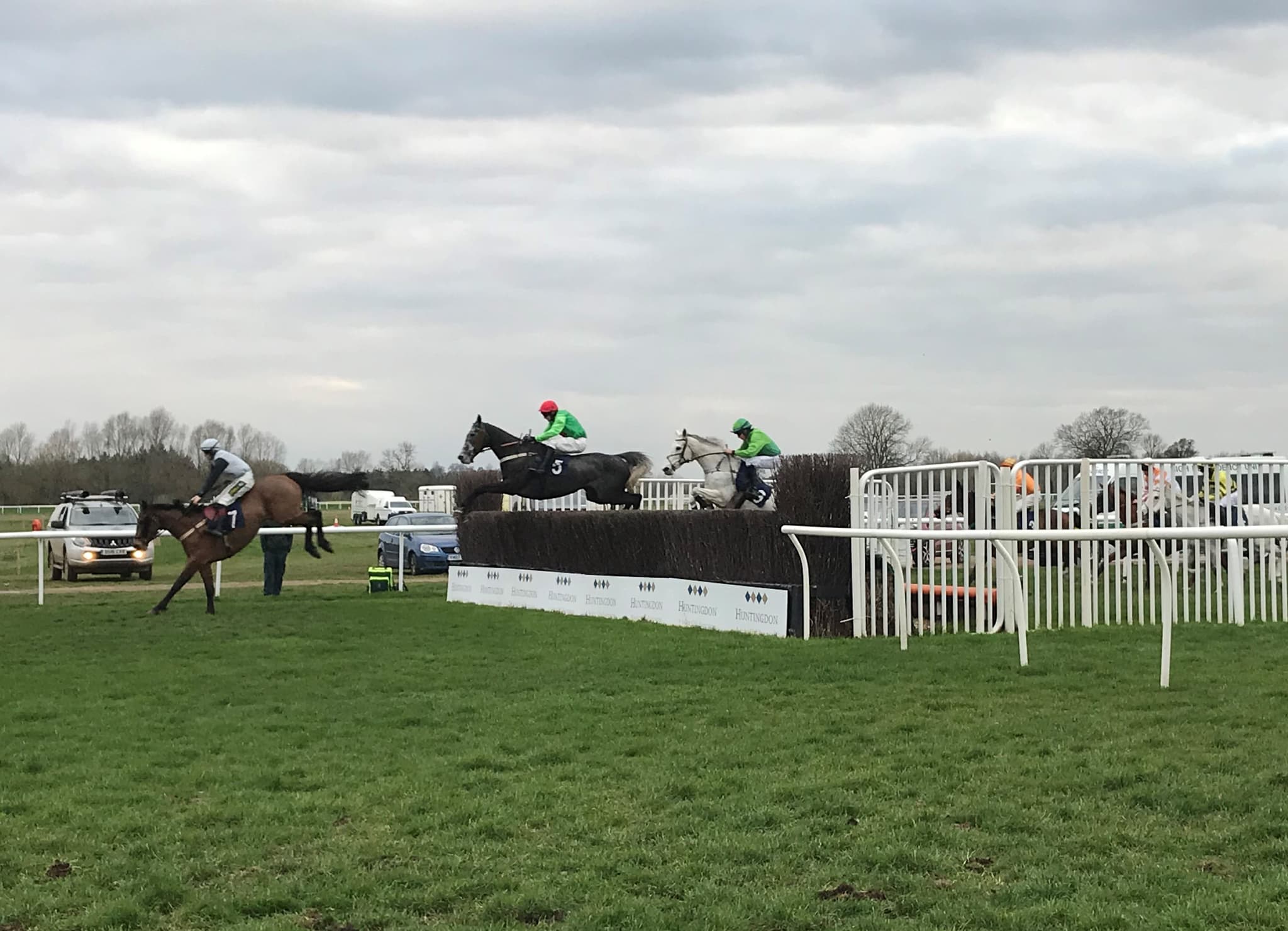
Huntingdon Novice Season: Complete Guide
Your complete guide to the Huntingdon novice season — developing young jumpers on the flat track that suits slick, fluent types.
Read more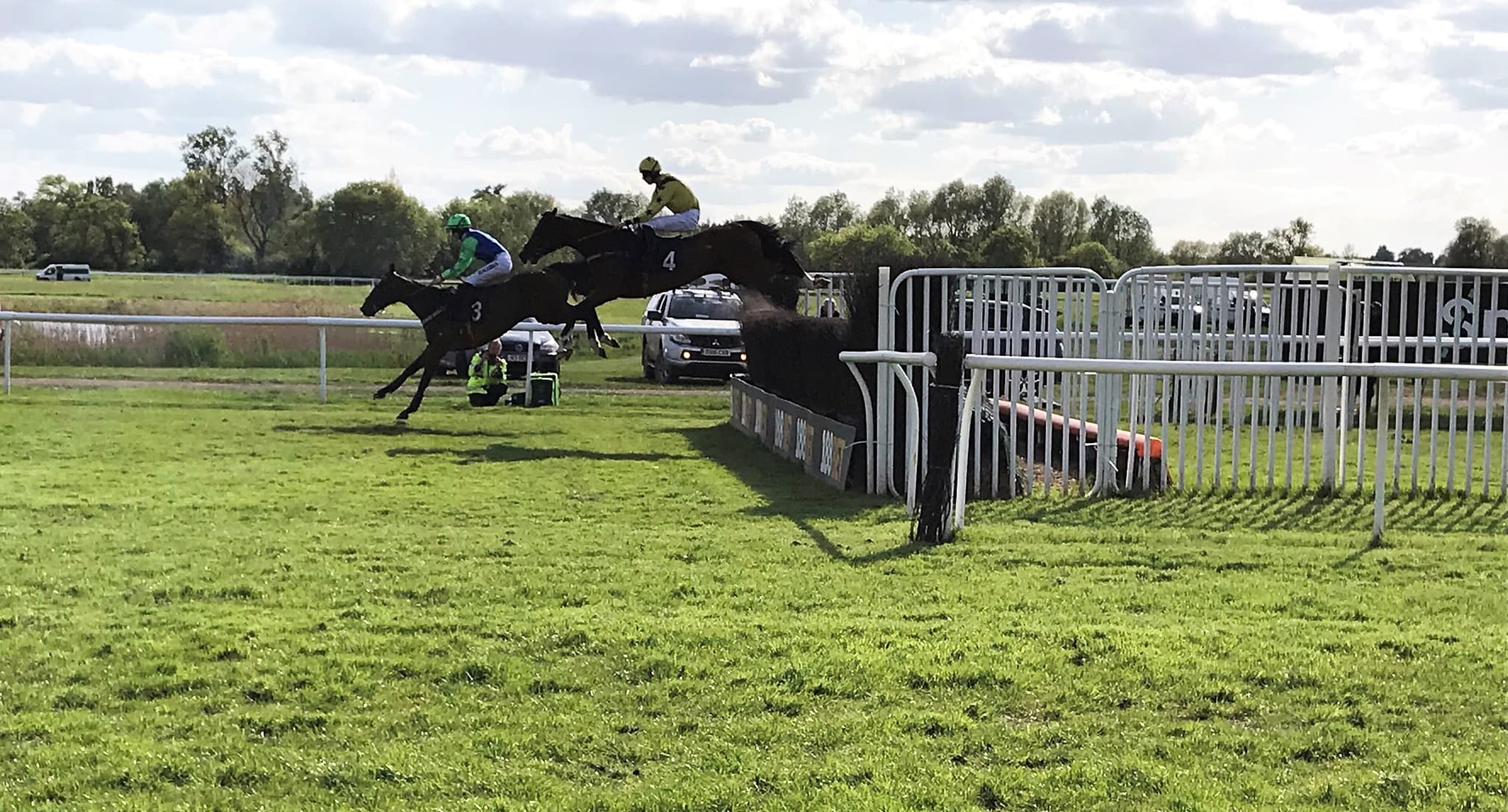
Peterborough Chase Day at Huntingdon: The Complete Guide
Your guide to Peterborough Chase Day at Huntingdon — the December trial that previews the Cheltenham Gold Cup and King George field. Race card breakdown, betting angles, how to get there, and what to expect from one of the East's most important jump fixtures.
Read more
Peterborough Chase: Complete Guide
Your complete guide to the Peterborough Chase — Huntingdon's Grade 2 flagship race, won by Desert Orchid, Edredon Bleu, and Best Mate.
Read morePhotos on this page are used under Creative Commons licences. Titles, sources and licence links for each one are on our image credits page.
Gamble Responsibly
Gambling should be entertaining and not seen as a way to make money. Never bet more than you can afford to lose. If you or someone you know has a gambling problem, help and support is available.