
Founder & Editor · Last reviewed 2026-04-07
Introduction to Kelso Racecourse
Kelso Racecourse sits in the heart of the Scottish Borders — one of the most remote, beautiful and atmospheric racing landscapes in Britain. Set within reach of the River Tweed and framed by the rolling Cheviot Hills to the south and east, this is a course that earns the word characterful in a way that few venues in British racing can honestly claim. There are no city commuters here, no corporate marquees aimed at a floating entertainment audience. Kelso is a working rural racing venue in every sense, and it has been at the heart of Border country jump racing for well over two centuries.
The track is left-handed and undulating — an oval that rises and falls with enough variety in gradient to separate the genuine stayers from those merely hoping their stamina holds. That topography matters enormously. Horses here cannot simply bowl along on a flat gallop; the undulations test their jumping accuracy at changing angles and their ability to maintain rhythm when the ground drops away beneath them. Fences come at you quickly on some parts of the circuit, and a poor jumper at Kelso will be found out in a way that a flat oval might conceal. It is, by design and by geography, a course that rewards athleticism and honest jumping.
Kelso is exclusively National Hunt — there is no flat racing here, no all-weather surface, no dual-purpose programme to dilute the identity. From October through to April or May, the track hosts jump racing and nothing else. That single-mindedness is part of what gives the course its character. Connections, trainers and regular racegoers know what Kelso is and why they come here. The crowd that gathers on a cold February afternoon for the Borders National card is not a generalist crowd; these are people who know the sport, know the horses and know the region.
The farming community of the Scottish Borders forms the core constituency of Kelso racing. The town of Kelso itself — a handsome market town on the confluence of the Teviot and Tweed — is the natural hub, surrounded by agricultural estates, sheep farms and the kind of landscapes that produced a distinctive rural culture long before racing arrived. That community still turns out in force for the big days, dressed well, opinions loud, and with an intimate knowledge of which local trainer has been working a horse quietly through the early autumn.
Those local trainers are a crucial part of the Kelso story. Lucinda Russell, based at Kinross but well within the Scottish circuit's orbit, is one of the most important jump trainers in Britain north of the border. Sandy Thomson, operating from Lambden near Greenlaw in Berwickshire, is a Border country trainer in the truest sense — his yards sit within easy range of Kelso, and his runners here arrive with the benefit of home knowledge. Harriet Graham, training near Jedburgh, and Rose Dobbin, further east, complete a group of Scottish and Border country handlers whose win rates at Kelso regularly exceed what national statistics would predict for yards of their size.
The Borders National, run in February or March, is the course's showcase race — a staying handicap chase over approximately four miles that connects Kelso directly to the Grand National series and serves as a springboard for the Scottish National at Ayr in April. It is the kind of race that defines a course: big fields, genuine test of stamina, and a result that means something beyond the locality. For everything else Kelso offers, this is the race that anchors the calendar.
Bet on Kelso
Place your bets on Kelso races with a trusted bookmaker.

Promo code BETFRED50. New customers only. Register, deposit with a Debit Card, and place a first bet of £10+ at Evens (2.0)+ on Sports, to be settled within 7 days, to get £30 in Sports Free Bets and £20 in Bet Builder Free Bets within 24 hours of settlement. 7-day expiry. Eligibility & payment exclusions apply. Full T&Cs apply. Take Time to Think. BeGambleAware.org. 18+. Full T&Cs.

Promo code R30. New UK customers only, 18+. Register, deposit £10 or more, then place a £10 single cash bet at odds of 1/2 (1.5) or greater on any sports market (excluding Virtuals). Once the qualifying bet settles you get £30 in Free Bets (3 x £10) — the qualifying bet can win or lose. Free Bets are valid on any sports market excluding Virtuals, expire in 7 days, are non-withdrawable and must be used in full. Excluded deposit methods apply (including PayPal, Apple Pay, Skrill and NETELLER). Named bets such as Lucky 15 do not qualify. If you cash out the qualifying bet, or it is voided, you are no longer eligible for the offer. Ends 31.12.26. Full T&Cs apply. Please gamble responsibly. BeGambleAware.org. 18+. Full T&Cs.

Promo code BET40GET20. New UK customers, 18+. Register with the code and place a first bet of £40 or more at Evens (2.0) or greater. Receive 2 × £10 free bets: the first credited automatically once the qualifying bet settles, the second 24 hours later. Free bets must be placed at minimum odds of 4/1 (5.0), expire 24 hours after credit, and the free-bet stake is not returned with winnings. Debit card deposits only. Take Time to Think. BeGambleAware.org. 18+. T&Cs apply. Full T&Cs.

50% of your first-day net losses refunded as a free bet, capped at £25. New UK customers aged 18+ only. To qualify, deposit and place a first bet of £10 or more on any sport at minimum odds of evens (2.00), then place at least two further bets on different events, each worth at least 50% of your largest bet, all at evens (2.00) or greater. Losses are counted from your first settled bet until 23:59 the same day. Place a qualifying £10+ bet and you are guaranteed at least a £5 free bet. Bets placed at SP, void bets, cashed-out bets and bets struck with free bets do not count towards the offer. The free bet is credited the day after your qualifying bets settle and must be used within 7 days, after which it expires. It can be used at odds from 1/4 (1.25) up to 250/1 on singles and straight accumulators, but not on Trixie, Patent or Yankee style multiples. Free-bet stake is not returned with winnings. One offer per person, household, address, IP address and device. E-wallet deposits may not qualify, so check the cashier before depositing. Customers registered with GAMSTOP cannot claim. KYC identity verification must be completed before the free bet is credited. Take Time to Think. BeGambleAware.org. 18+. T&Cs apply. Full T&Cs.

New customers, 18+. Choose the sports bonus at sign-up, make a first deposit and receive a 100% bonus up to £50 in your Sports Bonus balance. To convert the bonus to cash, wager it 10x within 30 days. Single bets below Evens (2.00) do not qualify; accumulators do not qualify if any selection is below 1/2 (1.50). Virtual Sports, voided, cancelled, drawn, cashed-out and free-bet wagers do not count towards wagering. Only the first settled bet per event counts. Withdrawing before the wagering requirement is met forfeits the bonus balance including bonus winnings. Real-money funds are used before bonus funds. Deposits via Skrill or Neteller are not eligible. Not valid in conjunction with other promotions. Odds, bet and payment limits apply. 10bet general and promotion T&Cs apply. BeGambleAware.org. 18+. Full T&Cs.

New customers in Great Britain and Republic of Ireland, 18+. Place a £10 fixed-odds qualifying bet at minimum odds of 1/2 (1.50) — single or each-way (only the win part counts), pre-event or in-play, not cashed out early, within 28 days of opening the account. Receive up to £60 in bonuses credited over three days: 3 × £10 fixed-odds free bets (the first on settlement, then 24 and 48 hours later) plus 3 × £5 Total Goals FOOTBALL spread bets, 3 × £5 racing Winning Favourites spread bets and a £1 racing Race Index spread bet (the spread bets need a full spread-betting account). Free-bet stakes not returned with winnings; free bets valid 28 days from issue. IMPORTANT: the £5 credits are SPREAD bets — sports spread betting carries the risk that losses can exceed your stake. Sports spread-betting customers do not have Financial Ombudsman or FSCS recourse. Take Time to Think. BeGambleAware.org. 18+. T&Cs apply. Full T&Cs.

Promo code WELCOME15, entered under My Bonuses after registering. New UK customers, 18+. Place a first qualifying bet of at least £10 from your cash balance at odds of evens (2.0) or greater within 7 days of opening the account. Once the qualifying bet fully settles you receive £15 in free bets, credited as 3 x £5 tokens with set uses: one £5 accumulator free bet (minimum 4 legs, each leg at 2/5 or bigger), one £5 sports free bet (any market at evens or bigger) and one £5 Sub Cover free bet (selected football player markets at evens or bigger). Free-bet stakes are not returned with winnings. Free bets expire 7 days after they are credited. Void, cashed-out and partially cashed-out bets do not qualify. One offer per customer. Confirm the current terms on BetGoodwin's own welcome-offer page before claiming. Take Time to Think. BeGambleAware.org. 18+. T&Cs apply. Full T&Cs.

New UK customers, 18+. Minimum deposit £10. Place a £10 qualifying single at minimum odds of 1/2 (1.50), settled within 14 days. Receive £30 in free bets (stake not returned), split £20 for sportsbook use (2 x £10) and £10 for Bet Builder only (2 x £5); Bet Builder does not cover horse racing. Free bets must be accepted within 7 days and expire 7 days after acceptance. No promo code required. Best Odds Guaranteed on UK & Irish racing, subject to having staked over £25 in the previous seven days. Operated by LiveScore Betting and Gaming (Gibraltar) Ltd, UKGC 56859. Confirm the current terms on LiveScore Bet's own promotions page before claiming. Take Time to Think. BeGambleAware.org. 18+. T&Cs apply. Full T&Cs.
18+. BeGambleAware.org
Day-by-Day Guide
Kelso Festival Calendar: Day by Day
Kelso's racing year follows the National Hunt season — October through to April or May — with each fixture reflecting the rhythms of Border country life and the broader jump calendar. There are five distinct phases to the Kelso season, each with its own character, competitive level and significance to the local community.
October Opening: The Season Begins
The first Kelso card of the autumn is one of the most eagerly anticipated fixtures on the Scottish jump calendar. When October arrives and the ground softens with autumn rain, the Border country racing community reassembles after the summer break, and the opening meeting provides the first look at the season's new horses.
Novice hurdlers and novice chasers making their seasonal debuts dominate the October cards. Scottish and Border country yards — Lucinda Russell, Sandy Thomson, Harriet Graham, Rose Dobbin — introduce horses that have spent the summer being prepared for this moment. Many of these horses have run little or not at all; October at Kelso is frequently the first proper test of how a young or returning horse handles the demands of competitive jump racing. For form students, the October meetings carry enormous intelligence value: a horse that moves well and jumps cleanly in a slow-run October novice hurdle at Kelso can be followed for months with confidence.
The atmosphere at October cards is anticipatory — trainers are quietly optimistic, owners are excited about new purchases, and the crowd has the energy of a new season. The Cheviot Hills look magnificent in autumn light, the Tweed runs full after the first rains, and the racing itself, even if not at the highest level, has a freshness that mid-season cards inevitably lack.
November Feature Meeting: Autumn Competition
November brings the most competitive mid-autumn card at Kelso, typically including the course's highest-grade race — the Premier Kelso Chase (Listed) — alongside a strong supporting programme of competitive handicap chases and hurdles. This is the meeting where Scottish-trained horses begin to show their hand for the season, and where the occasional English visitor arrives to test themselves against the best of the north.
The November meeting is when Kelso's form becomes reliable for the rest of the season. October can throw up misleading results — tired horses returning from a summer rest, debut runs that tell you something but not everything. By November, the horses that are genuinely in form have had one or two runs to sharpen them, the going is properly soft, and the form starts to compute. Trainers with horses genuinely aimed at the Grade Ones in the spring will often give them a Kelso run in November as a mid-distance stepping stone.
Christmas and New Year Cards: Festive Jump Racing
The Christmas and New Year period at Kelso carries a significance that goes beyond the racing. In the Border farming community, the period from mid-December through early January is a time of genuine community gathering, and the Kelso Christmas card is one of the occasions when the wider agricultural community turns out in force. Racing is the vehicle, but the day is as much about the social occasion as the sport itself.
The Christmas cards typically feature competitive handicap chases and hurdles — the horses that have been campaigning since October are in good form, the ground is soft to heavy in the Borders winter, and the fields are well-filled. This is the period when staying chasers aimed at the Borders National in February or March begin to sharpen up, and a good run at the Christmas card frequently provides essential form evidence for interpreting the National itself.
Borders National Day: The Showcase
February or March brings Kelso's biggest day — the Borders National card. This is the meeting around which the entire Kelso season is constructed, the fixture that justifies everything else, and the race that connects the course directly to the Grand National series that culminates at Aintree in April.
The Borders National itself draws the biggest crowd of the Kelso year. There is a carnival quality to the day — bookmakers' boards stretch down the course, the car park fills from mid-morning, and the atmosphere in the enclosures before the main race is genuinely electric. The race is a staying handicap chase over approximately four miles, and it attracts some of the most interesting staying chasers in Scotland and the north of England. Horses aimed at the Scottish National at Ayr in April treat this as a vital dress rehearsal; the similar going conditions (soft to heavy on good Border country turf) and the distance make it an ideal preparation.
Spring Finale: Closing the Season
April brings the last Kelso fixtures before the summer break. The spring cards have a particular atmosphere — lighter evenings, softer sunshine, and a sense of occasions drawing to a close. The horses that have been running through the winter are tired or are being freshened for summer rest; the spring cards often feature lightly raced horses making their final appearances before the summer break, alongside the occasional young improver who has found form late in the season.
The spring Kelso finale attracts a loyal core crowd who have been to most of the year's meetings, and there is an end-of-season warmth to the proceedings that contrasts with the electric tension of the National Day meeting. It is one of the more underrated race days on the Scottish calendar precisely because it attracts fewer first-time visitors and more genuine enthusiasts.
Key Races to Watch
Key Races at Kelso
Kelso's race programme reflects its status as the premier jump course of the Scottish Borders — a venue without the prize money of Ayr or the prestige of the Grade Ones at Perth, but one whose key races carry genuine significance within the National Hunt calendar and enormous importance within the Border country racing community. These are the races that define the course's identity.
The Borders National (February/March, Handicap Chase, ~4m)
The Borders National is Kelso's most important race and one of the most significant staying handicap chases in Scotland. Run over approximately four miles in February or March, it is the Border country leg of the Grand National series — the informal collection of regional National-type races that includes the Welsh National at Chepstow, the Scottish National at Ayr and the Ulster National at Downpatrick, all of which feed into the national conversation about staying chasers and Aintree form.
The race attracts staying handicap chasers from across Scotland, the north of England and occasionally further afield. Horses specifically aimed at the Scottish National at Ayr in April — three weeks later in the calendar — frequently use the Borders National as their final prep, and the direct form line between the two races is one of the most reliable pieces of intelligence available to anyone betting on the Scottish National field.
The undulating Kelso circuit over four miles is an extreme test of a horse's jumping accuracy under fatigue. By the final circuit the field is spread and the pace has been honest; a horse that is still jumping well and travelling within itself at the third-last fence is in an excellent position, while one that is laboring, even if prominent, is in danger. The going for the Borders National is typically soft to heavy in February, and the race has historically gone to horses with proven stamina on cut ground, rather than speedier horses stepping up in distance.
Kelso's specific undulating topography makes staying ability non-negotiable here. Unlike the essentially flat circuits at some other National courses, the Kelso oval's rises and dips require horses to adjust their jumping angle repeatedly through the race, and this tests not just stamina but the intelligence and technique of the jumper. A good, accurate jumper who stays well will always have an edge at Kelso over a fast but careless horse. The combination of the distance, the going and the topography means the Borders National produces reliable form lines for the spring staying chase programme.
The Premier Kelso Chase (Listed, November)
The Premier Kelso Chase is the course's highest-grade race — run at Listed level in November, it is the moment when Kelso aspires to attract the attention of trainers and connections from beyond the Scottish circuit. Occasional visitors from the major English yards — Willie Mullins Irish horses running in Britain, or a well-regarded novice from one of the Lambourn yards — have targeted this race and found that the undulating Kelso circuit, while demanding, does not disadvantage a horse with genuine quality.
The November timing places this race early in the jump season, when the ground is typically soft and the horses have had one or two runs to sharpen them. The form from the Premier Chase is among the most reliable available at Kelso — horses that win here in November are frequently competitive at a higher level through the season, and runners-up who have shown good form without winning often bounce back to win Listed and occasionally Grade Two races in December or January.
The Borders Novice Hurdle Series
Kelso's novice hurdle programme is one of its most important contributions to the wider jump scene. A competitive series of conditions and handicap hurdles for novices runs through the season, providing experience for young horses trained by Scottish and Border country yards. The series produces a consistent stream of graduates who go on to compete at a higher level, and the form from Kelso novice hurdles has historically been reliable when projected forward to the spring festival novice races.
The undulating oval is a specific test for novice hurdlers — horses learning to jump on a course with gradient changes must develop an intelligence and adjustability that flat-track racing cannot demand of them. Novice hurdles at Kelso, as a result, tend to produce graduates who are technically well-rounded jumpers.
The Teviotdale Chase (Handicap Chase, January)
The Teviotdale Chase is a popular mid-winter staying handicap chase that occupies a distinctive place in the Kelso calendar — run in January, when the season is in full swing and the horses are fit, it provides a competitive staying test over three miles or more on what is invariably soft ground. The race takes its name from the Teviotdale region of the Scottish Borders, and it consistently draws a competitive field of middle-distance staying chasers from the Scottish and northern English yards.
The Teviotdale Chase functions as both a race of its own merit and a test run for horses being aimed at the Borders National in February. The distance, the going and the course are similar enough that a horse that runs well in the Teviotdale — without necessarily winning — is frequently worth following when the Borders National comes around.
Betting Preview
Betting at Kelso: A Strategic Guide
Kelso rewards informed, patient betting. The course's remote location, the dominance of a small group of local trainers, and the specific demands of the undulating left-handed oval all create patterns that are more consistent and reliable than at many higher-profile venues. Understanding those patterns is the foundation of any serious Kelso betting strategy.
Scottish Trainer Dominance: The Primary Factor
The single most important thing to understand about betting at Kelso is that a small group of Scottish and Border country trainers dominate the results in a way that is statistically significant across every season. Lucinda Russell, Sandy Thomson, Harriet Graham and Rose Dobbin have combined win rates at Kelso that regularly exceed what national statistics would predict for yards of their size.
This is not a coincidence or a short-term trend. It reflects the structural reality of Scottish jump racing: these trainers campaign their horses primarily on the Scottish and northern English circuit, they know the course intimately, they prepare horses specifically for Kelso's undulating demands, and their horses benefit from the proximity — shorter travel, familiar environments, smaller weight of expectation. When a Lucinda Russell horse is entered at Kelso, its first-place probability is substantially higher than its odds frequently suggest, because market compilers often underweight local trainer advantage at smaller Scottish venues.
Sandy Thomson's record deserves particular mention. Training from Lambden in Berwickshire, Thomson is a Border country trainer in the truest geographic sense, and his horses' intimacy with Kelso's surface and layout is as close as it gets to genuine home-track advantage. When Thomson sends a horse to Kelso as a short-priced favourite, the price is frequently justified; when he sends one at a longer price that has been placed recently, it is worth examining carefully.
Course Specialists: The Kelso Pattern
The undulating oval at Kelso creates course specialists more reliably than flat circuits do. A horse that has won at Kelso has demonstrated the specific combination of jumping accuracy, stamina and adaptability to gradient that the course demands. When that same horse returns, particularly on similar or softer ground to its winning occasion, the case for it is significantly stronger than the bare form figures suggest.
The course-specialist pattern is most pronounced in handicap chases over two and a half to three and a half miles. A horse that has won a Kelso handicap chase by two lengths in January, runs in a similar race in February, and comes up against horses without Kelso form has a meaningful edge that the market does not consistently price in. Track record at Kelso over three-plus miles should be weighted heavily in any pre-race analysis.
Borders National: Specific Approach
The Borders National deserves its own analysis approach. As a staying handicap chase over four miles on typically soft ground, it attracts a specific type of horse, and the pattern of results provides reliable guidance.
Focus first on proven soft-ground stayers with experience of undulating jump tracks — Haydock, Ayr, Hexham and Kelso itself are the strongest form references. A horse that has run well in the Peter Marsh Chase at Haydock (a similar staying handicap on soft ground in January) has directly comparable form. Horses that have run in the Scottish National at Ayr and are returning for a second attempt at the Borders National are worth examining carefully; the form line is direct.
Topweight horses in the Borders National require special consideration. The combination of the distance, the going and the undulating course makes carrying top weight at Kelso over four miles a punishing task; horses towards the lower end of the weights who are in good form, have proven stamina and have handled the course before are the primary focus.
Avoid horses stepping up dramatically in distance for the first time in the Borders National. Four miles on soft, undulating ground is an extreme test; a horse that has not previously raced beyond three and a quarter miles is taking a significant unknown risk, even if its shorter-trip form is strong.
The Unknown Irish Visitor
Occasionally a well-handicapped Irish horse is sent to Kelso for a smaller prize — a horse whose official rating was set in competitive Irish jumping circumstances and who might be ahead of its mark in the more modest Scottish handicap company. These horses can be genuinely dangerous betting propositions, but they require careful assessment.
The key question is ground suitability. Irish jump horses often race through heavy winter ground as a matter of course, and many handle soft well. The more important question is whether the horse's jumping technique transfers from flat or minimally undulating Irish tracks to Kelso's specific gradient changes. Some Irish horses find undulating circuits more challenging than their flat-track form suggests.
When an unknown Irish horse appears at Kelso with a trainer of substance (a Gordon Elliott or Willie Mullins) and a jockey booking that is specific rather than routine, it is worth investigating seriously. These connections do not send horses on long journeys for modest prizes without a reason, and those reasons are usually good.
Going Adjustments
Kelso's form is fundamentally soft-to-heavy form. The Border country climate means the course rarely races on good or better ground; most of the season's racing takes place on soft or heavy turf. Horses that have demonstrated their best form on soft ground elsewhere are the primary candidates; horses whose form is exclusively on good or better ground should be treated with significant scepticism at Kelso, even when the bare form figures are strong.
Visitor Information
Visiting Kelso Racecourse: Practical Guide
Getting There
Kelso is remote by the standards of British racing — the Scottish Borders are not well-served by rail, and the honest answer is that most racegoers drive. Understanding the options, however, means you can plan appropriately.
By rail: The nearest stations are Tweedbank (the southern terminus of the Borders Railway from Edinburgh) at approximately 20 miles from Kelso, and Berwick-upon-Tweed on the East Coast Main Line at approximately 25 miles. Tweedbank is accessible from Edinburgh Waverley in around 55 minutes, and taxis from Tweedbank to Kelso are available. Berwick-upon-Tweed is served by trains from London King's Cross and Edinburgh, and taxis or pre-arranged transport from Berwick to Kelso are feasible for race days. Neither option is as straightforward as a direct station connection, and for anyone travelling from Edinburgh specifically, a race-day coach or taxi from Tweedbank is the most practical rail-to-course solution.
By bus: Race-day buses run from Kelso town centre to the racecourse. This service is particularly useful for racegoers staying in Kelso itself or arriving by taxi into the town and then taking the race bus to the track.
By car: The most practical option for the majority of racegoers. From Edinburgh: A68 south through Dalkeith and Pathhead, then A698 through the Borders countryside to Kelso — approximately 45-50 miles, around an hour. From Newcastle: A697 north through Wooler and Coldstream, then into Kelso — around 55 miles. From Berwick-upon-Tweed: A698 west through Coldstream, approximately 25 miles. The course is near the A698/B6461 junction outside Kelso town, well-signposted on race days. On-site parking is available.
The Course
Kelso Racecourse sits in attractive Border country immediately adjacent to the town — close enough that the town and the track feel connected, far enough that the landscape opens up around it. The main stand is compact and intimate by the standards of English racecourses; you are close to the track throughout, and the parade ring is easily accessible. Views of the surrounding Borders countryside — the River Teviot, the rolling fields, and on clear days the Cheviot Hills to the south — are part of the atmosphere.
The enclosures are not elaborate, but the intimacy is a feature rather than a limitation. This is a course where you can watch the horses in the paddock at close range, walk to the fence for a clear view of the racing, and feel connected to the action throughout the day.
What to Wear
Dress appropriately for the Scottish Borders in winter — which means seriously and warmly. The Border country climate is cold and damp from October through April, with wind a consistent factor even when it is not raining. Waterproof outerwear is essential, and layers underneath are strongly recommended. Wellies or waterproof boots are appropriate for soft-ground winter meetings; smart casual attire is the norm, with the emphasis firmly on practical warmth rather than fashion statements. The smart-casual dress code at Kelso is interpreted liberally — there are no hard rules, but racegoers who have been before know to prioritise comfort over appearance.
Kelso Town: Before and After
Kelso town is one of the most attractive market towns in Scotland — a compact, well-preserved settlement at the confluence of the Teviot and Tweed, with an impressive ruined Abbey, elegant Georgian architecture and excellent independent shops and cafés. The town centre is a five-minute drive or taxi from the course.
For pre-racing: the town's cafés (including several good ones on the main square) provide breakfast and lunch options. The Cross Keys Hotel and other town-centre pubs are popular for pre-race drinks.
Post-racing, the Border country pub scene is excellent. Kelso itself has several good pubs; Jedburgh (12 miles south on the A698) and Hawick (20 miles south-west) both have good dining options. For those willing to travel, Melrose (15 miles west) has several quality restaurants and is one of the most attractive small towns in Scotland.
Accommodation
Staying overnight is recommended for racegoers travelling from Edinburgh or further afield, particularly for the Borders National meeting in February or March. Kelso has hotel and B&B options in the town centre; Jedburgh, Melrose and Coldstream are all within 20 miles and offer additional accommodation at a range of price points. Book well in advance for the Borders National meeting — the major race days fill accommodation quickly.
Share this article
More about this racecourse
All Kelso guides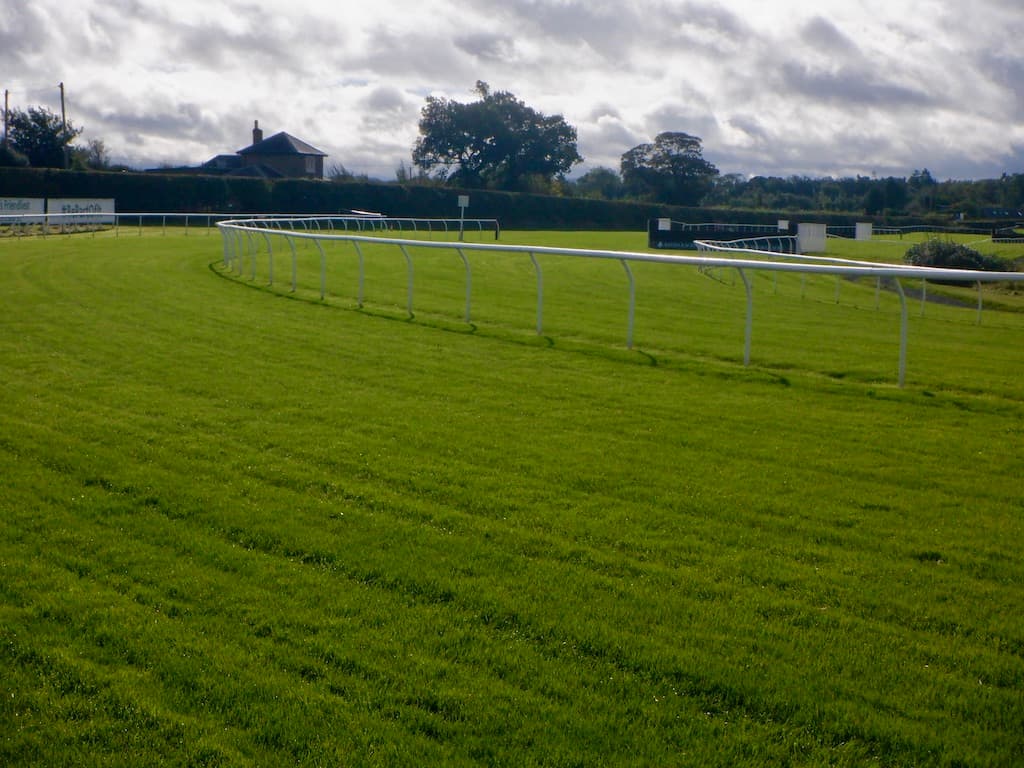
Kelso Racecourse History: 200 Years of Border Racing
Discover how Kelso became Scotland's premier jumps venue since 1822. From humble beginnings to hosting the Morebattle Hurdle in the Borders.
Read more
Premier Chase: Complete Guide
Your complete guide to the Premier Chase — the Listed staying chase run at Kelso on Premier Raceday alongside the Morebattle Hurdle.
Read more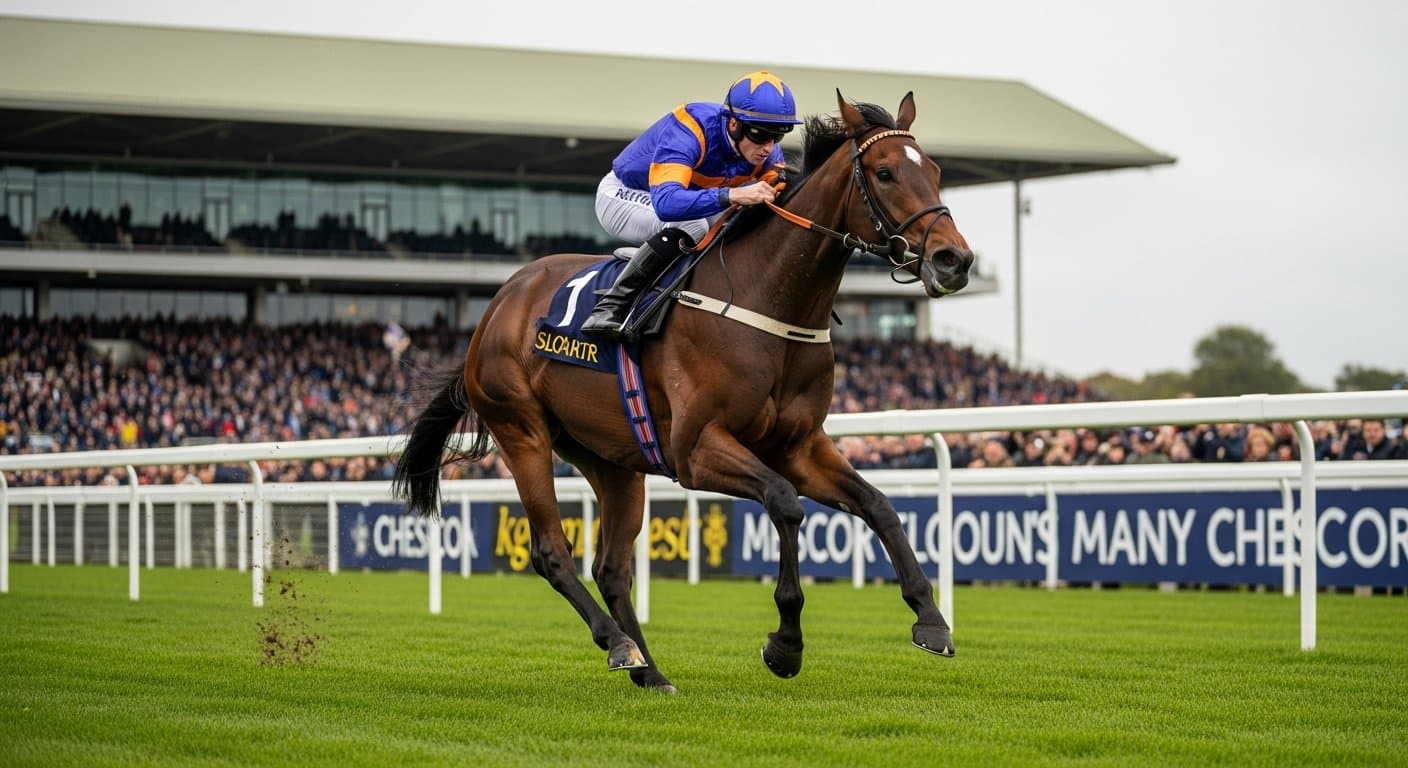
Many Clouds at Kelso: The Premier Chase Story
Many Clouds won the Listed Premier Chase at Kelso in 2016 by ten lengths, cementing his status as one of the great staying chasers of his era.
Read morePhotos on this page are used under Creative Commons licences. Titles, sources and licence links for each one are on our image credits page.
Research the field with the AI Race Predictor
Our model publishes calibrated win-probability estimates for UK races — a second opinion to understand a race, not tips. It's open about its record: it doesn't beat the market, and we show exactly how it does.
Work it out & learn the basics
Gamble Responsibly
Gambling should be entertaining and not seen as a way to make money. Never bet more than you can afford to lose. If you or someone you know has a gambling problem, help and support is available.