
Founder & Editor · Last reviewed 2026-04-05
Kelso sits in the heart of the Scottish Borders, roughly 45 miles south of Edinburgh, and it stages National Hunt racing exclusively from October through to late April or early May. The course is left-handed, flat, and shaped like a pear over a circuit of approximately 1 mile 4 furlongs. That layout produces a fair, open test — wide bends, a run-in of around 2 furlongs, and ground that can be anything from good in spring to heavy in the depths of a Borders winter.
From a betting perspective, Kelso's defining feature is its prize money. The Premier Raceday in late February or early March carries a total fund in excess of £330,000. The Morebattle Hurdle, a Listed contest over 2 miles, is the centrepiece — a recognised trial for the Cheltenham Champion Hurdle, with prize money that has exceeded £120,000 in recent seasons. The Premier Chase, Listed and run over 3 miles on the same card, rounds out the feature racing. That combination of prestige and prize money draws horses from across Britain and Ireland that would not otherwise travel to the Scottish Borders, and it changes the shape of the market considerably compared to a standard midweek card.
Sandy Thomson's Lambden yard in Berwickshire sits around 15 miles from the racecourse. His record at Kelso is exceptional: the proximity means his horses are trained on terrain that closely mirrors what they encounter on race day, and the local knowledge shows in the results. Lucinda Russell, operating out of Kinross around 50 miles to the north, regularly targets the course with her stronger horses. Nicky Richards, based at Greystoke in Cumbria, has built a strong record in Scotland and treats Kelso as a primary target for his northern string. When the Premier Raceday prize money climbs above £330,000, Gordon Elliott and Willie Mullins have both sent horses from Ireland.
The course suits handy, well-balanced horses that can quicken off the final bend. Front-runners hold their own on the flat circuit — there are no climbs to drain a pace-setter — but the 2-furlong run-in is long enough for a hold-up horse to mount a late challenge. In soft and heavy conditions, which are standard at Kelso from October through February, stamina reserves are tested across every trip from 2 miles upwards. In spring, when the ground improves, finishing speed becomes more relevant and the race picture changes meaningfully.
This guide covers everything a punter needs to approach Kelso with confidence:
- Track characteristics — what the flat, pear-shaped circuit demands from a horse and which running styles thrive
- Going and conditions — the Scottish Borders weather pattern, what soft and heavy ground mean for each distance, and how spring meetings differ
- Key trainers and jockeys — Sandy Thomson's home advantage, Lucinda Russell's targeting, Nicky Richards' record, and the northern jockey colony
- Betting strategies — the Thomson home angle, Premier Raceday market dynamics, the Morebattle as a Cheltenham trial, and the value in course repeaters
- Key races — the Morebattle Hurdle, the Premier Chase, and how to approach the full Premier Raceday card
For a full overview of the course's history, facilities, and how to get there, see the complete guide to Kelso Racecourse.
Bet on Kelso
Place your bets on Kelso races with a trusted bookmaker.

Promo code BETFRED50. New customers only. Register, deposit with a Debit Card, and place a first bet of £10+ at Evens (2.0)+ on Sports, to be settled within 7 days, to get £30 in Sports Free Bets and £20 in Bet Builder Free Bets within 24 hours of settlement. 7-day expiry. Eligibility & payment exclusions apply. Full T&Cs apply. Take Time to Think. BeGambleAware.org. 18+. Full T&Cs.

Promo code R30. New UK customers only, 18+. Register, deposit £10 or more, then place a £10 single cash bet at odds of 1/2 (1.5) or greater on any sports market (excluding Virtuals). Once the qualifying bet settles you get £30 in Free Bets (3 x £10) — the qualifying bet can win or lose. Free Bets are valid on any sports market excluding Virtuals, expire in 7 days, are non-withdrawable and must be used in full. Excluded deposit methods apply (including PayPal, Apple Pay, Skrill and NETELLER). Named bets such as Lucky 15 do not qualify. If you cash out the qualifying bet, or it is voided, you are no longer eligible for the offer. Ends 31.12.26. Full T&Cs apply. Please gamble responsibly. BeGambleAware.org. 18+. Full T&Cs.

Promo code BET40GET20. New UK customers, 18+. Register with the code and place a first bet of £40 or more at Evens (2.0) or greater. Receive 2 × £10 free bets: the first credited automatically once the qualifying bet settles, the second 24 hours later. Free bets must be placed at minimum odds of 4/1 (5.0), expire 24 hours after credit, and the free-bet stake is not returned with winnings. Debit card deposits only. Take Time to Think. BeGambleAware.org. 18+. T&Cs apply. Full T&Cs.

50% of your first-day net losses refunded as a free bet, capped at £25. New UK customers aged 18+ only. To qualify, deposit and place a first bet of £10 or more on any sport at minimum odds of evens (2.00), then place at least two further bets on different events, each worth at least 50% of your largest bet, all at evens (2.00) or greater. Losses are counted from your first settled bet until 23:59 the same day. Place a qualifying £10+ bet and you are guaranteed at least a £5 free bet. Bets placed at SP, void bets, cashed-out bets and bets struck with free bets do not count towards the offer. The free bet is credited the day after your qualifying bets settle and must be used within 7 days, after which it expires. It can be used at odds from 1/4 (1.25) up to 250/1 on singles and straight accumulators, but not on Trixie, Patent or Yankee style multiples. Free-bet stake is not returned with winnings. One offer per person, household, address, IP address and device. E-wallet deposits may not qualify, so check the cashier before depositing. Customers registered with GAMSTOP cannot claim. KYC identity verification must be completed before the free bet is credited. Take Time to Think. BeGambleAware.org. 18+. T&Cs apply. Full T&Cs.

New customers, 18+. Choose the sports bonus at sign-up, make a first deposit and receive a 100% bonus up to £50 in your Sports Bonus balance. To convert the bonus to cash, wager it 10x within 30 days. Single bets below Evens (2.00) do not qualify; accumulators do not qualify if any selection is below 1/2 (1.50). Virtual Sports, voided, cancelled, drawn, cashed-out and free-bet wagers do not count towards wagering. Only the first settled bet per event counts. Withdrawing before the wagering requirement is met forfeits the bonus balance including bonus winnings. Real-money funds are used before bonus funds. Deposits via Skrill or Neteller are not eligible. Not valid in conjunction with other promotions. Odds, bet and payment limits apply. 10bet general and promotion T&Cs apply. BeGambleAware.org. 18+. Full T&Cs.

New customers in Great Britain and Republic of Ireland, 18+. Place a £10 fixed-odds qualifying bet at minimum odds of 1/2 (1.50) — single or each-way (only the win part counts), pre-event or in-play, not cashed out early, within 28 days of opening the account. Receive up to £60 in bonuses credited over three days: 3 × £10 fixed-odds free bets (the first on settlement, then 24 and 48 hours later) plus 3 × £5 Total Goals FOOTBALL spread bets and 3 × £5 racing Winning Favourites spread bets, with a £1 racing Race Index spread bet as an extra on top. The spread bets need a full spread-betting account, opened within 28 days of the fixed-odds account and subject to Spreadex's eligibility and appropriateness checks. Free-bet stakes not returned with winnings; free bets valid 28 days from issue. IMPORTANT: the £5 credits are SPREAD bets — sports spread betting carries the risk that losses can exceed your stake. Sports spread-betting customers do not have Financial Ombudsman or FSCS recourse. Take Time to Think. BeGambleAware.org. 18+. T&Cs apply. Full T&Cs.

Promo code WELCOME15, entered under My Bonuses after registering. New UK customers, 18+. Place a first qualifying bet of at least £10 from your cash balance at odds of evens (2.0) or greater within 7 days of opening the account. Once the qualifying bet fully settles you receive £15 in free bets, credited as 3 x £5 tokens with set uses: one £5 accumulator free bet (minimum 4 legs, each leg at 2/5 or bigger), one £5 sports free bet (any market at evens or bigger) and one £5 Sub Cover free bet (selected football player markets at evens or bigger). Free-bet stakes are not returned with winnings. Free bets expire 7 days after they are credited. Void, cashed-out and partially cashed-out bets do not qualify. One offer per customer. Confirm the current terms on BetGoodwin's own welcome-offer page before claiming. Take Time to Think. BeGambleAware.org. 18+. T&Cs apply. Full T&Cs.

New UK customers, 18+. Minimum deposit £10. Place a £10 qualifying single on sports (excluding virtuals) at minimum odds of 1/2 (1.50), settled within 14 days. Deposit-method exclusions apply. Receive £30 in free bets (stake not returned), split £20 for sportsbook use (2 x £10) and £10 for Bet Builder only (2 x £5); Bet Builder does not cover horse racing. Free bets must be accepted within 7 days and expire 7 days after acceptance. No promo code required. Best Odds Guaranteed on UK & Irish racing, subject to having staked over £25 in the previous seven days. Operated by LiveScore Betting and Gaming (Gibraltar) Ltd, UKGC 56859. Confirm the current terms on LiveScore Bet's own promotions page before claiming. Take Time to Think. BeGambleAware.org. 18+. T&Cs apply. Full T&Cs.
18+. BeGambleAware.org
Track Characteristics
Kelso's circuit measures approximately 1 mile 4 furlongs and is left-handed. The shape is often described as pear-like: a long back straight, two wide sweeping bends, and a run-in of around 2 furlongs from the final turn to the winning post. The terrain is essentially flat throughout. There are no significant climbs, no cambers to speak of, and no downhill sections that favour or penalise particular types. The bends are wide enough that horses rarely get crowded, and scrimmaging — the kind that can knock a race sideways at tighter tracks — is uncommon.
What the Flat Circuit Demands
Because the track is flat and the bends are generous, Kelso tests a horse's ability to maintain rhythm and jump accurately rather than its raw athleticism. A well-balanced horse that settles into a good stride and clears its fences cleanly will cover the circuit efficiently. The 2-furlong run-in is long enough for a hold-up horse to mount a late challenge, but it is not so long that a front-runner is certain to be caught. Horses that quicken well off the final bend — those that can lift the tempo in the last half-mile — carry a consistent advantage, particularly in the 2-mile hurdle division.
Front-runners do reasonably well at Kelso. The flat terrain means there is no climb to drain a pace-setter's reserves, and the wide bends allow a leader to coast through turns without losing momentum. In heavy ground, a horse that travels prominently can build an advantage that proves impossible to peg back in the final quarter-mile, when the soft surface makes closing moves more demanding.
The Chase Course
The steeplechase course follows the same left-handed circuit. The fences are standard construction and well maintained. Compared to tracks such as Cheltenham or Haydock, the fence count per circuit is relatively low, which means the race is more about sustained galloping ability and less about jumping athleticism. A clumsy jumper that recovers quickly can still be competitive; a horse that makes repeated bad errors will lose too much ground on the long stretches between obstacles. The Premier Chase at 3 miles means runners negotiate the circuit twice, and accuracy over the second circuit — when fatigue increases the risk of errors — becomes a significant factor.
Distance Range
Kelso runs races from 2 miles up to approximately 4 miles. The Morebattle Hurdle at 2 miles is the most important race on the calendar and the one that attracts the strongest fields. The Premier Chase at 3 miles is the top chasing contest. At 4 miles, the course produces a thorough stamina test — the flat track removes any natural gathering point where a horse might coast, so runners travel at a consistent gallop throughout, which places heavy demands on staying power in soft conditions.
How Kelso Compares to Other Scottish Tracks
Perth is right-handed and relatively tight, with a circuit of around 1 mile 2 furlongs. Horses that have performed well at Perth — particularly neat, quick-actioned types that handle the bends well — do not always transfer their form to Kelso's more open, galloping test. The left-handed direction is also different, and a small number of horses show a clear preference for one turn or the other.
Musselburgh is a flat, left-handed, dual-purpose track on the outskirts of Edinburgh. The pace of racing there is sharper in the jumps division — the circuit is smaller — but the left-handed direction and flat surface create some overlap in what horse types succeed. A horse that has run well at Musselburgh in a hurdle race is worth considering at Kelso if the step up in trip suits.
Ayr, which stages the Scottish Grand National, is a wider, more galloping right-handed circuit. Chasers that have performed well at Ayr and then arrive at Kelso need the left-handed direction to be factored in, but the galloping nature of both tracks means form transfers more reliably between these two venues than between Kelso and Perth.
The broad principle is: form from galloping, flat tracks translates well to Kelso. Form from tight, undulating, or sharper tracks requires more scrutiny before applying it here.
Going & Conditions
Kelso is a jumps-only course, so there is no draw bias in the flat-racing sense. Every runner starts from a line and faces the same track. What matters is the going — the ground conditions on the day — and in the Scottish Borders, those conditions vary considerably across the season.
The Seasonal Going Pattern
The October-to-February window at Kelso produces the most testing ground of the season. The Scottish Borders sits at moderate elevation with a westerly weather exposure, and autumn and winter rainfall is frequently heavy. Going descriptions of soft or heavy are standard from November through to early February, and heavy ground is not unusual even in late February if a wet spell arrives before Premier Raceday. March and April meetings tend to improve: the drier, longer spring days shift the ground towards good to soft, and occasionally good when a dry spell holds.
The flat terrain at Kelso works in its favour compared to courses with significant gradients. Water does not pool on slopes or in valley dips in the same way — it disperses more evenly. That means Kelso can drain to a rideable surface relatively quickly after a rain event. A course that reads soft on a Wednesday after two days of rain may be good to soft by the Saturday if the forecast clears. Checking the going report close to race time is always worthwhile at this venue.
Soft and Heavy Ground: What It Changes
When the ground rides soft or heavy at Kelso, stamina becomes the overriding quality. At 3 miles in the Premier Chase, a circuit and a half in heavy conditions is a thorough test that eliminates horses without proven staying credentials. In the 2-mile hurdle division — including the Morebattle Hurdle — soft going narrows the field effectively to horses that have previously shown they can handle cut in the ground. Lightly framed, fast-ground types that bounce off a quicker surface often fail to fire when the conditions turn demanding.
Horses that thrive in soft and heavy conditions at Kelso tend to have one or more of the following: a well-developed stride that works through heavy ground rather than on top of it; a proven record at similar distances in testing conditions elsewhere; and the physical scope to carry condition without losing their action. Sandy Thomson's horses are frequently well prepared for testing ground given the terrain around his Lambden yard in Berwickshire, which sits on land that can ride soft in winter.
Good to Soft and Good: The Spring Difference
March and April meetings at Kelso can produce good to soft or occasionally good ground when a dry fortnight coincides with one of the late-season fixtures. Good ground at Kelso is a different race. Speed becomes relevant in the 2-mile division: horses that had been grinding out wins in heavy ground may find quicker-actioned rivals passing them on a faster surface. The run-in of around 2 furlongs becomes less of a stamina question and more of a test of finishing speed. Horses with a sharp turn of foot — those that can quicken in the final half-mile — are more likely to feature prominently.
For the late-season hurdle handicaps in April, looking back at the horse's form in similar going conditions is more predictive than the raw form figures. A horse rated 130 with all its wins on heavy ground and a horse rated 130 with a win on good to soft are very different propositions when Kelso dries out in spring.
Ground Variability Within a Card
Kelso has a reputation for going that can vary between the hurdle course and the chase course on the same day. The hurdle course is the inside line in most configurations, and it can carry a little more moisture than the chase course after the ground has been opened up by earlier runners. Horses with experience of both at the track are not always comparable on going alone — a runner that has won at Kelso on soft may have done so on the hurdle track in autumn, when conditions were heavier than the going stick suggested. Checking whether previous wins at the track came on the hurdle or chase circuit — and in which part of the season — adds a useful layer of detail.
Summary: Matching Horse to Ground
- October to February: expect soft to heavy; stamina and proven wet-ground form essential
- March: variable — Premier Raceday can be anything from heavy to good to soft depending on the winter
- April onwards: improving ground; speed and finishing pace become relevant
- Always verify the going report on the day — the flat terrain means conditions can change quickly
Key Trainers & Jockeys
Understanding which trainers send horses to Kelso with a real intention to win is one of the most straightforward edges available at this track. The course is not a convenient stop for most southern yards — it requires a significant journey from England's training centres — so the local and northern trainers who target Kelso regularly tend to have their horses prepared specifically for its conditions.
Sandy Thomson — The Local Specialist
Sandy Thomson trains at Lambden in Berwickshire, approximately 15 miles from Kelso racecourse. That proximity is not incidental. His horses are worked on Border farmland where the terrain and going conditions mirror what they encounter on race day, and he has an intimate understanding of how the track rides through the different ground conditions of the season. His record at Kelso is among the best of any trainer in Britain relative to the number of runners he sends there.
When Thomson declares a horse for Kelso, particularly in a race that suits its profile — right distance, appropriate going, compatible class — it warrants close attention. The market sometimes underestimates his runners when they line up against better-known names from bigger yards, which is exactly the scenario where the local advantage has most value. Thomson's jockey relationships are consistent, which means ride quality rarely fluctuates unexpectedly.
Lucinda Russell — Quality From Kinross
Lucinda Russell operates from Kinross, around 50 miles north of Kelso. She is best known nationally as the trainer of One For Arthur, winner of the 2017 Grand National, but her Scottish programme targets Kelso regularly with horses in the mid-to-upper tier of the National Hunt handicap range. Russell does not send horses to Kelso for the sake of a run — when she enters a horse there, it tends to be specifically placed for the conditions and the race. Her record at the Premier Raceday in particular reflects a clear pattern of targeting the feature races with appropriately prepared horses.
Nicky Richards — The Cumbrian Connection
Nicky Richards trains at Greystoke in Cumbria, approximately 60 miles south-west of Kelso. He has built one of the most consistent records of any trainer in northern England and southern Scotland, and Kelso features regularly in his seasonal programmes. His horses tend to be well prepared for the soft-ground conditions that characterise the Borders in winter, and he has sent competitive runners for both the Morebattle Hurdle and the Premier Chase over many seasons. Brian Hughes has ridden regularly for Richards at Kelso and brings familiarity with both the trainer's preferences and the track.
Donald McCain and the English Visitors
Donald McCain, based at Cholmondeley in Cheshire around 80 miles south of Kelso, occasionally targets the Premier Raceday specifically. The prize money of £330,000-plus makes the journey worthwhile for a yard of his size, and he has sent runners for the Morebattle Hurdle in recent seasons. The broader pattern with English yards is: they appear for the big money, not for standard handicaps. When a trainer like McCain or Brian Ellison declares for a Kelso handicap outside of Premier Raceday, it is worth checking whether the horse has a specific going or distance requirement that makes Kelso the obvious target.
Irish Raiders
Gordon Elliott and Willie Mullins have both sent horses for the Morebattle Hurdle in seasons when the race represented a clear stepping stone toward Cheltenham. Irish-trained horses at Kelso tend to be underestimated by the market — partly because their form may not be widely understood by punters focused on British form lines, and partly because the logistics of a trip to the Scottish Borders suggest the trainer has a specific reason for running there. When an Elliott or Mullins horse arrives for the Morebattle, treat it with the same respect you would give to one of their Cheltenham Festival entries.
Key Jockeys
Derek Fox, who has ridden for both Thomson and Russell, brings consistent local knowledge to Kelso. Brian Hughes is the dominant northern jump jockey and rides regularly at the course for multiple yards including Richards. Danny McMenamin and Sean Quinlan are both active in the Scottish circuit and build course knowledge across the Kelso season. When a horse switches to a jockey who regularly rides at Kelso from one who does not, that can be a quiet positive — particularly in races run in heavy ground where knowing where to take cover on the circuit has real value.
Betting Strategies
Kelso is a fair track that does not produce many unexpected results in the sense of a quirky course configuration distorting outcomes. The best horse usually wins. That means the value in betting at Kelso comes from identifying when the market has mispriced a horse relative to its fitness, its ground suitability, or its trainer's targeting pattern — rather than from exploiting a track bias.
The Sandy Thomson Home Advantage
The most reliable single angle at Kelso is backing Sandy Thomson's runners when the conditions fit. Thomson trains 15 miles from the course in Berwickshire, and his horses have a well-documented home-track record. The practical edge comes from the fact that the market does not always reflect this advantage adequately, particularly when Thomson runs horses in races that attract competition from larger yards to the south.
The strategy is straightforward: when Thomson declares a runner for Kelso in a race where the going, distance, and class all match the horse's profile, include it in your shortlist ahead of horses from yards where Kelso is a secondary target. If the SP reflects the Thomson runner's record accurately, pass. If the market has priced it longer than its course record suggests, it represents a strong betting case.
Premier Raceday Dynamics and the £100,000 Bonus
Premier Raceday — typically late February or early March — operates as a distinct betting environment. The total prize fund exceeding £330,000 draws horses from across Britain and Ireland, including runners that would not otherwise travel to Kelso. That changes the nature of the fields. The Morebattle Hurdle and the Premier Chase attract horses near the top of the relevant divisions, and the form in both races tends to be informative when projected forward to Cheltenham.
The £100,000 bonus available to a Morebattle winner that goes on to win at the Cheltenham Festival creates a specific incentive structure. Trainers with serious Cheltenham aspirations have a financial reason to run their horses here rather than in a direct preparation race elsewhere, which can produce a competitive Morebattle field in a season when the Champion Hurdle market is open. When the Cheltenham market is dominated by one or two clear favourites, the Morebattle field may be slightly weaker; when it is truly open, the Morebattle tends to attract more ambitious entries.
For the rest of the Premier Raceday card, the elevated prize money means competitive fields throughout. Each-way bets in the supporting handicaps can offer value when the market underestimates a local or northern runner against the field of visitors drawn by the big-race programme.
The Morebattle Hurdle as a Cheltenham Trial
Treat the Morebattle with the same analytical framework you would apply to any recognised Cheltenham trial. Look at the Champion Hurdle market and identify which horses in it have been entered for the Morebattle. An Irish-trained runner from Gordon Elliott or Willie Mullins arriving at Kelso in February or March should be assessed on its Irish form, not discounted because Kelso is geographically inconvenient. Irish raiders at the Morebattle are sometimes available at SP prices that do not reflect their true form, particularly early in the week when the market has been shaped by punters who know the British form lines better.
After the race, be aware that the BHA handicapper can mark up a Morebattle winner sharply if the form reads well against the Cheltenham market. A winning Morebattle run can close off handicap opportunities for the horse's next few starts.
Course Repeaters
The flat, consistent circuit at Kelso means course form is more reliable here than at tracks where course configuration varies significantly. A horse that has won or placed at Kelso over the same trip and in similar going conditions is a positive bet. The track does not change — the same bends, the same run-in, the same flat terrain — and a horse that has shown it handles this test is likely to handle it again.
The most predictive combination is: previous winner or placed horse at Kelso + similar going on the day + same trainer and jockey combination. When all three align, the horse deserves to be at or near the head of the shortlist regardless of price.
What to Avoid
Horses from sharp or undulating tracks do not always transfer form to Kelso. A horse with strong form at Musselburgh on a tight circuit, or from Exeter or Newton Abbot in the south where gradients play a large role, may find Kelso's flat, galloping test a different proposition. The flat track rewards a particular stride pattern and a consistent galloping rhythm. Horses that rely on downhill sections to get into their races, or that need sharp bends to offset a lack of stamina, are usually exposed on the Kelso circuit.
Avoid backing southern raiders against Sandy Thomson's or Nicky Richards' horses in standard handicaps unless the form clearly supports them. The logistics of a 300-plus-mile round trip from Newmarket or Lambourn for a handicap hurdle at Kelso suggest a horse being placed to find easy pickings — that scenario is possible but warrants scrutiny of whether the yard's record at the track justifies the confidence the price implies.
To compare place terms and each-way promotions across the major bookmakers, see our best bookmakers for horse racing guide.
Key Races to Bet On
Kelso's racing calendar is structured around a small number of feature races that define the course's year. Premier Raceday in late February or early March is the headline event, but the autumn and early winter programme also produces informative results worth tracking.
Morebattle Hurdle (Listed, 2m, February/March)
The Morebattle Hurdle is Kelso's signature race and one of the most important hurdle trials north of the border. Run over 2 miles on Premier Raceday, it carries Listed status and prize money that has exceeded £120,000 in recent renewals. The £100,000 bonus for a winner that goes on to land the Cheltenham Champion Hurdle makes this one of the more financially significant trials in the British calendar.
Betting approach: identify the runners in the Cheltenham Champion Hurdle market that have been entered here. Irish-trained horses from Elliott or Mullins can arrive at SP prices that do not reflect their form in Ireland — check the Irish Racing Post figures rather than relying on British ratings alone. The BHA handicapper tends to raise the winner after the race, so the post-race market on the Champion Hurdle can shift quickly once the result is known. Ante-post positions in the Morebattle are best taken after the final declarations are confirmed, as the field composition can change significantly in the week before the race.
Form from the Morebattle is highly informative for Cheltenham preparation handicaps. A well-beaten runner in the Morebattle who performed respectably against the first two may be well treated in the Coral Cup or similar handicap if the margin flatters the first horse.
Premier Chase (Listed, 3m, February/March)
The Premier Chase runs on the same Premier Raceday card as the Morebattle. It is a Listed staying chase over 3 miles and attracts quality chasers from across Britain. Form from Haydock's winter chase programme and the Ascot December meeting is directly relevant: horses that have run in graded chases at those venues with something to prove at Listed level will often be sent to Kelso for the Premier Chase as a confidence-building target or a prep for Cheltenham's Gold Cup trials.
Betting approach: the 3-mile trip in Borders conditions in late February means stamina is the overriding quality. Check the going on the day — if Premier Raceday arrives on heavy ground, horses without proven staying form in mud are significant risks however their form reads in quicker conditions. Trainers who have specifically placed horses for the Premier Chase rather than running them in a nearby graded race have a pattern worth noting: they have judged the horse capable of winning at Listed level, which tells you something about its current fitness and form.
Premier Raceday — The Full Card
The £330,000-plus total prize fund for the day means the supporting handicaps are also above average in quality. The programme draws horses from yards that do not usually travel to Kelso, which creates a mixed field of local and visiting runners. The key strategy for the supporting races is to identify which visiting runners are there because the race fits them precisely — right distance, right going, right class — versus those that have been entered speculatively because the prize money made it attractive.
Local and northern trainers with strong Kelso records — Thomson, Russell, Richards — retain their advantage in the handicaps even on Premier Raceday, because their horses are conditioned for the track and the going, while some visitors arrive without prior experience of the course.
The Autumn Novice Programme (October–November)
Kelso's early-season programme in October and November includes novice hurdles and novice chases that serve as the first starts of the National Hunt season for Scottish and northern yards. These races are less analysed by the wider market than the feature races, which can create value. Sandy Thomson in particular uses Kelso in October and November to introduce horses that may develop into useful tools by the time Premier Raceday comes around. Tracking his novice winners from autumn through to spring — particularly any that show they handle the soft ground confidently — can identify horses before they are fully priced up by the market. The form from these early meetings also provides a going-preference baseline that is worth retaining when assessing runners in the spring.
Share this article
More about this racecourse
All Kelso guides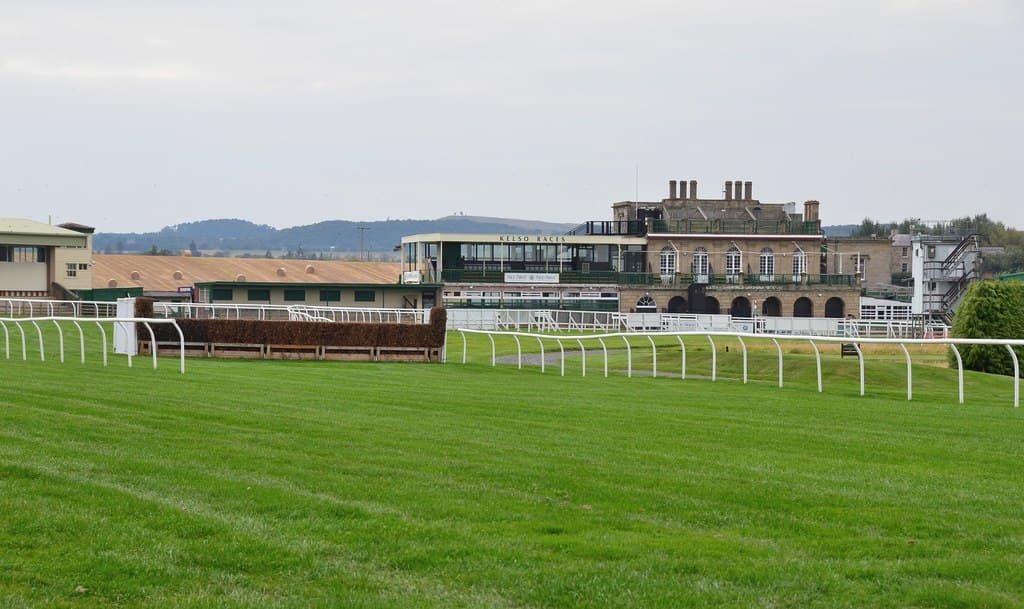
Kelso Racecourse: Complete Guide
Everything you need to know about Kelso Racecourse — quality jump racing in the Scottish Borders, the Morebattle Hurdle, and the Premier Chase.
Read more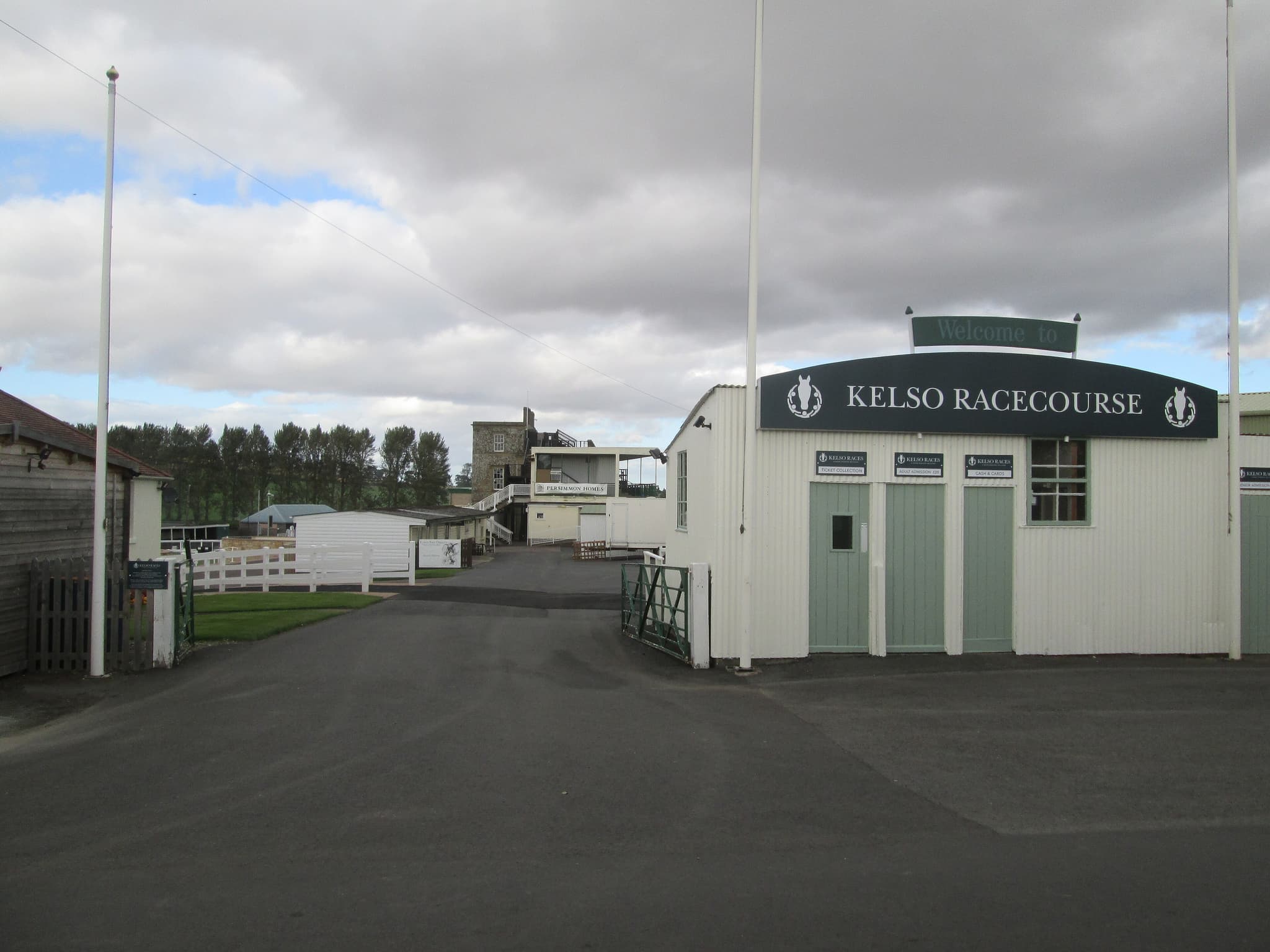
A Day Out at Kelso Racecourse
A day at Kelso — getting there, what to wear, enclosures, food and drink, and insider tips for the Scottish Borders' premier jumps venue.
Read moreKelso Festival Guide
Your complete guide to Kelso Racecourse — the Border country jump festivals, the Borders National and what makes this Scottish Borders track one of Britain's most characterful jump venues.
Read morePhotos on this page are used under Creative Commons licences. Titles, sources and licence links for each one are on our image credits page.
Research the field with the AI Race Predictor
Our model publishes calibrated win-probability estimates for UK races — a second opinion to understand a race, not tips. It's open about its record: it doesn't beat the market, and we show exactly how it does.
Work it out & learn the basics
Gamble Responsibly
Gambling should be entertaining and not seen as a way to make money. Never bet more than you can afford to lose. If you or someone you know has a gambling problem, help and support is available.