
Founder & Editor · Last reviewed 2026-03-02
Lingfield Park has one of the more unlikely stories in British racing. Founded in the late Victorian era as a modest country racecourse in the Surrey countryside, it could easily have faded into obscurity — a pleasant but forgettable venue hosting small-time flat and jumps racing for a local audience. Instead, it reinvented itself in the late 1980s as one of Britain's pioneering all-weather tracks and became a model for how racecourses could survive and thrive in the modern era.
The story of Lingfield is really two stories. The first is a traditional narrative of a Victorian sporting venture — local landowners, entrepreneurial clerks of the course, and the slow development of a racing programme that gradually attracted better horses and bigger crowds. The second is a tale of transformation: the bold decision to install an artificial surface, the teething problems that followed, and the eventual emergence of the Polytrack as a surface that could produce real quality racing year-round.
Between those two chapters, there are periods of near-extinction. Lingfield has been threatened by financial troubles, planning disputes, changing ownership and the simple economic reality that running a racecourse in rural Surrey isn't always profitable. That it's still here — still hosting around 80 fixtures a year — is a testament to the stubborn resourcefulness of the people who've kept it going.
What makes the Lingfield story worth telling in full is precisely the ordinariness of its origins and the scale of what it eventually became. This was never a great racecourse in the classical sense. It didn't have Royal patronage, a Classic race to its name, or a grandstand that inspired awe. What it had was a railway connection, a committed local following, and — when the time came — the nerve to do something that no other British course had attempted. That combination turned a struggling provincial fixture into an institution that fundamentally changed how the sport operates.
The Polytrack surface that Lingfield introduced, and later perfected, is now a standard part of the British racing landscape. Six all-weather tracks operate across Britain, and the pattern Lingfield established — year-round fixtures, consistent going, data-rich form — underpins a multi-million-pound part of the industry. None of that happens without Lingfield going first, absorbing the criticism, and proving the model could work.
This article traces Lingfield Park's journey from its Victorian origins through its turf racing heyday, the famous moments that punctuate its history, and the all-weather revolution that redefined the course entirely. It's a story that says a lot about British racing's ability to adapt — and about what happens when a course finds the courage to do something different.
Origins & Foundation
Racing at Lingfield predates the formal racecourse by several decades. Informal meetings and point-to-points had been held in the area since the early nineteenth century, making use of the gently undulating farmland between Lingfield village and the Dormansland estate. The Surrey-Kent border country was prime hunting territory, and where there were hunting men, there was almost always racing of some kind.
The landscape that would eventually become Lingfield Park Racecourse had been used for informal equestrian activity since at least the 1860s, with local farmers and landowners hosting occasional matches across privately held fields. These events were typical of the rural sporting culture of Victorian England — a mixture of real competition, social occasion and an excuse to wager. They attracted participants from across the Surrey and Kent border communities and helped establish a culture of horse sport in the district that made formal racing a natural next step.
The Foundation
The catalyst for a permanent racecourse came in 1890, when a group of local landowners and racing enthusiasts obtained a licence to stage flat racing on a site just east of the village. The driving force behind the venture was a consortium that recognised the potential of the railway connection — Lingfield station had opened in 1884, linking the village to London Bridge, and the accessibility of the site was its key selling point from the very beginning.
The site chosen for the course occupied ground on the Lingfield Park estate, an area of woodland and farmland that had been in the hands of prosperous Surrey families for generations. The topography was well-suited to racing: a natural oval formed by gently rolling ground, with enough elevation change to make the undulations interesting without creating serious gradients. The right-handed configuration that the turf course still follows today emerged naturally from the lie of the land.
The first official meeting took place on 12 November 1890, and it was a modest affair by any standard. A small crowd gathered on open ground with temporary rails, a basic weighing room and virtually no permanent structures. The card featured flat races over distances between five furlongs and a mile and a half, and the quality of the horses was solidly provincial. Nobody present that day could have imagined the course would still be in operation more than 130 years later. But the logistics worked, the crowd behaved, the racing was competitive, and the organising committee came away satisfied that they had the basis for something sustainable.
Early Development
Through the 1890s and into the Edwardian era, Lingfield gradually developed from a bare field into something resembling a proper racecourse. A grandstand was erected, the track was improved and fenced, and the draining of the low-lying areas became an ongoing — and never entirely resolved — engineering challenge. The course added National Hunt racing to its programme, which was significant. It meant Lingfield could race year-round rather than relying solely on the flat season.
The Jockey Club recognised Lingfield early on, which gave it credibility and helped attract better-quality horses. By the turn of the century, the course was hosting around 15–20 meetings a year, a respectable number for a provincial venue. The racing wasn't top-class, but it was competitive and well-attended, particularly on bank holidays when special trains ran from London Bridge.
The Edwardian period saw Lingfield quietly establish a reputation as the sort of course that serious southern trainers took seriously without making a fuss about it. Trainers based in Epsom, Newmarket and the Sussex Downs began sending horses to Lingfield for preparatory runs, treating the course as a useful stepping stone rather than a destination in itself. That functional role — honest, well-run, accessible — would define Lingfield's place in the racing landscape for most of the twentieth century.
The stands were extended in the late 1900s and again before the First World War, reflecting steady growth in attendances. The betting ring developed, professional bookmakers established regular pitches, and the social infrastructure of a proper racecourse — bars, restaurants, members' areas — gradually took shape. By 1910, Lingfield was a functioning, financially viable venue with a settled identity.
The Railway Connection
The importance of the railway to Lingfield's survival cannot be overstated. While other small courses in the south of England were dying for lack of accessible transport, Lingfield thrived because Londoners could get there and back in a day without difficulty. The Southern Railway actively promoted race meetings at Lingfield, running cheap excursion tickets and advertising the course as a convenient day out from the capital.
On race days, the station at Lingfield saw trains arriving every twenty minutes or so from London Bridge, disgorging crowds that might otherwise have gone to Brighton or taken their leisure at home. The excursion fares were deliberately affordable, positioned at a price point that allowed working-class Londoners to attend — not just the middle-class sporting set. This gave Lingfield a more socially mixed attendance than many comparable venues, and that democratic character left its mark on the course's culture.
This accessibility shaped Lingfield's identity from the start. It was never going to be an exclusive venue like Ascot or Goodwood — it was a people's course, a place where ordinary racing fans could watch decent horses in pleasant surroundings without the expense or social pretension of the bigger meetings. That democratic character has survived through every transformation since.
Wartime and Its Aftermath
The First World War disrupted racing nationwide, and Lingfield — like many courses — struggled to rebuild its programme afterwards. Racing was suspended from 1915 to 1918, and the course was used for military purposes during the conflict, as were many British sporting grounds. The return to racing in 1919 was cautious: the infrastructure needed attention, the horses that had been in service needed replacing, and the public appetite for pre-war leisure pursuits had to be re-established.
The interwar period saw fluctuating attendances and occasional financial difficulties, though the course never came close to closing. The rise of greyhound racing and the spread of football as a mass spectator sport drew leisure spending away from horse racing in the 1920s and 1930s, and Lingfield, with its reliance on day-trippers from London, felt those pressures acutely. The response was to lean into the course's strengths: convenient access, a relaxed atmosphere, and a fixture list that offered racing year-round.
The Second World War brought a second suspension, with the course again pressed into military service. The facilities survived largely intact, though the grounds required substantial work before racing could resume. The British Expeditionary Force used parts of the site, and the stands were occupied by administrative operations. When racing finally resumed in 1945, Lingfield emerged ready to adapt to the very different social and economic landscape of postwar Britain.
Challenges and Survival
What kept Lingfield going through the difficult decades was its dual-purpose nature. While many small flat courses could only offer racing for six months of the year, Lingfield's National Hunt programme filled the winter months and gave the venue a year-round purpose. Trainers in the south of England appreciated having a local jumping track, and the modest prize money was offset by the convenience of not having to travel horses hundreds of miles for a winter fixture.
The course's low-lying position remained a challenge throughout this period. Waterlogging was a persistent issue that led to abandoned meetings and frustrated racegoers, particularly in wet winters. The drainage systems installed in the Edwardian era were barely adequate for the volume of water that could accumulate after sustained rainfall, and the cost of proper remediation was beyond the resources of a course running on tight margins. Several meetings were lost to flooded ground each year, and the uncertainty this created made planning difficult for both the management and the racing public.
By the late 1930s, Lingfield had established itself as a useful, if unremarkable, part of the British racing landscape. It wasn't producing champions or attracting international attention, but it was doing what small courses need to do — providing competitive, well-organised racing and giving its community a reason to come through the gates. The foundations it had built over fifty years would prove more durable than anyone could have anticipated when the decisive transformation finally came.
Turf Racing Heyday
The postwar decades, from the late 1940s through to the 1980s, represent Lingfield Park's most sustained period as a traditional turf racecourse. The course emerged from the Second World War intact — it had been used for military purposes but not severely damaged — and quickly resumed racing with an appetite for improvement that would define the next forty years.
Postwar Rebuilding
Lingfield's postwar development was driven by a determination to raise the quality of both the racing and the facilities. The stands were modernised, the track was improved, and the fixture list was expanded. By the 1950s, the course was hosting around 25 meetings a year, with a growing reputation for staging well-organised racing in attractive surroundings.
The key appointment was a series of capable clerks of the course who understood that Lingfield's appeal lay in accessibility and atmosphere rather than prestige. They focused on building a loyal local following, maintaining the grounds to a high standard and ensuring that the racing card offered competitive action at every level. The approach worked — attendances were healthy, particularly at weekend meetings and the holiday fixtures that had always been Lingfield's strongest draws.
Investment in the physical fabric of the course picked up through the 1950s and 1960s. New grandstand sections were added, the weighing room was upgraded, and a proper member's enclosure was established. The parade ring was landscaped, and the walking routes between the enclosures and the trackside were improved. None of this was ambitious by the standards of the major courses, but it reflected the steady accumulation of improvement that defines a well-managed provincial venue. Lingfield was becoming a better version of itself rather than trying to be something it wasn't.
The Turf Course Layout
The turf track at Lingfield presents a strikingly different challenge from the all-weather oval that now dominates the site. The right-handed undulating circuit tests horses in ways that flat, left-handed tracks do not. The course rises and falls over its circumference, with a significant climb up to the home turn and then a descent into the straight that rewards horses with balance and the ability to handle changing gradients.
The character of the turf track suited a particular type of horse: adaptable, well-balanced, comfortable racing right-handed on ground that wasn't perfectly flat. Classic contenders who handled Lingfield well tended to handle Epsom well too, which was one reason the Derby Trial consistently attracted the right sort of runners. The surface was rarely exceptionally fast — the Surrey clay held moisture — and the undulations prevented the track from riding the way a flat galloping course would. Horses needed to be versatile.
The Derby Trial
Lingfield's most significant turf race, the Derby Trial, was established as a recognised Classic preparation race and gave the course a place on the wider racing calendar. Run over a mile and a quarter in May, it attracted real Classic contenders — three-year-olds being tested for stamina and class before stepping up to Epsom itself. Not every Derby Trial winner went on to greatness, but enough of them ran well at Epsom to give the race credibility and pull in good crowds.
The race's timing was deliberate. Run in May, before Epsom but after the early-season Guineas trials, the Derby Trial occupied a specific gap in the Classic preparation calendar. Trainers who wanted one final run over middle distances before Epsom could point a horse here without the risk of sending it to a higher-profile and potentially more demanding occasion. The intimacy of Lingfield — smaller crowds, a course where the staff knew you by name — also suited trainers who preferred to prepare big horses quietly rather than in the glare of a major course.
The Derby Trial brought media attention that Lingfield wouldn't otherwise have received. Television coverage from the late 1960s onwards meant the course was seen by a national audience, and the connection to the Derby — the most famous flat race in the world — elevated Lingfield's profile beyond its modest size.
A Jumping Stronghold
On the National Hunt side, Lingfield developed a reputation as a useful track for southern-based trainers. The sharp, left-handed jumping circuit suited nimble, quick-jumping horses, and the course attracted a loyal following of jumping enthusiasts who appreciated the informality and accessibility. While the prize money couldn't compete with Cheltenham or Kempton, the quality of the handicap chases and novice hurdles was consistently good.
Several prominent trainers based in Surrey, Sussex and Kent used Lingfield as a regular starting point for promising horses. The course's relative compactness made it a good educational track — young horses could learn to jump at racing pace without facing the demanding fences and undulations of bigger venues. Trainers knew that a horse that handled Lingfield's sharp turns and accurately-placed fences would be well-prepared for most other tracks.
The jumping course hosted a number of competitive handicap chases through the 1960s and 1970s that attracted fields worthy of a more prominent venue. Southern-based stables could rarely justify the travel expense of taking horses to Cheltenham or Sandown for bread-and-butter novice hurdles, and Lingfield met that need efficiently. The prize money was modest, but the racing was honest and the management ran an orderly meeting.
The fences at Lingfield on the National Hunt track had a reputation for being accurately placed and well-built, which suited young horses learning their trade. The final ditch before the home straight was taken at an awkward angle — the descent into the bend caught some horses out — and it produced its share of drama over the years. Several well-fancied horses unseated their riders there when seemingly set for comfortable wins, giving punters the kind of heartbreak that is integral to the jumping experience.
The Social Scene
Through the 1960s and 1970s, Lingfield became part of the social fabric of Surrey racing. Saturday meetings drew families and regular racegoers who treated the course as their local, returning week after week through the seasons. The atmosphere was distinctly different from the grand occasions at Ascot or the festival buzz of Cheltenham — it was relaxed, familiar and friendly.
The course's catering developed through this period to reflect the social expectations of a growing leisure economy. Proper sit-down dining arrived in the members' areas, the bars were expanded, and the hospitality operation was professionalised enough to attract corporate bookings. Lingfield was never a fashionable venue, but it was a comfortable one, and the distinction mattered. People who might have felt intimidated by the formality of Ascot or the competitive crowds at Sandown found Lingfield a more welcoming proposition.
The course also hosted occasional non-racing events, from dog shows to agricultural fairs, which kept the venue busy between meetings and embedded it in the local community. This connection to the area around it was another survival factor — Lingfield wasn't just a racecourse, it was a community asset, and that gave it a constituency of support when times got tough.
Through the 1970s, the course regularly attracted trainers from the leading Epsom and Lambourn yards who used the course's May fixtures to put final preparations on Classic hopes. Horses preparing for the Oaks and the Derby were regular visitors, and on those occasions the paddock had an air of concentrated professional attention that lifted the atmosphere. These were not the kind of horses the Lingfield regulars normally saw, and their presence drew a different crowd — form students, journalists, racing professionals assessing Classic prospects at close quarters.
Seeds of Change
By the 1980s, however, the pressures on small turf racecourses were becoming intense. Falling attendances, rising costs, competition from television coverage and the growing dominance of a handful of major venues all threatened Lingfield's viability. The course needed to find a way to differentiate itself, to offer something that bigger, better-funded rivals couldn't.
The economics were stark. A course like Lingfield, dependent on turf racing alone, could stage perhaps 25 meetings a year. The prize money was limited by the revenue those meetings could generate, and the prize money limited the quality of horses that would come. The major stables increasingly concentrated their horses on the prestigious meetings where both prize money and profile were highest, leaving provincial courses to fight over what was left. Lingfield was caught in a squeeze from which there was no obvious escape through conventional means.
The management through the early 1980s explored various options: upgrading the facilities to attract a different type of visitor, developing conference and event business, targeting specific market niches. Some of these initiatives had moderate success. But the fundamental problem — insufficient racing to generate sufficient revenue — remained. The answer, when it came, would transform Lingfield entirely — but that's a story for the next chapter.
Famous Races & Moments
Lingfield Park may not have hosted as many historic racing moments as the sport's most famous venues, but its history is studded with races, performances and incidents that have left their mark. Some involve future champions passing through on their way to greater things. Others are stories of upsets, dramas and the kind of moments that remind you why racing is endlessly absorbing.
Derby Trial Winners Who Delivered
The Lingfield Derby Trial has produced some notable winners over the years. Perhaps the most famous is Reference Point, who won the 1987 Trial before going on to claim the Derby at Epsom under Steve Cauthen. That season, Reference Point was trained by Henry Cecil and ranked among the leading three-year-olds in Britain. His win at Lingfield was clinical — he moved through the field smoothly on the home turn and drew clear in the final furlong with something to spare. That performance validated the Lingfield trial as a serious Classic pointer and gave the course a moment of reflected glory that's still remembered.
The connection between Lingfield and Epsom runs deep, and it shaped the Derby Trial's prestige. The two courses share a right-handed, undulating character that distinguishes them from most British flat tracks, and a horse comfortable on Lingfield's gradients typically handles Epsom's far more demanding terrain better than one raised entirely on flat, left-handed circuits. Trainers at Cecil's level understood this and used the trial precisely because it offered useful information rather than a confidence-boosting run on unsuitable ground.
Other Derby Trial winners have gone on to useful careers at the highest level, even if they didn't always win at Epsom. The race has consistently attracted horses from top stables — Godolphin, Aidan O'Brien and the leading British trainers have all sent contenders to Lingfield as part of their Classic preparation.
The First Winter Derby
The inauguration of the Winter Derby in 2001 was a landmark moment in Lingfield's modern history. The race was conceived as a flagship event for the new Polytrack surface, and from the beginning it attracted high-quality all-weather performers. The early running of the race drew significant media attention because it represented something truly new in British racing — a prestige race on an artificial surface, run at a time of year when most flat racing is in hibernation.
City Honour's victory in the first Winter Derby set the tone for a race that would grow steadily in stature. Within a few years, the Winter Derby had established itself as the all-weather equivalent of a Group race, drawing horses with real talent and offering prize money that reflected its importance. The race's success was arguably the single most important factor in making all-weather racing at Lingfield credible.
The Winter Derby has since produced a succession of high-class Polytrack specialists. Horses that thrive in the race tend to relish the tight left-handed bends and have the tactical speed to produce their effort at the right moment over ten furlongs on a surface that rewards balance and rhythm. The race has an internal consistency that makes studying its history truly useful for serious punters — certain profiles recur, certain trainers dominate, and the form from recent Lingfield runs is consistently the most reliable guide.
Frankie and the All-Weather
Frankie Dettori's association with Lingfield has produced several memorable performances on the Polytrack. Dettori has ridden winners at the Winter Derby meeting and on routine midweek cards, and his willingness to ride at Lingfield — at a time when some top jockeys considered all-weather racing beneath them — helped legitimise the surface and the racing. When the best-known jockey in Britain turns up at your track, people pay attention.
Dettori's riding style suits the Polytrack well. His positive, front-running approach — or at least racing close to the pace — is exactly what the sharp Lingfield circuit demands. He was among the first top-flight jockeys to treat all-weather racing as a legitimate arena rather than a sideshow, and that attitude carried influence beyond the results he achieved. Younger jockeys noticed that quality rides were available at Lingfield, and the gradual improvement in the standard of jockeyship at the course through the early 2000s reflected that.
National Hunt Drama
The jumps racing at Lingfield has produced its share of drama, particularly in the competitive handicap chases that form the backbone of the winter programme. The sharp track has been the scene of numerous close finishes, spectacular last-fence falls and the kind of hard-fought handicap battles that make jump racing so absorbing.
One recurring theme in Lingfield's jumping history is the horse that unseats or falls at the final fence when seemingly certain to win. The last ditch fence, positioned on the turn into the home straight, is at an angle that catches out horses running down the hill, and over the years it's produced agonising near-misses. The geometry of the bend means horses sometimes meet the fence slightly awkwardly if they've drifted wide on the turn, and a horse moving freely with its rider confident can be caught out by a fence that asks a slightly different question than expected.
The jumping programme at Lingfield was eventually scaled back as the all-weather operation grew, but for several decades in the postwar era the National Hunt racing here was a serious affair. Influential southern trainers used Lingfield as a proving ground, and the calibre of horse that passed through was higher than the prize money suggested.
The Equitrack Years
Before the Polytrack, Lingfield's first experiment with an artificial surface came with the installation of Equitrack in 1989. The surface was controversial — it produced a different type of racing, and many people in the sport were deeply sceptical about racing on anything other than turf. The early Equitrack meetings divided opinion sharply: supporters praised the year-round racing and consistent going, while critics complained about the surface's characteristics and the quality of horses it attracted.
The sand-and-polymer composition of Equitrack behaved differently from turf in ways that took trainers and jockeys time to understand. The kickback was more pronounced, the surface rode slower in cold weather, and horses that looked like natural Equitrack specialists sometimes failed to transfer that form elsewhere. The betting public struggled with a form book that felt unreliable, and the press coverage — much of it hostile — reinforced the sense that the experiment might not work.
But the meetings happened. The horses ran. The racing was competitive. And Lingfield learned, meeting by meeting, what an artificial surface needed to be for the concept to work properly.
The Equitrack period was rocky, but it was groundbreaking. Lingfield was the first racecourse in Britain to commit fully to all-weather racing, and the lessons learned during those early years informed the later switch to Polytrack. Without the Equitrack experiment — and the willingness of Lingfield's management to try something radical — the all-weather revolution that followed might never have happened.
Record-Breaking Days
Lingfield holds a few notable records in British racing. It was one of the first courses to host racing on every day of the Christmas and New Year period, and its sheer volume of fixtures means it has staged more race meetings than almost any other British venue in the modern era. The consistency of the Polytrack surface has also produced some rapid times, with course records regularly broken as the standard of all-weather racing has improved.
The Christmas and New Year racing at Lingfield has become a fixture for fans who don't want the sport to stop between the end of the turf flat season and its resumption in spring. The Polytrack doesn't freeze, it doesn't waterlog, and it doesn't need sun to dry out. On days when the rest of the country is gripped by hard frost and all turf racing has been abandoned, Lingfield stages its card without disruption. That reliability is itself a kind of achievement — the unglamorous but essential work of keeping the sport alive when the weather closes everything else down.
Eve Johnson Houghton and the Modern Era
Among the trainers who have made Lingfield their own in the modern era, Eve Johnson Houghton stands out for the consistency with which her Blewbury-based yard targets the Polytrack. Her strike rate at Lingfield has been among the highest of any trainer over recent seasons, and her horses return to the track repeatedly with obvious relish. Johnson Houghton has spoken publicly about how she structures her training around the all-weather programme, and Lingfield's convenient location for a south-Midlands yard is part of why her horses appear there so often. Her record is one of the modern facts of Lingfield life that any serious punter needs to know.
A Course of Firsts
Beyond specific races, Lingfield's claim to fame is as a pioneer. The first all-weather meeting in Britain. The first prestige all-weather race. The first course to prove that artificial surfaces could produce form worth analysing and horses worth following. These firsts may not have the romance of a Classic winner or a Gold Cup hero, but they changed British racing fundamentally.
The cultural shift that Lingfield helped bring about — from scepticism about artificial surfaces to their routine acceptance — took place over roughly twenty years, and it was gradual rather than sudden. But every year-round card that ran without incident, every Winter Derby that produced a quality winner, every profitable Tuesday afternoon for a data-driven punter who'd done their homework on the course form: all of that accumulated into a new understanding of what racing could be. Lingfield built that understanding, one meeting at a time.
The All-Weather Revolution
The decision that defined modern Lingfield Park — and arguably changed British racing permanently — was the installation of an all-weather surface in 1989. At a time when every racecourse in Britain raced on turf, Lingfield's management took a calculated gamble that artificial surfaces could sustain year-round racing and create a viable commercial model for a course that was struggling to compete on grass alone.
The context matters. By the mid-1980s, Lingfield was in a familiar provincial predicament: a course that worked well enough on its own terms but couldn't generate the revenue to invest in the improvements it needed, and couldn't attract the horses to justify charging higher entry fees. The management needed something that would break the cycle. Artificial surfaces were being used experimentally in North America, and a small group of British racing administrators had been watching those developments with interest. Lingfield's willingness to be first was partly necessity and partly courage.
The Equitrack Experiment
The first surface was Equitrack, a sand-and-polymer mix that was already being used at some North American tracks. The first all-weather meeting at Lingfield took place on 30 October 1989, and it was a significant moment in British racing history. The experiment was watched closely by the entire industry — if Lingfield could make it work, other courses would follow.
The early reviews were mixed. The Equitrack produced racing, but the surface was different enough from turf to create confusion among trainers, jockeys and punters. Horses that excelled on grass sometimes struggled on the artificial surface, and vice versa. The going was consistent — that was the whole point — but consistency also meant a lack of the variable conditions that make turf racing tactically interesting. Some trainers embraced the new surface; others avoided it entirely.
The Equitrack had a particular character: it rode slower in winter, held moisture differently from turf, and produced a distinct kickback of surface material that some horses found uncomfortable. Form from Equitrack meetings was difficult to translate to turf form and vice versa, which made betting a challenge and limited the appeal of the racing to a relatively specialist audience. But the core proposition — racing in winter, racing in rain, racing when other courses were frozen off — held up. Lingfield ran its cards, the horses came, and the commercial case began to build.
The Switch to Polytrack
The change that made all-weather racing credible nationally came in 2001, when Lingfield replaced the ageing Equitrack with Polytrack, a more sophisticated surface developed by Martin Collins Enterprises. Polytrack blended polyester fibres, recycled rubber and wax-coated sand to create a surface that rode more like turf, produced fewer injuries and drained almost instantly. The difference was immediately apparent — horses moved better on it, the racing was more competitive and the form became more reliable.
The composition of Polytrack was designed to address the specific complaints about Equitrack. The polyester fibres gave the surface a degree of give that the older material lacked, reducing the concussive impact on horses' legs and making it safer to race on repeatedly. The wax coating of the sand particles helped the surface drain rapidly and resist the temperature extremes that had made Equitrack inconsistent in hard winters. For the first time, Lingfield had a surface that professional horsemen could respect rather than merely tolerate.
The Polytrack installation coincided with the launch of the Winter Derby, and together they transformed Lingfield's identity. The course was no longer a turf venue that happened to have an all-weather track — it was an all-weather venue that also raced on turf. The shift in emphasis was deliberate and strategic, and it worked.
The Dual-Surface Identity
The combination of Polytrack and the turf course gives Lingfield a character that no other British course shares in quite the same way. The two surfaces are physically adjacent but functionally quite different. The Polytrack circuit is left-handed, tight and triangular, favouring quick, nippy types that handle sharp bends. The turf course is right-handed, undulating and more forgiving, suited to the kind of balanced, versatile horse that handles changing gradients.
Dual-surface days — when both circuits are in use on the same card — are a Lingfield speciality. Watching horses contest a sprint on the Polytrack and then seeing a handicap hurdle negotiated on the turf circuit on the same afternoon illustrates the breadth of what Lingfield can offer. It's an unusual experience, and one that the course manages with a logistical smoothness that speaks to decades of practice.
The figure-of-eight inner course — part of the Polytrack circuit — adds a further dimension. This short inner loop, used for some sprint races, requires horses to switch direction mid-race, an unusual demand that tests their responsiveness and balance. It's a quirk that makes certain short-distance Polytrack races at Lingfield unlike any other race in Britain.
Year-Round Racing
The commercial logic was straightforward. A turf-only course in Surrey could race perhaps 20–25 days a year, always at the mercy of the weather. An all-weather course could race 60–80 days a year, regardless of conditions. That volume meant more revenue from fixtures, more media rights income and more opportunities for sponsors. It also meant Lingfield could serve a market that barely existed before — punters who wanted to bet on British racing in the winter months, when turf racing was limited to a handful of frozen, unpredictable fixtures.
The year-round programme attracted a new type of customer too. All-weather racing suited the analytical punter — someone who liked to study form, track performance over multiple runs on the same surface and build a database of track-specific knowledge. Lingfield became the favourite course of the data-driven bettor, and the betting angles available on its consistent Polytrack surface drew serious students of the form book.
Arena Racing Company Era
Lingfield is now part of the Arena Racing Company (ARC) portfolio, one of the two major racecourse groups in Britain. ARC's ownership has brought investment in facilities, marketing and technology, though some traditionalists feel the corporate approach has eroded some of the course's individual character. The balance between commercial efficiency and sporting atmosphere is one that all modern racecourses manage in their own way, and Lingfield is no exception.
Under ARC, the fixture list has expanded further and the all-weather programme has become increasingly integrated with the national All-Weather Championships structure. Lingfield hosts trial races for the Championships Finals Day at Newcastle and has positioned itself as a key part of the all-weather ecosystem, rather than trying to compete with bigger turf venues on their own terms.
The ARC era has seen steady investment in the physical infrastructure of the course. The stands have been upgraded, the hospitality facilities improved, and the digital infrastructure — essential for betting and broadcast partnerships — brought up to modern standards. The course's website and digital presence have been professionalised, and the marketing operation now reaches a national audience rather than just the south-east. Whether this corporate polish has come at the cost of some of the course's original character is a matter of opinion among long-term regulars, but the racing itself remains as sharp, competitive and form-reliable as at any point in Lingfield's history.
Lingfield's Legacy
Lingfield Park's legacy in British racing is more significant than its modest size and relatively low profile might suggest. This isn't a course that produces Classic winners every year or attracts Royal patronage. Its contribution is different, more structural — Lingfield proved that all-weather racing could work in Britain, and in doing so it changed the sport fundamentally.
The Pioneer Effect
When Lingfield installed its first artificial surface in 1989, no other British course had attempted it. Today, there are six all-weather tracks in Britain — Lingfield, Kempton, Wolverhampton, Chelmsford, Newcastle and Southwell — and all-weather racing accounts for a significant proportion of the annual fixture list. The all-weather programme runs through the winter, fills the midweek schedule and provides a reliable base of racing that the sport depends on for media coverage, betting turnover and industry employment.
None of that happens without Lingfield going first. The willingness of the course's management to try something radical, absorb the criticism that followed and persist through the difficult early years of Equitrack was courageous. They took a risk that many in the racing establishment thought was foolish, and they were vindicated.
The influence of the Lingfield model extends beyond the other British all-weather tracks. The format of year-round racing on an artificial surface has been studied and replicated internationally, and British racing's willingness to adopt it was accelerated by the evidence that Lingfield provided. American-style all-weather racing had existed for decades before 1989, but translating it to the British context — different climate, different horse types, different betting culture — required a demonstration that it could work here specifically. Lingfield provided that demonstration.
A Different Kind of Racing
Lingfield also demonstrated that all-weather racing isn't simply inferior turf racing on a different surface. It's a distinct discipline with its own characteristics, form patterns and betting dynamics. Horses that thrive on Polytrack aren't necessarily the same horses that win on turf. Trainers who specialise in all-weather racing develop specific methods and approaches. Punters who study all-weather form have access to a rich dataset that doesn't exist in the same way on turf.
This recognition — that all-weather racing is its own thing, worthy of respect and analysis in its own right — took years to develop, and Lingfield was the venue where it happened. The Winter Derby was important to this process: by creating a prestige race on an artificial surface, Lingfield gave all-weather racing an event that people took seriously.
The form analysts who built their reputations on all-weather racing in the 1990s and 2000s — the early adopters of Equitrack and Polytrack statistics — found a richer seam of exploitable information at Lingfield than anywhere else. The repetition of horses on the same surface, the measurability of conditions, and the volume of races all combined to create a betting environment that rewarded diligence. Lingfield was, in this sense, a template for a new kind of form study.
The All-Weather Championships
The establishment of the All-Weather Championships — a structured series of races run across all British all-weather tracks through the winter, with a finals day at Newcastle in the spring — has given the all-weather programme a seasonal narrative that mirrors what the turf season provides. Lingfield hosts trial races for the Championships Finals and has been central to the competition's development.
The Championships structure matters because it gives all-weather racing a reason beyond filling the fixture list. Horses now run with a defined goal, trainers target specific races, and the form that builds through the winter tells a coherent story that culminates in a finals day with real prestige. That structure wouldn't have been possible without the foundation that Lingfield laid, and the course benefits from the increased profile and quality of racing the Championships brings.
Community and Continuity
Beyond the all-weather story, Lingfield's legacy is one of continuity. This course has survived for more than 130 years through two world wars, multiple changes of ownership, financial crises and the relentless pressure of modernisation. It has adapted, reinvented itself and found new reasons to exist when the old ones were no longer sufficient.
The course remains an important part of its local community. It provides employment, hosts events beyond racing and offers a venue that connects people to the Surrey countryside around them. In an era when racecourses face pressure from property developers and declining attendances, Lingfield's survival is itself worth noting.
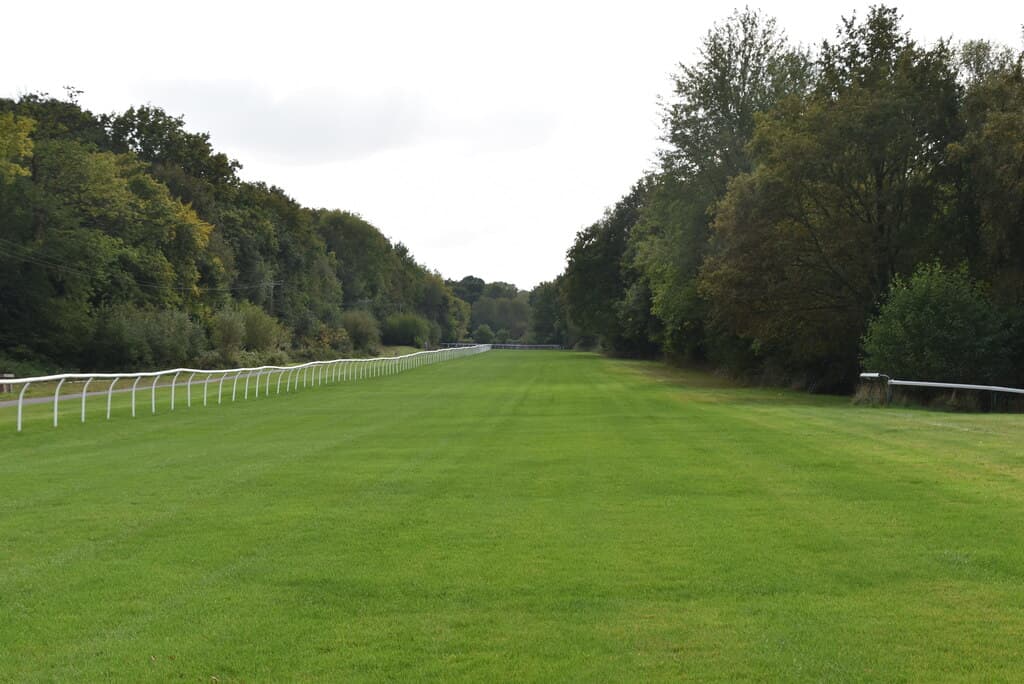
The Surrey countryside setting gives Lingfield a character that pure all-weather tracks sometimes lack. Trees border the paddock, the turf course occupies ground that has been raced over for more than a century, and the landscape around the site has changed relatively little from what the Victorian founders would have recognised. The Polytrack oval sits within that older landscape without overwhelming it, and the combination of old and new gives the course a depth that a purpose-built modern facility wouldn't have.
What Lingfield Means Today
For the modern racegoer, Lingfield Park is a course that works on multiple levels. It's a convenient, well-run venue for a day out. It's a rich hunting ground for the form student who wants to exploit all-weather data. It's a proving ground for young horses and an important stage for all-weather specialists. And it's a course with a story — a real story of risk, innovation and stubborn determination — that deserves to be better known.
The trainers who do well here are worth studying. The draw biases are real and exploitable. The form from previous Lingfield runs is more reliable than form from almost any other venue. The Winter Derby is a better race than its profile suggests. And the experience of a summer evening on the terrace, watching good horses race under a long Surrey dusk, is one of the more underrated pleasures in British racing.
Lingfield Park may never be the most glamorous racecourse in Britain. But it might just be one of the most important — and for the serious racegoer, one of the most rewarding.
Share this article
More about this racecourse
All Lingfield Park guides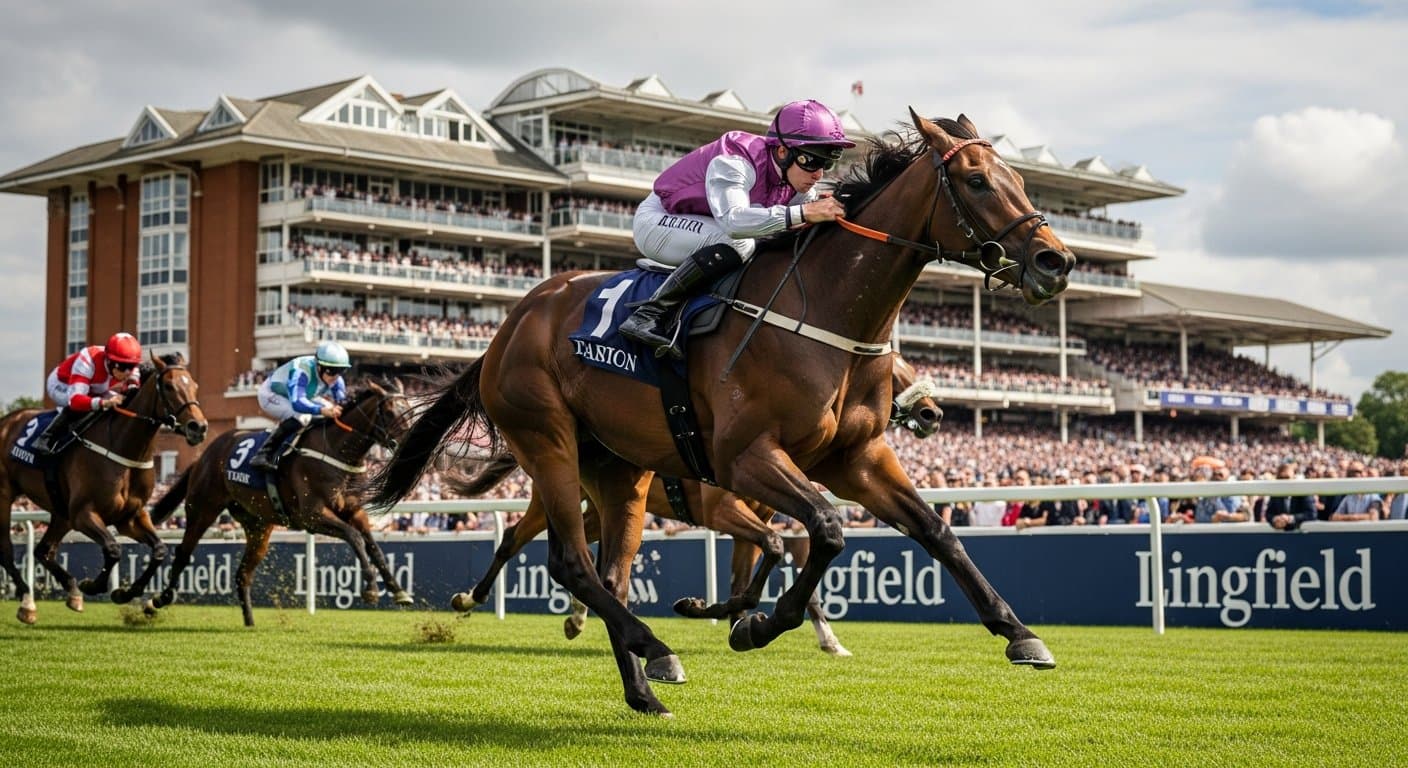
Lord North at Lingfield Park: The Complete Story
Lord North dominated the Winter Derby at Lingfield Park and went on to win the Prince of Wales's Stakes at Royal Ascot — one of the finest all-weather horses of the modern era.
Read more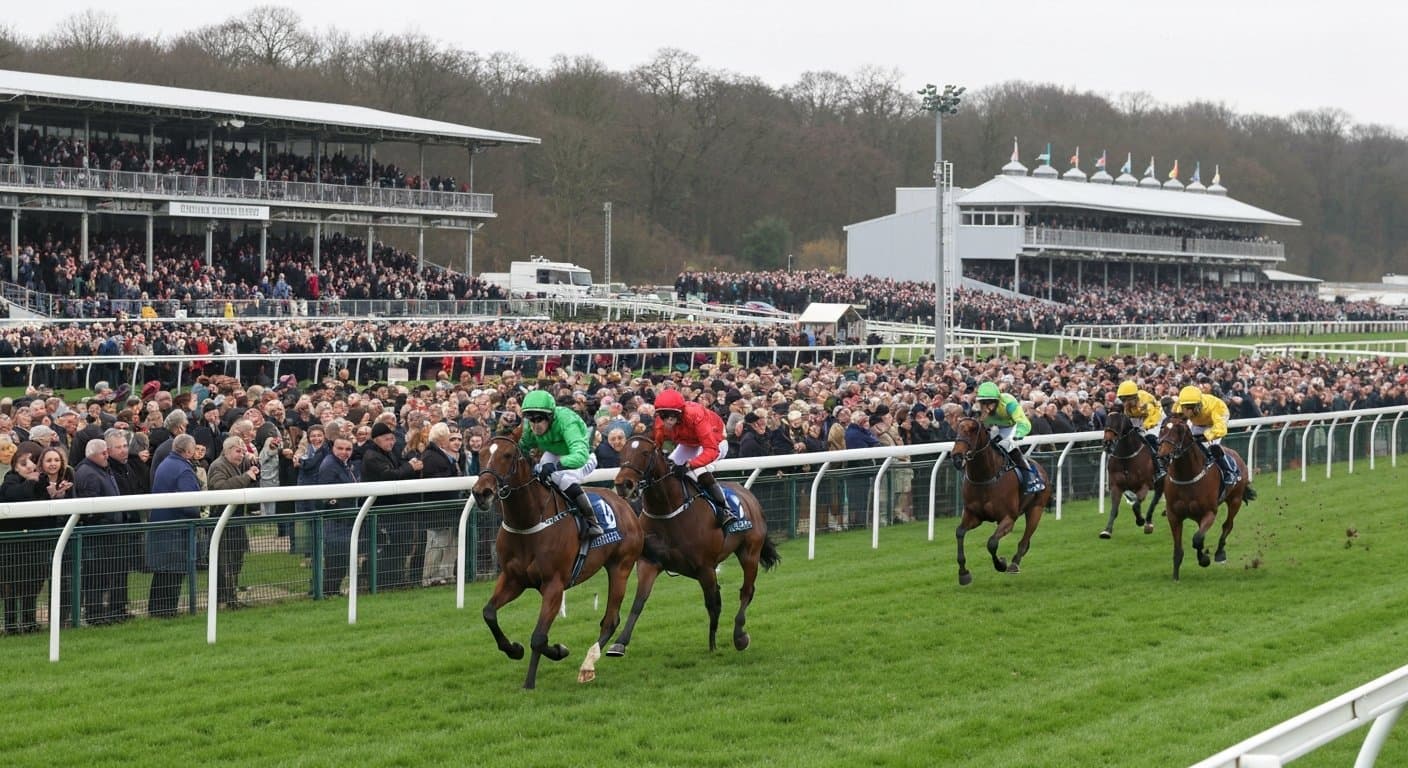
The Winter Derby at Lingfield: Complete Guide
Everything you need to know about the Winter Derby — Lingfield's flagship all-weather race and one of Europe's richest.
Read more
All-Weather Championships Finals Day at Lingfield: The Complete Guide
Your complete guide to All-Weather Championships Finals Day at Lingfield Park — the culmination of the British all-weather flat season, concentrating five AW Championships into a single afternoon. Racing card, atmosphere, tickets, travel and betting guide.
Read moreGamble Responsibly
Gambling should be entertaining and not seen as a way to make money. Never bet more than you can afford to lose. If you or someone you know has a gambling problem, help and support is available.