
Founder & Editor · Last reviewed 2026-04-04
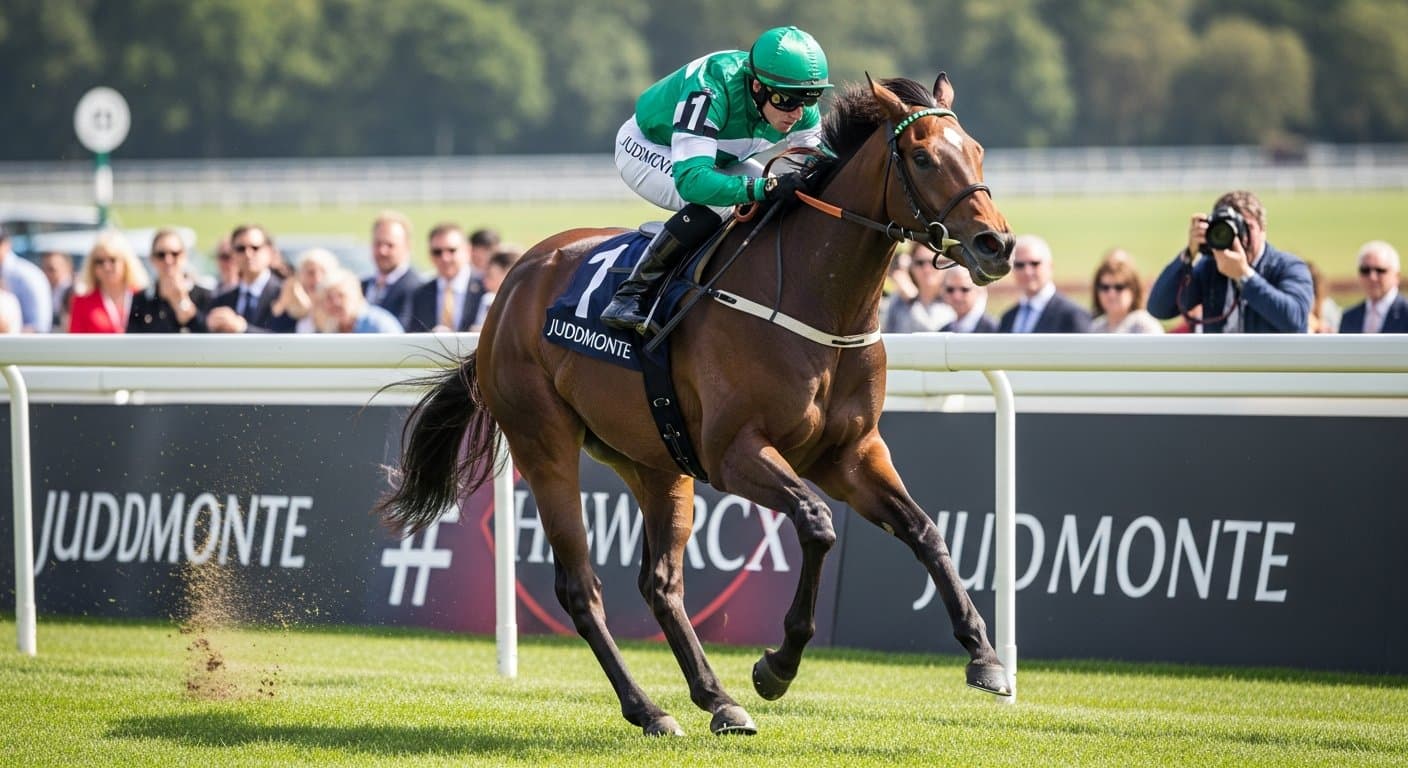
The Timeform rating of 147 places Frankel beyond debate. No horse in the organisation's history has been assessed higher. No horse in modern flat racing has approached his combination of speed, stamina, and flawless consistency. Across fourteen races from 2010 to 2012, he was never beaten, never extended beyond what he chose to offer, and never failed to produce the kind of performance that left experienced racing people searching for words.
Newbury was part of that story twice. In April 2011, on his reappearance as a three-year-old, Frankel won the Greenham Stakes by four lengths in a performance that delivered his first win as a Classic contender and pointed directly toward the 2000 Guineas. In May 2012, returning to the same track as a four-year-old, he won the Lockinge Stakes, Newbury's own Group 1, by five lengths from Excelebration, starting at 7/2-on against five rivals who knew they had little chance and ran anyway.
Newbury is well-suited to exceptional horses. Its wide, galloping track on good or firm ground allows talent to express itself without the vagaries of softer surfaces or the tactical complications of tighter tracks. The straight is long enough to give a free-running horse room to settle. The grandstands, at their best on spring and early summer fixtures, fill with crowds who have come to see something worth remembering.
The Berkshire track has a long association with high-quality horses. Mill Reef won the Greenham Stakes at Newbury in 1971 on his way to victories in the Derby, the Eclipse, the King George VI and Queen Elizabeth Stakes, and the Prix de l'Arc de Triomphe. Brigadier Gerard ran at Newbury. Hawk Wing, one of Aidan O'Brien's finest milers, ran at Newbury. The course has always attracted the best, and those who know its history understand what Frankel's two appearances meant in that context.
This is the story of those two appearances at Newbury: what they meant for his career, how they were won, and what they tell us about a track that has long been one of the finest in Britain for witnessing top-class flat racing at close quarters.
For more on Newbury's racing programme, see the Lockinge Stakes guide and the Newbury complete guide.
Bet on Newbury
Place your bets on Newbury races with a trusted bookmaker.

Promo code BETFRED50. New customers only. Register, deposit with a Debit Card, and place a first bet of £10+ at Evens (2.0)+ on Sports, to be settled within 7 days, to get £30 in Sports Free Bets and £20 in Bet Builder Free Bets within 24 hours of settlement. 7-day expiry. Eligibility & payment exclusions apply. Full T&Cs apply. Take Time to Think. BeGambleAware.org. 18+. Full T&Cs.

Promo code R30. New UK customers only, 18+. Register, deposit £10 or more, then place a £10 single cash bet at odds of 1/2 (1.5) or greater on any sports market (excluding Virtuals). Once the qualifying bet settles you get £30 in Free Bets (3 x £10) — the qualifying bet can win or lose. Free Bets are valid on any sports market excluding Virtuals, expire in 7 days, are non-withdrawable and must be used in full. Excluded deposit methods apply (including PayPal, Apple Pay, Skrill and NETELLER). Named bets such as Lucky 15 do not qualify. If you cash out the qualifying bet, or it is voided, you are no longer eligible for the offer. Ends 31.12.26. Full T&Cs apply. Please gamble responsibly. BeGambleAware.org. 18+. Full T&Cs.

Promo code BET40GET20. New UK customers, 18+. Register with the code and place a first bet of £40 or more at Evens (2.0) or greater. Receive 2 × £10 free bets: the first credited automatically once the qualifying bet settles, the second 24 hours later. Free bets must be placed at minimum odds of 4/1 (5.0), expire 24 hours after credit, and the free-bet stake is not returned with winnings. Debit card deposits only. Take Time to Think. BeGambleAware.org. 18+. T&Cs apply. Full T&Cs.

50% of your first-day net losses refunded as a free bet, capped at £25. New UK customers aged 18+ only. To qualify, deposit and place a first bet of £10 or more on any sport at minimum odds of evens (2.00), then place at least two further bets on different events, each worth at least 50% of your largest bet, all at evens (2.00) or greater. Losses are counted from your first settled bet until 23:59 the same day. Place a qualifying £10+ bet and you are guaranteed at least a £5 free bet. Bets placed at SP, void bets, cashed-out bets and bets struck with free bets do not count towards the offer. The free bet is credited the day after your qualifying bets settle and must be used within 7 days, after which it expires. It can be used at odds from 1/4 (1.25) up to 250/1 on singles and straight accumulators, but not on Trixie, Patent or Yankee style multiples. Free-bet stake is not returned with winnings. One offer per person, household, address, IP address and device. E-wallet deposits may not qualify, so check the cashier before depositing. Customers registered with GAMSTOP cannot claim. KYC identity verification must be completed before the free bet is credited. Take Time to Think. BeGambleAware.org. 18+. T&Cs apply. Full T&Cs.

New customers, 18+. Choose the sports bonus at sign-up, make a first deposit and receive a 100% bonus up to £50 in your Sports Bonus balance. To convert the bonus to cash, wager it 10x within 30 days. Single bets below Evens (2.00) do not qualify; accumulators do not qualify if any selection is below 1/2 (1.50). Virtual Sports, voided, cancelled, drawn, cashed-out and free-bet wagers do not count towards wagering. Only the first settled bet per event counts. Withdrawing before the wagering requirement is met forfeits the bonus balance including bonus winnings. Real-money funds are used before bonus funds. Deposits via Skrill or Neteller are not eligible. Not valid in conjunction with other promotions. Odds, bet and payment limits apply. 10bet general and promotion T&Cs apply. BeGambleAware.org. 18+. Full T&Cs.

New customers in Great Britain and Republic of Ireland, 18+. Place a £10 fixed-odds qualifying bet at minimum odds of 1/2 (1.50) — single or each-way (only the win part counts), pre-event or in-play, not cashed out early, within 28 days of opening the account. Receive up to £60 in bonuses credited over three days: 3 × £10 fixed-odds free bets (the first on settlement, then 24 and 48 hours later) plus 3 × £5 Total Goals FOOTBALL spread bets, 3 × £5 racing Winning Favourites spread bets and a £1 racing Race Index spread bet (the spread bets need a full spread-betting account). Free-bet stakes not returned with winnings; free bets valid 28 days from issue. IMPORTANT: the £5 credits are SPREAD bets — sports spread betting carries the risk that losses can exceed your stake. Sports spread-betting customers do not have Financial Ombudsman or FSCS recourse. Take Time to Think. BeGambleAware.org. 18+. T&Cs apply. Full T&Cs.

Promo code WELCOME15, entered under My Bonuses after registering. New UK customers, 18+. Place a first qualifying bet of at least £10 from your cash balance at odds of evens (2.0) or greater within 7 days of opening the account. Once the qualifying bet fully settles you receive £15 in free bets, credited as 3 x £5 tokens with set uses: one £5 accumulator free bet (minimum 4 legs, each leg at 2/5 or bigger), one £5 sports free bet (any market at evens or bigger) and one £5 Sub Cover free bet (selected football player markets at evens or bigger). Free-bet stakes are not returned with winnings. Free bets expire 7 days after they are credited. Void, cashed-out and partially cashed-out bets do not qualify. One offer per customer. Confirm the current terms on BetGoodwin's own welcome-offer page before claiming. Take Time to Think. BeGambleAware.org. 18+. T&Cs apply. Full T&Cs.

New UK customers, 18+. Minimum deposit £10. Place a £10 qualifying single at minimum odds of 1/2 (1.50), settled within 14 days. Receive £30 in free bets (stake not returned), split £20 for sportsbook use (2 x £10) and £10 for Bet Builder only (2 x £5); Bet Builder does not cover horse racing. Free bets must be accepted within 7 days and expire 7 days after acceptance. No promo code required. Best Odds Guaranteed on UK & Irish racing, subject to having staked over £25 in the previous seven days. Operated by LiveScore Betting and Gaming (Gibraltar) Ltd, UKGC 56859. Confirm the current terms on LiveScore Bet's own promotions page before claiming. Take Time to Think. BeGambleAware.org. 18+. T&Cs apply. Full T&Cs.
18+. BeGambleAware.org
Frankel: The Horse
Breeding and Origins
Frankel was a bay colt by Galileo out of Kind, a daughter of Danehill. He was bred by Prince Khalid Abdullah at Juddmonte Farms and trained throughout his career by Sir Henry Cecil at Warren Place in Newmarket. The combination of his sire's stamina and his dam's speed produced something that those who study bloodlines had theorised about but never quite expected to see in practice.
Galileo, himself a son of Sadler's Wells, was the dominant sire of the era: winner of the 2001 Derby and the King George VI and Queen Elizabeth Stakes, and Then the leading stallion in Europe on multiple occasions. Kind was a four-time winner from the sprinting Danehill line. The cross of a Sadler's Wells stallion with a Danehill mare had already produced multiple champions by the time Frankel was foaled, and the Juddmonte breeding team knew they had an interesting combination. Nobody quite foresaw the outcome.
His name honoured Bobby Frankel, the American trainer who had a long association with Juddmonte Farms as a trainer of their horses in North America. Bobby Frankel died in November 2009, the year that the colt entered training at Warren Place, and Prince Khalid Abdullah's decision to give the horse his name was a tribute to a training partnership that had produced many Group 1 victories in the United States.
Frankel was foaled in 2008 and entered training at Warren Place, a stable that had produced champion after champion across four decades of Cecil's extraordinary career. He was not an immediate physical standout as a young horse: Cecil later recalled that Frankel had been somewhat raw and difficult as a yearling, prone to excitability and not obviously the finished article. What distinguished him, even early on, was the quality of his movement and the size of his stride.
What Made Him Different
Frankel did not merely win races. He disassembled them. From his debut victory at Newmarket in August 2010 to his final appearance at Ascot's Champion Stakes in October 2012, he defeated opponents with a combination of raw speed and an ability to sustain that speed that no rival could match.
His sectional times were extraordinary throughout his career. In his 2000 Guineas victory at Newmarket on 30 April 2011, he covered the first two furlongs in a time that would have won many sprint races, then continued to accelerate rather than decelerate. The final time of 1 minute 35.18 seconds was a race record for the Rowley Mile. Jockey Tom Queally, who rode him throughout his career, often reported that he had done very little to encourage the horse, that Frankel ran because he wanted to, not because he was driven to it.
The physical evidence supported the performance data. At Newbury both in 2011 and 2012, observers at trackside commented on the quality of his action: a long, fluid stride that ate up the ground without apparent effort, and an ability to lengthen that stride at will when Queally chose to let him go. Other horses of exceptional ability had been seen at Newbury before. None had moved quite like this.
The Henry Cecil Connection
Cecil's handling of Frankel is worth examining at some length. The trainer was dealing with serious illness throughout this period, having been diagnosed with stomach cancer, and yet his management of the horse was masterful from beginning to end. Cecil understood that a horse of Frankel's ability needed to be kept physically and mentally fresh, that the temptation to over-race him or to seek out novelty for its own sake had to be resisted.
The decision to run at Newbury for the Greenham in April 2011, rather than going directly into a Classic prep at a track like Sandown or Kempton, reflected Cecil's understanding of what the horse needed. Newbury's straight, wide track would allow Frankel to stride out freely without the artificial restraint of a tight circuit. The Greenham would provide a real test, seven furlongs against decent opposition, without asking anything of him that he could not handle. Cecil chose his races with great deliberateness, and the Newbury appearances in both 2011 and 2012 were calculated choices rather than defaults.
A year later, when Cecil chose the Lockinge at Newbury as Frankel's seasonal reappearance, the same logic applied. The distance of one mile suited him exactly. The track rewarded quality. The opposition would be significant without being reckless. The Lockinge was the obvious choice for a trainer who wanted a smooth, confidence-building win to open a final campaign.
Tom Queally's Partnership
Queally's partnership with Frankel is sometimes underappreciated, perhaps because the horse's ability made everything look straightforward. Riding an unbeaten horse carries pressure of its own: not the pressure of being outclassed, but the pressure of being the one person who might cause an upset through a mistake. Queally never made that mistake across fourteen consecutive victories. He understood the horse's habit of pulling hard in the early stages and managed it intelligently, allowing Frankel to find his rhythm rather than fighting him.
At Newbury, both in 2011 and 2012, Queally's handling was excellent. He tracked the pace, made his move when the race demanded it, and allowed Frankel to assert without any urgency. The margins of four lengths and five lengths respectively were the margins of a horse that had more left in the tank. Queally could have asked for more at any point; he never needed to.
The trust between horse and jockey extended to the paddock. Cecil's instruction to Queally before Newbury races was characteristically concise: let him stride, don't fight him early, push when the time comes. Queally followed those instructions with the kind of quiet competence that Cecil valued above all else in those around his horses.
A Horse in Context
Frankel's career took place as Sir Henry Cecil's reputation was already fully established. The trainer had been champion on multiple occasions and had prepared Slip Anchor (1985 Derby), Oh So Sharp (1985 Fillies' Triple Crown), Reference Point (1987 Derby, King George), and Bosra Sham (1996 Champion Stakes), among many others. Frankel was the culmination of a great career, and the racing world understood this in real time: there was a quality of attentive, almost reverential observation to every Frankel race that reflected a wider awareness of what was being witnessed.
His Newbury appearances were therefore coloured by a sense of occasion that extended beyond the horse himself. To watch Frankel at Newbury was to watch the endpoint of something: a horse being prepared with extraordinary care by a trainer whose time was limited, running at a course that gave the performance the setting it deserved. The Greenham Stakes of 2011 was the beginning of a story that everyone in the stands knew would not last long. The Lockinge of 2012 was the second act of what would be a four-act final season.
Frankel's Physical Characteristics
Cecil described Frankel on more than one occasion as one of the most beautiful horses he had trained, and the physical description is worth setting down. He was a bay of around 16.1 hands, strongly built without being heavy, with a Of note long stride and a back that moved freely at full extension. His head was well-set, his neck long and arched, and his overall conformation gave the impression of a horse designed for middle-distance speed: not a sprinter's compact power, but not the lumbering bulk of a staying horse either.
At Newbury, both on the straight course and the round course where the Lockinge is run, he always appeared Of note relaxed in the paddock and on the way to the start, considering the crowd noise and the general bustle of a Group race day. Cecil's management of his pre-race routine, keeping things calm and consistent, clearly contributed to this composure. The horse who arrived at Newbury's starting stalls was prepared to the point where the race itself was almost an afterthought.
The Races at Newbury
The Greenham Stakes: April 2011
The Greenham Stakes at Newbury is a Group 3 race over seven furlongs, run in April, which serves primarily as a Classic trial. Horses being aimed at the 2000 Guineas at Newmarket typically use it to sharpen their preparation, and the field usually contains a handful of the leading British three-year-olds of the season. The race has produced a number of subsequent Classic winners: Mill Reef used it in 1971, and Nashwan, trained by Major Dick Hern and ridden by Willie Carson, won it in 1989 before going on to win the 2000 Guineas, the Derby, the Eclipse, and the King George VI and Queen Elizabeth Stakes.
Frankel arrived at Newbury for the 2011 Greenham having won all four of his two-year-old starts the previous season, culminating in a Group 1 victory in the Royal Lodge Stakes at Ascot in September 2010. He was already the clear favourite for the Guineas. The Greenham was expected to be straightforward.
It was. Frankel pulled hard in the early stages, as was his custom, but Tom Queally managed him through it without any crisis. The seven-furlong trip on good to firm ground at Newbury was within his comfort zone: not so short that it demanded pure sprint speed, and not long enough to test his stamina. As the field turned into the straight, Frankel moved alongside the leaders with the minimum of fuss, and from two furlongs out he drew clear with the kind of smooth, inexorable acceleration that his earlier races had promised.
He won by four lengths, and the four lengths understated the ease of the performance. The second horse, Slim Shadey, was a reasonable three-year-old but was never in the same race as Frankel once the champion's stride lengthened. The winning time of 1 minute 26.66 seconds was appropriate for the conditions, and Timeform assessed the performance in the high 120s, a figure that would have represented exceptional ability for a typical Classic contender but was still short of Frankel's ultimate ceiling.
The Greenham confirmed what the betting market already believed: that the 2000 Guineas at Newmarket belonged to Frankel unless something went badly wrong. Nothing did. He won at Newmarket on 30 April 2011, six weeks after the Greenham, by six lengths from Frankel (sic: from the field), in a time of 1 minute 35.18 seconds that still stands as the race record. The Greenham had served its purpose exactly as Cecil intended.
What Made the Greenham the Right Race
The specific choice of the Greenham, rather than one of the more prestigious Classic trials at Sandown, Kempton or Newmarket itself, reflects Cecil's thinking about how to manage a horse of exceptional ability. A Group 3 over seven furlongs at Newbury was a step down in prestige from what Frankel had already achieved, but it was the right step in developmental terms.
Newbury's track, with its wide, true going and its long straight, was ideal for a horse that pulled hard and needed room to settle. A tighter course, with sharper bends, would have encouraged Frankel's tendency to race keenly. The straight at Newbury gave him time and space to find his rhythm. Cecil understood this, and the Greenham performance, calm and controlled by Frankel's standards, vindicated the choice.
Newbury's Straight Mile: The Definitive Test of a Miler
One of Newbury's most distinctive assets is the straight mile, a full eight furlongs from stalls to line without a bend. While the Lockinge is run on the round course, the track's straight configuration frames much of what makes the course so well-suited to top-class flat horses. A miler racing at Newbury on good to firm ground, with that wide, level surface offering no excuse, has nowhere to hide. The test is clean, unambiguous, and unforgiving.
This quality is central to why the Lockinge became Frankel's chosen reappearance race. Cecil did not want Frankel's first run of 2012 to be shaped by traffic, by tight bends, or by conditions that might produce an untidy performance. The Lockinge's round-mile configuration at Newbury still benefits from the track's fundamental characteristics (wide, true, demanding of sustained high-quality galloping) without the artificial compression of a sharper circuit.
The contrast with other Group 1 mile venues is instructive. Ascot's round mile involves a descent from the top of the hill, a sharp right-hand turn at Swinley Bottom, and a rising finish: it tests balance and change of rhythm as much as raw speed. Goodwood's mile is downhill, tightening at Goodwood House, and requires different tactical skills. The Rowley Mile at Newmarket is truly straight but involves a notoriously stiff finish up the camber. Newbury's mile, by contrast, is balanced, consistent in gradient, and gives a horse with real sustained speed the best possible canvas. That is precisely what Frankel was, and why the track suited him as it did.
The Lockinge Stakes: May 2012
The Lockinge Stakes is Newbury's Group 1, run over a mile in mid-May, and it is typically the first Group 1 of the British flat season and draws the leading milers of the previous year, many of whom are being readied for the Queen Anne Stakes at Royal Ascot a month later. Winning the Lockinge is a mark of distinction: the race's history includes Hawk Wing (2002), Peeress (2007), Goldikova (2011), and other champions of the mile. The race takes its name from the Lockinge Estate in Oxfordshire, the ancestral home of the Wills family whose patronage helped establish Newbury Racecourse when it opened in 1905.
Frankel's appearance in the 2012 Lockinge was his first start as a four-year-old. He had been retired at the end of the 2011 season following his four wins as a three-year-old, then brought back for what his connections knew would be a final campaign. He was unbeaten in nine races. The question was not whether he could win the Lockinge, but whether the performance would provide any new information about a horse that racing had thought it understood.
The field was assembled with care. Excelebration, trained initially by Marco Botti then by Aidan O'Brien at Ballydoyle, was the horse most likely to give Frankel something to think about. A high-class miler who had won the Prix du Moulin at Longchamp and the Prix de la Foret, Excelebration had spent much of his career finishing in Frankel's vicinity; the Lockinge would be the fourth time they met, with Frankel unbeaten across the previous three encounters. The other runners were Trumpet Major, Bongani, and Julienas, along with Bullet Train, Frankel's elder half-brother, who served as the pacemaker.
The plan was simple and had been rehearsed many times in Frankel's career: Bullet Train would lead and draw out the race at a proper pace, Frankel would track him, and Queally would release the brake at the appropriate moment. It unfolded exactly as planned.
From the start, Bullet Train went to the front at a proper Group 1 tempo. Frankel settled in second, tracking his stablemate with the composure that had been increasingly evident in his later races. As the field approached the two-furlong pole, Queally's hands moved, and Frankel's response was immediate: the stride lengthened, the gap opened, and within a hundred yards the result was settled.
He crossed the line five lengths clear of Excelebration, who ran his race well and would have been a worthy winner in any other edition of the race. Starting at 7/2-on, the shortest price in the Lockinge's history at that point, Frankel did nothing to make the market look foolish. He was exactly what everyone had assumed he was.
What Made Newbury Right for Frankel
Newbury's track specifications aligned well with Frankel's racing style throughout his career. The ground at the Berkshire track tends to be good to firm in the spring and summer, which suited a horse who was at his best on fast surfaces; he had run on soft ground only twice in his career, and while he won both times, the performances were less fluent than his efforts on a quicker surface.
The track's width is significant. Newbury's straight is among the widest in British racing, which gave Frankel room to stride out without being hemmed in by traffic. A horse of his stride length benefited enormously from space; tighter courses with narrower straights would have required more tactical manoeuvring that could have disrupted his rhythm.
The long run-in after the final furlong pole, particular to Newbury's configuration, allowed Frankel's superior acceleration to work over a significant distance rather than producing a brief burst at the end. By the time he crossed the line in both the Greenham and the Lockinge, he was already easing down; the real race had been decided two furlongs out. Newbury's layout made that quality visible in a way that shorter run-ins at other tracks might have disguised.
Cecil's 2012 Campaign: Racing Under Pressure
The Lockinge needs to be understood in the context of Cecil's health in 2012. He had been battling stomach cancer since at least 2006, and by the final season of Frankel's career the illness was widely known within racing even if it was not fully detailed in public. Cecil trained that year from Warren Place with the careful, methodical concentration that had characterised his entire career, but those around him understood that this was the concluding chapter of his training life. Frankel was the last great horse. The 2012 season was the farewell run.
The way Cecil managed the campaign shows no sign of that pressure. He entered Frankel in the Lockinge knowing it was a serious Group 1, not an exercise to be ticked off. The field included Excelebration, a horse of real quality, and Cecil made no assumptions about the result beyond the confidence that comes from having prepared an exceptional athlete thoroughly. He held pre-race media attention to a minimum, kept Frankel's work programme private, and arrived at Newbury on 19 May 2012 in his familiar style: quietly dressed, measured in conversation, watching from the trainers' stand with an expression that gave nothing away.
When the race was over and the five-length margin confirmed, Cecil's satisfaction was understated but evident to those who knew him. He had won Newbury's Group 1, on good to firm ground, with the horse he had trained from a raw and excitable yearling to the most precisely prepared racehorse in Europe. The Lockinge was not just a seasonal opener. It was the confirmation that the 2012 campaign had begun exactly as intended.
Excelebration's Role
Excelebration deserves more attention than he is typically given. The horse trained by Marco Botti (and later by Aidan O'Brien) was the most persistent of Frankel's rivals over his career, finishing behind him in the Queen Anne Stakes at Ascot in 2011, the Lockinge at Newbury in 2012, and several other Group 1 races. He was, by any objective measure, an outstanding miler: a horse who won the Prix du Moulin, the Prix de la Foret, and the Matron Stakes, and who would have been ranked among the best milers in Europe in any season other than those dominated by Frankel.
In the Lockinge, Excelebration gave every indication of running a high-class race. He tracked Frankel through the early stages, moved smoothly into the straight, and finished five lengths behind a horse who was not fully extended. The margin does not reflect a poor performance by Excelebration; it reflects an astonishing one by Frankel. The gap between a Timeform rating of 125 (approximately where Excelebration sat at the time) and a rating of 143 (Frankel's Lockinge performance figure) is enormous in practical terms.
The Mill Reef Stakes Connection
The Mill Reef Stakes, run at Newbury each September over six furlongs for two-year-olds, carries the name of another of the track's most celebrated visitors. Mill Reef's Greenham Stakes win in 1971 was a stepping stone toward his Derby, Eclipse, King George, and Arc victories, all achieved in the same season. Ian Balding, his trainer, was based at Park House Stables in Kingsclere, just a few miles from Newbury. The geographical proximity of great trainers to the track has always been part of Newbury's character: Cecil's Warren Place was 25 miles away, the perfect distance for a road trip on a May morning in 2012.
That a race at Newbury now carries Mill Reef's name, while another Newbury race (the Lockinge) was transformed by Frankel's appearance, speaks to the consistent quality of horses that this track has attracted throughout its history.
For context on the Lockinge Stakes, see the Lockinge Stakes guide.
Great Moments
The Greenham: A Champion Announces Himself
The atmosphere at Newbury on Greenham Stakes day in April 2011 was coloured by anticipation. Frankel had already won the Group 1 Royal Lodge at Ascot the previous September, and the racing world was operating on the assumption that something exceptional was in preparation. But assumptions about young horses are regularly wrong, and the Greenham was the first test of 2011.
He pulled hard from the gate. For a moment, watching the race, it was possible to imagine this going wrong: a horse fighting his jockey in a seven-furlong trial on good ground at Newbury, using up energy that would be needed later. Queally was calm. He let Frankel find his rhythm without fighting him, and Frankel, as he always did, eventually settled into his work.
Then, two furlongs out, the switch flicked. The acceleration was not dramatic in the way that a sprinter's speed is dramatic; it was smooth, mechanical, almost contemptuous of the effort required. He moved away from his field as if they had stopped, winning by four lengths in a performance that made the paddock and grandstand talk in the direct, simple terms that great horses produce. There was nothing complicated to say: he was exceptional.
The Greenham in Historical Context
The 2011 Greenham was one of the most watched Group 3 races in years. When the market at Newmarket opened for the 2000 Guineas after the Greenham, Frankel was available at 1/3. This was not unusual for a horse who had just won a Classic trial easily, but the margin of his quotes reflected something specific: the bookmakers had already concluded that the race was effectively uncompetitive. The Guineas would be Frankel's to lose.
It is worth placing the Greenham within the sequence of Frankel's career. At that point, April 2011, he had won five consecutive races: the Nottingham maiden in August 2010, the Royal Lodge at Ascot in September 2010, and now the Greenham. All five had been won with authority, and all five had produced performances that suggested his rating was still rising. When Cecil chose the Greenham over more prestigious alternatives, he was making a quiet statement about his confidence in the horse: he did not need a high-profile warm-up because the Guineas itself would prove everything.
The Lockinge: Controlled Demolition
The 2012 Lockinge Stakes had a quality to it that came from the weight of expectation. Frankel was entering his final season unbeaten in nine races. He was, by this point, not just a great horse but an event. Newbury sold out its Lockinge day to a degree it rarely achieved for domestic flat meetings: the crowd that gathered at Newbury on 19 May 2012 was estimated at around 20,000, filling the grandstands and the rails more completely than a typical mid-May fixture would warrant.
The crowd was rewarded with clarity rather than excitement. Frankel was always going to win. Excelebration was always going to be second. The interest lay in the details: how fast, how easily, and what the display told those watching about the horse's wellbeing and form entering his final campaign.
The answer, over five lengths and a 7/2-on price honoured without drama, was that he was fine. He was the same horse who had won the 2000 Guineas by six lengths, the Sussex Stakes by five lengths, the Juddmonte International at York by seven lengths, and the Champion Stakes by six lengths. He had arrived in 2012 exactly as he had left 2011. Cecil, watching from the trainers' stand in declining health, allowed himself a rare public expression of satisfaction when the result was official.
The Spectacle on the Day
Those who were at Newbury for the 2012 Lockinge describe specific moments that still stay with them. The moment in the paddock when Frankel was led out by his handler, and the crowd fell quiet in a way that crowds rarely do in a public space. The sight of Bullet Train, the pacemaker, going confidently to the front as the field broke from the stalls. The moment, around the two-furlong pole, when Queally's hands moved and the entire grandstand seemed to exhale in anticipation of what was coming.
Newbury's straight allows the crowd a long, clear view of the entire race. Unlike some tracks where the horses disappear behind grandstands or around bends, Newbury in late May gives a spectator standing on the main terrace an unobstructed view from two furlongs out to the line. Those watching the 2012 Lockinge had two full furlongs to watch Frankel accelerate clear of the field, with nothing obscuring the view. The five-length winning margin was visible long before the horses reached the line.
Excelebration's Role
Frankel's shadow was Excelebration. The horse trained initially by Marco Botti, then transferred to Aidan O'Brien at Ballydoyle, ran behind Frankel repeatedly without ever quite closing the gap. In the Lockinge, he was a worthy runner-up: a horse who would have won most Group 1 mile races had Frankel not existed. The fact that he finished five lengths behind Frankel at Newbury, and that five lengths was considered a relatively narrow margin given Frankel's capabilities, says something about the level at which the champion was operating.
Excelebration's story after Frankel's retirement is telling. In the 2012 Queen Anne Stakes at Royal Ascot, Frankel beat him by eleven lengths. In the 2012 Lockinge at Newbury, the margin was five lengths. The progression in margin from five to eleven over a month tells its own story: the Queen Anne performance was a career high for Frankel, while the Lockinge was a polished warm-up run that left considerable ability in reserve.
The Cecil Dimension
The Lockinge came with a poignancy that was understood by everyone present. Henry Cecil was ill. He had been ill for years, and those around him knew that Frankel was the final great chapter. The trainer stood at Newbury on a May afternoon in 2012 and watched the horse he had prepared since the animal was a yearling win the Group 1 that carried the track's highest prestige.
Cecil's conversation with reporters after the Lockinge was brief and characteristic. When asked whether Frankel had pleased him, he said: "He pleased me very much." When asked where the horse would go next (the Queen Anne at Royal Ascot was the obvious target), he confirmed it without elaborating. He had no need of elaboration. The five-length victory on good to firm ground in 1 minute 37.82 seconds had said everything.
Cecil died in June 2013. He did not live to see everything that Frankel went on to become as a stallion, or the full extent of his legacy. But he had Newbury, and the Lockinge, and the five-length victory that confirmed what his training had produced. He had been present for both of Frankel's Newbury appearances, managing a horse of extraordinary ability through a career that would define both their legacies.
The Crowd's Response
Both Newbury appearances produced something that is unusual in flat racing: crowds that were not merely watching a race but witnessing something they wanted to remember. Frankel at Newbury was one of the privileged experiences available to British racing enthusiasts in 2011 and 2012, and those who were there knew it at the time. The combination of a great horse, a great trainer in his last season, and a track that showed both to their best advantage created occasions that transcended the ordinary business of racing.
The applause after both victories was sustained and warm in a way that ordinary race-winning applause is not. It was directed not at a gambling result but at a performance: an acknowledgement from a crowd of knowledgeable racing people that they had seen something worth honouring.
Legacy & Significance
Newbury's Place in the Frankel Story
Frankel's career encompassed Newmarket, Ascot, York, and Leopardstown. But within that arc, Newbury held a particular position. The Greenham Stakes was his first appearance as a Classic contender, the race that moved him from exceptional two-year-old to real Guineas favourite. The Lockinge was the opening statement of his final campaign, the moment at which a packed grandstand confirmed that the public's appetite for him had not diminished across the winter.
Two visits. Two victories. No drama and no doubt.
What the Lockinge Owes to Frankel
The Lockinge Stakes existed before Frankel and will continue to be run after his racing career is a distant memory. But his 2012 appearance changed something about how the race is perceived. It was the Group 1 that Frankel chose for his four-year-old debut. The prestige of that choice (Cecil and the Juddmonte team could have pointed him at any early-season Group 1 in Europe) attached itself to the Lockinge's identity.
When trainers now consider running their best milers in the Lockinge, they are choosing a race that Frankel also chose. That matters in the psychology of flat racing, where status is built partly through association with the best. Newbury's Lockinge is one of the Group 1 races that Frankel made better by being in it.
Mill Reef, Denman, and the Newbury Tradition
Frankel continues a long tradition of exceptional horses performing at Newbury. Mill Reef, trained by Ian Balding at Kingsclere a few miles from the track, won the Greenham Stakes in 1971 on his way to Derby, Eclipse, King George, and Arc victories. The Mill Reef Stakes, a Group 2 sprint for two-year-olds, carries his name.
Denman, the National Hunt champion trained by Paul Nicholls, won the Hennessy Gold Cup at Newbury in 2007 in one of the great weight-carrying performances in jump racing, and returned to win it again in 2009. Newbury's dual-purpose nature, with excellent flat racing in the spring and summer and top-quality National Hunt action in the autumn and winter, has always attracted the best horses in both codes.
Frankel is the peak of the flat chapter of this story. He is, by the numbers, the greatest horse to have raced at Newbury, and one of the greatest in the history of European racing.
The Stallion's Influence
Since retirement, Frankel has been one of the most successful stallions in the world. His progeny regularly win Group 1 races across Europe and beyond. The qualities that made him exceptional on the track, chiefly scope and the ability to sustain acceleration, have transmitted to his offspring with unusual consistency.
Some of those offspring have raced at Newbury. The course that staged Frankel's Greenham and Lockinge wins will, over time, also stage victories by horses who carry his bloodline. The story is not finished. It is, in that sense, still being written at the same track where it began.
Cecil's Legacy at Newbury
Henry Cecil's contribution to the Frankel story is inseparable from what Newbury means in his career. Cecil won races at Newbury for decades before Frankel existed: the course was familiar ground, part of the annual rhythm of a great training operation based 25 miles away at Warren Place. But the Greenham of 2011 and the Lockinge of 2012 gave those visits a weight they could not have carried before. He came to Newbury at the end of his career with the best horse he had ever trained, and the course gave both of them the setting they deserved.
Cecil died in June 2013. In the year between Frankel's final race at Ascot in October 2012 and Cecil's death, the trainer saw the horse begin his stud career at Banstead Manor Stud and witnessed the start of the recognition that would follow. Those two precise, controlled, authoritative performances at Newbury were part of the record he left behind.
For Visitors to Newbury
Standing at Newbury on Lockinge day, watching the best milers of the current generation compete for the Group 1 that Frankel made famous, it is worth knowing what you are watching. The race carries the weight of its 2012 renewal. The track, wide and galloping and demanding of real quality, is the same track that allowed the highest-rated horse in Timeform history to produce two of his fourteen perfect performances.
That is the context in which Newbury's flat racing should be understood.
Frequently Asked Questions
Share this article
More about this racecourse
All Newbury guides
Ladbrokes Trophy Day at Newbury: The Complete Guide
Everything you need to know about Ladbrokes Trophy Day at Newbury — the most prestigious staying handicap chase in Britain outside the Grand National. Racing card, atmosphere, tickets, travel and betting guide.
Read more
The Ladbrokes Trophy at Newbury: Complete Guide
Your complete guide to the Ladbrokes Trophy — Newbury's famous late-November staying handicap chase, formerly the Hennessy Gold Cup.
Read more
The Lockinge Stakes at Newbury: Complete Guide
Everything you need to know about the Lockinge Stakes — Newbury's flagship Group 1 flat race in May.
Read moreResearch the field with the AI Race Predictor
Our model publishes calibrated win-probability estimates for UK races — a second opinion to understand a race, not tips. It's open about its record: it doesn't beat the market, and we show exactly how it does.
Work it out & learn the basics
Gamble Responsibly
Gambling should be entertaining and not seen as a way to make money. Never bet more than you can afford to lose. If you or someone you know has a gambling problem, help and support is available.