
Founder & Editor · Last reviewed 2026-04-04
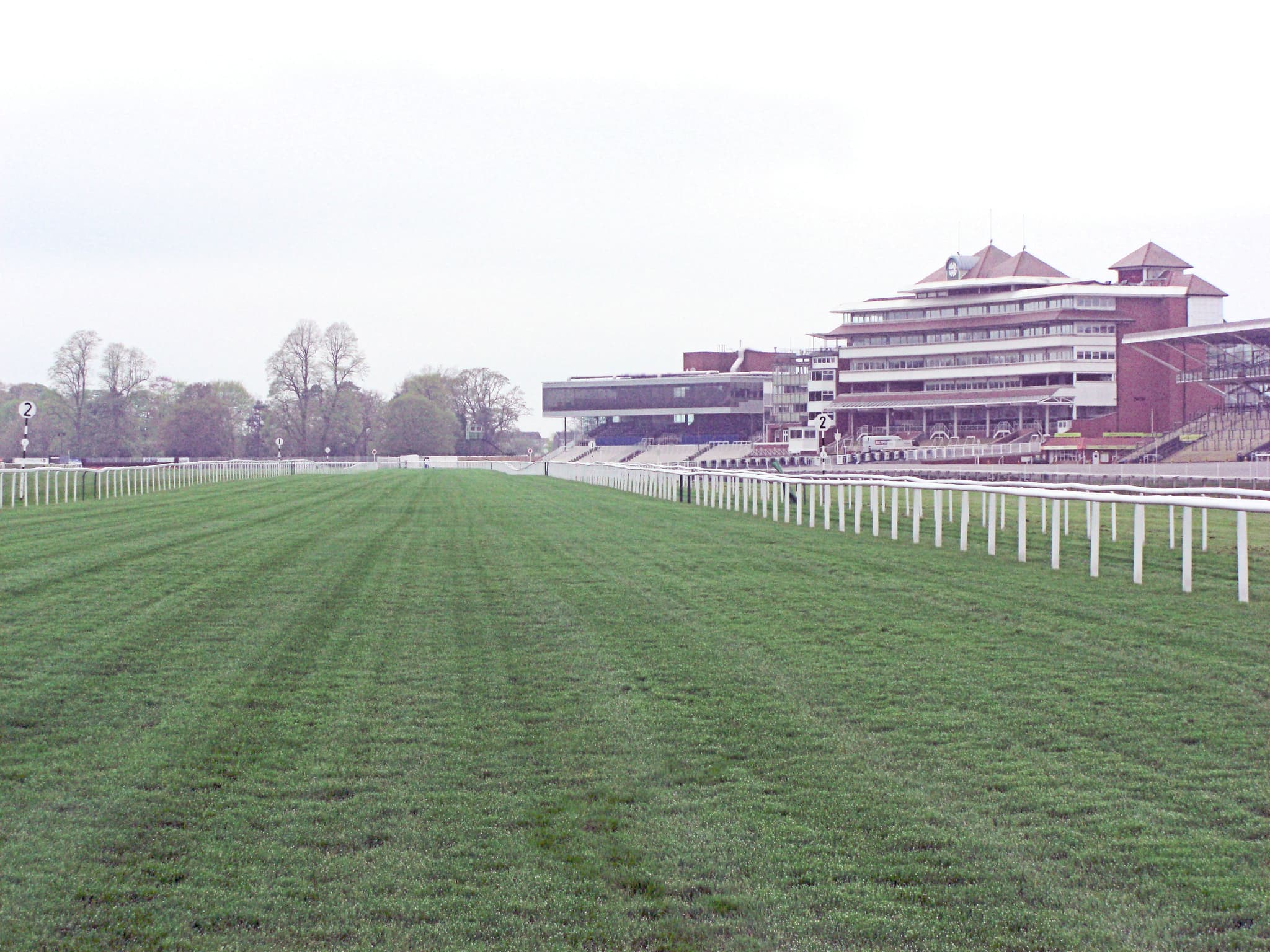
Newbury Racecourse opened in May 1905, and for more than 120 years it has been one of the most trusted venues on the British racing circuit. That reputation rests on a simple quality: the track is fair. Left-handed, wide, galloping, with a long run-in from the final turn, it does not favour specialists or quirky types. The best horse usually wins, and that makes it one of the most important trial venues in the calendar, as well as one of the most reliable for assessing form.
The course sits in Berkshire, just south of the M4, and draws racegoers from London, the Thames Valley, the South West, and the Midlands. Getting there is unusually straightforward. Newbury Racecourse has its own dedicated railway station with a platform that opens directly onto the course. Great Western Railway runs services from London Paddington in around 50 minutes. For a major racecourse outside London, that is an exceptional arrangement.
Dual-purpose from the start, Newbury stages top-class flat racing from April through to October and a strong National Hunt programme from October to April. The two flagship races at either end of the calendar say much about the quality on offer: the Lockinge Stakes in May, a Group 1 contest for the best milers in Europe, and the Coral Gold Cup (formerly the Hennessy Gold Cup) in late November, one of the most historically significant staying chases in the sport. Arkle won the Hennessy at Newbury in 1964 and 1965. Frankel won the Lockinge in 2012. Both horses were unbeaten at the time.
Quick Decision Block
Before the full guide, here are the seven things most visitors want to know:
- Best flat meeting: The Lockinge weekend in May. Group 1 racing plus a high-quality supporting card
- Best National Hunt meeting: Coral Gold Cup day in late November. The year's biggest staying chase handicap
- Best way to travel: Train from London Paddington to Newbury Racecourse station (50 minutes, direct platform onto the course)
- Best enclosure for a first visit: The main grandstand (Berkshire Stand) gives the best views and easiest access to the parade ring
- Families: Well-suited. Newbury runs dedicated family days with children admitted free, and the Centre Course enclosure is relaxed and spacious
- Dress code: Smart casual for most enclosures; jacket and tie expected in hospitality areas on major race days
- Betting highlight: The Betfair Hurdle in February. One of the most competitive hurdle handicaps of the National Hunt season, with 20-plus runners and a wide-open market
Who This Guide Is For
This guide covers everything you need to know about Newbury Racecourse. If you are planning your first visit, you will find the transport section useful. The dedicated train station alone removes most of the logistical difficulty. If you are a regular punter looking to sharpen your approach, the betting section covers draw bias, course-form reliability, and race-specific strategy for the Coral Gold Cup, the Lockinge, and the Betfair Hurdle. History buffs will find more than a century of racing in the history section, including the wartime requisitions of the course and the transformation of the old Hennessy Gold Cup into the modern Coral Gold Cup. And for visitors who want to understand what kind of horse wins at Newbury and why, the course characteristics section gives the full picture.
Newbury does not have the grand setting of Ascot or the festival atmosphere of Cheltenham. What it has is quality racing on a fair track, well-managed facilities, and one of the easiest journeys of any top-class course in Britain. That combination makes it one of the most rewarding courses to visit, whether you are there once a season or once a month.
Bet on Newbury
Place your bets on Newbury races with a trusted bookmaker.

Promo code BETFRED50. New customers only. Register, deposit with a Debit Card, and place a first bet of £10+ at Evens (2.0)+ on Sports, to be settled within 7 days, to get £30 in Sports Free Bets and £20 in Bet Builder Free Bets within 24 hours of settlement. 7-day expiry. Eligibility & payment exclusions apply. Full T&Cs apply. Take Time to Think. BeGambleAware.org. 18+. Full T&Cs.

Promo code R30. New UK customers only, 18+. Register, deposit £10 or more, then place a £10 single cash bet at odds of 1/2 (1.5) or greater on any sports market (excluding Virtuals). Once the qualifying bet settles you get £30 in Free Bets (3 x £10) — the qualifying bet can win or lose. Free Bets are valid on any sports market excluding Virtuals, expire in 7 days, are non-withdrawable and must be used in full. Excluded deposit methods apply (including PayPal, Apple Pay, Skrill and NETELLER). Named bets such as Lucky 15 do not qualify. If you cash out the qualifying bet, or it is voided, you are no longer eligible for the offer. Ends 31.12.26. Full T&Cs apply. Please gamble responsibly. BeGambleAware.org. 18+. Full T&Cs.

Promo code BET40GET20. New UK customers, 18+. Register with the code and place a first bet of £40 or more at Evens (2.0) or greater. Receive 2 × £10 free bets: the first credited automatically once the qualifying bet settles, the second 24 hours later. Free bets must be placed at minimum odds of 4/1 (5.0), expire 24 hours after credit, and the free-bet stake is not returned with winnings. Debit card deposits only. Take Time to Think. BeGambleAware.org. 18+. T&Cs apply. Full T&Cs.

50% of your first-day net losses refunded as a free bet, capped at £25. New UK customers aged 18+ only. To qualify, deposit and place a first bet of £10 or more on any sport at minimum odds of evens (2.00), then place at least two further bets on different events, each worth at least 50% of your largest bet, all at evens (2.00) or greater. Losses are counted from your first settled bet until 23:59 the same day. Place a qualifying £10+ bet and you are guaranteed at least a £5 free bet. Bets placed at SP, void bets, cashed-out bets and bets struck with free bets do not count towards the offer. The free bet is credited the day after your qualifying bets settle and must be used within 7 days, after which it expires. It can be used at odds from 1/4 (1.25) up to 250/1 on singles and straight accumulators, but not on Trixie, Patent or Yankee style multiples. Free-bet stake is not returned with winnings. One offer per person, household, address, IP address and device. E-wallet deposits may not qualify, so check the cashier before depositing. Customers registered with GAMSTOP cannot claim. KYC identity verification must be completed before the free bet is credited. Take Time to Think. BeGambleAware.org. 18+. T&Cs apply. Full T&Cs.

New customers, 18+. Choose the sports bonus at sign-up, make a first deposit and receive a 100% bonus up to £50 in your Sports Bonus balance. To convert the bonus to cash, wager it 10x within 30 days. Single bets below Evens (2.00) do not qualify; accumulators do not qualify if any selection is below 1/2 (1.50). Virtual Sports, voided, cancelled, drawn, cashed-out and free-bet wagers do not count towards wagering. Only the first settled bet per event counts. Withdrawing before the wagering requirement is met forfeits the bonus balance including bonus winnings. Real-money funds are used before bonus funds. Deposits via Skrill or Neteller are not eligible. Not valid in conjunction with other promotions. Odds, bet and payment limits apply. 10bet general and promotion T&Cs apply. BeGambleAware.org. 18+. Full T&Cs.

New customers in Great Britain and Republic of Ireland, 18+. Place a £10 fixed-odds qualifying bet at minimum odds of 1/2 (1.50) — single or each-way (only the win part counts), pre-event or in-play, not cashed out early, within 28 days of opening the account. Receive up to £60 in bonuses credited over three days: 3 × £10 fixed-odds free bets (the first on settlement, then 24 and 48 hours later) plus 3 × £5 Total Goals FOOTBALL spread bets and 3 × £5 racing Winning Favourites spread bets, with a £1 racing Race Index spread bet as an extra on top. The spread bets need a full spread-betting account, opened within 28 days of the fixed-odds account and subject to Spreadex's eligibility and appropriateness checks. Free-bet stakes not returned with winnings; free bets valid 28 days from issue. IMPORTANT: the £5 credits are SPREAD bets — sports spread betting carries the risk that losses can exceed your stake. Sports spread-betting customers do not have Financial Ombudsman or FSCS recourse. Take Time to Think. BeGambleAware.org. 18+. T&Cs apply. Full T&Cs.

Promo code WELCOME15, entered under My Bonuses after registering. New UK customers, 18+. Place a first qualifying bet of at least £10 from your cash balance at odds of evens (2.0) or greater within 7 days of opening the account. Once the qualifying bet fully settles you receive £15 in free bets, credited as 3 x £5 tokens with set uses: one £5 accumulator free bet (minimum 4 legs, each leg at 2/5 or bigger), one £5 sports free bet (any market at evens or bigger) and one £5 Sub Cover free bet (selected football player markets at evens or bigger). Free-bet stakes are not returned with winnings. Free bets expire 7 days after they are credited. Void, cashed-out and partially cashed-out bets do not qualify. One offer per customer. Confirm the current terms on BetGoodwin's own welcome-offer page before claiming. Take Time to Think. BeGambleAware.org. 18+. T&Cs apply. Full T&Cs.

New UK customers, 18+. Minimum deposit £10. Place a £10 qualifying single on sports (excluding virtuals) at minimum odds of 1/2 (1.50), settled within 14 days. Deposit-method exclusions apply. Receive £30 in free bets (stake not returned), split £20 for sportsbook use (2 x £10) and £10 for Bet Builder only (2 x £5); Bet Builder does not cover horse racing. Free bets must be accepted within 7 days and expire 7 days after acceptance. No promo code required. Best Odds Guaranteed on UK & Irish racing, subject to having staked over £25 in the previous seven days. Operated by LiveScore Betting and Gaming (Gibraltar) Ltd, UKGC 56859. Confirm the current terms on LiveScore Bet's own promotions page before claiming. Take Time to Think. BeGambleAware.org. 18+. T&Cs apply. Full T&Cs.
18+. BeGambleAware.org
The Course and Track Characteristics
The Course and Track Characteristics
Newbury's track is one of the most respected in British racing, and once you understand its layout, it is easy to see why. The course is a left-handed, broadly oval circuit of roughly one mile and seven furlongs in circumference. It is wide, flat, and galloping in nature. That means it rewards a horse with actual ability rather than one that has simply learned the quirks of a tight or undulating course.
The Flat Track Layout
The flat course uses the full oval circuit, with races ranging from five furlongs to two miles. The straight five-furlong and six-furlong courses join the round course on the far side of the track, feeding into a long, sweeping home turn before the horses reach the home straight. That straight measures approximately five furlongs from the final bend to the winning post, one of the longest in Britain on a non-championship track.
The significance of that long straight is practical. Horses need to maintain their gallop for a sustained period after turning for home, which means the race rarely comes down to a single burst of acceleration in the final furlong. A horse that quickens sharply but cannot sustain the effort will be found out. A horse that travels strongly, takes time to hit full stride, and maintains that pace to the line will almost always win. This tends to produce results that accurately reflect fitness and quality rather than tactical fortune.
The track is almost entirely flat. There are very slight undulations through the back straight, but nothing that would be noticeable to the eye or significant to any horse in reasonable condition. Newbury is not a test of balance or agility in the way that Epsom or Goodwood can be. It is a test of speed and stamina.
The Straight Course
Sprint races at Newbury are run on the straight five-furlong and six-furlong courses. These join the round course near the top of the back straight. The straight course runs into the main track for its final two furlongs, meaning sprinters finish on the same long run-in as the round-course races.
The straight course at Newbury is wide, around 20 to 25 yards across, which means the draw does not create the kind of pronounced bias seen at courses like Chester or Beverley. On good to firm going, there is no clear draw advantage at five furlongs. On soft ground, high-numbered stalls on the stands side can hold a slight advantage because water drains marginally towards the far rail, leaving the stands side slightly better ground. The effect is real but not dramatic. Check the going report in soft conditions, but don't let it dominate a betting strategy.
At six furlongs and a mile, draw effects are negligible. At one mile two furlongs and beyond, stall position is essentially irrelevant on Newbury's wide track.
The Home Straight
The home straight at Newbury is one of the most important features to understand for betting purposes. At approximately five furlongs, it is longer than the home straights at Kempton (four furlongs on the round course) and Sandown (around four furlongs). The extra length means that races at Newbury rarely produce the kind of flat-out sprint finish that can be won by a horse making one last desperate lunge. Horses need to be fit, well-prepared, and capable of sustaining a high cruising speed.
Front-runners do well at Newbury, but not because the track is particularly favourable to those who race prominently. They do well because a horse that is good enough to set or press a pace on this track and maintain it through that long straight is almost certainly a quality horse. The course does not create false front-runner results through quirky distances or tight bends. It rewards good horses who happen to run prominently.
Hold-up horses also get their chance. The long straight gives late challengers room to build their run and catch the leaders. The key is whether they can sustain the effort after getting there. A horse that closes with a rattle in the final furlong and just fails at a mile at Newbury is almost certainly a horse to note next time. That is a strong performance on a fair track.
Going and Drainage
The ground at Newbury is built on Berkshire chalk and loam, a free-draining combination that means the course recovers quickly after rain. In a normal British summer, the going through most of the flat season is Good to Firm, with brief periods of Good after rainy spells. The course rarely reaches Firm, and it rarely deteriorates beyond Soft unless the autumn brings sustained heavy rain.
Spring and autumn can be more variable. The April meeting often races on Good to Soft ground. The Coral Gold Cup meeting in late November regularly encounters Soft going. The jumping course is more tolerant of testing conditions than the flat track. The going on the hurdle and chase course can reach Heavy without dramatically altering the character of the races.
For punters, the ground at Newbury is worth monitoring but rarely reaches the extreme conditions that can make races at some other courses feel like lotteries. Horses that handle Good and Good to Soft ground, the majority of well-trained horses, will handle most Newbury conditions through the year.
The National Hunt Course
The jumps course at Newbury is entirely separate from the flat track and runs inside it. The chase course features well-built, fair fences. There are nine fences on a full circuit, including three in the back straight. The fences are not as demanding as those at Cheltenham or Haydock, but they are properly constructed and require accurate jumping. A horse that makes a bad mistake in the back straight at Newbury can lose several lengths and may struggle to recover on the long run to the final fence.
The run from the last fence to the winning post is approximately 200 yards. This is long enough that a strong stayer who hits the last well can pull away from a rival who jumps it hesitantly. It is short enough that a horse who makes a bad mistake at the final fence and loses momentum will often find it too late to recover.
The hurdle course sits inside the chase course and uses the same galloping oval. The hurdle flights are well-spaced. This is not a track where a nippy, speed-focused hurdler can exploit a compact circuit. Stamina and jumping rhythm matter at Newbury over hurdles. The horse needs to travel well through the race and maintain its stride pattern to the line.
The Coral Gold Cup is run over three miles and two and a half furlongs, which means horses complete approximately one and three-quarter circuits of the chase course. At that trip, the sustained galloping character of Newbury becomes very pronounced. A horse that cannot stay the trip will be found out long before the final circuit, regardless of its class over shorter distances.
What Type of Horse Wins at Newbury
On the flat, the Newbury template is a horse that:
- Has proven staying power at the trip in question
- Can travel at a good pace through a race without being asked for maximum effort early
- Has a sustained, extended gallop rather than a sharp, brief burst of acceleration
- Has handled similar fair, galloping tracks such as Ascot, Sandown, or Kempton
In sprints (five and six furlongs), the wide straight course puts a premium on raw speed and early pace. Horses with consistent sprint form on similar tracks translate well here. In middle-distance and staying flat races, the key is the ability to maintain form over the long home straight.
Over jumps, the same logic applies. A staying chaser at Newbury needs to jump well from a well-balanced stride, maintain a consistent pace over three-plus miles, and have enough in reserve for the long run from the final fence. The Coral Gold Cup has been won by some of the best staying chasers of the past 60 years. These are horses that could carry weight, jump accurately, and gallop relentlessly. That is the profile to look for.
Key Fixtures and Race Calendar
Key Fixtures and Race Calendar
Newbury's fixture list is one of the most balanced in British racing. Thanks to its dual-purpose status, the course hosts quality action from February through to late November, with highlights spread across both the flat and jumps seasons.
The Flat Season: April to October
The flat programme at Newbury opens in the spring and builds steadily toward its flagship meeting in May. April brings the Greenham Stakes meeting, with two important Classic trials: the Greenham Stakes (Group 3, seven furlongs) for potential Guineas colts, and the Fred Darling Stakes (Group 3, seven furlongs) for fillies with Classic aspirations. These April races carry real weight. The Greenham has been a reliable pointer to 2000 Guineas form in good years, and trainers use it specifically to assess horses who might struggle on the faster Newmarket track in early May.
The Lockinge Stakes Meeting (May)
The Lockinge Stakes is the undisputed highlight of Newbury's flat calendar. A Group 1 contest over one mile, it is typically the first major Group 1 of the British flat season to test older milers in the current year. The race regularly attracts horses who were Classic contenders in their three-year-old season and are now running against their contemporaries and older horses for the first time.
The Lockinge does not carry the publicity of Royal Ascot or the civic grandeur of Epsom, but in terms of racing quality it frequently matches both. The roll of honour includes Canford Cliffs (2011), Frankel (2012), Benbatl (2019), and several other horses confirmed as among the best milers in Europe in the year they won.
Frankel's 2012 Lockinge deserves particular attention. He was unbeaten in 12 starts going into that race, trained by Henry Cecil at Warren Place and ridden by Tom Queally. He won the Lockinge by five lengths, moving through the field with an ease that suggested he was racing well within himself. Cecil, who was ill throughout 2012 and died in June of that year, had kept Frankel at his best through the Lockinge and into the summer. The race was Frankel's 13th career win. He would win once more, the Champion Stakes at Ascot in October 2012, before retiring unbeaten in 14 starts.
Winners of the Lockinge frequently go on to Royal Ascot's Queen Anne Stakes, and the two races together often form the definitive verdict on who is the best miler in Europe in any given year.
The Lockinge weekend also features the Geoffrey Freer Stakes (Group 3, one mile five furlongs), a staying flat race that serves as a marker for horses heading toward the longer summer prizes, and several other graded races that make it one of the strongest one-day flat cards outside the major festivals.
Summer Fixtures
Through June and July, Newbury hosts several valuable handicaps and conditions races. The Super Sprint in July is one of the most valuable juvenile races in the calendar. A five-furlong dash for two-year-olds, it draws large fields and generates significant betting interest. The race is unusual in its format: it targets unraced or lightly raced juveniles, and the fields regularly reach 20 runners. It is a punter's puzzle, with very little form to work with, but the prize money attracts quality horses.
The Hungerford Stakes (Group 2, seven furlongs) runs in August and is a key race for milers and seven-furlong specialists preparing for autumn targets. It sits between the summer Group races and the autumn championship races, and it often features horses who have been aimed at this specific point in the season.
August at Newbury also brings a strong programme of nursery handicaps for juveniles. The flat meetings in September and October round out the season with a mix of conditions races and handicaps, often producing informative performances from horses that will be targeted at spring Classics or major handicaps the following season.
The National Hunt Season: October to April
Newbury's jumps programme is built around three key races, each with distinct characters and betting appeal.
The Coral Gold Cup (Late November)
The Coral Gold Cup, formerly the Hennessy Gold Cup and more recently the Ladbrokes Trophy, is Newbury's greatest race. It runs in late November over three miles and two and a half furlongs and is classified as a Grade 3 handicap chase. That classification understates its importance. The race carries significant prize money, it attracts horses from the very top of the staying chase world, and it has been won by some of the finest National Hunt horses of the past 70 years.
Arkle won it twice, in 1964 carrying 12 stone 7 pounds, and in 1965 carrying the same weight while winning by 15 lengths. Denman won it in 2007 and again in 2009 after recovering from a serious heart problem. Native River won in 2016 before going on to win the Cheltenham Gold Cup in 2018. The race's history is a roll call of staying-chase excellence.
As a handicap, the Coral Gold Cup draws a wide range of horses, from established Grade 1 performers near the top of the weights to improvers further down. Fields are typically 15 to 20 runners. The betting market is one of the most active of the National Hunt season, with ante-post trading beginning weeks before the race and bookmakers offering each-way terms of four or five places.
The race usually runs on the last Saturday of November. Going is frequently Soft or Good to Soft at that time of year, and the full trip tests horses' jumping and stamina in equal measure.
The Betfair Hurdle (February)
The Betfair Hurdle, formerly known as the Schweppes Gold Trophy and then the Tote Gold Trophy, runs in February over two miles and half a furlong. It is a Grade 3 handicap hurdle that draws large competitive fields, typically 20 or more runners, and generates one of the most open betting markets of the winter. The race rewards horses that can travel well in a strongly run race and stay the trip on a galloping track.
The Betfair Hurdle can be won by a range of hurdling types, unlike the Coral Gold Cup which tends to favour big-framed staying chasers. The key requirement is stamina and the ability to handle a pace that is honest from the start. Horses that like to come from behind can find themselves with a lot of ground to make up in the straight. The race often runs fast from the off, and the market leaders can go out quickly.
The race is sometimes used as a season-opening target by trainers with horses they consider well-handicapped, and first-time-out winners are not uncommon. That adds to the difficulty for punters but also creates opportunities when a horse's fitness or improvement has not been fully factored into the price.
The Challow Hurdle (Late December)
The Challow Hurdle (Grade 1, two miles four furlongs) runs in late December and is one of the most important novice hurdles of the season. It is aimed at unbeaten or lightly raced novices who have shown enough ability in their early hurdle starts to be campaigned at the highest level. Challow winners often go on to be strong Cheltenham contenders in March. The race has produced several future Champion Hurdle and Supreme Novices' Hurdle winners.
The extended two-mile-four-furlong trip is longer than most early-season novice hurdles, which tests whether promising novices can truly stay beyond the minimum trip. A horse that wins the Challow with authority, jumping well throughout and finding more when challenged, is almost certain to progress further.
Spring Meetings
The March and April fixtures at Newbury serve as pre-Cheltenham preparations and post-Cheltenham warm-downs. The spring jumps meetings are well-attended by trainers who want to give horses a run without the pressure of a major festival, and the fields are often competitive. Some horses use a spring Newbury run as a final prep before the Grand National meeting at Aintree in April.
Planning Your Visit
The two unmissable fixtures are the Lockinge meeting in May and the Coral Gold Cup day in late November. The Betfair Hurdle day in February is the strongest winter meeting and worth a visit for jumps fans who cannot wait until spring. The Super Sprint afternoon in July provides a fun, accessible raceday with excellent betting interest for a summer crowd.
For a quieter, more relaxed visit, Newbury's weekday and evening fixtures through the summer offer good racing in a less pressured atmosphere. Ticket prices on mid-season weekday cards are significantly lower than the major meetings, and the course is never less than well-run regardless of the size of the crowd.
Facilities and Enclosures
Facilities and Enclosures
Newbury has invested significantly in its facilities over the past two decades. The main grandstand was redeveloped and modernised in the 2010s, and the improvements are visible throughout the course. Whether you are in the main grandstand or one of the cheaper enclosures, the experience is well-managed. Sightlines are clear, the food and drink range is solid, and even the biggest racedays feel navigable.
The Berkshire Stand
The Berkshire Stand is the main grandstand and the hub of the course on major racedays. Built as part of the modernisation programme, it provides tiered viewing across multiple levels, with bars and restaurants on every floor. The view of the course from the upper levels is excellent. You can see from the start of the home straight all the way around the bend into the back straight.
On the ground floor, you are close to the parade ring and winner's enclosure. This is where the bulk of the raceday activity takes place between races: horses being led round, trainers in conversation, jockeys receiving instructions. For anyone who wants to watch the pre-race preparations up close, the parade ring area in the Berkshire Stand is the place to be.
Admission to the Berkshire Stand area on a standard raceday runs from around £20 to £30. For major fixtures like the Lockinge or the Coral Gold Cup, prices rise to £35 to £50 for a grandstand badge. Buying tickets in advance online is almost always cheaper than paying on the day.
The Hampshire Stand
The Hampshire Stand sits adjacent to the Berkshire Stand and offers a slightly more relaxed atmosphere. The viewing is very similar to the Berkshire Stand. The stands connect and share parts of the course-facing terrace, but the Hampshire Stand tends to be quieter and is a good option for those who want quality viewing without the premium pricing of the main grandstand on big days.
The Hampshire Stand is popular with regular visitors who know the course well and prefer a lower-key environment. On quieter weekday meetings, the difference between the two stands is marginal. On the biggest racedays, the Berkshire Stand fills faster and the Hampshire is a sensible alternative.
The Centre Course Enclosure
The Centre Course enclosure occupies the infield and offers an informal, accessible raceday experience. Admission is lower than the grandstands, typically £10 to £20 depending on the meeting, and the atmosphere is relaxed. You can move freely across the course between races on smaller racedays (there are designated crossing points), and the feeling of being in the middle of the racing is something the grandstands cannot replicate.
For families, the Centre Course is often the best option. There is more space for children to move around without getting in anyone's way, and on designated family days Newbury uses the Centre Course area for children's entertainment. The viewing from the Centre Course is perfectly good. You see the horses coming around the final bend and all the way up the home straight.
The downside of the Centre Course is the lack of direct access to the main betting ring and parade ring. You will need to use the crossing points to reach those areas, which can mean a walk. On very busy days, timing the crossings takes some awareness.
Hospitality and Private Dining
Newbury's hospitality offer is well-suited to the corporate raceday market. The course draws heavily from the M4 corridor business community. Companies based in Reading, Swindon, Basingstoke, and the Thames Valley use Newbury regularly for client entertainment, and the corporate facilities work well for that purpose.
On major racedays, several restaurant packages are available. Formal dining options offer a set menu with champagne and wine, and the restaurants are designed so that the tables have course views. Private boxes can be hired for groups, typically seating between 12 and 30 guests. They offer a dedicated service, a private balcony, and the ability to place bets and watch from a fixed, comfortable position.
For smaller groups, the hospitality lounges in the main stands offer a shared environment with food packages. These are less expensive than a private box but still include a meal and drinks. Prices vary significantly by raceday. The Coral Gold Cup and Lockinge hospitality packages are the most expensive of the year.
Betting Facilities
The betting ring at Newbury is well-stocked on the bigger racedays. On-course bookmakers set up along the traditional betting ring area, and the competition between boards keeps the prices fair. For anyone used to betting off-course, the on-course experience at Newbury is worth using. Bookmakers often offer slightly longer prices than the starting price on smaller meetings, and the atmosphere of placing a bet with a board bookmaker is part of the raceday experience.
Tote windows are available throughout the stands. Parimutuel betting (Tote pools) can offer value on races where a short-priced favourite has compressed the fixed-odds market. The each-way pool on the Coral Gold Cup, for example, can offer returns that are better than the standard bookmaker terms because the field is so competitive.
Self-service betting terminals are available in the main stands for those who prefer not to queue. These carry the same fixed odds as the main Tote operation.
Family Facilities
Newbury runs specifically designated family days through the year, typically four to six per season. On these days, children are admitted free with a paying adult, and the Centre Course enclosure features dedicated entertainment: face painting, bouncy castles, rides, and other activities. The atmosphere on family days is noticeably different from the major racing fixtures, with a more relaxed feel and a wider age range in the crowd.
Even on standard racedays, Newbury is manageable with children. The open space in the Centre Course, clear signage, and the relatively short distances between areas make it easier to navigate than a larger course like Ascot. There are baby-changing facilities in the main stands. Pushchairs are practical in the Centre Course but harder to manage in the main grandstand areas on busy days.
Food and Drink
Beyond the formal restaurants in the hospitality areas, Newbury offers a solid range of food across the course. The standard raceday catering covers burgers, fish and chips, pies, and sandwiches. On the bigger meetings, street food options appear with more variety. The food quality has improved since the redevelopment and is now at least competitive with what most equivalent venues offer.
The bars are well-managed and, by racecourse standards, reasonably priced. On a normal raceday, a pint of lager or a glass of wine at a Newbury bar is broadly comparable to a high-street pub in the area. On the major meetings, the busiest bars can have queues between races. The practical solution is to order drinks before the race goes off rather than immediately after.
The champagne and Pimm's bars are located in the premium areas of the Berkshire Stand and are available without a hospitality package on most racedays. They tend to be used by groups celebrating or by racegoers who prefer a slightly more stylish setting for their drinks.
Accessibility
Newbury is reasonably well-set up for visitors with reduced mobility. Designated disabled parking is close to the main entrance, and the grandstands have lift access to upper levels. Wheelchair viewing areas are available in both the Berkshire and Hampshire stands, positioned for clear sightlines to the course.
The Centre Course enclosure is flatter and easier to navigate with a wheelchair than the tiered grandstand areas. The ground surface in the Centre Course can be soft in wet conditions, worth checking before a winter or early-spring meeting if mobility is a concern.
The course recommends contacting them in advance for any specific accessibility requirements. The racecourse website carries a dedicated accessibility page with current arrangements.
Getting to Newbury Racecourse
Getting to Newbury Racecourse
One of Newbury's biggest practical advantages is how straightforward it is to reach. Whether arriving by train, car, or coach, the course is well-connected. For a major racecourse outside London, it is among the most accessible in Britain.
By Train: Newbury Racecourse Station
The course has its own dedicated railway station. Newbury Racecourse station has a platform that opens directly onto the racecourse entrance. You step off the train and you are at the gate.
The station is served by Great Western Railway (GWR) from London Paddington. Journey time from Paddington to Newbury Racecourse station is approximately 50 minutes, sometimes slightly more. On racedays, GWR schedules additional services and ensures that trains call at the racecourse station specifically for the meeting. The normal service pattern runs through Newbury town station (about one mile from the course) and continues to the racecourse platform.
Coming from the west, Reading is approximately 20 minutes from Newbury Racecourse station by direct service. Bristol Parkway, Bath Spa, and other western stations connect through Reading. From the south and north, changing at Reading is the standard route.
On the biggest racedays, the trains fill up. The Coral Gold Cup and the Lockinge in particular attract high volumes on the GWR services. Booking in advance is recommended, especially for the return journey from the racecourse station after the final race. The last race on a major Newbury day often finishes at or after 5:00pm, and the trains back to Paddington can be busy for an hour or so afterwards.
The dedicated platform arrangement at Newbury is unusual. Most racecourses with a nearby station, including Cheltenham Spa, Goodwood's Chichester, and Ascot, require a bus or taxi link or a walk of some distance. At Newbury, the platform-to-gate transfer is a matter of seconds. For a London-based racegoer who does not want to drive, Newbury is among the very best options in the country.
By Car: M4 Junction 13
By road, the course sits just south of the M4 at junction 13. From the motorway, follow the A34 south briefly, then the A339 into Newbury and follow the racecourse signs. The postcode for sat-nav is RG14 7NZ. The final approach is well signposted on racedays.
Journey time from central London by road is approximately 75 to 90 minutes, depending on the time of day and M4 traffic. On major racedays, the M4 can be slow from Reading eastward in the morning and similarly congested on the return in the early evening. Arriving an hour before the first race gives a sensible buffer.
From Reading, the drive is around 25 minutes. From Bristol, Newbury is approximately one hour via the M4. From Southampton or Winchester, the route is north via the A34, around 45 minutes. From Oxford, the A34 south is the direct route, roughly 35 minutes.
Parking at the course is extensive. Several large car parks sit directly adjacent to the venue. On most standard racedays, parking is free. For major fixtures, the Lockinge and the Coral Gold Cup in particular, a parking charge may apply. On those days, arriving earlier than usual is advisable because the most convenient car parks fill from about 90 minutes before the first race.
There is no difficulty finding the course once you are in Newbury. The racecourse is well-signposted from the town centre and from the main approach roads, and the large car parks are visible from the approach roads.
By Coach
Several coach operators run raceday specials to Newbury for the bigger meetings. These are typically arranged from London and major South East towns. The racecourse website lists any official coach links closer to each major fixture. For groups coming from London who want to avoid the logistics of driving and parking, a coach can be a sensible arrangement, though the train is usually faster and more flexible for smaller groups.
Local Taxis and Rideshare
From Newbury town station, which is about one mile from the course, taxis are available on racedays. The journey is short and takes around five minutes. Rideshare apps (Uber, Bolt) operate in Newbury and are generally available.
For those staying in Newbury town, the course is walkable in under 20 minutes via a straightforward route along the river and then through the town fringe. The walk is flat and uncomplicated.
Accessibility and Transport
Designated disabled parking is available close to the main entrance. Blue Badge holders should follow the racecourse signage for designated parking areas, which are separate from the general car parks. The racecourse recommends contacting them in advance to confirm arrangements for any specific requirements.
The dedicated train station is step-accessible, with the platform at ground level. The transfer from platform to entrance gate is flat. This makes the train route particularly practical for visitors using wheelchairs or with limited mobility, avoiding the car park distances.
Where to Stay Nearby
Newbury town offers a reasonable range of hotels, guesthouses, and pubs within easy reach of the course. The town centre is less than a mile from the racecourse, a pleasant walk along the River Kennet in good conditions.
For the major meetings, accommodation books up quickly. The Coral Gold Cup weekend and the Lockinge meeting are both popular, and hotels in Newbury and the surrounding villages, including Kingsclere, Thatcham, and Hungerford, can fill several weeks in advance. Hungerford and Marlborough are within 15 to 20 minutes by car and offer a broader range of accommodation, including some country hotels and pubs with rooms.
Newbury is also within reach of Reading (25 minutes), which has a much larger hotel stock. For the Lockinge or Coral Gold Cup weekends, staying in Reading with a short train connection to the racecourse is a practical alternative when Newbury itself is full.
Frequently Asked Questions
The History of Newbury Racecourse
The History of Newbury Racecourse
Racing at Newbury did not evolve organically over centuries the way it did at Epsom or Newmarket. Newbury Racecourse was planned and built, opened in May 1905 as a purpose-built venue at a time when southern England was expanding its racing infrastructure to meet growing demand from the London population. The timing was deliberate. The Great Western Railway already served the town, making Newbury accessible from Paddington. The founders, a group including local landowners and racing figures, saw an opportunity to create a quality flat track close enough to the capital to draw both owners and racegoers.
Opening and Early Years
The course opened in late April 1905. The first fixture was not without teething problems, as the track was still being prepared in the final days before racing, but the course was immediately recognised as a fair test. The wide, left-handed oval, with its long home straight and minimal gradient, suited the galloping types that trainers were developing in the early years of the twentieth century. Newbury attracted quality horses from its earliest fixtures, and within a few years it had established itself as a venue where good horses would be sent to prove their ability rather than to exploit local knowledge.
The stable surrounding the course developed quickly. Several training yards in the Berkshire Downs and the Lambourn valley were within easy hacking distance or a short van ride of the track, and trainers from the area found Newbury a natural proving ground for their horses. The course's relationship with Lambourn, the most concentrated racing village in Britain, remains strong today.
The First World War: Requisition and Suspension
Racing at Newbury was suspended during the First World War. The course was requisitioned for military use, serving as a prisoner of war camp and later as a base for troops. The grandstands and facilities were given over to wartime administration. Racing returned after the Armistice in 1918, and the course resumed its programme in 1919. The interruption was damaging financially, but Newbury recovered quickly, and by the early 1920s the fixture list was fully restored.
Between the Wars: Growth and Quality
The interwar period saw Newbury's reputation grow. The course developed its spring and autumn programmes, and the flat fixtures attracted high-quality horses from major yards across the south. The track's fairness was now its established selling point. Trainers who sent horses to Newbury knew that the result would reflect the horse's true ability rather than any quirk of the course.
The Greenham Stakes, a trial for the Guineas, became established in this period, and Newbury's role as a Classic trial venue was already firmly set before the Second World War. Owners and trainers who wanted their horses properly assessed before Newmarket or Epsom looked to Newbury.
The Second World War: Military Base
The course was again requisitioned in September 1939. This time it served as a military base throughout the war, with the grandstands and facilities housing troops and military operations across the full six years of conflict. The track itself was taken out of racing use.
Racing returned on 3 May 1947. The course had to be restored to racing condition after years of military use, but the track itself had survived largely intact. The 1947 reopening fixture was a statement: Newbury was back and the quality of racing on offer was as high as it had been before the war.
The Hennessy Gold Cup: Birth of a Great Race
The race that would come to define Newbury's National Hunt calendar was the Hennessy Gold Cup, introduced in 1957. Sponsored by Hennessy Cognac, the race was run over three miles and two and a half furlongs and aimed squarely at the best staying chasers in training. From the start, it attracted top horses. Mandarin won in 1957 and 1961. But the race's greatest chapters were written in the mid-1960s.
Arkle first ran in the Hennessy in 1964. He was already a Grade 1 winner in Ireland, but his first Cheltenham Gold Cup was still ahead of him. At Newbury on 28 November 1964, Arkle carried 12 stone 7 pounds under the handicap weights. He won by five lengths. The following year, 1965, he returned as the reigning Cheltenham Gold Cup champion, now carrying 12 stone 7 pounds again. He won by 15 lengths. These two performances at Newbury, under big weights on a galloping track that gave him nowhere to hide, stand among the most convincing staying chase performances ever recorded.
The Lockinge Becomes a Group 1
The Lockinge Stakes, run over a mile in May, had been a well-regarded flat race for several decades before its elevation to Group 1 status in 1995. The promotion reflected the quality of horses the race had consistently attracted and the course's standing as a fair test of ability at the highest level.
The race's history includes some outstanding milers. Canford Cliffs won the Lockinge in 2011. Frankel won it in 2012. Frankel's Lockinge was his 13th career start and his 13th win. He was trained by Henry Cecil and ridden by Tom Queally, and the performance at Newbury showed a horse cruising through the field and quickening away in the final furlong, racing well within himself. He would win once more (the Champion Stakes at Ascot in October 2012) before retiring unbeaten. The Lockinge is often the first major Group 1 of the flat season proper, and it consistently attracts leading European milers.
Denman and the Hennessy's Modern Era
After Arkle, the Hennessy Gold Cup produced a string of high-quality winners but waited more than 40 years for its next truly dominant performance. Denman provided it in 2007. Trained by Paul Nicholls and ridden by Ruby Walsh, Denman won the Hennessy on his first start of the season by 11 lengths. He was described by observers at the time as a horse of exceptional power, relentless and merciless, able to set a pace that broke his rivals. Nicholls said after the race that Denman was the best horse in training.
The story became more significant in 2009. Denman had suffered a serious heart problem in early 2009, an irregular heartbeat that required six months off racing and raised serious questions about his future. He returned to Newbury for the Hennessy in November 2009 and won again, this time by two and a half lengths from What A Friend. The crowd's reaction at Newbury that afternoon was unusually warm. The horse had come back from a condition that should have ended his career, and he had won one of the most demanding staying chases in the calendar.
Sponsorship Changes: Coral Gold Cup
The Hennessy Cognac sponsorship of the great race ended in 2016. After a period under Ladbrokes' title sponsorship (as the Ladbrokes Trophy), the race became the Coral Gold Cup in 2020. The race continues to run in late November over the same three miles and two and a half furlongs, and it retains the same character, a Grade 3 staying chase handicap with high prize money and a wide-open betting market.
Native River, who would go on to win the 2018 Cheltenham Gold Cup, took the race in 2016. The roll of honour runs from Arkle through Burrough Hill Lad, Bregawn, Denman, and Native River to more recent winners, and it remains one of the most historically significant races in the National Hunt programme.
Modernisation and the Grandstand Rebuild
Newbury's facilities were substantially upgraded in the 2010s. The old grandstand was replaced with a modern structure that provides clearer sightlines, better catering, and improved hospitality facilities. The redevelopment brought the course's infrastructure into line with its racing quality. The new stands are functional rather than architecturally bold. Newbury has never tried to compete with Ascot or Cheltenham on grandeur, but they work well for racegoers.
The capacity of the course was revised to approximately 25,000 following the rebuild, though routine weekday fixtures attract crowds well below that. The major meetings, the Coral Gold Cup day and the Lockinge weekend, regularly draw 10,000 to 15,000 racegoers.
A Course Built on Reliability
Newbury's history is not one of dramatic incidents or sensational finishes. There is no Aintree-style mythology, no Cheltenham roar, no storied finish between two legends at the final fence. What Newbury offers instead is 120 years of consistent, high-quality racing on a track that has produced reliable verdicts. The horses that have been proven here, Arkle, Frankel, Denman, Native River, and dozens of Group winners across both codes, have gone on to confirm that form at the highest level elsewhere. That is the most honest tribute a racecourse can earn.
Betting at Newbury: Strategy and Angles
Betting at Newbury: Strategy and Angles
Newbury is one of the most betting-friendly major racecourses in Britain, for a straightforward reason: the track is fair. Results reflect ability. Form from Newbury translates reliably to other similar tracks, and form from other galloping tracks translates back to Newbury. There are no persistent idiosyncrasies to compensate for, no extreme draw bias to second-guess, no particular distance quirks that produce false results.
That reliability is useful. It means you can approach Newbury races with more confidence in the form book than you would bring to Chester, Brighton, or Epsom, where the track geometry creates distortions that can make otherwise solid form misleading.
Form Reliability: What Newbury Form Means
Horses that win at Newbury tend to confirm the form elsewhere. A horse that wins convincingly over a mile at Newbury, travelling well and quickening in the straight, is a horse that should be respected in its next start, whether that is at Kempton, Sandown, Ascot, or Newmarket. The track's galloping, fair character means the result reflects the horse rather than the venue.
This cuts both ways. Horses that run poorly at Newbury deserve scrutiny. A horse that flops at Newbury on going it handles, in a race where the pace was fair, is giving you a piece of information. It is less tempting to make excuses for underperformance here than at a quirky track where there are always external factors to blame.
For practical purposes: treat Newbury form at the top level, Group 1, Grade 1, Group 2, as interchangeable with Royal Ascot and Sandown form when building race models. At handicap level, the form is equally reliable, though field size and race pace matter as they do at every track.
The Coral Gold Cup: Betting the Big One
The Coral Gold Cup is the most significant betting race at Newbury. It is one of the five biggest National Hunt betting races of the year alongside the Grand National, the Cheltenham Gold Cup, the Champion Hurdle, and the King George VI Chase. The combination of a wide open handicap format, high prize money, big field, and rich history creates enormous betting market interest.
Understanding the race structure
The Coral Gold Cup is a Grade 3 handicap over three miles two and a half furlongs. Horses carry between roughly nine stone and twelve stone, depending on the official ratings set by the handicapper. In theory, the horse with the highest rating carries the most weight, and in a fair race on a fair track the top-weighted horse has the same chance as the bottom weight. That is the purpose of the handicap.
In practice, the top weights in the Coral Gold Cup have a poor record. The weight of 11 stone 10 pounds or above is difficult to carry over three miles of jumping on what can be Soft going in late November. Horses rated in the high band, typically those who have been Grade 1 performers at shorter trips in the season, often find the combination of weight, trip, and going too much.
The sweet spot historically has been horses carrying between 10 stone 7 pounds and 11 stone 5 pounds. These are horses good enough to win a staying chase at graded level but not yet at the very top of the ratings. They can handle the weight and the trip without being crushed by either.
The seasonal fitness angle
The Coral Gold Cup runs in late November. Some of the horses in the field will be running for the first time since the previous season, fresh off a summer's break, fit but not race-sharp. Others will have had one or two prep runs since October, building towards this race. The record of first-time-out horses in the Coral Gold Cup is mixed. They can win, as Denman proved in 2007, but they tend to be vulnerable if the pace is honest from the off. Horses with a prep run under their belt have a solid record.
This is a trackable angle. Check the season's record of each Coral Gold Cup runner and weight the horses with one run behind them more heavily if the form of that run shows they are ready. A horse that finished third or second in a good staying chase at Cheltenham or Haydock in November before the Newbury race is likely to be sharper than a first-time-out rival.
Weight-carrying ability
Some horses are excellent weight carriers over long trips. They are usually big, well-built, consistent types. Denman was the archetype: a massive, powerful horse that could shoulder any weight and gallop relentlessly. When assessing top weights in the Coral Gold Cup, check whether they have previously carried big weights at long trips. If they have done so successfully, they may be underrated in the market.
Each-way terms and the market
Bookmakers typically offer four or five places for the Coral Gold Cup, given field sizes of 15 to 20 runners. The each-way bet on this race is one of the best-structured of the jumps season. A horse at 10/1 each-way with five places at one-fifth odds gives you a return of 2/1 for a place finish. That is a very fair return on what is often a strongly run staying chase where the result can turn on a single jumping error.
The ante-post market on the Coral Gold Cup opens several weeks before the race and can shift significantly as entries and going reports emerge. A horse in a good position in the weights who has had a strong prep run is often best backed before the field firms up in the week of the race. Late in the week, the market compresses as money flows to the few fancied horses.
The Lockinge Stakes: Betting the Group 1
The Lockinge is rarely a race with a straightforward form answer. It draws the best available milers in early May, and the fields are typically competitive at the top. There are patterns worth following.
Previous course form matters
Horses that have won at Newbury before, particularly at a mile, should be respected. The track rewards certain types consistently: horses that travel well, quicken in the straight, and stay the full mile on a flat, galloping circuit. If a horse has produced that profile at Newbury before, it is likely to do so again. Course form on a fair track is more transferable than course form on a quirky track, but the Newbury-specific profile of a Lockinge winner is consistent enough to note.
Guineas form as a pointer
The Lockinge in May comes approximately three weeks after the Guineas at Newmarket. Horses that ran in the Guineas and performed well without quite winning, finishing second, third, or fourth in a close-run race, are often the most interesting Lockinge candidates. They have had a high-level Group 1 run, they are race-fit, and they may be better suited to the Newbury track than to Newmarket's Rowley Mile, which has its own characteristics including a stiff final climb.
Frankel's 2012 Lockinge is the clearest example of the opposite: a horse coming in as the outstanding favourite. More commonly, the Lockinge offers at least one interesting each-way case among the horses that disappointed slightly at Newmarket.
Older horses returning
The Lockinge is open to horses of three years and above, though three-year-olds rarely win. The most interesting Lockinge winners have typically been four or five-year-olds who are at their peak racing age. A horse that was a solid miler at three, trained over winter, and is now returning for its first serious season as an older horse can be difficult to assess from form alone. Trainer intention is often the key. When a trainer has specifically targeted the Lockinge with a lightly raced older miler, it is worth treating that as a serious entry.
The Betfair Hurdle: Treating it Like a Flat Handicap
The Betfair Hurdle is essentially a flat handicap with obstacles. It runs over two miles and half a furlong in February, draws 20 or more runners, and the betting is wide open. Applying the same analytical framework as a competitive flat handicap is more productive than treating it as a traditional jumps race.
Weight is the primary angle
Over hurdles on a fair, galloping track, weight matters more than at quirky or undulating courses. A horse carrying 11 stone on Newbury's long flat track will feel that weight more acutely than it would at a tighter, more turning circuit. Look for horses in the lower-middle weight range, around 10 stone 5 pounds to 10 stone 12 pounds, that have strong form at the trip. These horses have a physical advantage without being so lowly rated as to suggest their form is weak.
Stamina for the trip
Two miles and half a furlong over hurdles on Newbury's galloping track is a proper stamina test. The pace in the Betfair Hurdle is typically honest from a long way out. Horses that have been winning over two miles on more speed-oriented tracks, like Chester or Exeter where the circuit is tighter, can find the Newbury trip more demanding than expected.
Look for horses with proven form at two miles plus. A horse that has won a decent novice hurdle over two miles two furlongs, or a horse with placed form in a competitive handicap at two miles and further, is more likely to stay the Betfair Hurdle trip than one whose best form is over the minimum two miles.
First-time-out chasers
Occasionally, the Betfair Hurdle is targeted by trainers with horses that have never run over fences, horses who are being held back from chasing because they are well-handicapped over hurdles. These can be excellent each-way bets if the trainer's intention is clear and the horse's hurdle form is strong. They are not carrying the fitness question of a horse returning from summer, because trainers typically keep them active.
General Newbury Betting Tips
In sprint handicaps on soft or heavy ground, check stall positions in the high draw (stands side). The ground is marginally better there on testing days. Worth a point of preference but not the primary angle.
In staying flat races beyond one mile four furlongs, stamina pedigree matters more at Newbury than at many tracks because the long straight provides no hiding place for a horse that does not truly stay the trip.
In all jumps races, horses that jump accurately and economically, without wasting energy with high, slow jumping efforts, have a structural advantage on Newbury's well-spaced fences. The course does not reward spectacular jumping. It rewards efficient, correct jumping.
Lambourn trainers, including Nicky Henderson's Seven Barrows yard and others in the area, have strong records at Newbury particularly over jumps. Horses trained in the Lambourn valley know the track type and tend to be prepared with Newbury specifically in mind.
Please gamble responsibly. If you feel you may have a problem with gambling, visit BeGambleAware.org or call the National Gambling Helpline on 0808 8020 133.
Notable Horses at Newbury
Notable Horses at Newbury
Newbury's long history has attracted some of the most significant horses in British and Irish racing. Three in particular stand above the rest, each connected to Newbury at a defining moment in their careers.
Arkle: Two Hennessy Wins That Made a Legend
Arkle is regarded by many as the greatest National Hunt horse ever to race. Trained by Tom Dreaper in Ireland and owned by Anne, Duchess of Westminster, he was an unbeaten champion over fences who made the best of his generation look ordinary. His connection to Newbury centres on two performances in the Hennessy Gold Cup, in 1964 and 1965, that are among the most physically impressive staying-chase performances on record.
Arkle's first Hennessy was on 28 November 1964. He was not yet the established champion he would become. His first Cheltenham Gold Cup was still ahead of him in March 1965. But he arrived at Newbury as one of the most talked-about staying chasers in training, carrying 12 stone 7 pounds under the handicap conditions. The weight was heavy. The field was competitive. Arkle won by five lengths.
The 1965 Hennessy came after his first Cheltenham Gold Cup victory in March of that year. He returned to Newbury in November 1965 as the undisputed champion, again carrying 12 stone 7 pounds. The performance was qualitatively different from anything else seen in the race before or since. He won by 15 lengths. The horses behind him were not bad horses. They were simply incapable of living with him at the pace he set and sustained.
What the two Hennessy wins demonstrated, beyond Arkle's sheer ability, was his soundness and versatility. The Hennessy is a handicap over a long trip on a galloping course in late autumn. It is not a race designed for a Gold Cup horse to coast through on class. Carrying big weight, on Newbury's demanding track, in November conditions, Arkle won twice as if the weight was irrelevant. That tells you more about the horse's physical quality than almost any other race on his record.
Arkle won the Cheltenham Gold Cup in 1964, 1965, and 1966. He was retired after an injury in 1966. He died in 1970. The Hennessy Gold Cup, the race he won at Newbury, carries more of his identity than any other race outside Cheltenham.
Denman: Power and Redemption
Denman's two victories in the Hennessy Gold Cup at Newbury, in 2007 and 2009, are separated by a period of such difficulty that the second win carries an emotional weight far beyond its racing significance.
Paul Nicholls sent Denman to the 2007 Hennessy on his first start of the season. Denman was a big, powerful, relentless staying chaser. He ran from the front and dared opponents to go with him. Ruby Walsh rode him. The race was not particularly close. Denman won by 11 lengths, pulling clear in the straight and extending all the way to the line. Racing observers used the phrase "pulled a cart" to describe how little he was asked to extend himself. Nicholls said after the race that Denman might be the best horse in training.
The 2007 Hennessy was a statement of arrival. Denman went on to win the 2008 Cheltenham Gold Cup, the year he beat Kauto Star in what many consider one of the most physically dominant Gold Cup performances of the modern era.
Then came the trouble. In early 2009, Denman was diagnosed with atrial fibrillation, an irregular heartbeat. He was given six months off racing and there were serious questions about whether he would race again at all. He returned in November 2009, targeted at the Hennessy.
He won again. Two and a half lengths from What A Friend, carrying 11 stone 12 pounds. The crowd at Newbury that day understood what they were watching. A horse who had come back from something that should have ended him, winning one of the most demanding staying chases of the season. Nicholls described it as one of the most emotional wins of his career.
Denman never recaptured the form of his 2008 Gold Cup year. The heart problem had taken something from him permanently. He finished second to Kauto Star in the 2009 Gold Cup, third in 2011. But the 2009 Hennessy, run on the track where he had first announced himself two years earlier, remains one of the most affecting performances in National Hunt racing.
Frankel: The Lockinge as Penultimate Win
Frankel ran 14 times in his career. He won all 14. The 13th of those wins was the 2012 Lockinge Stakes at Newbury, run on 19 May 2012.
He was trained throughout his career by Henry Cecil at Warren Place, Newmarket, and ridden in all 14 races by Tom Queally. Cecil was seriously ill through 2012, he died in June of that year, but had kept Frankel training and racing to a standard that produced performances with no real peer in European flat racing.
Going into the Lockinge, Frankel had not raced since the previous autumn. Cecil had kept him under control through a winter and spring that generated intense interest in when and where the horse would next appear. The Lockinge, on a track Frankel had not previously visited, was the chosen reappearance.
He started at 1/6. On a course that rewards sustained galloping ability over a mile, Frankel produced exactly the kind of performance his record required. He travelled behind the leaders, moved through the field approaching the two-furlong marker, and quickened away to win by five lengths. The watching crowd at Newbury included many who had made the trip specifically to see him run. Cecil was not at the course. He was too unwell. Tom Queally was in a state of visible emotion after the race.
The significance of the Lockinge for Frankel's record is partly about what it confirmed and partly about what it preceded. It confirmed that he remained at the peak of his powers after a winter break. And it set up the Champion Stakes at Ascot in October 2012, his final race, which he won by four lengths, as his retirement race. Newbury was where he proved, one last time before the finish, that nothing had changed.
No horse since Frankel has won the Lockinge with the same quality. The race remains one of the benchmarks by which subsequent milers are assessed, and comparing any Lockinge winner's performance to Frankel's 2012 winning time and margin is an exercise that most come away from poorly.
Other Notable Performances
Native River (2016 Ladbrokes Trophy): Colin Tizzard's staying chaser won the race at Newbury before going on to win the 2018 Cheltenham Gold Cup. The Newbury win was evidence of his stamina and reliability under big weights, exactly the profile a Gold Cup horse needs.
Canford Cliffs (2011 Lockinge): The Richard Hannon-trained miler won the Lockinge as part of a strong four-year-old campaign. He had been one of the best horses of the previous season and confirmed his class at Newbury before a mixed later summer.
Benbatl (2019 Lockinge): The Owen Burrows-trained horse, ridden by Oisin Murphy, won the 2019 Lockinge as part of a campaign that confirmed him as one of the best older milers in Europe. His Newbury win was on going that suited his best form.
These are not footnotes. Newbury's racing history is made of performances like these, not dramatic upsets or sensational finishes, but the steady accumulation of high-quality results on a track that has always rewarded ability fairly.
More guides for this course
Share this article
More about this racecourse
All Newbury guides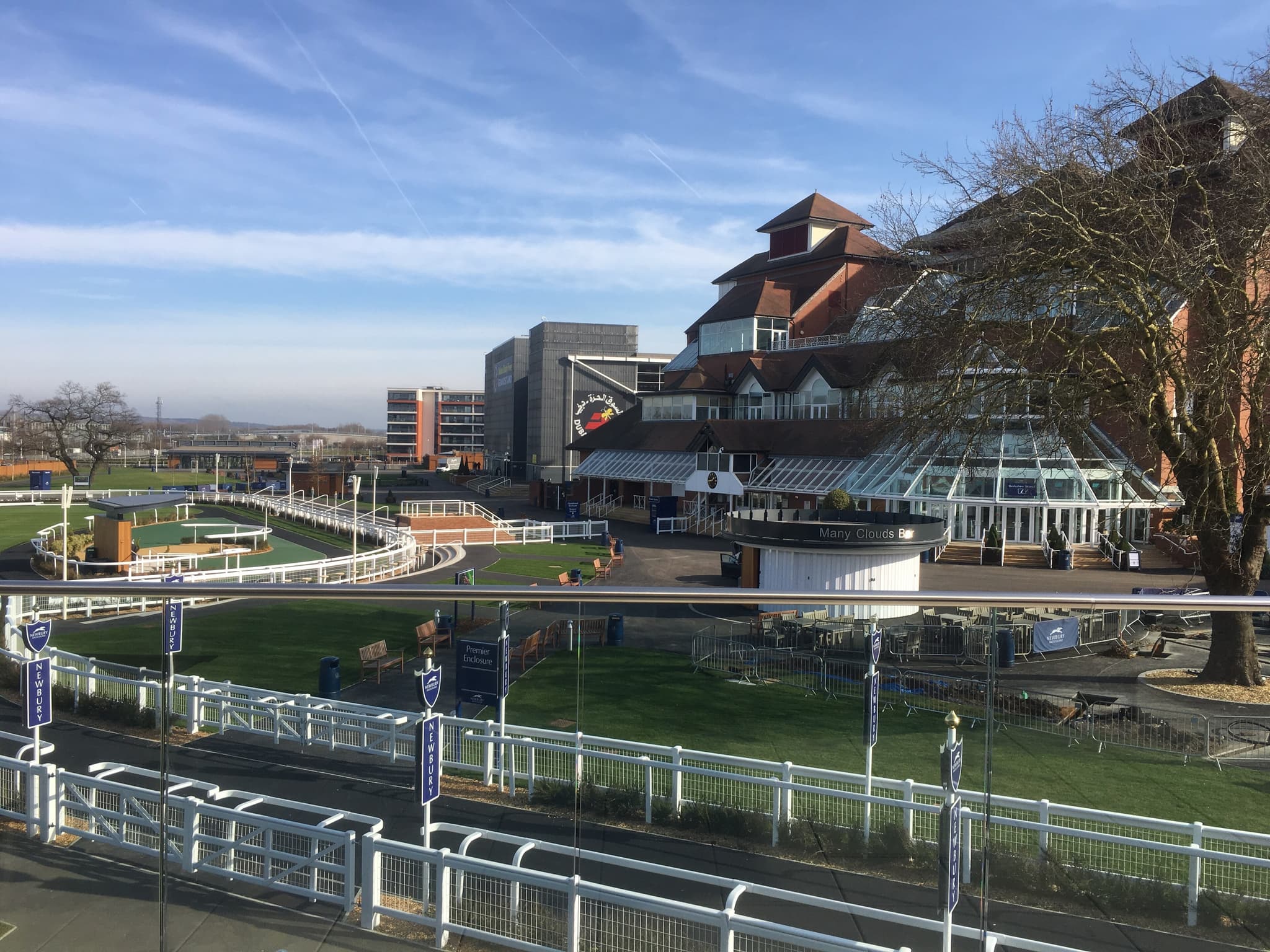
A Day Out at Newbury Racecourse
Everything you need for a day at Newbury — getting there, what to wear, enclosures, food and drink, and insider tips.
Read more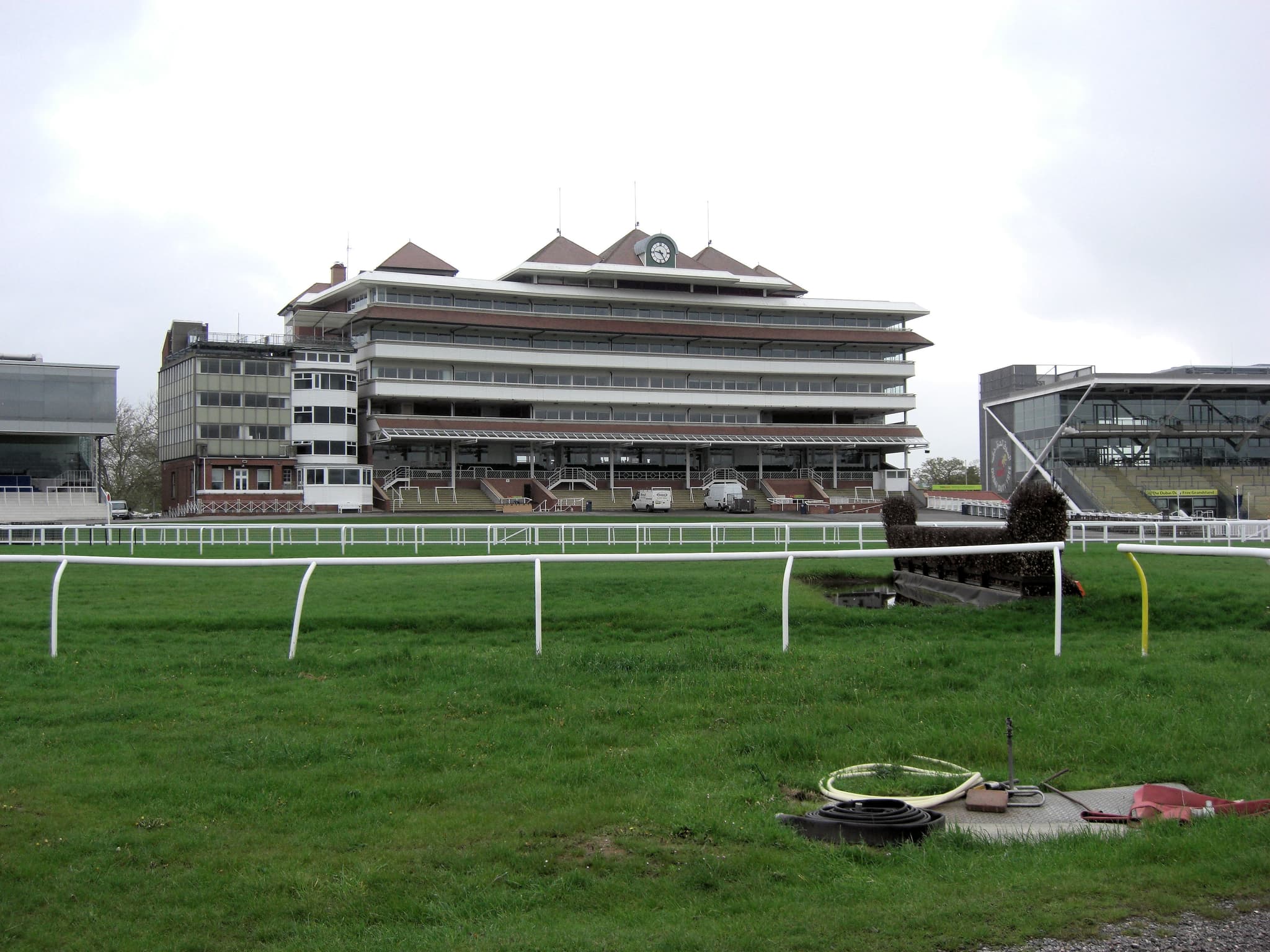
Newbury's Coral Gold Cup Festival: Your Complete Guide
The Coral Gold Cup is one of jump racing's great handicap chases. Here's your guide to the Newbury winter festival and everything around it.
Read more
The History of Newbury Racecourse
From John Porter's founding vision in 1905 to Arkle, Denman, Frankel and the modern era — the full history of Newbury Racecourse.
Read morePhotos on this page are used under Creative Commons licences. Titles, sources and licence links for each one are on our image credits page.
Research the field with the AI Race Predictor
Our model publishes calibrated win-probability estimates for UK races — a second opinion to understand a race, not tips. It's open about its record: it doesn't beat the market, and we show exactly how it does.
Work it out & learn the basics
Gamble Responsibly
Gambling should be entertaining and not seen as a way to make money. Never bet more than you can afford to lose. If you or someone you know has a gambling problem, help and support is available.