
Founder & Editor · Last reviewed 2026-04-05
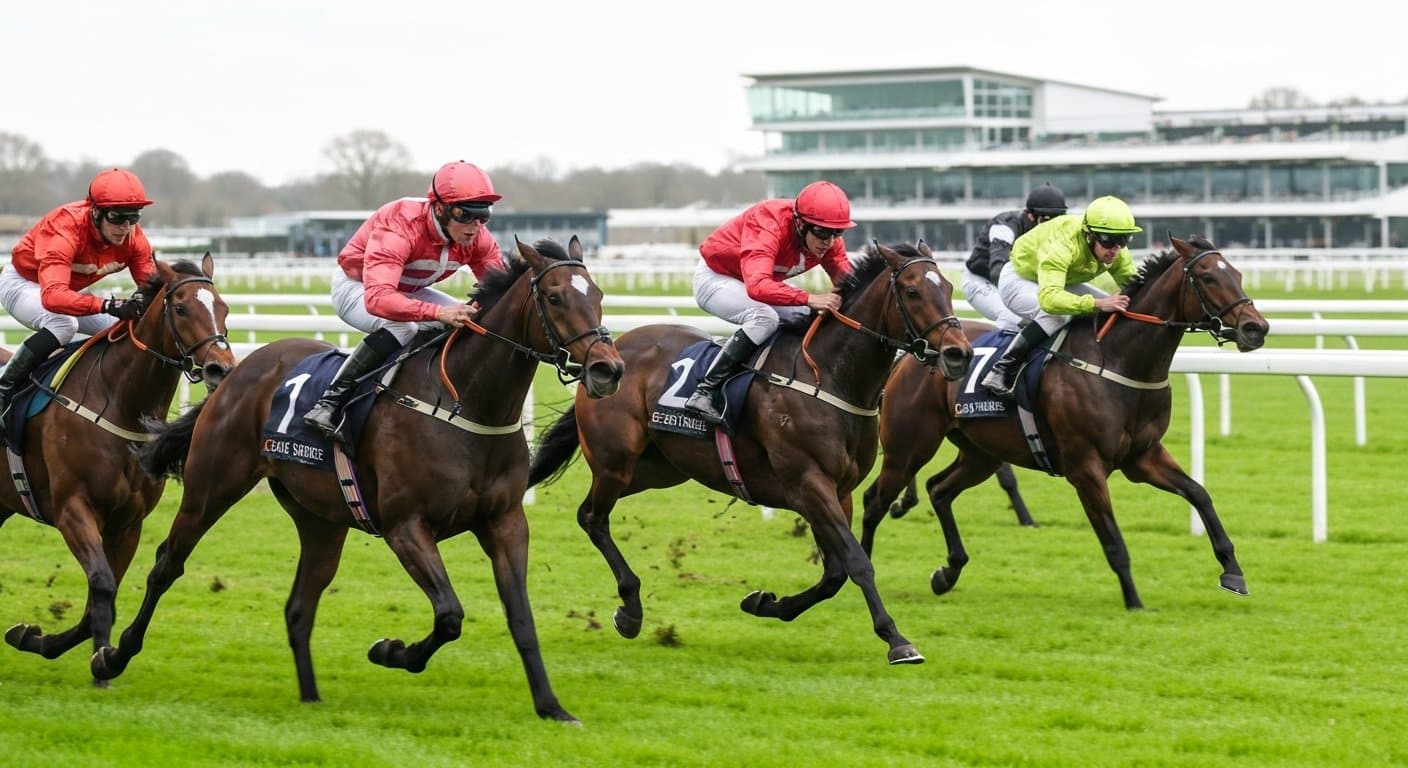
Newbury is one of the most respected betting venues in British racing. It is a fair, wide, galloping course that delivers reliable form, a calendar packed with high-quality pattern races, and three marquee betting contests — the Ladbrokes Trophy in November, the Betfair Hurdle in February, and the Group 1 Lockinge Stakes in May — that between them attract some of the best horses in Britain and Ireland each season. The racecourse opened in 1905, sits on a 400-acre site near the Berkshire town of Newbury, and has a listed capacity of approximately 15,000. It is one of a small number of British tracks that run both flat and National Hunt racing at a consistently high level throughout the year.
The course sits in the Berkshire countryside, roughly equidistant between the Lambourn valley training centre and the Newbury town centre. That geography is significant: with Nicky Henderson's Seven Barrows operation and Andrew Balding's Kingsclere yard both within a short drive, Newbury attracts well-prepared local runners whose trainers know the track intimately. Punters who understand which yards target this course — and which races they treat as priority fixtures — have a consistent edge in the market.
As a dual-purpose track, Newbury operates across both the flat and jumps seasons. The flat programme runs from April through October. The National Hunt season takes over from October onwards, with the late-November Ladbrokes Trophy card traditionally one of the biggest jumping days outside Cheltenham. The course's stamina-biased flat races and the demanding winter chasing programme test horses in ways that produce reliable, transferable form.
What separates Newbury from most tracks is that the form book works here. There are no sharp, idiosyncratic bends that confuse horses on their first visit, no pronounced draw biases that routinely overturn form, and no quirky gradients that favour only specialists. A horse that performs well at a comparable galloping track — Ascot, Sandown, or Kempton — will typically handle Newbury without issue. That reliability makes Newbury a particularly productive track for form-based punters, since the race conditions isolate class and fitness rather than course quirks. The long home straight, at just under five furlongs, is one of the longest in Britain and rewards horses with a sustained gallop over those who depend on a short, sharp burst of acceleration. It is a course that consistently finds the best horse in the race, which is exactly the kind of track a form student wants to be betting at.
This guide covers everything a punter needs. It begins with the track layout and what it rewards, moves into draw bias analysis, then provides detailed betting breakdowns of the three headline races — the Ladbrokes Trophy, the Betfair Hurdle, and the Lockinge Stakes — before examining the broader pattern race programme and answering the most common punting questions about Newbury in the FAQ section. By the end, you will have a clear and actionable framework for betting at one of Britain's most productive racecourses.
Bet on Newbury
Place your bets on Newbury races with a trusted bookmaker.

Promo code BETFRED50. New customers only. Register, deposit with a Debit Card, and place a first bet of £10+ at Evens (2.0)+ on Sports, to be settled within 7 days, to get £30 in Sports Free Bets and £20 in Bet Builder Free Bets within 24 hours of settlement. 7-day expiry. Eligibility & payment exclusions apply. Full T&Cs apply. Take Time to Think. BeGambleAware.org. 18+. Full T&Cs.

Promo code R30. New UK customers only, 18+. Register, deposit £10 or more, then place a £10 single cash bet at odds of 1/2 (1.5) or greater on any sports market (excluding Virtuals). Once the qualifying bet settles you get £30 in Free Bets (3 x £10) — the qualifying bet can win or lose. Free Bets are valid on any sports market excluding Virtuals, expire in 7 days, are non-withdrawable and must be used in full. Excluded deposit methods apply (including PayPal, Apple Pay, Skrill and NETELLER). Named bets such as Lucky 15 do not qualify. If you cash out the qualifying bet, or it is voided, you are no longer eligible for the offer. Ends 31.12.26. Full T&Cs apply. Please gamble responsibly. BeGambleAware.org. 18+. Full T&Cs.

Promo code BET40GET20. New UK customers, 18+. Register with the code and place a first bet of £40 or more at Evens (2.0) or greater. Receive 2 × £10 free bets: the first credited automatically once the qualifying bet settles, the second 24 hours later. Free bets must be placed at minimum odds of 4/1 (5.0), expire 24 hours after credit, and the free-bet stake is not returned with winnings. Debit card deposits only. Take Time to Think. BeGambleAware.org. 18+. T&Cs apply. Full T&Cs.

50% of your first-day net losses refunded as a free bet, capped at £25. New UK customers aged 18+ only. To qualify, deposit and place a first bet of £10 or more on any sport at minimum odds of evens (2.00), then place at least two further bets on different events, each worth at least 50% of your largest bet, all at evens (2.00) or greater. Losses are counted from your first settled bet until 23:59 the same day. Place a qualifying £10+ bet and you are guaranteed at least a £5 free bet. Bets placed at SP, void bets, cashed-out bets and bets struck with free bets do not count towards the offer. The free bet is credited the day after your qualifying bets settle and must be used within 7 days, after which it expires. It can be used at odds from 1/4 (1.25) up to 250/1 on singles and straight accumulators, but not on Trixie, Patent or Yankee style multiples. Free-bet stake is not returned with winnings. One offer per person, household, address, IP address and device. E-wallet deposits may not qualify, so check the cashier before depositing. Customers registered with GAMSTOP cannot claim. KYC identity verification must be completed before the free bet is credited. Take Time to Think. BeGambleAware.org. 18+. T&Cs apply. Full T&Cs.

New customers, 18+. Choose the sports bonus at sign-up, make a first deposit and receive a 100% bonus up to £50 in your Sports Bonus balance. To convert the bonus to cash, wager it 10x within 30 days. Single bets below Evens (2.00) do not qualify; accumulators do not qualify if any selection is below 1/2 (1.50). Virtual Sports, voided, cancelled, drawn, cashed-out and free-bet wagers do not count towards wagering. Only the first settled bet per event counts. Withdrawing before the wagering requirement is met forfeits the bonus balance including bonus winnings. Real-money funds are used before bonus funds. Deposits via Skrill or Neteller are not eligible. Not valid in conjunction with other promotions. Odds, bet and payment limits apply. 10bet general and promotion T&Cs apply. BeGambleAware.org. 18+. Full T&Cs.

New customers in Great Britain and Republic of Ireland, 18+. Place a £10 fixed-odds qualifying bet at minimum odds of 1/2 (1.50) — single or each-way (only the win part counts), pre-event or in-play, not cashed out early, within 28 days of opening the account. Receive up to £60 in bonuses credited over three days: 3 × £10 fixed-odds free bets (the first on settlement, then 24 and 48 hours later) plus 3 × £5 Total Goals FOOTBALL spread bets and 3 × £5 racing Winning Favourites spread bets, with a £1 racing Race Index spread bet as an extra on top. The spread bets need a full spread-betting account, opened within 28 days of the fixed-odds account and subject to Spreadex's eligibility and appropriateness checks. Free-bet stakes not returned with winnings; free bets valid 28 days from issue. IMPORTANT: the £5 credits are SPREAD bets — sports spread betting carries the risk that losses can exceed your stake. Sports spread-betting customers do not have Financial Ombudsman or FSCS recourse. Take Time to Think. BeGambleAware.org. 18+. T&Cs apply. Full T&Cs.

Promo code WELCOME15, entered under My Bonuses after registering. New UK customers, 18+. Place a first qualifying bet of at least £10 from your cash balance at odds of evens (2.0) or greater within 7 days of opening the account. Once the qualifying bet fully settles you receive £15 in free bets, credited as 3 x £5 tokens with set uses: one £5 accumulator free bet (minimum 4 legs, each leg at 2/5 or bigger), one £5 sports free bet (any market at evens or bigger) and one £5 Sub Cover free bet (selected football player markets at evens or bigger). Free-bet stakes are not returned with winnings. Free bets expire 7 days after they are credited. Void, cashed-out and partially cashed-out bets do not qualify. One offer per customer. Confirm the current terms on BetGoodwin's own welcome-offer page before claiming. Take Time to Think. BeGambleAware.org. 18+. T&Cs apply. Full T&Cs.

New UK customers, 18+. Minimum deposit £10. Place a £10 qualifying single on sports (excluding virtuals) at minimum odds of 1/2 (1.50), settled within 14 days. Deposit-method exclusions apply. Receive £30 in free bets (stake not returned), split £20 for sportsbook use (2 x £10) and £10 for Bet Builder only (2 x £5); Bet Builder does not cover horse racing. Free bets must be accepted within 7 days and expire 7 days after acceptance. No promo code required. Best Odds Guaranteed on UK & Irish racing, subject to having staked over £25 in the previous seven days. Operated by LiveScore Betting and Gaming (Gibraltar) Ltd, UKGC 56859. Confirm the current terms on LiveScore Bet's own promotions page before claiming. Take Time to Think. BeGambleAware.org. 18+. T&Cs apply. Full T&Cs.
18+. BeGambleAware.org
The Course and What It Rewards
Newbury is a left-handed, broadly oval circuit that measures approximately one mile and seven furlongs around. It is wide throughout — the width of the track in the home straight is around 40 metres — which means horses have room to race across the full width of the course even in large fields. That width, combined with sweeping bends rather than tight turns, defines what Newbury rewards.
The Home Straight
The home straight at Newbury is one of the longest in Britain, running to just under five furlongs on the round course. For comparison, Ascot's home straight is approximately 2.5 furlongs and Epsom's is around 3.5 furlongs. Newbury's extended run from the final turn to the line gives horses a sustained opportunity to close on leaders. Front-runners must work extremely hard to hold on in the straight, and horses that travel well through the early and middle parts of a race before producing a sustained gallop in the final half-mile are ideally suited. Horses with a sharp, short burst of pace who need a tight track or a quick final furlong tend to be at a disadvantage here.
The five-furlong straight course sits to the right of the main oval and shares the same long finishing straight. Sprint races run on this course are fair tests of raw speed, but the length of the straight again means that horses who can sustain their effort all the way to the line outperform those with a shorter, sharper action.
What the Course Rewards
The single most important trait for a horse to have at Newbury is the ability to maintain a sustained gallop. This is not a course where a sharp horse can quicken once and coast to the line over a short distance. Races at a mile and above require horses to travel smoothly for the first half of the race, continue travelling as the pace lifts on the far turn, and then stay on powerfully through the full length of the straight. Stayers and horses bred for middle distances — rather than pure speed types — win at Newbury at a disproportionate rate.
Bold-travelling front-runners can still win at Newbury, particularly in smaller fields where nobody else is willing to set a true pace, but they are vulnerable late. The most reliable type to back here is the progressive stayer — a horse with a big stride who handles an honest pace and stays on relentlessly in the final two furlongs.
On the jumps course, the stiff fences placed on the back straight (three fences in a row before the final bend) find out horses that are not fluent jumpers. The long run-in from the last fence — approximately 200 yards — also benefits horses with stamina rather than those who jump the last first and then struggle to maintain their effort.
Going and Ground
The Berkshire location means Newbury encounters a wide range of going conditions across the year. In summer the ground typically rides good to firm, often truly fast in a dry July or August. Spring and autumn cards tend to produce good to soft ground. In November and through the winter months, soft and heavy are common on the jumps course, and the ground can become extreme — truly testing — after prolonged rain.
Newbury's drainage is adequate but not exceptional. When the going has been heavy for several days, water accumulates on the back straight before gradually making its way across the width of the course. This has historically produced slight variation in ground quality across the width of the track at sprint distances (discussed in the draw bias section), but for races at a mile and beyond the ground variation across the track is not a betting factor.
For punters, the most actionable ground angle at Newbury is the winter jumps programme. When the November or February going description includes "heavy", horses without confirmed heavy-ground form are at a serious disadvantage. Trainer Paul Nicholls has spoken publicly about targeting the Ladbrokes Trophy specifically when the ground is expected to be testing — his record in heavy-ground runnings of the race bears that out, with Denman's 2007 victory on soft ground among the most celebrated examples. A horse that ran well at Newbury in October on good ground should not be assumed to reproduce that form in November on heavy.
The Pace Dimension
Pace analysis at Newbury pays dividends regardless of the discipline. In flat races over a mile and beyond, the long straight creates a pattern where a single uncontested front-runner can be extremely hard to peg back — if the pace collapses in the middle of the race, the leader gets an unearned breather and travels into the straight fully refreshed. Conversely, a race with three or four horses trying to lead from the front will often produce a strong pace that suits closers.
In jumps races, particularly handicap chases, the stamina-testing track means that horses who race too freely early — fighting against their jockeys through the first mile — tend to wilt after the final fence. The horses that win big Newbury chases are almost always described as "settled, travelling, jumping well" through the early stages. That profile of a horse that travels kindly within itself for the first circuit before lengthening in the straight is the primary type to identify before any major Newbury chase.
Draw Bias
Draw bias is one of the most frequently searched-for topics in racecourse betting, and Newbury is regularly discussed in that context. The honest summary is that draw bias at Newbury is less significant than at most tracks where punters obsess over stall positions. Understanding exactly where it matters — and where it does not — will stop you overweighting a minor factor and ignoring the major ones.
Five Furlongs: Where Draw Has the Most Relevance
On the straight five-furlong course at Newbury, there is a documented, if modest, tendency in soft and heavy ground conditions for higher-numbered stalls to outperform lower-numbered stalls. The mechanism is drainage: Newbury's course topography means that surface water in truly wet conditions drains slightly more efficiently toward the stands' side (the far rail when viewed from the stands), leaving the ground on that side marginally less testing than the far-side (low-numbered stalls).
This is not a sweeping advantage. The difference in going quality between the two sides of the track in soft conditions at five furlongs is not the equivalent of racing on good versus heavy — it is more like the difference between soft and soft-plus. But in a tight field of eight or ten runners where several horses have similar form profiles, a stall in the 6-to-10 range on a soft five-furlong day is a legitimate marginal advantage worth factoring in.
On good to firm ground in summer, this drainage differential disappears entirely. The ground rides evenly across the full width of the straight course, and there is no significant draw advantage. Published studies of five-furlong Newbury results on good-or-better ground show winners coming from stalls at every position with roughly equal frequency.
In big fields of 15 or more runners, the important pattern is not the stall number itself but which side of the track the field divides into. When a large sprint field splits, the group racing nearest the stands' rail and the group on the far side often race as two separate contests and one group finishes ahead of the other as a block. In those instances, being on the winning side matters far more than your specific stall number. The difficulty is that predicting which group wins is hard to do before the race — most experienced punters monitor market moves and jockey booking patterns to try to read where the big operations plan to race.
Six Furlongs: Negligible Bias
At six furlongs on the straight course, draw bias is negligible under most conditions. The additional furlong of racing compared to five furlongs means any ground variation at the start point becomes less material by the time horses reach the finish. Form analysis, class, and going preference comfortably outweigh any marginal stall consideration at this distance.
A slight stands'-side tendency has been observed in very large six-furlong fields (16+) in heavy ground, but the sample size for those conditions at Newbury is small and the pattern is not consistent enough to be a reliable betting tool. Treat six-furlong draw at Newbury as neutral.
One Mile and Beyond: Draw Is Irrelevant
From a mile upwards on the round course, draw position has no significant effect on results. The wide track gives horses ample room to settle in their preferred position regardless of their stall, and the long run from the start to the first bend allows jockeys to manoeuvre freely. Dozens of miles-and-beyond races at Newbury produce winners from stalls in the 1-to-3 range and from stalls in double figures with equal regularity.
If you read pre-race analysis suggesting that a horse at a mile or beyond at Newbury is disadvantaged by its draw, treat that claim with scepticism. The track layout does not support it. Redirect that analytical energy toward going preference, trainer form, pace scenario, and class — those are the factors that determine results at these distances.
The Practical Conclusion
The hierarchy for draw at Newbury is: five furlongs in soft/heavy ground — minor relevance, worth noting; six furlongs — negligible; one mile and beyond — irrelevant. For the three headline races at Newbury (the Ladbrokes Trophy over three miles, the Betfair Hurdle over two miles and one furlong, and the Lockinge over one mile), draw is a non-factor. Spend your preparation time on form, going, and trainer analysis rather than stall-number research for those races.
The one practical step that does merit attention in any flat race at Newbury is checking where the ground staff have moved the rail. Newbury uses an innermost, inner, and outer rail configuration, and moving the rail changes the effective distance of the race and can alter how much fresh ground is available on one side of the track. Always check the rail position note in the Racing Post's track report on the morning of a flat meeting — it takes thirty seconds and can change how you view a race significantly.
Coral Gold Cup / Ladbrokes Trophy Betting
The Ladbrokes Trophy — known as the Hennessy Gold Cup from 1957 until 2016, then the Ladbrokes Trophy, and in more recent editions sponsored as the Coral Gold Cup — is the premier staying handicap chase in Britain. Run over three miles and two furlongs and 82 yards at Newbury in late November, it is one of the oldest and most prestigious handicaps in the National Hunt calendar. For punters, it is also one of the most analytically rich races of the entire jumps season.
Why This Race Matters
The Ladbrokes Trophy has an outstanding record as a form reference for the Cheltenham Gold Cup. In the modern era, multiple Ladbrokes Trophy winners have gone on to Gold Cup glory within the next two seasons. Denman won the Ladbrokes Trophy in November 2007 and then won the Cheltenham Gold Cup in March 2008. Native River won the Ladbrokes Trophy in November 2016 and the Gold Cup in 2018. The connection between Newbury in November and Cheltenham in March is one of the most durable patterns in jumps racing, and punters who take Ladbrokes Trophy form seriously when framing their ante-post Gold Cup portfolios are working from a solid empirical base.
The Weight-Carrying Dimension
What distinguishes the Ladbrokes Trophy from lesser staying handicap chases is the quality of its winners under big weights. Because the race attracts top-class staying chasers near the top of their handicap marks, the upper end of the weight range regularly includes horses carrying 11st or more — and those horses win with striking regularity.
Arkle won the race twice, in 1964 and 1965, when it was the Hennessy Gold Cup. His 1965 performance is the most dominant weight-carrying display in the race's history: he carried 12st 7lb and won by fifteen lengths. That weight was assigned by the handicapper specifically to stop him winning, and he won anyway. Arkle remains the yardstick against which all other Hennessy and Ladbrokes Trophy performances are measured.
Denman's 2007 victory under 11st 12lb was similarly authoritative. Trained by Paul Nicholls and ridden by Sam Thomas — Nicholls' first-choice jockey Ruby Walsh was injured — Denman went off as favourite despite the substantial burden and won pulling up. The ground was soft, which suited Denman's relentless galloping style perfectly. He was five years old at the time, still lightly raced, and the confidence that performance gave the racing world about his Gold Cup prospects proved entirely justified.
Many Clouds won in 2014 under trainer Oliver Sherwood, carrying 11st 9lb, and went on to win the 2015 Grand National under Leighton Aspell. His Ladbrokes Trophy run showed the kind of thorough, grinding stamina that the Aintree test also demands. Native River, trained by Colin Tizzard and ridden by Richard Johnson, won in 2016 and repeated that Cheltenham Gold Cup cycle, winning the Prestbury Park showpiece in 2018 under Johnson once again.
Betting Angles for the Ladbrokes Trophy
Back horses with proven soft or heavy ground form. The Ladbrokes Trophy is held in late November at Newbury, and the going is soft or heavy more often than not. The race averages ground on the testing side in roughly two-thirds of its runnings. A horse with a single run on good ground and an otherwise limited profile is a far worse investment than one who has already won or run well in truly deep conditions.
Take the top weights seriously. The history of the race argues strongly for not automatically opposing the top weight. High-weighted horses in this race are high-weighted because they are good — the handicapper has assessed them as the best horses in the field. When the going is testing and the race is run at a true stamina-sapping pace, those top-quality horses often prove too good for their lighter-weighted rivals despite the burden. Since Arkle's era, the race has been won by horses carrying 11st or more on multiple occasions.
Follow Paul Nicholls. No trainer has a better record in the Ladbrokes Trophy over the past three decades than Paul Nicholls. His Ditcheat operation prepares staying chasers specifically for this type of race: the fences are stiff, the pace is honest, and the distance is long. Nicholls won the race with Denman, Strong Flow, and Broadheath in a concentrated period in the 2000s and 2010s. When he runs a stable second-string (not his principal Cheltenham Gold Cup contender) in the Ladbrokes Trophy, that horse warrants close study.
Check the race fitness of any returning novice. Occasionally, a high-class novice chaser who was impressive early in the season appears in the Ladbrokes Trophy at a big weight. These horses can be overbet by punters excited by their novice form but undercooked by trainers who are using the race as a stepping stone rather than targeting it as a win-at-all-costs priority. The horses who win this race are almost always experienced stayers running at or near peak fitness, not horses being asked to jump a stiff Newbury fence at pace for the first time in a big field under a huge weight.
Ante-post Gold Cup value. After the Ladbrokes Trophy, the winner and unlucky runners typically ease in the Gold Cup ante-post market. But history suggests that the Gold Cup market does not always fully price in the Newbury form. In the weeks following Denman's 2007 win, Gold Cup ante-post prices for the following March shortened rapidly. By the time the Gold Cup arrived, Denman started at 7/4 favourite. Backing the Ladbrokes Trophy winner each-way in the ante-post Gold Cup market in the days immediately after Newbury has been a positive-value strategy over a long sample.
Ground and Distance: What to Prioritise
The race distance of three miles two furlongs and 82 yards is specific enough that horses proven at exactly this trip have an advantage over those whose stamina has not been tested beyond three miles. A horse winning over two miles four furlongs and then stepping up to the Ladbrokes Trophy without an intermediate run at three-plus miles is taking on an unknown stamina test. The safest Ladbrokes Trophy profile is a horse who has already won or finished placed in a Grade 1 or Grade 2 staying chase over three miles or more, ideally in soft or heavy ground, within the current season.
Betfair Hurdle Betting
The Betfair Hurdle, run at Newbury in mid-February over two miles and one furlong, is one of the most challenging betting propositions of the entire jumps season. It is a handicap hurdle open to horses aged four and upward, typically attracting fields of 20 or more runners across a wide range of weights and form levels. The race's very name has changed repeatedly — it has been known as the Schweppes Gold Trophy, the Tote Gold Trophy, and the Ladbrokes Hurdle in various eras — but its reputation as a fiercely competitive, punter-testing puzzle has been consistent across every incarnation.
Why the Betfair Hurdle Is Hard to Beat
The fundamental difficulty is the breadth of the competitive profile. Unlike a graded hurdle where a small field of exposed horses meets and form lines are clear, the Betfair Hurdle routinely contains 20-plus runners including horses who have run only two or three times over hurdles, progressing rapidly through the winter, whose current ability is truly unknown. A horse who has won a novice hurdle in October, won a handicap hurdle in December, and won again in January might arrive at Newbury still on a mark that underestimates its true ability. The handicapper cannot catch up quickly enough with horses improving that fast, and those progressive types are the primary threat.
The second difficulty is pace. With 20 or more runners in a two-mile hurdle, the pace is almost always strong from the outset. Jockeys in large-field hurdle races push forward early to avoid trouble, and the pace through the first mile is often significantly faster than in a smaller-field race at the same distance. Horses that need a steady early pace to travel comfortably, or those who require a quiet passage through the early stages, are at a material disadvantage.
The Progressive Novice Profile
The horse most likely to win the Betfair Hurdle is a progressive type who improved rapidly through the winter hurdle season. Since the race is open to four-year-olds (who may have only started hurdling in November), a horse who arrived from the flat with a decent Flat rating, progressed quickly through two or three hurdle wins between November and January, and arrives at Newbury on a mark that has not yet fully reflected its ability is the optimal profile.
This type wins the Betfair Hurdle at a disproportionate rate. The 20-plus field creates enough market confusion that progressive types are often available at double-figure prices despite having the best recent form trajectory in the race. Finding a horse whose last two or three runs show a clear improvement pattern — ideally with winning margins growing rather than shrinking, in competitive company — is the primary research task before the Betfair Hurdle.
How to Use the Weights
The Betfair Hurdle weight range is typically 30 or more pounds from top to bottom. The top weight carries around 11st 10lb; the bottom weight might carry as little as 10st. The natural instinct is to back the lower weights on the grounds that they have more in hand, but the race record does not straightforwardly support that view. Top weights in the Betfair Hurdle tend to be well-exposed older horses who are fully handicapped — good horses, but not necessarily improving ones. Bottom weights tend to be lightly raced progressive types, often four-year-olds with limited exposed form.
The best weights to target are in the middle of the range, roughly 10st 10lb to 11st 4lb. These horses are typically three- to five-year-olds who have run enough times to generate a reasonable handicap mark but who still have physical improvement to come. They are not yet fully exposed, they carry a manageable weight, and they have the experience to handle a competitive 20-runner field without getting badly unbalanced.
Pace Bias and Running Style
In a strongly run race of 20-plus runners, the pace bias at Newbury's two-mile-one-furlong trip favours horses that travel in the middle of the pack, save a bit of ground, and produce a sustained run from two out to the line. Front-runners in the Betfair Hurdle are exposed to the same attrition as front-runners in most large-field races: they lead through a strong pace and tend to tire in the final quarter-mile.
Hold-up horses who are last or second-to-last early in the race face a different problem: with 20 runners strung out and a big pace set, a horse saving ground at the back may find itself too far back when the key moves happen between the third-last and second-last hurdle. The ideal running position in the Betfair Hurdle is roughly four to eight places off the pace on the outside of the main group, from where the jockey can begin moving forward two hurdles from home without having to navigate through a wall of horses.
Each-Way Value and Market Approach
With 20-plus runners, bookmakers typically pay five or six places each-way. At a minimum of five places each-way, horses priced between 10/1 and 25/1 offer strong each-way value if they have the right profile. The Betfair Hurdle is one of the few races of the year where backing three or four each-way selections at a total outlay of 12 units (3 each-way per horse at 2 units each) is a viable strategy. The depth of the field means a single winner at 16/1 or 20/1 each-way generates a significant return, and at least one of the qualifying each-way places typically comes from the progressive-novice type described above.
The market in the Betfair Hurdle is also notoriously subject to late moves. Because the field is so large and so many horses have uncertain form, late market moves on the day of the race can be informative. Money for unknown progressive types in the Betfair Hurdle sometimes reflects real stable confidence. Monitor the markets in the two hours before the race, and if a horse with the right profile is being backed in from 14/1 to 8/1, that movement merits attention.
To compare place terms and each-way promotions across the major bookmakers, see our best bookmakers for horse racing guide.
Lockinge Stakes Betting
The Lockinge Stakes is a Group 1 flat race run over one mile at Newbury in mid-May. It is the first Group 1 mile race of the British flat season, which gives it a specific and valuable role: it tells you definitively which milers are in top form before the summer's major Group 1 programme begins. The race typically attracts six to ten runners, all of them high-class milers, and the betting market is correspondingly tight.
The Role of the Lockinge in the Season
The Lockinge sits at the very start of the domestic Group 1 season for milers. Horses cannot have run in many quality races before Newbury in May — the early flat season over a mile in Britain is limited — which means the Lockinge often sees horses returning from their winter break, or arriving via an international race, rather than coming off a string of domestic starts.
The most significant preceding form to look for is the Sandown Mile (the Gordon Richards Stakes or the Brigadier Gerard, depending on the horse's profile) and international targets. International raiders often prep via the Dubai Turf at Meydan in March, which has become an accepted Lockinge trial for horses trained in Europe that winter in the UAE. Frankel's final race before retirement was the 2012 Lockinge, which he won by a wide margin. That win cemented his reputation as the best miler of his generation and sent his price for the season's other races — at that point still ongoing — into the stratosphere.
How to Use Preceding Form
Because the Lockinge field is small and the runners are all Group 1 or Group 2 quality, the primary analytical task is assessing which horse is in the best current form and most suited to Newbury's conditions in May. The going in May is typically good to firm — one of the firmest surfaces Newbury produces — which suits horses with a clean, efficient action rather than those who prefer some cut in the ground.
Horses returning from a winter break (their last run having been the previous autumn) should be assessed on the quality of their training reports and workout times rather than recent race form, since they have none. When a trainer of the calibre of Sir Michael Stoute, John Gosden, or Aidan O'Brien brings a horse to the Lockinge off a winter break, the implication is that the horse is ready to run well. These trainers do not waste entries on Group 1 races.
For horses who have run since the previous autumn, the question is whether the prep race gave them enough of a fitness blow to be fully wound up for a Group 1 mile. A horse who ran in Dubai in March and then had six weeks between that race and the Lockinge should be treated as fully fit. A horse who ran in a conditions race at Sandown in late April and is running again three weeks later at Newbury should be fine on fitness but may be slightly short on racecourse miles at Group 1 level.
The Lockinge as a Royal Ascot Trail
Many horses who run in the Lockinge go on to the Queen Anne Stakes (the opening race of Royal Ascot, also a Group 1 over a mile) or the Sussex Stakes at Goodwood in July. This creates a useful information loop for punters. A horse that wins the Lockinge and is then entered in the Queen Anne is carrying proven current form into Royal Ascot — and the market at Royal Ascot typically shortens those horses accordingly. Backing the Lockinge winner for the Queen Anne in the immediate aftermath of Newbury, before the Royal Ascot market fully adjusts, has historically offered value.
Conversely, a horse that runs well but does not win at Newbury — perhaps second or third to a high-class winner — can be an interesting each-way proposition for the Queen Anne or Sussex, where the winner of the Lockinge may dominate the market and push the placed horses' prices out to profitable levels.
Key Trainers in the Lockinge
John and Thady Gosden have an outstanding record in the Lockinge. Their Clarehaven operation regularly targets the race with older milers, and the Gosden record at Newbury across both the flat and as a Grade A preparation venue is significantly above average. Sir Michael Stoute, during his training career, used Newbury repeatedly as a launchpad for his big-race milers. Andrew Balding, based nearby at Kingsclere, is another trainer worth noting when he enters a quality miler for this race.
What Price to Accept
In a field of six to ten horses, the Lockinge rarely produces a real outsider with a serious chance. Most runners are priced between 2/1 and 12/1. The each-way value angle is limited unless a live contender is somehow drifting to 10/1 or bigger — which does happen when the favourite appears strongly fancied and the rest of the market follows without fully evaluating the other runners' credentials. The safer approach is to view the Lockinge as a form-gathering race and take the information from it into the Queen Anne and Sussex Stakes markets, where the same horses reappear and the pricing is often more generous.
Pattern Race Meetings
Beyond the three headline races, Newbury hosts a substantial Pattern race programme across the flat season that provides high-quality, reliable betting opportunities throughout the year. For punters who are not simply chasing the three marquee contests, the Pattern races at Newbury offer small, high-class fields where form tends to work consistently and where precise analysis of going, distance, and current fitness pays better dividends than at large-field handicaps.
The Flat Pattern Programme
Newbury's spring meeting in mid-April usually includes the Fred Darling Stakes (Group 3, fillies, seven furlongs) and the Dubai Duty Free Stakes (Handicap over six furlongs), two of the earliest opportunities of the season to assess two-year-old and three-year-old form. The Fred Darling is a recognised Guineas trial — winners frequently go on to Newmarket in early May with solid credentials.
The Greenham Stakes, a Group 3 over seven furlongs for three-year-olds, is run at the same April meeting and functions as one of the key 2,000 Guineas trials. The form of the Greenham tends to hold up: horses that finish placed here regularly appear in the Guineas field, and the race is worth studying carefully when assessing each May's Classic market.
Later in the flat season, the Geoffrey Freer Stakes (Group 2, one mile five furlongs, August) targets older stayers. This race has a long history as a Leger trial — Arc contenders have also appeared here — and the form is reliable across similar races at York, Doncaster, and Ascot.
The Autumn Programme
Newbury's September and October meetings include the Arc Trials card, which typically features the Mill Reef Stakes (Group 2, six furlongs, two-year-olds). The Mill Reef has an excellent record as a sprint-group form pointer; it is traditionally one of the most reliable Group 2 two-year-old sprint races in the calendar and its winners regularly appear in the Middle Park Stakes at Newmarket the following month and then in the Guineas the year after.
The Horris Hill Stakes (Group 3, seven furlongs, two-year-olds) at the October meeting serves a similar trial function for Classic hopefuls over a longer trip. A two-year-old that wins the Horris Hill in October is typically being set up for a trial in the following spring and assessed for a Guineas entry.
Using Pattern Form at Newbury
For punters, the key advantage of Newbury's Pattern races over its handicap races is the reliability of the form. In a Pattern race with five or six runners, every horse in the field has a clear public form line, the trainers involved are operating at the top level, and the absence of hidden handicap marks means that a form-based approach — working out which horse has run most recently on similar going at a comparable trip against similar company — is more likely to be rewarded.
Small-field Pattern races also create specific value opportunities. When a market is dominated by a well-fancied favourite but the second or third market selection has a form profile that stands up on closer inspection, the prices on offer can be truly attractive. A 3/1 shot in a Group 3 at Newbury that has the best going-adjusted form in the race is a more appealing bet than the favourite at 4/7 who is being backed primarily on reputation.
Trainer and jockey booking intelligence matters in Newbury Pattern races. A booking switch — the replacement of a standard stable jockey with Ryan Moore, Frankie Dettori (when he was training), or William Buick on a horse from a yard that does not automatically command that rider's services — is a signal worth checking. At Newbury, where the best jockeys are familiar with the course from its big days and frequently ride its Pattern races, the calibre of the booking is a relevant indicator of stable confidence.
FAQ
Share this article
More about this racecourse
All Newbury guides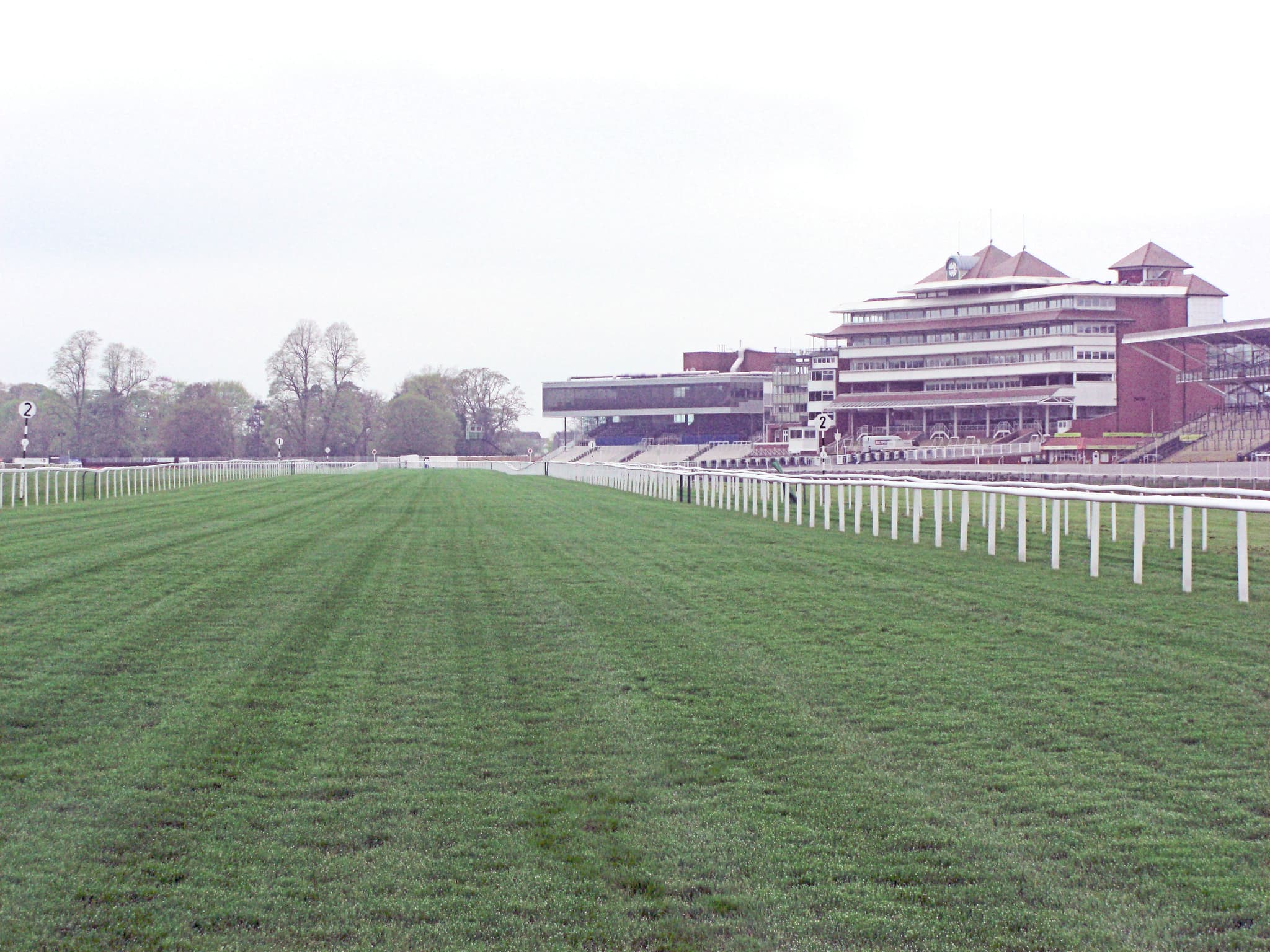
Newbury Racecourse: Lockinge Stakes, Gold Cup & Tips
Discover Newbury's premier flat and jumps racing including Lockinge Stakes and Coral Gold Cup. Berkshire venue tips, fixtures and facilities.
Read more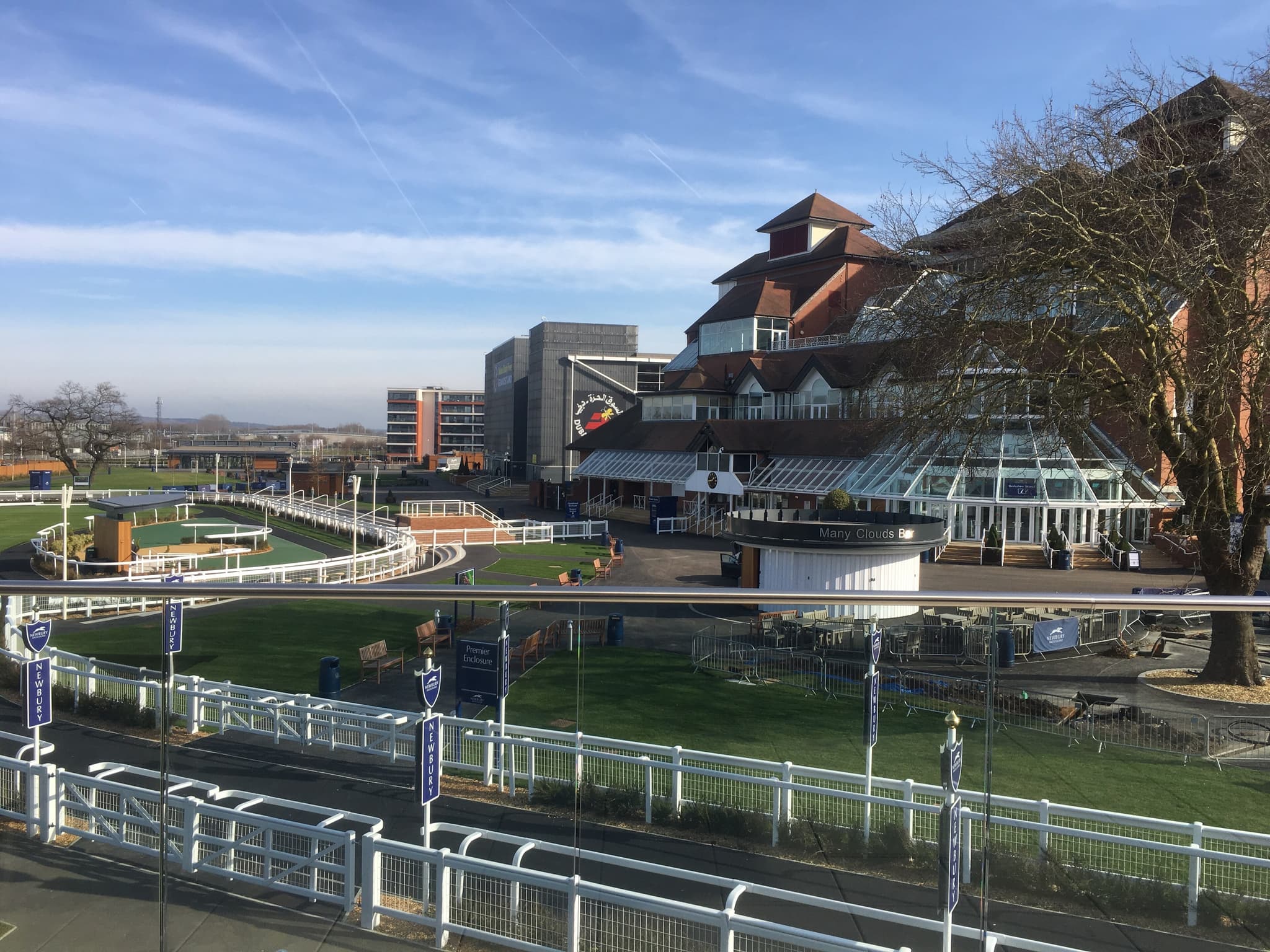
A Day Out at Newbury Racecourse
Everything you need for a day at Newbury — getting there, what to wear, enclosures, food and drink, and insider tips.
Read more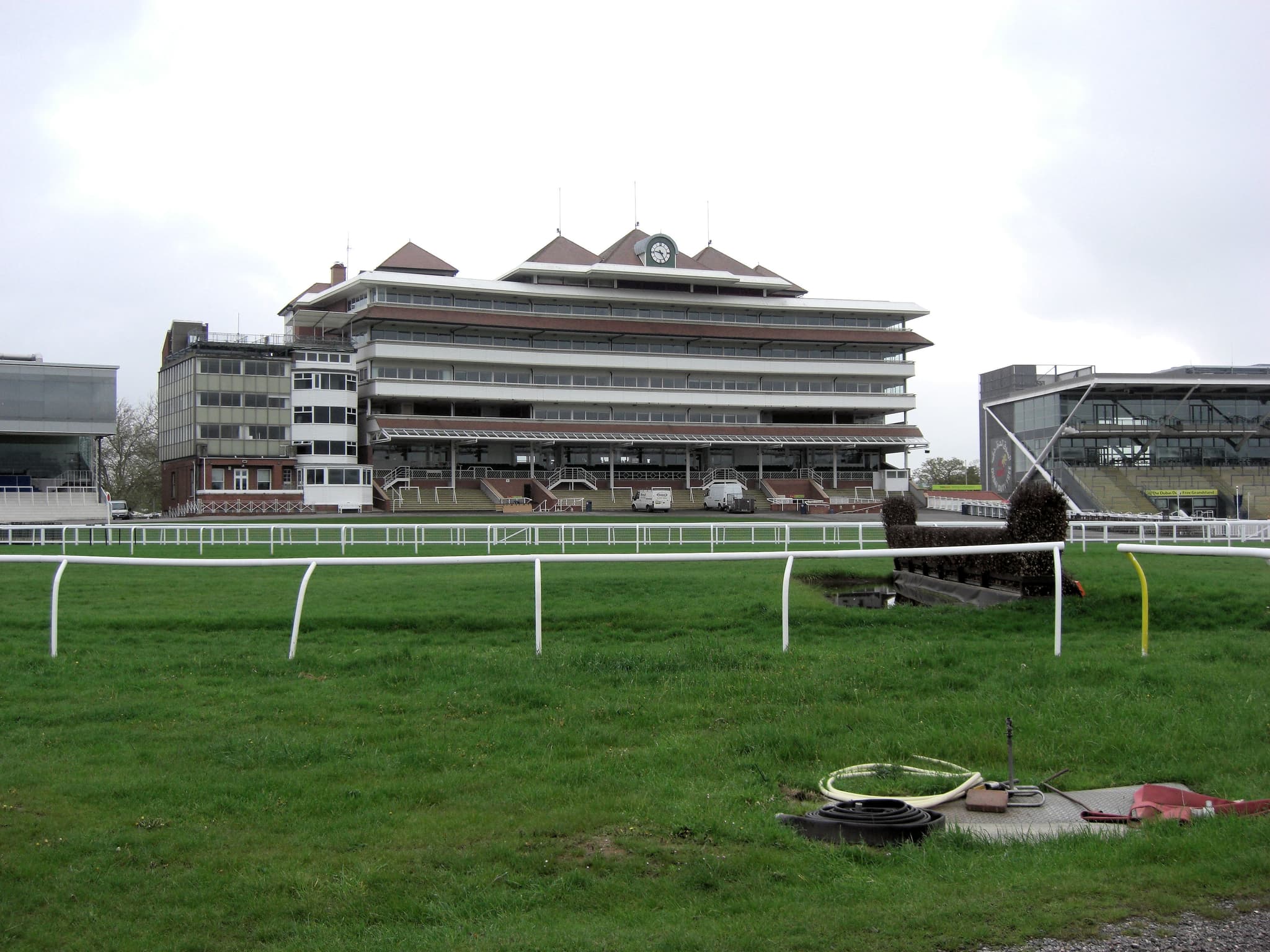
Newbury's Coral Gold Cup Festival: Your Complete Guide
The Coral Gold Cup is one of jump racing's great handicap chases. Here's your guide to the Newbury winter festival and everything around it.
Read morePhotos on this page are used under Creative Commons licences. Titles, sources and licence links for each one are on our image credits page.
Research the field with the AI Race Predictor
Our model publishes calibrated win-probability estimates for UK races — a second opinion to understand a race, not tips. It's open about its record: it doesn't beat the market, and we show exactly how it does.
Work it out & learn the basics
Gamble Responsibly
Gambling should be entertaining and not seen as a way to make money. Never bet more than you can afford to lose. If you or someone you know has a gambling problem, help and support is available.