
Founder & Editor · Last reviewed 2026-04-05
The 12:48 from London Paddington pulls into Newbury Racecourse station at 1:43pm on a November Saturday. The platform empties in under two minutes. You step off the train, turn right, and you are at the racecourse gates — no shuttle bus, no mile-long walk, no scramble for a taxi. It is one of the simplest arrivals in British racing, and on a day when the Coral Gold Cup card is underway and the ground is Soft, that simplicity matters.
The grandstand fills quickly on big jump days. The parade ring buzzes with serious punters studying horses that have been aimed at this staying handicap chase for months. The Berkshire air carries woodsmoke and cold. By the time the first race goes off, there is a concentrated atmosphere that you rarely find outside a Grade 1 festival — this is not a fun day at the races dressed up as sport; this is sport with some fun along the way.
That description fits one kind of Newbury visitor. There are several others. If you are coming for the Lockinge Stakes in May, the mood is entirely different — long evening light, flat ground riding Good, trainers from France and Ireland in the parade ring, and a more relaxed, social crowd mixing with seasoned flat racing followers. The Betfair Hurdle meeting in February sits somewhere between: a competitive winter handicap that draws the serious National Hunt crowd but without the full festival gravity of the Coral Gold Cup.
And then there are the quieter midweek cards — a standard mixed programme on a Tuesday afternoon in June, with half the grandstand empty, the betting ring unhurried, and the track itself the main attraction. Newbury's flat course is long and galloping, left-handed, easy for spectators to read from the grandstands. You can see the full home straight from the Berkshire Stand, which is more than can be said for courses where the finish line disappears behind a bend.
Newbury opened as a racecourse in 1905. It sits just off Junction 13 of the M4, in the Berkshire countryside about 55 miles west of London. The town itself is modest — a market town that most visitors only see through a train window — but the surrounding area includes Lambourn, 10 miles to the north, which is one of the major training centres in Britain. Some visitors make a full day of it: a morning visit to a Lambourn yard, then an afternoon at the races.
Who This Guide Is For
This guide is written for four types of visitor.
London day-trippers. You are coming on the train from Paddington, probably for a big meeting, and you want to know the logistics, the best enclosure for the money, and how to make the day run smoothly. The good news: Newbury is one of the most straightforward racecourse trips from London there is. The train journey takes around 55 minutes and deposits you at the gates.
Coral Gold Cup visitors. You are coming specifically for the November staying handicap chase, one of the most competitive betting races of the jumps season. This guide covers what the day actually involves — the going, the crowd, the dress code for a cold November afternoon, and where to position yourself for the best chance of a good time.
Flat racing visitors (Lockinge and beyond). The Lockinge Stakes in May is a Group 1 mile, frequently won by top European milers. If you are following the flat season, it is one of the tidier days on the spring calendar. This guide includes specific notes on what a spring/summer visit looks like compared to the winter jumps days.
Families and first-timers. Newbury is a good racecourse for people who have never been to the races before. The Centre Course enclosure is affordable and informal. The course is easy to navigate. The facilities are modern. If someone in your group knows nothing about racing, they will find their feet here faster than at most courses.
Quick Decision Block
Before you read further, here is the short version for those who just want the essential information fast.
Getting there: Take the train from London Paddington. Great Western Railway, journey time approximately 55 minutes, arrives at Newbury Racecourse station which is directly next to the entrance gates. No walk, no transfer needed. For drivers, M4 Junction 13 then follow signs; postcode RG14 7NZ.
When to arrive: Gates open roughly 90 minutes before the first race. For the Coral Gold Cup or Lockinge, plan to be through the gates at least 75 minutes before Race 1. The car parks nearest the entrance fill quickly on big days, and the train platform gets crowded at Paddington on Gold Cup morning.
Which enclosure: The Berkshire Stand (Premier Enclosure) for the full experience and the best sightlines. The Hampshire Stand for good facilities at a lower price. The Centre Course for families, groups, and anyone on a tight budget — tickets from around £10–£15.
What to wear in November: Warm layers underneath whatever you wear on top. The Berkshire grandstand has shelter but the parade ring area and the rail are exposed. Heavy ground is common for the Coral Gold Cup. Wear boots or waterproof shoes.
Going forecast: Always check the going report before the November and February meetings. At the Betfair Hurdle in 2024, the going was Soft, Heavy in places. Horses that run well on soft ground behave differently from those that need good ground, and knowing the going is the foundation of any sensible betting strategy.
The rest of this guide covers each of these areas in full detail.
Getting to Newbury
Getting to Newbury is one of the easiest racecourse journeys in the country. The transport links by train are as good as any course in Britain, and by road the M4 motorway connection is clean and direct. Whether you are coming from London, the south coast, or anywhere along the M4 corridor, the journey rarely produces surprises.
By Train — The Recommended Option
Newbury Racecourse has its own dedicated railway station called Newbury Racecourse station, and it sits directly adjacent to the main entrance gates. When the train doors open, you step onto the platform, walk fifty yards, and you are at the turnstiles. There is no shuttle bus, no half-mile walk through a car park, no taxi queue. This is truly unusual among British racecourses and it makes the whole day considerably more straightforward.
From London Paddington: Great Western Railway (GWR) runs regular services throughout the day. Journey time is approximately 55 minutes. On racedays, GWR typically lays on additional services or adds stops at Newbury Racecourse station that do not run during the week. Check the GWR website or app for the specific raceday timetable, as the station is not served on non-racing days — all regular services stop at Newbury town station instead, which is about a mile from the course.
For the Coral Gold Cup meeting in late November, the 09:48 and 10:48 from Paddington are the popular morning departures. If you are aiming to be through the gates an hour before the first race (scheduled first race is typically around 1:00pm on Gold Cup day), the 10:48 is usually a comfortable choice. The platform at Paddington fills up with racegoers visibly, so you will not struggle to find a fellow traveller to confirm the right train.
From Reading: The journey from Reading to Newbury Racecourse station takes around 20 minutes. Reading is itself served from London Paddington in as little as 22 minutes, making this a viable two-leg option if you miss a direct GWR service.
From Bristol and Bath: Services run via Newbury town station (about a 10-minute walk from the course, or a short taxi ride) rather than the racecourse station itself on most days. From Bristol Temple Meads the journey takes around 80–90 minutes depending on the service.
From Southampton: Southampton Central to Basingstoke is about 40 minutes, then a change to a GWR service toward Newbury. The journey requires planning but is feasible. Alternatively, the drive up the A34 is typically easier from Southampton.
On the way back: Raceday services from Newbury Racecourse station back to Paddington depart shortly after the last race, and they fill quickly. If you want a seat, walk briskly to the station after the final result is declared rather than lingering in the bar. The post-racing train atmosphere — everyone comparing notes on bets won and lost — is a particular pleasure of the day.
By Car
Newbury sits directly off the M4 motorway at Junction 13. From the junction, follow the A34 north and then the racecourse signs — you will reach the entrance within five minutes. The postcode for sat-nav is RG14 7NZ.
From London: The journey via the M4 takes roughly 75–90 minutes from central London, traffic dependent. Saturday mornings on race days are usually manageable, though the M4 can slow around the Reading area, particularly near Junction 11. Leave a sensible margin.
From Southampton and the south coast: The A34 runs north directly to Newbury and is the natural route. From Southampton, the drive takes around 50–60 minutes. The A34 has a tendency to back up south of Newbury, particularly on busy Saturdays — allow extra time.
From the Midlands and west: The M4 from the west (Junction 14 or 13) or the A34 from the Midlands both work. From Swindon the journey takes around 30 minutes; from Oxford about 35 minutes.
Parking on-site: Newbury has several large car parks directly adjacent to the course. Parking is typically free on standard racedays. For major fixtures — particularly the Coral Gold Cup meeting in late November and the Lockinge in May — a parking fee of around £5–£10 usually applies, and advance booking is recommended. The car parks closest to the main entrance sell out first.
Car parks at Newbury are largely on grass. After significant rainfall, particularly in November, the surface can become soft and in places boggy. Four-wheel drive vehicles cope better, but standard cars manage without issue on most days. Keeping a pair of wellies or waterproof boots in the boot is sensible for any winter visit. The course does use car park attendants to direct traffic efficiently, but allow extra time for exit after a busy meeting — it takes 20–30 minutes for the car park to clear after the last race on Gold Cup day.
Advance planning for Gold Cup day: The Coral Gold Cup meeting typically draws a crowd in the range of 15,000–20,000. This is Newbury's biggest jump meeting and the course operates at or near capacity. If you are driving, book parking in advance through the racecourse website. If you have not booked by race week, consider switching your plan to the train — it is faster, simpler, and eliminates any post-race exit stress.
By Coach
Several coach operators run raceday specials to Newbury for the larger meetings, picking up from London and Reading. These are worth considering if you are coming as a group of 8–12 people — the cost per head can undercut rail fares, and the convenience of door-to-door travel is hard to argue with. Check the racecourse website for partnered coach providers ahead of the main fixtures.
Arriving from Lambourn
Lambourn, the training village 10 miles north of Newbury, is home to around 40 licensed yards including those of some of the most prominent National Hunt trainers in the country. Lambourn Open Day runs each Easter and offers yard visits, but many trainers accommodate visitors by appointment throughout the year. If you are combining a morning in Lambourn with an afternoon at Newbury, allow at least 20–25 minutes for the drive south on the B4000, and book your yard visit to finish by 11:30am at the latest on a raceday.
When to Arrive
Gates at Newbury typically open 90 minutes before the first race. For a standard midweek card, arriving 45–60 minutes before Race 1 is plenty of time. For the Coral Gold Cup, the Betfair Hurdle, or the Lockinge Stakes, arrive at least 75 minutes before the first race.
The reasons are practical. On big days the parade ring fills up before the first race as racegoers study the card. The betting ring gets busy 30 minutes out from every race. The best rail positions on the home straight go quickly. If you arrive as the first race is going off, you will spend the first two races finding your feet rather than enjoying them.
For drivers, earlier arrival also means a better parking position. The grassed car parks are on slightly uneven ground, and a pitch 400 yards from the entrance on a cold wet November afternoon feels further than it looks on a map.
What to Wear
Newbury's dress code is straightforward by the standards of British racing. It is not Ascot — there is no equivalent of the Royal Enclosure with its hat requirement and strict no-trouser-suits-before-2012 history. But it is not a muddy point-to-point either. The expectation, across most enclosures and most meetings, is smart casual: you have made an effort, you look like you are at the races rather than a pub, and you have thought about the weather.
The specifics shift depending on the enclosure and the time of year, so it is worth reading each section rather than assuming one rule covers everything.
Standard Racedays (Midweek and Minor Fixtures)
For a standard midweek flat card or a low-key jumps afternoon, the dress requirements are minimal. Smart jeans and a collared shirt work for men. For women, anything from smart casual to more formal raceday wear is appropriate. The important thing is that you are not in sportswear — training shoes and football shirts are typically not permitted in the grandstand areas, though the Centre Course enclosure is more relaxed on this front.
Fancy dress is not permitted at any Newbury meeting. The occasional birthday group tests this annually and is usually redirected.
Major Jump Meetings — Coral Gold Cup (Late November)
This is the most important practical briefing in this entire section. November at Newbury is cold. The going for the Coral Gold Cup meeting is frequently Soft or Heavy, which means the overnight rainfall that created that ground is also the rainfall that came through your coat and sat in your shoes if you did not dress appropriately.
The Gold Cup meeting draws a serious crowd — form students, seasonal National Hunt followers, and serious punters for whom the £1 million + prize fund of the race is a real marker of the jumps season. Most of them arrive dressed for a cold British November, not for a fashion competition.
The practical advice for Gold Cup day:
Layer properly. Start with a thermal base layer. Add a mid-layer fleece or heavy jumper. Top with a windproof and waterproof outer layer that goes down to your thighs. The Berkshire Stand provides shelter but the areas around the parade ring and the viewing rail are fully exposed to wind from the north. Standing at the final fence or by the wing of the second-last jump, which is what many serious jump racing fans do, means standing in an open field. There is no shelter there.
Footwear matters significantly more than most people expect. The car parks are on grass and can be waterlogged in November. The paddock walkways are hard-surfaced, but the approach routes and the less-used viewing areas can be muddy. Ankle-high waterproof boots or wellies are the right call. Dress shoes on a wet November Gold Cup day is a choice you will regret by the second race.
Hats, scarves, and gloves are not a formality — they are functional. Wind chill on exposed grandstand upper levels in late November is significant. A pair of thin gloves takes up no space and changes the experience entirely.
For the Premier Enclosure at major jump meetings, smart attire is expected: a good coat, jacket and trousers for men, and raceday-appropriate clothing for women. Smart and weatherproof is the combination that works. A Barbour or similar waxed jacket sits naturally at Newbury in November and covers both requirements.
Major Flat Meetings — Lockinge Stakes (May) and Summer Cards
The Lockinge meeting in late May runs in an entirely different climate. By this point in the season, Newbury can be enjoying proper spring warmth — temperatures of 16–20°C on a calm Berkshire afternoon are not unusual. The crowd reflects this: you will see raceday dresses, summer suits, and fascinators appearing in numbers not seen at the winter meetings.
For the Premier Enclosure at the Lockinge, the expectation steps up. Men should wear a jacket and tie or a smart blazer with an open collar — a t-shirt and chinos is too casual for the premium areas on this day. Women opt for raceday dresses or smart separates; trouser suits are entirely appropriate.
Hats and fascinators are not mandatory at Newbury as they are at Ascot's Royal Meeting, but plenty of people wear them on the Lockinge day and the atmosphere supports it. If you are looking for an excuse to wear a fascinator at a non-Ascot meeting, the Lockinge is the right occasion.
Practical points for summer days: sunscreen is not optional if you are spending time in the Centre Course or along the rail, where shade is limited. A light umbrella or packable rain jacket is worth keeping in your bag — Berkshire weather in May includes the possibility of a sharp shower even on otherwise sunny days.
The Betfair Hurdle Meeting (February)
February at Newbury sits between the two extremes. It is typically cold — often 5–8°C — but not always wet. The meeting draws a similar crowd to the Gold Cup: serious National Hunt followers and competitive punters. Smart casual with warm layers is the call. A heavy coat, scarf, and warm footwear will serve you well.
Summary by Enclosure
Centre Course: The most relaxed. Smart casual is sufficient. Outdoor-friendly clothing is appropriate, and on a summer day shorts and a polo shirt would not look out of place. On winter days, warmth wins over formality here too.
Hampshire Stand (Grandstand Enclosure): Smart casual expected. No sportswear. On major fixture days, a step above everyday casual is appropriate.
Berkshire Stand (Premier Enclosure): Smart dress standard. On Coral Gold Cup and Lockinge days, this means jacket and tie for men and raceday wear for women. The standard remains elevated even in winter — smart and warm is achievable with the right wardrobe choices.
Hospitality boxes and restaurant packages: Best dress expected. Treat it as a smart restaurant event. A lounge suit or equivalent for men; formal raceday wear for women.
The Single Most Useful Tip
Check the going forecast the morning of your visit. The going at Newbury shifts quickly, and a Soft or Heavy going reading on the morning of the Coral Gold Cup is telling you something important: it has rained significantly. That means the car parks are damp, the exposed viewing areas are cold and wet, and your footwear choice will make or break the afternoon. A quick look at Newbury's morning going report takes 30 seconds and removes the element of surprise.
Enclosures & Viewing
Newbury offers three main admission categories, each with a distinct character. Choosing the right one depends on what kind of day you want — full-service grandstand experience, a solid middle option, or a relaxed afternoon with flexibility. There are also premium hospitality packages for occasions where money is less of the constraint than experience.
Berkshire Stand — Premier Enclosure
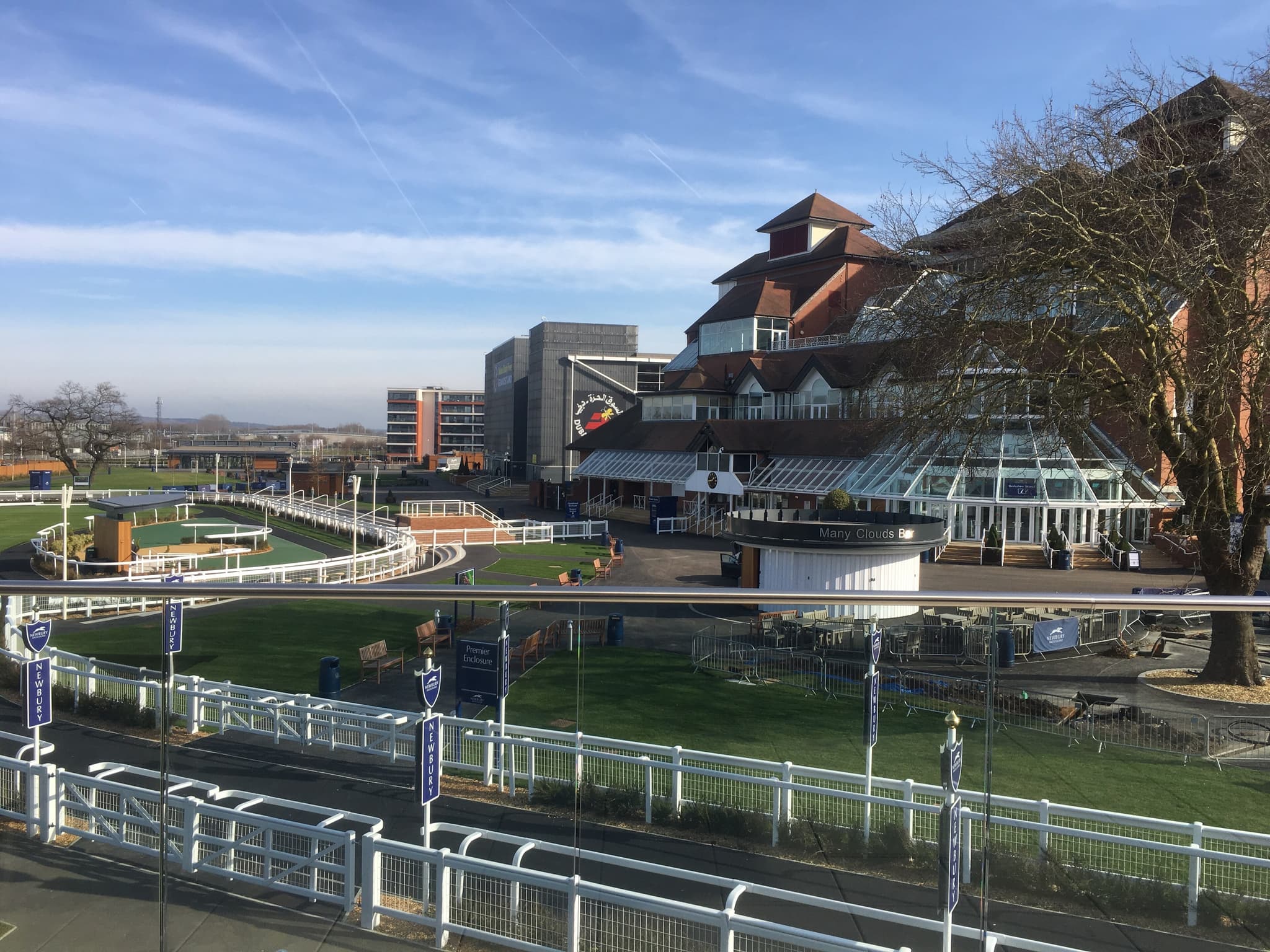
The Berkshire Stand is Newbury's main grandstand and the centrepiece of the racecourse. It runs along the home straight and provides viewing across multiple levels, from the ground-floor parade ring area up through several tiers to the upper deck with its full panoramic view across the track.
The sightlines in the Berkshire Stand are among the cleanest of any enclosed grandstand on the British jumps circuit. The home straight at Newbury is long — horses run about four furlongs from the final bend to the line — and from the upper levels of the Berkshire Stand you can watch the entire final stretch without craning or jostling. On a day when the Coral Gold Cup field is spread across that straight, with the leading horse holding on and the chasing pack making ground, the view is worth paying for.
At ground level you are within touching distance of the parade ring and the winner's enclosure. Before each race the horses walk the ring as their handlers keep them settled, and the handlers themselves — many of whom have driven down from Lambourn that morning — are often willing to talk to interested spectators on quieter days. After a race the connections gather in the winner's enclosure directly in front of the grandstand: a good moment even if the horse you backed ran fourth.
The Berkshire Stand has bars and food outlets on each level, with shorter queues on the upper floors on busy days. The covered areas provide protection from rain, which matters on a November afternoon. There are heated indoor viewing areas on some levels, though the racecourse's exact provision varies by meeting.
Ticket prices: Premier Enclosure tickets for major meetings (Coral Gold Cup, Betfair Hurdle, Lockinge Stakes) typically run from £30 to £45 per person, booked in advance. On quieter fixtures, advance pricing can drop below £25. Prices at the gate are higher. Booking through the racecourse website is always cheaper than walking up on the day.
Dress code: Smart. On major fixture days, jacket and tie for men, raceday wear for women. Smart casual on midweek cards and minor fixtures, but no sportswear at any time.
Hampshire Stand — Grandstand Enclosure
Adjacent to the Berkshire Stand and sharing some viewing areas, the Hampshire Stand offers a step down in price and a step toward a more relaxed atmosphere — without a significant drop in facilities. You still get access to the parade ring, a good selection of bars and food outlets, and perfectly solid viewing of the home straight.
On quieter racedays, the Hampshire Stand is the natural home of Newbury's regular crowd. Racing followers who come to eight or ten meetings a year, who know the course well, and who prioritise value over prestige tend to gravitate here. The atmosphere is friendly, unhurried on midweek cards, and entirely appropriate for anyone who wants a proper afternoon's racing without paying top-tier prices.
For major meetings, the Hampshire Stand does get busy. The bars are more crowded, the best viewing rail positions are taken earlier, and the relaxed midweek atmosphere gives way to something closer to the energy of the Berkshire Stand. On the Coral Gold Cup day the two stands feel quite similar in energy, with the main difference being price.
Ticket prices: Typically £15–£30 for standard fixtures, with major meetings priced above that. Children often get in at reduced rates or free on selected days — check the racecourse website for specific meeting promotions.
Dress code: Smart casual. No sportswear. Similar standards to the Berkshire Stand, slightly more relaxed on minor midweek cards.
Centre Course Enclosure
The Centre Course sits in the middle of the track — the enclosed area inside the circuit itself — and is the most affordable and informal option at Newbury. It has a festival-like character, particularly on summer flat days when groups spread out on the grass, bring picnics, and treat the racing as the backdrop rather than the main focus.
On a warm May Saturday, the Centre Course is truly one of the better places to spend an afternoon on the British racing calendar. The atmosphere is sociable, the pressure is off, and if you fancy sitting on the grass with a cold drink watching horses thunder around you rather than filing into a grandstand, this is the right choice.
The viewing angle from the Centre Course is different to the grandstands: you are looking across the track rather than down the straight. You can see the horses clearly as they pass, but you are not watching the full final furlong run-in from a linear perspective. On summer days this barely matters. On a tight, competitive finish in a major race, some racegoers find it slightly frustrating not to see exactly who got up — though the big screen helps significantly.
Practical points for Centre Course visitors: Bring a blanket or travel chair for summer days if you want to sit out. On wet days the surface is less pleasant and the experience shifts — it is worth checking the weather forecast before committing to Centre Course on a November card. Check the racecourse's current terms on food and drink, as a modest picnic is often permitted here where it would not be in the grandstand enclosures.
Ticket prices: From approximately £10–£15 in advance for standard fixtures. Children under a certain age often get in free on specified family days. This is the most budget-friendly way to spend a full day at Newbury.
Dress code: Smart casual, with the most relaxed enforcement. On summer days casual clothing is appropriate. Sportswear is still technically not permitted, but the atmosphere is noticeably more informal.
Hospitality Packages and Private Boxes
For special occasions — a significant birthday, a corporate event, a proposal that involves lunch and racing — Newbury's hospitality operation is worth considering seriously. The course has a well-established hospitality infrastructure built over decades of business entertaining; it is close to London, easy to reach from the Thames Valley's significant business community, and the facilities are truly well-run.
The Rocking Horse restaurant is the headline dining venue. On major meeting days it operates as a full hospitality package with a set menu lunch, table service, a racecard and badge, and access to the premium viewing areas. The quality of the food has improved consistently in recent years and it sits at a standard you would expect from a smart London restaurant rather than a typical sports venue catering operation. These packages sell out for the Coral Gold Cup and Lockinge meetings — book as soon as tickets go on sale if you want this experience.
Private boxes are available for corporate hire and offer dedicated balcony viewing, your own bar service, and catering options that can be tailored to the group. A box on the Coral Gold Cup day at Newbury, with Lambourn connections in the room and a serious betting card on the table, is a business entertainment option that sits distinctively above a standard day at the cricket or football.
Booking: All hospitality enquiries go through the racecourse website or the dedicated events team at newburyracecourse.co.uk. For the Gold Cup and Lockinge, reach out well in advance — ideally at the start of the racing season in May for the November meeting.
Viewing Tips for All Enclosures
Rail positions: The best positions along the home straight rail go quickly on big days. If you want to watch a race from the rail rather than the stand, move there 15–20 minutes before the off and claim a spot.
The parade ring visit: Make time to watch the horses in the parade ring before each race. On Coral Gold Cup day, seeing a field of 20 or more chestnut and bay staying chasers walking the ring is one of the visual highlights of the jumps season. Their condition, how they are moving, and how they are handling the atmosphere all provide information that no form guide supplies.
The final fence on chase days: For National Hunt racing, positioning yourself with a view of the final fence or second-last fence at Newbury offers a different experience to grandstand viewing. The moment a long-time leader meets the jump still travelling, or importantly when they do not, changes how you understand jump racing. Ask a course official or check the course map for the best accessible viewing point near the obstacles.
Big screens: Newbury has large screens positioned around the course that show the race live, so even if your sightlines are partly obstructed you will not lose the picture completely. This is most useful in the Centre Course and the areas behind the stands.
Food & Drink
Newbury's food and drink offer has moved on considerably from the era when a cold burger and a warm lager were the sum total of the options. The catering operation across the course now covers a reasonable spread — from a quick pint and a pie grabbed between races to a sit-down lunch in the Rocking Horse restaurant with table service. Knowing what is available, and where to find it, makes the day run more smoothly.
Formal Dining — The Rocking Horse Restaurant
The Rocking Horse is Newbury's flagship dining venue and operates as a full hospitality package on the major race days. A typical package on the Coral Gold Cup or Lockinge includes a three-course set menu lunch served with table service, a complimentary drink on arrival, your entry badge, and access to the premium viewing terrace.
The menu quality is a real step above what most people expect from a racecourse restaurant. Newbury's hospitality team has invested in this area, and recent menus have included dishes that would sit comfortably on the lunch menu of a London restaurant in the £40–£50 per head bracket. Starters along the lines of potted shrimp or cured salmon; mains of roast beef, guinea fowl, or a fish option; proper desserts rather than the tinned fruit that once represented the high point of racecourse catering. Wine lists are short but serviceable.
Booking is essential for major fixtures. The Rocking Horse sells out weeks in advance for the Coral Gold Cup and Lockinge meetings. If you are planning to dine formally at Newbury, the booking conversation should happen when the fixture is confirmed rather than in the week before the race. Packages are available through the racecourse website or events team.
On less prominent fixtures — midweek flat cards in June or July, for example — the restaurant may operate in a more casual format or not be fully open as a hospitality venue. Check in advance.
Casual Dining Across the Course
The food stall and kiosk operation at Newbury is spread across the Berkshire Stand, Hampshire Stand, and Centre Course areas. On a big raceday you will typically find most of the following:
Burgers and hot dogs: Standard course fare, and the execution at Newbury is a step above average. Beef burgers from named suppliers rather than anonymous frozen patties have appeared on recent menus. Prices run from £9–£13 for a burger with fries.
Fish and chips: A consistent fixture at Newbury and a particularly good choice on a cold November afternoon. Proper battered cod rather than a thin breadcrumbed fillet. Expect to pay £10–£14 for a portion.
Hog roast: A feature of the bigger meetings, typically positioned near the Centre Course or the ground level of the grandstands. A hog roast roll with apple sauce and crackling for £8–£10 is a straightforward, satisfying option.
Pies: Newbury reliably has a decent pie option from a named producer. A good steak and kidney or chicken and mushroom pie is one of the more underrated pleasures of a British winter jump meeting, and it is available here.
Street food vendors: On the Coral Gold Cup day and the Lockinge, additional food traders typically set up around the course. In recent seasons these have included wood-fired pizza, Caribbean food, gourmet hot dogs, and Thai street food. The selection changes year to year depending on the vendor roster, but the general direction of travel is toward a more varied offer.
Budget around £10–£14 for a substantial main course from the food stalls, plus drinks separately.
Bars and Drinks
Bars are distributed throughout the Berkshire Stand (on every floor), the Hampshire Stand, and the Centre Course. On busy days this distribution matters — the ground-floor bars in the Berkshire Stand can become very crowded in the 15 minutes before a race, whereas the same bars on the upper levels are often quieter.
Draught beer: A pint of lager at Newbury typically costs £5.50–£6.50 depending on the brand and the specific bar. This is standard racecourse pricing and broadly in line with what you would pay at any major sporting venue in the south of England. Ales and stout are also available at most bars.
Wine: Served by the glass (around £7–£9) or the bottle. The standard house wine is perfectly drinkable. For better options, the hospitality bars and the Rocking Horse terrace have a more considered wine selection.
Champagne and cocktail bars: On the major flat days — particularly the Lockinge meeting in May — champagne and cocktail bars appear at various points around the course. These are aimed at the social crowd rather than the betting crowd, and on a warm Berkshire afternoon they work well. A glass of champagne runs from £12–£15. The Veuve Clicquot or Moët served in a plastic flute is a very specific British racing experience.
Soft drinks, coffee, and hot drinks: Coffee kiosks appear across the course and are a priority on cold jump days. A flat white or cappuccino costs £3.50–£4.50. Hot chocolates are available. On a November morning when the temperature is 6°C, the coffee queue is not the place to be three minutes before the first race — get your coffee before studying the card.
Non-alcoholic options: Newbury has expanded its non-alcoholic offer in recent years. Named non-alcoholic spirits (Seedlip has featured) and low-alcohol beers are available at most main bars. This is worth noting for designated drivers and those choosing not to drink.
Food Strategy for the Day
Eat before the first race. This is the single most consistently useful piece of advice about Newbury's catering. The food queues on a busy raceday build significantly from the first race onward, and by the second or third race the wait at the popular stalls can reach 15–20 minutes. Getting there early and eating before the racing programme starts means you spend subsequent time on the form rather than in a queue.
For the Coral Gold Cup meeting: The weather in November means hot food is universally preferable to a cold sandwich. Pies, hog roast, and fish and chips are all appropriate choices. The coffee kiosks will be busy early; grab one before the first race goes off.
For the Lockinge and summer flat meetings: The food offer is broader and lighter options are more appealing. Street food vendors are more active. The Centre Course picnic option is at its best on a sunny May afternoon — check the current policy on the racecourse website before bringing food in.
For families: Children's food options are generally well-covered at Newbury. The casual food stalls stock things that children will eat (burgers, chips, hot dogs), and pricing for children's portions where offered is usually around £5–£7.
Bringing Your Own Food and Drink
The Centre Course enclosure typically permits a modest personal picnic. The racecourse's own policy can vary between meetings, so check the relevant page on the Newbury Racecourse website before your visit. The classic format is a cool bag with sandwiches, fruit, a flask of coffee, and a couple of cold drinks. Alcohol brought in for personal consumption is subject to the racecourse's discretion and any meeting-specific rules.
In the grandstand enclosures (Berkshire Stand and Hampshire Stand), outside food and drink are not permitted. The on-site offer is comprehensive enough that this is rarely a hardship.
Tips & FAQ
Insider Tips for a Better Day
Arrive early — especially on the big days. Gates open roughly 90 minutes before the first race. For the Coral Gold Cup, the Betfair Hurdle, and the Lockinge Stakes, being through the gates at least 75 minutes before Race 1 makes a tangible difference. The parade ring starts filling up early, the best rail positions go fast, and the food queues before the first race are a fraction of what they become by the third.
Check the going report on the morning of your visit. The going at Newbury changes significantly with rainfall, particularly in autumn and winter. The Coral Gold Cup meeting in 2023 was run on Soft ground; previous years have seen Heavy. For the Betfair Hurdle in February, Soft, Heavy in places is a common description. The going affects the horses that run, which affects the betting, which affects how you approach the card. A minute spent reading the morning going report on the BHA website or the Newbury racecourse site is a minute well used.
Download the GWR app before you leave for train journeys. Newbury Racecourse station does not serve regular trains on non-race days, so the timetable is specific to the race meeting. Downloading the GWR app (or checking the website at home before you leave) means you have the return train times available without relying on phone signal on-course, which can be slow on a busy Saturday.
Watch the parade ring before every race. This is not just advice for punters. Even if you have no money on the race and no particular interest in the horses, five minutes at the parade ring before each race is one of the more pleasurable parts of a day at the races. On the Coral Gold Cup card, seeing 20 or more staying chasers walk the ring — many of them bred for this kind of ground and distance — is a reminder that the betting is only one dimension of the sport.
For National Hunt meetings, find the final fence. Grandstand viewing of horse racing gives you the home straight. The experience of standing near the final fence or the second-last fence gives you something different: the actual moment of jumping, the weight of a horse landing at speed, the realisation of how much athletic work is involved in the sport. Check the course map for the best accessible public viewing point near an obstacle.
Bring cash as a supplement to card payments. Card payments are accepted widely across Newbury — at most food outlets, bars, and the Tote windows. On-course bookmakers vary: some accept cards, some prefer cash, and some operate cash-only. Having £30–£50 in cash available is a useful backup. The on-site ATMs can develop queues on busy meeting days.
Layer up for November and February. The Berkshire Stand is covered and provides shelter. The areas around the parade ring, the rail, and anywhere near the jumps are not. Wind chill at the upper viewing levels of the grandstand in November is significant. Two thin layers under a waterproof outer layer beats one thick layer when the wind picks up. Gloves and a scarf are not optional; they are functional.
Book parking in advance for the Gold Cup. The Coral Gold Cup meeting draws the largest crowds of the National Hunt season at Newbury. The car parks closest to the entrance fill first. Online advance booking costs the same as or less than paying at the gate and guarantees your spot. If you leave parking as an afterthought and find the preferred lots sold out, consider switching to the train — the Paddington service is excellent and is free of the exit-traffic problem.
Use the upper floor bars during big races. The ground-floor bars in the Berkshire Stand become very busy in the 10–15 minutes before a major race. The same bars one or two floors up typically have shorter queues during this period. Get your drinks before the rush starts, or accept the wait and use the lower bar after the off when the crowds disperse.
Study the racecard the night before for betting races. For the Coral Gold Cup and the Betfair Hurdle — both competitive handicaps with large fields — reading through the form the night before and arriving with your selections already thought through gives you an advantage. The betting ring at Newbury on Gold Cup morning is busy, prices move quickly, and having decided your approach in advance means you act with conviction rather than panic.
Frequently Asked Questions
How crowded is the Coral Gold Cup meeting?
The Coral Gold Cup (formerly the Ladbrokes Trophy) meeting in late November is Newbury's biggest jump fixture and draws crowds in the range of 15,000–20,000 on the main Saturday. The course operates close to capacity, the betting ring is fully populated, and popular food outlets can have waiting times of 15–20 minutes mid-afternoon. It is busy but well-organised. Newbury's layout handles large crowds better than many comparable courses because the grandstand has multiple levels and the Centre Course provides overflow capacity. Advance ticket booking is recommended; the gates do not close early, but the preferred enclosures can sell out.
What train should I catch from Paddington for the Coral Gold Cup?
For a typical Gold Cup card with a first race around 12:45–1:00pm, the 10:48 from London Paddington is the standard choice for most visitors — it arrives at Newbury Racecourse station at approximately 11:43am, giving you over an hour before the first race. The 09:48 departure is ideal if you want a relaxed start, time to study the card and have food before racing begins. Check the GWR raceday timetable for the specific meeting, as times vary.
What does it cost to bring children?
Children under 18 are often admitted free on designated family racedays and at a reduced rate on standard fixtures. The precise policy varies by meeting type. Standard general admission for children at non-family days is typically around £5–£10. The Newbury website publishes children's pricing alongside the adult ticket prices for each meeting. The Centre Course enclosure is the most family-friendly option, with open ground and a relaxed atmosphere well-suited to younger visitors.
What does parking cost and do I need to book?
Parking is free on many standard fixtures. For the Coral Gold Cup, Betfair Hurdle, and Lockinge Stakes, parking fees of approximately £5–£10 apply. Advance booking is available through the racecourse website and is strongly recommended for the Gold Cup meeting, where the preferred car parks fill up. On standard midweek cards, booking is not necessary and you can arrive and park without pre-arrangement.
What is the dress code for the Premier Enclosure on a normal raceday versus a major fixture?
On standard racedays, smart casual applies in the Berkshire Stand (Premier Enclosure): collared shirts, smart trousers or chinos, decent shoes. On the Coral Gold Cup, Betfair Hurdle, and Lockinge days, the standard steps up: a jacket and tie or smart blazer and open collar is expected for men; raceday dresses or smart separates for women. Sportswear is not permitted on any day. Fancy dress is not permitted at any meeting.
Where do I get a racecard?
Racecards are sold at the entrance gates on raceday, typically for £2.50–£3.00. They contain full form guides, trainer and jockey information, race conditions, and going details. A digital racecard is also accessible through the Newbury Racecourse website and app. For serious betting races like the Coral Gold Cup, a proper printed racecard is preferable — it is easier to annotate and cross-reference than a phone screen.
Does Newbury have facilities for disabled visitors?
Yes. Newbury Racecourse has dedicated accessible viewing areas, step-free access routes through the main stands, and accessible toilet facilities distributed across the course. The Berkshire Stand has lift access to all levels. Accessible parking bays are available closer to the main entrance and should be reserved in advance through the racecourse website. A course accessibility guide is available on the Newbury Racecourse website with full details by enclosure.
What is the bag policy?
Bags are subject to security checks on entry. Large bags and backpacks are subject to a size limit — typically anything significantly larger than a standard handbag requires inspection. For security reasons, Newbury operates a no glass policy on the racecourse. If you are bringing a flask, use a non-glass option. Exact bag size restrictions can vary for specific meetings (larger events sometimes have tighter rules); check the racecourse's event page before attending.
Can I bring a dog?
Assistance dogs are always permitted. Pet dogs are generally not allowed into the main enclosures at Newbury. Some meetings have historically accommodated dogs in specific areas or on specific 'dog-friendly' days — check the individual meeting details on the racecourse website. This is worth confirming rather than assuming.
What hospitality packages are available for the Coral Gold Cup?
Newbury offers several hospitality tiers for the Gold Cup meeting, ranging from restaurant packages in the Rocking Horse (three-course lunch with table service, drinks package, entry badge, viewing terrace access) to private boxes with dedicated catering and balcony viewing. Prices for restaurant packages typically run from £150–£250 per person. Private boxes for groups are priced on application. Packages sell out early — Gold Cup hospitality often closes out by October. Contact the racecourse events team at the start of the racing season if this is a priority.
What is the best time to arrive for a normal fixture?
For a standard non-major meeting, 45–60 minutes before the first race is comfortable. You will have time to explore the course, collect or buy a racecard, find a good position, and get a drink before the action starts. For a midweek evening flat card in summer, a slightly later arrival is less costly — the atmosphere builds slowly on these days. The key general principle: earlier is always better than later, because the things worth doing before racing starts (parade ring, betting ring, food) are more pleasant without a crowd.
What food options are available specifically for the November Gold Cup meeting?
On a cold November day, the most popular options are fish and chips, hog roast rolls, pies (steak and kidney or similar), and burgers. All of these are available across the course in November. Coffee kiosks operate throughout and are busy from gates-open. The lighter street food options (wood-fired pizza, Thai) may or may not be present depending on the vendor roster for that specific meeting — they are more consistently available on the summer Lockinge day. If you want the Rocking Horse restaurant, book in advance: the November package sells out.
Share this article
More about this racecourse
All Newbury guides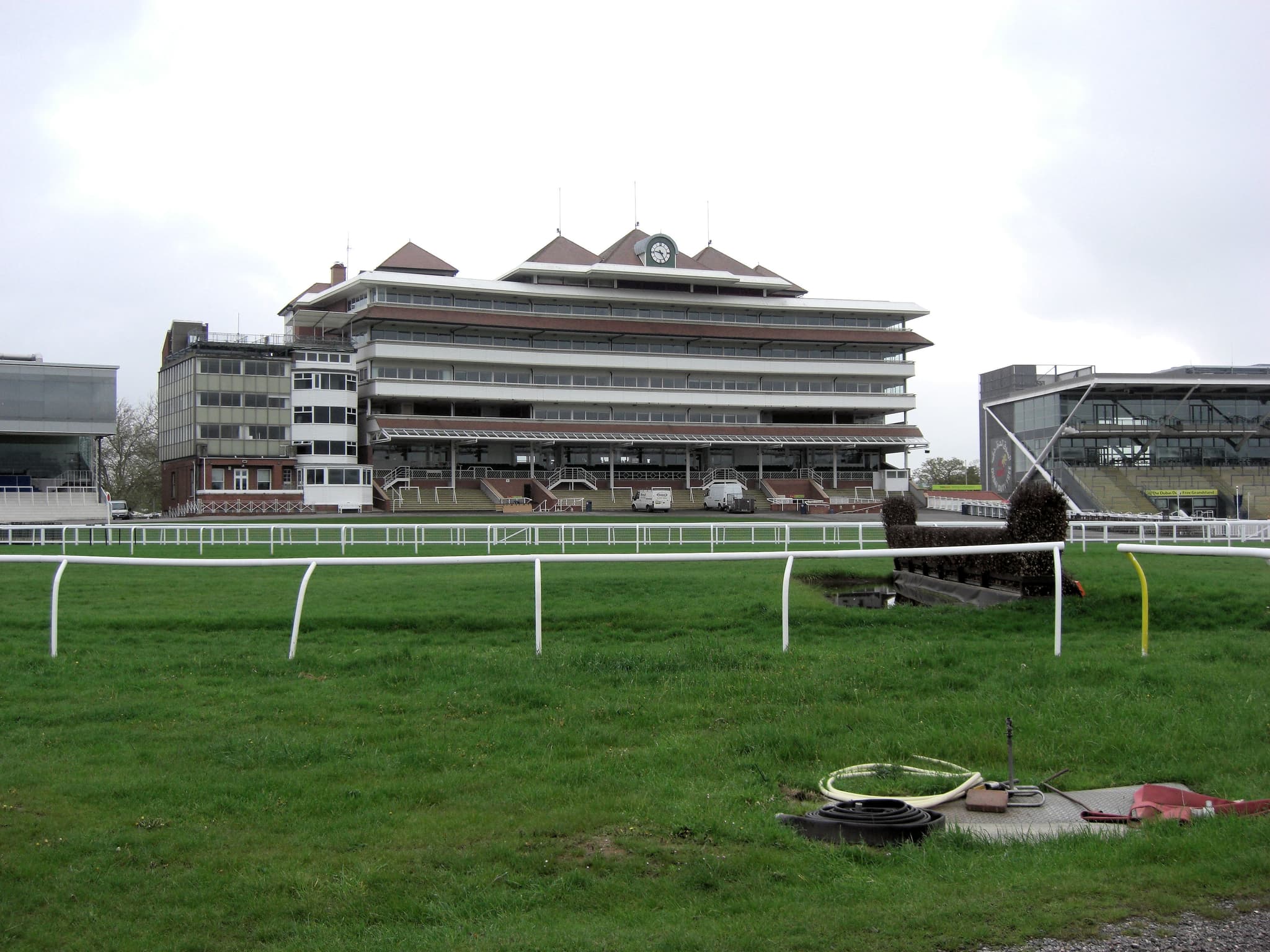
Newbury's Coral Gold Cup Festival: Your Complete Guide
The Coral Gold Cup is one of jump racing's great handicap chases. Here's your guide to the Newbury winter festival and everything around it.
Read more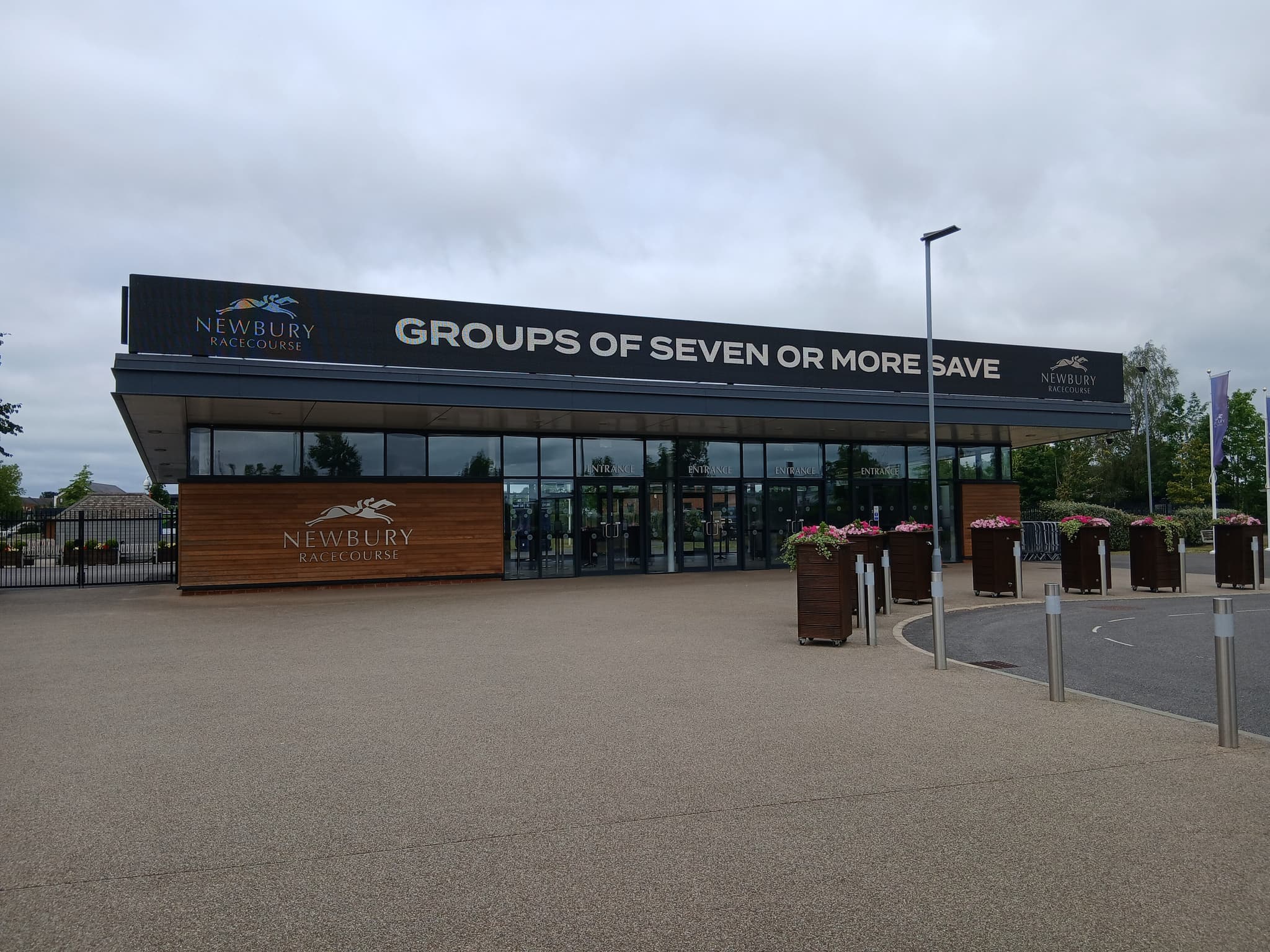
The History of Newbury Racecourse
From John Porter's founding vision in 1905 to Arkle, Denman, Frankel and the modern era — the full history of Newbury Racecourse.
Read more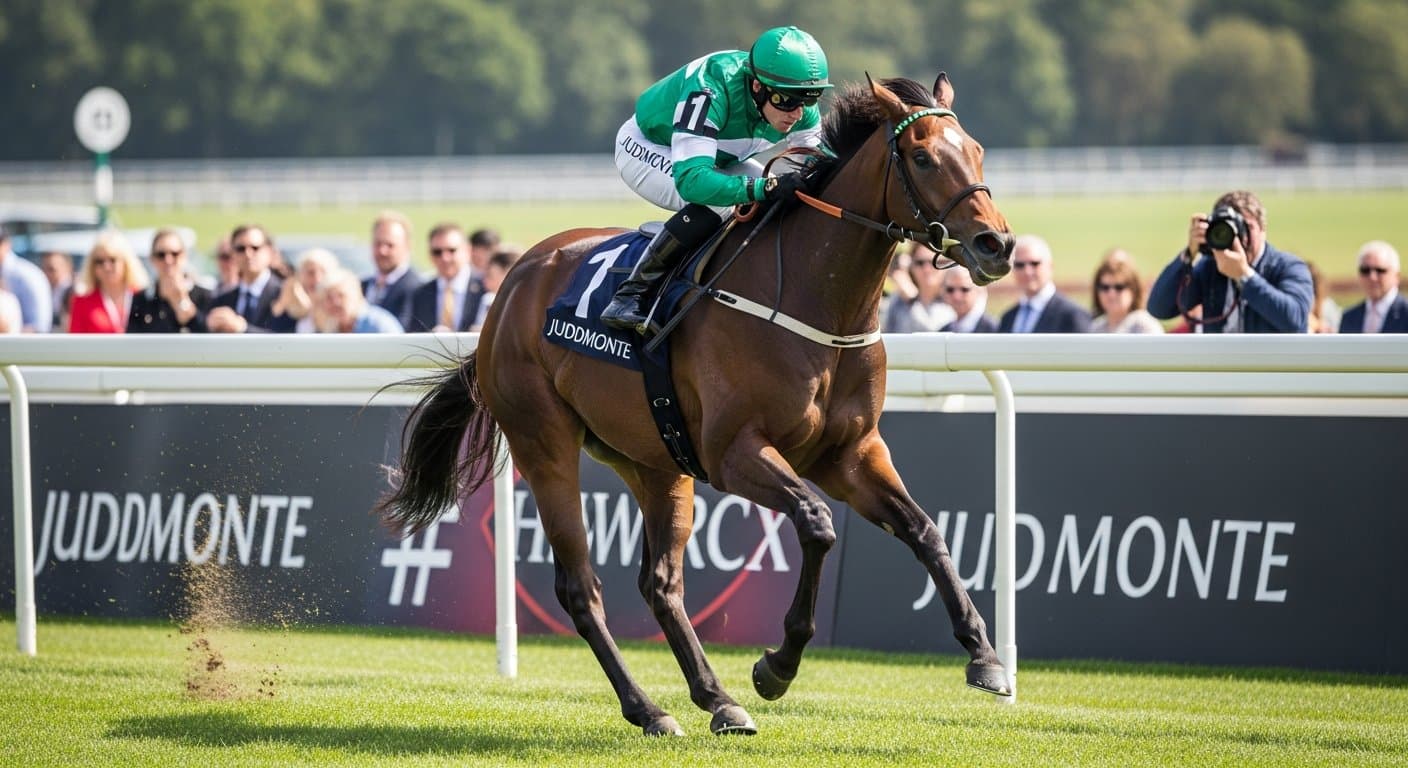
Frankel at Newbury: The Greenham and the Lockinge
Frankel won twice at Newbury: the 2011 Greenham Stakes and the 2012 Lockinge Stakes. Here is the full story of the greatest racehorse's Berkshire chapter.
Read morePhotos on this page are used under Creative Commons licences. Titles, sources and licence links for each one are on our image credits page.
Gamble Responsibly
Gambling should be entertaining and not seen as a way to make money. Never bet more than you can afford to lose. If you or someone you know has a gambling problem, help and support is available.