
Founder & Editor · Last reviewed 2026-04-06
Newcastle's Fighting Fifth Hurdle weekend is the north's great early-winter jump racing occasion. Held on the last Saturday of November, the Fighting Fifth Hurdle (Grade One, 2m) is the traditional season-opener for Champion Hurdle contenders — a clean, honest test of pace and jumping that sets the ante-post market for the rest of the winter. When See You Then won it three times in the 1980s or Istabraq came north to win it in the late 1990s, you understood its place in the calendar.
Newcastle Racecourse — known as the High Gosforth Park — sits in parkland north of the city and combines a demanding left-handed track with facilities that have been significantly improved in recent years. The jumps course uses a wide, galloping circuit that asks genuine questions of stamina and jumping ability. Horses that win here are comfortable racing prominently and maintaining their jumping rhythm under pressure.
The November weekend at Newcastle has expanded beyond the single race that gives it its name. Friday's card features useful novice and handicap races, while Saturday builds through a strong supporting card before the Fighting Fifth in the afternoon. The combination draws a loyal regional crowd that knows its racing — a Tyneside raceday audience has always been enthusiastic, knowledgeable and genuinely invested in the sport.
For visitors from further afield, the Newcastle weekend makes a compelling case. The city itself is an excellent destination with strong hospitality and easy transport links, and the racecourse is well-connected from the city centre. A Friday-to-Saturday trip that combines both race days and a night in Newcastle has a lot going for it.
This guide covers the full Fighting Fifth Festival weekend in detail.
Bet on Newcastle
Place your bets on Newcastle races with a trusted bookmaker.

Promo code BETFRED50. New customers only. Register, deposit with a Debit Card, and place a first bet of £10+ at Evens (2.0)+ on Sports, to be settled within 7 days, to get £30 in Sports Free Bets and £20 in Bet Builder Free Bets within 24 hours of settlement. 7-day expiry. Eligibility & payment exclusions apply. Full T&Cs apply. Take Time to Think. BeGambleAware.org. 18+. Full T&Cs.

Promo code R30. New UK customers only, 18+. Register, deposit £10 or more, then place a £10 single cash bet at odds of 1/2 (1.5) or greater on any sports market (excluding Virtuals). Once the qualifying bet settles you get £30 in Free Bets (3 x £10) — the qualifying bet can win or lose. Free Bets are valid on any sports market excluding Virtuals, expire in 7 days, are non-withdrawable and must be used in full. Excluded deposit methods apply (including PayPal, Apple Pay, Skrill and NETELLER). Named bets such as Lucky 15 do not qualify. If you cash out the qualifying bet, or it is voided, you are no longer eligible for the offer. Ends 31.12.26. Full T&Cs apply. Please gamble responsibly. BeGambleAware.org. 18+. Full T&Cs.

Promo code BET40GET20. New UK customers, 18+. Register with the code and place a first bet of £40 or more at Evens (2.0) or greater. Receive 2 × £10 free bets: the first credited automatically once the qualifying bet settles, the second 24 hours later. Free bets must be placed at minimum odds of 4/1 (5.0), expire 24 hours after credit, and the free-bet stake is not returned with winnings. Debit card deposits only. Take Time to Think. BeGambleAware.org. 18+. T&Cs apply. Full T&Cs.

50% of your first-day net losses refunded as a free bet, capped at £25. New UK customers aged 18+ only. To qualify, deposit and place a first bet of £10 or more on any sport at minimum odds of evens (2.00), then place at least two further bets on different events, each worth at least 50% of your largest bet, all at evens (2.00) or greater. Losses are counted from your first settled bet until 23:59 the same day. Place a qualifying £10+ bet and you are guaranteed at least a £5 free bet. Bets placed at SP, void bets, cashed-out bets and bets struck with free bets do not count towards the offer. The free bet is credited the day after your qualifying bets settle and must be used within 7 days, after which it expires. It can be used at odds from 1/4 (1.25) up to 250/1 on singles and straight accumulators, but not on Trixie, Patent or Yankee style multiples. Free-bet stake is not returned with winnings. One offer per person, household, address, IP address and device. E-wallet deposits may not qualify, so check the cashier before depositing. Customers registered with GAMSTOP cannot claim. KYC identity verification must be completed before the free bet is credited. Take Time to Think. BeGambleAware.org. 18+. T&Cs apply. Full T&Cs.

New customers, 18+. Choose the sports bonus at sign-up, make a first deposit and receive a 100% bonus up to £50 in your Sports Bonus balance. To convert the bonus to cash, wager it 10x within 30 days. Single bets below Evens (2.00) do not qualify; accumulators do not qualify if any selection is below 1/2 (1.50). Virtual Sports, voided, cancelled, drawn, cashed-out and free-bet wagers do not count towards wagering. Only the first settled bet per event counts. Withdrawing before the wagering requirement is met forfeits the bonus balance including bonus winnings. Real-money funds are used before bonus funds. Deposits via Skrill or Neteller are not eligible. Not valid in conjunction with other promotions. Odds, bet and payment limits apply. 10bet general and promotion T&Cs apply. BeGambleAware.org. 18+. Full T&Cs.

New customers in Great Britain and Republic of Ireland, 18+. Place a £10 fixed-odds qualifying bet at minimum odds of 1/2 (1.50) — single or each-way (only the win part counts), pre-event or in-play, not cashed out early, within 28 days of opening the account. Receive up to £60 in bonuses credited over three days: 3 × £10 fixed-odds free bets (the first on settlement, then 24 and 48 hours later) plus 3 × £5 Total Goals FOOTBALL spread bets, 3 × £5 racing Winning Favourites spread bets and a £1 racing Race Index spread bet (the spread bets need a full spread-betting account). Free-bet stakes not returned with winnings; free bets valid 28 days from issue. IMPORTANT: the £5 credits are SPREAD bets — sports spread betting carries the risk that losses can exceed your stake. Sports spread-betting customers do not have Financial Ombudsman or FSCS recourse. Take Time to Think. BeGambleAware.org. 18+. T&Cs apply. Full T&Cs.

Promo code WELCOME15, entered under My Bonuses after registering. New UK customers, 18+. Place a first qualifying bet of at least £10 from your cash balance at odds of evens (2.0) or greater within 7 days of opening the account. Once the qualifying bet fully settles you receive £15 in free bets, credited as 3 x £5 tokens with set uses: one £5 accumulator free bet (minimum 4 legs, each leg at 2/5 or bigger), one £5 sports free bet (any market at evens or bigger) and one £5 Sub Cover free bet (selected football player markets at evens or bigger). Free-bet stakes are not returned with winnings. Free bets expire 7 days after they are credited. Void, cashed-out and partially cashed-out bets do not qualify. One offer per customer. Confirm the current terms on BetGoodwin's own welcome-offer page before claiming. Take Time to Think. BeGambleAware.org. 18+. T&Cs apply. Full T&Cs.

New UK customers, 18+. Minimum deposit £10. Place a £10 qualifying single at minimum odds of 1/2 (1.50), settled within 14 days. Receive £30 in free bets (stake not returned), split £20 for sportsbook use (2 x £10) and £10 for Bet Builder only (2 x £5); Bet Builder does not cover horse racing. Free bets must be accepted within 7 days and expire 7 days after acceptance. No promo code required. Best Odds Guaranteed on UK & Irish racing, subject to having staked over £25 in the previous seven days. Operated by LiveScore Betting and Gaming (Gibraltar) Ltd, UKGC 56859. Confirm the current terms on LiveScore Bet's own promotions page before claiming. Take Time to Think. BeGambleAware.org. 18+. T&Cs apply. Full T&Cs.
18+. BeGambleAware.org
Day-by-Day Guide
Friday: Opening Day
Friday's card at Newcastle's November festival serves as a warm-up for the main event and routinely features competitive novice hurdles and chases that attract horses from the top northern and southern yards. The crowd is more modest than Saturday's but the racing can be excellent — trainers who are pointing horses toward the Christmas programme often give them a first run of the season here, which means Friday can throw up genuinely informative form.
The novice hurdle on Friday frequently attracts horses with Cheltenham entries that need a run before December. Pay close attention to the style of victory, not just the result — a horse that wins by five lengths but is hard held into the final furlong tells a different story to one that battles home a length clear.
Newcastle's all-weather Tapeta surface also stages fixtures at this time of year, and some Friday cards include both jumps and all-weather racing. The dual surface means the racecourse operates rain or shine, which is a distinct advantage for November scheduling in the north east.
Friday at Newcastle is a good value day out — smaller crowds, all facilities open, good racing and reasonable prices. If you're making a weekend of it from outside the region, arriving Friday afternoon gives you time to settle before Saturday's main event.
Saturday: Fighting Fifth Day
The main event. Saturday at Newcastle's Fighting Fifth weekend is one of the north's great racing occasions — a proper crowd, a proper atmosphere and a race that defines the Champion Hurdle picture for the coming months.
The card is well-constructed with the Fighting Fifth (Grade One, 2m) as the centrepiece at approximately 2:45pm. Before it, a programme of novice hurdles, a handicap chase and supporting events provide context and keep the crowd engaged through the morning.
The Rehearsal Chase (Listed, 3m) often runs on the Saturday card and serves as a useful Grand National trial for staying chasers early in the season. Horses that run well here without fully firing tend to be well-handicapped for the spring.
The atmosphere builds significantly from about 1pm as the Fighting Fifth approaches. The Gosforth Park crowd is vocal and knowledgeable — the north east has a long racing tradition and the raceday audience reflects that depth of knowledge. Expect genuine debate in the betting ring rather than the casual wagering of a more general-public meeting.
Post-race, the bars fill quickly and the city beckons. Newcastle's hospitality offer is strong, making it easy to extend the day into the evening.
The Surrounding Context
The Fighting Fifth weekend falls late in November, typically a week or two after the Betfair Chase at Haydock. The jump season is in full flow by this point and trainers are making clear their horses' spring targets. The results from Haydock, Newcastle and Newbury in late November effectively set the winter form book that carries through to Christmas.
For followers of the ante-post markets, the Fighting Fifth day at Newcastle is one of the most information-rich Saturdays of the early winter season.
Key Races to Watch
Fighting Fifth Hurdle (Saturday, Grade One, 2m)
The race that defines the weekend and shapes the Champion Hurdle market. The Fighting Fifth was first run in 1969 and has developed into one of the premier two-mile hurdle races outside the Festival itself. Its list of winners reads like a champion hurdler roll call: See You Then, Istabraq, Rooster Booster, Brave Inca, Hurricane Fly, Jezki.
Run over two miles around Newcastle's left-handed circuit, the race tests speed, jumping technique and the ability to handle a galloping, undulating track. Newcastle is not a sharp, tight circuit — it is a proper galloping track that requires horses to maintain rhythm and momentum around the bends. This suits horses with a flowing jumping style more than sharp, quick types that excel on tight flat circuits like Kempton.
The Fighting Fifth typically attracts between four and eight runners, making it a manageable race from a form analysis perspective. The market is usually tight, reflecting the fact that the Champion Hurdle picture is reasonably clear by late November. Watch for:
- Reigning Champion Hurdlers stepping out for their first run — they often carry a penalty and face fresh challengers, which creates market interest
- New challengers from Ireland — Willie Mullins' yard regularly sends a Champion Hurdle contender north for this race
- Course form — horses that have won at Newcastle before are more likely to handle the track's specific demands
Rehearsal Chase (Saturday, Listed, 3m)
A Listed staying chase over three miles that provides a useful early-season trial for horses aiming at the Grand National or Cheltenham Gold Cup. The race does not attract the very best staying chasers (who tend to run at Haydock or Cheltenham in November) but the field typically contains at least two or three horses of genuine staying chase quality.
Horses that run well in the Rehearsal Chase without winning are often overlooked by the market subsequently — particularly those that are returning from injury or having their first run of the season. Add them to your ante-post notebook.
Novice Hurdle (Friday/Saturday)
Newcastle's November novice hurdle card frequently attracts horses from Henderson, Mullins and O'Brien stables that need a run before Christmas. The race distance (typically 2m or 2m4f) and the galloping track make it a fair test. First-time-out novice hurdlers that win impressively here tend to go on to Festival success; those that struggle at this level rarely make the cut.
Handicap Chase (Saturday supporting card)
Newcastle's November handicap chase over two to two and a half miles often throws up a well-handicapped improver that goes on to win significantly in December or January. With northern trainers often under the radar of the national press, horses from Alan King, Sue Smith or Brian Ellison stables can be undervalued in the market when they appear here.
Betting Preview
Betting the Fighting Fifth
The Fighting Fifth market is typically tight and reflects genuine knowledge of the horses involved. With a small field (usually four to eight runners), there are fewer opportunities for the market to be wrong about individual prices. The best approach is to identify structural advantages rather than chasing value in a well-informed field.
Ante-post timing: The Fighting Fifth ante-post market opens in early November. The most informative prices are available after the Betfair Chase at Haydock (typically mid-November) — trainers' intentions become clearer and the Irish declarations to run at Newcastle often provide the clearest picture of who is coming north.
Irish challengers: Aidan O'Brien, Willie Mullins and Gordon Elliott regularly send Champion Hurdle candidates to Newcastle. These horses are sometimes underestimated in the market because British punters discount Irish form, particularly early in the season. Check the form of any Irish runner from the previous season rather than dismissing them on reputational grounds.
Market movers: The Fighting Fifth market moves significantly with stable support or withdrawal news in the final 48 hours. If you are betting on-course, tracking the overnight market and the morning-of changes gives useful information about which way trainer opinion is moving.
The Supporting Card
Newcastle's supporting programme on Fighting Fifth Saturday offers better value than the feature race for the experienced bettor. The handicap chase and novice hurdle are less efficiently priced — northern trainers can be hard to read and the field assessments less thorough than for the Grade One.
Look for horses returning from a layoff with a record of running well fresh. Northern yard horses (particularly those trained by Nicky Richards, Ian Duncan or Dianne Sayer) often have a conditioning approach that means they peak on their first or second run of the season.
Practical Notes
Newcastle's betting ring is well-organised and the bookmakers competitive. The Tote pools on the Saturday card are significant, particularly in the Fighting Fifth itself where the small field means Tote dividends can sometimes surprise. On a straightforward favourite-result day, the Tote returns less; on an upset, the dividends can be substantial.
Visitor Information
Getting There
By train: Newcastle Central station is approximately 15 minutes from the racecourse by Metro (Tyne and Wear Metro to Regent Centre or Gosforth, then a short walk). Trains from London King's Cross run directly to Newcastle Central in approximately two hours 45 minutes on East Coast Main Line services. From Manchester, Leeds or Edinburgh, there are regular direct services.
By Metro: The Tyne and Wear Metro is the most convenient option from central Newcastle. Take the Yellow Line towards Airport and alight at Kingston Park station, from which the racecourse is approximately a 10-minute walk. Alternatively, the bus connection from central Newcastle runs directly to the course on race days.
By car: Newcastle Racecourse is accessible from the A1(M) via the A696 (west) or the A1056 from the north. Pre-booked parking is available on-site. Newcastle city centre parking adds additional time for the city-to-course journey.
Enclosures
Premier Enclosure: The main viewing area with grandstand seating, restaurants and full bar facilities. Good views of the finish and parade ring. Smart casual dress code.
Grandstand: Large open viewing area with access to the finishing straight and bars. Slightly less formal than the Premier.
Course Enclosure: The most accessible and informal option, with rail viewing along the course. Good value and a different perspective on the racing.
Essential Tips
- Fighting Fifth Saturday sells well in advance. Book tickets through the Newcastle Racecourse website from October onwards.
- November weather in Tyne and Wear is serious. Waterproofs, warm layers and boots that can handle soft ground between the car park and the enclosures are not optional. Check the forecast but prepare for the worst regardless.
- The city is worth a night's stay. Newcastle has exceptional hospitality for a city of its size — hotels, restaurants and bars in the Quayside and city centre areas make the Friday-to-Saturday trip very enjoyable. Book accommodation early for the Fighting Fifth weekend.
- The Metro is the best return journey option. Post-race traffic on the A1 and A696 can be slow. The Metro runs regularly and avoids the worst of the congestion.
- Arrive by 11:30am on Saturday. The course fills up steadily through the morning and parking is easier if you're in before noon.
Share this article
More about this racecourse
All Newcastle guides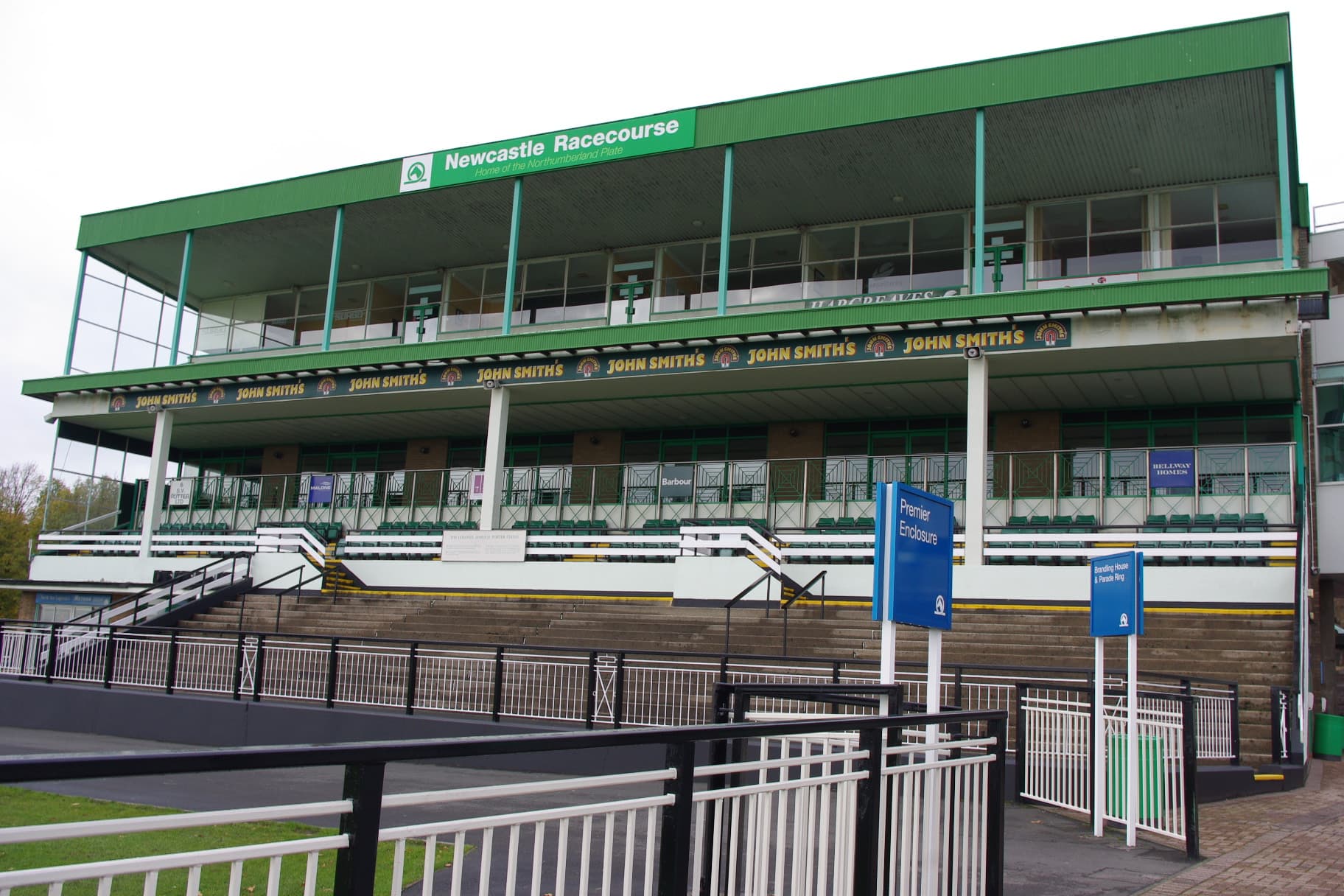
The History of Newcastle Racecourse
From Victorian beginnings at Gosforth Park to a modern all-weather powerhouse — the story of Newcastle Racecourse.
Read more
Northumberland Plate 2026: Tips, Odds & Pitmen's Derby
Get expert tips and best odds for Newcastle's famous staying handicap. History, past winners, and betting strategy for the Pitmen's Derby.
Read more
Trueshan at Newcastle: Conquering the Pitmen's Derby
Trueshan's 2022 Northumberland Plate under Hollie Doyle was one of the great weight-carrying performances in British flat handicap racing. The full story.
Read morePhotos on this page are used under Creative Commons licences. Titles, sources and licence links for each one are on our image credits page.
Research the field with the AI Race Predictor
Our model publishes calibrated win-probability estimates for UK races — a second opinion to understand a race, not tips. It's open about its record: it doesn't beat the market, and we show exactly how it does.
Work it out & learn the basics
Gamble Responsibly
Gambling should be entertaining and not seen as a way to make money. Never bet more than you can afford to lose. If you or someone you know has a gambling problem, help and support is available.