
Founder & Editor · Last reviewed 2026-03-02
Newcastle is one of those courses where doing your homework truly pays off. With two distinct surfaces — Tapeta all-weather and turf — it throws up a layer of complexity that casual punters often overlook. A horse that loves the Tapeta might struggle on the turf, and vice versa. Understanding that distinction is where your edge begins.
The all-weather surface dominates the fixture list, with over 60 meetings a year on the Tapeta compared to around 20 on turf. That volume of racing generates a wealth of data, and the patterns are there if you know where to look. Certain trainers have the Tapeta figured out. Certain running styles prosper. The draw matters at specific distances. And the way the surface rides — fast, consistent, favouring horses with a strong finishing kick — creates a different form puzzle compared to turf racing.
On the turf side, Newcastle is a fair, galloping track that generally produces form you can trust. The big-day turf meetings — particularly Northumberland Plate day — attract competitive fields from major yards, and the standard handicaps on summer afternoons tend to be well-contested.
Newcastle also rewards awareness of pace dynamics. The Tapeta's consistent surface and the galloping layout combine to create specific front-running patterns that repeat across different race types and distances. Learning to read those patterns gives you a real edge over punters who rely on form alone.
This guide breaks down everything you need to know to bet smarter at Newcastle. We cover the track characteristics that shape results on both surfaces, the draw and going biases that separate winners from losers, the key trainers and jockeys who consistently outperform the market here, and the specific strategies that work on Tyneside.
None of this replaces proper form study. But form alone doesn't explain why some horses run 5lb better at Newcastle than their bare ratings suggest, or why certain trainers hit strike rates at Gosforth Park that they can't match elsewhere. That's what this guide is for.
Bet on Newcastle
Place your bets on Newcastle races with a trusted bookmaker.

Promo code BETFRED50. New customers only. Register, deposit with a Debit Card, and place a first bet of £10+ at Evens (2.0)+ on Sports, to be settled within 7 days, to get £30 in Sports Free Bets and £20 in Bet Builder Free Bets within 24 hours of settlement. 7-day expiry. Eligibility & payment exclusions apply. Full T&Cs apply. Take Time to Think. BeGambleAware.org. 18+. Full T&Cs.

Promo code R30. New UK customers only, 18+. Register, deposit £10 or more, then place a £10 single cash bet at odds of 1/2 (1.5) or greater on any sports market (excluding Virtuals). Once the qualifying bet settles you get £30 in Free Bets (3 x £10) — the qualifying bet can win or lose. Free Bets are valid on any sports market excluding Virtuals, expire in 7 days, are non-withdrawable and must be used in full. Excluded deposit methods apply (including PayPal, Apple Pay, Skrill and NETELLER). Named bets such as Lucky 15 do not qualify. If you cash out the qualifying bet, or it is voided, you are no longer eligible for the offer. Ends 31.12.26. Full T&Cs apply. Please gamble responsibly. BeGambleAware.org. 18+. Full T&Cs.

Promo code BET40GET20. New UK customers, 18+. Register with the code and place a first bet of £40 or more at Evens (2.0) or greater. Receive 2 × £10 free bets: the first credited automatically once the qualifying bet settles, the second 24 hours later. Free bets must be placed at minimum odds of 4/1 (5.0), expire 24 hours after credit, and the free-bet stake is not returned with winnings. Debit card deposits only. Take Time to Think. BeGambleAware.org. 18+. T&Cs apply. Full T&Cs.

50% of your first-day net losses refunded as a free bet, capped at £25. New UK customers aged 18+ only. To qualify, deposit and place a first bet of £10 or more on any sport at minimum odds of evens (2.00), then place at least two further bets on different events, each worth at least 50% of your largest bet, all at evens (2.00) or greater. Losses are counted from your first settled bet until 23:59 the same day. Place a qualifying £10+ bet and you are guaranteed at least a £5 free bet. Bets placed at SP, void bets, cashed-out bets and bets struck with free bets do not count towards the offer. The free bet is credited the day after your qualifying bets settle and must be used within 7 days, after which it expires. It can be used at odds from 1/4 (1.25) up to 250/1 on singles and straight accumulators, but not on Trixie, Patent or Yankee style multiples. Free-bet stake is not returned with winnings. One offer per person, household, address, IP address and device. E-wallet deposits may not qualify, so check the cashier before depositing. Customers registered with GAMSTOP cannot claim. KYC identity verification must be completed before the free bet is credited. Take Time to Think. BeGambleAware.org. 18+. T&Cs apply. Full T&Cs.

New customers, 18+. Choose the sports bonus at sign-up, make a first deposit and receive a 100% bonus up to £50 in your Sports Bonus balance. To convert the bonus to cash, wager it 10x within 30 days. Single bets below Evens (2.00) do not qualify; accumulators do not qualify if any selection is below 1/2 (1.50). Virtual Sports, voided, cancelled, drawn, cashed-out and free-bet wagers do not count towards wagering. Only the first settled bet per event counts. Withdrawing before the wagering requirement is met forfeits the bonus balance including bonus winnings. Real-money funds are used before bonus funds. Deposits via Skrill or Neteller are not eligible. Not valid in conjunction with other promotions. Odds, bet and payment limits apply. 10bet general and promotion T&Cs apply. BeGambleAware.org. 18+. Full T&Cs.

New customers in Great Britain and Republic of Ireland, 18+. Place a £10 fixed-odds qualifying bet at minimum odds of 1/2 (1.50) — single or each-way (only the win part counts), pre-event or in-play, not cashed out early, within 28 days of opening the account. Receive up to £60 in bonuses credited over three days: 3 × £10 fixed-odds free bets (the first on settlement, then 24 and 48 hours later) plus 3 × £5 Total Goals FOOTBALL spread bets and 3 × £5 racing Winning Favourites spread bets, with a £1 racing Race Index spread bet as an extra on top. The spread bets need a full spread-betting account, opened within 28 days of the fixed-odds account and subject to Spreadex's eligibility and appropriateness checks. Free-bet stakes not returned with winnings; free bets valid 28 days from issue. IMPORTANT: the £5 credits are SPREAD bets — sports spread betting carries the risk that losses can exceed your stake. Sports spread-betting customers do not have Financial Ombudsman or FSCS recourse. Take Time to Think. BeGambleAware.org. 18+. T&Cs apply. Full T&Cs.

Promo code WELCOME15, entered under My Bonuses after registering. New UK customers, 18+. Place a first qualifying bet of at least £10 from your cash balance at odds of evens (2.0) or greater within 7 days of opening the account. Once the qualifying bet fully settles you receive £15 in free bets, credited as 3 x £5 tokens with set uses: one £5 accumulator free bet (minimum 4 legs, each leg at 2/5 or bigger), one £5 sports free bet (any market at evens or bigger) and one £5 Sub Cover free bet (selected football player markets at evens or bigger). Free-bet stakes are not returned with winnings. Free bets expire 7 days after they are credited. Void, cashed-out and partially cashed-out bets do not qualify. One offer per customer. Confirm the current terms on BetGoodwin's own welcome-offer page before claiming. Take Time to Think. BeGambleAware.org. 18+. T&Cs apply. Full T&Cs.

New UK customers, 18+. Minimum deposit £10. Place a £10 qualifying single on sports (excluding virtuals) at minimum odds of 1/2 (1.50), settled within 14 days. Deposit-method exclusions apply. Receive £30 in free bets (stake not returned), split £20 for sportsbook use (2 x £10) and £10 for Bet Builder only (2 x £5); Bet Builder does not cover horse racing. Free bets must be accepted within 7 days and expire 7 days after acceptance. No promo code required. Best Odds Guaranteed on UK & Irish racing, subject to having staked over £25 in the previous seven days. Operated by LiveScore Betting and Gaming (Gibraltar) Ltd, UKGC 56859. Confirm the current terms on LiveScore Bet's own promotions page before claiming. Take Time to Think. BeGambleAware.org. 18+. T&Cs apply. Full T&Cs.
18+. BeGambleAware.org
Track Characteristics
Understanding how Newcastle's two surfaces ride is the foundation of betting successfully at this course. They are different animals, and treating them as interchangeable is one of the most common mistakes punters make.
The Tapeta Surface
Newcastle's Tapeta track is a left-handed oval of roughly one mile and two furlongs, with a run-in of about three and a half furlongs from the final bend to the winning post. It is one of the widest all-weather tracks in Britain — typically 25 metres across — which has significant implications for the racing.
The width means large fields can spread out, reducing the draw's influence compared to tighter tracks like Wolverhampton. It also means jockeys have real options about where to position their horses — they can track the pace, sit wide, or come from the rear with a sustained run, and all of these tactics can work if applied to the right horse. The width removes some of the pocket-finding difficulties that make tighter all-weather circuits so tactically loaded.
The surface itself rides fast and consistent. Closing sectionals tend to be quicker on the Tapeta than on most turf tracks, which means front-runners who would make all on grass sometimes get caught late here. Horses with a strong turn of foot — those who can quicken decisively in the final two furlongs — tend to prosper. Newcastle's Tapeta rewards finishers over pure galloper types, particularly at distances of a mile and beyond.
Pace Dynamics on the Tapeta
One of the most important and under-appreciated aspects of Newcastle's Tapeta is how pace shapes race outcomes. The track is truly sharp from the start — horses break quickly and the five-furlong chute in particular sends them into the bend at speed. In sprint races, this means a contested pace is common, and horses that race too prominently sometimes tire in the straight.
At a mile and beyond, the key pace pattern is different. The galloping layout and long run-in encourage front-runners to establish an early lead, but the consistent surface allows closers to maintain sustained efforts without the energy-sapping interference you can get on a tighter, more undulating course. The result is that front-runners who go off too hard often get caught in the final furlong, while those who run truly honest pace fractions can hold on — it depends entirely on how the race is run.
From a betting perspective, this means pace assessment is important at every distance on the Tapeta. In sprint races, identify whether the likely leader can get across cheaply and lead without being harried. In middle-distance and staying races, assess whether there are multiple pace angles that could produce a fast tempo — if so, closers become significantly more attractive.
How Tapeta Form Compares to Other All-Weather Venues
A trap that catches many punters is treating all Tapeta form as equivalent. Newcastle's Tapeta and Wolverhampton's Tapeta use the same surface material, but the track configurations are so different that form from one does not transfer reliably to the other.
Wolverhampton is a tight, turning, undulating circuit that suits handy, agile horses with a quick stride pattern. Newcastle is wide, galloping and essentially flat, suited to horses with a longer, flowing action. A horse that thrives at Wolverhampton might find Newcastle too much of a test of sustained effort. Conversely, a horse built for Gosforth Park's galloping circuit might struggle with Wolverhampton's tight bends.
The same caution applies when comparing Newcastle Tapeta form to Kempton's Polytrack or Lingfield's Polytrack. These are entirely different synthetic surfaces with different speed and grip characteristics. Polytrack courses tend to reward different horse types, and the way races are run on Polytrack differs from the Tapeta in ways that affect results. Do not assume that a horse who wins well on Polytrack at Kempton will be equally effective on the Newcastle Tapeta without checking that its running style and track preferences are actually compatible.
The practical rule: Newcastle Tapeta form is best assessed against previous Newcastle Tapeta form. Cross-surface comparisons — from turf to Tapeta or from Polytrack to Tapeta — should be treated with scepticism until you have direct evidence that the horse handles the specific conditions at Gosforth Park.
The Turf Track
The turf course sits inside the all-weather circuit and is a left-handed oval of about a mile and three furlongs. It is a fair, galloping track with a home straight of around three furlongs. The ground varies with the weather — good to firm is typical in summer, while autumn meetings can see soft or heavy conditions.
On turf, Newcastle plays more like a traditional galloping track. Horses that travel and settle in their races tend to do well, and the three-furlong home straight gives jockeys time to organise a challenge without the run-in being so short that races are reduced to a sprint from the final bend. It is a fair track that generally produces reliable form — the best horse on the day usually wins.
Newcastle's turf has one characteristic worth noting: it can be slower to dry than some courses further south, and persistent rain ahead of summer meetings can produce ground softer than you might expect in June. The Northumberland Plate has occasionally been run on soft or even heavy ground, transforming the race from a test of quality staying into a full-blown stamina test that favours mud-loving horses over class animals.
Distance Considerations
On the Tapeta, sprints over five furlongs are truly fast and favour speed horses who break well and can handle the immediate turn. The five-furlong course joins the main circuit on the bend, making it the distance where the draw matters most. Six-furlong races involve more of the circuit and reward horses that can hold their position through the turn before being asked to quicken. Middle-distance races from a mile upwards test stamina progressively, with the pace dynamics described above becoming increasingly important as the distance increases.
On turf, the distance dynamics are similar but the ground conditions add an extra variable that can shift the form picture significantly. Soft ground at Newcastle on turf turns middle-distance races into real stamina tests where breeding and staying pedigree matter more than bare form figures. A horse rated 90 on good ground that stays strongly on soft could beat a 105-rated rival bred for quicker conditions.
Course Specialists
Because of the Tapeta's specific characteristics, course specialists emerge at Newcastle more readily than at most all-weather tracks. Horses that handle the surface and the wide, galloping layout can win here multiple times, and their course record becomes the most reliable indicator of likely performance. When you see a horse with two or three wins at Newcastle specifically on the Tapeta, take that course form seriously — it is telling you something about the horse's affinity for these conditions that the overall ratings cannot capture.
These course specialists are often underpriced in the market, because their wins are noticed. But on balance, Newcastle's Tapeta specialists win at a higher rate relative to their market position than their counterparts at most other courses, because the surface characteristics are distinctive enough that a real affinity for Gosforth Park is a consistent advantage.
Going & Draw Bias
The going and draw are two of the most important factors in assessing any race at Newcastle, and they work quite differently on the two surfaces. Getting this right can make the difference between a winning day and a frustrating one.
Going on the Tapeta
The beauty — and the trap — of the Tapeta surface is its consistency. The official going description is almost always "standard" or "standard to slow," and it doesn't change with the weather in the way turf does. Rain doesn't turn it into a bog, and dry spells don't make it jar.
However, "consistent" doesn't mean "identical." The Tapeta surface can ride slightly differently at various times of the year. In very cold weather, the surface can feel firmer and faster as the wax component hardens. During warmer, humid periods it can ride marginally slower. The maintenance schedule — watering, harrowing, topping up the surface material — also influences how the track rides from week to week. These differences are subtle but real, and they can affect the types of horses that prosper on any given day.
The key takeaway for betting is this: ignore turf going preferences when assessing horses on the Tapeta. A horse described as needing soft ground on turf might run well on the standard Tapeta surface because the two are completely different underfoot. Equally, a horse with high ratings on good to firm turf might be no better than average on Tapeta — the surface types demand different physical qualities from horses. Focus on proven Tapeta form rather than extrapolating from turf going preferences.
Going on the Turf
Newcastle's turf course at Gosforth Park drains reasonably but isn't one of the quickest-drying tracks in the country. The soil composition and the North East climate combine to produce going that can be on the softer end of the scale more often than southern courses at similar times of year.
Summer meetings typically race on good to firm or good ground, but the transition to autumn can happen quickly, and a wet August can make September meetings significantly more testing. The Northumberland Plate in late June is usually run on decent ground, but when the summer has been wet, Plate day can see soft or heavy conditions that completely change the form picture.
When the ground gets soft on Newcastle's turf, stamina becomes the key factor. The galloping nature of the track means horses have to maintain their effort for a long way, and on testing ground that stamina demand increases substantially. Horses with staying pedigree and previous form on soft come into their own, while speedy types with speed pedigree often struggle. Pay close attention to the going report in the days before turf meetings at Newcastle — and check the forecast, because ground described as "good" on Wednesday morning can be "soft" by Saturday afternoon if rain arrives.
Draw Bias on the Tapeta: The Detail Matters
The draw at Newcastle on the Tapeta is generally fairer than at tight tracks, but this does not mean it is irrelevant. The wide track removes the most extreme biases, but the geometry of the course still creates nuances that careful punters can exploit.
Five furlongs: This is where the draw matters most at Newcastle. The five-furlong course on the Tapeta runs into a left-hand bend almost immediately from the start. Low draws — stalls one through roughly seven in a full field — are positioned on the inside of that bend, saving ground through the turn. High draws are forced to take a wider path, which costs distance and also places horses on the outside of the bend where the centrifugal force of the turn is greatest. In large fields of twelve or more, the draw bias at five furlongs is measurable and significant. High-drawn horses need to be clearly superior to overcome the disadvantage.
Six furlongs: The draw bias at six furlongs is less pronounced than at five, but low draws retain a marginal advantage because horses come off the bend with better momentum. In smaller fields the effect is minimal; in fields of ten or more, it is worth factoring in. The key difference from five furlongs is that at six, horses have more time to find their stride before the bend, which slightly reduces the geometry-driven advantage of low stalls.
A mile to a mile and a quarter: The draw is broadly neutral at these distances. By the time horses have covered the opening stages, positions are established and the width of the track gives every runner room to race. There is no consistent bias at middle distances, and draw should not be a significant factor in your assessment.
A mile and a half and beyond: Draw is essentially irrelevant at staying distances. Horses settle into their running order based on pace and temperament rather than stall position, and the track characteristics at this range are dominated by stamina and pace dynamics rather than draw.
Draw Bias at Five Furlongs: A Practical Example
To illustrate the five-furlong bias concretely: in a twelve-runner five-furlong race on the Tapeta, a horse drawn in stall two and a horse in stall twelve that are equal on form will not produce an equal result as often as the market implies. The stall-two horse saves roughly two to three lengths through the bend and arrives at the straight in better shape. This advantage does not always decide the race — a class horse from a high draw will still beat a moderate horse from a low draw — but it is a real edge that the market does not always price fully.
When a trainer or jockey specifically notes a good draw at five furlongs at Newcastle as a positive factor ahead of a race, they are not making excuses — they are accurately identifying an advantage. Treat any five-furlong race at Newcastle as one where draw should sit alongside form in your assessment.
Draw Bias on Turf
On the turf course, the draw is fair at most distances. The left-handed oval configuration doesn't produce the extreme biases you see at courses like Chester or Beverley, where the tight nature of the track makes certain stall positions dramatically disadvantageous. In large-field sprint races on Newcastle's turf, low draws can save ground, but the effect is not strong enough to override significant form differences. Use it as a tiebreaker between similar horses, not as a primary selection tool.
In races over a mile and beyond on turf, draw is as irrelevant as it is on the Tapeta at those distances. Form, going suitability and trainer intent become the dominant factors.
Putting the Going and Draw Together
The most profitable approach at Newcastle combines going awareness with draw knowledge. On the Tapeta at five furlongs, identify whether high-drawn horses have been given an appropriate discount. In standard Tapeta conditions, focus on proven course form and running style rather than going preferences. On turf, monitor the going reports carefully and reassess form when conditions shift — the horses who prosper when the ground goes soft at Gosforth Park are not always the ones the market expects.
The combination of consistent Tapeta conditions and occasional volatile turf going creates a course where preparation and attentiveness consistently outperform casual assessment. Punters who read the conditions accurately — who notice when a proven soft-ground turf performer is getting ideal conditions, or when a five-furlong sprint has a high-drawn favourite at risk — will find Newcastle a more rewarding course than the volume of all-weather meetings might initially suggest.
Key Trainers & Jockeys
Certain trainers and jockeys have Newcastle figured out. They run their horses at the right distances, on the right surface, and consistently outperform their overall strike rates when they make the trip to Gosforth Park. Following the right names here can provide a significant edge, particularly in the competitive handicaps that dominate the Newcastle fixture list.
Key Trainers — Tapeta
Keith Dalgleish is one of the most prolific winners on Newcastle's all-weather surface. Based in Carlisle, he sends a steady stream of runners to the Tapeta and his strike rate at the course regularly exceeds his overall average. Dalgleish places his horses intelligently, reads the Tapeta conditions well and rarely runs horses without a realistic chance. His operation tends to target the middle-distance handicaps where his horses' straightforward galloping style suits Newcastle's circuit. When Dalgleish has a runner that has previously shown course form, take it seriously.
Michael Dods, based in Darlington, is another northern trainer who excels at Newcastle. He is particularly strong with sprinters and milers on the Tapeta, and his course record is worth monitoring throughout the season. Dods has an instinct for placing horses in races where the conditions suit them, and his understanding of the five-furlong draw bias means his sprint runners are often well-positioned from the outset. When Dods targets a horse specifically at a Newcastle all-weather meeting, it carries weight.
Mark Johnston (now the operation run as Charlie Johnston) has historically been one of the biggest players at Newcastle on both surfaces, sending runners from the powerful Middleham yard. The Johnston operation is notable for running horses frequently and with purpose — horses from this yard that line up at Newcastle have usually been assessed as well-suited to the specific race conditions. Their flat course record at Gosforth Park over many years is outstanding, and their horses tend to handle the wide, galloping circuit well because Middleham's own gallops produce horses with a big, galloping action.
Richard Fahey, training a large string from North Yorkshire, maintains an excellent record at Gosforth Park. Fahey's yard runs high numbers across the all-weather circuit, and his horses tend to be well-suited to Newcastle's fair, galloping track. His sprint horses in particular have a strong record, and he is one of the most consistent trainers at the course across both flat and all-weather fixtures.
Tim Easterby, based in North Yorkshire, brings a different kind of Newcastle expertise. Like his father Peter Easterby before him, Tim has a gift for training horses to their best and his Gosforth Park record in competitive handicaps is strong. He is particularly associated with horses that carry weight well in the Northumberland Plate-style staying handicaps, and his runners at the bigger summer turf meetings are always worth serious consideration. His knowledge of the course from decades of involvement gives his horses a consistent edge in races where local knowledge matters.
David O'Meara, another North Yorkshire-based trainer with significant all-weather volumes, is worth tracking at Newcastle across the whole season. O'Meara's operation is astute at identifying conditions that suit its horses, and his Tapeta form at Gosforth Park is consistently strong. He is one of the northern trainers who understands the Tapeta's pace dynamics and places his horses accordingly — patient from the rear in middle-distance races, more aggressively positioned in sprints.
Key Trainers — Turf and Jumps
On the turf, major southern yards compete strongly at the bigger meetings. John and Thady Gosden, Aidan O'Brien, and William Haggas send runners for the quality summer fixtures, and when they target Newcastle specifically, their horses are usually well-fancied for good reason. These yards don't make trips north for minor handicaps — when they come to Gosforth Park it is because they have identified a specific opportunity.
For National Hunt racing, Nicky Richards (based in Cumbria, carrying forward the tradition established by his father Gordon Richards at Greystoke) is the trainer to follow at Newcastle. His proximity to the course, his experience with the Tapeta hurdle track, and his family's generations of knowledge about northern jumping give him a natural and consistent advantage. Richards-trained hurdlers at Newcastle warrant a higher level of attention than their market positions might suggest.
Donald McCain, based in Cheshire and with strong northern connections, also has a notable record at Gosforth Park. McCain's jumpers often handle the Tapeta well, and his understanding of how to prepare horses for the specific demands of hurdle racing on synthetic surfaces gives him an edge over rivals who are encountering the conditions for the first time.
Lucinda Russell, the Scottish trainer whose operation centres on Perth and the northern circuit, brings quality jumpers to Newcastle for the bigger hurdle races. Russell's horses are well-prepared for northern conditions and she has a track record of targeting Newcastle specifically when she has a horse suited to the course.
Key Jockeys
Danny Tudhope has been one of the most successful jockeys at Newcastle in recent years. His ability to judge pace on the wide Tapeta track and deliver horses with a sustained late run makes him ideally suited to the course's characteristics. Tudhope is a thinking jockey who adapts his tactics to the specific horse and the specific pace scenario — he is not wedded to one approach, which is exactly what Newcastle's variable race dynamics demand.
Paul Mulrennan, based in the north, rides regularly at Newcastle and knows the track as well as anyone in the saddle. His course experience is a real asset, particularly in competitive handicaps where positioning and track knowledge can make the difference between winning and finishing second. Mulrennan has an instinct for the pace at Newcastle and tends to race more prominently than many of his rivals at distances up to a mile — a style that works on the Tapeta when the pace fractions allow it.
Jason Hart is another northern-based rider who excels at Gosforth Park. His aggressive riding style works well on the galloping Tapeta circuit, and he is worth noting whenever he has a strong booking at the course. Hart rides with confidence and his ability to get horses to the lead quickly in sprint races can help counter the draw disadvantage from higher stalls.
Ben Robinson has established himself as a key Tapeta jockey at Newcastle, with his willingness to commit early in sprint races and his smooth handling of the bends making him one of the most effective riders at the course. When northern trainers who know the course need a rider with specific Tapeta experience, Robinson is increasingly their first call.
How to Use This Information
Trainer and jockey stats should complement your form analysis, not replace it. But when you are weighing up two runners in a competitive handicap and one is trained by a Newcastle specialist with a course-savvy jockey aboard, that is a significant tiebreaker. Track the course statistics over time — Racing Post and similar services provide trainer and jockey stats by course — and you will see patterns that the market does not always price in.
The northern training advantage at Newcastle is real and persistent. These trainers know the surface, know the pace patterns, and know the specific demands of the course in a way that visiting southern handlers sometimes do not. That knowledge edge doesn't produce winners every time, but over a season it tilts the probability in a direction the market underestimates.
Betting Strategies
Now that we have covered the track, the surfaces and the key names, here are the specific strategies that tend to work at Newcastle. These are not guaranteed winners — nothing in racing is — but they are angles that produce value over time when applied consistently.
Strategy 1: Back Course Specialists on the Tapeta
This is the single most reliable angle at Newcastle. Horses that have won on the Tapeta at Gosforth Park — not just any all-weather surface, specifically Newcastle's Tapeta — win again at a higher rate than the market typically implies. When a horse has two or more course-and-distance wins on the Tapeta, it is telling you something important about its suitability.
The market underestimates course form at Newcastle more than at most courses because casual punters treat all-weather form as interchangeable. It is not. A horse with three wins at Wolverhampton might run a completely different race at Newcastle because the track shapes demand different physical qualities. Proven Newcastle Tapeta form is the gold standard here, and the market does not always price it accurately.
The best application is in races where a course specialist is taking on horses that have their best form on different surfaces or different tracks. The specialist's advantage is real, the competitor's form is potentially misleading, and the market sometimes prices this poorly enough to produce real value.
Strategy 2: Oppose Front-Runners Over a Mile and Beyond
The Tapeta surface and the track's galloping layout combine to make it difficult for front-runners to make all in middle-distance and staying races. The consistent surface allows closers to maintain their effort without the energy being sapped by an undulating or demanding track, and the long run-in gives them time to overhaul the leader. In races from a mile upwards on the Tapeta, horses that sit behind the pace and produce a sustained run in the straight have a consistent statistical advantage.
This does not mean you should blindly back closers. If there is clearly no pace in a race and a front-runner is likely to go largely uncontested, the calculus changes — an uncontested front-runner at Newcastle can hold on even over longer distances if it has the stamina and the fractions are sensible. But in races where multiple horses have front-running tendencies, the pace is likely to be truly run, and the advantage clearly sits with horses able to close. Identify those horses and assess whether the market has priced the pace scenario correctly.
Strategy 3: Apply Draw Penalties to Five-Furlong Races
As covered in the going and draw section, the five-furlong Tapeta course at Newcastle produces a real low-draw advantage because of the immediate left-hand bend from the start. This bias is well-documented but consistently underweighted by the market in large fields.
The practical strategy: in five-furlong races with fields of ten or more, penalise high-drawn horses by the equivalent of roughly a length to a length and a half when assessing the relative merits of the field. A horse drawn in stall twelve that the form book shows as 3lb superior to a horse in stall two should not necessarily be considered a 3lb superior betting proposition — the draw neutralises some of that advantage.
Conversely, when a horse with clear ability gets a low draw at five furlongs and its price seems generous given its form, the draw advantage is an additional reason to consider it. The edge is not enormous, but in tight handicaps the margins are small enough that a length and a half matters.
Strategy 4: Winter All-Weather — Familiar Form Lines, Sharper Assessment
The winter all-weather meetings at Newcastle attract relatively familiar groups of horses. Unlike the summer turf programme, where course debutants and horses fresh from breaks are common, the winter Tapeta cards tend to feature regular all-weather performers whose form is well-established. Smaller fields and shorter prices are typical.
The opportunity in winter meetings is not to find big-priced winners — those are scarce — but to identify where the market has made small errors in its assessment of a competitive handicap. With good form data and knowledge of the course's characteristics, you can sometimes spot a horse that the market has priced at, say, 5/2 when its combination of course form, trainer stats and draw makes it a more like an even-money proposition on the merits.
These are not dramatic findings, but a consistent ability to identify value at shorter prices in winter all-weather races can be a low-variance betting strategy. The key is being selective — not every winter card at Newcastle offers an exploitable edge, and the discipline to pass on races where the market looks right is as important as finding the ones where it doesn't.
Strategy 5: Northumberland Plate — Weight Allowances and Distance Specialists
The Northumberland Plate is one of the most bet-into races of the northern summer, and with good reason — it is a two-mile handicap with a large field and real competitive depth. The betting angles are specific.
Weight allowances matter more than in shorter handicaps. Over two miles on turf, carrying even two or three pounds extra has a measurable impact on the outcome. Horses at or near the bottom of the handicap — those carrying light weights — have a significant physical advantage in the closing stages. When assessing the Plate, pay attention to where in the weights field each horse is carrying. A 99-rated horse on a mark of 99 carrying 9st 7lb is in a different physical situation from a 104-rated horse on a mark of 104 carrying 10st 2lb, even if the form book suggests they are similar quality.
Distance specialists deserve a premium. The Plate is a test of proper staying ability — two miles on Newcastle's galloping turf is not a race that a miler who has stayed a bit further can bluff. Horses with multiple wins or strong placed runs at two miles and beyond are significantly better equipped than those dropping back from longer trips or stepping up without proven stamina. The trainers David O'Meara, Tim Easterby and the Johnston operation have particularly strong records in this race because they understand the staying requirement and prepare their horses accordingly.
Recent winning form is a key indicator. The Northumberland Plate has a notable pattern of rewarding horses that have won their most recent start. Horses arriving in top form — not those coming back from a break or recovering from a below-par run — win this race at a higher rate than their market position suggests. When you assess the field, separate the horses that have won recently from those that are trying to return to form, and weight your assessment accordingly.
Going adjustments are critical. If the Plate is run on soft ground — which happens — the entire form picture shifts. Horses with proven soft-ground form at two miles become much more attractive regardless of their dry-ground ratings. The galloping nature of the course amplifies the ground effect at the longer distance.
Strategy 6: Fighting Fifth Hurdle — Ante-Post Considerations
The Fighting Fifth Hurdle is a Grade 1 race that attracts a small, elite field. Betting ante-post on this race requires a different kind of analysis from the handicap betting strategies described above.
The key ante-post angle is identifying the outstanding hurdler of the season before the market has fully priced their dominance. The Fighting Fifth, run in late November, is one of the first major hurdle tests of the winter season. If a horse finished the previous spring in top form and has been prepared well over the summer, its price for the Fighting Fifth in August or September can be considerably more attractive than what you will get a week before the race.
The Tapeta surface is a legitimate variable to consider. A hurdler that has demonstrated it handles synthetic surfaces — whether through previous races on Tapeta or Polytrack, or through a physical profile that suits this type of track — is a more confident selection than a turf specialist who has never encountered all-weather conditions. The top hurdling yards (particularly Nicky Henderson's) tend to prepare their horses well for this, but not every trainer is equally comfortable with the synthetic hurdle surface.
Be cautious about taking short prices ante-post on Fighting Fifth contenders unless you are very confident about their fitness and the absence of major rivals. The race field is small enough that the withdrawal of a single key rival can transform the market, and ante-post prices don't always adequately compensate for that risk.
Strategy 7: Ground Shifts on Turf
Newcastle's turf card is smaller but can be rewarding. When the ground changes significantly ahead of a turf meeting — from good to soft, say, or from good to firm to good after unexpected rain — the market does not always adjust quickly enough. Horses with proven form on the actual conditions on offer are sometimes overlooked, especially if their recent form was on a different surface or different going.
Check the going reports carefully on turf racedays. If the ground has shifted, reassess the form through the lens of the actual conditions rather than relying on what the horse has done under different circumstances. A horse that was beaten on good to firm but has won twice on soft can be dramatically underpriced when the ground comes up testing — and the more conservative traders in a competitive handicap market are sometimes slow to reflect this.
Strategy 8: Value in Competitive All-Weather Handicaps
The bread-and-butter all-weather meetings at Newcastle can produce value in competitive handicaps where the volume of available data allows prepared punters to find systematic advantages. Bookmakers price these races efficiently on average, but the specific knowledge of course form, trainer patterns and draw bias creates edges that are missed by traders working from national rather than course-specific data.
Focus on races where two or three horses have proven course form, where the draw configuration is asymmetric at five furlongs, and where a trainer with strong Newcastle stats has entered a horse at a generous price. Individual instances of each factor are modest. The combination of all three in a single race is where the value becomes significant enough to act on.
To compare place terms and each-way promotions across the major bookmakers, see our best bookmakers for horse racing guide.
Key Races to Bet On
Newcastle's calendar includes several races that are particularly rewarding for informed punters. Whether you're a specialist in staying handicaps, a devotee of Grade 1 jumps racing, or an all-weather enthusiast, there are opportunities throughout the year if you know where to look.
The Northumberland Plate (Late June — Turf)
The Northumberland Plate is Newcastle's biggest race and one of the best betting handicaps of the northern summer. A two-mile staying handicap on turf, it consistently attracts large, competitive fields and rewards serious form study. The prize money is substantial enough to draw runners from major southern yards, but the handicap format means it is rarely a procession — well-handicapped improvers and in-form stayers frequently oblige at rewarding prices.
The race is run at the end of June, which places it in the heart of the flat season with good ground typically on offer. The timing means horses are generally at or near their best — this is not a race run in the margins of the season when horses are coming back to fitness or winding down. Competitive, prepared, in-form horses taking on each other over two miles of fair, galloping turf is the ideal setting for serious form study to pay off.
Key angles: proven stamina over two miles, form on similar going (watch particularly for ground changes), and trainers David O'Meara, Tim Easterby and the Johnston operation who have strong historical records in this specific race. The Plate rewards horses that have won recently — horses arriving in top form, not those rebuilding confidence — so give preference to runners whose most recent run was a win or a close second in appropriate company.
The field size is usually between 15 and 20 runners, which means a clear strategy for the card is worth developing before the race. Decide how much weight to give to the going conditions, the draw in the straight, and the balance between class and weight. Two miles at Newcastle is a proper test, and horses that have passed that test before have a significant advantage over those taking it for the first time.
The Fighting Fifth Hurdle (Late November — Tapeta Hurdles)
The Fighting Fifth Hurdle is a Grade 1 contest and typically attracts a small but elite field of four to eight runners. Betting on Grade 1s is different from handicaps — you are assessing class, form and fitness rather than weight and ratings — but the race often produces a real market puzzle.
The late-November timing means form lines from the new season are limited. Most horses in the Fighting Fifth are running for the first time since the previous spring, or have had one run on the Flat or over hurdles to tune up. This means the form for the current season is thin, and you are largely relying on last season's hurdle form to assess current merit.
Horses that have demonstrated they handle the Tapeta surface for hurdle racing have a real edge in this Grade 1. The surface is different from turf, the pace dynamics are different, and horses that are encountering it for the first time sometimes find the adjustment difficult even if they are technically superior on form. When a proven Fighting Fifth performer or a known Tapeta hurdler lines up, that familiarity with the specific surface conditions is a real factor.
The race is a key guide to the Champion Hurdle at Cheltenham in March. Fighting Fifth winners tend to be among the leading contenders for Cheltenham, and ante-post prices for the Champion Hurdle sometimes shorten immediately after the Newcastle result. If you are building an ante-post position in the Cheltenham market, the Fighting Fifth is an important data point — and the prices available in the days after the race can be more attractive than those available in January when the market has fully absorbed the result.
Northumberland Plate Day — The Supporting Card
The Plate day meeting in late June is not just about the Plate itself. The supporting card typically includes several competitive turf handicaps at a range of distances, and the festive atmosphere — around 15,000 racegoers at the biggest meetings — makes it one of the most enjoyable betting days in the northern calendar.
The supporting sprint handicaps on Plate day can be particularly rewarding. The track tends to be racing at its best in late June, the ground is usually good, and the fields for the sprint races include some of the best-handicapped sprinters in the north. These are races where course form and the draw bias at five furlongs can be applied with full force.
The staying handicaps earlier on the Plate day card are also worth careful attention. The same trainers who target the Plate itself — O'Meara, Easterby, Johnston — also prepare horses for the supporting programme, and their understanding of the course gives them an edge in these races as well.
All-Weather Championships Trials (Winter/Spring)
The trial races for the All-Weather Championships Finals Day at Lingfield are among Newcastle's most competitive all-weather fixtures. They attract quality horses targeting the lucrative finals at Lingfield in March, and the form produced in these races is strong.
The Championships structure creates a specific betting pattern. Horses in these trials are generally being prepared for peak performance, with trainers and owners focused on the final at Lingfield rather than the trial itself. This means some horses are being produced at less than 100% in the trial — they are being schooled through the race rather than winning at all costs. Being able to distinguish between horses running for position in the trial versus those trying to win outright is the key edge. Horses from yards with a track record of winning the trial races tend to be more seriously intended than those from yards treating Newcastle as a preparation race.
Competitive Midweek All-Weather Handicaps
Don't overlook Newcastle's regular midweek and evening all-weather fixtures. These cards often feature competitive handicaps where the volume of available form data allows prepared punters to find real value. The key is concentrating on proven course form, trainer patterns and the running-style biases described in our strategies section.
The midweek all-weather market at Newcastle is less efficient than the weekend or big-day markets. Fewer eyes are looking at these races, which means pricing errors survive longer. A handicap where a course specialist with a course-record jockey is racing against horses without Tapeta experience is exactly the kind of race where the market can miss something that closer analysis reveals.
Boxing Day Meeting
The Boxing Day card at Newcastle is popular with the festive crowd and features competitive racing on the Tapeta. It is a fun meeting with a social atmosphere, and the racing is often more competitive than the casual crowd might realise.
The Boxing Day audience includes many racegoers who attend very few meetings during the year and whose betting is relatively uninformed. This creates an unusually large pool of recreational money in the market — punters backing names they recognise, or horses whose colours they know, rather than horses that the form suggests are most likely to win. That recreational money can distort prices in predictable ways, and the prepared punter who has done the course-form work can find that certain horses are priced attractively relative to their chance.
Apply the standard Newcastle tools to the Boxing Day card: course-form specialists, northern trainers with strong Tapeta records, draw awareness at five furlongs, and pace analysis at longer distances. The festive atmosphere doesn't change the fundamentals — it just creates occasional opportunities where the market is a little less efficient than usual.
The March All-Weather Programme
The late winter and early spring all-weather meetings at Newcastle — typically February and March — come in the run-up to the All-Weather Championships and attract horses that are being aimed at the finals. These meetings can produce strong market moves as stables sharpen their horses for the big day at Lingfield, and the form from these races often sets up the Championships betting very effectively.
Watch for horses that win impressively in the Newcastle March programme — their form at this specific stage of the season, in these specific conditions, is the best guide available to their Championships prospects. A convincing Tapeta win at Newcastle in March, from a horse entered for the Lingfield finals, is a piece of information the market sometimes takes a few days to fully absorb.
Share this article
More about this racecourse
All Newcastle guides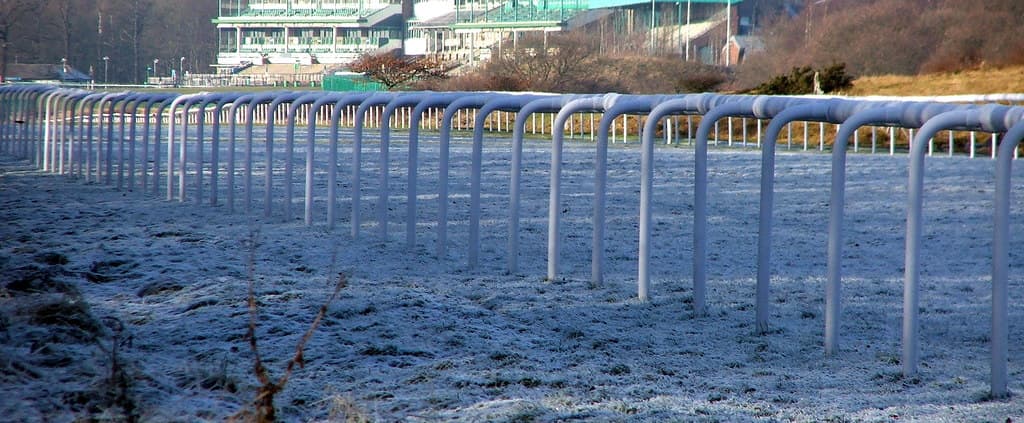
Newcastle Racecourse: Complete Guide
Guide to Newcastle Racecourse at High Gosforth Park: the Tapeta all-weather track, turf Flat racing, the Northumberland Plate, tickets and getting there.
Read more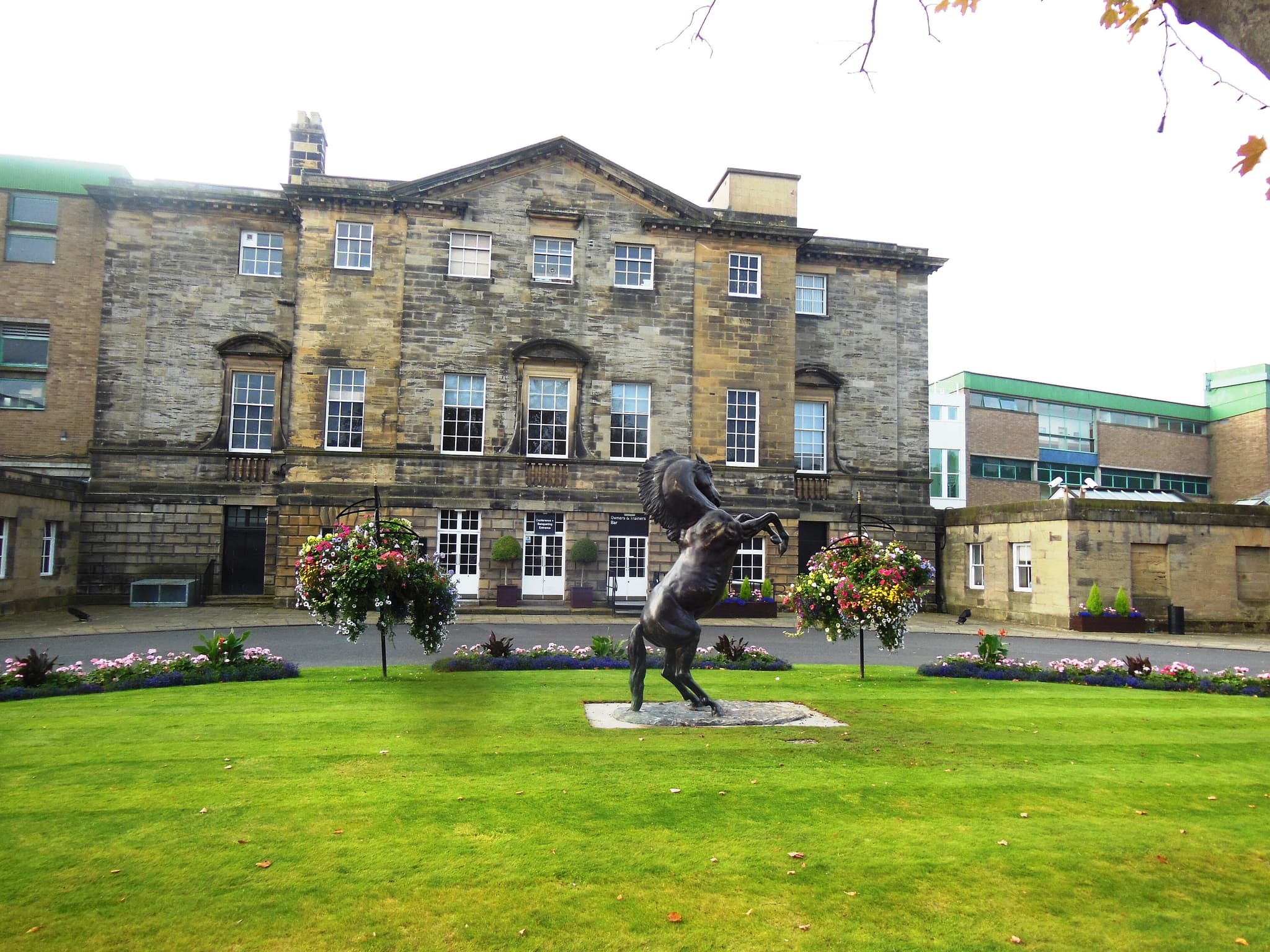
A Day Out at Newcastle Racecourse
Everything you need for a day at Newcastle — getting there, what to wear, enclosures, food and drink, and insider tips.
Read moreNewcastle's Fighting Fifth Festival: Your Complete Guide
The Fighting Fifth Hurdle weekend launches Newcastle's winter jump season. Here's your guide to one of the north's best racing festivals.
Read morePhotos on this page are used under Creative Commons licences. Titles, sources and licence links for each one are on our image credits page.
Research the field with the AI Race Predictor
Our model publishes calibrated win-probability estimates for UK races — a second opinion to understand a race, not tips. It's open about its record: it doesn't beat the market, and we show exactly how it does.
Work it out & learn the basics
Gamble Responsibly
Gambling should be entertaining and not seen as a way to make money. Never bet more than you can afford to lose. If you or someone you know has a gambling problem, help and support is available.