
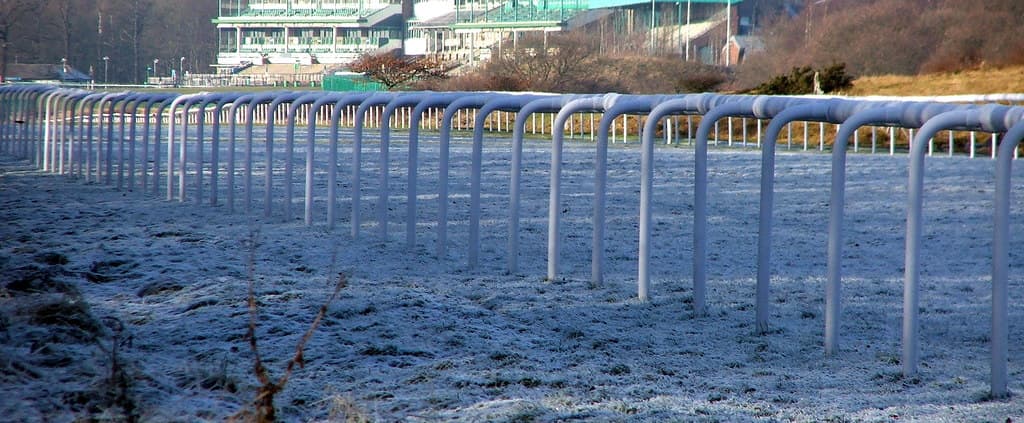
Founder & Editor · Last reviewed 2026-04-05
Introduction
Newcastle Racecourse occupies a unique position in British racing. Situated within the grounds of High Gosforth Park, five miles north of the city centre, it is the only racecourse in the North East of England and one of only six venues in Britain to operate an all-weather surface. Since Arena Racing Company installed a Tapeta track in 2016, Newcastle has transformed from a solid but seasonal turf venue into a year-round racing powerhouse that stages more than 80 fixtures annually and attracts quality horses from yards across the country.
The course offers something no other British venue can match in quite the same way: flat racing on a wide, galloping Tapeta circuit alongside turf flat racing from April to October, plus a National Hunt hurdle programme on the all-weather surface through the winter months. Three tracks, two codes, 12 months of racing: all at a single address in the North East.
The big occasions are truly big. The Northumberland Plate, run in late June on turf over two miles, has been called the Pitmen's Derby since the 19th century, when the coal miners of Northumberland and Durham treated it as their equivalent of Epsom's Derby Day. The race still generates that kind of energy. The Fighting Fifth Hurdle, run on the Tapeta in late November, is one of the first Grade 1 jumps contests of the National Hunt season and has been won by a roll-call of hurdling legends from Night Nurse to Buveur D'Air.
Beyond the headline meetings, Newcastle's Tapeta provides a steady flow of competitive all-weather racing throughout the year, including its role in the All-Weather Championships series. For the regular punter, there are few courses in Britain that offer more racing data to work with, more patterns to find, and more opportunities to get the better of the market.
Who This Guide Is For
This guide is written for four kinds of visitor:
First-time visitors who want to understand what Newcastle offers, which enclosure to choose, what the racing is like, and how to reach a course that sits between a major city and a motorway but still feels a little unfamiliar.
Regular racegoers who know the basics but want a deeper understanding of how the dual-surface layout affects the racing, which fixtures deserve most attention, and what Newcastle does differently from other courses.
Punters and form students who want the detail: how the Tapeta rides, what the draw bias looks like at different distances, which trainers and jockeys consistently outperform at Gosforth Park, and where the real betting value lies across the season.
Families, groups and day-trippers who want practical information about costs, food, drink, accessibility and what to expect at different types of fixture, from the Northumberland Plate carnival to a quiet Tuesday evening under floodlights.
Quick Decision Block
Seven answers to the questions visitors ask most:
- When to visit: Northumberland Plate day (late June) for the best all-round experience: quality racing, a real crowd and a proper occasion; Fighting Fifth day (late November) for the best jumps meeting; a summer evening meeting on turf if you want something low-key and sociable
- Which enclosure: Grandstand & Paddock for most visitors: good views, access to the parade ring, and a sensible price; Premier Enclosure on big days when the difference in comfort is worth the extra £10-15
- Best race: The Northumberland Plate (late June, Group 3 handicap over two miles on turf) is the race that defines the course; the Fighting Fifth Hurdle (November, Grade 1 over two miles on Tapeta) is the one for jumps fans
- Getting there: Metro to Regent Centre (green line, 10 minutes from the city centre) then a 15-minute walk or shuttle bus on major racedays; or free parking directly at the course off the A1
- Dress code: Smart casual throughout; jeans and trainers are fine in the standard enclosure on any raceday; Plate day sees people make more of an effort but there is no strict formal requirement
- Families: Children under 18 free with a paying adult; the parade ring gives excellent close-up access; summer evening meetings are particularly good for families
- Betting: The Tapeta generates enormous amounts of form data: course specialists win here at a premium rate; the wide track means draw bias is modest, but five-furlong races favour lower draws; full detail in the betting guide
This guide covers the course and both surfaces, the racing history and traditions, the key fixtures through the year, facilities and hospitality, how to get there, betting at Newcastle, the Geordie raceday atmosphere, and a full FAQ. Whether you're planning your first visit or trying to sharpen your form study, you'll find what you need here.
Bet on Newcastle
Place your bets on Newcastle races with a trusted bookmaker.

Promo code BETFRED50. New customers only. Register, deposit with a Debit Card, and place a first bet of £10+ at Evens (2.0)+ on Sports, to be settled within 7 days, to get £30 in Sports Free Bets and £20 in Bet Builder Free Bets within 24 hours of settlement. 7-day expiry. Eligibility & payment exclusions apply. Full T&Cs apply. Take Time to Think. BeGambleAware.org. 18+. Full T&Cs.

Promo code R30. New UK customers only, 18+. Register, deposit £10 or more, then place a £10 single cash bet at odds of 1/2 (1.5) or greater on any sports market (excluding Virtuals). Once the qualifying bet settles you get £30 in Free Bets (3 x £10) — the qualifying bet can win or lose. Free Bets are valid on any sports market excluding Virtuals, expire in 7 days, are non-withdrawable and must be used in full. Excluded deposit methods apply (including PayPal, Apple Pay, Skrill and NETELLER). Named bets such as Lucky 15 do not qualify. If you cash out the qualifying bet, or it is voided, you are no longer eligible for the offer. Ends 31.12.26. Full T&Cs apply. Please gamble responsibly. BeGambleAware.org. 18+. Full T&Cs.

Promo code BET40GET20. New UK customers, 18+. Register with the code and place a first bet of £40 or more at Evens (2.0) or greater. Receive 2 × £10 free bets: the first credited automatically once the qualifying bet settles, the second 24 hours later. Free bets must be placed at minimum odds of 4/1 (5.0), expire 24 hours after credit, and the free-bet stake is not returned with winnings. Debit card deposits only. Take Time to Think. BeGambleAware.org. 18+. T&Cs apply. Full T&Cs.

50% of your first-day net losses refunded as a free bet, capped at £25. New UK customers aged 18+ only. To qualify, deposit and place a first bet of £10 or more on any sport at minimum odds of evens (2.00), then place at least two further bets on different events, each worth at least 50% of your largest bet, all at evens (2.00) or greater. Losses are counted from your first settled bet until 23:59 the same day. Place a qualifying £10+ bet and you are guaranteed at least a £5 free bet. Bets placed at SP, void bets, cashed-out bets and bets struck with free bets do not count towards the offer. The free bet is credited the day after your qualifying bets settle and must be used within 7 days, after which it expires. It can be used at odds from 1/4 (1.25) up to 250/1 on singles and straight accumulators, but not on Trixie, Patent or Yankee style multiples. Free-bet stake is not returned with winnings. One offer per person, household, address, IP address and device. E-wallet deposits may not qualify, so check the cashier before depositing. Customers registered with GAMSTOP cannot claim. KYC identity verification must be completed before the free bet is credited. Take Time to Think. BeGambleAware.org. 18+. T&Cs apply. Full T&Cs.

New customers, 18+. Choose the sports bonus at sign-up, make a first deposit and receive a 100% bonus up to £50 in your Sports Bonus balance. To convert the bonus to cash, wager it 10x within 30 days. Single bets below Evens (2.00) do not qualify; accumulators do not qualify if any selection is below 1/2 (1.50). Virtual Sports, voided, cancelled, drawn, cashed-out and free-bet wagers do not count towards wagering. Only the first settled bet per event counts. Withdrawing before the wagering requirement is met forfeits the bonus balance including bonus winnings. Real-money funds are used before bonus funds. Deposits via Skrill or Neteller are not eligible. Not valid in conjunction with other promotions. Odds, bet and payment limits apply. 10bet general and promotion T&Cs apply. BeGambleAware.org. 18+. Full T&Cs.

New customers in Great Britain and Republic of Ireland, 18+. Place a £10 fixed-odds qualifying bet at minimum odds of 1/2 (1.50) — single or each-way (only the win part counts), pre-event or in-play, not cashed out early, within 28 days of opening the account. Receive up to £60 in bonuses credited over three days: 3 × £10 fixed-odds free bets (the first on settlement, then 24 and 48 hours later) plus 3 × £5 Total Goals FOOTBALL spread bets and 3 × £5 racing Winning Favourites spread bets, with a £1 racing Race Index spread bet as an extra on top. The spread bets need a full spread-betting account, opened within 28 days of the fixed-odds account and subject to Spreadex's eligibility and appropriateness checks. Free-bet stakes not returned with winnings; free bets valid 28 days from issue. IMPORTANT: the £5 credits are SPREAD bets — sports spread betting carries the risk that losses can exceed your stake. Sports spread-betting customers do not have Financial Ombudsman or FSCS recourse. Take Time to Think. BeGambleAware.org. 18+. T&Cs apply. Full T&Cs.

Promo code WELCOME15, entered under My Bonuses after registering. New UK customers, 18+. Place a first qualifying bet of at least £10 from your cash balance at odds of evens (2.0) or greater within 7 days of opening the account. Once the qualifying bet fully settles you receive £15 in free bets, credited as 3 x £5 tokens with set uses: one £5 accumulator free bet (minimum 4 legs, each leg at 2/5 or bigger), one £5 sports free bet (any market at evens or bigger) and one £5 Sub Cover free bet (selected football player markets at evens or bigger). Free-bet stakes are not returned with winnings. Free bets expire 7 days after they are credited. Void, cashed-out and partially cashed-out bets do not qualify. One offer per customer. Confirm the current terms on BetGoodwin's own welcome-offer page before claiming. Take Time to Think. BeGambleAware.org. 18+. T&Cs apply. Full T&Cs.

New UK customers, 18+. Minimum deposit £10. Place a £10 qualifying single on sports (excluding virtuals) at minimum odds of 1/2 (1.50), settled within 14 days. Deposit-method exclusions apply. Receive £30 in free bets (stake not returned), split £20 for sportsbook use (2 x £10) and £10 for Bet Builder only (2 x £5); Bet Builder does not cover horse racing. Free bets must be accepted within 7 days and expire 7 days after acceptance. No promo code required. Best Odds Guaranteed on UK & Irish racing, subject to having staked over £25 in the previous seven days. Operated by LiveScore Betting and Gaming (Gibraltar) Ltd, UKGC 56859. Confirm the current terms on LiveScore Bet's own promotions page before claiming. Take Time to Think. BeGambleAware.org. 18+. T&Cs apply. Full T&Cs.
18+. BeGambleAware.org
The Course & Layout
Newcastle Racecourse is unusual in British racing because it effectively houses three separate tracks at Gosforth Park: a left-handed Tapeta all-weather circuit, a left-handed turf flat track, and a hurdle course that uses sections of the Tapeta with portable hurdle flights. Understanding how each surface works, and how they differ from one another, matters whether you are planning a visit or studying form.
The Tapeta All-Weather Track
The Tapeta circuit is the workhorse of the operation, used for over 60 meetings a year from January to December. It is a left-handed oval of roughly one mile and two furlongs in circumference, with sweeping bends and a run-in of approximately three and a half furlongs from the final turn to the winning post. What immediately distinguishes Newcastle's Tapeta from most other all-weather tracks in Britain is its width. It is measurably wider than Wolverhampton, Lingfield, Chelmsford or Southwell, with room for large fields to spread right across the course.
That width has a direct effect on racing. At tighter circuits, horses drawn wide can lose several lengths negotiating extra ground on the bends, and the draw becomes a decisive factor. At Newcastle, the track is spacious enough that jockeys have real options about positioning. They can track the pace from the inside, sit in midfield, or cover a wide angle, and all three tactics can work on the right horse. The draw is not irrelevant, but it is far less of a mechanical advantage than at Wolverhampton or Chester.
The Tapeta surface itself is a blend of silica sand, synthetic fibres and rubber-coated wax. Installed in 2016, it provides consistent going regardless of weather, rain does not turn it heavy, frost does not freeze it, and heat does not bake it. The official going description sits permanently around "standard" to "standard to slow." For racegoers and trainers, this predictability is enormously valuable. A meeting planned for December will run, whereas the same meeting on turf could be abandoned for frost or waterlogging.
However, the surface is not entirely uniform across the seasons. In very cold conditions the Tapeta can feel firmer and the times quicker; in warm summer conditions it can ride marginally slower. These differences are subtle but detectable in the sectionals, and they matter for handicappers building databases. The main practical takeaway is that turf going preferences are irrelevant when assessing horses on the Tapeta. A horse described as needing soft ground on turf will not automatically struggle here. The two surfaces are completely different underfoot.
Racing characteristics on the Tapeta differ from turf in one important respect: closing sectionals are fast. The surface allows horses to maintain their effort all the way to the line, which means front-runners who would comfortably make all on turf can get caught in the final furlong here. Horses with a strong, sustained finishing kick (those that can quicken decisively from the two-furlong pole rather than those who grind it out) tend to prosper. This is one reason why drawing firm early conclusions about a horse's ability from a single Newcastle run can be misleading: the surface rewards a specific running style.
Races are staged at distances from five furlongs up to two miles. The five-furlong course starts on a chute that feeds into the back straight, meaning the field encounters a left-handed bend early in the race. This is where low-drawn horses have their marginal advantage, since they are already on the inside rail when the turn arrives. Six-furlong races start further around the track, while the mile start is on the far side of the oval. Races beyond a mile involve the full circuit plus extensions, and the demands on stamina increase progressively as distance grows. There is no significant downhill section at Newcastle, so two-mile and two-mile-plus races are proper tests of staying ability.
The floodlight system at Newcastle is one of its key assets. Evening meetings in winter run under lights, and the experience of watching racing on the Tapeta under a dark sky (horses moving through the pools of light, the crowd concentrated in the covered stands) is unlike an afternoon meeting. The floodlit fixtures from October to March have developed a following among punters who enjoy the focused, slightly different atmosphere they produce.
The Turf Track
The turf course sits inside the all-weather circuit and is used from roughly April to October. It is a left-handed oval of approximately one mile and three furlongs in circumference (slightly bigger than the Tapeta oval) with a home straight of around three furlongs. The configuration gives jockeys enough distance to organise their challenge in the straight without producing a finishing straight so long that front-runners are routinely collared from impossible-looking positions.
Gosforth Park's turf drains reasonably well. The course sits on relatively free-draining ground, and typical summer going is good to firm or good. When the North East gets proper summer rain (which it does) the going can ease to good to soft and occasionally soft ahead of turf meetings. In autumn, persistently wet weather can produce soft or heavy ground, and at those times Newcastle's turf becomes a stern stamina test. The Northumberland Plate is run in late June, when the ground is usually good to firm or good, but the occasional wet June has transformed the nature of the Plate field: good-ground sprinting types struggling, proven soft-ground stayers coming to the fore.
The turf track is fair and galloping in character. It suits horses that travel smoothly, settle in their race and quicken when asked rather than those that need to bowl along in front. The three-furlong home straight is long enough for hold-up horses to arrive with a run, but not so extended that complete front-runner domination is impossible. Most form-book descriptions of Newcastle turf racing characterise it as honest and reliable. The form tends to stand up well in subsequent races.
There is a straight five-furlong course on the turf as well, used for sprint races on summer fixture lists. This gives the sprint racing a different character from the round-course five furlongs on the Tapeta, since horses are not dealing with a bend.
The Hurdle Course
Newcastle's hurdle track was installed as part of the 2016 redevelopment and uses the Tapeta surface with portable hurdle flights placed around the circuit. It is a left-handed oval track with flights positioned at consistent intervals. The going is standard year-round (no waterlogging, no frozen ground) which makes it a reliable fixture in the National Hunt calendar when other courses to the south and north are struggling with winter conditions.
The principal race on the hurdle track is the Fighting Fifth Hurdle, run in late November over two miles. Its Grade 1 status makes it one of the most prestigious races staged at Newcastle. The question debated since 2016 is whether the Tapeta surface truly replicates the test of a turf hurdle race, and whether champions winning here are as thoroughly proven as those winning over grass. The weight of evidence from fighting Fifth renewals suggests top-class horses perform consistently (Buveur D'Air's successive victories were authoritative) but the surface does produce different demands from a soft-ground jumps track.
Distances Available
On the Tapeta flat track: 5f, 6f, 7f, 1m, 1m 2f, 1m 4f, 1m 6f, 2m, 2m 56y.
On the turf flat track: 5f (straight), 6f, 7f, 1m, 1m 2f, 1m 4f, 1m 6f, 2m.
On the hurdle track: 2m, 2m 4f.
Key Characteristics
The most important distinction at Newcastle is surface. Tapeta form does not automatically transfer to turf form, and vice versa. A horse with a strong all-weather profile may find turf conditions (particularly heavy going in autumn) a completely different proposition. Equally, horses bred and trained for the turf do not always adapt to the synthetic surface.
Within the Tapeta meetings, course form is gold. Newcastle's wide, galloping layout suits a specific type of all-weather performer, and a horse with two or three wins on this specific track is telling you more than its bare ratings suggest. The market regularly underestimates course-and-distance specialists here because casual punters treat all synthetic form as interchangeable. It is not.
The track's comparison to Wolverhampton is worth emphasising. Both run on Tapeta surfaces, but the tracks could hardly be more different in character. Wolverhampton is tight, turning, testing and physically demanding. Newcastle is wide, open and galloping. Horses regularly show different profiles at the two venues, and transferring all-weather form between them without accounting for track character is a consistent source of betting error.
History of Newcastle Racecourse
Newcastle Racecourse has existed in its current location since 1882, but organised racing in the area goes back considerably further. The story of how Tyneside came to have a major racecourse (and how that course survived and eventually prospered across nearly 150 years) is one of the more instructive histories in British racing.
Racing Before Gosforth Park
Horses were raced on the Town Moor (the large expanse of common land north of Newcastle city centre) from at least the 17th century. By the early 18th century, these meetings had become well-established fixtures in the social calendar of the north-east. The Race Week on the Moor was one of the highlights of the northern summer, drawing crowds from across Northumberland, Durham and the Scottish Borders.
The Northumberland Plate was first run in 1833, decades before the move to Gosforth Park. From its earliest renewals the race attracted strong fields and generated extraordinary public interest. Its nickname (the Pitmen's Derby) emerged naturally from its audience. The coal miners of Northumberland and County Durham, who worked long hours in difficult and dangerous conditions, treated Plate day as one of the year's great occasions. Pit villages across the region would effectively shut for the day, with miners and their families arriving by cart, on foot and later by train to watch the race.
By the 1870s the Town Moor situation was becoming untenable. Urban growth was beginning to encroach on the Moor, the facilities could not match the standards other courses were achieving, and the Jockey Club was applying greater scrutiny to licensed venues. A new home was needed.
The Move to Gosforth Park (1882)
The Brandling family's estate at High Gosforth Park, about three miles north of the city centre, offered the space and the terrain for a proper racecourse. The land was broadly level, well-drained by North East standards, and large enough to accommodate a full racing circuit with room for stands and spectator infrastructure. Newcastle Racecourse officially opened at Gosforth Park in 1882, and the established races (including the Northumberland Plate) transferred smoothly to the new venue.
The original course was a left-handed oval of approximately a mile and three furlongs, with a separate straight course for shorter distances. A grandstand was erected, a weighing room and parade ring laid out, and the infrastructure for managing large crowds put in place. The new course was a significant improvement on the Town Moor arrangement and quickly established itself as the undisputed home of North East racing.
The Fighting Fifth Hurdle was established in the National Hunt programme during these early decades, named after the Northumberland Fusiliers, the regiment known as the Fighting Fifth from their numbering in the old British Army order of battle. The race developed into one of the key early-season hurdle events in the country.
The World Wars and Their Aftermath
Both world wars hit Newcastle as they hit every major British racecourse. During the First World War, Gosforth Park was requisitioned for military use and regular racing was suspended. The course reopened after the Armistice, and the interwar period saw racing recover steadily, with the Northumberland Plate maintaining its prestige and the fixture list building back to pre-war levels.
The Second World War brought another requisition. Gosforth Park served various military functions from 1939 onwards, and racing was again curtailed. When normal service resumed after 1945, the return of race crowds was enthusiastic. The post-war boom years saw some of Newcastle's biggest ever attendances, with Plate day crowds of 30,000-plus making it one of the best-attended fixtures outside London and the Epsom meeting.
The Golden Period and the Fighting Fifth's Rise
Through the 1960s and 1970s, the quality of racing at Newcastle reached new heights and the Fighting Fifth Hurdle was elevated to Grade 1 status, cementing the course's National Hunt prestige. The roll-call of Fighting Fifth winners from this era reflects the quality the race was attracting: Night Nurse, trained by Peter Easterby in North Yorkshire and ridden by Paddy Broderick, won in 1976 en route to Champion Hurdle glory. Sea Pigeon (originally a top-class flat horse who ran in the Derby before being reinvented as a hurdler) also won at Gosforth Park. These horses were national figures, and their wins at Newcastle gave the course a profile in the jumps world that its modest facilities could not otherwise have generated.
The turf flat programme also reached a high point during these decades. Northern-based trainers developed an intimate knowledge of Gosforth Park's turf track, and quality runners from Yorkshire, Durham and Northumberland yards competed strongly with occasional runners from major southern operations.
Decline and the Threat of Irrelevance
By the late 1980s the pressures facing Newcastle were visible. Facilities that had seemed adequate in the post-war years were falling behind those of redeveloped venues in the south and even some northern rivals. Attendances on everyday fixtures were declining. The winter turf jumps programme (Newcastle had staged chase racing) was progressively vulnerable to frost and waterlogging, and fixture cancellations were a recurring problem. Prize money could not keep pace with better-funded venues.
Newcastle remained a well-loved course with a loyal North East following, but the trend lines were difficult. Without investment, the risk was a gradual slide toward the second tier of British racing, losing the top fixtures that justified the course's reputation.
The 2016 Transformation
Arena Racing Company's decision to install a Tapeta all-weather surface at Gosforth Park changed everything. The installation, completed in 2016, replaced the turf-only winter programme with a synthetic circuit that could race year-round regardless of weather. Newcastle became the sixth all-weather venue in Britain, and the only one outside the south of England and the Midlands.
The impact was immediate and lasting. The annual meeting count more than doubled, from roughly 35 fixtures a year to over 80. A hurdle course on the Tapeta surface allowed the Fighting Fifth Hurdle to continue and the National Hunt programme to grow, eliminating the weather vulnerability that had cost the course meetings. New grandstand facilities were built alongside the track work, and the overall raceday experience improved substantially.
The transition was debated. Traditionalists lamented the loss of a purely turf identity; others pointed out that the alternative was continued decline. Buveur D'Air's successive Fighting Fifth victories on the new surface (authoritative performances that proved championship-level racing could work on Tapeta) helped answer the critics. Newcastle's position in British racing today is more secure than at any previous point in its history.
For the full history in depth, see the Newcastle Racecourse history guide.
Key Fixtures & Calendar
Newcastle's fixture list is one of the busiest in the country, with over 80 meetings a year spread across the Tapeta and turf surfaces. The all-weather programme runs 12 months a year, while the turf season delivers the headline action from April through October. The result is a calendar with something worth attending in every month, from the Boxing Day social fixture to the full-scale occasion of Northumberland Plate day in June.
The Northumberland Plate Meeting (Late June)
The Northumberland Plate is Newcastle's most important day of the year, full stop. Run on the turf course over two miles, it is a Group 3 staying handicap that first ran in 1833 (making it one of the oldest major races in British racing) and carries prize money of around £150,000. The "Pitmen's Derby" nickname dates from the 19th century, when the coal miners of Northumberland and Durham treated Plate day as their version of the Epsom Derby. They arrived by train and on foot, dressed up, drank, bet, and made a festival of it. The mining industry is gone, but the spirit of the day is not.
The supporting card on Plate day is strong. The meeting typically includes Listed and pattern races alongside competitive handicaps across multiple distances, attracting runners from major southern yards alongside the northern operations that dominate the rest of the summer programme. It is not unusual to see horses trained by Classic-race handlers heading north specifically for the Plate and its supporting programme, raising the quality ceiling considerably.
The race itself is an intricate betting puzzle. Two miles in a competitive staying handicap, with large fields and multiple pace scenarios, means the form study is truly complex. Stamina, fitness, draw in the context of likely race position, and ground conditions all play a role. Horses arriving in top form (those that have won their last race or run a close second) tend to outperform those returning from a break. Northern-trained stayers with proven form at Gosforth Park on turf are consistently worth noting, even at short prices.
Plate day attendance regularly exceeds 25,000, making it one of the best-attended meetings outside the major festivals. The atmosphere is unlike any other day at Newcastle. This is the one fixture where the Geordie character of the event is on fullest display.
The Fighting Fifth Hurdle Meeting (Late November)
The Fighting Fifth Hurdle is a Grade 1 contest run over two miles on the Tapeta hurdle course, making it one of the first championship-level hurdle races of the National Hunt season. Named after the Northumberland Fusiliers (known historically as the Fighting Fifth) the race has been won by some of the finest hurdlers of the past 50 years: Night Nurse (1976), Sea Pigeon, Katchit, and Buveur D'Air in back-to-back renewals in 2017 and 2018.
Its early-season timing gives the Fighting Fifth a particular significance. Horses are rarely fully fit in late November; the form from summer turf campaigns doesn't translate directly; and the Tapeta surface adds a layer of uncertainty for horses whose handlers prefer turf. All of this creates real market uncertainty and opportunities for punters who can assess which horse in the field has the best credentials for this specific track and conditions.
The November fixture doubles as Newcastle's top jumps meeting of the year, with a quality supporting card of handicap hurdles, novice hurdles and bumpers that regularly produce future stars. The atmosphere on Fighting Fifth day is more focused than Plate day (a smaller, knowledgeable crowd who have come specifically for the racing) which gives the meeting a distinctive character.
All-Weather Championships Trials (Winter and Spring)
Newcastle plays a significant role in the All-Weather Championships series, which runs from October to April and culminates at Lingfield on Finals Day in April. Several trial races are staged at Newcastle through the winter, covering sprint, mile, middle-distance and staying distances. These attract quality all-weather performers targeting the lucrative Finals Day prize money, and the form produced in the trials is informative.
The Good Friday meeting is particularly notable within the all-weather season, a holiday fixture that draws a solid crowd and typically features multiple Championships trials across the card. Good Friday has established itself as one of Newcastle's better-attended all-weather fixtures over the years, partly because the holiday timing suits social groups and families.
Summer Turf Fixtures (April to October)
The turf programme produces a full season of flat racing from the spring through to late autumn. Beyond Northumberland Plate day, Newcastle stages several other fixtures of real quality during the summer months. The July meeting often includes valuable handicaps and Listed races that attract well-fancied horses from the major training centres. August and September fixtures complete the summer turf programme before the ground typically starts to ease in October.
Midweek turf meetings are worth attending as underrated days out. The crowd is smaller than on the major occasions, but the racing is often competitive, northern trainers send horses with real winning chances to their home track, and the format is relaxed and enjoyable.
Summer Evening Meetings
Newcastle stages a series of evening fixtures from May through August, typically on weekday evenings. These combine flat racing (on turf or Tapeta depending on the specific fixture) with a social, informal atmosphere quite different from Saturday afternoons. Families, work groups and first-time racegoers make up a significant proportion of the evening crowd, and the format is deliberately accessible.
Evening meetings usually start around 5.30pm or 6pm and finish by 9pm. The duration and the relaxed dress code make them an easy choice for anyone who wants a proper racing experience without committing to a full day. For casual punters, the smaller fields on some summer evening cards can be easier to navigate than the large, competitive fields on the major weekend fixtures.
Winter All-Weather Programme (October to March)
Outside the Championship trials and the Fighting Fifth meeting, Newcastle's Tapeta stages regular fixtures throughout the winter months, often two or three meetings a week, many of them evening fixtures under floodlights. Individually, these are bread-and-butter all-weather cards rather than prestige occasions. Collectively, they form the backbone of the all-weather programme and provide an enormous amount of form data.
The competitive handicaps on winter all-weather cards at Newcastle are popular with regular punters. The volume of racing means patterns develop clearly: which trainers are in form, which horses handle the surface, which jockeys are riding in peak confidence. For systematic bettors who track Tapeta data carefully, the midwinter cards can be highly productive.
Boxing Day and Festive Fixtures
Newcastle's Boxing Day meeting is a North East institution. Run on the Tapeta, it draws one of the biggest winter crowds of the year, families who are at a loose end after Christmas morning, groups making a day of it, regulars who would not miss it. The racing quality is solid rather than exceptional, but the social occasion more than compensates. Subsequent days in the festive period typically include further all-weather fixtures, and Newcastle is usually one of the few British courses operating reliably through the Christmas and New Year period.
What to Prioritise
If you are choosing a single meeting to attend, the Northumberland Plate day in late June is the obvious answer. It has everything: the best racing on the calendar, the biggest crowd, a real sense of occasion and a history that stretches back nearly 200 years. For jumps fans, the Fighting Fifth meeting in November provides a focused, high-quality day built around a Grade 1 contest. For something more relaxed and sociable without the crowds, a summer evening meeting on turf between May and August is ideal. And if you just want to go racing on a quiet day with a handful of competitive all-weather races and no queues, any midweek winter Tapeta fixture will serve the purpose.
Facilities & Hospitality
Newcastle's facilities were substantially rebuilt as part of the 2016 redevelopment, and the result is a modern venue that functions well without pretending to be something it is not. It is practical, comfortable and well-organised rather than glamorous. The viewing from the main grandstand is among the best of any all-weather track in Britain, and the layout ensures you can move between the parade ring, betting ring and grandstand efficiently.
Enclosures
Grandstand and Paddock Enclosure
This is the standard admission tier and where most racegoers spend their day. Your ticket covers the main grandstand (a multi-level structure rebuilt during the 2016 redevelopment) plus the parade ring, winners' enclosure and the main bookmakers' pitches.
The grandstand viewing is excellent. From the upper levels you can see the entire Tapeta circuit and most of the turf track laid out below you. Covered seated areas sit on several levels, with open standing areas along the rail for those who prefer to watch from closer to the action. The layout is sensible: the parade ring sits directly in front of the grandstand, meaning you can watch the runners in the ring, assess them as they walk around, then reach the betting ring and find a viewing spot without covering much ground between each step.
Prices for this enclosure vary by fixture. A midweek all-weather card might be £15 or under; the Northumberland Plate day will cost considerably more. Booking online in advance consistently saves money compared to gate prices.
Premier Enclosure
The upgrade option. Premier tickets cover everything in the standard enclosure plus additional access to ground-floor restaurant areas, premium bars and a dedicated section of the grandstand with more comfortable seating and reduced crowding.
On major fixtures (Northumberland Plate day, the Fighting Fifth meeting, Boxing Day) the Premier Enclosure is noticeably less crowded than the general areas. That contrast matters when the course is at capacity: having access to a quieter bar and a better-positioned seat on a busy afternoon is worth a £10-15 premium for most people. On a quiet midweek all-weather card, the additional cost is harder to justify. The standard enclosure is perfectly comfortable when the course is half-empty.
Course Enclosure
Some fixtures include a Course Enclosure option, giving access to the infield and along the rails for a view from ground level. This is a lower-cost entry point and suits those who simply want to be present at the races without the grandstand facilities. It is less commonly available on all-weather fixtures than on major turf days.
Hospitality
Newcastle's hospitality offering sits comfortably in the middle of the market. It is not on the scale of Cheltenham or Ascot, but it is well-run and appropriate for the size of the course.
The Tapeta Restaurant is the main dining option, with course-facing tables and a set menu served across the day. It provides a proper sit-down meal with views of the track, a noticeably better experience than queuing at the food outlets. Tables need to be booked in advance, especially on Plate day when the restaurant fills quickly.
Private boxes are available for groups wanting their own space. A box provides a dedicated viewing area, table service and privacy from the general crowd. They are popular for corporate entertainment, landmark birthdays and stag events. Boxes at the top-tier meetings sell out well in advance.
Bespoke hospitality packages on Plate day and other major fixtures can include champagne receptions, multi-course dining and premium raceday programmes. Prices start from around £80-100 per person on standard fixtures and increase for the premium meetings. The course website lists current packages and availability; given that the best Plate day packages sell out weeks before the meeting, booking early is sensible.
Food and Drink
The grandstand houses multiple food outlets serving standard racecourse fare: burgers, fish and chips, pies, hot dogs, sandwiches and chips. The quality is decent for venue catering, nothing outstanding but nothing that would ruin a visit. Prices are at the premium typical of major sporting venues.
On bigger racedays and summer afternoon meetings, additional food stalls sometimes appear in the outdoor areas adjacent to the grandstand. These tend to offer slightly more interesting options (street food, hog roast, wood-fired pizza) and are worth finding if you arrive hungry on a Plate day.
Bars are distributed across several levels of the grandstand, with multiple options at each. Standard draught beers, cider, wine and spirits are available throughout. Pints cost in the £5-6 range. Champagne bars and cocktail bars operate on Plate day and the other major fixtures, usually on the upper levels. On winter evening meetings, the indoor bars become the social hub between races, warm, with big screens showing replays and previews, they are the obvious place to reassemble after watching a race.
For a full breakdown of food and drink with tips on timing, see the day out guide.
Betting Facilities
The betting ring at Newcastle is well-organised, with bookmakers' pitches positioned between the grandstand and the parade ring in a layout that makes the whole process efficient. You can watch a horse walk in the ring, cross 30 metres to the pitches to place your bet, and be back in a viewing position well before the field is called to the start.
Tote windows are located inside the grandstand and are well-signposted. Self-service betting terminals are spread throughout the venue for those who prefer digital. Most major bookmakers also have dedicated race day positions for mobile betting accounts. The betting ring is particularly active on Northumberland Plate day, when on-course bookmakers' odds can differ significantly from the SPs of the bigger-name traders, worth shopping around.
Accessibility
Newcastle is among the more accessible racecourses in the country. The grandstand has lift access to all levels, which is not universal at older British courses. Dedicated wheelchair viewing areas are positioned with good sightlines to both the Tapeta circuit and the turf track. Accessible toilets are available on every level and throughout the venue. The surface between car parks and the grandstand is mostly firm and level, though some grass areas can be soft on wet days.
The course recommends contacting the accessibility team in advance of your visit if you have specific requirements. On major fixtures, pre-booking a disabled parking space directly adjacent to the grandstand is advisable as these spots fill early.
Connectivity and Screens
The grandstand has Wi-Fi coverage throughout, and large screens around the venue show live racing, replays, racecard information and in-running odds. The screen coverage is solid for a mid-sized British racecourse, better than older venues that have never invested in display infrastructure. On evening fixtures particularly, the screens in the indoor bar areas keep things moving between races.
Getting to Newcastle Racecourse
Newcastle Racecourse is at High Gosforth Park, approximately five miles north of Newcastle city centre. The postcode is NE3 5HP. Getting there is straightforward from almost any direction. The course sits close to the A1 corridor, and the city's Metro system provides one of the better racecourse public transport connections in the north of England. Whether you are coming by car from the south, by train from Edinburgh or London, or by Metro from the city centre, the journey to Gosforth Park is simpler than the location might suggest.
By Car
From the south: Take the A1(M) northbound, then join the A1 and follow signs for Gosforth/Newcastle Airport. The Gosforth Park turn-off is clearly signposted (look for racecourse signs in the approach) and takes you almost directly to the course entrance. Allow at least 15 minutes from the point you leave the A1 in light traffic; on Plate day, allow considerably more.
From the north: A1 southbound, same turn-off in reverse. Coming from Northumberland or Scotland, the course is the first significant leisure destination after crossing into Tyne and Wear.
From the west: The A69 connects Newcastle to the M6 and Carlisle corridor. Follow the A69 eastbound until it feeds into the A1 northern ring road, then pick up racecourse signs. The drive from the city's western suburbs takes around 25 minutes in normal conditions.
From the city centre: Take the A167 north through Gosforth, following signs for Gosforth Park. It is approximately five miles and 15-20 minutes in normal traffic, though weekend afternoons before a major meeting can add time.
Parking: On-site parking at Newcastle is free on most racedays, a point worth noting, since many major racecourses charge £10-15. The car parks are large and capable of handling substantial crowds on normal fixture days. On Plate day, the Christmas period fixtures and the Fighting Fifth meeting, the main car parks fill up. Aim to arrive at least 45-60 minutes before the first race on major meetings. Overflow parking in adjacent fields is available when the main parks are full, managed by course staff directing traffic.
By Metro
The Tyne and Wear Metro is the recommended option for those coming from the city centre or arriving at Newcastle Central station. Regent Centre station on the Yellow Line (line 2) is the closest Metro stop to the course, roughly a 15-minute walk from the main entrance.
From Newcastle Central station, the Metro to Regent Centre takes approximately 10-12 minutes. Trains run every 12 minutes on the Yellow Line during the day, and every few minutes during peak times. There is rarely a long wait.
The walk from Regent Centre to the course entrance is straightforward: exit the station, cross the road and follow the well-trodden path north towards the park gates. It is a flat walk along suburban streets and is perfectly manageable. On major racedays, you will be walking in company, follow the crowd.
Shuttle buses: On bigger fixtures: Northumberland Plate day, Boxing Day, the Fighting Fifth meeting, the course sometimes arranges shuttle buses from Regent Centre to the gates, cutting the walk entirely. This is worth checking on the Newcastle Racecourse website before your visit. When the shuttle is running, it drops you directly at the turnstiles and is by some distance the easiest option for those who have come by train.
By Train
Newcastle Central station is one of the best-connected stations in the north of England. Direct services run from:
- London King's Cross: approximately 2 hours 50 minutes on the fastest services
- Edinburgh Waverley: approximately 1 hour 30 minutes
- Leeds: approximately 1 hour 10 minutes
- Manchester Piccadilly: approximately 2 hours
- Birmingham New Street: approximately 2 hours 30 minutes
- Durham: approximately 15 minutes
From Newcastle Central, the Metro connection to Regent Centre is directly underneath the mainline station, follow signs for the Metro, buy a ticket, and take the Yellow Line northbound. Total journey time from the mainline platform to Regent Centre is around 15 minutes including the walk between platforms.
Alternatively, a taxi from Newcastle Central to the racecourse costs approximately £12-18 and takes 15-20 minutes in normal traffic, 25-35 minutes on a busy Plate day afternoon.
By Taxi and Rideshare
Newcastle has reliable taxi provision. Hackney cabs and private hire vehicles are available throughout the city. From the city centre, the fare to Gosforth Park is typically £10-15 and the journey takes 15-20 minutes outside peak times. Uber and similar apps operate in Newcastle and are usually the fastest way to find a car, though surge pricing can apply immediately after the last race when demand spikes.
The course has a designated taxi rank. On quiet fixture days it serves perfectly well. After the last race on Plate day or Boxing Day, the queue at the rank can be substantial, 20-30 minutes is not unusual. Pre-booking a return taxi with a specific collection time is worth doing for the major meetings. Alternatively, a 10-minute walk away from the main gates will usually find a shorter wait and better availability on apps.
By Bus
Several Go North East routes serve the Gosforth area, with stops within a 10-15 minute walk of the course entrance. Buses run regularly from the city centre during the day. The service is less frequent on Sunday evenings and late evenings generally, so check timetables before travelling if you are attending an evening fixture, particularly in winter when services reduce earlier.
For most visitors, the Metro is a more convenient and predictable option than the bus. But for those based in Gosforth itself or in areas with direct bus routes, the bus can be the quickest option.
Combining with a City Break
Newcastle is one of the most enjoyable cities in England for an evening out. The racecourse is 15-20 minutes from the Quayside by Metro, putting you close to excellent restaurants, cocktail bars and the famous Geordie nightlife district. If you are making a night of it (finishing at the races, heading into town for dinner, staying over) the combination works extremely well. Several hotels on the Quayside and in the city centre offer reasonable rates and are within walking distance of everything the city offers post-races. The Jesmond area, one stop beyond Regent Centre on the Yellow Line, has good independent restaurants and a quieter atmosphere if you prefer something lower-key.
Betting at Newcastle
Newcastle is a rewarding course for punters who put the work in. With over 80 fixtures a year spread across two surfaces, the volume of form data is exceptional, and the patterns that emerge from that data are clear enough to be truly useful. This section gives an overview of the main betting angles at Gosforth Park. The full betting guide covers everything in more depth.
The Core Principle: Surface First
Before you assess a runner at Newcastle, establish which surface the race is on. Tapeta form and turf form do not automatically transfer. A horse with an outstanding all-weather record may have never proved itself on turf; a turf-trained stayer sent for the Northumberland Plate may have no all-weather form at all. The market does not always price this distinction accurately, particularly for horses with mixed records across surfaces.
On the Tapeta, Newcastle form is more transferable than Wolverhampton form, but less transferable than Lingfield form. The wide, galloping nature of Newcastle's synthetic track is different in character from the tighter circuits in the south. A horse that performs well at Lingfield may struggle to reproduce that form at Newcastle, and vice versa.
Draw Bias on the Tapeta
The Tapeta's width keeps the draw relatively neutral at most distances, which is one of the track's better qualities. That said, there are distance-specific nuances worth understanding:
Five furlongs: The five-furlong course starts on a chute that immediately encounters a left-handed bend. Low draws (stalls 1-4) save ground on the turn and have a measurable advantage, particularly in large fields. In a field of 12 or more, this edge is pronounced enough to factor into your assessment.
Six furlongs to a mile: Broadly neutral. The track is wide enough that horses drawn in stalls 10-16 can find their positions without losing significant ground, and no consistent bias appears in the data at these distances.
Beyond a mile: Draw is largely irrelevant. By the time a race covers a mile and a quarter or more, positional tactics and fitness overwhelm any stall-based advantage.
Course Specialists
The single most reliable angle at Newcastle is backing course specialists on the Tapeta. Horses with two or more wins on Newcastle's specific all-weather surface win again at a rate the market consistently underestimates. This happens because casual punters treat all-weather form as interchangeable. It is not. Newcastle's wide, galloping layout suits a specific type: a horse with a strong finishing kick, the ability to settle and travel, and the physical constitution to handle a synthetic surface. When a horse has demonstrated these qualities at Newcastle specifically, that evidence is worth more than generic all-weather form at another track.
Running Style Bias (Tapeta, Mile and Beyond)
In middle-distance and staying races on the Tapeta, pace-setters and front-runners are less dominant than on turf. The consistent surface allows closers to maintain their effort all the way to the line, and the long three-and-a-half-furlong run-in gives hold-up horses plenty of time to arrive. In races from a mile upwards, horses drawn to sit behind the pace and finish strongly have a statistical edge over those expected to make all. Apply scepticism to front-runners in these distances unless the field is very small and the pace modest.
Key Trainers on the Tapeta
David O'Meara (Hovingham, North Yorkshire) sends consistent winners to Newcastle across distances from sprints to middle distances. His understanding of northern all-weather racing and his ability to place horses at the right level makes him one of the most productive trainers at the course.
Tim Easterby (Great Habton, North Yorkshire) has an outstanding record at Newcastle, particularly with sprinters and milers. His runners tend to be well-prepared and arrive with realistic chances rather than as mere course experience.
Michael Dods (Darlington) is among the leading northern sprinting trainers and has a strong Newcastle record, particularly at five and six furlongs on the Tapeta.
Mark Johnston / Charlie Johnston (Middleham) have historically been among the most prolific winners at Newcastle over all distances. The yard targets the course efficiently with a large string, and their five-year course record is consistently among the top two or three trainers.
Keith Dalgleish (Carlisle) sends a steady volume of runners and maintains a strike rate at Newcastle that exceeds his overall average. Particularly reliable in the lower-grade handicaps where he places horses intelligently.
Richard Fahey (Musley Bank, North Yorkshire) runs high numbers across the all-weather circuit and produces consistent results at Gosforth Park.
Key Races as Betting Events
Northumberland Plate (late June, turf): A two-mile handicap with large fields, competitive weights and quality runners from across the country. The best approach is to focus on: horses arriving in current form (recent winners outperform those returning from breaks), proven stamina over two miles, and ground-form matching the likely conditions. The Plate is not a race for short-priced favourites to dominate, the handicapper provides real difficulty, and most seasons produce a winner at 8/1 or longer.
Fighting Fifth Hurdle (November, Grade 1): Small fields, class over handicap weights, and the additional variable of Tapeta surface form. Horses that have previously run over hurdles on synthetic surfaces (or that are clearly the dominant hurdler in their division) deserve priority. This race regularly provides the season's first significant indicator toward the Champion Hurdle market.
All-Weather Championships Trials: Form in these trials translates well to Finals Day at Lingfield. Newcastle's trials attract quality performers, and studying the data from multiple trials (looking for horses that have outperformed their market position across the series) can provide profitable angles for the Lingfield finals.
For the complete betting analysis, draw bias detail by distance, and full trainer/jockey statistics, see the Newcastle betting guide.
The Raceday Atmosphere
Newcastle Racecourse has a character that comes directly from its city and its region. Gosforth Park is not Ascot; it is not Cheltenham. It does not try to be either. What it offers instead is something more specific: the atmosphere of a major sporting event in a city that takes its sport seriously, attended by a crowd that is knowledgeable, good-humoured and truly invested in the outcome.
Northumberland Plate Day
Plate day is the fullest expression of Newcastle's identity. With 25,000 people in attendance, the course transforms from a functional racing venue into something closer to a festival. The crowd on Plate day is a proper cross-section of the North East, families, friendship groups, office parties, racing regulars, occasional visitors who come once a year specifically for this fixture. There are people who have been coming to Plate day since childhood, whose parents brought them, whose grandparents attended before that. That kind of continuity is not manufactured; it is earned over nearly two centuries.
The Pitmen's Derby nickname still means something here. The coal industry that gave the race its identity is long gone, but the working-class character of the occasion (unpretentious, sociable, focused on having a good time) persists. Newcastle does not have an especially formal racegoing tradition, and Plate day reflects that. People dress up because they want to, not because they are required to.
By mid-afternoon on Plate day the noise in the grandstand is substantial. The betting ring is at its busiest. The parade ring draws large crowds before the Plate, with the crowd pressing around the rail to see the runners. When the horses enter the back straight two miles from home and the field starts to fan out, the entire grandstand begins to follow each move. By the time they turn for home, the noise is at full volume, and at Gosforth Park, a proper 25,000-person crowd in full voice is worth experiencing.
The Fighting Fifth Meeting
The atmosphere on Fighting Fifth day is different in character, more focused, quieter, arguably more intense. The crowd is smaller and more specifically interested in the racing. National Hunt devotees, punters who have followed the hurdling season from its earliest Flat-to-jumps transitions, and local supporters who treat the Grade 1 as their major jumps occasion of the year make up the bulk of the Fighting Fifth attendance.
The late November timing adds its own quality. The days are short, the evenings are cold, and the Tapeta under the autumn sky has a different look from summer meetings. When a champion hurdler is being paraded before the principal race of the day, the atmosphere in the grandstand carries the focused energy of a racing crowd that knows exactly what it is watching.
Midweek and Evening Meetings
The everyday Tapeta meetings are not Plate day. They are something else, functional, lower-key, enjoyable in a different way. A Tuesday evening all-weather card in March draws a few hundred regular punters, some local families, and a smattering of form students who are there specifically to watch the horses run. The crowd is small enough that the parade ring is unhurried, the betting ring is accessible and unhurried, and the whole operation moves efficiently through six or seven races.
This is where Newcastle's character as a local institution comes through most clearly. The staff know the regulars. The regulars know each other. A winter evening at Gosforth Park under floodlights on a cold night, with a good bet placed and a warm bar to return to between races, has a satisfaction that the big occasions cannot entirely replicate.
The Geordie Factor
The North East has a distinctive sporting identity, and it carries into the racecourse. Newcastle racegoers are straightforwardly enthusiastic, quick to cheer a winner, vocal in disappointment, and entirely willing to engage with strangers about a horse they fancied in the third race. The racecourse does not feel exclusive or intimidating. It feels like a place that expects you to enjoy yourself and assumes you will know what you are doing once you get through the gate.
That character makes Newcastle one of the more comfortable British racecourses for a first-time visitor. There is no sense that you are being judged by what you are wearing or that you need special knowledge to belong here. The course has always been a people's venue, and the atmosphere reflects it.
Under the Floodlights
There is a specific atmosphere to Newcastle's winter evening meetings that is worth noting separately. When the floodlights are on and the Tapeta is gleaming under artificial light, the course feels more concentrated. The grandstand is the only warm, lit place in a dark park, and the crowd gathers more tightly around the action. The smell of food from the indoor outlets, the sound of commentators echoing through the covered areas, and the sight of horses moving under the artificial glow produce a slightly edgy, almost theatrical quality.
Floodlit meetings in December and January are popular with a specific type of racegoer: someone who has planned the evening around the racing rather than treating it as an incidental backdrop to a social occasion. The form study done in advance feels more purposeful, the betting ring has a sharper edge to it, and the results carry more weight when they arrive in the cold night air. It is one of the more underrated experiences in British racing and worth attending at least once if you have never experienced a winter evening meeting at a floodlit all-weather track.
Boxing Day
The Boxing Day meeting sits in its own category. It is the most social fixture on Newcastle's calendar. A day when the crowd is drawn by tradition and occasion as much as by the racing itself. Families who have spent Christmas morning together head to Gosforth Park in the afternoon; groups of friends who have been meeting on Boxing Day for a decade arrive at the gate as a matter of course.
The racing is solid without being outstanding. The Tapeta card on Boxing Day is competitive but not at the level of the Northumberland Plate or Fighting Fifth. What gives the day its character is the crowd's mood, a combination of Christmas warmth, relief at getting out of the house and the straightforward pleasure of watching horses run with a drink in hand. Few racecourses manage the festive fixture as naturally as Newcastle, because few courses have a crowd this willing to treat a day at the races as a proper celebration rather than a spectator sport obligation.
Frequently Asked Questions
More guides for this course
Share this article
More about this racecourse
All Newcastle guides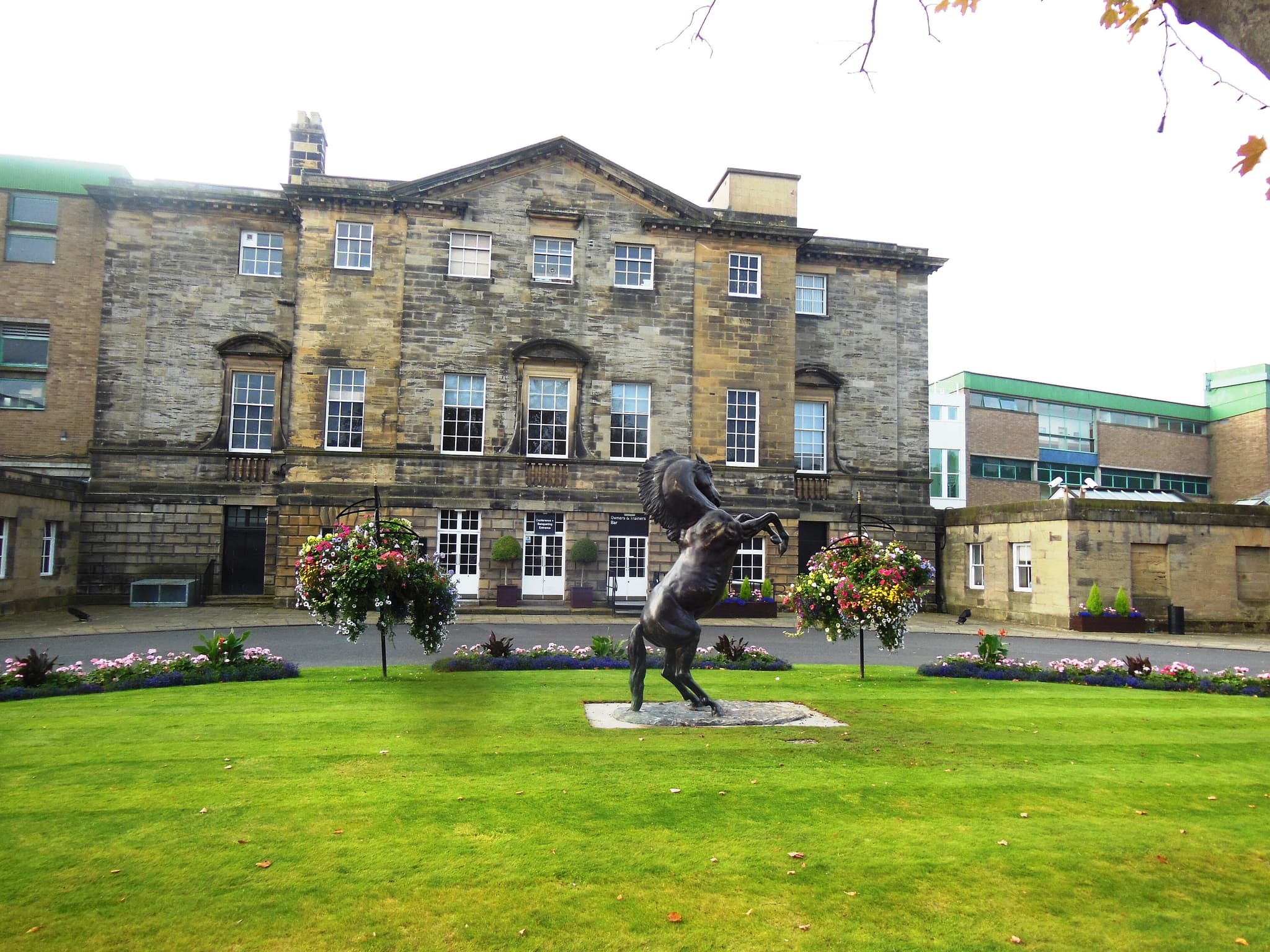
A Day Out at Newcastle Racecourse
Everything you need for a day at Newcastle — getting there, what to wear, enclosures, food and drink, and insider tips.
Read moreNewcastle's Fighting Fifth Festival: Your Complete Guide
The Fighting Fifth Hurdle weekend launches Newcastle's winter jump season. Here's your guide to one of the north's best racing festivals.
Read more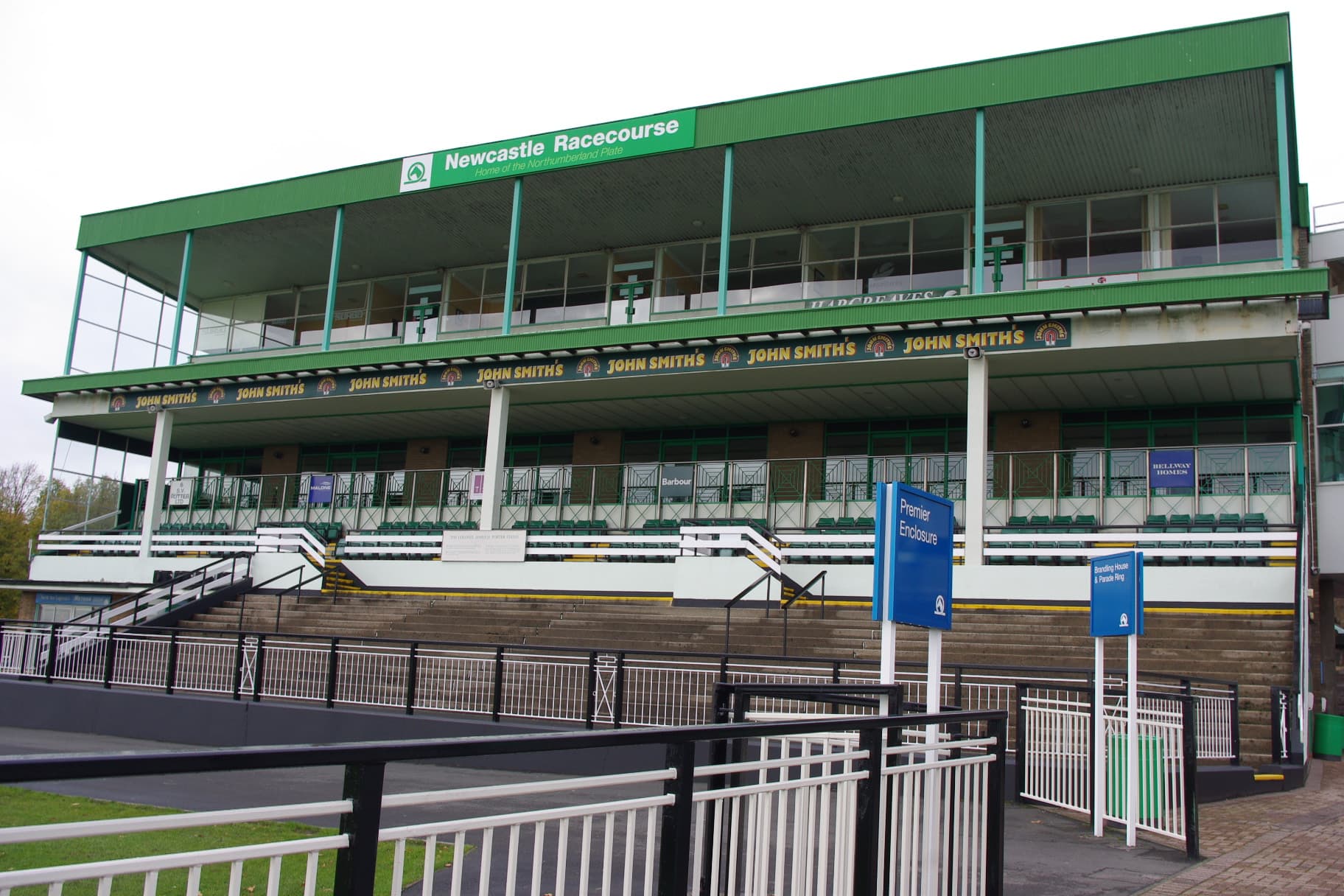
The History of Newcastle Racecourse
From Victorian beginnings at Gosforth Park to a modern all-weather powerhouse — the story of Newcastle Racecourse.
Read morePhotos on this page are used under Creative Commons licences. Titles, sources and licence links for each one are on our image credits page.
Research the field with the AI Race Predictor
Our model publishes calibrated win-probability estimates for UK races — a second opinion to understand a race, not tips. It's open about its record: it doesn't beat the market, and we show exactly how it does.
Work it out & learn the basics
Gamble Responsibly
Gambling should be entertaining and not seen as a way to make money. Never bet more than you can afford to lose. If you or someone you know has a gambling problem, help and support is available.