
Founder & Editor · Last reviewed 2026-03-02
Newcastle Racecourse has been part of the North East sporting landscape for nearly a century and a half. From its Victorian origins at Gosforth Park to its dramatic reinvention as a modern all-weather venue, the course has survived world wars, financial crises, threatened closures and a complete transformation of its racing surface — and come out stronger each time.
The story of racing at Newcastle is really two stories. There is the traditional narrative of turf racing at Gosforth Park — the Northumberland Plate, the summer festivals, the passionate North East crowds who treated the races as their own. And then there is the modern chapter, which began in 2016 when the old turf track was supplemented by a state-of-the-art Tapeta all-weather surface that transformed Newcastle from a seasonal venue into a year-round racing operation.
But the history goes back further than Gosforth Park. Horse racing in the Newcastle area has roots stretching back centuries, with races on the Town Moor forming part of the city's social fabric long before the current course was even imagined. Understanding that deeper heritage puts the modern racecourse in context — this is not a venue that was parachuted into the North East. It grew organically from a region that truly loves its sport.
The Victorian entrepreneurs who moved racing from the Town Moor to Gosforth Park in 1882 were making a calculated bet on the future of northern sport. The wartime generations who kept the tradition alive through two global conflicts were doing something similar. And the Arena Racing Company executives who commissioned the Tapeta installation in 2016 were following the same instinct — that Newcastle Racecourse was worth preserving, whatever it cost to modernise it.
This article traces the full story — from the earliest origins of racing at Gosforth Park through the golden decades of the mid-20th century, the famous races and moments that defined the course's reputation, and the bold modernisation that secured its future. It is a story of resilience, reinvention and a community's enduring love of the turf.
Origins & Gosforth Park
Horse racing in Newcastle didn't begin at Gosforth Park. Long before the current course existed, the people of Tyneside were racing horses — and the tradition runs deeper than most people realise.
Racing on the Town Moor
The earliest organised racing in the Newcastle area took place on the Town Moor, the vast expanse of common land that sits north of the city centre. Records suggest racing on the Moor dates back to at least the 17th century, with regular meetings established by the early 1700s. The Town Moor races were popular, well-attended events that drew crowds from across the region. They were an integral part of Newcastle's social calendar, with the Race Week becoming one of the highlights of the northern summer.
By the mid-19th century, the Town Moor meetings had become substantial affairs. The Northumberland Plate was first run in 1833 — decades before the move to Gosforth Park — and quickly established itself as one of the most prestigious handicaps in the north of England. The name "Pitmen's Derby" emerged during this period, reflecting the race's enormous popularity among the coal miners who formed the backbone of the region's workforce. For the pitmen, Plate day was their equivalent of Derby Day at Epsom — a rare chance to dress up, socialise and have a flutter. The mines would give men the afternoon off, and the Moor would fill with workers from the collieries of Northumberland and County Durham, dressed in their Sunday best and carrying whatever they could afford to wager.
The Northumberland Plate's pre-Gosforth Park history is significant because it explains the race's character. It was not invented as a prestige event for wealthy owners and fashionable trainers. It grew from the grassroots — a people's race from the very beginning, shaped by the passions of working communities rather than the priorities of racing's establishment. That origin gave the race a quality that no amount of prize money or marketing could manufacture.
The Jockey Club and Evolving Standards
Through the 1860s and 1870s, the Jockey Club was progressively tightening its standards for licensed courses. The Town Moor arrangements, adequate for an earlier era, were increasingly out of step with what the Club expected. Permanent structures, proper facilities for horses and officials, drainage, fencing to a standard — the Moor could provide none of these things in any lasting way, and the infrastructure of a proper modern racecourse simply couldn't be built on common land.
The pressure to relocate was not just about the Jockey Club's demands. Newcastle was growing fast, driven by the coal and shipbuilding industries that had made Tyneside one of the industrial powerhouses of Victorian Britain. Urban expansion was encroaching on the Moor's southern edges, and the long-term security of racing there was increasingly doubtful. A permanent home was needed, and the question was where to find it.
The Move to Gosforth Park
The solution came in the form of Gosforth Park, a private estate belonging to the Brandling family, situated about five miles north of the city centre on the road toward Ponteland. The land was well-chosen — relatively flat, well-drained by the standards of the time, and large enough to accommodate a proper racecourse with room for spectators, infrastructure and expansion.
Newcastle Racecourse officially opened at Gosforth Park in 1882. The opening meeting drew large crowds who were curious about the new venue, and the transition proved smoother than might have been feared. The Northumberland Plate and other established races transferred to the new venue, bringing their traditions and their crowds with them. The Pitmen's Derby found a new home, and the Gosforth Park era had begun.
The choice of 1882 as the opening year placed Newcastle in the midst of a broader transformation of British horse racing. The 1870s and 1880s were a period of significant professionalisation across sport — football had codified its rules, county cricket was establishing itself on a formal basis, and horse racing was shedding some of its wilder, less regulated characteristics. Newcastle's move to Gosforth Park was part of that broader tide.
Early Years at Gosforth Park
The new course was a left-handed oval of about a mile and three furlongs, with a separate straight course for shorter races. It was a fair, galloping track that suited strong-travelling horses — characteristics that would define Newcastle's racing identity for the next 130 years. The soil and drainage at Gosforth Park meant the going was generally reliable in summer, though the North East winters could produce heavy ground that tested horses' stamina severely.
The facilities at the new course were a real improvement on the Town Moor. A proper grandstand was erected — a Victorian structure that combined function with a degree of grandeur appropriate to the ambitions of the new venture. Weighing rooms and paddock areas were laid out, and the infrastructure for managing large crowds was put in place from the outset. Stabling was provided for visiting horses, a significant advance over the temporary arrangements at the Moor. Gosforth Park quickly established itself as the undisputed home of North East racing.
The early decades saw Newcastle build its fixture list steadily. Alongside the Plate, the course developed a programme of quality flat racing during the summer months and, increasingly, National Hunt fixtures through the winter. The dual-purpose identity that characterises Newcastle today has its roots in these formative years — the course was always happy to host both codes, reflecting the North East's appetite for all forms of racing.
The Northumberland Plate's Growing Prestige
Throughout the late 19th and early 20th centuries, the Northumberland Plate continued to grow in stature. It attracted runners from major southern yards as well as northern specialists, and the prize money increased steadily. The race settled at its current distance of two miles — a demanding test that rewards real stayers over mere milers who'd been put away for the race.
The Plate's identity as a working-class festival remained strong, even as the crowd demographics gradually broadened. Plate day was Newcastle's day, and the city embraced it wholeheartedly. Shops in the city centre would advertise sales timed to coincide with the meeting. Hotels and lodging houses were full. The pubs around Gosforth were packed from opening time onwards with men who'd made the journey by train, tram or on foot from pit villages across the coalfield.
By the turn of the 20th century, the Northumberland Plate was firmly established as one of the great northern sporting occasions — comparable to the Gimcrack at York or the Grand National at Aintree in its cultural weight, if not yet in its racing prestige. The Edwardian era, with its enthusiasm for sport and spectacle, saw the Plate reach new heights of popularity.
Victorian Trainers and the Northern Tradition
The establishment of Gosforth Park coincided with the flowering of a northern training tradition that would shape Newcastle's racing for generations. Yards in County Durham, North Yorkshire, Northumberland and Cumbria were producing competitive horses for the northern circuit, and Gosforth Park became an important destination for these operations.
The proximity of significant training centres — Middleham in North Yorkshire being the most important — gave Newcastle access to some of the finest horses in the country. The town of Middleham, with its wide moorland gallops, had been producing champion racehorses since the 18th century, and its trainers regularly targeted the prestigious northern meetings at Gosforth Park. This tradition would continue unbroken into the modern era, with yards like those of Mark Johnston and Richard Fahey maintaining Middleham's dominance in northern flat racing.
The pattern established in the Victorian era — of respected northern stables complementing the southern powers who sent horses for the big prizes — gave Newcastle racing a distinctive character. It wasn't a satellite of Newmarket or Epsom. It had its own ecosystem of trainers, jockeys, owners and breeders who understood the specific demands of northern racing and the particular characteristics of Gosforth Park.
The Golden Era
The middle decades of the 20th century were arguably Newcastle's golden period. The course had established itself firmly in the national racing consciousness, the fixture list was strong, and the crowds — particularly on big summer days — were formidable. But before that golden era could unfold, the course had to survive two world wars that each threatened to end its existence as a functioning racecourse.
The First World War and Its Impact
When war broke out in August 1914, British horse racing faced an immediate crisis. The military required horses, fodder and land, and the government was quick to requisition resources wherever they could be found. Racing was reduced substantially across the country — many courses closed entirely or were taken over for military use, their grandstands turned into barracks and their stabling requisitioned for cavalry horses and draught animals.
Newcastle's experience during 1914-18 was severe. The Gosforth Park site was made available for military purposes, with parts of the estate used for training and accommodation. The fixture list contracted dramatically, and several traditional races were suspended for the duration. The Northumberland Plate, the race that had defined the course's identity for eight decades, was not run at all during the war years from 1915 to 1918. The Pitmen's Derby fell silent, a casualty of the same conflict that was destroying the communities from which it drew its spirit.
The end of the war in 1918 brought the return of racing, but the transition was not instantaneous. Horses and equipment had to be reorganised, courses had to be restored to racing condition, and the finances of many racing operations had been severely strained. Newcastle resumed a proper fixture list in 1919 and the Northumberland Plate returned, but the scars of the war years were visible in the reduced prize money and the losses suffered by several established owners and trainers who had not survived the conflict or its economic aftermath.
The Interwar Period
The 1920s and 1930s brought recovery and, eventually, prosperity for British racing. The interwar period saw prize money improve, fields grow in quality, and attendances at major meetings reach new heights. Newcastle benefited from these trends. The course's flat programme attracted quality horses from Newmarket and the big southern yards alongside the northern specialists, and the Plate's prestige grew steadily.
This was also the period when the National Hunt side of Newcastle's programme developed its distinct identity. The hurdle races and steeplechases at Gosforth Park attracted good-quality jumpers from the northern yards, and the winter programme became increasingly important to the course's financial year. Several northern trainers developed a specialism in dual-purpose horses — animals that could win on the flat in summer and show their worth over obstacles in winter. Newcastle's willingness to programme both codes made it a natural home for these operations.
The Depression years of the early 1930s were difficult for racing everywhere. Prize money fell, attendances were squeezed, and several smaller courses closed permanently. Newcastle survived, partly because its established traditions — particularly the Plate — gave it a commercial anchor that smaller, less distinctive courses lacked. A course with a race as embedded in regional culture as the Pitmen's Derby had something to sell even in hard times.
The Second World War: A More Complete Disruption
The Second World War brought even more severe disruption than the First. From September 1939, racing was rapidly curtailed as the government moved to put the country on a war footing. Unlike the First World War, when some racing had continued in a reduced form throughout the conflict, the early phase of the Second World War saw almost all racing suspended.
Gosforth Park was requisitioned for wartime use more comprehensively than in the previous conflict. The site served various military and civil defence functions during the war years, and some of the infrastructure built up over decades of racing was damaged or allowed to deteriorate. The Northumberland Plate was suspended from 1940 to 1945 — a five-year gap that was painful for those who cherished the race's traditions.
The human cost of the war was felt acutely in the North East. The region's heavy industries — coal, steel, shipbuilding — were vital to the war effort, and the men who worked in them were central to the Plate's identity as the Pitmen's Derby. Many of those men served in the forces; some did not come back. The racing world, like every other aspect of British life, was diminished by the losses.
Post-War Boom
When normal service resumed after 1945, the public returned to racing with real enthusiasm. The late 1940s and early 1950s saw bumper crowds at Newcastle, with the Northumberland Plate attracting thousands of racegoers who arrived by train, bus and on foot from across the North East. The pent-up appetite for sport and entertainment after six years of war translated into extraordinary attendances at major meetings.
This was the era when Plate day truly felt like a regional holiday. Factories and mines would allow workers the afternoon off, and special trains ran from pit villages across Northumberland and Durham to bring people to Gosforth Park. The course would be packed from the rails to the back of the stands, with an atmosphere that old-timers still recall as electric. Numbers exceeding 30,000 were reported at the biggest post-war Plate meetings — figures that would be extraordinary even by modern standards.
Quality Flat Racing
During the 1960s and 1970s, Newcastle's flat programme reached new heights. The course attracted quality horses from the top yards, and several races at the course were upgraded in status. The Northumberland Plate continued to be one of the summer's premier handicaps, regularly featuring horses that went on to perform at the highest level.
The course also benefited from its proximity to outstanding northern training centres. Yards in County Durham, North Yorkshire and the Scottish Borders sent strong contingents to Newcastle's meetings, creating competitive racing that rewarded form students and local knowledge. The northern training scene of this period was truly competitive with the southern establishment in a way that hasn't always been true of more recent decades.
Neville Crump and the Northern Training Tradition
Among the northern trainers who shaped the mid-20th century racing landscape, Neville Crump stands out as an extraordinary figure. Based at Middleham in North Yorkshire, Crump trained some of the finest chasers of the 1950s and 1960s, including three Grand National winners. His operation sent runners regularly to Newcastle and the other northern courses, and his understanding of the turf track at Gosforth Park was second to none.
Crump's approach exemplified the no-nonsense northern training philosophy that Newcastle crowds loved. He trained hard horses hard — his National winners were built for battle, not pampered for prestige — and he had a gift for placing horses to win races that reflected his intimate knowledge of the northern circuit. The fighting spirit of his horses resonated with Gosforth Park regulars who wanted to see horses that competed with everything they had.
Gordon Richards, who trained at Greystoke in Cumbria throughout a long and successful career, was another northern handler with strong Newcastle associations. Not to be confused with the legendary flat jockey of the same name, this Gordon Richards was one of the most respected National Hunt trainers of his generation. His yard at Greystoke produced a succession of quality jumpers who gave great sport at Newcastle and across the northern circuit. His son Nicky Richards continues the tradition today, training from the same Cumbrian base with consistent success at Gosforth Park.
National Hunt Heritage
While the flat programme grabbed most of the headlines, Newcastle's jumps racing quietly built an impressive tradition of its own. The Fighting Fifth Hurdle, named in honour of the Northumberland Fusiliers (the Fighting Fifth), was elevated to championship status and became one of the first major hurdle races of the winter season.
The roll call of Fighting Fifth winners reads like a who's who of hurdling greatness. Night Nurse, the brilliant dual Champion Hurdle winner trained by Peter Easterby, won the race in 1976 and helped establish it as a must-watch contest. Sea Pigeon, another iconic name from the golden era of northern jumping, also triumphed in the race. These horses and their connections gave Newcastle a prestige in the National Hunt world that far outweighed the course's relatively modest facilities.
Northern Racing's Post-War Decline
By the late 1980s and into the 1990s, cracks were beginning to show in the broader northern racing picture. The economic transformation that followed the closure of the collieries — the heart of the Pitmen's Derby's original constituency — reshaped the North East in ways that inevitably affected racing's place in the community. The pits were closing. The communities around them were changing. The special connection between the coal industry and the Northumberland Plate was becoming historical rather than current.
The course's facilities, while adequate in the post-war era, were falling behind the standard being set by redeveloped venues further south. Attendances, while still healthy on big days, were declining for bread-and-butter fixtures. The cost of maintaining the turf track through harsh northern winters was an ongoing challenge, and cancellations due to waterlogging or frost regularly disrupted the fixture list, frustrating owners, trainers and racegoers alike.
Prize money at Newcastle lagged behind what the major southern courses could offer, making it harder to attract the top horses and trainers for the smaller meetings. The quality of the biggest days remained high, but the depth of the programme was thinner than it had been in the post-war peak. Newcastle remained a well-loved course, but it was clear that significant investment was needed if it was to maintain its position in the racing hierarchy. The stage was being set for the most dramatic transformation in the course's history.
The North East Connection
What made this entire era special wasn't just the quality of racing — it was the connection between the course and its community. Newcastle Racecourse felt like it belonged to the people of the North East in a way that few sporting venues can claim. The Plate was their race. The Fighting Fifth was their winter highlight. Going to the races at Gosforth Park was as much a part of the regional identity as supporting the Magpies or the Mackems.
The North East's passion for sport — intense, knowledgeable, unforgiving — expressed itself perfectly in its relationship with the racecourse. The crowd at Gosforth Park on Plate day wasn't a passive audience. They were participants in something they felt was theirs. That quality is not something you can manufacture with prize money or marketing. It has to be earned over generations, and Newcastle earned it across the long arc of the 20th century.
Famous Races & Moments
Every racecourse accumulates its share of memorable moments, but Newcastle's greatest stories tend to reflect the character of the place — dramatic finishes, crowd favourites, and the occasional bolt from the blue that reminds you why racing at Gosforth Park has always been special.
Night Nurse and the Fighting Fifth
If there is one horse synonymous with Newcastle, it is Night Nurse. Trained by Peter Easterby in North Yorkshire and ridden by Paddy Broderick, Night Nurse was one of the finest hurdlers ever to grace a British racecourse. His victory in the 1976 Fighting Fifth Hurdle was a masterclass in controlled aggression — he travelled beautifully, jumped with fluency and quickened decisively when asked.
Night Nurse won the Champion Hurdle twice and was the embodiment of the no-nonsense northern racing spirit. He did not win in spite of being trained in Yorkshire — he won because of it, because Peter Easterby had the skill and patience to bring him to peak condition for the races that mattered. His association with Newcastle through the Fighting Fifth helped elevate the race from a regional highlight to a nationally significant contest. When Night Nurse ran at Gosforth Park, the serious hurdle racing public paid attention.
What made Night Nurse so absorbing to the Newcastle crowd was his toughness. He was not a horse who won on talent alone — he competed with a ferocity that resonated with a crowd that had grown up watching pitmen and steelworkers who gave everything they had. Racehorses can reflect the character of the places that produce and celebrate them, and Night Nurse reflected Newcastle's character perfectly.
Sea Pigeon — The People's Champion
Sea Pigeon is another name that resonates powerfully at Newcastle. Originally a high-class flat horse — he ran in the Derby — Sea Pigeon was reinvented as a hurdler by Peter Easterby and became one of the most popular jumps horses in training. His victory in the Fighting Fifth was part of an extraordinary second career that saw him win the Champion Hurdle at the age of eleven.
Sea Pigeon's story captured something essential about racing at Newcastle: the crowd loved a horse with character, with a story. He wasn't bred for the obstacles, but through toughness and class he conquered them. The Gosforth Park faithful adored him not just for his ability but for what he represented — that a horse could be written off by the establishment and still prove them wrong.
Peter Easterby's ability to develop both Night Nurse and Sea Pigeon into champion hurdlers from a North Yorkshire base was an extraordinary achievement that brought sustained prestige to northern racing. Newcastle, as the venue for the Fighting Fifth, was the stage on which their greatness was regularly displayed.
Famous Northumberland Plate Renewals
The Northumberland Plate has produced decades of memorable renewals. As a two-mile handicap, it is the kind of race where drama is almost guaranteed — big fields, competitive runners, and the tension of watching horse after horse make their challenge up the home straight.
The race's long history includes several runners who went on to significantly greater things. In the Victorian and Edwardian eras, the Plate attracted horses from the top staying yards in the country, and a Plate victory carried real prestige in the national stayers' division. The race's roll of honour from this period includes animals that won the Ascot Gold Cup and other premier staying prizes, demonstrating that the Pitmen's Derby was no mere provincial handicap but a true test of staying ability.
Doyen's victory in 2004, when the Group 1-winning stayer was sent off at short odds and duly delivered, was one of the more talked-about renewals of modern times. But the Plate's real charm lies in the surprise winners — the handicappers who defy the market, the lightly raced improvers who time their peak perfectly, the old warriors who dig deep on the day that matters. The race has a long tradition of throwing up winners at double-figure odds who seemed to have found a perfect opportunity while the market looked elsewhere.
The Plate's two-mile trip on Newcastle's galloping turf track creates a specific test. Horses need the ability to sustain their effort over the full distance, to settle and travel in what can be a fast-run race, and to produce a finishing effort after more than three minutes of racing. It separates real stayers from milers who've been nursed along — and that quality control has kept the race honest through generations of competitive handicapping.
Buveur D'Air's Fighting Fifth Victories
In more recent history, Buveur D'Air's successive victories in the Fighting Fifth for Nicky Henderson reinforced Newcastle's status as a proving ground for champion hurdlers. His 2017 win, in particular, was a smooth, authoritative display from a horse at the peak of his powers. The way he quickened away from his rivals on the Tapeta surface demonstrated both his class and the suitability of the new synthetic track for top-level hurdling.
Buveur D'Air's association with the Fighting Fifth continued the race's tradition of attracting the outstanding hurdler of each era to Gosforth Park. From Night Nurse and Sea Pigeon in the 1970s through to Katchit and the Henderson-trained champions of the 2010s, the race has consistently drawn the best — and the best have consistently delivered.
Henderson's willingness to target the Fighting Fifth regularly reflects the race's status. He could direct his best hurdlers to easier opportunities elsewhere, but the Grade 1 status and the prize money at Newcastle make it worth the trip north. When Nicky Henderson sends a horse to Newcastle in late November, it is because that horse needs the test that the Fighting Fifth provides.
The Final Day on the Old Turf
When Newcastle closed its doors in 2016 for the Tapeta installation, the final meeting on the old turf track was an emotional occasion. Racegoers who had spent decades coming to Gosforth Park knew the course was about to change forever. The old turf track, with all its character and quirks — the way the ground rode in autumn, the specific camber of certain bends, the way the light fell on the home straight on a long June evening — was being supplemented by something new and unfamiliar.
Some welcomed the change; others mourned what was being lost. Both reactions were understandable. The turf track had been the arena for extraordinary sporting moments over more than 130 years. The emotions attached to it were real. But the alternative to change was slow decline, and most people who cared about Newcastle understood that.
The first meeting on the new Tapeta surface later that year was equally significant. There was real curiosity about how the synthetic surface would ride, how it would affect the racing, and whether Newcastle would retain its identity. The verdict, over time, has been broadly positive — but the transition wasn't without its sceptics, and the debate about whether Tapeta hurdling matches the quality of turf hurdling continues among the sport's purists.
Drama in the Dark
Newcastle's floodlit meetings have produced their own share of memorable moments. There is something inherently distinctive about racing under lights on a cold winter evening — the atmosphere is different, the crowd is different, and the racing takes on a slightly edgier quality. The contrast between the floodlit track and the dark sky, the breath of horses visible in the cold air, the noise of hooves on the Tapeta surface — these sensory details make evening racing at Gosforth Park an experience unlike any other in British sport.
Several absorbing all-weather handicaps have produced thrilling finishes under the Gosforth Park lights, and the midwinter cards have developed a loyal following among punters who appreciate the unique conditions. Evening meetings under floodlights also attract a different kind of crowd — younger, more social, often combining the racing with a night out in Newcastle afterwards. This audience has helped broaden the course's appeal beyond its traditional base.
The Course's Relationship with Great Horses
Looking across Newcastle's history, a recurring theme is the way the course has attracted truly great horses at key moments in their careers. From the Victorian stayers who made the Plate their target to Night Nurse and Sea Pigeon in the 1970s, from Buveur D'Air in the 2010s to the quality flat horses who have triumphed in the Plate's modern renewals, Gosforth Park has been a venue where ability is tested and confirmed.
That is not a coincidence. The course's track characteristics — galloping, fair, demanding but not eccentric — make it a reliable test. A horse that wins at Newcastle has beaten the test honestly. There are no quirks to exploit, no freakish draw advantages to leverage. Gosforth Park produces results you can trust, and that quality has made its finest moments truly significant rather than merely interesting.
The Modern Era & Tapeta
The most significant chapter in Newcastle's modern history began in 2016, when Arena Racing Company (ARC) completed a redevelopment that changed the course's identity, its fixture list and its position in British racing. The decision to install a Tapeta all-weather surface was not taken lightly, and it was not universally popular — but it was almost certainly right.
The Case for Change
By the early 2010s, Newcastle's position in British racing was precarious. The course retained its emotional importance to the North East, and the Northumberland Plate and Fighting Fifth Hurdle still attracted quality fields. But the infrastructure was ageing, the fixture list was vulnerable to cancellations, and the course's income was insufficient to fund the kind of investment the facilities needed.
The core problem was the northern climate. Gosforth Park's turf track, while well-maintained, suffered regular cancellations during the winter months due to frost and waterlogging. Trainers and owners who kept horses in the North East needed racing opportunities, and if Newcastle couldn't reliably provide them, horses went south. The cycle was self-reinforcing: fewer fixtures meant less income, less income meant less investment, less investment meant the course fell further behind better-funded rivals.
ARC's solution was the Tapeta. The business case was straightforward: an all-weather surface would eliminate cancellations, more than double the number of fixtures and generate the income needed to fund the wider redevelopment. The risk was that the course would lose its identity — that the turf traditions and the unique character of Gosforth Park would be buried under commercial expediency.
The Tapeta Revolution
The Tapeta surface — a synthetic track made from silica sand, fibres and rubber-coated wax — provides consistent racing conditions regardless of the weather. Newcastle became the sixth all-weather venue in Britain when the track opened in October 2016, but unlike the five existing venues it combined the artificial surface with a retained turf track and a hurdle course, creating a uniquely versatile facility.
The choice of Tapeta rather than Polytrack — the surface used at Kempton, Cheltenham's all-weather track and several other venues — reflected a view that Tapeta produced fairer, more galloping-track racing. Wolverhampton had used Tapeta successfully for years, and the Newcastle installation was informed by that experience, though the track configurations are quite different. Newcastle's wide, galloping Tapeta layout was designed to suit a broader range of horse types than the tighter Wolverhampton circuit.
The impact on the fixture list was immediate and significant. Newcastle's annual meetings rose from around 35 to over 80. The course went from being a seasonal venue that closed for much of the winter to a permanent fixture in the racing calendar. Prize money increased as revenue grew, the quality of horses attracted to the course improved, and Newcastle's profile rose substantially.
The Controversy
The installation was not welcomed by everyone, and the debate it generated was not trivial. Traditionalists argued that the Tapeta fundamentally changed the nature of racing at Newcastle — that it favoured different horse types, rewarded different running styles and created a kind of racing that was qualitatively different from turf. The concern was not just sentimental. There were real questions about whether synthetic-surface hurdle races provided the same quality of test as turf hurdles, and whether the proliferation of all-weather fixtures was diluting the quality of the sport.
The decision to stage the Fighting Fifth Hurdle on the Tapeta hurdle course attracted particular scrutiny. A Grade 1 race being run on a synthetic surface was a departure from British racing's traditions, and some respected figures in the jumps world were sceptical. The fact that top horses like Buveur D'Air then won the race convincingly on the new surface helped quieten the loudest critics, but the debate about Tapeta hurdle racing's legitimacy as a substitute for the turf version has never fully resolved.
The increased volume of all-weather fixtures also drew criticism. With 80-plus meetings a year, some of Newcastle's all-weather cards were inevitably modest affairs — small fields, limited prize money, horses that weren't quite good enough for better things. Critics argued that this volume diluted the product and made it harder for the quality meetings to stand out. The counter-argument — that all-weather racing provides vital opportunities for lower-grade horses and their connections, and that income from these meetings funds the quality days — has considerable force, but the tension between quantity and quality remains.
A New Grandstand
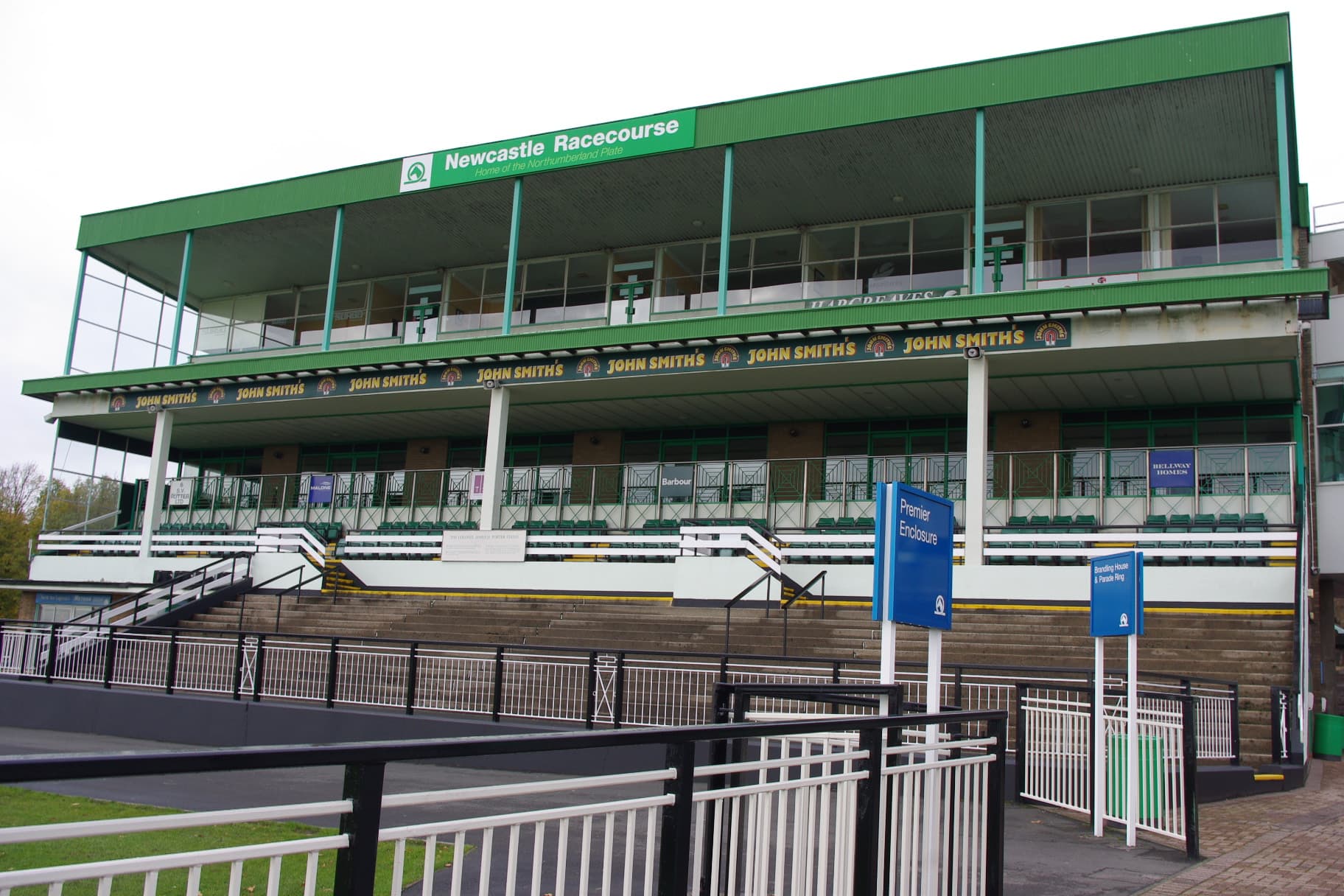
Alongside the track work, ARC invested in new facilities for racegoers. The main grandstand was rebuilt as a modern, multi-level structure with improved viewing, hospitality areas, restaurants and bars. The parade ring and winners' enclosure were redesigned, and the overall layout of the venue was rationalised to improve the raceday experience.
The new facilities represented a real step forward. The old grandstand, while cherished by regulars, had been showing its age for years. The replacement was functional, comfortable and offered significantly better viewing of both the Tapeta and turf tracks. The hospitality facilities in particular were transformed — the new Tapeta Restaurant and private box areas gave Newcastle a corporate entertainment offering that it had previously lacked, opening up revenue streams that the old facilities simply couldn't support.
The investment in facilities also improved the experience for ordinary racegoers. Better-designed bars, improved catering outlets, enhanced viewing from multiple levels, and proper covered areas for winter meetings all contributed to a raceday experience that was noticeably more comfortable than what had gone before.
National Hunt on Tapeta
One of the more innovative aspects of the redevelopment was the creation of a hurdle course on the Tapeta surface. This allowed Newcastle to stage National Hunt racing year-round, with the all-weather surface eliminating the ground concerns that plague winter jumps fixtures at other courses. Abandoned hurdle meetings due to frost or waterlogging — a familiar frustration at turf-based National Hunt venues — became a thing of the past at Gosforth Park.
The Fighting Fifth Hurdle was the flagship test of the new surface's credentials, and its continued success in attracting top-class hurdlers was important in demonstrating the viability of the concept. The race retained its Grade 1 status and its place in the November racing calendar, and the leading hurdling stables continued to target it. That endorsement from the sport's establishment was more valuable than any marketing campaign.
Becoming an All-Weather Hub
Through the late 2010s and into the 2020s, Newcastle established itself as one of the premier all-weather venues in Britain. Its wide, galloping track produced fair racing that attracted quality horses, and the course's role in the All-Weather Championships series gave it additional prominence during the winter months. Trial races for the Championships Finals Day at Lingfield made Newcastle a key staging post in the all-weather season.
Evening meetings under floodlights opened up a new social dimension. Summer evening cards became popular alternatives to the cinema or restaurant for people in the North East — two or three hours of live sport followed by a night out in Newcastle. Winter floodlit fixtures attracted a determined audience of punters and enthusiasts who appreciated the unique atmosphere of racing in the dark.
Newcastle in the Racing Hierarchy
The 2016 transformation and its aftermath repositioned Newcastle meaningfully in the British racing landscape. The course is now firmly in the tier below the sport's great venues — Ascot, Cheltenham, Newmarket, York, Goodwood — but clearly ahead of the modest tracks that form the sport's lower levels. It has two real signature races in the Plate and the Fighting Fifth, a year-round fixture list that provides consistent income and profile, and facilities that are among the best in the north of England.
The course's future looks more secure than at any point in its recent history. That security was bought at a price — the controversy of the Tapeta installation, the loss of some of the turf traditions, the debates about quality versus quantity that continue to this day. But the alternative to change was a slow decline that would have been far worse for racing in the North East. The transformation of 2016 may be the moment that saved Newcastle Racecourse.
Newcastle's Legacy
Newcastle Racecourse's legacy is inseparable from the identity of the North East itself. For nearly 150 years, Gosforth Park has been a gathering place, a stage for sporting drama and a connection to traditions that stretch back to the coal-mining communities who first made the Northumberland Plate their own.
A Regional Treasure
The course's importance to the North East goes beyond racing. It is the only racecourse in the region capable of hosting top-level flat and jumps racing — the nearest alternatives are Sedgefield, Hexham and Catterick, none of which stage racing at Newcastle's level. That means Gosforth Park carries the responsibility of representing the North East in the upper tiers of British racing, and it does so with the blend of warmth, grit and passion that characterises the region.
Plate day remains a real event in the North East calendar. It is one of those fixtures where the crowd isn't just there for the racing — they're there because it's Plate day, because their parents went and their grandparents went before them. That kind of deep-rooted loyalty is rare in modern sport and speaks to the course's embedded place in the community. When a racecourse can draw 15,000 people not because of a celebrity appearance or a music concert attached to the card but because the race itself matters to them — that is a real achievement.
The Pitmen's Derby Lives On
The Northumberland Plate's nickname — the Pitmen's Derby — has outlived the coal mines that gave it meaning. The last deep mines in the North East closed decades ago, but the spirit of the name endures. It represents a time when working people claimed a race as their own, and that sense of ownership persists. The Plate isn't an elite event dressed up for corporate entertainment — it's a people's race, and the crowd reflects that.
The survival of that identity through the economic transformation of the North East — the closure of the pits, the decline of heavy industry, the reshaping of communities that had defined themselves through work in coal and steel — is one of sport's more touching stories. The Pitmen's Derby outlasted the pitmen, which is a kind of testament to what sport can mean when it connects truly with the people it serves.
National Hunt Prestige
The Fighting Fifth Hurdle gives Newcastle a claim to National Hunt prestige that few courses outside the traditional strongholds of Cheltenham, Aintree and Kempton can match. Having a Grade 1 race on the calendar places Newcastle among the most important jumps venues in the country, and the roll call of Fighting Fifth winners — Night Nurse, Sea Pigeon, Katchit, Buveur D'Air — is a testament to the race's enduring status.
The Fighting Fifth is run in late November, which gives it an important role in the hurdling calendar. It is one of the first serious tests for the season's emerging hurdlers and a key indicator of likely form for the Champion Hurdle at Cheltenham in March. Trainers who send horses to the Fighting Fifth are making a public statement about their ambitions for the season, and the race consistently produces information that shapes ante-post markets for the rest of the winter.
The Trainers Who Made Newcastle Theirs
The succession of northern trainers associated with Newcastle — from Neville Crump and Gordon Richards of Greystoke in the mid-20th century through to modern practitioners like Keith Dalgleish, Michael Dods and Nicky Richards — represents a training tradition of real distinction. These men and their predecessors understood Gosforth Park intimately, knew how to prepare horses for its specific demands, and consistently outperformed market expectations with their local knowledge.
That tradition matters to the course's legacy because it gives Newcastle racing a character beyond the occasional big visitor from the south. The northern training community — Middleham, Carlisle, County Durham, the Cumbrian yards — gives Newcastle meetings a depth and texture that a course relying entirely on southern raiding parties could never achieve. When you watch a race at Gosforth Park and spot a horse from a Dalgleish or Dods string tackling a Mark Johnston or Richard Fahey runner, you are watching a contest between horses from different training traditions who understand the course from different angles. That pattern enriches the racing.
Innovation and Adaptation
Perhaps the most important aspect of Newcastle's legacy is its willingness to evolve. The move from Town Moor to Gosforth Park in 1882 was bold — it required significant capital investment and a confidence that the venture would attract enough support to survive. The decision to install a Tapeta surface in 2016 was even bolder — it required accepting the loss of some traditions in order to secure the future.
In both cases, the course took a calculated risk rather than accepting gradual decline. And in both cases, the risk paid off. That capacity for reinvention is Newcastle's defining characteristic. The course has never been content to stand still, and that restlessness has kept it relevant through periods when other northern venues have struggled or closed entirely.
British racing has lost many northern courses over the decades — venues that couldn't raise the investment to modernise, couldn't attract the fixtures to generate income, couldn't maintain the facilities to keep racegoers and owners and trainers coming back. Newcastle has watched those closures and drawn the lesson that standing still is the most dangerous option of all.
Racing's Role in the North East
Sport in the North East has always carried extra weight. The region's industrial heritage created communities with a passionate investment in their sports teams and occasions — an intensity born of hard lives and the need for release, celebration and shared experience. Newcastle United and Sunderland are the most visible expressions of this sporting intensity, but Gosforth Park has been part of the same story for 140-plus years.
Racing at Newcastle was never just about the racing. It was about the occasion — the chance to dress up, meet friends, have a drink, have a bet, share in something larger than individual experience. The social function of the racecourse was as important as the sporting one for much of the 20th century, and that social function has adapted but persisted through all the changes of the modern era.
The floodlit evening meetings attract a crowd looking for a social event as much as a sporting one. Plate day remains an occasion in the full sense — something you attend, not just watch. The Boxing Day meeting draws families for whom Gosforth Park is as much a part of Christmas as anything else. These are not racing crowds in the narrow sense. They are communities using the racecourse as their venue, which is exactly what it has always been.
Looking Ahead
Newcastle's future looks more secure than at any point in its modern history. The dual-surface facility gives it a unique offering in British racing, the fixture list is among the busiest in the country, and the course's central role in the all-weather programme guarantees a steady flow of quality racing.
The challenge going forward is maintaining the balance between commercial success and the traditions that make Newcastle special. The Plate must remain the Pitmen's Derby, not just another summer handicap. The Fighting Fifth must continue to attract the best hurdlers, not just the convenient ones. And Gosforth Park must remain a place where the people of the North East feel at home — because that connection, more than any surface or facility, is what makes Newcastle Racecourse worth preserving.
The history of Newcastle Racecourse is ultimately a history of a sporting institution that has earned its place in the affections of the region it serves — not through grand gestures or marketing campaigns but through consistent quality, a willingness to change when change was needed, and a respect for the traditions that give the place its meaning.
Share this article
More about this racecourse
All Newcastle guides
Northumberland Plate 2026: Tips, Odds & Pitmen's Derby
Get expert tips and best odds for Newcastle's famous staying handicap. History, past winners, and betting strategy for the Pitmen's Derby.
Read more
Trueshan at Newcastle: Conquering the Pitmen's Derby
Trueshan's 2022 Northumberland Plate under Hollie Doyle was one of the great weight-carrying performances in British flat handicap racing. The full story.
Read more
Fighting Fifth Day at Newcastle: The Complete Guide
Everything you need to know about Fighting Fifth Day at Newcastle — the north of England's premier jump meeting and home of the season's first major 2-mile hurdle championship. Racing card, atmosphere, tickets, travel and betting guide.
Read moreGamble Responsibly
Gambling should be entertaining and not seen as a way to make money. Never bet more than you can afford to lose. If you or someone you know has a gambling problem, help and support is available.