
Founder & Editor · Last reviewed 2026-03-02
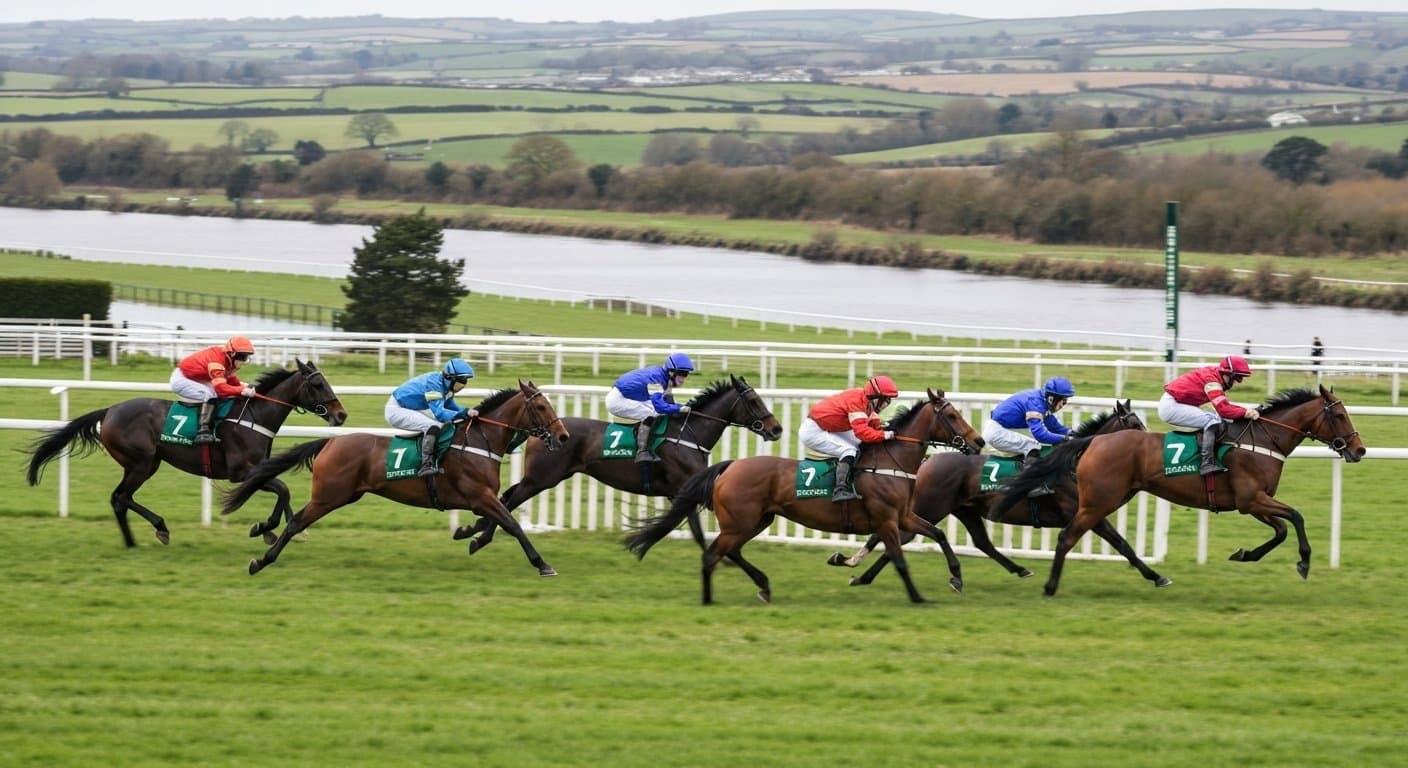
Newton Abbot is the tightest National Hunt circuit in the South West of England. The course measures approximately one mile round — smaller than Exeter, smaller than Taunton, and far removed from the galloping demands of Cheltenham or Sandown. That compactness shapes everything about how races are run here and what types of horses win.
The circuit is left-handed, flat, and triangular in shape. The bends are tight enough that horses racing wide lose significant ground on each turn. The home straight is short — approximately one and a half furlongs — which means races are effectively decided by the time horses round the final bend. A horse that arrives at the home turn in a good position is odds-on to finish there. A horse that needs to make up three lengths in the straight rarely manages it.
Paul Nicholls trains at Ditcheat, approximately 30 miles from Newton Abbot. He is the dominant force here, particularly in summer — sending horses to Newton Abbot for their first run of the season, their hurdling debut, or a prep race before bigger targets. His strike rate at Newton Abbot in most seasons exceeds 20%. Philip Hobbs operated from Minehead until his 2023 retirement, and his success here reflected a similar local targeting strategy. Local South West jockey Rex Dingle rides regularly at Newton Abbot and understands the course better than his market profile suggests.
Summer NH at Newton Abbot attracts modest-grade horses that specifically suit this type of tight, flat circuit. The race quality is generally Class 3 to Class 5. But the betting opportunities are real. The market for Newton Abbot cards is less efficiently priced than for prestige fixtures, and the edge available to a punter who understands the front-runner bias, the local trainer advantage, and the going preferences is measurable.
The field sizes at Newton Abbot run from six to fourteen runners. Novice hurdles in June and July often produce eight to ten starters — enough for a competitive race but not so many that traffic problems overwhelm tactical judgment. In larger-field handicap chases of twelve or more runners, the front-runner premium is diluted by the crowded first bend, and positional racing becomes more complex. Target races where the field is manageable and the pace scenario is clear.
The track is used year-round by local racing connections as a development venue. Point-to-point graduates step up to bumpers here, bumper horses have their hurdling debut, and novice chasers complete their chasing apprenticeship. The result is a fixture list that rewards tracking horses through their early careers at Newton Abbot — form from the course is self-referential in the best sense. A horse that won a bumper at Newton Abbot in May and returns for its hurdling debut in July is returning to a course it knows, on going it has already demonstrated it handles, with a yard that knows the course well.
This guide covers each of those elements. It is a practical betting resource for a course that rewards preparation.
Bet on Newton Abbot
Place your bets on Newton Abbot races with a trusted bookmaker.

Promo code BETFRED50. New customers only. Register, deposit with a Debit Card, and place a first bet of £10+ at Evens (2.0)+ on Sports, to be settled within 7 days, to get £30 in Sports Free Bets and £20 in Bet Builder Free Bets within 24 hours of settlement. 7-day expiry. Eligibility & payment exclusions apply. Full T&Cs apply. Take Time to Think. BeGambleAware.org. 18+. Full T&Cs.

Promo code R30. New UK customers only, 18+. Register, deposit £10 or more, then place a £10 single cash bet at odds of 1/2 (1.5) or greater on any sports market (excluding Virtuals). Once the qualifying bet settles you get £30 in Free Bets (3 x £10) — the qualifying bet can win or lose. Free Bets are valid on any sports market excluding Virtuals, expire in 7 days, are non-withdrawable and must be used in full. Excluded deposit methods apply (including PayPal, Apple Pay, Skrill and NETELLER). Named bets such as Lucky 15 do not qualify. If you cash out the qualifying bet, or it is voided, you are no longer eligible for the offer. Ends 31.12.26. Full T&Cs apply. Please gamble responsibly. BeGambleAware.org. 18+. Full T&Cs.

Promo code BET40GET20. New UK customers, 18+. Register with the code and place a first bet of £40 or more at Evens (2.0) or greater. Receive 2 × £10 free bets: the first credited automatically once the qualifying bet settles, the second 24 hours later. Free bets must be placed at minimum odds of 4/1 (5.0), expire 24 hours after credit, and the free-bet stake is not returned with winnings. Debit card deposits only. Take Time to Think. BeGambleAware.org. 18+. T&Cs apply. Full T&Cs.

50% of your first-day net losses refunded as a free bet, capped at £25. New UK customers aged 18+ only. To qualify, deposit and place a first bet of £10 or more on any sport at minimum odds of evens (2.00), then place at least two further bets on different events, each worth at least 50% of your largest bet, all at evens (2.00) or greater. Losses are counted from your first settled bet until 23:59 the same day. Place a qualifying £10+ bet and you are guaranteed at least a £5 free bet. Bets placed at SP, void bets, cashed-out bets and bets struck with free bets do not count towards the offer. The free bet is credited the day after your qualifying bets settle and must be used within 7 days, after which it expires. It can be used at odds from 1/4 (1.25) up to 250/1 on singles and straight accumulators, but not on Trixie, Patent or Yankee style multiples. Free-bet stake is not returned with winnings. One offer per person, household, address, IP address and device. E-wallet deposits may not qualify, so check the cashier before depositing. Customers registered with GAMSTOP cannot claim. KYC identity verification must be completed before the free bet is credited. Take Time to Think. BeGambleAware.org. 18+. T&Cs apply. Full T&Cs.

New customers, 18+. Choose the sports bonus at sign-up, make a first deposit and receive a 100% bonus up to £50 in your Sports Bonus balance. To convert the bonus to cash, wager it 10x within 30 days. Single bets below Evens (2.00) do not qualify; accumulators do not qualify if any selection is below 1/2 (1.50). Virtual Sports, voided, cancelled, drawn, cashed-out and free-bet wagers do not count towards wagering. Only the first settled bet per event counts. Withdrawing before the wagering requirement is met forfeits the bonus balance including bonus winnings. Real-money funds are used before bonus funds. Deposits via Skrill or Neteller are not eligible. Not valid in conjunction with other promotions. Odds, bet and payment limits apply. 10bet general and promotion T&Cs apply. BeGambleAware.org. 18+. Full T&Cs.

New customers in Great Britain and Republic of Ireland, 18+. Place a £10 fixed-odds qualifying bet at minimum odds of 1/2 (1.50) — single or each-way (only the win part counts), pre-event or in-play, not cashed out early, within 28 days of opening the account. Receive up to £60 in bonuses credited over three days: 3 × £10 fixed-odds free bets (the first on settlement, then 24 and 48 hours later) plus 3 × £5 Total Goals FOOTBALL spread bets and 3 × £5 racing Winning Favourites spread bets, with a £1 racing Race Index spread bet as an extra on top. The spread bets need a full spread-betting account, opened within 28 days of the fixed-odds account and subject to Spreadex's eligibility and appropriateness checks. Free-bet stakes not returned with winnings; free bets valid 28 days from issue. IMPORTANT: the £5 credits are SPREAD bets — sports spread betting carries the risk that losses can exceed your stake. Sports spread-betting customers do not have Financial Ombudsman or FSCS recourse. Take Time to Think. BeGambleAware.org. 18+. T&Cs apply. Full T&Cs.

Promo code WELCOME15, entered under My Bonuses after registering. New UK customers, 18+. Place a first qualifying bet of at least £10 from your cash balance at odds of evens (2.0) or greater within 7 days of opening the account. Once the qualifying bet fully settles you receive £15 in free bets, credited as 3 x £5 tokens with set uses: one £5 accumulator free bet (minimum 4 legs, each leg at 2/5 or bigger), one £5 sports free bet (any market at evens or bigger) and one £5 Sub Cover free bet (selected football player markets at evens or bigger). Free-bet stakes are not returned with winnings. Free bets expire 7 days after they are credited. Void, cashed-out and partially cashed-out bets do not qualify. One offer per customer. Confirm the current terms on BetGoodwin's own welcome-offer page before claiming. Take Time to Think. BeGambleAware.org. 18+. T&Cs apply. Full T&Cs.

New UK customers, 18+. Minimum deposit £10. Place a £10 qualifying single on sports (excluding virtuals) at minimum odds of 1/2 (1.50), settled within 14 days. Deposit-method exclusions apply. Receive £30 in free bets (stake not returned), split £20 for sportsbook use (2 x £10) and £10 for Bet Builder only (2 x £5); Bet Builder does not cover horse racing. Free bets must be accepted within 7 days and expire 7 days after acceptance. No promo code required. Best Odds Guaranteed on UK & Irish racing, subject to having staked over £25 in the previous seven days. Operated by LiveScore Betting and Gaming (Gibraltar) Ltd, UKGC 56859. Confirm the current terms on LiveScore Bet's own promotions page before claiming. Take Time to Think. BeGambleAware.org. 18+. T&Cs apply. Full T&Cs.
18+. BeGambleAware.org
Track Characteristics
Newton Abbot's circuit is left-handed, roughly triangular, and measures approximately one mile round — making it one of the smallest National Hunt circuits in England. The track is essentially flat with no significant undulations. There are three distinct turns: the first after the home straight, then two more as the course bends back toward the home straight through the far side. The final turn is where races are frequently decided.
The Final Bend
The turn into the home straight at Newton Abbot is sharper than it appears on a course map. Horses arriving at that bend wide or off the pace must cover extra ground at exactly the point when they need to accelerate. A horse on the inside rail entering the home turn with a length's advantage can maintain that advantage through the straight simply by occupying the rail. A horse three lengths back on the outside of that bend needs to find an extra four or five lengths of actual effort to compensate.
This geometric reality makes position in the race far more important at Newton Abbot than at galloping courses where a horse has three or four furlongs to make up ground. The short home straight of approximately one and a half furlongs does not provide enough distance for dramatic finishes from the back of the field. Most races here are decided between the last fence and the home bend, not in the short run to the line.
Front-Runner Dynamics
The tight circuit creates a structural premium for horses that race prominently. A horse leading at the top of the home straight has to be out-jumped or overtaken in one and a half furlongs. On flat ground with no uphill finish — unlike Wincanton or Exeter — there is no geographical mechanism to expose a front-runner that has gone too fast. The front-runner at Newton Abbot simply has to keep jumping and keep galloping for one and a half furlongs. Most of them do.
Statistics consistently confirm this: horses that race in the first two at the final bend win at Newton Abbot at well above the national NH average rate. Horses that are more than four lengths off the pace at the final turn are statistical underdogs regardless of their official rating.
Comparing Newton Abbot to Exeter
Exeter is the obvious local comparison. Exeter is right-handed and undulating, with an uphill finish at 850 feet elevation. Newton Abbot is left-handed and flat, at approximately 20 feet. The tests are completely different. A horse that thrives at Exeter — grinding up the hill, rewarding stamina — may find Newton Abbot's flat, tight circuit either too easy or too awkward. Form transfer between the two courses is unreliable. Treat them as entirely separate venues.
Taunton and Fontwell are better stylistic comparisons — courses where the racing is tactical, the circuits are compact, and the home straight is short. Form from those courses transfers reasonably well.
Fences and Hurdles
Newton Abbot's fences are described as fair. They are not known as particularly stiff or demanding. A horse that jumps adequately at other NH venues will not encounter specific problems at Newton Abbot's fences. The key jumping requirement here is consistency of approach on the final bend — horses that hesitate or lose rhythm at the fence immediately before the home turn can lose position at the exact moment it matters most.
Distance Configuration
Races at Newton Abbot range from two miles to three miles one furlong. The majority of fixtures fall between two miles and two miles six furlongs. At two miles, the race is essentially a sprint by NH standards — one circuit with pace dominating. At three miles, the stamina test is modest by NH standards given the flat terrain, but the cumulative effect of multiple tight bends tires horses more than the flat distance alone suggests.
Going & Draw Bias
Newton Abbot runs from April to September, which means the going is predominantly fast by National Hunt standards. Good to Firm and Good are the typical descriptions through June and July. The course is built on clay-based soil that retains moisture longer than chalk-based courses, which can cause the going to ease more quickly after rain than at sites like Wincanton on the Mendip chalk. But through the core summer months, the ground dries reliably and Good to Firm is common.
Good to Firm and Good — The Core Conditions
These two descriptions cover the vast majority of Newton Abbot fixtures from April through August. On Good to Firm, the flat circuit produces quick racing. Fast-ground specialists from the South West yards — horses that have won on similar conditions at Stratford or Worcester — carry form directly.
Horses that have only shown their best form on Soft or Heavy ground should be treated with considerable caution at Newton Abbot in summer. There is no guarantee the ground will ease, and the course's clay base, while retentive, is not sufficient to produce Heavy going without sustained rainfall during a period when summer highs are typically drying the surface daily.
Late Season Going Changes
September meetings at Newton Abbot introduce more variability. If August and early September have been wet, the ground can ease to Good to Soft or even Soft for the final meetings of the season. This change can significantly alter the competitive balance. Horses that have been racing on fast ground all summer may not stay in top form when the ground eases. Conversely, horses returning from a summer break specifically for late-season meetings sometimes suit the softer conditions.
The most reliable strategy is to check the going description on the morning of each September fixture and reassess the field based on known going preferences. Do not assume continuity from August form if the going description has changed by more than one category.
Rain Events
Newton Abbot's clay soil means that heavy rainfall in the 24 hours before a meeting can drop the going from Good to Good to Soft or Soft within a short window. The official going is updated by the BHA going stick on race morning. For betting on midweek fixtures, check the going update at approximately 8am before placing any bets on summer races where going preferences might be decisive.
Draw Analysis
Draw bias in the strict sense does not apply to National Hunt racing, which does not use numbered starting stalls. However, the starting position in a jump race can have some bearing on how quickly a horse reaches the first fence. At Newton Abbot, the triangular circuit means the shortest route to the first fence runs along the inner part of the course. Horses that start on the inner have marginally less ground to cover to the first fence.
In practice, this matters most in two-mile races with large fields where the positioning at the first fence can affect rhythm through the first turn. In smaller fields of eight or fewer, the starting position effect is negligible.
Form Transfer
The most transferable going conditions for Newton Abbot are Good and Good to Firm from other summer NH courses. Stratford on Good to Firm, Worcester on Good, and Uttoxeter on Good to Soft all produce form that translates reasonably well to Newton Abbot in similar conditions.
Form from winter NH meetings on testing ground at Cheltenham, Haydock, or Aintree should be treated with caution for Newton Abbot summer appearances. The surface differential between Heavy in January and Good to Firm in July is large enough to make a horse's winter form essentially irrelevant as a direct comparison.
Irish-trained horses at Newton Abbot are worth examining carefully. Ireland's summer NH schedule produces races on similar going, but Irish horses can be unfamiliar with the specific tight-circuit demands of Newton Abbot. Their fitness levels may be fine, but the tactical adjustments required at a one-mile circuit are different from what many Irish summer NH horses encounter at home.
Key Trainers & Jockeys
The trainers who dominate at Newton Abbot share two characteristics: they know the course's tight, tactical nature and they specifically target it for horses that suit fast summer ground. Understanding which yards exploit the track — and which are simply filling runner slots on a summer Tuesday — is the most productive form-reading exercise for Newton Abbot.
Paul Nicholls
Paul Nicholls is Newton Abbot's most important trainer. He trains at Manor Farm Stables in Ditcheat, approximately 30 miles east of the course, and he has used Newton Abbot as a summer preparation track for his horses throughout his career. His strike rate at Newton Abbot typically exceeds 20%, and in seasons when his stable is at peak strength the rate is higher.
The Nicholls pattern at Newton Abbot is well-established. He sends horses here for their first run of the summer season — horses returning from a break, horses beginning their chasing career, horses that need a confidence run before bigger targets. These runners are fit, well-prepared, and running on a course that is easier to win on than the Grade 1 venues Nicholls normally targets. When a Nicholls horse runs at Newton Abbot at 2/1 in a Class 3 novice hurdle in June, it is often a solid favourite to beat local opposition.
Philip Hobbs
Philip Hobbs trained at Minehead in Somerset until his retirement in 2023 and was Nicholls's nearest local rival at Newton Abbot. His horses consistently suited the flat summer ground and the tight circuit. Since Hobbs's retirement, some of his former owners have moved horses to other South West yards including Harry Fry and Michael Scudamore.
David Pipe
David Pipe trains at Nicholashayne near Wellington in Devon. His horses suit summer NH conditions and he targets Newton Abbot regularly. Pipe's runners in handicap chases and hurdles — particularly those that have shown form at tight, flat NH circuits before — are worth consistent attention.
Rex Dingle
Rex Dingle is the most productive jockey at Newton Abbot among South West-based riders. He is not as prominent in national media coverage as jockeys from major yards, which means his name in a card can be underappreciated by punters approaching the race from a national perspective. Dingle has ridden hundreds of winners at Newton Abbot and understands the course's tactical demands — specifically, when to commit for position heading into the final bend and when to hold ground.
When Dingle rides a horse for a local yard at Newton Abbot in a race that is not an obvious target for a major trainer, his course knowledge represents real edge. A horse at 7/2 with Dingle in the saddle for a Pipe or comparable yard is frequently underpriced.
Tom Scudamore
Tom Scudamore is the retained jockey for David Pipe and rides regularly at Newton Abbot. His record at the course is consistent with his general NH ability — he understands the front-runner dynamics and tends to get his horses into the right position before the final bend.
Harry Cobden
Harry Cobden rides Nicholls's runners at Newton Abbot when the stable targets specific races. When Cobden is booked for a Nicholls horse at Newton Abbot, the combination is effectively a market signal — Cobden's time at Newton Abbot is limited, and his presence on a specific horse indicates the yard's intention.
Jockey Booking Signals
At Newton Abbot, jockey bookings carry useful information precisely because the course is below the prestige threshold where the leading jockeys routinely appear. When a jockey like Cobden or Harry Skelton appears at Newton Abbot, they are there for a specific reason. Any Cobden-ridden Nicholls horse at Newton Abbot is worth backing at most prices below 2/1.
Betting Strategies
The Front-Runner and Prominent Racer Strategy
Newton Abbot's short home straight and tight final bend make it one of the most front-runner-friendly NH courses in England. The strategy is simple: in every Newton Abbot race, identify the horse most likely to lead or race in the first two. If that horse has course form, good-ground ability, and is trained by a local or targeting yard, it is a strong selection regardless of market position.
The most useful evidence for a front-runner at Newton Abbot is previous performance at a similar tight course. Form from Fontwell (right-handed, compact circuit), Stratford (left-handed, flat, short straight), and Cartmel (tight oval) transfers well. A horse that led or raced in the first two at those courses and produced a decent performance is likely to replicate that behaviour at Newton Abbot.
Horses that need a true gallop — those that come from the back of the field and require pace to be set for them — are structural underdogs at Newton Abbot. Identify them before betting and avoid backing them at short prices.
The Nicholls Summer Preparation Play
When Paul Nicholls sends a runner to Newton Abbot in June or July that is either having its first run of the season or making its debut in a new category (first hurdle, first chase), back it at most prices up to 11/8. The horse is fit, the race is specifically targeted, and the opposition in summer NH Class 3 and Class 4 events at Newton Abbot rarely includes horses of equivalent class from comparable yards.
The edge diminishes when Nicholls runs a horse that has had two or three consecutive runs earlier in the season with declining form. In those cases, the horse may be over-raced rather than peaking, and the summer appearance is more about management than winning intent.
Course Form Repeater
Previous Newton Abbot wins are the strongest positive indicator at this course. The tight circuit creates a specific test that suits certain horses, and those horses tend to come back and win here again. Before every Newton Abbot card, check each runner's form specifically for Newton Abbot results. A horse that won here twice before on Good to Firm ground is far more likely to win again on similar conditions than its official rating alone suggests.
Particularly in handicap chases, where horses have been assigned ratings based on performances at other courses, a Newton Abbot course specialist may be racing off a mark that was set by runs elsewhere that underestimate its specific ability here. These horses produce some of the best each-way value at Newton Abbot.
Pace Scenario Mapping
Before each race, map the pace scenario. Identify the likely front-runner, the likely hold-up horses, and the horses likely to race in between. If a race has no obvious front-runner — where two or three horses have a preference for prominent racing — then the first stages of the race will be physically demanding for those early movers, and a stalker sitting in third or fourth might be able to pick them off in the straight.
When there is a single obvious front-runner with no competition for the lead, that horse should be significantly overweighted in your assessment relative to its market price. Lone front-runners at tight NH circuits are consistently underrated by betting markets.
Avoiding Irish Raider Traps
Irish-trained horses at Newton Abbot can be tempting when they arrive with strong form lines. But Irish summer NH circuits tend to be larger and more galloping than Newton Abbot. A horse that has won at Tipperary or Killarney on a right-handed track with a long straight may not adapt immediately to the left-handed, tight bends of a one-mile circuit in Devon. The first appearance of an Irish raider at Newton Abbot is worth discounting slightly compared to what their form suggests. On a second or third appearance here, the adaptation factor is diminished and their form can be taken more at face value.
To compare place terms and each-way promotions across the major bookmakers, see our best bookmakers for horse racing guide.
Key Races to Bet On
Newton Abbot's race programme is built around summer NH fixtures at Class 2 to Class 5. The course does not host Grade 1 or Grade 2 racing, but it stages several competitive Class 2 races that attract real quality and reward careful research.
Newton Abbot Handicap Chase
The Newton Abbot Handicap Chase — the course's flagship race, run over two miles five furlongs in late August — is the highest-profile betting race on the calendar. It attracts well-handicapped chasers from across the South West and occasionally national-calibre horses that trainers want to run under competitive conditions before the Hennessy-targeted season begins.
The race consistently rewards horses with previous Newton Abbot course form. The combination of the tight circuit, good summer ground, and competitive field of nine to fourteen runners makes the each-way market productive at prices of 6/1 and above. Paul Nicholls has won this race multiple times. When he targets it with a horse that has prior Newton Abbot experience, it becomes the primary selection in the race.
Summer Novice Hurdle Series
Newton Abbot stages a sequence of novice hurdles through June, July, and August. These races function as the hurdling debuts or early-season preparations for horses from leading yards. A Nicholls or Pipe novice having its first or second hurdle run here is frequently the shortest price in the field and frequently wins.
The betting approach for these races is straightforward: back the top-yard runner at any price under 9/4. Avoid the race if no top-yard runner is present — the form among local opposition horses in summer novice hurdles at Newton Abbot is unreliable as a form indicator for anything beyond the course itself.
Ladies Day and July Festival Cards
Newton Abbot stages a Ladies Day card and a July festival meeting that are the course's highest-attendance events. These cards include the strongest fields of the season. The front-runner bias remains operative throughout, and the competitive fields create real each-way betting opportunities in handicap chases.
Target the feature handicap chases on these cards rather than the novice events. The handicap fields include horses with form at other major venues that can be directly compared, making assessment more reliable than in novice races where form is sparse.
Local Derby Races
Certain races at Newton Abbot carry an informal local derby status — contests between horses from the Nicholls, Pipe, and Hobbs yards that produce close betting markets and real quality. These races are valuable because the market tends to split fairly between the top two or three, creating each-way value on the third or fourth in the market. In a six-runner race where three top-yard horses are all priced between 5/4 and 3/1, the horse that gets the best position at the final bend tends to win regardless of form.
Share this article
More about this racecourse
All Newton Abbot guides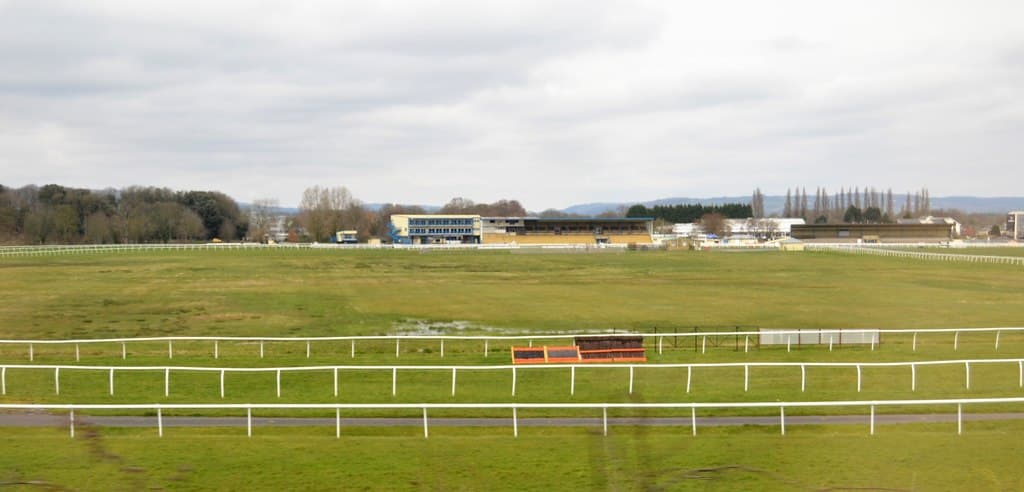
Newton Abbot Racecourse: Complete Guide
Newton Abbot Racecourse guide: Devon's summer jumping venue, the Aubrey Loze Memorial Handicap Hurdle, and over 150 years of National Hunt racing.
Read more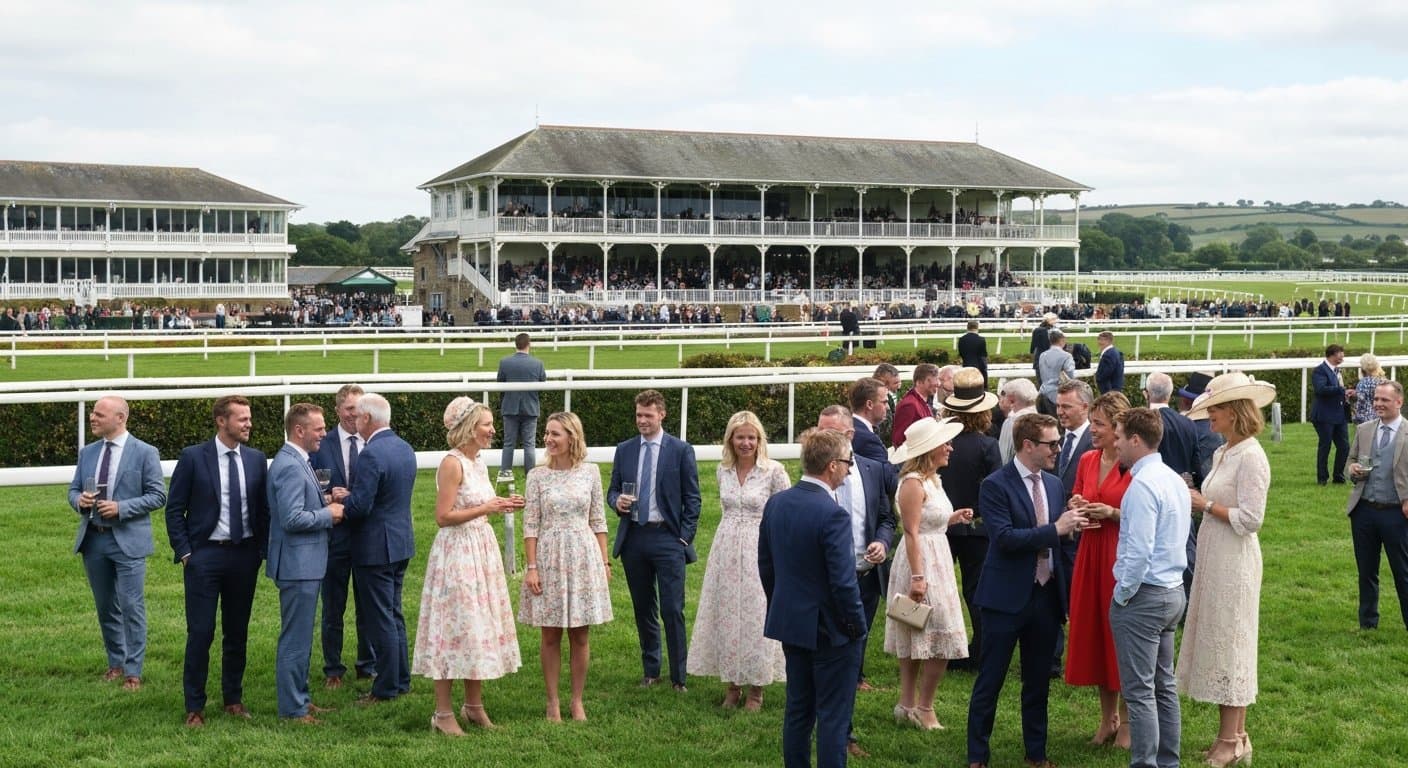
A Day Out at Newton Abbot Racecourse
Everything you need for a day at Newton Abbot — getting there, what to wear, enclosures, food and drink, and insider tips for Devon's summer jumping venue.
Read moreNewton Abbot Festival Guide
Your complete guide to Newton Abbot Racecourse — the summer jump season, the Devon & Exeter connection and what makes this South Devon track the heartland of west-country jump racing.
Read morePhotos on this page are used under Creative Commons licences. Titles, sources and licence links for each one are on our image credits page.
Research the field with the AI Race Predictor
Our model publishes calibrated win-probability estimates for UK races — a second opinion to understand a race, not tips. It's open about its record: it doesn't beat the market, and we show exactly how it does.
Work it out & learn the basics
Gamble Responsibly
Gambling should be entertaining and not seen as a way to make money. Never bet more than you can afford to lose. If you or someone you know has a gambling problem, help and support is available.