
Founder & Editor · Last reviewed 2026-04-07
Introduction to Newton Abbot Racecourse
Newton Abbot is the southernmost jump racecourse in England — a flat, left-handed oval set in the South Devon countryside, staging summer National Hunt racing from May through October and serving as the definitive centre of jump racing for Devon, Cornwall and the wider south-west peninsula. There is no flat racing here, no all-weather track, no attempt to diversify the programme away from its core identity. Newton Abbot is a summer jump venue, and it does that single thing with a consistency and quality that has sustained its reputation for well over a century.
The course's relationship with Devon is fundamental to understanding what Newton Abbot is. Exeter Racecourse, seventeen miles to the north, handles the winter jump programme for the county and stages some of the most competitive National Hunt racing in the south-west from October through April. Newton Abbot picks up where Exeter leaves off, taking over in May when the winter circuit winds down and providing the region with uninterrupted jump racing through the summer months. The two courses are effectively partners in a year-round south-west jump programme, and regular racegoers often follow horses across both venues through the changing seasons.
The track itself is flat and left-handed — as straightforward in profile as jump tracks come. There are no significant undulations, no sharp bends that catch out less manoeuvrable horses, and no dramatic changes in gradient that would test stamina beyond what the race distance itself provides. What the Newton Abbot circuit does demand, particularly in July and August, is adaptability to firm ground. The South Devon climate is the warmest and driest in mainland England, and summer ground at Newton Abbot can be genuinely quick — good to firm and occasionally firmer than that. A horse that has spent the winter jumping on heavy ground in Ireland or the north of England will not automatically take to firm Devon turf in high summer; there are specific physical types that handle fast summer jumping, and recognising them is one of the core skills of betting at this course.
The town-racecourse relationship at Newton Abbot is one of the closest in British racing. Newton Abbot station is genuinely five minutes' walk from the track's entrance — a distinction the course shares with very few venues in Britain. Trains from Plymouth (twenty-five minutes) and Exeter (fifteen minutes) make pre-racing travel straightforward, and the town itself offers pub and café options within easy reach of the gates. Devon's tourism economy means that the August Bank Holiday meeting draws a crowd that combines serious racing fans with holiday-making families, and the atmosphere at that particular fixture has a warmth and informality that sets it apart from the more intensely form-focused early-season cards.
Philip Hobbs, whose Minehead stables lie within comfortable striking distance of Newton Abbot, has historically been one of the course's most important trainers. His ability to produce summer-ready jump horses in good condition accounts for a consistent strike rate at the venue. Local Devon-based trainers — smaller yards compared to the Somerset and Gloucestershire powerhouses, but intimate in their knowledge of local tracks and local going conditions — contribute a significant share of the field for most cards. The influence of these local connections, particularly at smaller summer meetings where major northern and Midlands yards may not travel, creates a betting landscape where local form is disproportionately valuable.
Bet on Newton Abbot
Place your bets on Newton Abbot races with a trusted bookmaker.

Promo code BETFRED50. New customers only. Register, deposit with a Debit Card, and place a first bet of £10+ at Evens (2.0)+ on Sports, to be settled within 7 days, to get £30 in Sports Free Bets and £20 in Bet Builder Free Bets within 24 hours of settlement. 7-day expiry. Eligibility & payment exclusions apply. Full T&Cs apply. Take Time to Think. BeGambleAware.org. 18+. Full T&Cs.

Promo code R30. New UK customers only, 18+. Register, deposit £10 or more, then place a £10 single cash bet at odds of 1/2 (1.5) or greater on any sports market (excluding Virtuals). Once the qualifying bet settles you get £30 in Free Bets (3 x £10) — the qualifying bet can win or lose. Free Bets are valid on any sports market excluding Virtuals, expire in 7 days, are non-withdrawable and must be used in full. Excluded deposit methods apply (including PayPal, Apple Pay, Skrill and NETELLER). Named bets such as Lucky 15 do not qualify. If you cash out the qualifying bet, or it is voided, you are no longer eligible for the offer. Ends 31.12.26. Full T&Cs apply. Please gamble responsibly. BeGambleAware.org. 18+. Full T&Cs.

Promo code BET40GET20. New UK customers, 18+. Register with the code and place a first bet of £40 or more at Evens (2.0) or greater. Receive 2 × £10 free bets: the first credited automatically once the qualifying bet settles, the second 24 hours later. Free bets must be placed at minimum odds of 4/1 (5.0), expire 24 hours after credit, and the free-bet stake is not returned with winnings. Debit card deposits only. Take Time to Think. BeGambleAware.org. 18+. T&Cs apply. Full T&Cs.

50% of your first-day net losses refunded as a free bet, capped at £25. New UK customers aged 18+ only. To qualify, deposit and place a first bet of £10 or more on any sport at minimum odds of evens (2.00), then place at least two further bets on different events, each worth at least 50% of your largest bet, all at evens (2.00) or greater. Losses are counted from your first settled bet until 23:59 the same day. Place a qualifying £10+ bet and you are guaranteed at least a £5 free bet. Bets placed at SP, void bets, cashed-out bets and bets struck with free bets do not count towards the offer. The free bet is credited the day after your qualifying bets settle and must be used within 7 days, after which it expires. It can be used at odds from 1/4 (1.25) up to 250/1 on singles and straight accumulators, but not on Trixie, Patent or Yankee style multiples. Free-bet stake is not returned with winnings. One offer per person, household, address, IP address and device. E-wallet deposits may not qualify, so check the cashier before depositing. Customers registered with GAMSTOP cannot claim. KYC identity verification must be completed before the free bet is credited. Take Time to Think. BeGambleAware.org. 18+. T&Cs apply. Full T&Cs.

New customers, 18+. Choose the sports bonus at sign-up, make a first deposit and receive a 100% bonus up to £50 in your Sports Bonus balance. To convert the bonus to cash, wager it 10x within 30 days. Single bets below Evens (2.00) do not qualify; accumulators do not qualify if any selection is below 1/2 (1.50). Virtual Sports, voided, cancelled, drawn, cashed-out and free-bet wagers do not count towards wagering. Only the first settled bet per event counts. Withdrawing before the wagering requirement is met forfeits the bonus balance including bonus winnings. Real-money funds are used before bonus funds. Deposits via Skrill or Neteller are not eligible. Not valid in conjunction with other promotions. Odds, bet and payment limits apply. 10bet general and promotion T&Cs apply. BeGambleAware.org. 18+. Full T&Cs.

New customers in Great Britain and Republic of Ireland, 18+. Place a £10 fixed-odds qualifying bet at minimum odds of 1/2 (1.50) — single or each-way (only the win part counts), pre-event or in-play, not cashed out early, within 28 days of opening the account. Receive up to £60 in bonuses credited over three days: 3 × £10 fixed-odds free bets (the first on settlement, then 24 and 48 hours later) plus 3 × £5 Total Goals FOOTBALL spread bets, 3 × £5 racing Winning Favourites spread bets and a £1 racing Race Index spread bet (the spread bets need a full spread-betting account). Free-bet stakes not returned with winnings; free bets valid 28 days from issue. IMPORTANT: the £5 credits are SPREAD bets — sports spread betting carries the risk that losses can exceed your stake. Sports spread-betting customers do not have Financial Ombudsman or FSCS recourse. Take Time to Think. BeGambleAware.org. 18+. T&Cs apply. Full T&Cs.

Promo code WELCOME15, entered under My Bonuses after registering. New UK customers, 18+. Place a first qualifying bet of at least £10 from your cash balance at odds of evens (2.0) or greater within 7 days of opening the account. Once the qualifying bet fully settles you receive £15 in free bets, credited as 3 x £5 tokens with set uses: one £5 accumulator free bet (minimum 4 legs, each leg at 2/5 or bigger), one £5 sports free bet (any market at evens or bigger) and one £5 Sub Cover free bet (selected football player markets at evens or bigger). Free-bet stakes are not returned with winnings. Free bets expire 7 days after they are credited. Void, cashed-out and partially cashed-out bets do not qualify. One offer per customer. Confirm the current terms on BetGoodwin's own welcome-offer page before claiming. Take Time to Think. BeGambleAware.org. 18+. T&Cs apply. Full T&Cs.

New UK customers, 18+. Minimum deposit £10. Place a £10 qualifying single at minimum odds of 1/2 (1.50), settled within 14 days. Receive £30 in free bets (stake not returned), split £20 for sportsbook use (2 x £10) and £10 for Bet Builder only (2 x £5); Bet Builder does not cover horse racing. Free bets must be accepted within 7 days and expire 7 days after acceptance. No promo code required. Best Odds Guaranteed on UK & Irish racing, subject to having staked over £25 in the previous seven days. Operated by LiveScore Betting and Gaming (Gibraltar) Ltd, UKGC 56859. Confirm the current terms on LiveScore Bet's own promotions page before claiming. Take Time to Think. BeGambleAware.org. 18+. T&Cs apply. Full T&Cs.
18+. BeGambleAware.org
Day-by-Day Guide
Newton Abbot Festival Calendar: Day by Day
Newton Abbot's racing year is elegantly simple: summer jump racing from May through October, with no winter programme and no flat racing. Within that focused window, the season has five distinct phases that build from the opening spring cards through to the September and October finale before the course hands over to Exeter for the winter.
May Opening: The Summer Jump Season Begins
Newton Abbot's season opens in May, typically in the first or second week, and the opening card draws a crowd with genuine anticipation. For the south-west jump community, the Newton Abbot opening means that summer racing has arrived — that the long winter of Exeter cards and occasional trips to Taunton is over, and that the specific pleasures of summer jumping in Devon are available again.
The May opening cards attract horses in two broad categories. First, there are horses completing spring campaigns after the winter season — fit, sharp and looking for one more run before a summer break. Second, there are horses specifically aimed at a summer campaign, trained to hit peak condition on firm Devonshire ground. The second group is the more interesting form-wise; May runners at Newton Abbot who handle the track well, jump cleanly and show enthusiasm on good spring ground are frequently the horses to follow through the summer.
Going in May varies depending on whether the spring has been wet or dry. Some years the May opening is held on ground no firmer than good; in a dry spring it can already be good to firm. The distinction matters significantly for race planning, and trainers check the going carefully before committing summer jumpers to what can occasionally become sharp conditions even in the first month of the season.
June and July Main Summer Series: Peak Season
The months of June and July are the heart of Newton Abbot's season. Competitive handicap chases and hurdles run on going that is typically good to firm, field sizes are healthy, prize money is at its most attractive, and the combination of warm Devon weather and competitive racing draws the largest regular crowds of the year.
The summer jump specialists are at their peak through June and July. Horses that have been specifically prepared for this type of racing — often lighter, quicker types than the heavy winter chasers — arrive in good order, and the racing has a crispness that reflects the ground conditions. The sprint-style jumping that firm ground demands — horses jumping flat and quickly rather than high and scopey — is more evident here than at any point in the winter programme.
Philip Hobbs regularly targets the June and July meetings with multiple runners, and his record in this period reflects the proximity of his yard to the course and the care with which his team prepares summer jumpers. Lesser-known Devon and Somerset trainers also contribute significantly — yards that are small by national standards but local in knowledge and consistent in their Newton Abbot results.
August Bank Holiday Festival: The Showpiece
The August Bank Holiday meeting is Newton Abbot's most important race day, full stop. Attendance at the Bank Holiday meeting is substantially higher than any other fixture in the Newton Abbot year, driven by the collision of a public holiday, peak Devon tourism and competitive racing. The grandstand and lawns are full; the car parks fill early; and the atmosphere has a warmth and energy that is specific to this meeting.
The Bank Holiday programme is the strongest of the summer — the best prize money, the most prestigious races, and consequently the highest quality fields. Earlier versions of this page named a Newton Abbot Summer Chase here. There is no such race. The course's feature is the Aubrey Loze Memorial Handicap Hurdle, a Class 2 handicap hurdle over 2m 5f 122y run on a Saturday in late August rather than on the bank holiday Monday, and it draws the course's summer specialists alongside ambitious visitors from further afield. Novice chases run concurrently for horses gaining experience in competitive summer conditions.
The casual holiday racegoer is very much in evidence at the Bank Holiday meeting — Devon hotels and holiday parks send guests towards Newton Abbot, tourist information boards mention the meeting, and the resulting crowd includes people who are experiencing a race meeting for the first time or the first time in years. For regular form students, this creates a betting landscape where the tote pools are larger and the market is occasionally moved by non-form-based money, which can create value.
September Championships: Late-Season Competition
September brings the late-season Newton Abbot series finals — a period when the horses that have been building form through June, July and August reach the peak of their summer campaigns. Championship races over sprint and staying distances bring together the summer's best performers for end-of-season deciders, and the form from these meetings often provides the most reliable information about how summer specialists will perform in the autumn.
The going in September is typically good to soft — summer dryness beginning to ease with the first autumn rains, giving the ground a more forgiving quality that suits horses who have been working on firmer ground through high summer. The slightly easier ground opens the September programme to a broader range of horses, and the fields are often the most competitively mixed of the year.
October Finale: Handing Over to Exeter
The final Newton Abbot cards in October have an end-of-season character that is quite distinct from any other time in the summer programme. The last horses of summer — some still in good form, some beginning to tire after long campaigns — run out their seasons, and the closing of Newton Abbot signals the beginning of the proper winter jump season across Britain.
Exeter Racecourse picks up the Devon jump programme in November, and there is a conscious continuity between the two courses — horses that have been racing at Newton Abbot through the summer often reappear at Exeter in the autumn, providing direct form lines between the seasons. The October finale at Newton Abbot is the last chance to see summer specialists in their natural habitat before the longer distances and heavier ground of winter change the competitive landscape entirely.
Key Races to Watch
Key Races at Newton Abbot
An earlier version of this section named four races that do not exist. There is no Newton Abbot Summer Chase, no Devon Trophy, no Novice Chase Summer Series and no West Country Chase Final. Each came with a month, a distance, a going preference and trainer angles, and none of them could be traced to a racecard or a result.
Newton Abbot's Wikipedia article does not name a single race: its notable-races field is empty. What follows is what the course and the results archives actually record.
Aubrey Loze Memorial Handicap Hurdle (late August, 2m 5f 122y)
The course's feature race, and the only one its own news pages headline. A Class 2 handicap hurdle over 2 miles 5 furlongs 122 yards, run on a Saturday in late August: 31 August 2024, 30 August 2025 and 22 August 2026.
Note that it is a hurdle. The race this section used to call the season's flagship was a chase, and the distinction matters when you are reading form into it.
Lallygag won the 2024 renewal for Paul Nicholls under Freddie Gingell, and American Sniper the 2026 running. The race guide has the detail.
Kauto The King Handicap Chase (May, 2m 5f)
The course's other Class 2, run in May over 2m 5f. It is the season's early-summer equivalent of the Aubrey Loze: same class, similar trip, opposite end of the calendar.
Lord Mildmay Memorial Handicap Chase (historic)
Newton Abbot's big August race for decades, over about two miles and five and a half furlongs, upgraded to Listed status in 2008. No running has been evidenced since 22 August 2015.
Several course guides still describe it in the present tense and still call it Listed. Both are out of date: the BHA removed Listed handicaps from the race programme from 1 October 2022, so no British handicap carries that grade today.
Sponsor-named races, and why they are not features
The course also runs prizes such as the St Austell Brewery Novices' Limited Handicap Chase, a June race. It is worth knowing about and it is not a feature: the title belongs to a sponsor rather than to the race, and a sponsor-named prize can change or disappear between seasons. Read the card.
What Newton Abbot is
A tight, flat, left-handed oval of about a mile and a furlong, National Hunt only, on turf. There is no all-weather track and no Flat racing, so any Flat race attributed to this course is impossible.
Betting Preview
Betting at Newton Abbot: A Strategic Guide
Newton Abbot is one of the most specialist betting propositions in British racing. The combination of firm summer ground, a flat left-handed circuit, smaller summer fields and a course-specific type of horse that dominates the results makes this a venue where informed betting based on specific patterns produces consistent advantages.
The Summer Ground Premium: Non-Negotiable
The first and most important principle of betting at Newton Abbot is ground suitability. The flat Devon turf in summer ranges from good to good to firm, and in the hottest July and August periods it can be genuinely firm. National Hunt horses that race primarily in winter — the vast majority of British jump horses — have most of their best form on soft or heavy ground. When these horses encounter firm Devon turf in July, they are not simply at a disadvantage; they are often running on a surface that is physically uncomfortable and mechanically demanding in ways they have not experienced before.
The horses that win consistently at Newton Abbot in summer are a specific type: lighter, more athletic jumpers; horses bred more for speed than raw stamina; animals whose form records show competitive performances on good or firm ground at summer venues like Worcester, Stratford, Cartmel and Bangor-on-Dee. A horse whose entire form record is on soft or heavy ground — however impressive that form — should be treated with substantial scepticism at summer Newton Abbot, even if the bare form figures appear to justify favouritism.
When reading a race card for Newton Abbot, the first filter should be: has this horse demonstrated the ability to compete on good or faster ground? If the answer is no, the horse is unlikely to run to its form, whatever price it is offered at.
Philip Hobbs and the Local Advantage
Philip Hobbs's stables in Minehead, Somerset, are approximately forty miles from Newton Abbot — close enough to make the course effectively a local track, far enough that travel is not trivial. His intimate knowledge of the course, his ability to prepare summer jump horses with the specific fitness required for firm-ground racing, and his consistent record of targeting Newton Abbot specifically (rather than treating it as a casual entry) translates into one of the most statistically significant trainer advantages at any British summer jump venue.
The Hobbs pattern at Newton Abbot is particularly notable in handicap chases and hurdles over two to two and a half miles. When Hobbs enters a horse with two recent runs behind it — particularly a horse that has been progressive through the spring — the combination of fitness, preparation and course affinity creates a compelling case. His runners at Newton Abbot should be taken seriously even when the market disagrees; there are enough cases where a Hobbs horse has been underpriced at Newton Abbot to justify a systematic pro-Hobbs adjustment to the market.
Local Devon and Somerset trainers below the Hobbs tier also contribute significantly. Yards that are not prominent nationally but campaign their horses specifically through the Devon and Somerset summer circuit carry a local knowledge advantage that broader market-making does not always capture. A small trainer's regular Newton Abbot winner, returning on similar going and distance, deserves serious respect.
The Irish Visitor: A Consistent Mispricing
Well-handicapped Irish horses occasionally travel to summer English jump meetings to take advantage of potentially weaker competition or more favourable handicap marks. Newton Abbot in summer attracts these visitors periodically, and their prices are frequently wrong in one direction or the other.
The key issue is ground. Irish jump horses typically race on soft or heavy ground through the winter and spring — the Irish National Hunt season mirrors the British in this respect. A horse whose official rating was set in competitive soft-ground Irish company may be well-handicapped in English summer terms, but if it has no proven form on good or firm ground, the advantage is significantly reduced.
The Irish visitor to summer Newton Abbot is worth backing when: the horse has explicit evidence of handling fast ground (a run on good to firm in Ireland or in Britain); the trainer and jockey combination suggests specific targeting; and the going is good rather than firm. When all three conditions are met, the combination of potentially favourable handicap mark and fresh environment can produce a genuine betting opportunity. When the going is firm and the horse has no fast-ground evidence, even the most compelling form from soft Irish racing should be discounted heavily.
Pacing and Front-Runners at Smaller Summer Fields
Newton Abbot in summer produces smaller fields than the competitive winter programme. Fields of five, six or seven runners are common in handicap chases and hurdles, and small-field dynamics materially affect racing patterns. In small fields on a flat course with a consistent gallop, front-running horses who jump boldly and accurately have a specific advantage over hold-up horses who depend on a large field to provide a strong pace and multiple opponents to thread through.
The flat Newton Abbot circuit on fast summer ground rewards horses that go forward and maintain a rhythm throughout. A horse that can lead or sit prominently, jumping quickly and accurately, and simply maintain the pace to the line carries a structural advantage over one that is ridden patiently and waits for opportunities that may not come in a small field. When assessing running styles for Newton Abbot summer races, prioritise horses that have won races by making the running or sitting just off the pace rather than those whose form is built on strong-pace strong-finish profiles.
Course Form: Reliable Specialists
The flat left-handed circuit at Newton Abbot produces reliable specialists, and previous course winners deserve a meaningful premium in race assessment. A horse that has won over two miles on good to firm at Newton Abbot has demonstrated it handles the surface, the circuit, the pace and the jumping demands. When that horse returns under similar or easier conditions — same or lower weight, similar or better going, same or shorter distance — its case is significantly stronger than a horse with comparable form elsewhere.
Visitor Information
Visiting Newton Abbot Racecourse: Practical Guide
Getting There
Newton Abbot is one of the best-connected racecourses in south-west England — the combination of a mainline station five minutes from the course entrance and good road access via the A380 makes it straightforwardly accessible from Plymouth, Exeter, Bristol and beyond.
By rail: Newton Abbot station is approximately five minutes' walk from the course entrance — one of the most direct station-to-racecourse connections in British racing. Trains from Plymouth to Newton Abbot take approximately 25 minutes; from Exeter St David's, approximately 15 minutes. Both Plymouth and Exeter are major mainline stations on the Great Western Mainline, with services from London Paddington (Newton Abbot is approximately 2 hours from Paddington direct, or 2h30 via Exeter). Bristol Temple Meads to Newton Abbot takes approximately 75 minutes. The service frequency is good throughout the day, and on major meeting days (particularly the August Bank Holiday) the trains from Plymouth and Exeter are well-used by racegoers. For anyone without a car — visitors from London or the Midlands, holiday-makers in the area — the train is the recommended option.
By car: The A380 from Exeter to Newton Abbot is the primary approach route from the north. The course is signposted from the A380 Newton Abbot junction and from the A381 on the southern approach from Totnes and Kingsbridge. From Plymouth: A38 north-east to the A382/A383, then into Newton Abbot from the west. Parking adjacent to the course is available and well-managed; the August Bank Holiday meeting fills parking quickly, so early arrival is recommended.
By local bus: Newton Abbot town centre bus station is close to the racecourse, served by First Devon & Cornwall routes from Torquay, Paignton, Totnes and the surrounding area. For holiday-makers in Torbay (Torquay, Brixham, Paignton), the bus route to Newton Abbot is direct and the racecourse is walkable from the bus station.
The Course
Newton Abbot Racecourse sits close to the town centre — you can see the main stands from parts of the town and hear the race commentary in the surrounding streets. The course is compact and friendly: the main grandstand gives good views along the home straight, the parade ring is central and easily accessed, and the lawns provide pleasant areas for watching on summer days.
The town-course relationship is unusually close at Newton Abbot. The five-minute walk from the station means the town is part of the race-day experience in a way that is distinct from more isolated courses. Pre-race drinks and food are available in the town centre as well as in the course facilities, and post-racing the town absorbs the crowd naturally.
The course's summer character is best appreciated in August — long light, warm Devon air, and the specific pleasure of watching jump racing on turf that is genuinely dry and firm, which is rarer in Britain than its name suggests.
What to Wear
Smart casual is the dress code, with the emphasis firmly on summer practicality for the May-October season. Newton Abbot in July and August is genuinely warm — South Devon's climate is the warmest and driest in mainland England, and summer race days here are one of the few occasions in British racing where sunscreen is a genuine consideration. Sunglasses, lighter clothing and comfortable footwear for walking on firm ground are all appropriate. The August Bank Holiday meeting should be treated as an outdoor summer event in terms of preparation — hat, sunscreen, light layers. There is also a contingency dimension: Devon weather, while generally the warmest in England, is not immune to Atlantic weather events, and a light rain jacket for the bag is always sensible.
Dartmoor: Combining Racing with a Devon Holiday
Newton Abbot's location makes it the natural racing component of a wider Devon holiday. Dartmoor National Park begins immediately to the north and west of Newton Abbot — the moor is accessible within 20 minutes by car, with the Haytor area, Widecombe-in-the-Moor and Princetown all easily reachable. Combining a Newton Abbot race day with a Dartmoor walk or drive is one of the most enjoyable ways to spend a Devon summer day.
Dartmoor also means excellent post-racing pub culture. The moorland villages surrounding Newton Abbot — Christow, Moretonhampstead, Chagford — have excellent traditional pubs that serve good food in genuinely attractive settings.
Newton Abbot Town and Torbay
Newton Abbot town centre has pubs, cafés and restaurants within comfortable walking distance of the course. The town is a market town rather than a tourist destination, but it has good practical options for pre and post-racing food and drink.
For a wider restaurant choice, Torbay (Torquay is 7 miles; Dartmouth is 15 miles via Totnes) provides the full range of Devon coastal cuisine — particularly strong on seafood. The Totnes area, 8 miles south-west, has excellent independent restaurants and a strong local food culture. For racegoers combining racing with a Devon holiday, the post-racing options within 30 minutes of the course are excellent.
Accommodation
Newton Abbot itself has hotel and B&B options in the town. The wider area — Torquay, Paignton, Dawlish and the Dartmoor villages — provides extensive holiday accommodation for those combining racing with a Devon stay. For the August Bank Holiday meeting, accommodation across the Torbay area fills quickly; book several weeks or months in advance.
Share this article
More about this racecourse
All Newton Abbot guides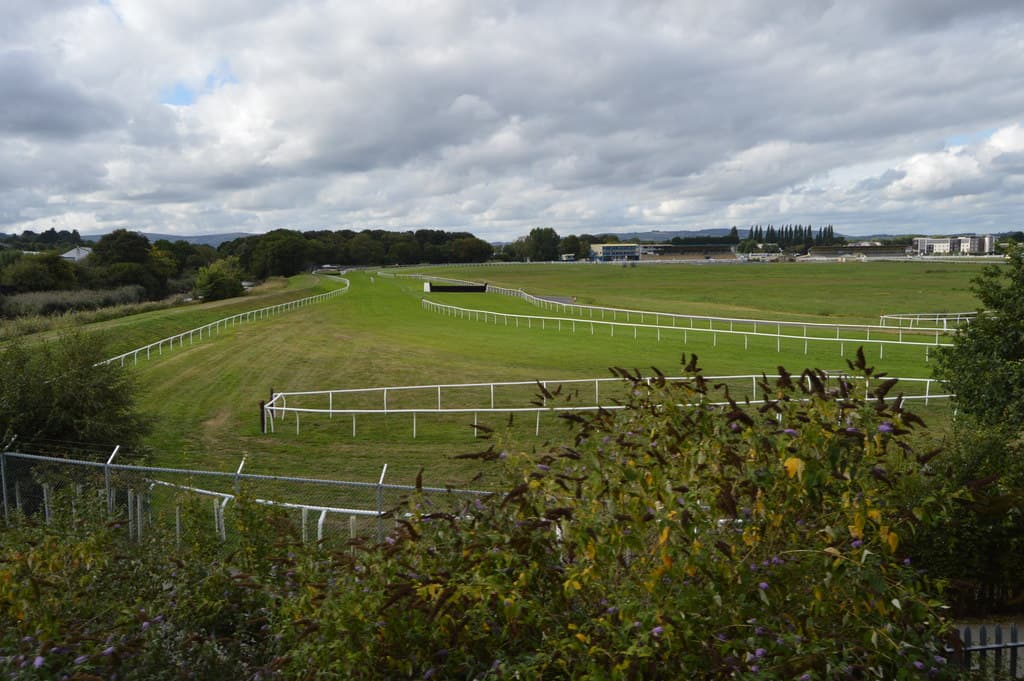
The History of Newton Abbot Racecourse
Over 150 years of racing at Newton Abbot — from its origins in 1866 to Devon's summer jumping venue and the Newton Abbot Cup.
Read more
Cue Card at Newton Abbot: The Complete Story
Cue Card's early career at Newton Abbot launched him to King George VI Chase glory. Discover how this Devon track shaped a champion steeplechaser.
Read more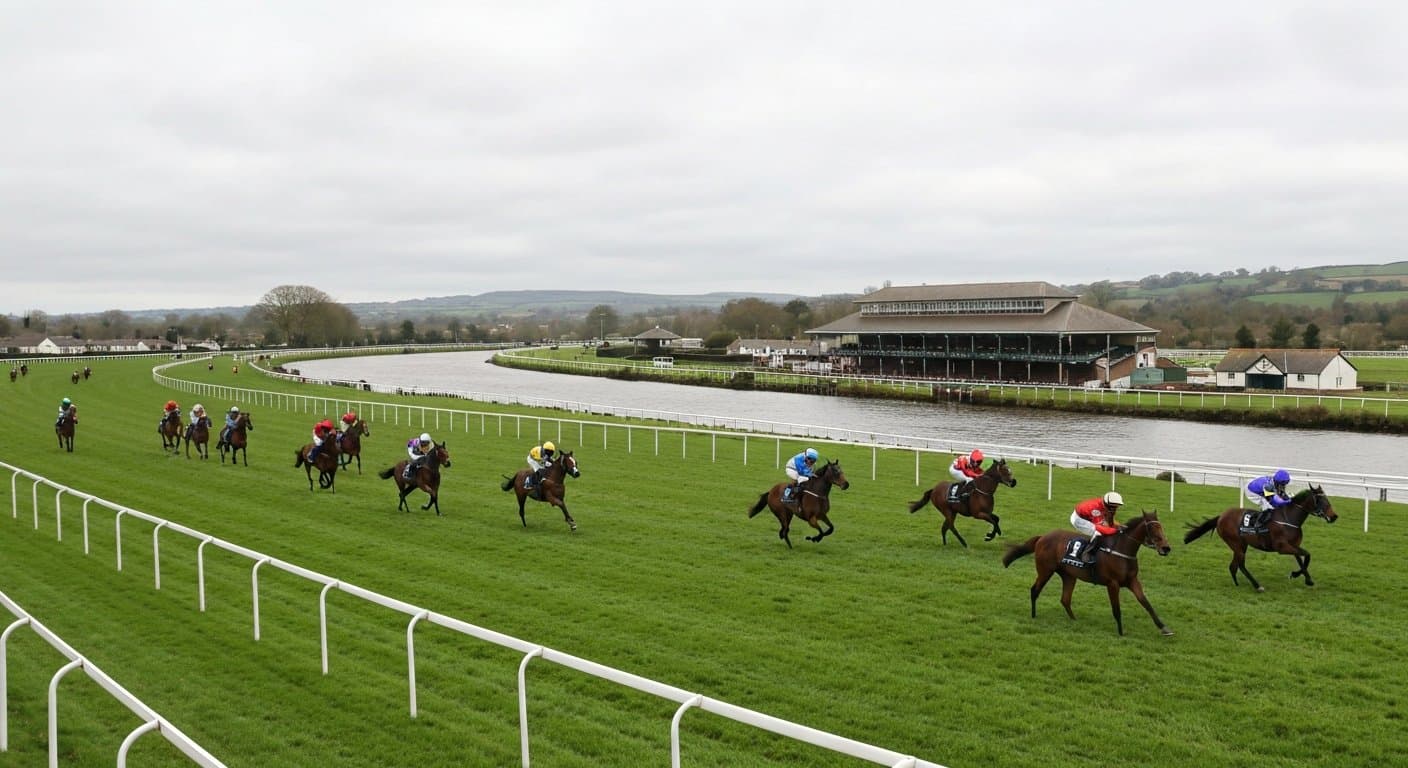
Summer Jumping at Newton Abbot: Complete Guide
Your complete guide to summer jumping at Newton Abbot — the Newton Abbot Cup, key meetings, and racing in Devon when the flat is in full swing.
Read morePhotos on this page are used under Creative Commons licences. Titles, sources and licence links for each one are on our image credits page.
Research the field with the AI Race Predictor
Our model publishes calibrated win-probability estimates for UK races — a second opinion to understand a race, not tips. It's open about its record: it doesn't beat the market, and we show exactly how it does.
Work it out & learn the basics
Gamble Responsibly
Gambling should be entertaining and not seen as a way to make money. Never bet more than you can afford to lose. If you or someone you know has a gambling problem, help and support is available.