
Founder & Editor · Last reviewed 2026-04-06
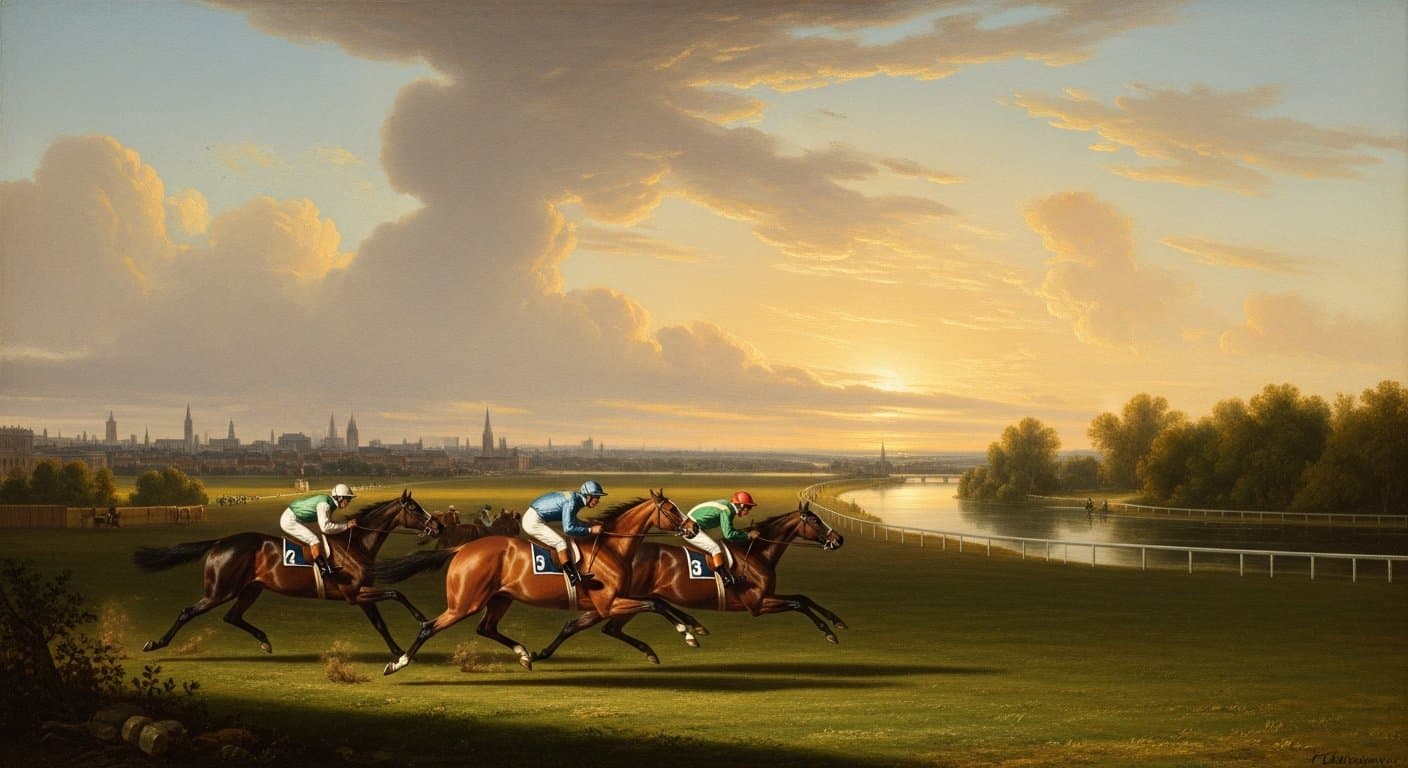
Nottingham Racecourse at Colwick Park is one of the flat season's most informative venues, staging a spring Classic trials programme that is genuinely worth the attention of anyone serious about the Derby and Oaks. The Nottingham maiden races in April and May regularly produce horses that go on to win Classic trials at Newmarket, York and Epsom — and occasionally the Classics themselves. Those who track Nottingham form from early April are consistently ahead of the market by May.
The course's broad, straight, left-handed circuit is one of the fairest in Britain. Wide galloping bends and a long straight run-in mean that horses need both stamina and genuine ability to win here — there are no course quirks to flatter moderate horses. The form produced at Nottingham tends to hold up at the major meetings, which is why the early-season cards in April and May attract so many serious first-runners from Newmarket and southern yards looking for an educational but competitive debut.
Nottingham's festival programme is less defined by a single race week than by a sustained period of quality from late April through September. The Colwick Cup (Heritage Handicap, 1m6f) in September is the season's headline race — a competitive staying handicap with prize money that attracts genuine quality. The spring classics trials period runs through April and May, and the midsummer cards in June and July are popular with progressive handicappers finding their feet.
For visitors from the Midlands, Nottingham is an extremely accessible and well-run racecourse that produces consistently good racing without the premium prices or dress-code complications of the major national meetings. It is the local racegoer's racecourse done properly.
Bet on Nottingham
Place your bets on Nottingham races with a trusted bookmaker.

Promo code BETFRED50. New customers only. Register, deposit with a Debit Card, and place a first bet of £10+ at Evens (2.0)+ on Sports, to be settled within 7 days, to get £30 in Sports Free Bets and £20 in Bet Builder Free Bets within 24 hours of settlement. 7-day expiry. Eligibility & payment exclusions apply. Full T&Cs apply. Take Time to Think. BeGambleAware.org. 18+. Full T&Cs.

Promo code R30. New UK customers only, 18+. Register, deposit £10 or more, then place a £10 single cash bet at odds of 1/2 (1.5) or greater on any sports market (excluding Virtuals). Once the qualifying bet settles you get £30 in Free Bets (3 x £10) — the qualifying bet can win or lose. Free Bets are valid on any sports market excluding Virtuals, expire in 7 days, are non-withdrawable and must be used in full. Excluded deposit methods apply (including PayPal, Apple Pay, Skrill and NETELLER). Named bets such as Lucky 15 do not qualify. If you cash out the qualifying bet, or it is voided, you are no longer eligible for the offer. Ends 31.12.26. Full T&Cs apply. Please gamble responsibly. BeGambleAware.org. 18+. Full T&Cs.

Promo code BET40GET20. New UK customers, 18+. Register with the code and place a first bet of £40 or more at Evens (2.0) or greater. Receive 2 × £10 free bets: the first credited automatically once the qualifying bet settles, the second 24 hours later. Free bets must be placed at minimum odds of 4/1 (5.0), expire 24 hours after credit, and the free-bet stake is not returned with winnings. Debit card deposits only. Take Time to Think. BeGambleAware.org. 18+. T&Cs apply. Full T&Cs.

50% of your first-day net losses refunded as a free bet, capped at £25. New UK customers aged 18+ only. To qualify, deposit and place a first bet of £10 or more on any sport at minimum odds of evens (2.00), then place at least two further bets on different events, each worth at least 50% of your largest bet, all at evens (2.00) or greater. Losses are counted from your first settled bet until 23:59 the same day. Place a qualifying £10+ bet and you are guaranteed at least a £5 free bet. Bets placed at SP, void bets, cashed-out bets and bets struck with free bets do not count towards the offer. The free bet is credited the day after your qualifying bets settle and must be used within 7 days, after which it expires. It can be used at odds from 1/4 (1.25) up to 250/1 on singles and straight accumulators, but not on Trixie, Patent or Yankee style multiples. Free-bet stake is not returned with winnings. One offer per person, household, address, IP address and device. E-wallet deposits may not qualify, so check the cashier before depositing. Customers registered with GAMSTOP cannot claim. KYC identity verification must be completed before the free bet is credited. Take Time to Think. BeGambleAware.org. 18+. T&Cs apply. Full T&Cs.

New customers, 18+. Choose the sports bonus at sign-up, make a first deposit and receive a 100% bonus up to £50 in your Sports Bonus balance. To convert the bonus to cash, wager it 10x within 30 days. Single bets below Evens (2.00) do not qualify; accumulators do not qualify if any selection is below 1/2 (1.50). Virtual Sports, voided, cancelled, drawn, cashed-out and free-bet wagers do not count towards wagering. Only the first settled bet per event counts. Withdrawing before the wagering requirement is met forfeits the bonus balance including bonus winnings. Real-money funds are used before bonus funds. Deposits via Skrill or Neteller are not eligible. Not valid in conjunction with other promotions. Odds, bet and payment limits apply. 10bet general and promotion T&Cs apply. BeGambleAware.org. 18+. Full T&Cs.

New customers in Great Britain and Republic of Ireland, 18+. Place a £10 fixed-odds qualifying bet at minimum odds of 1/2 (1.50) — single or each-way (only the win part counts), pre-event or in-play, not cashed out early, within 28 days of opening the account. Receive up to £60 in bonuses credited over three days: 3 × £10 fixed-odds free bets (the first on settlement, then 24 and 48 hours later) plus 3 × £5 Total Goals FOOTBALL spread bets, 3 × £5 racing Winning Favourites spread bets and a £1 racing Race Index spread bet (the spread bets need a full spread-betting account). Free-bet stakes not returned with winnings; free bets valid 28 days from issue. IMPORTANT: the £5 credits are SPREAD bets — sports spread betting carries the risk that losses can exceed your stake. Sports spread-betting customers do not have Financial Ombudsman or FSCS recourse. Take Time to Think. BeGambleAware.org. 18+. T&Cs apply. Full T&Cs.

Promo code WELCOME15, entered under My Bonuses after registering. New UK customers, 18+. Place a first qualifying bet of at least £10 from your cash balance at odds of evens (2.0) or greater within 7 days of opening the account. Once the qualifying bet fully settles you receive £15 in free bets, credited as 3 x £5 tokens with set uses: one £5 accumulator free bet (minimum 4 legs, each leg at 2/5 or bigger), one £5 sports free bet (any market at evens or bigger) and one £5 Sub Cover free bet (selected football player markets at evens or bigger). Free-bet stakes are not returned with winnings. Free bets expire 7 days after they are credited. Void, cashed-out and partially cashed-out bets do not qualify. One offer per customer. Confirm the current terms on BetGoodwin's own welcome-offer page before claiming. Take Time to Think. BeGambleAware.org. 18+. T&Cs apply. Full T&Cs.

New UK customers, 18+. Minimum deposit £10. Place a £10 qualifying single at minimum odds of 1/2 (1.50), settled within 14 days. Receive £30 in free bets (stake not returned), split £20 for sportsbook use (2 x £10) and £10 for Bet Builder only (2 x £5); Bet Builder does not cover horse racing. Free bets must be accepted within 7 days and expire 7 days after acceptance. No promo code required. Best Odds Guaranteed on UK & Irish racing, subject to having staked over £25 in the previous seven days. Operated by LiveScore Betting and Gaming (Gibraltar) Ltd, UKGC 56859. Confirm the current terms on LiveScore Bet's own promotions page before claiming. Take Time to Think. BeGambleAware.org. 18+. T&Cs apply. Full T&Cs.
18+. BeGambleAware.org
The Festival Programme
Spring Classic Trials (April–May)
Nottingham's most significant racing period for the serious student of form. From mid-April, the course stages maiden races over five furlongs, six furlongs, a mile and a mile and a quarter that serve as the opening chapters in the season's Classic narrative.
The major southern yards — Godolphin (Charlie Appleby), John and Thady Gosden, Roger Varian, William Haggas — regularly send first-time runners to Nottingham in April and May. These horses are well-bred but unraced; their connections want a competent debut without the intensity of Newmarket's spring meetings. A horse that wins its Nottingham maiden by three lengths in April is not necessarily a Classic horse, but it will almost certainly reappear at a more significant spring meeting, and the Nottingham form gives context for assessing it.
What to watch: Look for maiden wins where the winner goes clear without the jockey looking for anything — these horses have more in hand than the margin suggests. Also watch for horses finishing second or third in hot maidens: sometimes the winner goes on to Classic glory and the beaten rivals are retrospectively upgraded in the market.
The Classic Trial at Nottingham (historically a Listed race in April over a mile and a quarter) is specifically aimed at Guineas and Derby hopefuls wanting a run before the major spring trials. The race field is typically modest in a Listed sense but the horses in it are well-connected and the form is worth following.
Summer Programme (June–August)
Nottingham's summer cards feature a programme of competitive handicaps and occasional Listed races that attract progressive three-year-olds stepping up in class after their maiden wins. The June, July and August meetings are well-attended by Midlands racegoers and the cards are often stronger than the regional profile of the course suggests.
The Nottingham Summer Handicap series draws horses from north and south — the course's fair nature means trainers from both regions bring competitive horses, and the fields can be unusually strong for a non-major venue.
September: Colwick Cup Day
The season's showpiece is the Colwick Cup (Heritage Handicap, 1m6f), typically run in early September. The race draws staying handicappers from across Britain who are looking for a well-run race on honest ground before the autumn's valuable staying handicaps at Ascot and Newmarket. It is genuinely competitive and the prize fund attracts top-class staying horses.
The Colwick Cup day also features a strong card of sprint and middle-distance handicaps that make September the most important visit of the Nottingham season for the professional punter.
Key Races to Watch
Colwick Cup (September, Heritage Handicap, 1m6f)
The Nottingham season's most prestigious race — a staying heritage handicap over a mile and six furlongs that attracts genuine quality from the staying division. Horses rated 95-110 carry weights that give them a genuine chance, and the prize money has been sufficient to attract runners from John and Thady Gosden, Roger Varian and the major Newmarket yards in recent seasons.
The Colwick Cup rewards horses with genuine staying ability and form on flat, fair tracks. Horses that have run well in the Goodwood Cup, Chester Cup or Ascot's long-distance handicaps tend to cope well with Nottingham's demands. Watch for horses dropping back in trip from two miles — the mile and six at Nottingham on good ground is often a good target for horses that found two miles slightly too far in summer conditions.
Classic Trial (April, Listed, 1m2f)
One of the spring's most informative early-season races for Classic hopefuls. The field is typically three to seven runners — small enough to be analysable — and represents horses that are considered genuinely capable by their connections. Winners of this race should be on every Derby and Oaks ante-post shortlist until their connections indicate otherwise.
Nottingham Maiden Races (April–May)
The most valuable form produced at Nottingham comes from the maiden races in April and May. The course's honesty means that ability shows through, and first-time winners from major yards on Nottingham's spring card are worth tracking through the season.
Tip: Build a list of impressive Nottingham maiden winners from April's opening meetings and cross-reference them with the ante-post Derby and Guineas markets. If a horse has won well at Nottingham but is not yet in the major markets, there may be value in taking an early ante-post position before connections make their intentions clear.
Handicap Programme (throughout season)
Nottingham's handicap programme is one of the most consistently competitive in the Midlands. The flat, fair track means that horses on a mark above their true ability get found out, and horses on a fair or below-fair mark tend to win. Study the draw (no major bias at Nottingham) and recent form rather than relying on trainer name or market position alone.
Betting Preview
How to Bet Nottingham's Spring Maidens
The spring maiden races at Nottingham are among the most informative and potentially profitable races in the early flat season. Here is a structured approach.
Identify the strong yards early. Godolphin, Gosden and Varian regularly send debut runners to Nottingham in April. Their horses may not have obvious form, but their stable reputation means the market will price them at around 6/4 to 5/2. If the ante-post odds suggest the yard is specifically targeting Nottingham, there is often more confidence behind that runner than the market fully reflects.
Distinguish between winners and highly informative losers. A horse that loses a Nottingham maiden by a head to a Gosden debutant, in a race where the form fanned out well and the track was not playing tricks, is a strong future bet. Make a note and follow it to its next run.
Ante-post implications. Any horse that wins a Nottingham Classic Trial (the Listed April race) by more than two lengths should be on your Derby ante-post shortlist. The race does not produce many winners of the Classics themselves, but horses that are clearly superior to their peers in this context tend to compete at the next level.
Colwick Cup Betting
The Colwick Cup market is well-informed at the top end — horses that have run in the Goodwood Cup or Chester Cup are familiar to the national form books. The value tends to be in the middle of the market: horses rated 98-104 that have been specifically targeted at this race by trainers who know Nottingham well.
Trainer angle: Mark Johnston (now Charlie Johnston) and Richard Hannon have strong Colwick Cup records. Both yards produce staying handicappers specifically prepared for September targets, and horses that have had a quiet summer since their last run often peak here.
General Nottingham Betting Principles
Nottingham is a no-quirks track. Form holds up, ability shows through and the draw has minimal impact. This means: trust the form book, be sceptical of horses based purely on yard reputation and apply course experience only when a horse has genuinely performed well here before — first-time visitors don't get a hidden advantage.
Visitor Information
Getting There
By train: Nottingham station is approximately three miles from Colwick Park racecourse. Regular Trent Barton and Nottingham City Transport buses connect the city centre to the course on race days, or a taxi takes approximately 10 minutes. East Midlands Railway services connect from London St Pancras (approximately 1 hour 45 minutes), Sheffield (approximately 45 minutes) and Derby (approximately 25 minutes).
By car: The racecourse is signposted from the A612 (Colwick Road). Pre-booked parking is available on-site and recommended for the Colwick Cup day and major spring meetings. Traffic in the Colwick area can be slow at peak times.
By bus: Race-day shuttle buses run from Nottingham city centre to the course on major meetings. Check the racecourse website for the current schedule and pick-up points.
Enclosures
Grandstand Enclosure: The main public area with covered grandstand seating, full bar and food facilities and good finishing straight views. Smart casual dress code. Family-friendly atmosphere throughout.
Premier Enclosure: Premium seating with restaurant access and paddock views. Smart attire required. Book well in advance for the Colwick Cup meeting.
Tattersalls: The traditional racing enclosure with parade ring access and a well-stocked betting ring. Popular with regular racegoers who want good views of the horses before and after each race.
Essential Tips
- Colwick Cup day books up. The September meeting is the busiest of the year — buy tickets through the Nottingham website at least a month in advance.
- Spring classic trials meetings are quieter but valuable. The April meetings can be visited without booking in some enclosures — check the website for advance ticket requirements.
- The course is excellent for watching horses in the paddock. The parade ring at Nottingham gives close-up views that are genuinely useful for assessing horses before races. Arrive 20 minutes before each race to observe the pre-race routines.
- Midlands weather in April and May can be cold. Layers and a waterproof jacket are sensible for the early spring meetings. By September, the Colwick Cup day is typically pleasant but the evenings cool quickly.
- Nottingham is a car-friendly venue. Unlike some urban courses, the car park is large, the approach roads are well-signed and the journey home is straightforward for most of the Midlands catchment area.
Share this article
More about this racecourse
All Nottingham guides
The History of Nottingham Racecourse
Over 130 years of racing at Nottingham — from Victorian origins at Colwick Park to one of Britain's fairest flat tracks on the banks of the River Trent.
Read more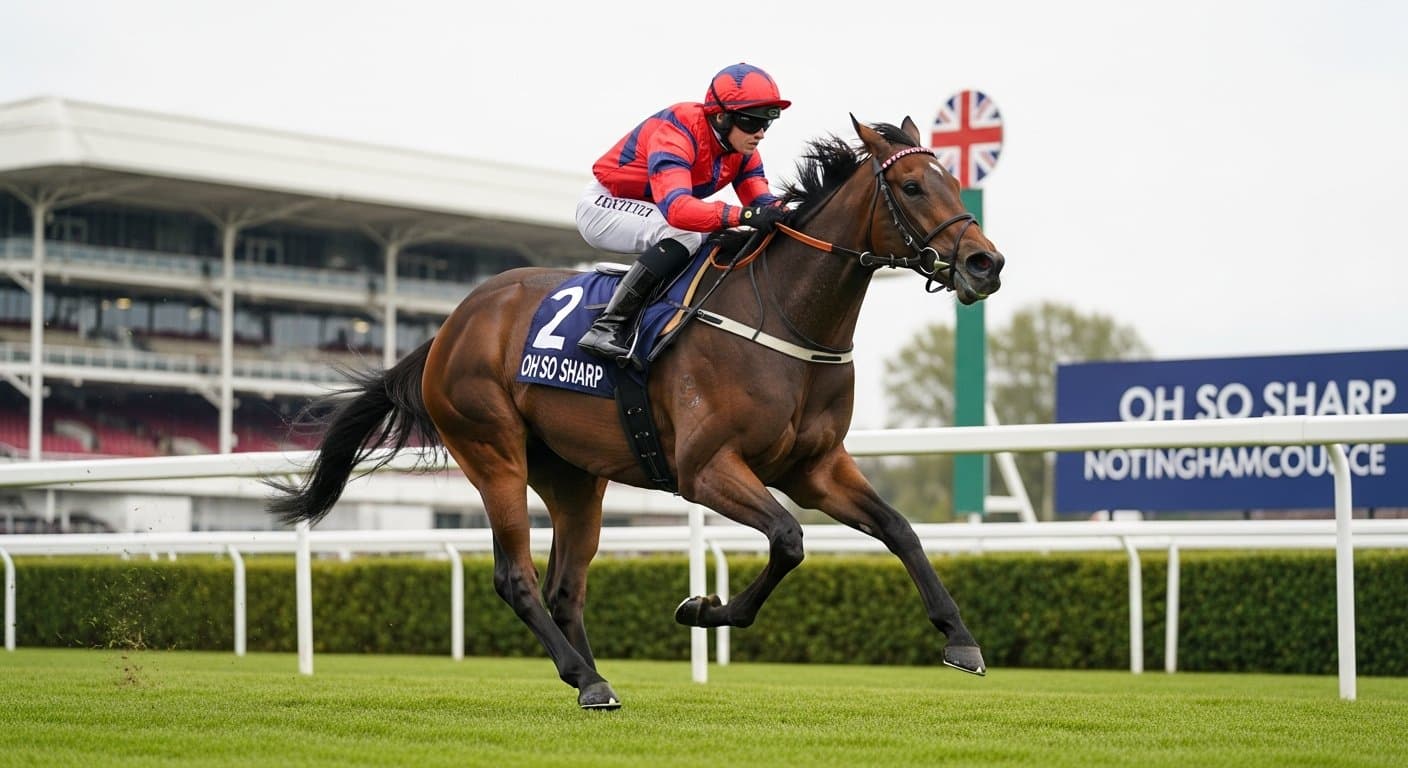
Oh So Sharp's Nottingham Debut: Triple Crown Champion's Start
Discover how Oh So Sharp's modest Nottingham debut in August 1984 launched her legendary Triple Crown campaign. The inside story from Colwick Park.
Read more
Classic Trials Day at Nottingham: The Complete Guide
Your complete guide to Classic Trials Day at Nottingham — the Midlands' most important early-season Flat fixture, where Derby and Oaks candidates take their first steps. Racing card, atmosphere, tickets, travel and betting guide.
Read morePhotos on this page are used under Creative Commons licences. Titles, sources and licence links for each one are on our image credits page.
Research the field with the AI Race Predictor
Our model publishes calibrated win-probability estimates for UK races — a second opinion to understand a race, not tips. It's open about its record: it doesn't beat the market, and we show exactly how it does.
Work it out & learn the basics
Gamble Responsibly
Gambling should be entertaining and not seen as a way to make money. Never bet more than you can afford to lose. If you or someone you know has a gambling problem, help and support is available.