
Founder & Editor · Last reviewed 2026-03-02
Betting at Nottingham is a different experience from betting at quirky tracks. Colwick Park's wide, galloping layout produces reliable form that tends to translate well to bigger meetings — and that makes it a favourite with punters who value form they can trust. There is no significant draw bias, no sharp bends that favour one type of horse, no odd gradient that skews the form. What you see is what you get: a fair test on a track that has been producing trustworthy results since 1892.
The principle for betting at Nottingham is simple but requires patience to apply properly: form from this course tends to hold up elsewhere. A horse that wins or places at Colwick Park has usually earned it — and that form can be followed with confidence at Newmarket, York, Ascot, and beyond. The key is to track Nottingham form carefully across the season, note which horses impressed in what manner, and then back them confidently when the market has not fully accounted for the quality of their Nottingham performance.
This is especially true of the two-year-old programme. Nottingham's spring and autumn maiden races regularly feature debutants and early-season runners from the top Newmarket and northern yards. A promising juvenile performance on this fair track is a real indicator of ability, not a product of a favourable draw or a quirky layout. For the specific angles that apply to those races, the classic trials guide has the full detail. For the Colwick Cup and the staying handicaps that form the core of the autumn programme, the angles in this guide apply directly.
One seasonal pattern is worth establishing immediately: avoid Nottingham when the ground is very soft or heavy. These conditions are atypical at Colwick Park — the course drains reasonably well and spends most of the season on good to firm or good ground — and when the going reaches soft or heavy, the results tend to be less representative than normal. Horses that handle real soft ground can steal races that do not reflect the underlying form. The most reliable Nottingham form comes from meetings on good to firm, good, or good to soft ground.
This guide covers track characteristics, going and draw analysis, key trainers and jockeys, and the specific strategies that work at Nottingham. For the practical side of a visit, the day out guide has the transport, enclosures, and food detail.
Bet on Nottingham
Place your bets on Nottingham races with a trusted bookmaker.

Promo code BETFRED50. New customers only. Register, deposit with a Debit Card, and place a first bet of £10+ at Evens (2.0)+ on Sports, to be settled within 7 days, to get £30 in Sports Free Bets and £20 in Bet Builder Free Bets within 24 hours of settlement. 7-day expiry. Eligibility & payment exclusions apply. Full T&Cs apply. Take Time to Think. BeGambleAware.org. 18+. Full T&Cs.

Promo code R30. New UK customers only, 18+. Register, deposit £10 or more, then place a £10 single cash bet at odds of 1/2 (1.5) or greater on any sports market (excluding Virtuals). Once the qualifying bet settles you get £30 in Free Bets (3 x £10) — the qualifying bet can win or lose. Free Bets are valid on any sports market excluding Virtuals, expire in 7 days, are non-withdrawable and must be used in full. Excluded deposit methods apply (including PayPal, Apple Pay, Skrill and NETELLER). Named bets such as Lucky 15 do not qualify. If you cash out the qualifying bet, or it is voided, you are no longer eligible for the offer. Ends 31.12.26. Full T&Cs apply. Please gamble responsibly. BeGambleAware.org. 18+. Full T&Cs.

Promo code BET40GET20. New UK customers, 18+. Register with the code and place a first bet of £40 or more at Evens (2.0) or greater. Receive 2 × £10 free bets: the first credited automatically once the qualifying bet settles, the second 24 hours later. Free bets must be placed at minimum odds of 4/1 (5.0), expire 24 hours after credit, and the free-bet stake is not returned with winnings. Debit card deposits only. Take Time to Think. BeGambleAware.org. 18+. T&Cs apply. Full T&Cs.

50% of your first-day net losses refunded as a free bet, capped at £25. New UK customers aged 18+ only. To qualify, deposit and place a first bet of £10 or more on any sport at minimum odds of evens (2.00), then place at least two further bets on different events, each worth at least 50% of your largest bet, all at evens (2.00) or greater. Losses are counted from your first settled bet until 23:59 the same day. Place a qualifying £10+ bet and you are guaranteed at least a £5 free bet. Bets placed at SP, void bets, cashed-out bets and bets struck with free bets do not count towards the offer. The free bet is credited the day after your qualifying bets settle and must be used within 7 days, after which it expires. It can be used at odds from 1/4 (1.25) up to 250/1 on singles and straight accumulators, but not on Trixie, Patent or Yankee style multiples. Free-bet stake is not returned with winnings. One offer per person, household, address, IP address and device. E-wallet deposits may not qualify, so check the cashier before depositing. Customers registered with GAMSTOP cannot claim. KYC identity verification must be completed before the free bet is credited. Take Time to Think. BeGambleAware.org. 18+. T&Cs apply. Full T&Cs.

New customers, 18+. Choose the sports bonus at sign-up, make a first deposit and receive a 100% bonus up to £50 in your Sports Bonus balance. To convert the bonus to cash, wager it 10x within 30 days. Single bets below Evens (2.00) do not qualify; accumulators do not qualify if any selection is below 1/2 (1.50). Virtual Sports, voided, cancelled, drawn, cashed-out and free-bet wagers do not count towards wagering. Only the first settled bet per event counts. Withdrawing before the wagering requirement is met forfeits the bonus balance including bonus winnings. Real-money funds are used before bonus funds. Deposits via Skrill or Neteller are not eligible. Not valid in conjunction with other promotions. Odds, bet and payment limits apply. 10bet general and promotion T&Cs apply. BeGambleAware.org. 18+. Full T&Cs.

New customers in Great Britain and Republic of Ireland, 18+. Place a £10 fixed-odds qualifying bet at minimum odds of 1/2 (1.50) — single or each-way (only the win part counts), pre-event or in-play, not cashed out early, within 28 days of opening the account. Receive up to £60 in bonuses credited over three days: 3 × £10 fixed-odds free bets (the first on settlement, then 24 and 48 hours later) plus 3 × £5 Total Goals FOOTBALL spread bets and 3 × £5 racing Winning Favourites spread bets, with a £1 racing Race Index spread bet as an extra on top. The spread bets need a full spread-betting account, opened within 28 days of the fixed-odds account and subject to Spreadex's eligibility and appropriateness checks. Free-bet stakes not returned with winnings; free bets valid 28 days from issue. IMPORTANT: the £5 credits are SPREAD bets — sports spread betting carries the risk that losses can exceed your stake. Sports spread-betting customers do not have Financial Ombudsman or FSCS recourse. Take Time to Think. BeGambleAware.org. 18+. T&Cs apply. Full T&Cs.

Promo code WELCOME15, entered under My Bonuses after registering. New UK customers, 18+. Place a first qualifying bet of at least £10 from your cash balance at odds of evens (2.0) or greater within 7 days of opening the account. Once the qualifying bet fully settles you receive £15 in free bets, credited as 3 x £5 tokens with set uses: one £5 accumulator free bet (minimum 4 legs, each leg at 2/5 or bigger), one £5 sports free bet (any market at evens or bigger) and one £5 Sub Cover free bet (selected football player markets at evens or bigger). Free-bet stakes are not returned with winnings. Free bets expire 7 days after they are credited. Void, cashed-out and partially cashed-out bets do not qualify. One offer per customer. Confirm the current terms on BetGoodwin's own welcome-offer page before claiming. Take Time to Think. BeGambleAware.org. 18+. T&Cs apply. Full T&Cs.

New UK customers, 18+. Minimum deposit £10. Place a £10 qualifying single on sports (excluding virtuals) at minimum odds of 1/2 (1.50), settled within 14 days. Deposit-method exclusions apply. Receive £30 in free bets (stake not returned), split £20 for sportsbook use (2 x £10) and £10 for Bet Builder only (2 x £5); Bet Builder does not cover horse racing. Free bets must be accepted within 7 days and expire 7 days after acceptance. No promo code required. Best Odds Guaranteed on UK & Irish racing, subject to having staked over £25 in the previous seven days. Operated by LiveScore Betting and Gaming (Gibraltar) Ltd, UKGC 56859. Confirm the current terms on LiveScore Bet's own promotions page before claiming. Take Time to Think. BeGambleAware.org. 18+. T&Cs apply. Full T&Cs.
18+. BeGambleAware.org
Track Characteristics
The Galloping Oval: Understanding Colwick Park
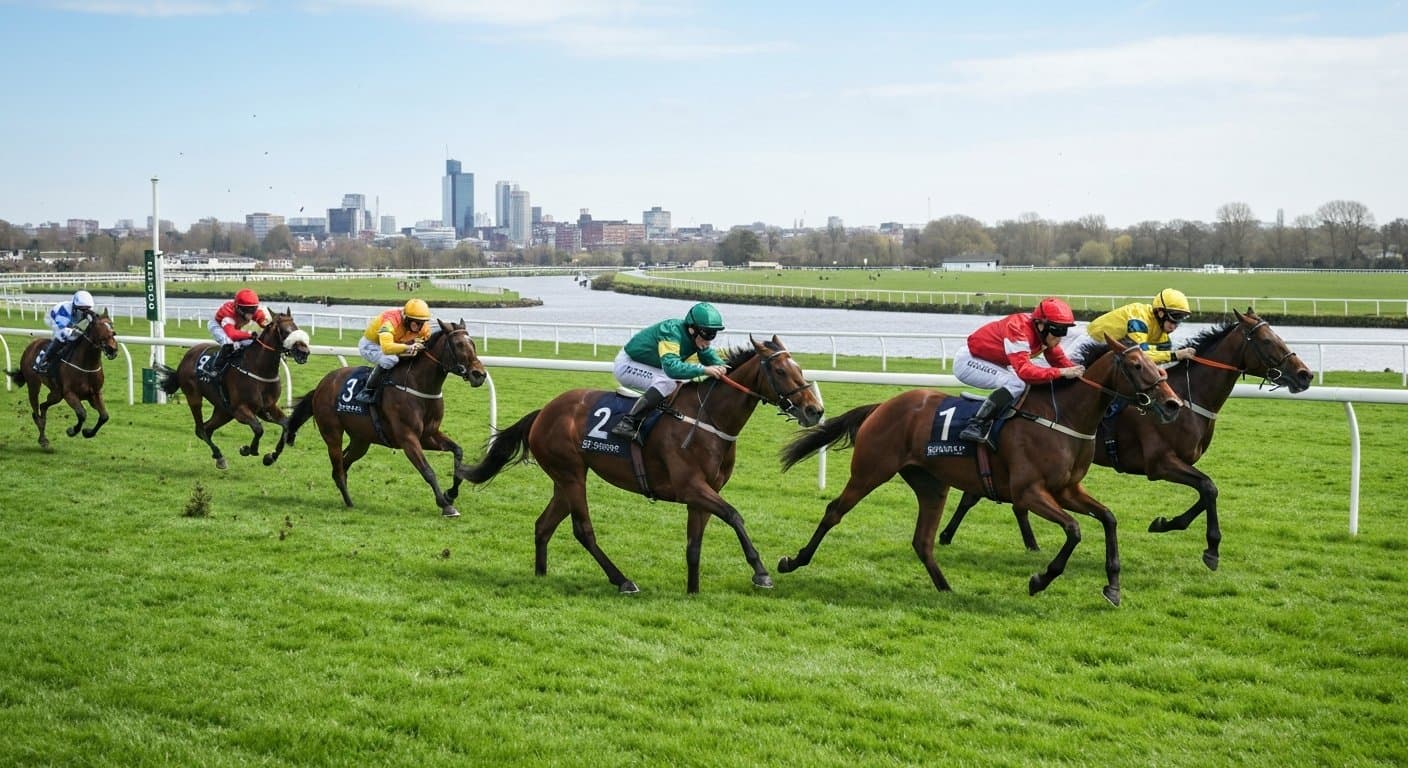
Nottingham's track is a left-handed, galloping oval set in Colwick Park on the south-eastern edge of the city. The circuit measures approximately 1 mile 6 furlongs around, making it one of the larger flat oval circuits in the Midlands. The key features that define it for betting purposes are the width, the gradual bends, and the long home straight that allows horses to run their race without the positional scrambling that occurs at tighter circuits.
The back straight runs roughly parallel to the River Trent, with the main body of the course curving left-handed back towards the grandstand. The final bend is wide and well-cambered, turning gradually into a home straight of approximately 5 furlongs. This is the physical characteristic that matters most for betting: a five-furlong run-in on a flat, straight track gives hold-up horses the time and room to close, and it means that front-runners who have not run freely up front are caught in the final furlong. A horse that wins here typically has to be truly effective at its trip, not merely lucky in its draw.
Distance Configuration
Nottingham stages races from 5 furlongs to 2 miles, with all distances run on the turf oval (there is no all-weather track). The five-furlong start is set on a short chute that joins the main oval, meaning that five-furlong races begin near the back straight and run the entire length of the home straight. Sprint races here have a long, straight run-in rather than the sharp turn-into-a-short-finish configuration that advantages low draws at some courses.
For races at 6 furlongs and 7 furlongs, the start is on the back straight or in the turn. Longer races — a mile and upwards — are run on the full oval. The two-mile trip is the maximum at Nottingham and suits long-striding, thorough stayers who can maintain their gallop around the full circuit.
Understanding these distances matters when assessing trainer decisions. A trainer who sends a horse to Nottingham for a 7-furlong maiden is choosing a test that includes one full circuit of the left-hand bend, followed by the long home straight. That suits a horse that relaxes in mid-race and then picks up when asked — a profile that overlaps significantly with the best Classic-generation horses.
Why Form from Nottingham Travels
The single most important fact for the Nottingham bettor is that form from this track tends to hold up at other courses. This is not universal — no provincial form translates perfectly — but the correlation between Nottingham performances and subsequent performances at Newmarket, York, and Ascot is stronger than at most comparable tracks.
The reason is the layout. At a track like Chester, horses need specific attributes: they need to handle left-hand turns that are almost circular, they need to be comfortable in tight spaces, and they benefit enormously from a high-numbered draw in certain conditions. Form from Chester tells you a lot about a horse's ability at Chester, but rather less about its ability on a straight, galloping track. At Nottingham, the opposite applies: the fair, open oval means that the result is mostly determined by ability at the trip, and ability at the trip is the quality that transfers most directly to other galloping tracks.
When a horse wins a maiden at Nottingham and then runs at Newmarket's Rowley Mile, the question is whether its ability level is good enough for Newmarket — and the Nottingham form is a reliable guide to that question, because both tracks reward the same qualities: a horse that gets its trip, maintains its effort through the straight, and has the ability to hold off competition. The environments are different, but the test is broadly similar.
The Left-Handed Configuration
Nottingham runs left-handed, and this is worth noting when considering horses that have previously only raced right-handed. Most horses handle both directions without difficulty — the left-right question tends to be overstated in casual form analysis — but occasionally a horse with a specific preference will show its best form only when turning one way.
In practice, the more important consideration is pace and tactics rather than direction. Nottingham's long back straight allows pace to develop in an organised way: horses settle on the far side, the pace develops naturally down the back, and the final bend is where positions tend to be sorted. A horse that needs a fast pace to show its best form will find Nottingham's longer format more useful than a tight track where the pace is often scrappy through the early stages.
Flat Track, No Camber Issues
Unlike some courses where a pronounced camber on the turns sends horses towards the outside or inside rail, Nottingham's bends are well-surfaced and the camber is gradual. This is part of why the draw is not a significant factor: horses on the outside of the track in the final bend are not fighting an adverse camber as they might be at some other left-handed circuits. The surface quality and the gradual bends allow all positions to be competitive.
For practical betting purposes, this means that draw analysis at Nottingham should focus on pace and pace bias rather than structural draw advantage. In a race with a strong pace, horses drawn wide who are held up have room to improve. In a slow-run race where the field bunches, a horse drawn low may have a marginal positional advantage. These are secondary considerations, not the structural biases that dominate betting at Chester or Epsom.
Two-Year-Old Race Layout
The two-year-old maiden races at Nottingham are often run over 5 furlongs or 6 furlongs, with the longer 7-furlong maiden being a significant test for juvenile horses that may have Classic aspirations. The 5-furlong maiden on the home straight is a specific kind of race: a speed test that identifies the quickest early two-year-olds, but that does not tell you a great deal about a horse's ability to stay a mile or further. Follow 5-furlong two-year-old form to other sprints; be more cautious about extrapolating it to Classic distances.
The 7-furlong maiden, by contrast, is a more informative test. A two-year-old that wins well over 7 furlongs at Nottingham, travelling strongly and picking up clearly when asked, is a horse whose stamina profile and temperament are encouraging for Classic trials and Guineas entries. This is the distance that serious Classic watchers focus on when studying Nottingham two-year-old form.
For a full breakdown of the course layout and the distances run at different starting positions, see the complete guide.
Going & Draw Bias
Going at Nottingham: What to Expect
Nottingham's location in the East Midlands gives it a variable climate that produces a range of going conditions across the flat season. The course drains reasonably well — the Colwick Park soil has good natural drainage, and the groundskeeping team works to maintain consistent surfaces — but the English weather means that going ranges from good to firm in dry summer periods to good to soft and occasionally soft in spring and autumn.
The most common going at Nottingham, across a typical season, is good or good to firm. This is the ground on which the course's character is most clearly expressed: a fast, fair surface that allows horses to stride freely and rewards ability over stamina. On good to firm ground, front-runners may be disadvantaged slightly in longer races if they burn their energy too freely up front, but the pace on this surface is generally honest enough that hold-up horses can close effectively.
Good to soft ground is also well within the normal range at Nottingham, particularly in April and May when the spring programme begins, and again in September and October as the season closes. On good to soft, the pace tends to slacken slightly, stamina counts for a fraction more, and the form is still broadly reliable. Nottingham on good to soft is a perfectly valid betting proposition — the going is normal for turf racing in an English spring or autumn and the results continue to be representative.
The Soft and Heavy Ground Warning
The pattern that breaks down at Nottingham is soft or heavy ground. These conditions are atypical at Colwick Park, and when they occur they tend to produce results that are less representative of the underlying ability of the horses involved.
On soft ground, horses that handle truly heavy going have a structural advantage at Nottingham that they do not have on the firmer surfaces the course normally provides. These horses — typically those bred from National Hunt lines or with particularly high knee action — are not the same horses that have been dominating Nottingham's form book on good or good to firm ground. When you bet on a soft-ground Nottingham race using form from previous good-to-firm meetings, you are comparing incomparable things.
The practical advice is straightforward: when going at Nottingham reaches soft or heavy, treat the meeting as an unreliable guide for both betting on that day and studying the form for future reference. Check the going report before the first race, and if the going description is "soft" or anything more extreme, be cautious about backing horses whose previous form at Nottingham was produced on better ground.
Note also that after a period of soft ground at Nottingham, the first meeting back on good ground can produce unexpected results as the course plays somewhat unpredictably while recovering to its normal surface. Give those transitional meetings a race or two before treating the form as fully reliable.
Draw Analysis at Nottingham: The Honest Verdict
The draw at Nottingham is as close to neutral as you will find on any British flat track. Extensive analysis of results across different distances and going conditions at Colwick Park produces no reliable, consistent draw bias that should influence betting decisions. This is the correct conclusion, and it is the one that most professional form students have reached.
The reasons for the lack of draw bias have been explained in the track characteristics section: the wide bends, the gradual camber, and the long home straight all reduce the structural advantages that produce draw bias at tighter or more quirky circuits. At Nottingham, a horse drawn in stall 1 and a horse drawn in stall 14 are starting on approximately equal terms, and the race develops from that equal base.
There are some minor qualifications. Over 5 furlongs on the home straight, low draws may have a fractional pace advantage in fields of 12 or more runners when the pace is slow at the start. This is because in a slow-run sprint with a large field, horses on the rail can save ground through the straight while those drawn wide are running slightly more. But this effect is marginal — it does not constitute a real draw bias in the sense of a systematic advantage that should heavily influence betting. Treat it as background noise rather than a primary factor.
For the purposes of practical betting at Nottingham, the rule is simple: do not let the draw number dictate your bet. Assess the horses on their form, fitness, and trainer intentions. The draw is a secondary consideration at most, and in most races it is irrelevant.
Pace Bias and Tactical Analysis
While the draw is not a significant factor at Nottingham, pace can be. The long home straight means that front-runners who have gone too fast too early are caught and beaten by hold-up horses who have been patient. This is not a quirk or a bias — it is simply the natural consequence of a long straight rewarding horses that have energy reserves in the final furlong.
In practice, this means that in fields with multiple strong pace-setters, the hold-up horses have a slightly improved chance relative to what their odds suggest. When a race has a single pace-setter who is clearly going to lead without challenge, front-running form is reliable. When there are three or four horses likely to contest the early lead, the pace may collapse in the middle of the race, setting up a fast final furlong that benefits those dropping in from behind.
This is not unique to Nottingham — it applies at any galloping track with a long straight — but it is worth keeping in mind when assessing races where pace configuration is relevant.
Going Patterns Through the Season
The seasonal going pattern at Nottingham follows the English climate broadly. April meetings typically start on good to soft or good ground. May and June often see conditions firm up to good or good to firm during dry spells. July and August are the most likely months for firm ground if there has been a prolonged dry spell, though the East Midlands rarely gets as firm as some southern courses. September and October tend to see the ground soften back through good to soft as rainfall increases.
For betting across the season, track the going reports carefully and note the progression. A horse that has won on good to firm at Nottingham in June may need reassessing if its next Nottingham run is on good to soft in September. The horse may handle both, but you should not assume it without checking its form on different going types.
Form Reliability by Going
The most reliable Nottingham form — for both betting at Colwick Park and following horses to subsequent races elsewhere — comes from meetings on good to firm or good ground. Form from good to soft meetings is slightly less reliable but still useful. Form from soft ground meetings at Nottingham should be treated with caution, as these conditions are atypical and the results may not reflect the horses' true level on normal turf.
For the complete going history and how conditions have affected specific races, see the complete guide. For seasonal patterns in the classic trials and two-year-old programme, the classic trials guide has the specific detail.
Key Trainers & Jockeys
Trainer Patterns at Nottingham
Understanding which trainers perform well at Nottingham — and in what type of races — is one of the most useful tools available to the serious bettor at Colwick Park. The course's proximity to both the Newmarket training centres and the major northern yards means that it attracts a broad spread of trainers, and the patterns in their targeting of particular races at Nottingham are worth studying carefully.
Godolphin and Charlie Appleby: The Maiden Specialists
Godolphin's Charlie Appleby operation is the single most important trainer to track at Nottingham for two-year-old betting. Appleby has a very strong record with juvenile debutants at the course, and the pattern is consistent: well-bred horses from Sheikh Mohammed's breeding operation appear at Nottingham for their first or second run, typically in the spring and early summer maiden programme.
Appleby's two-year-olds at Nottingham are worth serious consideration even when they are sent out at short odds. The pattern is that the yard does not send horses to Colwick Park for an easy win on a quiet day — they send them because the fair track provides a reliable assessment, and when Appleby sends a well-bred juvenile to Nottingham, there is usually a reason. A convincing victory here from an Appleby runner is a strong signal for its subsequent campaign.
The specific pattern to note is that Appleby's Nottingham juveniles who win by a margin of two or more lengths tend to go on to run in Group-race company by mid-summer. Those that win narrowly in modest fields may be aiming lower, but the form should still be noted and followed.
John and Thady Gosden: Classic Trial Form
The Gosden yard — which operates under the combined banner of John and Thady Gosden since 2021 — uses Nottingham regularly for horses that are being prepared for Classic trials and Group races. The Gosdens are known for patient horsemanship: they often run horses once or twice at a reliable provincial track before stepping them up to Newmarket or York. Nottingham is a regular first destination.
When a Gosden horse runs at Nottingham in a conditions race or a well-graded maiden, the form is worth tracking carefully. The yard has won multiple Classics and has a strong record of producing horses that improve significantly from run to run. A Gosden juvenile that finishes second or third at Nottingham on its first start is often a strong bet for its next run, particularly if the winner has Then advertised the form by winning again elsewhere.
Roger Varian: Quality in Conditions Races
Roger Varian, who trains from Newmarket, has an excellent record at Nottingham in conditions races and higher-graded maidens. Varian is known for training high-class horses who need a fair track to show their best form, and Nottingham fits that profile perfectly. When Varian sends a horse to Nottingham for a conditions race, it is usually a horse he expects to win, and those expectations are often justified.
The Varian pattern worth noting at Nottingham is his use of the course for horses that have already run once or twice and are now ready to win. These horses — with one piece of form already on the book — are often well-handicapped relative to their potential, and a Nottingham conditions race win can set them up for a more ambitious subsequent campaign.
Richard Fahey: Handicap Angles from the North
Richard Fahey, who trains from Musley Bank in Yorkshire, is one of the most prolific northern trainers and a regular presence at Nottingham across the handicap programme. Fahey excels at placing improving handicappers in races where their current Official Rating gives them a realistic chance, and Nottingham's fair track suits his style of horse — straightforward, front-running or prominent types who are well drilled and fit.
When a Fahey horse runs at Nottingham in a handicap — particularly over 6 furlongs or 7 furlongs — check whether it has recent form at comparable galloping tracks. Fahey's horses tend to run well when fit and in form, and they tend to run badly when they need a run. A Fahey handicapper making its seasonal reappearance at Nottingham is often worth opposing; one that has had a prep run at Musselburgh or Carlisle and is now appearing at Nottingham in better company is often a strong selection.
Tim Easterby: The Sprint Handicap Specialist
Tim Easterby, based at Great Habton in Yorkshire, is a consistent performer at Nottingham in sprint handicaps and shorter maiden races. Easterby's horses are typically well-schooled, front-running types that get a strong gallop up. On a flat, wide track like Nottingham where the front-runner is not disadvantaged by a sharp bend, Easterby's horses can make full use of their natural racing style.
The specific Easterby angle at Nottingham is in the 5-furlong and 6-furlong handicaps. These races suit the fast, fit sprinters from the Easterby yard, and when one of his horses shows strong market support in a sprint at Colwick Park, it has often been placed carefully and is worth backing.
Mark Appleby: The Handicap Value Yard
Mark Johnston's former yard, now operated by his son Charlie Johnston (not to be confused with Godolphin's Charlie Appleby), and the separate Mark Appleby yard in the West Midlands are both worth tracking at Nottingham in the handicap sphere. The Johnston operation has a very high strike rate with three-year-old handicappers who are well placed in races where their Official Rating may not fully reflect their current level of fitness. When a Johnston horse with improving form appears in a Nottingham handicap at a reasonable distance from Middleham, the market is sometimes slow to react.
Mark Appleby, based at Sproxton in Leicestershire, is geographically one of the closest major trainers to Nottingham and has a strong record there in the lower-grade handicaps. His horses tend to be fit from a busy campaign, and when he places them at Nottingham in a race where their form suggests they are on a fair mark, they win at a reasonable rate.
Jockey Angles: Knowing the Track
At a fair, galloping track like Nottingham, jockey influence is less pronounced than at quirky circuits where knowing how to position a horse through a tight bend can make the difference. That said, there are riding patterns worth noting.
Frankie Dettori — who rides for Godolphin regularly — has a very strong record at Nottingham on Appleby-trained horses. When Dettori is booked to ride a Godolphin juvenile at Colwick Park, it is a further confirmation that the horse is expected to perform. Dettori understands the track from many visits and rides it with the confidence of a jockey who knows he has the talent to win without needing to manufacture something from a difficult draw.
William Buick, also riding primarily for Godolphin, is another jockey with an excellent Nottingham record. Buick's quiet, patient style suits a galloping track — he settles his horses, travels well, and produces his effort at the right time in the long home straight.
Oisin Murphy and James Doyle both have strong Nottingham form books from their regular Newmarket yard connections and are worth noting when they are booked for well-regarded prospects. Local jockeys based in the East Midlands or Yorkshire — jockeys who ride at Nottingham regularly throughout the season — also tend to show better course-by-course numbers than the broader statistics suggest, because they have ridden the circuit dozens of times and know exactly when to commit for home.
For the specific two-year-old racing angles including trainer patterns by race type, see the classic trials guide.
Betting Strategies
Core Betting Strategies at Nottingham
The betting strategies that work at Nottingham all derive from a single foundation: the form is reliable. That single fact, properly applied, produces several distinct angles that reward patient form study.
Strategy 1: Follow Nottingham Form to Bigger Meetings
The most consistently profitable strategy at Nottingham is not backing horses at Colwick Park — it is following the horses that have run well here to their subsequent appearances at better meetings.
Here is why this works. When a horse wins a maiden or conditions race at Nottingham, the racing press and the broader betting market often categorise it as a "provincial winner" — a horse that has won at a moderate track without necessarily having established any significant form. The form book entry reads: won a maiden at Nottingham, odds-on favourite, beat a field of moderate debutants. In isolation, this looks unremarkable.
But the punter who attended the race, or who has accessed the form video and the sectional times, may have seen something different: a horse that won by three lengths while still on the bridle, from a field in which three subsequent winners have appeared. That horse, arriving at Newmarket three weeks later in a conditions race, is likely to be priced at 4/1 or 5/1 when it should more accurately be 2/1 or 3/1. The Nottingham form was worth more than the market has accounted for.
This opportunity arises regularly at Nottingham because it is a provincial track, and provincial form is consistently undervalued by the casual betting market. The serious form student who tracks Nottingham closely through the season — noting not just the winners but the manner of victories, the subsequent form of beaten horses, and the quality of fields — will find that Nottingham two-year-old and conditions race form translates to Newmarket, York, and Ascot at odds that can show a long-term profit.
Strategy 2: The Trainer-Quality Signal
When a trainer of the calibre of Charlie Appleby, John Gosden, or Roger Varian sends a well-bred horse to Nottingham — particularly for its debut — the choice of Nottingham over a smaller, softer venue is itself information. These trainers could have sent the horse to a weaker maiden where it might win more comfortably. The decision to send it to a competitive Nottingham maiden suggests the trainer is trying to establish the horse's level against proper opposition, not just trying to get a win on the board.
Track these trainer decisions carefully. When a Gosden or Appleby horse makes its debut at Nottingham in a well-graded maiden, check the breeding, look at the market support, and consider what a good performance here would suggest about the horse's Classic potential. If the horse wins convincingly, it is now a stronger proposition for an ante-post Classic bet than it would have been if it had won a weaker maiden at a sharper track.
This strategy applies across the season, but it is most useful in the spring two-year-old season, when the first assessments of Classic contenders are being made. The Nottingham spring maidens are where the early form book for the following year's Classic generation begins to be written.
Strategy 3: Two-Year-Old Nursery Form in Autumn
From August onwards, Nottingham stages nursery handicaps — two-year-old handicaps in which the official ratings have been set based on the horse's form from its maidens and novice races. These races are excellent betting propositions for a specific reason: the Official Ratings assigned to horses with only one or two runs are inherently uncertain, and horses that have run well at a reliable track like Nottingham have a better-established true level than horses whose form comes from quirky tracks.
When a Nottingham nursery includes a two-year-old whose only form is two runs at Nottingham — both on good ground, both producing placing form against subsequent winners — that horse's Official Rating is based on reliable evidence. When it runs against horses whose ratings have been set from a Chester run or a Lingfield run where track quirks played a role, the Nottingham-form horse often has a sounder base. Back these horses in autumn nurseries, particularly when they are trained by yards that take care in placing their juveniles.
Strategy 4: Handicap Angles — Weight-in-Hand and Drop in Class
In Nottingham handicaps, two specific angles are worth applying systematically.
The first is weight-in-hand: a horse running off a low weight in a handicap at Nottingham, with form that suggests it is capable of better than its current Official Rating, is worth backing against horses near the top of the weights who may be exposed at their current level. The fair track means there are no shortcuts — a horse near the top of the weights has to carry its burden on a course where every yard of the straight requires sustained effort. Improving horses on low weights, by contrast, can outrun their current rating.
The second angle is class drop. When a horse that has been running in Class 2 or Class 3 handicaps is dropped into a Class 4 handicap at Nottingham — perhaps after a period of disappointing form — it is worth checking whether the drop is tactical or distress-related. A tactical class drop from a trainer like Fahey or Johnston, where the horse was unlucky in its previous races or has been given time to recover from a minor issue, is a classic betting angle. The horse is now in a race it can win comfortably on its best form, and the market may not have accounted for the reasoning behind the drop.
Strategy 5: Avoid Very Soft and Heavy Ground
This has been covered in the going section but bears repeating as a strategy: when Nottingham's going reaches soft or heavy, reduce your betting significantly or sit the meeting out. The form from these conditions is not representative of the horses' true level, and backing horses based on their previous good-ground form at Nottingham in soft conditions is poor value. The atypical going produces atypical results — horses that handle deep ground well win at odds that do not reflect their ability on normal turf, and horses that are form horses on good ground fail at odds-on prices.
The seasonal pattern helps here: Nottingham soft ground is most likely in early April and in late October. Check the forecast before you commit to bets for these meetings. If the ground is likely to be soft, postpone your Nottingham betting until conditions are more representative.
Strategy 6: The Colwick Cup Study
The Colwick Cup is worth studying as a betting event in its own right, and also as a form reference for the autumn programme. The race attracts staying and middle-distance handicappers from across the country, and the result on a fair track on good ground is one of the more reliable staying handicap results of the late-season programme.
For the specific betting angles that apply to the Colwick Cup — weight, trainer patterns, form from Goodwood and York — see the Colwick Cup guide. The general principle is the same: trust Nottingham form, follow the better horses from the race to their autumn targets, and use the fair track's result as a more reliable indicator than the result of equivalent handicaps at quirky circuits.
Strategy 7: The Spring Maiden Ante-Post Angle
The spring Nottingham maidens — from April through May — are where the best ante-post betting opportunities arise. A horse that wins convincingly in a Nottingham April maiden from a field that includes a Gosden runner-up, a Varian third, and an Appleby fourth is a horse whose Classic potential is established in real terms, not merely in breeding speculation.
Immediately after a strong Nottingham maiden performance, the Classic ante-post markets will typically not have adjusted fully to the new information. The horse is still listed at 33/1 or 50/1 for the Guineas or Derby. By the time it wins a conditions race at Newmarket a month later, those odds will have halved. The punter who backed it at the Nottingham odds — 4/1 or 5/1 for the ante-post Classic — is already ahead.
This angle requires work: you need to attend or watch Nottingham maidens closely, assess the quality of the field, and make your own judgment about the winning horse's potential. But the opportunity is real, and it recurs year after year at Colwick Park's spring programme.
To compare place terms and each-way promotions across the major bookmakers, see our best bookmakers for horse racing guide.
Key Races to Bet On
Key Races for the Nottingham Bettor
Nottingham's fixture list does not contain the headline Group 1 races that dominate the British flat calendar, but it contains several categories of race that are more valuable to the serious form student than their modest classifications might suggest.
The Colwick Cup
The Colwick Cup is Nottingham's flagship race — a competitive staying handicap run in late summer that has been part of the course's programme since the Victorian era. It is typically contested over 1m4f or 1m6f (check the current race conditions, as the distance can vary), and it attracts a competitive field of middle-distance and staying handicappers from across the country.
For betting purposes, the Colwick Cup is valuable as both a betting event and a form reference. On good ground, it is one of the more reliable staying handicap results in the late-season programme. The fair track ensures that the result is a true reflection of ability and fitness on the day, and winners of the Colwick Cup often go on to win in better company in the subsequent weeks.
The race fits neatly into the autumn handicap programme: horses that have been campaigned at Goodwood, York, and Newmarket through the summer often appear in the Colwick Cup as a late-season target. For the specific betting angles — weight-in-hand, form from the season's staying handicap series, trainer patterns — see the Colwick Cup guide.
Spring Two-Year-Old Maidens (April–May)
The spring maiden programme at Nottingham is among the most important fixtures in the early flat season for form students and Classic punters. These races — typically run over 5 furlongs and 6 furlongs in April, building to 7-furlong maidens by May — provide the first real assessments of the two-year-old crop from the major yards.
The fields in these maidens are worth studying. A race in which the first four home are from Godolphin, Gosden, Varian, and Fahey is a very different proposition from a maiden containing four horses from lower-profile yards. The quality of the trainer connections in a Nottingham spring maiden is the single best indicator of how reliable the form will be when those horses run next.
Back the winners of strongly contested Nottingham spring maidens ante-post for the Guineas and Derby — particularly if the manner of victory (well on the bridle, wide margin, impressive time) suggests above-average ability. These bets, made at long odds immediately after the Nottingham race, often represent the best value available in Classic ante-post markets.
Summer Conditions Races
The summer programme at Nottingham includes conditions races and listed races for three-year-olds and upwards, as well as for two-year-olds at various stages of their development. These races — not as high-profile as the maiden programme, but often as informative — attract horses being prepared for Group races at Newmarket, York, and Ascot.
The key betting angle in these races is the same as in the maidens: follow the form to bigger meetings. A horse that wins a conditions race at Nottingham in June, beating a field of three-year-olds from the major yards, is a horse that has established a level above ordinary maiden form. When it runs in a Group 3 or Group 2 race in August, that Nottingham conditions race result is a reliable reference point — and the market may not have fully processed it.
Autumn Nursery Handicaps
From mid-August, the two-year-old programme at Nottingham shifts into nursery territory — the handicaps in which two-year-olds with Official Ratings compete against each other for the first time with weight adjustments. These races are truly competitive and produce form that is worth following into the end-of-year juvenile races at Newmarket and Doncaster.
The autumn nurseries at Nottingham are worth studying for the same reason as the spring maidens: the fair track produces a reliable result. A two-year-old that wins a Nottingham nursery on good to soft ground in September from a competitive field has produced a performance that tells you its current level with some accuracy. When that horse runs in a more valuable nursery at Newmarket or York, treat the Nottingham form as a solid reference.
Sprint Handicaps
Nottingham's sprint handicap programme — races over 5 furlongs and 6 furlongs for three-year-olds and older horses — is a regular part of the summer fixture list and provides the backbone of the handicap betting at the course. These races attract horses from across the North and Midlands, and they tend to be keenly bet.
For the sprint handicaps, the trainer angles described in the trainer section are especially relevant: Fahey, Easterby, and Johnston are consistent performers in these races, and their horses benefit particularly from the flat, wide home straight at Nottingham. The sprint handicap is also where the draw non-bias is most relevant — in a 14-runner 5-furlong sprint, it truly does not matter very much whether you are drawn 1 or 14, because the track does not confer a structural advantage on either position.
Mile and Middle-Distance Handicaps
The mile and middle-distance handicaps at Nottingham — races from 1m to 1m4f for three-year-olds and older — are the most competitive handicap class at the course. These races attract horses from across the country, particularly from the northern yards that have horses needing a fair, galloping test to show their best form.
The class of the race matters for these handicaps. Class 2 Nottingham handicaps over a mile can produce excellent form: competitive fields on a reliable surface. Class 4 handicaps over 1m2f are the bread-and-butter of the Nottingham programme and are where the tactical trainer patterns (class drops, improving horses on low weights) apply most clearly.
For full race schedules and entries, see the Nottingham website and the complete guide. For the classic trials and juvenile race angles, the classic trials guide has the specific detail on the two-year-old programme.
Share this article
More about this racecourse
All Nottingham guides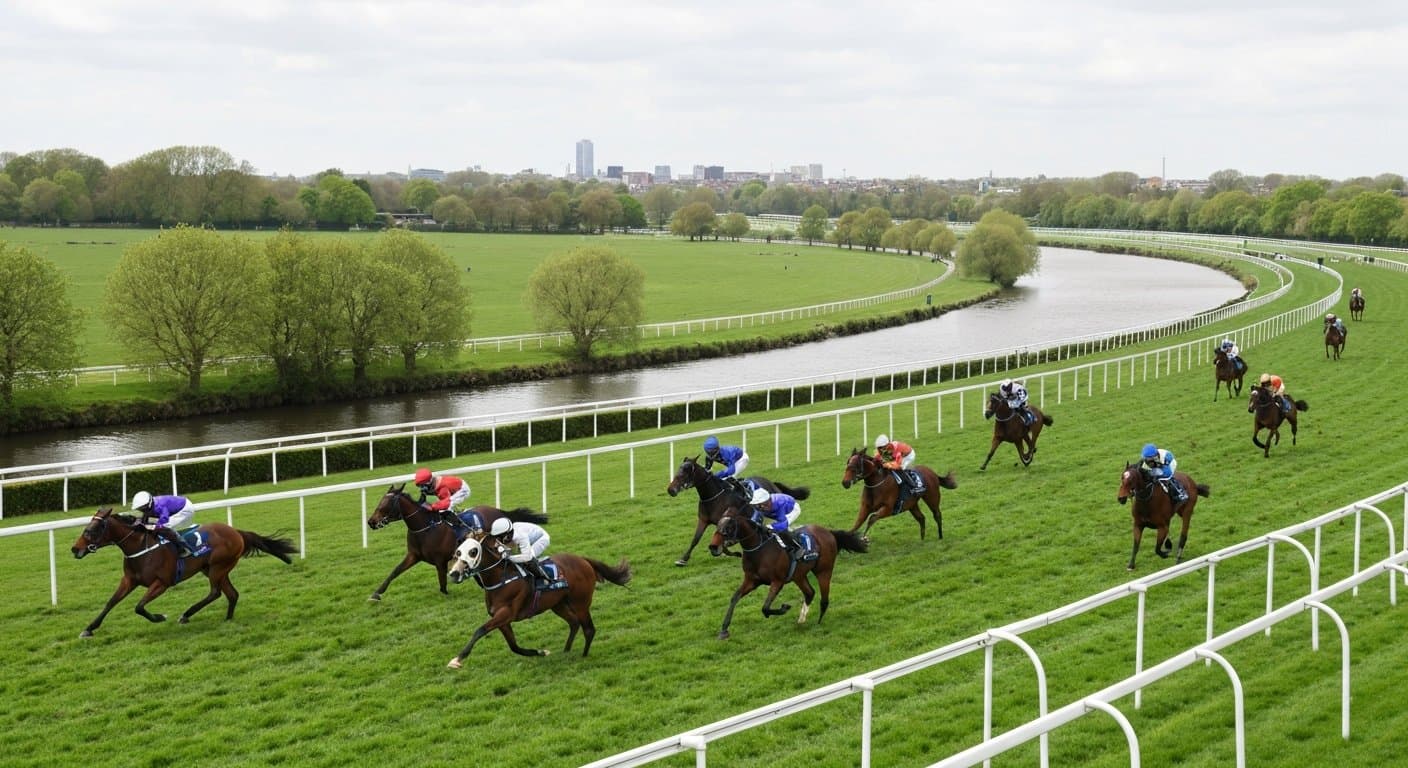
Nottingham Classic Trials & Two-Year-Old Form
Two-year-old and classic trial form at Nottingham — why the fair track produces reliable juvenile form, and how to use it for betting.
Read more
Nottingham Racecourse: Complete Guide
Everything you need to know about Nottingham — Colwick Park's galloping flat track, the Colwick Cup, and reliable form on the banks of the River Trent.
Read more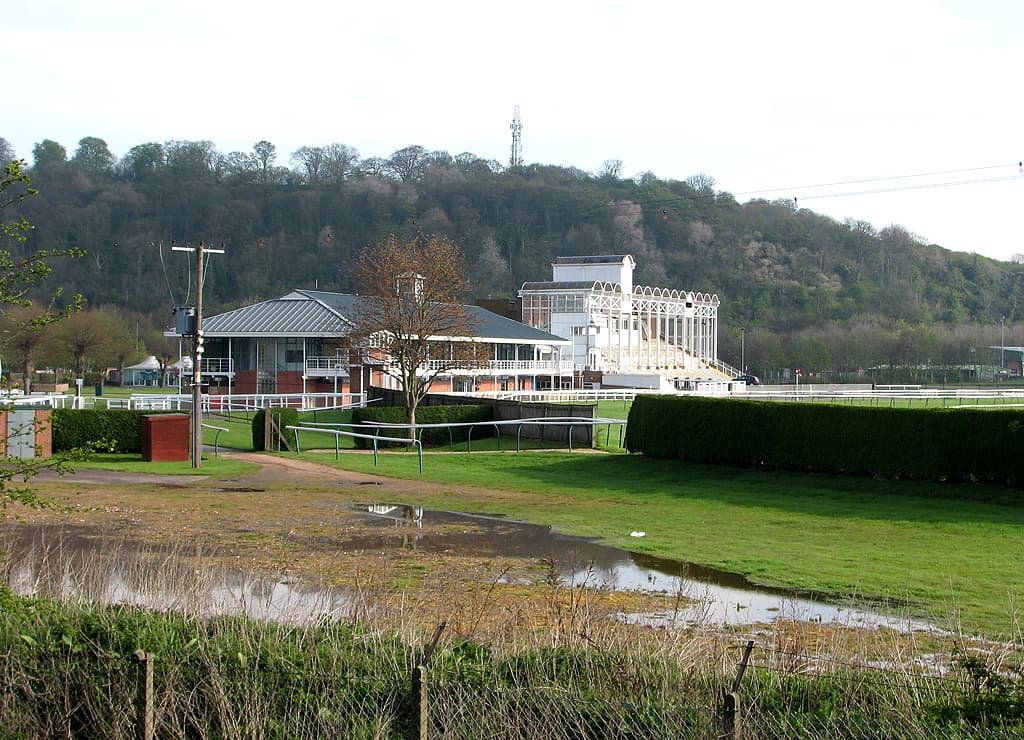
Nottingham Racecourse Day Out: Tickets, Dress Code & Tips
Plan your perfect day at Colwick Park with our insider guide to enclosures, getting there, what to wear, and the best food spots. Expert tips included.
Read morePhotos on this page are used under Creative Commons licences. Titles, sources and licence links for each one are on our image credits page.
Research the field with the AI Race Predictor
Our model publishes calibrated win-probability estimates for UK races — a second opinion to understand a race, not tips. It's open about its record: it doesn't beat the market, and we show exactly how it does.
Work it out & learn the basics
Gamble Responsibly
Gambling should be entertaining and not seen as a way to make money. Never bet more than you can afford to lose. If you or someone you know has a gambling problem, help and support is available.