
Founder & Editor · Last reviewed 2026-04-04
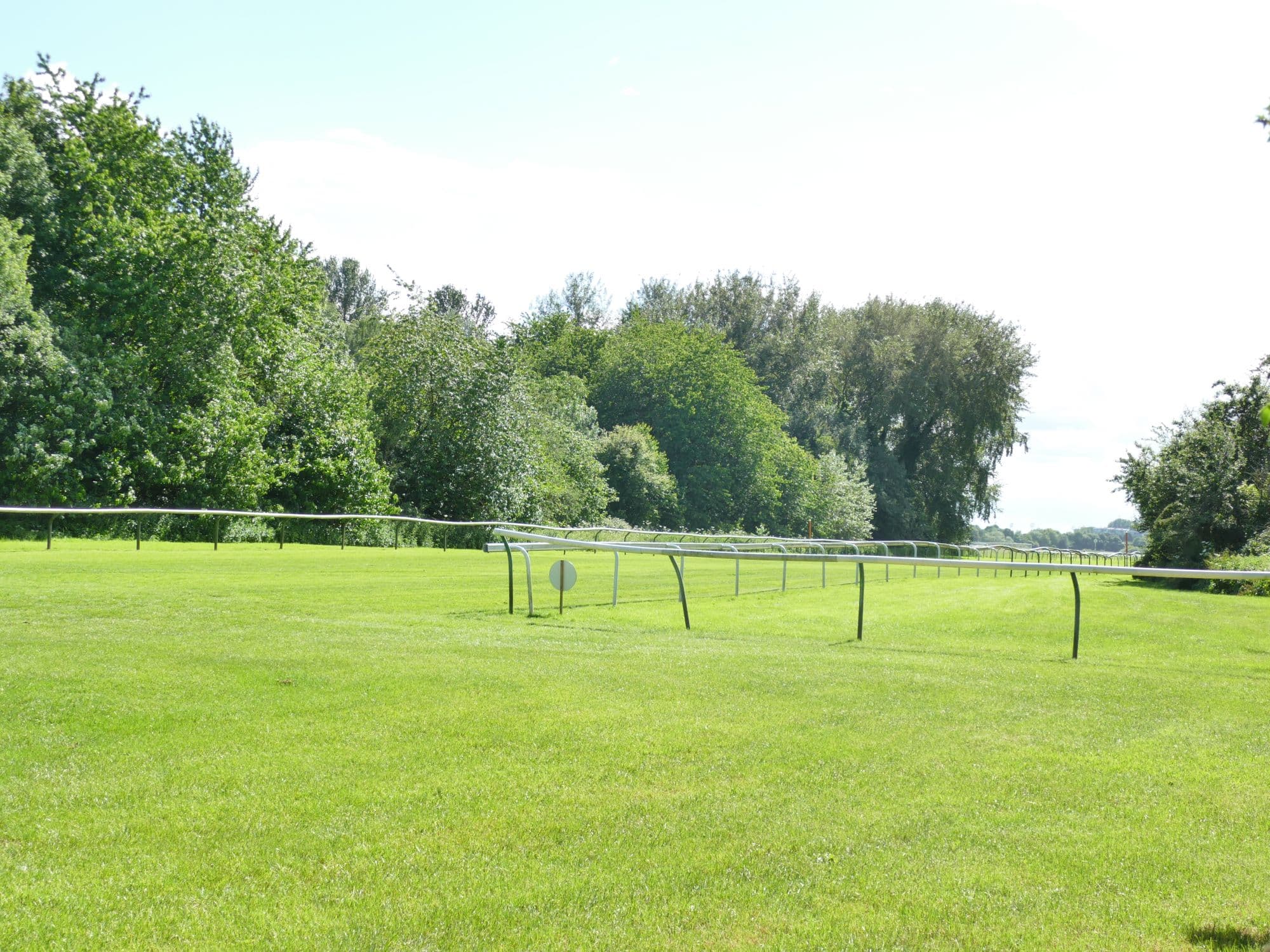
Nottingham Racecourse at Colwick Park sits three miles east of the city centre, beside the River Trent, on a flat stretch of Nottinghamshire parkland that has hosted racing since 1892. The track is left-handed, galloping, and wide. There are no sharp bends, no pronounced draw bias, and no awkward gradients. The best horse tends to win here, and that's precisely why trainers bring good ones.
The Colwick Cup is Nottingham's signature race, a Heritage Handicap run over one mile two furlongs in September that has been contested since the Victorian era. But Nottingham's broader reputation rests on its maiden programme. Trainers from the major yards in Newmarket, Lambourn, and the north use this course to introduce promising two-year-olds. A winner here on debut carries weight elsewhere. Form from Nottingham stands up.
The course holds around 8,000 at capacity. It doesn't draw the national crowds that Cheltenham or Royal Ascot attracts, and it doesn't need to. Nottingham works as a regional flat-racing fixture with a loyal East Midlands following and a programme that runs from March through to early November.
Quick Decision Block
- Should I visit? Yes, if you want a proper flat-racing day without the corporate crowds or the premium prices of the marquee festivals. Nottingham is relaxed, well-run, and easy to navigate.
- When should I go? The Colwick Cup meeting in September is the calendar highlight. The Spring Festival in May offers several quality days. Summer evening meetings have a pleasant, informal atmosphere.
- Which enclosure? The main enclosure covers the grandstand and parade ring. For a first visit, there's no need to upgrade. The viewing is good from the standard areas, and the paddock is accessible.
- What race should I watch? The Colwick Cup if you're visiting in September. At any other meeting, the two-year-old maidens are worth watching. They often feature horses you'll hear about again.
- How do I get there? Car is the easier option. Nottingham station has good rail connections from London, Derby, and Leicester, but the course is three miles from the station. Budget for a taxi of around £8 to £10 each way, or take bus 44 along Colwick Road. Public transport is manageable but not as straightforward as driving. Postcode NG2 4BE for sat nav.
- What should I wear? Smart casual is fine throughout the course. There's no formal dress code for general admission. Hospitality areas may specify smart dress.
- Is it family-friendly? Yes. The compact, parkland setting works well for families. The course is flat, access is easy, and the atmosphere is low-key enough that children don't feel out of place.
Who this guide is for
If you're a first-time visitor to Nottingham, this guide walks through what to expect from arrival to last race: the layout, the facilities, the best vantage points, and how to get there without confusion.
If you follow racing from a betting angle, the sections on the course characteristics and betting at Nottingham cover the draw, going patterns, and the reason maiden form from this track translates well to bigger races.
If you're interested in the history, Nottingham has been staging flat racing since at least the 17th century, first on the Forest and then at Colwick Park from 1892. The history section covers that ground in detail.
And if you're planning a day out and want the practical information on transport, food, and what's on, the facilities and getting there sections have what you need.
What follows is a full guide to Nottingham Racecourse: the course, the history, the calendar, and the betting angles.
Bet on Nottingham
Place your bets on Nottingham races with a trusted bookmaker.

Promo code BETFRED50. New customers only. Register, deposit with a Debit Card, and place a first bet of £10+ at Evens (2.0)+ on Sports, to be settled within 7 days, to get £30 in Sports Free Bets and £20 in Bet Builder Free Bets within 24 hours of settlement. 7-day expiry. Eligibility & payment exclusions apply. Full T&Cs apply. Take Time to Think. BeGambleAware.org. 18+. Full T&Cs.

Promo code R30. New UK customers only, 18+. Register, deposit £10 or more, then place a £10 single cash bet at odds of 1/2 (1.5) or greater on any sports market (excluding Virtuals). Once the qualifying bet settles you get £30 in Free Bets (3 x £10) — the qualifying bet can win or lose. Free Bets are valid on any sports market excluding Virtuals, expire in 7 days, are non-withdrawable and must be used in full. Excluded deposit methods apply (including PayPal, Apple Pay, Skrill and NETELLER). Named bets such as Lucky 15 do not qualify. If you cash out the qualifying bet, or it is voided, you are no longer eligible for the offer. Ends 31.12.26. Full T&Cs apply. Please gamble responsibly. BeGambleAware.org. 18+. Full T&Cs.

Promo code BET40GET20. New UK customers, 18+. Register with the code and place a first bet of £40 or more at Evens (2.0) or greater. Receive 2 × £10 free bets: the first credited automatically once the qualifying bet settles, the second 24 hours later. Free bets must be placed at minimum odds of 4/1 (5.0), expire 24 hours after credit, and the free-bet stake is not returned with winnings. Debit card deposits only. Take Time to Think. BeGambleAware.org. 18+. T&Cs apply. Full T&Cs.

50% of your first-day net losses refunded as a free bet, capped at £25. New UK customers aged 18+ only. To qualify, deposit and place a first bet of £10 or more on any sport at minimum odds of evens (2.00), then place at least two further bets on different events, each worth at least 50% of your largest bet, all at evens (2.00) or greater. Losses are counted from your first settled bet until 23:59 the same day. Place a qualifying £10+ bet and you are guaranteed at least a £5 free bet. Bets placed at SP, void bets, cashed-out bets and bets struck with free bets do not count towards the offer. The free bet is credited the day after your qualifying bets settle and must be used within 7 days, after which it expires. It can be used at odds from 1/4 (1.25) up to 250/1 on singles and straight accumulators, but not on Trixie, Patent or Yankee style multiples. Free-bet stake is not returned with winnings. One offer per person, household, address, IP address and device. E-wallet deposits may not qualify, so check the cashier before depositing. Customers registered with GAMSTOP cannot claim. KYC identity verification must be completed before the free bet is credited. Take Time to Think. BeGambleAware.org. 18+. T&Cs apply. Full T&Cs.

New customers, 18+. Choose the sports bonus at sign-up, make a first deposit and receive a 100% bonus up to £50 in your Sports Bonus balance. To convert the bonus to cash, wager it 10x within 30 days. Single bets below Evens (2.00) do not qualify; accumulators do not qualify if any selection is below 1/2 (1.50). Virtual Sports, voided, cancelled, drawn, cashed-out and free-bet wagers do not count towards wagering. Only the first settled bet per event counts. Withdrawing before the wagering requirement is met forfeits the bonus balance including bonus winnings. Real-money funds are used before bonus funds. Deposits via Skrill or Neteller are not eligible. Not valid in conjunction with other promotions. Odds, bet and payment limits apply. 10bet general and promotion T&Cs apply. BeGambleAware.org. 18+. Full T&Cs.

New customers in Great Britain and Republic of Ireland, 18+. Place a £10 fixed-odds qualifying bet at minimum odds of 1/2 (1.50) — single or each-way (only the win part counts), pre-event or in-play, not cashed out early, within 28 days of opening the account. Receive up to £60 in bonuses credited over three days: 3 × £10 fixed-odds free bets (the first on settlement, then 24 and 48 hours later) plus 3 × £5 Total Goals FOOTBALL spread bets and 3 × £5 racing Winning Favourites spread bets, with a £1 racing Race Index spread bet as an extra on top. The spread bets need a full spread-betting account, opened within 28 days of the fixed-odds account and subject to Spreadex's eligibility and appropriateness checks. Free-bet stakes not returned with winnings; free bets valid 28 days from issue. IMPORTANT: the £5 credits are SPREAD bets — sports spread betting carries the risk that losses can exceed your stake. Sports spread-betting customers do not have Financial Ombudsman or FSCS recourse. Take Time to Think. BeGambleAware.org. 18+. T&Cs apply. Full T&Cs.

Promo code WELCOME15, entered under My Bonuses after registering. New UK customers, 18+. Place a first qualifying bet of at least £10 from your cash balance at odds of evens (2.0) or greater within 7 days of opening the account. Once the qualifying bet fully settles you receive £15 in free bets, credited as 3 x £5 tokens with set uses: one £5 accumulator free bet (minimum 4 legs, each leg at 2/5 or bigger), one £5 sports free bet (any market at evens or bigger) and one £5 Sub Cover free bet (selected football player markets at evens or bigger). Free-bet stakes are not returned with winnings. Free bets expire 7 days after they are credited. Void, cashed-out and partially cashed-out bets do not qualify. One offer per customer. Confirm the current terms on BetGoodwin's own welcome-offer page before claiming. Take Time to Think. BeGambleAware.org. 18+. T&Cs apply. Full T&Cs.

New UK customers, 18+. Minimum deposit £10. Place a £10 qualifying single on sports (excluding virtuals) at minimum odds of 1/2 (1.50), settled within 14 days. Deposit-method exclusions apply. Receive £30 in free bets (stake not returned), split £20 for sportsbook use (2 x £10) and £10 for Bet Builder only (2 x £5); Bet Builder does not cover horse racing. Free bets must be accepted within 7 days and expire 7 days after acceptance. No promo code required. Best Odds Guaranteed on UK & Irish racing, subject to having staked over £25 in the previous seven days. Operated by LiveScore Betting and Gaming (Gibraltar) Ltd, UKGC 56859. Confirm the current terms on LiveScore Bet's own promotions page before claiming. Take Time to Think. BeGambleAware.org. 18+. T&Cs apply. Full T&Cs.
18+. BeGambleAware.org
History of Nottingham Racecourse
A History of Racing at Nottingham
Racing has been part of Nottingham's civic life for longer than most people realise. The sport was established in the city before the railways existed, before the grandstands were built, and long before the Colwick Park site was even considered. To understand what Nottingham Racecourse is today, it helps to understand where it came from.
The Forest Races: 17th Century to 1890
Organised horse racing in Nottingham is documented from at least the late 17th century. Meetings were held on Nottingham Forest, the broad common land north of the city centre, in the area now occupied by residential streets and what was once the Victoria railway line. This was not the wooded parkland the name suggests; the Forest was open heathland used for grazing, military exercises, and public gatherings. Racing fitted naturally into that civic pattern.
The Nottingham Corporation had an interest in the meetings from an early period. Prize money was modest, a mix of town purses and contributions from local landowners and sporting gentlemen, but the meetings attracted good competition from the Midlands and the north. The Forest course was broadly oval, left-handed (as was common on open ground), and while the exact configuration changed over decades, the racing was regular enough to build a local following.
By the mid-19th century, flat racing on the Forest was an established feature of the Nottingham calendar. Records from that period show a programme running from spring through autumn, with the principal races drawing horses from the leading yards of the day. The setting was practical rather than beautiful: open ground exposed to the weather, with temporary facilities and bookmakers operating from pitch-based rings around the perimeter.
The problem was the site itself. As Nottingham expanded through the Victorian era, pressure on the Forest common increased. Housing, roads, and the growing demands of an industrial city began to encroach on the open land. The Forest course lacked the long-term security that a dedicated sporting venue needed, and the facilities available to racegoers and officials were limited by the nature of the common.
Through the 1880s, discussions about the future of Nottingham racing accelerated. The Nottingham Race Committee recognised that the Forest site could not sustain a modern racing programme indefinitely. An alternative was needed, one that offered permanence, proper facilities, and room to develop the course.
The answer was Colwick Park.
The Move to Colwick Park: 1892
Colwick Park is a stretch of land on the eastern edge of Nottingham, alongside the River Trent. In the late 19th century it was parkland belonging to the Colwick estate: open, flat, and with enough acreage to accommodate a full racecourse circuit. The Trent forms a natural eastern boundary; Colwick Road and the city itself close off the western and northern sides.
Racing moved to the Colwick Park site in 1892. This is the year conventionally given as the founding date of Nottingham Racecourse in its current form, though it represents the continuation of a much older racing tradition rather than a fresh start. The Nottingham Race Committee had secured the ground, laid the course, and built the initial grandstand and facilities required for a properly established venue.
The course they built was left-handed, broadly oval, and galloping in character. The flat Nottinghamshire terrain made it naturally suited to long, sweeping bends rather than tight turns. The home straight was laid out to give horses a full four furlongs of running room, long enough for finishes to be decided by pace and stamina rather than positioning on the bend. This design philosophy, essentially the same one that governs the track today, was set from the outset.
The 1892 circuit measured approximately one mile three furlongs around its outer perimeter. That figure has varied slightly as the course has been adjusted over the decades, but the fundamental character (left-handed, wide, galloping) has not changed. In the years immediately following the move, the fixture list was restructured to take advantage of the new site's capacity, and prize money improved as the facilities attracted better horses.
The Colwick Cup was already in existence by this period. Though its exact origins are not fully documented, it was running as a recognisable fixture at Nottingham before the move to Colwick Park and continued after it. The race has operated under various conditions over the years; its current form as a Heritage Handicap over one mile two furlongs dates from later in the 20th century. Its presence in the calendar reflects a continuous history that predates the modern course.
The Early 20th Century: Consolidation
Between 1892 and the First World War, Nottingham Racecourse established itself as a solid regional fixture on the flat-racing calendar. It never challenged the major Classic venues, which is to say York, Newmarket, Epsom, and Doncaster occupied a different tier. But Nottingham operated consistently and attracted decent fields. The course's fair, galloping nature suited the better-class horses, and trainers from the Midlands, the north, and increasingly from Newmarket regarded it as a reliable venue.
The First World War disrupted racing across Britain. Meetings were suspended or curtailed from 1915, and many courses closed entirely for the duration of the conflict. Nottingham's records from this period are incomplete, but the course followed the general pattern: reduced racing or suspension through 1916 to 1918, with fixtures resuming in the immediate post-war period.
The interwar years saw Nottingham maintain its regional role. The fixture list was rebuilt, and the course continued to attract horses from the principal yards. The flat, wide track was particularly suited to the two-year-old maidens that became an increasing feature of the autumn programme, as trainers valued the fair test as a way of assessing young horses before the following season.
Consider a September afternoon in the 1920s: the grandstand filling with Nottingham locals, bookmakers shouting prices from their boards, a field of promising two-year-olds loading into the stalls for the season's most watched maiden. The result matters less than the assessment. Which horse travels well, which one idles in front, which one runs green but shows the right stride pattern. Trainers come to Nottingham to find answers.
By the 1930s, this purpose as a venue where form is tested and young horses are introduced was established clearly enough to shape how the course positioned itself.
The Second World War and Post-War Recovery
The Second World War brought a second major disruption. Racing at Nottingham was suspended from 1940 and did not resume until the post-war period. The course remained intact during the conflict; it was not requisitioned for military purposes in the way some tracks were. But the fixture programme was reduced to nothing for several years.
Racing returned to Colwick Park in the late 1940s. The post-war period brought a rebuilding of the fixture list and a gradual investment in facilities. By the 1950s, Nottingham was running a full spring-to-autumn programme again, with the Colwick Cup restored as the principal race of the season.
The decades following the war saw Nottingham follow the pattern of most regional flat courses: steady operation, moderate prize money, and a loyal regional audience. The course didn't host the glamour meetings or the Group races that defined the top tier, but it provided consistent, competitive racing that served the industry. Trainers, owners, and punters all found what they needed.
The Two-Year-Old Reputation: Development Through the Late 20th Century
Nottingham's identity as a strong course for two-year-old races developed through the second half of the 20th century and into the 2000s. The reasons are structural. The fair, galloping track is wide enough for horses to find space, with a long home straight that rewards the horse with the most natural ability rather than the best-drawn position. That gives trainers the assessment they're looking for with a young horse.
When you run a two-year-old on debut, you're not always trying to win. You're learning. A horse that handles the start, settles in its position, responds to the jockey's urgings in the straight, and runs an honest race on a fair track gives its trainer information. Nottingham provides that honest test. The wide track means a horse can't be caught out by traffic. The galloping nature means early-season fitness matters less, because the strong finisher will be rewarded. The absence of draw bias means a horse can be assessed without accounting for positional luck.
As a result, Nottingham maidens have consistently produced horses that go on to win in better company. Trainers who win a Nottingham maiden with a well-bred debutant take confidence from the result in a way they might not from a winner on a tighter, quirky track. Form from Nottingham travels.
This pattern became part of how the racing industry viewed the course. By the late 1990s and early 2000s, Nottingham was a predictable destination for the large Newmarket and Lambourn yards introducing their better two-year-old prospects. The spring maidens in April and May, and the autumn maidens in September and October, became part of the annual racing rhythm.
The Colwick Cup: A Heritage Race
The Colwick Cup's long history is part of what gives Nottingham its identity as a course with roots rather than just a fixture on a calendar. Heritage Handicaps are races that Weatherbys has classified as having a continuous history of at least 100 years. They are scattered across the British flat calendar, and the Colwick Cup is Nottingham's entry in that category.
The race is run over one mile two furlongs in September, typically attracting a competitive handicap field. Prize money has remained modest relative to the race's history; it is not a race that draws the top-rated horses in training. But the competitive nature of a Heritage Handicap means the field is often tightly graded, which makes it an interesting betting puzzle.
For Nottingham, the Colwick Cup serves the function that the Lincoln serves at Doncaster or the Cesarewitch serves at Newmarket. It anchors the course's identity, gives regular racegoers something to follow across the years, and provides a connection to the course's past that simple fixture racing cannot.
The Modern Course: 2000s to Present
Investment in facilities accelerated through the 2000s and 2010s. The grandstand and ancillary buildings were upgraded to bring the course's infrastructure in line with the standards expected by modern racegoers. The paddock and parade ring were improved. Food and hospitality facilities were expanded. The betting ring was modernised.
Nottingham's capacity is now given at approximately 8,000. On a busy day at the Colwick Cup meeting or a Spring Festival Saturday, the course can feel comfortably busy without becoming congested. The compact nature of the Colwick Park site means walking distances are short and sightlines are generally good.
The fixture list runs from March through to early November, with somewhere in the region of 20 to 25 meetings per year. Flat racing only: there is no National Hunt programme at Nottingham, and there hasn't been for many decades. The course's identity is unambiguously flat, and the programme reflects that.
In terms of racing quality, Nottingham sits in the second tier of British flat courses, well above the minor tracks but below the Classic venues. Group racing does not feature on the card. The best races are Listed conditions events and the better-grade handicaps, including the Colwick Cup. The standard of racing is competitive, the fields are honest, and the form holds.
What the History Means
For a racegoer visiting today, Nottingham's history matters in a practical sense. The course moved to Colwick Park in 1892 not by accident but because the site suited racing: flat, open, with room for a proper galloping circuit and a long home straight. The decision made then is still visible in how the track rides now.
The two-year-old reputation is also historically rooted. It didn't emerge from a marketing exercise. It grew from the structural characteristics of a track that provided a fair test when the industry needed reliable form. That reputation, built over decades, continues to bring the major yards to Nottingham with their best young horses.
A course doesn't develop a reputation like Nottingham's by accident. It develops it by being consistently honest, and the Colwick Park site has been consistently honest since the day it opened.
The Course
The Course
Nottingham's track is a left-handed, galloping oval set on flat Nottinghamshire parkland. The circuit measures approximately one mile three furlongs around the outer perimeter. The home straight is about four furlongs long. There are no sharp bends, no significant gradients, and no quirks that systematically advantage one type of horse over another. For punters and trainers alike, that consistency is the course's defining characteristic.
Layout and Shape
The track is broadly oval, with a long back straight running roughly south-west to north-east before sweeping left through two long, gradual bends into the home straight. The bends are wide-radius turns, nothing like the tight turns at Chester or the pronounced bends at Bath. Horses coming off the final turn have room to straighten, and the four-furlong straight gives them enough distance to express themselves.
The wide bends mean horses are rarely pocketed on the turn. A horse trapped on the inner in the back straight can be asked to improve its position without fighting against a tight corner. This design feature is part of why form from Nottingham is reliable. Horses that run good races here have actually run good races, not just positioned themselves well.
Starting points vary by distance. The one-mile start is on the back straight, giving horses a full circuit and turn into the home straight. The five-furlong start is on a chute that joins the back straight, putting the horses on the course proper before the bend. Middle distances (one mile two furlongs to one mile four furlongs) start at various points on the back half of the circuit.
For two-year-old races, the most common distances are five furlongs and six furlongs. The five-furlong chute is particularly straight, which benefits horses with real pace rather than those that can hold a position on a bend. This is part of the reason Nottingham's sprint results for juveniles are considered a reliable pointer. If a horse wins a Nottingham five-furlong maiden on pure pace, that pace is real.
The Home Straight
The home straight is approximately four furlongs from the turn to the winning post. Four furlongs is a long run-in by the standards of most British flat tracks. Newmarket's Rowley Mile has a longer straight, and the Old Course at Goodwood is famously undulating, but many tracks offer significantly less room to finish. Nottingham's four-furlong straight rewards horses that finish their races. A horse that has been held up in midfield can make sustained progress over this distance if it has the class to do so.
The straight is wide. The widest part of the course can accommodate large fields without serious crowding, which is relevant because Nottingham often stages big-field handicaps where 15 to 20 runners are common. Even in these races, there is room for horses to find their preferred track position without forcing their way through a narrow gap.
Viewing from the grandstand, the home straight is fully visible from the turn to the post. This is a practical advantage on a racecourse: racegoers can follow the race throughout without needing to track a screen for the middle stages. The wide, open layout makes Nottingham one of the better courses for watching racing in real time.
Draw Bias
Nottingham has no pronounced draw bias. This isn't a claim made without basis. It reflects both the track's physical characteristics and the pattern of results over many years.
On the flat, galloping surface with wide bends and a straight home run, there is no structural reason for high or low draws to dominate. The going can occasionally produce a slight advantage near one rail when the ground dries differentially. In soft conditions in spring, the inside of the track sometimes rides better as the better-drained areas hold the going longer, but this is a minor and inconstant factor rather than a reliable edge.
By comparison: Chester, where the tight, round track creates a massive low-draw advantage in most distances, or Beverley, where the straight and track configuration produces a very strong high-draw bias in sprint races, are the kinds of extreme draw-biased courses where draw analysis is an important part of handicapping. Nottingham is not in that category. A horses's draw here is broadly neutral.
The practical implication for betting is that you should not be selecting or rejecting horses at Nottingham primarily on draw grounds. A horse drawn in stall 18 in a 20-runner handicap faces marginally more traffic risk than a horse in stall two, but it's a minor consideration rather than a decisive one. Form, class, and going suitability are more important factors here.
Sprint races (five and six furlongs) are the most likely distance to show any draw trend, because the shorter the race, the less time there is to correct positional disadvantage. Even in sprints, Nottingham's draw effect is small enough that it shouldn't be the primary handicapping variable.
Going and Ground Conditions
Nottingham's location in the East Midlands gives it a climate that produces a typical range of going across the season. The course is on flat, riverside land beside the Trent, and drainage is generally good. The going at Nottingham tends to be on the firmer side in summer and can soften quickly in wet spells during spring and autumn.
Typical going progression through the season:
- March–April: Good to Soft or Soft. Early season meetings can be heavy if a wet winter runs into spring. The going is often the most variable at this time of year.
- May–June: Usually Good or Good to Firm as the ground dries. Occasional departures in a wet spring.
- July–August: Frequently Good to Firm or Firm. Summer meetings tend to run on faster ground.
- September–October: Variable. Can be Good to Firm in a dry autumn or Good to Soft after rain. The Colwick Cup meeting in September can run on any of these surfaces.
- Late October–November: Good to Soft or Soft as the season closes. Going can deteriorate quickly at this time of year.
The going is checked and reported the morning of racing, and an updated going report is published by the course. For handicap races where going preference is a known factor for individual horses, it's worth checking the report before betting.
One note on the riverside setting: Colwick Park is close to the Trent floodplain. After prolonged heavy rain, the ground in and around Colwick can hold water. The course's drainage is adequate for normal conditions, but extended wet periods, particularly in spring and late autumn, can produce going descriptions of Heavy. Meetings have been abandoned in exceptional circumstances.
What Type of Horse Wins Here
The galloping, flat, fair track with a long home straight produces a clear picture of the ideal Nottingham winner.
Stayers and middle-distance types are well suited. The long home straight rewards horses that finish their races. A horse with a high cruising speed that can sustain it over four furlongs from the turn will be at an advantage over a horse that relies on a short, sharp burst. This makes Nottingham a good track for horses bred to stay: Galileo progeny, Sea The Stars progeny, horses with a middle-distance pedigree.
Front-runners can be effective but need real pace to dominate. Because the home straight is long, a front-runner that ties up in the final two furlongs will be caught. The front-runners that win at Nottingham tend to have good cruising speed. They're not grinding out a slow pace and praying; they're controlling the race from a decent tempo throughout.
Hold-up horses have enough room to improve from the turn, but the four-furlong run-in is not so long that a horse can win from last turning in. Horses that like to take a settled position in midfield before picking up from two furlongs out tend to be the archetypal Nottingham winners.
Small, sharp types bred for five furlongs on a tight track don't always find Nottingham to their liking. The wide, galloping circuit is not the home of the speedy, compact sprinter that excels at a course like Catterick or Windsor. Bigger-framed, longer-striding horses tend to handle the Nottingham gallop better.
For two-year-old maiden races in particular, the fair test means that the horse with the most natural ability wins. Trainers' reports after Nottingham maidens are often definitive. They've seen their horses move properly on a course that didn't give them an artificial advantage or disadvantage. A two-year-old winner at Nottingham has earned its reputation.
Distances at Nottingham
The course stages races from five furlongs to two miles. The full spread of distances available reflects its status as a galloping track rather than a specialist sprint or staying venue. Common race distances include five furlongs, six furlongs, one mile, one mile two furlongs, one mile four furlongs, and two miles.
The one mile two furlongs distance (the Colwick Cup trip) is one of the most common in the handicap programme. It's a distance that suits a broad range of horses and produces well-contested races where pace, stamina, and positioning all play a role. For form study purposes, it's a distance where Nottingham's fair-track advantage is clearest: a winner at one mile two furlongs here has beaten their rivals on a track that gave everyone a run.
A Fair Test
The summary of the Nottingham course is simple: it's fair. Wide, flat, galloping, with a long home straight and no bias. That's not a hollow marketing phrase. It's a track characteristic that has practical consequences for racing quality and form reliability.
Trainers value it for this reason. Punters who understand form analysis value it for this reason. A horse that wins a competitive maiden at Nottingham on a fair track, in a field that includes well-bred rivals from major yards, has demonstrated something real. That's the foundation of Nottingham's reputation.
For a more detailed analysis of how the course characteristics translate into betting approaches, see the betting at Nottingham section.
Key Fixtures & Calendar
Key Fixtures and Calendar
Nottingham stages flat racing from March to early November. There is no National Hunt programme. The course is flat-only, which means the season has a clear start and end. In a typical year there are somewhere between 20 and 25 fixture days, spread across the season with a concentration in the spring, high summer, and September.
The course doesn't run a flagship festival on the scale of Royal Ascot or the Cheltenham Festival, but the Colwick Cup meeting in September is the highlight of the year, and the Spring Festival in May brings several quality cards in quick succession. The rest of the programme is built around well-graded handicaps, maiden races, and conditions events that serve the needs of a broad range of horses and trainers.
The Colwick Cup Meeting
The Colwick Cup is Nottingham's Heritage Handicap, the race that anchors the course's identity and gives the September meeting its character. Heritage Handicaps are a category created by Weatherbys to recognise races with a continuous history of at least 100 years. Nottingham's entry in that list is the Colwick Cup, which has been run continuously at Colwick Park since the Victorian era.
The race is run over one mile two furlongs, usually on a Saturday in early to mid-September. It's a competitive flat handicap (Class 2 or Class 3 depending on the year), and fields typically include 12 to 16 runners drawn from yards across the country. Prize money is modest by the standards of a Group race, but the field quality is often higher than the prize fund suggests, partly because owners and trainers value the race's history and partly because the fair Nottingham track makes it an attractive target for horses at the right end of the handicap.
The Colwick Cup card is the busiest day of the Nottingham year. A supporting programme of races fills the card to six or seven races, with a mix of handicaps and conditions events that attract decent fields. For racegoers, this is the day to plan if you want to see the course at its most animated. Crowds are larger than on a typical midweek card, the betting ring is active, and the atmosphere has the edge that a race with history behind it tends to generate.
For form students, the Colwick Cup is worth watching even in years when you're not betting it. The race often attracts horses that are at the end of their summer campaign and targeting a final big prize, horses that trainers have kept fresh for the meeting. Form from the race tends to point forward into the autumn as well as looking back at the summer.
The Spring Festival
The Spring Festival in May is the second major point in the Nottingham calendar. "Festival" is a slightly generous label for what is essentially two or three quality fixture days in quick succession, but the May programme at Nottingham does attract a concentration of good horses, particularly in the two-year-old maiden races.
May is prime time for two-year-old debuts. Horses born in January and February are physically ready to race by May, and the trainers who have been patient with their best juveniles through March and April use Nottingham in May as a launching pad. Several of the better Newmarket and Lambourn yards make the trip to Nottingham specifically for the maiden programme in May, knowing that the fair track will give them an honest reading of their horses.
The Spring Festival cards also include well-graded three-year-old handicaps, which attract horses stepping up from relatively low official ratings after their early career form. These horses are often on the way up and represent good betting opportunities if you've tracked their form from the autumn before.
One useful pattern in the Spring Festival: watch for horses that ran respectably in maidens the previous autumn at Nottingham and are now returning to the track they know. Horses do not have preferences for specific courses in the way that can be exaggerated in form discussions, but a horse that handled Nottingham's galloping track well in its first season will often handle it again. More importantly, a horse that showed good form here as a two-year-old, improved over the winter, and returns to similar conditions as a three-year-old at the start of a handicap campaign is often at a formative point in its career.
Two-Year-Old Programme
The two-year-old maiden and novice races at Nottingham are among the most watched on the circuit by form students. Races that produce future Group winners are common enough to make this more than coincidence.
The pattern is a function of track quality. Trainers who have truly promising horses choose where to debut them carefully. A horse's first race is a significant moment. A bad experience on a tricky track can affect confidence; a positive run on a fair track builds it. Nottingham's wide, galloping circuit is low-risk in that sense: there are no sharp turns to unbalance a horse, no deep patches of soft going at one rail that would give an unfair advantage, and no pronounced draw bias that would leave a well-drawn horse winning comfortably despite being outpaced.
The result is that Nottingham's maiden programme attracts a high proportion of well-bred horses from major yards, the competition in those races is real, and a winner is typically a horse with actual ability. Two-year-old winners at Nottingham should be noted in your form book. They often reappear at better meetings.
Key dates for the two-year-old programme: April openings, the Spring Festival in May, a midsummer run of maidens in July and August, and then the autumn programme from September onwards, by which point the best juveniles will be heading for Group company while the maidens fill with horses for whom Nottingham represents a final chance to qualify.
Summer Evening Meetings
Nottingham stages a series of evening meetings in June and July, typically on midweek dates. These are the most relaxed days on the calendar, with smaller crowds, a mix of Class 4 and Class 5 racing, and an informal atmosphere that suits casual visitors.
Evening meetings are worth attending if you want a low-key introduction to the course. The quality of racing is below the Spring Festival and the Colwick Cup, but the experience of watching flat racing in a pleasant parkland setting on a summer evening is straightforward enough to recommend to anyone who hasn't been to Nottingham before.
Racegoers on evening cards tend to be a mix of Nottingham locals and racecourse regulars who use these midweek meetings to see horses in person and do their form work face-to-face rather than from a screen. The parade ring is accessible and the paddock allows close viewing before races.
Autumn Closing Programme
From October into early November, Nottingham's season winds down with a series of mixed cards. The going is often Good to Soft or Soft by this stage, which changes the character of the racing compared to midsummer. Staying types and horses that handle soft ground tend to dominate.
The autumn programme includes maiden races that attract late-developing two-year-olds: horses that didn't debut in summer, or horses that ran once in the spring and took time to come to themselves. These late-season maidens can be informative: a horse that wins a Nottingham maiden on soft ground in October from a field of once-raced horses tells you something different from a May debut winner, but it's still worth noting.
The season typically ends before Bonfire Night, with the last fixture in late October or early November. After that, racegoers looking for flat racing in the East Midlands will need to travel to the all-weather venues. Southwell, at Rolleston-on-Dove a few miles north of Nottingham, runs all-weather flat racing year-round and provides a nearby alternative through the winter months.
Planning Your Visit
Full fixture lists and ticket information are available at the Nottingham Racecourse website. Fixtures are published well in advance, and the Colwick Cup Saturday sells earlier than other meetings, so booking at least a month ahead is advisable for September.
For most non-festival fixtures, tickets are available on the day at the gate. Early summer and midweek meetings rarely sell out. Evening meetings are walk-up friendly for most enclosures.
For a full guide to what a day at the course involves, see the day out guide. For betting angles on the specific race types that appear in the Nottingham programme, see the betting guide.
Facilities & Hospitality
Facilities and Hospitality
Nottingham Racecourse is a compact, well-organised venue. With a capacity of around 8,000, it doesn't have the scale of the major festivals, which means facilities are within easy walking distance and queues are rarely a serious problem on all but the busiest days.
Enclosures
The course operates two main areas: the main enclosure, which includes the grandstand, parade ring, and paddock access, and the course enclosure, which provides a more open, standing-based viewing experience with access to the betting ring.
Main Enclosure (Members' and Grandstand): This is the primary area for most racegoers. The grandstand provides tiered seating with direct views of the home straight and the winning post. From the upper tiers, the full extent of the home straight and part of the final bend is visible, which means you can follow races from before the turn rather than picking them up only in the last two furlongs. The parade ring is within the main enclosure, accessible before each race, and the weighing room area gives additional access on busy days.
Dress code in the main enclosure is smart casual. There is no formal requirement for jackets or ties on normal fixture days, though the Colwick Cup meeting tends to attract a better-dressed crowd by self-selection rather than regulation. If you're attending corporate hospitality, dress code will be specified in the booking confirmation.
Course Enclosure: This is the standing area on the course side, accessed via a separate entrance. It's a cheaper ticket option and provides good views of the racing from a different vantage point. The course enclosure is fine for racegoers who prefer to watch from the rail and don't need access to the grandstand facilities. On summer evenings, the course enclosure has a particularly relaxed atmosphere.
For a first visit, the main enclosure is the recommended option. The grandstand views, parade ring access, and facility quality justify the slightly higher admission.
Viewing
The grandstand provides the best views of the finish. Sightlines are unobstructed from most of the grandstand seating, and the finish line is directly in front of the stand. The wide, open track means horses racing in the middle or far side of the course are still visible to the naked eye. Binoculars are a useful addition but not essential.
The paddock area adjacent to the parade ring offers close viewing of horses before races. This is one of the practical pleasures of a racecourse of Nottingham's scale: you can watch horses being walked in the paddock from a few feet away without fighting through a crowd. On a busy Colwick Cup Saturday you'll need to arrive early to get a front-position at the rail, but on most days there's space.
Food and Drink
Nottingham's catering follows the modern racecourse pattern: a range of food options from trackside burgers and hot food counters to restaurant dining in the hospitality areas.
The grandstand level has food and drink outlets covering the standard raceday options: hot meals, sandwiches, snacks, and a bar. The quality is what you'd expect from a well-run regional course: decent, unpretentious, and reasonably priced compared to the premium festival venues. Bar queues on normal meeting days are rarely a problem; on the Colwick Cup Saturday, allow extra time before the main races.
Hospitality dining in the private boxes and function rooms is separate, with menus that vary by event. The course offers package bookings for groups and corporates that include table service, which is worth considering if you're attending with a party of six or more, as the price per head is higher but the logistics are easier.
Outside catering is sometimes available in the course enclosure and outside areas. Check the course website for the current food and drink offer at specific meetings, as it varies across the season.
Betting
On-course bookmakers occupy the betting ring adjacent to the grandstand. The ring operates through the standard British model: a row of licensed bookmakers, each displaying their prices on a board, taking bets from the public. The Nottingham ring is active on busy days, with odds updating in line with the market. Bet tracking is possible by walking the ring before a race to check prices across different layers.
The Tote operates at Nottingham through the standard windows, covering Win, Place, Exacta, Trifecta, and Jackpot pools depending on the card. Self-service Tote terminals are available in the grandstand, which is useful if you prefer to place bets without waiting in a queue.
For those who prefer to use a betting app or online account, the Colwick Park site has adequate mobile signal on most days, though crowded areas around the grandstand can occasionally reduce connectivity on a busy meeting. The on-course Wifi is available but variable.
For betting strategy at Nottingham, see the dedicated betting guide.
Hospitality Packages
Nottingham offers a range of corporate and group hospitality options. The private boxes in the grandstand provide enclosed viewing with table service, and are popular for business entertaining, birthday groups, and racing societies. Bookings can be made through the course website.
The atmosphere in Nottingham's hospitality areas is informal rather than corporate. You're unlikely to find the polished, high-end feel of a Cheltenham or Ascot box day. Nottingham's hospitality is solid and well-run without being luxurious. For groups looking for an enjoyable day rather than a prestige event, this is often preferable: the informality means the focus stays on the racing.
Hospitality packages typically include admission, food, and a drinks allowance. Prices vary by meeting, with the Colwick Cup meeting at the higher end of the range.
Family Facilities
Nottingham is a practical venue for families. The compact, flat site means pushchairs and buggies are easy to manage. Access routes around the main enclosure are level, and the parade ring and grandstand areas are accessible without significant steps for most routes.
Children are welcome throughout the course, and younger racegoers tend to enjoy the close-up access to horses in the paddock that a smaller course allows. There are no permanent children's entertainment facilities on the scale of the family zones at some larger venues, but the Colwick Park setting, with its parkland surroundings, provides natural space.
Baby changing facilities are available in the main amenity blocks. Check the course's visitor information page for details of family ticket pricing, which typically offers a reduced rate for parents attending with children.
Accessibility
Disabled access at Nottingham is good. The main enclosure has level access from the car park, and the grandstand has lift access to the upper tiers. Wheelchair viewing positions are available with good sightlines to the track. Accessible toilets are positioned throughout the main enclosure.
The course operates a companion ticket policy for visitors with disabilities requiring an accompanying person. Details are available through the course booking system. Guide dogs are welcome throughout the course.
For specific accessibility queries, including whether a particular area or facility is suitable, the course office can be contacted in advance of a visit.
Wi-Fi and Connectivity
Mobile phone signal is generally adequate at Colwick Park, with the main networks providing coverage across the site. Signal can be reduced in the grandstand interior and in the hospitality boxes. The course's own Wi-Fi is available in parts of the main enclosure, though its reliability on busy days varies.
For most racegoing purposes (checking apps, placing bets, or consulting form) standard 4G coverage is sufficient for most visitors. The site does not have the heavy crowd density of a major festival venue, so network congestion is less of an issue than at courses like Cheltenham or Aintree on peak days.
Getting There
Getting There
Nottingham Racecourse is at Colwick Park, NG2 4BE, on the eastern edge of Nottingham. The site is about three miles from Nottingham city centre, accessible by car, taxi, or bus. There is on-site parking.
The honest summary on public transport: Nottingham is accessible by rail to the city, but the three-mile gap between Nottingham station and the racecourse means you'll need a taxi or bus for the second leg. This is manageable but takes more organisation than courses served directly by a shuttle bus from the station. If you can drive or share a car, it's the straightforward option.
By Train
Nottingham station is served by East Midlands Railway with regular services from London St Pancras International. Journey time from St Pancras is approximately one hour 45 minutes on a standard service, with faster trains getting closer to one hour 35 minutes. Services run regularly throughout the day.
Other connections:
- Derby: approximately 25 to 30 minutes, East Midlands Railway
- Leicester: approximately 25 minutes, East Midlands Railway
- Sheffield: approximately 55 minutes, East Midlands Railway via Derby
- Birmingham New Street: approximately one hour 15 minutes, CrossCountry
From Nottingham station, the racecourse is about three miles to the east, towards Colwick. Options from the station:
Taxi: The most straightforward option. The rank is outside the station entrance. Journey time is approximately 10 to 15 minutes depending on traffic, and fares are typically around £8 to £10. On a raceday, it's worth confirming the taxi is available for the return journey, particularly on the Colwick Cup Saturday when demand for taxis in the city increases in the afternoon.
Bus 44: Bus 44 runs from Nottingham city centre along Colwick Road towards Colwick, passing close to the racecourse entrance. The journey from the city centre is approximately 20 minutes. From Nottingham station it's a short walk to the city centre bus stops. Check the current timetable with Nottingham City Transport before you travel, as services vary by day and are subject to change. On racedays, the bus is used by regular Nottingham racegoers, so you can follow the crowd if you're uncertain of the stop.
If you're travelling from London for the Colwick Cup, the morning trains from St Pancras arrive at Nottingham with enough time to get to the course before the first race. A 9am or 9:30am departure gives you a comfortable margin. Check the East Midlands Railway timetable and book in advance, as fares are lower with early booking and the trains fill on race Saturdays.
By Car
Car is the most convenient way to reach Nottingham Racecourse. The Colwick Park site has on-site parking, and the road approach is straightforward from the main routes.
From the M1 (north or south):
- Junction 25 (southbound): Follow signs for Nottingham East / A52. Take the A52 towards Nottingham, then pick up the A612 (Colwick Road) east towards Colwick. The racecourse is signposted from the A612.
- Junction 26 (northbound from the south): Follow the A610 towards Nottingham city centre, then navigate via the ring road towards the east of the city and the A612.
From Nottingham city centre: Take the A612 (Colwick Road) east from the city. The road runs directly towards Colwick, and the racecourse entrance is signposted at the Colwick Park junction.
From the north and east (Newark, Grantham, Lincolnshire): The A612 runs southwest from Southwell towards Nottingham, passing through Colwick. Approach from Southwell and the racecourse is on your right before reaching the city centre.
From Leicester and the south: The A60 north from Leicester connects to the Nottingham ring road, from which you can pick up the A612 east.
Sat nav postcode: NG2 4BE. This will take you to the Colwick Park entrance. Allow extra time on busy race Saturdays, as Colwick Road can back up on the approaches to the car park entrance.
Parking
On-site parking is available at Colwick Park. The car parks are adjacent to the racecourse entrance and within easy walking distance of the main gates. Parking charges vary by meeting. Standard charges apply for most fixtures, with higher charges on the Colwick Cup Saturday. Advance booking for parking is available through the course website for busy meetings.
The car parks open approximately 90 minutes before the first race. On a busy Saturday, arriving an hour before the first race gives you a comfortable window to park, collect tickets if pre-booked, and get to the grandstand before the first.
There is no designated overflow parking on the Colwick Park site, so arriving late for a busy meeting can mean looking for street parking in the Colwick area. Streets close to the racecourse do attract race traffic, and some local roads have residents' parking restrictions. Allow extra time on the Colwick Cup day.
Approximate Driving Times
- From Nottingham city centre: 10 to 15 minutes
- From Derby: 30 to 40 minutes via A52
- From Leicester: 40 to 50 minutes via A46 / A606
- From Sheffield: 45 to 55 minutes via M1 J29 and A617
- From Birmingham: approximately one hour 15 minutes via M42 / M6 / A38
- From London: approximately two hours via M1 to J25
These are standard journey times; allow more on a Saturday morning or if you're travelling during morning rush hour.
Useful Links
- Nottingham Racecourse website: fixture list, tickets, transport, parking
- East Midlands Railway: trains from London, Derby, Leicester
- Nottingham City Transport: bus 44 timetable
- For a full guide to planning the day, see the day out guide
Betting at Nottingham
Betting at Nottingham
Nottingham's value as a betting venue rests on a single characteristic: the fairness of the track produces reliable form. If you understand what that means in practical terms, you can use it. If you don't, Nottingham looks like any other regional flat course.
Why Nottingham Form Travels
The core betting principle at Nottingham is form reliability. A horse that wins a competitive maiden at Nottingham on a fair track, against a well-bred field, has beaten its rivals on neutral ground. There's no sharp bend where it found an extra length by hugging the rail, no soft patch of ground at one side that helped a horse that happened to be drawn there, no pronounced draw bias that inflated the winning margin.
This matters because form comparison depends on calibrating results against course characteristics. A horse that wins by three lengths at Chester on the inside rail in a race where the draw dominated by four lengths is not a three-length winner in any real sense. A horse that wins by three lengths at Nottingham has beaten its rivals by three lengths.
Trainers know this. The major Newmarket and Lambourn yards (Godolphin, John and Thady Gosden's Clarehaven, Roger Varian, Charlie Appleby, Andrew Balding, Ralph Beckett) regularly send well-bred horses to Nottingham for their first starts precisely because they want an honest assessment. If a horse runs a good race at Nottingham, it's run a good race. That assessement is then used to plan the horse's season.
As a result, Nottingham's maiden fields are often high quality. The presence of well-bred, well-prepared horses from the top yards in what might be a Class 4 or Class 5 race compresses the prices. You're rarely going to find a 33/1 winner in a Nottingham maiden that included three Godolphin debutants, but it improves the form signal. The race means something.
Maiden Race Analysis: The Key Angles
Two-year-old maidens at Nottingham are worth studying carefully, both for betting on the day and for tracking horses forward through the season.
First-time-out horses from major yards on fair tracks: This is a known angle. A horse trained by a big yard making its debut at Nottingham, in a field with similar debutants, is being assessed by a trainer who knows the horse's ability. The market will compress the prices if several major-yard debutants are in the same race, but the winner is generally a horse that the yard is confident about. Watch the market move in the hour before the race. Money for a well-backed debutant from a Newmarket yard at Nottingham is usually informed.
Horses stepping from Nottingham to Listed and Group races: These are the ones to note in your form book. A horse that wins a Nottingham maiden, particularly by a clear margin against a field of well-bred opponents, will often be aimed at a Listed or Group race within a few weeks. The win at Nottingham is not just a career milestone; it's a qualification. If the horse goes on to run well at Listed or Group level, the Nottingham form is confirmed, and all the horses that ran behind it that day now have upgraded form. Track the fields carefully.
Three-year-old maiden returners: Horses that ran in Nottingham maidens as two-year-olds and are returning to the same track as three-year-olds are worth noting, particularly early in the season. A horse that ran with promise at Nottingham in October, showed good form figures for a two-year-old, and reappears here in April as a three-year-old stepping into a handicap for the first time is often available at a bigger price than its form merits.
Draw Analysis
As covered in the course section, Nottingham has no pronounced draw bias. The practical betting implication:
Do not bet against a horse primarily on draw grounds, and do not apply a significant premium to a horse drawn in what you perceive as the ideal stall. The difference in expected outcome between stall one and stall 16 in a 16-runner Nottingham handicap is minimal.
The one exception, and it's minor, is in five-furlong sprint races on going that has dried to Firm in summer. In very fast-ground conditions, horses that race closer to one rail can sometimes benefit from a harder strip of ground. Check the going report if this is a concern. But even in this scenario, the effect at Nottingham is small enough that it's a secondary consideration rather than a primary betting filter.
The positive flip side: at a course with no draw bias, you should focus your analysis on form, class, going preference, and trainer/jockey combinations. These are the variables that matter. Nottingham is a course where good form analysis wins, rather than a course where pattern-of-track knowledge provides the main edge.
Going Preference
Going is the most consistently important variable at Nottingham, particularly for handicap races where the field includes horses with clear preferences.
The key principle: check individual horse going preferences against the official going on raceday. Nottingham can run on going from Firm to Heavy within the same season. A horse that has won twice on Soft going and never been placed on Good to Firm is a different proposition depending on the conditions.
Useful patterns at Nottingham by going:
- Firm and Good to Firm: Fast-ground speed-types come into their own. Front-runners find their stamina tested less severely on fast ground. The pace tends to be more even, and a horse with a high cruising speed can dominate from the front. Horses bred for speed rather than stamina perform best.
- Good: The standard Nottingham going for most of the season. No strong patterns; form study is straightforward.
- Good to Soft and Soft: Stamina becomes more important. Staying types, horses with National Hunt breeding in the family, and horses proven in the mud take over. Front-runners on soft ground at Nottingham often do not last home, as the longer home straight exposes tired legs.
- Heavy: Rare, but the riverside location means it does occur. In heavy going, the field narrows to proven mudlarks. Class becomes less important than going suitability.
For the Colwick Cup in September, the going is typically one of the Good to Firm/Good/Good to Soft range, but checking the report in the week before the meeting is worth doing. September weather in the East Midlands can shift the going significantly.
Trainer Patterns
Nottingham is within reasonable travelling distance for the major southern yards, the northern yards, and the Midlands-based trainers. The resulting trainer mix is broader than at a more geographically isolated course.
Major Newmarket yards: Godolphin (Charlie Appleby), Clarehaven (John Gosden/Thady Gosden), Roger Varian, and Andrew Balding all send horses to Nottingham regularly, primarily for the maiden programme. When a top Newmarket yard sends a well-bred horse to Nottingham for its debut, the horse is generally considered a live contender. The yard wouldn't travel if the horse wasn't thought capable of running well.
Northern trainers: Richard Fahey, Tim Easterby, and Kevin Ryan send horses to Nottingham from their Yorkshire bases, particularly for handicap races where their horses match up well against the available competition. These northern trainers have strong records with horses that handle easy, galloping tracks. The Nottingham layout suits the type of horse they typically develop.
Midlands-based operations: Trainers based within the East Midlands catchment, including Clive Cox (Lambourn, but regular at regional venues) and Michael Appleby (Nottinghamshire-based), know the Nottingham track well and use it regularly. Michael Appleby in particular targets Nottingham's handicap programme with horses that are fit and ready from the all-weather season. His horses often run in the early-season flat fixtures when they have a fitness edge over horses coming from a winter break.
Watching for repeat visiting patterns: A trainer who regularly wins at Nottingham in a specific race type (say, six-furlong novice stakes) is often doing so for structural reasons: the track suits their type of horse. Note trainers who have a strong record at the course and treat their entries accordingly.
Jockey Patterns
There are no jockeys that stand out at Nottingham in the way that a course specialist might at a venue with unusual track characteristics, because the fair track doesn't require unusual local knowledge. What matters more is which jockey a specific trainer uses for their best horses.
When a major yard sends a prominent jockey to ride a debutant at Nottingham (one of the retained jockeys for Godolphin, or a top freelance booked specifically for the ride rather than taking any other rides at the meeting), that's a signal that the horse is fancied. A trainer who books Frankie Dettori (when he was active), William Buick, or Ryan Moore for a debut at a regional course is not doing so casually.
Conversely, when a horse runs at Nottingham with an apprentice or a jockey whose presence suggests the yard is not particularly hopeful, that's also worth noting. The booking tells you something about the trainer's intentions.
The Colwick Cup Betting
The Colwick Cup is a Heritage Handicap, a competitive race with a field that's often closely graded. The betting angle here is less about track characteristics and more about the standard handicap analysis:
- Horses at the top of the handicap (highest official ratings) are often well weighted but may be declining. Target horses in the middle-to-upper bracket that have shown recent form improvement.
- September form at Nottingham tends to be run on ground that has dried from its summer best. Good to Soft is common. Horses that prefer some ease in the ground have an advantage over pure summer fast-ground specialists.
- The distance of one mile two furlongs suits middle-distance types. Sprinters stepped up in trip and pure stayers coming back in distance tend to underperform.
- Watch the market on the morning of the race. The Colwick Cup attracts professional betting activity. Significant market moves from opening ante-post prices to morning show often indicate informed money.
For a full pre-race guide to the Colwick Cup, see the Colwick Cup guide.
Responsible Gambling Note
Please gamble responsibly. If you feel you may have a problem with gambling, visit BeGambleAware.org or call the National Gambling Helpline on 0808 8020 133.
Betting at Nottingham, as at any racecourse, should be treated as entertainment with a defined budget. No betting system produces consistent profits, and form analysis reduces uncertainty without eliminating it. Racing is unpredictable. Back your selections at odds that reflect the probability of winning, not the certainty of it.
Atmosphere & Experience
Atmosphere and the Colwick Park Experience
Nottingham Racecourse will not be mistaken for Cheltenham in March. There are no hills, no famous fences, no national television broadcast, no 60,000-strong crowd streaming across the Cotswolds. What Colwick Park offers is something different and, in its own way, worth appreciating: flat racing in a proper parkland setting, on a course where the racing matters and the crowds are there for the racing.
The Setting
Colwick Park is a public country park on the banks of the River Trent. The parkland extends beyond the racecourse boundaries, with woods, a lake, and open grass areas forming the green backdrop to the grandstand. On a clear day in May or a warm September afternoon, the view from the grandstand across the flat course towards the Trent is as pleasant a racing backdrop as you'll find in the Midlands.
The riverside location gives the course a particular character in the mornings before racing. Mist from the Trent sometimes lingers over the track as horses work on the all-weather strip; by mid-morning it clears, and the parkland comes into focus. Racegoers arriving early, an hour before the first race, can walk the course perimeter through the park and get a sense of the track layout that a grandstand view alone doesn't give.
The flat topography means the whole course is visible from the grandstand without hills or trees blocking sightlines. On the other hand, there's no natural viewing amphitheatre of the kind that makes courses like Epsom or Goodwood so dramatic. What you get at Nottingham is a clear, unobstructed view of racing on flat ground. Functional rather than theatrical, but honest.
The Crowd
Nottingham's crowd is predominantly East Midlands locals. The course draws from Nottingham, Derby, Leicester, Mansfield, and the surrounding towns. At a typical midweek or Saturday fixture, the crowd is a mix of regular racegoers who follow the regional flat calendar, occasional visitors trying the course for the first time, and punters who've come specifically for a race card that interests them.
It's not a glamour crowd. Nottingham doesn't have the fashion element of Royal Ascot, the tribal passion of a major National Hunt festival, or the tourist traffic of a course on a summer racing package. What it has is a racecourse crowd that is largely there for racing. They know the card, they've done the form, and they're interested in what happens in the parade ring as much as what happens in the bar.
On the Colwick Cup Saturday, the atmosphere shifts noticeably. A race with 130-odd years of continuous history draws a different crowd from a standard midweek handicap. The betting ring is busier, the paddock is more densely populated, and the atmosphere around the parade ring before the Cup has the edge of informed expectation rather than casual interest.
A Summer Evening at Colwick
The evening meetings in June and July are Nottingham at its most relaxed. The crowd is smaller and more casual. The racing on these cards is lower grade (Class 4 and 5 rather than the Class 2 handicaps on busier days), but the atmosphere of a flat racing evening in a parkland setting compensates for the form quality.
These evenings work well for groups and for people attending their first race meeting. The lower stakes atmosphere, both literally and figuratively, means there's time to explain the card, watch horses in the paddock, and follow a race without the pressure of a packed grandstand around you. The long summer evenings mean light persists through the later races, and the park setting makes for a pleasant backdrop.
Regional Racing Character
Nottingham has the character of a course that knows its place in the hierarchy without being diminished by it. It's not a famous venue. It doesn't have a Classic, a Champion Hurdle, or a Grand National. What it has is a consistent flat programme on a fair track, in a city that's truly interested in the sport, run by a management team that keeps the course well-maintained and the facilities functional.
The best way to describe a day at Nottingham is: unaffected. The crowd is unpretentious. The prices are reasonable. The racing is honest. You can stand at the parade ring rail before the feature race and be three feet from horses that will go on to compete at the highest level, without having paid festival prices or queued for an hour.
For anyone who follows the flat closely, Nottingham is a course to visit at least once during the season. The Colwick Cup meeting in September gives you a heritage race with a competitive field, decent going, and a crowd that knows what it's watching. The two-year-old maidens in spring give you the chance to see future stars on their first public appearance. And the evening meetings give you racing in one of the more pleasant parkland settings in the East Midlands at a price that doesn't require a budget meeting beforehand.
Frequently Asked Questions
More guides for this course
Share this article
More about this racecourse
All Nottingham guides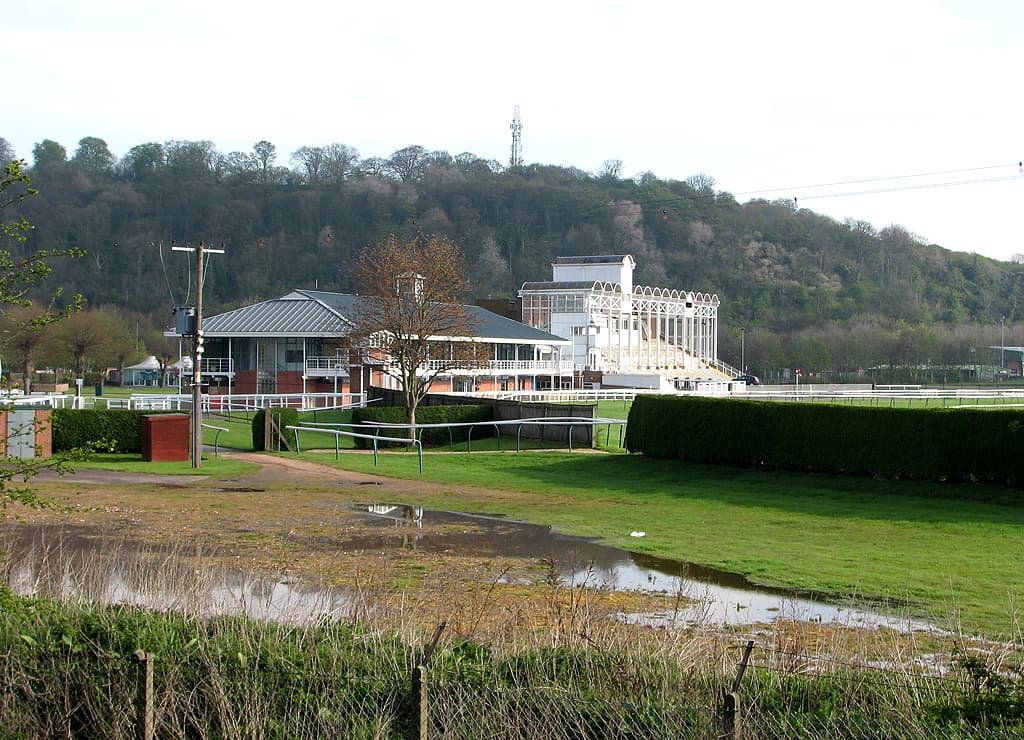
Nottingham Racecourse Day Out: Tickets, Dress Code & Tips
Plan your perfect day at Colwick Park with our insider guide to enclosures, getting there, what to wear, and the best food spots. Expert tips included.
Read more
Nottingham Classic Trials Festival: Your Complete Guide
Nottingham's spring Classic trials meeting is one of the flat season's best-kept secrets. Here's your guide to the Colwick Park festival programme.
Read more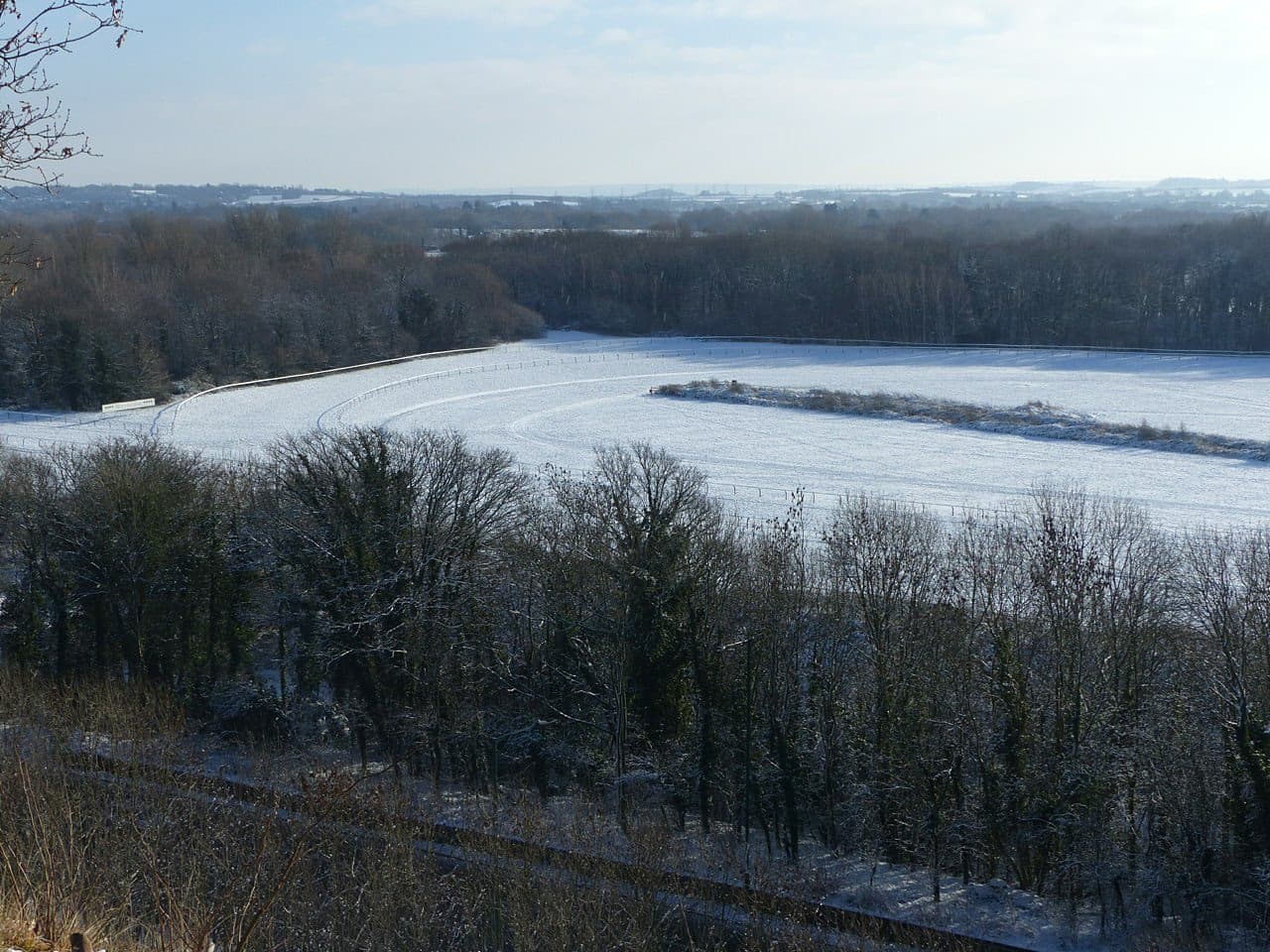
The History of Nottingham Racecourse
Over 130 years of racing at Nottingham — from Victorian origins at Colwick Park to one of Britain's fairest flat tracks on the banks of the River Trent.
Read morePhotos on this page are used under Creative Commons licences. Titles, sources and licence links for each one are on our image credits page.
Research the field with the AI Race Predictor
Our model publishes calibrated win-probability estimates for UK races — a second opinion to understand a race, not tips. It's open about its record: it doesn't beat the market, and we show exactly how it does.
Work it out & learn the basics
Gamble Responsibly
Gambling should be entertaining and not seen as a way to make money. Never bet more than you can afford to lose. If you or someone you know has a gambling problem, help and support is available.