
Founder & Editor · Last reviewed 2026-03-02
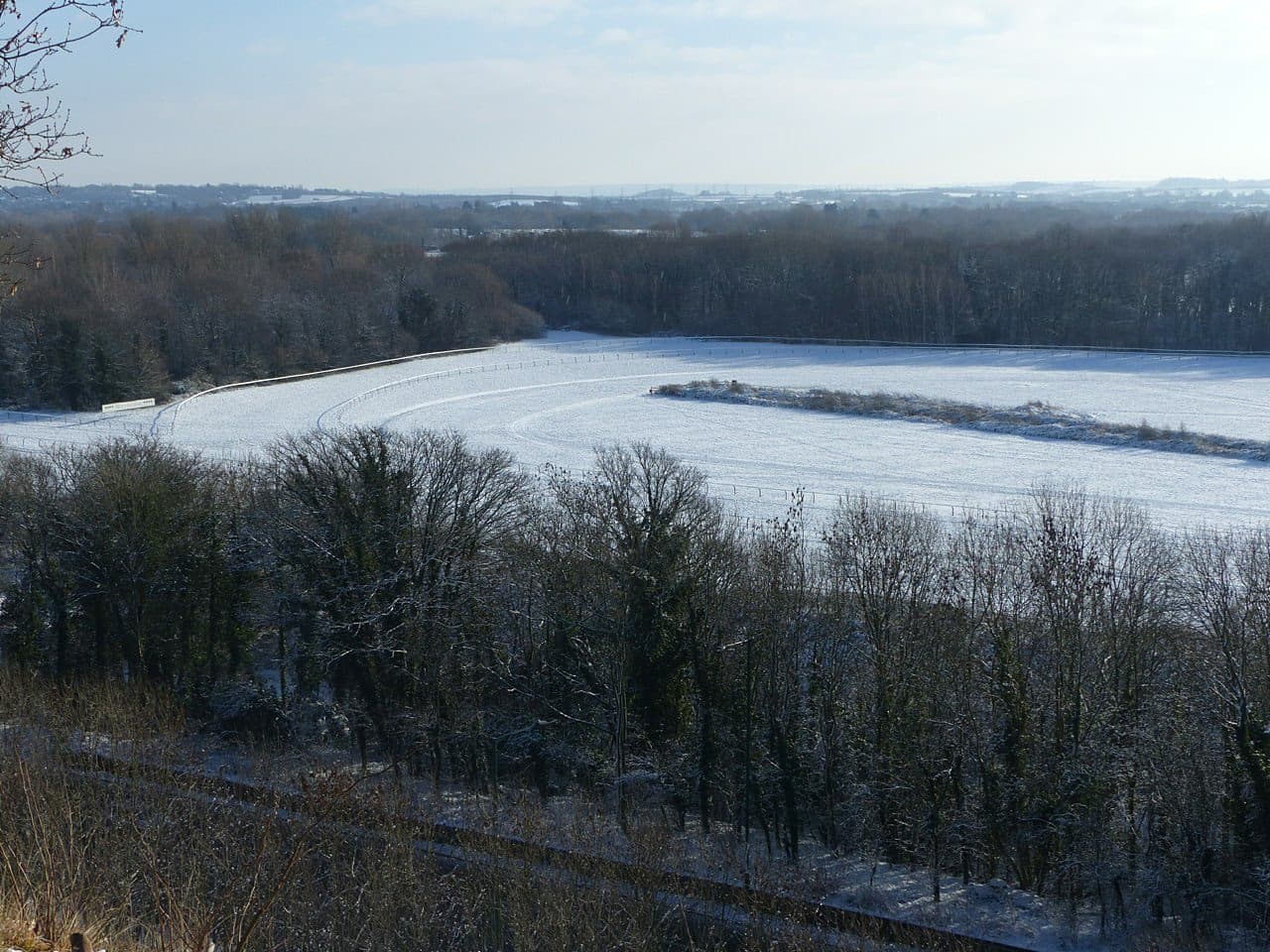
Nottingham Racecourse has stood at Colwick Park on the eastern edge of the city since 1892, making it one of the more continuously active flat venues in the East Midlands. Over 130 years of left-handed racing on the banks of the River Trent have produced a track with a reputation that punters and trainers trust: fair ground, reliable form, and a two-year-old programme that has served as a production line for future stars at the highest level.
The course came to Colwick Park as part of the Victorian expansion of organised racing across Britain. The site itself had history long before the horses arrived — Colwick Hall dates to the seventeenth century and the parkland had been part of an aristocratic estate for generations. The Nottingham Racing Club, working with the county's sporting establishment, chose Colwick Park because the ground was firm, the setting was attractive, and the proximity to a rapidly growing industrial city offered a ready audience. What they built in 1892 was a track that has, in its essentials, changed very little since: a left-handed oval, wide bends, a long run-in, and going that drains reasonably well in all but the worst conditions.
The character of Nottingham as a racing venue is defined by that layout. Horses that win here have earned it. There is no sharp inside rail to cling to, no extreme draw position that can turn a modest animal into a winner, no uphill gradient that dramatically skews the form. The result is a record of reliability that has made Nottingham form worth following from one end of the flat calendar to the other. When a horse runs well at Colwick Park, the form stacks up at York, at Newmarket, at Ascot — and that is not an accident. It is the product of a track designed to produce a fair test.
The Colwick Cup has been the course's signature race for most of its history — a competitive handicap that has attracted quality fields since the Victorian era and remains the highlight of the late-season programme. Alongside it, Nottingham's two-year-old programme has grown into one of the most watched aspects of the spring and summer calendar. The major yards from Newmarket and the northern training centres send promising juveniles here regularly, knowing that a Nottingham maiden win or a close second on this track provides a benchmark that will stand up to scrutiny. For punters interested in classic trial form, the Nottingham two-year-old races are essential viewing.
This guide traces the full history of Nottingham Racecourse from its origins through the Victorian era and the upheavals of the twentieth century to the present day. For the full picture of the course as it operates now, see the complete guide; for the practical betting angles that Nottingham's characteristics produce, the betting guide has the detail.
Origins & Colwick Park
Racing Before Colwick Park: The Forest Races
Before a single post was driven into the turf at Colwick Park, Nottingham had been a racing town for two centuries. The earliest recorded horse racing in the county took place on The Forest — the stretch of open heathland to the north of the city that Nottinghamshire people knew as common grazing land. References to racing on The Forest date to the seventeenth century, and by the mid-1700s the Nottingham races were a recognised fixture in the regional calendar.
The Forest meetings were typical of provincial racing in that era: informal, socially mixed, and organised by local gentlemen with the backing of the Corporation of Nottingham. Prize money came from subscriptions among local owners and from the Corporation's civic purse. The crowd came from the city and from the surrounding villages — farm workers, artisans, traders, and the county gentry watching from carriages drawn to the edge of the course. The racing itself was match races and sweepstakes across the open heath, with the finish judged by stewards and disputes settled by whoever held the most local authority.
The Forest's geography suited the horses. The ground was firm and well-drained, the flat terrain allowed horses to run at full stretch, and the wide open spaces meant that draws and position at the start mattered less than pure ability and stamina. In this sense, the informal racing on The Forest prefigured exactly the character that would later define the permanent course at Colwick Park.
By the nineteenth century, the Nottingham races on The Forest had grown into a multi-day fixture. The sport was organised under Jockey Club rules, the prize money had increased substantially, and the meetings attracted horses from beyond the county — from Yorkshire stables, from the Newmarket yards, and from the Midlands training centres that were beginning to establish themselves. Nottingham was not a backwater. It was a significant provincial venue with a reliable audience and a track that produced form others respected.
The Decision to Move: Why Colwick Park
By the 1880s, however, the Forest course had problems. The land was common ground — the same characteristic that had given it longevity also made improvement and investment difficult. The facilities were inadequate for a racing crowd that was, with the spread of the railways, growing faster than at any previous point in the sport's history. Trains brought racegoers from Nottingham's expanding industrial suburbs, from Derby, Leicester, and Sheffield, and from further afield. The Forest's infrastructure — such as it was — could not accommodate that growth.
The Nottingham Racecourse Company, formed in the later Victorian period to manage the sport more formally, identified Colwick Park as a suitable alternative. The park had several advantages. It sat on the eastern edge of the city, accessible from Nottingham's centre by road and eventually by bus and taxi. The land was privately held by the estate of the Musters family — Colwick Hall had been the seat of the Musters for generations — and could be leased and then purchased on terms that gave the company the security to invest in proper facilities. The River Trent formed a natural boundary to the south, the parkland ground was suitable for turf racing, and the site was large enough to accommodate a properly designed left-handed oval.
The move to Colwick Park was completed in 1892. What opened that year was a properly constituted racecourse: a laid-out track with defined distances, a grandstand, enclosures, and the infrastructure that paying racegoers expected. The left-handed configuration was chosen because it suited the natural shape of the ground and because a left-handed track had already proven popular with horses and riders at the Forest. The bends were designed to be wide and gradual — the philosophy from the outset was that Nottingham would be a galloping track where horses got a fair test, not a tight circuit that rewarded positional luck.
Colwick Hall and the Parkland Setting
The history of the site predates the racecourse by centuries. Colwick Hall itself was built in the early seventeenth century, and by the time the racecourse arrived in 1892 the estate had passed through several prominent Nottinghamshire families. The Musters family, who held Colwick Hall through the eighteenth and nineteenth centuries, were themselves keen on field sports and hunting, which meant the parkland was already well managed and the ground was in good condition for equestrian use.
The River Trent runs along the southern boundary of the park, and the combination of the river, the mature trees, and the open parkland gave Colwick a setting that distinguished it from the more functional urban tracks being built elsewhere in England at the same period. Racegoers arriving from Nottingham in the 1890s found a venue that felt like a proper day out in the countryside, even though the city was only two miles away. That pleasant contrast between city accessibility and rural character has remained part of Nottingham's appeal ever since.
Victorian Establishment: The First Decades at Colwick
The course's first decade established the foundations that have endured. The Nottingham Racecourse Company developed a fixture list that included spring, summer, and early autumn meetings, taking advantage of the long flat season that runs from March through October. The Colwick Cup was among the earliest established races — a handicap designed to attract the middle-distance horses that were the backbone of the provincial handicap scene in the Victorian era.
The track attracted trainers from the major Midlands and northern yards almost immediately. Nottingham's location placed it within reasonable distance of the Malton and Middleham training centres in Yorkshire and of the Newmarket stables, which were expanding rapidly in the 1890s as the Jockey Club consolidated its authority over British racing. For trainers in those centres, Nottingham offered something valuable: a fair track that could be trusted to produce a representative result, located in a city large enough to generate a betting market but without the extreme competition of the great southern meetings.
The Victorian racing public understood the difference between fair tracks and quirky ones. Nottingham was quickly categorised as the former. A horse that won a handicap at Colwick Park in 1895 had beaten proper opposition on a track where the draw was irrelevant and the bends were wide enough to give every runner room. That form was worth something when the horse went to Newmarket or York for its next run. The early establishment of that reputation was, arguably, the most important thing that happened in Nottingham's first decade. The form was reliable. The track could be trusted. That was a foundation no amount of later investment could manufacture if it had not been earned honestly from the beginning.
The Colwick Cup in the Victorian Era
The Colwick Cup was among the first significant races established at the new Colwick Park venue, and from its early years it served the function that a signature race should serve: attracting the best horses available for the conditions, drawing a crowd that wanted to see quality racing, and producing form that stood up when those horses ran elsewhere.
In the Victorian era, the race was run over a staying distance — the middle-distance handicap format that remained the backbone of the provincial programme throughout the late nineteenth century. Fields were typically competitive, with entries from Yorkshire, the Midlands, and occasionally from Newmarket stables prepared to send horses north for a race that offered worthwhile prize money on a track their horses were known to handle.
The race's position in the Nottingham calendar — as a summer highlight in a programme that also included the spring and early autumn meetings — made it the focal point around which the rest of the fixture list was built. Trainers planned their season with the Colwick Cup in mind as one of the targets for staying handicappers that needed a reliable, galloping track. The fair layout that made Nottingham form trustworthy in maidens and novice races was equally important for a competitive handicap: the result was real, and those who followed the form to subsequent races were rarely disappointed.
Two-Year-Old Racing from the Early Days
The two-year-old programme at Nottingham, which has become one of the course's defining characteristics in the modern era, has roots that stretch back to the earliest years at Colwick Park. From the 1890s onwards, trainers used Nottingham maidens to introduce promising juveniles, recognising that the fair track would give young horses a straightforward experience without the pitfalls of a sharp circuit where positional luck could distort the result.
The late Victorian racing public was becoming increasingly sophisticated about two-year-old form. The development of the Classics — the Derby, the Oaks, the 1,000 and 2,000 Guineas, and the St Leger — as the pinnacle of the flat season had created a market for identifying future Classic contenders as early as possible. Trainers who could point to a good performance in a two-year-old maiden as evidence of a horse's talent were able to command better prices in the early Classic betting markets. Nottingham's reliable track meant that a juvenile who won well at Colwick Park was exactly the kind of evidence the market was looking for.
This is the oldest layer of Nottingham's identity as a nursery for young horses. It was not invented in the modern era — it has been part of the course's function since its Victorian foundation.
The Edwardian Era
The Edwardian Course and the Consolidation of Reputation
The Edwardian era, from the turn of the century to the outbreak of the First World War, was the period in which Nottingham's reputation as a fair and reliable track was properly consolidated. The course was no longer new, the fixture list had stabilised, and the racing public — trainers, owners, and punters — had accumulated enough results from Colwick Park to form a clear picture of what the track produced and what it was worth.
What they found was consistent: Nottingham form held up. A horse that won a maiden here in April frequently ran well at Newmarket or York in May. A handicapper that prevailed in the Colwick Cup often went on to place in a more competitive race at a bigger meeting later in the season. The track's wide, galloping character meant that results were determined by the horses' ability and fitness, not by positional luck or the vagaries of a tricky layout.
This was the period when Nottingham became a real choice — not merely the nearest convenient track, but a deliberate selection by trainers who understood what the course offered. From Newmarket, the distance was manageable by the improving rail connections of the Edwardian period. From the Yorkshire yards at Malton and Middleham, Nottingham was accessible and the racing was competitive enough to give horses a proper test. From the Midlands, of course, it was the obvious choice for regional racing that aspired to something better than purely local competition.
The Fair Track and What It Meant
The concept of a "fair track" was understood precisely in the Edwardian racing world, and Nottingham occupied a clear position in that taxonomy. Chester was beautiful but famously sharp — a tight, almost circular circuit where the draw was everything and big, long-striding horses were often disadvantaged. Epsom was magnificent but quirky — the Tattenham Corner descent made the Derby as much a test of balance and temperament as of pure ability. Even Newmarket's Rowley Mile had its controversies, with low-numbered stalls sometimes disadvantaged in certain conditions.
Nottingham had none of these complications. The left-handed oval was consistent across its entire circuit. The bends were wide enough that a horse drawn high was not fighting the camber for two furlongs. The run-in was long enough that a horse caught wide in the final turn could still find its way through. Jockeys knew the track's character: get your horse settled, ride a straightforward race, and the best horse tends to win. That simplicity, which might sound like a limitation, was in fact a strength — it made Nottingham uniquely valuable as a form reference.
For the punters of the Edwardian era, who were becoming increasingly sophisticated as the racing press expanded and as the form book became a standard tool for serious betting, Nottingham was a reliable source of form. A horse that had run well at Colwick Park was worth backing at its next start, wherever that might be. Conversely, a horse that had run badly at Nottingham — absent any obvious excuse such as unsuitable going or a troubled passage — had usually told you something real about its current level.
The Inter-War Period: Continuity and Modest Growth
The First World War disrupted British racing severely. Courses were requisitioned, horses were commandeered for the war effort, and the racing programme was reduced to a skeleton version run primarily at Newmarket. Nottingham, like most provincial courses, was essentially closed for the duration. When racing resumed after 1918, the rebuilding process was gradual.
The inter-war years at Nottingham were a period of steady, unremarkable continuity. The course resumed its fixture list, the Colwick Cup was re-established, and the two-year-old programme continued to attract trainers from the major centres. There were no grand transformations of the layout or the facilities — the course that had worked well before the war worked well again when racing returned.
What changed in the inter-war period was the wider racing landscape. The 1920s and 1930s saw significant investment at some courses — Epsom was redeveloped, Cheltenham was transformed — but provincial flat tracks like Nottingham received modest attention. The course was maintained rather than reinvented. For trainers and punters, the practical implication was that Nottingham in 1935 was recognisably similar to Nottingham in 1905: the same left-handed oval, the same wide bends, the same reliable form.
The Two-Year-Old Programme Develops
The inter-war period saw Nottingham's two-year-old programme grow in significance. The Classic races — the Guineas, the Derby, the Oaks, the St Leger — had become the dominant narrative of the flat season, and identifying potential Classic horses from their juvenile form was an obsession for trainers, owners, and the racing press. Nottingham's fair track made it a natural venue for early assessments of promising juveniles.
Trainers from Newmarket increasingly used Nottingham as a starting point for well-bred two-year-olds. The logic was straightforward: a horse could travel to Nottingham, run on a fair track in front of a decent crowd with a proper betting market, and the result would tell the trainer something reliable about the horse's current ability. A narrow win over a good field at Nottingham was worth more to a trainer trying to assess a horse's Classic potential than a wide-margin win at a sharp track where the draw had done most of the work.
The spring Nottingham maiden — typically run in April or May when the two-year-old season was just getting underway — became an event that the better-informed punters tracked carefully. The horses appearing in these races were often from the top Newmarket and northern stables, and a good performance here was frequently followed by a more ambitious campaign. Punters who followed Nottingham two-year-old form in the spring often found themselves ahead of the market by summer, when those same horses ran at York or Newmarket at prices that had not fully accounted for the quality of their Nottingham performance.
The Second World War and the Post-War Recovery
The Second World War brought a second interruption, though racing was not suspended as completely as it had been in 1914-18. A reduced programme was maintained throughout the war, with some fixtures transferred between courses to maintain a degree of racing. Nottingham contributed to the wartime effort through the requisitioning of parts of Colwick Park, but the core racing infrastructure survived.
The post-war recovery at Nottingham followed a familiar pattern: gradual restoration of the full fixture list, investment in the facilities that had been deferred during the war years, and a resumption of the relationships with major trainers that had made the course valuable before 1939. By the early 1950s, Nottingham was back to its pre-war character, operating a spring-to-autumn programme of flat racing that included the Colwick Cup as its flagship event and a busy two-year-old programme that attracted the major yards.
The post-war decades were significant for British racing as a whole. Television brought the sport into living rooms across the country, creating a new audience that knew the great races but had little direct experience of provincial tracks like Nottingham. The betting shop legislation of 1961, which legalised off-course cash betting, changed the economics of racing and the relationship between racecourses and the public. Nottingham, like all provincial venues, had to adapt.
Nottingham in the Post-War Decades
The 1950s through to the 1980s saw Nottingham maintain its position as a reliable and well-regarded provincial flat track without dramatically changing its character. The facilities were periodically updated, the fixture list evolved with the changing demands of the sport, and the two-year-old programme continued to attract horses from the major yards.
What is notable about this period is what Nottingham did not do. It did not attempt to become something it was not. There was no attempt to install an all-weather surface, no effort to establish a major prestige race that would compete with Newmarket or York. Nottingham continued to offer what it had always offered: fair racing on a galloping track, a two-year-old programme that trainers trusted, and the Colwick Cup as the signature event of the late-summer calendar.
The course capacity was gradually developed during this period. The original Victorian grandstand was supplemented by additional viewing areas and, eventually, by hospitality facilities that reflected the changing expectations of the sport's audience. The intimate, compact character of Nottingham — a course with a capacity of around 8,000 that felt nothing like the anonymous scale of the biggest venues — remained part of its identity.
The Reputation as a Nursery
By the time the sport entered the modern era in the 1980s and 1990s, Nottingham's reputation as a nursery for future stars was firmly established. The phrase captured something real: the course's combination of a fair track, a busy two-year-old programme, and proximity to the major training centres in both Newmarket and the north meant that it regularly hosted the first or second runs of horses who would later win at the highest level.
The pattern was consistent across the decades. A well-bred two-year-old from a major stable would make its debut at Nottingham in spring or early summer. The race would be a maiden, run on good ground, with a field that included several other well-bred debutants from competitive yards. The result was a real reflection of ability — no quirky track to distort the picture, no unusual going to introduce uncertainty. The winner would then be aimed at a better race at Newmarket or York, often at decent odds because the market had not fully accounted for how reliable Nottingham form was. Those who had followed the form from Colwick Park were rarely surprised when the horse ran well again.
This cycle repeated through the generations. It is not possible to attribute specific Group 1 winners definitively to Nottingham debut performances without full race records, but the pattern of the course serving as a launch pad for horses who went on to high achievement is well established in the memory of those who have followed the flat closely over the decades.
The Course's Identity in Context
Placed in the broader context of British flat racing, Nottingham occupies a specific and well-defined role. It is not one of the great prestige venues — there is no Epsom, no Ascot, no Glorious Goodwood in its fixture list. It is not an all-weather specialist. It is not defined by a single iconic race in the way that Cheltenham is defined by the Gold Cup or Doncaster by the St Leger.
What Nottingham is, and has been since 1892, is a fair, galloping flat track that produces reliable form and hosts a two-year-old programme that matters. That is a more valuable role than it might initially appear. The racing calendar needs tracks that provide real form reference points — venues where the result of a maiden or a handicap can be trusted when the horses move on to bigger targets. Nottingham has filled that role consistently for over a century. Its contribution to British racing is not measured in Grade 1 victories or famous individual races, but in the cumulative value of the form it has produced and the trainers who have returned, year after year, because they trust the track to give their horses a fair test.
Famous Moments
The Famous Moments of a Form Track
Nottingham does not host the Derby. There is no royal procession, no single day that defines the entire British flat season. What Nottingham has instead is something that matters to a different kind of racing enthusiast: a consistent record of producing horses whose performances here preceded fame won elsewhere. The famous moments at Colwick Park are often only identifiable in retrospect, when a horse whose first or second run was a Nottingham maiden has gone on to win a Classic or a Group 1 race.
This is the character of a form track. Its significance is distributed across hundreds of races over many decades, not concentrated in a handful of iconic spectacles. The punter who understands this is the punter who benefits from what Nottingham consistently offers.
Classic Connections
Nottingham's two-year-old programme has contributed to the Classic narrative in various ways over the years. The spring maiden season — from late April through to the end of May — regularly features horses from the Newmarket and northern stables who are being readied for juvenile careers that trainers hope will eventually lead to Guineas or Derby entries.
The connection is not always direct. It is not usually the case that a horse runs at Nottingham in April and wins the Derby in June — the Classic programme does not work that way. What more typically happens is that a horse runs at Nottingham in April or May, impresses on form that is Then confirmed at a better meeting, and is then aimed at a Group race or Classic trial in the summer or autumn. By the time it runs in the Guineas the following spring, the Nottingham maiden from a year earlier is a dozen entries back in the form book, visible only to those who have followed the horse from the start.
Those who did follow the Nottingham form, and backed the horse accordingly at each stage of its career, often found themselves holding winning bets at odds that the market had not correctly priced. That is the practical value of understanding that Nottingham form can be trusted.
Early-Season Flat Racing and What It Shows
Nottingham's spring meetings — typically beginning in April — occupy a specific place in the flat calendar. They are among the earliest opportunities to see two-year-olds run, and they provide form reference points at a time of year when the betting market is still largely speculative. Horses at this stage of the season are largely unknown quantities. Their Newmarket entries may suggest potential, but it is the first run on a racecourse that begins to reveal what they actually are.
The trainers who send horses to Nottingham in April know this. They are not sending horses to a quiet county meeting for an easy win — they are choosing Nottingham because it will provide a reliable test. If the horse wins well, the form is worth something. If it finishes second or third to a well-backed favourite from another major yard, that form is also worth something — the horse ran on a track that gives everyone a fair chance, so the margin and manner of defeat is informative. This kind of form, carefully read, is exactly what separates informed punters from those who simply follow the crowd.
The Colwick Cup as a Highlight
The Colwick Cup has generated many of Nottingham's most notable individual moments. As a competitive staying handicap, it draws fields that include progressive improvers from the major yards alongside veteran handicappers with low weights. The result of a well-run Colwick Cup, on good ground, often identifies horses that are not yet priced correctly in the wider handicap market.
Horses who have won the Colwick Cup and then gone on to win at a higher level are part of Nottingham's folklore, even if they are not always household names. The stayer who wins by five lengths on good ground at Colwick Park in September and then wins a Class 2 handicap at Ascot or Newmarket three weeks later is exactly the kind of sequence that rewards form study. The Colwick Cup winner, properly assessed, is often worth following through the autumn.
For a detailed history of the race, including a breakdown of winners and how their subsequent careers progressed, see the Colwick Cup guide.
Two-Year-Old Stars: The Nursery Function
The phrase "nursery for future stars" is not mere promotional language when applied to Nottingham — it has a specific, demonstrable meaning. The course's combination of a truly fair track, a consistently busy two-year-old programme, and the patronage of the major training establishments means that Colwick Park has, year after year, hosted the first or second run of horses who have gone on to win Group races.
The Spring two-year-old maidens at Nottingham — run from late April through May — consistently attract runners from yards such as Godolphin and Charlie Appleby's operation, John and Thady Gosden, Roger Varian, and the northern stables including Richard Fahey, Tim Easterby, and Mark Johnston's successors. These trainers do not send horses to Nottingham as an afterthought. They choose the track because they want the result to mean something, and Nottingham provides that meaning more reliably than most comparable provincial venues.
The autumn maiden programme — run in September and October — adds a second wave of significant two-year-old form, often featuring horses that are having their first or second runs after summer preparation. These autumn maidens, run on going that is typically good to soft as the season moves towards its close, attract horses that may be heading for end-of-season juvenile races at Newmarket or the Breeders' Cup trials. Again, Nottingham's form from these races tends to hold up when those horses run in better company.
Form That Stands the Test
What distinguishes Nottingham's notable moments from those of many other provincial tracks is that the form has consistently stood scrutiny. When a horse runs well at Colwick Park and then goes on to win at a Group meeting, it is not a surprise to those who followed the form carefully. The wide, galloping layout produced a result that actually reflected the horse's ability, and that ability has simply been confirmed in better company.
This is the essential message for anyone studying Nottingham's history: the course has not produced spectacular, individual moments that live in racing legend. What it has produced, consistently and over more than 130 years, is reliable form. And reliable form — in a sport where so many tracks distort the result through quirky layouts, pronounced draw biases, or ground that rewards one type of horse unfairly — is the most valuable thing a racecourse can offer to those who study it carefully.
The Races Worth Knowing
For historical context, the key annual fixtures at Nottingham that have produced form worth studying include:
The Nottinghamshire Stakes and associated conditions events in the spring, which have served as early-season Classic trial pointers. These are not formal Classic trials in the sense of races specifically designated as Guineas or Derby tests, but they operate as practical indicators because the standard of entry tends to be high and the form from a fair track can be taken at face value.
The spring and autumn two-year-old maidens, run across the full programme from April to October, which have consistently produced horses that went on to better things. These are not single famous races but a programme of racing that, taken together, represents one of the most reliable bodies of two-year-old form in British racing outside of Newmarket.
The Colwick Cup, run in late summer, which has been the course's flagship event since the Victorian era and remains the race that defines the late-season Nottingham programme.
The Reliable Form Record
Perhaps the most striking feature of Nottingham's history is the consistency of the form produced. Courses change — layouts are altered, drainage is improved or worsened, the going varies — but Nottingham's fundamental character as a reliable form track has held through the Forest era, the early Colwick Park decades, the inter-war consolidation, the post-war recovery, and the modern era. Over more than 130 years at Colwick Park alone, and before that during the Forest meetings that established Nottingham as a racing venue, the course has produced results that have been worth following.
That durability is not accidental. It is the product of a layout that was well-designed from the start, maintained without the destabilising alterations that have complicated the form at some other courses, and used by trainers who have understood what it offers. For punters and for history, the reliable form record is Nottingham's most significant contribution to British racing.
The Modern Era
Nottingham in the Modern Era
The modern era of Nottingham Racecourse, running from the 1990s to the present day, has been a period of steady improvement without fundamental change. The course has updated its facilities, expanded its hospitality offering, and adapted to the evolving commercial environment of British racing — but the track itself has remained what it always was: a wide, left-handed, galloping oval that produces reliable form.
This continuity is, in the context of British racing's sometimes turbulent recent history, truly notable. Some provincial courses have been transformed — new surfaces installed, layouts altered, grandstands built and demolished and rebuilt — in ways that have sometimes complicated rather than improved the product. Nottingham has avoided that cycle. The decision to maintain the core character of the track while improving the visitor experience around it has served the course well.
Fixture List and Seasonal Programme
Nottingham races predominantly across the spring, summer, and early autumn — a programme that runs from April through to October and reflects the course's position as a flat-only venue without all-weather facilities. The spring programme, beginning in April, is dominated by two-year-old maidens and the early handicap card. Summer brings the Colwick Cup and a full programme of handicaps and conditions races. The autumn programme includes more two-year-old racing as the season approaches its close, plus staying and middle-distance handicaps.
The fixture list has grown in recent decades as British racing has expanded the number of fixtures available per year. Nottingham now stages more meetings per season than it did in the 1970s and 1980s, reflecting both the greater appetite for racing among the betting public and the commercial pressures that require courses to maximise their race days. The additional fixtures have been incorporated without compromising the quality of the racing.
The Two-Year-Old Programme Today
The two-year-old programme is where modern Nottingham most clearly fulfils its historical identity. The spring maidens in April and May regularly attract runners from Godolphin — Charlie Appleby's operation, which is based at Moulton Paddocks in Newmarket and is one of the most prolific sources of juvenile winners in British racing. Appleby's record with two-year-olds at Nottingham is strong, and a well-bred Godolphin juvenile making its debut at Colwick Park deserves serious consideration.
John and Thady Gosden, Roger Varian, and the other major Newmarket trainers also use Nottingham regularly for juvenile introductions. The logic is the same as it has been for a century: the fair track provides a reliable test, and the result tells the trainer something worth knowing. A horse that wins well at Nottingham in April from a Gosden or Varian yard is a horse to follow into the summer's better races.
From the north, Richard Fahey and Tim Easterby both send two-year-olds to Nottingham regularly. These trainers are significant producers of juvenile winners, and their presence in the Nottingham maiden fields lifts the standard of the racing and the value of the form. Mark Appleby — a different yard from Godolphin's Charlie Appleby — is also active at Nottingham, particularly in the handicap sphere where his record of placing improving horses is worth tracking.
Godolphin and Classic Trial Form
The most significant trainer-venue relationship in modern Nottingham's two-year-old programme is the one between Godolphin/Appleby and Colwick Park. Godolphin's global breeding operation produces a consistently high standard of well-bred juvenile, and when those horses are sent to Nottingham for their debuts it is typically because the trainer believes the horse has talent worth assessing on a fair track.
When a Godolphin juvenile wins its Nottingham debut convincingly, the ante-post Classic markets take notice. The horse may not be at the very top of the Derby or Guineas betting immediately, but the form from Colwick Park provides a credible reference point for the market to price it correctly. Punters who have seen the horse run at Nottingham, assessed the quality of the opposition, and noted the manner of the victory are ahead of the general market, which may not have followed the provincial racing closely.
This is one of the most practically valuable aspects of modern Nottingham's two-year-old programme: it provides early form that has not yet been fully processed by the betting market, from horses whose subsequent careers will follow a pattern familiar to those who have studied the Nottingham form.
Handicap Racing and the Modern Programme
Alongside the two-year-old programme, Nottingham stages a full range of handicaps throughout the season. The handicap programme covers all distances from 5 furlongs to 2 miles, and the fields are consistently competitive. The Colwick Cup remains the flagship staying handicap, but the programme of sprint and mile handicaps attracts solid fields that provide reliable form for those studying the horses' subsequent career paths.
The modern Nottingham handicapper is typically a horse from one of the northern yards — Fahey, Easterby, Middleham Park Racing — that has been carefully placed in a field where its current Official Rating gives it a realistic chance. The course's galloping character suits the workmanlike, well-bred northern horses that need a fair track to show their best form. This is why the trainer patterns for Nottingham handicaps show the northern yards consistently performing well: they understand what the track asks of a horse, and they target it accordingly.
Facilities and Investment
The modern Nottingham Racecourse has invested in its facilities in a way that has improved the visitor experience without changing the course's fundamental character. The grandstand has been updated, the hospitality areas expanded, and the parade ring and winner's enclosure improved. The course's capacity is around 8,000 — compact enough to feel intimate, large enough to generate a good atmosphere on a busy summer evening.
The Colwick Park setting remains one of the course's most significant assets. The parkland, the River Trent to the south, and the mature trees that frame the back straight give Nottingham a setting that larger courses struggle to match. It does not have the grandeur of Goodwood's downland or the historic formality of Newmarket, but it has a pleasant, relaxed character that suits the sport it hosts.
Evening fixtures have become an important part of the modern Nottingham calendar. The long summer evenings produce some of the most enjoyable racing occasions at Colwick Park — good ground, lively crowds, and a programme of competitive handicaps and maiden races that makes for excellent betting. The evening meetings have attracted a younger and more casual audience alongside the traditional racegoers, broadening the course's appeal without changing its essential character.
The Modern Reputation
Nottingham's reputation in the modern era is essentially what it has always been, confirmed and reinforced by a further generation of results: a fair, galloping flat track whose form can be trusted. Trainers continue to choose it for the same reasons trainers chose it in the Victorian era. Punters continue to follow its form for the same reasons — it tends to stand up.
The modern betting market, with its vastly greater information resources and faster prices than anything available to the Victorian racing public, has not significantly eroded the advantage that careful study of Nottingham form provides. The track is not a quirky secret that only insiders know about; it is well understood. But understanding that a track is fair and that its form is reliable is different from actually doing the work of tracking that form carefully across the season. Those who do that work at Nottingham — watching the spring maidens, noting the trainer patterns, following the good two-year-olds through their juvenile seasons — continue to find that the form holds up at Newmarket and York in ways that the general market sometimes fails to anticipate.
For current fixture dates and race entries, the Nottingham website is the best source. For the complete guide to the course and its facilities, including parking, enclosures, and hospitality, the complete guide has the full detail.
Nottingham's Legacy
The Legacy of Nottingham Racecourse
Nottingham's legacy is best understood not as a collection of celebrated moments but as an accumulated contribution to the reliability of British racing form. Over 130 years at Colwick Park, and during the decades of Forest racing that preceded the move to the current site, the course has consistently produced results that have been worth following. That consistency — which has held through two world wars, through the transformation of British racing by television and legalised betting shops, through the rise and fall of fashions in breeding and training — is the most durable thing Nottingham has built.
What Nottingham Gave to British Flat Racing
British flat racing depends on form. The entire structure of the sport — the breeding programmes, the auction prices, the ante-post betting markets, the trainers' decisions about where to run horses — rests on the assumption that past performances tell you something useful about future ones. That assumption only holds if the past performances were produced on tracks where ability, rather than luck, determined the result.
Nottingham has been one of those tracks for over a century. The fair, left-handed, galloping oval at Colwick Park has given racing a reliable form anchor in the East Midlands, and the two-year-old programme has made it a specific reference point for the Classic and juvenile programme. When trainers from Newmarket and the major northern yards send their most promising horses to Nottingham, they are using the course as a form test — and the test is trusted precisely because Nottingham has earned that trust over so many generations of racing.
The Legacy for Punters
For punters, Nottingham's legacy is straightforward: it is a course whose form is worth following. A horse that wins well here has usually earned the victory in a way that a horse winning at a quirky track has not necessarily done. The form from Nottingham spring maidens holds up better than many might expect when those horses appear at Newmarket in May or York in June. The Colwick Cup winner's form holds up when that horse appears in a better handicap at Ascot or Newmarket in October.
This is not magic. It is the natural consequence of a fair track producing results that accurately reflect ability. The punter who understands this, and who is willing to track Nottingham form through the season, has an advantage — not a certain one, but a statistical one — over the punter who ignores provincial form and bets only on the headline meetings.
The betting guide has the practical detail: trainer patterns, draw analysis, going assessment, and the specific angles that apply at Colwick Park. But the foundation of all those angles is the historical record of form reliability that has built up at Nottingham over more than a century.
The Legacy for Trainers
For trainers, Nottingham has a clear legacy as a venue they can trust. The consistency of the track's character means that a trainer who has run horses at Nottingham knows what to expect: a fair test, reliable going in normal conditions, a straightforward oval that does not punish horses for being wide on the final bend. That predictability is valuable when trainers are deciding where to place horses at key stages of their careers.
The two-year-old programme's legacy for trainers is specific: Nottingham provides the best form reference in the East Midlands for assessing a juvenile's current level. A trainer who wants to know whether their horse is ready to run at Newmarket in a conditions race can use a Nottingham maiden as a benchmark with confidence. If the horse wins easily against a reasonable field at Colwick Park, the Newmarket run is a logical next step. If it finishes third or fourth, that tells the trainer something useful about how much more work the horse needs before stepping up in class.
The Legacy for the East Midlands
Nottingham occupies a specific geographical role in British racing: it is the principal flat course for the East Midlands region. Southwell provides all-weather racing and jumps, but for turf flat racing of real quality, Nottingham is the destination for the region. That regional role carries a legacy too — the course has been part of the sporting and cultural life of Nottingham and the surrounding counties for well over a century.
The city of Nottingham has a complicated relationship with its own sporting identity. Football — Nottingham Forest's European Cup victories, Notts County's claim to be the world's oldest Football League club — dominates the city's sporting narrative. But Nottingham Racecourse has been part of that identity for longer than either of those clubs, and its fair, well-run racing has contributed to the city's reputation as a place that understands sport and takes it seriously.
Looking Forward
Nottingham's future appears secure. The course fills a niche that no other venue can fill in its region — a fair, galloping turf track with a reliable two-year-old programme and a respected handicap calendar. The major training yards continue to patronise it. The form continues to stand up. The Colwick Cup remains the season's flagship event at the course.
What Nottingham is unlikely to do is transform itself into something it has never been. There will be no Group 1 race at Colwick Park, no equivalent of the St Leger or the Guineas that puts the course into the upper tier of British racing. The course's legacy is not built on that kind of ambition. It is built on the quieter, more durable achievement of producing reliable form, year after year, in a way that serves trainers, punters, and the sport as a whole.
That is a legacy worth respecting. In a sport where quirky tracks, pronounced draw biases, and inconsistent going can distort results and undermine the confidence that the form is worth following, a course that has consistently provided a fair test for more than 130 years has earned a high regard. Nottingham's contribution to British racing is not spectacular. It is consistent. And in the long run, consistency is what matters most.
For a visit to the course, the day out guide has everything you need. For the complete picture of the course's layout, fixtures, and facilities, the complete guide covers it all.
Share this article
More about this racecourse
All Nottingham guides
Oh So Sharp's Nottingham Debut: Triple Crown Champion's Start
Discover how Oh So Sharp's modest Nottingham debut in August 1984 launched her legendary Triple Crown campaign. The inside story from Colwick Park.
Read more
Classic Trials Day at Nottingham: The Complete Guide
Your complete guide to Classic Trials Day at Nottingham — the Midlands' most important early-season Flat fixture, where Derby and Oaks candidates take their first steps. Racing card, atmosphere, tickets, travel and betting guide.
Read more
Colwick Cup: Complete Guide
Your complete guide to the Colwick Cup — Nottingham's signature handicap, run at Colwick Park each summer on the banks of the River Trent.
Read moreGamble Responsibly
Gambling should be entertaining and not seen as a way to make money. Never bet more than you can afford to lose. If you or someone you know has a gambling problem, help and support is available.