
Founder & Editor · Last reviewed 2026-03-02
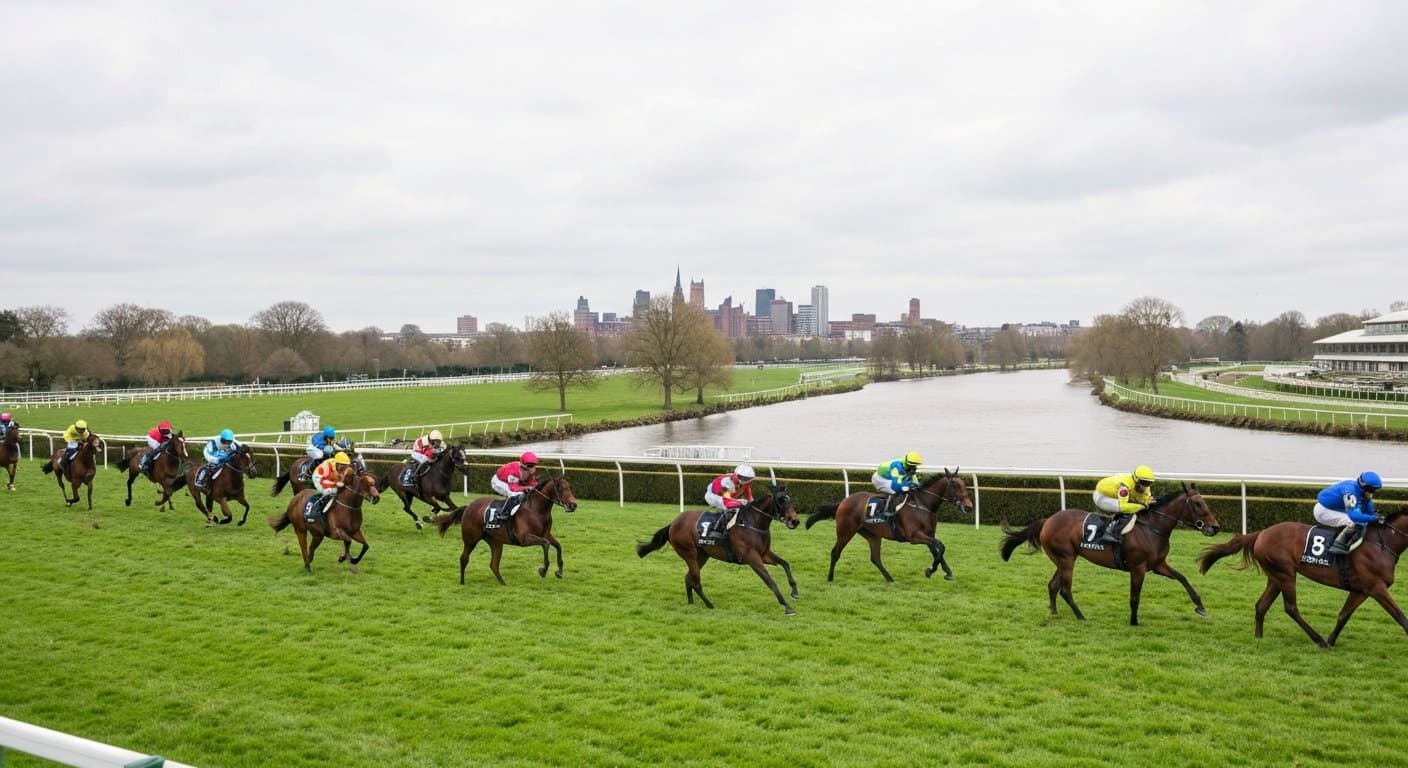
The Colwick Cup is Nottingham Racecourse's signature race — a historic flat handicap at Colwick Park that has been part of the Nottingham calendar since the Victorian era. Run over approximately 1m4f to 1m6f and typically staged in September, it is the course's flagship event and the centrepiece of the autumn programme. The race has been testing stayers and middle-distance horses in competitive handicap conditions for well over a century, and its place in the September flat calendar makes it a key reference point for the end-of-season stayer programme.
The Colwick Cup attracts fields that typically include the classic staying handicap profile: horses that have been lightly campaigned earlier in the season and carry a bit of weight in hand, improvers from the summer programme who are developing into better horses than their handicap marks suggest, and proven veterans who know how to run their race on Nottingham's galloping track. The combination of distance, going conditions (usually good to firm in September), and field profile produces races that are truly competitive and where the form tends to work out.
What makes the Colwick Cup notable from a betting perspective is the track. Nottingham's wide, galloping layout means no draw bias, no sharp bends, and no quirks that can produce a misleading result. The best horse — or more precisely, the horse with the best combination of ability and weight — usually wins. That reliability makes it a useful race for form students tracking the autumn stayer programme and for punters assessing each-way value in what are often large, competitive fields.
The September timing puts the Colwick Cup at an interesting point in the flat calendar. The summer's staying programme — the Goodwood Stakes, the Ebor at York, the Doncaster Cup, and the Cesare witch trial races — has run. Horses that have been placed or narrowly beaten in those better races are sometimes dropped back in grade for a competitive handicap before the season ends. Others are emerging from earlier campaign building blocks. The Colwick Cup field, when it assembles, typically contains horses at multiple points on the staying performance curve, and identifying which type of runner the race suits best is the central analytical task.
The race's September position in the calendar is a feature rather than an incidental fact. By the time the Colwick Cup is run, the summer's staying programme is largely complete. Trainers who have campaigned a stayer through the Ebor, the Goodwood Stakes, and the Doncaster Cup have a clear picture of where the horse stands relative to its rivals. For those who have fallen just short in good company, a competitive handicap at Nottingham offers a chance to win before the season ends. For those who have developed through the campaign and improved beyond their starting mark, the Colwick Cup can represent the best opportunity of the season. Identifying which type is in which category is the central analytical challenge, and the form book by September provides the material to do so.
The Colwick Park setting adds to the appeal of the meeting. The parkland in September, with the first hints of autumn colour in the trees and the River Trent catching the afternoon light, makes the day truly pleasant regardless of the racing. It is a course that invites early arrival and a walk before the racing begins.
This guide covers the history of the Colwick Cup, great winners, the course and conditions, and betting angles. For broader betting strategies at Nottingham, the betting guide has the detail.
Bet on Nottingham
Place your bets on Nottingham races with a trusted bookmaker.

Promo code BETFRED50. New customers only. Register, deposit with a Debit Card, and place a first bet of £10+ at Evens (2.0)+ on Sports, to be settled within 7 days, to get £30 in Sports Free Bets and £20 in Bet Builder Free Bets within 24 hours of settlement. 7-day expiry. Eligibility & payment exclusions apply. Full T&Cs apply. Take Time to Think. BeGambleAware.org. 18+. Full T&Cs.

Promo code R30. New UK customers only, 18+. Register, deposit £10 or more, then place a £10 single cash bet at odds of 1/2 (1.5) or greater on any sports market (excluding Virtuals). Once the qualifying bet settles you get £30 in Free Bets (3 x £10) — the qualifying bet can win or lose. Free Bets are valid on any sports market excluding Virtuals, expire in 7 days, are non-withdrawable and must be used in full. Excluded deposit methods apply (including PayPal, Apple Pay, Skrill and NETELLER). Named bets such as Lucky 15 do not qualify. If you cash out the qualifying bet, or it is voided, you are no longer eligible for the offer. Ends 31.12.26. Full T&Cs apply. Please gamble responsibly. BeGambleAware.org. 18+. Full T&Cs.

Promo code BET40GET20. New UK customers, 18+. Register with the code and place a first bet of £40 or more at Evens (2.0) or greater. Receive 2 × £10 free bets: the first credited automatically once the qualifying bet settles, the second 24 hours later. Free bets must be placed at minimum odds of 4/1 (5.0), expire 24 hours after credit, and the free-bet stake is not returned with winnings. Debit card deposits only. Take Time to Think. BeGambleAware.org. 18+. T&Cs apply. Full T&Cs.

50% of your first-day net losses refunded as a free bet, capped at £25. New UK customers aged 18+ only. To qualify, deposit and place a first bet of £10 or more on any sport at minimum odds of evens (2.00), then place at least two further bets on different events, each worth at least 50% of your largest bet, all at evens (2.00) or greater. Losses are counted from your first settled bet until 23:59 the same day. Place a qualifying £10+ bet and you are guaranteed at least a £5 free bet. Bets placed at SP, void bets, cashed-out bets and bets struck with free bets do not count towards the offer. The free bet is credited the day after your qualifying bets settle and must be used within 7 days, after which it expires. It can be used at odds from 1/4 (1.25) up to 250/1 on singles and straight accumulators, but not on Trixie, Patent or Yankee style multiples. Free-bet stake is not returned with winnings. One offer per person, household, address, IP address and device. E-wallet deposits may not qualify, so check the cashier before depositing. Customers registered with GAMSTOP cannot claim. KYC identity verification must be completed before the free bet is credited. Take Time to Think. BeGambleAware.org. 18+. T&Cs apply. Full T&Cs.

New customers, 18+. Choose the sports bonus at sign-up, make a first deposit and receive a 100% bonus up to £50 in your Sports Bonus balance. To convert the bonus to cash, wager it 10x within 30 days. Single bets below Evens (2.00) do not qualify; accumulators do not qualify if any selection is below 1/2 (1.50). Virtual Sports, voided, cancelled, drawn, cashed-out and free-bet wagers do not count towards wagering. Only the first settled bet per event counts. Withdrawing before the wagering requirement is met forfeits the bonus balance including bonus winnings. Real-money funds are used before bonus funds. Deposits via Skrill or Neteller are not eligible. Not valid in conjunction with other promotions. Odds, bet and payment limits apply. 10bet general and promotion T&Cs apply. BeGambleAware.org. 18+. Full T&Cs.

New customers in Great Britain and Republic of Ireland, 18+. Place a £10 fixed-odds qualifying bet at minimum odds of 1/2 (1.50) — single or each-way (only the win part counts), pre-event or in-play, not cashed out early, within 28 days of opening the account. Receive up to £60 in bonuses credited over three days: 3 × £10 fixed-odds free bets (the first on settlement, then 24 and 48 hours later) plus 3 × £5 Total Goals FOOTBALL spread bets and 3 × £5 racing Winning Favourites spread bets, with a £1 racing Race Index spread bet as an extra on top. The spread bets need a full spread-betting account, opened within 28 days of the fixed-odds account and subject to Spreadex's eligibility and appropriateness checks. Free-bet stakes not returned with winnings; free bets valid 28 days from issue. IMPORTANT: the £5 credits are SPREAD bets — sports spread betting carries the risk that losses can exceed your stake. Sports spread-betting customers do not have Financial Ombudsman or FSCS recourse. Take Time to Think. BeGambleAware.org. 18+. T&Cs apply. Full T&Cs.

Promo code WELCOME15, entered under My Bonuses after registering. New UK customers, 18+. Place a first qualifying bet of at least £10 from your cash balance at odds of evens (2.0) or greater within 7 days of opening the account. Once the qualifying bet fully settles you receive £15 in free bets, credited as 3 x £5 tokens with set uses: one £5 accumulator free bet (minimum 4 legs, each leg at 2/5 or bigger), one £5 sports free bet (any market at evens or bigger) and one £5 Sub Cover free bet (selected football player markets at evens or bigger). Free-bet stakes are not returned with winnings. Free bets expire 7 days after they are credited. Void, cashed-out and partially cashed-out bets do not qualify. One offer per customer. Confirm the current terms on BetGoodwin's own welcome-offer page before claiming. Take Time to Think. BeGambleAware.org. 18+. T&Cs apply. Full T&Cs.

New UK customers, 18+. Minimum deposit £10. Place a £10 qualifying single on sports (excluding virtuals) at minimum odds of 1/2 (1.50), settled within 14 days. Deposit-method exclusions apply. Receive £30 in free bets (stake not returned), split £20 for sportsbook use (2 x £10) and £10 for Bet Builder only (2 x £5); Bet Builder does not cover horse racing. Free bets must be accepted within 7 days and expire 7 days after acceptance. No promo code required. Best Odds Guaranteed on UK & Irish racing, subject to having staked over £25 in the previous seven days. Operated by LiveScore Betting and Gaming (Gibraltar) Ltd, UKGC 56859. Confirm the current terms on LiveScore Bet's own promotions page before claiming. Take Time to Think. BeGambleAware.org. 18+. T&Cs apply. Full T&Cs.
18+. BeGambleAware.org
History of the Colwick Cup
The Colwick Cup has been run at Nottingham since the Victorian era — a race that predates the twentieth century and has outlasted two world wars, multiple changes in the racing calendar, and the entire restructuring of the British flat season. Few handicaps outside the very highest profile can claim the same longevity while retaining a truly competitive field.
Victorian Origins
When Nottingham Racecourse opened in its current form at Colwick Park in 1892, the Colwick Cup was established as one of the course's principal events from the outset. The race was conceived as a staying handicap — a format that tests both the thoroughbred's stamina and the handicapper's art — and the choice of distance (typically 1m4f to 1m6f) reflected Nottingham's galloping character, which favours horses that can settle and sustain an effort over a trip.
Victorian handicap racing was central to the public's engagement with flat racing, and a competitive course handicap like the Colwick Cup attracted the kind of field that made for an afternoon's real sporting contest. The Colwick Park setting — a functioning country estate on the banks of the Trent, far from the industrial cityscape that surrounded much of the East Midlands — added to its character as a sporting event distinct from the more urban atmosphere of tracks in Sheffield or Derby.
From its earliest years, the Colwick Cup developed a reputation for producing real results — wins that reflected real ability rather than a fortunate draw or a weak field. The course's fairness was noted by trainers and punters alike from the beginning, and that reputation has persisted.
The Twentieth Century
The race continued through the twentieth century with the two interruptions common to all British racing: the First World War years (1915–1918) and the Second World War years (1940–1945), when racing was suspended or greatly reduced. These interruptions meant gaps in the record but did not break the race's essential continuity. The Colwick Cup re-emerged after both wars as part of Nottingham's core programme, maintaining its position as the course's flagship handicap.
Through the middle decades of the twentieth century, the staying handicap programme in Britain was one of the most watched sections of the flat season. The Cesarewitch at Newmarket, the Ebor at York, the Doncaster Cup — and at a lower level, the Colwick Cup — formed a stayer's calendar that attracted horses from across the training centres. Owners and trainers planning a campaign for a stayer with a high handicap mark and improving form would map out a route that could include Nottingham. The prize money did not compare to the big handicaps, but the fairness of the result and the manageability of the race made it a sensible target.
The Race in the Modern Era
The Colwick Cup's place in the modern flat calendar positions it at the point in September when the season's stayer programme is drawing towards its conclusion. The Doncaster St Leger meeting has run; the Cesarewitch at Newmarket is weeks away; the Goodwood Stakes and the Ebor are in the past. The September Nottingham meeting, with the Colwick Cup as its centrepiece, offers a final major opportunity for staying handicappers before the season moves into October and the all-weather programme begins to replace the turf.
In the modern era, the race has been upgraded and supported with improved prize money, reflecting Nottingham's investment in its core fixtures. The field profile has correspondingly improved, with trainers from the major yards now more likely to target the race with well-regarded stayers than was the case in the leaner decades. Mark Johnston, William Haggas, Roger Varian, and John Gosden's successor yard have all sent representatives to the Colwick Cup in recent seasons.
The race consistently attracts fields of 12 to 18 runners — large enough to produce each-way value but not so unwieldy as to make form analysis impractical. The balance between field size and track fairness is one of the reasons the race has maintained its appeal to punters and form students over such a long period.
The Colwick Cup in Context
Placed in the broader context of the staying programme, the Colwick Cup occupies a specific and useful niche. It is not the Ebor — it does not carry the prize money or prestige of the York flagship. It is not the Cesarewitch — it does not attract the same betting market or the same level of national attention. What it is, precisely, is a well-run, fair, competitive staying handicap in an attractive setting, at a point in the season when horses that have campaigned through the summer are at their physical peak and when the best handicapped stayers are looking for a race before the season ends.
For those who track the staying programme from April onwards, the Colwick Cup field is familiar. Many of the runners have appeared in the Ebor, the Goodwood Stakes, the Doncaster Cup, or the major staying handicaps at York, Sandown, and Haydock. Tracing their form through the season — identifying those with improving trajectories and those whose best performances have already been delivered — is the analytical work that produces the betting angles in September.
Great Winners & Memorable Renewals
The Colwick Cup has produced a long list of winners over more than a century of running, and the race's consistent quality — fair track, competitive field, reliable form — means that its results have regularly served as a pointer for what follows later in the season and in subsequent years. The race does not generate the annual wave of publicity that the Ebor or the Cesarewitch attracts, but among form students the Colwick Cup has a dependable reputation: when a horse wins here convincingly, on a track that does not flatter, the form is real.
The Stayer Profile
The typical Colwick Cup winner over the decades fits a recognisable profile: a horse aged four or five, with a career that has included creditable performances in better company earlier in the season, and with a handicap mark that still leaves room for a weight-in-hand performance when the conditions are right. Horses at the top of the weights in the Colwick Cup face a real test — the distance exposes stamina limitations — while horses getting in at relatively low weights need to show they have the class to bridge the difference.
Older horses — sixes and sevens — have won the race, and the experience of knowing how to race over the distance at Nottingham is not irrelevant. The galloping track suits horses that settle well early, move smoothly through the race, and sustain their effort from two furlongs out. Horses that need things done for them — that require a specific pace or a very precise ride to produce their best — tend to be less reliable on a track where the pace is often honest and the test is straightforward.
Form That Stands Up
Perhaps the Colwick Cup's defining characteristic over the course of its history is the reliability of its form when followed forward. Winners often go on to win in better company — at Newmarket's Cesarewitch, at Ascot's Long Distance Cup meeting, at the Doncaster November Handicap. The connection between a Colwick Cup victory and subsequent success in bigger staying handicaps is consistent enough to be treated as a real pattern rather than a coincidence.
The mechanism is straightforward: a horse that wins the Colwick Cup on a fair track, in a properly run race, has demonstrated real ability at the distance. That ability does not disappear when the horse runs in a bigger race. What changes is the quality of the opposition and the prize money — but the horse's capacity to stay the distance and handle a galloping track has been established at Nottingham.
For punters tracking the autumn programme, Colwick Cup form is worth carrying forward. A horse that wins here in September and is then entered in the Cesarewitch in October — a two-mile handicap at Newmarket where the galloping character of the track also suits stayers — has a solid form line to recommend it. The Cesarewitch market often underestimates the quality of September handicap winners; the Colwick Cup has produced Cesarewitch-relevant form in multiple seasons.
Notable Renewals
The Colwick Cup does not generate the kind of household names that the Ebor or the Derby produces, but across its long history several winners have gone on to notable subsequent success:
The race has repeatedly attracted horses trained at Newmarket and the northern yards who have used the September Nottingham meeting as a final tuning run before autumn targets. Horses that have run with credit in the Ebor at York and then drop back to a lower level for the Colwick Cup represent a type that has won the race multiple times across different eras. The logic is consistent: a horse that handled the Ebor's two-mile course at York — another galloping, fair track — and ran well without winning has the form to win at Nottingham's slightly shorter distance in a weaker field.
In more recent seasons, the race has attracted horses from Godolphin and Qatari-owned operations that have been campaigning on the summer flat programme and target the race as a late-season competitive opportunity. These horses bring stronger form lines than the traditional Colwick Cup runner and have won the race, confirming that the prize money investment at Nottingham has made it attractive to connections who have options.
Stepping Stone Winners
A consistent pattern in the race's modern history is the winner that uses the Colwick Cup as a stepping stone to an autumn target. Trainers who win the race and then aim the horse at the Doncaster November Handicap, the Cesarewitch, or an autumn staying conditions race have found that the Nottingham form travels. The horse arrives at the next meeting with a September win on good ground over the staying trip, and the market sometimes undervalues it because the win came at a provincial track. That undervaluation is the opportunity.
For each-way punters in the Colwick Cup itself, the race's profile — large fields on a fair track, multiple credible contenders — produces each-way returns at reasonable frequency. The each-way approach suits a race where the result is truly hard to predict and where second and third places are meaningfully rewarded.
The Atmosphere on Race Day
The Colwick Cup meeting in September is the most significant day of the Nottingham autumn calendar. The atmosphere at the course on this day is a notch above the ordinary midweek meeting — more racegoers, a stronger card around the Cup race itself, and the kind of engagement in the betting ring that makes for a proper racing afternoon. The parkland setting at Colwick Park in September, with the trees beginning to turn and the light at its autumn angle, is truly pleasant. For a day out on Colwick Cup day, the atmosphere justifies the visit independently of the betting.
The Course & Conditions
The Colwick Cup is run on Nottingham's main track — a left-handed, galloping oval that suits the staying type. Understanding the track's characteristics is the foundation of any serious assessment of the race.
The Track Layout
Nottingham's circuit is approximately 1 mile 4 furlongs around, left-handed, with wide, sweeping bends and a long home straight. The back straight runs roughly parallel to the River Trent on the southern boundary of the park. Horses round the final bend at the end of the back straight and then face a run of over two furlongs to the finish line, all on the flat with no significant gradient.
The track is wide throughout — wide enough for large fields to race without bunching at the bends, and wide enough to make draw position largely irrelevant over staying distances. In a race of 1m4f or longer, the early exchanges are over distance enough that any positional disadvantage from the draw is ironed out long before the race reaches its decisive stages. This is one of the reasons Nottingham form is reliable: you are not reading a result that was partly determined by which stall a horse was drawn in.
The bends at Nottingham are gentler than at sharper circuits like Chester or Epsom. They do not reward horses with a tight turning action or penalise horses with a wider, swinging stride. A horse that moves freely and covers the ground efficiently on the straight is best suited here — the kind of galloping, free-striding stayer that is also effective at Newmarket, York, and Doncaster.
Going and Conditions
The Colwick Cup is typically run in September, when the going at Nottingham is often good or good to firm. The East Midlands has a tendency to receive late-summer rain, and the going can shift between meetings — worth checking the going report before you bet. The track drains reasonably well and the course staff are experienced at managing the surface, but a run of wet weather in late August can produce softer ground than is typical for the time of year.
On good to firm ground, the Colwick Cup rewards speed as well as stamina — a horse that can race off a proper pace and sustain its effort over the staying trip is the ideal type. On soft or good to soft ground, stamina becomes more important and the race tends to be won by a horse with real staying power rather than one that combines speed and stamina.
The September timing means the ground is more likely to be on the firmer side than the October fixtures at Nottingham, but conditions can vary. The going report is updated by the clerk of the course on the morning of the meeting and is available on the Racing Post website and the course website. Knowing the going in advance shapes your assessment of the field significantly — some horses are very specifically suited to a particular type of ground, and a change in conditions between entry and race day can transform the chances of key contenders.
Distance
The Colwick Cup is typically run over 1m4f or 1m6f — a distance that tests real stayers without extending into the extreme-distance territory of the Cesarewitch at two miles or the Gold Cup at two and a half miles. The distance suits horses with a proper staying pedigree and sufficient speed to race competitively before the final stages — pure plodders who win at extreme distances but lack the pace to run competitively over a mile and a half tend to find the Colwick Cup coming at them a bit fast.
The ideal Colwick Cup type is a horse rated between 85 and 100, with a flat-track form line, proven over 1m2f at a minimum with form over 1m4f or further, and with a positive form trajectory through the season. The flat track means there is no particular premium on jumping ability or on handling a specific undulation — what matters is ability, weight, and current condition.
Comparing to Other Staying Tracks
The tracks that produce the most transferable form to the Colwick Cup are:
Newmarket (July and Rowley Mile) — The long, flat, straight tracks at Newmarket are the most direct comparison. A horse that runs well at Newmarket's staying distances handles the Colwick Park flat track well.
York — The Knavesmire's long bends and straight sections suit the same type of horse as Nottingham. Ebor and Yorkshire Cup horses are regularly well suited to the Colwick Cup.
Doncaster — The Leger track at Doncaster is left-handed, galloping, and fair — very similar to Nottingham. Form from the Doncaster Cup and the autumn staying programme at Doncaster transfers reliably.
Goodwood — The Goodwood track is undulating and right-handed, which is different to Nottingham in character. Some Goodwood staying form translates; some does not. Horses that handle Goodwood's idiosyncrasies well are not necessarily suited to the flat, unrelenting test of Nottingham.
Chester — Chester is sharp, left-handed, and tight. Chester staying form does not translate directly to Nottingham's wide, galloping circuit. A horse that wins at Chester using its ability to negotiate the tight bends efficiently may find Nottingham's open layout less congenial.
The Parade Ring and Pre-Race Assessment
For those attending the Colwick Cup in person, the parade ring before the race offers useful information. At the staying distance, fitness and physical condition are important — a horse that looks sharp, well-muscled, and relaxed in the ring before a 1m4f+ race is communicating that it is prepared for the effort. Horses that appear dull-coated or listless may be at the end of a long campaign and unlikely to produce their best.
The behaviour of the horses in the ring and going down to the start is also informative. A horse that is calm and businesslike before a staying race — as opposed to one that burns energy unnecessarily in the preliminaries — is likely to be managed by connections who know how to get the best from a stayer. Running 1m4f+ at a good pace requires energy conservation in the early stages, and a horse that arrives at the start having used its energy sensibly is better placed than one that has been wound up.
Betting Angles & Trends
The Colwick Cup rewards a systematic approach to staying handicap betting. The race is large enough to offer each-way value, the track is fair enough to trust the form, and the position in the calendar — after the summer's staying programme has completed — means there is a significant body of form to work with before the field assembles.
Using the Season's Stayer Series
The most important preparatory work for Colwick Cup betting is tracking the season's staying programme from May onwards. The key races to follow:
The Goodwood Stakes (Glorious Goodwood, 1m6f) — Run in late July, the Goodwood Stakes is an early pointer to the better handicapped stayers. Horses that run well in this race but do not win — placed or narrowly beaten — often have the form to win a competitive September handicap at a track that suits them. The Goodwood track is different to Nottingham in character (undulating, right-handed), but the class level of the horses in the Goodwood Stakes is close enough to the Colwick Cup field that placed horses are worth noting.
The Ebor Handicap (York, 1m6f) — Staged at York's Ebor meeting in August, the Ebor is the most prestigious staying handicap in Britain and a key reference race for the Colwick Cup. Horses that run in the Ebor and finish mid-field to slightly below-placed often drop back in class and go for a race like the Colwick Cup in September. A horse that finished sixth or seventh in the Ebor — beaten three or four lengths in a strong renewal — may be the best horse in the Colwick Cup field on ratings but arrive at Nottingham with a slightly deflated market price because it was beaten at York. This type — Ebor also-ran dropping back in grade — is a consistent angle for the Colwick Cup.
The Doncaster Cup (1m7½f) — Run at the St Leger meeting at Doncaster in September, the Doncaster Cup is a Group 2 race for stayers. Its form does not directly transfer to the Colwick Cup because the horses involved are typically rated above handicap level. But a horse that ran in a Doncaster Cup trial or a Doncaster Cup support race and was found to be below Group 2 level may then be entered in a handicap — and the Colwick Cup, shortly before or after the Doncaster meeting, can be on the agenda.
Cesarewitch trials — The Cesarewitch at Newmarket in October is a two-mile handicap, and trainers targeting the Cesarewitch sometimes use the Colwick Cup as a prep race or as an alternative target. A horse that has been entered in both the Cesarewitch and the Colwick Cup, trained by a yard with a good record in long-distance autumn handicaps, is worth examining carefully. If connections have entered the horse in the Cesarewitch and then run it in the Colwick Cup first — a shorter distance — it may suggest they believe the horse needs a confidence boost or a fitness run before the Newmarket target.
York and Sandown August meetings — The staying handicap programme at York in August and at Sandown in the summer produces horses at the right level for the Colwick Cup. A horse that has won or run well in a 1m4f handicap at York or Sandown rated in the mid-to-high 80s is likely to be competitive in the Colwick Cup field.
The Weight-In-Hand Type
One of the most reliable patterns in large staying handicaps is the horse with weight in hand — rated significantly below the top weights and receiving a large weight allowance from the higher-rated runners. In a 1m4f–1m6f handicap, the difference between a horse on 7st 10lb and one on 9st 7lb is significant. If the lighter-weighted horse has the class to run competitively against the higher-rated rivals (as indicated by recent form), the weight-in-hand advantage is a real edge over the extended distance.
The Colwick Cup field typically includes horses rated from the mid-70s to the high 90s. The wide spread of ratings and weights means that finding a horse in the lower half of the weights with improving form — one whose rating has not yet caught up with its performance trajectory — is a productive search strategy.
Improving Horses vs Proven Veterans
The Colwick Cup regularly produces a tension between improving younger horses and proven veterans. The improving horse — typically a four-year-old that has been progressing through the season and whose rating has risen through the handicap — offers the upside of further improvement but carries the risk of finding conditions that do not suit or of having been set a higher mark than its ability justifies. The proven veteran — a six or seven-year-old that has won at this level before, knows how to race, and is at a career stage where physical condition rather than development is the variable — offers less upside but more predictability.
In recent renewals of the Colwick Cup, the balance has tended to favour the improving four and five-year-olds when conditions are good and the ground is fast enough to reward pace. When the ground is softer, experienced older horses with a proven ability to handle slower conditions have an advantage.
Trainer Patterns
Trainers who regularly target the Colwick Cup or who achieve good results in September staying handicaps at Nottingham include:
Roger Varian — Varian's horses perform well at Nottingham across all distances and ages. His staying handicap runners in September are typically well prepared, and when he sends a runner to the Colwick Cup it is usually in good order. His overall record at Nottingham makes him the first name to check when assessing the field.
William Haggas — Similar to Varian, Haggas's horses are well suited to Nottingham's fair track. He trains a significant number of stayers and middle-distance horses, and his Colwick Cup runners are worth taking seriously.
Mark Johnston / Middleham — Johnston's yard trained a high volume of runners in staying handicaps for many years and targeted the Colwick Cup regularly. The successor yard continues in a similar fashion.
Andrew Balding — Balding's Kingsclere yard does well with older stayers and middle-distance handicappers in the autumn programme. His runners in late-season staying handicaps have a good record.
Jamie Osborne / David Menuisier / Martyn Meade — Smaller yards that occasionally target the Colwick Cup with horses suited to the course and the distance. When these yards run a horse at Nottingham in September — a specific decision rather than a routine fixture — it is usually because the horse's form makes the race a real target.
Each-Way Betting Strategy
The Colwick Cup, with typical field sizes of 12 to 18 runners, is a natural each-way race. Standard terms at most firms are a quarter of the odds for four places in a field of 16 or more runners, and three places in a field of 8 to 15. In a field of 16+, each-way betting at the standard terms means you need to be in the first four to collect.
For each-way purposes, look for horses priced between 8/1 and 16/1 that have strong form claims — well suited to the course, in good recent form, from a reliable trainer, with a weight that leaves something in hand. The extremes of the market (short-priced favourites at 3/1 or 4/1; long shots at 33/1 or above) produce lower expected value than the mid-range prices.
A horse at 10/1 or 12/1 with three strong reasons in its favour (course form, trainer record, improving weight trajectory) is the ideal each-way candidate. If two of the three reasons apply, it remains worth considering. With only one reason applying, the case is thin.
Following Colwick Cup Form Forward
After the race, follow the winner and the placed horses into the autumn programme. Colwick Cup form travels — specifically to the Cesarewitch at Newmarket, the Doncaster November Handicap, and the Ascot autumn staying programme. A horse that wins the Colwick Cup is demonstrating ability on a reliable track; that ability is real and should not be discounted when it runs in better company. The November Handicap at Doncaster, run over 1m4f in the same late-season window, has frequently been won by horses with recent Nottingham form.
For a day out at the Colwick Cup in person, the September atmosphere at Colwick Park and the quality of the racing on the day makes it one of the better provincial Saturday meetings of the flat autumn. The complete guide has all the practical visitor information.
Frequently Asked Questions
Share this article
More about this racecourse
All Nottingham guides
Betting at Nottingham Racecourse
How to bet smarter at Nottingham — track characteristics, going and draw, key trainers and jockeys, and strategies for Colwick Park's galloping flat track.
Read more
Nottingham Classic Trials & Two-Year-Old Form
Two-year-old and classic trial form at Nottingham — why the fair track produces reliable juvenile form, and how to use it for betting.
Read more
Nottingham Racecourse: Complete Guide
Everything you need to know about Nottingham — Colwick Park's galloping flat track, the Colwick Cup, and reliable form on the banks of the River Trent.
Read morePhotos on this page are used under Creative Commons licences. Titles, sources and licence links for each one are on our image credits page.
Research the field with the AI Race Predictor
Our model publishes calibrated win-probability estimates for UK races — a second opinion to understand a race, not tips. It's open about its record: it doesn't beat the market, and we show exactly how it does.
Work it out & learn the basics
Gamble Responsibly
Gambling should be entertaining and not seen as a way to make money. Never bet more than you can afford to lose. If you or someone you know has a gambling problem, help and support is available.