
Founder & Editor · Last reviewed 2026-04-05
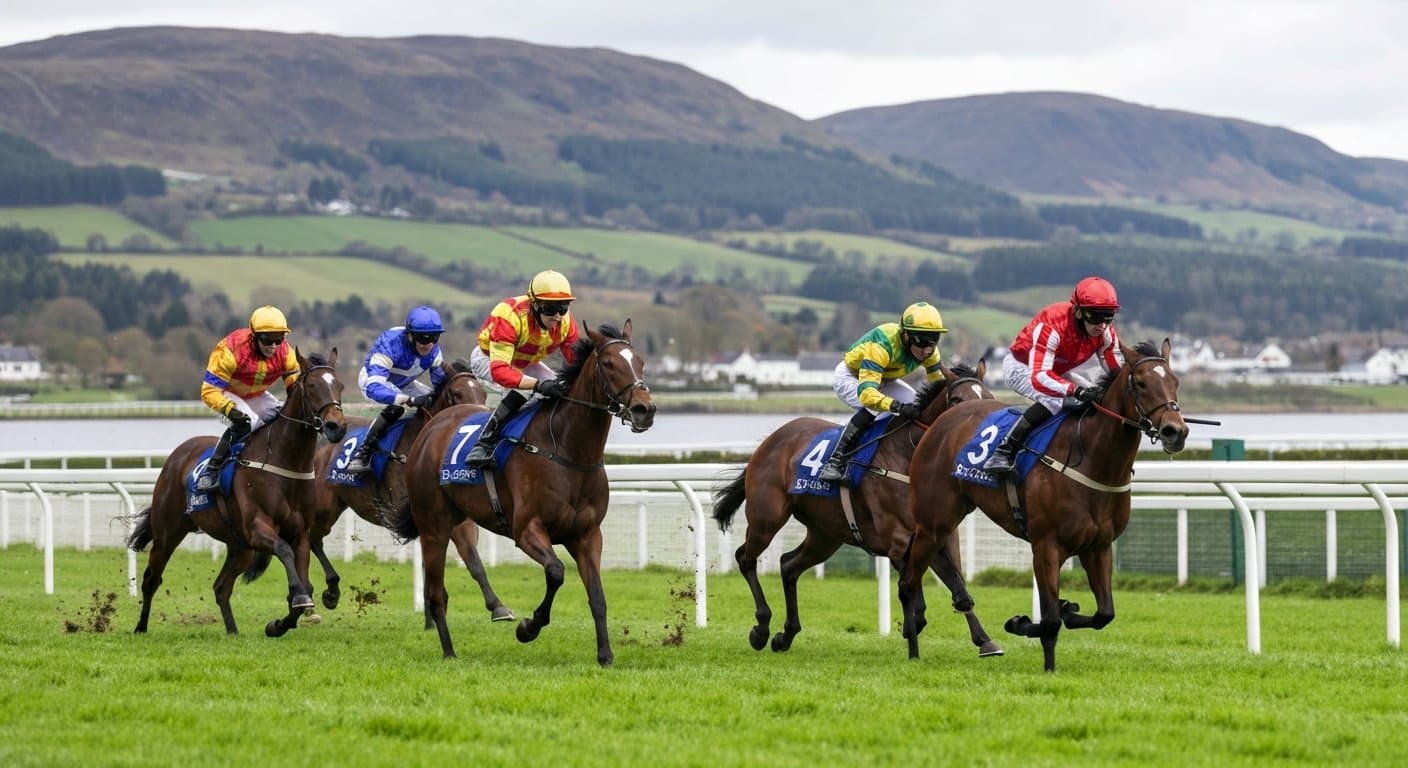
Perth Racecourse sits inside Scone Palace Park, PH2 0RY, and its 1-mile circuit is the smallest National Hunt circuit in the UK. That single fact shapes almost everything worth knowing about betting here. When a horse goes to the front on a track this tight, catching it becomes a different problem than it is at Cheltenham or Haydock. Front-runners win at Perth at a rate that should change how you read the morning markets.
The course is right-handed and flat. There are no gradients to expose a stayer's weakness or reward a horse with exceptional jumping technique. What the track does instead is compress pace: tight bends come quickly after each fence, and a horse that jumps cleanly and maintains its momentum through those bends holds an enormous structural advantage over one that fidgets or needs a stride to regain balance. Over 2m, the circuit is two laps. Over 3m1f (the distance of the Perth Gold Cup), the field completes more than three laps. Horses that handle the repetitive rhythm of the circuit simply travel better here.
The seasonal timing reinforces this. Perth runs from April through September, making it one of the few truly active National Hunt venues during the British summer. Most NH tracks have either closed for the season or switched to flat racing by June. Perth fills that gap, which means the market regularly undervalues certain types of runner. An Irish raider from Gordon Elliott or Willie Mullins arriving for the Perth Gold Cup is not carrying winter form; it has been specifically prepared for this race. The morning price at 14/1 or 16/1 sometimes reflects more about the course's remote location than about the horse's actual chance.
Lucinda Russell trains at Kinross, roughly 15 miles north-east of the racecourse. Her yard produces more Perth winners than any other, and her knowledge of how the circuit rides in different conditions is unmatched by trainers travelling from England or Ireland.
Perth is owned and operated by Perth Races Ltd, an independent company rather than a PLC or part of a larger racecourse group. That independence shapes the course's programming: the fixture list is built around the Scottish summer NH market rather than being folded into a national group's scheduling priorities. The Gold Cup weekend typically draws the largest crowds and the most competitive fields; the mid-season fixtures in July and August tend to attract smaller fields but can produce underpriced horses from local yards that know exactly what the track requires.
What this guide covers:
- The 1-mile circuit in detail: why multiple laps change race dynamics and why front-runners dominate
- How Scottish summer going behaves from April through September and what it means for selection
- Lucinda Russell, Sandy Thomson, Nicky Richards, and the Irish Gold Cup raiders
- The front-runner premium, the Irish raider value angle, and what to avoid
- The Perth Gold Cup (Grade 3), the spring festival, and the summer programme race by race
Bet on Perth
Place your bets on Perth races with a trusted bookmaker.

Promo code BETFRED50. New customers only. Register, deposit with a Debit Card, and place a first bet of £10+ at Evens (2.0)+ on Sports, to be settled within 7 days, to get £30 in Sports Free Bets and £20 in Bet Builder Free Bets within 24 hours of settlement. 7-day expiry. Eligibility & payment exclusions apply. Full T&Cs apply. Take Time to Think. BeGambleAware.org. 18+. Full T&Cs.

Promo code R30. New UK customers only, 18+. Register, deposit £10 or more, then place a £10 single cash bet at odds of 1/2 (1.5) or greater on any sports market (excluding Virtuals). Once the qualifying bet settles you get £30 in Free Bets (3 x £10) — the qualifying bet can win or lose. Free Bets are valid on any sports market excluding Virtuals, expire in 7 days, are non-withdrawable and must be used in full. Excluded deposit methods apply (including PayPal, Apple Pay, Skrill and NETELLER). Named bets such as Lucky 15 do not qualify. If you cash out the qualifying bet, or it is voided, you are no longer eligible for the offer. Ends 31.12.26. Full T&Cs apply. Please gamble responsibly. BeGambleAware.org. 18+. Full T&Cs.

Promo code BET40GET20. New UK customers, 18+. Register with the code and place a first bet of £40 or more at Evens (2.0) or greater. Receive 2 × £10 free bets: the first credited automatically once the qualifying bet settles, the second 24 hours later. Free bets must be placed at minimum odds of 4/1 (5.0), expire 24 hours after credit, and the free-bet stake is not returned with winnings. Debit card deposits only. Take Time to Think. BeGambleAware.org. 18+. T&Cs apply. Full T&Cs.

50% of your first-day net losses refunded as a free bet, capped at £25. New UK customers aged 18+ only. To qualify, deposit and place a first bet of £10 or more on any sport at minimum odds of evens (2.00), then place at least two further bets on different events, each worth at least 50% of your largest bet, all at evens (2.00) or greater. Losses are counted from your first settled bet until 23:59 the same day. Place a qualifying £10+ bet and you are guaranteed at least a £5 free bet. Bets placed at SP, void bets, cashed-out bets and bets struck with free bets do not count towards the offer. The free bet is credited the day after your qualifying bets settle and must be used within 7 days, after which it expires. It can be used at odds from 1/4 (1.25) up to 250/1 on singles and straight accumulators, but not on Trixie, Patent or Yankee style multiples. Free-bet stake is not returned with winnings. One offer per person, household, address, IP address and device. E-wallet deposits may not qualify, so check the cashier before depositing. Customers registered with GAMSTOP cannot claim. KYC identity verification must be completed before the free bet is credited. Take Time to Think. BeGambleAware.org. 18+. T&Cs apply. Full T&Cs.

New customers, 18+. Choose the sports bonus at sign-up, make a first deposit and receive a 100% bonus up to £50 in your Sports Bonus balance. To convert the bonus to cash, wager it 10x within 30 days. Single bets below Evens (2.00) do not qualify; accumulators do not qualify if any selection is below 1/2 (1.50). Virtual Sports, voided, cancelled, drawn, cashed-out and free-bet wagers do not count towards wagering. Only the first settled bet per event counts. Withdrawing before the wagering requirement is met forfeits the bonus balance including bonus winnings. Real-money funds are used before bonus funds. Deposits via Skrill or Neteller are not eligible. Not valid in conjunction with other promotions. Odds, bet and payment limits apply. 10bet general and promotion T&Cs apply. BeGambleAware.org. 18+. Full T&Cs.

New customers in Great Britain and Republic of Ireland, 18+. Place a £10 fixed-odds qualifying bet at minimum odds of 1/2 (1.50) — single or each-way (only the win part counts), pre-event or in-play, not cashed out early, within 28 days of opening the account. Receive up to £60 in bonuses credited over three days: 3 × £10 fixed-odds free bets (the first on settlement, then 24 and 48 hours later) plus 3 × £5 Total Goals FOOTBALL spread bets and 3 × £5 racing Winning Favourites spread bets, with a £1 racing Race Index spread bet as an extra on top. The spread bets need a full spread-betting account, opened within 28 days of the fixed-odds account and subject to Spreadex's eligibility and appropriateness checks. Free-bet stakes not returned with winnings; free bets valid 28 days from issue. IMPORTANT: the £5 credits are SPREAD bets — sports spread betting carries the risk that losses can exceed your stake. Sports spread-betting customers do not have Financial Ombudsman or FSCS recourse. Take Time to Think. BeGambleAware.org. 18+. T&Cs apply. Full T&Cs.

Promo code WELCOME15, entered under My Bonuses after registering. New UK customers, 18+. Place a first qualifying bet of at least £10 from your cash balance at odds of evens (2.0) or greater within 7 days of opening the account. Once the qualifying bet fully settles you receive £15 in free bets, credited as 3 x £5 tokens with set uses: one £5 accumulator free bet (minimum 4 legs, each leg at 2/5 or bigger), one £5 sports free bet (any market at evens or bigger) and one £5 Sub Cover free bet (selected football player markets at evens or bigger). Free-bet stakes are not returned with winnings. Free bets expire 7 days after they are credited. Void, cashed-out and partially cashed-out bets do not qualify. One offer per customer. Confirm the current terms on BetGoodwin's own welcome-offer page before claiming. Take Time to Think. BeGambleAware.org. 18+. T&Cs apply. Full T&Cs.

New UK customers, 18+. Minimum deposit £10. Place a £10 qualifying single on sports (excluding virtuals) at minimum odds of 1/2 (1.50), settled within 14 days. Deposit-method exclusions apply. Receive £30 in free bets (stake not returned), split £20 for sportsbook use (2 x £10) and £10 for Bet Builder only (2 x £5); Bet Builder does not cover horse racing. Free bets must be accepted within 7 days and expire 7 days after acceptance. No promo code required. Best Odds Guaranteed on UK & Irish racing, subject to having staked over £25 in the previous seven days. Operated by LiveScore Betting and Gaming (Gibraltar) Ltd, UKGC 56859. Confirm the current terms on LiveScore Bet's own promotions page before claiming. Take Time to Think. BeGambleAware.org. 18+. T&Cs apply. Full T&Cs.
18+. BeGambleAware.org
Track Characteristics
The 1-Mile Circuit
Perth's circuit measures 1 mile. That makes it the smallest National Hunt circuit in the UK, and the consequences for race dynamics are more significant than casual visitors realise. At most NH courses, horses complete one loop with perhaps a short run down from the start. At Perth, a 2-mile race is two complete laps. A 2m4f race involves two-and-a-half laps. The Perth Gold Cup at 3m1f means the field is rounding the same bends more than three times. Horses that are comfortable with the rhythm of the circuit — jumping cleanly, maintaining balance on the turns, not wasting energy by pulling against the repetition — hold a structural advantage that builds over the course of a race.
Why Front-Runners Win
The tight 1-mile circuit creates a specific advantage for horses that lead from the front. On a galloping, open course like Newbury or Wetherby, a hold-up horse can afford to sit ten lengths off the pace, track wide into the straight, and produce a sustained run. Perth does not offer that luxury. The bends arrive constantly. A horse forced to make ground around tight turns expends far more energy than one cruising on the bridle in front. Each lap adds to that deficit.
Horses that go to the front, set an honest pace they can sustain, and jump cleanly through the bends are exceptionally difficult to pass at Perth. The data bears this out: front-runners at Perth win at a meaningfully higher rate than at courses with longer circuits and wider turns. When you see a horse with a consistent front-running profile drawn against one that relies on a late challenge from the back of the field, the track profile is a stronger argument for the leader than it would be almost anywhere else in Britain.
Jumping Precision on the Bends
At many NH courses, a horse can make a mistake at a fence and recover over the next hundred metres. Perth's tight bends compress that recovery window significantly. A horse that puts in an awkward jump arrives at the subsequent bend a stride or two off balance, and losing that much ground on the turn is not easily made up. The horses that thrive here are accurate, quick-footed jumpers: not necessarily bold, big-jumping types, but horses that meet fences neatly, land running, and turn without losing impulsion.
This is one reason why experienced horses (those that have run at Perth before and know the rhythm of the circuit) have such a strong record compared to debutants at the track. First-time visitors occasionally take two or three laps to settle into the circuit's cadence.
Flat Terrain
Perth is entirely flat. There are no gradients of the kind that define Hexham, Exeter, or Cheltenham. This means stamina is tested through distance and pace rather than topography. A horse does not need to dig deep on a hill climb; it needs to sustain its rhythm across multiple laps of a tight loop. For bettors, the absence of terrain means you should not assume that a horse which won a stamina test on a hilly track will automatically handle Perth's demands. The stamina required is real but of a different character.
The flat track also means that jockeys cannot use the lie of the land tactically in the way they can at undulating courses. Position and jumping efficiency matter more than reading a gradient.
Distance Range and Lap Counts
Perth stages races from 2 miles to approximately 4 miles. For reference:
- 2m: two laps of the 1-mile circuit
- 2m4f: approximately two-and-a-half laps
- 3m: three laps
- 3m1f (Perth Gold Cup): just over three laps
- 4m: four laps
By the time a field has completed four laps of a tight, flat circuit, the horses that have handled the rhythm efficiently have banked a significant advantage. At these longer distances, jumping accuracy and circuit-compatibility are even more decisive.
Comparison with Other Scottish NH Courses
Kelso is left-handed and has a more galloping character with longer straights. Ayr is dual-purpose and considerably less tight. Perth's closest analogue in feel is not another Scottish course but the small NH tracks in northern England: Cartmel and Sedgefield, where compactness similarly rewards front-runners and penalises late challengers. The key difference is that Perth's circuit is the tightest of the three.
Going & Conditions
Perth's Seasonal Going Pattern
Perth runs National Hunt racing from April through September. That window covers the full range of Scottish summer weather, and the going shifts substantially across those six months. Understanding where in the season a race falls is one of the more useful preliminary checks a bettor can make.
April: The opening weeks of the Perth season typically produce good to soft or soft ground. Scotland's spring is wet, and the Scone Palace Park site sits close to the River Tay, which means the ground retains moisture. Heavy going is uncommon in April but possible after prolonged rain. If the festival card falls after a wet week, conditions can be testing enough to filter out flat-track types entirely.
May and June: The Perth Gold Cup meeting falls in late April or May, and by this point the ground often transitions towards good. Conditions for the Gold Cup itself are most commonly good or good to soft. June fixtures can produce the most favourable ground of the season, genuine good or occasionally shading to good to firm in dry spells.
July and August: These are the months when Perth ground can firm up. In a dry summer, the going can reach good to firm or firm. The River Tay proximity provides some buffer, and the ground rarely becomes dangerously fast, but it does harden materially. Horses with fragile legs or those that trainers prefer to run on a cut are regularly withdrawn in midsummer.
September: As the season approaches its close, rain returns and the ground softens again. September meetings often replay the conditions of April: good to soft or soft, occasionally heavier after extended rain.
How Going Affects the Front-Runner Premium
The dominant front-runner trend at Perth is amplified on faster ground. When the going is good to firm or firm, the pace bias becomes more pronounced. A horse that leads and jumps cleanly travels through tight bends without losing energy in the surface, while one trying to make up ground on a quicker surface has to work even harder to close the gap through the turns. In soft conditions, the advantage narrows: stamina becomes a leveller, and hold-up horses with proven staying ability can close more effectively in the closing stages.
This means you should weight the front-runner angle most heavily when the going is good or quicker. In genuinely soft conditions (good to soft and below), it remains a positive indicator but not the near-automatic edge it becomes on faster summer ground.
The River Tay Effect
The course's proximity to the River Tay is relevant to how the ground behaves through the season. Perth's ground holds moisture better than many flat NH circuits at this latitude, which explains why it rarely becomes truly firm even in a dry July. This also means the transition from spring softness to summer good is gradual rather than sharp. A horse suited by good to soft that ran well here in late April may find June conditions, if a dry spell has arrived, significantly different.
Always check the going report on raceday rather than inferring from the seasonal average. The course website and Racing Post both carry updates, and Perth's groundstaff are proactive about issuing accurate reports ahead of meetings.
Perth vs Winter NH Conditions
Perth's summer NH racing occupies a unique position in the calendar. Most National Hunt horses competing between April and September are either winding down from a winter campaign or being primed for the following season. This has a direct effect on how fit horses are and how their form should be read.
A horse that won on soft ground at Ascot in November, ran on heavy ground at Wetherby in January, and arrives at Perth in May is dealing with conditions that are materially different from its recent form. Its winter form was earned on yielding-to-heavy going under winter NH scheduling; Perth in May may offer good to firm. Its trainer will know this. When a trainer like Lucinda Russell (whose yard is 15 miles from the track) sends a horse to a May meeting, the going at Perth is not a new variable. When a southern trainer sends a horse with recent winter form, it is worth checking whether their horse has run on good to firm ground before.
No Draw Bias
Perth is a National Hunt course, so there is no stall draw. Horses start from a level line and the tactical advantage that matters is position in running, not stall number. Early positioning matters more at Perth than at most courses because the first bend arrives quickly after the start and horses that miss the break can find themselves immediately on the wrong side of the circuit's geometry.
Key Trainers & Jockeys
Lucinda Russell
Lucinda Russell trains at Arlary House, Kinross, approximately 15 miles north-east of Perth Racecourse. That proximity gives her an operational advantage that is difficult to quantify fully but easy to observe in the results. Her horses travel to Perth as a routine journey. She knows the circuit in every condition across the season, knows the groundstaff's reports from years of firsthand experience, and targets races here with a precision that trainers based in Yorkshire or Cheshire simply cannot replicate without additional intelligence.
Russell won the 2017 Grand National with One For Arthur, confirming the quality of horses her yard can produce. At Perth specifically, she has been the dominant handler across multiple seasons. When she declares a horse at odds of 6/4 or shorter, it will usually be well-backed. The more interesting angle is when she has a less heralded runner at a longer price — the yard's knowledge of the circuit means even her second-string runners are not making up the numbers without a reason.
Her retained jockey Derek Fox is worth following at Perth as a result. Fox won the Grand National on One For Arthur and knows Russell's horses and the Perth track in close detail.
Sandy Thomson
Sandy Thomson trains at Lambden, near Greenlaw in Berwickshire, roughly 45 miles south-east of Perth. He attends the course regularly and has a consistent record, particularly in handicap chases. Thomson is not a dominant force in the same statistical sense as Russell, but his horses arrive here prepared specifically for the conditions rather than as incidental entries. He tends to produce horses for the summer programme when they are in form, and his strike rate at Perth in the right conditions is solid.
Nicky Richards
Nicky Richards trains at Greystoke in Cumbria, approximately 100 miles south of Perth. He does not send horses here as frequently as Russell or Thomson, but when he does, they tend to be aimed at the better races — the Gold Cup card or the more valuable handicaps during the festival. Richards has a long record of producing quality NH horses, and a Richards runner that has made the journey to Perth is almost always there with a realistic chance rather than a track-attendance entry.
Gordon Elliott and Willie Mullins
Irish trainers do not attend Perth routinely, but both Gordon Elliott and Willie Mullins have targeted the Perth Gold Cup specifically. The race's Grade 3 status and the distance of 3m1f are attractive for horses at the right stage of their careers, particularly those that have been campaigned through the spring Irish NH season and are reaching peak fitness.
The market frequently underestimates Irish raiders at Scottish courses. Perth's location, relative obscurity outside Scotland, and small seasonal profile mean that an Elliott or Mullins runner can open at 14/1 or 16/1 when the horse's actual form profile — assessed against Grade 3 competition — makes it a legitimate contender. Taking the best price early, before the market adjusts on the morning of the race, has been a productive angle in Gold Cup years when an Irish raider has been declared.
Key Jockeys
Derek Fox is the most track-specific name to monitor. He is Russell's retained rider and has won major races for the yard. His familiarity with Perth's circuit gives him an edge in tactical decisions — particularly when to commit on the front turn and when to hold a position through the bends.
Campbell Gillies and Finn Lambert are among the northern-based jockeys who ride regularly at Perth. Both have strong records on the tight circuit and understand the front-runner advantage well enough to exploit it on horses that have the profile to lead. Lambert in particular has established a record at Perth that makes him worth noting when he takes a mount at a competitive price.
Brian Hughes and Sean Quinlan ride at Perth when the north's leading yards send horses, and their wider records are strong enough that their presence on a fancied runner needs no additional qualification.
Betting Strategies
The Front-Runner Premium
The single most reliable betting angle at Perth is backing horses with front-running form on this specific circuit. Front-runners win disproportionately often here compared to most NH tracks, and the reason is structural rather than incidental: the 1-mile circuit creates tight bends that come around quickly after every fence, and horses trying to make up ground through those turns spend far more energy than horses already in front.
When assessing a race, look for a horse whose Racing Post or Timeform form summaries include phrases like "made all", "led from the front", or "prominent throughout". Check whether that front-running form was achieved on a tight, flat circuit — Perth itself, Cartmel, or Sedgefield — rather than on a galloping track. A horse that led at Newbury and won by ten lengths may have gone clear because the rest of the field had nowhere to go; at Perth, they truly do not have anywhere to go.
In races where one horse is clearly the most likely front-runner and the market has not priced in that tactical advantage, the gap between actual winning probability and implied odds can be significant.
Irish Raider Value at the Perth Gold Cup
The Perth Gold Cup (Grade 3, 3m1f) is the clearest opportunity to find overpriced Irish raiders. Gordon Elliott and Willie Mullins occasionally target this race, and the opening prices for their runners can misrepresent the horse's actual quality. Three factors converge to create the value: Perth is perceived as a small Scottish course; the race is not covered with the same intensity as Cheltenham or Punchestown; and Irish horses entered here sometimes arrive at the end of a long spring season when casual observers assume they are past their peak.
Check the Irish form at the Grade 2 and Grade 3 level. If an Elliott or Mullins entry has placed in a Grade 2 staying chase in Ireland within the previous three months, a price of 12/1 or longer at Perth is likely to represent the course's geography more than the horse's credentials. Take the morning price before the market shortens on the day.
Lucinda Russell Home Advantage
Russell's Kinross yard is 15 miles from the course. Back her runners at Perth with a higher baseline confidence than you would for the same horse entering a track less familiar to the trainer. This does not mean following her runners blindly — heavily backed Russell horses at short prices are no longer offering value. The angle works best when she has a second or third string running at a price of 5/1 or longer, or when she is running a horse returning from a break that would draw more scepticism from trainers who have not watched it work on familiar ground.
Fitness in the Early Summer
The summer timing of Perth's programme creates a specific edge for trainers who have prepared horses specifically for the course. In May and early June, the NH calendar is thin. Horses competing at Perth during this period fall into two groups: those that are race-fit from earlier spring outings, and those that have had a gap since the winter and are at varying levels of freshness. Trainers who target Perth specifically — Russell, Thomson, and occasionally Richards — tend to send horses that are truly fit and primed. Horses from larger southern yards that have had minimal prep runs before a May Perth entry are often less well-suited.
Look at the number of runs in the previous 60 days. A horse that has run twice in April before a May Perth appearance is likely sharper than one making a seasonal debut. At a tight circuit where mistakes compound quickly, fitness matters more than it does at courses where horses can coast around without being fully wound up.
What to Avoid
Do not back horses that have compiled their form entirely on galloping, right-handed courses with long straights and wide turns without first checking whether they have Perth form. A horse that won impressively at Wetherby, Haydock, or Cheltenham has done so on a fundamentally different circuit profile. Those wins are real, but the translation to a flat 1-mile tight loop is not automatic. The horse may handle it; the question is whether the odds reflect that uncertainty.
Similarly, avoid backing late challengers in races where one horse has an obvious front-running profile. At most tracks, a quality closer can still mount a challenge through the final straight. At Perth, by the time a late challenger has navigated the last tight bend, the leader has often already sealed the race.
To compare place terms and each-way promotions across the major bookmakers, see our best bookmakers for horse racing guide.
Key Races to Bet On
Perth Gold Cup (Grade 3, 3m1f)
The Gold Cup is Perth's flagship race, run in late April or May, and the only Group/Grade race on the course's calendar. At 3m1f over Perth's 1-mile circuit, the field completes more than three laps — a real test of circuit compatibility and sustained jumping accuracy. Prize money has exceeded £55,000 in recent years, and the race consistently draws entries from the leading Scottish, northern English, and Irish yards.
The key betting approach is the Irish raider angle described in the strategies section. Elliott and Mullins have targeted this race specifically, and their runners have arrived with form profiles that did not always match the opening prices. Lucinda Russell and Nicky Richards also target the Gold Cup. Russell's proximity means she knows exactly what fitness level the course requires; Richards travels further but tends to send truly competitive horses rather than track-attendance entries.
Form factors to weight: horses that have run at Perth before (circuit familiarity over three-plus laps is a real edge), horses with form at Grade 2 or Grade 3 level in staying chases, and horses that have front-running or prominent-tracking form on a tight circuit.
The Perth Spring Festival (April)
The opening festival card in April marks the start of the season and typically falls on good to soft or soft ground. The spring festival draws horses that are early-season fit — those that have run through the winter or been kept active at point-to-points. First-season chasers and novice hurdlers making seasonal debuts make up a significant portion of the card.
For the festival handicaps, look for horses that have Perth form from a previous season or that have run well on soft-to-good ground recently. The going can be testing in April, and horses that prefer good or faster ground can struggle. Trainers with knowledge of Perth's spring character — Russell and Thomson primarily — tend to nominate horses that have been prepared for April conditions rather than those that would ideally wait for summer.
The Summer Programme (May to September)
Perth's summer meetings between late May and early September offer a more diverse range of going conditions and horse profiles. The mid-season cards in June and July can attract horses returning from breaks or those that trainers have specifically pointed towards Perth's summer programme. These meetings are less prestigious than the Gold Cup or festival but can be profitable for bettors willing to do the form work.
The fitness angle is sharpest here. Horses from yards that regularly target Perth's summer schedule are prepared specifically for the course and conditions. A horse making a second or third appearance of the summer at Perth — perhaps with a win or solid placed effort from the May festival as its most recent form — should be assessed more confidently than one travelling up from England with winter form as its primary reference.
Point-to-Point Graduates
Perth attracts horses making the transition from the amateur point-to-point code, particularly in novice hurdle and novice chase races during the spring festival and early summer. Point-to-point graduates can be underpriced when they arrive, particularly if they have won two or three bumpers or points from small fields and face a step up in competition.
However, some point-to-point graduates have an advantage at Perth specifically: horses trained in Scotland or the north that have raced over local point-to-point courses — often tight and undulating — can adapt to Perth's compact circuit better than those with only south-of-England point-to-point experience. A Scottish-trained point-to-point graduate with two wins and a fitness schedule that suggests they have been kept active into the spring is a horse worth pricing up against the market before dismissing.
Share this article
More about this racecourse
All Perth guides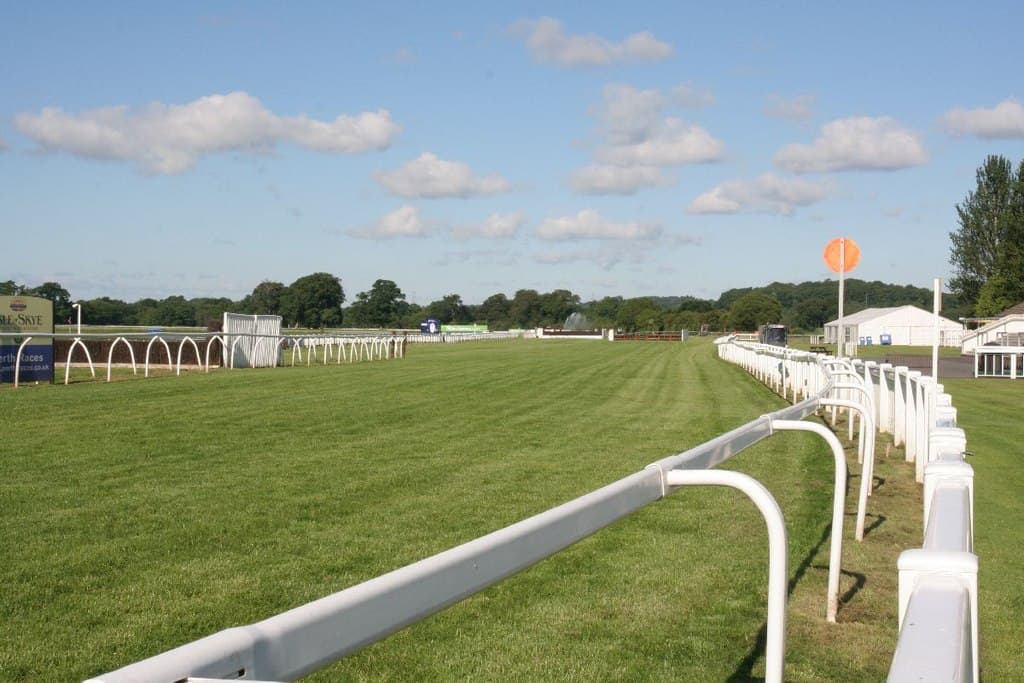
Perth Racecourse: Complete Guide
Everything you need to know about Perth Racecourse: Scotland's most northerly jumps venue, the Perth Gold Cup, and racing on the banks of the Tay.
Read more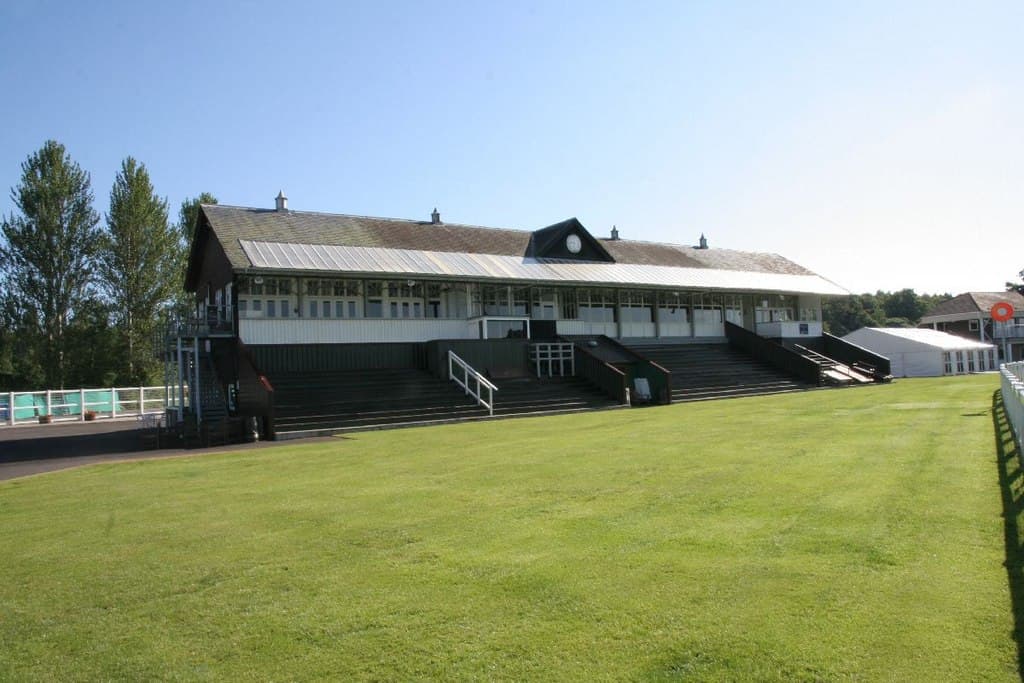
A Day Out at Perth Racecourse
Everything you need for a day at Perth — getting there, what to wear, enclosures, food and drink, and insider tips for Scotland's most northerly jumps venue.
Read more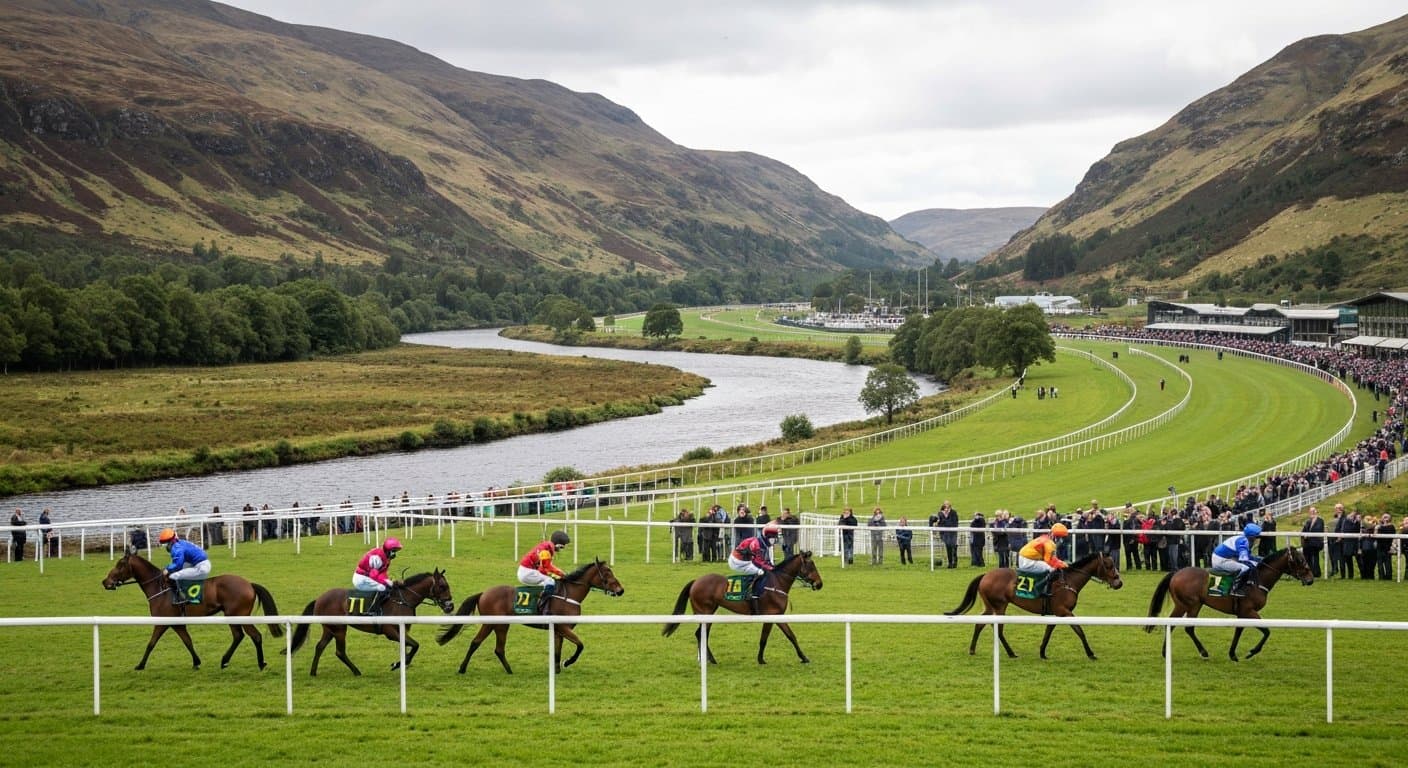
Perth Festival: Complete Guide
Your complete guide to the Perth Festival — the curtain-raiser for the season at Scotland's most northerly jumps venue.
Read morePhotos on this page are used under Creative Commons licences. Titles, sources and licence links for each one are on our image credits page.
Research the field with the AI Race Predictor
Our model publishes calibrated win-probability estimates for UK races — a second opinion to understand a race, not tips. It's open about its record: it doesn't beat the market, and we show exactly how it does.
Work it out & learn the basics
Gamble Responsibly
Gambling should be entertaining and not seen as a way to make money. Never bet more than you can afford to lose. If you or someone you know has a gambling problem, help and support is available.