
Founder & Editor · Last reviewed 2026-04-05
Perth Racecourse sits inside Scone Palace Park on the north edge of Perth city, roughly two miles from the city centre on the banks of the River Tay. Racing has taken place in the Perth area since the 17th century, and the current course at Scone Park has been in continuous use since 1908. At a capacity of around 5,000, it is an intimate venue, compact enough to feel personal, large enough to host a serious racing programme.
What separates Perth from almost every other National Hunt course in Britain is its calendar. The season runs from April through September, a schedule that makes Perth a summer jumps venue at a time when most tracks have switched to flat racing or gone dark altogether. Perth is one of a small number of venues keeping jump racing alive through the warmer months, and it draws a loyal following of racegoers who prefer fences and hurdles regardless of the season. It is also the most northerly jump racecourse in Britain: when Cartmel in Cumbria concludes its season, Perth holds the distinction of staging the most northerly National Hunt fixture of any year.
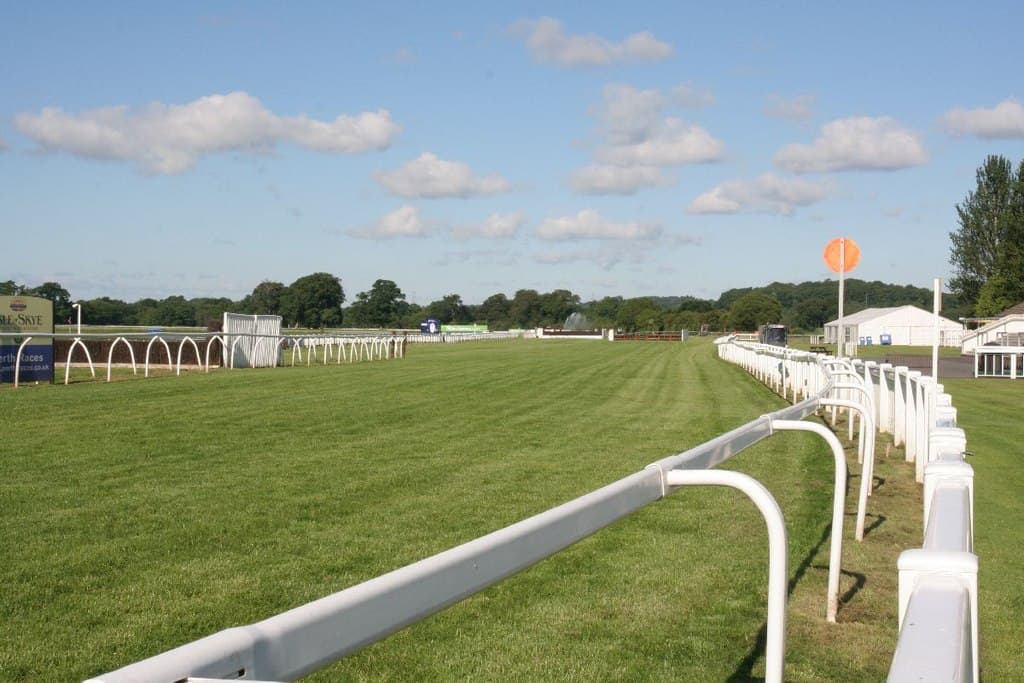
The course is right-handed and essentially flat, measuring approximately one mile two furlongs around. There are no sharp bends or dramatic hills. The going varies, Scone Park drains reasonably well, but the Scottish climate means soft ground is a real possibility in spring and autumn. Summer fixtures often ride on good or good to firm, which rewards horses that travel through their races rather than grinding it out. The circuit suits galloping types, and form here tends to hold up when those horses travel elsewhere.
The adjacent Scone Palace grounds add a dimension that no other British racecourse can match. The Palace was the coronation site of Scottish kings, including Macbeth in 1040, and the Stone of Destiny was kept here until 1296. Visitors can explore the Palace and its 100-acre gardens independently of the racing, making Perth a truly unusual day out for anyone who wants more than just the card.
Who this guide is for
First-time visitors will find everything here: how the track works, what facilities to expect, where to park, and what the atmosphere is like on a typical race day compared with the Perth Festival.
Regular racegoers looking to get more from their visits will find detail on the fixture calendar, the course characteristics that affect form, and the key trainers whose records at Perth are worth monitoring.
History-focused readers will find a dedicated section covering Perth's origins in the 17th century, the move to Scone Park in 1908, and the connection to Lucinda Russell and One For Arthur, the 2017 Grand National winner trained just 12 miles from the course.
Festival and trip planners will find practical travel information, accommodation options, and guidance on combining a race day with a visit to Scone Palace, one of Scotland's most significant historic sites.
Quick decisions
- Best meeting: the Perth Festival in late April or early May: three days, competitive fields, horses from Ireland included
- Signature race: the Perth Gold Cup, a Grade 3 chase with a history stretching back to 1825
- Best for: racegoers who want summer jump racing in a spectacular natural setting
- Getting there: 75 minutes by direct train from Edinburgh, 80 minutes from Glasgow; taxis to the course cost around £8–10
- Admission: typically under £20 for a standard badge; Festival and Gold Cup days are priced higher
- Worth combining with: a visit to Scone Palace, adjacent to the course and open to visitors year-round
- Local trainer to follow: Lucinda Russell, based in Kinross: 12 miles away, whose string regularly runs well at Perth
Bet on Perth
Place your bets on Perth races with a trusted bookmaker.

Promo code BETFRED50. New customers only. Register, deposit with a Debit Card, and place a first bet of £10+ at Evens (2.0)+ on Sports, to be settled within 7 days, to get £30 in Sports Free Bets and £20 in Bet Builder Free Bets within 24 hours of settlement. 7-day expiry. Eligibility & payment exclusions apply. Full T&Cs apply. Take Time to Think. BeGambleAware.org. 18+. Full T&Cs.

Promo code R30. New UK customers only, 18+. Register, deposit £10 or more, then place a £10 single cash bet at odds of 1/2 (1.5) or greater on any sports market (excluding Virtuals). Once the qualifying bet settles you get £30 in Free Bets (3 x £10) — the qualifying bet can win or lose. Free Bets are valid on any sports market excluding Virtuals, expire in 7 days, are non-withdrawable and must be used in full. Excluded deposit methods apply (including PayPal, Apple Pay, Skrill and NETELLER). Named bets such as Lucky 15 do not qualify. If you cash out the qualifying bet, or it is voided, you are no longer eligible for the offer. Ends 31.12.26. Full T&Cs apply. Please gamble responsibly. BeGambleAware.org. 18+. Full T&Cs.

Promo code BET40GET20. New UK customers, 18+. Register with the code and place a first bet of £40 or more at Evens (2.0) or greater. Receive 2 × £10 free bets: the first credited automatically once the qualifying bet settles, the second 24 hours later. Free bets must be placed at minimum odds of 4/1 (5.0), expire 24 hours after credit, and the free-bet stake is not returned with winnings. Debit card deposits only. Take Time to Think. BeGambleAware.org. 18+. T&Cs apply. Full T&Cs.

50% of your first-day net losses refunded as a free bet, capped at £25. New UK customers aged 18+ only. To qualify, deposit and place a first bet of £10 or more on any sport at minimum odds of evens (2.00), then place at least two further bets on different events, each worth at least 50% of your largest bet, all at evens (2.00) or greater. Losses are counted from your first settled bet until 23:59 the same day. Place a qualifying £10+ bet and you are guaranteed at least a £5 free bet. Bets placed at SP, void bets, cashed-out bets and bets struck with free bets do not count towards the offer. The free bet is credited the day after your qualifying bets settle and must be used within 7 days, after which it expires. It can be used at odds from 1/4 (1.25) up to 250/1 on singles and straight accumulators, but not on Trixie, Patent or Yankee style multiples. Free-bet stake is not returned with winnings. One offer per person, household, address, IP address and device. E-wallet deposits may not qualify, so check the cashier before depositing. Customers registered with GAMSTOP cannot claim. KYC identity verification must be completed before the free bet is credited. Take Time to Think. BeGambleAware.org. 18+. T&Cs apply. Full T&Cs.

New customers, 18+. Choose the sports bonus at sign-up, make a first deposit and receive a 100% bonus up to £50 in your Sports Bonus balance. To convert the bonus to cash, wager it 10x within 30 days. Single bets below Evens (2.00) do not qualify; accumulators do not qualify if any selection is below 1/2 (1.50). Virtual Sports, voided, cancelled, drawn, cashed-out and free-bet wagers do not count towards wagering. Only the first settled bet per event counts. Withdrawing before the wagering requirement is met forfeits the bonus balance including bonus winnings. Real-money funds are used before bonus funds. Deposits via Skrill or Neteller are not eligible. Not valid in conjunction with other promotions. Odds, bet and payment limits apply. 10bet general and promotion T&Cs apply. BeGambleAware.org. 18+. Full T&Cs.

New customers in Great Britain and Republic of Ireland, 18+. Place a £10 fixed-odds qualifying bet at minimum odds of 1/2 (1.50) — single or each-way (only the win part counts), pre-event or in-play, not cashed out early, within 28 days of opening the account. Receive up to £60 in bonuses credited over three days: 3 × £10 fixed-odds free bets (the first on settlement, then 24 and 48 hours later) plus 3 × £5 Total Goals FOOTBALL spread bets and 3 × £5 racing Winning Favourites spread bets, with a £1 racing Race Index spread bet as an extra on top. The spread bets need a full spread-betting account, opened within 28 days of the fixed-odds account and subject to Spreadex's eligibility and appropriateness checks. Free-bet stakes not returned with winnings; free bets valid 28 days from issue. IMPORTANT: the £5 credits are SPREAD bets — sports spread betting carries the risk that losses can exceed your stake. Sports spread-betting customers do not have Financial Ombudsman or FSCS recourse. Take Time to Think. BeGambleAware.org. 18+. T&Cs apply. Full T&Cs.

Promo code WELCOME15, entered under My Bonuses after registering. New UK customers, 18+. Place a first qualifying bet of at least £10 from your cash balance at odds of evens (2.0) or greater within 7 days of opening the account. Once the qualifying bet fully settles you receive £15 in free bets, credited as 3 x £5 tokens with set uses: one £5 accumulator free bet (minimum 4 legs, each leg at 2/5 or bigger), one £5 sports free bet (any market at evens or bigger) and one £5 Sub Cover free bet (selected football player markets at evens or bigger). Free-bet stakes are not returned with winnings. Free bets expire 7 days after they are credited. Void, cashed-out and partially cashed-out bets do not qualify. One offer per customer. Confirm the current terms on BetGoodwin's own welcome-offer page before claiming. Take Time to Think. BeGambleAware.org. 18+. T&Cs apply. Full T&Cs.

New UK customers, 18+. Minimum deposit £10. Place a £10 qualifying single on sports (excluding virtuals) at minimum odds of 1/2 (1.50), settled within 14 days. Deposit-method exclusions apply. Receive £30 in free bets (stake not returned), split £20 for sportsbook use (2 x £10) and £10 for Bet Builder only (2 x £5); Bet Builder does not cover horse racing. Free bets must be accepted within 7 days and expire 7 days after acceptance. No promo code required. Best Odds Guaranteed on UK & Irish racing, subject to having staked over £25 in the previous seven days. Operated by LiveScore Betting and Gaming (Gibraltar) Ltd, UKGC 56859. Confirm the current terms on LiveScore Bet's own promotions page before claiming. Take Time to Think. BeGambleAware.org. 18+. T&Cs apply. Full T&Cs.
18+. BeGambleAware.org
The Course
Perth is a right-handed, galloping circuit set on flat ground within the grounds of Scone Palace Park. The layout is straightforward, a loop of approximately one mile two furlongs with no sharp bends, no significant gradients, and a run-in long enough for late challengers to make ground. That combination of flat terrain and fair fences consistently produces results that translate well to other venues, making Perth form worth studying rather than dismissing as a backwater quirk.
Shape, direction, and distance
The circuit runs right-handed throughout. Horses travel away from the stands, turn right-handed around the top of the course, and come back towards the grandstand before sweeping into the home straight. The home straight itself is generous in length, horses that have been held up with something in reserve can mount real challenges in the final two furlongs, and winning margins are often closer than the in-running betting might suggest.
Races at Perth span a typical National Hunt range of distances, from the minimum two miles for hurdles up to three miles and beyond for the longer chases. The course suits stayers rather than horses that rely on a sprint finish: there is no short sharp incline to expose one-paced animals, but the circuit is long enough that a horse that cannot sustain its gallop will find out in the final half-mile. Distances of two miles four furlongs and two miles four furlongs to three miles are the bread and butter of the Perth programme.
The fences are well maintained and generally fair. They are not small (this is a proper jumping track) but they are set up to reward clean jumping rather than punish minor errors catastrophically. Perth has a reputation among trainers for being a relatively safe course, which is one reason it attracts horses at the start of their careers and at the tail end of long campaigns. The hurdles layout follows a similar route to the chase course.
Going and ground conditions
Perth's position in Perthshire, with the River Tay nearby and the full weight of a Scottish climate overhead, means ground conditions are truly variable. Spring fixtures in April and early May frequently ride on good to soft or soft, the winter rainfall lingers in the soil, and temperatures are not yet high enough to dry things out quickly. Punters who dismiss soft-ground running at Perth do so at their own risk: a horse with a proven record on easier surfaces has a structural advantage at spring meetings that the market sometimes undervalues.
Summer fixtures through June, July, and August typically produce better ground. The course drains reasonably well, and a dry spell can push the going towards good to firm. Perth is not prone to the bone-hard conditions seen at some southern flat tracks during a summer drought, partly because the Scottish climate rarely sustains enough heat and partly because course management includes watering when conditions warrant it. The official going description is published on the course website and updated in the days before each meeting.
September can go either way. An early autumn in Scotland can be mild and dry; a wet September will push conditions towards soft or heavy on ground that has already had a summer's worth of racing traffic. Checking the going report before travelling is straightforward and worth doing for any fixture, the character of a race card at Perth changes materially between good to firm and soft.
For betting purposes, the going at Perth is one of the more reliable signals available. The flat circuit means that pace angles are less important than at a more undulating track, but stamina and ground suitability matter greatly. Horses making their seasonal reappearance at the Festival on soft ground need a proven record at that trip on that surface to be taken seriously at short prices.
A National Hunt-only venue
Perth stages no flat racing. The entire programme (hurdles and chases) is National Hunt. That is unusual in itself, but Perth is Also unusual in running that programme from April through September, a period when most National Hunt courses have gone dark and their trainers are managing horses through the summer. Around 16 fixtures are scheduled each season, all broadcast on Racing TV.
The April and May meetings, including the Perth Festival, attract horses from England and Ireland whose trainers specifically target summer jumping. Trainers based in Scotland, headed by Lucinda Russell whose yard in Kinross is just 12 miles from the course, are particularly active at Perth. The summer programme through June, July, and August draws competitive fields partly because there is limited summer jump racing on offer nationally, horses that are not suited to the flat alternative have few venues to target, and Perth benefits from being one of them.
The course is widely acknowledged as the most northerly jump course in Britain. When the Cartmel season in Cumbria concludes, Perth holds the distinction of staging the most northerly National Hunt fixture of any year. That geographic position is not purely a curiosity, it affects the weather, the going, the type of horse that travels, and the character of the crowd, which includes racegoers from across the central belt of Scotland and beyond.
What the track rewards
The flat, galloping nature of Perth means the course consistently favours certain horse profiles. Horses that travel well through their races (those that can settle in mid-division and maintain their gallop without being scrubbed along) tend to do better than those that require multiple changes of gear. Heavy horses that need soft ground to produce their best form are unlikely to find Perth at its summer best, but they can be worth backing in spring conditions.
Front-runners do not enjoy an automatic advantage at Perth in the way they might at a tighter circuit. The long circuit means the pace tends to be more evenly distributed, and horses that go off too quickly can find themselves with nothing left when the home straight arrives. That said, when the going is soft and the pace slow, a horse that settles in front and dictates can be hard to pass. Reading the early pace is as important here as anywhere.
Trainers who understand the Perth track tend to return to it. Lucinda Russell's success rate at the course is a direct product of knowing its demands, preparing horses specifically for summer jumping, and (in the case of horses like One For Arthur) having the patience to develop animals over multiple seasons. The betting guide covers trainer records in more detail.
Comparing Perth to other summer jump venues
Perth's character becomes clearer when set against the small group of courses that also stage summer National Hunt racing. Cartmel in Cumbria is a tight, sharp circuit where front-runners hold a pronounced advantage and the field navigates a circuit of just under a mile per loop. Perth is the opposite: a longer, more open gallop on which front-runners cannot simply dictate on terms and hold on. Market Rasen in Lincolnshire is another summer jumps venue, with a more undulating track than Perth. The form of a horse that has thrived at Market Rasen may not transfer to Perth without adjustment for the flatter, more galloping nature of the Scone Park circuit.
Within Scotland itself, Musselburgh and Ayr are the other main venues, but both run largely flat programmes with a limited National Hunt component. Perth is the only Scottish course that runs an exclusively jumps programme across a full six-month season, which means horses from Scottish yards that are trained primarily for National Hunt racing will target Perth repeatedly. That concentration of Scottish jumping talent is part of why Perth form is worth monitoring: the same horses and trainers appear regularly enough that patterns of ability and course suitability are observable across multiple meetings.
Section takeaway: Perth is a fair, galloping circuit that rewards horses with stamina and clean jumping. Going is a key variable, check the report before every meeting. The track produces form worth following, and its character stands apart from the tighter circuits at Cartmel and the undulating layout at Market Rasen.
Key Fixtures & Calendar
Perth's racing season runs from April through September, with around 16 fixtures spread across those six months. All meetings are broadcast on Racing TV. The programme is built around National Hunt handicaps and conditions races at distances from two miles to three miles and beyond, with the Perth Festival and the Perth Gold Cup meeting as the fixtures that attract the widest interest and the most competitive fields.
The Perth Festival
The Festival is held in late April or early May (typically the last weekend of April) and runs across two or three days. It is the traditional curtain-raiser for the Perth season and the meeting that draws the broadest field of competitors, including horses trained in Ireland by the likes of Gordon Elliott whose yard sends runners to Perth specifically for the Festival programme.
The Festival card is typically dominated by novice events and handicap chases, with prize money set at a level that attracts truly competitive horses rather than those simply looking for an easy opportunity. In recent years the Festival has included Grade 3 race cards that put it in a different category from the everyday summer fixtures. The atmosphere on Festival weekend is markedly different from a typical mid-season meeting, crowds are larger, there is more Irish participation in both the racing and the social element, and the sense of occasion is clear from the moment the card is published.
For visitors from outside Scotland, the Festival is almost certainly the meeting to target. The combination of competitive racing, a beautiful setting in Scone Palace Park, and the proximity to Edinburgh (50 miles to the south) makes it an attractive destination. Hotels in Perth and the surrounding area fill up for Festival weekend, so booking in advance is advisable. Full practical detail is in the Perth Festival guide.
The Perth Gold Cup meeting
The Perth Gold Cup is the centrepiece of the June programme and the most valuable single race in the Scottish summer jumps calendar. The race itself is a Grade 3 chase with a history stretching back to 1825. It was revived in its modern form in 1999 and has been staged annually since, with combined prize money on Gold Cup Day exceeding £100,000 in recent seasons.
Gold Cup Day is a proper occasion. The card typically includes the Gold Cup chase alongside the Silver Cup, novice events, and handicap hurdles. A balanced programme that gives connections of horses across a range of abilities something to target. The competitive quality of the fields reflects the prize money on offer and the prestige attached to winning the Gold Cup itself, which carries winner's prize money that makes it worthwhile for trainers in England and Ireland to travel.
The going in June at Perth is frequently better than the spring alternatives, which means Gold Cup Day often showcases horses at a more representative level than Festival weekend. Horses whose spring form was compromised by soft ground will often improve markedly on a summer surface, and the Gold Cup occasionally throws up a result that looks puzzling until the ground conditions across the season are taken into account.
Summer fixtures
Between the Festival and the Gold Cup, and continuing through July and August into September, Perth stages a sequence of evening and weekend meetings that form the backbone of Scottish summer jumping. These are less heavily promoted than the major fixtures but offer competitive racing to a loyal local crowd.
Evening meetings in June and July are popular with racegoers from Perth, Edinburgh, and Dundee who can attend after work. The light evenings at this latitude (Perth is at approximately 56 degrees north, similar to Moscow and Copenhagen) mean late-evening racing is possible well into the summer, and the course makes use of that. An evening at Perth in July, with the Tay shimmering in the background and the Perthshire hills visible from the grandstand, is an experience that is difficult to replicate at a more southerly or more urban course.
August fixtures are often lower-key. The big yards are managing their horses for the autumn campaign, and the quality of the field can dip slightly from Gold Cup levels. That said, the going tends to be fair and the racing competitive. Trainers who run regularly at Perth through the summer (including Lucinda Russell's Kinross yard) tend to produce their horses in good condition for these meetings.
The September finale
September closes the Perth season and occasionally produces testing conditions as the Scottish autumn arrives ahead of schedule. Soft ground is a real possibility at late-season meetings, and the programme tends to feature staying handicaps and bumper events that give younger horses experience before the winter campaign begins.
The final fixture of the season has a pleasantly valedictory quality, summer is over, the horses are preparing for their winter campaigns, and the racecourse itself goes quiet until April. That rhythm gives Perth a seasonal punctuation that feels more marked than at year-round venues, and it lends each season a clear narrative from Festival opening to autumn closing.
Planning your visit
Weekend fixtures attract the largest crowds and the most competitive racing. Weekday meetings and evenings offer a quieter experience without sacrificing the quality of the racing programme significantly. Perth is within easy reach of Edinburgh (50 miles), Glasgow (60 miles), and Dundee (20 miles), making it a natural target for a day trip. The getting there section covers travel options in detail, and the day out guide handles the practical questions around timing and logistics.
Dates for each season's fixtures are published on the course website in the autumn of the preceding year, and Racing TV's schedule can be used to cross-reference broadcast coverage. For the Festival and Gold Cup Day specifically, it is worth bookmarking the relevant dates as soon as they are published.
Section takeaway: The Perth Festival in late April and the Gold Cup meeting in June are the fixtures that matter most. Both attract horses from England and Ireland, both offer prize money worth competing for, and both justify travel from the central belt. Summer and autumn fixtures fill out a solid supporting programme.
Facilities & Hospitality
Perth Racecourse accommodates around 5,000 people and has the atmosphere that comes with that scale, not a vast anonymous stadium, but a properly equipped venue where most racegoers can see the track clearly without fighting for position. The setting inside Scone Palace Park adds something that cannot be engineered: the grandstand looks out over a flat, open stretch of ground towards the River Tay, with Perthshire hills visible on clear days.
Enclosures and viewing areas
The main grandstand provides covered seating and standing room with good sightlines across the full circuit. Because the track is essentially flat and the circuit relatively open, there are few positions from which the racing is truly obscured. The long home straight in front of the stands means the decisive part of most races takes place in full view of the crowd, and the run to the final fence is visible from almost any point on the track apron.
The course sets up additional outdoor viewing and bar areas for the Perth Festival and Gold Cup meetings, when attendance pushes towards capacity. These temporary additions are particularly useful on days when the weather is kind, summer evenings at Perth with a clear view of the course and a drink in hand are among the more pleasant ways to watch jump racing in Britain.
For standard mid-season fixtures, the enclosures are more relaxed and there is rarely a problem finding a good vantage point. Arriving early for major meetings is advisable, particularly on Gold Cup Day when the combination of larger crowds and limited grandstand capacity can make the more popular viewing spots competitive.
Hospitality and private dining
Perth offers hospitality packages ranging from restaurant dining to private box hire. The restaurant overlooks the racing, so guests eating at the table can follow the action without leaving their seats. A practical advantage that is sometimes overlooked when comparing hospitality options at different tracks.
Private boxes accommodate groups ranging from a small corporate party to larger gatherings, and the course team can advise on the specific configuration and catering options for each box. For Festival weekend and Gold Cup Day, bookings at any level of hospitality typically need to be made several weeks in advance. Mid-season weekday meetings offer more flexibility, and the per-head cost of hospitality tends to be lower at those fixtures.
For anyone organising a corporate event at Perth, the combination of a relaxed Scottish setting, good facilities, and a professional events team makes it a workable choice. The adjacent Scone Palace can also host events, and some visitors combine a racecourse package with a private tour of the Palace.
Food and drink
There are bars and catering outlets throughout the course. The main bar serves a standard selection of beers, wines, and spirits, including local Scottish ales where the course has sourced them. Food options range from quick-service bites (pies, burgers, sandwiches) to the sit-down restaurant available to hospitality guests.
For racegoers on the general admission side, the quality of the catering is consistent with what you would expect at a mid-sized provincial course. The course does not pretend to be a fine-dining venue, but the food is adequate and the bars are well-stocked. On busy days, queues at the catering outlets can be long around the half-hour before the first race; arriving early or timing lunch outside peak moments avoids most of the wait.
Practical information
Admission prices are published on the course website and typically run under £20 for a standard badge at most fixtures. Festival and Gold Cup Day carry a premium. Children are generally admitted free or at a reduced rate.
The course is accessible for racegoers with mobility requirements, step-free access to the principal areas is available, and the flat terrain of the course itself means there are fewer physical obstacles than at a hilly venue. Specific accessibility information, including designated parking and viewing areas, is listed on the course website and worth checking in advance if required.
On-course parking is available at the racecourse and is generally free on standard fixtures. On the largest attendance days, the car parks can fill, so arriving 30–45 minutes before the first race is a sensible precaution. The full visitor experience is covered in the day out guide.
Section takeaway: Perth's facilities are right-sized for its capacity. The viewing quality is good, the hospitality options cover the main categories, and the setting in Scone Palace Park does the rest. Book hospitality well in advance for Festival and Gold Cup Day.
Getting There
Perth Racecourse is at Scone Palace Park, Perth, Perthshire, postcode PH2 6BB, approximately two miles north of Perth city centre. The course is well connected by rail from Edinburgh, Glasgow, and Dundee, and by road via the A9 corridor from the north and the M90 from the south.
By train
Perth station is on the main cross-Scotland rail network, with direct services from Edinburgh Waverley (journey time approximately 75 minutes), Glasgow Queen Street (approximately 80 minutes), and Dundee (approximately 20 minutes). Services also run from Aberdeen and Inverness on the same line, making Perth one of the better-connected provincial racecourses in Scotland for visitors arriving from different directions.
From Perth station to the racecourse, the most convenient option is a taxi. The journey takes around 10–15 minutes and costs approximately £8–10 depending on the time of day and demand. On Festival and Gold Cup days, pre-booking a taxi for the return journey is strongly recommended. The rank outside the station can have a long queue after the last race, and a pre-booked car guarantees you a wait time rather than a guessing game.
ScotRail operates most services on this route. Timetables and booking are available at scotrail.co.uk. Checking the service schedule before travelling is worthwhile for evening meetings, where late departures from Perth may be limited.
By car
From the south, the M90 connects directly to Perth via the Broxden interchange, from where the A9 runs north through Perth and past the course. From the north, the A9 is the principal artery, it connects Inverness, Pitlochry, and the Perthshire towns to Perth. From the east, the A85 from Dundee via Scone provides a direct route.
The course is signposted from the main roads in the Perth area. From the city centre, follow signs for Scone and Scone Palace, and the racecourse entrance will be on the right as you approach the Palace grounds. There is on-course parking available at the racecourse, and it is free on standard fixtures. On the larger attendance days (Festival weekend, Gold Cup Day, and busy summer Saturdays) the car parks can fill by the time the second race goes off, so arriving 30–45 minutes before the first race is advisable.
By bus
Local bus services connect Perth city centre with the Scone area. The number 7 service operates on this route, though frequencies may be adjusted on race days. Timetables are available from Traveline Scotland (travelinescotland.com). The course website sometimes publishes race-day travel information, including any special bus arrangements for major meetings.
Bus travel is most practical for racegoers already in Perth city centre. For visitors arriving by train and continuing to the course, a taxi is generally quicker and more reliable than waiting for a local service.
Combining with a visit to the area
Perth is well placed for a two- or three-day trip that combines racing with the wider attractions of Perthshire. Scone Palace, immediately adjacent to the racecourse, is open to visitors year-round and covers one of the most significant historic sites in Scotland, the coronation place of Scottish kings and the original resting place of the Stone of Destiny. The city of Perth itself has a compact and walkable historic centre, with the River Tay running through it and good dining and accommodation options within a few minutes of the station.
For those interested in a Scottish racing tour, Perth is within reasonable distance of Musselburgh near Edinburgh (50 miles south), Kelso in the Borders, and Hamilton Park near Glasgow. A long weekend built around the Perth Festival could comfortably include a second day at Musselburgh, given the train connections between Perth and Edinburgh.
The A9 north from Perth (Scotland's main artery to Inverness and the Highlands) makes Perth a natural stopping point for racegoers travelling between the central belt and the far north. There is no jump racing north of Perth, which means those heading into the Highlands on a combined trip should plan their racing days around the Perth calendar before they leave.
Frequently Asked Questions
History of Perth Racecourse
History of Perth Racecourse
Racing in the Perth area has a documented history stretching back to the 17th century, making it one of the oldest racing traditions in Scotland. The exact form that early racing took (likely informal match races between local horses, arranged by landowners with the interest and means to compete) was typical of the period before organised racing spread from its southern English centres. By the early 18th century, racing near Perth was sufficiently established to leave clear records, and by the 19th century the Perth Gold Cup had become a formal fixture in the local sporting calendar.
From open country to Scone Palace Park
The course used today was not the site of Perth's earliest races. Before 1908, racing took place at various locations in and around the city, including North Inch, the flat park ground on the northern edge of Perth city centre that has served multiple sporting purposes over the centuries. Races at North Inch were limited by the constraints of a public park. The ground was shared, distances were restricted, and the facilities were basic.
The move to Scone Palace Park in 1908 changed the character of Perth racing entirely. The Palace grounds offered flat, well-drained land with enough space for a proper one-mile-two-furlong circuit, and the private nature of the site allowed for proper enclosures, a grandstand, and the kind of permanent infrastructure that a regular race programme required. The decision to settle at Scone Park also brought the course into direct association with one of Scotland's most historically significant sites. Scone Palace and its grounds had been central to Scottish national identity for centuries before racing arrived.
The course has operated continuously at Scone Park from 1908, interrupted only by the two World Wars when the site was repurposed for military use. Racing resumed after 1945 and the post-war years saw the fixture list rebuild slowly, eventually settling into the April-to-September programme that defines Perth today.
The Perth Gold Cup and Scottish racing history
The Perth Gold Cup is documented as far back as 1825, predating the move to Scone Park by more than 80 years. In its early decades, the race was run under conditions typical of 19th-century racing, rules were less standardised than today, and the social function of the meeting was as important as the sporting one. The Gold Cup was a gathering point for Perthshire landowners, military officers stationed locally, and the wider community that organised itself around the Scottish racing calendar.
The race was discontinued at some point during the 20th century and revived in 1999 in its modern form as a Grade 3 steeplechase. The revival placed it firmly in the National Hunt programme rather than recreating an historical flat race, reflecting the direction that Perth racing had taken. The modern Gold Cup's prize money (over £100,000 on Gold Cup Day in recent seasons) gives it a status that attracts horses from England and Ireland, making it a race of real national significance within Scottish racing.
Lucinda Russell and the modern era
The contemporary narrative of Perth Racecourse is inseparable from the career of Lucinda Russell, who operates her training yard at Arlary House, Milnathort, Kinross, 12 miles from the course. Russell has been a fixture in Scottish racing for more than two decades, and her proximity to Perth makes it a natural home track for horses from her yard.
The high point of her career (and arguably of Scottish jump racing in the modern era) came on 8 April 2017, when One For Arthur won the Grand National at Aintree under jockey Derek Fox at odds of 14/1. One For Arthur was bred, trained, and prepared entirely within Scottish National Hunt racing, with Perth among the courses where he built the form and experience that led to Aintree. The victory made national news, and Russell became the first female trainer to win the Grand National since the rules were amended to allow women to hold training licences.
One For Arthur's connection to Perth is not simply geographic. His career trajectory (patient development over multiple seasons on Scottish summer tracks before targeting the biggest prizes in British jumping) is the kind of career arc that Perth's summer programme is well suited to support. The course gives trainers like Russell the opportunity to build horses gradually through competitive but not maximally pressured fixtures before pointing them at races that matter more.
Summer jumping as a calendar innovation
Perth's April-to-September schedule was not always the stable arrangement it appears today. Summer jump racing in Britain has been a contested concept, some voices in the sport have questioned whether running horses over fences and hurdles in warmer months, when the ground is harder and the jumping risks potentially higher, is appropriate. Perth has consistently been part of the argument that summer jumping, conducted on a properly watered and maintained course, is a legitimate and worthwhile part of the National Hunt programme.
The course's position as the most northerly jump venue in Britain gives it a particular role in that debate. When southern tracks go to flat racing in the summer, Perth offers National Hunt action to a part of Britain that would otherwise have none. The combination of geography, tradition, and a committed management team has kept Perth active through periods when summer jumping in general was less well supported by racing's governing bodies than it is today.
The A9 corridor and Perth's geographic context
Perth's position at the junction of central Scotland and the Highlands is not merely a matter of race-programme geography. The city sits at a historic crossroads: the A9, which runs from Perth north through Pitlochry and Inverness to the far north of Scotland, has been the main artery of northern travel for centuries. Racing at Perth drew horses and racegoers from the Highland estates and the Border country alike, because Perth was as far north as a racing meeting of any scale could practicably be organised. That has not changed in the modern era. The surrounding region produces riders, owners, and breeding lines that feed into the sport in ways that would not survive if Perth were not there to provide the competition.
The River Tay itself is part of that context. It is one of Scotland's great salmon rivers, and the fishing culture along the Tay has always sat alongside the racing culture at Scone as part of a broader social calendar for Perthshire landowners and their guests. The racecourse and the Palace are in the same landscape, sharing the same geography, and both reflecting the patterns of Scottish life across several centuries.
Section takeaway: Perth's history runs from 17th-century match races to the 2017 Grand National winner. The move to Scone Park in 1908 and the Gold Cup's revival in 1999 are the structural milestones. Lucinda Russell's career and Perth's position at the gateway to the Highlands connect the historic course to the present day.
Famous Moments
Famous Moments
Perth may not have the stage of Cheltenham or Aintree, but its summer programme has produced results that resonated well beyond Scotland, shaped training careers, and in one case connected directly to one of the biggest days in British jump racing.
One For Arthur and the road to Aintree
No moment in Perth's recent history has a larger aftershock than the 2017 Grand National. One For Arthur, trained by Lucinda Russell at her yard in Kinross, 12 miles from the course, won the National on 8 April 2017 at 14/1 under jockey Derek Fox. While the race took place at Aintree, not Perth, the connection to Scottish racing and to the training environment within which Perth plays a central role made it a defining moment for the course and its community.
One For Arthur's preparation involved summer jumping at Scottish tracks, and the flat galloping nature of Perth's circuit (which rewards horses that travel and jump rhythmically rather than those that rely on a sprint) is the type of track on which his running style could be developed. Russell has spoken in interviews about the importance of the Scottish racing programme in building the horses she sends to bigger races. The 2017 National put that programme on a national stage in a way that a Perth Gold Cup victory, however well run, could never have done.
For Perth racegoers who had watched horses from the Russell yard run at Scone Park over the preceding seasons, there was a direct and personal connection to what happened at Aintree. It is the kind of moment that gives a smaller course its place in a larger story.
Perth Gold Cup winners of note
The Perth Gold Cup, revived in 1999 as a Grade 3 steeplechase, has produced competitive fields and notable winners across its modern history. The race draws horses from England and Ireland (Gordon Elliott's Irish yard, which sends horses to the Perth Festival more broadly, has had runners in the Gold Cup) and the prize money of over £100,000 on Gold Cup Day puts it in a category that attracts horses of real quality rather than those that can find no better opportunity.
Each year's Gold Cup adds to a list of winners that reflects the range of the British and Irish National Hunt programme. Horses that win at Perth's Gold Cup meeting frequently go on to run well at higher-grade races in the autumn and winter, which is evidence that the race standard is authentic rather than inflated by a weak field in a remote location.
Gordon Elliott and the Festival connection
Gordon Elliott's decision to send horses to Perth from his base in County Meath, Ireland, is a regular feature of the Festival meeting and a measure of the event's standing. Elliott is one of the leading trainers in Ireland, responsible for multiple Cheltenham Festival winners and Grand National contenders. When a trainer of that profile targets a meeting, it tells you something about the prize money, the quality of the opposition, and the competitive nature of the programme.
Elliott's runners at Perth tend to attract attention from the betting market, and his record at the Festival has been consistently positive. His involvement also brings Irish racegoers north, adding to the cross-border flavour of Festival weekend that distinguishes it from the routine summer fixtures.
Atmosphere at the Festival: a scene from the stands
On a Festival Friday evening (April, the light still bright at seven o'clock because Perth is at 56 degrees north) the stands fill from mid-afternoon as racegoers arrive from Edinburgh, Glasgow, Dundee, and the Perthshire towns. The Tay is visible beyond the track, and Scone Palace sits to one side of the course, its pink sandstone face catching the low sun. The crowd is not enormous (five thousand at capacity) but it is concentrated, and the noise at the line is clean and immediate in a way that larger venues, with their dispersed crowds, rarely match.
By the third race, the betting ring is active. The trainers' names on the form card include Russell, Elliott, and a dozen smaller yards from across Scotland and northern England. The horses circling in the parade ring are fit after their winter break, starting their summer campaigns. It is not Cheltenham, and it does not try to be. It is a Scottish summer evening, a properly run card of competitive jump racing, and a setting that most racecourses in Britain cannot match.
Section takeaway: One For Arthur's 2017 Grand National is the headline, but the Perth Gold Cup's annual roll of competitive winners and Gordon Elliott's Festival involvement tell the story of a course that punches above its size.
Betting at Perth Racecourse
Betting at Perth Racecourse
Perth is a fair, galloping circuit that produces consistent, readable form. It is not a course where quirks of track bias or extreme topography distort results to a degree that rewards local knowledge over straightforward analysis. What it does reward is attention to going, trainer patterns, and distance requirements, three factors that are easier to assess here than at many more idiosyncratic venues.
Please gamble responsibly. If you feel you may have a problem with gambling, visit BeGambleAware.org or call the National Gambling Helpline on 0808 8020 133.
Going is the primary variable
The most important single factor at Perth is the going. The ground ranges from good to firm in summer to soft in spring and autumn, and horses that are suited to the going on the day have a structural advantage that the market does not always price correctly.
At Perth Festival meetings in late April, the ground has often been soft or good to soft following a Scottish winter. Horses with strong records on easy ground should be backed up rather than discounted. Conversely, at the June Gold Cup meeting when the ground is more frequently good to firm, horses whose best form has come on soft surfaces (even if that form looks strong on paper) should be treated with caution.
The going is updated on the course website and Racing Post in the days before each meeting, and typically again on the morning of racing. At Perth, a two-day dry spell in June can move the ground from good to good to firm, changing the race dynamics materially. Checking the report on the day itself is not optional if you are betting seriously.
Trainer records
Lucinda Russell's yard in Kinross, 12 miles from the course, dominates Perth racing in terms of volume and consistency. Russell's horses are prepared for the summer jumping programme specifically, and her strike rate at Perth over a full season is higher than her overall strike rate across all courses. When she runs a horse at Perth that has course form, the combination of proven track suitability and a trainer who knows the course well is worth quantifying in your assessment.
Gordon Elliott's Irish yard has a strong record at the Perth Festival in particular. At the Festival meeting, Elliott runners start at prices that often understate their chances. The market is aware of his record and prices accordingly, but the sheer quality of preparation for horses he sends to Perth means they outperform expectation frequently enough to be worth following.
Smaller Scottish yards that run regularly at Perth (including those based in Ayrshire and the central belt) are worth monitoring for improvement angles. A horse that has shown promise at Musselburgh or Hamilton Park and is stepping up to Perth for the first time at a longer distance is a pattern worth flagging on the day.
Course form and repeat winners
Perth form travels well. Horses that win at Perth on a flat, galloping track tend to run well at other galloping venues, including Kelso, Carlisle, and the larger National Hunt tracks. The reverse is also true: horses that have won at galloping venues elsewhere and are new to Perth can be expected to handle the course layout without difficulty.
Within the Perth programme itself, repeat winners at the track are worth noting. A horse that has won twice at Perth, at the same distance, on similar going, should be taken seriously if returning to those conditions, regardless of what has happened in between. The consistency of the track means Perth form is a reliable benchmark in a way that idiosyncratic courses cannot offer.
Distance and pace
Races at Perth tend to be run at a pace that suits horses who can gallop rather than sprint. The long circuit means breakneck early fractions rarely materialise. The pace is generally honest but not extreme. Horses that need a strong pace to show their best are less likely to find the conditions they want at Perth than at a sharper, smaller circuit where the tempo naturally quickens.
At distances of two miles four furlongs and beyond, staying power matters more than sharp acceleration. Horses with a strong record at three miles who are dropped back to two miles four at Perth will often find the trip sharper than it looks on paper; conversely, a horse that has been running over two miles and is stepped up to two miles four at Perth for the first time may find the distance suits if the form at the shorter trip suggests they were not getting home comfortably.
Betting market structure
Perth is a relatively small betting market compared with the southern festivals. On-course, there is a betting ring with bookmakers and the Tote. For off-course punters, all major bookmakers cover the full Perth card. The exchange markets can be thinner than at a Cheltenham or Newbury race, particularly for mid-season weekday fixtures. Thinner markets are more susceptible to late information (a going change, a jockey switch, or a trainer's pre-race comment) and early prices can shift significantly once betting opens properly.
For the Perth Festival and Gold Cup Day, market liquidity is better and the prices are more stable from the morning show through to the off. These are the meetings where the form-based approach is most likely to produce prices that reflect real assessments rather than thin-market noise.
Full trainer statistics, course records, and race-by-race form guidance are in the dedicated Perth betting guide.
Section takeaway: Going and trainer patterns are the two most productive areas of Perth form analysis. Russell's yard at Kinross is the dominant local factor; Elliott at the Festival is worth monitoring specifically. The flat, galloping circuit rewards stamina horses and produces reliable form.
Atmosphere & Planning Your Visit
Atmosphere and Planning Your Visit
Perth's atmosphere is a direct product of its scale and setting. Around 5,000 people in a flat, open site within Scone Palace Park creates a racecourse where you are truly close to the action. The parade ring is accessible, the betting ring is small enough that you can hear conversations, and the run to the final fence is thirty metres from where most people stand. It does not feel like a crowd that has been processed through a stadium. It feels like people who came specifically because they wanted to be here.
What to expect on a typical race day
On a standard mid-season fixture (a Tuesday evening in July, say, or a weekday in August) the crowd is local and relaxed. Racegoers from Perth city itself, Dundee, and the Perthshire towns make up the majority. The atmosphere is friendly without being rowdy. Children are common, particularly at evening meetings when families from Perth and the surrounding area come out for the races as part of a summer evening. The flat, open site means children can move around safely and see the racing without being lifted above a crowd.
For Festival and Gold Cup Day meetings, the atmosphere shifts. The crowd is larger, more mixed in origin, and more keyed up for competitive racing. Irish accents become audible in the betting ring and at the bar. The parade ring on Festival morning has a quality of horses that you would not normally expect at a provincial summer track. The sense of occasion is concentrated and real.
What to bring and wear
The Scottish summer is not a guarantee of warmth. Even in July, an evening meeting at Perth can turn cool after the third race as the sun drops. A light layer (a jacket or a light fleece) is a sensible addition even if the forecast looks reasonable. For spring Festival meetings in late April, treat the weather as you would treat October in the south of England: waterproofs are not excessive.
For Gold Cup Day and Festival weekend, the dress code leans towards smart casual. There is no formal requirement in the general enclosures, but the occasion is treated by most racegoers as a reason to make an effort. Hospitality areas will have their own guidance, which is worth checking with the course team when booking.
Combining racing with Scone Palace
Scone Palace is immediately adjacent to the course and open to visitors year-round. The Palace was the coronation site of Scottish kings (including Macbeth in 1040) and the Stone of Destiny was kept at Scone until Edward I removed it to Westminster in 1296, where it remained until 1996. The gardens extend to around 100 acres and include a pinetum planted with specimens brought back by the botanist David Douglas in the 19th century.
Visiting the Palace on a non-race day, or combining a morning visit with an afternoon or evening meeting, is a straightforward option. The site is managed separately from the racecourse, and tickets for the Palace do not include racecourse admission or vice versa. Opening hours and ticket prices are at scone-palace.co.uk.
Practical planning checklist
- Book accommodation in Perth early for Festival and Gold Cup Day: hotels fill weeks in advance
- Check the going report on the morning of your visit at Racing Post or the course website
- Pre-book a taxi from Perth station for the return journey on busy days
- Arrive at least 30 minutes before the first race on major fixtures to secure parking and a good viewing position
- The day out guide covers timing, food recommendations, and what to do in Perth city before or after racing
More guides for this course
Share this article
More about this racecourse
All Perth guides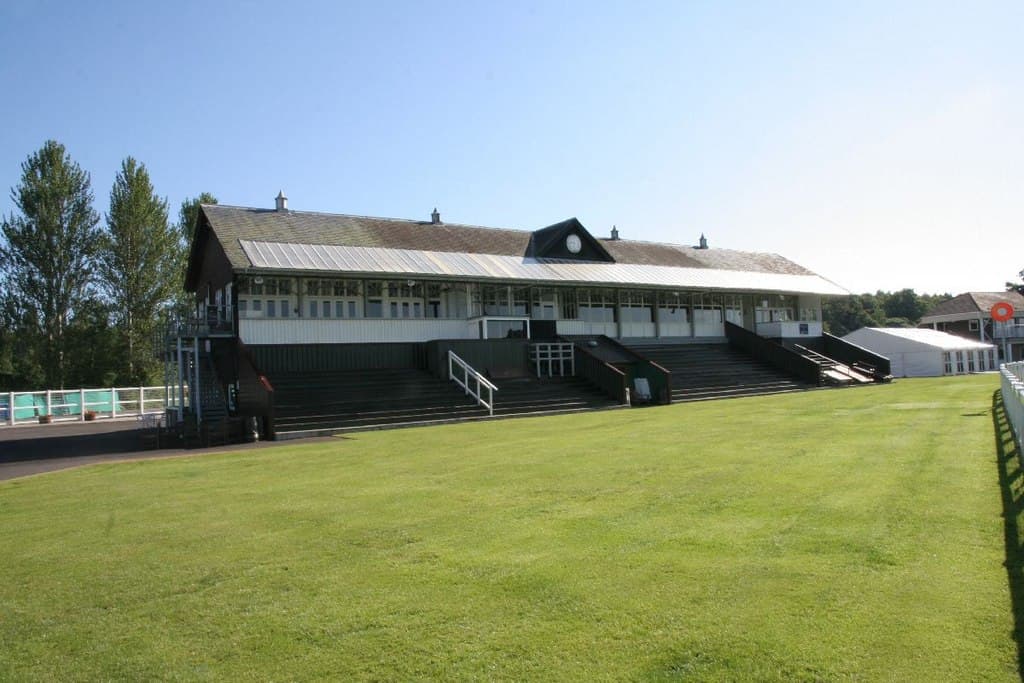
A Day Out at Perth Racecourse
Everything you need for a day at Perth — getting there, what to wear, enclosures, food and drink, and insider tips for Scotland's most northerly jumps venue.
Read more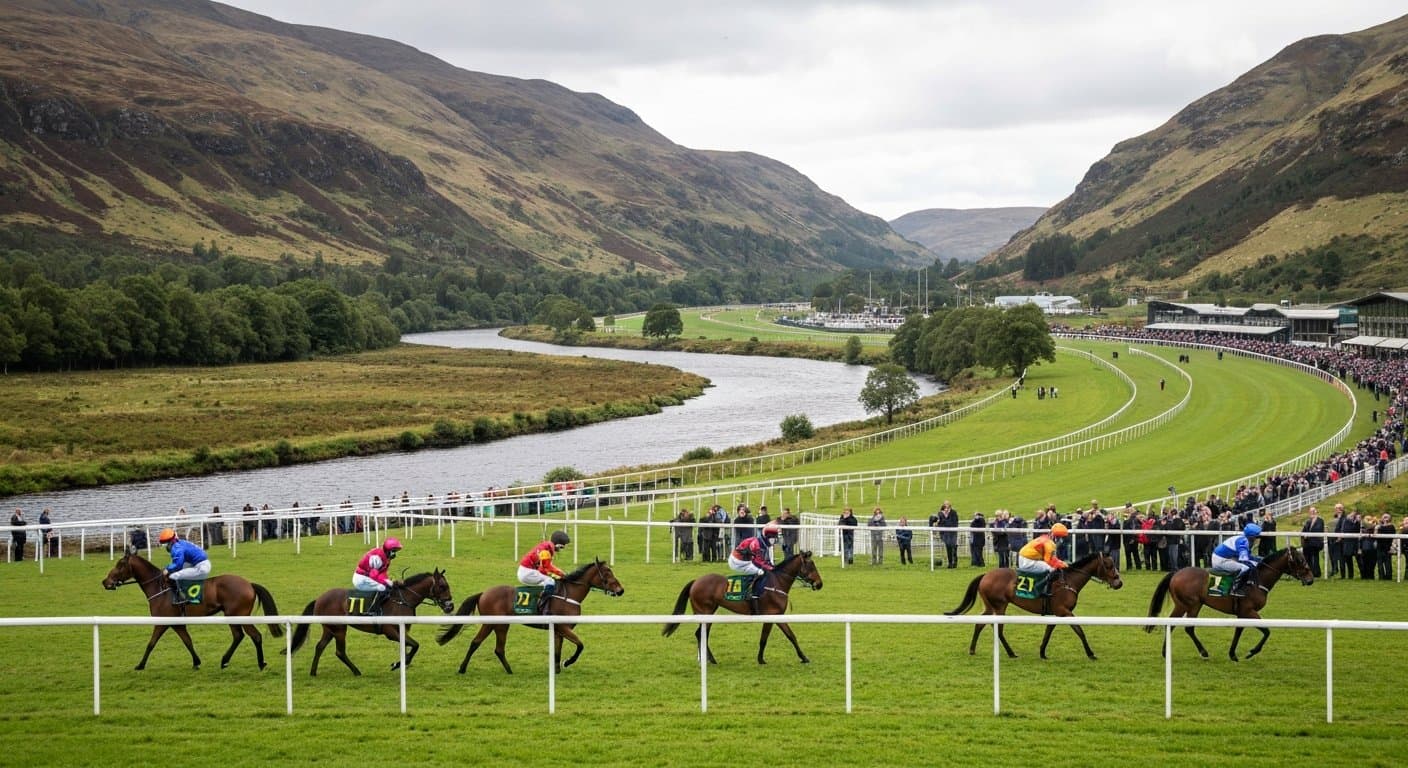
Perth Festival: Complete Guide
Your complete guide to the Perth Festival — the curtain-raiser for the season at Scotland's most northerly jumps venue.
Read more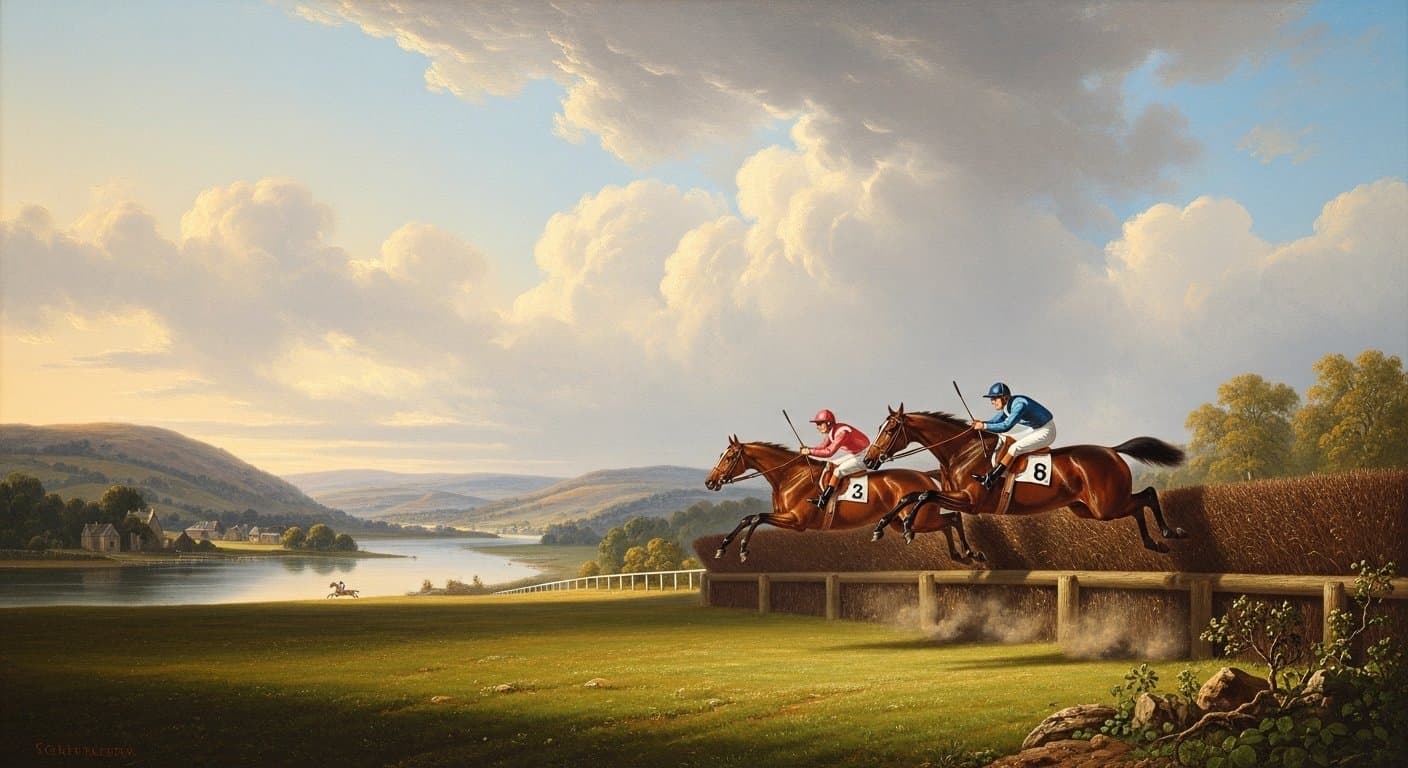
Perth Gold Cup Day at Perth: The Complete Guide
Your complete guide to Perth Gold Cup Day — Scotland's most prestigious jump occasion, run each June in the grounds of Scone Palace Park. Race card, betting angles, and everything you need to attend.
Read morePhotos on this page are used under Creative Commons licences. Titles, sources and licence links for each one are on our image credits page.
Research the field with the AI Race Predictor
Our model publishes calibrated win-probability estimates for UK races — a second opinion to understand a race, not tips. It's open about its record: it doesn't beat the market, and we show exactly how it does.
Work it out & learn the basics
Gamble Responsibly
Gambling should be entertaining and not seen as a way to make money. Never bet more than you can afford to lose. If you or someone you know has a gambling problem, help and support is available.