
Founder & Editor · Last reviewed 2026-04-05
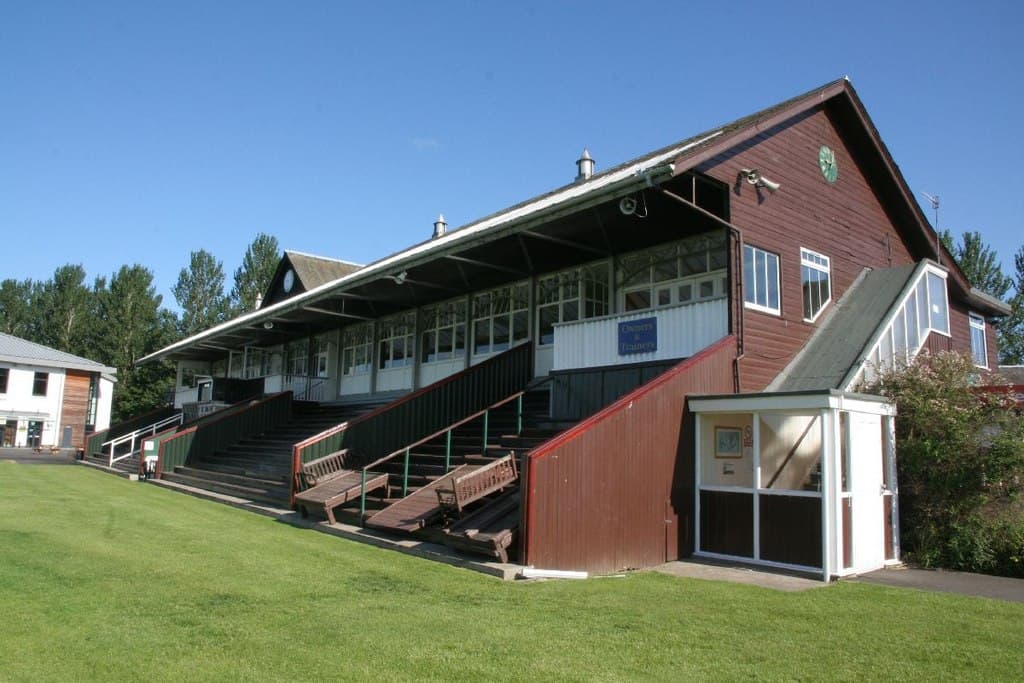
Stand at the rail on a fine April afternoon at Scone Palace Park and you have a view that no other racecourse in Britain can match. To your left, Scone Palace — built in 1803 on the site of the abbey where Scottish kings were crowned for centuries — rises in warm sandstone above its wooded policies. Ahead, the flat green circuit stretches away to the far side, where the River Tay slides past barely a quarter of a mile distant. The hills of Perthshire close off the horizon. There are peacocks on the Palace lawn, and on a festival weekend the grandstand is alive with the kind of crowd that makes spring racing in Scotland feel like a private pleasure shared among people who know.
Perth Racecourse — formally Scone Palace Park Racecourse — holds a place unlike any other in the National Hunt calendar. It is the most northerly jumps track in the United Kingdom, and it is also the most historically weighted. Racing in Perth is not a modern invention. The Perth Silver Bell, one of the oldest racing trophies in existence, was contested on the South Inch flood plain beside the Tay as early as 1613, during the reign of James VI. For nearly three centuries before the current site at Scone Palace Park received its first runners in September 1908, Perth was already a racing town.
The course itself is a study in contrasts. It measures exactly one mile round — the shortest National Hunt circuit in the UK — and is flat and right-handed, built on what was once the parkland of an estate associated with the coronation of Macbeth in 1040 and Robert the Bruce in 1306. The sharp bends and the premium on jumping fluency give Perth a character distinct from any course further south. Horses that thrive here are quick-thinking, front-running types; staying chasers who can pop a fence and accelerate into a bend. The circuit has shaped the racing that comes to Perth as much as the season shapes the crowd.
That season is another of the course's defining qualities. Perth races from April to September — spring and summer months when the majority of National Hunt tracks have closed their gates until autumn. The Perth Festival in late April or early May is the centrepiece: a two-day fixture that lands in the tail-end of the NH season, drawing Scottish trainers, English visitors, and Irish raiders who come north after Cheltenham and Punchestown with horses still in form. The Perth Gold Cup, a Grade 3 chase over three miles and one furlong, is the race that ties all of it together — an event with roots going back to 1825 and a modern reputation that ensures it attracts competitive fields from across the British Isles.
More than 400 years of racing history and a setting beside one of Scotland's most storied royal palaces give Perth a foundation that other courses — newer, larger, better-funded — simply cannot replicate. This guide traces that history from its earliest origins on the South Inch through to the course's position today as Scotland's summer NH home.
Origins and Early Racing
Origins and Early Racing
Perth's racing heritage predates most of the sport's formal structures. Long before the Jockey Club was founded in Newmarket in the 1750s, long before the National Hunt Committee first met, horses were racing on the South Inch in Perth for a silver trophy that still survives. The Perth Silver Bell is dated 1621, though records of racing for it extend back to 1613. It is a small, simple bell, made by a Perth silversmith, and it is one of the oldest continuously documented racing prizes in existence anywhere in the world.
To understand why Perth was racing so early, it helps to understand what Perth was. Until 1452, Perth was Scotland's capital city. For much of the medieval period it was the seat of Scottish kings, and the town that grew beside the Tay carried the wealth and status that came with that position. Scone, two miles to the north, was the site of the ancient abbey where Scottish monarchs were crowned. The Stone of Destiny — the Scone Stone, on which kings sat at their coronation — was kept at Scone Abbey until Edward I of England seized it in 1296 and carried it south to Westminster, where it remained until its return to Edinburgh Castle in 1996. This was not a provincial backwater; Perth and Scone together formed the heart of the Scottish kingdom for centuries.
Racing on the South Inch was a natural development in a prosperous town with open ground and a tradition of public gatherings. The South Inch is a flood plain on the southern edge of Perth city centre, a broad expanse of flat grassland beside the River Tay. It served as common land — used for fairs, markets, military musters, and eventually horse racing. The terrain was suited to the kind of racing practised in the 16th and 17th centuries: straight or near-straight dashes over open ground, with horses ridden by their owners or hired riders, competing for a trophy that the winner might keep for a year before returning it. The Silver Bell format resembled the running of the Carlisle Bell and the Chester Cup Plate — informal by later standards, but taken seriously by the gentry who competed.
By 1613, when the first documented racing for the Silver Bell took place, James VI had already left Edinburgh for London following the Union of the Crowns in 1603. Horse racing was a royal enthusiasm. James kept a stud at Newmarket and encouraged the sport across his kingdoms. Racing in Perth during his reign was not an isolated event but part of a broader pattern of equestrian competition among Scottish landowners and nobility.
The 18th century brought more formal organisation. The Royal Caledonian Hunt Club, established in 1777 and drawing membership from Scotland's landed gentry, began visiting Perth in 1791. Their presence transformed local race meetings into structured fixtures with published conditions, prize money, and some attempt at regulation. In 1818 the Caledonian Hunt introduced the Caledonian Gold Cup, a race that would evolve over the following century into the modern Perth Gold Cup. The first running of a race specifically called the Perth Gold Cup is recorded in 1825, making it one of the older jump races in Britain.
Racing through the 19th century took place on both the South Inch and, at various points, the North Inch — a similar expanse of common ground on the town's northern edge. The courses were convenient, publicly accessible, and free from the need for land purchase or lease. They were also increasingly problematic. As Perth grew through the Victorian period, the Inch venues drew large crowds, and with those crowds came the disorders that attended any major public gathering in the era before organised policing became widespread. Concerns about drinking, betting disputes, and crowd behaviour mounted through the latter decades of the century. Perth's race meetings were popular enough to sustain themselves but had outgrown their informal setting.
The South Inch also had a practical limitation that no amount of organisation could address: it floods. The River Tay, one of Scotland's great rivers, is liable to inundation after heavy rainfall, and the flat ground of the South Inch — at river level and without drainage — was vulnerable to exactly the conditions that Scotland's climate regularly provides. A wet autumn or spring could leave the South Inch waterlogged for weeks. Racing on uncertain ground, with uncertain drainage, made forward planning difficult and damaged the confidence of trainers and owners who wanted reliable conditions.
By the 1890s, the case for a permanent, purpose-built course on better-drained ground was being made with increasing urgency. The Perthshire racing community needed a site that could be fenced, prepared, and maintained year-round. They needed land whose owner would grant a lease on terms that gave the racecourse authority full, independent control. The solution arrived through the Mansfield family, who had owned Scone Palace and its surrounding estate since the 18th century. William David Murray, the 5th Earl of Mansfield, offered land within Scone Palace Park for a racecourse. The Park offered elevation above the flood plain, well-drained parkland turf, and a setting of extraordinary quality. In September 1908, Perth Racecourse ran its first meeting at Scone Palace Park.
The Silver Bell, which had prompted racing in Perth nearly three centuries earlier, moved with the institution. It is still awarded — the oldest trophy in Scottish racing and one of the oldest in Britain — as a thread connecting modern jumps racing to the open-ground contests of the early 17th century. The South Inch, relieved of its racing function, returned to its role as public parkland, where it remains today.
The Scone Palace Park Era
The Scone Palace Park Era: Edwardian Beginnings to Postwar Recovery
The inaugural meeting at Scone Palace Park on 23 September 1908 was a statement of intent. The first race run on the new circuit was the Cramock Handicap Steeplechase, won by Loch Sloy — a name that would later echo through Scottish military history, though on this occasion it belonged simply to a horse well-suited to a new course that rewarded jumping speed over a flat, right-handed mile. The setting drew immediate praise. Journalists covering the meeting noted the Tay visible from the far rail, the Palace in the background, the quality of the turf. It was, by the standards of Edwardian racecourse building, a well-considered project.
The one-mile circuit was a deliberate design choice rather than a constraint of the available land. Scone Palace Park could have accommodated a larger track; a mile was chosen because it suited the National Hunt style of racing that Perth intended to promote. One mile, right-handed, with six fences on the chase course and four hurdle flights, creates a rhythm that asks horses and jockeys to think quickly. The bends come sooner than on a conventional circuit, front-runners are hard to catch once they have jumped the last fence cleanly, and pace judgment from the saddle matters more than raw stamina. It is the shortest National Hunt circuit in the United Kingdom — a distinction Perth holds to this day — and the style of racing it produces has been consistent across the decades. Quick jumpers thrive. Grinders who need a long, galloping track to wear opponents down find Perth less congenial.
That circuit character began shaping the entries from the earliest years. Trainers across Scotland and the north of England who had horses with a sharp, economic style of jumping started targeting Perth. The course offered prize money worth travelling for, and its spring and early summer timing filled a gap in the NH calendar. In the Edwardian period, racing in Britain was a sport still organised largely around the preferences of wealthy owners and the social calendars of county society. Perth's spring meeting fitted neatly into the Perthshire social season — a period when estates were staffed, the shooting year had not yet begun, and the gentry of Angus, Perthshire, Fife, and the Highlands had reason to gather.
Between 1908 and 1914, the course built its fixtures, refined its track management, and established the Perth Gold Cup as the season's centrepiece. The Gold Cup — run as a three-mile chase — carried the prestige of a race with a lineage going back to 1825, even if its running had not always been entirely continuous. At Scone Palace Park it had a permanent home and a circuit well-suited to testing a staying chaser: six fences to jump, tight bends that asked for accuracy, and the long run from the final fence to the line where jumping errors earlier in the race could be forgiven or punished in equal measure.
The First World War suspended racing at Perth, as at most British courses. The course reopened in the early 1920s, and the interwar period proved formative for its character. The spring festival format solidified. Meetings in April and May attracted Scottish trainers who wanted their horses fit and race-ready for the summer. Owners from Edinburgh, Glasgow, and Dundee attended as a matter of course. Irish horses were already beginning to appear — an early sign of a relationship between Perth and Irish National Hunt racing that would deepen across the decades. The spring timing, when good NH horses were still in form after the winter campaign, made Perth an attractive target for Irish trainers who wanted a competitively priced trip to Britain with a reasonable prospect of success.
The interwar crowd at Perth was a particular thing. Scotland's economy was under stress through much of the 1920s and 1930s, yet racing at Perth retained its appeal across social classes. General admission was accessible; the grandstand catered to those who wanted hospitality. The course's intimate size — one mile round, capacity around 5,000 — meant that there was nowhere to be far from the action. It was, and remains, a course where the racing feels close-up and immediate in a way that larger tracks cannot replicate.
The Second World War brought another suspension. Perth did not race from 1940, and the course sat dormant through the conflict. When racing resumed in the late 1940s — the exact restart date fell in the period of postwar reconstruction, as courses across Britain returned to operation at different rates — Perth picked up where it had left off. The spring festival was restored. The Gold Cup was run again. The Scottish NH community, centred on trainers in the Borders, Ayrshire, Perthshire, and Fife, brought its horses north.
Two Scottish training establishments that would later define Perth's modern character had roots in this era. The Borders has long produced NH trainers of the first rank, and Perthshire itself — with its farmland, its open training ground, and its proximity to the course — became a natural base for those whose horses would race at Scone Palace Park. By the 1950s, the pattern was established: Perth was Scotland's spring jumps festival, the most northerly point on the NH circuit, and a course whose tight mile rewarded a type of horse that a good trainer could identify and target. That targeting instinct — picking a horse for a specific course rather than a general programme — became central to Perth's betting and racing identity.
Famous Moments
Famous Moments
One For Arthur and the Kinross Connection
The most celebrated horse to carry Perth's flag in recent decades is One For Arthur, trained by Lucinda Russell at Arlary House, Kinross — approximately 15 miles from Scone Palace Park as the crow flies. Russell's yard sits in the Kinross-shire farmland south-east of Perth, and the course at Scone Palace Park was a local track in the most direct sense for the horses she prepared. One For Arthur won the Cheltenham Gold Cup on 17 March 2017, ridden by Derek Fox and trained by a Scottish trainer working from a Scottish stable. It was the first Scottish-trained winner of the Gold Cup since Freddie in 1965, and the victory had an emotional weight that extended well beyond the sport.
What connects One For Arthur to Perth specifically is the fabric of his training career. Russell's horses are regulars at Scone Palace Park, and the sharp, flat circuit — asking for quick, economic jumpers — suits the kind of NH horse her yard has long produced. The 2017 Gold Cup winner had raced at Perth earlier in his career as part of the preparation that Russell builds for her top horses. When the Cheltenham victory was celebrated at Kinross and across Perthshire in the days that followed, Perth Racecourse was part of that community. The course that sits closest to where One For Arthur was trained, schooled, and prepared had a share in the story.
The Perth Festival: April Raids from Ireland
The Perth Festival, typically staged over two days in late April or early May, has been the occasion for some of the most memorable international contests in Scottish NH racing. Irish trainers have always found Perth attractive in the spring. The timing lands after Cheltenham (March) and often overlaps with or follows Punchestown (late April/early May), meaning that good NH horses in Irish yards are fit, race-hardened, and available for a northern trip if the prize money justifies the journey.
Willie Mullins has sent horses to Perth Festival, as has Gordon Elliott — two of the most powerful NH operations in Ireland. When Mullins sends a runner to Scotland, it tends to be taken seriously by the betting market, and several Festival cards have been shaped by the expectation of Irish dominance in the principal race. The Festival day crowds at Perth tend to be among the largest of the year: 4,000 to 5,000 racegoers, drawn by good racing, good weather, and the particular pleasure of watching top-class NH horses on a tight circuit that produces fast, decisive racing.
The Gold Cup Revival and Its Winners
The Perth Gold Cup has an unusual modern history. The race, first run in 1825 and a fixture at Scone Palace Park from 1908, lapsed in the latter decades of the 20th century before being revived through the efforts of local stakeholders in 1999. Provost Mike O'Malley was central to that revival, and the restored race — run over three miles one furlong, the Grade 3 distance that reflects the full stamina test the course demands — quickly re-established itself as the Scottish jumps season's premier staying chase.
Since its revival, the Gold Cup has attracted horses of graded quality. The race's Grade 3 status means that runners from southern English yards and Irish yards can count it towards their programme without sacrificing their graded classification. That status was hard-won and has shaped the quality of field the race consistently attracts. Combined prize money on Gold Cup day has grown to exceed £100,000 in recent seasons — substantial for a Scottish NH card.
Sandy Thomson and the Borders Presence
Sandy Thomson, based at Lambden in the Scottish Borders roughly 45 miles south-east of Perth, is among the Scottish trainers who have made the course a regular target. Thomson's operation focuses on NH horses suited to the graded races and competitive handicaps that circuits like Perth offer, and his runners at Scone Palace Park have included horses who used Perth as a springboard to bigger targets. The Borders training community — which also includes other small yards working tough, well-schooled NH horses — has sustained Perth's Scottish identity in an era when the sport has become increasingly dominated by large English and Irish operations.
The Short Circuit: Speed Records and Course Specialists
The one-mile circuit creates a natural environment for course specialists — horses who return to Perth season after season and whose times over the track form a continuous record. Because the circuit is short and flat, pace is higher than on most NH tracks. A three-mile chase at Perth means three laps of the circuit, negotiating the tight bends six times, and the cumulative effect on a horse that doesn't naturally travel at pace is brutal. Those that do travel, however — the quick, fluent jumpers who can maintain momentum through a bend — can record times that look striking against the clock.
There is a reliable pattern in Perth's betting market that experienced players recognise: horses who have won over the course are worth their weight in consideration for the return trip. Course-and-distance form at Perth translates reliably, partly because the demands of the tight circuit are sufficiently unusual that they select for a specific type, and partly because horses who have learned the bends tend to jump more fluently second time around. The Perth betting guide addresses this pattern in detail; it is one of the factors that makes Scone Palace Park a course where local knowledge carries real weight.
Nicky Richards: The Cumbrian Angle
Nicky Richards, training from Greystoke in Cumbria roughly 100 miles south of Perth, has been another consistent source of runners at Scone Palace Park. Richards' yard has produced top-class NH horses over many years, and the journey from Cumbria to Perthshire — a trailer run up the M6 and A9 — is well within the practical range for a yard targeting northern summer jumps racing. Richards' horses tend to suit Perth: well-schooled, honest NH types who can jump accurately and handle a flat circuit. His presence at Perth festival cards has contributed to the course's standing as a proper National Hunt gathering rather than a local fixture dressed up.
A Day That Defined the Festival
Perth festival days have a character of their own. On the busiest cards, the grandstand fills early, the parade ring is watched closely by racegoers who have done their form research, and the betting market moves with the kind of efficiency that comes when good NH horses are on the track and the professional betting community is paying attention. The atmosphere on a Gold Cup day — Scone Palace in the background, the Tay audible beyond the far rail, a competitive field of staying chasers heading out for three laps of Britain's tightest NH circuit — is as distinctive as any day the Scottish racing calendar offers.
The Modern Era
The Modern Era
Perth Racecourse operates on a schedule that sets it apart from every other National Hunt venue in the United Kingdom. While the bulk of the NH calendar runs from October to April — autumn through spring, following the traditional pattern of winter jump racing — Perth races from April to September. When Cheltenham closes after its Festival in March and Aintree completes the Grand National meeting in April, the NH season winds down across most of the country. Perth is where it continues.
The course stages approximately 12 to 14 race days per year, all concentrated into that spring and summer window. The Perth Festival in late April or early May anchors the opening of the season, and the Perth Gold Cup meeting — typically in late May or June — provides the second major fixture. Across the summer, a series of smaller cards keeps the course active through July, August, and into September, serving racegoers in Perthshire and beyond during months when NH racing in Scotland would otherwise be entirely absent.
This positioning makes Perth the UK's primary summer National Hunt venue by a significant margin. Cartmel in Cumbria and Market Rasen in Lincolnshire also offer summer NH racing, but neither operates from as far north nor carries a Grade 3 chase. Perth's summer programme fills a specific gap: it provides competitive NH racing for horses in form during the warmer months, gives trainers a target when other NH options are closed, and offers racegoers in Scotland a reason to attend the races without travelling to England.
The Trainers Who Shape the Perth Season
The modern Perth card is defined by a relatively small group of trainers who understand the course and return season after season. Lucinda Russell, operating from Arlary House, Kinross, is the most prominent local name. Her stable's proximity — roughly 15 miles from Scone Palace Park — means that Perth is a local course in the literal sense for her horses. Russell's success in training One For Arthur to the 2017 Cheltenham Gold Cup raised the profile of Scottish NH training across the sport. She has continued to target Perth's principal races, and her runners carry a credibility at the course that punters and professionals alike take seriously.
Sandy Thomson, at Lambden in Roxburghshire, has built a record at Perth over many seasons. His yard, about 45 miles to the south-east, specialises in the well-schooled NH horse that suits a tight circuit: accurate over a fence, fast enough to hold a prominent position, and fit enough to handle three laps of a mile course at competitive pace. Thomson's entries at Perth are tracked carefully by those who follow the course form.
Nicky Richards at Greystoke, Cumbria, makes the journey north regularly. Greystoke is approximately 100 miles south of Perth, and Richards has found the course's flat circuit suits horses in his care who have the speed and fluency to exploit a sharp track. His presence anchors the English contingent that appears on Perth's better cards.
The Irish dimension runs deeper in modern Perth than in any previous era. Willie Mullins has sent horses to Scotland for the Festival, and Gordon Elliott — whose County Meath operation has become one of the most powerful in the sport — targets Perth's spring card with runners that command attention in the market. The trajectory of Irish NH racing through the 2010s and early 2020s, with Mullins and Elliott dominating the Cheltenham Festival, has meant that their Perth runners arrive with form credentials that the local and northern English yards struggle to match on paper. Yet Perth's short, sharp circuit is not always kind to horses bred and trained for Cheltenham's longer, more galloping track. The course has produced upsets — local or English horses holding off the Irish favourite — often enough to keep the Festival betting interesting.
Racing at the Feet of Scone Palace
The course's setting has become a selling point in its own right. Scone Palace, open to visitors from April to October, sits immediately adjacent to the track. The Palace grounds include formal gardens, woodland walks, and the Moot Hill — the ancient mound where Scottish kings were inaugurated. Peacocks roam the estate. On race days, the combination of a live NH card and a working historic house creates an atmosphere that other racecourses do not attempt to replicate.
Visitor numbers at Perth are shaped partly by this dual attraction. For those who want a day at the races combined with a significant historical site, Scone Palace Park offers something that Kempton, Lingfield, or Sandown simply cannot. The Earls of Mansfield, whose family has owned Scone Palace since the 18th century, have maintained the estate's public-facing role, and race days are a natural part of that programme. The capacity of around 5,000 keeps the atmosphere close and manageable rather than the anonymity of a larger venue.
Getting There: Scotland's Most Northerly NH Course
Perth Racecourse carries the distinction of being the most northerly National Hunt circuit in the United Kingdom. For trainers based in the north of England and Scotland, it is an accessible target. For those further south — in Lambourn, Somerset, or Newmarket — the logistics require more planning.
Perth railway station, served by ScotRail and Avanti West Coast connections through Edinburgh, is approximately two miles from the course. Direct trains from Edinburgh take around 60 minutes; from Glasgow the journey is approximately 90 minutes. From London Euston, a connection through Edinburgh brings total journey time to around five and a half hours. The course sits on the A93, north of Perth city centre, and is signposted from the major routes. Its postcode, PH2 0RY, places it within the Scone Palace Park estate.
All Perth fixtures are shown live on Racing TV, giving the course a national broadcast audience that its geographic position might otherwise preclude. For the betting market, that coverage ensures Perth cards receive the full attention of the professional and recreational punters who follow NH racing across the country.
Perth's Legacy
Perth's Legacy
A racecourse that has existed in one form or another for more than 400 years earns its identity slowly. Perth's is built from three distinct layers. The first is the long pre-history on the South Inch, where horse racing for a silver bell in the early 17th century placed Perth among the first organised racing venues in Britain. The second is the Scone Palace Park era that began in September 1908, when the course acquired its permanent home beside the Tay and gradually shaped itself into Scotland's spring and summer NH destination. The third is the modern period — post-1999, after the Gold Cup revival, with Irish raiders at the Festival, Lucinda Russell's horses from Kinross, and the Grade 3 status that confirms Perth as a course of serious intent.
What holds these layers together is the setting. Scone Palace Park is not an incidental backdrop; it is inseparable from the course's identity. The Palace itself, built in 1803 by the 3rd Earl of Mansfield, stands on ground where coronations took place for centuries — where Robert the Bruce was crowned in 1306, where Macbeth took the kingship in 1040 and before them a succession of Scottish kings whose rule was bound up with the Stone of Destiny that Edward I removed to Westminster in 1296. The Moot Hill, the ancient inauguration mound, sits within sight of the racecourse. Racing beside it is, in a quiet way, racing beside the deep past of Scotland.
The Silver Bell anchors that past. It is still awarded at Perth, connecting every modern winner to the races run on the South Inch during the reign of James VI. Not many racecourses can point to a trophy that predates their sport's formal organisation by more than a century and a half. Perth can, and that continuity matters — not as heritage tourism, but as evidence that racing at Perth has always been taken seriously by the people who lived and worked in its vicinity.
The course's summer NH programme gives it a present-day utility that complements its history. In April and May, when the NH season is closing across most of Britain, Perth is opening. In June, July, and August, when Cheltenham and Newbury are quiet, Perth is providing competitive jumping. The Perth Festival and the Perth Gold Cup meeting are not niche events on a quiet backwater; they draw trainers from Ireland, England, and across Scotland because the timing is right, the prize money is worth it, and the course — flat, sharp, demanding accuracy — suits a specific type of quality NH horse that trainers know they have in their yards.
Perth's legacy, then, is a living one. The Silver Bell is old. The course is old. The setting is ancient. But the racing is current, competitive, and attended by people who have chosen to be there.
Frequently Asked Questions
What is the history of Perth Racecourse?
Racing in Perth dates to at least 1613, when the Perth Silver Bell — one of the oldest racing trophies in existence — was first contested on the South Inch flood plain beside the River Tay. The Royal Caledonian Hunt Club brought formal structure to Perth meetings from 1791, and the Perth Gold Cup was first run in 1825. After decades of racing on the Inch parks in the city centre, the course moved to its current location at Scone Palace Park in September 1908, when the Earl of Mansfield offered land on the estate for a purpose-built National Hunt circuit. Perth has raced at Scone Palace Park ever since.
What is the Perth Gold Cup?
The Perth Gold Cup is a Grade 3 National Hunt chase run over three miles one furlong, staged at Scone Palace Park each spring — typically in late May or June. First run in 1825, it is one of the older jump races in Britain. After a period in which the race lapsed, it was revived in 1999 and has since grown into Scotland's most valuable staying chase, with prize money on Gold Cup day regularly exceeding £100,000. The race attracts runners from across Britain and Ireland.
What makes the Perth circuit unusual?
Perth's racecourse measures exactly one mile around, making it the smallest National Hunt circuit in the United Kingdom. It is flat and right-handed, with six fences on the chase course and a tight bend at each end. The short, fast circuit favours horses with sharp jumping ability and the speed to maintain a prominent position throughout: horses that need a long, galloping track to build momentum can struggle to land a blow. This characteristic gives Perth a consistent course specialist profile and makes form at the track a reliable guide when horses return.
How do I get to Perth Racecourse?
Perth railway station has direct services from Edinburgh (approximately 60 minutes) and Glasgow (approximately 90 minutes), and connects via Edinburgh to London Euston for longer-distance travellers. From the station, the course is approximately two miles north by road — a short taxi or bus journey. By car, Perth Racecourse sits on the A93 within Scone Palace Park, signposted from Perth city centre and the main approach roads. The postcode is PH2 0RY.
Where exactly is Perth Racecourse?
Perth Racecourse is located within Scone Palace Park, two miles north of Perth city centre on the A93. The course sits on land adjacent to Scone Palace — the historic seat of the Earls of Mansfield and the site of the ancient abbey where Scottish kings, including Robert the Bruce in 1306 and Macbeth in 1040, were crowned. The Stone of Destiny, kept at Scone until Edward I removed it to Westminster in 1296, was returned to Scotland in 1996 and is now held at Edinburgh Castle. The Palace and its grounds are open to the public during the racing season.
When does Perth Racecourse race?
Perth races from April to September, a spring and summer schedule that makes it the UK's primary summer National Hunt venue. Most NH courses operate from October to April, so Perth's season runs counter to the mainstream calendar: it opens when others are closing and stays active through the summer months. The course stages approximately 12 to 14 fixtures per year, concentrated around the Perth Festival in late April or early May and the Perth Gold Cup meeting in late May or June, with further cards through July, August, and into September.
Share this article
More about this racecourse
All Perth guides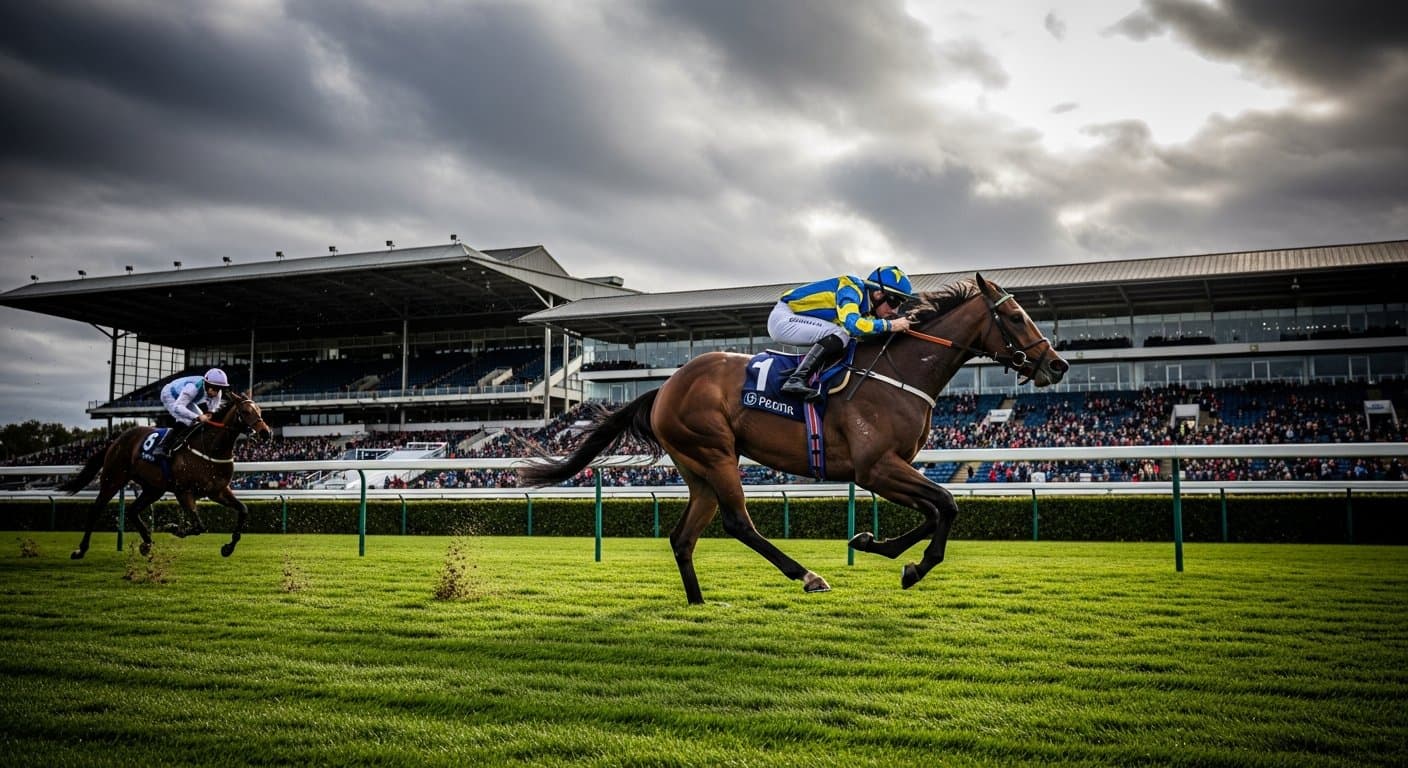
Dawn Run at Perth: The Great Mare in Scotland
Dawn Run, the only horse to win both the Champion Hurdle and the Cheltenham Gold Cup, won at Perth in her career. Here is her full story.
Read more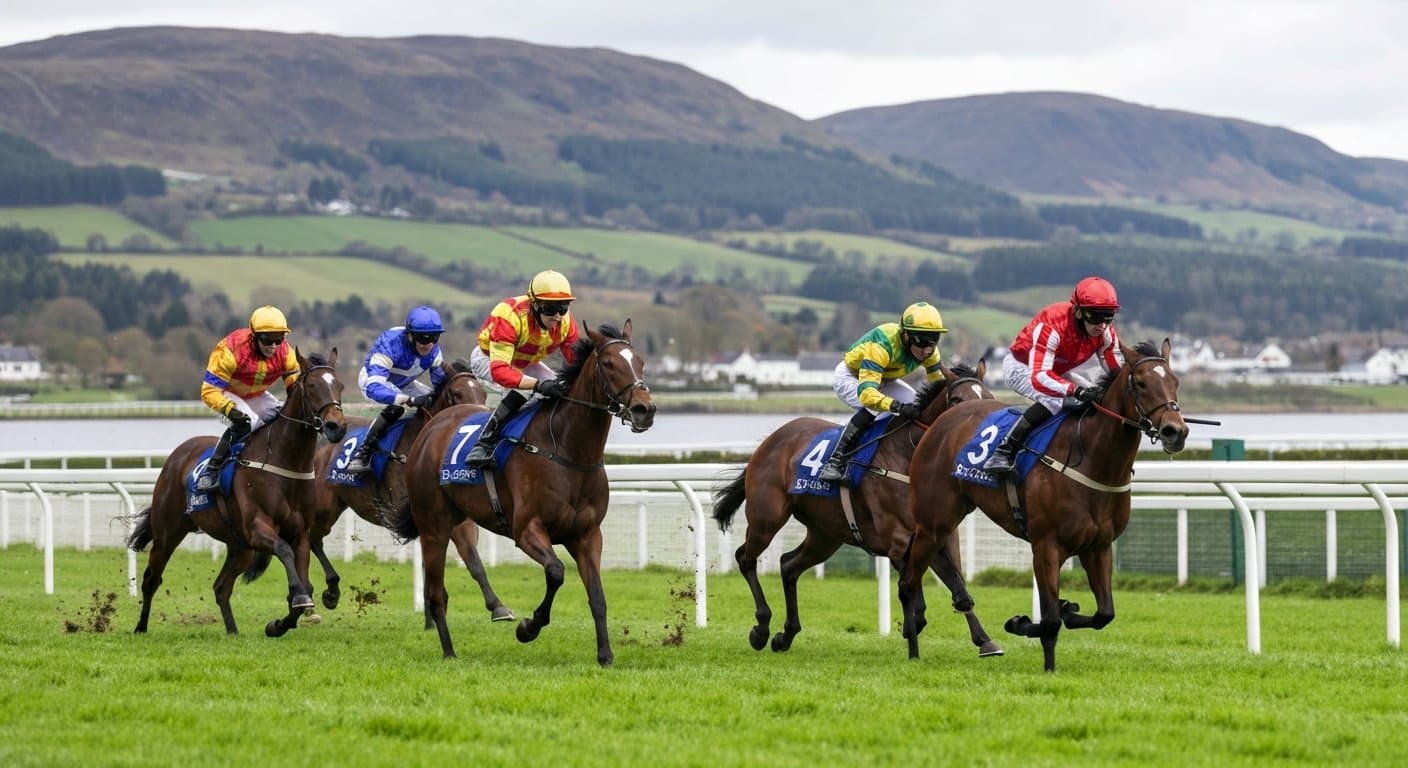
Betting at Perth Racecourse
How to bet smarter at Perth — track characteristics, going and conditions, key trainers and jockeys, and strategies for Scotland's most northerly jumps venue.
Read more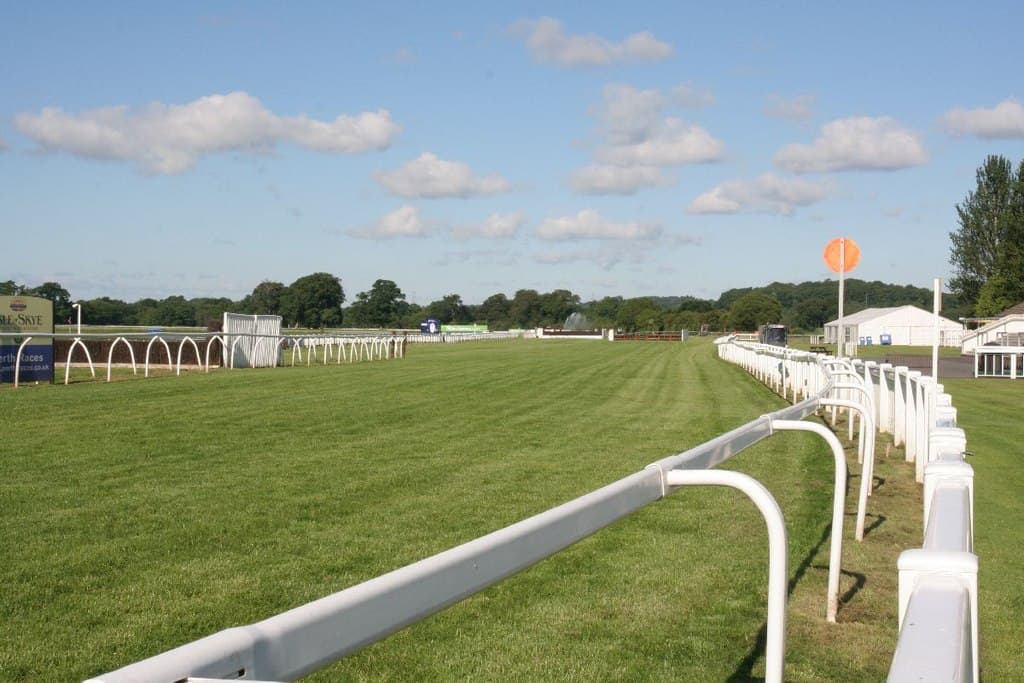
Perth Racecourse: Complete Guide
Everything you need to know about Perth Racecourse: Scotland's most northerly jumps venue, the Perth Gold Cup, and racing on the banks of the Tay.
Read morePhotos on this page are used under Creative Commons licences. Titles, sources and licence links for each one are on our image credits page.
Gamble Responsibly
Gambling should be entertaining and not seen as a way to make money. Never bet more than you can afford to lose. If you or someone you know has a gambling problem, help and support is available.