
Founder & Editor · Last reviewed 2026-10-14
Introduction
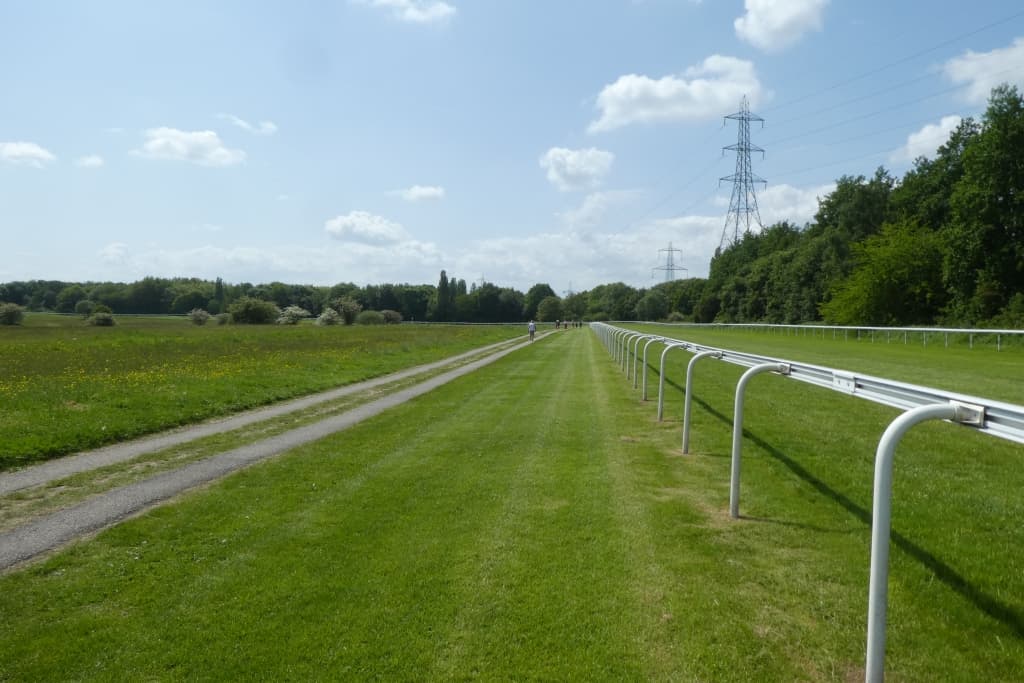
Pontefract Racecourse has been staging horse racing continuously since 1648, making it one of the oldest operating racecourses in England. It stands in Pontefract Park in West Yorkshire, 12 miles south-east of Leeds, and it hosts flat racing exclusively from March through to October each year. What separates Pontefract from the other flat tracks in the north, and from most tracks in Britain, is the shape of the circuit itself. The Park Course is a left-handed kidney-shaped oval of around two miles in circumference, which makes it the longest continuous flat racing circuit in Britain. Every yard of it undulates. There is no flat section anywhere on the track.
That distinction matters in practice. Horses that race here face a challenge that no other flat venue replicates: a long downhill run on the back straight followed by a punishing uphill finish over the final three furlongs. Lightweight milers with a sharp turn of foot often fail here. Stayers with high cruising speed and the balance to handle gradient changes win repeatedly. Understanding that principle unlocks most of what is interesting about Pontefract, both as a place to watch racing and as a betting proposition.
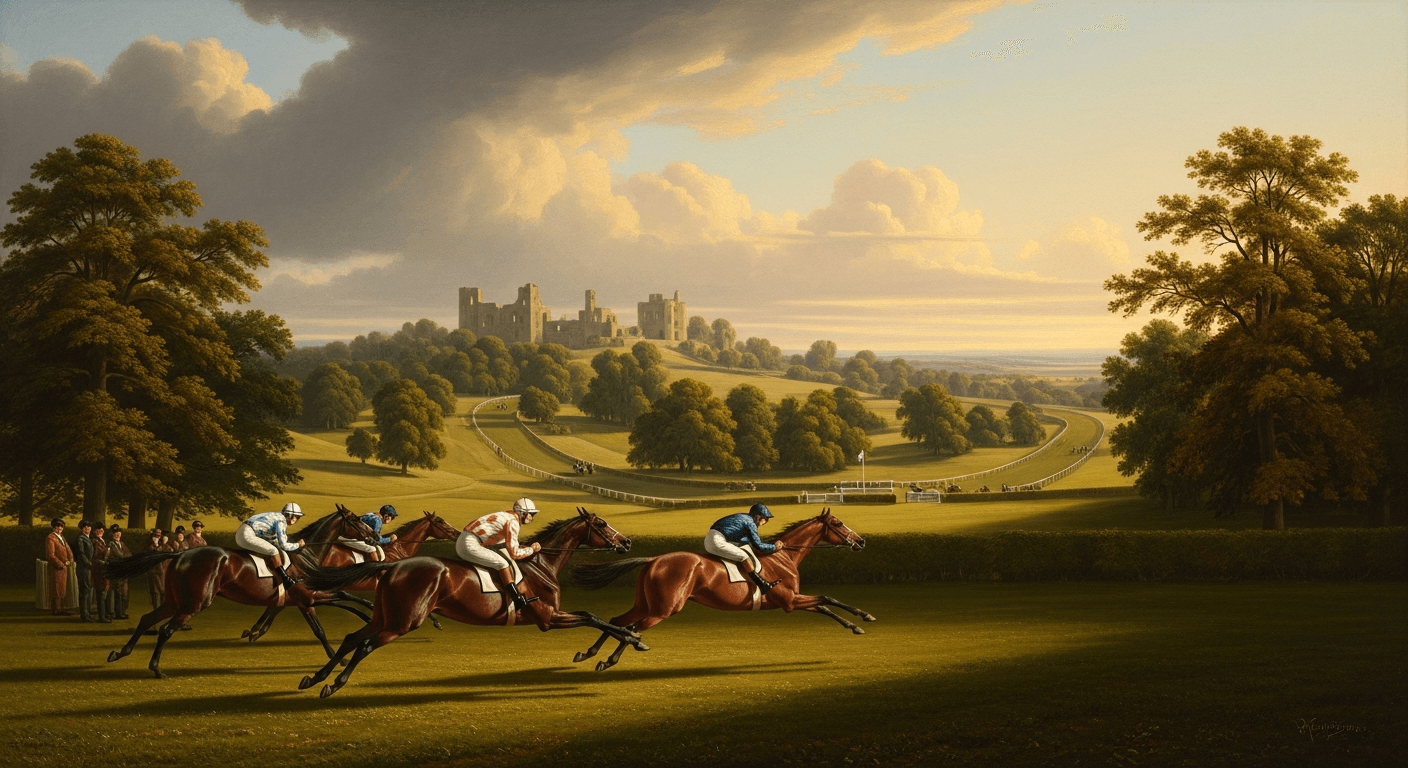
The course sits below the ruins of Pontefract Castle, a Norman fortification besieged three times during the English Civil War. From most viewing positions on the track, the castle is visible on the skyline above the home straight. The park setting, with mature trees lining parts of the circuit, gives the course an atmosphere that differs sharply from purpose-built racing facilities. On a summer evening with the castle lit by low sun, it is one of the more distinctive views in British sport.
Who this guide is for
This guide is written for anyone planning to visit Pontefract for the first time, as well as for regular racegoers who want a deeper understanding of what the course rewards. It covers the circuit in detail, explains the draw bias and going tendencies that affect results, lists the key fixtures and races, describes the facilities and enclosures, and gives practical travel information. There is a dedicated betting section with specific angles that work at Pontefract, a history section covering the course's origins in the Civil War era, and a section on the atmosphere, the local area, and how to plan your day. The FAQ covers the questions that come up most often about the course.
Quick facts
- Location: Pontefract Park, Pontefract, West Yorkshire, WF8 4QS
- Racing type: Flat only
- Continuous racing since: 1648
- Circuit: Left-handed kidney-shaped oval, approximately 2 miles in circumference, Britain's longest flat circuit
- Distances run: 5f, 6f, 1m, 1m2f, 1m4f, 2m1f116y
- Longest flat race distance in Britain: 2m1f116y (the Pontefract Marathon)
- Signature race: Pontefract Castle Stakes (Listed race, June)
- Typical capacity: Around 5,000 on a regular fixture day
- Nearest stations: Pontefract Monkhill (Leeds–Sheffield line) and Pontefract Baghill (Wakefield–Knottingley line), both approximately one mile from the course
- By road: M62 junctions 32 and 33; 12 miles from Leeds, 6 miles from Wakefield
- Website: pontefract-races.co.uk
- Owned by: Pontefract Park Race Club Ltd
- Region: Yorkshire
- Related courses: York (22 miles), Doncaster (20 miles), Catterick (40 miles)
The course is unpretentious in the best sense. Ticket prices are among the most reasonable of any flat track in the north, the car park is free, and the public park that surrounds part of the circuit means you can watch racing from outside the gates without paying admission at all. For anyone new to Pontefract, the first thing to understand is that the course asks different questions of horses than anywhere else. The second thing to understand is that the answers to those questions are findable, and that is what makes Pontefract rewarding to study.
Bet on Pontefract
Place your bets on Pontefract races with a trusted bookmaker.

Promo code BETFRED50. New customers only. Register, deposit with a Debit Card, and place a first bet of £10+ at Evens (2.0)+ on Sports, to be settled within 7 days, to get £30 in Sports Free Bets and £20 in Bet Builder Free Bets within 24 hours of settlement. 7-day expiry. Eligibility & payment exclusions apply. Full T&Cs apply. Take Time to Think. BeGambleAware.org. 18+. Full T&Cs.

Promo code R30. New UK customers only, 18+. Register, deposit £10 or more, then place a £10 single cash bet at odds of 1/2 (1.5) or greater on any sports market (excluding Virtuals). Once the qualifying bet settles you get £30 in Free Bets (3 x £10) — the qualifying bet can win or lose. Free Bets are valid on any sports market excluding Virtuals, expire in 7 days, are non-withdrawable and must be used in full. Excluded deposit methods apply (including PayPal, Apple Pay, Skrill and NETELLER). Named bets such as Lucky 15 do not qualify. If you cash out the qualifying bet, or it is voided, you are no longer eligible for the offer. Ends 31.12.26. Full T&Cs apply. Please gamble responsibly. BeGambleAware.org. 18+. Full T&Cs.

Promo code BET40GET20. New UK customers, 18+. Register with the code and place a first bet of £40 or more at Evens (2.0) or greater. Receive 2 × £10 free bets: the first credited automatically once the qualifying bet settles, the second 24 hours later. Free bets must be placed at minimum odds of 4/1 (5.0), expire 24 hours after credit, and the free-bet stake is not returned with winnings. Debit card deposits only. Take Time to Think. BeGambleAware.org. 18+. T&Cs apply. Full T&Cs.

50% of your first-day net losses refunded as a free bet, capped at £25. New UK customers aged 18+ only. To qualify, deposit and place a first bet of £10 or more on any sport at minimum odds of evens (2.00), then place at least two further bets on different events, each worth at least 50% of your largest bet, all at evens (2.00) or greater. Losses are counted from your first settled bet until 23:59 the same day. Place a qualifying £10+ bet and you are guaranteed at least a £5 free bet. Bets placed at SP, void bets, cashed-out bets and bets struck with free bets do not count towards the offer. The free bet is credited the day after your qualifying bets settle and must be used within 7 days, after which it expires. It can be used at odds from 1/4 (1.25) up to 250/1 on singles and straight accumulators, but not on Trixie, Patent or Yankee style multiples. Free-bet stake is not returned with winnings. One offer per person, household, address, IP address and device. E-wallet deposits may not qualify, so check the cashier before depositing. Customers registered with GAMSTOP cannot claim. KYC identity verification must be completed before the free bet is credited. Take Time to Think. BeGambleAware.org. 18+. T&Cs apply. Full T&Cs.

New customers, 18+. Choose the sports bonus at sign-up, make a first deposit and receive a 100% bonus up to £50 in your Sports Bonus balance. To convert the bonus to cash, wager it 10x within 30 days. Single bets below Evens (2.00) do not qualify; accumulators do not qualify if any selection is below 1/2 (1.50). Virtual Sports, voided, cancelled, drawn, cashed-out and free-bet wagers do not count towards wagering. Only the first settled bet per event counts. Withdrawing before the wagering requirement is met forfeits the bonus balance including bonus winnings. Real-money funds are used before bonus funds. Deposits via Skrill or Neteller are not eligible. Not valid in conjunction with other promotions. Odds, bet and payment limits apply. 10bet general and promotion T&Cs apply. BeGambleAware.org. 18+. Full T&Cs.

New customers in Great Britain and Republic of Ireland, 18+. Place a £10 fixed-odds qualifying bet at minimum odds of 1/2 (1.50) — single or each-way (only the win part counts), pre-event or in-play, not cashed out early, within 28 days of opening the account. Receive up to £60 in bonuses credited over three days: 3 × £10 fixed-odds free bets (the first on settlement, then 24 and 48 hours later) plus 3 × £5 Total Goals FOOTBALL spread bets and 3 × £5 racing Winning Favourites spread bets, with a £1 racing Race Index spread bet as an extra on top. The spread bets need a full spread-betting account, opened within 28 days of the fixed-odds account and subject to Spreadex's eligibility and appropriateness checks. Free-bet stakes not returned with winnings; free bets valid 28 days from issue. IMPORTANT: the £5 credits are SPREAD bets — sports spread betting carries the risk that losses can exceed your stake. Sports spread-betting customers do not have Financial Ombudsman or FSCS recourse. Take Time to Think. BeGambleAware.org. 18+. T&Cs apply. Full T&Cs.

Promo code WELCOME15, entered under My Bonuses after registering. New UK customers, 18+. Place a first qualifying bet of at least £10 from your cash balance at odds of evens (2.0) or greater within 7 days of opening the account. Once the qualifying bet fully settles you receive £15 in free bets, credited as 3 x £5 tokens with set uses: one £5 accumulator free bet (minimum 4 legs, each leg at 2/5 or bigger), one £5 sports free bet (any market at evens or bigger) and one £5 Sub Cover free bet (selected football player markets at evens or bigger). Free-bet stakes are not returned with winnings. Free bets expire 7 days after they are credited. Void, cashed-out and partially cashed-out bets do not qualify. One offer per customer. Confirm the current terms on BetGoodwin's own welcome-offer page before claiming. Take Time to Think. BeGambleAware.org. 18+. T&Cs apply. Full T&Cs.

New UK customers, 18+. Minimum deposit £10. Place a £10 qualifying single on sports (excluding virtuals) at minimum odds of 1/2 (1.50), settled within 14 days. Deposit-method exclusions apply. Receive £30 in free bets (stake not returned), split £20 for sportsbook use (2 x £10) and £10 for Bet Builder only (2 x £5); Bet Builder does not cover horse racing. Free bets must be accepted within 7 days and expire 7 days after acceptance. No promo code required. Best Odds Guaranteed on UK & Irish racing, subject to having staked over £25 in the previous seven days. Operated by LiveScore Betting and Gaming (Gibraltar) Ltd, UKGC 56859. Confirm the current terms on LiveScore Bet's own promotions page before claiming. Take Time to Think. BeGambleAware.org. 18+. T&Cs apply. Full T&Cs.
18+. BeGambleAware.org
The Course
The Shape
Pontefract's Park Course is a left-handed oval of approximately two miles in circumference, making it the longest continuous flat racing circuit in Britain. The shape is often described as kidney-shaped, which is accurate: the track narrows at the top of the circuit, creating a distinctive silhouette when viewed from above. There is no flat section anywhere on the course. Every part of it undulates, which is what sets Pontefract apart from the majority of flat tracks in England, where at least part of the circuit runs on level ground.
The circuit was redesigned in 1983 from a horseshoe shape of roughly 1½ miles into the full oval it is today. That change was consequential. It allowed the course to stage the 2m1f116y trip that has become one of Pontefract's defining features, and it created the long back straight that gives horses room to settle before the turn into the home straight.
The Distances
Pontefract stages racing across six distances:
- 5 furlongs, the sprint trip, starting on the far side of the course
- 6 furlongs, another sprint, popular at summer evening meetings
- 1 mile, the standard mile, beginning after the back straight
- 1m2f, middle-distance, a thorough test of the circuit
- 1m4f, staying trip, takes in most of the circuit
- 2m1f116y, the Pontefract Marathon, which holds the distinction of being the longest flat race distance run at any racecourse in Britain
That 2m1f116y distance stands apart from any other flat race distance in Britain. For comparison, the Ascot Gold Cup is run over 2m4f on a flat course built for long-distance racing. Pontefract's Marathon is run on a track that climbs 100 feet from its lowest point to the finish line. The physical demands are of an entirely different order.
The Gradients
The elevation changes at Pontefract are the defining feature of the circuit. From the start of the back straight the track drops steadily for approximately six furlongs. Horses race largely downhill through the middle portion of the circuit, which can encourage them to bowl along at a fast pace without feeling the full effort. Then the track turns left-handed into the home straight, and the gradient reverses sharply. The final three furlongs climb continuously uphill to the winning post. The total rise from the lowest point of the circuit to the finish is approximately 100 feet.
That reversal, long downhill, then steep uphill, is the mechanism by which Pontefract exposes weakness in horses. A horse that lacks stamina will accelerate on the downhill section and arrive at the turn feeling strong, then tie up in the final two furlongs as the climb takes hold. A true stayer will manage its energy on the descent, take the turn with something in reserve, and keep finding up the hill. Watching Pontefract races with this in mind, the difference between a horse suited to the course and one that is not becomes apparent in the final furlong.
The home straight itself runs slightly uphill from the turn all the way to the line. There is no flat run-in. Horses that are still accelerating in the closing stages, rather than merely keeping on, are the ones to back at Pontefract.
The Draw
Draw bias at Pontefract is real but variable, and its strength depends on the distance of the race and the size of the field.
On sprint trips of 5 furlongs and 6 furlongs, horses drawn in low stalls (stalls 1 through 5 in a field of 10 or more) have a statistical advantage. The turns on the circuit are tight, and the shorter route around the bend matters over sprint distances. In small fields of five or six runners, the bias is less pronounced because the pace dynamics of the race often override positional advantages. In fields of 12 or more, low draws have historically produced a noticeably above-average strike rate at sprint trips.
Over distances of a mile and beyond, the draw effect diminishes. Horses have time to find their positions before the critical sections of the course come into play. Over 1m2f and beyond, the draw can generally be discounted as a primary factor, though a wide draw in a large field on soft going can add extra ground at the first turn.
The practical implication for punters is that in sprint handicaps with fields of 10 or more, any horse drawn in double figures warrants scrutiny. At a mile and beyond, the draw is a secondary consideration at most.
The Going
Pontefract's clay-based soil gives the course a particular character in terms of going. In June, July, and August, the track typically rides good to firm, and this suits horses that act on a top-of-the-ground surface. The ground rarely reaches truly fast conditions at Pontefract in the way it can at Epsom or Goodwood; the clay retains some moisture even in dry spells.
In spring (March, April, May) and again in late September and October, the going can turn soft or heavy after rainfall. The clay drains slowly, and a wet week in April can leave the track significantly slower than the ground at other northern courses on the same day. This creates going discrepancies between meetings that can catch out punters using form from Catterick or York without adjusting for conditions.
On soft or heavy ground, the uphill finish becomes even more of a test. The effort required to climb three furlongs of rising ground on soft turf is considerably greater than on a quick surface, and horses without deep stamina reserves fail here with regularity in wet conditions.
What Horse Types Succeed
The demands of the circuit point clearly to the types of horses that win at Pontefract.
Stayers and horses with high cruising speed are the primary profile. A horse that can travel comfortably at racing pace for two miles without blowing up, and then still find something extra up the hill, is the ideal Pontefract type. Horses that need a sprint finish, or that rely on a sudden burst of speed in the final furlong, are at a disadvantage because the uphill finish neutralises acceleration and rewards sustained effort.
Horses that handle undulating ground have a track record of performing well at Pontefract regardless of their record elsewhere. Form from Brighton (also undulating), Epsom (steeply undulating), or Chester (tight turning) often translates well. Form from flat, galloping tracks like Newmarket or Haydock does not always transfer.
Front-runners and prominent racers win a disproportionate share of races at Pontefract, particularly over sprint distances. A horse that can establish position early and then control the pace through the downhill section has a significant tactical advantage over one that needs to come from behind. The uphill finish is easier to manage if you are already in a rhythm than if you are trying to make ground against horses that have been in the race from the start.
Two-year-olds at Pontefract need particular scrutiny. Juvenile racing on such an unusual track is an unreliable guide to future ability: some juveniles handle the gradients naturally and win stylishly; others are simply unsuited to the terrain and run well below their best. Form from Pontefract juvenile races should be treated with more caution than equivalent form from Newmarket or York when assessing horses at other courses.
Reading a Pontefract Race
The practical guide to watching a Pontefract race is to focus on the turn into the home straight. By that point, approximately three furlongs from home, you can see which horses are going well and which are already under pressure. A horse that is being ridden along at the turn and is still only holding its position will not find any extra up the hill. A horse that is travelling with cover and is asked to move at the two-furlong marker typically has the race won if the stamina is there.
The finishing order often looks different at Pontefract from what the form suggested beforehand. That is not random, it is the circuit working as designed, separating the true stayers from the horses that merely look like stayers at easier tracks.
For a more detailed analysis of specific race types and betting angles, see the betting guide and the Park Course guide.
Key Fixtures & Calendar
The Racing Season
Pontefract's flat season runs from late March through to mid-October, with approximately 15 to 17 fixtures spread across that period. The programme is built around a mix of evening meetings and weekend cards, with a strong local following that fills the course most reliably on Monday and Friday evenings and on August Bank Holiday weekend.
The season opens quietly, with spring fixtures in late March and April providing the first opportunities to see how horses have come back from their winter break. Ground conditions in spring at Pontefract can be unpredictable, the clay-based soil holds moisture, and meetings on soft going in April are not uncommon. By June, the track typically rides good to firm and the fixture programme reaches full stride.
Monday and Friday Evening Meetings
The Monday evening and Friday evening fixtures at Pontefract are a local institution. The course draws working families, groups from nearby towns, and casual racegoers who would not necessarily travel to a major Saturday card. Evening racing at Pontefract starts at around 6.00 pm in the summer months, with racing finishing before 9.00 pm, making them accessible to anyone arriving after work.
The atmosphere at these meetings differs from a busy Saturday. Crowds are typically 2,000 to 3,500, the course feels alive but not crowded. The betting ring is active, the queues for food and drink are manageable, and there is time between races to walk the perimeter and watch from different vantage points. For a first visit, an evening meeting in June or July is an ideal introduction to the course.
Pontefract Cup Day (June)
The June card is the one to note: in 2026 it carried both the Pontefract Castle Stakes, the course's top-rated race, and the Pontefract Cup, the staying handicap that carries the town's name. See the Pontefract Cup Day guide for the day, and the betting guide for the feature races.
Listed and Pattern Races
Pontefract hosts several Listed races across the season that attract quality horses and provide valuable form lines for the rest of the northern summer.
Pontefract Castle Stakes (June): a Listed race for fillies and mares aged four and over, and the course's top-rated race.
Pipalong Stakes (July): a Listed race for fillies and mares aged four and over, run over a mile.
Pomfret Stakes (July): a Listed race over a mile for three-year-olds and up. The 'Pomfret' name is an old name for Pontefract.
Flying Fillies' Stakes (August): a Listed sprint for fillies aged three and over.
Silver Tankard Stakes (October), a Listed race for two-year-olds, run at the final major fixture of the season and traditionally a source of good form lines for horses heading to the Autumn two-year-old races at Newmarket and Doncaster.
Saturday Feature Meetings
Saturday fixtures at Pontefract tend to feature the stronger handicap and conditions races outside of the Listed programme. These cards attract larger fields and a broader spread of Yorkshire-based trainers. The racing quality at a typical Pontefract Saturday is comparable to a midfield Saturday at Haydock or Sandown, competitive, with fields of good depth.
Crowds at Saturday meetings range from 3,000 to 5,000 depending on the time of year. The July and August Saturdays draw the largest attendances, when the going is likely to be firm and the card is strongest.
Family Days and Themed Fixtures
The course runs several themed fixtures across the season, including family fun days that incorporate activities beyond racing. Children's entertainment, face-painting, and play areas appear at designated family meetings, typically three or four per season. These are well-suited to first-time visitors bringing children, and they tend to attract larger crowds of mixed ages.
Typical Crowd Sizes
On a regular weekday evening meeting, attendance is typically 2,000 to 3,500. On Saturday feature days, 3,000 to 5,000 is normal. The Bank Holiday fixture and any day when a Listed race is carded can push toward or slightly above the course's practical capacity of around 5,000 to 6,000. Pontefract is not a course where you need to worry about overcrowding on a standard day, one of the advantages of the intimate scale.
For the current season fixture list and ticket prices, the course website is the definitive source.
Facilities & Hospitality
Enclosures
Pontefract operates three main enclosures: the Grandstand (Premier), the Paddock, and the course itself, which includes the public park area surrounding the circuit.
The Grandstand enclosure is the main paying enclosure and includes the primary viewing terrace, the parade ring, and the principal food and drink concessions. The grandstand building, partially renovated in recent decades, offers covered seating in the upper tiers and standing room on the lower terrace. From the grandstand, you can see the entire home straight and the first two furlongs of the back straight from the higher vantage points. The uphill finish, the defining feature of Pontefract racing, is directly in front of the grandstand, which makes it the best place to watch a race develop through the final three furlongs.
The Paddock area gives access to the pre-race parade ring, where horses walk before each race and jockeys receive their riding instructions. At Pontefract, the parade ring is compact and the viewing is close-up, you can watch a horse at walking pace from a few feet away, which makes assessing condition, coat, and behaviour far more straightforward than at larger courses with wider rings. The Paddock enclosure connects to the Grandstand enclosure on most fixture days.
The Park area, arguably the most distinctive feature of Pontefract as a venue, is the public open space that surrounds a significant portion of the circuit. Pontefract Park is public land, and on race days, members of the public can watch the racing from the park without paying admission. The viewing from the park is excellent for the back straight and the turn into the home straight. This is one of only a handful of racecourses in Britain where substantial free viewing of live racing is available, and it gives Pontefract an unusual character as a public institution.
Restaurants and Bars
The primary bar and restaurant facilities are within the Grandstand enclosure. The main bar serves standard draught beers, ales, and spirits throughout the day. During evening meetings, the bar is the social hub of the course, with tables set up on the terrace for groups who want to eat and drink between races.
The Pontefract restaurant offers a sit-down dining option on feature days. Places at the restaurant are bookable in advance through the course website, and the menu changes across the season. This is a significantly more upmarket option than the trackside food stalls and is well-suited to parties celebrating a birthday or anniversary.
For trackside eating, the usual fast-food outlets operate throughout the enclosures, burgers, fish and chips, hot dogs, and similar options. Quality is typical of racecourse catering: adequate rather than exceptional, and priced accordingly.
The Betting Ring
The on-course betting ring at Pontefract has a row of bookmakers' pitches along the rail between the parade ring and the grandstand. On a busy Saturday or a feature day, there will be 20 or more bookmakers operating. On a quiet weekday evening, the ring is smaller but still functional. The prices available from the rails bookmakers are often comparable to Betfair in-running, and for anyone who prefers cash betting with the traditional ring, Pontefract provides a proper betting experience.
The Tote windows operate from the Grandstand enclosure. For those who like to pool bet, Pontefract's smaller fields on some days (especially the 2m1f race) can create attractive pool returns.
Disabled Facilities
The course has dedicated disabled parking spaces close to the main entrance, and the Grandstand enclosure has level access for wheelchair users along the ground-floor viewing areas. The parade ring viewing area includes a wheelchair-accessible position with a direct sightline to the ring. Accessible toilets are available in the Grandstand enclosure. The course terrain, a natural park on gently sloping ground, means that some areas away from the main enclosure are uneven, and mobility-impaired visitors are best positioned in the Grandstand enclosure where the surfaces are paved and level.
The course should be contacted directly at pontefract-races.co.uk to discuss specific requirements before the day.
Children's Areas
Pontefract is well-disposed towards families. On themed family fun days, the course sets up children's entertainment areas in the open section of the course, with activities running between races. Even on standard fixture days, the park setting is child-friendly, there is grass, open space, and room to move in a way that is impossible at more congested urban venues.
Children under 18 receive free or heavily discounted admission at most meetings. The course website lists the exact policy for each fixture.
General Practicalities
The facilities at Pontefract are honest rather than lavish. The course does not compete with Ascot, Glorious Goodwood, or Chester on the hospitality register. What it offers instead is a functioning, well-run racecourse where the racing is the priority and the admission prices reflect the fact that this is a local fixture rather than a national showpiece event. For visitors who find the corporate atmosphere of the top-tier courses off-putting, Pontefract is a refreshing alternative.
Getting There
By Train
Two railway stations serve Pontefract Racecourse, and neither is directly adjacent to the course, both require roughly a mile's walk or a short taxi journey.
Pontefract Monkhill is the more useful station for most visitors. It sits on the Leeds–Sheffield line (operated by Northern Rail), with regular services from Leeds in approximately 30 minutes and from Sheffield in approximately 45 minutes. From Monkhill, the racecourse is a 15 to 20 minute walk through the town centre and into Pontefract Park. Taxis are available outside the station and on race days the queue moves quickly.
Pontefract Baghill is served by the Wakefield–Knottingley line, a branch line with less frequent services. From Wakefield Westgate, the journey is approximately 20 minutes. Baghill is slightly further from the course than Monkhill, around a 20 to 25 minute walk, but on summer evenings the walk through the park is pleasant.
For anyone coming from Leeds (12 miles), the train to Monkhill is the most straightforward option. Trains run at least every 30 minutes during the day.
For anyone coming from Wakefield (6 miles), either a direct train to Baghill or a bus service into Pontefract town centre is practical. Wakefield is well connected to the national rail network, including services from London King's Cross via the East Coast Main Line to Doncaster, then onward by local train.
Evening meetings end before 9.00 pm, but train services back from Monkhill to Leeds later in the evening are less frequent, check the Northern Rail timetable before travel and plan your departure from the course accordingly.
By Car
The M62 motorway provides the most direct road approach for drivers from the west and east.
From the west (Leeds, Bradford, Huddersfield): join the M62 eastbound and exit at junction 32 (Pontefract). Follow signs for Pontefract town centre, then Pontefract Park/Racecourse. The drive from Leeds city centre is approximately 30 minutes in normal traffic.
From the east (Doncaster, Scunthorpe, Hull): join the M62 westbound and exit at junction 33 (Pontefract/Knottingley). Follow signs for Pontefract. From Doncaster, the drive is approximately 20 minutes.
From Sheffield (25 miles south): take the M1 northbound to junction 40, then follow the A638 north to Wakefield, then the A645 east to Pontefract.
From Wakefield (6 miles west): the A645 runs directly to Pontefract. Allow 15 minutes.
From York (35 miles north): take the A1(M) southbound to Ferrybridge interchange, then the A1 south briefly to the Pontefract junction, then into town.
Parking
The racecourse operates a large free car park on site. On standard fixture days, parking spaces are plentiful and the car park fills only on the busiest meetings (feature days, Bank Holiday fixtures and major Saturdays). Arrival before 5.00 pm on an evening meeting will guarantee a space close to the entrance.
Additional parking is available in Pontefract Park itself, the public parkland that surrounds the circuit. On busy days, this overflow parking is clearly signposted from the main approach roads. Again, this is free of charge on most fixture days, though the course website confirms specific arrangements for each meeting.
There is no charge for parking at Pontefract on the majority of days, which distinguishes it from most racecourses of comparable size in the north of England.
From Nearby Racecourses
For anyone following the Yorkshire racing circuit across a week, Pontefract is well-positioned relative to the other northern flat tracks. York is 35 miles north via the A1(M), Doncaster is 20 miles east via the M62 and A1, and Catterick is approximately 40 miles north.
Frequently Asked Questions
History of Pontefract Racecourse
Origins in the Civil War Era
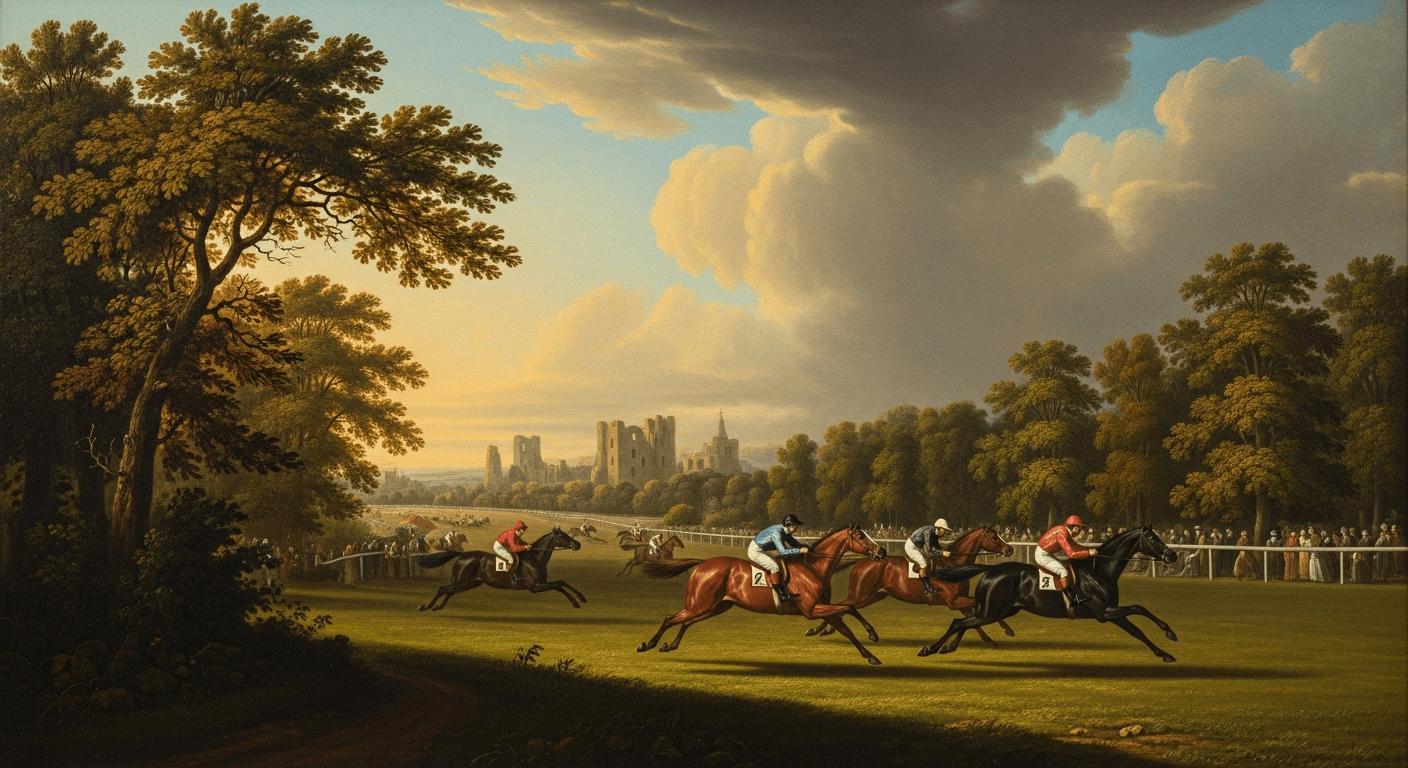
Horse racing at Pontefract dates to 1648, making it one of the oldest continuously operating racecourses in England. To understand why racing established itself here rather than elsewhere in Yorkshire, it helps to understand the site. Pontefract Park is common land that has been in public use for centuries. In the mid-seventeenth century, it lay in the shadow of Pontefract Castle, one of the most strategically significant fortifications in the north of England and, during the English Civil War, one of the most tenaciously defended Royalist strongholds in the country.
The castle was besieged three times between 1644 and 1649. The third siege, which ended with the castle's surrender in March 1649, came only weeks after the execution of Charles I. During the periods between sieges, and in the years immediately after the castle's destruction, the park became a place where the local population gathered. Racing on common land was already established practice across England, and Pontefract Park, with its open ground and its history as a gathering place, was a natural setting. The first documented race meeting took place in 1648, in the same year as the second siege of the castle, making the course's origins inseparable from the turbulence of that period.
The castle ruins that stand above the home straight today, a distinctive Norman keep reduced to a low outline against the West Yorkshire sky, are a direct visual connection to those origins. Standing in the grandstand enclosure and looking across the finish line, the castle is visible on the rise to the north-west. No other major British racecourse has this relationship with a site of such historical significance.
The Eighteenth and Nineteenth Centuries
Through the eighteenth century, Pontefract was one of dozens of local racing circuits in England operating under the emerging rules of the Jockey Club. The course was part of the northern racing circuit that included York, Doncaster, and Newmarket, and horses would travel between these meetings during the season. The distances involved, often on horseback or by cart over unpaved roads, made the northern circuit a largely self-contained world, with Yorkshire owners and breeders competing primarily against each other.
By the Victorian era, Pontefract had a well-established fixture list and was drawing crowds from the industrial towns of West Yorkshire. Wakefield, 6 miles to the west, was a significant wool and textile centre, and the population density of the West Riding created a substantial local audience for racing. The construction of the railway network from the 1840s onward made Pontefract significantly more accessible. Both Pontefract Monkhill and Pontefract Baghill stations were operational by the 1870s, and train services brought racegoers from Leeds, Sheffield, and beyond.
Racing records from the Victorian period indicate that members of the Royal family attended meetings at Pontefract on more than one occasion. The course's reputation during this era was as a well-run provincial track with a strong local identity and competitive handicap racing.
The Twentieth Century and the Course Redesign
The twentieth century brought the gradual development of the grandstand and the supporting facilities. The original grandstand dated from the late Victorian period. A significant renovation in the 1960s updated the main viewing area, and further work in subsequent decades has maintained the course's infrastructure.
The most consequential change of the twentieth century came in 1983. Until that point, the Pontefract circuit was a horseshoe of roughly 1½ miles in length, with a dead-end rather than a full oval. The redesign of the track into a complete oval of approximately 2 miles transformed the course's capabilities. It created the full range of distances that the course now runs, including the 2m1f116y marathon trip, and it established the kidney-shaped circuit that makes Pontefract recognisable from aerial photographs and trackside views alike. The redesign was a significant investment by the course's management and has defined the character of racing at Pontefract ever since.
The adjacent Fryston Colliery, which stood to the east of the park, was part of the fabric of the course's mid-twentieth century history. Many of the regular racegoers at afternoon meetings were miners from the colliery, and the 2.45 pm start time for afternoon races was fixed to allow workers finishing the morning shift to travel to the course in time for the first race. The colliery closed in 2002, ending a social connection between the course and the mining industry that had lasted for decades.
Ownership and Community Character
Pontefract Racecourse is owned by Pontefract Park Race Club Ltd, a locally oriented organisation that reflects the course's position as a community facility within a public park rather than a commercial entertainment venue in the conventional sense. This structure distinguishes Pontefract from many other British racecourses, which are held by large leisure and hospitality conglomerates. The Race Club's ownership means that decisions about the course are made with a degree of local accountability, and that the park connection, the free public viewing from the parkland surrounding the circuit, is preserved as part of the course's identity.
The course today operates within the same park that has hosted racing for nearly 380 years. The circuit has changed shape, the facilities have been updated, and the field of racing has changed beyond recognition since 1648. But the fundamental relationship between the town of Pontefract, the public park, and the racecourse has remained continuous, a connection that is unusual in the context of British sport and that gives Pontefract a character of its own.
Key Trainers and the Yorkshire Connection
The history of Yorkshire flat racing is inseparable from the great training establishments of the region. Trainers based at Malton, Middleham, and Newmarket have consistently used Pontefract as a preparation ground, a track where a horse can be educated over a demonstrably demanding circuit without being asked to compete against the strongest fields in the calendar.
Historically, trainers such as Bill Watts (based at Richmond, North Yorkshire) and, more recently, Richard Fahey, Tim Easterby, and David O'Meara have maintained strong records at Pontefract. The course suits horses from these stables partly because of the shared understanding of what the undulating Yorkshire terrain demands of a horse. Pontefract is not a glamour track for the big southern stables, but it has consistently produced form that has been vindicated at York, Doncaster, and beyond.
Famous Moments
The Feature Races
The course's top-rated race is the Pontefract Castle Stakes, and its name-bearing staying race is the Pontefract Cup; in 2026 the Cup went to Secret Force at 13/8. We do not yet hold a sourced roll of honour for either race, so we do not list past winners here.
Yorkshire Horses on the Way Up
Pontefract's role as a preparation and education venue for northern-trained horses has produced a number of notable form lines over the years. Several horses that went on to Classic-placed or Pattern-race-winning careers had their first or second seasonal run at Pontefract, where the demanding terrain provided a thorough test of their constitution and ability to handle gradient.
The course has a particular reputation for producing two-year-old form that later proves reliable. Horses that win at Pontefract as juveniles have regularly gone on to win at Group 3 or Listed level later in their careers, in part because winning at Pontefract requires more than raw speed, it requires a temperament suited to racing on a track that is physically demanding and unfamiliar.
Lester Piggott and Willie Carson at Pontefract
Both Lester Piggott and Willie Carson rode multiple winners at Pontefract across their long careers, a reflection of the fact that the course was part of the northern racing circuit that the top jockeys of the 1960s, 1970s, and 1980s traversed regularly.
Piggott, who rode his first winner in 1948 and continued racing until the 1990s, included Pontefract winners among his totals in many seasons. His ability to find a horse's rhythm on unusual tracks, Epsom, Brighton, and Chester were among his specialties, translated to the undulating circuit at Pontefract. Carson, based in the north for much of his career and with strong connections to Yorkshire trainers, was a consistent performer at the course in the 1970s and 1980s.
The era of Piggott and Carson at Pontefract coincided with the rebuilding of the facility in the 1960s and 1970s, when the course was still operating the horseshoe circuit rather than the full oval introduced in 1983.
The Punter's Graveyard Reputation
Pontefract has a long-standing reputation in betting circles as a difficult course to predict. The phrase "punter's graveyard" has been applied to the course in racing literature for several decades. The reasons are structural rather than arbitrary.
The unique circuit exposes weaknesses in horses that less demanding tracks disguise. A horse that holds a form rating high enough to be well-backed at Pontefract may have built that rating at Haydock, Newmarket, or Chester, all flat or minimally undulating tracks. When it arrives at Pontefract and has to negotiate the downhill back straight and the three-furlong uphill finish, the demands are simply different. The horse may try its best and still lose to a less-fancied rival whose form at Epsom or Brighton showed it handles gradients well.
This active produces results that confound the favourites more often than at comparable courses. Analysis of betting results at Pontefract consistently shows that short-priced favourites, under 2/1, win at a below-average rate compared to the overall British flat average. The implication is not that Pontefract is unpredictable in a random sense; it is that the form book needs to be read differently here, and the punters who do that reading accurately tend to profit. Those who apply standard form analysis from flat tracks are the ones who find Pontefract unkind.
The Course and the Castle: A Visual Moment
One of the most recurrently noted features of Pontefract in racing writing is the view from the track of the castle ruins. Pontefract Castle, the Norman fortification besieged three times in the 1640s, stands on a rise above the northern end of the course. From the grandstand, looking up the home straight, the castle outline is visible against the sky throughout the afternoon.
Racing writers covering the course since the nineteenth century have noted this combination of the immediate spectacle of racing and the historical presence of the castle as one of the distinctive experiences of the British racing calendar. It gives Pontefract a setting that no purpose-built leisure venue can replicate, and it places the course within a context of English history that extends back more than 900 years to the castle's original construction under the Normans.
Notable Upsets in the Marathon
The 2m1f116y race at Pontefract has produced a higher proportion of upsets relative to favourites' win rates than almost any other race type in the British flat calendar. Several factors explain this. The race is run in small fields, which increases the variance in results. The distance is so unusual that very few horses in training have reliable form over a comparable trip, which means assessments of relative ability are speculative. And the uphill finish separates horses in a way that cannot be accurately predicted from form at shorter distances.
Several renewals of the marathon have been won by horses available at double-figure odds whose principal qualification was stamina-heavy pedigrees and previous form at longer trips. These results have contributed to the course's reputation as a place where the unusual can happen, and where understanding what the course is asking of horses is the key to finding winners.
Betting Guide
The Core Principle
Betting at Pontefract starts from one finding: the course rewards stamina above almost every other quality. Any horse that has been flagged in the form book as a non-stayer, that is, one that typically runs its best races over shorter trips and ties up when tested beyond its optimum distance, is at a structural disadvantage at Pontefract. This is true regardless of the horse's form rating, its trainer, or its draw. The three-furlong uphill finish exposes non-stayers with regularity, and form analysis that ignores this tends to be expensive.
The second principle follows from the first: front-runners who can control pace on the downhill back straight have a persistent advantage, particularly in sprint races and at distances up to a mile. A horse that leads through the downhill section and arrives at the turn into the home straight in a rhythm, not flat out, but travelling well, is harder to pass on the uphill finish than its rivals' speed figures might suggest.
The Draw in Sprints
Over 5 furlongs and 6 furlongs at Pontefract, draw bias is a real and measurable factor in fields of 10 or more runners. Low-numbered stalls, roughly stalls 1 through 6 in a field of 12, have produced a strike rate noticeably above their expected share of winners in sprint races. The reason is the tight left-handed turn that comes early in sprint trips, which requires wide-drawn horses to cover additional ground while already racing at near maximum speed.
The bias weakens in smaller fields of eight or fewer runners, where pace dynamics and the quality of the individual horses take precedence over positional advantage. In a five-runner sprint, draw bias can effectively be ignored. In a 16-runner sprint handicap, a horse drawn in stall 14 or above warrants a discount unless there is a specific reason, a confirmed front-runner whose pace overrides the disadvantage, or a horse with a previous Pontefract sprint win that shows it can overcome a wide berth.
Over distances of a mile and beyond, the draw can be largely discounted. Horses have enough time to find their positions before the critical sections of the circuit, and no consistent draw pattern emerges at 1m, 1m2f, or beyond at Pontefract.
Stamina Ratings: The Key Metric
The most useful single piece of information to apply when assessing a Pontefract race is whether a horse's form record suggests it stays the distance. This sounds obvious, but it is consistently under-applied by casual punters who focus on form figures rather than how those figures were achieved.
A horse rated 90 that has all its best form over 7 furlongs and just holds on over a mile is not an appealing proposition at Pontefract over 1m2f, regardless of the class of its recent form. A horse rated 82 that has won over 1m4f at Epsom, also undulating, also with an uphill finish, is a much stronger candidate at Pontefract over 1m2f than the raw ratings suggest.
The form book entries to look for are: wins or places over longer distances than today's race, previous form at undulating tracks (Epsom, Brighton, Salisbury, Chester), and trainer comments after races that indicate the horse was not fully extended.
Undulating Track Form
Horses that have performed well at other undulating tracks translate to Pontefract at an above-average rate. The three most useful comparators are:
Epsom, also steeply undulating, also with a significant downhill section followed by an uphill run-in, though Epsom's gradients are more extreme in the Derby course's early sections. A horse that has won at Epsom and handles the gradient changes there is almost certainly suited to Pontefract.
Brighton, undulating right-handed circuit. Brighton form is underrated by many punters because the course is seen as minor, but a horse that handles Brighton's terrain competently is likely to handle Pontefract's.
Salisbury, has a gradual rise to the finish and a switchback quality over middle distances. Form from Salisbury over a mile or further often travels well to Pontefract.
Conversely, form from flat, galloping tracks, Newmarket, Haydock, Ascot's straight course, requires a discount when horses come to Pontefract for the first time. Some adapt quickly; many do not.
Trainer Statistics
Three northern trainers consistently outperform their expected strike rates at Pontefract:
Richard Fahey (based at Musley Bank, Malton, North Yorkshire) has a strong record at the course across all distances. Fahey's horses are typically well-prepared and suited to northern tracks; his Pontefract record is one of the most consistent of any trainer on the circuit.
Tim Easterby (also Malton) sends horses to Pontefract regularly and maintains a positive return on investment at the course over a sustained period. Easterby-trained horses on their second or third Pontefract run, especially if they showed improvement on their first visit, are worth noting.
Kevin Ryan (Hambleton, North Yorkshire) is another consistent performer at Pontefract, particularly in sprint races where his sharp, quick-to-develop types suit the course's sprint trips.
Conversely, southern-trained horses running at Pontefract for the first time, especially those from yards not known for staying tracks, warrant scrutiny. Some perform well; the overall statistics suggest a slight underperformance relative to form ratings for southern horses on their first visit to the course.
The 2m1f Marathon: Back Stamina Over Form
The 2m1f116y race at Pontefract requires a different analytical framework from any other flat race in Britain. The starting premise is that almost no horse in the field will have reliable comparative form at this exact distance and on this exact type of course. Assessments are therefore necessarily speculative.
The most reliable approach is to focus on stamina pedigree and stamina indicators in the form. A horse bred by a classic stayer sire out of a stout dam, with wins or places at 2 miles or beyond, has the correct profile. Speed figures from races at 1m2f or shorter are largely irrelevant. The horse that has run third over 2m at Nottingham on heavy going may have a better chance in the Pontefract Marathon than the horse rated 20 points higher whose best form is at a mile and a half at York.
In betting terms, the marathon is best approached as a small-stakes proposition where identifying the deepest stayer in the field is the primary task. Backing the form horse at short odds in the marathon is an historically poor strategy.
The Pontefract Cup
The course's name-bearing staying race is the Pontefract Cup, a handicap. In it, look for proven stamina, previous form at undulating courses and a horse that can travel comfortably for a long way before being asked to quicken. We do not hold sourced trends for the race, so treat each year on its merits.
In-Play and Pace Reading
For those who bet in-play, Pontefract's long back straight and distinctive course shape create an unusual active. The horses disappear from view from the grandstand during the back-straight section, and the in-running prices at that stage reflect significant uncertainty about positioning. Horses at the turn into the home straight that are travelling easily and are covered up behind the leaders are in a good position; horses already being ridden along at the turn rarely find extra up the hill.
For the full betting analysis including race-by-race data and draw statistics, the spoke betting guide covers the course in greater depth.
Atmosphere and Planning Your Visit
The Setting
Pontefract Racecourse sits within Pontefract Park, a public open space managed partly by the local authority and partly by the Race Club. The park has mature trees along the outer edges of the circuit, and the combination of green space, open sky, and the outline of Pontefract Castle, a Norman fortification on a rise to the north-west, gives the course a setting that is unlike any other flat track in the north of England.
From the grandstand enclosure, the castle is visible throughout the afternoon. Its low profile against the skyline, the keep was reduced in the 1640s after the Civil War sieges, means it sits as a permanent background presence rather than a dramatic intrusion, which is in keeping with the understated character of the place. On a clear summer evening with the light dropping over the West Yorkshire hills, the combination of racing below and castle above is one of the more distinctive experiences available in British sport.
Monday and Friday Evenings
The evening meetings at Pontefract, typically held on Mondays and Fridays in June, July, and August, carry an atmosphere of their own. These are local occasions. The crowd is drawn largely from Pontefract, Wakefield, and the surrounding towns, and the mood is relaxed in a way that a big Saturday card rarely achieves. Groups arrive after work, families bring children, and the pace between races is unhurried. The course never feels crowded at an evening meeting; with attendances of 2,000 to 3,500, there is room to move around and watch from different points on the circuit.
For a first visit to Pontefract, a summer evening meeting is the ideal introduction. The racing is competitive, the park is at its best in long evening light, and the atmosphere is friendly without being boisterous.
Best Time to Visit
June, July, and August provide the most reliable combination of good going, long evenings, and competitive racing. The June card that carries the Pontefract Castle Stakes and the Pontefract Cup is one of the best suited to a planned group visit. For anyone interested in the Pontefract Marathon (2m1f116y), which is typically run in the summer months, checking the fixture list for a card that includes that race is worthwhile.
September and October offer a different appeal: lower crowds, cooler air, and the final weeks of the flat season, when autumn juveniles are on the card. Spring fixtures from late March through May are quieter and can feature soft or heavy ground; they are best suited to hardened racegoers rather than casual visitors.
The Town: Pontefract Cakes and Local Character
Pontefract town centre is a 10 to 15 minute walk from the racecourse entrance. The town is best known nationally for Pontefract cakes, small flat discs of liquorice confectionery that have been made in the town since at least the twelfth century, when liquorice was first cultivated by monks at the Cluniac priory. The liquorice tradition continued through subsequent centuries and Pontefract cakes are still produced commercially in the town. The name is closely associated with the town's identity, and the confectionery is available in shops throughout Pontefract.
The town centre has a range of pubs, cafes, and restaurants suitable for a meal before or after racing. The Black Bull and the Counting House (a Wetherspoons) are both within easy walking distance of the course and offer straightforward food and drink at reasonable prices. For a pre-race lunch, arriving in Pontefract 90 minutes before the first race allows time to eat in town before making the short walk to the course.
Nearby: Wakefield and the Yorkshire Sculpture Park
Wakefield is 6 miles west of Pontefract and is easily reachable by train (approximately 20 minutes from Pontefract Baghill). For visitors combining a trip to Pontefract with a wider Yorkshire stay, Wakefield has two significant attractions.
The Yorkshire Sculpture Park, 8 miles south-west of Wakefield, is one of the leading open-air sculpture venues in the world and features works by Henry Moore, Barbara Hepworth, and Andy Goldsworthy on a 500-acre estate. It operates year-round and is free of charge to enter the grounds (indoor galleries have an admission charge). For visitors arriving a day before a Pontefract race meeting and looking for something to do, it is worth the detour.
Wakefield city centre has Wakefield Cathedral, the Hepworth Wakefield gallery (dedicated to the work of Barbara Hepworth, who was born in the city), and a pedestrianised shopping area. Accommodation in Wakefield is more plentiful and generally less expensive than in Pontefract itself.
Accommodation
Pontefract has a modest stock of hotels and bed and breakfasts within walking distance of the course. For visitors preferring a wider choice, Wakefield offers a full range of chain hotels, Travelodge, Premier Inn, and Holiday Inn Express all have properties within 5 miles of Pontefract Racecourse. Leeds, 12 miles away, has the largest selection of hotels in the region and is accessible by train to Monkhill on race day.
More guides for this course
Share this article
More about this racecourse
All Pontefract guides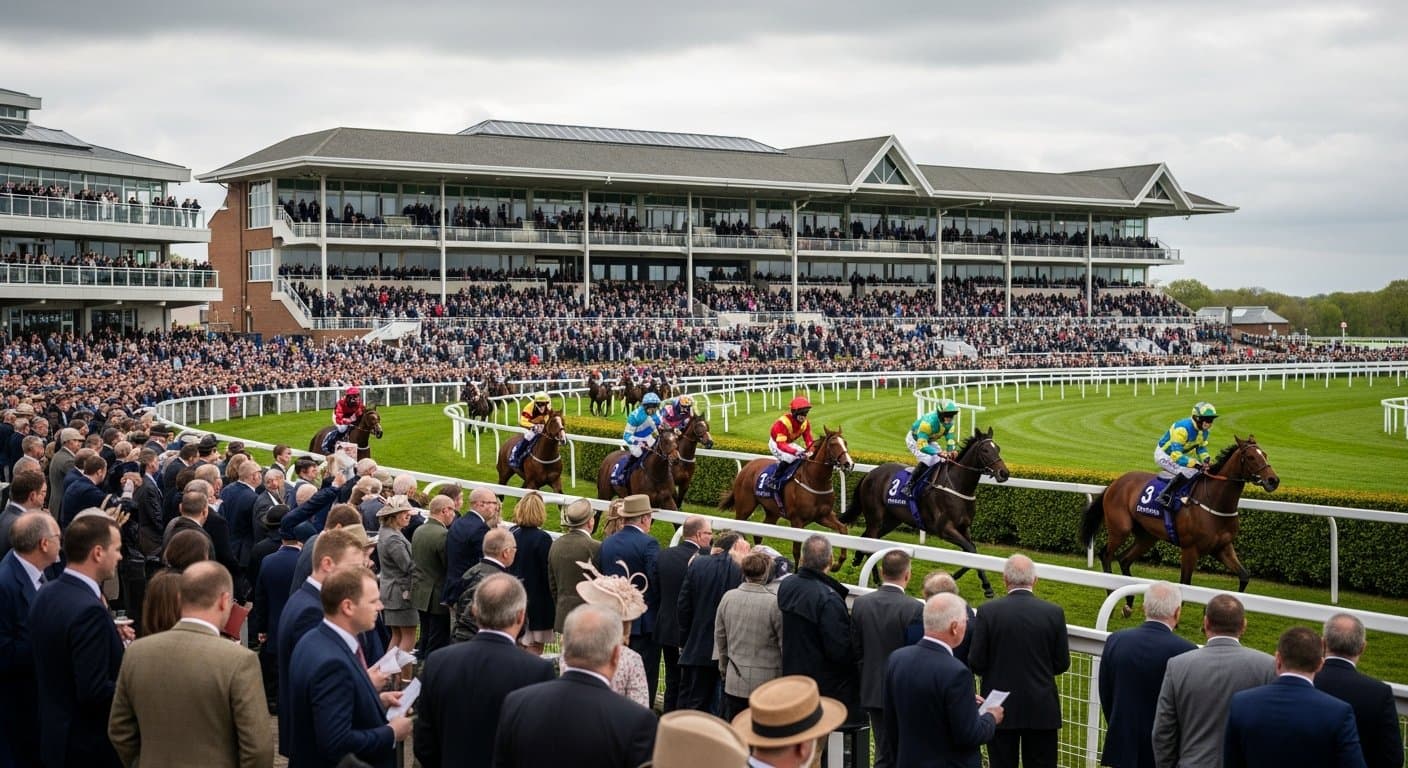
Pontefract Cup Day 2026: Draw Bias, Tips & Race Times
Beat the unique Pontefract draw bias on Cup Day with expert tips for Britain's most unusual flat track. Race times, betting insights & more.
Read more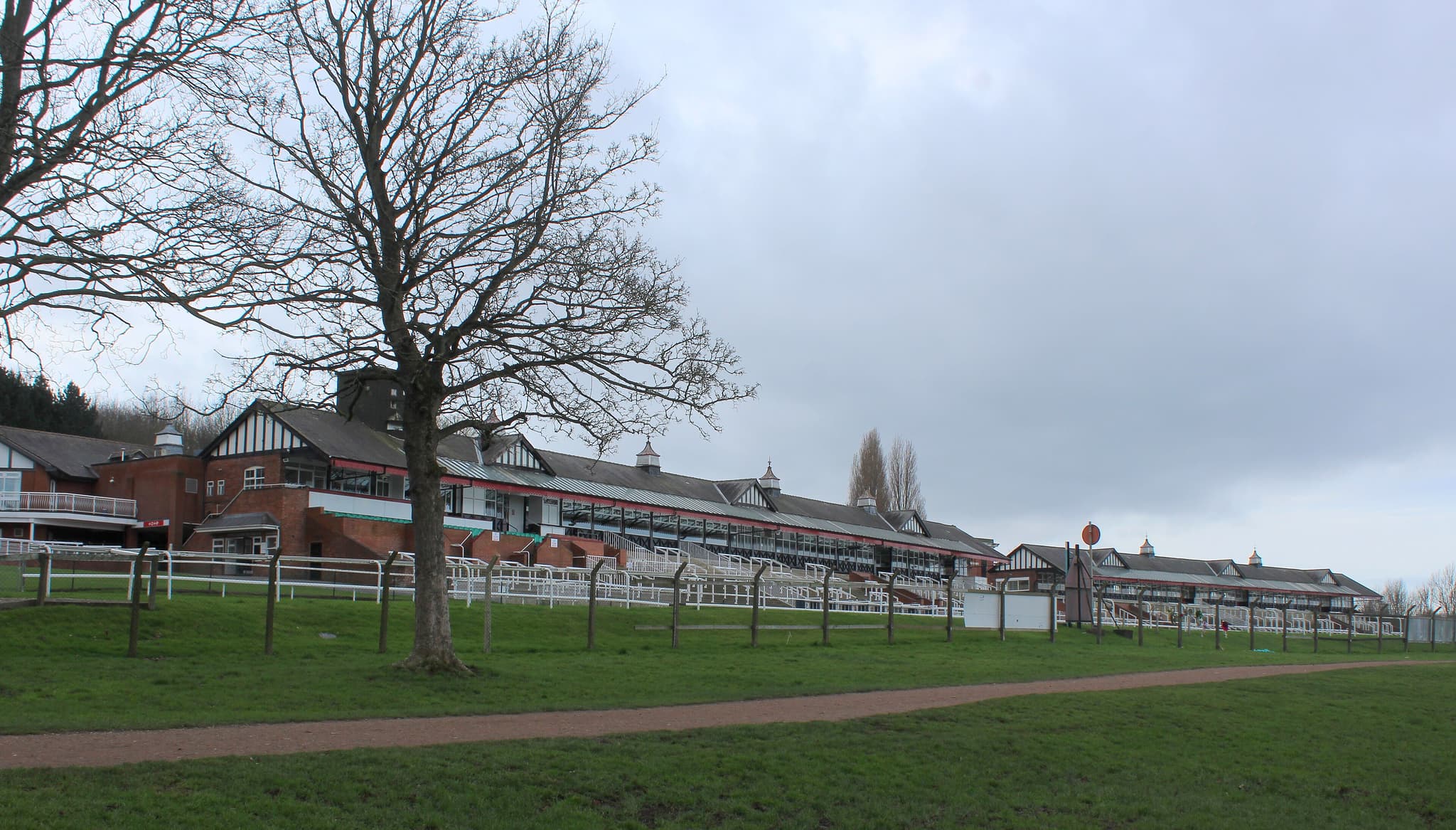
A Day Out at Pontefract Racecourse
Everything you need for a day at Pontefract — getting there, what to wear, enclosures, food and drink, and insider tips for the Park Course.
Read more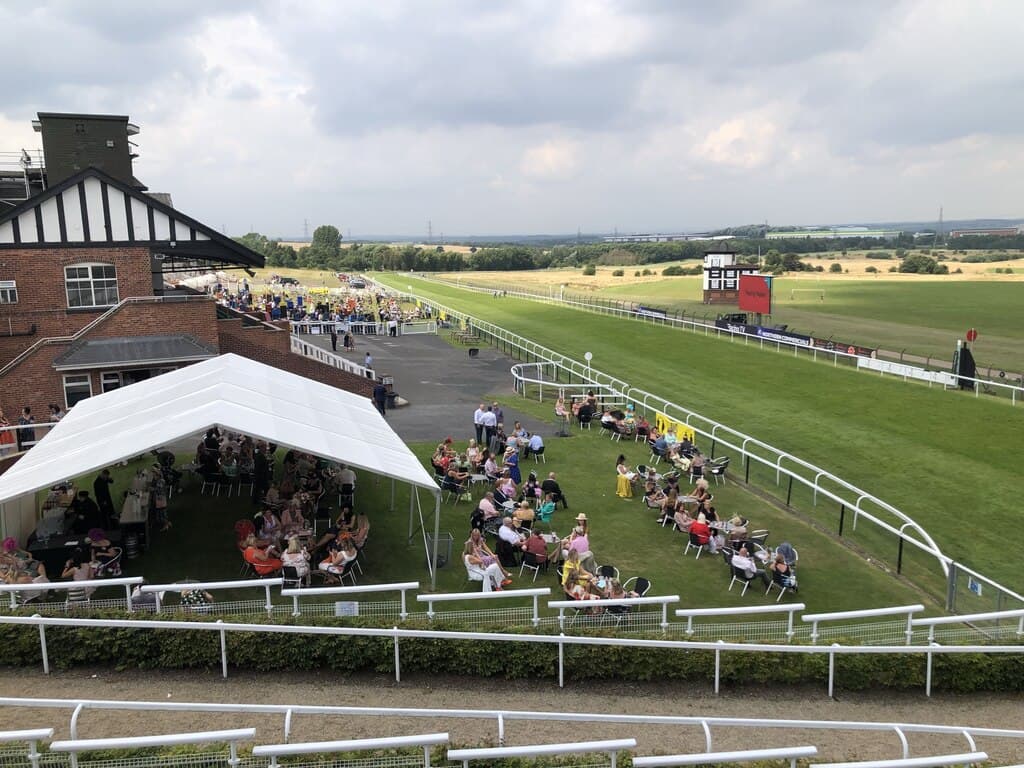
Pontefract Festival 2026: Kidney Track Tips & Tickets
Master Pontefract's unique kidney-shaped track with our festival guide. Race times, betting tips for Yorkshire's quirkiest course.
Read morePhotos on this page are used under Creative Commons licences. Titles, sources and licence links for each one are on our image credits page.
Research the field with the AI Race Predictor
Our model publishes calibrated win-probability estimates for UK races — a second opinion to understand a race, not tips. It's open about its record: it doesn't beat the market, and we show exactly how it does.
Work it out & learn the basics
Gamble Responsibly
Gambling should be entertaining and not seen as a way to make money. Never bet more than you can afford to lose. If you or someone you know has a gambling problem, help and support is available.