
Founder & Editor · Last reviewed 2026-04-05
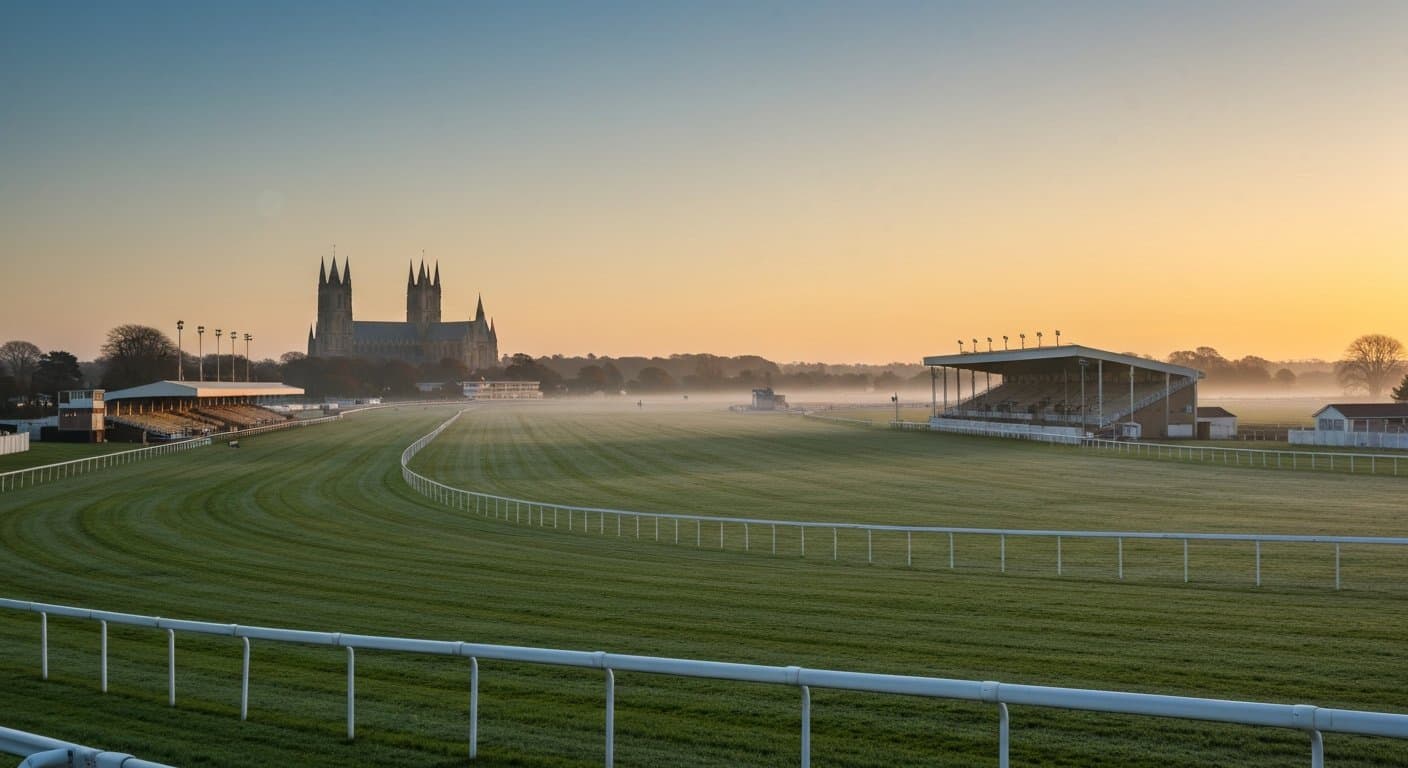
Salisbury Racecourse has been holding flat race meetings on the chalk downland south-west of the city for over 440 years. The earliest documented evidence places racing here in the mid-16th century, and the course has been a fixture on the flat calendar ever since, a record of continuity matched by very few British venues. The racecourse lies on the Netherhampton Road, approximately three miles from Salisbury city centre, with the 123-metre spire of Salisbury Cathedral visible to the north-east across the downland.
What sets Salisbury apart is not just its age. The course sits on the largest continuous area of chalk downland in Britain, and that geology shapes everything: the going, the drainage, the way horses move across the surface. The chalk drains quickly after rain. Meetings rarely suffer the heavy going that disrupts so many summer fixtures elsewhere. That consistency has made the course a reliable form reference for trainers targeting Newmarket and Ascot later in the season.
The layout is unusual among British flat tracks. Races up to a mile can be run on the straight, which runs downhill from the six-furlong start before levelling and then climbing sharply in the final half-mile. The track incorporates a right-handed loop for longer distances, rejoining the straight before the uphill finish. That finish rises around 76 feet in the final stages and separates stayers from horses that are merely fast. Trainers who know the course understand this, and horses that win here impressively have earned their reputation, because the gradient finds them out if they are not fully fit or talented.
The Bibury Club, founded in 1681, is historically linked to Salisbury racing and ranks among the oldest continuously operating racing organisations in England. That institutional thread ties today's fixture list to the social and sporting culture of 17th-century Wiltshire. Stonehenge stands nine miles to the north, a reminder that the Salisbury Plain has been at the centre of English life for millennia. Racing here is not a recent addition to the landscape. The course's long history has produced a form record of lasting significance: Sea The Stars made his racecourse debut here in June 2008 before winning six consecutive Group 1 races in 2009.
The Salisbury Stakes, now a Group 3 race over six furlongs for two-year-olds, is the annual event that most clearly articulates the course's place in the British juvenile programme. Trainers from John Gosden's Newmarket yard to Andrew Balding's operation at Kingsclere, 25 miles away, target the race with horses that go on to Classic trials the following spring. That pattern reflects 440 years of the course functioning as a quality filter, separating horses with ability from those that merely look the part.
This article traces the full arc of Salisbury's history: from the Elizabethan origins and the founding of the Bibury Club, through the development of the downland course in the 18th and 19th centuries, to the famous moments that shaped the course's reputation, and the modern era in which Salisbury has established itself as one of the most important juvenile venues in southern England.
Elizabethan Origins and the Bibury Club
Elizabethan Origins and the Bibury Club
The history of racing at Salisbury is bound up with the chalk downland on which the course sits. This landscape, the widest expanse of chalk downland in Britain, was shaped for horses long before any organised race meeting took place. The going is firm in summer, the ground open and undulating, and the views extend for miles in every direction. When horse racing began to develop as a structured pastime in Tudor England, the downland around Salisbury was an obvious location.
The year 1585 is generally cited as the date of the first organised meeting at Salisbury. Elizabeth I was on the throne, and horse racing was by then a recognised entertainment for the gentry and nobility. The city of Salisbury itself was significant: a cathedral city with a prosperous merchant class, a regional market of some importance, and strong connections to London via the road through Amesbury. The men who would have organised and attended early race meetings were landowners, merchants, and gentlemen of Wiltshire, the same social class that drove the development of formal racing across England in the 16th and 17th centuries.
The Nature of Early Meetings
The format of races in the late 16th century was very different from what we know today. Match races between two horses were common, where an owner would challenge another to race his horse over a set distance for a stated prize or wager. Heats over distances of two or three miles were also normal. There were no starting stalls, no photo finishes, and no formal handicap system. The horses would have been considerably heavier than modern thoroughbreds, and the courses were rough by contemporary standards.
What the downland offered, even then, was consistent going. Chalk drains quickly, and the turf that grew on the hillsides around Salisbury was short and firm. Horses could travel at speed without the risk of churning up the surface. This was not something every potential venue could offer, and it gave Salisbury an advantage that was recognised early.
The Bibury Club
The founding of the Bibury Club in 1681 marks a turning point in the organised history of racing at Salisbury. The Bibury Club is one of the oldest continuously operating racing organisations in England, and its establishment reflects the growing formalisation of the sport in the later 17th century. By 1681, the Restoration had reinvigorated public life in England, and horse racing, always a favourite of Charles II, was expanding rapidly. Newmarket had become the national centre of the sport, but regional racecourses were developing their own calendars and their own institutions.
The Bibury Club brought structure and social prestige to racing at Salisbury. A private members' organisation, it provided the administrative framework for race meetings and ensured that the sport attracted quality horses and credible competition. Membership gave access to the course and to the social events that surrounded race meetings. In the late 17th century, a race meeting was as much a social occasion as a sporting one, bringing together the county's landowners and their families for several days of competition, entertainment, and business.
The Cathedral City Connection
Salisbury Cathedral was completed in 1320 and its spire, at 123 metres the tallest in England, has dominated the Wiltshire skyline for over 700 years. For anyone approaching the racecourse from the city, the spire provides an unmistakable orientation point. Racegoers travelling from Salisbury station would pass through the Cathedral Close, one of the finest medieval precincts in England, before heading south-west towards the Netherhampton Road.
This geographical relationship between the course and the cathedral shaped the identity of racing at Salisbury from the outset. The cathedral was the city's defining landmark, and the racecourse was the city's great social gathering point. The Cathedral Stakes, a Listed race over six furlongs that is one of the highlights of the modern calendar, takes its name from that relationship. It is not a marketing invention; it reflects a connection that has existed for centuries.
Wiltshire's Racing Landscape
By the end of the 17th century, Salisbury was established within a wider Wiltshire racing culture. The downland of the Salisbury Plain offered multiple sites for racing, and the county had a strong tradition of horse breeding and training. Lambourn, later to become one of Britain's most important training centres, lies around 30 miles to the north-east. The chalk downland stretches continuously from Salisbury towards Lambourn and Newbury, and the horses trained on the Wiltshire and Berkshire downs had been developing the physical attributes suited to that terrain for generations.
Stonehenge, nine miles north of the racecourse, stands on the same plateau. The Plain has always been associated with movement and gathering. It was a centre of Bronze Age culture, a military training ground in two world wars, and a place where people came together for events both sacred and secular. Racing on the downland around Salisbury fitted naturally into that long tradition of the Plain as a place of public assembly.
The Stuart and Georgian Inheritance
The Stuart period saw horse racing develop into a national institution. James I had extended the royal stud at Newmarket, and his successors maintained the crown's involvement in the sport. By the time of Queen Anne, who died in 1714, horse racing had acquired something close to its modern structure, with distance races for prizes rather than simply match races, and the first attempts at a handicapping system. The General Stud Book, which formalised thoroughbred breeding, was not published until 1791, but the foundations were laid much earlier.
Salisbury's place in this developing structure was secure. The Bibury Club provided the institutional continuity that many courses lacked. The downland setting was distinctive and consistent. And the city of Salisbury offered the accommodation, entertainment, and social infrastructure that a successful race meeting required. By the early 18th century, Salisbury was a recognised fixture on the flat racing calendar, attracting horses and racegoers from across the south of England.
Why this era mattered: The Elizabethan origins and the founding of the Bibury Club in 1681 gave Salisbury something that most British racecourses lack: a documented institutional history stretching back more than 300 years. That continuity shaped the character of the course and established its reputation as a venue of sporting and social significance. When later generations of trainers and owners chose to target Salisbury with their best horses, they were building on a foundation laid in the 17th century.
The Development of the Downland Course
The Development of the Downland Course
Through the 18th century, Salisbury's racing calendar grew in scope and ambition. The pattern of racing in Georgian England was shifting: distances were shortening as thoroughbred breeding produced faster, lighter horses, and the social calendar around race meetings was becoming more elaborate. Salisbury adapted. The downland course that had hosted match races and long-distance heats began to develop the characteristics that define it today, principally a straight course that rewards speed and tests stamina, run on chalk-drained ground that produces reliable going from May through September.
The straight course at Salisbury is approximately six furlongs long from top to bottom, and its quirks are significant. It runs downhill from the start, which encourages horses to stride out and build momentum, before levelling and then rising sharply in the final stages. That uphill climb in the last quarter-mile is one of the most demanding finishes in British flat racing. Horses that cannot sustain their effort up the hill will be beaten; the surface and the gradient expose any weakness in fitness or breeding.
The Georgian Social Calendar
In the 18th century, race meetings at Salisbury were major social events. County families would travel from across Wiltshire and beyond, staying in the city's coaching inns or at the houses of local landowners. The days around the races brought together military officers from the garrisons on Salisbury Plain, clergy from the cathedral, merchants from the city, and aristocratic visitors from further afield. The Bibury Club, with its membership drawn from Wiltshire's landed gentry, provided the social organising principle.
Georgian Salisbury was a prosperous city. The wool trade that had made it wealthy in the medieval period had declined, but the city remained an important regional centre. The coaching routes through Salisbury connected it to London, Bath, and the south-west. Racegoers could reach it in a day's hard riding from London, and the inns along the route were well established. The racecourse on the Netherhampton Road, three miles from the city centre, was close enough to walk from the city on a fine day.
The Course Takes Shape
By the early Victorian period, the layout of the Salisbury course was close to what it is today. The straight course running from the six-furlong mark down to the finish had been established. The loop for longer races, branching off the straight and rejoining it before the uphill climb, allowed the racecourse to stage distances from five furlongs to one mile and six furlongs. This versatility mattered: a racecourse that could only host sprint races had limited appeal, while one that could offer a full programme from sprints to middle-distance races attracted both a wider variety of horses and a more varied racegoing public.
The chalk downland geology continued to be the course's great natural advantage. In a summer when other venues were struggling with firm or hard going, Salisbury's chalk-drained turf remained consistent. Trainers who had learned the course understood that it rode closer to good to firm in July and August than almost anywhere else in the south, but without the bone-jarring firmness of some downland courses. The surface produced fast times without punishing horses unduly.
The Victorian Era
The Victorian period brought profound changes to horse racing in Britain. The Jockey Club, which had been developing authority over the sport since the mid-18th century, consolidated its position. The major Classic races, the 2,000 Guineas, the 1,000 Guineas, the Derby, the Oaks, and the St Leger, were established as the pinnacles of the racing calendar. Newmarket, Epsom, and Doncaster were the courses that hosted these races and therefore occupied the highest status. Salisbury's place in this hierarchy was as a high-quality regional course: not a Classic venue, but a respected fixture on the flat calendar.
During the Victorian era, Salisbury developed its reputation as a two-year-old venue. The six-furlong straight was ideal for juvenile races, long enough to test fitness and breeding, short enough not to over-extend horses still learning their trade. Two-year-old races at Salisbury in July and August became reliable form guides. A horse that won a maiden or conditions race here over six furlongs, particularly a well-bred one from a top stable, was taken seriously when it moved on to Pattern races in the autumn.
This reputation was built through experience. Trainers who ran their best juveniles at Salisbury and saw them go on to Classic glory the following season noted the connection. The uphill finish, which would have seemed testing to horses that were not yet fully fit, sorted the talented from the merely quick. A two-year-old that could win at Salisbury in August had already passed a test that many horses from bigger, flatter courses had not.
The Edwardian Period
The years from 1900 to 1914 were a prosperous period for British racing. King Edward VII was himself a successful owner, and his horse Minoru won the 1909 Derby. The patronage of the Crown gave the sport social legitimacy across the social spectrum. Railway expansion had made racecourses more accessible, and trains running from London to Salisbury, and from Bristol and Bath, brought racegoers who would not previously have been able to attend.
Salisbury benefited from this expansion of the racegoing public. The course's capacity, which today stands at around 5,000, was sufficient for the crowds that the railway brought. The Bibury Club continued to operate as the governing institution, and the meetings in July and August were well attended. The cathedral backdrop gave the course a setting that few other venues could match.
The trainers operating in the area during the Edwardian period came from a generation of professionals who had grown up with the sport in its modern form. The yards around Lambourn, Beckhampton, and Kingsclere, all within 30 miles of Salisbury, were producing horses that were being targeted at specific races. Salisbury was part of those plans: a course where a horse could be introduced, tested, and prepared for bigger targets.
The Interwar Years
The period between the First and Second World Wars brought financial pressure to many British racecourses. Racing was suspended during the war years, and the return to competition in 1919 was welcomed but complicated by economic hardship. Some smaller courses did not survive. Salisbury, with its established infrastructure and its independent ownership, continued to operate. The Bibury Club maintained its connection to the course.
The development of the car brought a different kind of racegoing public to Salisbury in the 1920s and 1930s. Where Victorian racegoers had arrived by train or on horseback, the interwar generation drove. The Netherhampton Road provided direct access to the racecourse, and the car park became a social institution in its own right. Picnics, social gatherings, and the rituals of a day out at the races evolved around the practicalities of motor transport.
Racecourse investment during the interwar period was limited at most British venues. The grandstand and the facilities at Salisbury were adequate rather than lavish. But the course itself remained in good condition. The chalk downland needed little intervention to maintain its character, because drainage was natural, the turf was resilient, and the uphill finish remained as testing as it had always been.
Why this era mattered: The development of the downland course through the 18th and 19th centuries gave Salisbury a physical identity that is still intact today. The straight course, the right-handed loop, and the uphill finish are not modern inventions or improvements. They evolved over 200 years of racing on a specific piece of chalk downland. That geography is the reason why form from Salisbury has been reliable for so long. The course tests horses in a specific and demanding way, and horses that pass the test have generally been worth following.
Famous Moments and Notable Horses
Famous Moments and Notable Horses
Salisbury's long calendar means that its history is full of horses and races that have contributed to the broader story of British flat racing. The course has never hosted a Classic, but it has been the starting point for horses that went on to win them. It has staged races that produced form lines followed across the sport. And it has provided the stage for individual performances that have stayed in the memory of those who saw them.
The most significant of these moments, from the perspective of the sport's recent history, came on 18 June 2008. Sea The Stars, trained by John Oxx and bred by the Tsui family, made his racecourse debut in a maiden stakes over one mile at Salisbury. He won it. At the time, the performance attracted attention, given that this was a well-bred son of Cape Cross out of Urban Sea, and his work at home had been noted. But no one could have predicted what followed. In 2009, Sea The Stars won the 2,000 Guineas, the Derby, and the Irish Champion Stakes among six consecutive Group 1 victories, ending his career rated by many as the best horse seen in Europe for a generation. His Salisbury maiden was the beginning of all of it.
The Significance of the Salisbury Debut
Sea The Stars' debut on the Netherhampton Road course illustrates something important about how British flat racing works. The great horses do not begin their careers at Ascot or Newmarket. They begin at places like Salisbury, in maidens where the fields are small and the opposition is unknown. What Salisbury's course offered in June 2008 was the same thing it had always offered: a real test on consistent going. The uphill finish, the firm chalk-drained ground, the straight course: these conditions separated the talented from the merely well-bred. Sea The Stars passed the test without difficulty, and the form line from that race was followed carefully as his rivals went on to subsequent performances.
John Oxx's operation at Currabeg in County Kildare had the horses to target Salisbury from Ireland; the journey was worthwhile because the course provided what more local venues could not. That willingness to travel for Salisbury's specific test has characterised the approach of top trainers across the sport's history.
The Dettori Family Connection
Frankie Dettori, who became arguably the most famous flat jockey in the world, was not born into British racing. His father Gianfranco was. Gianfranco Dettori was a leading Italian jockey who rode in England during his career, including at Salisbury. He won the 2,000 Guineas in 1975 on Bolkonski. His son would go on to ride at Salisbury many times, making winners on the course that launched careers and settled reputations. The Dettori connection to Salisbury runs from father to son, a thread that ties the course to two generations of elite flat race riding.
Frankie Dettori's association with the course was not confined to occasional visits. In the years when he was retained by Sheikh Mohammed's Godolphin operation, and later as a freelance, he was a regular visitor to Salisbury during the summer months. The course's proximity to the training centres at Newmarket (110 miles) and Lambourn (30 miles) made it a natural destination for top jockeys taking bookings across the south.
Sheikh Hamdan and the Shadwell Connection
For much of the 1990s and 2000s, the horses of Sheikh Hamdan Al Maktoum's Shadwell operation were among the most potent forces in British flat racing. Shadwell targeted two-year-old races at Salisbury with horses from the yards of Roger Charlton at Beckhampton (20 miles from the course), Marcus Tregoning at Lambourn (around 25 miles), and other trainers in the southern circuit. Charlton and Tregoning, in particular, had strong records at Salisbury because they understood the course and targeted it deliberately.
Marcus Tregoning's horses were regularly prominent in Salisbury's conditions races and maiden stakes for juveniles. His proximity to the course and his knowledge of its demands made him one of the most effective trainers in the area. Tregoning-trained horses with Shadwell ownership formed a consistent presence in the Salisbury entries through the early years of the 2000s, and several used the course as a stepping stone to Group-race success.
The Salisbury Stakes
The Salisbury Stakes, run over six furlongs for two-year-olds and now carrying Group 3 status, is the race that most clearly defines the course's role in the juvenile programme. Run in late July or early August, it attracts horses from the major southern yards that have shown enough on debut to be worth targeting at a conditions race. The field is typically small, with six to ten runners, but the quality is consistently high by the standards of early-season juvenile racing.
Horses that have won the Salisbury Stakes include several that went on to Group 1 success the following season, either in the 2,000 Guineas at Newmarket in May or in other Classic trials. The race's form record is one of the best of any Group 3 in southern England in the July-August period. Trainers like John Gosden at Newmarket, around 110 miles away, have found it worth making the journey with their most promising juveniles because the race provides a competitive test against similar-quality horses in the kind of finish that reveals true ability.
Andrew Balding, who trains at Park House Stables in Kingsclere (25 miles from Salisbury), has been one of the most consistent trainers at the course in recent years. His proximity to the racecourse and his thorough understanding of its demands have made him a dominant force in the summer fixture list. Balding-trained horses have won the Salisbury Stakes on multiple occasions, and his strike rate at the course over the past decade is among the best of any trainer in southern England.
The Cathedral Stakes
The Cathedral Stakes, a Listed race over six furlongs for three-year-olds and above, runs at the June meeting that is one of the highlights of Salisbury's calendar. The race takes its name from the cathedral spire visible across the downland from the course. Like the Salisbury Stakes, it serves as a form-book reference point: a race that attracts quality horses and produces results that translate to higher levels.
The June meeting at which the Cathedral Stakes is run is the showpiece occasion of the Salisbury season. The crowd is larger than at routine summer fixtures, the hospitality operation is at full stretch, and the racecard typically includes several other competitive races alongside the headline Listed contest. Racegoers who make the journey from Salisbury station pass through the Cathedral Close, the medieval precinct surrounding the cathedral, before reaching the Netherhampton Road. The physical connection between the cathedral and the course is as clear on race day as it has ever been.
The Highclere Connection
Highclere Castle, the seat of the Earl of Carnarvon and better known internationally as the filming location for Downton Abbey, stands 25 miles north of Salisbury racecourse. The Carnarvon family has had racing connections for generations; the sixth Earl of Carnarvon served as the Queen's racing manager for many years. Highclere Thoroughbreds, the racing partnership founded by the family, has targeted Salisbury with its horses over many years, making the racecourse part of a wider network of southern English racing culture that connects the stately homes of Hampshire and Berkshire to the downland courses of Wiltshire.
A Reliable Form Reference
What gives these individual moments their collective weight is the consistency of Salisbury as a form reference. A horse that wins a maiden at Salisbury in June is not simply filling an entry in a form book. It is passing a specific test on a course that has sorted horses reliably for over 400 years. The uphill finish means that a winning margin at Salisbury is harder to achieve than at a flat course. The chalk-drained going means that the time of a race here reflects true speed rather than the artificial advantage of soft ground. Trainers across the south of England know this, and they plan their campaigns accordingly.
Why these moments mattered: The horses and connections that have produced Salisbury's most memorable moments, from Sea The Stars to the Shadwell operation to the Balding and Charlton yards, chose Salisbury not by accident but because the course provided something specific and valuable. Each famous result reinforced the reputation of the course as a place where real ability was revealed.
The Modern Era
The Modern Era
Salisbury Racecourse today is operated by Salisbury Racecourse plc, an independent company not affiliated with the Jockey Club or Arena Racing Company. That independence is significant. The two large groups now control the majority of British racecourses, and the commercial logic of group ownership has reshaped the racing calendar at many venues. Salisbury has been free to develop its own identity, set its own priorities, and respond to the needs of the trainers and owners who use it rather than the requirements of a wider portfolio.
The practical consequences of independent ownership are visible in how the course operates. Capacity is around 5,000, small by the standards of the major festivals but appropriate for the kind of meeting Salisbury stages. The atmosphere at a summer fixture is the atmosphere of a well-attended regional racecourse: competitive, knowledgeable racegoers, horses from top southern yards, and a setting that requires no enhancement from a marketing team. The cathedral spire, the downland, and the particular light of a Wiltshire summer afternoon do the work.
The Racing Programme
Salisbury stages around 15 fixtures a year, all on the flat, from May through to October. The season's structure reflects the course's strengths. The early summer meetings in May and June include maiden races for two-year-olds making their debuts, conditions races for horses moving beyond maiden company, and handicaps for the established older horses that form the backbone of the flat calendar. The Cathedral Stakes at the June meeting sits alongside competitive handicaps and conditions races that attract southern-based trainers in good numbers.
July and August are the peak months for juvenile racing at Salisbury. The Salisbury Stakes in late July or early August is the headline event of this period, a Group 3 contest over six furlongs that draws horses from the major yards at Newmarket, Lambourn, and the surrounding training centres. The going in July is almost always good to firm on the chalk-drained surface, producing fast times and real speed tests. Horses that are properly fit and have class to match their fitness will win by enough to leave a mark on the form book. Those that are good-looking but unready for the specific demands of the Salisbury straight will find the uphill finish exposing.
September brings a different character to the fixture list. The going softens slightly as the summer ends. The horses on the card are older: seasoned handicappers, autumn three-year-olds looking for one more run before winter, and the occasional four-year-old or older horse that has found its level in late-season handicap company. The Group 3 Dick Poole Fillies' Stakes, for two-year-old fillies, is the September highlight.
Andrew Balding and Kingsclere
Park House Stables at Kingsclere in Hampshire has been one of the dominant forces in southern English flat racing for the past two decades. Andrew Balding, who took over from his father Ian Balding in 2003, is 25 miles from Salisbury racecourse and uses it consistently throughout the season. His strike rate at the course over the past decade reflects both his proximity and his thorough understanding of the course's demands. Balding trains horses for a wide variety of owners, including King Power Racing, and his juveniles are regularly targeted at the Salisbury Stakes and the maiden programme in July and August.
Roger Charlton, training from Beckhampton in Wiltshire (20 miles from the course), has a similarly strong record at Salisbury. Beckhampton is one of the great Wiltshire training establishments, with a history stretching back to the 19th century. Charlton's horses benefit from the same chalk downland terrain at home that they encounter at Salisbury, which may partly explain why his runners perform well there. His proximity and his horses' familiarity with the going type give Beckhampton a consistent edge at the course.
The Juvenile Programme
The modern Salisbury fixture list is built around a clear recognition of where the course adds most value: the juvenile programme. The Salisbury Stakes (Group 3) and the surrounding maiden and conditions races in July and August form a coherent sequence that provides a reliable pre-Group 1 test for horses being aimed at the 2,000 Guineas or other major targets the following spring.
This focus on juveniles reflects a reality about the modern flat calendar. The major southern racing centres, Newmarket, Ascot, and Goodwood, dominate the Pattern race programme. Salisbury cannot compete with them for Group 1 prize money or prestige. What it can provide is a test that the big courses cannot: the uphill finish, the specific going, the atmosphere of a smaller venue where horses can learn their trade without the crowds and distractions of a major festival. Several horses that have won the Salisbury Stakes have arrived at Newmarket the following May having benefited from that experience.
John Gosden, training at Newmarket (around 110 miles from Salisbury by road), has sent horses to the course specifically for the Salisbury Stakes, judging the journey worthwhile because the race provides a quality test against similar horses. That willingness to travel reflects the respect that top Newmarket trainers have for Salisbury's juvenile programme.
Facilities and the Raceday Experience
The modern racecourse has invested in its facilities over the past two decades while maintaining the character that distinguishes it from the larger venues. The grandstand and viewing areas give a clear view of the full straight from the six-furlong start to the finish, which is essential at a course where the shape of a race on the straight, who leads, who is ridden along, who finishes strongly up the hill, tells the most important story.
The day out guide covers the practical details for racegoers planning a visit. The nearest station is Salisbury, two miles from the city centre and approximately five miles from the racecourse by road. Car parking at the course is substantial, the downland provides space, and the approach along the Netherhampton Road gives racegoers a clear sense of the landscape they are entering.
Hospitality at Salisbury is appropriately scaled. It is not a corporate entertainment venue of the Ascot variety. It is a course where people come to watch racing, to study the horses in the paddock, and to bet seriously on races where form analysis matters. The betting guide sets out how the course's characteristics, including the uphill finish, going preferences, and trainer statistics, should inform a serious approach to the fixture list.
An Independent Future
Salisbury Racecourse plc has stated its commitment to maintaining the course as an independent operation. In an era when consolidation is the dominant trend in British racecourse ownership, that independence has become a selling point. The course's character, its scale, its atmosphere, its specific test, is the product of decisions made at Salisbury rather than in a group boardroom in London or Cheltenham.
The summer programme, the juvenile focus, and the carefully curated conditions races that attract southern-trained horses to Salisbury are the product of that independence. The course knows what it is for. It has been a flat racing venue on the chalk downland south-west of Salisbury for over 440 years, and the decisions taken in the modern era have kept faith with that identity rather than trying to reinvent it.
Salisbury's Legacy
Salisbury's Legacy
The history of Salisbury Racecourse is a history of persistence. Over 440 years, this course on the chalk downland south-west of Salisbury has survived the upheavals of the Civil War, two world wars, the industrialisation of the betting industry, and the consolidation of British racecourse ownership into large commercial groups. It has done so not through reinvention but through continuity, maintaining the same test, on the same ground, in the same landscape, for a succession of generations.
That continuity is the course's defining quality. The 17th-century racegoers who came to see Bibury Club meetings on the Wiltshire downland would recognise the landscape that today's racegoers experience. The spire of Salisbury Cathedral at 123 metres is unchanged. The chalk drains the same way it always has. The uphill finish in the final stages of the straight is the same gradient it was when Victorian trainers first learned to target horses carefully at the Salisbury meeting. History here is not decorative. It is structural.
A Juvenile Record with Consequences
Salisbury's most durable legacy is its role in the juvenile programme. The course has been producing form lines that translate to Classic success for more than a century, and the Salisbury Stakes (Group 3) crystallises that tradition in a single annual event. Sea The Stars' unbeaten maiden on the course in June 2008, before a career that produced six consecutive Group 1 victories in 2009 including the 2,000 Guineas and the Derby, is the most famous instance of a Salisbury performance predicting greatness. But it is one of many.
The reason is the test. The six-furlong straight at Salisbury, with its downhill opening and uphill conclusion, demands something different from a horse than a flat six furlongs at Newmarket or a gentle undulation at Goodwood. Horses that win at Salisbury by two or three lengths, finishing strongly up the hill with ears pricked, are horses that have something in reserve. Trainers who see that finish, Balding at Kingsclere, Charlton at Beckhampton, Gosden at Newmarket travelling to run a promising juvenile, draw conclusions from it that shape the following season's programme.
The Landscape as Identity
Nine miles north of the racecourse, Stonehenge stands on the Salisbury Plain. The monument is 4,000 years old. The racecourse is 440 years old. Both are products of the same landscape, the open, drained, wind-exposed chalk downland of Wiltshire, and both attract visitors from across the country and beyond. The proximity of Stonehenge to Salisbury gives the city and its racecourse a depth of cultural context that few other racing venues can claim.
This is not a marketing coincidence. Racegoers who come to Salisbury from London, Bath, or Bristol do not come only for the racing. They come for a day in a historic landscape, in a cathedral city, at a course where the going is reliable and the racing is honest. The combination of the flat programme, the city, the cathedral, and the downland is what makes Salisbury work as a destination. Racing is the occasion; the landscape is the experience.
Independent Ownership in an Assembled World
British racecourse ownership has been transformed since the 1990s. The Jockey Club now controls 15 courses, and Arena Racing Company operates a further 21. Between them, these two groups run well over half of the British fixture list. Salisbury Racecourse plc stands apart. The decision to remain independent has allowed the course to maintain a specific identity and a racing programme tailored to its particular strengths.
That independence reflects the character of the course's history. The Bibury Club, founded in 1681, was itself an expression of local, community-based organisation of racing rather than top-down control from Newmarket or London. The modern independent structure continues that tradition. Salisbury is answerable to itself, to its local trainers, its regular racegoers, and its long relationship with the chalk downland on which it sits.
What Salisbury Means for the Flat Racing Calendar
Any serious analysis of the southern flat racing calendar has to include Salisbury. The complete guide covers the practical details; the betting guide addresses how to approach the fixture list from a form perspective. But the underlying point, rooted in history, is simpler: Salisbury produces results that matter. The course's position in the juvenile programme, its reliable going, and its specific physical demands mean that it functions as a quality filter. Horses that pass the Salisbury test have been tested properly.
For over four centuries, the racecourse on the Netherhampton Road has been the place where the horses of Wiltshire, Hampshire, Berkshire, and the wider south of England come to be sorted. The Bibury Club started the work in 1681. Sea The Stars passed through in 2008. Andrew Balding's Kingsclere horses arrive each summer. The downland holds its form, the chalk drains, and the cathedral spire marks the horizon. Salisbury's legacy is that nothing essential has changed.
Frequently Asked Questions
How old is Salisbury Racecourse?
Racing at Salisbury is documented from 1585, making the course over 440 years old. This places it among the oldest flat racing venues in Britain. The Bibury Club, founded in 1681 and historically associated with Salisbury racing, is one of the oldest continuously operating racing organisations in England. The course has staged flat racing on the same stretch of chalk downland throughout its history, with no significant interruption to the basic continuity of racing at the venue.
What is the Bibury Club?
The Bibury Club is a private members' racing organisation founded in 1681. It has historical ties to Salisbury Racecourse and is one of the oldest racing clubs in England. In the 17th and 18th centuries it provided the institutional framework for organising and funding race meetings at Salisbury. The club's founding date predates the General Stud Book (1791) and the formalisation of the Jockey Club's authority over the sport, placing it firmly in the earliest period of organised British horse racing.
Did Sea The Stars really run at Salisbury?
Yes. Sea The Stars, trained by John Oxx, made his racecourse debut in a maiden stakes over one mile at Salisbury on 18 June 2008. He won it. The following year, he won six consecutive Group 1 races including the 2,000 Guineas, the Derby, and the Irish Champion Stakes, ending the season as the highest-rated horse in Europe. His Salisbury maiden was the starting point for that career.
What is the Salisbury Stakes?
The Salisbury Stakes is a Group 3 race run over six furlongs for two-year-olds, staged in late July or early August as part of the summer juvenile programme. It is one of the most significant early-season races for juveniles in southern England. Horses that win the Salisbury Stakes often go on to Classic trials the following spring. The race consistently attracts horses from the major yards at Newmarket, Lambourn, and Beckhampton, reflecting its standing as a quality test.
Is Salisbury part of any racecourse group?
No. Salisbury Racecourse is operated by Salisbury Racecourse plc, an independent company. It is not part of the Jockey Club group (which runs 15 courses) or Arena Racing Company (which runs 21 courses). This independence has allowed the course to maintain its own character and racing programme rather than fitting into a wider commercial portfolio.
What is the going usually like at Salisbury?
The course sits on chalk downland which drains quickly after rain. In the summer months, May through September, the going at Salisbury is typically good to firm or firm. Heavy going is unusual at this venue. The consistent surface is one reason why form from Salisbury translates reliably to other courses: horses are running on a real speed test rather than soft ground that can distort relative abilities.
Share this article
More about this racecourse
All Salisbury guides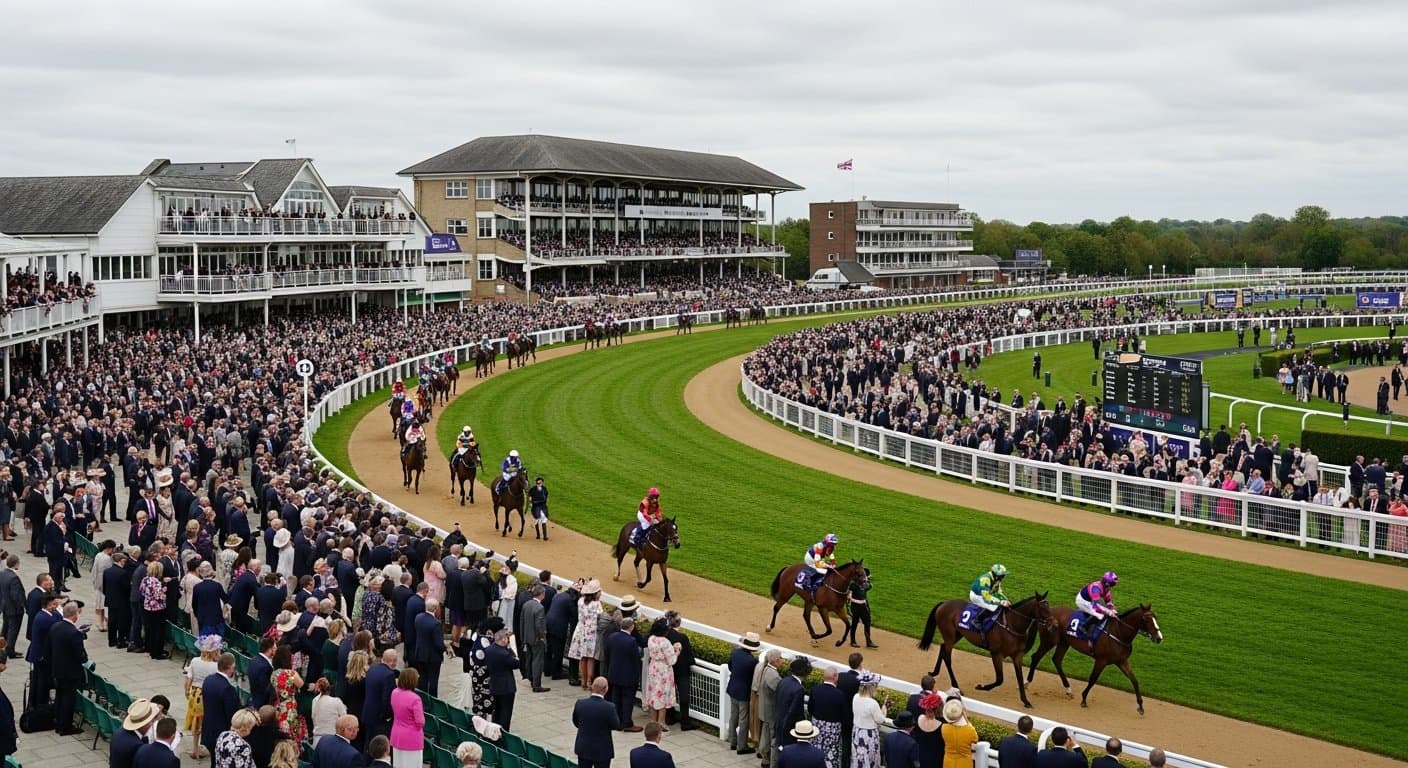
Bibury Cup Day at Salisbury: The Complete Guide
Bibury Cup Day is Salisbury's grandest race day — steeped in flat racing tradition, with the historic Bibury Cup at its heart.
Read more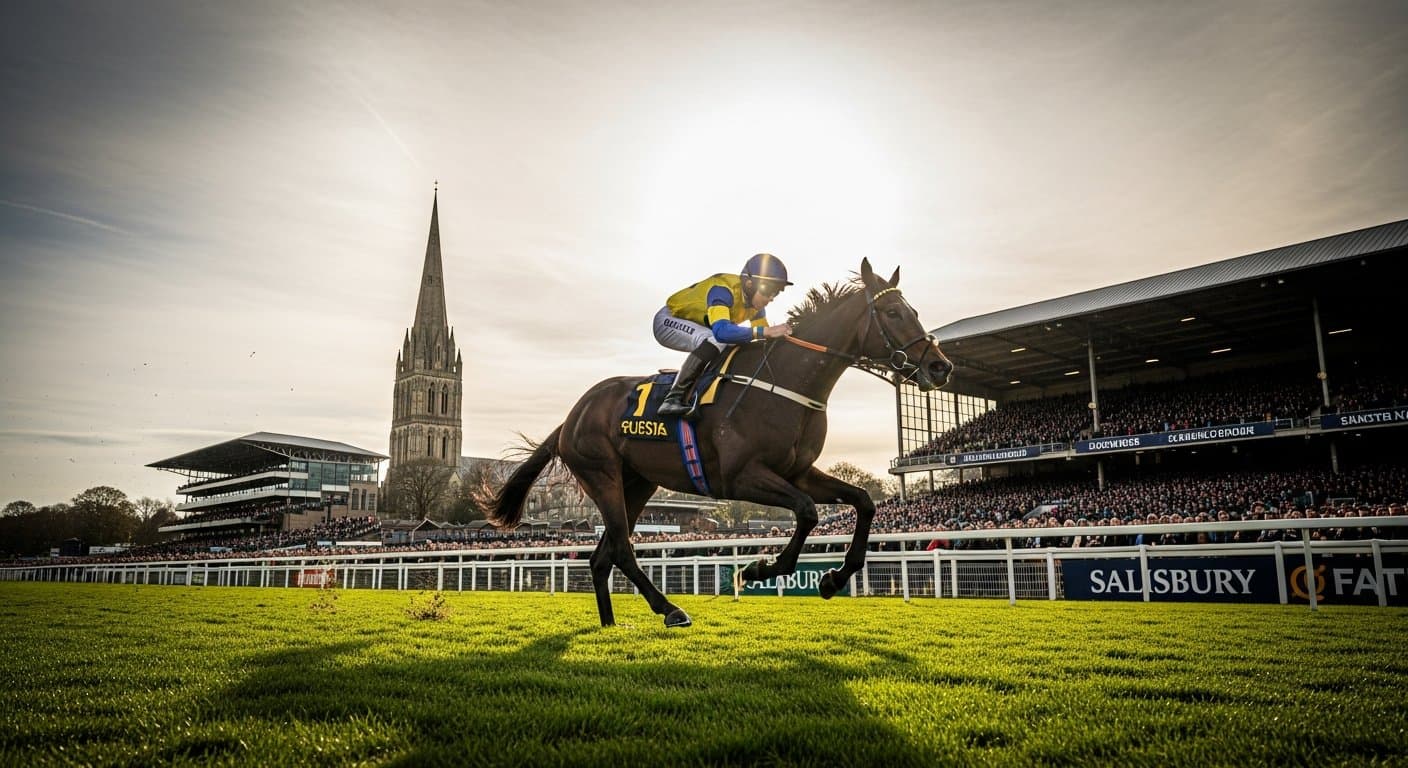
Mill Reef at Salisbury: The Complete Story
Mill Reef made his racing debut at Salisbury in May 1970, winning the Salisbury Stakes by four lengths — the first step on the road to Derby and Arc glory.
Read moreBetting at Salisbury Racecourse
How to bet smarter at Salisbury — track characteristics, going and draw, key trainers and jockeys, and strategies for the historic straight course.
Read moreGamble Responsibly
Gambling should be entertaining and not seen as a way to make money. Never bet more than you can afford to lose. If you or someone you know has a gambling problem, help and support is available.