
Founder & Editor · Last reviewed 2026-03-02
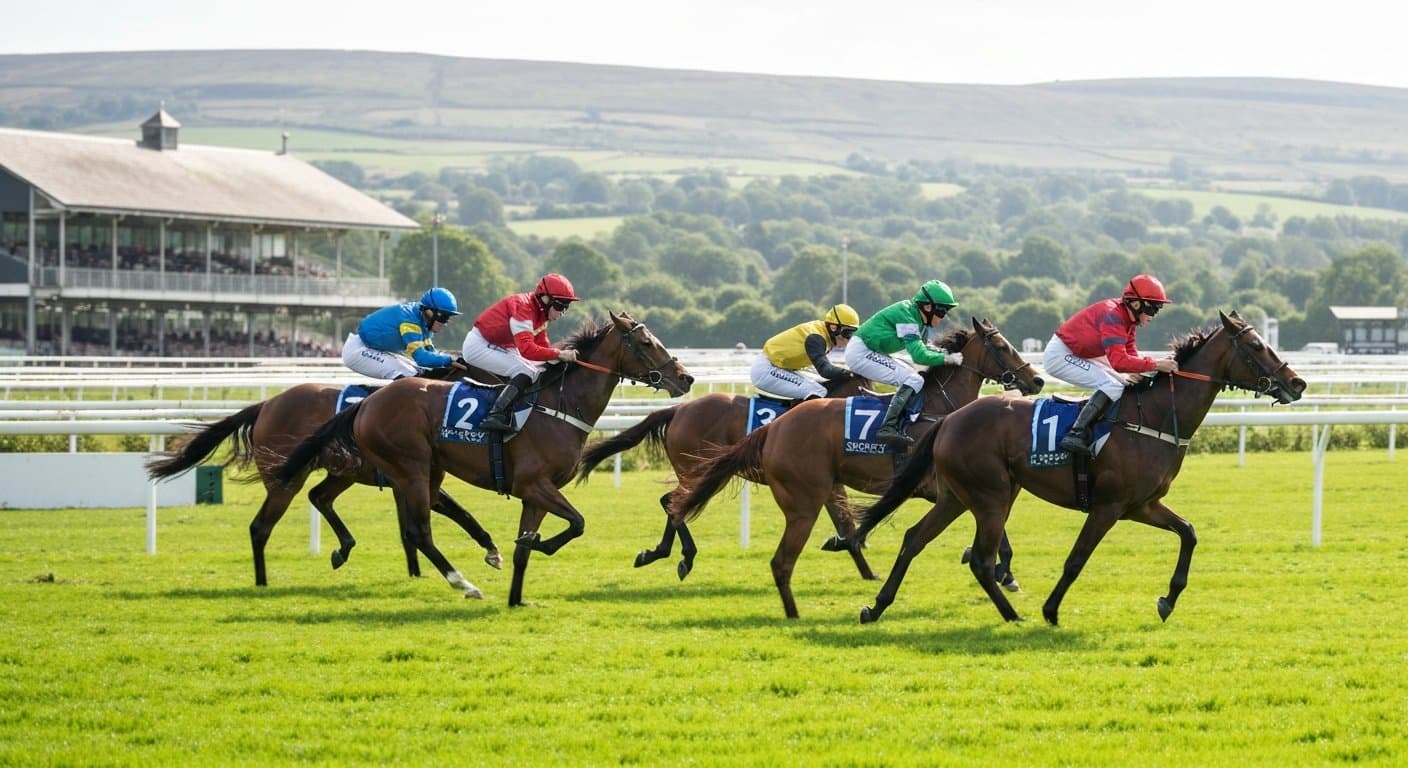
Thirsk is the sprint specialist's course in Yorkshire. The left-handed undulating oval with its sharp bends and stiff uphill finish produces results that differ sharply from the wide galloping tests of York and Doncaster. Sprint horses that win at Thirsk have demonstrated they can handle tight left-handed bends, manage the undulations through the back straight, and still produce a sustained effort up the final climb. That combination of requirements makes Thirsk form more specific and more reliable than form from galloping tracks.
The stiff finish is the defining characteristic. The final furlong rises to the winning post in a way that consistently catches out horses that have used their energy too early or are at the limit of their stamina range. Even sprint horses at five and six furlongs feel the Thirsk finish, the gradient that would be negligible on a flat track is significant when a horse is already in oxygen debt from racing at full pace. Horses that stay their distance comfortably at Thirsk consistently outperform those that merely get the trip on easier ground.
Richard Fahey at Musley Bank dominates the Thirsk trainer standings, the course is approximately 15 miles from his yard, making it one of his most local and most targeted venues. Kevin Ryan, Tim Easterby, and Charlie Johnston fill the supporting roles. Paul Hanagan and Kevin Stott are the key jockeys on the northern sprint circuit that includes Thirsk.
This guide covers track characteristics, going and draw, key trainers and jockeys, betting strategies, and key races. For the Thirsk Hunt Cup, the Thirsk Hunt Cup guide covers the feature race in detail.
Quick decision framework:
- Course form: strongest positive filter in sprint and middle-distance races
- Richard Fahey runner at 4/1 or above: follow with sprint or stiff-finish form
- Low draw in sprint fields: modest but consistent advantage on fast ground
- Stiff-finish form from Hamilton or Ripon transfers well; flat-track Doncaster form requires discount
- Thirsk Hunt Cup: Fahey dominates, check his entries before opening-day assessment
- Avoid pure speed-type horses with no evidence of getting up a hill
Bet on Thirsk
Place your bets on Thirsk races with a trusted bookmaker.

Promo code BETFRED50. New customers only. Register, deposit with a Debit Card, and place a first bet of £10+ at Evens (2.0)+ on Sports, to be settled within 7 days, to get £30 in Sports Free Bets and £20 in Bet Builder Free Bets within 24 hours of settlement. 7-day expiry. Eligibility & payment exclusions apply. Full T&Cs apply. Take Time to Think. BeGambleAware.org. 18+. Full T&Cs.

Promo code R30. New UK customers only, 18+. Register, deposit £10 or more, then place a £10 single cash bet at odds of 1/2 (1.5) or greater on any sports market (excluding Virtuals). Once the qualifying bet settles you get £30 in Free Bets (3 x £10) — the qualifying bet can win or lose. Free Bets are valid on any sports market excluding Virtuals, expire in 7 days, are non-withdrawable and must be used in full. Excluded deposit methods apply (including PayPal, Apple Pay, Skrill and NETELLER). Named bets such as Lucky 15 do not qualify. If you cash out the qualifying bet, or it is voided, you are no longer eligible for the offer. Ends 31.12.26. Full T&Cs apply. Please gamble responsibly. BeGambleAware.org. 18+. Full T&Cs.

Promo code BET40GET20. New UK customers, 18+. Register with the code and place a first bet of £40 or more at Evens (2.0) or greater. Receive 2 × £10 free bets: the first credited automatically once the qualifying bet settles, the second 24 hours later. Free bets must be placed at minimum odds of 4/1 (5.0), expire 24 hours after credit, and the free-bet stake is not returned with winnings. Debit card deposits only. Take Time to Think. BeGambleAware.org. 18+. T&Cs apply. Full T&Cs.

50% of your first-day net losses refunded as a free bet, capped at £25. New UK customers aged 18+ only. To qualify, deposit and place a first bet of £10 or more on any sport at minimum odds of evens (2.00), then place at least two further bets on different events, each worth at least 50% of your largest bet, all at evens (2.00) or greater. Losses are counted from your first settled bet until 23:59 the same day. Place a qualifying £10+ bet and you are guaranteed at least a £5 free bet. Bets placed at SP, void bets, cashed-out bets and bets struck with free bets do not count towards the offer. The free bet is credited the day after your qualifying bets settle and must be used within 7 days, after which it expires. It can be used at odds from 1/4 (1.25) up to 250/1 on singles and straight accumulators, but not on Trixie, Patent or Yankee style multiples. Free-bet stake is not returned with winnings. One offer per person, household, address, IP address and device. E-wallet deposits may not qualify, so check the cashier before depositing. Customers registered with GAMSTOP cannot claim. KYC identity verification must be completed before the free bet is credited. Take Time to Think. BeGambleAware.org. 18+. T&Cs apply. Full T&Cs.

New customers, 18+. Choose the sports bonus at sign-up, make a first deposit and receive a 100% bonus up to £50 in your Sports Bonus balance. To convert the bonus to cash, wager it 10x within 30 days. Single bets below Evens (2.00) do not qualify; accumulators do not qualify if any selection is below 1/2 (1.50). Virtual Sports, voided, cancelled, drawn, cashed-out and free-bet wagers do not count towards wagering. Only the first settled bet per event counts. Withdrawing before the wagering requirement is met forfeits the bonus balance including bonus winnings. Real-money funds are used before bonus funds. Deposits via Skrill or Neteller are not eligible. Not valid in conjunction with other promotions. Odds, bet and payment limits apply. 10bet general and promotion T&Cs apply. BeGambleAware.org. 18+. Full T&Cs.

New customers in Great Britain and Republic of Ireland, 18+. Place a £10 fixed-odds qualifying bet at minimum odds of 1/2 (1.50) — single or each-way (only the win part counts), pre-event or in-play, not cashed out early, within 28 days of opening the account. Receive up to £60 in bonuses credited over three days: 3 × £10 fixed-odds free bets (the first on settlement, then 24 and 48 hours later) plus 3 × £5 Total Goals FOOTBALL spread bets and 3 × £5 racing Winning Favourites spread bets, with a £1 racing Race Index spread bet as an extra on top. The spread bets need a full spread-betting account, opened within 28 days of the fixed-odds account and subject to Spreadex's eligibility and appropriateness checks. Free-bet stakes not returned with winnings; free bets valid 28 days from issue. IMPORTANT: the £5 credits are SPREAD bets — sports spread betting carries the risk that losses can exceed your stake. Sports spread-betting customers do not have Financial Ombudsman or FSCS recourse. Take Time to Think. BeGambleAware.org. 18+. T&Cs apply. Full T&Cs.

Promo code WELCOME15, entered under My Bonuses after registering. New UK customers, 18+. Place a first qualifying bet of at least £10 from your cash balance at odds of evens (2.0) or greater within 7 days of opening the account. Once the qualifying bet fully settles you receive £15 in free bets, credited as 3 x £5 tokens with set uses: one £5 accumulator free bet (minimum 4 legs, each leg at 2/5 or bigger), one £5 sports free bet (any market at evens or bigger) and one £5 Sub Cover free bet (selected football player markets at evens or bigger). Free-bet stakes are not returned with winnings. Free bets expire 7 days after they are credited. Void, cashed-out and partially cashed-out bets do not qualify. One offer per customer. Confirm the current terms on BetGoodwin's own welcome-offer page before claiming. Take Time to Think. BeGambleAware.org. 18+. T&Cs apply. Full T&Cs.

New UK customers, 18+. Minimum deposit £10. Place a £10 qualifying single on sports (excluding virtuals) at minimum odds of 1/2 (1.50), settled within 14 days. Deposit-method exclusions apply. Receive £30 in free bets (stake not returned), split £20 for sportsbook use (2 x £10) and £10 for Bet Builder only (2 x £5); Bet Builder does not cover horse racing. Free bets must be accepted within 7 days and expire 7 days after acceptance. No promo code required. Best Odds Guaranteed on UK & Irish racing, subject to having staked over £25 in the previous seven days. Operated by LiveScore Betting and Gaming (Gibraltar) Ltd, UKGC 56859. Confirm the current terms on LiveScore Bet's own promotions page before claiming. Take Time to Think. BeGambleAware.org. 18+. T&Cs apply. Full T&Cs.
18+. BeGambleAware.org
Track Characteristics
Thirsk's circuit is left-handed and approximately one mile and two furlongs around the outside. The course is truly undulating — rising and falling through the back straight before the final bend delivers horses into the short home straight that climbs to the winning post. The compact size, the left-handed bends, and the uphill finish make Thirsk a tighter, more demanding test than its modest profile in the racing calendar suggests.
The Undulating Back Straight
The back straight at Thirsk rises and falls in a way that tests horses' ability to manage energy through terrain changes. Horses that race too freely through the rising sections expend reserves they need for the final effort. The undulations are not as dramatic as at Epsom or Brighton, but they are consistent enough that horses with experience of the circuit — those that have raced at Thirsk before — navigate them more efficiently than first-time visitors. Course form at Thirsk is partly an indicator of a horse's ability to handle this back-straight energy management.
The practical implication for form assessment: horses arriving from flat, galloping tracks — Doncaster or Newmarket — have raced on surfaces that do not test the back-straight management that Thirsk demands. Their energy profiles in races at Thirsk are different from what their flat-track form predicts, and their finishing efforts up the home climb may be weaker than their ratings suggest.
The Sharp Left-Handed Bends
Thirsk's bends are tighter than those at Doncaster or York, and they are negotiated left-handed rather than right-handed. For horses with form exclusively from right-handed courses, the directional change adds an additional variable that is not visible in the form book. Left-handed form from Catterick, Ripon, or Hamilton transfers more directly to Thirsk than right-handed form from Beverley or Doncaster.
The final bend into the home straight is the most consequential in terms of positioning. Horses that enter the short straight in a prominent position — first four or five — have the inside line to the finish and can run the shortest route up the hill. Horses that are still tracking rivals through the final bend must improve their position at the same moment the uphill section begins, which is the worst possible combination of demands.
The Uphill Finish
The home straight at Thirsk is short — approximately two furlongs — and rises noticeably to the winning post. For a sprint course operating over five and six furlongs, this uphill finish is disproportionately demanding because horses are already at or near maximum effort when the gradient begins. The finish consistently catches out horses that have burned through their stamina reserves in the early pace — those that were in oxygen debt before the hill began.
The practical effect: speed-biased horses — those with real five-furlong flat-track pace but no extra stamina — are regularly beaten up the Thirsk hill by horses that are a half-step slower early but have the constitution to sustain an effort on the gradient. When assessing sprinters at Thirsk, the key question is not "who is fastest over five furlongs on good ground?" but "who handles a rising finish while moving at pace?"
Form Transfer
Hamilton Park (left-handed, stiff uphill finish, tight oval) is the strongest form transfer partner. Ripon (right-handed, undulating, sharp finish) transfers well adjusted for direction. Catterick (left-handed, undulating, tight bends) is a strong comparator. Form from the flat galloping tracks — York, Doncaster, Newmarket — requires significant discounting, particularly in sprint races where the bends and the hill are most decisive.
Going & Draw Bias
Thirsk operates a flat season running from spring through early autumn. The course is situated in the Vale of Mowbray in North Yorkshire, an area of good agricultural land with soil that drains reasonably well. Good and good to soft are the most common going descriptions across the season. Soft going is achievable after sustained spring rain. Heavy is rare. Firm is possible in dry August periods.
Seasonal Going Profile
April to May: The Thirsk season typically opens in April or May when the ground is good to soft or good after winter rain has drained. The spring opening meetings are popular, Thirsk is one of the earlier Yorkshire flat venues to open each season, and the going at this stage of the year is usually on the softer side of good. The Thirsk Hunt Cup meeting, typically staged in May, often falls on going in the good to good to soft range.
June to July: Peak summer going at Thirsk reaches good to firm or occasionally firm. The Vale of Mowbray location and the course's reasonable drainage combine to produce conditions that are consistently one grade firmer than the wetter northern venues. Good to firm ground at Thirsk in June and July is the condition that produces the fastest times and the most speed-biased results of the season. The uphill finish on firm ground places extra demands on horses' physical strength.
August to September: Going softens slightly as summer ends. Good or good to soft is typical in August. The late-season Thirsk meetings on good to soft produce results that reward stamina more than fast going, the uphill finish on going with some cut is more severe than on firm.
Draw Bias at Thirsk
Thirsk has a documented draw bias in sprint races, and the direction of the bias depends on race distance and going conditions.
Five-furlong races: The sprint course at Thirsk starts on a slight curve before the runners enter the straight. Low draws (stalls one to four) have historically had an advantage because they take the tighter inner route to the straight and arrive there already well-positioned. In large fields of twelve or more, a low draw at five furlongs at Thirsk is a significant positive factor that should be factored into race assessment alongside form.
Six-furlong and seven-furlong races: The draw effect becomes less pronounced as distance increases. At six furlongs, horses have more time to find a position before the short straight, reducing the compounding effect of an unfavourable starting stall. At seven furlongs, draw is less significant than course form and going.
Going adjustment: On soft going, the inner rail at Thirsk can become more cut up than the outer track, reducing or reversing the low-draw sprint advantage. Check same-day results from earlier sprint races before committing to a draw-based assessment in later races on soft-going cards.
Course Form Across Going Conditions
Course form at Thirsk should be going-qualified. A horse with three Thirsk wins on good to firm ground does not carry that course form for a race on good to soft. The going adjustment is not cosmetic, the horse type profile shifts between fast and softer ground. However, a horse with Thirsk form on going within one grade of today's conditions is a strong positive indicator regardless of the specific direction of adjustment. The course's physical demands, undulations, left-handed bends, uphill finish, are consistent regardless of going, and a horse that has already handled them once has proven its course suitability.
Key Trainers & Jockeys
Thirsk is a local course for the Malton and Middleham training clusters that dominate the northern flat programme. The course sits within 15 miles of Richard Fahey's Musley Bank yard, making it one of the most targeted local venues for the most powerful operation on the northern circuit. Kevin Ryan, Tim Easterby, and Charlie Johnston fill the supporting positions in the Thirsk trainer standings.
Richard Fahey, Course's Dominant Trainer
Richard Fahey at Musley Bank is the single most productive trainer at Thirsk across every measurable period. The proximity of his yard, approximately 15 miles, means Thirsk is a true local course where Fahey's horses travel in optimal conditions, where his team knows the ground, and where the specific demands of the undulating oval suit the type of sprint horse Fahey trains most effectively. His sprint handicappers and his sprint conditions horses have won the Thirsk Hunt Cup and the related summer sprint programme multiple times.
The Fahey signal at Thirsk is most powerful at prices of 4/1 or above. At those prices, the market has not fully incorporated either the trainer advantage or the horse's specific suitability to the left-handed, undulating, uphill-finish demands. Below 4/1, Fahey runners are typically correctly priced. When Fahey enters more than one runner at the same Thirsk meeting, his intended winner is often identifiable by the jockey booking, Paul Hanagan or Kevin Stott on the most fancied, with more junior riders on the second-string horses.
Kevin Ryan and Tim Easterby
Kevin Ryan at Hambleton targets Thirsk's sprint programme, particularly on fast summer going. His horses thrive on good to firm and firm ground, and the Thirsk sprint conditions on fast summer going consistently produce conditions that suit Ryan's horse type. Easterby at Great Habton targets the middle-distance programme and occasionally the staying races that extend beyond a mile on softer going. Both trainers have strong Thirsk records, and their runners at 5/1 or above in the sprint and middle-distance programme are worth each-way examination when the going is right.
Charlie Johnston, Quality Entries in Feature Races
Charlie Johnston (formerly Mark Johnston) at Middleham enters quality horses in Thirsk's feature races. Johnston's yard is a regular at the Thirsk Hunt Cup meeting and his two-year-old entries at Thirsk's early-season meetings are consistently well-prepared. At prices of 5/2 or above in the feature events, Johnston entries with going-appropriate form are worth the attention.
David O'Meara
David O'Meara at Upper Helmsley has become one of the leading northern handicap trainers of the past decade. His horses appear across the Thirsk programme in handicaps at various distances, and his placement style, targeting races where the conditions precisely match the horse's current form and going preferences, makes his entries informative signals. O'Meara runners at 5/1 or above in going-appropriate Thirsk handicaps represent consistent each-way value.
Jockeys
Paul Hanagan has been the leading northern flat jockey for much of the past fifteen years and his association with Fahey makes him the primary jockey signal at Thirsk. When Hanagan rides for Fahey at Thirsk in a race the yard has targeted, the combination is the most reliable single signal on the card.
Kevin Stott has emerged as one of the leading northern riders in recent seasons, riding extensively for Ryan and increasingly for other northern yards. Daniel Tudhope rides the best Johnston horses. Duran Fentiman is an experienced northern-circuit jockey with consistent Thirsk appearances. Joe Fanning, Barry McHugh, and Connor Beasley ride regularly on the northern circuit and all have Thirsk records worth noting.
Betting Strategies
Thirsk's betting strategies are built on two properties that distinguish it from most Yorkshire flat venues: the combination of left-handed bends, undulating terrain, and uphill finish that systematically disadvantages horses from galloping tracks; and Richard Fahey's proximity and dominance that makes his entries a reliable value signal at prices above the market norm. Apply both.
Strategy One: Course Form Over Galloping-Track Form
Thirsk's combination of undulating terrain, left-handed bends, and uphill finish creates a test that horses from flat galloping tracks, Doncaster, York, Newmarket, experience as meaningfully different from their previous races. A horse that has won or placed at Thirsk, Hamilton Park, or Ripon has already demonstrated it can handle the gradient and bend demands. A horse arriving from Doncaster or York with no undulating-course or left-handed-finish form carries real unknowns.
In practice: when a Thirsk race contains a horse with course form or Hamilton/Ripon form alongside a horse with exclusively Doncaster or York form at comparable Official Ratings, the Thirsk or Hamilton-form horse should be preferred at anything beyond odds-on. At 3/1 and above, the course-form advantage is worth taking without requiring additional reasons.
Strategy Two: Stamina Over Speed in Sprint Races
The uphill Thirsk finish means that sprint horses at the upper end of their distance range, those whose form shows they "just get" five furlongs on flat tracks, face a sprint that is effectively six furlongs in stamina terms. Horses that stay six furlongs comfortably on flat tracks are better positioned to handle the Thirsk five-furlong uphill finish than horses that prefer five furlongs flat.
When a speed-biased flat-track sprinter is available at short prices at Thirsk alongside a horse with strong six-furlong form or stiff-finish five-furlong form, the six-furlong horse often has the stamina advantage that the market does not capture in the pre-race assessment. Back horses in five-furlong Thirsk races whose form shows they stay the trip and prefer a flat track that demands sustained effort over a sprint course that is short and fast.
Strategy Three: Fahey at 4/1 or Above
Richard Fahey targeting Thirsk with a horse that has course or stiff-finish form is the most reliable trainer value signal at this course. At prices of 4/1 or above, his runners represent the primary each-way value on any card. Below 4/1, they are typically priced to their advantage and carry no systematic edge. At 4/1 and above, the market has underweighted either the trainer proximity advantage or the horse's specific suitability to the uphill-finish demands.
When Fahey enters a runner with Hanagan or Stott in the saddle at 4/1 or above in a sprint or mile race with going-appropriate course form, the three-way combination is the strongest signal at any Thirsk meeting.
Strategy Four: Low Draw in Five-Furlong Sprints on Fast Ground
In five-furlong races on good to firm or firm going, low draws (stalls one to four) have a documented historical advantage at Thirsk. The sprint course starts on a slight curve and low-drawn horses take the tighter inner route to the straight, arriving in a better position more efficiently. In large-field sprints of twelve or more runners, this draw effect is pronounced enough to be a primary filter rather than a secondary consideration.
Apply the draw filter alongside the form filter: a low-drawn horse with course form on fast ground is the highest-confidence Thirsk sprint selection. A high-drawn horse with course form in the same conditions faces a structural disadvantage that the form alone cannot overcome at comparable prices. On soft going, the draw effect is reduced, check same-day earlier sprint results for the day's pattern.
Strategy Five: Target the Thirsk Hunt Cup as the Premium Betting Event
The Thirsk Hunt Cup provides the best single betting opportunity of the Thirsk season. Fahey's dominance in the race, the competitive field size, and the going conditions (typically good to good to soft at the May meeting) create ideal conditions for a thorough pre-race assessment. Apply the course form and draw filters, check which Fahey entry is carrying the best jockey, and identify any non-Fahey horses with Hamilton or Ripon stiff-finish form at prices of 6/1 or above. For race-specific analysis, see the Thirsk Hunt Cup guide.
To compare place terms and each-way promotions across the major bookmakers, see our best bookmakers for horse racing guide.
Key Races to Bet On
Thirsk's flat season runs from April through September and is dominated by the sprint programme that gives the course its distinctive identity in the Yorkshire racing calendar. The races below are the primary betting targets.
Thirsk Hunt Cup (Class 2 handicap, 7f 218y, early May)
The Thirsk Hunt Cup is the course's signature event and the highlight of the betting calendar. A Class 2 handicap run at Thirsk's feature early-May meeting, the Thirsk Hunt Cup attracts quality horses from across the northern circuit and occasionally from leading southern yards that target the northern listed programme. Richard Fahey has won the race multiple times, and his targeting of this specific race is visible in the quality of the entries he submits each year.
The Thirsk Hunt Cup's May timing means the going is typically good or good to soft, conditions that the northern yards have been targeting since the April season opener. Horses with form at comparable going grades on left-handed or stiff-finish courses are the primary betting profile. Fahey entries with Hanagan or Stott are the default starting benchmark. At prices of 5/1 or above, non-Fahey horses with Hamilton or Ripon stiff-finish form represent each-way value when the form credentials are comparable.
For detailed race history, past winners, and race-specific betting angles, see the Thirsk Hunt Cup guide.
Hunt Cup (6f Handicap, Feature Meeting)
The Hunt Cup is a competitive Class 2 handicap over 7f 218y that serves as the centrepiece at Thirsk's feature May or June meeting. With fields typically of ten to sixteen runners drawn from leading northern sprint yards, the race requires the full application of the draw and course-form filters. On fast going, the low-draw advantage in the five-to-six-furlong sprint frame applies. The combination of draw analysis, going assessment, and trainer identification (Fahey, Ryan, or Easterby with sprint form) is the productive approach.
Sprint Handicaps Throughout the Season
Thirsk's regular sprint programme, five- and six-furlong handicaps on most of its cards, provides consistent betting opportunities throughout the April to September season. These races are conducted below the profile of national markets, meaning that pricing efficiency is lower than at the Thirsk Hunt Cup or the major northern meetings. The draw filter, the course-form filter, and the Fahey or Ryan trainer signal apply consistently across this programme, and horses with two or more Thirsk sprint wins competing in their preferred distance and going conditions represent the most reliable each-way profile.
Two-Year-Old Races (Summer)
Thirsk stages juvenile races throughout the summer season that provide early-season two-year-old form for the northern circuit. Fahey's two-year-old programme includes regular Thirsk entries, and Johnston's Middleham juveniles appear at the feature meetings. Two-year-old races on Thirsk's undulating left-handed course provide real tests that translate well to similar courses later in the season, a juvenile that handles the bends and the uphill finish at Thirsk has already demonstrated more course adaptability than a juvenile with only flat, straight-course form.
April Season Openers
Thirsk typically opens its season in April, making it one of the first Yorkshire flat courses to stage racing each year. The opening meetings attract horses from the dominant northern yards making their seasonal debuts. Form assessment at these early meetings is harder because horses are returning from winter and fitness levels are variable. Focus on trainers with strong early-season records at Thirsk, Fahey and Easterby in particular, and on horses with multiple previous Thirsk runs that have shown the course suits them regardless of their fitness position in the current season. The going at April meetings is typically good to soft, which rewards horses with going-compatible form over those with exclusively fast-ground credentials.
Late-Season Sprint Meetings (August to September)
The late-season Thirsk programme in August and September stages sprint meetings that attract horses from across the northern circuit finishing their campaigns. Going at these meetings is typically good or good to soft. The late-season sprint meetings produce results that reward horses whose current form has been established over the full summer and are competing at their correct weight and distance. Fahey and Ryan handicappers at 5/1 or above in these end-of-season races, having been targeting the specific race, are the most consistent each-way betting opportunities in the late Thirsk programme.
Share this article
More about this racecourse
All Thirsk guides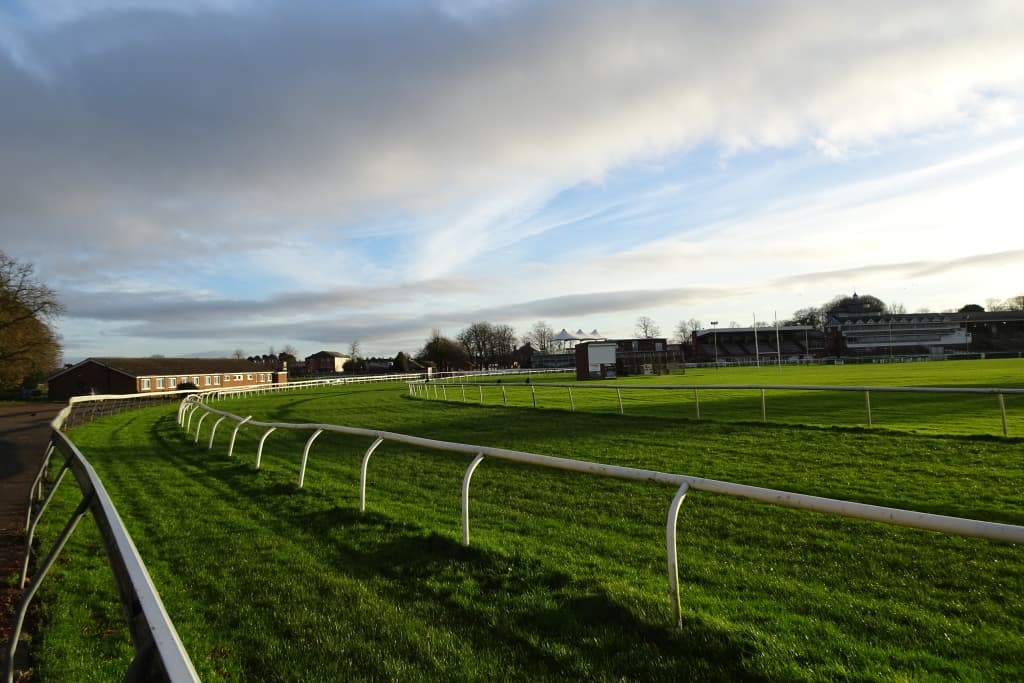
Thirsk Racecourse: Complete Guide
Everything you need to know about Thirsk Racecourse, North Yorkshire's charming flat venue, the Thirsk Hunt Cup, and over 165 years of racing.
Read more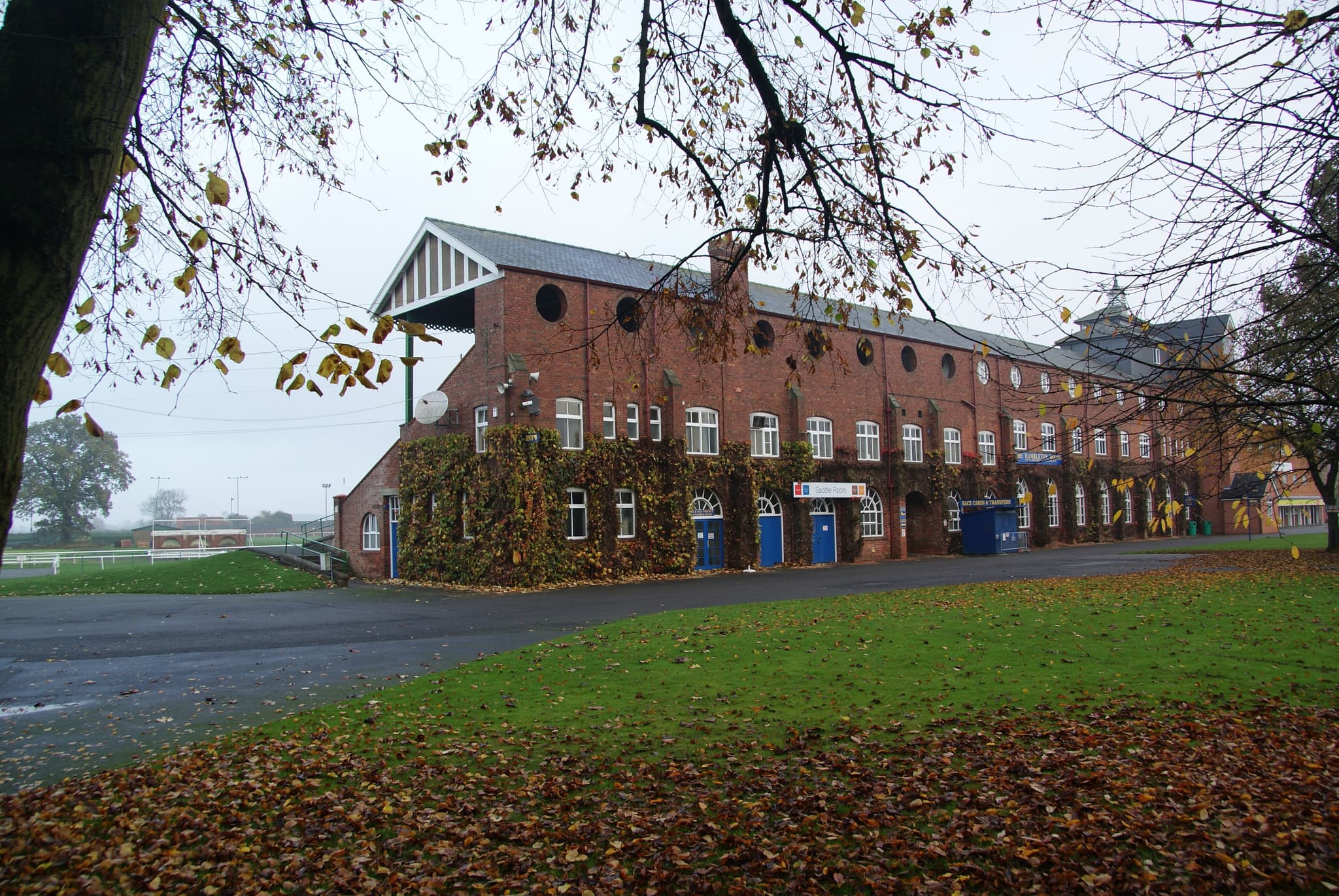
A Day Out at Thirsk Racecourse
Everything you need for a day at Thirsk — getting there, what to wear, enclosures, food and drink, and insider tips for North Yorkshire's charming flat venue.
Read more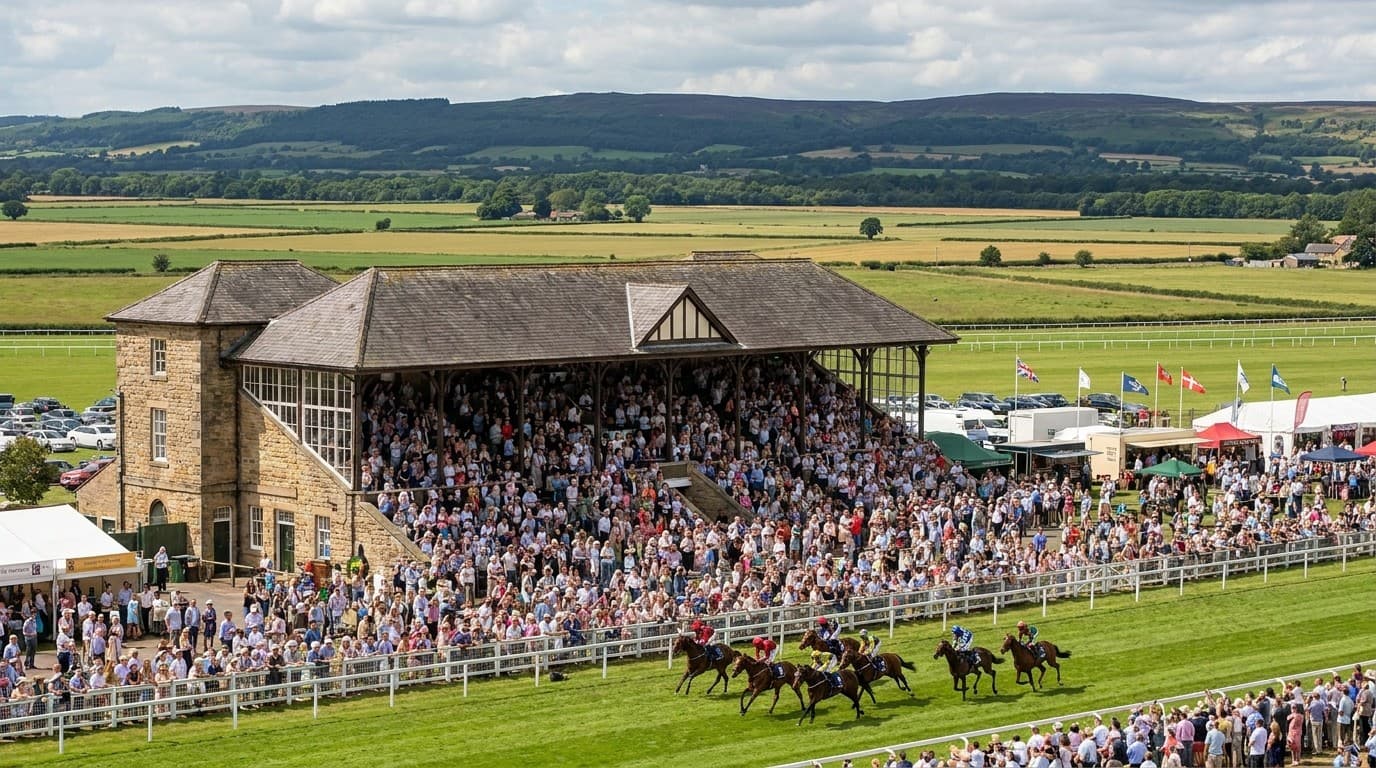
Thirsk Festival Guide
Your complete guide to Thirsk Racecourse festivals — the Classic Trial, the Hunt Cup and what makes this North Yorkshire flat track one of the region's most respected venues.
Read morePhotos on this page are used under Creative Commons licences. Titles, sources and licence links for each one are on our image credits page.
Research the field with the AI Race Predictor
Our model publishes calibrated win-probability estimates for UK races — a second opinion to understand a race, not tips. It's open about its record: it doesn't beat the market, and we show exactly how it does.
Work it out & learn the basics
Gamble Responsibly
Gambling should be entertaining and not seen as a way to make money. Never bet more than you can afford to lose. If you or someone you know has a gambling problem, help and support is available.