
Founder & Editor · Last reviewed 2026-04-04
On 5 May 2012, a Godolphin four-year-old called Farhh arrived at Thirsk for the Hunt Cup carrying top weight of 9st 7lb. He had run twice behind Frankel in previous seasons and shown flashes of talent that suggested his official mark was too low. Nobody quite knew how good he was. He was 11/8 favourite but the market held no particular certainty.
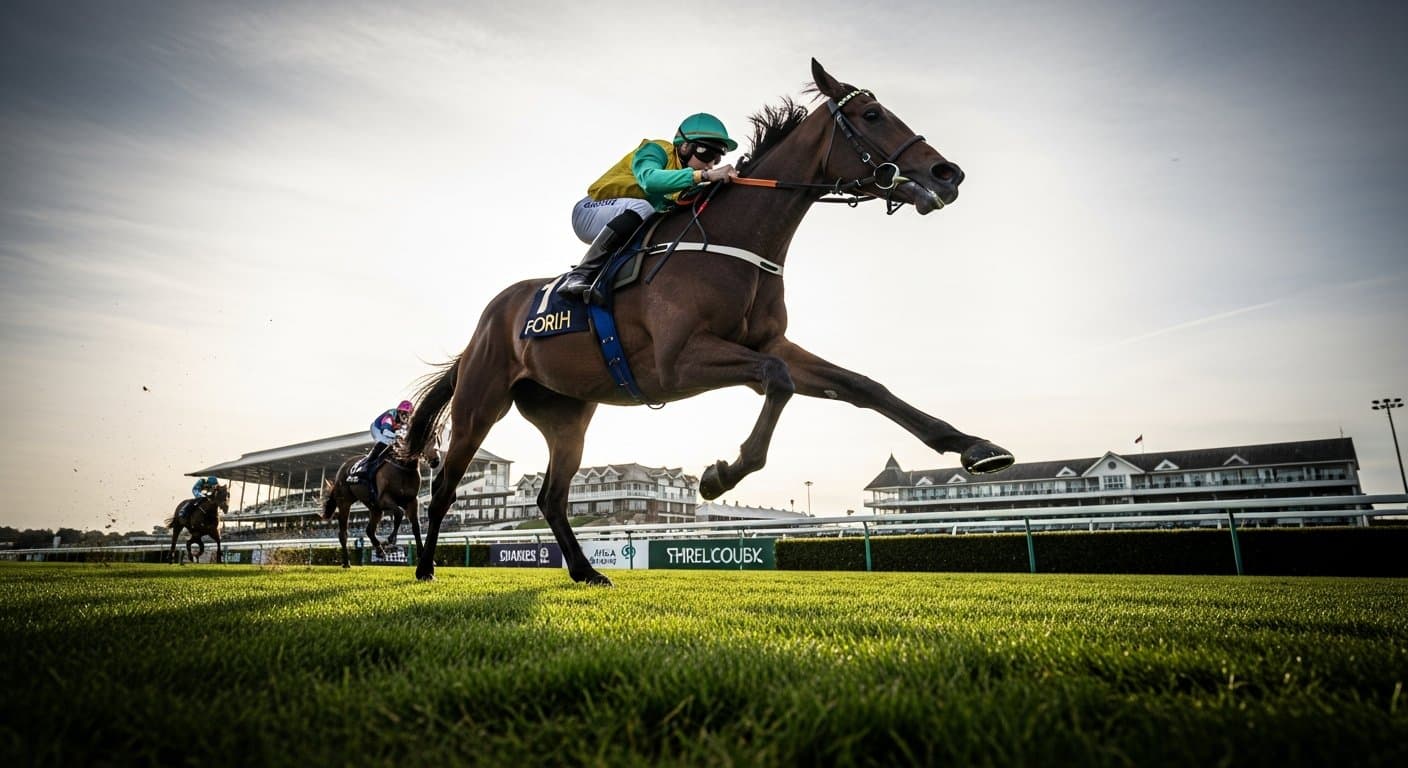
Farhh took it up two furlongs out and simply drew clear. He won by six lengths. Trained by Saeed bin Suroor and ridden by Frankie Dettori, he had won a mile handicap in a manner that made the race look the wrong grade. That afternoon at Thirsk, the watching trainers and racecourse observers saw something they would come to understand better the following season — that Farhh was operating in a different bracket from his rivals.
The following year he won the Lockinge Stakes at Newbury and the Champion Stakes at Ascot, both at Group 1 level. He retired with five wins and an official rating of 124 — the kind of figure that places a horse among the best milers of his generation. He had twice finished second to Frankel, which is to say he had run against the best horse in the world at his peak and been beaten by a horse that was simply extraordinary.
Thirsk was the day Farhh made his statement. A left-handed mile handicap in North Yorkshire, carrying top weight, winning with authority. The course's biggest race day has since given him a place in its history — a horse that used the Hunt Cup as a springboard. For the full picture of what Thirsk offers across the season, see our complete guide.
Bet on Thirsk
Place your bets on Thirsk races with a trusted bookmaker.

Promo code BETFRED50. New customers only. Register, deposit with a Debit Card, and place a first bet of £10+ at Evens (2.0)+ on Sports, to be settled within 7 days, to get £30 in Sports Free Bets and £20 in Bet Builder Free Bets within 24 hours of settlement. 7-day expiry. Eligibility & payment exclusions apply. Full T&Cs apply. Take Time to Think. BeGambleAware.org. 18+. Full T&Cs.

Promo code R30. New UK customers only, 18+. Register, deposit £10 or more, then place a £10 single cash bet at odds of 1/2 (1.5) or greater on any sports market (excluding Virtuals). Once the qualifying bet settles you get £30 in Free Bets (3 x £10) — the qualifying bet can win or lose. Free Bets are valid on any sports market excluding Virtuals, expire in 7 days, are non-withdrawable and must be used in full. Excluded deposit methods apply (including PayPal, Apple Pay, Skrill and NETELLER). Named bets such as Lucky 15 do not qualify. If you cash out the qualifying bet, or it is voided, you are no longer eligible for the offer. Ends 31.12.26. Full T&Cs apply. Please gamble responsibly. BeGambleAware.org. 18+. Full T&Cs.

Promo code BET40GET20. New UK customers, 18+. Register with the code and place a first bet of £40 or more at Evens (2.0) or greater. Receive 2 × £10 free bets: the first credited automatically once the qualifying bet settles, the second 24 hours later. Free bets must be placed at minimum odds of 4/1 (5.0), expire 24 hours after credit, and the free-bet stake is not returned with winnings. Debit card deposits only. Take Time to Think. BeGambleAware.org. 18+. T&Cs apply. Full T&Cs.

50% of your first-day net losses refunded as a free bet, capped at £25. New UK customers aged 18+ only. To qualify, deposit and place a first bet of £10 or more on any sport at minimum odds of evens (2.00), then place at least two further bets on different events, each worth at least 50% of your largest bet, all at evens (2.00) or greater. Losses are counted from your first settled bet until 23:59 the same day. Place a qualifying £10+ bet and you are guaranteed at least a £5 free bet. Bets placed at SP, void bets, cashed-out bets and bets struck with free bets do not count towards the offer. The free bet is credited the day after your qualifying bets settle and must be used within 7 days, after which it expires. It can be used at odds from 1/4 (1.25) up to 250/1 on singles and straight accumulators, but not on Trixie, Patent or Yankee style multiples. Free-bet stake is not returned with winnings. One offer per person, household, address, IP address and device. E-wallet deposits may not qualify, so check the cashier before depositing. Customers registered with GAMSTOP cannot claim. KYC identity verification must be completed before the free bet is credited. Take Time to Think. BeGambleAware.org. 18+. T&Cs apply. Full T&Cs.

New customers, 18+. Choose the sports bonus at sign-up, make a first deposit and receive a 100% bonus up to £50 in your Sports Bonus balance. To convert the bonus to cash, wager it 10x within 30 days. Single bets below Evens (2.00) do not qualify; accumulators do not qualify if any selection is below 1/2 (1.50). Virtual Sports, voided, cancelled, drawn, cashed-out and free-bet wagers do not count towards wagering. Only the first settled bet per event counts. Withdrawing before the wagering requirement is met forfeits the bonus balance including bonus winnings. Real-money funds are used before bonus funds. Deposits via Skrill or Neteller are not eligible. Not valid in conjunction with other promotions. Odds, bet and payment limits apply. 10bet general and promotion T&Cs apply. BeGambleAware.org. 18+. Full T&Cs.

New customers in Great Britain and Republic of Ireland, 18+. Place a £10 fixed-odds qualifying bet at minimum odds of 1/2 (1.50) — single or each-way (only the win part counts), pre-event or in-play, not cashed out early, within 28 days of opening the account. Receive up to £60 in bonuses credited over three days: 3 × £10 fixed-odds free bets (the first on settlement, then 24 and 48 hours later) plus 3 × £5 Total Goals FOOTBALL spread bets, 3 × £5 racing Winning Favourites spread bets and a £1 racing Race Index spread bet (the spread bets need a full spread-betting account). Free-bet stakes not returned with winnings; free bets valid 28 days from issue. IMPORTANT: the £5 credits are SPREAD bets — sports spread betting carries the risk that losses can exceed your stake. Sports spread-betting customers do not have Financial Ombudsman or FSCS recourse. Take Time to Think. BeGambleAware.org. 18+. T&Cs apply. Full T&Cs.

Promo code WELCOME15, entered under My Bonuses after registering. New UK customers, 18+. Place a first qualifying bet of at least £10 from your cash balance at odds of evens (2.0) or greater within 7 days of opening the account. Once the qualifying bet fully settles you receive £15 in free bets, credited as 3 x £5 tokens with set uses: one £5 accumulator free bet (minimum 4 legs, each leg at 2/5 or bigger), one £5 sports free bet (any market at evens or bigger) and one £5 Sub Cover free bet (selected football player markets at evens or bigger). Free-bet stakes are not returned with winnings. Free bets expire 7 days after they are credited. Void, cashed-out and partially cashed-out bets do not qualify. One offer per customer. Confirm the current terms on BetGoodwin's own welcome-offer page before claiming. Take Time to Think. BeGambleAware.org. 18+. T&Cs apply. Full T&Cs.

New UK customers, 18+. Minimum deposit £10. Place a £10 qualifying single at minimum odds of 1/2 (1.50), settled within 14 days. Receive £30 in free bets (stake not returned), split £20 for sportsbook use (2 x £10) and £10 for Bet Builder only (2 x £5); Bet Builder does not cover horse racing. Free bets must be accepted within 7 days and expire 7 days after acceptance. No promo code required. Best Odds Guaranteed on UK & Irish racing, subject to having staked over £25 in the previous seven days. Operated by LiveScore Betting and Gaming (Gibraltar) Ltd, UKGC 56859. Confirm the current terms on LiveScore Bet's own promotions page before claiming. Take Time to Think. BeGambleAware.org. 18+. T&Cs apply. Full T&Cs.
18+. BeGambleAware.org
Farhh: The Horse
Breeding and Background
Farhh was foaled on 4 March 2008, a bay gelding with no white markings bred by Darley — the bloodstock operation of Sheikh Mohammed's Godolphin organisation. His sire Pivotal was a top-class sprinter who won the King's Stand Stakes and the Nunthorpe Stakes in 1996 and became one of the leading sires of his generation, getting the winners of more than a thousand races. His dam Gonbarda was a high-class German middle-distance performer, twice winning at Group 1 level in Germany as a three-year-old in 2005. The cross — a fast sire with a staying dam — produced a horse that was effective from a mile to a mile and a quarter, with the pace to quicken and the stamina to stay honest when others were fading.
Farhh was gelded early in his career, which ruled out a future at stud but gave the horse a longer career than he might otherwise have enjoyed. Geldings running under the Godolphin banner are relatively rare; the operation is built on breeding, and the economics of a gelding are different from those of a potential stallion. That Farhh was campaigned seriously and kept in training tells you something about how the yard valued him.
Early Career
The early part of Farhh's career was disrupted by injury. He ran only once as a two-year-old in 2010 and once as a three-year-old in 2011. Those limited appearances meant that when he lined up at Thirsk in May 2012 for his first run as a four-year-old, he carried the air of a horse whose handicap mark had been set on incomplete evidence.
In 2011 he had run behind Frankel in the Greenham Stakes — Frankel's first race of his unbeaten 2011 campaign, a race that the Juddmonte champion won easily. Farhh finished third. He ran again later that season and finished second in another race behind the same horse, in a Grade-level contest. Two runs, both in the company of Frankel, both finishing in the places. The handicapper had given him a mark that reflected a horse who had run creditably without winning. It was a mark that would prove very flattering to his rivals.
Racing Style
Farhh was a smooth traveller. He did not need things done for him — he could settle behind the pace, he could be ridden forward. Dettori's partnership with him in 2012 and 2013 reflected a horse that was adaptable. At Thirsk he was dropped in behind the pace in the early stages, moved through the field at the two-furlong marker, and found an extra gear in the final furlong that the rest of the field simply could not match. It was a performance of controlled authority.
At Group 1 level in 2013 he showed the same quality. The Lockinge over a mile at Newbury came first — he won it well. Then the Champion Stakes at Ascot, over a mile and a quarter, gave him a sterner test of stamina but he saw it out. The Champion Stakes of 2013 was a race of real quality; Farhh beat his rivals with something to spare.
Career Statistics
Farhh retired with a record of five wins from ten starts, plus four seconds and a third. His earnings placed him comfortably among the top earners in the Godolphin programme of his era. His official BHA rating of 124 was the highest he achieved, reached after the Champion Stakes. Had he not twice encountered Frankel — a horse that would have beaten almost anything in any era — his win record would read even more impressively. As it was, finishing behind Frankel and ahead of the rest of the field in good company was its own kind of statement.
His most important days were Thirsk in May 2012, then Newbury and Ascot in 2013. All three performances were defined by the same quality: a horse that appeared to have more left when others had given their best.
At Thirsk
The 2012 Thirsk Hunt Cup
The Thirsk Hunt Cup on 5 May 2012 was Farhh's seasonal debut as a four-year-old. He had been off the track since October 2011. Saeed bin Suroor had chosen Thirsk rather than the early-season Group races at Newbury or Ascot, a deliberate decision that suggested the yard wanted a run into their horse before stepping him into better company.
Farhh went off as the 11/8 favourite in a field of fourteen. He was carrying top weight: 9st 7lb, the highest-weighted runner in the race by a clear margin. The betting market had made him favourite, but the field was competitive and several runners had claims on the form. Mile handicaps at Thirsk in May draw a good standard.
Dettori settled Farhh in mid-division. Through the long left-handed bend, the section of the Thirsk mile that sorts the field out before the home straight, Farhh moved through easily, switching to the outside of the field and beginning to accelerate. Two furlongs from home he hit the front. The manner in which he did so was arresting. He did not grind past his rivals; he left them behind in a single smooth surge. By the time the field straightened up for the final furlong, the race was over. Farhh crossed the line six lengths clear.
The post-race remarks from Dettori were measured but telling. The handicapper would have to reassess quickly. The next logical step was Group company. The margin of victory and the weight carried were the two numbers that caught attention: top weight, six lengths. It was not the result of an easy race.
The Thirsk Track and Why It Suited Farhh
The Thirsk mile is left-handed, running round a sweeping bend with a short home straight of approximately two furlongs. It is a test of both stamina and acceleration, the horse needs to maintain position through the bend and then find something in a relatively short run-in. It is not a track where a horse can be left miles behind and make up the ground in the straight, as a horse might at Newmarket.
Farhh's ability to settle and then produce a sustained burst suited the layout. He was not a front-runner. He needed to travel, to coast within striking distance and then find when asked. The Thirsk mile is designed, in effect, for that type. The bend does the sorting, and the short straight means only a horse that arrives into the final two furlongs with running left can win decisively. Farhh arrived with an enormous amount running left.
What the Race Told Watchers
Handicap form is an imprecise currency at the top level, but the Thirsk performance in 2012 told several things that subsequent events confirmed. First, that Farhh's handicap mark, built on a limited set of performances, including two runs against Frankel, was not a ceiling. Second, that he was physically mature and ready to step up dramatically in class. Third, that his jumping ability and engine had come through the winter in good shape.
When he reappeared at Newbury for the Lockinge Stakes in 2013 as a five-year-old, connections had spent the intervening months deciding how to place him at Group 1 level. The Hunt Cup win had been the trigger. It established that Farhh was not a horse who would spend his career in competitive handicaps. He was something better. Thirsk had shown that to anyone paying attention.
Subsequent Visit
Farhh did not return to Thirsk after his Hunt Cup victory. His career took him in the direction of the top-level races at Ascot, Newbury and Kempton. But the Hunt Cup win remains the race that explains everything that followed, the performance from which his Group 1 career is logically traced. The Thirsk Hunt Cup and the Thirsk history articles provide wider context for the course where he made his name.
Great Moments
The Hunt Cup Win Itself
The most memorable moment in Farhh's connection with Thirsk needs no embellishment. Fourteen runners, top weight, six lengths. The moment in the race that stays with those who watched it live is the two-furlong marker: Dettori's move, the horse's response, the way the field simply fell away. A six-length winning margin in a competitive mile handicap is not something you see regularly. It usually means either that something went wrong for the opposition, or that the winner was operating in a different class. In this case it was the latter.
The fact that it was Frankie Dettori in the saddle gave the afternoon a particular quality. Dettori at his best — when a horse gives him the ability to perform — is one of the great sights in British flat racing. The flying dismount after the win, the crowd response, the jockey's characteristic expression of delight: all of it belongs to the story of what Thirsk Hunt Cup Day can produce when the right horse turns up.
The Lockinge Stakes, 2013
Newbury's Lockinge Stakes in May 2013 was Farhh's next significant moment. His first run of his five-year-old season, stepping up from a handicap winner to a Group 1 race. It is a significant jump in class: the Lockinge is one of the best mile races in Europe. Farhh won it with authority. The Thirsk performance had not been a mirage — if anything, the horse had improved over the winter.
For those who had watched the Hunt Cup the previous year, the Lockinge result felt like confirmation rather than surprise. The horse that had gone six lengths clear at Thirsk in May 2012 had matured into a horse that could beat the best milers in Europe.
The Champion Stakes, 2013
The Champion Stakes at Ascot in October 2013 — run over a mile and a quarter at the QIPCO British Champions Day — was Farhh's finest hour. A race of real depth in that edition, with multiple Group 1 performers in the field, and Farhh won it comfortably enough to confirm a rating of 124. It was the natural endpoint of a career arc that had started with an injury-disrupted beginning, run through the Thirsk Hunt Cup in 2012, and arrived at Group 1 supremacy in the autumn of 2013.
The distance of the Champion Stakes — a mile and a quarter — also demonstrated that the Pivotal-Gonbarda cross had produced a horse with real range. He was not merely a one-dimensional miler. He got the extra two furlongs, and he stayed well enough to beat horses that were real middle-distance performers.
The Frankel Encounters
Any account of Farhh requires an honest treatment of his two runs behind Frankel. In 2011 he finished third in the Greenham Stakes at Newbury — the race in which Frankel was so dominant that subsequent runners in the field all had their reputations somewhat obscured. Finishing behind Frankel in that era was not a disgrace; it was simply the misfortune of a generation.
Farhh also finished second to Frankel on another occasion. That he ran twice in the shadow of perhaps the greatest horse of the modern era and on both occasions produced his best form is, in retrospect, a mark of quality rather than a blemish on his record. His 2012 and 2013 form, with Frankel retired, showed what he could do against ordinary competition. Ordinary competition, it turned out, was not in his class.
Legacy
What Farhh Means for Thirsk
Thirsk is not the kind of racecourse that regularly produces horses who go on to win at Group 1 level. It is a good northern track, well-run and popular, but the races it stages are mostly handicaps and conditions events. The Thirsk Classic Trial and the Thirsk Hunt Cup are its best flat contests, both worth entering for and competitive, but neither is a race from which a short-priced candidate is expected to step straight into Group 1 company and win.
Farhh changed that, if only for one year. The Hunt Cup of 2012 produced a horse that — as it turned out — was a dual Group 1 winner. That is a rare thing for a northern handicap to throw up. It speaks to what the Hunt Cup can do when the right horse turns up: it strips out the excuses, puts top weight on the best horse, and if the winner comes home clear, it tells you something definitive.
The Hunt Cup's Place in the Calendar
The Hunt Cup's age — it has been run since 1859 — gives it a standing that newer handicaps take decades to acquire. The race predates most of the handicaps at other northern venues. That Farhh won it in 2012 does not put him in the company of similarly unheralded horses from earlier eras who had won and gone on to bigger things, because the historical record at that level is incomplete. What it does do is confirm the Hunt Cup's status as a race that takes horses seriously.
Trainers from outside Yorkshire are now readier to enter a good four-year-old in the Hunt Cup than they might have been before 2012. The race has prize money and a prestige that reflects its age. When a horse like Farhh goes there and wins well, it encourages connections to use Thirsk in the same way — as a place to gauge a horse before the summer campaign. Our Thirsk history guide traces the course's long connection with northern flat racing.
Farhh at Stud
Farhh was retired to stand as a stallion despite having been gelded — the gelding operation early in his life was later reversed, which is possible but not common. He has stood at Newmarket and has had runners in training. His offspring have shown ability at a mile and beyond, which reflects the balance of his own racing profile. Whether a son or daughter of his eventually turns up at Thirsk and wins the Hunt Cup is a long shot, but racing's capacity for circularity means it is not impossible.
A Horse the Course Remembers
The 2012 Hunt Cup result is referenced each year when Thirsk publishes its preview material for the race. A horse that went six lengths clear carrying top weight and went on to win at Group 1 level is the ideal advertisement for what a well-run handicap can produce. Thirsk's most famous race day — see our Hunt Cup Day guide — has a better story to tell because of him.
Frequently Asked Questions
Share this article
More about this racecourse
All Thirsk guides
Betting at Thirsk Racecourse
How to bet smarter at Thirsk — track characteristics, going and draw, key trainers and jockeys, and strategies for North Yorkshire's flat venue.
Read more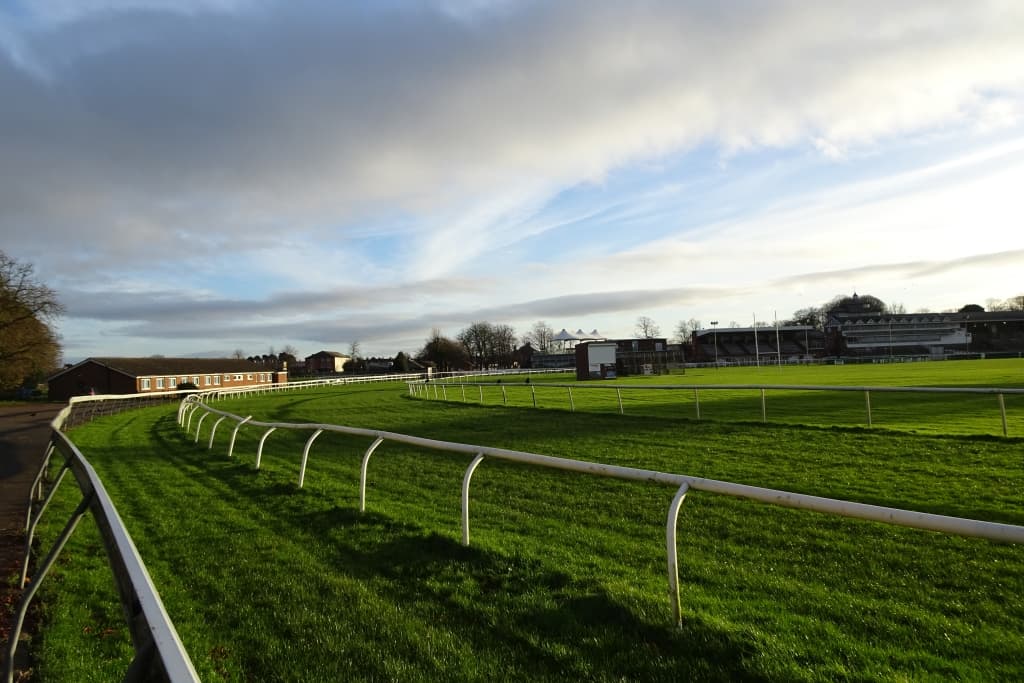
Thirsk Racecourse: Complete Guide
Everything you need to know about Thirsk Racecourse, North Yorkshire's charming flat venue, the Thirsk Hunt Cup, and over 165 years of racing.
Read more
A Day Out at Thirsk Racecourse
Everything you need for a day at Thirsk — getting there, what to wear, enclosures, food and drink, and insider tips for North Yorkshire's charming flat venue.
Read morePhotos on this page are used under Creative Commons licences. Titles, sources and licence links for each one are on our image credits page.
Research the field with the AI Race Predictor
Our model publishes calibrated win-probability estimates for UK races — a second opinion to understand a race, not tips. It's open about its record: it doesn't beat the market, and we show exactly how it does.
Work it out & learn the basics
Gamble Responsibly
Gambling should be entertaining and not seen as a way to make money. Never bet more than you can afford to lose. If you or someone you know has a gambling problem, help and support is available.