
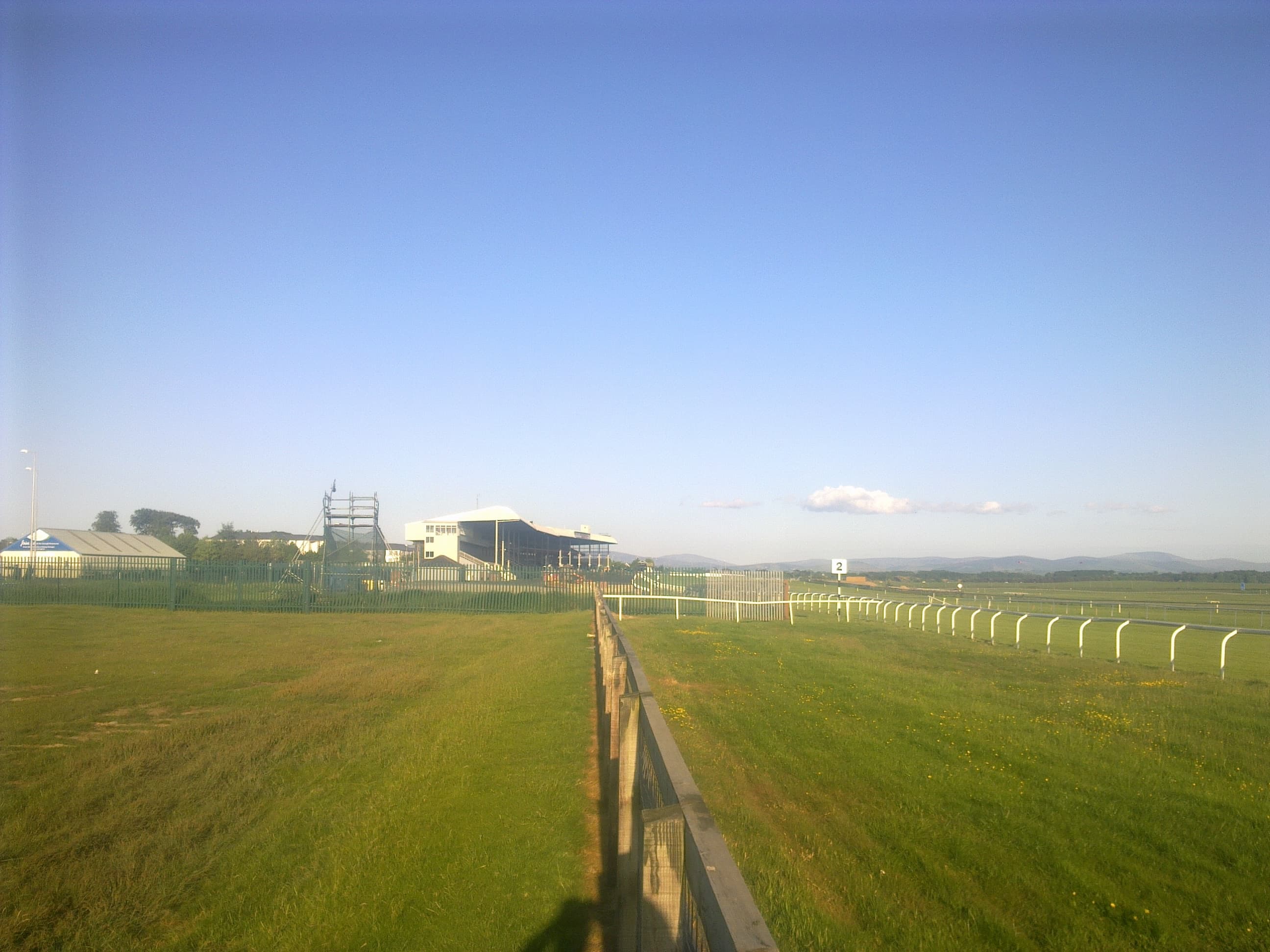
Photo credit: “The Curragh of Kildare, looking towards the Grandstand - panoramio” by Robin Pollard, Wikimedia Commons, CC BY 3.0 (resized)
Curragh Racecourse
Ireland's headquarters of Flat racing and the home of the Irish Classics.
The Curragh is the spiritual home of Irish Flat racing, set on a vast open grassland plain in Co. Kildare, close to Newbridge and Kildare town. Regarded as Ireland's headquarters for the code, it sits at the centre of the country's thoroughbred breeding and training industry and hosts all five Irish Classics: the Irish 2,000 Guineas, Irish 1,000 Guineas, Irish Derby, Irish Oaks and Irish St Leger. The track is a right-handed, broadly horseshoe-shaped galloping circuit of roughly two miles, with a one-mile straight chute and a testing uphill finish that suits genuine, top-class horses. Its signature meeting is the Irish Derby Festival, run over three days in late June or early July. A €81 million redevelopment completed in 2019 delivered a new grandstand and modernised facilities.
The track
Right-handed · TurfThe Curragh is a right-handed, horseshoe-shaped turf course, broad and galloping in character with no sharp bends, laid out over roughly two miles with a one-mile straight chute. The run-in is around three furlongs and rises slightly, giving a testing uphill finish that places a premium on stamina and a sustained, honest gallop rather than sharp acceleration. The expansive, open nature of the track suits genuine, well-balanced horses with a strong cruising speed. Draw effects vary by configuration: jockeys have noted the Derby course involves a good deal of turning where a low draw can help, while in sprints up the straight a high, stand-side draw is often favoured because a camber leaves that side drier. Racing here is Flat only, on turf.
History
Racing on the Curragh plain is ancient, with the first recorded race meeting dating to 1727, though the site's association with horses stretches back far earlier. The Irish Derby, the course's most celebrated race and the oldest of its Classics, was first run in 1866. In 1865 a parliamentary commission examined the Curragh, and the resulting Curragh of Kildare Act of 1868 settled rights of common pasture and preserved the land for horse racing and training. The modern era was defined by an €81 million redevelopment: the new Aga Khan Stand, a four-level grandstand for up to 6,000 spectators, opened on 26 May 2019, accompanied by refurbished parade rings and stable yards. It was opened by Taoiseach Leo Varadkar alongside the Aga Khan.
Big races and festivals
The Curragh's calendar is built around the Irish Classics. The Irish Guineas Festival in late May stages the Irish 2,000 Guineas and Irish 1,000 Guineas, the season's first Classics. The centrepiece is the Irish Derby Festival in late June, headlining the Group 1 Irish Derby over a mile and a half for three-year-olds, the course's oldest and best-attended race, first run in 1866 and the Irish counterpart to the Epsom Derby. July brings the Irish Oaks weekend, featuring the Group 1 Irish Oaks for three-year-old fillies. Later in the year the course stages the Irish St Leger, completing its set of five Classics. In all, the Curragh hosts around 11 Group 1 races, more than any other Irish track, making it the headquarters of Irish Flat racing.
Visiting Curragh
The Curragh lies in County Kildare on the open Curragh plain, close to the towns of Newbridge and Kildare and around 48km (about 30 miles) south-west of Dublin. By road it is reached via the M7 motorway. By rail, the nearest stations are Kildare and Newbridge on the Dublin to Cork and Limerick lines, with shuttle buses running to the racecourse on major fixtures. The €81 million redevelopment completed in 2019 transformed the spectator experience: the four-level Aga Khan Stand accommodates up to 6,000 people and overlooks refurbished parade rings, alongside restaurants and conference facilities. On big Classic days the wide plain and large grandstand combine for a spacious, high-quality raceday atmosphere.
Sources: curragh.ie, attheraces.com, en.wikipedia.org
Curragh by the numbers
486 races · 6,423 runners · 2023-10-07 to 2026-06-26The favourite
Over 486 races the market favourite won 32.3%. A level stake to starting price returned -13.0% (95% CI -25.1% to +0.1%).
Over a few hundred races that figure is within noise, as the interval crosses zero. Across all Irish racing the favourite returned -13.1% to SP (95% CI -16.1% to -10.1%); backing favourites is the least-losing simple bet, never a winning one.
Going
- Good49.6%
- Heavy11.1%
- Soft10.5%
- Soft to Heavy7.8%
- Good to Yielding6.6%
- Yielding to Soft6%
Field size
Average 13.2 runners (median 13), ranging 4 to 30.
Draw on the Flat
Win rate by draw third across Flat races with a recorded stall.
SP only (no Betfair SP for Irish racing); horses deduped by name string; fallers and pulled-up settle as losses; favourite splits joint-favourites; to Starting Price, level stakes. ROI carries a race-bootstrapped 95% CI; small per-course samples are noisy, so treat a CI that crosses zero as no signal.
Explore Curragh
In-depth guides to Curragh — the track, the racing, the history and visiting.
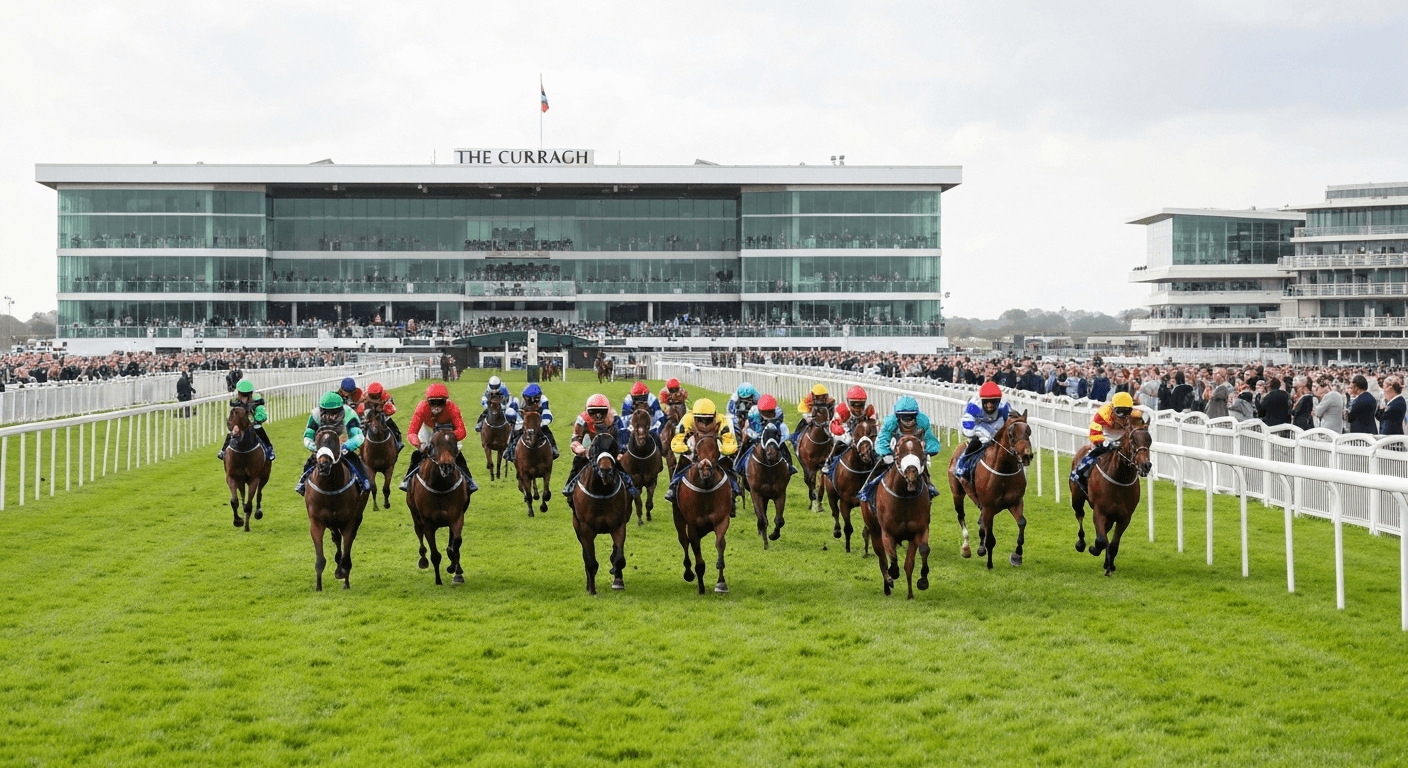
A Day at the Curragh: Visitor Guide
How to plan a day at the Curragh: getting there, the Aga Khan Stand, food and bars, the best festivals, what to wear and first-visit tips.
Read guideBetting at the Curragh: A Course Guide
How the Curragh's galloping, stamina-testing layout shapes betting, with the verified going, draw, trainer and favourite form figures, framed honestly.
Read guideThe Curragh: The Complete Guide
The home of the Irish Classics in Co. Kildare, in full: the galloping track and course map, all 11 Group 1s with their winners, the records, the festivals day by day, tickets, travel, venue hire and how to visit.
Read guide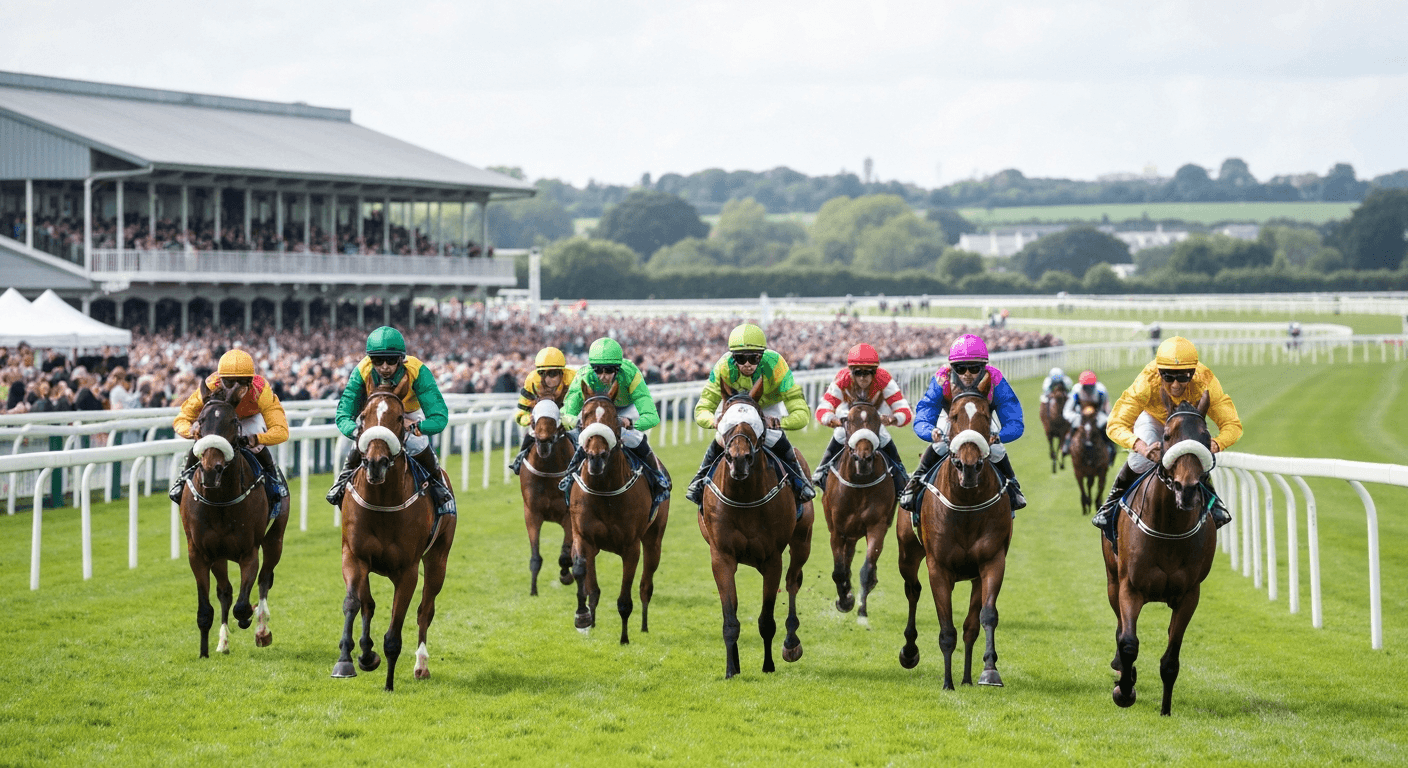
The Irish Derby Festival: A Complete Guide
A complete guide to the Dubai Duty Free Irish Derby Festival at the Curragh: dates, the Group 1 races, the atmosphere and how to get there.
Read guide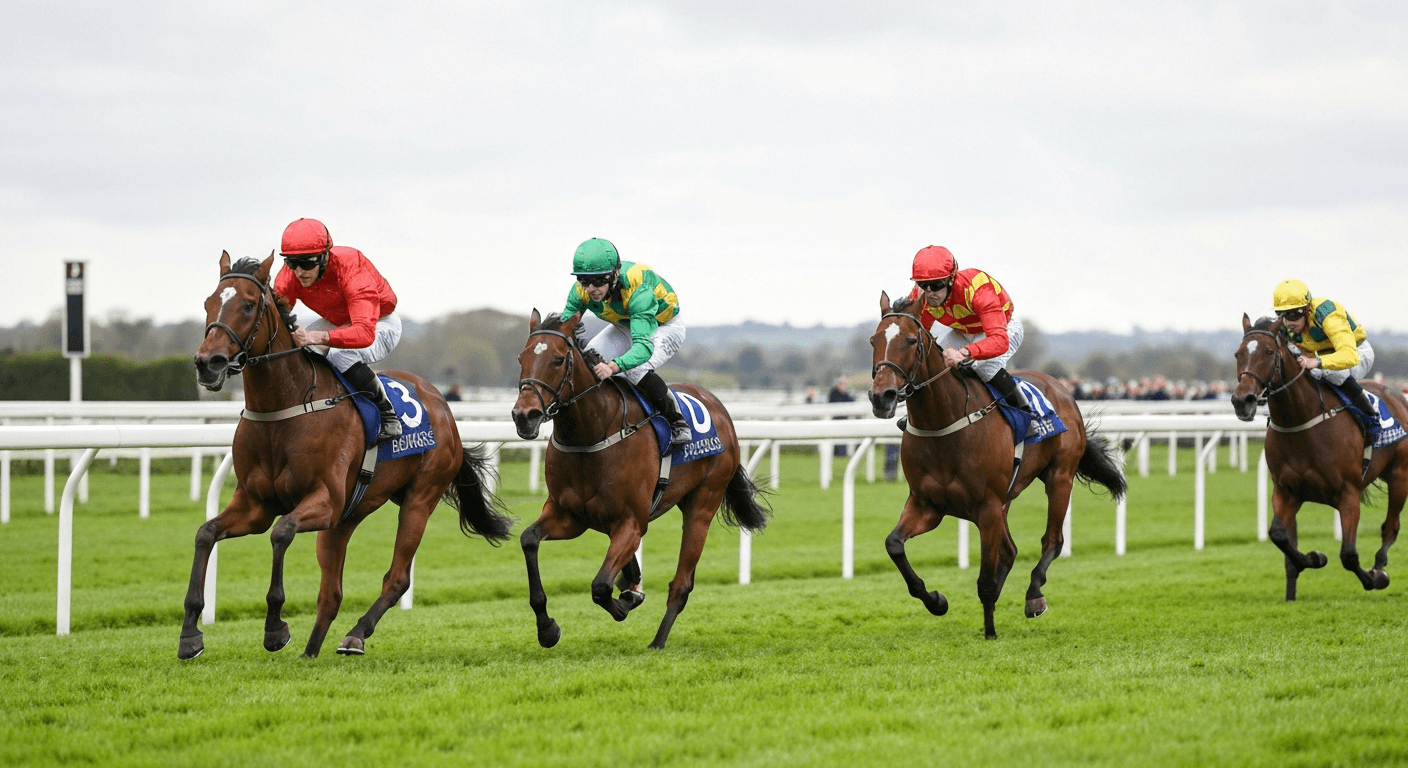
The Tattersalls Irish Guineas Festival: A Complete Guide
A complete guide to the Irish Guineas Festival at the Curragh: the Irish 2,000 and 1,000 Guineas, the Tattersalls Gold Cup, dates and how to go.
Read guide
The History of the Curragh
Racing on the Curragh plain from 1727, the Irish Derby from 1866, the Curragh of Kildare Act 1868, the Classics, the great horses and the 2019 redevelopment.
Read guidePhoto: Florian Christoph, CC BY 2.0The Irish Derby: Race Guide
A full guide to the Irish Derby at the Curragh: the Group 1, its history from 1866, its great winners and its place in the Classic season.
Read guideLatest news tagged “Curragh”
Race previews, results and analysis from our Racing News feed that mention Curragh.
Irish Champions Festival 2026 Results: Winners and SPs
race result2026-09-12Irish Champions Festival 2026 Tips: Leopardstown and the Curragh
race preview2026-09-12
Two St Legers in Two Days: Doncaster and the Curragh
festival bridge2026-09-12Irish Derby Festival 2027: Race Times, TV Coverage & Raceday Guide
race times evergreen2026-08-19
Irish Derby Festival 2026 Results: Benvenuto Cellini Wins, O'Brien's Record 18th
festival review2026-08-19Irish Derby 2026 Preview: The Double Derby Bid at the Curragh
race preview2026-06-29
Research the field with the AI Race Predictor
Our model publishes calibrated win-probability estimates for UK races — a second opinion to understand a race, not tips. It's open about its record: it doesn't beat the market, and we show exactly how it does.
Gamble Responsibly
Gambling should be entertaining and not seen as a way to make money. Never bet more than you can afford to lose. If you or someone you know has a gambling problem, help and support is available.
Related Irish Racecourses
Photos on this page are used under Creative Commons licences. Titles, sources and licence links for each one are on our image credits page.