
Founder & Editor · Last reviewed 2026-07-03
Introduction
The Curragh is the headquarters of Irish Flat racing, and no other course in Ireland comes close to its concentration of top-class action. Set on the ancient grassland plain of Co. Kildare, roughly 50km south-west of Dublin off the M7, it stages all five Irish Classics and eleven Group 1 races in all, the most of any Irish track, across roughly 23 to 24 race days between March and November. The name comes from the Irish Cuirreach, meaning "place of the running horse", and the first recorded race here was run in 1727, though the plain was used for the sport long before anyone wrote it down.
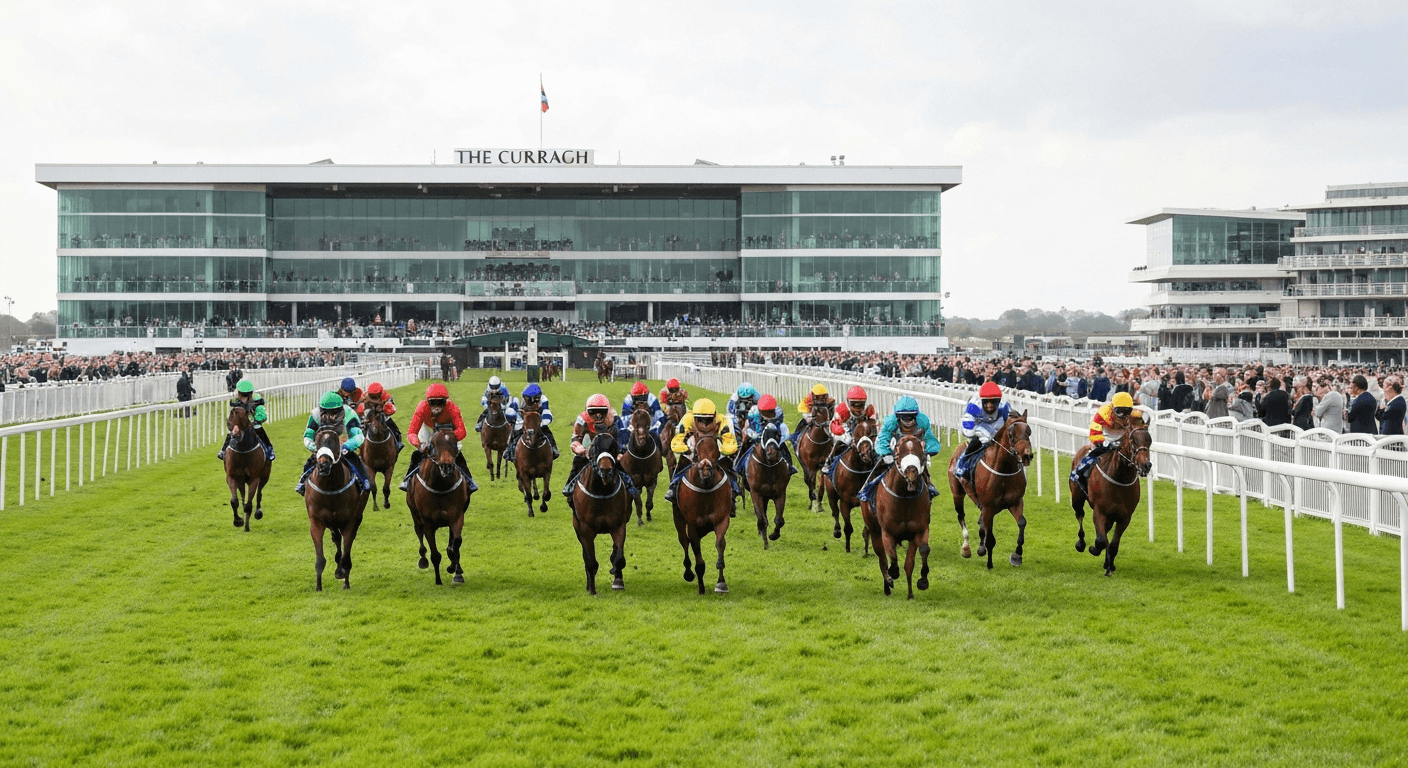
Aidan O'Brien has called it "the best and fairest racecourse in the world", and the biggest days of the Irish Flat season all happen here: the Dubai Duty Free Irish Derby festival at the end of June, the Tattersalls Guineas weekend in May, the Juddmonte Irish Oaks in July and the Curragh's four-Group 1 day of the Irish Champions Festival in September. Since 2019 those days have played out in front of the Aga Khan Stand, the centrepiece of an 81.5 million euro redevelopment that turned the old course into one of Europe's most modern racing venues, and a genuine conference and events destination besides.
This guide covers everything: how the track rides, the layout on the ground, every one of the eleven Group 1 races with their winners, the record book, the history from 1727 to the rebuild, the festivals day by day, form and betting context, and all the practical detail of getting there, tickets and enclosures, food and drink, what to wear, venue hire, accessibility and where to stay. For deeper dives, the Curragh hub also carries a dedicated history of the Curragh, a day out guide, a betting guide and a full Irish Derby festival guide.
In this guide:
Bet on The Curragh
Place your bets on The Curragh races with a trusted bookmaker.

Promo code BETFRED50. New customers only. Register, deposit with a Debit Card, and place a first bet of £10+ at Evens (2.0)+ on Sports, to be settled within 7 days, to get £30 in Sports Free Bets and £20 in Bet Builder Free Bets within 24 hours of settlement. 7-day expiry. Eligibility & payment exclusions apply. Full T&Cs apply. Take Time to Think. BeGambleAware.org. 18+. Full T&Cs.

Promo code R30. New UK customers only, 18+. Register, deposit £10 or more, then place a £10 single cash bet at odds of 1/2 (1.5) or greater on any sports market (excluding Virtuals). Once the qualifying bet settles you get £30 in Free Bets (3 x £10) — the qualifying bet can win or lose. Free Bets are valid on any sports market excluding Virtuals, expire in 7 days, are non-withdrawable and must be used in full. Excluded deposit methods apply (including PayPal, Apple Pay, Skrill and NETELLER). Named bets such as Lucky 15 do not qualify. If you cash out the qualifying bet, or it is voided, you are no longer eligible for the offer. Ends 31.12.26. Full T&Cs apply. Please gamble responsibly. BeGambleAware.org. 18+. Full T&Cs.

Promo code BET40GET20. New UK customers, 18+. Register with the code and place a first bet of £40 or more at Evens (2.0) or greater. Receive 2 × £10 free bets: the first credited automatically once the qualifying bet settles, the second 24 hours later. Free bets must be placed at minimum odds of 4/1 (5.0), expire 24 hours after credit, and the free-bet stake is not returned with winnings. Debit card deposits only. Take Time to Think. BeGambleAware.org. 18+. T&Cs apply. Full T&Cs.

50% of your first-day net losses refunded as a free bet, capped at £25. New UK customers aged 18+ only. To qualify, deposit and place a first bet of £10 or more on any sport at minimum odds of evens (2.00), then place at least two further bets on different events, each worth at least 50% of your largest bet, all at evens (2.00) or greater. Losses are counted from your first settled bet until 23:59 the same day. Place a qualifying £10+ bet and you are guaranteed at least a £5 free bet. Bets placed at SP, void bets, cashed-out bets and bets struck with free bets do not count towards the offer. The free bet is credited the day after your qualifying bets settle and must be used within 7 days, after which it expires. It can be used at odds from 1/4 (1.25) up to 250/1 on singles and straight accumulators, but not on Trixie, Patent or Yankee style multiples. Free-bet stake is not returned with winnings. One offer per person, household, address, IP address and device. E-wallet deposits may not qualify, so check the cashier before depositing. Customers registered with GAMSTOP cannot claim. KYC identity verification must be completed before the free bet is credited. Take Time to Think. BeGambleAware.org. 18+. T&Cs apply. Full T&Cs.

New customers, 18+. Choose the sports bonus at sign-up, make a first deposit and receive a 100% bonus up to £50 in your Sports Bonus balance. To convert the bonus to cash, wager it 10x within 30 days. Single bets below Evens (2.00) do not qualify; accumulators do not qualify if any selection is below 1/2 (1.50). Virtual Sports, voided, cancelled, drawn, cashed-out and free-bet wagers do not count towards wagering. Only the first settled bet per event counts. Withdrawing before the wagering requirement is met forfeits the bonus balance including bonus winnings. Real-money funds are used before bonus funds. Deposits via Skrill or Neteller are not eligible. Not valid in conjunction with other promotions. Odds, bet and payment limits apply. 10bet general and promotion T&Cs apply. BeGambleAware.org. 18+. Full T&Cs.

New customers in Great Britain and Republic of Ireland, 18+. Place a £10 fixed-odds qualifying bet at minimum odds of 1/2 (1.50) — single or each-way (only the win part counts), pre-event or in-play, not cashed out early, within 28 days of opening the account. Receive up to £60 in bonuses credited over three days: 3 × £10 fixed-odds free bets (the first on settlement, then 24 and 48 hours later) plus 3 × £5 Total Goals FOOTBALL spread bets, 3 × £5 racing Winning Favourites spread bets and a £1 racing Race Index spread bet (the spread bets need a full spread-betting account). Free-bet stakes not returned with winnings; free bets valid 28 days from issue. IMPORTANT: the £5 credits are SPREAD bets — sports spread betting carries the risk that losses can exceed your stake. Sports spread-betting customers do not have Financial Ombudsman or FSCS recourse. Take Time to Think. BeGambleAware.org. 18+. T&Cs apply. Full T&Cs.

Promo code WELCOME15, entered under My Bonuses after registering. New UK customers, 18+. Place a first qualifying bet of at least £10 from your cash balance at odds of evens (2.0) or greater within 7 days of opening the account. Once the qualifying bet fully settles you receive £15 in free bets, credited as 3 x £5 tokens with set uses: one £5 accumulator free bet (minimum 4 legs, each leg at 2/5 or bigger), one £5 sports free bet (any market at evens or bigger) and one £5 Sub Cover free bet (selected football player markets at evens or bigger). Free-bet stakes are not returned with winnings. Free bets expire 7 days after they are credited. Void, cashed-out and partially cashed-out bets do not qualify. One offer per customer. Confirm the current terms on BetGoodwin's own welcome-offer page before claiming. Take Time to Think. BeGambleAware.org. 18+. T&Cs apply. Full T&Cs.

New UK customers, 18+. Minimum deposit £10. Place a £10 qualifying single at minimum odds of 1/2 (1.50), settled within 14 days. Receive £30 in free bets (stake not returned), split £20 for sportsbook use (2 x £10) and £10 for Bet Builder only (2 x £5); Bet Builder does not cover horse racing. Free bets must be accepted within 7 days and expire 7 days after acceptance. No promo code required. Best Odds Guaranteed on UK & Irish racing, subject to having staked over £25 in the previous seven days. Operated by LiveScore Betting and Gaming (Gibraltar) Ltd, UKGC 56859. Confirm the current terms on LiveScore Bet's own promotions page before claiming. Take Time to Think. BeGambleAware.org. 18+. T&Cs apply. Full T&Cs.
18+. BeGambleAware.org
The Track
The track
The Curragh is a right-handed turf course, and everything about it is built on scale. The full round circuit is about two miles, a wide, galloping horseshoe with no sharp bends, finishing up a straight run-in of around three furlongs that climbs slightly all the way to the line. That stiff, uphill finish is the track's signature: it puts a premium on stamina and genuine class, and it is why the Curragh is universally described as one of the fairest tests in the sport. Flat racing only is staged here, all of it on turf; there are no jumps and no all-weather racing surface, though the training grounds on the plain include peat and all-weather gallops such as the Old Vic woodchip and the Free Eagle sand-and-fibre gallops.
Within the round course sit two configurations that share the same winning post and run-in. The Derby Course is the inner track, with sharper turns from the one mile six furlong and one mile four furlong starts; the Plate Course runs outside it and is more forgiving, with no sharp bends at all. A former inner circular course is no longer used for racing and has effectively been replaced by training gallops. Sprints are run on the straight course, a straight six furlongs that extends to a full straight mile with a slight dog-leg, which is where the five furlong, six furlong and seven furlong contests and the straight-mile races are decided.
The marquee middle-distance races, the Irish Derby and Irish Oaks among them, are run on the round course; the Guineas are run over the round mile; the sprints use the straight track. In practice that maps the whole programme onto the two surfaces: the five-furlong Flying Five, the six-furlong Phoenix Stakes and the seven-furlong Moyglare and National Stakes are all decided on the straight course, the mile Classics on the round mile, the Tattersalls Gold Cup and Pretty Polly over the round ten furlongs, the Derby and Oaks over the round mile and a half, and the St Leger out at a mile and six. Because the two courses can be watered and can drain differently, the Curragh frequently reports separate going for the straight and round courses on big days, and the exposed plain can ride anything from good to firm in high summer to soft or heavy after spring or autumn rain.
What does the finish actually do to a race? The final three furlongs climb gently but relentlessly, so a horse that hits the front too soon can idle or empty in the last hundred yards, and a strongly-run race hands the prize to whatever stays best. It is why the course has such a reputation for finding out the genuinely top-class two-year-old on debut, and why so many of Ireland's champions were introduced here: an honest track gives an honest answer.
| Track feature | Detail |
|---|---|
| Handedness | Right-handed |
| Round circuit | About 2 miles, horseshoe, no sharp bends |
| Configurations | Derby Course (inner), Plate Course (outer), straight course |
| Straight course | Straight 6f, extending to a straight mile with a slight dog-leg |
| Run-in | About 3 furlongs, slightly uphill and stiff |
| Codes and surface | Flat only, turf only |
| Season | Late March to late October/November |
On the draw and pace, the honest summary is that the round courses are fair, the inner Derby track has more turning and can favour a low draw, and on the straight course a high draw can be marginally preferable when the field races against the stand side, because a slight camber leaves the stand-side strip a touch drier. Most analysts stress that pace and position count for more than the stall number, a theme picked up in detail in the form and betting section below and in the dedicated Curragh betting guide.
The Course Map
The course map: where everything is
Arriving at the Curragh is simple to picture. The redeveloped grandstand, the Aga Khan Stand, sits on the home straight overlooking the winning line, and almost everything a racegoer needs is grouped around it. The main free car parks are directly opposite the reception and main entrance, so the walk in brings you past the statues that double as the course's landmarks: Vintage Crop and Nijinsky stand outside, before the turnstiles, and once inside a statue of Lester Piggott faces the racetrack itself.
Through the entrance, Champions Hall is the large ground-floor public hall of the stand, with the Atrium Café in its corner and the Guineas Bar on the same floor. The parade ring and pre-parade ring sit with the weigh-room and winner's enclosure in a cluster around the stand and the reception area, so the pre-race rhythm of a Curragh day, saddling, parading, mounting and the walk to the track, all happens within a couple of minutes' stroll. The Queen's Room, with its public café, overlooks the pre-parade and parade rings on the bottom floor, next to the Moyglare Kids Zone.
Vertically, the Aga Khan Stand runs to four levels. General admission covers the ground floor and the lawns in front of the stand, with the Tattersalls Champagne Bar on the terrace above the lawn to the right of the entrance, overlooking the parade ring. Higher up sit the premium spaces: the Lilywhites Lounge with its views over the racecourse, the panoramic St Leger restaurant, the Galileo Suite on the premier level, and at the very top the Winning Line Lounge, whose dedicated balcony looks straight down on the finish.
For picking a viewing spot, the practical logic is straightforward. The lawns and the stand's public levels give the classic head-on view of that long uphill run to the line; the parade-ring side of the ground floor is best for seeing the horses up close before and after each race; and the higher you go in the stand, the more of the two-mile horseshoe opens up in front of you. On quieter fixtures you can move freely and try all of them in an afternoon, which is one of the pleasures of a course built with this much room.
The Races
The races
The Curragh's programme is the deepest in Irish Flat racing: eleven Group 1 races, thirteen Group 2s, eighteen Group 3s and seven Listed races, with all five Irish Classics run here. No other Irish course stages more than a fraction of that.
| Group 1 | Distance | For | When |
|---|---|---|---|
| Irish 2,000 Guineas | 1m | 3yo colts and fillies | May |
| Irish 1,000 Guineas | 1m | 3yo fillies | May |
| Tattersalls Gold Cup | 1m2½f | 4yo+ | May |
| Irish Derby | 1m4f | 3yo colts and fillies | Late June |
| Pretty Polly Stakes | 1m2f | Fillies and mares 3yo+ | Late June |
| Irish Oaks | 1m4f | 3yo fillies | July |
| Phoenix Stakes | 6f | 2yo | August |
| Moyglare Stud Stakes | 7f | 2yo fillies | September |
| Vincent O'Brien National Stakes | 7f | 2yo | September |
| Flying Five Stakes | 5f | 3yo+ | September |
| Irish St Leger | 1m6f | 3yo+ | September |
The Dubai Duty Free Irish Derby is the flagship: a mile and a half for three-year-olds, first run in 1866, worth around 1.25 million euro in recent years and the richest race of the Irish season. Its roll of honour is a history of the breed, from Orby in 1907, the first Epsom Derby winner to complete the double, through Ballymoss, Santa Claus, Nijinsky, The Minstrel, Troy and Shergar, to Salsabil, St Jovite, Montjeu, Sinndar, Galileo, High Chaparral, Camelot and Australia. The modern race belongs to Ballydoyle: Aidan O'Brien has a record eighteen wins, including the last four in a row, all ridden by Ryan Moore, with Auguste Rodin (2023), Los Angeles (2024), Lambourn (2025) and Benvenuto Cellini (2026), the last of those a one-two-three for the yard. The full story of the race has its own guide.
| Year | Irish Derby winner | Trainer | Jockey |
|---|---|---|---|
| 2026 | Benvenuto Cellini | Aidan O'Brien | Ryan Moore |
| 2025 | Lambourn | Aidan O'Brien | Ryan Moore |
| 2024 | Los Angeles | Aidan O'Brien | Ryan Moore |
| 2023 | Auguste Rodin | Aidan O'Brien | Ryan Moore |
| 2022 | Westover | Ralph Beckett | Colin Keane |
| 2021 | Hurricane Lane | Charlie Appleby | William Buick |
| 2020 | Santiago | Aidan O'Brien | Seamie Heffernan |
| 2019 | Sovereign (33/1) | Aidan O'Brien | Padraig Beggy |
| 2018 | Latrobe | Joseph O'Brien | Donnacha O'Brien |
| 2017 | Capri | Aidan O'Brien | Seamie Heffernan |
| 2016 | Harzand | Dermot Weld | (Aga Khan-owned) |
The Classics around it each carry their own history. The Irish Oaks, first run in 1895 and a mile and a half for fillies since 1915, has fallen to Dahlia, Blue Wind, User Friendly, Ouija Board, Alexandrova, Enable, Snowfall (by eight and a half lengths in 2021) and, in 2025, the unbeaten Minnie Hauk, the sixteenth filly to complete the Epsom double; Sir Michael Stoute's six wins remain the trainer benchmark and Johnny Murtagh's six the jockey mark. The Irish 2,000 Guineas (first run 1921) has been won by Sadler's Wells, Rock of Gibraltar, Kingman, Churchill and Paddington; the Irish 1,000 Guineas (1922) by Sonic Lady, Ridgewood Pearl, Alpha Centauri, Tahiyra and, in 2026, Precise. The Irish St Leger, open to older horses since 1983 and unique among the world's St Legers for it, is the stayers' championship: Vintage Crop, Oscar Schindler and Kayf Tara all won it twice, Kyprios won it in 2022 and 2024, and Vinnie Roe's four straight wins from 2001 to 2004 remain the modern benchmark.
The six other Group 1s complete the set. The Tattersalls Gold Cup, established in 1962 as the Ballymoss Stakes and a Group 1 since 1999, brings the older middle-distance stars to the Guineas weekend; Magical won it twice, and Los Angeles took the 2025 running in 2:08.41, the fastest of the last twenty renewals. The Pretty Polly is the Derby festival's fillies' highlight, won recently by Bluestocking (2024) before her Arc. The Phoenix Stakes, first run in 1902 and traditionally Europe's first juvenile Group 1 of the year, has launched Johannesburg, George Washington, Air Force Blue and Little Big Bear; Aidan O'Brien has seventeen wins in it. September's Champions Festival card stacks four Group 1s in one afternoon: the Moyglare Stud Stakes (Minding's first major win came here in 2015), the Vincent O'Brien National Stakes, a pointer to future champions won by Sir Ivor, Sinndar, Dubawi, George Washington, Teofilo, New Approach and Pinatubo, the Flying Five, the first Irish Group 1 sprint open to older horses since its 2018 upgrade, and the St Leger itself.
Beneath the top tier, the Group 2 programme includes the Railway Stakes and Airlie Stud Stakes for juveniles at the Derby festival, the Greenlands and Lanwades Stud Stakes on Guineas weekend, the Curragh Cup for stayers on Oaks weekend, the Beresford Stakes (won by Sea The Stars in 2008), the Futurity for two-year-olds, and the Minstrel, Sapphire and Blandford Stakes through the summer. The Group 3 and Listed roster runs from the Park Express and Gladness Stakes in the spring, through the Tetrarch, Athasi, Marble Hill and Gallinule around the Guineas, to the Anglesey in July and the Round Tower and Alleged Stakes in the autumn, with Derby day itself carrying the Group 3 International Stakes and Listed sprints alongside the Classic. Grades shift year to year at the margins, but the shape is constant: from March to November, hardly a meeting here passes without black-type racing, which is why a "quiet" Curragh Saturday would headline the season at most tracks.
Records and Stats
Records and stats
The Curragh's record book starts with one extraordinary afternoon in 1992. St Jovite's Budweiser Irish Derby, ridden by Christy Roche for Jim Bolger, was timed at 2 minutes 25.60 seconds, a course record for the mile and a half that knocked three full seconds off the race's previous best and still stands as by far the fastest time in the Irish Derby's history. The same performance set the race's record winning margin: twelve lengths back to the Epsom Derby winner Dr Devious, equalling Portmarnock's twelve-length margin from 1895. The second-fastest Irish Derby remains Galileo's 2:27.10 in 2001.
| Record | Holder | Detail |
|---|---|---|
| Fastest Irish Derby (1m4f) | St Jovite, 1992 | 2:25.60, course record |
| Second-fastest Irish Derby | Galileo, 2001 | 2:27.10 |
| Irish Derby winning margin | St Jovite, 1992 | 12 lengths (equalling Portmarnock, 1895) |
| Fastest modern Irish Oaks | Shawanda, 2005 | 2:27.10, won by 5 lengths |
| Fastest Tattersalls Gold Cup (last 20 renewals) | Los Angeles, 2025 | 2:08.41 |
| Most Irish Derby wins, trainer | Aidan O'Brien | 18 (first Desert King 1997; four in a row 2023-2026) |
| Most Irish Derby wins, jockey | Morny Wing | 6 |
| Most Irish St Leger wins, horse | Vinnie Roe | 4 in a row, 2001-2004 |
| Record festival crowd | Irish Derby festival, 2005 | 47,000 |
The training and riding records tell one long story of concentration at the top. Aidan O'Brien is the leading trainer in the course's history with 609 wins from 3,262 runners, a strike rate of about 19 per cent, and holds the record in most of the Curragh's Group 1s: eighteen Irish Derbies, seventeen Phoenix Stakes, and around a dozen wins in each Guineas. Vincent O'Brien and Dermot Weld each won the Irish St Leger nine times, and Sir Michael Stoute's six Irish Oaks remain that race's training benchmark. Among the jockeys, Johnny Murtagh's 330 Curragh wins edge Mick Kinane's 327, with Kevin Manning on 256 and Pat Smullen on 238; the historic benchmarks belong to Morny Wing, with six Irish Derbies, seven Irish St Legers and seven Irish 1,000 Guineas. In the ownership column, Sue Magnier's nineteen Phoenix Stakes (part-owned) and the Coolmore partners' roughly eighteen Irish Derbies define the modern era.
The cross-channel doubles are their own category of record. Sixteen fillies have completed the Epsom and Irish Oaks double, most recently the unbeaten Minnie Hauk in 2025; nine horses have done the English and Irish 2,000 Guineas double, most recently Churchill in 2017; and four fillies have paired the two 1,000 Guineas, Attraction (2004), Finsceal Beo (2007), Winter (2017) and Hermosa (2019).
Two honest caveats belong in any Curragh record section. First, the course does not publish a single authoritative table of standard times for every distance, so beyond the documented race records above, distance-by-distance "course records" quoted elsewhere should be treated with care. Second, the attendance records mix eras: the 47,000 festival crowd of 2005 belongs to the old grandstand's heyday, while the biggest single days since the 2019 rebuild have drawn around 11,000 to 12,000 for the Derby, a gap discussed honestly in the capacity section below.
History
History
Racing on the Curragh is older than the record of it. The plain is one of Europe's oldest grasslands, reputedly used for chariot racing in ancient times, and its Irish name, Cuirreach, place of the running horse, says what it has always been for. The first recorded race was run in 1727, and the early contests were gruelling affairs, match races over four-mile staying trips that would be unrecognisable to a modern Flat racegoer.
The modern era began in 1866, when the 3rd Earl of Howth, the 3rd Marquess of Drogheda and the 3rd Earl of Charlemont founded the Irish Derby, after two earlier attempts at a defining race, the O'Darby Stakes of 1817 to 1824 and the Curragh Derby from 1848, had come and gone. Two years later the plain got its legal footing: the Curragh of Kildare Act 1868 (31 & 32 Vict. c. 60), following a Treasury commission, settled the competing uses of the common, preserved the Curragh for horse racing and training, regulated the ancient pasture rights and created the honorary office of Ranger to manage the plain. A confirmatory Act of 1870 validated the commission's award, restricted grazing largely to sheep, whose descendants still graze the common today, and barred enclosure and development across the roughly 4,870-acre plain. Ownership passed from the Crown to the Irish Free State after 1922, and the Curragh of Kildare Act 1961 later repealed the Victorian framework and transferred duties to the Department of Defence. Few sporting venues anywhere owe their survival so directly to statute.
The race that statute protected became international in 1962, when Joe McGrath, a founder of the Irish Hospitals' Sweepstake, combined the Derby with the sweepstake and multiplied its prize money. The Irish Sweeps Derby drew Epsom winners across the Irish Sea and set the template for the modern race; sponsorship passed to Budweiser from 1986 to 2007 and to Dubai Duty Free from 2008.
For over two hundred years the Turf Club ran the course. That changed in October 2015, when "A Vision for a New Curragh" created Curragh Racecourse Limited, operational from 1 January 2016 and chaired by Pádraig McManus, with Horse Racing Ireland, the Turf Club and a group of private investors each holding a third of the voting shares. The Aga Khan, whose public call for "a dramatic new grand plan" had started the conversation years earlier, had already bought the neighbouring Stand House Hotel for a reported 15 million euro and given it to the Turf Club. Construction began in 2017, racing continuing on a truncated fixture list, and the budget did what big projects do: from around 65 million euro to a contracted 72.3 million and a final cost of 81.5 million, confirmed in a Dáil answer of July 2019, with HRI providing 36.5 million and the private investors around 40.3 million. The new grandstand was named the Aga Khan Stand, and Taoiseach Leo Varadkar and the Aga Khan opened it on 26 May 2019, complete with an Air Corps fly-past.
The Grand Opening weekend drew 15,549, but the arrival was not smooth. The stand's perforated roof whistled in certain winds, an acknowledged snag; the parade ring proved too small for big fields and was enlarged at a cost of around half a million euro; critics described an "Upstairs Downstairs" divide between members above and the public below; and chief executive Derek McGrath departed in contentious circumstances in 2019, citing a failure to "integrate behind a shared vision". The pandemic then stalled the relaunch, though the course returned to profit in 2020. Brian Kavanagh, taking over as chief executive in 2021, put the task plainly: the Curragh "needs to reconnect with its audience" and "has to be a place that people enjoy". The full story, from the ancient plain to the rebuild, is told in the dedicated history of the Curragh.
The Legends
The legends
The Curragh's roll of legends needs careful handling, because the plain's history is full of champions whose most famous days came elsewhere and are often misattributed to it. What follows sticks to what each horse actually did here.
The Derby winners come first, and the line starts with Orby, who in 1907 became the first Epsom Derby winner to complete the double here. Nijinsky won the 1970 Irish Derby in the season of his English Triple Crown, and is commemorated by a statue at the course. Shergar, the Aga Khan's champion, added the 1981 Irish Derby under Lester Piggott in the middle of his extraordinary season, two years before his kidnapping passed into racing legend. Santa Claus won the 1964 Irish Derby, having taken the 1963 National Stakes here as a juvenile, the second horse to complete the Epsom and Irish Derby double after the race's 1962 elevation. El Gran Senor won the 1983 National Stakes and the 1984 Irish Derby for Vincent O'Brien. Galileo took the 2001 Irish Derby in 2:27.10, still the race's second-fastest time, before becoming the most influential sire of the century, and Sinndar won the 1999 National Stakes and the 2000 Irish Derby for John Oxx and the Aga Khan on his way to becoming the first horse to win the Epsom Derby, Irish Derby and Arc in the same season.
The fillies' Classics have their own immortals in the Derby roll too: Salsabil's 1990 Irish Derby made her the rare filly to beat the colts in the race, a feat attempted since only occasionally, most recently by Tuesday in 2022.
The stayers own the September record book. Vintage Crop won the Irish St Leger in 1993 and 1994 for Dermot Weld before becoming the first European-trained winner of the Melbourne Cup, and stands in bronze outside the entrance today. Oscar Schindler (1996 and 1997) and Kayf Tara (1998 and 1999) kept the dual-winner tradition going before Vinnie Roe, Weld again with Pat Smullen riding, won four Irish St Legers in a row from 2001 to 2004, a record no horse has matched. Kyprios, Aidan O'Brien's outstanding modern stayer, won it in 2022 and 2024 as part of his Ascot Gold Cup-winning campaigns.
Among the fillies and mares, Ridgewood Pearl won the 1995 Irish 1,000 Guineas for John Oxx and Johnny Murtagh before international Group 1 glory; Alpha Centauri announced herself in the 2018 renewal; Enable's 2017 Irish Oaks came en route to the first of her Arcs; Snowfall's 2021 Oaks was won by eight and a half lengths; and Minding took the 2015 Moyglare Stud Stakes, her first major win. Tahiyra completed the Moyglare and Irish 1,000 Guineas double in 2022 and 2023 for the Aga Khan, whose final Classic winner, Ezeliya, carried the same colours.
And then there is Sea The Stars, the great corrective to Curragh mythology. One of the finest racehorses ever trained in Ireland, his only Curragh win was the Group 2 Beresford Stakes in 2008; he was beaten on his racecourse debut here, and every one of his six Group 1 wins in 2009, from the Newmarket Guineas to the Arc, came somewhere else. His Irish Champion Stakes was at Leopardstown, not the Curragh, a distinction this course's history demands. The legends are rich enough here without borrowing anyone else's.
The Festivals
The festivals
The Curragh's season is built around four big occasions, and between them they stage all eleven of the course's Group 1 races. Exact dates and off-times below are the 2026 renewals; always confirm the final racecard on the day.
| Festival | 2026 dates | Headline races |
|---|---|---|
| Tattersalls Irish Guineas Festival | Sat 23 and Sun 24 May | Irish 2,000 Guineas, Irish 1,000 Guineas, Tattersalls Gold Cup |
| Dubai Duty Free Irish Derby Festival | Fri 26 to Sun 28 June | Irish Derby, Pretty Polly Stakes |
| Juddmonte Irish Oaks Weekend | Sat 18 and Sun 19 July | Irish Oaks, Curragh Cup, Sapphire Stakes |
| Irish Champions Festival (Curragh day) | Sun 13 September | Irish St Leger, Moyglare, National Stakes, Flying Five |
The Guineas Festival opens the Irish Classic season over two days in late May. Saturday is headlined by the Irish 2,000 Guineas, off around 15:40 in 2026, supported by the Group 2 Greenlands Stakes and the Listed Orby Stakes; Sunday brings the Irish 1,000 Guineas (around 15:55) and the Tattersalls Gold Cup (around 16:30), with the Lanwades Stud and Marble Hill Stakes in support. One honest wrinkle for planners: some sources list the two Sunday features in the reverse order, so confirm the final racecard order near the day. The meeting doubles as a key Royal Ascot and European Classic form line, and the Ashford Castle Classic Style Icon Award opens the season's fashion calendar.
The Irish Derby Festival at the end of June is the flagship, three days with prize money across the weekend exceeding 3.5 million euro. Friday is an evening fixture featuring the Corinthian Challenge charity race in aid of the Irish Injured Jockeys Fund and the Apprentice Derby, with live music closing the night; in 2026 The Whistlin' Donkeys played the Friday and The Tumbling Paddies followed the Derby itself on Sunday, a fixture of the modern festival's festival-within-a-festival feel. Saturday is headlined by the Group 1 Pretty Polly Stakes with the Airlie Stud Stakes in support. Sunday is Derby day itself: the 2026 running went off at 16:10, supported by the International Stakes, the Celebration Stakes and a set of premier handicaps. A weekend ticket for all three days was offered at 70 euro, and the festival is broadcast live on RTÉ and Racing TV, with the Derby part of the World Pool. The day-by-day detail lives in the dedicated Irish Derby festival guide.
Irish Oaks weekend in mid-July is the gentlest of the big occasions, and the most family-friendly. Saturday stages the Juddmonte Irish Oaks (off around 15:40 in 2026) alongside the Group 2 Curragh Cup for stayers and the Sapphire Stakes for sprinters; Sunday is a family day built around the Group 2 Minstrel Stakes, with the Barberstown Castle Sapphire Style Day carrying the fashion stakes.
The Irish Champions Festival closes the top-level season in September. The Curragh stages day two, the Sunday after Leopardstown's Irish Champion Stakes card, and it is the densest single day of Group 1 racing in Ireland: the Comer Group International Irish St Leger, the Moyglare Stud Stakes, the Goffs Vincent O'Brien National Stakes and the Derrinstown Stud Flying Five, nearly 2.5 million euro in prize money in one afternoon, drawing runners from Britain, France, Australia and Japan. The 2026 renewal falls on Sunday 13 September; the individual off-times had not been published at the time of writing.
Following from home is easy on the big weekends: RTÉ carries the marquee days free-to-air in Ireland, Racing TV shows every meeting, ITV has carried the biggest Curragh races in Britain, and the Derby's place in the World Pool puts the race in front of a global betting audience. Dress across all four festivals is smart-casual rather than enforced (see what to wear), tickets and enclosures are covered below, and the crowd patterns, biggest on Derby Sunday, are discussed in the capacity section.
Form and Betting
Form and betting
Everything here is factual context for reading Curragh form, not advice on what to back, and the honest frame comes first: backing favourites indiscriminately loses money to starting price over time, and a short-priced market leader backed blindly still loses over the long run. No staking approach beats the market's built-in margin.
The course itself shapes the form book in three ways. First, the galloping, stamina-testing nature of the round course, with its stiff uphill three furlongs, favours proven stayers and genuinely classy, well-bred types over pure front-running speed; it is regarded as one of the fairest tracks in Europe, which is why so many high-class two-year-olds make their debuts here. Second, the draw matters less than people assume: the round courses are fair, though the inner Derby track's turns can favour a low stall, and on the straight course a high draw can be marginally preferable when the field races against the drier stand-side rail, an effect that fades when runners head for the middle on softer ground. Analysts consistently find that pace and position count for more than the stall number. Third, the going can differ between the straight and round courses on the same afternoon, and the exposed plain can move quickly between good to firm in summer and soft or heavy in the shoulders of the season, so same-day going reports repay attention.
| Factor | The pattern |
|---|---|
| Track character | Galloping, stiff uphill finish; suits stamina and class |
| Draw, round course | Broadly fair; low can help on the turning Derby course |
| Draw, straight course | High marginally favoured against the stand side; fades on soft |
| Pace | Counts for more than the draw on the straight track |
| Going | Straight and round courses can report differently on the same day |
| Trainer dominance | Aidan O'Brien: 609 course wins at ~19%, record 18 Irish Derbies |
The trainer statistics are the single most striking feature of Curragh form. Aidan O'Brien's 609 wins from 3,262 runners, around 19 per cent, and his record eighteen Irish Derbies mean the Ballydoyle entry frames nearly every big-race market, and Ryan Moore's strike rate on those runners has been very high. These are historical records, not predictions, and the market prices them accordingly, which is precisely why they are not a profit system.
For a deeper treatment of angles, trends and how to read a Curragh card, see the dedicated Curragh betting guide; for how our own model reads every Irish race on the day, the AI Race Predictor publishes its probabilities and its full track record, wins and losses alike.
Gamble responsibly. Betting should be entertainment, not a way to make money; the odds favour the bookmaker over time. If gambling is affecting you or someone you know, free and confidential support is available at BeGambleAware.org. 18+.
Planning a Visit
Planning a visit
A Curragh raceday is one of the easiest big days out in Irish sport to organise, and the sections that follow cover every practical detail in turn. The headlines: the course is about 50km south-west of Dublin off the M7, roughly 50 minutes from the city and the airport by car, with free parking opposite the main entrance; general admission starts at around 15 euro on ordinary days, rising to 25 to 30 euro for the Classics, with a 25 per cent early-bird discount online until midnight the night before and free entry for under-13s with an adult; there is no official dress code; and the modern Aga Khan Stand keeps everything, parade ring, bars, restaurants and lawns, within a few minutes' walk.
If you are deciding when to go, the four festival weekends are the spectacle, Derby Sunday above all, while an ordinary Saturday or evening fixture gives you the same racing surface, shorter queues and the run of the stand for the price of a cinema ticket. First-timers who want the full walkthrough, from arrival time to picking a first bet, should start with the dedicated day out at the Curragh guide.
What follows breaks the practicalities down: getting there, tickets and enclosures, food and drink, what to wear, venue capacity and hire, the atmosphere, accessibility and where to stay nearby.
Getting There
Getting there
By road. From Dublin, take Exit 9 off the M50 onto the N7 southbound, then Exit 12 off the M7; the course is about 50km (30 miles) south-west of the city, roughly 50 minutes from both Dublin city centre and Dublin Airport. Parking is free, clearly signposted, and staffed on racedays, with the main car parks directly opposite the reception and main entrance; accessible blue-badge parking sits in front of the main entrance at every meeting.
By rail. Mainline Irish Rail services on the Dublin to Cork line serve Kildare and Newbridge stations, with connections from Dublin Heuston and from Cork, Limerick, Galway and Waterford. There is no operating railway station at the racecourse itself, a quirk of history worth knowing: the course was once served by two, Curragh Mainline (opened 1846) and a dedicated racecourse branch station (opened 1875), but the branch closed in 1977 and the mainline halt fell into disuse in the early 2000s. Instead, a complimentary return shuttle bus, sponsored by Manguard Plus and operated by Fosters Coaches, links the stations and town centres to the course, timed to the main train arrivals and departures rather than running continuously. The Kildare shuttle runs for all fixtures; the Newbridge service runs on designated days including the Classic weekends, and a Naas shuttle from Poplar Square and the Osprey Hotel operates on festival days. Groups of ten or more should contact Fosters Coaches at least two days ahead.
By bus or coach. Bus Éireann and Expressway services supplement the shuttles: the 726 Dublin to Portlaoise route passes the racecourse, and the 300 Dublin to Ennis serves Kildare Village nearby. Coaches serve the course directly on the major days.
By air. Dublin Airport is around 50 minutes away by road. Helicopter landings at the course are by prior arrangement only, with pre-registration essential through the operations manager.
The practical rule of thumb for the big festival days is simply to allow margin: the roads around Newbridge and Kildare carry the whole crowd, so arriving an hour or more before the first race, or letting the train and shuttle do the work, makes for a far better start to the day.
Tickets and Enclosures
Tickets and enclosures
The Curragh runs a simple model: general admission plus a ladder of premium and hospitality options inside the Aga Khan Stand, with prices that step up for the Classic days. For 2026, general admission from the official site starts at around 15 euro for ordinary fixtures, rising to 25 to 30 euro for Classic and festival days, with a 25 per cent early-bird discount available online until midnight the night before a meeting. Under-18s go free on most days when accompanied by a parent or guardian, with a small charge possible for 13 to 18-year-olds on Classic days. On the Friday and Sunday of the Derby festival, admission is sold as a single enclosure with free movement, and a three-day Derby weekend ticket was offered at 70 euro in 2026.
General admission covers a lot of ground: Champions Hall, the public bars and cafés, the parade ring area and the lawns, plus the Tote and the on-course bookmakers. The premium ladder above it, illustrated with Derby-day pricing from the course's own listings, runs as follows.
| Option | Derby-day guide price | What you get |
|---|---|---|
| General admission | ~25-30 euro (Classic days) | Champions Hall, lawns, parade ring, public bars, Tote |
| The Curragh Bundle | admission + extras | Race card, 10 euro food voucher, 5 euro Tote voucher |
| Winning Line Lounge | ~150 euro | Top-floor lounge over the winning line, balcony, bar, Tote |
| Queen's Room Marquee | ~345 euro | Moët reception, four-course buffet, afternoon tea, reserved seat, race card, tipster |
| Private boxes and suites | from ~59.99 euro pp (ordinary days) | Parties of 2 to 60, three-course, buffet or street-menu dining, track views |
| Galileo Suite | packaged | Premier-level VIP suite with panoramic views |
Premium membership has historically been around 2,500 euro a year (a 2019 figure). Prices move year to year and day to day, so treat the table as a guide to the shape of the ladder rather than a quote; the definitive current bands are on the course's own ticket site, and the festival pages publish each meeting's specific options. For choosing between them: the lawns and Champions Hall serve a first visit perfectly well, the Winning Line Lounge is the step up that changes the view most, and the boxes and marquee packages are the full-occasion choices for Derby and Guineas weekends. How each space sits within the stand is described in the course map.
Food, Drink and Facilities
Food, drink and facilities
The rebuilt grandstand carries a genuinely wide spread of named outlets, and knowing where they sit saves time on a busy day. At the entrance to the racecourse is Orby's by Lucy, an artisan café open seven days a week, race day or not, which also sells Curragh merchandise on non-race days. Inside, Champions Hall holds the Atrium Café in its corner, sandwiches, tea, coffee and sweet treats, and the Guineas Bar on the ground floor. The Tattersalls Champagne Bar sits on the terrace above the lawn to the right of the entrance, overlooking the parade ring, serving Moët & Chandon and a light menu that includes afternoon tea, and it is open to all racegoers rather than reserved for hospitality guests.
Higher in the stand, the Lilywhites Lounge offers a bar with views over the racecourse, described by the course itself as "possibly the best bar in Irish Racing", and the St Leger restaurant provides panoramic dining above the track. Down by the pre-parade and parade rings, the Queen's Room houses a public café on its bottom floor, next to the Moyglare Kids Zone, which on family days brings face painters, caricaturists and characters for children.
Two practical notes. No outside food or drink may be brought into the course, so plan on eating inside, and prices vary by outlet and by day, with the big festival days at the top of the range. Both Tote betting and on-course bookmakers operate at every meeting, so having cash or card for either is never a problem. Hospitality dining, from the boxes' three-course menus to the Queen's Room Marquee packages, is covered under tickets and enclosures.
What to Wear
What to wear
There is no official dress code at the Curragh, or indeed at any Irish racecourse. The course's own guidance is to come "dressed to feel your best", with smart casual described as "usually a safe bet". That makes it markedly less formal than Royal Ascot: nothing is enforced in general admission, and fancy dress is welcome so long as it is not offensive. Premium and hospitality areas expect smarter attire, and the big days draw genuinely glamorous dressing, but a first-timer in neat casual clothes will never feel out of place.
The one piece of advice the course itself gives is about weather rather than fashion: the plain is exposed and breezy, so dress for conditions. For women the course suggests heavier or longer dresses and jumpsuits over floaty summer fabrics, and for everyone layers and a raincoat are sensible insurance in an Irish summer.
If you want to dress up, the fashion calendar gives every festival a focal point: the Ashford Castle Classic Style Icon Award on Guineas Saturday, The K Club Most Stylish Racegoer and the Dubai Duty Free Best Dressed over Derby weekend, the Barberstown Castle Sapphire Style Day on Oaks weekend and the Irish Champions Festival Style Award in September. The prizes are serious and the standard is high, but they are opt-in occasions on top of an otherwise relaxed course.
Capacity and Venue Hire
Capacity and venue hire
How many people can the Curragh hold? The honest answer is that the published figures conflict, and it is worth setting them out rather than picking one. Horse Racing Ireland states the Aga Khan Stand "can cater for up to 6,000 people over four levels". The Irish Times has repeatedly reported the grandstand's capacity as 13,000. And the redevelopment masterplan was designed around a wider-grounds crowd flux of up to 30,000, a figure current management has disputed. The most conservative official figure is the 6,000-over-four-levels grandstand number; the higher ones should be treated with caution. For scale against actual crowds: the record festival attendance is 47,000 for the 2005 Budweiser Irish Derby festival in the old grandstand era, while the biggest single days since the 2019 rebuild have drawn around 11,000 to 12,000.
| Figure | Source | Number |
|---|---|---|
| Aga Khan Stand, four levels | Horse Racing Ireland | up to 6,000 |
| Grandstand capacity | Irish Times reporting | 13,000 |
| Masterplan crowd flux | Grimshaw masterplan (disputed) | up to 30,000 |
| Record festival crowd | IFHA, 2005 Derby festival | 47,000 |
| Biggest post-2019 days | Irish Times / HRI | ~11,000-12,000 |
Beyond racedays, the Curragh actively markets itself as a conference and events venue, and the same spaces that serve hospitality on Derby day work year-round. Champions Hall is the principal large-format space, a modern ground-floor hall used for conferences, trade shows, banquets and private functions, with audiovisual technology and catering built in. The St Leger restaurant hosts conference dinners with panoramic views over the track; private suites and boxes cater for anything from two to sixty guests; the Galileo Suite and Winning Line Lounge provide VIP settings on the stand's upper levels; and the Queen's Room and its marquee handle premium occasions. The venue's kitchens are modern enough that the course markets them for chef training and catering seminars.
The setting does a lot of the selling: roughly 5,000 acres of open grassland, natural daylight through the stand, free parking and a location about 50 minutes from Dublin city centre and the airport. Room-by-room banqueting and theatre capacities are not published on the public venue-hire page, so event organisers should contact the course's sales team directly through curragh.ie for specific numbers and availability.
The Atmosphere and What the Curragh Means
The atmosphere, and what the Curragh means
The Curragh is not just a racecourse on a plain; the plain is the point. This is Ireland's thoroughbred training headquarters, with roughly 1,500 acres of training grounds, some 70 miles of turf gallops, around 12 miles of peat gallops and eight all-weather gallops, and dozens of stables based around it. Drive past early on any morning and the strings are out on the same grassland where the racing happens, a working landscape rather than a stadium, and central to Co. Kildare's identity as the home of the Irish horse.
The plain carries more than racing. The Curragh Camp, the Irish Defence Forces' main military base, sits on the same common, and the sheep-grazing rights protected by the Victorian Acts survive to this day, so the timeless image of the place, sheep grazing across an enormous green sweep with a modern grandstand rising out of it, is not an accident but the letter of the law. Statues of Vintage Crop, Nijinsky and Lester Piggott stand where racegoers pass, the course's own memory in bronze.
On a raceday the atmosphere scales with the occasion. Derby Sunday is one of Ireland's premier social occasions, blending elite sport with fashion and family entertainment, live music closing the festival evenings and the fashion awards giving the day a second competition. The Champions Festival Sunday is the purist's day, four Group 1s in an afternoon and an international paddock of trainers and jockeys. And an ordinary fixture is something else again: uncrowded, unhurried, the best horses in training doing their work in front of people who know exactly what they are watching. Brian Kavanagh's line on taking over as chief executive, that the Curragh "has to be a place that people enjoy", is the stated mission, and the course's family days, kids' zone and free-parking, turn-up-and-wander character are what it looks like in practice.
Accessibility
Accessibility
The essentials for disabled racegoers are straightforward. Accessible blue-badge parking is provided at every meeting, located in front of the main entrance, with raceday staff on hand to assist on arrival; display your blue badge. The 2019 grandstand is a modern, multi-level building with lift access throughout its four levels, so the stand's bars, restaurants and viewing levels are reachable without steps.
Carers are accommodated on a straightforward policy: one carer is admitted free of charge, and the course's guidance is for customers attending with a carer to book by phone rather than online so the arrangement is in place before the day.
One honest limitation: the course's published accessibility information does not comprehensively detail step-free routes, dedicated accessible viewing bays, accessible toilet locations or an assistance-dog policy, so racegoers with specific requirements should contact the course directly on +353 (0)45 441 205 before travelling; the team can confirm current provision and make arrangements. Given the modern build and the Universal Design consultancy that shaped the redevelopment, the physical fabric is as accommodating as any racecourse in Ireland, but confirming the specifics ahead of a big festival day remains the sensible course.
Where to Stay and Nearby
Where to stay and what else to see
The course sits between Newbridge and Kildare town, and the accommodation clusters follow the geography. The Keadeen Hotel in Newbridge is on the edge of the Curragh itself, the closest of the named options; Naas, a short distance north-east, offers the Osprey Hotel and Lawlor's of Naas; and for a five-star base the K Club at Straffan is a little further afield. Newbridge and Kildare town both carry further options at everyday prices, and on festival weekends booking early matters, because the whole county fills.
Beyond the racing, the immediate area holds two of Irish racing country's best visits. The Irish National Stud at Kildare, with its Japanese Gardens and Living Legends paddocks of retired champions, is the natural companion to a raceday. Kildare Village, the designer outlet, is minutes away for a different kind of sport, and Kildare town itself repays a wander. All of it sits within a few minutes' drive of the course, which is part of the Curragh's appeal as a weekend rather than a day trip: racing on the Saturday, the stud and gardens on the Sunday, Dublin under an hour away at either end.
Frequently Asked Questions
Share this article
More about this racecourse
All curragh guides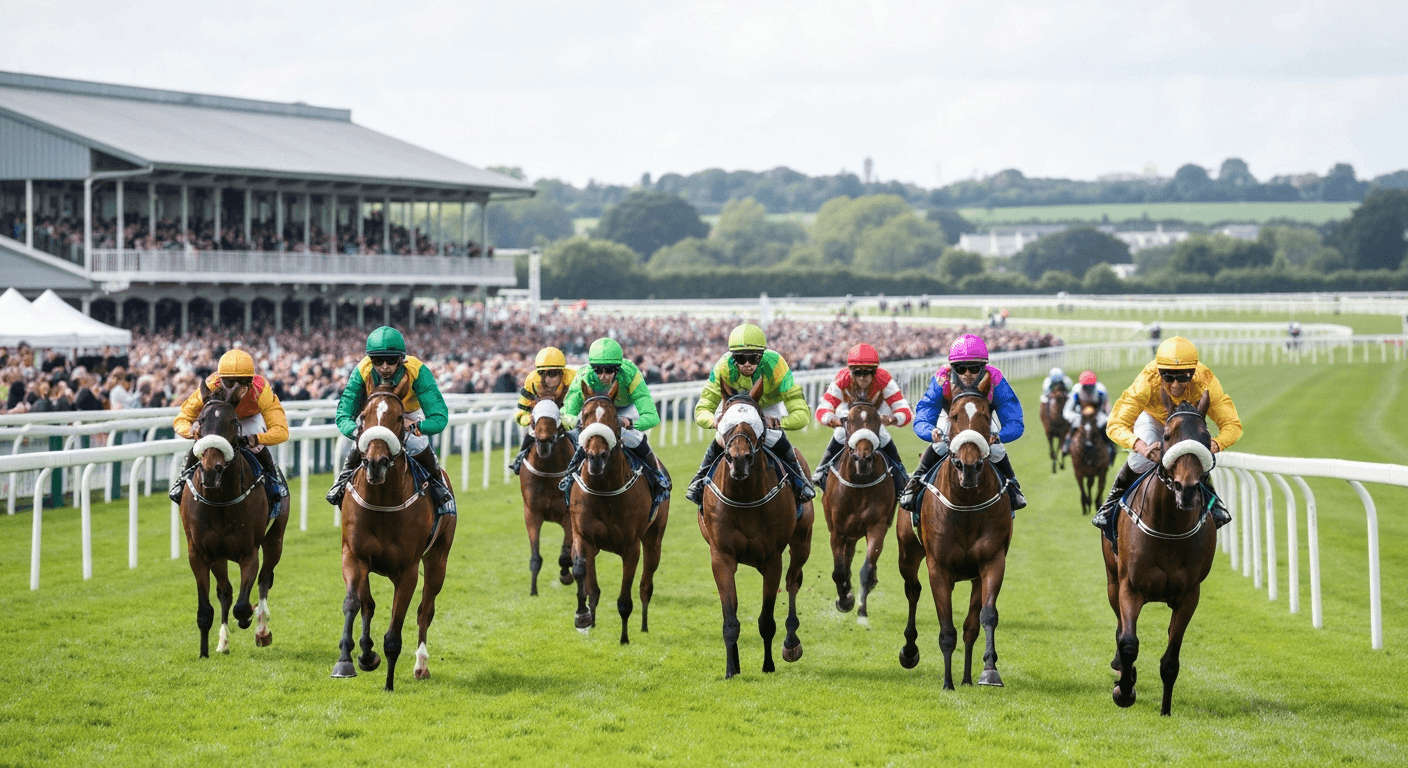
The Irish Derby Festival: A Complete Guide
A complete guide to the Dubai Duty Free Irish Derby Festival at the Curragh: dates, the Group 1 races, the atmosphere and how to get there.
Read more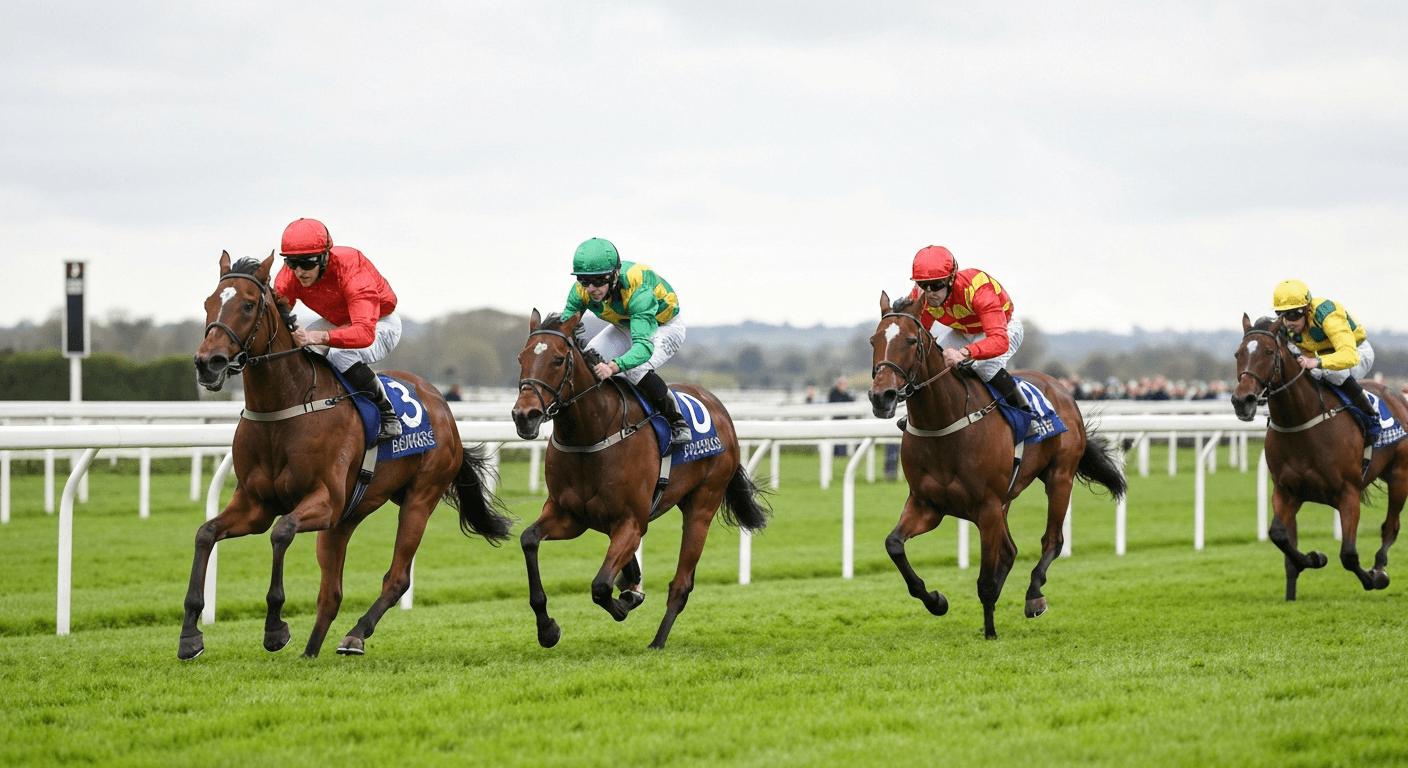
The Tattersalls Irish Guineas Festival: A Complete Guide
A complete guide to the Irish Guineas Festival at the Curragh: the Irish 2,000 and 1,000 Guineas, the Tattersalls Gold Cup, dates and how to go.
Read more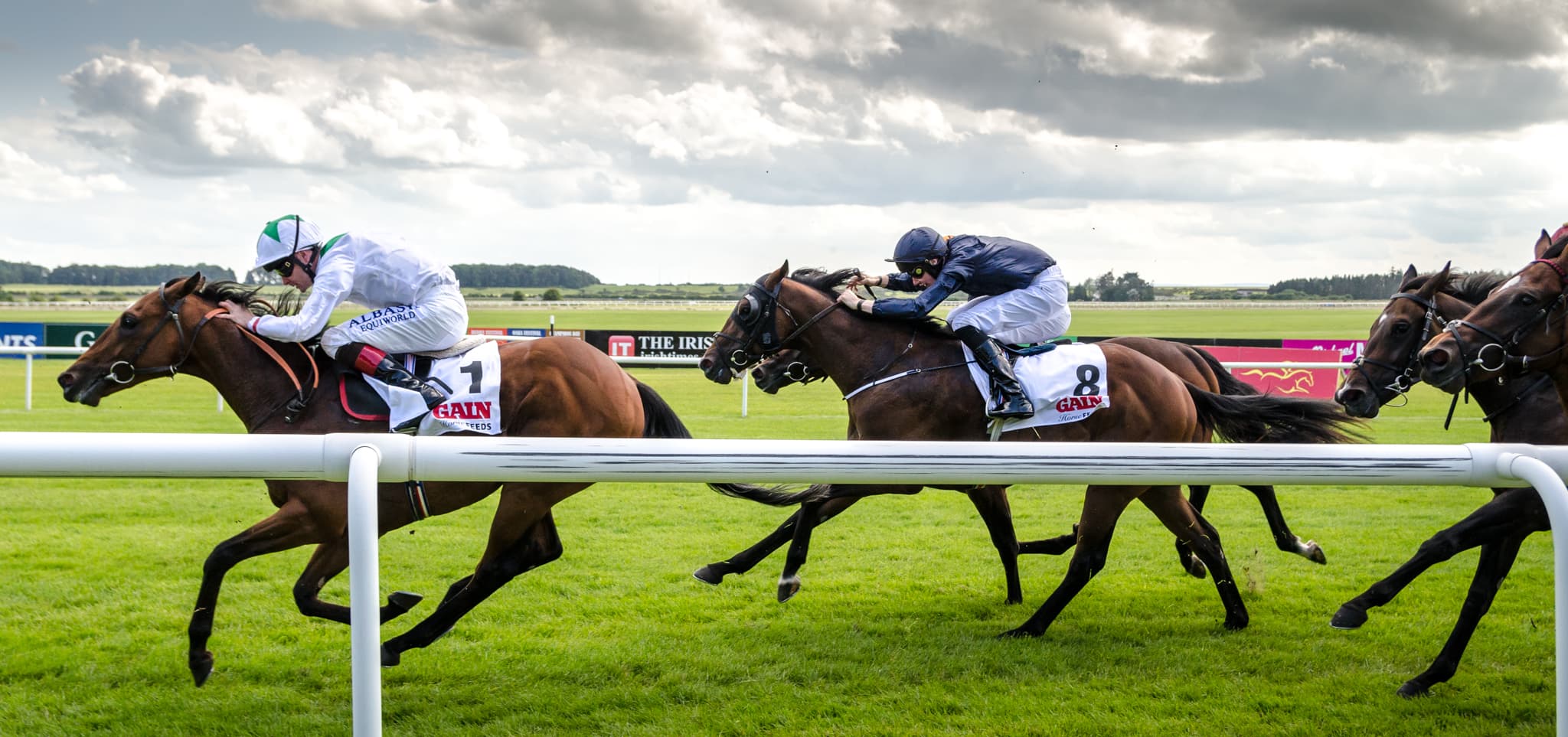
The History of the Curragh
Racing on the Curragh plain from 1727, the Irish Derby from 1866, the Curragh of Kildare Act 1868, the Classics, the great horses and the 2019 redevelopment.
Read morePhotos on this page are used under Creative Commons licences. Titles, sources and licence links for each one are on our image credits page.
Research the field with the AI Race Predictor
Our model publishes calibrated win-probability estimates for UK races — a second opinion to understand a race, not tips. It's open about its record: it doesn't beat the market, and we show exactly how it does.
Betting offers for The Curragh
Work it out & learn the basics
Gamble Responsibly
Gambling should be entertaining and not seen as a way to make money. Never bet more than you can afford to lose. If you or someone you know has a gambling problem, help and support is available.