
Founder & Editor · Last reviewed 2026-06-29
Drive south-west out of Dublin for half an hour and the suburbs give way to a vast green plain, flat and open under a wide Kildare sky, with a glass-and-steel grandstand rising at its edge like a parked ocean liner. This is the Curragh, the home of the Irish Classics and the headquarters of Flat racing in Ireland. The name comes from the Irish Cuirreach, "place of the running horse", and for once the marketing and the etymology agree: horses have galloped across these roughly 1,500 acres of common grazing for centuries, and racing here is recorded as far back as 1727.
A day at the Curragh is a particular kind of day out. It is not a tight, intimate course where the runners flash past your nose; it is a galloping, right-handed horseshoe of about two miles, with a straight three-furlong run-in that climbs slightly to test stamina to the line. The course is widely regarded as one of the fairest in the world, which is part of why so many top two-year-olds make their racecourse debut here and why every one of Ireland's five Classics is run on this turf: the Irish 2,000 and 1,000 Guineas in May, the Irish Derby in late June, the Irish Oaks in July and the Irish St Leger in September.
The plain itself is part of the appeal. It is protected under the National Monuments Act and as a Special Area of Conservation, ringed by training gallops where strings of horses work in the early morning. The racecourse sits at the centre of all that, a working nerve centre for an industry rather than a theme park bolted onto a field. Around it lie more than 70 miles of turf gallops, roughly 12 miles of peat gallops and eight all-weather surfaces, the nursery for much of Ireland's racing success.
This guide is the practical companion to that day: how to get there by car, train or bus; how the enclosures and the four-level Aga Khan Stand are laid out; where to eat, drink and book hospitality; which festivals are worth building a trip around; what to wear; and a handful of tips to make a first visit run smoothly. A note on the betting throughout: anything here is descriptive, not advice. Over time the bookmakers' margin wins and favourites do not show a profit, so treat a bet as part of the entertainment budget and nothing more.
This guide covers getting there by road, rail and bus, the enclosures and the Aga Khan Stand, accessibility for disabled racegoers, food, bars and hospitality, the best days to go, what to wear, watching from home, tips for a first visit, what else is nearby, and answers to common questions.
Where to Bet
Place your bets with a trusted, licensed bookmaker.

Promo code BETFRED50. New customers only. Register, deposit with a Debit Card, and place a first bet of £10+ at Evens (2.0)+ on Sports, to be settled within 7 days, to get £30 in Sports Free Bets and £20 in Bet Builder Free Bets within 24 hours of settlement. 7-day expiry. Eligibility & payment exclusions apply. Full T&Cs apply. Take Time to Think. BeGambleAware.org. 18+. Full T&Cs.

Promo code R30. New UK customers only, 18+. Register, deposit £10 or more, then place a £10 single cash bet at odds of 1/2 (1.5) or greater on any sports market (excluding Virtuals). Once the qualifying bet settles you get £30 in Free Bets (3 x £10) — the qualifying bet can win or lose. Free Bets are valid on any sports market excluding Virtuals, expire in 7 days, are non-withdrawable and must be used in full. Excluded deposit methods apply (including PayPal, Apple Pay, Skrill and NETELLER). Named bets such as Lucky 15 do not qualify. If you cash out the qualifying bet, or it is voided, you are no longer eligible for the offer. Ends 31.12.26. Full T&Cs apply. Please gamble responsibly. BeGambleAware.org. 18+. Full T&Cs.

Promo code BET40GET20. New UK customers, 18+. Register with the code and place a first bet of £40 or more at Evens (2.0) or greater. Receive 2 × £10 free bets: the first credited automatically once the qualifying bet settles, the second 24 hours later. Free bets must be placed at minimum odds of 4/1 (5.0), expire 24 hours after credit, and the free-bet stake is not returned with winnings. Debit card deposits only. Take Time to Think. BeGambleAware.org. 18+. T&Cs apply. Full T&Cs.

50% of your first-day net losses refunded as a free bet, capped at £25. New UK customers aged 18+ only. To qualify, deposit and place a first bet of £10 or more on any sport at minimum odds of evens (2.00), then place at least two further bets on different events, each worth at least 50% of your largest bet, all at evens (2.00) or greater. Losses are counted from your first settled bet until 23:59 the same day. Place a qualifying £10+ bet and you are guaranteed at least a £5 free bet. Bets placed at SP, void bets, cashed-out bets and bets struck with free bets do not count towards the offer. The free bet is credited the day after your qualifying bets settle and must be used within 7 days, after which it expires. It can be used at odds from 1/4 (1.25) up to 250/1 on singles and straight accumulators, but not on Trixie, Patent or Yankee style multiples. Free-bet stake is not returned with winnings. One offer per person, household, address, IP address and device. E-wallet deposits may not qualify, so check the cashier before depositing. Customers registered with GAMSTOP cannot claim. KYC identity verification must be completed before the free bet is credited. Take Time to Think. BeGambleAware.org. 18+. T&Cs apply. Full T&Cs.

New customers, 18+. Choose the sports bonus at sign-up, make a first deposit and receive a 100% bonus up to £50 in your Sports Bonus balance. To convert the bonus to cash, wager it 10x within 30 days. Single bets below Evens (2.00) do not qualify; accumulators do not qualify if any selection is below 1/2 (1.50). Virtual Sports, voided, cancelled, drawn, cashed-out and free-bet wagers do not count towards wagering. Only the first settled bet per event counts. Withdrawing before the wagering requirement is met forfeits the bonus balance including bonus winnings. Real-money funds are used before bonus funds. Deposits via Skrill or Neteller are not eligible. Not valid in conjunction with other promotions. Odds, bet and payment limits apply. 10bet general and promotion T&Cs apply. BeGambleAware.org. 18+. Full T&Cs.

New customers in Great Britain and Republic of Ireland, 18+. Place a £10 fixed-odds qualifying bet at minimum odds of 1/2 (1.50) — single or each-way (only the win part counts), pre-event or in-play, not cashed out early, within 28 days of opening the account. Receive up to £60 in bonuses credited over three days: 3 × £10 fixed-odds free bets (the first on settlement, then 24 and 48 hours later) plus 3 × £5 Total Goals FOOTBALL spread bets, 3 × £5 racing Winning Favourites spread bets and a £1 racing Race Index spread bet (the spread bets need a full spread-betting account). Free-bet stakes not returned with winnings; free bets valid 28 days from issue. IMPORTANT: the £5 credits are SPREAD bets — sports spread betting carries the risk that losses can exceed your stake. Sports spread-betting customers do not have Financial Ombudsman or FSCS recourse. Take Time to Think. BeGambleAware.org. 18+. T&Cs apply. Full T&Cs.

Promo code WELCOME15, entered under My Bonuses after registering. New UK customers, 18+. Place a first qualifying bet of at least £10 from your cash balance at odds of evens (2.0) or greater within 7 days of opening the account. Once the qualifying bet fully settles you receive £15 in free bets, credited as 3 x £5 tokens with set uses: one £5 accumulator free bet (minimum 4 legs, each leg at 2/5 or bigger), one £5 sports free bet (any market at evens or bigger) and one £5 Sub Cover free bet (selected football player markets at evens or bigger). Free-bet stakes are not returned with winnings. Free bets expire 7 days after they are credited. Void, cashed-out and partially cashed-out bets do not qualify. One offer per customer. Confirm the current terms on BetGoodwin's own welcome-offer page before claiming. Take Time to Think. BeGambleAware.org. 18+. T&Cs apply. Full T&Cs.

New UK customers, 18+. Minimum deposit £10. Place a £10 qualifying single at minimum odds of 1/2 (1.50), settled within 14 days. Receive £30 in free bets (stake not returned), split £20 for sportsbook use (2 x £10) and £10 for Bet Builder only (2 x £5); Bet Builder does not cover horse racing. Free bets must be accepted within 7 days and expire 7 days after acceptance. No promo code required. Best Odds Guaranteed on UK & Irish racing, subject to having staked over £25 in the previous seven days. Operated by LiveScore Betting and Gaming (Gibraltar) Ltd, UKGC 56859. Confirm the current terms on LiveScore Bet's own promotions page before claiming. Take Time to Think. BeGambleAware.org. 18+. T&Cs apply. Full T&Cs.
18+. BeGambleAware.org
Getting there: road, rail and bus
The Curragh sits on the Curragh Plains near Newbridge in Co. Kildare, roughly 50 km (about 30 miles) south-west of Dublin. The full address is Curragh Racecourse, Newbridge, County Kildare, R56 RR67, and the racecourse phone line is +353 (0)45 441 205. It is one of the easier major Irish courses to reach, with motorway access, two railway stations within a short hop and a free shuttle bus tying it all together on race days.
By road
Most racegoers arrive by car, and the run from Dublin is straightforward. Take the M50 to Exit 9, join the N7 southbound, then continue onto the M7 and come off at Exit 12, following signs for the racecourse from there. Parking on site is free, and regular racegoers can buy annual preferred parking at a nominal rate. The car parks are colour-coded, with Orange, Green and Blue areas including accessible parking, so it is worth knowing which entrance suits you before you arrive on a busy festival day. Allow extra time for the major fixtures: the Derby and Guineas crowds put real pressure on the approach roads and the car parks in the hour before the feature race.
By rail
The train is a genuinely good option, and it removes the question of who is driving home. Mainline Irish Rail services run from Heuston Station in Dublin, and there are connections from Cork, Limerick, Galway and Waterford, to Kildare town, with additional services to Newbridge. From either station a free shuttle bus, sponsored by Manguard Plus, runs on race days, timed to meet Irish Rail arrivals. The shuttle collects from Kildare station and the town square, and from Newbridge station and Main Street. The Newbridge service does not run on every single fixture, but in recent seasons it has operated for the opening meeting, all the Classic weekends and the May Bank Holiday fixture, which covers the days most visitors will want.
By bus and from the airport
On the bigger race days Expressway runs coach services from Dublin city centre, which is handy if you are coming in for a festival without a car. The course is also close to Dublin Airport, around 50 minutes away by road, so it is realistic to fly in and reach the track the same day. Helicopter access is used at the major festivals, though if that is your plan it is worth confirming the current arrangements with the racecourse directly before you travel.
The enclosures and the Aga Khan Stand
The thing you cannot miss when you arrive is the grandstand. The Aga Khan Stand, opened in May 2019, was the centrepiece of Irish racing's largest-ever capital project, a redevelopment that ran from 2017 to 2019 and ended up costing in the region of €81m. It is a Grimshaw-designed building wrapped under a dramatic 7,000 square metre cantilevered roof, and it replaced the old, tired stands with a single modern structure that changed the whole character of a day here.
How the stand is laid out
The Aga Khan Stand caters for up to about 6,000 people across four levels, and the simplest way to think about it is bottom-to-top. The lower two levels are where the general crowd spends most of the day: they hold a café, a food court, bars and Tote betting facilities, with easy access out to the lawns and the rail. The upper two levels, three and four, hold further bars, restaurants and hospitality suites, with reserved and members' seating in the upper portion. So a standard admission ticket gives you the run of the ground-level concourses and the viewing terraces, while the higher floors are the booked, hospitality end of the building. The overall grandstand capacity is cited at around 13,000, and the wider grounds are designed to handle a crowd flux of up to 30,000 for the biggest days.
The parade ring and the Queen's Room
One genuinely lovely touch is the parade ring, which sits right beside the stand and is the social heart of the place. Anticipation builds here before each race as the horses walk round and the jockeys are legged up, and it is one of the best spots to stand whether or not you have a bet on. The ring had to be enlarged after the redevelopment, at an extra cost of around €500,000, and now runs to more than 180 square metres. Overlooking it is the historic Queen's Room, originally built in 1853 and which hosted Queen Victoria in 1861. During the rebuild it was carefully dismantled and reassembled in its new position above the parade ring, and it now houses a public café next to the Moyglare Kids Zone, a neat bit of continuity in an otherwise thoroughly modern building.
A note on the enclosures
Admission at the Curragh is tiered rather than split into the rigid multiple enclosures you find at some British tracks. General admission gets you into the public areas of the stand, the lawns and the parade ring; the difference in price between an ordinary fixture and a Classic day reflects the occasion rather than buying a fundamentally different zone. The premium experience comes from booking hospitality or a restaurant package on the upper levels, covered in the next section.
Accessibility at the Curragh
The Curragh's redevelopment was a chance to build accessibility in from the ground up rather than bolt it on afterwards, and the course took it. The new grandstand, parade ring, café, restaurant and museum were all delivered with Universal Design and Part M building-code compliance consultancy, carried out by OHerlihy Access Consultancy. In practical terms that means step-free routes through the main public areas, lifts serving the upper levels of the four-storey Aga Khan Stand, and accessible facilities designed into the building rather than retrofitted. The same consultancy covered pre-visit accessibility information and staff disability-awareness training, so the people on the gate and in the stands should be ready to help.
Accessible parking is provided in a dedicated Blue car park, separate from the general Orange and Green public car parks. If you need an accessible space, the course encourages you to phone ahead on 045 441205 so a spot can be set aside and you are not left circling on a busy Classic day. General parking across all the car parks is free and signposted on the approach roads, which keeps the cost of the day down before you have even walked through the gate.
A sensible word of honesty here: the Curragh's own published "Accessibility" page deals with website accessibility rather than a room-by-room physical guide, so some specifics are best confirmed with the course directly before you travel. The exact number and location of accessible viewing areas, the count of accessible toilets and lifts, the assistance-dog policy, and whether a free or discounted carer or companion ticket is offered are not all set out in the published material. None of that means the provision is absent; the building was designed to a recognised accessibility standard. It simply means a quick call to the racecourse is the reliable way to nail down what you need.
So the short version is this. The Curragh is a modern, purpose-built venue with step-free access, lifts, accessible parking in the Blue car park and trained staff. For anything precise, ring 045 441205 ahead of your visit and the team can confirm current arrangements and reserve what you need.
Food, bars and hospitality
For a course that for years was criticised for tired catering, the rebuilt Curragh now has a proper spread of bars, cafés and restaurants, ranging from a quick coffee to a three-course lunch with a view of the winning post. You can do the day cheaply on food-court fare or push the boat out in a champagne bar; both work.
Bars and cafés
The bar most regulars rate is the Lilywhites Lounge, which the racecourse cheerfully bills as "possibly the best bar in Irish racing" and which has the considerable advantage of views over the track. It is also where the live music tends to land across festival weekends. For something more refined there is the Tattersalls Champagne Bar, which overlooks the parade ring and serves Moët & Chandon and afternoon tea, a good place to mark a special occasion without committing to a full sit-down meal. The Guineas Bar sits on the ground floor of Champions Hall, and there is a Derby Bar too, so you are rarely far from a counter on a busy day.
If you are arriving early or want a gentler start, Orby's by Lucy is an artisan café right at the racecourse entrance, open seven days a week, and a long-standing local trick is to have breakfast there before the morning gallops. There is also a public café in the Queen's Room, beside the Moyglare Kids Zone, which is handy if you are bringing children.
Restaurants and hospitality
Booked hospitality is where the upper levels of the Aga Khan Stand earn their keep. Packages start from around €60 per person and scale up to private suites priced by party size. Among the named options that have run in recent seasons are the Balcony Bar and Restaurant and the Champagne Bar Restaurant, each offering a three-course lunch from around €60 per person, and the Horseshoe Restaurant, with lunch from around €45 per person. Premium membership packages have historically been pitched at around €2,500. Exact menus, prices and which suites are open vary by fixture, so check the racecourse's hospitality pages for the specific day you are attending and book ahead for the festivals, when these sell out.
A quick word on planning: if your day includes the feature race, time your meal so you are not still at the table when the parade ring fills. The atmosphere shifts noticeably in the half hour before a Classic, and you will not want to watch it from indoors.
| Option | Type | Indicative price |
|---|---|---|
| Orby's by Lucy | Artisan café at the entrance | Walk-up |
| Lilywhites Lounge | Bar with track views | Walk-up |
| Tattersalls Champagne Bar | Champagne and afternoon tea | Walk-up |
| Horseshoe Restaurant | Three-course lunch | From ~€45pp |
| Balcony / Champagne Bar Restaurant | Three-course lunch | From ~€60pp |
| Private suites | Booked hospitality | By party size |
The best days to go: the Classic festivals
The Curragh races on around 23 to 24 days a year, from mid-March to early November, and in 2026 it adds Ireland's first-ever Good Friday meeting on Friday 3 April as part of a two-year trial. You can have a perfectly good afternoon on an ordinary fixture, when the crowds are thin and the racing is unhurried. But the days to build a trip around are the Classic festivals, when the best horses, the biggest crowds and the full theatre of the place all turn up together. The course stages 11 Group 1 races in total, including all five Irish Classics, and they cluster into three big weekends.
The Tattersalls Irish Guineas Festival (May)
The season's first showpiece is the Guineas Festival, which in 2026 runs over two days, Saturday 23 and Sunday 24 May (it drops from three days to two because of the new Good Friday fixture). Saturday is built around the Tattersalls Irish 2,000 Guineas, the colts' Classic over a mile, supported by the Group 3 Marble Hill Stakes and the Listed Orby Stakes. Sunday brings the fillies' equivalent, the Tattersalls Irish 1,000 Guineas, alongside the Group 1 Tattersalls Gold Cup over about a mile and a quarter and the Group 2 Lanwades Stud Stakes. It is also the first big style day of the year, with the Ashford Castle Style Icon Award judged by stylist Marietta Doran, an afterparty featuring The Highstool Prophets in Champions Hall and live music in the Lilywhites Lounge across the weekend.
The Dubai Duty Free Irish Derby Festival (late June)
The Derby Festival is the headline act, and in 2026 it runs over three days, Friday 26 to Sunday 28 June. Friday opens proceedings with the Corinthian Challenge in aid of the Irish Injured Jockeys fund and music from The Whistlin' Donkeys. Saturday is Paddy Power Pretty Polly Stakes day, with the Group 1 Pretty Polly for fillies and mares plus the Anglesey Stakes and the Airlie Stud Stakes, and The K Club Most Stylish Racegoer competition. Sunday is the main event: the Irish Derby itself, run over a mile and a half for three-year-olds, off at 16:10. This is the race with the deepest history at the course, won down the years by Nijinsky (1970), Shergar (1981), Galileo (2001) and many more. Aidan O'Brien dominates the modern record book, and the 2026 running gave him an 18th Irish Derby when Benvenuto Cellini, ridden by Ryan Moore at 7/4 favourite, led home a stablemate one-two-three. There is a Weekend Ticket covering all three days at €70, under-18s go free with a paying adult (with a €15 charge for 15 to 18-year-olds on Derby Sunday), and complimentary shuttle buses run from Newbridge, Kildare and Naas.
The Irish Champions Festival (September)
The third pillar is the Curragh's leg of the Irish Champions Festival, the day after Leopardstown's, on Sunday 13 September in 2026. The card is extraordinary value for a single afternoon: four Group 1s, including the Comer Group International Irish St Leger (the fifth and final Irish Classic of the year, over a mile and three-quarters), the Bar One Racing Flying Five Stakes over five furlongs, the Moyglare Stud Stakes for two-year-old fillies and the Goffs Vincent O'Brien National Stakes for juveniles, with close to €2.5m in prize money on offer. There is family entertainment in the Moyglare Kids Zone too. For sheer concentration of top-class racing, this may be the best single day in the Curragh's year.
Dress code and what to wear
The Curragh does not enforce a strict, universal dress code, which is good news if you want a relaxed afternoon and helpful to know before you over-pack. On an ordinary fixture, smart-casual is perfectly acceptable in the public areas, and plenty of regulars dress for comfort and the weather rather than for the cameras.
The feature days are a different matter, not because there is a rule book but because the occasion invites it. The Classic festivals carry style competitions, the Ashford Castle Style Icon Award during the Guineas weekend, The K Club Most Stylish Racegoer at the Derby Festival, and a real proportion of the crowd dresses up accordingly. Smart, stylish attire is encouraged on these days, and you will feel more part of it in a jacket or a dress than in trainers and a hoodie. If you have booked hospitality or a restaurant on the upper levels of the Aga Khan Stand, lean towards the smarter end, since those areas set the tone.
A few practical points matter more than the fashion. This is an exposed plain, wide and open, and the weather can turn quickly: bring a layer and something waterproof even on a promising summer morning, because there is little shelter out on the lawns and at the rail. Heels and soft grass are an old enemy, so if you are dressing up, factor in that you will be walking and standing on turf between the stand, the parade ring and the rail. Comfortable footwear, or a sensible pair to change into, will do more for your day than any amount of finery. In short: dress up if the day deserves it, dress warmly whatever the forecast, and pick shoes you can stand in for several hours.
Watching from home
Not every day at the Curragh has to be a day on the plain. The course is well covered on television, so you can follow the Irish Classics from the sofa just as easily as from the Aga Khan Stand.
In the Republic of Ireland, the marquee days are free to air on RTÉ. RTÉ holds an agreement with Horse Racing Ireland to show a number of fixtures each year, and that includes the biggest Curragh dates such as the Irish Derby and the Guineas. For those days you can watch live on the broadcast or catch up afterwards on the RTÉ Player.
For viewers in the UK, the picture splits between free-to-air and pay television. ITV Racing covers selected Curragh showpiece days on ITV1 and ITVX: the 2026 Irish 1,000 Guineas, for example, was carried on ITV as well as on Racing TV. ITVX is free to stream once you have registered, which makes it the easiest way to watch the Curragh's flagship cards in the UK without a subscription.
The day-in, day-out home of Curragh racing, though, is Racing TV. Since the start of 2019 all 26 Irish racecourses, the Curragh among them, have been on Racing TV, with the live UK pay-TV rights held there. Race notes for the Curragh's Group 1s routinely confirm "TV: Racing TV". Some other sites carry Curragh racecards and results as data, but for the live pictures of an ordinary fixture, Racing TV is where to look.
If you would rather stream than sit in front of a television set, the options line up neatly. Racing TV can be taken as a full subscription or, if you only want one card, bought as a single-day pass, with the same coverage available through RacingTV.com. ITVX is free with registration for the days ITV shows, and the RTÉ Player handles the RTÉ-covered fixtures. Between the three, almost every meaningful day at the Curragh is watchable from home, whether you want the full season or just the Derby.
Tips for a first visit
A first visit to the Curragh rewards a little planning, mostly because the place is large and open and the best of it is not always where the crowd drifts by default. A few pointers.
Stand near the finish, and use the parade ring. The best atmosphere is at the rail close to the winning post, where the uphill run-in means the finish is genuinely competitive and you can hear the horses come, and in the parade ring beforehand, where anticipation builds as the runners walk round and the jockeys mount. Split your time between the two and you will feel the day far more than from a seat indoors.
Pace yourself around the feature race. On a Classic day the mood lifts sharply in the half hour before the big race. Eat earlier rather than later, get your bet on in good time to avoid the queues, and be out by the rail or the ring when the feature goes off rather than stuck at a counter.
Take the train if you can. With free shuttle buses meeting Irish Rail arrivals at Kildare and Newbridge on race days, the train removes the parking crush and the question of a designated driver. On festival days the approach roads get busy, so this is a real comfort.
Consider a tour on a non-race day. Outside racing, the Curragh runs behind-the-scenes tours of the weigh-room, the jockeys' changing rooms and the stables, which give you a sense of the working side of the place that you do not get on a race day. Booking breakfast at Orby's by Lucy before the morning gallops is a local favourite, and a lovely way to see the plain at its quietest.
Bring layers, bring children, keep betting in proportion. The plain is exposed, so pack for changeable weather. Families are well catered for, with the Moyglare Kids Zone running on the big days and under-18s admitted free with a paying adult at most fixtures. And on betting: it is part of the fun, not a way to make money. The margin is built to favour the bookmaker, and backing favourites does not turn a profit over time, so set a budget you are happy to lose and stop there.
Nearby: where to stay and what else to see
The Curragh sits in the middle of Ireland's racing and breeding heartland, so there is plenty within a short drive to turn a day at the races into a weekend. Kildare is well set up for it, with a cluster of attractions, shopping and hotels close at hand.
What else to see
The obvious pairing is the Irish National Stud and Japanese Gardens at Tully, just outside Kildare town, where you can walk among the stallions and broodmares that sit at the heart of the industry you have just watched on the track, and stroll the famous gardens. It makes a natural companion to a Curragh visit, especially for anyone curious about where the racehorses come from. For a change of pace, Kildare Village is a designer outlet drawing shoppers from across the region, and Newbridge Silverware, the long-established Irish maker, is close by in Newbridge itself.
Where to stay
There is accommodation to suit most budgets in Newbridge, Naas and Kildare town, all within a short hop of the course. Two hotels regularly used by racegoers are Lawlor's Hotel in Naas and the Keadeen Hotel in Newbridge, both convenient for the track and for getting back into the evening's racing crowd. At the luxury end, The K Club at Straffan is the standout, a resort hotel that also lends its name to the Most Stylish Racegoer competition at the Derby Festival. Whichever you pick, book early for the Classic weekends, when the Guineas, Derby and Champions Festival fixtures fill the local rooms quickly.
Put together, a Curragh trip can easily be a full weekend: the races on the Saturday or Sunday, the National Stud or a round of shopping to fill the other day, and a comfortable base in Naas, Newbridge or Kildare town tying it all together.
Frequently Asked Questions
Share this article
More about this racecourse
All curragh guides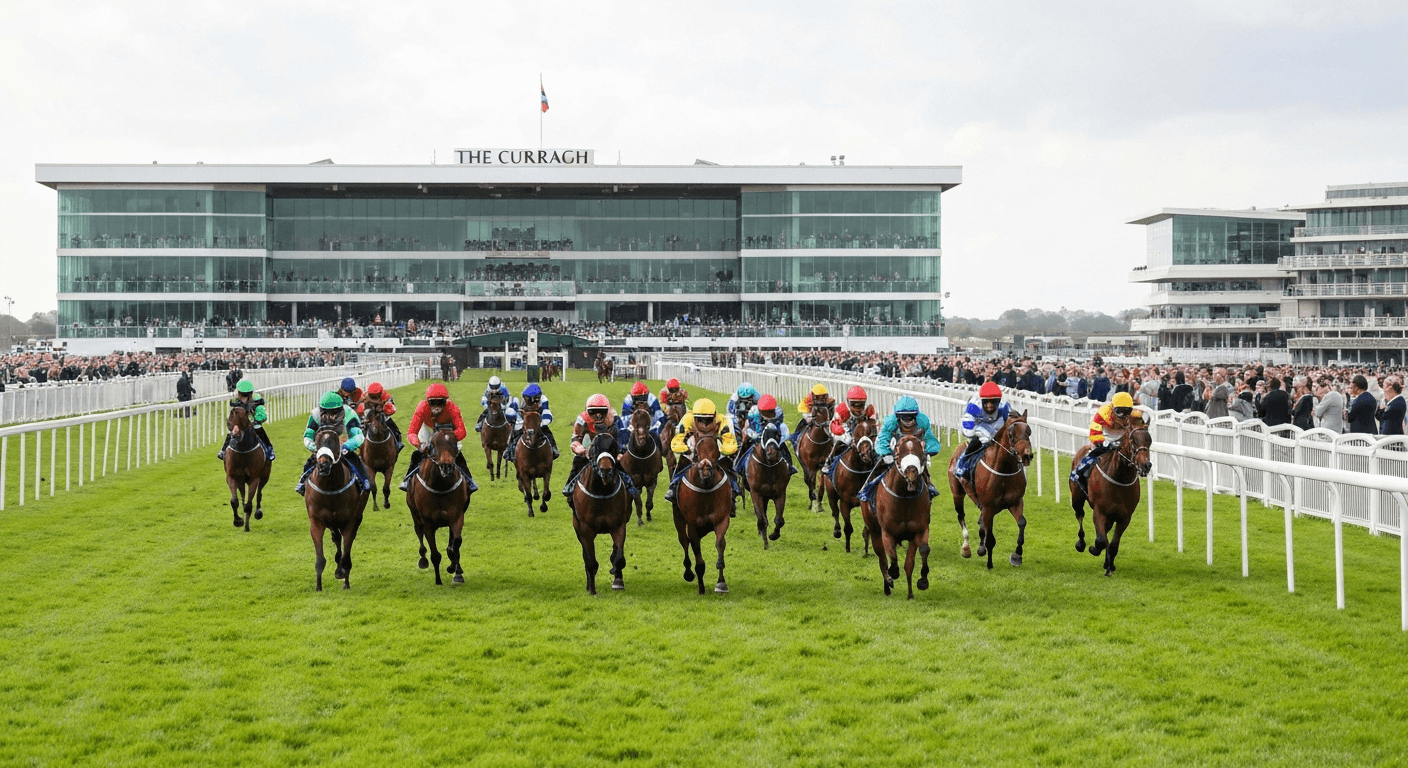
Betting at the Curragh: A Course Guide
How the Curragh's galloping, stamina-testing layout shapes betting, with the verified going, draw, trainer and favourite form figures, framed honestly.
Read moreThe Curragh: The Complete Guide
The home of the Irish Classics in Co. Kildare, in full: the galloping track and course map, all 11 Group 1s with their winners, the records, the festivals day by day, tickets, travel, venue hire and how to visit.
Read more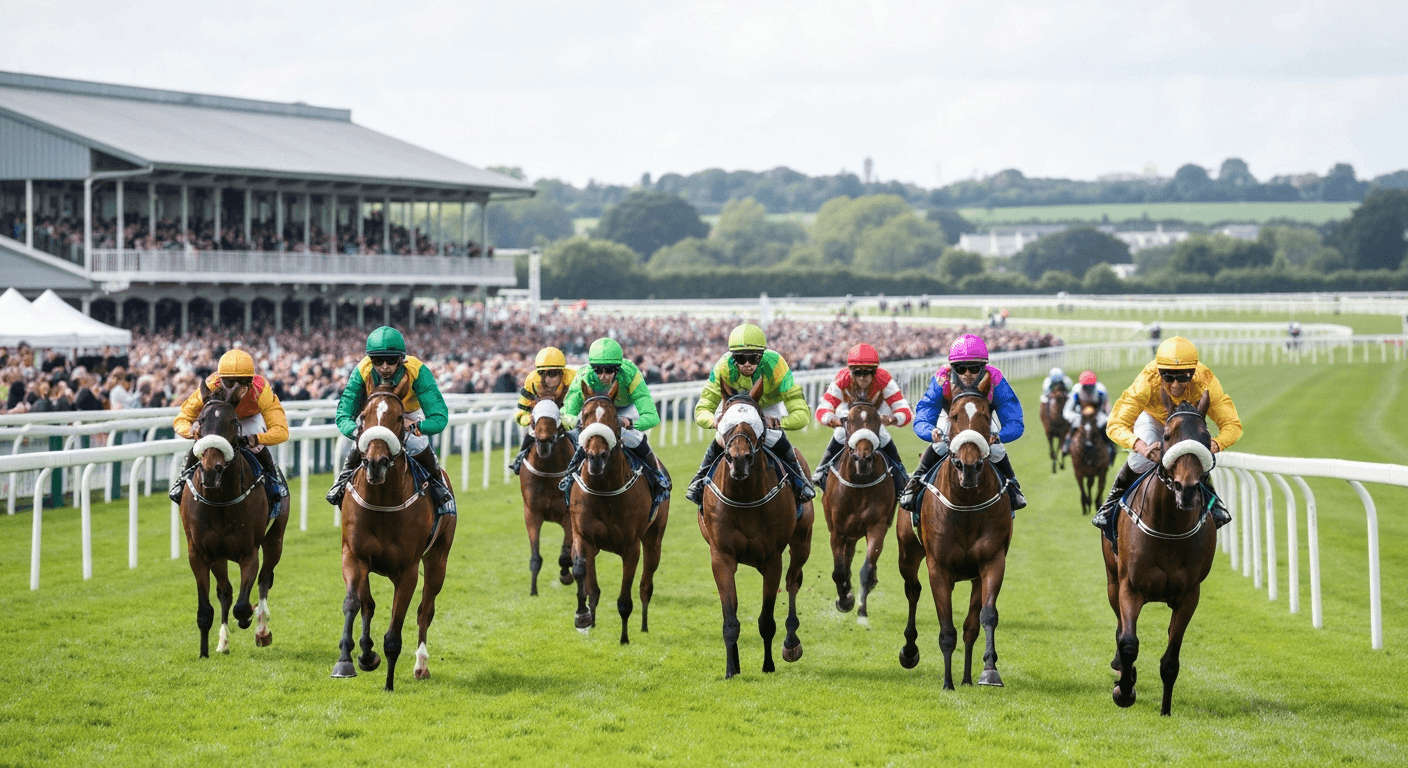
The Irish Derby Festival: A Complete Guide
A complete guide to the Dubai Duty Free Irish Derby Festival at the Curragh: dates, the Group 1 races, the atmosphere and how to get there.
Read moreResearch the field with the AI Race Predictor
Our model publishes calibrated win-probability estimates for UK races — a second opinion to understand a race, not tips. It's open about its record: it doesn't beat the market, and we show exactly how it does.
Betting offers for Irish Derby Festival
Work it out & learn the basics
Gamble Responsibly
Gambling should be entertaining and not seen as a way to make money. Never bet more than you can afford to lose. If you or someone you know has a gambling problem, help and support is available.