
Founder & Editor · Last reviewed 2026-06-29
The name says everything. Curragh comes from the Irish Cuirreach, the place of the running horse, and for the best part of three centuries the wide green plain near Newbridge in Co. Kildare has done little else. The first recorded race here ran in 1727, the first official meeting is dated to around 1741, and the Turf Club, founded in the 1760s, made the Curragh its home and the governing body of Irish racing. This is where the Irish Classics live. All five of them, the Irish Derby, the Irish Oaks, the Irish 1,000 Guineas, the Irish 2,000 Guineas and the Irish St Leger, are run on this ground, alongside the rest of an eleven-strong roster of Group 1 races.
For a punter, that pedigree is a starting point, not a conclusion. A course this old and this central to the sport has been studied to death, and the patterns that matter for betting tend to be specific and, for the most part, modest in size. The Curragh sits on the Curragh Plains, roughly 50km south-west of Dublin. It is right-handed, a horseshoe-shaped circuit of about two miles with no sharp bends, and it carries a run-in of three furlongs that rises slightly uphill to the line. It is a galloping, stamina-testing, deliberately fair track, described on the course's own Track Talk as one of the best and fairest in the world. That fairness is exactly why it rewards a certain kind of horse and refuses to gift races to others.
This guide walks through what the layout actually asks of a runner, how the going tends to move through the season, what the draw does and, just as importantly, does not do, where the trainer and jockey angles are concentrated, and what the favourite and form figures look like once you frame them honestly. That last word matters. Nothing here is a tip, and nothing here implies a way to profit. The plain truth of Flat betting is that backing the market leader blindly loses money to the starting price over time, and the Curragh is no exception. The aim is to understand the track, not to sell a system.
In order, this guide covers what the galloping track asks, the going patterns through the season, the draw, the trainer and jockey angles, the favourites and form figures framed honestly, betting on Classic and big-race days, and answers to some common questions.
Where to Bet
Place your bets with a trusted, licensed bookmaker.

Promo code BETFRED50. New customers only. Register, deposit with a Debit Card, and place a first bet of £10+ at Evens (2.0)+ on Sports, to be settled within 7 days, to get £30 in Sports Free Bets and £20 in Bet Builder Free Bets within 24 hours of settlement. 7-day expiry. Eligibility & payment exclusions apply. Full T&Cs apply. Take Time to Think. BeGambleAware.org. 18+. Full T&Cs.

Promo code R30. New UK customers only, 18+. Register, deposit £10 or more, then place a £10 single cash bet at odds of 1/2 (1.5) or greater on any sports market (excluding Virtuals). Once the qualifying bet settles you get £30 in Free Bets (3 x £10) — the qualifying bet can win or lose. Free Bets are valid on any sports market excluding Virtuals, expire in 7 days, are non-withdrawable and must be used in full. Excluded deposit methods apply (including PayPal, Apple Pay, Skrill and NETELLER). Named bets such as Lucky 15 do not qualify. If you cash out the qualifying bet, or it is voided, you are no longer eligible for the offer. Ends 31.12.26. Full T&Cs apply. Please gamble responsibly. BeGambleAware.org. 18+. Full T&Cs.

Promo code BET40GET20. New UK customers, 18+. Register with the code and place a first bet of £40 or more at Evens (2.0) or greater. Receive 2 × £10 free bets: the first credited automatically once the qualifying bet settles, the second 24 hours later. Free bets must be placed at minimum odds of 4/1 (5.0), expire 24 hours after credit, and the free-bet stake is not returned with winnings. Debit card deposits only. Take Time to Think. BeGambleAware.org. 18+. T&Cs apply. Full T&Cs.

50% of your first-day net losses refunded as a free bet, capped at £25. New UK customers aged 18+ only. To qualify, deposit and place a first bet of £10 or more on any sport at minimum odds of evens (2.00), then place at least two further bets on different events, each worth at least 50% of your largest bet, all at evens (2.00) or greater. Losses are counted from your first settled bet until 23:59 the same day. Place a qualifying £10+ bet and you are guaranteed at least a £5 free bet. Bets placed at SP, void bets, cashed-out bets and bets struck with free bets do not count towards the offer. The free bet is credited the day after your qualifying bets settle and must be used within 7 days, after which it expires. It can be used at odds from 1/4 (1.25) up to 250/1 on singles and straight accumulators, but not on Trixie, Patent or Yankee style multiples. Free-bet stake is not returned with winnings. One offer per person, household, address, IP address and device. E-wallet deposits may not qualify, so check the cashier before depositing. Customers registered with GAMSTOP cannot claim. KYC identity verification must be completed before the free bet is credited. Take Time to Think. BeGambleAware.org. 18+. T&Cs apply. Full T&Cs.

New customers, 18+. Choose the sports bonus at sign-up, make a first deposit and receive a 100% bonus up to £50 in your Sports Bonus balance. To convert the bonus to cash, wager it 10x within 30 days. Single bets below Evens (2.00) do not qualify; accumulators do not qualify if any selection is below 1/2 (1.50). Virtual Sports, voided, cancelled, drawn, cashed-out and free-bet wagers do not count towards wagering. Only the first settled bet per event counts. Withdrawing before the wagering requirement is met forfeits the bonus balance including bonus winnings. Real-money funds are used before bonus funds. Deposits via Skrill or Neteller are not eligible. Not valid in conjunction with other promotions. Odds, bet and payment limits apply. 10bet general and promotion T&Cs apply. BeGambleAware.org. 18+. Full T&Cs.

New customers in Great Britain and Republic of Ireland, 18+. Place a £10 fixed-odds qualifying bet at minimum odds of 1/2 (1.50) — single or each-way (only the win part counts), pre-event or in-play, not cashed out early, within 28 days of opening the account. Receive up to £60 in bonuses credited over three days: 3 × £10 fixed-odds free bets (the first on settlement, then 24 and 48 hours later) plus 3 × £5 Total Goals FOOTBALL spread bets, 3 × £5 racing Winning Favourites spread bets and a £1 racing Race Index spread bet (the spread bets need a full spread-betting account). Free-bet stakes not returned with winnings; free bets valid 28 days from issue. IMPORTANT: the £5 credits are SPREAD bets — sports spread betting carries the risk that losses can exceed your stake. Sports spread-betting customers do not have Financial Ombudsman or FSCS recourse. Take Time to Think. BeGambleAware.org. 18+. T&Cs apply. Full T&Cs.

Promo code WELCOME15, entered under My Bonuses after registering. New UK customers, 18+. Place a first qualifying bet of at least £10 from your cash balance at odds of evens (2.0) or greater within 7 days of opening the account. Once the qualifying bet fully settles you receive £15 in free bets, credited as 3 x £5 tokens with set uses: one £5 accumulator free bet (minimum 4 legs, each leg at 2/5 or bigger), one £5 sports free bet (any market at evens or bigger) and one £5 Sub Cover free bet (selected football player markets at evens or bigger). Free-bet stakes are not returned with winnings. Free bets expire 7 days after they are credited. Void, cashed-out and partially cashed-out bets do not qualify. One offer per customer. Confirm the current terms on BetGoodwin's own welcome-offer page before claiming. Take Time to Think. BeGambleAware.org. 18+. T&Cs apply. Full T&Cs.

New UK customers, 18+. Minimum deposit £10. Place a £10 qualifying single at minimum odds of 1/2 (1.50), settled within 14 days. Receive £30 in free bets (stake not returned), split £20 for sportsbook use (2 x £10) and £10 for Bet Builder only (2 x £5); Bet Builder does not cover horse racing. Free bets must be accepted within 7 days and expire 7 days after acceptance. No promo code required. Best Odds Guaranteed on UK & Irish racing, subject to having staked over £25 in the previous seven days. Operated by LiveScore Betting and Gaming (Gibraltar) Ltd, UKGC 56859. Confirm the current terms on LiveScore Bet's own promotions page before claiming. Take Time to Think. BeGambleAware.org. 18+. T&Cs apply. Full T&Cs.
18+. BeGambleAware.org
What the Galloping Track Asks of a Horse
Start with the shape of the place, because everything else follows from it. The Curragh is a right-handed turf horseshoe of around two miles, broad, open and with no sharp bends anywhere on the circuit. The run-in is three furlongs and rises slightly uphill all the way to the line. The course describes the finish as a testing uphill one, and that single feature does more to sort the races than any other. A horse that is off the bridle and being pushed along before it turns in rarely finds enough to climb the hill.
There is more than one way round. The inner horseshoe is the Derby Course and the outer is the Plate Course, and they share the same winning post and run-in. The Derby course has the sharpest turns into the straight, notably from the 1m6f and 1m4f starts, while the outer Plate course is the more forgiving, galloping option. The positions of the 2m, 1m6f and 1m4f starts depend on which course is in use on the day, so the exact demands of a staying trip can shift slightly from meeting to meeting. There is also a straight course, used for sprints and the straight mile: starts sit at five furlongs, six furlongs, six furlongs and 63 yards, seven furlongs and one mile, the straight acting as a chute feeding the home straight. Racing TV describes it as a straight six furlongs extending to a mile with a slight dog-leg.
This is turf only and Flat only. There are no hurdles or fences and never have been, so every runner here is a Flat horse being asked a pure galloping question. The former inner circular course is no longer raced on; it has effectively become two training gallops, the Old Vic woodchip and the Free Eagle sand-and-fibre surface, part of the vast training estate that surrounds the track.
In practical terms the layout rewards strong, galloping, classic types. A horse needs to stay every yard of its trip, travel powerfully a long way from home, and have the stamina to sustain its effort up the rise. A high cruising speed and a relaxed, galloping action count for more here than the sharp, quick-from-the-gate acceleration that wins at tighter, sharper circuits. Free-going types that want a flat, sharp track are often found out. The course has long attracted high-class two-year-olds, many of which make their racecourse debut here, precisely because it is a fair test of a good horse rather than a quirky one. None of this is a selection method. It is a description of the questions the ground asks, and the answers tend to favour genuine quality and proven stamina over flash.
Going Patterns Through the Season
Ground at the Curragh follows a broadly seasonal rhythm, and knowing where in that rhythm a meeting sits helps you read the form. Through the height of summer, the typical going is good to good-to-firm. Later in the season the ground tends to soften, so the September and autumn cards can ride very differently from the fast summer Classics. The watering and irrigation system was upgraded in 2020, which gives the course more control over producing safe, even ground in dry spells, but the underlying pattern of firmer summers and softer autumns still holds.
One feature worth carrying into any race here is that the round course can ride differently from the straight course on the same afternoon. They are separate strips of turf, and the going stick reading on one is not always a perfect guide to the other. On the straight sprint and mile track, fields tend to drift across the course on softer ground, runners edging towards the middle or stand side in search of the better surface. That movement is a going effect as much as a draw effect, and the two are easy to confuse.
For betting, the honest position is that the going at the Curragh is a contextual factor rather than a standalone angle. A horse with proven form on a soft autumn surface is a different proposition in May, and vice versa. The fast ground of the Guineas and Derby festivals suits the sharp, ready two-year-olds and the classic milers and middle-distance horses that have been aimed at those days. The softer ground later on can blunt some of that speed and bring stamina more into play, especially over the longer Group races. Reading a race well here often comes down to checking whether a horse's best efforts have come on similar ground to what it will face, rather than assuming the Curragh plays one way all year. As always, this describes the conditions; it is not a recommendation to back or oppose anything.
The Draw: Sprint Camber and the Near-Neutral Picture
The draw is the area where Curragh punters most often talk themselves into a bias that is smaller than they think. Take the round courses first. They are generally fair. Over the staying trips on the Derby, or inner, course there is, in the words of At The Races, an awful lot of turning, and from the 1m4f and 1m6f starts a low draw helps because it keeps a horse on the inside through the bends. Over seven furlongs and a mile on the round track, though, there is no great bias either way. So the round-course story is narrow: a modest edge to low numbers at the long staying trips on the inner course, and close to nothing elsewhere.
The straight sprint course is where the nuance lives. There is a slight camber across the straight, falling from the stand side to the far side, and that camber keeps the stand-side ground drier. When fields race up the stand rail, a high draw is favoured on all going, because the high numbers get the better surface. The often-quoted illustration is the 2008 six-furlong Peter Keatley Handicap: a thirty-runner field in which the best-placed single-digit stall could finish only fifteenth. That is a striking example, but it is one race, and it is the kind of extreme that lodges in the memory and distorts expectations.
The picture is more measured than that example suggests, for two reasons. First, when the running rail is moved to the middle of the straight, the draw matters much less, although high numbers are still reckoned best. Second, and more importantly, pace and positional bias usually count for more than the draw itself. Where a horse ends up in the run of a race, whether it gets cover, whether it can hold a position on the favoured side, tends to decide more than the number it came out of. On softer ground the whole field can drift towards the middle or stand side anyway, which scrambles any tidy draw read.
So the overall picture is close to neutral, with one live caveat. Be alert to a genuine stand-side high-draw edge in big-field sprints up the straight, especially when the rail is against the stands. Outside that specific situation, treat the draw as a minor factor and let pace, position and the camber tell the story. A high stall in a thirty-runner six-furlong handicap is worth something; a high stall in a small-field seven-furlong round-course race is worth very little. None of this is a tip. It is simply where the evidence sits, and the evidence says the draw at the Curragh is usually a footnote rather than a headline.
Trainer and Jockey Angles
There is no honest way to discuss Curragh betting without putting Aidan O'Brien at the centre of it. The Ballydoyle trainer is the dominant figure at the course and in most of its Group 1s, and no trainer has more winners here. The scale is hard to overstate. He has won the Irish Derby eighteen times, a record confirmed when Benvenuto Cellini took the 2026 running, including four in a row from 2023 to 2026 and seven straight from 2006. He leads the Irish 2,000 Guineas on thirteen wins, the Irish 1,000 Guineas on twelve, the Irish Oaks on eight, the Moyglare Stud Stakes on eleven and the Phoenix Stakes on seventeen, and he is the leading trainer of the Tattersalls Gold Cup and a multiple winner of the Irish St Leger. Over a recent three-season window he recorded 86 wins from 467 Curragh runners, a strike rate of around 18 per cent.
That last figure is the one a punter should sit with. An 18 per cent strike rate is formidable for the volume involved, but it also means more than eight in ten of his runners lose, and the market knows all about Ballydoyle. His horses are routinely sent off short, often heading multi-runner teams where the stable saddles several in the same race. The 2026 Irish Derby was the ninth time he had saddled the first three home. A strong O'Brien hand is a genuine signal of quality, but it is priced in, and picking the right one of two or three stablemates is frequently the actual puzzle rather than backing the yard blind.
The supporting cast of trainers matters too. Dermot Weld is woven through the staying races, with nine Irish St Legers to his name, among them Vintage Crop and Vinnie Roe, and recent Irish 1,000 Guineas wins with Tahiyra and Homeless Songs. Ger Lyons landed the 2020 Irish 2,000 Guineas with Siskin and the 2024 Phoenix with Babouche. Jessica Harrington has taken big two-year-old and Classic prizes with the likes of Alpha Centauri, Discoveries and Lucky Vega. Adrian Murray won the Phoenix with Bucanero Fuerte in 2023 and Power Blue in 2025. Joseph O'Brien, Aidan's son, has his own Irish Derby as a trainer with Latrobe and further Group 1s with Al Riffa and Scorthy Champ. Karl Burke raided successfully with Fallen Angel in the 2024 Irish 1,000 Guineas, and Richard Hannon took the 2024 Irish 2,000 Guineas with Rosallion, useful reminders that British yards win here.
On the jockey side, Ryan Moore has been the rider to follow at the highest level, with four straight Irish Derbies from 2023 to 2026 and a long list of Oaks and Gold Cups, almost always aboard the chief Ballydoyle hope. Colin Keane won the 2022 Irish Derby on Westover and the 2024 Phoenix on Babouche. Chris Hayes is Weld's man for the big fillies' races, partnering Tahiyra and Homeless Songs. Historically the names run deep: Morny Wing rode six Irish Derbies and seven Irish St Legers, Michael Kinane and Johnny Murtagh built huge records here, and Pat Smullen partnered Vinnie Roe through his four St Legers. The reading for a punter is the same as for the trainers. These are strong pointers to which yard and which rider mean business, not a shortcut to value, because the better the angle, the shorter the price.
Favourites, Form Figures and the Honest Maths
Here is the part that most betting guides skip, so it is worth being blunt. Favourites win their share of races at the Curragh, as they do everywhere, but backing the favourite, or any single mechanical angle, loses money to the starting price over time. That is not a Curragh quirk. It is how the market works. The starting price already contains the public's best estimate of a horse's chance, plus the bookmaker's margin, so a strategy of backing the obvious time after time hands that margin away with every bet. A fair, well-studied track like this one, where quality tends to win and the form is reliable, is precisely the sort of place where the prices are efficient and there is little slack for a blind system to exploit.
The course's reputation for fairness cuts both ways for a punter. On the plus side, it means form lines hold up: a horse that ran well here is likely to run well here again, the track does not throw up flukes, and the best horse usually gets a fair crack. On the other side, that same reliability is exactly why the market is hard to beat. There are fewer trap doors, fewer hard-luck stories waiting to be exploited, and the consequence is that obvious horses are obvious to everyone and priced accordingly. Reliable form and an efficient market are two sides of one coin.
The race-specific trends in the dossier illustrate the trap nicely. In the Irish Derby, nine of the last ten winners were drawn in stall seven or higher, all of the last ten had four or more prior Flat runs, and no filly has won in twenty years. Favourites are well backed in the race, and they win plenty, but the market still gets it wrong: Sovereign landed the 2019 running at 33/1. The lesson is not that you should back outsiders, it is that even a race with strong favourite trends is not a licence to print money, because the price you take swallows the edge.
So how should the form figures be used? As a filter on understanding, not as a betting machine. Knowing that the Curragh demands stamina and a galloping action, that the draw is close to neutral outside big-field straight-course sprints, that a strong Ballydoyle hand signals quality but at a short price, and that the going shifts from firm summers to softer autumns, these things help you read why a result happened and judge whether a price looks fair. They do not, individually or together, hand you a profit. Anyone who tells you a course angle reliably beats the starting price is selling something. The realistic goal is to be better informed about the races, place fewer poor bets, and stake only what you can afford to lose. The honest bottom line is that betting at the Curragh, like betting anywhere, is a cost for entertainment over time, not a source of income.
Betting on Classic and Big-Race Days
The Curragh's biggest betting days are built around its festivals, and each has its own character worth understanding before a price catches your eye. The Tattersalls Irish Guineas Festival in May, run over two days in 2026 on Saturday 23 and Sunday 24 May, opens the Classic season. Saturday carries the Irish 2,000 Guineas, Sunday the Irish 1,000 Guineas and the Tattersalls Gold Cup. These are sharp, fast-ground races for the season's leading milers and middle-distance horses, and the form often arrives straight from the English Guineas at Newmarket and the Curragh's own spring trials.
The Dubai Duty Free Irish Derby Festival in late June is the centrepiece, a three-day meeting in 2026 from Friday 26 to Sunday 28 June. Saturday is built around the Group 1 Paddy Power Pretty Polly Stakes for fillies and mares, supported by the Anglesey Stakes and the Airlie Stud Stakes. Sunday belongs to the Irish Derby itself, over a mile and a half. The 2026 running went to Benvenuto Cellini for Aidan O'Brien and Ryan Moore at 7/4 favourite, leading home an O'Brien one-two-three from Christmas Day and Pierre Bonnard on good ground, the trainer's eighteenth win in the race. That result is a useful case study in the realities of big-race betting here: a short-priced favourite that delivered, but in a race where the same yard filled the places, so the value question was always which O'Brien horse rather than whether to oppose the yard.
September brings the Curragh's leg of the Irish Champions Festival, on Sunday 13 September in 2026, the day after the Leopardstown card. It is a heavyweight afternoon with four Group 1s and close to €2.5m in prize money: the Comer Group International Irish St Leger, the fifth and final Irish Classic of the year, the Bar One Racing Flying Five Stakes over five furlongs, the Moyglare Stud Stakes for two-year-old fillies and the Goffs Vincent O'Brien National Stakes. The autumn ground is often softer than the summer Classics, which can shift the emphasis towards stamina in the St Leger and reward proven speed and course form in the Flying Five.
A few honest points apply across all of these days. Big-field handicaps on the straight course are where the stand-side high-draw edge in the previous section is most worth weighing, and where pace and position matter most. Group races are usually small-field affairs decided on class, where the market is sharp and the favourites well found. The race trends, such as the Tattersalls Gold Cup being dominated by four and five-year-olds, the Irish Derby winners needing four or more prior runs, or the Phoenix Stakes leaning on Curragh juvenile form, are genuine and worth knowing. But they are context for understanding a result, not a method for beating the bookmaker. On the days when the whole country is watching and the markets are busiest, the prices are at their most efficient, the favourite still loses money backed blind over time, and the only sound rule is to stake what you can afford and treat any winnings as a bonus rather than a plan.
Frequently Asked Questions
Share this article
More about this racecourse
All curragh guides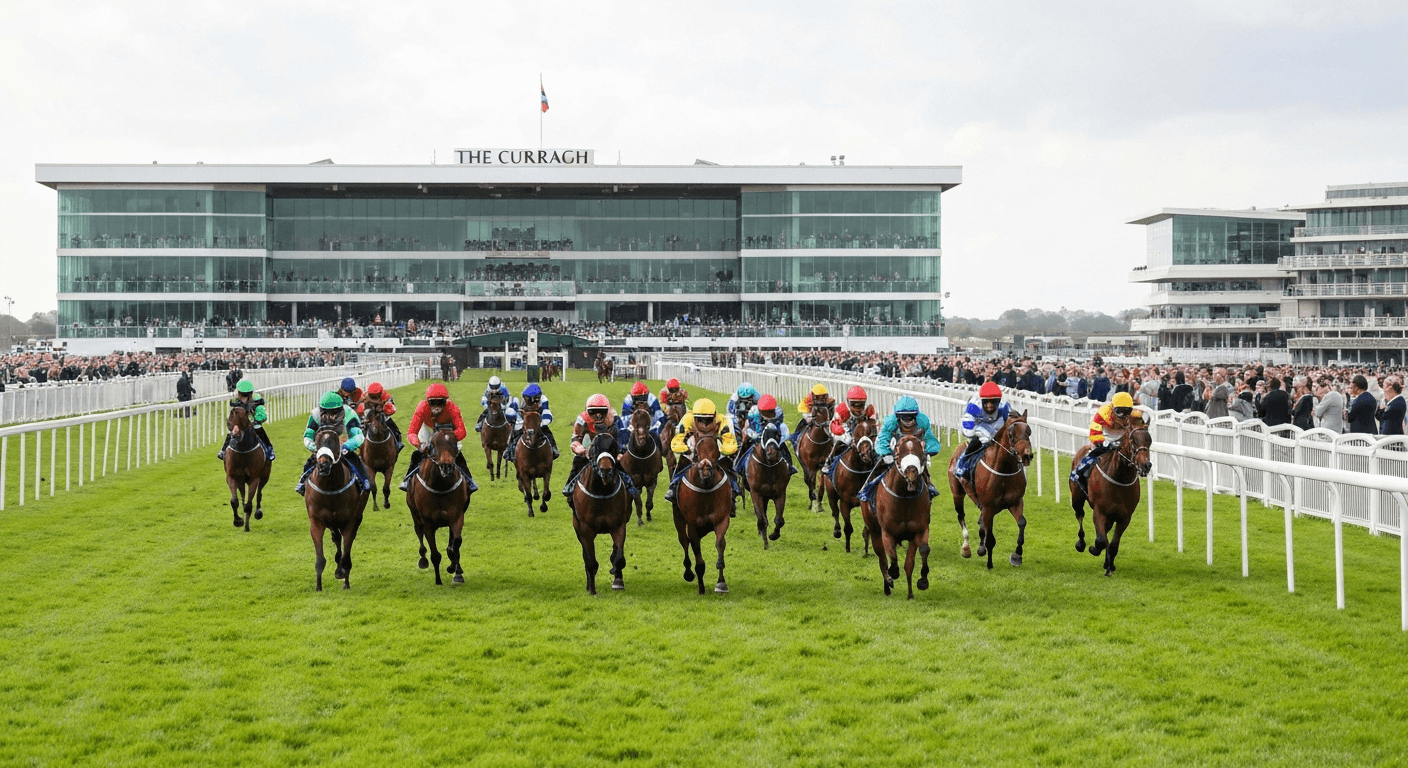
The Curragh: The Complete Guide
The home of the Irish Classics in Co. Kildare, in full: the galloping track and course map, all 11 Group 1s with their winners, the records, the festivals day by day, tickets, travel, venue hire and how to visit.
Read more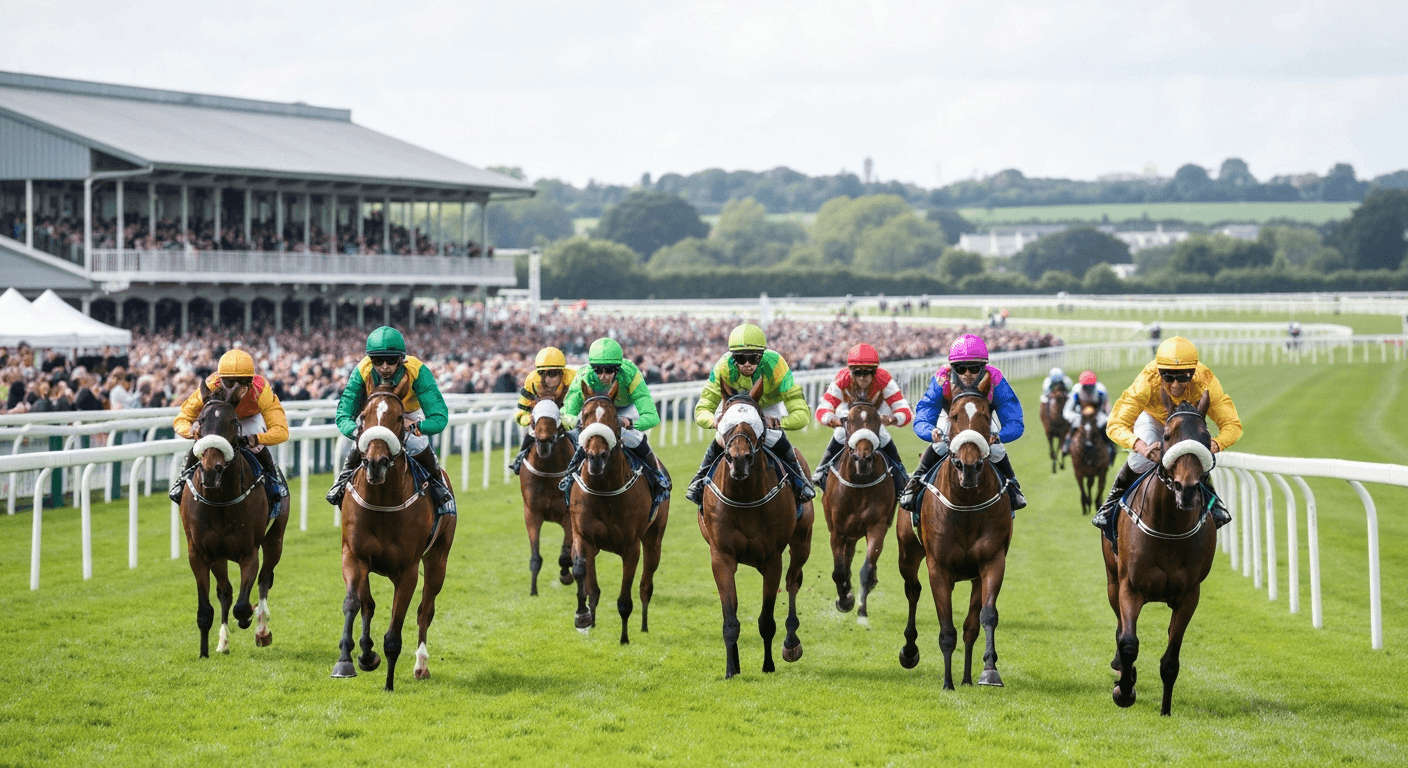
The Irish Derby Festival: A Complete Guide
A complete guide to the Dubai Duty Free Irish Derby Festival at the Curragh: dates, the Group 1 races, the atmosphere and how to get there.
Read more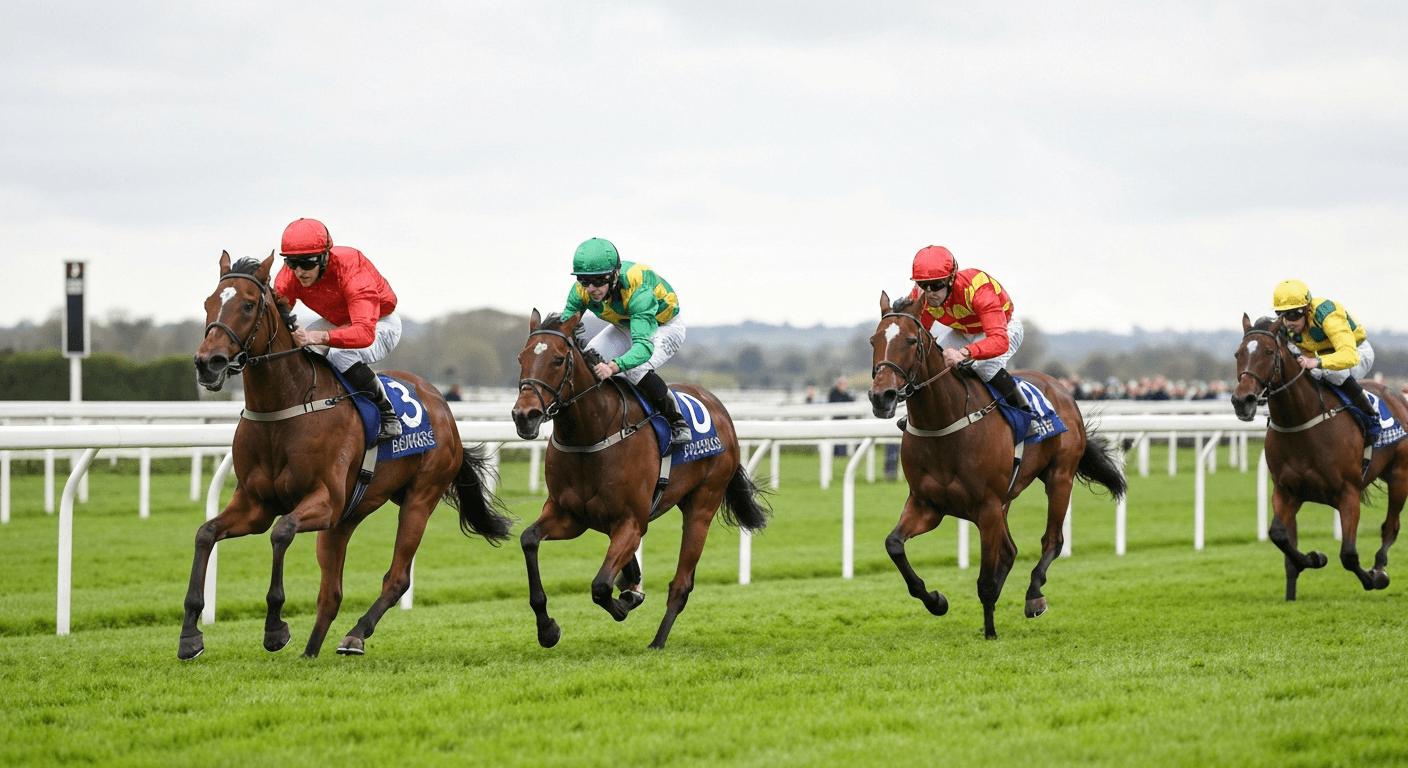
The Tattersalls Irish Guineas Festival: A Complete Guide
A complete guide to the Irish Guineas Festival at the Curragh: the Irish 2,000 and 1,000 Guineas, the Tattersalls Gold Cup, dates and how to go.
Read moreResearch the field with the AI Race Predictor
Our model publishes calibrated win-probability estimates for UK races — a second opinion to understand a race, not tips. It's open about its record: it doesn't beat the market, and we show exactly how it does.
Betting offers for Irish Derby Festival
Work it out & learn the basics
Gamble Responsibly
Gambling should be entertaining and not seen as a way to make money. Never bet more than you can afford to lose. If you or someone you know has a gambling problem, help and support is available.