
Founder & Editor · Last reviewed 2026-04-05
Introduction
Thirsk Racecourse sits in the Vale of York, roughly 26 miles north of York itself, and has been staging flat racing since the current course was established in 1855. It is a left-handed oval of approximately 1 mile 2 furlongs, with a short home straight of around 2 furlongs and turns that reward agile, adaptable horses over long-striding gallopers. The course capacity is around 5,000, which gives it an intimate, unhurried character compared with the bigger Yorkshire venues at York or Doncaster. Above all, Thirsk is defined by two things: the draw bias in sprint races — one of the most pronounced in British racing — and the Thirsk Classic Trial in April, which provides an important early-season pointer for the season's Classic picture.
The venue draws a loyal local following from across North Yorkshire and the Vale of York, supplemented in spring by racegoers who travel specifically for the Classic Trial and by families who treat the Bank Holiday Monday meetings as a fixture in the calendar. Thirsk is not a prestige venue in the way that York or Newmarket are, and it does not attempt to be. What it offers instead is competitive flat racing in a county setting with easy access, good sightlines, and a racing programme that rewards punters who do their homework.
Who this guide is for
This guide is for anyone planning a first visit to Thirsk, regular racegoers who want a deeper understanding of the course's quirks, and punters who want a working reference before placing bets. The betting section covers the draw bias in detail — if you have come to Thirsk expecting to back a fancied horse from stall 2 in a 12-runner 5 furlong sprint, you should read it before placing your money. The history and atmosphere sections are for those who want more than the racing itself: Thirsk town is the gateway to James Herriot country, the Hambleton Hills above the town have been used as training gallops for centuries, and the town market on Mondays is one of the best traditional markets in Yorkshire. The guide is built to be useful whether you are arriving by car from Leeds, by train from York, or planning a multi-day visit that takes in the North York Moors.
Quick facts
- Location: Thirsk, North Yorkshire, YO7 1QL
- Racing type: Flat only
- Course shape: Left-handed oval, approximately 1m2f round
- Home straight: Approximately 2 furlongs
- Distances run: 5f, 6f, 7f, 1m, 1m4f
- Opened: 1855 (earlier racing on the site predates this)
- Capacity: Approximately 5,000
- Signature race: Thirsk Classic Trial (Listed, 1m1f, April — 3-year-olds)
- Nearest station: Thirsk (approximately 1 mile from the course)
- Region: Yorkshire
- Related courses: York, Catterick, Beverley
- Website: thirskracecourse.net
The Classic Trial and the spring fixture
The Thirsk Classic Trial, run over 1 mile 1 furlong in April, is the course's most important race. It is a Listed contest restricted to 3-year-olds, run early enough in the season to catch horses on the way up and late enough to give trainers a proper read of their Classic prospects. Winners and placed horses from the Classic Trial have gone on to run well at Newmarket and Epsom later in the year, which means the race attracts real Classic-generation horses and not just the northern fringe of that division. The April fixture built around it is consistently the best-attended meeting of the season, typically drawing crowds that fill the course to near capacity.
Where Thirsk fits in Yorkshire racing
Yorkshire has more racecourses than any other county in England, ranging from the prestige of York's Knavesmire to the compact jumping and flat mixed card at Catterick. Thirsk sits in the middle tier: better than a pure workhorse track, below the Classic venues, but with a specific character that makes it worth understanding. For spring flat racing in the north, the Classic Trial meeting sits alongside the Dante Festival at York as a key fixture in the northern calendar. The Hambleton Hills, visible from the course on a clear day, have been used as training gallops since at least the 18th century, and the Middleham training centre 18 miles to the north-west has sent horses to Thirsk for their early runs for generations. The course's position in the Vale of York means it is accessible from most of the major northern cities without requiring a long drive.
Bet on Thirsk
Place your bets on Thirsk races with a trusted bookmaker.

Promo code BETFRED50. New customers only. Register, deposit with a Debit Card, and place a first bet of £10+ at Evens (2.0)+ on Sports, to be settled within 7 days, to get £30 in Sports Free Bets and £20 in Bet Builder Free Bets within 24 hours of settlement. 7-day expiry. Eligibility & payment exclusions apply. Full T&Cs apply. Take Time to Think. BeGambleAware.org. 18+. Full T&Cs.

Promo code R30. New UK customers only, 18+. Register, deposit £10 or more, then place a £10 single cash bet at odds of 1/2 (1.5) or greater on any sports market (excluding Virtuals). Once the qualifying bet settles you get £30 in Free Bets (3 x £10) — the qualifying bet can win or lose. Free Bets are valid on any sports market excluding Virtuals, expire in 7 days, are non-withdrawable and must be used in full. Excluded deposit methods apply (including PayPal, Apple Pay, Skrill and NETELLER). Named bets such as Lucky 15 do not qualify. If you cash out the qualifying bet, or it is voided, you are no longer eligible for the offer. Ends 31.12.26. Full T&Cs apply. Please gamble responsibly. BeGambleAware.org. 18+. Full T&Cs.

Promo code BET40GET20. New UK customers, 18+. Register with the code and place a first bet of £40 or more at Evens (2.0) or greater. Receive 2 × £10 free bets: the first credited automatically once the qualifying bet settles, the second 24 hours later. Free bets must be placed at minimum odds of 4/1 (5.0), expire 24 hours after credit, and the free-bet stake is not returned with winnings. Debit card deposits only. Take Time to Think. BeGambleAware.org. 18+. T&Cs apply. Full T&Cs.

50% of your first-day net losses refunded as a free bet, capped at £25. New UK customers aged 18+ only. To qualify, deposit and place a first bet of £10 or more on any sport at minimum odds of evens (2.00), then place at least two further bets on different events, each worth at least 50% of your largest bet, all at evens (2.00) or greater. Losses are counted from your first settled bet until 23:59 the same day. Place a qualifying £10+ bet and you are guaranteed at least a £5 free bet. Bets placed at SP, void bets, cashed-out bets and bets struck with free bets do not count towards the offer. The free bet is credited the day after your qualifying bets settle and must be used within 7 days, after which it expires. It can be used at odds from 1/4 (1.25) up to 250/1 on singles and straight accumulators, but not on Trixie, Patent or Yankee style multiples. Free-bet stake is not returned with winnings. One offer per person, household, address, IP address and device. E-wallet deposits may not qualify, so check the cashier before depositing. Customers registered with GAMSTOP cannot claim. KYC identity verification must be completed before the free bet is credited. Take Time to Think. BeGambleAware.org. 18+. T&Cs apply. Full T&Cs.

New customers, 18+. Choose the sports bonus at sign-up, make a first deposit and receive a 100% bonus up to £50 in your Sports Bonus balance. To convert the bonus to cash, wager it 10x within 30 days. Single bets below Evens (2.00) do not qualify; accumulators do not qualify if any selection is below 1/2 (1.50). Virtual Sports, voided, cancelled, drawn, cashed-out and free-bet wagers do not count towards wagering. Only the first settled bet per event counts. Withdrawing before the wagering requirement is met forfeits the bonus balance including bonus winnings. Real-money funds are used before bonus funds. Deposits via Skrill or Neteller are not eligible. Not valid in conjunction with other promotions. Odds, bet and payment limits apply. 10bet general and promotion T&Cs apply. BeGambleAware.org. 18+. Full T&Cs.

New customers in Great Britain and Republic of Ireland, 18+. Place a £10 fixed-odds qualifying bet at minimum odds of 1/2 (1.50) — single or each-way (only the win part counts), pre-event or in-play, not cashed out early, within 28 days of opening the account. Receive up to £60 in bonuses credited over three days: 3 × £10 fixed-odds free bets (the first on settlement, then 24 and 48 hours later) plus 3 × £5 Total Goals FOOTBALL spread bets and 3 × £5 racing Winning Favourites spread bets, with a £1 racing Race Index spread bet as an extra on top. The spread bets need a full spread-betting account, opened within 28 days of the fixed-odds account and subject to Spreadex's eligibility and appropriateness checks. Free-bet stakes not returned with winnings; free bets valid 28 days from issue. IMPORTANT: the £5 credits are SPREAD bets — sports spread betting carries the risk that losses can exceed your stake. Sports spread-betting customers do not have Financial Ombudsman or FSCS recourse. Take Time to Think. BeGambleAware.org. 18+. T&Cs apply. Full T&Cs.

Promo code WELCOME15, entered under My Bonuses after registering. New UK customers, 18+. Place a first qualifying bet of at least £10 from your cash balance at odds of evens (2.0) or greater within 7 days of opening the account. Once the qualifying bet fully settles you receive £15 in free bets, credited as 3 x £5 tokens with set uses: one £5 accumulator free bet (minimum 4 legs, each leg at 2/5 or bigger), one £5 sports free bet (any market at evens or bigger) and one £5 Sub Cover free bet (selected football player markets at evens or bigger). Free-bet stakes are not returned with winnings. Free bets expire 7 days after they are credited. Void, cashed-out and partially cashed-out bets do not qualify. One offer per customer. Confirm the current terms on BetGoodwin's own welcome-offer page before claiming. Take Time to Think. BeGambleAware.org. 18+. T&Cs apply. Full T&Cs.

New UK customers, 18+. Minimum deposit £10. Place a £10 qualifying single on sports (excluding virtuals) at minimum odds of 1/2 (1.50), settled within 14 days. Deposit-method exclusions apply. Receive £30 in free bets (stake not returned), split £20 for sportsbook use (2 x £10) and £10 for Bet Builder only (2 x £5); Bet Builder does not cover horse racing. Free bets must be accepted within 7 days and expire 7 days after acceptance. No promo code required. Best Odds Guaranteed on UK & Irish racing, subject to having staked over £25 in the previous seven days. Operated by LiveScore Betting and Gaming (Gibraltar) Ltd, UKGC 56859. Confirm the current terms on LiveScore Bet's own promotions page before claiming. Take Time to Think. BeGambleAware.org. 18+. T&Cs apply. Full T&Cs.
18+. BeGambleAware.org
The Course
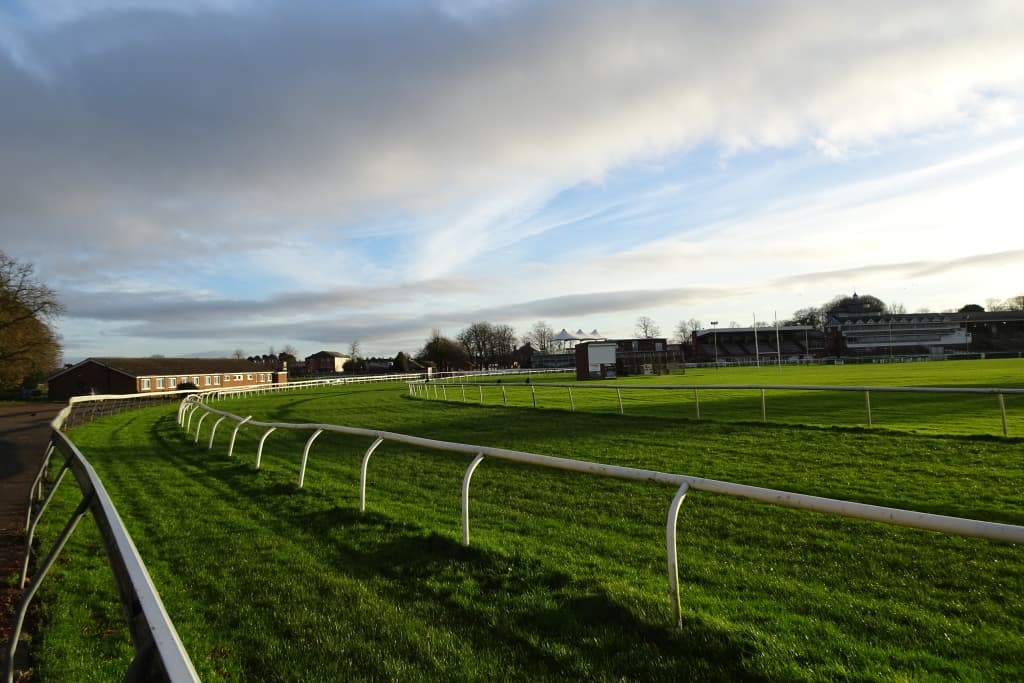
Thirsk is a left-handed oval approximately 1 mile 2 furlongs in circumference. The home straight measures roughly 2 furlongs, which is short by the standards of flat tracks — York's straight, by comparison, is 5 furlongs. That short run-in is not the only factor that shapes race outcomes here. The track also has tight turns, mostly flat but with a slight undulation on the back straight, and a layout that puts a significant premium on positional agility rather than raw, sustained galloping speed. Horses that bulldoze through a race on a wide, sweeping track often find Thirsk does not suit them at all.
Layout and direction
The course runs left-handed throughout, with no straight course of any length that bypasses the bends. All races at Thirsk are run on the round course. The turns come early and often: from the start of any sprint race, runners are negotiating the first bend within a few furlongs, which is one of the reasons the draw bias (covered in detail below and in the betting guide) is so pronounced. The back straight is the longest uninterrupted section of the track, and this is where horses settle into their rhythm before the final turn brings them into the short home straight.
The ground rises very slightly towards the finish. It is not a steep uphill finish in the manner of Chester or Epsom, but the slight gradient is enough to catch out horses who have been ridden too positively from the front. Front-runners can and do win at Thirsk — the 2-furlong home straight is short enough that a horse who has led throughout can hold on — but they need the stamina to sustain their effort through the final turn and up the gentle rise.
Distances run
Thirsk stages races over five distances:
5 furlongs. The shortest trip at Thirsk, and the distance where the draw bias is at its strongest. From the 5f start, runners almost immediately face the first left-hand turn. Low-drawn horses must cover extra ground as they are pushed to the outside of the bend, while high-drawn horses (towards the far rail from the stalls) are already in the position they want. In fields of 10 or more, this becomes a statistically measurable advantage — see the Draw Bias section below.
6 furlongs. The draw bias remains relevant at 6f but is somewhat less extreme than over 5f, because runners have a longer period of straight running before the first bend and a better chance to find their position. High draws still hold an edge in large fields, but the race is more of a contest. A horse drawn low with real pace can overcome the disadvantage more readily at 6f than at 5f.
7 furlongs. At this distance the draw effect diminishes further. Jockeys have enough time to manoeuvre their horses into good positions before the critical bends, and the race increasingly becomes a test of class and pace rather than stall position.
1 mile. Middle-distance racing at Thirsk is run over the full oval. The track's tight turns and relatively short straight do still mean that horses who are effective on a galloping track — the type that needs to wind up over a long straight — can find the experience frustrating. Horses with a sharp, agile style of running tend to perform better than their form on wider tracks might suggest.
1 mile 4 furlongs. The longest trip at Thirsk tests stamina and jumping ability around a compact course. Staying races at Thirsk are often dominated by horses who handle left-hand bends comfortably and who can maintain a consistent gallop rather than needing a long stretch to find their best stride.
The draw bias: what it is and why it matters
The draw bias at Thirsk is one of the most well-documented in British flat racing, particularly in sprint races with large fields. In 5 furlong races with 10 or more runners, horses drawn in the top quarter of the stalls — stall 10 or above in a standard field of 14 to 18 — win at approximately twice the rate their probability of winning would predict based on the number of runners alone. In races with 12 or more runners, horses from the top quarter of the draw have won at roughly 1.5 times their expected rate across multiple seasons of data.
The mechanism is straightforward. Thirsk's 5 furlong start is positioned so that runners head almost immediately into a left-hand turn. Horses drawn in low stalls (stall 1, 2, 3) are on the inside of the turn in terms of their starting position, but because the track curves left, they find themselves on the outside of the bend once the field turns. To hold a position near the rail, they must either drift across the track (burning extra energy and potentially impeding other runners) or accept being pushed wide. High-drawn horses, meanwhile, have the rail in their favour as the bend arrives — they are already positioned correctly and lose nothing.
This is not a subtle effect or a matter of interpretation. Trainers, jockeys, and betting markets are all aware of it. On a day with a big sprint field, the high-draw horses in 5f races will often be marginally shorter in the market than their absolute ability warrants, and the low-draw horses will be slightly longer. The adjustment in the market is real but rarely complete — there remains persistent value in marking up high-draw horses and treating low-draw horses with suspicion in large-field 5f races.
At 6 furlongs, the bias is less extreme but still present in fields above 12 runners. At 7 furlongs and beyond, Note but not systematically leaning on.
Going tendencies
Thirsk sits on clay-based heavy soil in the Vale of York. This has two practical consequences. First, the going can shift quickly after rain: a spell of wet weather in April can take the ground from good to soft or soft to heavy within 48 hours. Second, the course holds water. Even after a dry spell, if rain arrives on race day or the day before, the ground can be unexpectedly testing. Trainers based locally — particularly those at the Middleham yards 18 miles to the north-west — are accustomed to factoring this in, but punters who do not follow northern racing closely sometimes underestimate how soft Thirsk can get in April and May.
For spring meetings, it is always worth checking the going report no earlier than the morning before the card. Thirsk's groundstaff issue daily updates during the season, and the track can move a full category (from good to good-to-soft, or good-to-soft to soft) overnight.
Summer meetings from June onwards tend to run on better ground. July and August fixtures regularly see good to firm or firm going, and the track rides faster in the shorter home straight than the circumference might suggest — good-ground speed horses tend to excel in the summer months.
Horse types that succeed
The tight turns and short home straight at Thirsk reward a specific type of horse. The characteristics to look for:
Agility over galloping ability. A horse that needs 3 or 4 furlongs of straight running to produce its best — the type that blossoms at Newmarket or York on a long flat track — will often under-perform at Thirsk. Horses with a quick, nippy action and the ability to maintain speed around bends tend to do better.
Soft-ground versatility. Given the going tendencies described above, horses with a proven ability to handle cut in the ground are worth marking up for spring meetings at Thirsk, particularly in April and May. A horse that acts on good to firm but has no form on soft ground is a risk on any Thirsk spring card.
Course experience. Horses that have run well at Thirsk previously — particularly those that have handled the tight turns comfortably — should be respected when they return. The course type (tight, left-handed, short straight) is distinct enough that a course winner at Thirsk carries a real advantage.
Middleham and northern trainers. Stables based within 25 miles of Thirsk use the course as a natural prep track. A horse from a Middleham yard having its first run of the season at Thirsk in April is likely to be fit, sharp, and familiar with the type of ground and track it will encounter. Richard Fahey's Musley Bank stables in Malton (25 miles from Thirsk), Tim Easterby at Sheriff Hutton (20 miles), and John Quinn at Settrington (30 miles) all send horses regularly and punch above their market weight at this venue.
How the track changes the viewing experience
The short home straight and tight oval mean that spectators in the main grandstand see all the key moments of shorter races clearly. A 5 furlong race comes off the bend and into the straight in front of the stands with plenty of time to follow the finish, and the compact layout means the field is rarely more than 200 metres from the rail when the key moves are made. For longer races, the back straight is clearly visible from most parts of the grandstand, though binoculars are useful for tracking individual runners.
The paddock sits close to the grandstand, and the walking ring is compact enough that paddock inspection is straightforward even for racegoers who arrive without premium enclosure access. The tight turns that define the racing also make the course approachable for new visitors — there is no vast expanse of track to get lost on.
Key Fixtures & Calendar
Thirsk stages flat racing from April through to September, typically across 14 to 16 fixtures per year. The programme is exclusively flat: there is no jumps racing at Thirsk, and the course makes no attempt to stretch its season with all-weather or winter meetings. What the fixture list offers instead is a concentrated summer programme that begins with the most important meeting of the year — the Classic Trial card in April — and works through Bank Holiday family days, the Hunt Cup meeting in May, and a run of summer evening fixtures before closing out in September.
The Thirsk Classic Trial meeting (April)
The season-opener at Thirsk is also the most significant race meeting the course stages. The Thirsk Classic Trial, run over 1 mile 1 furlong, is a Listed race for 3-year-olds and forms part of the early-season evidence trainers and pundits use when assessing the Classic generation. It is run in April — typically the third or fourth week of the month — which places it squarely in the period when Classic trials across the country are giving an early read on Derby and Oaks prospects.
The race matters for several reasons. First, the 1m1f trip is a proper test: not so short that pure sprinting speed dominates, and not so long that stamina becomes the overriding question. Second, the field quality is generally high — trainers with truly Classic-quality 3-year-olds are willing to run them at a northern track early in the season if the horse is ready, because the prize money and Listed status make it worthwhile. Third, the form has translated well to Newmarket and Epsom later in the season: horses placed in the Classic Trial have run well in the Dante Stakes and in lesser Guineas trials in subsequent weeks.
The Classic Trial card also features several supporting races, including sprint handicaps that attract competitive fields and give punters plenty to work with alongside the feature event. Attendance at the Classic Trial meeting typically runs close to the course's 5,000 capacity, making it the best-attended card of the year.
The Bank Holiday Monday meetings
Thirsk has historically staged meetings on Bank Holiday Mondays, which have become well-established family days in the North Yorkshire racing calendar. The combination of a Bank Holiday, accessible location (the course is 26 miles from York and 35 miles from Leeds), free on-site parking, and child-friendly facilities makes these meetings popular with groups and families who might not attend every week of the racing season.
Bank Holiday meetings typically attract crowds of 4,000 to 6,000, well above the course's average for a standard weekday fixture. The racing on these days is usually a mixed card of sprints and middle-distance races, with a mix of Class 4 and Class 5 handicaps and the occasional Class 3 contest. They are not the highest-quality cards of the season, but they are among the most enjoyable to attend in terms of atmosphere.
The Hunt Cup meeting (May)
The Thirsk Hunt Cup, run in May, is one of the course's traditional handicap features. It is a flat handicap race with a history stretching back well into the 20th century, and the May meeting built around it sits between the spring Classic Trial card and the summer programme. Hunt Cup meetings typically draw crowds of 4,000 to 5,000 and attract a mix of the regular Thirsk following and racegoers who specifically follow the handicap programme.
The Hunt Cup meeting is an important fixture for northern trainers looking to place horses at the right level: the race attracts a broad spread of handicap marks and is competitive without requiring Classic-generation talent. It is also the meeting where the going is most variable — May in North Yorkshire can be anything from good to firm to heavy, and the clay soil at Thirsk means conditions can shift within a single race day.
Summer evening racing (June–August)
From June onwards, Thirsk stages a series of evening meetings that have become popular with racegoers who want a relaxed, informal day at the races without a full-day commitment. Evening cards typically start at around 6pm, with six or seven races finishing before 9pm in the long summer evenings.
Attendance at evening meetings is lower than the Bank Holiday days — typically 2,000 to 3,500 — but the atmosphere is often described by regular visitors as the most enjoyable of the season. Families come early and stay late, the enclosures are less crowded, and the course's compact size means every spectator gets a close view of the action. The going in June, July, and August is usually good to firm or firm, and the sprint races on summer evenings regularly produce fields of 12 or more runners that make the draw bias particularly relevant.
Late-season cards (August–September)
The final months of the season at Thirsk bring a run of afternoon meetings that sit between the peak summer cards and the end of the flat season. August and September fixtures attract trainers looking to place horses that have missed the summer peak or need one more run before the season closes. Fields can be smaller in this period, and the going is typically faster than in spring. The course closes its flat season in September, after which there is no racing at Thirsk until the following April.
Planning around the fixture list
The full fixture list is published by Thirsk Racecourse in the winter ahead of each season and is available at thirskracecourse.net. For the Classic Trial meeting and the Bank Holiday cards, tickets should be booked in advance — these are the only fixtures that regularly sell out the best enclosures. Evening fixtures can generally be attended on the day without advance booking, though pre-booking online saves time at the gate.
Typical ticket prices at Thirsk run from around £12 to £18 for general admission and from £22 to £35 for the Members enclosure, varying by meeting. The Classic Trial meeting is priced at the upper end of that range. Children under 18 are admitted free when accompanied by a paying adult at most meetings, though the exact policy should be checked on the racecourse website ahead of each fixture.
Facilities & Hospitality
Thirsk Racecourse is a compact venue with a functional, well-maintained set of facilities that serve a crowd of up to 5,000 comfortably. It is not the most polished venue in British racing — there are no lavish hospitality suites on the scale of York or Ascot — but the core infrastructure is solid, the sightlines are good throughout, and the course has invested steadily in its facilities over the past decade.
Enclosures and grandstand
The course operates three main enclosures, each at a different price point.
The County Stand (Members enclosure). This is the premium enclosure at Thirsk, occupying the main covered grandstand closest to the winning post. Members have the best sightlines for the finish, covered seating and standing areas, access to the Members bar, and the highest standard of catering on the course. The County Stand is the place to be for the Classic Trial meeting — the finish line views are clear, the atmosphere is at its most concentrated, and the paddock is directly adjacent. Dress code for the County Stand is smart casual, with the racecourse asking members to avoid sportswear, ripped clothing, and football colours. Suits and smart separates are the norm on classic meeting days; on a Tuesday evening card in July, smart casual is comfortably sufficient.
The Premier Enclosure. Adjacent to the County Stand, the Premier Enclosure gives access to the main grandstand viewing areas, the paddock, and a wider range of bars and catering than the Silver Ring. Most racegoers who want a proper day out without the premium price of Members choose the Premier Enclosure, and it is the right call for most visits. The viewing terraces offer clear lines to the finish, and the paddock — used for all inspections before each race — is easily accessible from this enclosure.
The Silver Ring. The open enclosure at Thirsk, the Silver Ring is the most affordable admission option and gives access to a section of the track from which the racing is clearly visible, along with basic catering and bar facilities. It is popular with families who want a relaxed, budget-friendly day and with racegoers who are happy to watch from the rails rather than from a grandstand terrace. The Silver Ring does not give access to the paddock or the main grandstand, but the open rail provides an unobstructed view of the finish and most of the home straight.
The paddock
Thirsk's paddock is compact and sits close to both the Members and Premier enclosures. Pre-race parade viewing is straightforward, with a good proportion of the paddock rail accessible to Premier Enclosure ticket holders. The walking ring is small enough that you can see each horse clearly without binoculars, which is an advantage for those who like to make their decisions based on what they see in the paddock rather than purely on form. Connections — trainers, owners, stable staff — are typically present and visible, which adds to the intimacy of the experience.
Food and drink
The Tea Room. Thirsk's Tea Room is a long-standing feature of the course and is the most consistently recommended catering option by regular visitors. It operates from before the first race until after the last, serving hot drinks, sandwiches, cakes, and light meals throughout the day. The Tea Room is accessible to Members and Premier Enclosure ticket holders and is worth arriving early for on busy meeting days when tables fill up quickly.
The bars. There are bars distributed across all three enclosures. The Members bar in the County Stand serves a standard range of draught and bottled beers, wines, and spirits, along with prosecco by the glass and bottle — the default choice for groups celebrating. The Premier Enclosure bar operates on the same principle. The Silver Ring has a more functional bar offering draught beer and soft drinks. On busy meeting days, particularly the Classic Trial card and Bank Holiday meetings, queues at the bars can be significant in the 30 minutes before each race. Arriving at the bar between races rather than immediately before the off is the practical approach.
On-course catering. Beyond the Tea Room, the course operates catering units selling hot food — burgers, chips, pie and mash — across the Premier Enclosure and Silver Ring. The quality is consistent rather than exceptional, but it is hot, reasonably priced by racecourse standards, and adequately varied for a day that lasts six to eight hours. There is no formal restaurant at Thirsk in the style of some larger venues, though the County Stand hospitality packages include sit-down meals.
Hospitality packages. For the Classic Trial meeting and major bank holiday cards, Thirsk offers pre-booked hospitality packages that include County Stand access, a set menu lunch, a racecard, and a complimentary drink on arrival. These are popular with corporate groups and milestone celebrations. Pricing varies by meeting; the Classic Trial packages are typically the most expensive of the season and should be booked several weeks in advance.
The betting ring
Thirsk has a traditional betting ring with on-course bookmakers operating throughout the afternoon. The ring is positioned between the grandstand and the track, which means that accessing it does not require going far from the main viewing areas. On a typical afternoon there are 12 to 18 rails bookmakers operating, with TOTE facilities also available. The ring is active from roughly 30 minutes before the first race and the competition between bookmakers means you can often get a marginally better price from a rails bookie than from the exchanges on smaller fields — though the reverse is true for the feature races where the market is more liquid online.
Children's areas and family facilities
Thirsk makes a deliberate effort to be family-friendly, and the Bank Holiday meetings in particular are marketed at families. There is a children's play area in the Silver Ring that keeps younger children occupied between races. Baby-changing facilities are available in the main grandstand. Thirsk does not have a creche or supervised children's activity programme on most cards, but the relaxed atmosphere and compact layout make the course manageable with young children in a way that a larger, more crowded venue would not be.
Disabled access
The main grandstand has step-free access routes, and the course provides a specific accessible viewing area with good sightlines of the finish. Disabled parking spaces are available immediately adjacent to the main entrance. The paddock area is accessible via a flat path from the grandstand, and the Silver Ring viewing rail is at ground level throughout. Racegoers with specific requirements can contact the racecourse in advance; the office number is listed on the Thirsk Racecourse website.
Getting There
Thirsk Racecourse is at YO7 1QL, on the northern edge of Thirsk town. It is not motorway-adjacent — the nearest motorway junction is the A1(M) at Dishforth, approximately 7 miles to the south-east — but the approach roads from most directions are fast dual carriageway or A-road, and the journey times from the major northern cities are manageable.
By train
Thirsk station is on the East Coast Main Line, served by LNER trains running between London King's Cross and Edinburgh. Direct services run from York (approximately 20 minutes), Leeds (approximately 45 minutes with a change, or direct on some services), Darlington (approximately 25 minutes), and Northallerton (approximately 10 minutes). The station sits approximately 1 mile south-east of the racecourse, which is a walkable distance of around 15 to 20 minutes on a straightforward flat route through the town centre.
On major meeting days — the Classic Trial card in April, Bank Holiday Mondays, and the Hunt Cup meeting in May — Thirsk Racecourse operates a shuttle bus service between the station and the course. The shuttle runs from approximately 90 minutes before the first race until 45 minutes after the last, with services every 20 to 30 minutes. On standard afternoon and evening cards, the shuttle does not typically run, so arriving by train on those days means either walking the mile into town and up to the course or taking a taxi from the station rank.
Train times from London King's Cross to Thirsk run at approximately 2 hours 30 minutes on a fast service. If you are travelling from London for the Classic Trial meeting, the 07:30 or 08:00 departures from King's Cross will have you at the course well before the 2pm first race.
By car
From York: Take the A19 north from York. The journey is approximately 26 miles and takes around 30 to 35 minutes outside of peak hours. Follow signs for Thirsk from the A19 and then for the racecourse from the town centre.
From Ripon: Take the A61 south-east. The journey is approximately 8 miles and takes 15 to 20 minutes. This is the shortest drive of any major town in the area.
From Northallerton: Take the A61 south. The journey is approximately 9 miles and takes 15 to 20 minutes. Northallerton is also on the East Coast Main Line, so visitors arriving by train and who want to avoid the Thirsk shuttle can alight at Northallerton and take a taxi.
From Leeds: The most direct route is the A61 north through Harrogate and Ripon, approximately 35 miles and around 50 to 60 minutes. Alternatively, the A1(M) north to junction 49 (Dishforth) then the A168 west to Thirsk is about the same distance and slightly faster in peak traffic.
From Newcastle: Take the A1(M) south to junction 50 (Leeming Bar) then the A684 west briefly and south on the A61. The journey is approximately 55 miles and takes around 55 to 65 minutes.
Parking
The course has a free car park that is adjacent to the track, accessible directly from the road. The car park is large enough to handle a capacity crowd on most days without significant queuing. On the Classic Trial meeting and Bank Holiday cards — when attendance approaches 5,000 — the car park can become congested in the last hour before the first race and in the 30 to 40 minutes after the last race as everyone leaves at the same time. Arriving 90 minutes before the first race on those days avoids the worst of it. On standard weekday and evening cards, parking is immediate and straightforward.
There is no designated overflow car park, so if the main car park fills — which happens only on the busiest days — racegoers are directed to on-street parking in the surrounding roads. Thirsk town centre is approximately a 10-minute walk from the course, and there is street parking available in the town on non-market days.
On foot from Thirsk town
Thirsk town centre is well worth exploring before or after racing. The market square, with the Golden Fleece Hotel at its heart, is about 10 minutes' walk from the course on a flat route. The World of James Herriot museum on Kirkgate — the former surgery of vet James Herriot (real name Alf Wight), who used Thirsk as the basis for the fictional Darrowby — is a 12-minute walk from the course and is open throughout the year. If you are arriving by train and have time before the races, the walk from the station into town and then up to the course takes in both the market square and the museum route with only a modest detour.
Frequently Asked Questions
History of Thirsk Racecourse
Racing at Thirsk predates the current course by several decades. There are records of organised race meetings in the Vale of York in the early 19th century, and the general area around Thirsk — particularly the flat grass of the Hambleton ridge above the town — had been used for horse exercise and informal racing contests long before a formal track was laid out. The current course was established in 1855, a date that places Thirsk's founding in the same period as several other northern flat venues that were formalised under the Jockey Club's expanding administrative structure in the mid-Victorian era.
The Hambleton Hills and the ancient gallops
Any account of Thirsk's racing history has to start above the town rather than on it. The Hambleton Hills form the western edge of the North York Moors, rising sharply from the Vale of York to a plateau of open grass moorland. The ancient Hambleton Street, a drove road running along the ridge, has been used for transporting horses since at least the medieval period, and by the 18th century the flat turf of the Hambleton ridge had become one of England's most important training grounds. Horses were galloped on Black Hambleton and the surrounding moorland by trainers who valued the firm, consistent footing and the complete absence of public roads or distractions.
The connection between the Hambleton Hills and organised racing is well-documented. By the late 1700s, the Hambleton racecourse — a now-defunct track on the ridge itself — was staging formal meetings, predating the construction of many of the purpose-built courses that dominate Yorkshire racing today. When that ridge track fell out of use and the more accessible valley courses took over, Thirsk was well-positioned to absorb much of the local racing activity. The hills remained as training gallops, and many of the stables that trained on the Hambleton ridge in the 18th and 19th centuries had a natural affinity with Thirsk as a racing venue.
The Victorian course: 1855 and after
The establishment of the current Thirsk course in 1855 followed the broader mid-Victorian trend of formalising northern flat racing under Jockey Club rules. The course was laid out on the flat ground at the edge of the town, taking advantage of the Vale of York's even terrain. In the second half of the 19th century, the grandstands were developed in the functional Victorian style common to northern courses: covered viewing from a single main stand, a Members enclosure with basic amenities, and a separate public area along the rails.
The Thirsk course in this period was part of the regular circuit for northern trainers, particularly those based at the Yorkshire training centres that were developing rapidly in the late Victorian era. Middleham, 18 miles to the north-west, had been a training base since the 18th century, and the number of horses in training there grew substantially in the 1870s and 1880s as the northern flat racing programme expanded. For horses based at Middleham, Thirsk was — and remains — one of the most logical early-season prep venues, combining proximity with a track type that gives a useful read on a horse's ability around bends.
The course in the 20th century
Thirsk continued operating throughout the first half of the 20th century, though racing was suspended during both World Wars in line with the rest of British racing. The course's position as a mid-tier northern flat venue was established in this period: competitive enough to attract good-quality horses, accessible enough to draw regular crowds from across the Vale of York and beyond, but without the prestige fixtures that made York or Doncaster national destinations.
The post-war period brought investment to the grandstand and viewing facilities. The County Stand, which forms the Members enclosure, was developed in its current form during the mid-20th century, replacing older Victorian structures with covered viewing that suited the course's capacity and the expectations of postwar racegoers. The introduction of Sunday racing in Britain in the 1990s and the expansion of the fixture list through the same decade meant that Thirsk added evening meetings to its programme, which proved popular and have remained a feature of the summer calendar.
The introduction of the Classic Trial
The establishment of the Thirsk Classic Trial as a Listed race was a significant step in raising the profile of the April meeting. By designating the 1m1f 3-year-old race as a Listed contest, the course was able to attract better-quality horses from a wider pool of trainers — Classic-generation horses that trainers wanted to run in a proper test rather than a lower-grade conditions race. The Listed status also meant that the race's form was taken seriously by the following year's assessors and by the market: horses that ran well in the Classic Trial began to appear in the ante-post markets for the Guineas and Derby.
The timing of the race — in the third or fourth week of April — put it ahead of the Yorkshire Classic trials at York (the Dante Festival in May) and gave northern-based trainers a local option that did not require travelling to Newbury or Newmarket for an early-season read of their best 3-year-olds. Over time, the Classic Trial became the anchor of the Thirsk spring meeting and the fixture that best defines what the course offers to the northern racing calendar.
Middleham and the training connection
Throughout Thirsk's recorded racing history, the relationship between the course and the Middleham training community has been one of its defining features. Middleham, a small town in Wensleydale with a disproportionate number of racing stables relative to its size, is 18 miles from Thirsk and has produced horses that have raced at the course across every decade of its history. In the 19th century, horses trained on the Hambleton gallops above Thirsk itself had a direct local connection. In the 20th and 21st centuries, the Middleham trainers — among them Mark Johnston, who trained from Kingsley House Stables in Middleham from 1988 until his son Charlie took over the licence — have regularly used Thirsk as a prep venue for their early-season runners.
The practical geography of the Vale of York and the surrounding hills means that Thirsk occupies a natural position at the centre of a training ecosystem. Malton, 25 miles to the east, is another major training centre whose residents — including Richard Fahey and Tim Easterby — regularly send horses to Thirsk. The course's clay soil and the going tendency towards testing conditions in spring also give locally trained horses a familiarity advantage over horses brought up from the south on their first run of the season.
Famous Moments
Thirsk's famous moments are not the kind that dominate the national racing narrative — the course does not stage Group 1 racing or the Derby — but they are numerous and consistent enough to give the track a real history worth knowing. The Classic Trial has produced horses that went on to Classic success. The draw bias has created upsets in sprint races that punters and handicapping analysts still reference. And the Hambleton connection gives the course a background that extends well beyond the winning post.
Classic Trial graduates
The Thirsk Classic Trial has been a springboard for horses that Then ran with distinction in Classic races. The race's Listed status and its position in the early-season programme means it attracts horses that trainers regard as real Classic material, and the quality of the field in most years is higher than the prize money alone would suggest.
Several Classic Trial winners have gone on to run in — and place in — the 2,000 Guineas at Newmarket, run over the same distance of 1 mile. The fact that the Classic Trial is run over 1m1f rather than exactly a mile means that winners who show an ability to stay the extra furlong are particularly interesting: a horse that wins at Thirsk over 1m1f with any authority is likely to have the stamina to get the full Classic trip. For trainers with a real Guineas prospect, the combination of Listed prize money, relatively local access for northern stables, and a proper stamina test makes the race an attractive option.
The Classic Trial has also produced horses that Then ran well in the Dante Stakes at York — the 1m2f Classic trial that is the north's main pointer to the Derby — and in the Chester Vase and Lingfield Derby Trial. The race sits at the right point in the season to give trainers a read of their 3-year-olds before the key Classic trials of May, and the form it produces tends to be taken seriously by the handicapper and by the market.
Big-field sprint upsets and the draw bias
Thirsk has been the setting for some of the most widely discussed draw-bias-driven upsets in British sprint racing. Because the high-draw advantage in 5 furlong races is so pronounced, there are documented cases of horses with official ratings substantially below their rivals winning solely from the benefit of a high stall draw.
In several well-documented instances — discussed in betting analyst communities and in the Racing Post's historic form archive — horses rated 20 or more pounds below the market leader have won 5 furlong handicaps at Thirsk when drawn in the high stalls in fields of 14 or more runners. These are not merely cases of the draw providing a small edge; they are cases where the positional advantage was so significant that it overcame a substantial class deficit. The pattern has been consistent enough over multiple seasons that the draw at Thirsk sprints became one of the first course-specific biases to be systematically incorporated into betting models used by professional punters.
The upsets that most stick in the memory of regular Thirsk watchers tend to involve large-field Saturday sprint handicaps in April and May, when the ground is often soft, the fields are big, and the draw advantage is compounded by the fact that soft-ground specialists from high draws have a double advantage over faster-ground horses drawn low. These races are typically not the ones the national press focuses on — they are Class 4 and Class 5 handicaps rather than Listed or Group contests — but among the community of punters who follow northern flat racing closely, they have become reference points for understanding how dramatically a draw can shape a race outcome.
The Hambleton connection and locally trained horses
Horses trained on the Hambleton gallops or by stables closely linked to the Thirsk area have a long history of performing above market expectation at the course. In the 18th and 19th centuries, when the Hambleton ridge was actively used as a training ground, the connection was direct: horses galloped above the town and raced below it. In the modern era, the link is maintained through the Malton and Middleham training communities.
Richard Fahey, whose Musley Bank stables are in Malton 25 miles from Thirsk, has won repeatedly at the course across a career spanning more than two decades. Fahey's record at Thirsk in sprint handicaps with large fields is Of note strong, and he is known to factor the draw bias into his entries — his horses in 5f races at Thirsk are disproportionately well-drawn, which suggests that the stable is selective about running horses from low draws in big fields. Tim Easterby, training from Sheriff Hutton, and John Quinn at Settrington have similar track records of performing above expectation at Thirsk, with strike rates that consistently outperform their overall national numbers.
Memorable meetings
The Classic Trial meetings of the early 2000s produced several cards that have stayed in the memory of regular Thirsk attendees: close finishes in the feature race on heavy ground, with fields of eight or nine horses packed closely throughout the straight. The Bank Holiday cards of the same era regularly drew crowds approaching or exceeding the course's stated capacity, with the betting ring active well beyond the time that the last race closed.
Among the most often-cited memories of long-standing Thirsk racegoers are the summer evening meetings on firm ground in late July, where large sprint handicap fields of 16 or more runners produced draws-dominated finishes that the on-course bookmakers occasionally failed to fully price. These are the kinds of specific, repeating patterns that give a racecourse its character — not single landmark occasions, but the accumulated texture of a fixture list run over decades on a track with a distinctive and exploitable character.
Betting Guide
The single most important thing to understand before placing a bet at Thirsk is the draw bias in sprint races. Everything else — trainer statistics, going analysis, course form — is secondary to this. If you are betting on a 5 furlong race with 12 or more runners at Thirsk and you have not checked the draw, you are operating with incomplete information.
The draw bias: the defining factor
Thirsk's 5 furlong start positions runners so that they reach a left-hand bend within the first few hundred metres of the race. As the field turns, horses drawn in the low stalls (1, 2, 3) find themselves on the outside of the bend — the worst possible position — because they started on what appeared to be the inside but is, in practice, the wrong side of the turn. High-drawn horses (stalls 10 and above in a 14-runner field, proportionally higher in bigger fields) are carried naturally to the favourable rail side as the bend approaches.
The statistical evidence for this is substantial and consistent across multiple seasons. In 5 furlong races with 12 or more runners, horses from the top quarter of the stall draw have won at approximately 1.5 times the rate their numbers would predict. In fields of 16 or 18 runners — which are not uncommon in Class 5 sprint handicaps at Thirsk — the effect becomes more extreme, and horses from stalls 13 to 18 have in certain samples won at close to twice the expected rate. The effect is well-known to the market, which means that high-draw horses in big Thirsk sprints are often slightly shorter than their raw ability warrants. The adjustment is rarely complete, however, and there is persistent residual value in applying the draw filter systematically.
Practical application:
- In any 5 furlong race with 10 or more runners, note the stall draw before assessing ability.
- Horses drawn in stalls 1 to 4 in a 14+ runner field face a significant structural disadvantage. Even a well-fancied horse drawn stall 2 in a 16-runner 5f sprint should be marked down, and your confidence in backing it should be reduced accordingly.
- Horses drawn in the top third of the stalls (e.g., stalls 11 to 18 in an 18-runner field) should be marked up relative to their form alone.
- At 6 furlongs, the bias is present but weaker. Apply it in fields of 12 or more runners, with less severity than at 5f. At 7 furlongs and beyond, the draw effect is worth noting but should not dominate your analysis.
Going analysis
Thirsk's clay-based soil means the ground can deteriorate quickly after rain, and spring meetings — particularly the Classic Trial card in April and the Hunt Cup meeting in May — are the most likely to be run on soft or heavy going. The practical implication for betting is straightforward: horses with established soft-ground form should be marked up significantly for spring Thirsk cards, and horses whose form is exclusively on good to firm or faster should be treated with caution regardless of their ability rating.
The going at Thirsk can move a full category within 24 hours. A report of good to soft on the Monday can become soft or heavy by Tuesday evening if rain arrives. Check the official going report as late as possible — ideally the morning of the card — before finalising any bets on spring Thirsk fixtures.
Summer meetings from June onwards typically run on good to firm or firmer. In these conditions the going advantage reverses: faster-ground speed horses come into their own, and soft-ground specialists can find the quicker surface unsuitable. In July and August, when the clay has dried and the going is consistently fast, the track rides differently enough from the spring version that it is worth treating spring and summer form at Thirsk with some caution as a cross-reference.
Trainer statistics
Richard Fahey has a notable record at Thirsk that extends across two decades. His Musley Bank stables in Malton sit 25 miles from the course, which makes Thirsk a natural prep venue for his sprint and middle-distance horses. Fahey is known to be selective about which horses he runs in large-field Thirsk sprints — the stable's horses in 5f handicaps at the course tend to be disproportionately well-drawn, suggesting that his team factors the draw into entry decisions. His strike rate at Thirsk consistently outperforms his national average, and he is particularly strong in the first and second quarters of the flat season.
Tim Easterby, training from Habton Grange at Sheriff Hutton (approximately 20 miles from Thirsk), has a similar pattern of over-performance at the course. Easterby's horses tend to be prepared for their seasonal debuts at courses they know — Thirsk is a regular early port of call — and his record in sprint handicaps with good-to-soft or softer going at the course is worth tracking.
John Quinn, based at Settrington near Malton (around 30 miles from Thirsk), also punches above his national weight at the course. Quinn is a notable handler of sharp, nippy sprinters who suit tight tracks, and Thirsk's left-handed oval and short home straight are well-matched to the type of horse his stable tends to produce.
A general principle applies: horses from stables within 30 miles of Thirsk have a familiarity and logistics advantage over horses travelling from the south. A horse from a Newmarket stable making its seasonal debut at Thirsk in April is doing so in unfamiliar conditions — a clay track, potentially soft going, tight bends — that a Malton or Middleham horse will know well.
The Classic Trial: form that travels
The Thirsk Classic Trial's Listed status means its form is taken seriously by the handicapper and by the broader market. Horses that run well in the Classic Trial — particularly those that finish in the first two or three in a competitive field — tend to be worth following in subsequent runs at Newmarket, Chester, and York. The race is run at the right time of year (April) to give a real read on 3-year-old ability before the Derby and Guineas trials of May, and the 1m1f trip is a proper test of both pace and stamina.
When assessing the Classic Trial field for betting purposes, note that horses drawn in the high stalls still have an advantage even at 1m1f — the bend comes early enough to give a positional edge to high-drawn horses in fields of eight or more. The going in April at Thirsk is frequently soft or heavy, and horses with soft-ground experience (particularly those that have already run on cut in the ground as 2-year-olds in autumn) tend to have an advantage over horses making their seasonal debut on an unfamiliar surface.
Quick betting checklist for Thirsk
- Check the draw first in any race under 7 furlongs with 10+ runners.
- Check the going report the morning of the card — especially for April and May meetings.
- Note which local stables are represented: Fahey, Easterby, and Quinn all have strong track records.
- For the Classic Trial, back soft-ground horses and horses from stables within 30 miles.
- Be sceptical of well-fancied southern raiders in April — the going and track type often catch them out.
- In summer sprint handicaps with 16+ runners, the draw bias can be the most important single factor in the race.
Atmosphere & Planning Your Visit
Thirsk is not just a racecourse. The town it sits in is the real-life model for "Darrowby," the fictional North Yorkshire market town that James Herriot — the pen name of vet Alf Wight — used as the setting for his veterinary memoirs, beginning with If Only They Could Talk in 1970. The World of James Herriot museum at 23 Kirkgate, Thirsk, occupies Herriot's actual former surgery and is open year-round. It is approximately 12 minutes' walk from the racecourse. For visitors who are making a day of it, the combination of the museum, the town's Monday market, a lunch stop, and the afternoon or evening races is as well-structured a day out as the north of England offers.
Thirsk town and the Monday market
Thirsk's market square is one of the most attractive in North Yorkshire — a large cobbled space surrounded by traditional stone buildings, with the Golden Fleece Hotel at its centre. The market operates on Mondays and Saturdays, and the Monday market is widely regarded as one of the best traditional markets in Yorkshire: produce stalls, local food vendors, clothing, farm equipment, and the kind of trading that has been happening in the same square for several centuries. Racedays that fall on a Monday Bank Holiday — a regular feature of the Thirsk fixture list — line up the market and the races on the same day. Arriving in the morning, spending an hour at the market, having lunch at one of the town centre pubs, and walking to the course for the afternoon is a straightforward itinerary that requires no car once you arrive in Thirsk.
The Hambleton Hills
The escarpment of the North York Moors that rises east of Thirsk is visible from the racecourse on a clear day — a long, steep-edged ridge that defines the eastern horizon of the Vale of York. The Hambleton Hills were used as horse training gallops from at least the 18th century, and the Hambleton Street (the ancient drove road along the ridge) is now a long-distance footpath that follows the same line as the old pack horse and livestock routes. A walk along the Sutton Bank ridge — accessed from the National Trust car park at Sutton Bank, approximately 8 miles from Thirsk — gives views across the entire Vale of York and is one of the best short walks in the north of England. James Herriot himself was a notable walker of these hills.
The North York Moors National Park
The National Park boundary starts approximately 12 miles east of Thirsk at the foot of the Hambleton Hills. For racegoers who are staying overnight or visiting on a two-day basis, the moors are easily combined with the racing. The market town of Helmsley, 17 miles from Thirsk, has a ruined 12th-century castle and a good range of accommodation and restaurants. Pickering, 28 miles away, is the western terminus of the North Yorkshire Moors Railway — a preserved steam railway that runs through Newtondale to Whitby on the coast. Neither requires a long drive and both give a day in the moors combined with the evening races at Thirsk a natural rhythm.
Accommodation
The Golden Fleece Hotel in Thirsk's market square is the traditional choice for racegoers staying overnight. It is a coaching inn with a long history, positioned at the centre of town and within easy walking distance of both the racecourse and the town's restaurants and pubs. Booking ahead is advisable for Classic Trial meeting weekends — the hotel is popular with racing visitors and fills quickly.
For those who prefer to use a larger town as a base, York (26 miles south) and Harrogate (20 miles south-west) both offer a wide range of hotels and B&Bs at various price points. York in particular is worth considering if you are combining Thirsk racing with a visit to the city — the Minster, the Shambles, and the Yorkshire Museum are all within a short walk of the city centre, and the train service from York to Thirsk takes around 20 minutes.
Throughout the Vale of York and the surrounding villages, there are B&Bs that serve racegoers during the season. Several of these are within a 10-minute drive of the racecourse and are used regularly by people attending the spring meeting.
Planning your day
For the Classic Trial meeting (April): arrive in the morning, walk the town or visit the James Herriot museum, lunch at the Golden Fleece or one of the market square pubs, walk to the racecourse 45 minutes before the first race. Book accommodation well in advance. Check the going report — April at Thirsk can be anything from good to heavy.
For a Bank Holiday Monday meeting: combine with the Monday market in the morning. The market square is a 10-minute walk from the course and operates until mid-afternoon, so there is time for both without rushing.
For a summer evening fixture: arrive by train from York or Leeds, walk from the station through the town to the course (15 to 20 minutes), stay for all seven or eight races in the long summer evening, return by train. No accommodation required. These are the most relaxed and informal meetings of the Thirsk calendar.
More guides for this course
Share this article
More about this racecourse
All Thirsk guides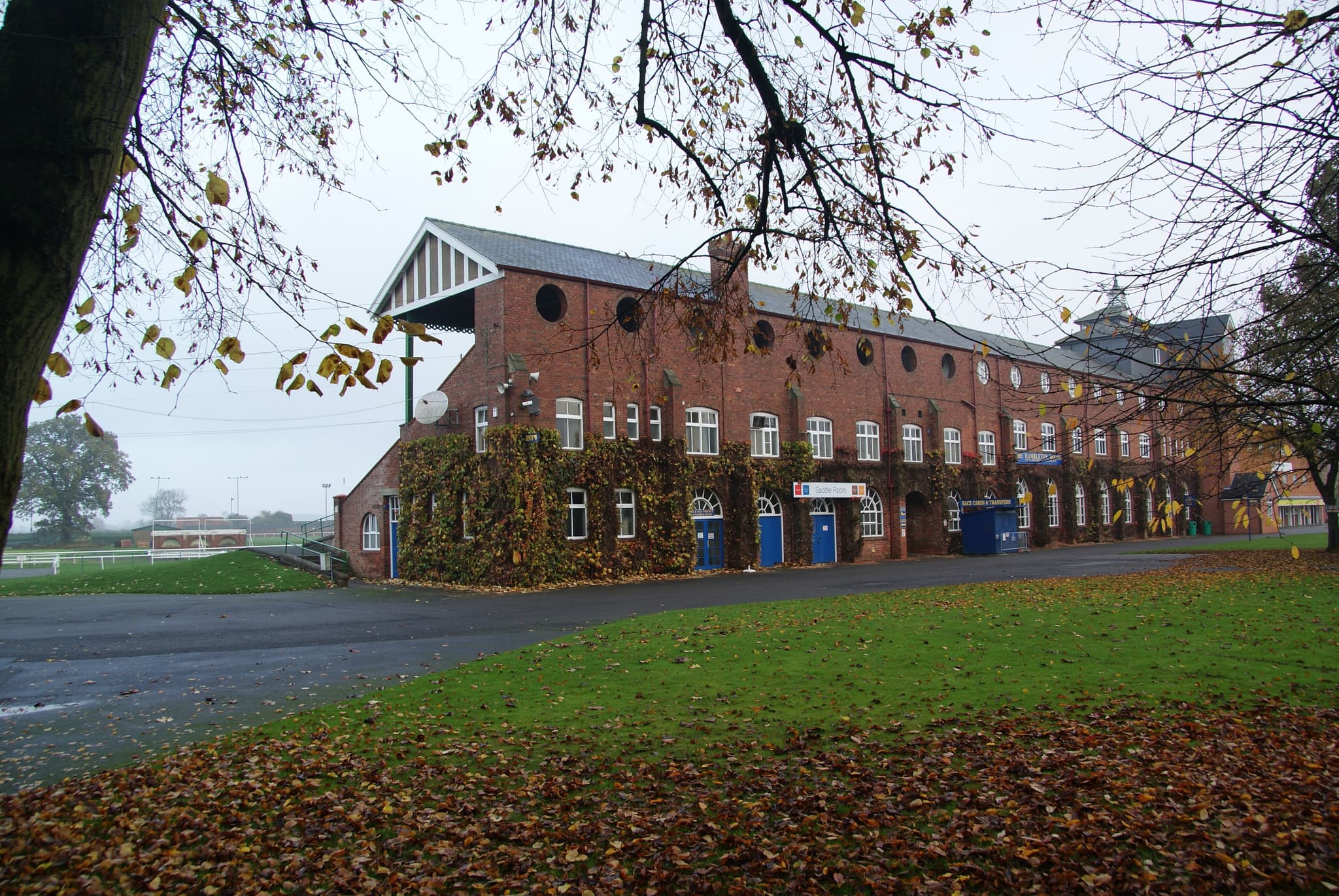
A Day Out at Thirsk Racecourse
Everything you need for a day at Thirsk — getting there, what to wear, enclosures, food and drink, and insider tips for North Yorkshire's charming flat venue.
Read more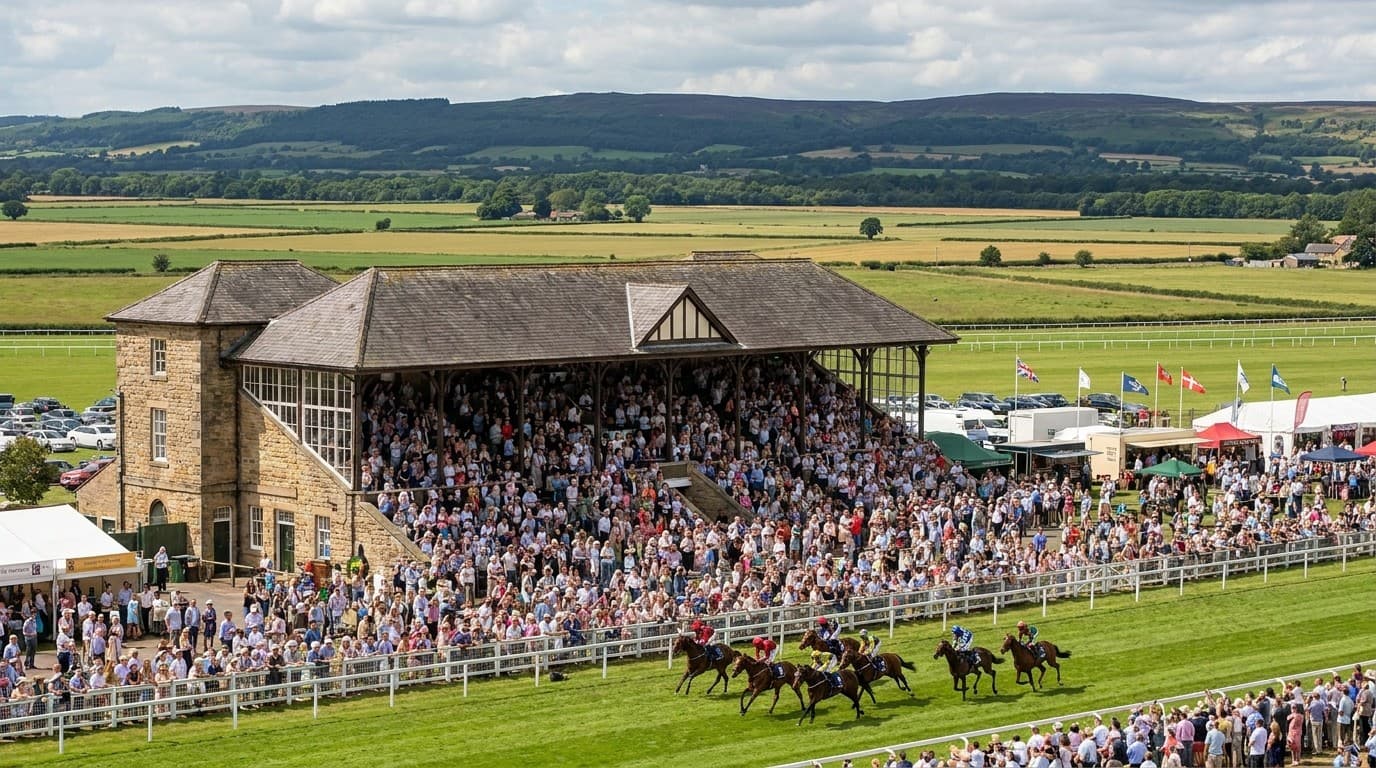
Thirsk Festival Guide
Your complete guide to Thirsk Racecourse festivals — the Classic Trial, the Hunt Cup and what makes this North Yorkshire flat track one of the region's most respected venues.
Read more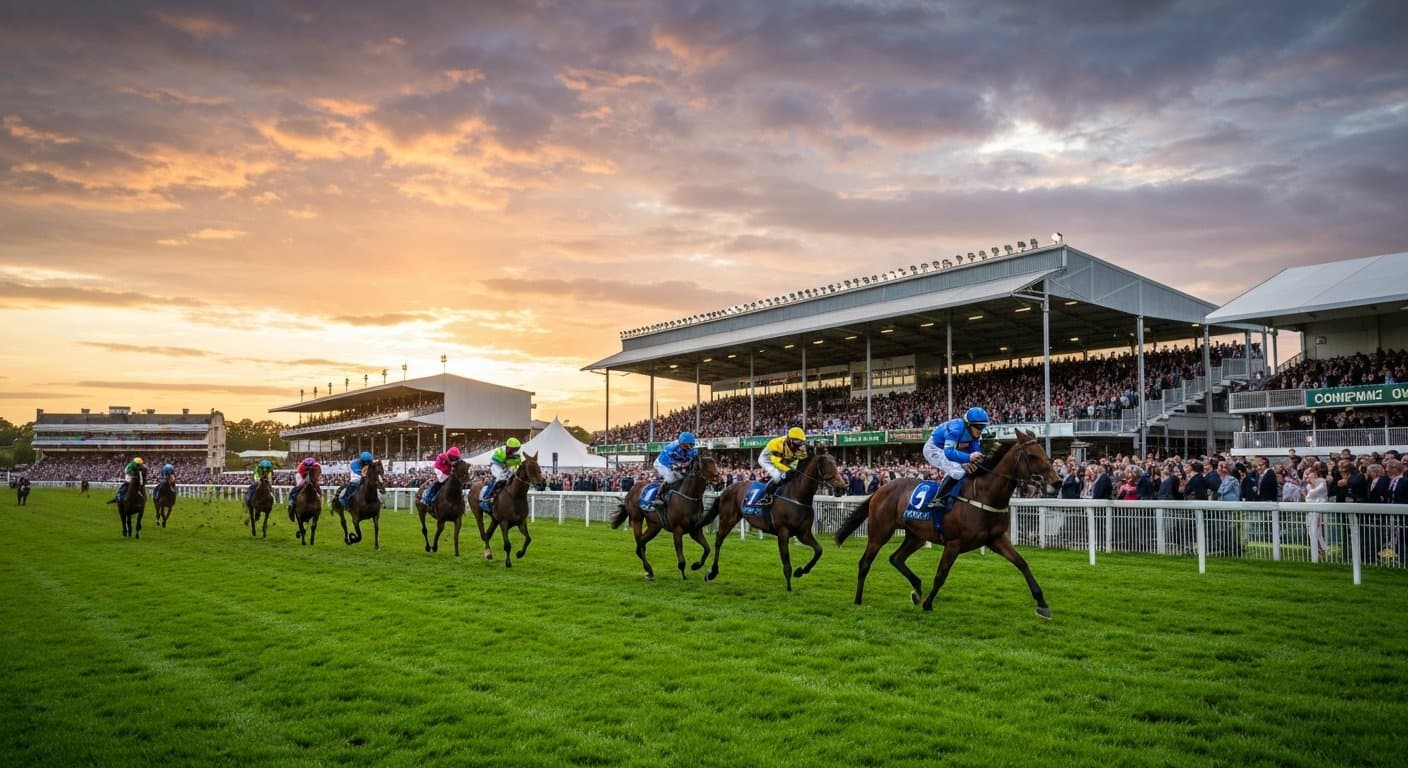
Thirsk Hunt Cup: Complete Guide
Your complete guide to the Thirsk Hunt Cup, North Yorkshire's signature race at Thirsk Racecourse.
Read morePhotos on this page are used under Creative Commons licences. Titles, sources and licence links for each one are on our image credits page.
Research the field with the AI Race Predictor
Our model publishes calibrated win-probability estimates for UK races — a second opinion to understand a race, not tips. It's open about its record: it doesn't beat the market, and we show exactly how it does.
Work it out & learn the basics
Gamble Responsibly
Gambling should be entertaining and not seen as a way to make money. Never bet more than you can afford to lose. If you or someone you know has a gambling problem, help and support is available.