
Founder & Editor · Last reviewed 2026-04-05
Introduction
Introduction
Wetherby is Yorkshire's leading National Hunt venue — a left-handed, galloping circuit twelve miles east of Leeds that has been hosting jump racing since Easter Monday 1891. The course sits on the banks of the River Wharfe in the Vale of York, within a few minutes of the A1(M), and it draws winter crowds from across the north of England for a reason: the racing is good, the fences are honest, and the atmosphere on a cold November Saturday carries the kind of edge that flat racing simply cannot replicate.
The Charlie Hall Chase, run on the first Saturday of November, is the anchor of Wetherby's identity. It is a Grade 2 steeplechase over 3 miles 1 furlong, and it matters because it is the first serious examination of the season for the best staying chasers in training. Horses pointed at the Cheltenham Gold Cup in March need to show their form somewhere in November, and Wetherby is where the north takes a proper look at them. The 2008 renewal was won by Kauto Star, who went on to win the King George VI Chase that December. That is the level.
Then there is Boxing Day. The 26 December card at Wetherby is the biggest social racing event in West Yorkshire, drawing crowds of 8,000 or more for a programme that includes the Rowland Meyrick Handicap Chase and enough festive atmosphere to make it an occasion in its own right. Families, regulars and first-timers mix in equal measure. Tickets sell out in most years — booking as soon as they go on sale, usually in September or October, is not optional if you want to go.
As a National Hunt venue, Wetherby sits alongside Haydock and Cheltenham in the hierarchy of tracks that shape the winter season's narrative. York is the natural comparison point as a Yorkshire racing institution, but the comparison highlights rather than diminishes what Wetherby offers: York is a summer flat course of European significance; Wetherby is a winter jumps course where the sport is conducted in cold and mud and where the result of a November Grade 2 can still be discussed in March when Gold Cup day arrives. The two serve entirely different racing cultures, and in Yorkshire both are held in high regard.
The course's relationship with the north of England's NH training community deepens its significance. A substantial proportion of the best jumping horses trained between the Humber and the Scottish border will run at Wetherby at some point in their careers. For trainers in Malton, Middleham and Carlisle, Wetherby is the local Grade 2 track, the natural step up from a novice win at Catterick or a bumper at Musselburgh. That connection between the training yards and the racecourse gives it a different texture from an out-of-town venue attracting horses and connections from across the country.
Who this guide is for. Anyone planning a visit to Wetherby for the first time, serious NH punters looking to understand the track before betting, and regular racegoers who want more detail on the course's history, key fixtures and betting patterns. It covers every section from course layout to the best enclosure for watching fences jumped.
Quick facts
- Location: York Road, Wetherby, West Yorkshire, LS22 5EF
- Nearest stations: Leeds (12 miles) or York (14 miles) — no station at Wetherby itself
- Racing type: National Hunt (primary); limited flat fixtures introduced 2015
- Circuit: Left-handed, oval, approximately 1 mile 4 furlongs round
- Fences: 8 per full circuit (steeplechase), including 2 open ditches; water jump in front of the stands
- Signature race: Charlie Hall Chase — Grade 2, 3m 1f, first Saturday of November
- Key meetings: Charlie Hall (November), Boxing Day (26 December), Christmas (27 December), spring card (March)
- Typical attendance: 3,000–5,000 on standard days; 8,000+ on Boxing Day
- Website: wetherby.co.uk
- Opened: 1891
The guide is organised into ten sections. Use the links at the top to jump to course layout, facilities, getting there, history, or the betting guide depending on what you need. If you are coming specifically for the Charlie Hall Chase, the dedicated race guide covers the race in much greater depth. For Boxing Day planning, the Boxing Day guide has everything you need on tickets, parking and the race card.
Bet on Wetherby
Place your bets on Wetherby races with a trusted bookmaker.

Promo code BETFRED50. New customers only. Register, deposit with a Debit Card, and place a first bet of £10+ at Evens (2.0)+ on Sports, to be settled within 7 days, to get £30 in Sports Free Bets and £20 in Bet Builder Free Bets within 24 hours of settlement. 7-day expiry. Eligibility & payment exclusions apply. Full T&Cs apply. Take Time to Think. BeGambleAware.org. 18+. Full T&Cs.

Promo code R30. New UK customers only, 18+. Register, deposit £10 or more, then place a £10 single cash bet at odds of 1/2 (1.5) or greater on any sports market (excluding Virtuals). Once the qualifying bet settles you get £30 in Free Bets (3 x £10) — the qualifying bet can win or lose. Free Bets are valid on any sports market excluding Virtuals, expire in 7 days, are non-withdrawable and must be used in full. Excluded deposit methods apply (including PayPal, Apple Pay, Skrill and NETELLER). Named bets such as Lucky 15 do not qualify. If you cash out the qualifying bet, or it is voided, you are no longer eligible for the offer. Ends 31.12.26. Full T&Cs apply. Please gamble responsibly. BeGambleAware.org. 18+. Full T&Cs.

Promo code BET40GET20. New UK customers, 18+. Register with the code and place a first bet of £40 or more at Evens (2.0) or greater. Receive 2 × £10 free bets: the first credited automatically once the qualifying bet settles, the second 24 hours later. Free bets must be placed at minimum odds of 4/1 (5.0), expire 24 hours after credit, and the free-bet stake is not returned with winnings. Debit card deposits only. Take Time to Think. BeGambleAware.org. 18+. T&Cs apply. Full T&Cs.

50% of your first-day net losses refunded as a free bet, capped at £25. New UK customers aged 18+ only. To qualify, deposit and place a first bet of £10 or more on any sport at minimum odds of evens (2.00), then place at least two further bets on different events, each worth at least 50% of your largest bet, all at evens (2.00) or greater. Losses are counted from your first settled bet until 23:59 the same day. Place a qualifying £10+ bet and you are guaranteed at least a £5 free bet. Bets placed at SP, void bets, cashed-out bets and bets struck with free bets do not count towards the offer. The free bet is credited the day after your qualifying bets settle and must be used within 7 days, after which it expires. It can be used at odds from 1/4 (1.25) up to 250/1 on singles and straight accumulators, but not on Trixie, Patent or Yankee style multiples. Free-bet stake is not returned with winnings. One offer per person, household, address, IP address and device. E-wallet deposits may not qualify, so check the cashier before depositing. Customers registered with GAMSTOP cannot claim. KYC identity verification must be completed before the free bet is credited. Take Time to Think. BeGambleAware.org. 18+. T&Cs apply. Full T&Cs.

New customers, 18+. Choose the sports bonus at sign-up, make a first deposit and receive a 100% bonus up to £50 in your Sports Bonus balance. To convert the bonus to cash, wager it 10x within 30 days. Single bets below Evens (2.00) do not qualify; accumulators do not qualify if any selection is below 1/2 (1.50). Virtual Sports, voided, cancelled, drawn, cashed-out and free-bet wagers do not count towards wagering. Only the first settled bet per event counts. Withdrawing before the wagering requirement is met forfeits the bonus balance including bonus winnings. Real-money funds are used before bonus funds. Deposits via Skrill or Neteller are not eligible. Not valid in conjunction with other promotions. Odds, bet and payment limits apply. 10bet general and promotion T&Cs apply. BeGambleAware.org. 18+. Full T&Cs.

New customers in Great Britain and Republic of Ireland, 18+. Place a £10 fixed-odds qualifying bet at minimum odds of 1/2 (1.50) — single or each-way (only the win part counts), pre-event or in-play, not cashed out early, within 28 days of opening the account. Receive up to £60 in bonuses credited over three days: 3 × £10 fixed-odds free bets (the first on settlement, then 24 and 48 hours later) plus 3 × £5 Total Goals FOOTBALL spread bets and 3 × £5 racing Winning Favourites spread bets, with a £1 racing Race Index spread bet as an extra on top. The spread bets need a full spread-betting account, opened within 28 days of the fixed-odds account and subject to Spreadex's eligibility and appropriateness checks. Free-bet stakes not returned with winnings; free bets valid 28 days from issue. IMPORTANT: the £5 credits are SPREAD bets — sports spread betting carries the risk that losses can exceed your stake. Sports spread-betting customers do not have Financial Ombudsman or FSCS recourse. Take Time to Think. BeGambleAware.org. 18+. T&Cs apply. Full T&Cs.

Promo code WELCOME15, entered under My Bonuses after registering. New UK customers, 18+. Place a first qualifying bet of at least £10 from your cash balance at odds of evens (2.0) or greater within 7 days of opening the account. Once the qualifying bet fully settles you receive £15 in free bets, credited as 3 x £5 tokens with set uses: one £5 accumulator free bet (minimum 4 legs, each leg at 2/5 or bigger), one £5 sports free bet (any market at evens or bigger) and one £5 Sub Cover free bet (selected football player markets at evens or bigger). Free-bet stakes are not returned with winnings. Free bets expire 7 days after they are credited. Void, cashed-out and partially cashed-out bets do not qualify. One offer per customer. Confirm the current terms on BetGoodwin's own welcome-offer page before claiming. Take Time to Think. BeGambleAware.org. 18+. T&Cs apply. Full T&Cs.

New UK customers, 18+. Minimum deposit £10. Place a £10 qualifying single on sports (excluding virtuals) at minimum odds of 1/2 (1.50), settled within 14 days. Deposit-method exclusions apply. Receive £30 in free bets (stake not returned), split £20 for sportsbook use (2 x £10) and £10 for Bet Builder only (2 x £5); Bet Builder does not cover horse racing. Free bets must be accepted within 7 days and expire 7 days after acceptance. No promo code required. Best Odds Guaranteed on UK & Irish racing, subject to having staked over £25 in the previous seven days. Operated by LiveScore Betting and Gaming (Gibraltar) Ltd, UKGC 56859. Confirm the current terms on LiveScore Bet's own promotions page before claiming. Take Time to Think. BeGambleAware.org. 18+. T&Cs apply. Full T&Cs.
18+. BeGambleAware.org
The Course & Layout
The Chase Course
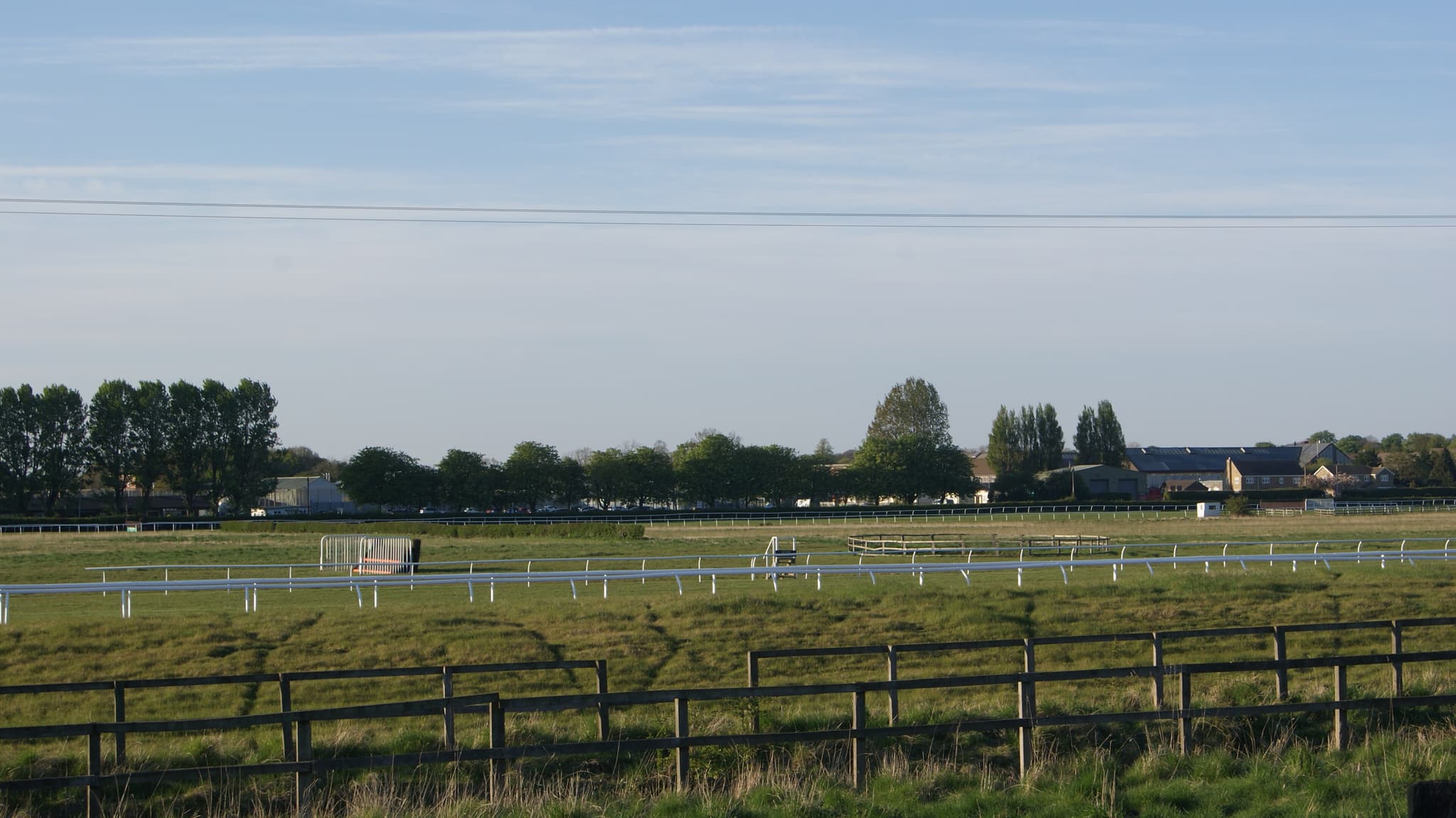
Wetherby's steeplechase circuit is left-handed and roughly oval, measuring approximately 1 mile 4 furlongs round. The track is mostly flat, which is one of its defining characteristics — it does not punish horses in the way that a steep climb or sharp descent can at courses like Cheltenham or Exeter. There is a slight rise approaching the winning post, and the back straight runs slightly downhill before levelling out, but neither gradient is severe enough to become a major factor in race outcomes. What the layout does produce is a fair, unforgiving test of stamina and jumping technique, with no illusions of pace created by favourable topography.
The bends at Wetherby are wide and relatively easy. Horses navigating the turn out of the back straight into the home straight are not required to check their momentum — there is enough room to keep galloping through the corner, which suits long-striding, free-moving types. Tighter courses, such as Catterick (also in Yorkshire) or Kempton, place a higher premium on agility through the bends; at Wetherby, it is the straightforward combination of galloping ability and jumping technique that counts.
The home straight measures approximately 4 furlongs from the last fence to the line. That is a substantial run-in by National Hunt standards, long enough to expose any horse that has emptied two fences from home, but not so punishing that bold front-runners are automatically caught. Horses who travel fluently and jump the last well often maintain their advantage all the way to the post.
Fence Layout
There are 8 fences on the full chase circuit. The configuration includes:
- 4 fences in the home straight, including a plain fence close to the final turn, a plain fence at about 2 furlongs out, and the last fence at roughly 1 furlong out
- 4 fences in the back straight and at the far end of the course, including 2 open ditches
- The water jump, positioned in front of the grandstand
Wetherby's fences have a reputation for being well-built and fairly upright. They present a proper jumping test without being particularly severe. The National Fences at Aintree or the steeper obstacles at Cheltenham's Park course demand more precision — Wetherby's fences are forgiving enough for bold, attacking jumpers to take liberties, but they will find out a horse that habitually fiddles or half-jumps. The water jump in front of the stands is jumped once per circuit on races of appropriate distance and adds to the spectacle for spectators positioned in the main grandstand.
The Open Ditches
Both open ditches sit on the far side of the course, away from the main viewing area. This is standard for many NH circuits, and it means racegoers watching from the stands will see horses handle these fences in the distance. The open ditches at Wetherby are not especially wide, but they demand that a horse stands back and commits — hesitant jumpers tend to be exposed at this type of obstacle.
Race Distances
Wetherby's chase programme covers the following distances:
- 2 miles — the minimum chase trip, typically used for two-mile novice chases and handicaps
- 2 miles 3 furlongs 110 yards — a medium-distance trip that suits National Hunt chasers with speed-stamina balance
- 2 miles 4 furlongs — close to the standard 2m4f trip widely used across NH racing
- 3 miles — a classic staying distance, appearing in novice chases and competitive handicaps
- 3 miles 1 furlong — the Charlie Hall Chase distance; arguably Wetherby's signature trip
Races over 3 miles and beyond are where Wetherby shows its best horses. The flat-ish circuit means stamina is tested consistently throughout rather than concentrated on one grinding climb, which suits true stayers who can maintain galloping rhythm for an extended period.
How the Course Compares
For racegoers trying to place Wetherby in the context of British NH courses they may know, the most useful comparison is with Haydock Park in Lancashire. Both are flat, left-handed, galloping circuits that suit front-runners and stayers and where form translates reliably to and from Cheltenham for the longer trips. Cheltenham itself, by contrast, imposes two significant gradients and tighter turns that create distinct race dynamics; a horse that wins at Cheltenham has demonstrated something different from what it needs to win at Wetherby. Aintree's Mildmay course is perhaps the closest in character to Wetherby among the major NH tracks.
Within Yorkshire, Wetherby is the most galloping NH course. Catterick is sharper, with tighter bends and a pronounced dip. York's NH racing ended decades ago. For a horse with a long, free stride and bold jumping, Wetherby is the Yorkshire NH course that suits it best.
The Hurdle Course
The hurdle course follows the same left-handed configuration as the chase circuit. There are 6 flights of hurdles — 3 in the home straight and 3 on the far side. The hurdles programme covers distances from 2 miles to 3 miles 1 furlong, broadly mirroring the chase distances. Novice hurdlers are a regular feature at Wetherby, and the track's fair, galloping nature means it often provides an accurate guide to a horse's ability before it encounters stiffer tests at Grade 1 venues. The West Yorkshire Hurdle, run on Charlie Hall weekend, is a Grade 2 Stayers' Hurdle trial over 3 miles 1 furlong and attracts horses aimed at the Champion Hurdle or Stayers' Hurdle at Cheltenham in March — it is, by a distance, the most important hurdle race run at Wetherby each year.
The Flat Course
Wetherby added flat racing to its programme in April 2015, using the inside of the hurdles course as the flat track. The flat circuit is a sharp 1 mile oval with no straight course; the shortest flat distance run here starts on a spur near the end of the back straight. For flat betting purposes, draw position is a minor consideration — low-numbered stalls can hold a fractional advantage over 1 mile due to the positioning of the first bend, though the effect is not dramatic. Flat fixtures at Wetherby are limited in number and scheduled mainly in the spring and summer months, when the NH season is at its quietest.
Going Tendencies
Wetherby sits on clay-based Yorkshire Vale soil, and this has a significant effect on how the ground rides through the autumn and winter. The course drains relatively slowly by modern standards. From early October onwards, after the first substantial autumn rainfall, the going can shift from Good to Good-to-Soft within a few days, and by November a wet spell can push conditions to Soft or Heavy quickly.
The practical consequence for racing is that Wetherby regularly runs on Soft or Heavy ground through November, December and January. Horses who lack the physical constitution to handle deep going are at a clear disadvantage here. The Boxing Day card, in particular, is frequently run on Soft or Heavy ground, and the form guide should be read with going preference in mind. Conversely, when Wetherby is able to water and present a Good or Good-to-Soft surface in early autumn, the racing can be fast and free-flowing.
Which Horse Types Succeed
The flat, galloping nature of Wetherby's NH course favours three types:
Front-runners and prominent racers. The long home straight is where a race at Wetherby is frequently decided. A horse that can set or track a strong pace without being pressed off its stride on the easy bends, then jump the last two fences cleanly and kick for home, is in a strong position. Front-runners here are not automatically caught out — the circuit does not punish them with a brutal closing rise in the way Cheltenham does.
Bold, clean jumpers. Wetherby's fences reward horses that attack their obstacles. The fences are not designed to catch out a bold-jumping horse; they are designed to test technique, and a horse that meets fences right and jumps with authority will not lose ground at the obstacles. Contrast this with a tighter, more technical course — Wetherby is not a track where a cautious, careful jumper will gain an edge over a bold one.
True stayers. At 3 miles and beyond, the relentless galloping nature of the circuit — no sharp bends, no single killer gradient — means the strongest horse over the distance usually wins. This makes Wetherby a reliable pointer to Gold Cup form at the 3m-plus trips, which is precisely why the Charlie Hall Chase carries the weight it does in the pre-Cheltenham NH calendar.
For the implications of these factors on betting, see the Wetherby betting guide.
Key Fixtures & Calendar
The Race Calendar
Wetherby's NH season runs from October through to the spring, with the most significant fixtures concentrated in the November-to-February window. The course typically hosts eight to ten NH fixtures per season, supplemented by a small number of flat meetings in the warmer months. What follows is a section-by-section account of the meetings that matter.
The October Opener
Wetherby opens its NH season with a meeting in mid-to-late October, usually on a Saturday or weekday. This card serves as a warm-up for the Charlie Hall weekend and typically features novice chases, handicap hurdles and a bumper. Fields are often drawn from northern trainers — Brian Ellison, Micky Hammond, Donald McCain — bringing horses returning from their summer break. Crowds are modest, usually 2,000–3,500, making it a relaxed way to see the course for the first time. Going is often Good to Soft at this stage of year before the autumn rains arrive in force.
The Charlie Hall Chase Meeting — First Saturday of November
This is the most important weekend in Wetherby's calendar and one of the most significant NH meetings in the north. The headline event, the Charlie Hall Chase, is a Grade 2 steeplechase over 3 miles 1 furlong, run under Bet365 sponsorship. It carries prize money of approximately £100,000 to the winner and is typically the first opportunity of the season for staying chasers with Gold Cup ambitions to show their form in public.
The race almost always attracts fields of six to ten runners. Past winners include Kauto Star (2008), Long Run (2010), Cue Card (2015 and 2016), Cyrname (2019) and Bravemansgame (2021). The supporting card is strong: the West Yorkshire Hurdle (Grade 2, 3m 1f) is a key Stayers' Hurdle trial, while the Wetherby Mares' Hurdle (Listed) and the Wensleydale Juvenile Hurdle (Listed) give the two-day programme real depth. Attendance on Charlie Hall day is typically 4,000–6,000.
The Christmas Meeting — 26 and 27 December
Boxing Day is Wetherby's biggest crowd of the year. Attendances regularly top 8,000 and can approach the course's 6,000-seat capacity within the grandstand enclosures — the overflow into the course enclosure and open areas pushes the total higher. It is one of the most-attended NH meetings in Yorkshire by a substantial margin and is widely treated as a social occasion as much as a racing event.
The Boxing Day feature is the Rowland Meyrick Handicap Chase — a Premier Handicap over 3 miles 1 furlong with prize money in the region of £50,000–£75,000. It consistently attracts competitive handicap chasers and has a history of producing upset results given the range of weights and the variable Boxing Day going. The card typically includes six to eight races spread across both chase and hurdle distances, with a bumper often closing proceedings.
The 27 December meeting follows on and is centred on the Castleford Chase — a handicap over 2 miles that tests horses of a sharper type than those who win over the longer Boxing Day trips. The two-day Christmas package draws many racegoers who stay overnight in Wetherby, Harrogate or Leeds.
January and February Meetings
Wetherby stages two or three meetings through January and February, and prize money is competitive by regional NH standards. The Towton Novices' Chase (Grade 2, 2 miles 3 furlongs 110 yards) in January is the most significant of these races — a recognised trial for novice chasers with Cheltenham Festival aspirations, typically the Arkle or Turners Chase. The race has launched careers of horses who have gone on to win Grade 1 novice chases at the Festival.
January and February fields tend to be smaller than Charlie Hall or Boxing Day, with five to eight runners in the feature races. These meetings attract the core racing public rather than the social crowd — attendance is typically 1,500–3,000. Ground is usually Soft or Heavy, which filters the fields and rewards connections prepared to run their horses in testing conditions.
The Spring Meeting — March
Wetherby closes its NH season with a meeting in March, often around the week after the Cheltenham Festival. This card provides end-of-season opportunities for horses that have run well through the winter without landing a race. Prize money is lower than the peak-season meetings, and the racing is more workmanlike, but it rounds off the NH programme before the flat meetings begin in spring.
Flat Meetings — Spring and Summer
Since 2015, Wetherby has hosted a limited number of flat fixtures, typically four to six per year between April and September. These meetings are run on the inside hurdles track and attract fields primarily from Yorkshire and northern trainers. They do not carry the same weight as the NH programme but provide racing on the calendar in months when the NH season is dormant.
Crowd Sizes and Practical Planning
| Meeting | Typical Attendance |
|---|---|
| October opener | 2,000–3,500 |
| Charlie Hall Chase day | 4,000–6,000 |
| Boxing Day | 8,000+ |
| 27 December | 3,000–4,500 |
| January/February | 1,500–3,000 |
| Spring/flat meetings | 1,000–2,500 |
Boxing Day tickets sell out in advance in most years. Book through the official website as soon as the fixture is confirmed, typically in September or October. For all other meetings, advance booking is advisable for the Premier Enclosure on Charlie Hall day but not strictly necessary for standard midweek fixtures.
Facilities & Hospitality
Enclosures
Wetherby operates three enclosures: the Premier Enclosure, the Paddock Enclosure and the Course Enclosure. Each has its own access, facilities and pricing structure.
Premier Enclosure is housed in the Millennium Stand, a facility that opened in 2000 and remains the centrepiece of Wetherby's spectator infrastructure. The stand offers covered, tiered seating with direct sightlines across the home straight and the water jump in front of the stands. Access includes the Yorkshire Grill restaurant on race days, the Mezzanine Bar on the upper level and the main grandstand bar. Smart-casual dress is expected in the Premier Enclosure, though the course does not enforce a strict dress code. This is the enclosure to book for the Charlie Hall Chase meeting if you want a seat and indoor warmth on a November afternoon.
Paddock Enclosure is the largest area by capacity and covers the space between the Premier Stand and the parade ring. Racegoers here have direct access to the parade ring fence, which allows close-up viewing of the horses before each race — particularly useful for those who like to assess the horses physically before placing a bet. The Paddock Enclosure is served by the A1 Bar, the Marston Moor Bar and most of the course bookmakers. It represents the best balance of price, viewing position and access for serious racing fans.
Course Enclosure occupies the centre of the track, accessed via a tunnel or crossing. The facilities are more basic — a bar, a café, Tote facilities and course bookmakers — and the viewing angle is different, looking back towards the home straight from inside the circuit. This enclosure is popular with families on a budget and casual racegoers attending Boxing Day for the social occasion. The big screen is visible from here, which helps when the action is on the far side of the course.
The Grandstand and Viewing
The Millennium Stand's upper terrace provides the best elevated view of the full circuit at Wetherby. From here it is possible to see horses jump all 4 fences in the home straight, including the water jump immediately in front of the stand. The lower terrace and trackside rail in the Premier Enclosure put racegoers within 20 metres of horses passing the winning post — one of the better close-up viewing positions at any northern NH course. The Paddock Enclosure offers similar rail access further around the course.
The Parade Ring
Wetherby's parade ring sits between the main grandstand and the exit to the course. It is comfortably sized for up to 12 runners and the surrounding fence area allows racegoers to stand at close quarters to the horses. The owners' and trainers' access to the parade ring is managed efficiently — Wetherby has a longstanding reputation among NH connections for looking after owners and trainers well, providing a designated bar and viewing area separated from the general public. The pre-parade ring, where horses are first saddled, is positioned slightly to the rear of the main ring.
Owners' and Trainers' Facilities
The Owners and Trainers Bar is a dedicated facility in the main grandstand building, accessible to badge holders. It provides a dry, warm space to watch racing and to meet connections after a race. Wetherby's approach to owners is often cited by NH trainers as a reason for choosing the course for horses on their way up — the practical matters of stabling, weighing room access and post-race collection are handled without unnecessary friction. The stables complex at Wetherby accommodates visiting horses to a standard considered good at Grade 2 level.
Food and Drink
The Yorkshire Grill in the Premier Enclosure serves a pre-race lunch and between-race menu on major fixture days. Table-service dining with a racecourse view is available, though booking in advance is necessary for Charlie Hall day and Boxing Day. Prices are in the mid-range for a racecourse restaurant — not cheap, but in line with equivalent facilities at Haydock or York. Pre-booking opens several weeks in advance via the racecourse website.
For more casual eating, the Course Café and Paddock Bar food outlets serve pies, burgers, chips and hot drinks throughout the day. These are the primary food options for Paddock and Course Enclosure racegoers and the queues on Boxing Day can be significant — arriving before the first race and eating early is advisable. Coffee and hot drinks are available at multiple points around the course, a practical necessity on a Wetherby December afternoon.
Betting Facilities
Wetherby's betting ring in the Paddock Enclosure is the main on-course betting market, with typically 15–20 layers operating on a Charlie Hall day. The ring is positioned adjacent to the parade ring, making it straightforward to watch the horses, consult the market and place a bet before the off. Tote facilities are available at dedicated counters in all three enclosures. Cashless betting via smartphone accounts is widely used at Wetherby as at all NH venues, and Wi-Fi coverage in the main stand is adequate for this purpose.
Family Facilities and Disabled Access
Wetherby encourages family attendance and provides a designated family viewing area on major fixture days. Children under 18 enter free when accompanied by an adult, which makes it one of the more family-friendly propositions in northern NH racing. The course has baby-changing facilities in the main stands. First aid is located near the grandstand entrance.
Disabled access to the Premier Enclosure viewing terrace and to the Paddock Enclosure is provided via ramp access from ground level. The course operates a disabled racegoer card scheme — call the racecourse office in advance to confirm parking and access requirements. Designated disabled parking is available in the main car park close to the entrance.
Corporate Hospitality
The Millennium Stand doubles as a conference and events venue outside racing. On race days, private boxes and hospitality suites are available for group bookings in the Premier Enclosure. Corporate packages on Charlie Hall day and Boxing Day are typically sold out months in advance. The racecourse sales team handles all hospitality enquiries — contact details are on the official website.
Getting to Wetherby
By Car
The car is the most straightforward way to reach Wetherby Racecourse, and the vast majority of racegoers arrive by road. The course is positioned on York Road (B1224), directly adjacent to the A1(M), and signposting on race days is clear from both directions on the motorway.
From the south (A1(M) southbound): Exit at Junction 46 and follow the signs for Wetherby town centre. The racecourse is on the eastern edge of town, about 1.5 miles from the junction.
From the north (A1(M) northbound): Exit at Junction 45 and join the A58. The racecourse is well-signposted from the roundabout.
From Leeds: Take the A58 east from Leeds city centre — approximately 12 miles and typically 25–35 minutes outside rush hour. Alternatively, the A64 east to the A1(M) northbound gives a faster journey when traffic is light.
From York: Take the A64 westbound — approximately 14 miles and typically 25–30 minutes in normal traffic. The approach through Boston Spa and Tadcaster is a useful alternative if the A64 is congested.
From Harrogate: The A661 south to Wetherby covers approximately 7 miles and takes around 15–20 minutes. This is the most direct option for racegoers based in Harrogate and the spa towns.
Parking at Wetherby is free and provided in a large car park at the course. On Boxing Day and the Charlie Hall meeting, the car park fills from about 90 minutes before the first race. Arriving earlier than you think necessary is strongly advisable on both those days — traffic on the A1(M) approach and on the Wetherby ring road can add 20–30 minutes to journey times.
By Train
Wetherby does not have a railway station. The town's original station on Linton Road closed in the Beeching cuts in the 1960s, and the dedicated Wetherby Racecourse Halt, which served the course directly on the Church Fenton to Harrogate line, closed in 1959. There is no plan to reopen either.
The two practical rail options are Leeds (12 miles) and York (14 miles), both of which are on the East Coast Main Line and well-connected nationally. From Leeds City Station, a taxi to the racecourse costs approximately £20–£25 each way. From York, a taxi runs to approximately £25–£30. Uber and similar apps operate in both cities.
Raceday Shuttle Buses
On the Charlie Hall Chase meeting and the Boxing Day card, shuttle bus services operate from Leeds city centre to the racecourse. These are run by local operators in coordination with the racecourse, and departure points and times are published on the Wetherby Racecourse website in the weeks before the meeting. The journey from Leeds bus station takes approximately 40–50 minutes depending on traffic. Check the website before travelling as services can change year to year.
Taxi from Harrogate
For racegoers based in Harrogate, a taxi is a practical and popular option. The journey is 7 miles and typically costs £12–£18 each way. Harrogate taxis can be pre-booked through local firms including Harrogate Taxis and Alpha Plus Taxis. On Boxing Day, pre-booking a return taxi from the racecourse at the time you book the outward journey is advisable — demand is high and walk-up availability is limited.
Local Tips
If you are travelling from outside Yorkshire and planning to stay overnight, Wetherby town itself has several hotels and B&Bs within walking distance of the course. The Boston Spa area, 2 miles to the east, has a small number of quality accommodation options. Harrogate, 7 miles west, offers a wider range of hotels and is a natural base for a Charlie Hall weekend combining racing with the town's restaurants and spa facilities. Leeds city centre is 12 miles and has the widest choice of accommodation for all budgets.
For further planning advice including what to do before and after racing, see the atmosphere and planning guide.
Frequently Asked Questions
History of Wetherby Racecourse
Origins
Horse racing in Wetherby has a longer history than the course itself. Meetings were held at Scaur Bank — now the King George V playing fields on the western edge of the town — for much of the 19th century. Racing there was well-established by the 1840s, drawing crowds from Leeds, York and the surrounding West Yorkshire towns along the coaching routes that made Wetherby a natural gathering point on the A1 corridor.
The move to the current site on York Road came on Easter Monday 1891. The new course was built on land by the River Wharfe, a flatter and more spacious plot than Scaur Bank, and from the outset it was designed to accommodate a permanent grandstand and a proper NH circuit. The 1891 opening meeting drew a large crowd for its time, reflecting the town's enthusiasm for jump racing and the improved accessibility of the York Road site.
Formation of the Wetherby Race Company
Racing at the course operated under various arrangements in its early decades, and the formalisation of its governance came in 1920 when the Wetherby Race Company was established. The company was formed when the original lease on the course land expired and needed to be renegotiated, and it provided the organisational structure that allowed the course to invest in infrastructure and programme a consistent NH calendar through the interwar years.
The 1920s and 1930s saw steady development of the facility, with grandstand improvements and a programme that began to establish Wetherby's identity as a northern jump racing venue of substance. Racing continued through the Second World War, and the course re-established its programme in the late 1940s as NH racing recovered nationally.
The Racecourse Halt
One distinctive feature of Wetherby's mid-20th century history was the Wetherby Racecourse Halt, a dedicated railway station on the Church Fenton to Harrogate line. The halt allowed racegoers to travel directly to the course by train, and it operated from the early 20th century until 1959, when the line closed as part of the broader rationalisation of rural railway services in the Beeching era. The closure of the halt — and Then the town's Linton Road station — left Wetherby without a railway connection, a situation that persists today and that shapes how racegoers travel to the course.
Growth as Yorkshire's Leading NH Venue
Through the 1960s, 1970s and 1980s, Wetherby consolidated its position as the leading jump racing venue in Yorkshire. York provides some of the finest flat racing in Europe, Doncaster covers both codes, and Catterick is a compact NH and flat dual-purpose track — but for serious National Hunt racing in the region, Wetherby became the primary destination. The programme grew in depth, the prize money improved relative to other northern NH courses, and the course attracted horses from the major NH training centres in the north: Middleham, Malton and the yards spread across County Durham and Cumbria.
The Charlie Hall Chase — Name and History
The Charlie Hall Chase takes its name from a Yorkshire jockey of the early 20th century. Charlie Hall rode at courses across the north of England and was one of the prominent jump jockeys of his era; the race named in his honour at Wetherby has become the most important Grade 2 staying chase run in the north of England. The race has been sponsored by Bet365 since 2003 and carries prize money of approximately £100,000 to the winner.
The race is run over 3 miles 1 furlong in early November, typically the first Saturday of the month, and its position at the start of the NH season for top staying chasers gives it strategic importance that its Grade 2 status does not fully capture. Horses aimed at the King George VI Chase at Kempton on 26 December and, ultimately, the Cheltenham Gold Cup in March will frequently use the Charlie Hall as their seasonal debut.
Northern Trainers and the Course's Identity
Wetherby's character as a course has been shaped significantly by the trainers who regard it as their home track. Howard Johnson, based at Crook in County Durham, sent many of his NH horses to Wetherby through the 1990s and 2000s. Malcolm Jefferson, operating from Malton, had strong records at the course over many seasons. Brian Ellison, also at Malton, has a particularly strong Wetherby strike rate and considers it a key course for his stable — his horses are regularly among the most reliable bets at the venue when conditions suit. Micky Hammond, based at Middleham, has a longstanding association with the course, particularly through the winter months.
The pattern of northern NH training centred on Malton, Middleham and Carlisle means that Wetherby serves as the local track for a significant number of horses in training. This gives it a different character from a southern NH venue like Newbury or Sandown, where the trainers are more geographically dispersed.
The Millennium Stand and Modern Development
The opening of the Millennium Stand in 2000 was the most significant infrastructure development of the course's post-war history. The stand replaced older facilities and gave Wetherby a modern spectator experience consistent with its status as a Grade 2 venue. It houses the Premier Enclosure, the Yorkshire Grill restaurant, the Mezzanine Bar and corporate hospitality suites, and it doubles as a conference and events facility on non-racing days.
The introduction of flat racing in April 2015 marked another development in the course's identity — making it a dual-purpose venue for the first time in its 124-year history at that point. The flat programme remains limited in scope, but it adds fixtures to the calendar in months when the NH programme is dormant and provides additional revenue for the course's ongoing investment programme.
Horses Associated with Wetherby
Several horses have built strong records at Wetherby over their careers. The course's galloping nature and fair fences make it a venue where horses return repeatedly and perform consistently. Cue Card, trained by Colin Tizzard and ridden by Paddy Brennan, won the Charlie Hall Chase in both 2015 and 2016 — back-to-back victories in the same Grade 2 race that placed him among the highest achievers at the course in the modern era. The course has also hosted early-career performances from horses who went on to win at the Cheltenham Festival, giving it a track record as a reliable guide to NH quality at the top level.
Famous Moments
The Charlie Hall Chase: Defining Renewals
The race that defines Wetherby's place in the NH calendar has produced a handful of performances that belong in the wider story of jump racing. The Charlie Hall Chase's position as the first major staying chase of the season means that a performance here, good or bad, sets the tone for what follows through the winter and into Cheltenham.
Kauto Star, 2008
The 2008 Charlie Hall Chase is the most cited renewal in the race's modern history. Kauto Star, trained by Paul Nicholls and ridden by Ruby Walsh, arrived at Wetherby in November 2008 as the reigning Cheltenham Gold Cup champion — he had won the Gold Cup in March 2007, lost the title in 2008, and was using the Charlie Hall as his seasonal reappearance. He won comfortably, jumping with his characteristic fluency around Wetherby's fair circuit, and the performance established clearly that he was still the dominant staying chaser in training. Six weeks later he won the King George VI Chase at Kempton. That sequence — Charlie Hall, King George, then Cheltenham — is the route the best staying chasers tend to take, and Kauto Star's 2008 Charlie Hall is the race that crystallised that pattern in the minds of punters and trainers alike.
Long Run, 2010
Long Run's 2010 Charlie Hall victory announced him as a serious Gold Cup contender at only his second run over fences in Britain. The French-bred gelding, trained by Nicky Henderson and owned by Robert Waley-Cohen, jumped precisely and travelled powerfully throughout, and his winning margin of seven lengths at Wetherby was a statement of intent. He went on to win the King George that December and the Cheltenham Gold Cup in March 2011. His 2010 Charlie Hall performance is a reminder that Wetherby form is not parochial — it feeds directly into the Grade 1 programme.
Cue Card — 2015 and 2016
Cue Card's back-to-back Charlie Hall victories in 2015 and 2016 made him the defining Wetherby horse of his era. Trained by Colin Tizzard from his Dorset base and ridden by Paddy Brennan, Cue Card was at the peak of his powers during this period — he won the Betfair Chase at Haydock in both years and was narrowly denied a King George in 2016 when falling at the third-last while clear. His Wetherby victories were built on controlled front-running and bold jumping, which played to the course's strengths. The 2015 renewal in particular, run on Soft ground, showcased his ability to perform at the top level in testing conditions.
Bravemansgame, 2021
Paul Nicholls' Bravemansgame won the 2021 Charlie Hall on only his second run over fences, underlining the race's role in producing early-season markers for future Gold Cup horses. The performance was notable for his ability to handle Wetherby's particular test — a horse with bold jumping and a strong galloping action suited to the 3m1f circuit — and it launched him into the winter programme as one of the most talked-about staying chasers of his generation.
The Boxing Day Card: Atmosphere and Upsets
The Rowland Meyrick Handicap Chase on Boxing Day has been a source of festive drama more than once. Handicap chases over 3m1f on going that can range from Good to Soft to Heavy, with fields of 10–16 runners carrying a wide range of weights, are inherently unpredictable — and Wetherby's Boxing Day race has rewarded each-way punters over the years with results that defied market expectations.
The Boxing Day atmosphere at Wetherby is as much a feature as the racing itself. Families, friends and racegoing regulars mix in a crowd that treats the occasion as a social fixture. The course is often busy enough to make movement between enclosures slow, and the festive mood means the betting ring is lively long before the first race. For many Yorkshire racing fans, Boxing Day at Wetherby is a fixture in the seasonal calendar rather than a choice — it has the feel of an event with deep local roots.
Wetherby as a Stepping Stone
One of Wetherby's consistent roles in the NH calendar is as the track where Yorkshire-trained horses build their profiles before targeting the Cheltenham Festival in March. The geography and calendar are conducive to this: a horse trained in Malton or Middleham has Wetherby as a natural home track, can run there in November and January on familiar ground (figuratively and literally), and use those performances as stepping stones toward a Festival entry.
Brian Ellison's yard at Malton has placed horses this way repeatedly — using Wetherby as a confidence-building track for novice chasers and novice hurdlers who are being developed toward Grade 1 targets. Micky Hammond, similarly based at Middleham, has won at Wetherby with horses that Then ran at Cheltenham with credit. The pattern of Yorkshire NH training means that Wetherby form — particularly from the November and January meetings — is regularly used as a reliable guide when assessing Cheltenham contenders from northern stables.
Jonjo O'Neill Jnr, based in Cheshire and increasingly prominent in NH riding, has ridden winners at Wetherby for northern trainers. The connection between the region's riding talent and its primary NH venue creates a sense of continuity across generations of the sport in the north.
Best Mate's Appearance
Best Mate, the three-time Cheltenham Gold Cup winner trained by Henrietta Knight, appeared at Wetherby in the Charlie Hall Chase in 2003. He started favourite and the race attracted significant attention given his Gold Cup status. Though the performance did not match the heights of his Cheltenham victories, his presence underlined the race's status — by 2003, the Charlie Hall had become sufficiently prestigious to attract the reigning Gold Cup champion.
The Course's Lasting Record
Wetherby does not produce Champion Hurdle or Gold Cup winners at the rate of Cheltenham or Newbury, but it has hosted the seasonal debuts or early-season prep runs of a high proportion of the Gold Cup contenders of the past 25 years. Its role is not to be the stage for the final act — it is to be the first chapter of a winter story that ends in March in Gloucestershire. That function, reliably performed season after season, is what gives Wetherby its particular importance in the structure of British NH racing.
Betting Guide
How Wetherby Plays for the Punter
Wetherby's betting profile is shaped by four factors: jumping ability, going conditions, the advantage enjoyed by front-runners, and the trainer patterns that repeat across the NH season. Understanding each one separately — and how they interact — gives a clearer picture than simply reading the formbook in isolation.
Jumping Ability: The Most Consistent Differentiator
Wetherby's fences are well-built and fair, which means they expose poor jumpers rather than forgiving them. The course is not technically demanding in the way that Cheltenham's Park course is, but it does reward horses that meet their fences correctly and jump with authority. Over the course of a race — 8 fences per circuit, 16 in a two-circuit chase — a horse that loses half a length at each obstacle is beaten before the home straight begins.
The practical application: when assessing any Wetherby chase, separate the horses by jumping record before looking at anything else. A horse with a Timeform jumping note indicating consistent errors — pecking at fences, fidgeting into obstacles — is at a structural disadvantage here regardless of its flat ability or trainer form. Conversely, a bold jumper arriving with a clean record is better suited to this circuit than to a tighter, more technical course where attacking jumping can lead to trouble.
Bold jumping front-runners are particularly well-served. When a horse jumps the fences in the home straight cleanly at pace and meets each obstacle on a correct stride, it is not giving ground to the field — and in a race over 3 miles, those accumulating marginal gains at fences matter enormously. This is not a course for horses that rely on their jockey to nurse them through their jumping; it is a course where a confident, forward-going jumper with a willing attitude is in its element.
Going: The Most Volatile Factor
Yorkshire Vale clay soil drains slowly. Wetherby can shift from Good to Soft within three or four days of sustained autumn rain, and from Soft to Heavy after a week of wet weather. The implication for punters is straightforward: going at Wetherby is more changeable than at many comparable NH venues, and the going preference of each horse must be taken seriously.
In Good to Soft conditions, favourite strike rates at Wetherby are broadly in line with national NH averages. The form translates cleanly, and horses who are technically superior tend to win. In Soft or Heavy going, the picture changes significantly. Favourites underperform in very testing conditions at Wetherby — not because the course produces unusual upsets, but because heavy ground is a leveller. A horse that is superior in technique and class on a fair surface has its advantage reduced when the ground becomes a war of attrition. A staying chaser built for very heavy conditions — a big, robust galloper rather than a sharp, free-moving type — wins races at Wetherby in January that it would not win in October.
The practical rule: check the going at declaration time (48 hours before the race) and again on the morning of the meeting. Wetherby's going can move substantially between those two points in an October or November spell. A horse declared into Soft may be running in Heavy. If that horse's form is on Good to Soft and it has never handled really deep going, that matters.
Front-Runners: The Home Straight Advantage
The home straight at Wetherby measures approximately 4 furlongs from the last fence to the line. The circuit's flat topography and easy bends mean that a horse which has been able to dictate or sit prominently through the early parts of a race — without being pressed hard into the bends — arrives at the final two fences in a position of power. There is no killer uphill gradient to catch out a tiring front-runner in the way that Cheltenham's hill exposes horses who have gone too fast too soon.
This creates a statistical pattern: front-runners and horses raced in the first two or three at any point in a Wetherby race have a higher conversion rate than horses making late, wide runs from off the pace. Races over 3 miles and beyond at Wetherby are particularly prone to being dominated by the early leader. In fields of six or fewer runners — which is common in the Charlie Hall Chase — pace scenarios are especially important because there is often only one horse setting the gallop.
The counter-argument: if the gallop is truly strong early and the front-runner has over-extended himself before the home straight, there is room for a horse to come from off the pace. But this is less common at Wetherby than at Cheltenham or Sandown, where the track itself imposes more physical stress on the leader.
Trainer Statistics: Local Knowledge Matters
Brian Ellison (Malton) has an outstanding record at Wetherby by any measurement. Running horses at his local course — roughly 25 miles from his yard — allows him to manage preparation precisely, and his horses at Wetherby are frequently among the most reliable selections when the form figures and race conditions align. His strike rate at the course over a rolling five-year period is among the highest of any trainer at any single NH venue.
Donald McCain (Cheshire) has strong Wetherby figures across both chase and hurdle grades, particularly in the autumn and winter months. His horses often perform well on their return from summer breaks in Wetherby conditions.
Micky Hammond (Middleham) has a longstanding Wetherby record to take seriously for smaller-priced runners in novice and handicap heats.
Paul Nicholls and Nicky Henderson, as the dominant southern NH trainers, send horses to Wetherby selectively but often target the Charlie Hall Chase specifically with their best staying chasers. When either of those stables has a runner in the Charlie Hall, the form assessment is straightforward — these horses have usually been prepared for exactly this race.
The Charlie Hall Chase: Specific Betting Factors
The Charlie Hall Chase warrants separate treatment because its race dynamics are unusual for a Grade 2 contest. Fields typically contain six to ten runners — sometimes as few as five — which compresses the market significantly. The favourite starts at short prices in most years, often below 2/1 in small fields, and value is harder to find than in a large-field handicap.
The key angle: form from the previous season's Gold Cup and King George is directly applicable. A horse that finished second or third in the Gold Cup in March, given a summer break and a clean prep, is likely to be the benchmark at Wetherby in November. The race rarely produces a winner who has not already demonstrated Grade 1 quality at 3 miles or beyond — the distance and the nature of the circuit filter out horses that are suited to shorter trips or sharper courses.
In years when the going comes up very heavy, the favourite's price can represent poor value. Review the previous season's heavy-ground form carefully before backing a short-priced favourite who has done all his best work on Good or Good-to-Soft.
Boxing Day Handicap Chases: Opposing the Favourite
The Rowland Meyrick Handicap Chase over 3m1f on Boxing Day consistently produces results where well-handicapped hold-up horses from mid-prices beat short-priced favourites. This is a 10–16 runner handicap, run in conditions that range from Good to Heavy, and the going variance from one year to the next creates significant unpredictability. The each-way market in the Rowland Meyrick has historically rewarded selective punters who focus on horses with confirmed heavy-ground form and trainers with good Boxing Day records at Wetherby.
For full form analysis for specific meetings, the Racing Post publishes trainer and jockey statistics for Wetherby alongside its course guide.
Atmosphere & Planning Your Visit
Wetherby Town
Wetherby is a market town on the River Wharfe, positioned at a historic crossing point on the Great North Road — it was a major posting town in the coaching era, where horses were changed and travellers rested on the route between London and Edinburgh. The market square, a 10-minute walk from the racecourse via York Road, retains the character of a prosperous Yorkshire market town: independent shops, cafes, a weekly market and the kind of architectural consistency that comes from having been built mostly in the 18th and 19th centuries.
The town is quiet on most race days — it is not a university town or a tourist destination in the same way as Harrogate or York, and race traffic tends to go directly to the course rather than through the centre. On Boxing Day, some racegoers park near the town centre and walk to the course, and the pub trade on Boxing Day morning is noticeably brisk.
Combining the Race with Harrogate
Harrogate is 7 miles west of Wetherby along the A661, and it offers the most rewarding combination of a racing afternoon with a morning or evening in a nearby town. The two are well-suited for this reason: Harrogate is a spa town with an established tourist infrastructure, and it functions well as a base for a Wetherby visit.
Harrogate Turkish Baths (Parliament Street) are a Victorian institution, open daily, with sessions running from early morning. A morning at the Turkish Baths followed by an afternoon at the Charlie Hall Chase is a particular combination that regulars commend.
Betty's Café Tea Rooms (Parliament Street) is a Yorkshire institution — the Harrogate branch opened in 1919 and remains one of the best tea rooms in England. The fat rascal scones and Yorkshire tea are worth the queue, which is longer on weekends. Arrive before 10:30 on a Saturday morning to avoid a significant wait.
RHS Garden Harlow Carr (Crag Lane, off the B6162) is 2 miles from the town centre and is one of the four flagship RHS gardens. Autumn planting and winter structure make it worth visiting through the NH season, and it closes at 4pm, which allows a morning visit before afternoon racing.
For accommodation, Harrogate's hotel and B&B stock is broad — from large hotels on Swan Road to smaller B&Bs in the residential streets off the Stray. Pre-booking is advisable for Charlie Hall weekend.
The Best Time to Visit
Charlie Hall Chase day (first Saturday of November) is the right choice for serious NH racing. The card is among the best in the north of England on any given Saturday, the crowd is engaged and knowledgeable, and the atmosphere carries a sharpness that weekday cards cannot match. Conditions are usually cold and often damp, which is appropriate for the occasion — wrap up and expect a proper Yorkshire November.
Boxing Day (26 December) is the choice for atmosphere and occasion over pure racing quality, though the Rowland Meyrick card is competitive by any standard. The crowd is festive and sociable, families are present in numbers, and the event has an energy that midweek January meetings cannot replicate. The trade-off is the logistics — Boxing Day is busy, parking and enclosures fill quickly, and if you value watching racing in comfort over the social experience, a quieter meeting might suit you better.
York as an Alternative Base
York is 14 miles east of Wetherby along the A64 and provides the widest range of accommodation, restaurants and cultural attractions in the region. For a visitor combining NH racing at Wetherby with a stay in a major city, York is the natural choice. The Shambles, the Minster and the National Railway Museum are within easy reach of any city-centre hotel. A taxi from York to the racecourse takes 25–35 minutes in normal traffic.
Practical Planning Notes
- Parking: Free, large car park at the course. Arrive 60–90 minutes before the first race on Charlie Hall day and Boxing Day.
- Cash: Course bookmakers take cash; Tote counters accept card. Bring both for flexibility.
- Mobile network: Coverage at the course is generally adequate for data, though it can slow on Boxing Day when the crowd is at its densest.
- Dress: Waterproof outer layer and warm footwear from October to March — temperatures at Wetherby in December frequently drop to 2–5°C on race afternoons with an east wind.
- Accommodation: Wetherby town, Boston Spa (2 miles east), Harrogate (7 miles west) or Leeds (12 miles) all provide options at different price points. Harrogate offers the best balance of quality and proximity.
For all booking and ticket information, the Wetherby Racecourse website is the primary source.
More guides for this course
Share this article
More about this racecourse
All Wetherby guides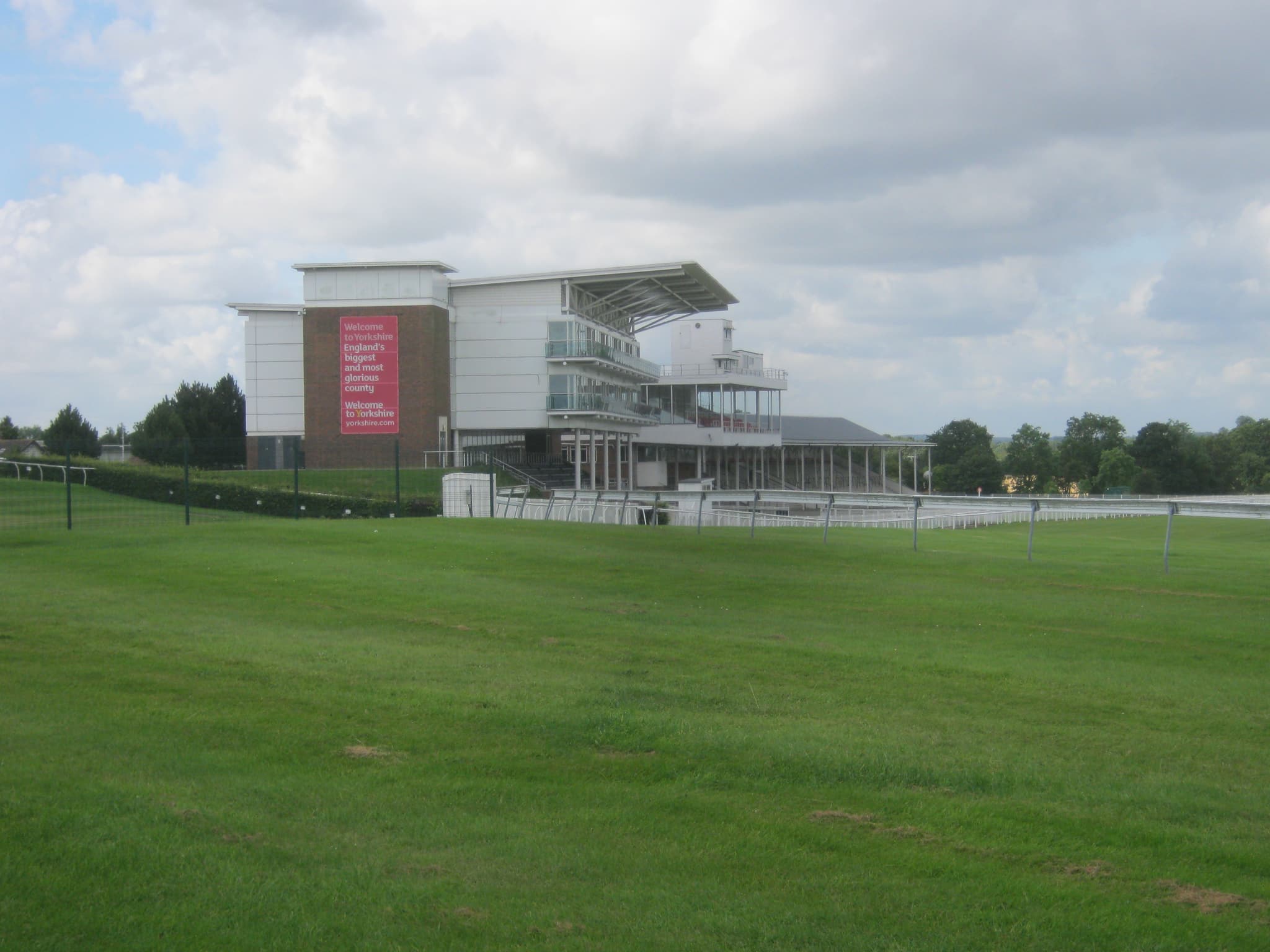
A Day Out at Wetherby Racecourse
Everything you need for a day at Wetherby — getting there, what to wear, enclosures, food and drink, and tips.
Read moreWetherby Festival Guide
Your complete guide to Wetherby Racecourse festivals — the Charlie Hall Chase, the Christmas Festival and what makes this West Yorkshire track one of the north's finest jump venues.
Read more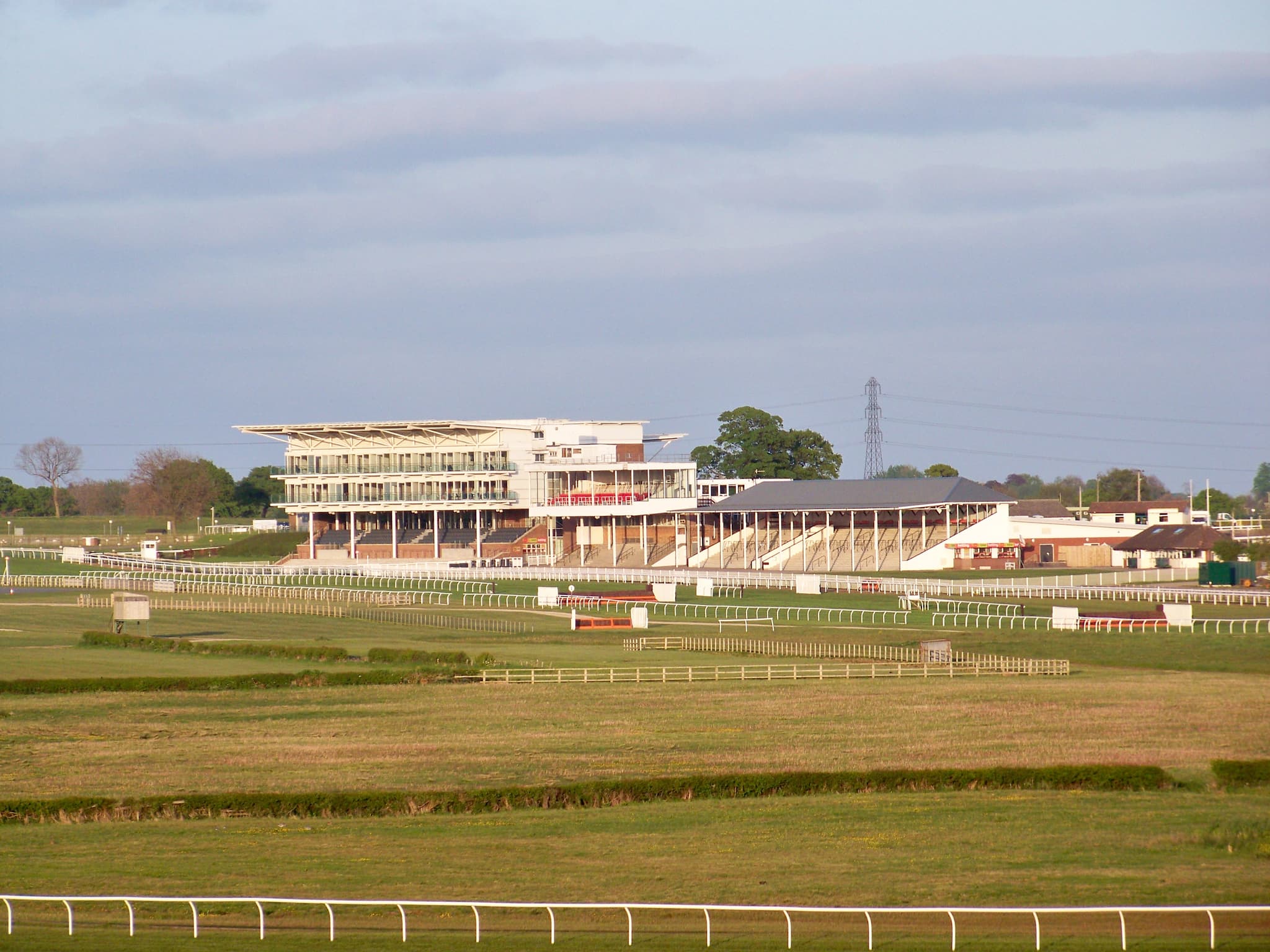
Wetherby Racecourse History: Victorian Origins to Today
Discover how Wetherby transformed from Victorian beginnings into Yorkshire's premier jumps venue. Historic moments, famous winners & key dates.
Read morePhotos on this page are used under Creative Commons licences. Titles, sources and licence links for each one are on our image credits page.
Research the field with the AI Race Predictor
Our model publishes calibrated win-probability estimates for UK races — a second opinion to understand a race, not tips. It's open about its record: it doesn't beat the market, and we show exactly how it does.
Work it out & learn the basics
Gamble Responsibly
Gambling should be entertaining and not seen as a way to make money. Never bet more than you can afford to lose. If you or someone you know has a gambling problem, help and support is available.